

- Industry Size (2026)
- USD 8.91 Bn
- Forecast (2036)
- USD 15.96 Bn
- CAGR (2026 to 2036)
- 6.0%
Chocolate Powdered Drinks Market Size, Market Forecast and Outlook By FMI
Summary of the Chocolate Powdered Drinks Market
- Demand and Growth Drivers
- Household consumption of hot chocolate remains a staple comfort beverage category across Northern Europe, North America, and East Asia, sustaining steady procurement volumes.
- Functional chocolate drink powders fortified with protein, vitamins, and minerals are expanding the addressable market beyond traditional indulgence into health and nutrition positioning.
- Premiumization through single-origin cocoa, organic certification, and reduced-sugar formulations is enabling higher per-unit pricing in retail channels.
- Product and Segment View
- Hot Chocolate Powder is expected to account for 45.0% of the product segment in 2026, driven by seasonal and year-round household consumption.
- Household Consumption holds 55.0% of the application segment, reflecting hot chocolate's established position as an at-home comfort beverage.
- Dairy-based formulations account for 82.3% of the chocolate type preference, with non-dairy alternatives growing in plant-based consumer segments.
- Geography and Competitive Outlook
- China leads growth at 6.5%, driven by rising urban hot beverage consumption and growing adoption of Western-style chocolate drink culture.
- Europe remains the largest consumption region, with established seasonal demand patterns and strong brand loyalty in the hot chocolate category.
- Companies that combine cocoa sourcing with functional formulation expertise and multi-channel retail distribution are positioned for margin capture.
- Analyst Opinion
- 'Companies that can balance indulgence positioning with health-conscious reformulation (reduced sugar, added protein, plant-based options) will define competitive positioning. China and France represent the most dynamic growth corridors as chocolate beverage culture expands,' says Nandini Roy Choudhury, Principal Consultant at FMI.
- The chocolate powdered drinks market reflects steady consumer demand for comfort beverages with growing premiumization and functional nutrition overlays.
- Adoption of premium chocolate drink powders is increasing due to consumer interest in single-origin cocoa, organic certification, and artisanal positioning.
- Demand is further supported by the expansion of functional chocolate drinks in fitness, nutrition, and meal replacement categories.
- Pricing dynamics reflect cocoa quality, functional ingredient additions, and organic certification premiums.
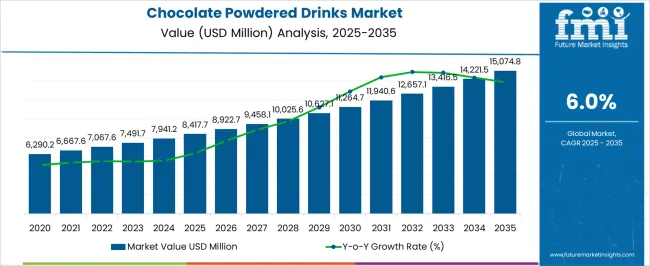
Key Takeaways
| Metric | Value |
|---|---|
| Market Size (2025) | USD 8.41 Billion |
| Market Size (2036) | USD 15.96 Billion |
| CAGR (2026–2036) | 6.0% |
| Incremental Opportunity | USD 7.05 Billion |
| Leading Product (2026) | Hot Chocolate Powder |
| Hot Chocolate Powder Share (2026) | 45% |
| Fastest-Growing Country | China |
| China CAGR | 6.5% |
| 2nd Fastest-Growing Country | France |
| France CAGR | 5.9% |
Chocolate Powdered Drinks Market Definition
The chocolate powdered drinks market covers hot chocolate powder, cold chocolate drink mix, and functional chocolate drink powder distributed in loose powder, sachet, and jar and can packaging. Products span milk, dark, and white chocolate types across dairy and non-dairy formulations for household, on-the-go, and food service consumption.
Chocolate Powdered Drinks Market Inclusions
Market scope encompasses all commercially traded chocolate powdered drink products categorized by product (hot chocolate powder, cold chocolate drink mix, functional chocolate drink powder), form (loose powder, sachets, jar and can packaging), application (household consumption, on-the-go consumption, food service), chocolate type (milk, dark, white), and nature (dairy, non-dairy). Revenue projections span from 2026 to 2036.
Chocolate Powdered Drinks Market Exclusions
The scope does not include ready-to-drink liquid chocolate beverages, chocolate syrup or sauce concentrates, or cocoa powder sold as a baking ingredient without drink formulation.
Chocolate Powdered Drinks Market Research Methodology
Primary Research:
FMI analysts conducted interviews with chocolate drink manufacturers, retail buyers, cocoa processors, and food service operators across key markets.
Desk Research:
Combined data from beverage industry databases, retail sales tracking services, cocoa commodity reports, and nutrition product registries.
Market Sizing and Forecasting:
Bottom-up aggregation from household, on-the-go, and food service consumption, with regional pricing and packaging format analysis.
Data Validation:
Cross-checked quarterly against global beverage production data, retail sales tracking, and manufacturer disclosures.
Why is the Chocolate Powdered Drinks Market Growing?
- Household hot chocolate consumption remains resilient across developed markets, with seasonal demand peaks providing consistent procurement cycles for manufacturers.
- Functional chocolate drink powders with protein, vitamin, and mineral fortification are expanding the category beyond indulgence into health and nutrition positioning.
- China leads growth at 6.5%, reflecting rising urban hot beverage adoption and growing Western-style chocolate drink culture.
The chocolate powdered drinks market is expanding as steady household consumption combines with premiumization and functional nutrition trends. Hot chocolate remains one of the most resilient comfort beverage categories, with consumption spanning seasonal peaks and year-round at-home occasions.
Functional chocolate drink powder represent the fastest-growing product sub-category. Protein-enriched formulations targeting fitness consumers, vitamin-fortified products for children's nutrition, and meal replacement blends are expanding the addressable market beyond traditional indulgence occasions.
Plant-based and non-dairy formulations are gaining share, though dairy-based products continue to dominate. Oat, almond, and coconut milk-compatible Chocolate drink powders are being developed to serve vegan and lactose-intolerant consumer segments.
Market Segmentation Analysis
- Hot Chocolate Powder holds 45.0% of the product segment, driven by seasonal and year-round household comfort beverage consumption.
- Loose Powder accounts for 40.0% of the form segment, supported by household consumption where larger packaging formats offer value pricing.
- Milk Chocolate accounts for 46.4% of the chocolate type preference, with dark chocolate gaining share in premium products.
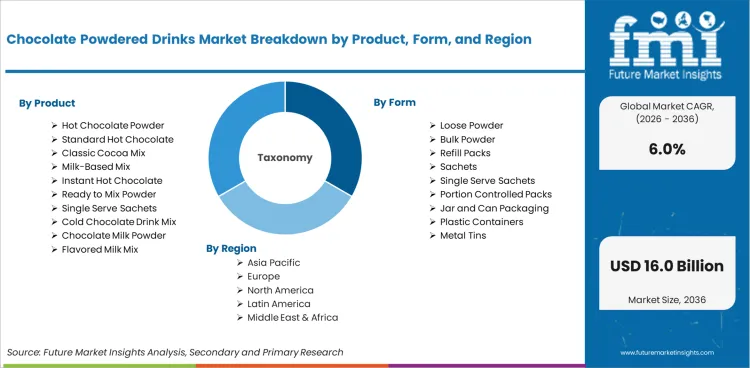
The chocolate powdered drinks market is segmented by product, form, application, chocolate type, nature.
Insights into the Hot Chocolate Powder Segment
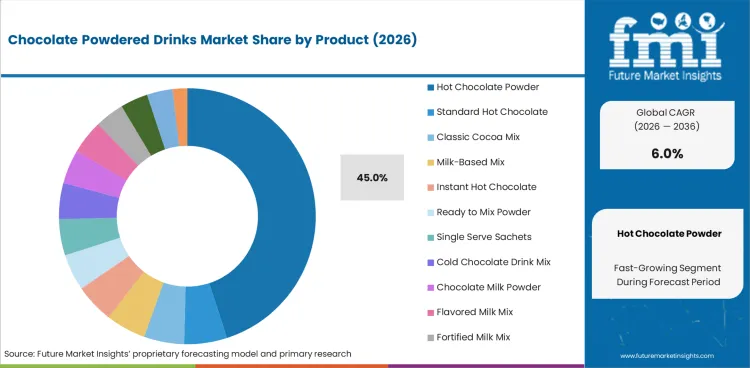
In 2026, hot chocolate powder is expected to account for 45.0% of the product segment. Demand is concentrated in Northern European, North American, and East Asian markets where warm comfort beverages have established consumption cultures.
Premiumization within hot chocolate is driven by single-origin cocoa, reduced-sugar formulations, and artisanal brand positioning. Seasonal limited-edition flavors generate incremental demand during winter months.
Insights into the Household Consumption Application
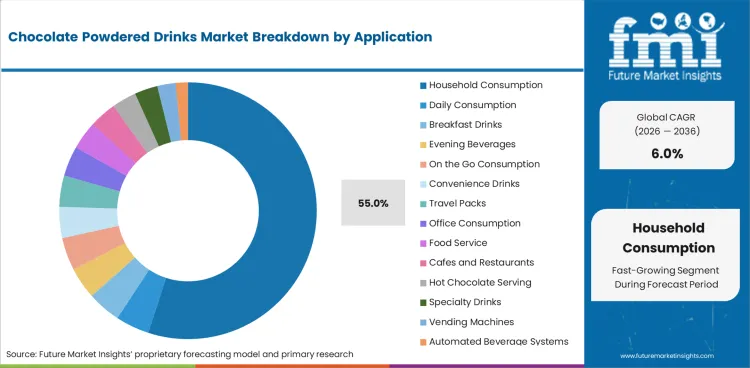
Household consumption accounts for 55.0% of the application segment in 2026. At-home preparation of hot chocolate remains the primary consumption occasion, with loose powder and sachet formats serving different household needs.
Premium household products with organic certification and single-origin positioning are gaining retail shelf space in specialty grocery and health food channels.
Chocolate Powdered Drinks Market Drivers, Restraints, and Opportunities
- Steady household comfort beverage consumption provides a resilient demand base for hot chocolate powder across developed markets.
- Cocoa price volatility and sugar reduction reformulation increase manufacturing costs, compressing margins in the mass-market tier.
- Functional nutrition trends and plant-based consumer demand are expanding the category into health, fitness, and dietary alternative segments.
The chocolate powdered drinks market continues to expand as demand, regulatory, and competitive factors shape growth dynamics.
Household Comfort Beverage Resilience
Demand reflects the resilient nature of hot chocolate as a comfort beverage category. Seasonal consumption peaks provide predictable procurement cycles, while year-round at-home consumption sustains baseline demand.
Cocoa Cost and Reformulation Pressure
Supply dynamics are shaped by cocoa price volatility and consumer demand for reduced-sugar and clean-label formulations. Reformulation to reduce sugar content while maintaining taste acceptability requires investment in ingredient science.
Functional and Plant-Based Category Expansion
Growth reflects the expansion of functional chocolate drinks into protein nutrition, children's health beverages, and meal replacement categories. Non-dairy formulations compatible with plant milks are serving vegan and lactose-intolerant consumers.
Analysis of Chocolate Powdered Drinks Market By Key Countries
.webp "Top Country Growth Comparison Chocolate Powdered Drinks Market Cagr (2026 2036)")
| Country | CAGR |
|---|---|
| China | 6.5% |
| France | 5.9% |
| USA | 5.1% |
| Germany | 4.9% |
| UK | 4.4% |
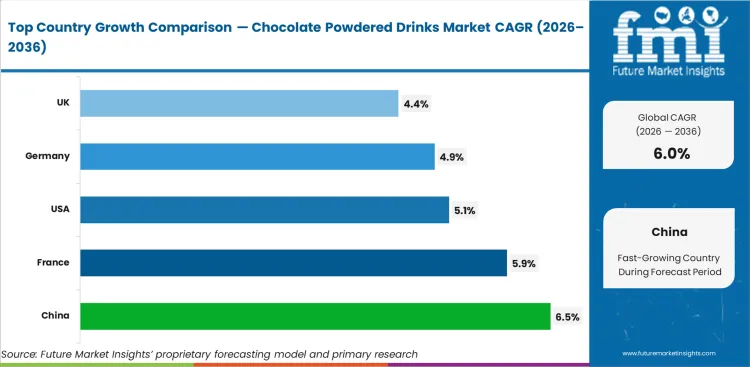
- China leads with 6.5% CAGR, driven by rising urban hot beverage consumption.
- France at 5.9% reflects strong chocolate beverage culture and premium demand.
- The UK (5.1%) sustains growth through established comfort beverage consumption.
- Germany (4.9%) shows demand driven by seasonal hot chocolate culture.
The global chocolate powdered drinks market is expected to grow at a rate of 6% per year from 2026 to 2036. The study covers more than 30 countries, and the main markets are listed below.
Demand Outlook for Chocolate Powdered Drinks Market in China
China is projected to grow at 6.5% through 2036. Rising urban hot beverage consumption and growing adoption of Western-style chocolate drink culture are expanding the market rapidly.
- Urban hot beverage consumption is rising.
- Western chocolate drink culture is gaining adoption.
- Premium product interest is growing.
Future Outlook for Chocolate Powdered Drinks Market in France
France is projected to grow at 5.9% through 2036. Strong chocolate beverage culture, premium single-origin interest, and established seasonal consumption support steady demand.
- Established chocolate beverage culture drives demand.
- Premium products are gaining share.
- Seasonal consumption patterns sustain procurement.
Opportunity Analysis of Chocolate Powdered Drinks Market in USA
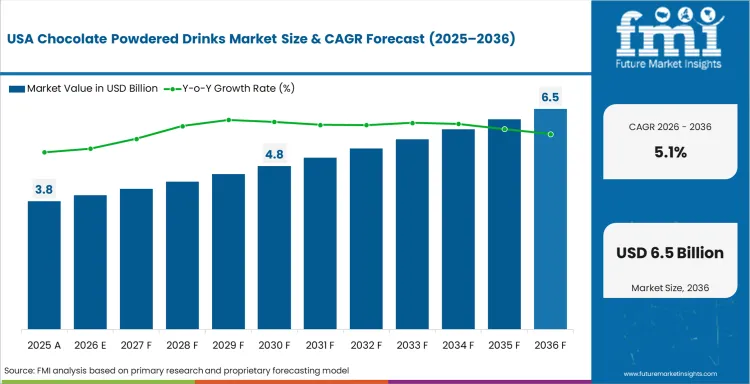
USA is projected to grow at 5.1% through 2036. Established comfort beverage consumption and growing functional drink demand sustain chocolate powder procurement.
- Comfort beverage consumption is well-established.
- Functional chocolate drink demand is growing.
- Retail distribution is strong.
In-depth Analysis of Chocolate Powdered Drinks Market in Germany
Germany is projected to grow at 4.9% through 2036. Strong seasonal hot chocolate culture and growing premium product interest drive demand.
- Seasonal consumption provides demand peaks.
- Premium products are gaining shelf space.
- Food service demand is expanding.
Sales Analysis of Chocolate Powdered Drinks Market in UK
UK is projected to grow at 4.4% through 2036. Large-scale beverage manufacturing and growing consumer health awareness sustain demand.
- Beverage manufacturing drives procurement.
- Health-conscious consumers adopt functional varieties.
- Retail and online channels are expanding.
Competitive Landscape and Strategic Positioning
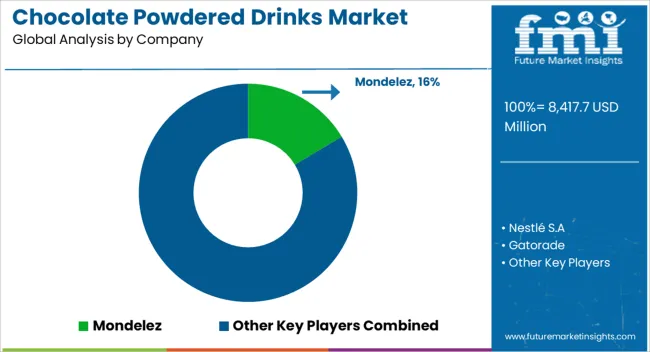
- Mondelez holds a leading position through global brand presence, extensive retail distribution, and established consumer loyalty.
- Nestle S.A., Mars Inc., and GlaxoSmithKline maintain positions through brand portfolios, global manufacturing, and multi-channel distribution.
- Barriers include brand development investment, cocoa sourcing, retail shelf access, and consumer loyalty.
Mondelez leads through established global brands, extensive retail distribution, and strong seasonal marketing programs.
Nestle S.A. maintains a strong position through its chocolate drink brand portfolio and global manufacturing infrastructure.
Mars Inc. and GlaxoSmithKline compete through brand recognition, functional product development, and distribution reach.
Barry Callebaut AG and Olam International serve the B2B channel, supplying cocoa-based drink powder ingredients.
Key Companies in the Chocolate Powdered Drinks Market
Key global companies leading the chocolate powdered drinks market include:
- Mondelez (USA), Nestle S.A. (Switzerland), Mars Inc. (USA), and GlaxoSmithKline (UK) lead with global brand portfolios, retail distribution, and consumer loyalty.
- PepsiCo Inc. (USA), Barry Callebaut AG (Switzerland), and Olam International (Singapore) maintain positions through functional nutrition brands and B2B cocoa supply.
- Kanegrade Ltd (UK) and BD Associates Ghana Ltd (Ghana) serve regional and ingredient supply channels.
Competitive Benchmarking: Chocolate Powdered Drinks Market
| Company | Brand Portfolio | Cocoa Sourcing | Distribution Reach | Functional Formulation |
|---|---|---|---|---|
| Mondelez | High | High | Strong | Medium |
| Nestle S.A. | High | High | Strong | Medium |
| Mars Inc. | High | High | Strong | Medium |
| GlaxoSmithKline | Medium | Medium | Strong | High |
| PepsiCo Inc. | Medium | Low | Strong | High |
| Barry Callebaut AG | Low | High | Moderate | Medium |
| Olam International | Low | High | Moderate | Low |
Source: Future Market Insights competitive analysis, 2026.
Key Developments in Chocolate Powdered Drinks Market
- In 2025, Nestle launched a reduced-sugar premium hot chocolate powder range with single-origin cocoa targeting European retail markets.
- In 2025, Mondelez expanded its functional chocolate drink portfolio with a protein-enriched hot chocolate product for the North American fitness consumer segment.
Key Players in the Chocolate Powdered Drinks Market
Major Global Players
- Mondelez
- Nestlé S.A
- Gatorade
- Mars Inc.
- GlaxoSmithKline Plc
- PepsiCo Inc.
- Kanegrade Ltd
Emerging Players/Startups
- Hotel Chocolat
- Whittard of Chelsea
- Lake Champlain Chocolates
- Crio Bru
- MarieBelle New York
Report Scope and Coverage
| Parameter | Details |
|---|---|
| Quantitative Units | USD 8.91 billion to USD 15.96 billion, at a CAGR of 6% |
| Market Definition | The chocolate powdered drinks market covers hot chocolate powder, cold chocolate drink mix, and functional chocolate drink powder distributed in loose powder, sachet, and jar and can packaging. Product. |
| Regions Covered | North America, Latin America, Europe, East Asia, South Asia and Pacific, Middle East and Africa |
| Countries Covered | China, France, USA, Germany, UK, 30 plus countries |
| Key Companies Profiled | Mondelez, Nestlé S.A, Gatorade, Mars Inc., GlaxoSmithKline Plc, PepsiCo Inc., Kanegrade Ltd, Barry Callebaut AG, Olam International, BD Associates Ghana Ltd |
| Forecast Period | 2026 to 2036 |
| Approach | Hybrid bottom-up and top-down methodology starting with verified transaction data, projecting adoption velocity across segments and regions. |
Segmentation
Chocolate Powdered Drinks Market Market Segmented by Product:
- Hot Chocolate Powder
- Standard Hot Chocolate
- Classic Cocoa Mix
- Milk-Based Mix
- Instant Hot Chocolate
- Ready to Mix Powder
- Single Serve Sachets
- Standard Hot Chocolate
- Cold Chocolate Drink Mix
- Chocolate Milk Powder
- Flavored Milk Mix
- Fortified Milk Mix
- Instant Cold Mix
- Ready to Drink Preparation Powder
- Shake Mix
- Chocolate Milk Powder
- Functional Chocolate Drink Powder
- Protein Enriched Powder
- Whey Protein Based
- Plant Protein Based
- Energy and Nutrition Powder
- Vitamin Fortified
- Mineral Enriched
- Protein Enriched Powder
Chocolate Powdered Drinks Market Market Segmented by Form:
- Loose Powder
-
- Bulk Powder
- Refill Packs
-
- Sachets
-
- Single Serve Sachets
- Portion Controlled Packs
-
- Jar and Can Packaging
-
- Plastic Containers
- Metal Tins
-
Chocolate Powdered Drinks Market Market Segmented by Application:
- Household Consumption
- Daily Consumption
- Breakfast Drinks
- Evening Beverages
- Daily Consumption
- On the Go Consumption
- Convenience Drinks
- Travel Packs
- Office Consumption
- Convenience Drinks
- Food Service
- Cafes and Restaurants
- Hot Chocolate Serving
- Specialty Drinks
- Vending Machines
- Automated Beverage Systems
- Cafes and Restaurants
Chocolate Powdered Drinks Market Market Segmented by Chocolate type:
- Milk Chocolate
- Dark Chocolate
- White Chocolate
Chocolate Powdered Drinks Market Market Segmented by Nature:
- Dairy
- Non-Dairy
Chocolate Powdered Drinks Market Market by Region:
- North America
- USA
- Canada
- Mexico
- Latin America
- Brazil
- Chile
- Rest of Latin America
- Western Europe
- Germany
- UK
- Italy
- Spain
- France
- Nordic
- BENELUX
- Rest of Western Europe
- Eastern Europe
- Russia
- Poland
- Hungary
- Balkan & Baltic
- Rest of Eastern Europe
- East Asia
- China
- Japan
- South Korea
- South Asia and Pacific
- India
- ASEAN
- Australia & New Zealand
- Rest of South Asia and Pacific
- Middle East & Africa
- Kingdom of Saudi Arabia
- Other GCC Countries
- Turkiye
- South Africa
- Other African Union
- Rest of Middle East & Africa
Research Sources and Bibliography
- 1. International Cocoa Organization. (2025). ICCO Cocoa Market Review. ICCO.
- 2. European Commission. (2024). EU Nutrition and Health Claims Regulation: Beverage Products. EC.
- 3. Food and Agriculture Organization. (2025). Global Beverage Ingredient Trade. FAO.
- 4. World Health Organization. (2024). Sugar Reduction in Beverages: Global Guidelines. WHO.
- 5. USA Food and Drug Administration. (2024). Food Labeling: Beverage Nutrient Claims. FDA.
This bibliography is provided for reader reference. The full Future Market Insights report contains the complete reference list with publication dates, URLs, and supporting data for all cited works.
This Report Answers
- Estimating the size of the market and revenue projections from 2026 to 2036.
- Segmentation by product, form, application, chocolate type, nature.
- Insights about more than 30 regional markets.
- Analysis of sourcing, technology, and competitive dynamics.
- Assessment of the competitive landscape.
- Identification of investment opportunities across key segments.
- Supply chain and procurement analysis.
- Delivery of data in PDF and Excel formats.
Frequently Asked Questions
What is the global market demand for Chocolate Powdered Drinks in 2026?
In 2026, the global chocolate powdered drinks market is expected to be worth USD 8.91 billion.
How big will the Chocolate Powdered Drinks Market be in 2036?
By 2036, the chocolate powdered drinks market is expected to be worth USD 15.96 billion.
How much is demand expected to grow between 2026 and 2036?
Between 2026 and 2036, demand is expected to grow at a CAGR of 6.0%.
Which product segment is likely to lead globally by 2026?
Hot Chocolate Powder is expected to account for 45.0% of the product segment in 2026, driven by household comfort beverage consumption.
What is causing demand to rise in China?
China is projected to grow at 6.5% through 2036, driven by rising urban hot beverage consumption.
What is causing demand to rise in France?
France is projected to grow at 5.9% through 2036, reflecting strong chocolate beverage culture and premium demand.
What does this report mean by 'Chocolate Powdered Drinks Market definition'?
The chocolate powdered drinks market covers hot chocolate powder, cold chocolate drink mix, and functional chocolate drink powder for household, on-the-go, and food service consumption.
How does FMI make the forecast and verify it?
Forecasting models use a hybrid bottom-up and top-down approach, starting with verified retail data and checking it against global beverage statistics and manufacturer disclosures.
Preview the report firsthand - request a free sample
Get SampleGet the brochure for pricing and purchase details.
Get PDFTable of Content
- Executive Summary
- Global Market Outlook
- Demand-side Trends
- Supply-side Trends
- Technology Roadmap Analysis
- Analysis and Recommendations
- Market Overview
- Market Coverage / Taxonomy
- Market Definition / Scope / Limitations
- Research Methodology
- Chapter Orientation
- Analytical Lens and Working Hypotheses
- Market Structure, Signals, and Trend Drivers
- Benchmarking and Cross-market Comparability
- Market Sizing, Forecasting, and Opportunity Mapping
- Research Design and Evidence Framework
- Desk Research Programme (Secondary Evidence)
- Company Annual and Sustainability Reports
- Peer-reviewed Journals and Academic Literature
- Corporate Websites, Product Literature, and Technical Notes
- Earnings Decks and Investor Briefings
- Statutory Filings and Regulatory Disclosures
- Technical White Papers and Standards Notes
- Trade Journals, Industry Magazines, and Analyst Briefs
- Conference Proceedings, Webinars, and Seminar Materials
- Government Statistics Portals and Public Data Releases
- Press Releases and Reputable Media Coverage
- Specialist Newsletters and Curated Briefings
- Sector Databases and Reference Repositories
- FMI Internal Proprietary Databases and Historical Market Datasets
- Subscription Datasets and Paid Sources
- Social Channels, Communities, and Digital Listening Inputs
- Additional Desk Sources
- Expert Input and Fieldwork (Primary Evidence)
- Primary Modes
- Qualitative Interviews and Expert Elicitation
- Quantitative Surveys and Structured Data Capture
- Blended Approach
- Why Primary Evidence is Used
- Field Techniques
- Interviews
- Surveys
- Focus Groups
- Observational and In-context Research
- Social and Community Interactions
- Stakeholder Universe Engaged
- C-suite Leaders
- Board Members
- Presidents and Vice Presidents
- R&D and Innovation Heads
- Technical Specialists
- Domain Subject-matter Experts
- Scientists
- Physicians and Other Healthcare Professionals
- Governance, Ethics, and Data Stewardship
- Research Ethics
- Data Integrity and Handling
- Primary Modes
- Tooling, Models, and Reference Databases
- Desk Research Programme (Secondary Evidence)
- Data Engineering and Model Build
- Data Acquisition and Ingestion
- Cleaning, Normalisation, and Verification
- Synthesis, Triangulation, and Analysis
- Quality Assurance and Audit Trail
- Market Background
- Market Dynamics
- Drivers
- Restraints
- Opportunity
- Trends
- Scenario Forecast
- Demand in Optimistic Scenario
- Demand in Likely Scenario
- Demand in Conservative Scenario
- Opportunity Map Analysis
- Product Life Cycle Analysis
- Supply Chain Analysis
- Investment Feasibility Matrix
- Value Chain Analysis
- PESTLE and Porter’s Analysis
- Regulatory Landscape
- Regional Parent Market Outlook
- Production and Consumption Statistics
- Import and Export Statistics
- Market Dynamics
- Global Market Analysis 2021 to 2025 and Forecast, 2026 to 2036
- Historical Market Size Value (USD Million) Analysis, 2021 to 2025
- Current and Future Market Size Value (USD Million) Projections, 2026 to 2036
- Y-o-Y Growth Trend Analysis
- Absolute $ Opportunity Analysis
- Global Market Pricing Analysis 2021 to 2025 and Forecast 2026 to 2036
- Global Market Analysis 2021 to 2025 and Forecast 2026 to 2036, By Product
- Introduction / Key Findings
- Historical Market Size Value (USD Million) Analysis By Product , 2021 to 2025
- Current and Future Market Size Value (USD Million) Analysis and Forecast By Product , 2026 to 2036
- Hot Chocolate Powder
- Standard Hot Chocolate
- Classic Cocoa Mix
- Milk-Based Mix
- Instant Hot Chocolate
- Ready to Mix Powder
- Single Serve Sachets
- Cold Chocolate Drink Mix
- Chocolate Milk Powder
- Flavored Milk Mix
- Fortified Milk Mix
- Instant Cold Mix
- Ready to Drink Preparation Powder
- Functional Chocolate Drink Powder
- Protein Enriched Powder
- Whey Protein Based
- Plant Protein Based
- Energy and Nutrition Powder
- Vitamin Fortified
- Hot Chocolate Powder
- Y-o-Y Growth Trend Analysis By Product , 2021 to 2025
- Absolute $ Opportunity Analysis By Product , 2026 to 2036
- Global Market Analysis 2021 to 2025 and Forecast 2026 to 2036, By Form
- Introduction / Key Findings
- Historical Market Size Value (USD Million) Analysis By Form, 2021 to 2025
- Current and Future Market Size Value (USD Million) Analysis and Forecast By Form, 2026 to 2036
- Loose Powder
- Bulk Powder
- Refill Packs
- Sachets
- Single Serve Sachets
- Portion Controlled Packs
- Jar and Can Packaging
- Plastic Containers
- Metal Tins
- Loose Powder
- Y-o-Y Growth Trend Analysis By Form, 2021 to 2025
- Absolute $ Opportunity Analysis By Form, 2026 to 2036
- Global Market Analysis 2021 to 2025 and Forecast 2026 to 2036, By Application
- Introduction / Key Findings
- Historical Market Size Value (USD Million) Analysis By Application, 2021 to 2025
- Current and Future Market Size Value (USD Million) Analysis and Forecast By Application, 2026 to 2036
- Household Consumption
- Daily Consumption
- Breakfast Drinks
- Evening Beverages
- On the Go Consumption
- Convenience Drinks
- Travel Packs
- Office Consumption
- Food Service
- Cafes and Restaurants
- Hot Chocolate Serving
- Specialty Drinks
- Vending Machines
- Automated Beverage Systems
- Household Consumption
- Y-o-Y Growth Trend Analysis By Application, 2021 to 2025
- Absolute $ Opportunity Analysis By Application, 2026 to 2036
- Global Market Analysis 2021 to 2025 and Forecast 2026 to 2036, By Chocolate type
- Introduction / Key Findings
- Historical Market Size Value (USD Million) Analysis By Chocolate type, 2021 to 2025
- Current and Future Market Size Value (USD Million) Analysis and Forecast By Chocolate type, 2026 to 2036
- Milk Chocolate
- Dark Chocolate
- White Chocolate
- Milk Chocolate
- Y-o-Y Growth Trend Analysis By Chocolate type, 2021 to 2025
- Absolute $ Opportunity Analysis By Chocolate type, 2026 to 2036
- Global Market Analysis 2021 to 2025 and Forecast 2026 to 2036, By Nature
- Introduction / Key Findings
- Historical Market Size Value (USD Million) Analysis By Nature, 2021 to 2025
- Current and Future Market Size Value (USD Million) Analysis and Forecast By Nature, 2026 to 2036
- Dairy
- Non-Dairy
- Dairy
- Y-o-Y Growth Trend Analysis By Nature, 2021 to 2025
- Absolute $ Opportunity Analysis By Nature, 2026 to 2036
- Global Market Analysis 2021 to 2025 and Forecast 2026 to 2036, By Region
- Introduction
- Historical Market Size Value (USD Million) Analysis By Region, 2021 to 2025
- Current Market Size Value (USD Million) Analysis and Forecast By Region, 2026 to 2036
- North America
- Latin America
- Western Europe
- Eastern Europe
- East Asia
- South Asia and Pacific
- Middle East & Africa
- Market Attractiveness Analysis By Region
- North America Market Analysis 2021 to 2025 and Forecast 2026 to 2036, By Country
- Historical Market Size Value (USD Million) Trend Analysis By Market Taxonomy, 2021 to 2025
- Market Size Value (USD Million) Forecast By Market Taxonomy, 2026 to 2036
- By Country
- USA
- Canada
- Mexico
- By Product
- By Form
- By Application
- By Chocolate type
- By Nature
- By Country
- Market Attractiveness Analysis
- By Country
- By Product
- By Form
- By Application
- By Chocolate type
- By Nature
- Key Takeaways
- Latin America Market Analysis 2021 to 2025 and Forecast 2026 to 2036, By Country
- Historical Market Size Value (USD Million) Trend Analysis By Market Taxonomy, 2021 to 2025
- Market Size Value (USD Million) Forecast By Market Taxonomy, 2026 to 2036
- By Country
- Brazil
- Chile
- Rest of Latin America
- By Product
- By Form
- By Application
- By Chocolate type
- By Nature
- By Country
- Market Attractiveness Analysis
- By Country
- By Product
- By Form
- By Application
- By Chocolate type
- By Nature
- Key Takeaways
- Western Europe Market Analysis 2021 to 2025 and Forecast 2026 to 2036, By Country
- Historical Market Size Value (USD Million) Trend Analysis By Market Taxonomy, 2021 to 2025
- Market Size Value (USD Million) Forecast By Market Taxonomy, 2026 to 2036
- By Country
- Germany
- UK
- Italy
- Spain
- France
- Nordic
- BENELUX
- Rest of Western Europe
- By Product
- By Form
- By Application
- By Chocolate type
- By Nature
- By Country
- Market Attractiveness Analysis
- By Country
- By Product
- By Form
- By Application
- By Chocolate type
- By Nature
- Key Takeaways
- Eastern Europe Market Analysis 2021 to 2025 and Forecast 2026 to 2036, By Country
- Historical Market Size Value (USD Million) Trend Analysis By Market Taxonomy, 2021 to 2025
- Market Size Value (USD Million) Forecast By Market Taxonomy, 2026 to 2036
- By Country
- Russia
- Poland
- Hungary
- Balkan & Baltic
- Rest of Eastern Europe
- By Product
- By Form
- By Application
- By Chocolate type
- By Nature
- By Country
- Market Attractiveness Analysis
- By Country
- By Product
- By Form
- By Application
- By Chocolate type
- By Nature
- Key Takeaways
- East Asia Market Analysis 2021 to 2025 and Forecast 2026 to 2036, By Country
- Historical Market Size Value (USD Million) Trend Analysis By Market Taxonomy, 2021 to 2025
- Market Size Value (USD Million) Forecast By Market Taxonomy, 2026 to 2036
- By Country
- China
- Japan
- South Korea
- By Product
- By Form
- By Application
- By Chocolate type
- By Nature
- By Country
- Market Attractiveness Analysis
- By Country
- By Product
- By Form
- By Application
- By Chocolate type
- By Nature
- Key Takeaways
- South Asia and Pacific Market Analysis 2021 to 2025 and Forecast 2026 to 2036, By Country
- Historical Market Size Value (USD Million) Trend Analysis By Market Taxonomy, 2021 to 2025
- Market Size Value (USD Million) Forecast By Market Taxonomy, 2026 to 2036
- By Country
- India
- ASEAN
- Australia & New Zealand
- Rest of South Asia and Pacific
- By Product
- By Form
- By Application
- By Chocolate type
- By Nature
- By Country
- Market Attractiveness Analysis
- By Country
- By Product
- By Form
- By Application
- By Chocolate type
- By Nature
- Key Takeaways
- Middle East & Africa Market Analysis 2021 to 2025 and Forecast 2026 to 2036, By Country
- Historical Market Size Value (USD Million) Trend Analysis By Market Taxonomy, 2021 to 2025
- Market Size Value (USD Million) Forecast By Market Taxonomy, 2026 to 2036
- By Country
- Kingdom of Saudi Arabia
- Other GCC Countries
- Turkiye
- South Africa
- Other African Union
- Rest of Middle East & Africa
- By Product
- By Form
- By Application
- By Chocolate type
- By Nature
- By Country
- Market Attractiveness Analysis
- By Country
- By Product
- By Form
- By Application
- By Chocolate type
- By Nature
- Key Takeaways
- Key Countries Market Analysis
- USA
- Pricing Analysis
- Market Share Analysis, 2025
- By Product
- By Form
- By Application
- By Chocolate type
- By Nature
- Canada
- Pricing Analysis
- Market Share Analysis, 2025
- By Product
- By Form
- By Application
- By Chocolate type
- By Nature
- Mexico
- Pricing Analysis
- Market Share Analysis, 2025
- By Product
- By Form
- By Application
- By Chocolate type
- By Nature
- Brazil
- Pricing Analysis
- Market Share Analysis, 2025
- By Product
- By Form
- By Application
- By Chocolate type
- By Nature
- Chile
- Pricing Analysis
- Market Share Analysis, 2025
- By Product
- By Form
- By Application
- By Chocolate type
- By Nature
- Germany
- Pricing Analysis
- Market Share Analysis, 2025
- By Product
- By Form
- By Application
- By Chocolate type
- By Nature
- UK
- Pricing Analysis
- Market Share Analysis, 2025
- By Product
- By Form
- By Application
- By Chocolate type
- By Nature
- Italy
- Pricing Analysis
- Market Share Analysis, 2025
- By Product
- By Form
- By Application
- By Chocolate type
- By Nature
- Spain
- Pricing Analysis
- Market Share Analysis, 2025
- By Product
- By Form
- By Application
- By Chocolate type
- By Nature
- France
- Pricing Analysis
- Market Share Analysis, 2025
- By Product
- By Form
- By Application
- By Chocolate type
- By Nature
- India
- Pricing Analysis
- Market Share Analysis, 2025
- By Product
- By Form
- By Application
- By Chocolate type
- By Nature
- ASEAN
- Pricing Analysis
- Market Share Analysis, 2025
- By Product
- By Form
- By Application
- By Chocolate type
- By Nature
- Australia & New Zealand
- Pricing Analysis
- Market Share Analysis, 2025
- By Product
- By Form
- By Application
- By Chocolate type
- By Nature
- China
- Pricing Analysis
- Market Share Analysis, 2025
- By Product
- By Form
- By Application
- By Chocolate type
- By Nature
- Japan
- Pricing Analysis
- Market Share Analysis, 2025
- By Product
- By Form
- By Application
- By Chocolate type
- By Nature
- South Korea
- Pricing Analysis
- Market Share Analysis, 2025
- By Product
- By Form
- By Application
- By Chocolate type
- By Nature
- Russia
- Pricing Analysis
- Market Share Analysis, 2025
- By Product
- By Form
- By Application
- By Chocolate type
- By Nature
- Poland
- Pricing Analysis
- Market Share Analysis, 2025
- By Product
- By Form
- By Application
- By Chocolate type
- By Nature
- Hungary
- Pricing Analysis
- Market Share Analysis, 2025
- By Product
- By Form
- By Application
- By Chocolate type
- By Nature
- Kingdom of Saudi Arabia
- Pricing Analysis
- Market Share Analysis, 2025
- By Product
- By Form
- By Application
- By Chocolate type
- By Nature
- Turkiye
- Pricing Analysis
- Market Share Analysis, 2025
- By Product
- By Form
- By Application
- By Chocolate type
- By Nature
- South Africa
- Pricing Analysis
- Market Share Analysis, 2025
- By Product
- By Form
- By Application
- By Chocolate type
- By Nature
- USA
- Market Structure Analysis
- Competition Dashboard
- Competition Benchmarking
- Market Share Analysis of Top Players
- By Regional
- By Product
- By Form
- By Application
- By Chocolate type
- By Nature
- Competition Analysis
- Competition Deep Dive
- Mondelez
- Overview
- Product Portfolio
- Profitability by Market Segments (Product/Age /Sales Channel/Region)
- Sales Footprint
- Strategy Overview
- Marketing Strategy
- Product Strategy
- Channel Strategy
- Nestlé S.A
- Gatorade
- Mars Inc.
- GlaxoSmithKline Plc
- PepsiCo Inc.
- Kanegrade Ltd
- Barry Callebaut AG
- Olam International
- BD Associates Ghana Ltd
- Mondelez
- Competition Deep Dive
- Assumptions & Acronyms Used


