

- Market Size (2026)
- USD 0.5 Bn
- Forecast (2036)
- USD 0.8 Bn
- CAGR (2026 to 2036)
- 5.7%
Combustion Clean-Up Additives for High-Mileage Fleets Market Size, Market Forecast and Outlook By FMI
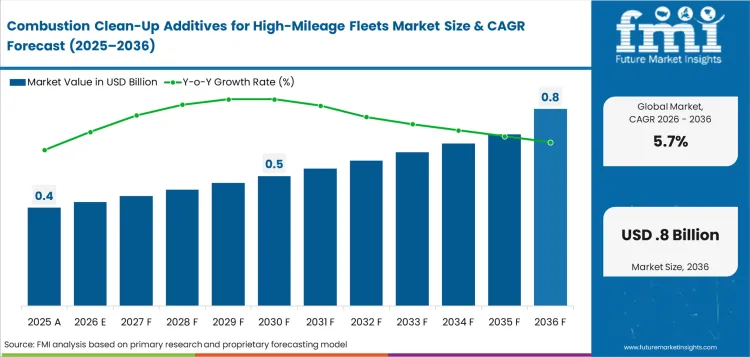
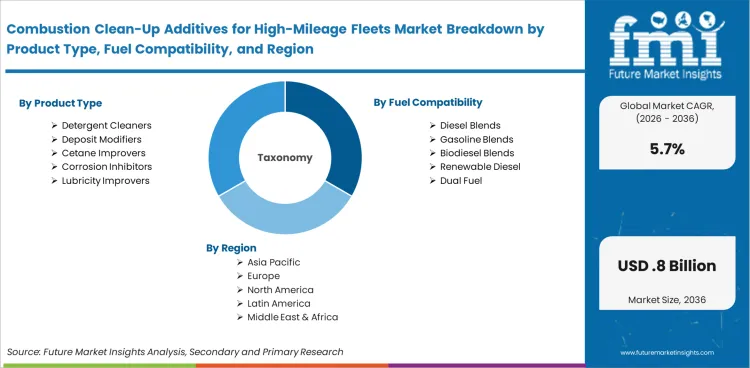
Combustion clean-up additives for high-mileage fleets market was valued at USD 0.4 billion in 2025. Market value is forecast to increase from USD 0.5 billion in 2026 to USD 0.8 billion by 2036 at 5.7% CAGR. Detergent cleaners are projected to represent 34.0% of product type demand. Diesel blends are estimated to cover 52.0% of fuel compatibility demand in 2026.
Summary of the Combustion Clean-Up Additives for High-Mileage Fleets Market
- Market Snapshot
- High-mileage fleet operators use combustion clean-up additives to reduce injector deposits before engine roughness affects route reliability.
- Diesel particulate filter (DPF) service pressure is pushing fleets toward fuel treatment programs lowering soot formation during daily diesel operation.
- Fuel quality variation is creating demand for additives protecting older engines during biodiesel and renewable diesel use.
- Product and Segment View
- Detergent cleaners are expected to lead product type because injector cleaning gives fleets a direct maintenance benefit.
- Diesel Blends hold the significant fuel compatibility position as heavy trucks and buses create the largest treated fuel base.
- Bulk Liquid remains the preferred Dosing Format for large fleets that need measured treatment through yard tanks.
- Geography and Competitive Outlook
- India shows faster demand development as diesel freight fleets continue using older trucks across long service routes.
- The United States keeps a steady demand base through fleet workshops and fuel distributor supply programs.
- Suppliers with proven detergent chemistry and field dosing support gain better fleet confidence.
- Analyst Opinion
- Nikhil Kaitwade, Principal Consultant at FMI says, “I see this market as a service-cost control space rather than a basic fuel additive story. Fleet operators are buying chemistry to reduce injector fouling and soot build-up in vehicles that have already crossed heavy mileage thresholds. Clients should watch two pressure points during the forecast period. One is stricter emissions compliance for older vehicles. The other is fuel mix variation from biodiesel and renewable diesel use. Companies proving cleaner combustion without harming filters or fuel systems will hold the best position.”
- Combustion Clean-Up Additives for High-Mileage Fleets Market Value Analysis
- Combustion clean-up additives create value by reducing deposit-related service issues in engines kept in service past normal replacement cycles.
- Detergent cleaners have the clearest value role because injector deposits directly affect fuel burn and engine response.
- High-mileage diesel fleets use these additives to control soot build-up before DPF service costs rise.
- Fuel distributors keep a defined role as fleet yards prefer bulk treatment during regular diesel delivery.
- Supplier advantage depends on dosing accuracy and fuel compatibility proof since operators need clean-up benefits without filter or seal risk.
Key Takeaways
- Combustion clean-up additives for high-mileage fleets market stood at USD 0.4 billion in 2025 based on fleet dosing checks.
- Industry is forecast to reach USD 0.8 billion by 2036 as older engines need cleaner injectors and lower soot load.
- Demand is projected to expand at 5.7% CAGR from 2026 to 2036 across workshop service and fuel distributor channels.
- Market expansion is forecast to create an incremental opportunity of USD 0.3 billion between 2026 and 2036.
- By 2036, detergent cleaners are forecast to represent 34.0% of product type demand with injector deposits remaining the first clean-up target.
- Diesel blends are estimated to hold 52.0% of fuel compatibility demand in 2026 with heavy trucks carrying most treated fuel volume.
- During the forecast period, India is projected to record 7.4% CAGR because diesel freight fleets retain high-mileage vehicles longer.
Deposit formation inside modern engines makes combustion clean-up additives a maintenance and fuel-quality product. Chevron’s October 2025 data sheet states that Techron Concentrate Plus uses advanced polyetheramine technology for complete fuel-system treatment. That supports premium positioning in passenger cars and light trucks. STP states that its Complete Fuel System Cleaner uses PEA and PIBA detergents to remove deposits and inhibit corrosion. Clear chemistry claims help aftermarket brands separate stronger cleaners from basic fuel conditioners. Lubrizol stated in July 2024 that Zer0Evo™ DCA improved renewable diesel deposit-control performance at a keep-clean treat level. Renewable fuels therefore create a new route for additive suppliers serving fleet users. Afton Chemical also links GDI deposit testing to evaluation of deposit-control additives. Direct-injection engines raise the value of clean-up chemistry because injector fouling affects efficiency and drivability. EPA registration visibility adds another buyer screen for distributors and fleet maintenance teams.
Combustion Clean-Up Additives for High-Mileage Fleets Market Definition
The combustion clean-up additives for high-mileage fleets market covers fuel and lubricant additive products used to clean deposits and improve fuel burn in older fleet engines.
Combustion Clean-Up Additives for High-Mileage Fleets Market Inclusions
Market scope includes bulk liquid additives, concentrate packs, single-dose bottles, treat-rate drums, fleet workshop dosing, fuel distributor supply, Original Equipment Manufacturer (OEM) service treatments, and use across North America, Latin America, Europe, East Asia, South Asia and Pacific, Middle East and Africa. Stakeholders include additive formulators and fuel distributors. Fleet workshops and OEM service centers form the service-side base. Heavy-truck operators and bus fleet managers form the main demand-side base. Marine fleet managers and off-road equipment owners are included within fleet use cases.
Combustion Clean-Up Additives for High-Mileage Fleets Market Exclusions
Scope excludes untreated diesel, untreated gasoline, lubricants without clean-up claims, industrial boiler additives, passenger car retail-only additives, and emissions hardware such as DPF units.
Combustion Clean-Up Additives for High-Mileage Fleets Market Research Methodology
- Primary Research: FMI analysts reviewed additive formulators, fleet maintenance heads. Fuel distributors and heavy-duty service workshops were checked separately. Interviews focused on treated fuel volumes, dosing intervals, fleet mileage thresholds, and service cost issues.
- Desk Research: Desk work covered United States Environmental Protection Agency (EPA) fuel additive registration rules, truck mileage forecasts. Fleet emission standards and official company product updates were reviewed separately. Public guidance on diesel additives and registered fuel products helped define the addressable product pool.
- Market Sizing and Forecasting: The model combined high-mileage fleet counts, treatment rates. Additive price bands and channel-level usage patterns were checked separately. Forecasts were checked against truck VMT direction and supplier activity in fuel additive chemistry.
- Data Validation: Forecasts were cross-checked against fuel distributor feedback. Workshop dosing frequency and company portfolios were checked separately. VMT forecasts and fuel additive registration data were used to test the demand base.
Why is the Combustion Clean-Up Additives for High-Mileage Fleets Market Growing?
- High-mileage engines create more injector deposit risk as long route cycles increase soot exposure.
- DPF maintenance cost is pushing fleets toward additives reducing soot formation at the combustion stage.
- Biodiesel and renewable diesel use raise compatibility needs as fuel stability and lubricity become service concerns.
- Truck mileage growth in delivery and regional freight creates repeat additive demand through bulk dosing contracts.
Fleet operators are treating combustion clean-up additives as a maintenance tool for engines that cannot be replaced quickly. Federal Highway Administration (FHWA)’s Spring 2025 outlook projects single-unit truck vehicle miles traveled (VMT) to grow 2.0% annually through 2053. Longer truck use gives deposit-control additives a clearer role because injector fouling and soot build-up worsen across repeated duty cycles. Additive suppliers use this pressure to build repeat demand through dosing programs built around fuel delivery and workshop service intervals.
Market Segmentation Analysis
- By 2026, detergent cleaners are forecast at 34.0% of product type demand because injector deposits are the first clean-up concern in older engines.
- A 52.0% share places diesel blends ahead in fuel compatibility for 2026 because heavy trucks and buses dominate treated fuel use.
- Heavy trucks lead fleet type demand at 38.0% in 2026 since long route mileage raises combustion deposit risk.
- Fuel distributors form the largest service channel base at 31.0% in 2026 as bulk treatment aligns with fleet yard fueling.
- Bulk liquid reaches 45.0% of dosing format demand by 2026 because measured tank treatment helps reduce additive waste.
The combustion clean-up additives for high-mileage fleets market is segmented by product type, fuel compatibility, fleet type, service channel, dosing format, and region. Product type includes detergent cleaners, deposit modifiers, cetane improvers, corrosion inhibitors, and lubricity improvers. Fuel compatibility includes diesel blends, gasoline blends, biodiesel blends, renewable diesel, and dual fuel. Fleet type includes heavy trucks, delivery vans, buses, off-road fleets, and marine fleets. Service channel includes fuel distributors, fleet workshops, OEM service, retail cans, and on-site dosing. Dosing format includes bulk liquid, concentrate packs, single-dose bottles, and treat-rate drums.
Insights into the Product Type Segment
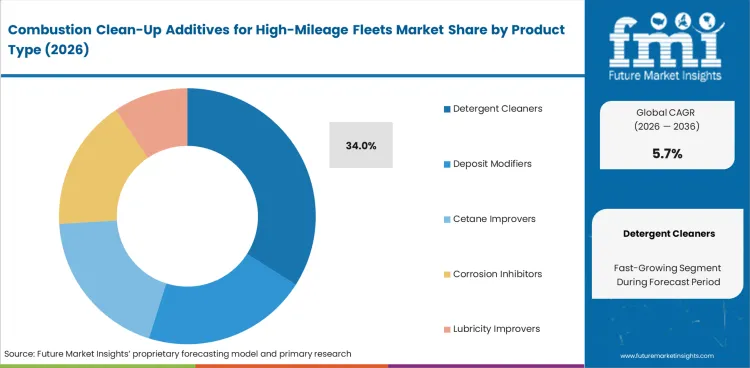
- By 2026, detergent cleaners are forecast at 34.0% of product type demand. Fleet maintenance teams use them first because injector deposits affect idle quality and smoke output. Fuel burn changes when injector spray weakens in older engines.
- Deposit modifiers stay useful in fleets exposed to mixed fuel quality or long storage cycles.
- Cetane improvers serve operators that need cleaner ignition during cold starts or low-speed duty cycles.
Insights into the Fuel Compatibility Segment
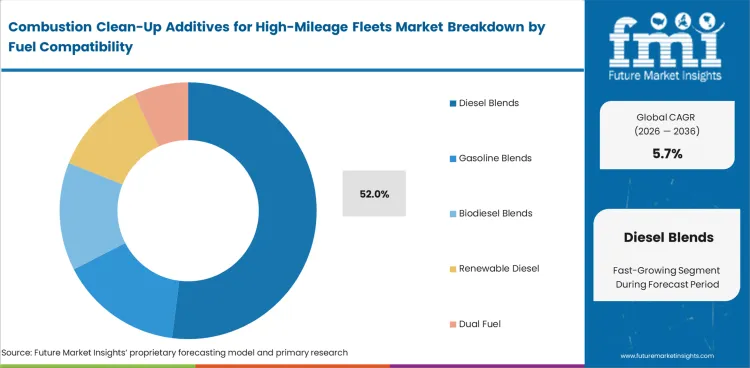
- A share of 52.0% places diesel blends ahead in fuel compatibility for the assessment period. Diesel remains the main treated fuel base because heavy trucks and buses create repeat additive volume across long operating routes.
- Biodiesel blends need careful additive selection since storage stability and water handling affect service outcomes.
Insights into the Fleet Type Segment
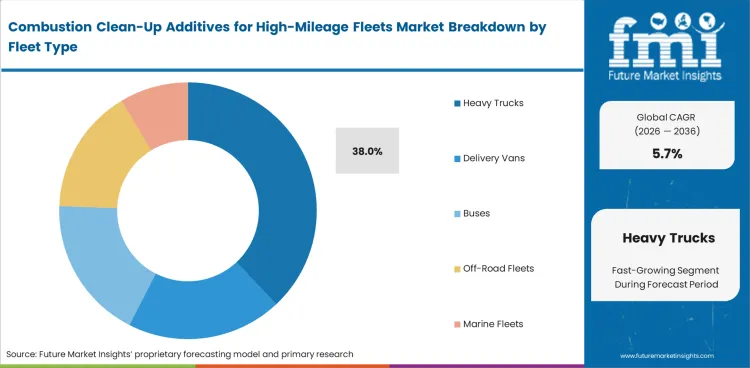
- During the forecast period, heavy trucks reach 38.0% of fleet type demand. Long routes and high engine load make deposit control more valuable for this fleet group.
- Delivery vans form a smaller but useful demand base in city service. Short trips create repeated cold operation. Repeated cold operation can raise injector fouling and smoke complaints.
Insights into the Service Channel Segment
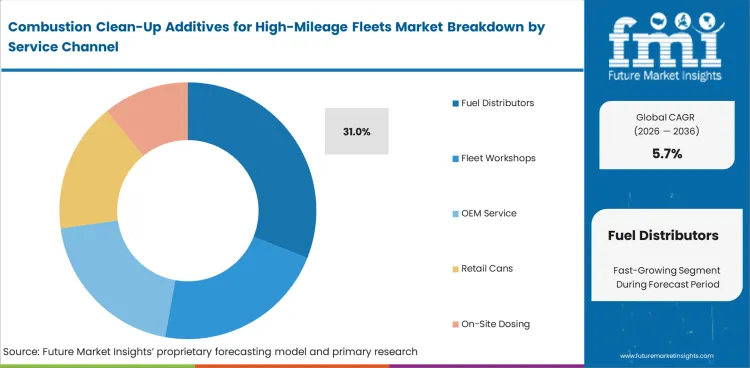
- Within service channel, fuel distributors are projected at 31.0% by 2026. Bulk diesel delivery gives fleet yards a practical point for additive dosing without adding separate workshop steps.
- Fleet workshops keep influence over product choice because service managers see injector faults and DPF complaints directly. OEM service stays selective and tends to focus on approved service products.
Insights into the Dosing Format Segment
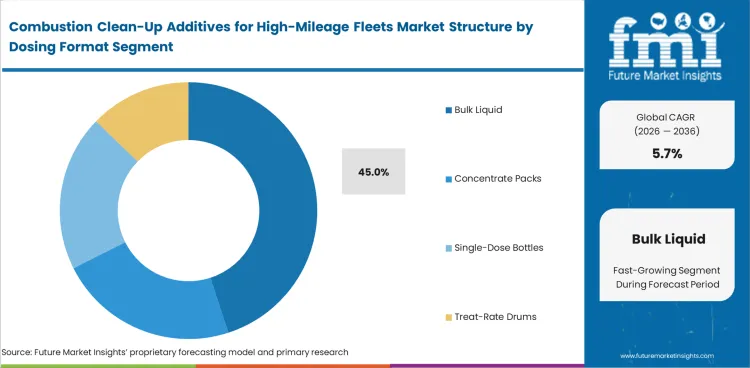
- Bulk liquid is anticipated to form the largest dosing format base at 45.0% in 2026. Fleet yards prefer measured treatment for storage tanks because dosing control lowers waste and service variation.
- Concentrate packs suit smaller fleets lacking automated dosing equipment. Single-dose bottles remain useful for emergency treatment after smoke or rough-idle complaints appear.
Combustion Clean-Up Additives for High-Mileage Fleets Market Drivers, Restraints, and Opportunities
- Injector deposit repair cost is raising detergent cleaner use across older diesel fleets.
- DPF regeneration concerns are moving some maintenance spend toward soot-control additives.
- Fuel mix changes create opportunity for additive packages protecting biodiesel and renewable diesel performance.
- Small fleet price resistance limits routine dosing until a clear maintenance problem appears.
Injector Deposit Control
High-mileage fleet maintenance is moving to preventive clean-up before fuel system faults appear. In June 2025, The Lubrizol Corporation launched Lubrizol® MF9145V diesel additive to reduce soot formation and DPF clogging at the source. Fleet operators use this additive to manage filter load before regeneration frequency raises service cost. Additive suppliers with field-tested products have a clearer route into scheduled fleet maintenance programs.
Diesel Filter Burden
DPF service exposure is pushing additives closer to planned diesel fleet maintenance. TotalEnergies Additives & Fuels Solutions reported that its Excellium Pro Concentrate pilot used more than 1,700 daily reports to compare vessel operation with and without the additive. Evidence at this level helps service teams connect fuel treatment with engine cleanliness and maintenance planning. Similar proof is useful for high-mileage road fleets requiring clean-up benefits without unplanned service disruption.
Analysis of Combustion Clean-Up Additives for High-Mileage Fleets Market by Key Countries
.webp "Top Country Growth Comparison Combustion Clean Up Additives For High Mileage Fleets Market Cagr (2026 2036)")
| Country | CAGR |
|---|---|
| India | 7.4% |
| China | 6.8% |
| Brazil | 6.2% |
| Saudi Arabia | 6.0% |
| United States | 5.9% |
| Germany | 4.7% |
| Japan | 4.4% |
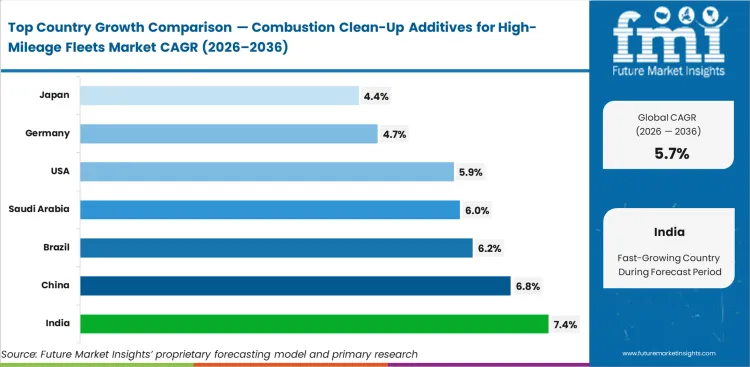
Source: FMI analysis based on primary research and proprietary forecasting model.
Combustion Clean-Up Additives for High-Mileage Fleets Market CAGR Analysis By Country
- India’s 7.4% CAGR during the assessment period comes from long diesel freight cycles and extended use of older commercial vehicles.
- China moves at 6.8% CAGR by 2036 with diesel trucks retaining a large role in heavy freight.
- Over the study period, Brazil demand advances at 6.2% CAGR because agricultural logistics keep diesel use steady.
- Saudi Arabia reaches 6.0% CAGR during the forecast window because construction logistics expand fleet service needs.
- The United States records 5.9% CAGR across the decade-long period with truck VMT growth sustaining additive-based maintenance.
- Germany posts 4.7% CAGR by 2036 as transport companies balance emissions rules with moderate freight activity.
- Japan registers 4.4% CAGR over the forecast window with disciplined maintenance and slower diesel fleet expansion.
- Global demand rises at 5.7% CAGR across the assessment period for the market.
Demand Outlook for Combustion Clean-Up Additives for High-Mileage Fleets Market in India
India’s freight base keeps diesel trucks central to long-distance goods movement. A 7.4% CAGR from 2026 to 2036 reflects extended vehicle use across intercity freight routes. Older diesel fleets need deposit-control additives because replacement cycles are slower in price-sensitive transport operations. Fuel distributors and workshops gain repeat demand by linking additive dosing with scheduled engine service.
- Delhi NCR compliance pressure raises attention on older diesel vehicles and cleaner engine service.
- Maharashtra freight corridors around Mumbai and Pune support additive use in delivery and heavy-truck fleets.
- Ministry of Road Transport and Highways (MoRTH) vehicle classes for MGV and HGV fleets help suppliers target road freight operators.
Sales Analysis of Combustion Clean-Up Additives for High-Mileage Fleets Market in China
China’s heavy freight system still relies on diesel vehicles across industrial and port logistics. Guangdong port trucking creates a clear use case for deposit-control additives in short-haul diesel service. China’s market outlook stands at 6.8% CAGR by 2036 because diesel blends still serve many high-mileage routes. Products handling local fuel variation will have better acceptance among large fleet workshops.
- Guangdong port logistics create additive demand across short-haul trucks exposed to stop-start service cycles.
- Hebei construction transport needs soot-control additives for heavy trucks under high-load operation.
- Shanghai delivery fleets add urban stop-start demand for injector cleaning and DPF care.
Demand Analysis of Combustion Clean-Up Additives for High-Mileage Fleets Market in Brazil
Brazil is anticipated at 6.2% CAGR during the forecast period as route length increases the value of deposit control. Brazil’s road freight system relies on long-haul diesel trucks across agricultural corridors. Mato Grosso grain routes create heavy mileage between farms and inland storage hubs. Additive demand improves when service teams connect fuel treatment with lower smoke and smoother engine response.
- Mato Grosso grain routes create heavy diesel mileage across long-haul trucks serving ports and storage hubs.
- São Paulo distribution fleets add steady demand for delivery truck treatment in dense retail routes.
- Minas Gerais mining logistics creates high-load engine conditions favoring soot-control additives.
Opportunity Analysis for Combustion Clean-Up Additives for High-Mileage Fleets Market in Saudi Arabia
Saudi Arabia’s fleet demand reflects construction logistics and industrial transport. NEOM project activity creates heavy diesel use across off-road equipment and road freight fleets. Clean-up additive demand is assessed at 6.0% CAGR from 2026 to 2036 as high heat and heavy load cycles increase engine stress. Suppliers with fuel distributor access serve fleets that need measured dosing and field checks.
- NEOM construction transport creates high-mileage diesel demand across heavy trucks and off-road fleets.
- Riyadh logistics hubs support bulk dosing via fuel distributor routes and scheduled fleet service.
- Eastern Province industrial corridors add demand for additives used across mixed fleet operations.
Future Outlook for Combustion Clean-Up Additives for High-Mileage Fleets Market in the United States
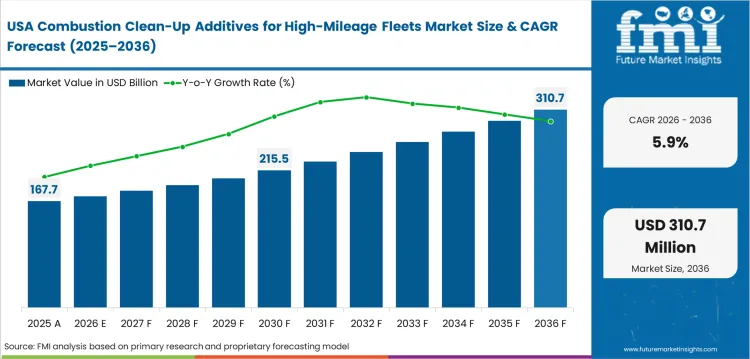
United States operators have a large service base for regional trucks and delivery fleets. California freight corridors create compliance pressure for older diesel vehicles near ports and urban air-quality zones. The country is projected at 5.9% CAGR over 2026 to 2036 because truck mileage sustains additive-based maintenance. Fuel additive registration rules keep supplier documentation important for gasoline and diesel products.
- California freight corridors place pressure on older diesel fleets near ports and clean-air zones.
- Texas distribution routes around Dallas and Houston support bulk treatment programs for regional fleets.
- EPA fuel additive registration requirements guide supplier compliance for gasoline and diesel additive products.
Demand Outlook for Combustion Clean-Up Additives for High-Mileage Fleets Market in Germany
Germany’s additive demand reflects disciplined fleet service and dense motorway freight. Bavaria manufacturing routes support regular truck movement across domestic and cross-border lanes. Germany’s 4.7% CAGR for the assessment period reflects measured additive use tied to service records. Fleet operators treat fuel when deposit-related costs are clear enough to justify routine dosing.
- Bavaria manufacturing routes support additive use across domestic and cross-border truck movement.
- North Rhine-Westphalia industrial distribution creates demand for diesel uptime and planned engine service.
- Federal Logistics and Mobility Office (BALM) toll activity gives suppliers a practical signal for heavy-truck movement and additive potential.
In-depth Analysis of Combustion Clean-Up Additives for High-Mileage Fleets Market in Japan
Japan’s market reflects reliability-focused fleet maintenance and slower vehicle replacement. Tokyo and Osaka freight lanes create dense delivery cycles that raise injector cleaning value. From 2026 to 2036, Japan is assessed at 4.4% CAGR as operators focus on planned service quality. Cold-weather routes and urban delivery patterns keep additives useful for older diesel trucks.
- Tokyo and Osaka freight lanes create dense route cycles that increase the value of injector cleaning.
- Ministry of Land, Infrastructure, Transport and Tourism (MLIT) logistics programs keep attention on efficient truck use as driver availability tightens.
- Hokkaido cold-weather operation supports additives helping fuel handling and cold-start performance.
Competitive Landscape and Strategic Positioning
- Market concentration is moderate because additive majors control core chemistry and regional distributors manage fleet access.
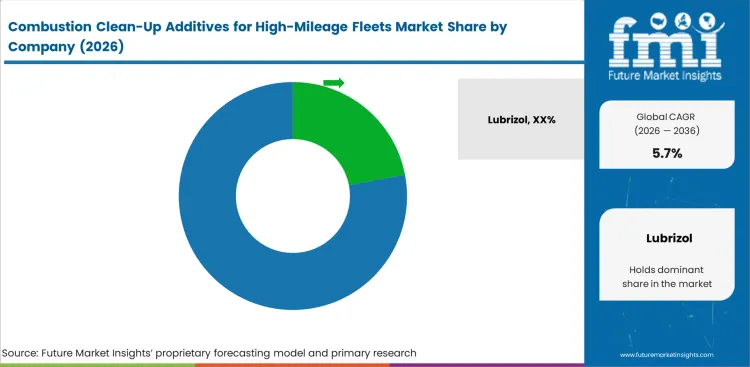
- Lubrizol and BASF SE hold clear positions with fuel additive launches and engine-cleanliness chemistry.
- Afton Chemical Corporation and Infineum International Limited compete with additive packages and fuel compatibility support.
- TotalEnergies Additives & Fuels Solutions and Innospec Inc. compete with fuel treatment programs and distributor reach.
- Smaller suppliers compete on service speed and price, although limited field proof may restrict access to large fleet contracts.
Competition in this market depends on proven engine-cleanliness performance and access to fleet service channels. Additive majors compete on chemistry depth and evidence that their products can reduce service issues in high-mileage vehicles. In June 2025, The Lubrizol Corporation launched Lubrizol® MF9145V diesel additive to reduce soot formation and DPF clogging at the source. The launch links additive use with filter service cost. Filter service cost is a practical concern for diesel fleets with older vehicles.
Established additive companies have an advantage because fleets need products working across fuel blends and engine types. In September 2025, BASF SE announced the Keropur® Gasoline Performance Additive Series certified for the new USA TOP TIER+ standard. BASF states that the additive is designed to protect engines and support cleaner combustion across injection systems. Standards-backed claims help transport companies compare additives with less performance risk.
Regional supply strength continues to influence repeat orders. Large fleets need dosing guidance and distributor support before adding additives to regular service plans. Smaller suppliers still win with workshop service and emergency treatment packs. Companies positioned to lead combine tested additive chemistry with clear service evidence and reliable distributor access.
Key Companies in the Combustion Clean-Up Additives for High-Mileage Fleets Market
- Additive Formulators: Lubrizol, Afton Chemical, BASF, Chevron Oronite, and Infineum lead with detergent chemistry and fuel additive packages.
- Fuel Treatment Providers: Innospec and TotalEnergies compete with fuel treatment programs for diesel, biodiesel and marine gas oil.
- Specialist Service Suppliers: BG Products and regional workshop brands compete with service kits and injector cleaning.
Competitive Benchmarking: Combustion Clean-Up Additives for High-Mileage Fleets Market
| Company | Detergent Chemistry Depth | Fleet Dosing Support | Fuel Compatibility Proof | Geographic Footprint |
|---|---|---|---|---|
| Lubrizol | High | High | High | Global |
| Afton Chemical | High | High | High | Global |
| BASF | High | Medium | High | Global |
| Chevron Oronite | High | Medium | High | Global |
| Infineum | High | High | High | Global |
| Innospec | Medium | High | High | Global |
| TotalEnergies | Medium | High | Medium | Multi-region |
| BG Products | Medium | Medium | Moderate | North America |
Source: Future Market Insights competitive analysis, 2026. Ratings reflect relative positioning based on detergent chemistry depth, fleet dosing support, and fuel compatibility proof.
Key Developments in Combustion Clean-Up Additives for High-Mileage Fleets Market
- In August 2025, Afton Chemical Corporation launched the HiTEC® 65522 Gasoline Performance Additive Series approved for TOP TIER+™ gasoline.
- In April 2025, Chevron Oronite announced ICONIC Base Oil Solutions as its official distributor in Brazil.
Key Players in the Combustion Clean-Up Additives for High-Mileage Fleets Market
Additive Formulators
- Lubrizol
- Afton Chemical
- BASF
- Chevron Oronite
- Infineum
Fuel Treatment Providers
- Innospec
- TotalEnergies Additives & Fuels Solutions
Specialist Service Suppliers
- BG Products
- LIQUI MOLY
- Wynn’s
Report Scope and Coverage
| Parameter | Details |
|---|---|
| Quantitative Units | USD 0.5 billion to USD 0.8 billion, at 5.7% CAGR |
| Market Definition | Fuel and lubricant additive products used to clean deposits and improve fuel burn in older fleet engines. |
| Regions Covered | North America, Latin America, Europe, East Asia, South Asia and Pacific, Middle East and Africa |
| Countries Covered | India, China, Brazil, Saudi Arabia, United States, Germany, Japan, 30+ countries |
| Key Companies Profiled | Lubrizol, Afton Chemical, BASF, Chevron Oronite, Infineum, Innospec, TotalEnergies Additives & Fuels Solutions |
| Forecast Period | 2026 to 2036 |
| Approach | Hybrid bottom-up and top-down methodology starting with verified transaction data and fleet dosing rates. |
Combustion Clean-Up Additives for High-Mileage Fleets Market by Segments
Combustion Clean-Up Additives for High-Mileage Fleets Market Segmented by Product Type:
- Detergent Cleaners
- Deposit Modifiers
- Cetane Improvers
- Corrosion Inhibitors
- Lubricity Improvers
Combustion Clean-Up Additives for High-Mileage Fleets Market Segmented by Fuel Compatibility:
- Diesel Blends
- Gasoline Blends
- Biodiesel Blends
- Renewable Diesel
- Dual Fuel
Combustion Clean-Up Additives for High-Mileage Fleets Market Segmented by Fleet Type:
- Heavy Trucks
- Delivery Vans
- Buses
- Off-Road Fleets
- Marine Fleets
Combustion Clean-Up Additives for High-Mileage Fleets Market Segmented by Service Channel:
- Fuel Distributors
- Fleet Workshops
- OEM Service
- Retail Cans
- On-Site Dosing
Combustion Clean-Up Additives for High-Mileage Fleets Market Segmented by Dosing Format:
- Bulk Liquid
- Concentrate Packs
- Single-Dose Bottles
- Treat-Rate Drums
Combustion Clean-Up Additives for High-Mileage Fleets Market by Region:
- North America
- United States
- Canada
- Mexico
- Latin America
- Brazil
- Chile
- Rest of Latin America
- Western Europe
- Germany
- UK
- France
- Italy
- Spain
- Nordic
- BENELUX
- Rest of Western Europe
- Eastern Europe
- Poland
- Hungary
- Balkan and Baltic
- Rest of Eastern Europe
- East Asia
- China
- Japan
- South Korea
- South Asia and Pacific
- India
- ASEAN
- Australia and New Zealand
- Rest of South Asia and Pacific
- Middle East and Africa
- Kingdom of Saudi Arabia
- Other GCC Countries
- Turkiye
- South Africa
- Rest of Middle East and Africa
Research Sources and Bibliography
- Federal Highway Administration. (2025, September). 2025 FHWA forecasts of vehicle miles traveled (VMT). USA Department of Transportation.
- German Federal Statistical Office. (2025, November 7). Truck toll mileage index in October 2025. Destatis.
- Lubrizol. (2025, June 18). Lubrizol launches Lubrizol® MF9145V diesel additive to solve DPF maintenance challenges. Lubrizol.
- TotalEnergies Additives & Fuels Solutions. (2025, June 2). Excellium Pro Concentrate: TotalEnergies Angola reduces the carbon footprint of its offshore fleet.
- United States Environmental Protection Agency. (2026, March 23). List of registered gasoline additives. United States Environmental Protection Agency.
- BASF SE. (2025, September 17). BASF launches Keropur® Gasoline Performance Additive Series certified for new USA TOP TIER+™ standard.
- Afton Chemical Corporation. (2025, August 25). Afton Chemical launches HiTEC® 65522 Gasoline Performance Additive Series approved for TOP TIER+™ gasoline.
- Chevron Oronite. (2025, April 16). Chevron Oronite announces ICONIC Base Oil Solutions as its official distributor in Brazil.
Bibliography uses primary government, regulatory, official company, and official trade body sources.
This Report Answers
- What is the current and future size of the combustion clean-up additives for high-mileage fleets market?
- How fast is the combustion clean-up additives for high-mileage fleets market forecast to grow from 2026 to 2036?
- Which product type is projected to lead demand for high-mileage fleet combustion clean-up additives in 2026?
- Which fuel compatibility segment is expected to represent the largest demand base during the forecast period?
- How do injector deposits and DPF service needs influence additive buying across high-mileage fleets?
- Which countries are forecast to grow fastest in combustion clean-up additive demand through 2036?
- How do additive formulators compete through detergent chemistry and fuel compatibility proof?
- How does FMI estimate and validate the forecast for combustion clean-up additives used in high-mileage fleets?
Frequently Asked Questions
What is the global market demand for combustion clean-up additives for high-mileage fleets in 2026?
In 2026, the global combustion clean-up additives for high-mileage fleets market is expected to be worth USD 0.5 billion.
How big will the combustion clean-up additives for high-mileage fleets market be by 2036?
By 2036, the market is forecast to reach USD 0.8 billion as fleets extend diesel engine service life.
What CAGR is forecast for the combustion clean-up additives for high-mileage fleets market?
Demand is projected to grow at 5.7% CAGR from 2026 to 2036 across bulk dosing and workshop service channels.
Which product type is expected to lead the market in 2026?
Detergent cleaners are projected to account for 34.0% of product type demand in 2026 as injector cleaning supports repeat use.
Which fuel compatibility segment is expected to lead demand in 2026?
Diesel blends are estimated to represent 52.0% of demand in 2026 as heavy trucks carry the largest treated volume.
Which country is expected to grow fastest through 2036?
India is projected to record 7.4% CAGR from 2026 to 2036 as diesel road freight fleets keep high-mileage vehicles active.
What does the market definition include?
Scope includes additives used to clean deposits, improve fuel burn and protect older engines in commercial fleet service.
How does FMI validate the market forecast?
FMI checks fleet dosing rates, additive supplier portfolios, truck mileage trends and fuel distributor feedback before finalizing the forecast.
Preview the report firsthand - request a free sample
Get SampleGet the brochure for pricing and purchase details.
Get PDFTable of Content
- Key Takeaways
- Market Size and CAGR
- Top Growth Driver
- Fastest Growing Segment
- Leading Region
- Key Companies
- Emerging Opportunities
- Executive Summary
- Global Market Outlook
- Demand-side Trends
- Supply-side Trends
- Technology Roadmap Analysis
- Analysis and Recommendations
- Analyst Perspective (What is happening? Why now? What should investors know?)
- Key Questions Answered
- How large is the market?
- What is the CAGR?
- What are key trends?
- Which region dominates?
- Who are the leaders?
- Market Overview
- Market Coverage / Taxonomy
- Market Definition / Scope / Limitations
- Research Methodology
- Chapter Orientation
- Analytical Lens and Working Hypotheses
- Market Structure, Signals, and Trend Drivers
- Benchmarking and Cross-market Comparability
- Market Sizing, Forecasting, and Opportunity Mapping
- Research Design and Evidence Framework
- Desk Research Programme (Secondary Evidence)
- Expert Input and Fieldwork (Primary Evidence)
- Tooling, Models, and Reference Databases
- Data Engineering and Model Build
- Quality Assurance and Audit Trail
- Market Background
- Market Dynamics (Drivers, Restraints, Opportunity, Trends)
- Scenario Forecast (Optimistic, Likely, Conservative)
- Impact Analysis
- AI Impact
- Sustainability Impact
- Regulatory Impact
- Technology Impact
- Consumer / Buyer Analysis
- Purchase Drivers
- Adoption Barriers
- Buyer Journey
- Opportunity Map Analysis
- Product Life Cycle Analysis
- Supply Chain Analysis
- Investment Feasibility Matrix
- Value Chain Analysis
- PESTLE and Porter's Analysis
- Regulatory Landscape
- Regional Parent Market Outlook
- Production and Consumption Statistics
- Import and Export Statistics
- Global Market Analysis and Forecast, 2021 to 2036
- Historical Market Size Value (USD Billion) & Volume (Unit) Analysis, 2021 to 2025
- Current and Future Market Size Value (USD Billion) & Volume (Unit) Projections, 2026 to 2036
- Y-o-Y Growth Trend Analysis
- Absolute $ Opportunity Analysis
- Global Market Pricing Analysis, 2021 to 2036
- Global Market Analysis and Forecast, By Product Type, 2021 to 2036
- Introduction / Key Findings
- Historical Market Size Value (USD Billion) & Volume (Unit) Analysis By Product Type, 2021 to 2025
- Current and Future Market Size Value (USD Billion) & Volume (Unit) Analysis and Forecast By Product Type, 2026 to 2036
- Detergent Cleaners
- Deposit Modifiers
- Cetane Improvers
- Corrosion Inhibitors
- Lubricity Improvers
- Detergent Cleaners
- Y-o-Y Growth Trend Analysis By Product Type, 2021 to 2025
- Absolute $ Opportunity Analysis By Product Type, 2026 to 2036
- Global Market Analysis and Forecast, By Fuel Compatibility, 2021 to 2036
- Introduction / Key Findings
- Historical Market Size Value (USD Billion) & Volume (Unit) Analysis By Fuel Compatibility, 2021 to 2025
- Current and Future Market Size Value (USD Billion) & Volume (Unit) Analysis and Forecast By Fuel Compatibility, 2026 to 2036
- Diesel Blends
- Gasoline Blends
- Biodiesel Blends
- Renewable Diesel
- Dual Fuel
- Diesel Blends
- Y-o-Y Growth Trend Analysis By Fuel Compatibility, 2021 to 2025
- Absolute $ Opportunity Analysis By Fuel Compatibility, 2026 to 2036
- Global Market Analysis and Forecast, By Fleet Type, 2021 to 2036
- Introduction / Key Findings
- Historical Market Size Value (USD Billion) & Volume (Unit) Analysis By Fleet Type, 2021 to 2025
- Current and Future Market Size Value (USD Billion) & Volume (Unit) Analysis and Forecast By Fleet Type, 2026 to 2036
- Heavy Trucks
- Delivery Vans
- Buses
- Off-Road Fleets
- Marine Fleets
- Heavy Trucks
- Y-o-Y Growth Trend Analysis By Fleet Type, 2021 to 2025
- Absolute $ Opportunity Analysis By Fleet Type, 2026 to 2036
- Global Market Analysis and Forecast, By Service Channel, 2021 to 2036
- Introduction / Key Findings
- Historical Market Size Value (USD Billion) & Volume (Unit) Analysis By Service Channel, 2021 to 2025
- Current and Future Market Size Value (USD Billion) & Volume (Unit) Analysis and Forecast By Service Channel, 2026 to 2036
- Fuel Distributors
- Fleet Workshops
- OEM Service
- Retail Cans
- On-Site Dosing
- Fuel Distributors
- Y-o-Y Growth Trend Analysis By Service Channel, 2021 to 2025
- Absolute $ Opportunity Analysis By Service Channel, 2026 to 2036
- Global Market Analysis and Forecast, By Dosing Format, 2021 to 2036
- Introduction / Key Findings
- Historical Market Size Value (USD Billion) & Volume (Unit) Analysis By Dosing Format, 2021 to 2025
- Current and Future Market Size Value (USD Billion) & Volume (Unit) Analysis and Forecast By Dosing Format, 2026 to 2036
- Bulk Liquid
- Concentrate Packs
- Single-Dose Bottles
- Treat-Rate Drums
- Bulk Liquid
- Y-o-Y Growth Trend Analysis By Dosing Format, 2021 to 2025
- Absolute $ Opportunity Analysis By Dosing Format, 2026 to 2036
- Global Market Analysis and Forecast, By Region, 2021 to 2036
- Introduction
- Historical Market Size Value (USD Billion) & Volume (Unit) Analysis By Region, 2021 to 2025
- Current Market Size Value (USD Billion) & Volume (Unit) Analysis and Forecast By Region, 2026 to 2036
- North America
- Latin America
- Western Europe
- Eastern Europe
- East Asia
- South Asia and Pacific
- Middle East & Africa
- Market Attractiveness Analysis By Region
- North America Market Analysis and Forecast, By Country, 2021 to 2036
- Historical Market Size Value (USD Billion) & Volume (Unit) Trend Analysis By Market Taxonomy, 2021 to 2025
- Market Size Value (USD Billion) & Volume (Unit) Forecast By Market Taxonomy, 2026 to 2036
- By Country
- USA
- Canada
- Mexico
- By Product Type
- By Fuel Compatibility
- By Fleet Type
- By Service Channel
- By Dosing Format
- By Country
- Market Attractiveness Analysis
- By Country
- By Product Type
- By Fuel Compatibility
- By Fleet Type
- By Service Channel
- By Dosing Format
- Key Takeaways
- Latin America Market Analysis and Forecast, By Country
- Historical Market Size Value (USD Billion) & Volume (Unit) Trend Analysis By Market Taxonomy, 2021 to 2025
- Market Size Value (USD Billion) & Volume (Unit) Forecast By Market Taxonomy, 2026 to 2036
- By Country
- Brazil
- Chile
- Rest of Latin America
- By Product Type
- By Fuel Compatibility
- By Fleet Type
- By Service Channel
- By Dosing Format
- By Country
- Market Attractiveness Analysis
- By Country
- By Product Type
- By Fuel Compatibility
- By Fleet Type
- By Service Channel
- By Dosing Format
- Key Takeaways
- Western Europe Market Analysis and Forecast, By Country
- Historical Market Size Value (USD Billion) & Volume (Unit) Trend Analysis By Market Taxonomy, 2021 to 2025
- Market Size Value (USD Billion) & Volume (Unit) Forecast By Market Taxonomy, 2026 to 2036
- By Country
- Germany
- UK
- Italy
- Spain
- France
- Nordic
- BENELUX
- Rest of Western Europe
- By Product Type
- By Fuel Compatibility
- By Fleet Type
- By Service Channel
- By Dosing Format
- By Country
- Market Attractiveness Analysis
- By Country
- By Product Type
- By Fuel Compatibility
- By Fleet Type
- By Service Channel
- By Dosing Format
- Key Takeaways
- Eastern Europe Market Analysis and Forecast, By Country
- Historical Market Size Value (USD Billion) & Volume (Unit) Trend Analysis By Market Taxonomy, 2021 to 2025
- Market Size Value (USD Billion) & Volume (Unit) Forecast By Market Taxonomy, 2026 to 2036
- By Country
- Russia
- Poland
- Hungary
- Balkan & Baltic
- Rest of Eastern Europe
- By Product Type
- By Fuel Compatibility
- By Fleet Type
- By Service Channel
- By Dosing Format
- By Country
- Market Attractiveness Analysis
- By Country
- By Product Type
- By Fuel Compatibility
- By Fleet Type
- By Service Channel
- By Dosing Format
- Key Takeaways
- East Asia Market Analysis and Forecast, By Country
- Historical Market Size Value (USD Billion) & Volume (Unit) Trend Analysis By Market Taxonomy, 2021 to 2025
- Market Size Value (USD Billion) & Volume (Unit) Forecast By Market Taxonomy, 2026 to 2036
- By Country
- China
- Japan
- South Korea
- By Product Type
- By Fuel Compatibility
- By Fleet Type
- By Service Channel
- By Dosing Format
- By Country
- Market Attractiveness Analysis
- By Country
- By Product Type
- By Fuel Compatibility
- By Fleet Type
- By Service Channel
- By Dosing Format
- Key Takeaways
- South Asia and Pacific Market Analysis and Forecast, By Country
- Historical Market Size Value (USD Billion) & Volume (Unit) Trend Analysis By Market Taxonomy, 2021 to 2025
- Market Size Value (USD Billion) & Volume (Unit) Forecast By Market Taxonomy, 2026 to 2036
- By Country
- India
- ASEAN
- Australia & New Zealand
- Rest of South Asia and Pacific
- By Product Type
- By Fuel Compatibility
- By Fleet Type
- By Service Channel
- By Dosing Format
- By Country
- Market Attractiveness Analysis
- By Country
- By Product Type
- By Fuel Compatibility
- By Fleet Type
- By Service Channel
- By Dosing Format
- Key Takeaways
- Middle East & Africa Market Analysis and Forecast, By Country
- Historical Market Size Value (USD Billion) & Volume (Unit) Trend Analysis By Market Taxonomy, 2021 to 2025
- Market Size Value (USD Billion) & Volume (Unit) Forecast By Market Taxonomy, 2026 to 2036
- By Country
- Kingdom of Saudi Arabia
- Other GCC Countries
- Türkiye
- South Africa
- Other African Union
- Rest of Middle East & Africa
- By Product Type
- By Fuel Compatibility
- By Fleet Type
- By Service Channel
- By Dosing Format
- By Country
- Market Attractiveness Analysis
- By Country
- By Product Type
- By Fuel Compatibility
- By Fleet Type
- By Service Channel
- By Dosing Format
- Key Takeaways
- Key Countries Market Analysis
- USA
- Pricing Analysis
- Market Share Analysis, 2025
- By Product Type
- By Fuel Compatibility
- By Fleet Type
- By Service Channel
- By Dosing Format
- Canada
- Pricing Analysis
- Market Share Analysis, 2025
- By Product Type
- By Fuel Compatibility
- By Fleet Type
- By Service Channel
- By Dosing Format
- Mexico
- Pricing Analysis
- Market Share Analysis, 2025
- By Product Type
- By Fuel Compatibility
- By Fleet Type
- By Service Channel
- By Dosing Format
- Brazil
- Pricing Analysis
- Market Share Analysis, 2025
- By Product Type
- By Fuel Compatibility
- By Fleet Type
- By Service Channel
- By Dosing Format
- Chile
- Pricing Analysis
- Market Share Analysis, 2025
- By Product Type
- By Fuel Compatibility
- By Fleet Type
- By Service Channel
- By Dosing Format
- Germany
- Pricing Analysis
- Market Share Analysis, 2025
- By Product Type
- By Fuel Compatibility
- By Fleet Type
- By Service Channel
- By Dosing Format
- UK
- Pricing Analysis
- Market Share Analysis, 2025
- By Product Type
- By Fuel Compatibility
- By Fleet Type
- By Service Channel
- By Dosing Format
- Italy
- Pricing Analysis
- Market Share Analysis, 2025
- By Product Type
- By Fuel Compatibility
- By Fleet Type
- By Service Channel
- By Dosing Format
- Spain
- Pricing Analysis
- Market Share Analysis, 2025
- By Product Type
- By Fuel Compatibility
- By Fleet Type
- By Service Channel
- By Dosing Format
- France
- Pricing Analysis
- Market Share Analysis, 2025
- By Product Type
- By Fuel Compatibility
- By Fleet Type
- By Service Channel
- By Dosing Format
- India
- Pricing Analysis
- Market Share Analysis, 2025
- By Product Type
- By Fuel Compatibility
- By Fleet Type
- By Service Channel
- By Dosing Format
- ASEAN
- Pricing Analysis
- Market Share Analysis, 2025
- By Product Type
- By Fuel Compatibility
- By Fleet Type
- By Service Channel
- By Dosing Format
- Australia & New Zealand
- Pricing Analysis
- Market Share Analysis, 2025
- By Product Type
- By Fuel Compatibility
- By Fleet Type
- By Service Channel
- By Dosing Format
- China
- Pricing Analysis
- Market Share Analysis, 2025
- By Product Type
- By Fuel Compatibility
- By Fleet Type
- By Service Channel
- By Dosing Format
- Japan
- Pricing Analysis
- Market Share Analysis, 2025
- By Product Type
- By Fuel Compatibility
- By Fleet Type
- By Service Channel
- By Dosing Format
- South Korea
- Pricing Analysis
- Market Share Analysis, 2025
- By Product Type
- By Fuel Compatibility
- By Fleet Type
- By Service Channel
- By Dosing Format
- Russia
- Pricing Analysis
- Market Share Analysis, 2025
- By Product Type
- By Fuel Compatibility
- By Fleet Type
- By Service Channel
- By Dosing Format
- Poland
- Pricing Analysis
- Market Share Analysis, 2025
- By Product Type
- By Fuel Compatibility
- By Fleet Type
- By Service Channel
- By Dosing Format
- Hungary
- Pricing Analysis
- Market Share Analysis, 2025
- By Product Type
- By Fuel Compatibility
- By Fleet Type
- By Service Channel
- By Dosing Format
- Kingdom of Saudi Arabia
- Pricing Analysis
- Market Share Analysis, 2025
- By Product Type
- By Fuel Compatibility
- By Fleet Type
- By Service Channel
- By Dosing Format
- Türkiye
- Pricing Analysis
- Market Share Analysis, 2025
- By Product Type
- By Fuel Compatibility
- By Fleet Type
- By Service Channel
- By Dosing Format
- South Africa
- Pricing Analysis
- Market Share Analysis, 2025
- By Product Type
- By Fuel Compatibility
- By Fleet Type
- By Service Channel
- By Dosing Format
- USA
- Market Structure Analysis
- Competition Dashboard
- Competition Benchmarking
- Market Share Analysis of Top Players
- By Regional
- By Product Type
- By Fuel Compatibility
- By Fleet Type
- By Service Channel
- By Dosing Format
- Emerging Startups
- Innovation Benchmarking
- Competition Analysis
- Competition Deep Dive
- Lubrizol
- Overview
- Product Portfolio
- Profitability by Market Segments (Product/Region/Sales Channel)
- Sales Footprint
- Strategy Overview
- Marketing Strategy
- Product Strategy
- Channel Strategy
- Afton Chemical
- BASF
- Chevron Oronite
- Infineum
- Innospec
- TotalEnergies Additives & Fuels Solutions
- BG Products
- LIQUI MOLY
- Wynn’s
- Lubrizol
- Case Studies
- Success Stories
- Recent Developments
- Competition Deep Dive
- Assumptions & Acronyms Used


