

- Market Size (2026)
- USD 295.5 Mn
- Forecast (2036)
- USD 500.0 Mn
- CAGR (2026 to 2036)
- 5.4%
Corrosion-Inhibiting Sealant Systems for Riveted Joints Market Size, Forecast, and Outlook By FMI
Summary of the Corrosion-Inhibiting Sealant Systems for Riveted Joints Market
- Demand and Growth Drivers
- Sealant demand is rising owing to moisture control in riveted lap joints as aircraft stay in service for longer periods.
- MRO work creates repeat use as heavy checks reopen access panels and expose fastener rows across commercial aircraft MRO programs.
- Non-chromate material requirements are moving suppliers toward corrosion-resistant systems with clear aircraft approval records.
- Product and Segment View
- Class B sealants hold the clearest demand base as extrusion formats suit vertical rivet rows and fastener sealing work.
- Polysulfide chemistry continues to serve lap joint and fuel bay applications because aerospace adhesives and sealants need proven service records.
- Preformed caps help repair shops reduce hand tooling around repeated fastener sealing tasks.
- Geography and Competitive Outlook
- The United States sustains value through aircraft production and established aviation maintenance networks.
- India and China show faster demand growth as local MRO capacity and fleet activity expand.
- PPG, 3M, Henkel and Flamemaster compete through approved aerospace chemistries and repair-ready packaging formats.
- Analyst Opinion
- Nikhil Kaitwade, Principal Consultant at FMI says, “I see corrosion-inhibiting sealant systems as a specialized airframe protection market. Riveted joints are small application points, yet they carry high inspection risk when moisture reaches aluminum overlaps or mixed-metal fasteners.
- Corrosion-Inhibiting Sealant Systems for Riveted Joints Market Value Analysis
- Corrosion-inhibiting sealant systems create value by protecting riveted joints from moisture entry and hidden corrosion.
- Class B sealants support repeat spending as repair crews need controlled application around fastener rows.
- Faying surface protection forms a core use case because sealed overlaps reduce corrosion risk before joints are closed.
- MRO supply remains necessary as maintenance shops prefer small packs and approved cartridges for scheduled air transport MRO checks.
- Supplier capability affects pricing because cure control and qualification records decide material approval in aircraft programs.
Key Takeaways, Market Size, and Forecast
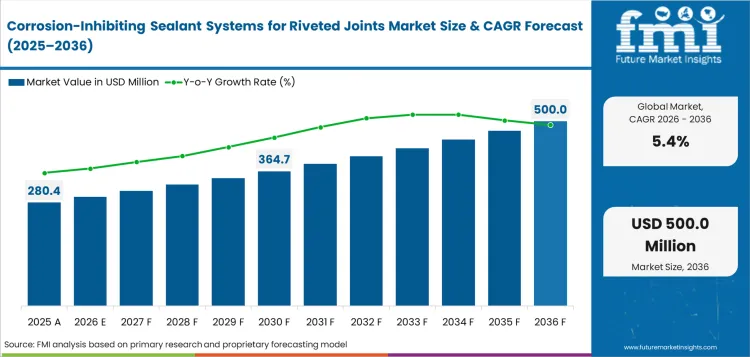
- The market 280.4 million was valued at USD 280.4 million in 2025.
- By 2036, the market is forecast to reach USD 500.0 million as riveted airframe joints need moisture-blocking protection.
- Demand is projected to rise at 5.4% CAGR during the forecast timeframe.
- The market is forecast to create an incremental opportunity of USD 204.5 million between 2026 and 2036.
- Class B sealants are projected to account for 38.0% of sealant class demand in 2026 as extrusion-grade materials suit fastener sealing.
- Polysulfide chemistry is anticipated to hold 62.0% share in 2026 because of its established fuel resistance in aircraft joint sealing.
- India and China are expected to record the fastest growth at 7.2% and 6.8% CAGR through 2036 as local MRO activity and aircraft fleet expansion support demand.
Riveted aircraft joints create corrosion risk because moisture can stay trapped between fastened metal surfaces. In 2026, PPG positioned P/S 870 Class C for roller and faying-surface sealing on aluminum alloys and dissimilar metals. That makes the sealant a barrier before the rivets close the joint. Boeing Distribution Services adds the production issue through P/S 870 C-48, which gives 48 hours of application life for large sealing work. Longer working time helps assembly teams seal broad panel sections with fewer timing errors. Fastener ends also need local protection after assembly. PPG’s PRC Seal Caps show how dome sealing can make rivet and fastener protection more consistent. The February 2024 AIAA lap-joint study adds an engineering caution because sealant and corrosion-inhibiting compounds must be checked against fatigue behavior. EASA’s December 2024 corrosion-control rule keeps demand tied to documented airworthiness programs.
Corrosion-Inhibiting Sealant Systems for Riveted Joints Market Definition
The corrosion-inhibiting sealant systems for riveted joints market includes aircraft-grade sealants used to protect riveted overlaps, faying surfaces, fastener holes, and access panel interfaces. These products block moisture entry and reduce corrosion risk between aluminum alloys or dissimilar metals.
Corrosion-Inhibiting Sealant Systems for Riveted Joints Market Inclusions
Market scope includes corrosion-inhibiting sealants, non-chromate sealants, chromate-containing legacy systems, preformed fastener caps, sprayable sealants, adhesion promoters, cartridge packaging, PMF formats, OEM supply, MRO supply, distributor supply, and demand across global aerospace regions. Stakeholders include aerospace sealant manufacturers, aircraft OEMs, MRO service providers, aerospace material distributors, defense aviation contractors, airline maintenance teams, and airframe component suppliers.
Corrosion-Inhibiting Sealant Systems for Riveted Joints Market Exclusions
Scope excludes architectural joint sealants, marine hull caulks, automotive seam sealers, standalone conversion coatings, general corrosion sprays, aircraft paints, and fuel tank sealants used away from riveted or fastened joint protection.
Corrosion-Inhibiting Sealant Systems for Riveted Joints Market Research Methodology
- Primary Research: Analysts reviewed aerospace sealant formulators and aircraft MRO distributors. The review covered airframe material specialists and maintenance planners. Interviews focused on cure schedules and packaging choices. Qualification limits and rework causes were reviewed during aircraft joint sealing discussions.
- Desk Research: Product scope was defined through aerospace sealant data sheets and material qualification references. Supplier catalogs and aviation maintenance signals helped confirm the addressable product pool. The review focused on corrosion-inhibiting sealants used across Class A, Class B and Class C applications.
- Market Sizing and Forecasting: The model combined aircraft production exposure with MRO sealant use patterns. Application rates by joint area helped estimate demand across riveted structures. Country-level aerospace activity was used to adjust regional demand.
- Data Validation: Forecast assumptions were checked against aircraft delivery trends and national aerospace production activity. Active supplier portfolios were reviewed to confirm product availability. Cross-checks focused on qualified materials used in OEM and MRO joint sealing work.
Why is the Corrosion-Inhibiting Sealant Systems for Riveted Joints Market Growing?
- Aircraft lap joints require sealant barriers as moisture entry can start hidden corrosion around rivet rows.
- MRO work increases sealant demand when older aircraft enter heavy maintenance and structural checks.
- Non-chromate programs are receiving attention as aerospace suppliers reduce exposure to legacy chromate systems.
- Preformed caps reduce hand tooling time and help maintenance teams control waste during fastener sealing.
Aircraft maintenance demand gives this market a stable base as riveted joints stay exposed through long aircraft service lives. The FAA expects the USA commercial aircraft fleet to increase from 7,387 aircraft in 2024 to 10,607 by 2045. This fleet expansion means more inspection points across lap joints and fastener rows during scheduled maintenance. Sealant suppliers gain when products work across aluminum alloys and dissimilar metals. MRO distributors benefit from cartridge formats and frozen premix options that match small-area repair work.
OEM demand comes from aircraft delivery recovery and qualified material use in production. Riveted and fastened structures still need corrosion control because overlap zones are difficult to inspect after assembly. Joint sealants protect these hidden areas by reducing moisture entry around fasteners and faying surfaces. Suppliers with proven qualification records can protect repeat orders as aircraft production rates improve.
Market Segmentation Analysis
- Class B sealants are projected to account for 38.0% as extrusion-grade use suits fastener sealing in the base year.
- Proven aircraft fluid resistance is expected to keep polysulfide chemistry at 62.0% during the 2026 assessment.
- Faying surfaces are anticipated to hold 34.0% as hidden overlap protection guides specification use at the start of the forecast period.
- Commercial aircraft are projected at 49.0% share in the base year because larger fleets create frequent MRO work.
- Repair kit use is expected to keep MRO supply at 41.0% as repeat service events increase across the forecast period.
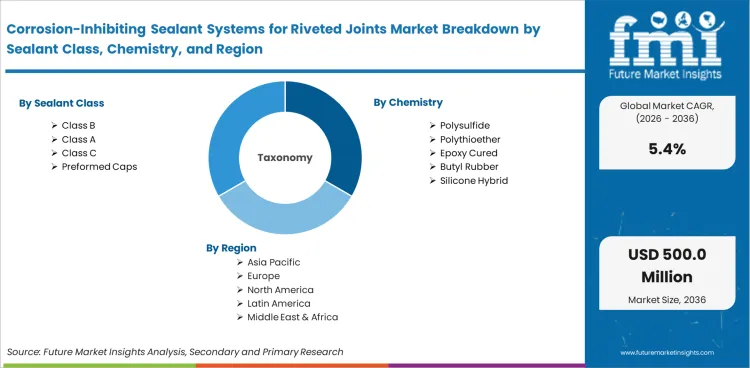
The market is segmented by sealant class, chemistry, joint area, aircraft type, and sales channel. Sealant class includes Class B, Class A, Class C, preformed caps, and sprayable sealants. Chemistry covers polysulfide, polythioether, epoxy cured, butyl rubber, and silicone hybrid systems. Joint area includes faying surfaces, fastener seals, lap joints, access panels, and fuel bays. Aircraft type covers commercial aircraft, military aircraft, business jets, helicopters, and regional aircraft. Sales channel includes OEM supply, MRO supply, distributor supply, defense contracts, and online supply.
Insights into the Class B Sealant Class Segment
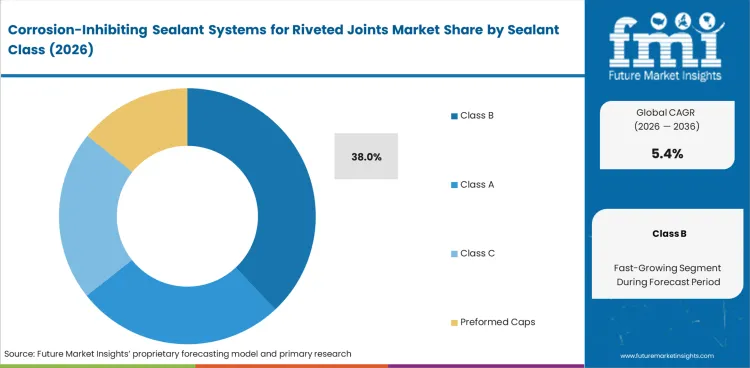
- Class B sealants are projected to account for 38.0% in 2026 as low-sag extrusion helps technicians seal vertical fastener rows with less rework.
- Class A systems suit brush coating on faying surfaces. Class C products serve assembly work that needs longer open time before parts are closed.
Insights into the Polysulfide Chemistry Segment
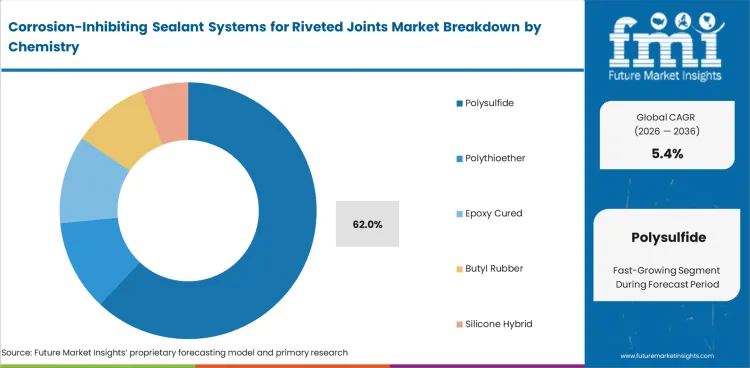
- Established aircraft fluid resistance is expected to keep polysulfide chemistry at 62.0% in 2026.
- Flamemaster’s CS 3213 Class B uses a two-part polysulfide system for faying surfaces and joint sealing. Its corrosion test record supports its use in aircraft sealing work.
Insights into the Faying Surfaces Joint Area Segment
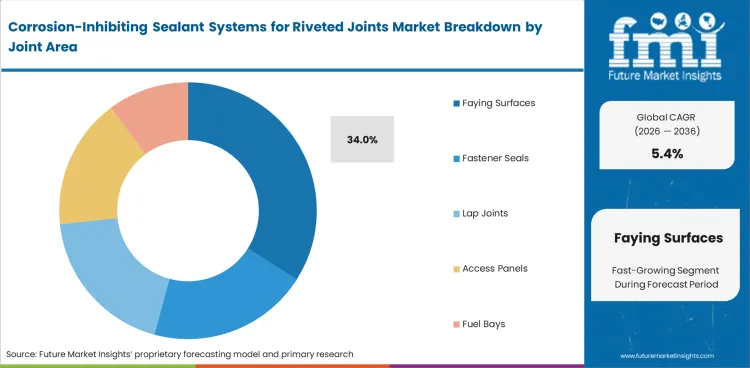
- Faying surfaces are anticipated to hold 34.0% in 2026 as overlap interfaces need protection before rivets close the joint.
- Sealant selection depends on application life. Large skin sections need enough open time for alignment before fastening begins.
Insights into the Commercial Aircraft Type Segment
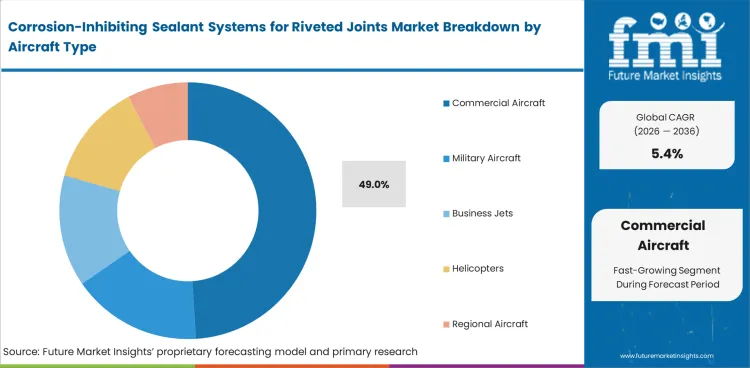
- Commercial aircraft are projected at 49.0% share in the base year because fleet scale creates broad sealing workload.
- Military aircraft use more specification-bound materials. Helicopters create smaller but frequent demand around access panels and mixed-metal fasteners.
Insights into the MRO Supply Sales Channel Segment
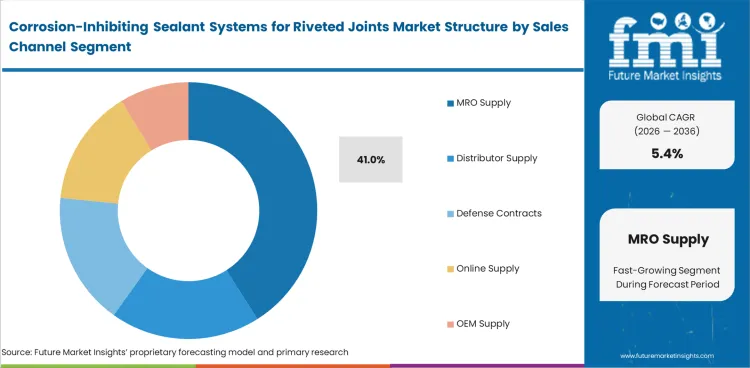
- MRO supply is forecast to represent 41.0% as maintenance shops use smaller kits for inspection-based sealing in 2026.
- Distributor supply matters for AOG repair because shelf life and batch certificates affect return-to-service timing.
Corrosion-Inhibiting Sealant Systems for Riveted Joints Market Drivers, Restraints, and Opportunities
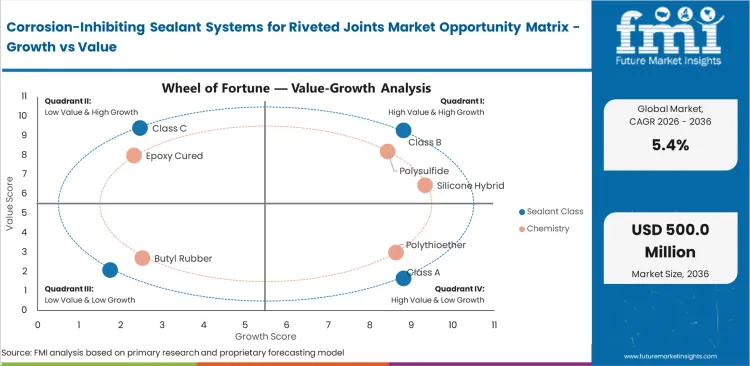
- Riveted lap-joint inspection creates repeat demand for approved sealants during heavy maintenance checks.
- Non-chromate material work creates opportunity for suppliers with qualified corrosion-resistant and lower-exposure materials across non-chromate corrosion protection.
- A restraint comes from long approval cycles that slow new chemistry entry into aircraft manuals.
- Preformed fastener caps offer process savings when repair teams need repeatable dome sealing.
- Price pressure stays high in legacy fleets because approved alternatives must pass technical and documentation checks.
Rivet-Row Moisture Blocking
Rivet rows create narrow gaps that can pull moisture into hidden overlap areas. Corrosion-inhibiting sealants reduce exposure by forming a barrier around faying surfaces and fasteners. This barrier helps protect aluminum overlaps and mixed-metal contact points during long aircraft service. Suppliers gain repeat demand when their products show stable adhesion and cure behavior in OEM and MRO programs.
Non-Chromate Qualification Push
Regulatory and worker-exposure pressure is altering how aircraft surface protection products are specified. In September 2025, Henkel Adhesive Technologies introduced BONDERITE M-CR 1132 M AERO Pen for controlled aircraft touchup in tight areas such as fastener holes as small as 3/16 inch. The product supports sealant work because bare aluminum around fastener holes needs protection before the joint is closed or repaired. Suppliers that combine corrosion control with easier field application can strengthen their MRO position.
Analysis of Corrosion-Inhibiting Sealant Systems for Riveted Joints Market by Key Countries
.webp "Top Country Growth Comparison Corrosion Inhibiting Sealant Systems For Riveted Joints Market Cagr (2026 2036)")
| Country | CAGR |
|---|---|
| United States | 5.6% |
| China | 6.8% |
| India | 7.2% |
| Germany | 5.1% |
| France | 4.9% |
| United Kingdom | 5.0% |
| Japan | 4.4% |
Source: FMI analysis based on primary research and proprietary forecasting model.
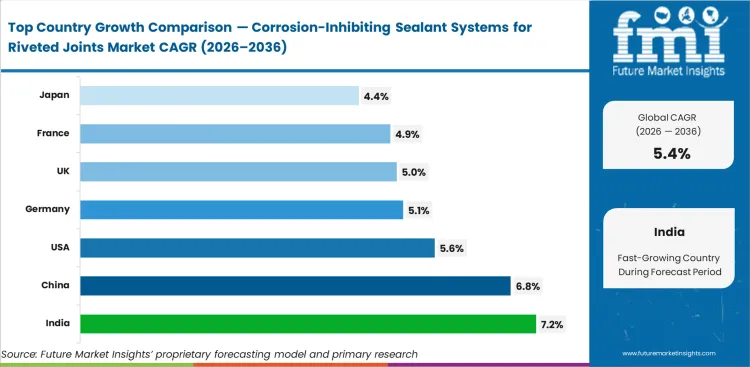
Corrosion-Inhibiting Sealant Systems for Riveted Joints Market CAGR Analysis By Country
- United States aircraft production and heavy MRO work are expected to keep sealant use steady, with the country projected to record 5.6% CAGR between 2026 and 2036.
- China is expected to expand at 6.8% CAGR during the forecast period as transport aircraft growth widens the local maintenance base.
- Airport connectivity and airline fleet growth are set to push India to 7.2% CAGR by 2036, making it the highest listed country rate.
- Germany is expected to advance at 5.1% CAGR in the assessment period due to its civil aerospace supplier base and engineering depth.
- France’s aircraft assembly and export production base support a projected 4.9% CAGR between 2026 and 2036.
- Aerospace exports and defense aviation work are expected to keep the United Kingdom at 5.0% CAGR by the end of the forecast period.
- Japan is forecast to post 4.4% CAGR during the study period as aircraft component output and MRO demand keep sealant use stable.
Demand Outlook for Corrosion-Inhibiting Sealant Systems for Riveted Joints in the United States
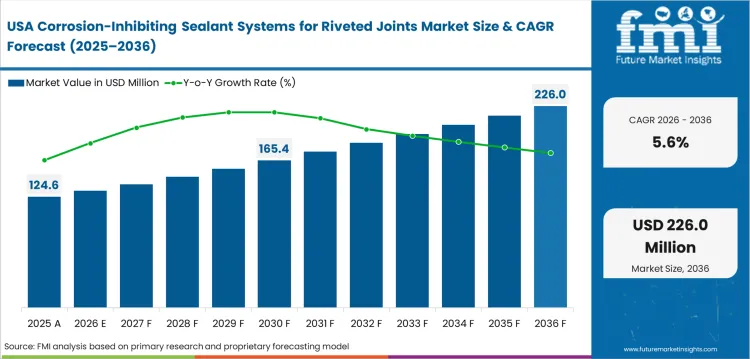
The USA corrosion-inhibiting sealant systems for riveted joints market is projected to record 5.6% CAGR between 2026 and 2036. Aircraft production depth and heavy maintenance work support steady sealant use. Airlines continue to keep narrowbody aircraft in service for longer periods. Lap joint inspection and fastener row repair create repeat material needs. PPG and 3M hold important positions through approved aerospace sealant portfolios.
- Wichita and Seattle supply chains support OEM use of qualified sealants around aircraft skin overlaps.
- FAA oversight keeps documentation discipline high for repair materials used in certificated aircraft maintenance work.
- Texas and Florida MRO clusters support cartridge use for corrosion touchup during heavy checks.
Sales Analysis of Corrosion-Inhibiting Sealant Systems for Riveted Joints in China
China’s market is expected to expand at 6.8% CAGR during the forecast period. Transport aircraft growth and local maintenance capacity are widening sealant requirements. Domestic aircraft programs are increasing attention on approved joint protection materials. Local MRO shops need corrosion-inhibiting sealants for inspection work and airframe repair. Suppliers with local technical support can gain an advantage when maintenance manuals require tested systems.
- Shanghai and Tianjin aircraft clusters support qualified consumable use across assembly work.
- CAAC airworthiness oversight favors suppliers with clear documentation for aircraft maintenance chemicals.
- COMAC-related supply chains increase attention on local approval paths for joint protection materials.
Demand Analysis of Corrosion-Inhibiting Sealant Systems for Riveted Joints in India
India is forecast to grow at 7.2% CAGR by 2036. Regional aviation expansion and local MRO capacity are producing a wider service base. Domestic airlines need approved sealants for fastener-heavy structures and access-panel work. Small-pack formats support repair activity across aircraft maintenance centers. Bengaluru and Hyderabad are drawing more attention as aerospace repair capability improves.
- Bengaluru aerospace activity supports certified sealant use in aircraft repair and structural shop work.
- UDAN route expansion raises aircraft use across routes that need periodic maintenance checks.
- Delhi NCR maintenance networks support distributor sales of approved cartridges and shelf-stable repair materials.
Opportunity Analysis of Corrosion-Inhibiting Sealant Systems for Riveted Joints in Germany
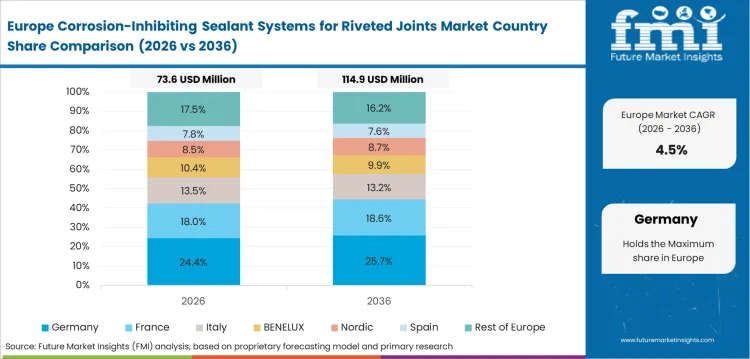
Germany’s corrosion-inhibiting sealant systems for riveted joints market is forecast to advance at 5.1% CAGR in the assessment period. Airframe component capability and disciplined engineering practice shape material selection. German suppliers place high value on process control and material traceability. Sealant makers with European technical service can protect repeat orders. Non-chromate options are receiving attention as compliance pressure increases.
- Hamburg supports aircraft structure work that needs approved sealants for corrosion-sensitive joints.
- Bavaria’s aerospace suppliers create use cases for tested materials in component maintenance.
- BDLI member activity supports interest in non-chromate options aligned with European compliance needs.
Future Outlook for Corrosion-Inhibiting Sealant Systems for Riveted Joints in France
France’s aircraft assembly base supports a projected 4.9% CAGR between 2026 and 2036. Production activity and repair networks tied to major aerospace clusters shape sealant use. Sealant suppliers need clear qualification records because aircraft materials must match platform requirements. Toulouse-linked supply chains support repeat use of approved joint protection systems. Local access to technical service remains important for production and MRO users.
- Toulouse assembly activity supports qualified sealant use around aircraft skins and advanced aerospace coatings used near corrosion-sensitive structures.
- Nouvelle-Aquitaine aerospace suppliers increase the use of approved corrosion protection systems in component work.
- GIFAS-linked export activity keeps documentation standards high for sealant systems used in global aircraft programs.
Demand Outlook for Corrosion-Inhibiting Sealant Systems for Riveted Joints in the United Kingdom
The United Kingdom is forecast at 5.0% CAGR by the end of the forecast period. Aerospace exports and defense aviation work keep joint sealing needs stable. UK maintenance providers need sealants that protect riveted structures during repair and upgrade programs. Local distribution and fast technical response help suppliers retain MRO accounts. Defense aviation keeps specification-based material selection important.
- Bristol and Filton aerospace activity supports structural material use across wing and aircraft assembly work.
- UK defense aviation work creates sealant needs for riveted structures in repair programs.
- Midlands MRO activity favors fast-curing materials that help aircraft return to service after corrosion checks.
In-depth Analysis of Corrosion-Inhibiting Sealant Systems for Riveted Joints in Japan
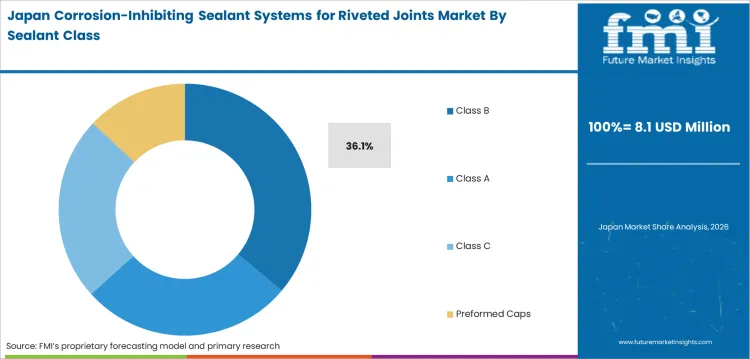
Japan’s market is shaped by aircraft component work and careful qualification practice. Sealant use is expected to post 4.4% CAGR during the study period. Aerospace suppliers in Japan place high value on process stability and documentation. Corrosion-inhibiting sealants serve long-cycle programs that need proven material behavior. Suppliers that meet Japanese quality expectations can secure stable access to component and MRO work.
- Chubu region suppliers support aircraft component production that needs qualified corrosion protection materials.
- Nagoya-area aerospace work creates need for process-stable sealants used in airframe structure programs.
- Defense aircraft maintenance supports continued use of approved polysulfide systems under strict material control.
Competitive Landscape and Strategic Positioning
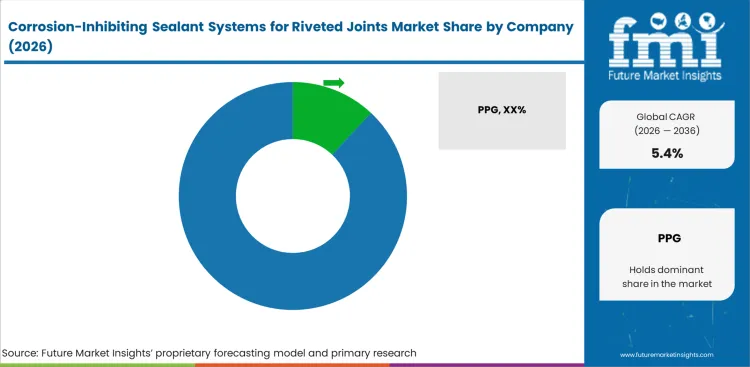
- Competition is moderately concentrated because aviation sealants need qualification history and product documentation.
- PPG holds a broad portfolio position through PRC and PRO-SEAL aerospace sealant families.
- 3M competes through aerospace sealants with non-chromated corrosion-inhibiting options.
- Flamemaster serves specialist programs through MIL and SAE-qualified Class A and Class B products.
- Entry barriers stay high because cure testing, corrosion proof and aircraft platform approval timelines.
Competition centers on qualification coverage rather than broad sealant volume. Aircraft users need materials that pass corrosion and cure-time checks. Flamemaster’s CS 143 Class B uses a non-chromate corrosion inhibitor package and is qualified to SAE AMS3265. The qualification matters because non-chromate systems must still prove performance on aluminum and mixed-metal assemblies. Suppliers with both chromate legacy and non-chromate options can serve older manuals and newer material policies.
Established companies hold an edge through platform approvals and distribution reach. PPG Industries, Inc. offers PRC and Pro-Seal brand sealants through its aerospace sealants portfolio. PRC Seal Caps are molded from PRC or Pro-Seal brand sealants and used for dome-sealing fasteners. Such packaging depth helps MRO crews reduce waste and raise repeatability across repair jobs. Supplier advantage grows when product formats match maintenance workflow instead of only technical specifications.
Specialist suppliers compete by solving smaller application problems that large portfolios can miss. Flamemaster’s CS 3213 Class A is a brush-applied polysulfide sealant used for faying surfaces and joint sealing. It protects aluminum alloys and acts as a barrier between dissimilar metals. Smaller suppliers can win when they offer fast technical response and batch-level documentation. Large OEM programs favor suppliers with broad qualified product lines across aircraft platforms.
Key Companies in the Corrosion-Inhibiting Sealant Systems for Riveted Joints Market
- Global Leaders: PPG, 3M, and Henkel hold strong positions through broad aerospace material portfolios and established approval pathways.
- Specialist Sealant Suppliers: Flamemaster and SOCOMORE compete through aerospace sealant preparation and maintenance-focused technical support.
- Adjacent Aerospace Material Suppliers: Sika and AkzoNobel participate through aircraft sealing and corrosion protection products used near joint protection workflows.
Competitive Benchmarking: Corrosion-Inhibiting Sealant Systems for Riveted Joints Market
| Company | Rivet Joint Qualification Depth | Non-Chromate Sealant Coverage | MRO Packaging Support | Geographic Footprint |
|---|---|---|---|---|
| PPG | High | Strong | Strong | Global |
| 3M | High | Strong | Strong | Global |
| Henkel | Medium | Strong | Strong | Global |
| Flamemaster | High | Strong | Moderate | North America, Europe, Asia |
| SOCOMORE | Medium | Medium | Strong | Global |
| Sika | Medium | Medium | Moderate | Global |
| AkzoNobel | Medium | Strong | Moderate | Global |
| Sherwin-Williams | Medium | Medium | Moderate | North America, Europe |
| Hentzen Coatings | Medium | Medium | Low | North America |
| Chemetall | Medium | Strong | Moderate | Global |
Source: Future Market Insights competitive analysis, 2026. Ratings reflect relative positioning based on rivet joint qualification depth, non-chromate sealant coverage, and MRO packaging support.
Key Developments in Corrosion-Inhibiting Sealant Systems for Riveted Joints Market
- In September 2025, Henkel introduced BONDERITE M-CR 1132 M AERO Pen for aircraft touchups in fastener holes as small as 3/16 inch. .
- In 2025, PPG Industries, Inc. continued to promote PRC Seal Caps for dome-sealing fasteners using PRC and Pro-Seal brand sealants.
Key Players in the Corrosion-Inhibiting Sealant Systems for Riveted Joints Market
Global Leaders
- PPG
- 3M
- Henkel
Specialist Sealant Suppliers
- Flamemaster
- SOCOMORE
Adjacent Aerospace Material Suppliers
- Sika
- AkzoNobel
- Sherwin-Williams
- Hentzen Coatings
- Chemetall
Report Scope and Coverage
| Parameter | Details |
|---|---|
| Quantitative Units | USD 280.4 million to USD 500.0 million, at 5.4% CAGR |
| Market Definition | Aircraft-grade sealant systems used to protect riveted joints, fastener holes, faying surfaces, and lap joints from moisture and corrosion. |
| Regions Covered | North America, Latin America, Europe, East Asia, South Asia and Pacific, Middle East and Africa |
| Countries Covered | United States, China, India, Germany, France, United Kingdom, Japan, 30+ countries |
| Key Companies Profiled | PPG, 3M, Henkel, Flamemaster, SOCOMORE, Sika, AkzoNobel, Sherwin-Williams, Hentzen Coatings, Chemetall |
| Forecast Period | 2026 to 2036 |
| Approach | Hybrid bottom-up and top-down methodology starting with aircraft joint application rates, MRO consumption, country-level fleet exposure, and supplier qualification mapping. |
Corrosion-Inhibiting Sealant Systems for Riveted Joints Market by Segments
Corrosion-Inhibiting Sealant Systems for Riveted Joints Market Segmented by Sealant Class
- Class B
- Class A
- Class C
- Preformed Caps
- Sprayable Sealants
Corrosion-Inhibiting Sealant Systems for Riveted Joints Market Segmented by Chemistry
- Polysulfide
- Polythioether
- Epoxy Cured
- Butyl Rubber
- Silicone Hybrid
Corrosion-Inhibiting Sealant Systems for Riveted Joints Market Segmented by Joint Area
- Faying Surfaces
- Fastener Seals
- Lap Joints
- Access Panels
- Fuel Bays
Corrosion-Inhibiting Sealant Systems for Riveted Joints Market Segmented by Aircraft Type
- Commercial Aircraft
- Military Aircraft
- Business Jets
- Helicopters
- Regional Aircraft
Corrosion-Inhibiting Sealant Systems for Riveted Joints Market Segmented by Sales Channel
- OEM Supply
- MRO Supply
- Distributor Supply
- Defense Contracts
- Online Supply
Corrosion-Inhibiting Sealant Systems for Riveted Joints Market by Region
- North America
- United States
- Canada
- Mexico
- Latin America
- Brazil
- Chile
- Rest of Latin America
- Western Europe
- Germany
- UK
- Italy
- Spain
- France
- Nordic
- BENELUX
- Rest of Western Europe
- Eastern Europe
- Russia
- Poland
- Hungary
- Balkan & Baltic
- Rest of Eastern Europe
- East Asia
- China
- Japan
- South Korea
- South Asia and Pacific
- India
- ASEAN
- Australia & New Zealand
- Rest of South Asia and Pacific
- Middle East & Africa
- Kingdom of Saudi Arabia
- Other GCC Countries
- Turkiye
- South Africa
- Other African Union
- Rest of Middle East & Africa
Research Sources and Bibliography
- Henkel. (2025, September 16). Henkel compact conversion coating pen simplifies aircraft touchup. Henkel.
- PPG Industries, Inc. (n.d.). PRC® Seal Caps. PPG Aerospace.
- Flamemaster Corporation. (2025, March 13). CS 143 Class B non-chromate corrosion inhibitive sealant technical data sheet.
- PPG Industries, Inc. (2026). PRC Seal Caps. PPG Aerospace.
- Flamemaster Corporation. (2025, April 1). CS 3213 Class A corrosion inhibitive sealant technical data sheet.
- Henkel. (2025, September 16). Henkel compact conversion coating pen simplifies aircraft touchup. Henkel.
- Federal Aviation Administration. (2025, June). FAA aerospace forecast fiscal years 2025-2045. Federal Aviation Administration.
Bibliography is provided for reader reference and uses official company, government, regulatory, or trade body sources.
This Report Answers
- What is the current and future value of the corrosion-inhibiting sealant systems for riveted joints market?
- What CAGR is expected for corrosion-inhibiting sealant systems for riveted joints during the assessment period?
- Which sealant class is projected to lead demand in 2026?
- Which chemistry segment is expected to hold the largest share in riveted joint sealing?
- What factors are driving demand for corrosion-inhibiting sealants in aircraft lap joints and fastener rows?
- How are non-chromate qualification trends affecting supplier strategy in aerospace sealants?
- Which countries are expected to grow fastest in this specialist aerospace sealant market?
- Which companies are positioned across approved sealants and aircraft surface protection systems?
- How does FMI define the corrosion-inhibiting sealant systems for riveted joints market scope?
- What forecasting approach was used to estimate demand from 2026 to 2036?
Frequently Asked Questions
What is the global market demand for corrosion-inhibiting sealant systems for riveted joints in 2026?
In 2026, the global market is expected to be worth USD 295.5 million as MRO and OEM use continues.
How big will the corrosion-inhibiting sealant systems for riveted joints market be by 2036?
By 2036, the market is forecast to reach USD 500.0 million due to higher aircraft maintenance and production use.
What CAGR is expected for corrosion-inhibiting sealant systems for riveted joints?
Demand is projected to grow at 5.4% CAGR across the forecast timeframe as qualified joint protection stays essential.
Which sealant class is projected to lead demand in 2026?
Class B sealants are projected to account for 38.0% share in 2026 as extrusion-grade formats suit fastener sealing.
Which chemistry segment is expected to lead the market in 2026?
Polysulfide chemistry is expected to represent 62.0% share in 2026 due to proven fuel and fluid resistance.
What is driving demand growth in India?
India is forecast to grow at 7.2% CAGR through 2036 as local aviation activity and MRO capacity expand.
What does FMI include in the market definition?
FMI includes aircraft-grade sealant systems used on riveted joints, faying surfaces, lap joints, and fastener holes.
How does FMI estimate and validate the forecast?
FMI uses bottom-up application sizing, country fleet checks, supplier portfolio mapping, and MRO consumption validation.
Preview the report firsthand - request a free sample
Get SampleGet the brochure for pricing and purchase details.
Get PDFTable of Content
- Key Takeaways
- Market Size and CAGR
- Top Growth Driver
- Fastest Growing Segment
- Leading Region
- Key Companies
- Emerging Opportunities
- Executive Summary
- Global Market Outlook
- Demand-side Trends
- Supply-side Trends
- Technology Roadmap Analysis
- Analysis and Recommendations
- Analyst Perspective (What is happening? Why now? What should investors know?)
- Key Questions Answered
- How large is the market?
- What is the CAGR?
- What are key trends?
- Which region dominates?
- Who are the leaders?
- Market Overview
- Market Coverage / Taxonomy
- Market Definition / Scope / Limitations
- Research Methodology
- Chapter Orientation
- Analytical Lens and Working Hypotheses
- Market Structure, Signals, and Trend Drivers
- Benchmarking and Cross-market Comparability
- Market Sizing, Forecasting, and Opportunity Mapping
- Research Design and Evidence Framework
- Desk Research Programme (Secondary Evidence)
- Expert Input and Fieldwork (Primary Evidence)
- Tooling, Models, and Reference Databases
- Data Engineering and Model Build
- Quality Assurance and Audit Trail
- Market Background
- Market Dynamics (Drivers, Restraints, Opportunity, Trends)
- Scenario Forecast (Optimistic, Likely, Conservative)
- Impact Analysis
- AI Impact
- Sustainability Impact
- Regulatory Impact
- Technology Impact
- Consumer / Buyer Analysis
- Purchase Drivers
- Adoption Barriers
- Buyer Journey
- Opportunity Map Analysis
- Product Life Cycle Analysis
- Supply Chain Analysis
- Investment Feasibility Matrix
- Value Chain Analysis
- PESTLE and Porter's Analysis
- Regulatory Landscape
- Regional Parent Market Outlook
- Production and Consumption Statistics
- Import and Export Statistics
- Global Market Analysis and Forecast, 2021 to 2036
- Historical Market Size Value (USD Million) & Volume (Unit) Analysis, 2021 to 2025
- Current and Future Market Size Value (USD Million) & Volume (Unit) Projections, 2026 to 2036
- Y-o-Y Growth Trend Analysis
- Absolute $ Opportunity Analysis
- Global Market Pricing Analysis, 2021 to 2036
- Global Market Analysis and Forecast, By Sealant Class, 2021 to 2036
- Introduction / Key Findings
- Historical Market Size Value (USD Million) & Volume (Unit) Analysis By Sealant Class, 2021 to 2025
- Current and Future Market Size Value (USD Million) & Volume (Unit) Analysis and Forecast By Sealant Class, 2026 to 2036
- Class B
- Class A
- Class C
- Preformed Caps
- Sprayable Sealants
- Class B
- Y-o-Y Growth Trend Analysis By Sealant Class, 2021 to 2025
- Absolute $ Opportunity Analysis By Sealant Class, 2026 to 2036
- Global Market Analysis and Forecast, By Chemistry, 2021 to 2036
- Introduction / Key Findings
- Historical Market Size Value (USD Million) & Volume (Unit) Analysis By Chemistry, 2021 to 2025
- Current and Future Market Size Value (USD Million) & Volume (Unit) Analysis and Forecast By Chemistry, 2026 to 2036
- Polysulfide
- Polythioether
- Epoxy Cured
- Butyl Rubber
- Silicone Hybrid
- Polysulfide
- Y-o-Y Growth Trend Analysis By Chemistry, 2021 to 2025
- Absolute $ Opportunity Analysis By Chemistry, 2026 to 2036
- Global Market Analysis and Forecast, By Joint Area, 2021 to 2036
- Introduction / Key Findings
- Historical Market Size Value (USD Million) & Volume (Unit) Analysis By Joint Area, 2021 to 2025
- Current and Future Market Size Value (USD Million) & Volume (Unit) Analysis and Forecast By Joint Area, 2026 to 2036
- Faying Surfaces
- Fastener Seals
- Lap Joints
- Access Panels
- Fuel Bays
- Faying Surfaces
- Y-o-Y Growth Trend Analysis By Joint Area, 2021 to 2025
- Absolute $ Opportunity Analysis By Joint Area, 2026 to 2036
- Global Market Analysis and Forecast, By Aircraft Type, 2021 to 2036
- Introduction / Key Findings
- Historical Market Size Value (USD Million) & Volume (Unit) Analysis By Aircraft Type, 2021 to 2025
- Current and Future Market Size Value (USD Million) & Volume (Unit) Analysis and Forecast By Aircraft Type, 2026 to 2036
- Commercial Aircraft
- Military Aircraft
- Business Jets
- Helicopters
- Regional Aircraft
- Commercial Aircraft
- Y-o-Y Growth Trend Analysis By Aircraft Type, 2021 to 2025
- Absolute $ Opportunity Analysis By Aircraft Type, 2026 to 2036
- Global Market Analysis and Forecast, By Sales Channel, 2021 to 2036
- Introduction / Key Findings
- Historical Market Size Value (USD Million) & Volume (Unit) Analysis By Sales Channel, 2021 to 2025
- Current and Future Market Size Value (USD Million) & Volume (Unit) Analysis and Forecast By Sales Channel, 2026 to 2036
- MRO Supply
- OEM Supply
- Distributor Supply
- Defense Contracts
- Online Supply
- MRO Supply
- Y-o-Y Growth Trend Analysis By Sales Channel, 2021 to 2025
- Absolute $ Opportunity Analysis By Sales Channel, 2026 to 2036
- Global Market Analysis and Forecast, By Region, 2021 to 2036
- Introduction
- Historical Market Size Value (USD Million) & Volume (Unit) Analysis By Region, 2021 to 2025
- Current Market Size Value (USD Million) & Volume (Unit) Analysis and Forecast By Region, 2026 to 2036
- North America
- Latin America
- Western Europe
- Eastern Europe
- East Asia
- South Asia and Pacific
- Middle East & Africa
- Market Attractiveness Analysis By Region
- North America Market Analysis and Forecast, By Country, 2021 to 2036
- Historical Market Size Value (USD Million) & Volume (Unit) Trend Analysis By Market Taxonomy, 2021 to 2025
- Market Size Value (USD Million) & Volume (Unit) Forecast By Market Taxonomy, 2026 to 2036
- By Country
- USA
- Canada
- Mexico
- By Sealant Class
- By Chemistry
- By Joint Area
- By Aircraft Type
- By Sales Channel
- By Country
- Market Attractiveness Analysis
- By Country
- By Sealant Class
- By Chemistry
- By Joint Area
- By Aircraft Type
- By Sales Channel
- Key Takeaways
- Latin America Market Analysis and Forecast, By Country
- Historical Market Size Value (USD Million) & Volume (Unit) Trend Analysis By Market Taxonomy, 2021 to 2025
- Market Size Value (USD Million) & Volume (Unit) Forecast By Market Taxonomy, 2026 to 2036
- By Country
- Brazil
- Chile
- Rest of Latin America
- By Sealant Class
- By Chemistry
- By Joint Area
- By Aircraft Type
- By Sales Channel
- By Country
- Market Attractiveness Analysis
- By Country
- By Sealant Class
- By Chemistry
- By Joint Area
- By Aircraft Type
- By Sales Channel
- Key Takeaways
- Western Europe Market Analysis and Forecast, By Country
- Historical Market Size Value (USD Million) & Volume (Unit) Trend Analysis By Market Taxonomy, 2021 to 2025
- Market Size Value (USD Million) & Volume (Unit) Forecast By Market Taxonomy, 2026 to 2036
- By Country
- Germany
- UK
- Italy
- Spain
- France
- Nordic
- BENELUX
- Rest of Western Europe
- By Sealant Class
- By Chemistry
- By Joint Area
- By Aircraft Type
- By Sales Channel
- By Country
- Market Attractiveness Analysis
- By Country
- By Sealant Class
- By Chemistry
- By Joint Area
- By Aircraft Type
- By Sales Channel
- Key Takeaways
- Eastern Europe Market Analysis and Forecast, By Country
- Historical Market Size Value (USD Million) & Volume (Unit) Trend Analysis By Market Taxonomy, 2021 to 2025
- Market Size Value (USD Million) & Volume (Unit) Forecast By Market Taxonomy, 2026 to 2036
- By Country
- Russia
- Poland
- Hungary
- Balkan & Baltic
- Rest of Eastern Europe
- By Sealant Class
- By Chemistry
- By Joint Area
- By Aircraft Type
- By Sales Channel
- By Country
- Market Attractiveness Analysis
- By Country
- By Sealant Class
- By Chemistry
- By Joint Area
- By Aircraft Type
- By Sales Channel
- Key Takeaways
- East Asia Market Analysis and Forecast, By Country
- Historical Market Size Value (USD Million) & Volume (Unit) Trend Analysis By Market Taxonomy, 2021 to 2025
- Market Size Value (USD Million) & Volume (Unit) Forecast By Market Taxonomy, 2026 to 2036
- By Country
- China
- Japan
- South Korea
- By Sealant Class
- By Chemistry
- By Joint Area
- By Aircraft Type
- By Sales Channel
- By Country
- Market Attractiveness Analysis
- By Country
- By Sealant Class
- By Chemistry
- By Joint Area
- By Aircraft Type
- By Sales Channel
- Key Takeaways
- South Asia and Pacific Market Analysis and Forecast, By Country
- Historical Market Size Value (USD Million) & Volume (Unit) Trend Analysis By Market Taxonomy, 2021 to 2025
- Market Size Value (USD Million) & Volume (Unit) Forecast By Market Taxonomy, 2026 to 2036
- By Country
- India
- ASEAN
- Australia & New Zealand
- Rest of South Asia and Pacific
- By Sealant Class
- By Chemistry
- By Joint Area
- By Aircraft Type
- By Sales Channel
- By Country
- Market Attractiveness Analysis
- By Country
- By Sealant Class
- By Chemistry
- By Joint Area
- By Aircraft Type
- By Sales Channel
- Key Takeaways
- Middle East & Africa Market Analysis and Forecast, By Country
- Historical Market Size Value (USD Million) & Volume (Unit) Trend Analysis By Market Taxonomy, 2021 to 2025
- Market Size Value (USD Million) & Volume (Unit) Forecast By Market Taxonomy, 2026 to 2036
- By Country
- Kingdom of Saudi Arabia
- Other GCC Countries
- Türkiye
- South Africa
- Other African Union
- Rest of Middle East & Africa
- By Sealant Class
- By Chemistry
- By Joint Area
- By Aircraft Type
- By Sales Channel
- By Country
- Market Attractiveness Analysis
- By Country
- By Sealant Class
- By Chemistry
- By Joint Area
- By Aircraft Type
- By Sales Channel
- Key Takeaways
- Key Countries Market Analysis
- USA
- Pricing Analysis
- Market Share Analysis, 2025
- By Sealant Class
- By Chemistry
- By Joint Area
- By Aircraft Type
- By Sales Channel
- Canada
- Pricing Analysis
- Market Share Analysis, 2025
- By Sealant Class
- By Chemistry
- By Joint Area
- By Aircraft Type
- By Sales Channel
- Mexico
- Pricing Analysis
- Market Share Analysis, 2025
- By Sealant Class
- By Chemistry
- By Joint Area
- By Aircraft Type
- By Sales Channel
- Brazil
- Pricing Analysis
- Market Share Analysis, 2025
- By Sealant Class
- By Chemistry
- By Joint Area
- By Aircraft Type
- By Sales Channel
- Chile
- Pricing Analysis
- Market Share Analysis, 2025
- By Sealant Class
- By Chemistry
- By Joint Area
- By Aircraft Type
- By Sales Channel
- Germany
- Pricing Analysis
- Market Share Analysis, 2025
- By Sealant Class
- By Chemistry
- By Joint Area
- By Aircraft Type
- By Sales Channel
- UK
- Pricing Analysis
- Market Share Analysis, 2025
- By Sealant Class
- By Chemistry
- By Joint Area
- By Aircraft Type
- By Sales Channel
- Italy
- Pricing Analysis
- Market Share Analysis, 2025
- By Sealant Class
- By Chemistry
- By Joint Area
- By Aircraft Type
- By Sales Channel
- Spain
- Pricing Analysis
- Market Share Analysis, 2025
- By Sealant Class
- By Chemistry
- By Joint Area
- By Aircraft Type
- By Sales Channel
- France
- Pricing Analysis
- Market Share Analysis, 2025
- By Sealant Class
- By Chemistry
- By Joint Area
- By Aircraft Type
- By Sales Channel
- India
- Pricing Analysis
- Market Share Analysis, 2025
- By Sealant Class
- By Chemistry
- By Joint Area
- By Aircraft Type
- By Sales Channel
- ASEAN
- Pricing Analysis
- Market Share Analysis, 2025
- By Sealant Class
- By Chemistry
- By Joint Area
- By Aircraft Type
- By Sales Channel
- Australia & New Zealand
- Pricing Analysis
- Market Share Analysis, 2025
- By Sealant Class
- By Chemistry
- By Joint Area
- By Aircraft Type
- By Sales Channel
- China
- Pricing Analysis
- Market Share Analysis, 2025
- By Sealant Class
- By Chemistry
- By Joint Area
- By Aircraft Type
- By Sales Channel
- Japan
- Pricing Analysis
- Market Share Analysis, 2025
- By Sealant Class
- By Chemistry
- By Joint Area
- By Aircraft Type
- By Sales Channel
- South Korea
- Pricing Analysis
- Market Share Analysis, 2025
- By Sealant Class
- By Chemistry
- By Joint Area
- By Aircraft Type
- By Sales Channel
- Russia
- Pricing Analysis
- Market Share Analysis, 2025
- By Sealant Class
- By Chemistry
- By Joint Area
- By Aircraft Type
- By Sales Channel
- Poland
- Pricing Analysis
- Market Share Analysis, 2025
- By Sealant Class
- By Chemistry
- By Joint Area
- By Aircraft Type
- By Sales Channel
- Hungary
- Pricing Analysis
- Market Share Analysis, 2025
- By Sealant Class
- By Chemistry
- By Joint Area
- By Aircraft Type
- By Sales Channel
- Kingdom of Saudi Arabia
- Pricing Analysis
- Market Share Analysis, 2025
- By Sealant Class
- By Chemistry
- By Joint Area
- By Aircraft Type
- By Sales Channel
- Türkiye
- Pricing Analysis
- Market Share Analysis, 2025
- By Sealant Class
- By Chemistry
- By Joint Area
- By Aircraft Type
- By Sales Channel
- South Africa
- Pricing Analysis
- Market Share Analysis, 2025
- By Sealant Class
- By Chemistry
- By Joint Area
- By Aircraft Type
- By Sales Channel
- USA
- Market Structure Analysis
- Competition Dashboard
- Competition Benchmarking
- Market Share Analysis of Top Players
- By Regional
- By Sealant Class
- By Chemistry
- By Joint Area
- By Aircraft Type
- By Sales Channel
- Emerging Startups
- Innovation Benchmarking
- Competition Analysis
- Competition Deep Dive
- PPG
- Overview
- Product Portfolio
- Profitability by Market Segments (Product/Region/Sales Channel)
- Sales Footprint
- Strategy Overview
- Marketing Strategy
- Product Strategy
- Channel Strategy
- 3M
- Henkel
- Flamemaster
- SOCOMORE
- Sika
- AkzoNobel
- Sherwin-Williams
- Hentzen Coatings
- Chemetall
- PPG
- Case Studies
- Success Stories
- Recent Developments
- Competition Deep Dive
- Assumptions & Acronyms Used


