

- Market Size (2026)
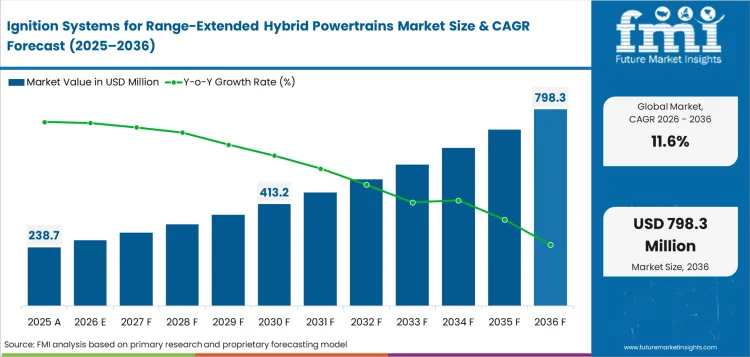
- USD 238.7 Mn
- Forecast (2036)
- USD 712.4 Mn
- CAGR (2026 to 2036)
- 11.6%
Ignition Systems for Range-Extended Hybrid Powertrains Market Size, Market Forecast and Outlook By FMI
Summary of the Ignition Systems for Range-Extended Hybrid Powertrains Market
- Demand and Growth Drivers
- Adoption of range-extended EVs is prompting higher use of durable spark ignition systems.
- Demand for coil-on-plug systems continues because of compact packaging across small generator engines.
- BEV‑native vehicle platform adoption raises the use of ignition systems as automakers incorporate onboard generator options.
- Hydrogen combustion trials create higher need for high-energy ignition systems for lean-burn engines.
- Product and Segment View
- Coil-on-plug systems are projected to account for 41.0% of system type demand in 2026 due to compact engine packaging.
- In fuel type, gasoline engines are expected to record 52.0% share in 2026 since supply chains are mature.
- In 2026, passenger cars are projected to capture 48.0% of vehicle class segment supported by crossover and SUV programs.
- OEM integration is expected to contribute 64.0% in 2026, driven by factory-level validation needs.
- Geography and Competitive Outlook
- China is projected to record 14.8% CAGR during the forecast period, backed by REEV launches and local platform development.
- The United States is expected to advance at 11.9% CAGR by 2036 through pickup and utility vehicle programs.
- DENSO and Bosch hold stronger positions because of ignition coil portfolios and OEM engine management programs.
- BorgWarner and Niterra rely on spark system experience. Hybrid powertrain component portfolios support separate account access.
- Analyst Opinion
- Nikhil Kaitwade, Principal Consultant at FMI says: “The ignition systems for range-extended hybrid powertrains market is rising because vehicles using onboard generator engines for battery charging. These systems fit range-extender applications because spark timing must be stable during repeated engine starts and fixed-load running. Range-extender platforms increase need for compact coils and ignition modules matched with engine control software. OEMs are using these systems to support longer driving range without fitting very large battery packs. Long-term demand is projected to come from factory-approved ignition systems validated for generator duty cycles. End users need products that handle heat and frequent restart events. Suppliers can build advantage through tested spark stability and platform validation support rather than broad hybrid claims.”
- Ignition Systems for Range-Extended Hybrid Powertrains Market Value Analysis
- Coil-on-plug systems serve compact generator engines needing short spark paths and controlled firing.
- Gasoline range-extender engines remain in demand because automakers use proven spark-ignition layouts for early programs.
- OEM integration supports recurring supplier access as automakers approve ignition systems during powertrain development.
- Wider adoption depends on supplier ability to combine coil durability with engine control compatibility.
- Price pressure is strongest in cost-sensitive EVs since extra generator hardware affects platform approval.
Key Takeaways
- Ignition systems for range-extended hybrid powertrains market valuation was USD 214.6 million in 2025.
- Revenue is expected to reach USD 712.4 million by 2036.
- Revenue is forecast at 11.6% CAGR across 2026 to 2036.
- Incremental opportunity across 2026 to 2036 is USD 473.7 million.
- Coil-on-plug systems are expected to lead system type demand with 41.0% share in 2026.
- China is projected to record 14.8% CAGR in ignition systems for range-extended hybrid powertrains through 2036.
- Gasoline range-extender engines are projected to account for 52.0% share in 2026.
Ignition Systems for Range-Extended Hybrid Powertrains Market Definition
Ignition systems for range-extended hybrid powertrains include spark plugs and ignition coils used in onboard generator engines. Scope includes smart ignition modules and wiring interfaces that support engine control during battery charging. These products serve range-extended electric vehicles using gasoline or flex-fuel combustion units. Products outside scope include diesel glow plugs and conventional non-hybrid ignition systems.
Ignition Systems for Range-Extended Hybrid Powertrains Market Inclusions
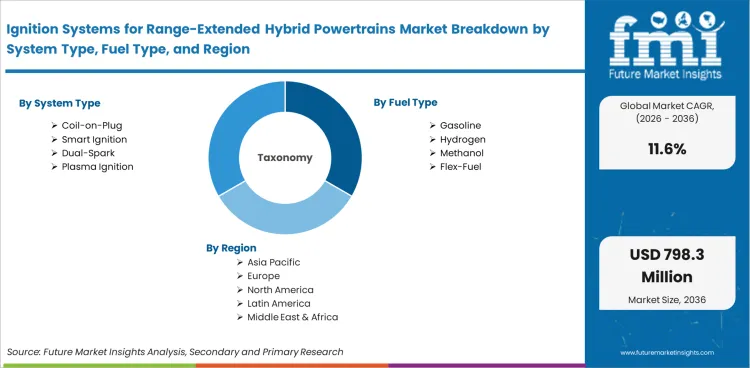
Market scope covers all commercially traded ignition systems used in range-extended hybrid powertrains by system type, including coil-on-plug systems, smart ignition modules, dual-spark systems, and plasma ignition systems; fuel type, including gasoline, hydrogen, methanol, and flex-fuel range-extender engines; vehicle class, including passenger cars, light trucks, commercial vans, and off-highway vehicles; sales channel, including OEM integration, Tier-1 modules, service replacement, and engineering prototypes; and applications, including battery charging, range backup, utility driving, and low-emission operation. Revenue scope covers 2026 to 2036. The key stakeholders include ignition system manufacturers, spark plug suppliers, ignition coil producers, engine control module suppliers, hybrid powertrain developers, range-extender module manufacturers, vehicle OEMs, Tier-1 automotive suppliers, electric vehicle platform developers, testing and validation firms, aftermarket service providers, distributors, and regulatory bodies.
Scope covers coil-on-plug systems and smart ignition modules. Dual-spark and plasma ignition systems remain included. Gasoline and hydrogen range-extender engines are covered. Methanol and flex-fuel units are within scope. OEM integration and service replacement apply only to range-extended hybrid powertrains.
Ignition Systems for Range-Extended Hybrid Powertrains Market Exclusions
Scope excludes standard ignition systems used in non-hybrid combustion vehicles. Diesel glow plugs and fuel-cell power stacks are outside scope. Battery packs and traction motors are excluded. Conventional starter motors without range-extender integration are outside market scope.
Ignition Systems for Range-Extended Hybrid Powertrains Market Research Methodology
- Primary Research: FMI analysts reviewed ignition system suppliers and hybrid powertrain developers. OEM powertrain teams and engine control specialists received separate review. The research focused on generator duty cycles and spark stability needs. FMI reviewed heat load and repeated restart requirements.
- Desk Research: Desk research covered electric vehicle sales and range-extender platform activity. Official emission rules and powertrain product material helped define use exposure. Company releases and technical product literature defined the ignition system scope. Hybrid powertrain and generator engine layouts received separate review.
- Market Sizing and Forecasting: The sizing model combined range-extender vehicle production and ignition system attachment rates. Average system value and fuel-type split were considered after segment review. Forecasts were cross-checked with EV adoption and large electric vehicle programs. Country platform activity and supplier presence were reviewed as separate checks.
- Data Validation: Validation compared company portfolios and public electrification signals. FMI checked end-use demand and powertrain technology patterns separately. Forecasts were adjusted for REEV penetration and regional platform shifts.
Why the Ignition Systems for Range-Extended Hybrid Powertrains Market is Growing?
- Range-extender engines require ignition systems because onboard generators need controlled spark timing.
- BEV-native platforms use generator modules as automakers look for longer range without much larger batteries.
- Utility vehicles create first demand pockets because buyers need towing range and charging flexibility.
- Hydrogen combustion systems support advanced ignition use because lean mixtures need higher spark energy.
- OEM powertrain teams standardize ignition validation and reduce warranty risk during platform approval.
Range-extender powertrains create a larger demand source for ignition systems as EV platforms add onboard generator engines. Electric car sales topped 17 million worldwide in 2024 and crossed a 20.0% share of new car sales. The wider electrified base improves revenue potential from generator engines used in selected long-range vehicles. Ignition systems enter these platforms through compact engine packages and control modules. Powertrain teams need spark systems able to support repeated starts without coil overheating. Suppliers must support testing across thermal cycles and fixed-load operation. This shifts demand toward ignition systems with proven generator-duty performance.
Regulation creates another defined requirement as combustion units inside electrified vehicles face stricter emission expectations. EPA finalized new multi-pollutant standards in March 2024 for model year 2027 and later light-duty vehicles. This brings more attention to clean combustion even when the engine works mainly as a generator. Range-extender ignition systems supports stable firing and catalyst warm-up during controlled operating windows. Companies need faster validation because weak calibration can affect fleet compliance. Hybrid powertrain programs concentrate value in suppliers able to combine ignition hardware with software support.
Market Segmentation Analysis
- Coil-on-plug systems are estimated to account for 41.0% share in 2026 because of compact cylinder-level spark control.
- In 2026, gasoline engines are expected to hold 52.0% share because of strong supplier readiness.
- Passenger cars are anticipated to capture 48.0% of vehicle class demand in 2026, because of crossover adoption.
- OEM integration is expected to represent 64.0% of sales channel in 2026 through factory approval needs.
- In 2026, battery charging is expected to contribute 46.0% because generator engines mainly support battery power.
The market is divided into system type, fuel type, vehicle class, sales channel, application, and region. System type covers coil-on-plug and smart ignition systems. Dual-spark and plasma ignition systems are included . Fuel type covers gasoline and hydrogen engines. Methanol and flex-fuel engines are covered. Vehicle class includes passenger cars and light trucks. Commercial vans and off-highway vehicles are included. Sales channel includes OEM integration and Tier-1 modules. Service replacement and engineering prototypes are covered as separate demand uses.
Ignition Systems for Range-Extended Hybrid Powertrains Market Analysis By System Type
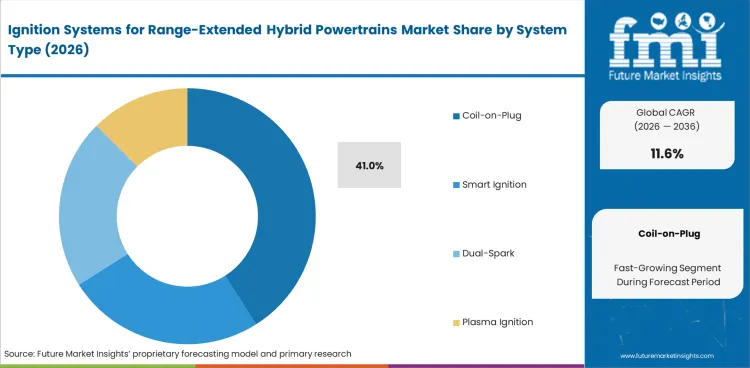
- In 2026, coil-on-plug systems are projected to account for 41.0% of system type demand as compact generator engines need short spark paths.
- Smart ignition systems fit programs using detailed diagnostics. Coil-on-plug systems cover broader generator engine use across gasoline range-extender platforms.
Ignition Systems for Range-Extended Hybrid Powertrains Market Analysis By Fuel Type
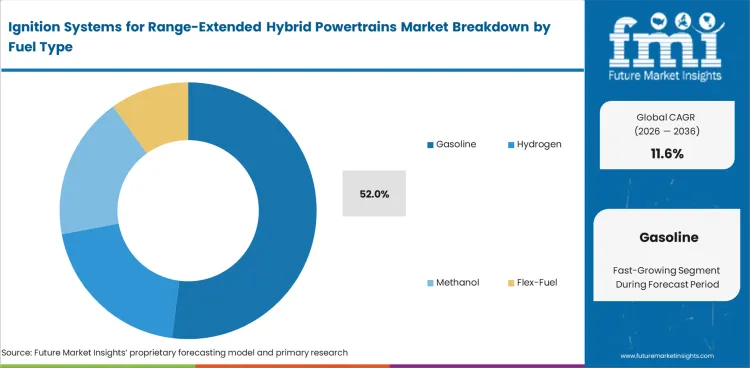
- Gasoline engines are expected to represent 52.0% of fuel type demand in 2026 because of proven calibration and supplier availability.
- Hydrogen combustion units follow gasoline engines, since lean‑burn operation favors higher‑energy spark systems and advanced ignition modules.
Ignition Systems for Range-Extended Hybrid Powertrains Market Analysis By Vehicle Class
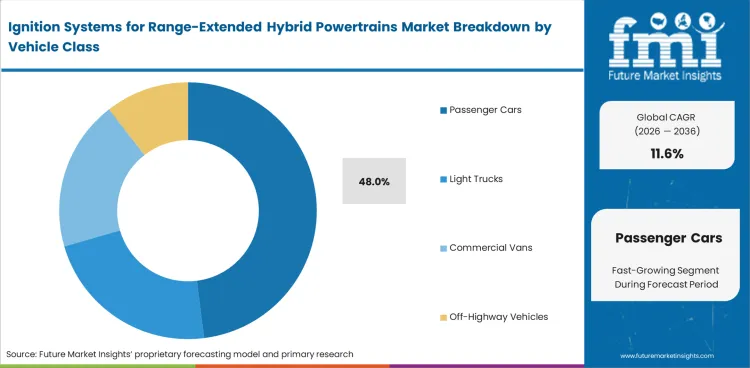
- Passenger cars are anticipated to represent 48.0% of vehicle class segment in 2026 since crossovers lead early REEV adoption.
- Light truck demand is increasing as towing range and payload use increase interest in onboard generator engines.
Ignition Systems for Range-Extended Hybrid Powertrains Market Analysis By Sales Channel
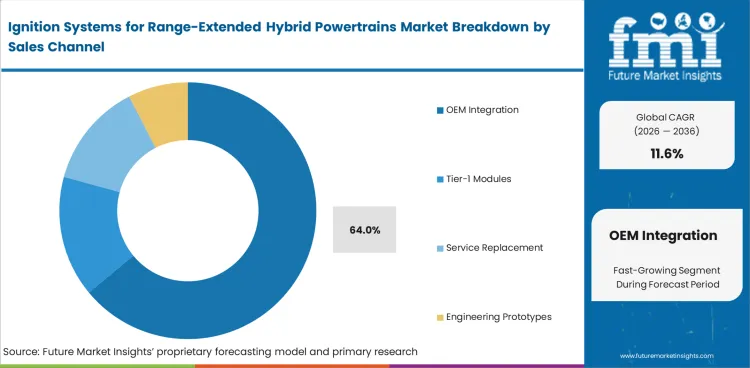
- OEM integration is expected to hold 64.0% share in 2026, driven by factory validation and platform approval.
- Service replacement demand is smaller since early range-extender programs rely on sealed modules and longer factory warranties.
Ignition Systems for Range-Extended Hybrid Powertrains Market Analysis By Application
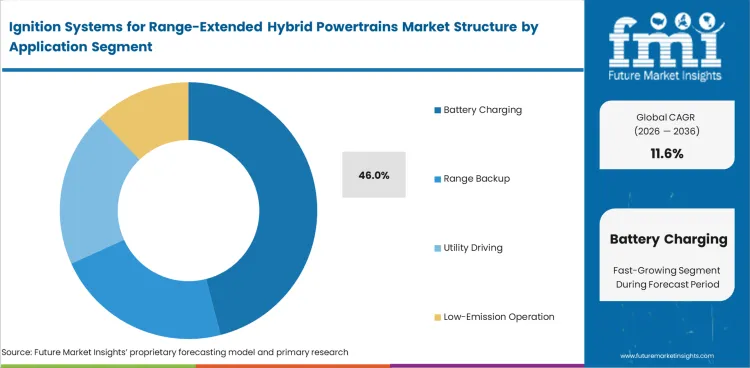
- Battery charging is projected to account for 46.0% of application demand in 2026 as generator engines support onboard power supply.
- Range backup use rises in larger EVs since drivers require longer distance support during towing and highway use.
Ignition Systems for Range-Extended Hybrid Powertrains Market Drivers, Restraints, and Opportunities
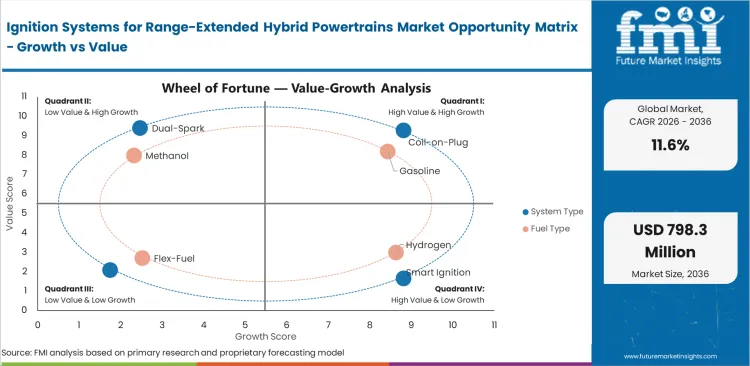
- Generator engine spark control raises demand for coils able to handle repeated starts and fixed-load operation.
- Larger electric SUVs support ignition use as range backup becomes a practical platform feature.
- Battery pack cost is a restraint since extra engine hardware must justify its additional vehicle cost.
- Hydrogen range-extender systems create an opportunity for high-energy spark plugs and smart ignition modules.
- Emission rules increase ignition validation needs as generator engines must run clean during battery charging.
BEV Platform Flexibility
BEV-native platforms create another defined demand base as automakers look for hybrid flexibility without redesigning full vehicle structures. According to HORSE Powertrain, the C15 Direct Drive adds hybrid capability within BEV‑native platforms. This indicates range-extender modules are being designed as flexible platform options rather than isolated prototypes. Ignition suppliers can gain orders if their systems fit compact generator packages and shared vehicle architectures. Qualification now centers on packaging and software coordination rather than general engine performance. Related adoption may support hybrid powertrain suppliers serving electric vehicle programs.
Hydrogen Ignition Cost
Ignition cost remains because a restraint as advanced spark systems require higher validation effort and stronger electronics. Hydrogen combustion units can raise coil energy needs and increase testing cost for early programs. Plasma ignition systems raise technical value. They increase program risk if durability proof is weak. Mid-volume vehicle programs may slow approval when ignition cost increases the generator module bill. Suppliers able to combine spark energy and long-cycle durability can protect adoption. The opportunity is stronger for companies that link ignition expertise with automotive engine management sensors and control software.
Certification Burden Is Moving Toward Fuel Use Proof
For ignition systems for range-extended hybrid powertrains, compliance pressure is moving toward proof of fuel economy contribution under real powertrain operation. NHTSA’s December 2025 proposed SAFE Vehicles Rule III states that proposed CAFE standards are founded on light duty vehicles powered by gasoline and diesel fuels. The same text says this category includes non plug in hybrid vehicles. The proposal sets fuel economy standards that increase by 0.5% per year through MY 2026 and 0.25% per year through MY 2031 with MY 2027 used as a bridge year. Range‑extender ignition systems require repeatable combustion quality and disciplined calibration.
Certification Reporting Rules Are Being Rewritten
For ignition suppliers serving range-extended hybrids, the operating standard is shaped by more than component durability. It is shaped by changing vehicle certification paperwork. The Federal Register rule published on February 18 2026 says EPA is removing regulations that require light and medium duty vehicle manufacturers to measure, report, or comply with GHG emission standards. The same rule lists 35 affected entities for light and medium duty vehicle requirements. The rule states a revised total estimated burden of 138,443 hours per year and a revised total estimated cost of US$26.3 million per year for remaining requirements. Suppliers need to preserve test records and OBD evidence because non GHG compliance obligations remain.
Analysis of Ignition Systems for Range-Extended Hybrid Powertrains Market By Key Countries
.webp "Top Country Growth Comparison Ignition Systems For Range Extended Hybrid Powertrains Market Cagr (2026 2036)")
| Country | CAGR |
|---|---|
| China | 14.8% |
| United States | 11.9% |
| Germany | 10.7% |
| Japan | 9.6% |
| South Korea | 9.2% |
| France | 8.8% |
| India | 8.4% |
Source: FMI analysis based on primary research and proprietary forecasting model.
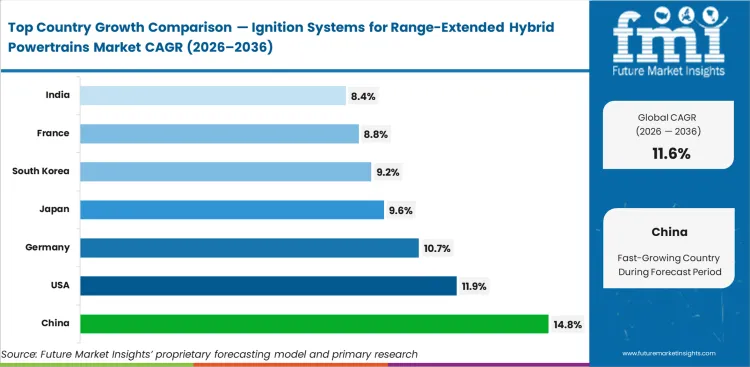
Ignition Systems for Range-Extended Hybrid Powertrains CAGR Analysis By Country
- China is projected to progress at a CAGR of 14.8% by 2036, driven by REEV launches and locally developed vehicle platforms.
- The United States is projected to record a CAGR of 11.9% through 2036, with demand linked to pickups and SUVs.
- Germany is forecast to garner a CAGR of 10.7% during the assessment period, owing to hybrid engineering expertise.
- Japan is anticipated to expand at a CAGR of 9.6% over the forecast period, fueled by compact generator expertise.
- South Korea is projected to post a CAGR of 9.2% by 2036, with demand due to export vehicle programs.
- France is expected to advance at a CAGR of 8.8% through 2036, as powertrain suppliers support selective REEV use.
- India is expected to register a CAGR of 8.4% during the forecast period, with momentum coming from cost-sensitive electrification.
Demand Outlook for Ignition Systems for Range-Extended Hybrid Powertrains in China
REEV acceptance and local powertrain supply shape China’s position. REEV acceptance and local powertrain supply shorten approval timelines for generator engine ignition systems. China maintained its lead in electric car sales in 2024, with more than 11 million electric cars sold. China's EV scale creates repeated opportunities for ignition suppliers across extended-range SUV and crossover programs. Local REEV platforms require ignition systems with compact packaging and stable diagnostics. China is projected at 14.8% CAGR by 2036 with local OEM programs supporting range-extender demand. Local suppliers can obtain orders if validation speed and cost control match automaker needs.
- Chongqing vehicle companies support REEV production through local brands and range-extender SUV programs.
- Shanghai engineering centers support powertrain software coordination for generator engines and smart ignition modules.
- Guangdong supplier networks shorten coil sampling and control module testing near EV production hubs.
Sales Analysis of Ignition Systems for Range-Extended Hybrid Powertrains in the United States
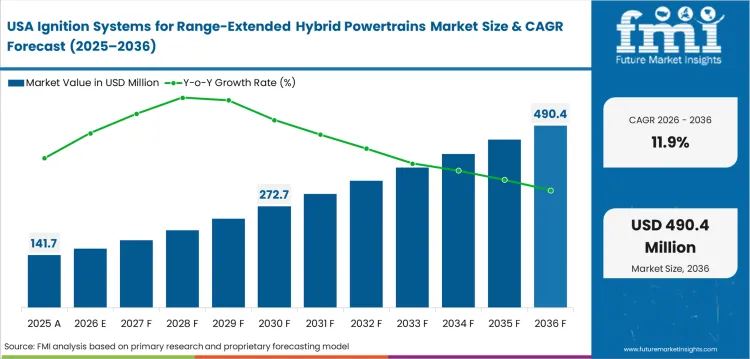
The United States has mature demand from pickups and large electric utility vehicles. Battery-only range can be harder to justify in towing and long-distance use. EPA rules starting with model year 2027 raise compliance pressure across light-duty and medium-duty vehicles. Generator engine combustion quality remains within the regulatory discussion. The United States is forecast to rise at 11.9% rate during the study period, driven by trucks and SUV programs. Premium demand rises due to range assurance and charging flexibility. Suppliers with validated coil durability can defend price premiums. Demand overlaps with plug-in hybrid electric vehicle development across larger platforms.
- Michigan engineering centers aid ignition validation for Detroit automaker pickup and SUV programs.
- California ZEV policy pressure backs electrified platforms while range backup serves long-distance users.
- Texas towing activity and fleet operations increase interest in range‑extender layouts for larger vehicle classes.
Demand Analysis of Ignition Systems for Range-Extended Hybrid Powertrains in Germany
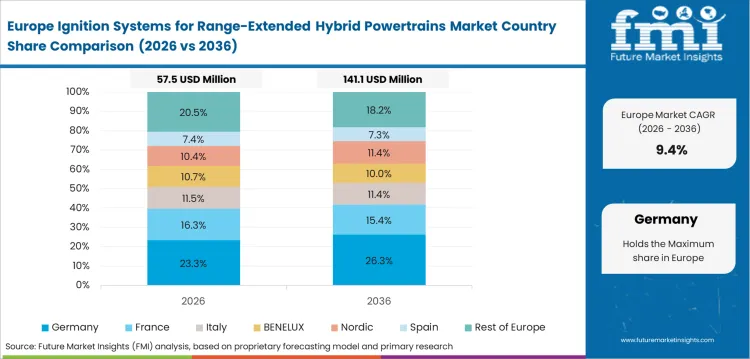
Germany is expected to advance at 10.7% CAGR over the forecast period through hybrid engineering and a strong supplier base. Germany’s role is strongest in premium vehicles and complex powertrain validation. European CO2 rules place pressure on any combustion unit used inside electrified vehicles. This raises need for ignition systems with precise firing and emissions control support. Germany-based automakers focus on durable spark performance and clean generator operation. Hybrid platforms strengthen demand for ignition modules paired with engine control software. Suppliers serving hybrid drivetrain programs can obtain early access through engineering support.
- Bavaria contributes to premium vehicle programs through BMW and related powertrain supplier networks.
- Baden-Württemberg strengthens Mercedes-Benz and Porsche programs needing high combustion control quality.
- Lower Saxony reinforces Volkswagen platforms with scale across mass-premium and electrified vehicle lines.
Opportunity Analysis of Ignition Systems for Range-Extended Hybrid Powertrains in Japan
Japan’s market reflects compact powertrain design and careful vehicle qualification. Mazda’s rotary range-extender approach shows how generator engines can use small engine packages. This increases ignition demand for tight packaging and stable spark timing. Japanese automakers often prefer proven materials and long service records. Range-extender ignition systems are adopted in selective platforms with high validation demands. Japan is projected to rise at 9.6% CAGR through 2036 as compact generator expertise supports stable sales. Suppliers must prove coil repeatability across heat and vibration testing cycles.
- Hiroshima engineering activity supports rotary generator knowledge and compact ignition package development.
- Aichi automotive clusters support Toyota-linked hybrid control and supplier coordination.
- Kanagawa supports Nissan engineering and powertrain testing across electrified vehicle platforms.
Future Outlook for Ignition Systems for Range-Extended Hybrid Powertrains in South Korea
Sales in South Korea are shaped by export-focused automakers and advanced vehicle electronics. Hyundai and Kia platforms create demand for electrified options across global model lines. Export exposure supports ignition systems already validated for Europe and North America. South Korea is forecast to expand at 9.2% CAGR during the forecast period through vehicle platform engineering. Range-extender ignition systems serve these programs through spark stability and diagnostic performance. Suppliers need clean test data and reliable module durability to pass purchase checks. Demand connects with EV powertrain planning across global vehicle launches.
- Ulsan supports Hyundai output and supplier activity across global vehicle programs.
- Gyeonggi Province aids electronics suppliers serving control modules and ignition diagnostics.
- Busan logistics access helps export vehicle supply chains needing stable component delivery schedules.
Demand Outlook for Ignition Systems for Range-Extended Hybrid Powertrains in France
France combines powertrain engineering with selective European range-extender development. HORSE Powertrain activity gives France an important role in compact generator engine systems. This supplier base supports ignition demand related to modular hybrid and range-extender units. France is forecast at 8.8% CAGR through 2036 as European OEMs use combustion backup selectively. Ignition suppliers need compliance-ready parts with strong software coordination. Smaller vehicle programs may need flexible validation reinforce and tighter cost control. Supplier opportunity improves if local engineering teams support electric powertrain systems and range-extender modules together.
- Île-de-France engineering activity strengthens powertrain software and hybrid module coordination.
- Normandy supplier networks support Renault-linked powertrain activity and component validation work.
- CO₂ compliance pressure reinforces the importance of generator engine calibration in range‑extender acceptance.
In-depth Analysis of Ignition Systems for Range-Extended Hybrid Powertrains in India
India’s market develops from cost-sensitive electrification and selective backup range use. The country is expected to post 8.4% CAGR through 2036 as range-extender demand is focused on engineering trials and fleet use. India’s price-sensitive vehicle base limits early premium system use. Local suppliers can retain position through lower-cost coils and heat-tested wiring designed for heat and dust. OEMs need clear cost benefits before incorporating generator engines to mass-market electrified vehicles. Suppliers with local testing support can improve acceptance in compact SUV and fleet vehicle programs.
- Pune and Chennai engineering centers support hybrid calibration work for local and export vehicle programs.
- PM E-DRIVE policy reinforces electrified vehicle demand while range-extender use is selective.
- Rajasthan and Gujarat heat exposure raises the need for thermal durability in ignition coils.
Competitive Landscape and Strategic Positioning
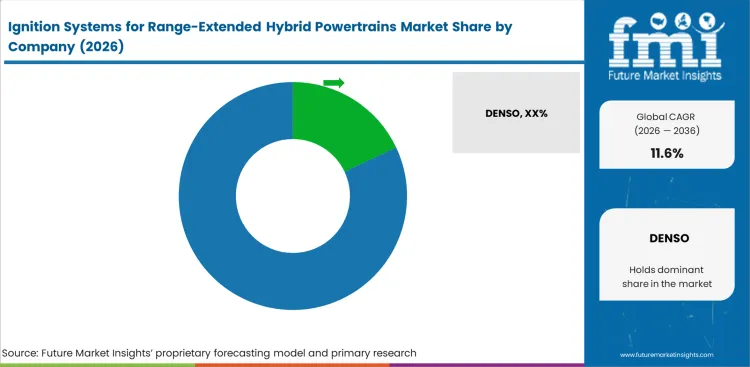
- The market is moderately concentrated with global ignition suppliers controlling large OEM validation programs.
- Smaller suppliers compete by spark energy design and faster aid for prototype generator engines.
- Barriers to entry include thermal validation and engine control compatibility. OEM trust raises the entry threshold.
- Regional suppliers can win local vehicle programs if testing support and coil quality meet automaker needs.
Competitive strength begins with evidence of spark stability across generator engines and compact hybrid systems. Automakers test coil heat behavior and misfire risk before approving suppliers. Diagnostics and thermal durability decide final qualification. HORSE Powertrain’s X-Range C15 Direct Drive launch shows demand for compact generator modules built around BEV platform flexibility. The launch indicates approved ignition suppliers may secure repeat work after platform validation. In passenger cars and light trucks, ignition failure can cause range loss and warranty exposure. Suppliers with strong validation capability and engine control experience hold deeper positions in long-cycle accounts.
Established companies gain from product breadth across automotive ignition systems and engine management platforms. Coil-on-plug systems and smart ignition modules create demand. DENSO supports ignition coil and powertrain control needs across global OEM programs. Bosch uses engine management expertise and combustion control experience. BorgWarner strengthens its position through hybrid and electrified powertrain components.
Specialist companies win orders through focused high-energy spark and hydrogen combustion capability. Local support allows automakers reduce development delays during prototype testing. AVL has a strong position in hydrogen combustion engineering and engine test systems. Niterra supports spark plug expertise across high-temperature and specialty combustion needs. Specialist vendors perform better in accounts needing advanced spark control or custom testing. Partnership activity may increase because larger vendors look for more ignition depth for hydrogen and methanol engines.
Entry is difficult as ignition systems must work inside existing vehicle approval systems. Compatibility with generator engines and hybrid control software creates a technical hurdle for new entrants. A supplier can make an ignition coil but fail purchase checks on heat behavior. Premium and utility programs require durability data across restart and load cycles. Automotive sector buyers need application knowledge for generator design and software validation. The strongest suppliers combine automotive ignition coil reliability with application support during specification. This creates a competitive structure based on trust and approved powertrain history.
Key Companies in the Ignition Systems for Range-Extended Hybrid Powertrains Market
Ignition system competition includes global ignition suppliers, hybrid module developers and regional engineering specialists.
- Global ignition suppliers: DENSO and Bosch hold stronger positions through ignition coil capability and established OEM program access. DENSO backs spark performance through coil design and powertrain electronics. Bosch serves range-extender programs through engine management and ignition system know-how. BorgWarner serves hybrid powertrain customers through a combination of combustion and electrification components.
- Hybrid module developers: HORSE Powertrain and ZF hold an advantage through range-extender system architecture and module integration. HORSE Powertrain contributes to compact generator modules across BEV-native platforms. ZF supports range-extender systems with generator and inverter system knowledge. Their advantage is strongest in programs needing powertrain packaging and hybrid system coordination.
- Engineering specialists: AVL and MAHLE Powertrain stand apart through broad testing and application engineering. AVL supports hydrogen combustion and engine validation work. MAHLE Powertrain contributes to range-extender vehicle development and powertrain engineering. These companies are better positioned if automakers need test evidence before selecting ignition hardware partners.
Competitive Benchmarking: Ignition Systems for Range-Extended Hybrid Powertrains Market
| Company | Generator Duty Validation | Spark Energy Depth | OEM Powertrain Access | Geographic Footprint |
|---|---|---|---|---|
| DENSO | High | High | High | Global |
| Robert Bosch | High | High | High | Global |
| BorgWarner | High | Strong | High | Global |
| Niterra | Medium | High | High | Global |
| Hitachi Astemo | Medium | High | High | Japan and global |
| Marelli | Medium | Medium | High | Europe and Asia |
| Mitsubishi Electric | Medium | Medium | Moderate | Asia and global |
| HORSE Powertrain | High | Medium | High | Europe and China |
| ZF | High | Medium | High | Global |
| AVL | High | High | High | Global |
Source: Future Market Insights competitive analysis, 2026. Ratings reflect relative positioning based on Generator Duty Validation, Spark Energy Depth, and OEM Powertrain Access.
Key Developments in Ignition Systems for Range-Extended Hybrid Powertrains Market
- In April 2026, HORSE Powertrain revealed the X-Range C15 Direct Drive powertrain for hybridizing BEV platforms. The design supports compact generator engine use.
- In April 2025, ZF described range extenders as systems using a small combustion engine to charge the high-voltage battery. The system explains renewed supplier interest.
- In March 2025, AVL announced a technical partnership for hydrogen combustion development. The partnership supports higher-energy ignition testing for hydrogen engines.
- In January 2026, AVL RACETECH supported MissionH24 hydrogen-powered motorsport development. The program supports hydrogen combustion testing in high-load conditions.
Key Players in the Ignition Systems for Range-Extended Hybrid Powertrains Market
Global Ignition Suppliers
- DENSO
- Robert Bosch
- BorgWarner
- Niterra
- Hitachi Astemo
Hybrid Module Developers
- HORSE Powertrain
- ZF
- MAHLE Powertrain
Engineering Specialists
- AVL
- Marelli
- Mitsubishi Electric
Report Scope and Coverage
| Parameter | Details |
|---|---|
| Quantitative Units | USD 238.7 million in 2026 to USD 712.4 million by 2036, at 11.6% CAGR |
| Market Definition | Spark ignition systems used in onboard generator engines for range-extended hybrid powertrains |
| Regions Covered | North America, Latin America, Europe, East Asia, South Asia and Pacific, Middle East and Africa |
| Countries Covered | China, United States, Germany, Japan, South Korea, France, India and 30+ countries |
| Key Companies Profiled | DENSO, Robert Bosch, BorgWarner, Niterra, Hitachi Astemo, Marelli, Mitsubishi Electric and AVL |
| Forecast Period | 2026 to 2036 |
| Approach | Hybrid bottom-up and top-down method using platform activity and ignition attachment. System pricing and country demand checks were used separately |
Ignition Systems for Range-Extended Hybrid Powertrains by Segments
Ignition Systems for Range-Extended Hybrid Powertrains Market Segmented by System Type
- Coil-on-Plug
- Smart Ignition
- Dual-Spark
- Plasma Ignition
Ignition Systems for Range-Extended Hybrid Powertrains Market Segmented by Fuel Type
- Gasoline
- Hydrogen
- Methanol
- Flex-Fuel
Ignition Systems for Range-Extended Hybrid Powertrains Market Segmented by Vehicle Class
- Passenger Cars
- Light Trucks
- Commercial Vans
- Off-Highway Vehicles
Ignition Systems for Range-Extended Hybrid Powertrains Market Segmented by Sales Channel
- OEM Integration
- Tier-1 Modules
- Service Replacement
- Engineering Prototypes
Ignition Systems for Range-Extended Hybrid Powertrains Market Segmented by Application
- Battery Charging
- Range Backup
- Utility Driving
- Low-Emission Operation
Ignition Systems for Range-Extended Hybrid Powertrains Market by Region
- North America
- United States
- Canada
- Mexico
- Latin America
- Brazil
- Chile
- Rest of Latin America
- Western Europe
- Germany
- UK
- Italy
- Spain
- France
- Nordic
- BENELUX
- Rest of Western Europe
- Eastern Europe
- Russia
- Poland
- Hungary
- Balkan and Baltic
- Rest of Eastern Europe
- East Asia
- China
- Japan
- South Korea
- South Asia and Pacific
- India
- ASEAN
- Australia and New Zealand
- Rest of South Asia and Pacific
- Middle East and Africa
- Kingdom of Saudi Arabia
- Other GCC Countries
- Turkiye
- South Africa
- Other African Union
- Rest of Middle East and Africa
Research Sources and Bibliography
- National Highway Traffic Safety Administration. (2025, December). The Safer Affordable Fuel-Efficient (SAFE) Vehicles Rule III for Model Years 2022 to 2031 Passenger Cars and Light Trucks.
- Environmental Protection Agency. (2026, February 18). Rescission of the Greenhouse Gas Endangerment Finding and Motor Vehicle Greenhouse Gas Emission Standards Under the Clean Air Act.
- International Energy Agency. (2025, May 14). Global EV Outlook 2025. IEA.
- International Energy Agency. (2025, May 14). Trends in electric car markets. IEA.
- USA Environmental Protection Agency. (2024, March 20). Final rule: Multi-pollutant emissions standards for model years 2027 and later light-duty and medium-duty vehicles. EPA.
- Federal Register. (2024, April 18). Multi-pollutant emissions standards for model years 2027 and later light-duty and medium-duty vehicles. Federal Register.
- ZF Friedrichshafen AG. (2025, April 23). Range extender: More than just extra range. ZF.ZF Friedrichshafen AG. (2025, April 28). Boost for the electric range: ZF pushes range extender technology to the next level. ZF.
- HORSE Powertrain. (2026, April 20). HORSE Powertrain reveals X-Range C15 Direct Drive powertrain for hybridizing BEV platforms. HORSE Powertrain.
- AVL. (2025, March 14). Multi-year technical partnership for hydrogen combustion development. AVL.
- AVL. (2026, January 27). AVL RACETECH supports MissionH24 for hydrogen-powered motorsport. AVL.
This Report Answers
- What is the projected size of ignition systems for range-extended hybrid powertrains in 2026 and 2036?
- Which CAGR is forecast for range-extender ignition system demand between 2026 and 2036?
- Which system type is projected to lead range-extender ignition demand in 2026?
- Which fuel type is expected to account for the highest share in 2026?
- Which countries are forecast to record faster ignition system expansion through 2036?
- Which companies hold deeper positions in ignition coils and engine management systems?
- Which ignition system types are included and excluded from this range-extender scope?
- Which vehicle classes shape ignition validation and factory integration demand?
- Which methodology supports FMI’s market size and country-level forecast view?
Frequently Asked Questions
What is the global demand for ignition systems for range-extended hybrid powertrains in 2026?
For 2026, the global market is expected to be worth USD 238.7 million through wider OEM generator engine use.
What is the projected value of the market by 2036?
By 2036, valuation is projected to reach USD 712.4 million as range-extender powertrain use expands.
What CAGR is expected for the market between 2026 and 2036?
The market is forecast to expand at 11.6% CAGR between 2026 and 2036 across automotive applications.
Which system type is projected to lead in 2026?
Coil-on-plug systems are projected to account for 41.0% share in 2026 through compact generator engine use.
Which fuel type is expected to lead in 2026?
Gasoline range-extender engines are expected to represent 52.0% share in 2026 because of supplier readiness.
Which country is forecast to expand fastest through 2036?
China is projected to record 14.8% CAGR through 2036 as REEV platform activity supports ignition demand.
What is included in this market?
The scope includes spark plugs and wiring interfaces used in range-extender generator engines.
What method supports the forecast?
FMI used platform activity and country demand checks to validate the forecast.
Preview the report firsthand - request a free sample
Get SampleGet the brochure for pricing and purchase details.
Get PDFTable of Content
- Executive Summary
- Global Market Outlook
- Demand-side Trends
- Supply-side Trends
- Technology Roadmap Analysis
- Analysis and Recommendations
- Market Overview
- Market Coverage / Taxonomy
- Market Definition / Scope / Limitations
- Research Methodology
- Chapter Orientation
- Analytical Lens and Working Hypotheses
- Market Structure, Signals, and Trend Drivers
- Benchmarking and Cross-market Comparability
- Market Sizing, Forecasting, and Opportunity Mapping
- Research Design and Evidence Framework
- Desk Research Programme (Secondary Evidence)
- Company Annual and Sustainability Reports
- Peer-reviewed Journals and Academic Literature
- Corporate Websites, Product Literature, and Technical Notes
- Earnings Decks and Investor Briefings
- Statutory Filings and Regulatory Disclosures
- Technical White Papers and Standards Notes
- Trade Journals, Industry Magazines, and Analyst Briefs
- Conference Proceedings, Webinars, and Seminar Materials
- Government Statistics Portals and Public Data Releases
- Press Releases and Reputable Media Coverage
- Specialist Newsletters and Curated Briefings
- Sector Databases and Reference Repositories
- FMI Internal Proprietary Databases and Historical Market Datasets
- Subscription Datasets and Paid Sources
- Social Channels, Communities, and Digital Listening Inputs
- Additional Desk Sources
- Expert Input and Fieldwork (Primary Evidence)
- Primary Modes
- Qualitative Interviews and Expert Elicitation
- Quantitative Surveys and Structured Data Capture
- Blended Approach
- Why Primary Evidence is Used
- Field Techniques
- Interviews
- Surveys
- Focus Groups
- Observational and In-context Research
- Social and Community Interactions
- Stakeholder Universe Engaged
- C-suite Leaders
- Board Members
- Presidents and Vice Presidents
- R&D and Innovation Heads
- Technical Specialists
- Domain Subject-matter Experts
- Scientists
- Physicians and Other Healthcare Professionals
- Governance, Ethics, and Data Stewardship
- Research Ethics
- Data Integrity and Handling
- Primary Modes
- Tooling, Models, and Reference Databases
- Desk Research Programme (Secondary Evidence)
- Data Engineering and Model Build
- Data Acquisition and Ingestion
- Cleaning, Normalisation, and Verification
- Synthesis, Triangulation, and Analysis
- Quality Assurance and Audit Trail
- Market Background
- Market Dynamics
- Drivers
- Restraints
- Opportunity
- Trends
- Scenario Forecast
- Demand in Optimistic Scenario
- Demand in Likely Scenario
- Demand in Conservative Scenario
- Opportunity Map Analysis
- Product Life Cycle Analysis
- Supply Chain Analysis
- Investment Feasibility Matrix
- Value Chain Analysis
- PESTLE and Porter’s Analysis
- Regulatory Landscape
- Regional Parent Market Outlook
- Production and Consumption Statistics
- Import and Export Statistics
- Market Dynamics
- Global Market Analysis 2021 to 2025 and Forecast, 2026 to 2036
- Historical Market Size Value (USD Million) Analysis, 2021 to 2025
- Current and Future Market Size Value (USD Million) Projections, 2026 to 2036
- Y-o-Y Growth Trend Analysis
- Absolute $ Opportunity Analysis
- Global Market Pricing Analysis 2021 to 2025 and Forecast 2026 to 2036
- Global Market Analysis 2021 to 2025 and Forecast 2026 to 2036, By System Type
- Introduction / Key Findings
- Historical Market Size Value (USD Million) Analysis By System Type , 2021 to 2025
- Current and Future Market Size Value (USD Million) Analysis and Forecast By System Type , 2026 to 2036
- Coil-on-Plug
- Smart Ignition
- Dual-Spark
- Plasma Ignition
- Coil-on-Plug
- Y-o-Y Growth Trend Analysis By System Type , 2021 to 2025
- Absolute $ Opportunity Analysis By System Type , 2026 to 2036
- Global Market Analysis 2021 to 2025 and Forecast 2026 to 2036, By Fuel Type
- Introduction / Key Findings
- Historical Market Size Value (USD Million) Analysis By Fuel Type, 2021 to 2025
- Current and Future Market Size Value (USD Million) Analysis and Forecast By Fuel Type, 2026 to 2036
- Gasoline
- Hydrogen
- Methanol
- Flex-Fuel
- Gasoline
- Y-o-Y Growth Trend Analysis By Fuel Type, 2021 to 2025
- Absolute $ Opportunity Analysis By Fuel Type, 2026 to 2036
- Global Market Analysis 2021 to 2025 and Forecast 2026 to 2036, By Vehicle Class
- Introduction / Key Findings
- Historical Market Size Value (USD Million) Analysis By Vehicle Class, 2021 to 2025
- Current and Future Market Size Value (USD Million) Analysis and Forecast By Vehicle Class, 2026 to 2036
- Passenger Cars
- Light Trucks
- Commercial Vans
- Off-Highway Vehicles
- Passenger Cars
- Y-o-Y Growth Trend Analysis By Vehicle Class, 2021 to 2025
- Absolute $ Opportunity Analysis By Vehicle Class, 2026 to 2036
- Global Market Analysis 2021 to 2025 and Forecast 2026 to 2036, By Sales Channel
- Introduction / Key Findings
- Historical Market Size Value (USD Million) Analysis By Sales Channel, 2021 to 2025
- Current and Future Market Size Value (USD Million) Analysis and Forecast By Sales Channel, 2026 to 2036
- OEM Integration
- Tier-1 Modules
- Service Replacement
- Engineering Prototypes
- OEM Integration
- Y-o-Y Growth Trend Analysis By Sales Channel, 2021 to 2025
- Absolute $ Opportunity Analysis By Sales Channel, 2026 to 2036
- Global Market Analysis 2021 to 2025 and Forecast 2026 to 2036, By Application
- Introduction / Key Findings
- Historical Market Size Value (USD Million) Analysis By Application, 2021 to 2025
- Current and Future Market Size Value (USD Million) Analysis and Forecast By Application, 2026 to 2036
- Battery Charging
- Range Backup
- Utility Driving
- Low-Emission Operation
- Battery Charging
- Y-o-Y Growth Trend Analysis By Application, 2021 to 2025
- Absolute $ Opportunity Analysis By Application, 2026 to 2036
- Global Market Analysis 2021 to 2025 and Forecast 2026 to 2036, By Region
- Introduction
- Historical Market Size Value (USD Million) Analysis By Region, 2021 to 2025
- Current Market Size Value (USD Million) Analysis and Forecast By Region, 2026 to 2036
- North America
- Latin America
- Western Europe
- Eastern Europe
- East Asia
- South Asia and Pacific
- Middle East & Africa
- Market Attractiveness Analysis By Region
- North America Market Analysis 2021 to 2025 and Forecast 2026 to 2036, By Country
- Historical Market Size Value (USD Million) Trend Analysis By Market Taxonomy, 2021 to 2025
- Market Size Value (USD Million) Forecast By Market Taxonomy, 2026 to 2036
- By Country
- USA
- Canada
- Mexico
- By System Type
- By Fuel Type
- By Vehicle Class
- By Sales Channel
- By Application
- By Country
- Market Attractiveness Analysis
- By Country
- By System Type
- By Fuel Type
- By Vehicle Class
- By Sales Channel
- By Application
- Key Takeaways
- Latin America Market Analysis 2021 to 2025 and Forecast 2026 to 2036, By Country
- Historical Market Size Value (USD Million) Trend Analysis By Market Taxonomy, 2021 to 2025
- Market Size Value (USD Million) Forecast By Market Taxonomy, 2026 to 2036
- By Country
- Brazil
- Chile
- Rest of Latin America
- By System Type
- By Fuel Type
- By Vehicle Class
- By Sales Channel
- By Application
- By Country
- Market Attractiveness Analysis
- By Country
- By System Type
- By Fuel Type
- By Vehicle Class
- By Sales Channel
- By Application
- Key Takeaways
- Western Europe Market Analysis 2021 to 2025 and Forecast 2026 to 2036, By Country
- Historical Market Size Value (USD Million) Trend Analysis By Market Taxonomy, 2021 to 2025
- Market Size Value (USD Million) Forecast By Market Taxonomy, 2026 to 2036
- By Country
- Germany
- UK
- Italy
- Spain
- France
- Nordic
- BENELUX
- Rest of Western Europe
- By System Type
- By Fuel Type
- By Vehicle Class
- By Sales Channel
- By Application
- By Country
- Market Attractiveness Analysis
- By Country
- By System Type
- By Fuel Type
- By Vehicle Class
- By Sales Channel
- By Application
- Key Takeaways
- Eastern Europe Market Analysis 2021 to 2025 and Forecast 2026 to 2036, By Country
- Historical Market Size Value (USD Million) Trend Analysis By Market Taxonomy, 2021 to 2025
- Market Size Value (USD Million) Forecast By Market Taxonomy, 2026 to 2036
- By Country
- Russia
- Poland
- Hungary
- Balkan & Baltic
- Rest of Eastern Europe
- By System Type
- By Fuel Type
- By Vehicle Class
- By Sales Channel
- By Application
- By Country
- Market Attractiveness Analysis
- By Country
- By System Type
- By Fuel Type
- By Vehicle Class
- By Sales Channel
- By Application
- Key Takeaways
- East Asia Market Analysis 2021 to 2025 and Forecast 2026 to 2036, By Country
- Historical Market Size Value (USD Million) Trend Analysis By Market Taxonomy, 2021 to 2025
- Market Size Value (USD Million) Forecast By Market Taxonomy, 2026 to 2036
- By Country
- China
- Japan
- South Korea
- By System Type
- By Fuel Type
- By Vehicle Class
- By Sales Channel
- By Application
- By Country
- Market Attractiveness Analysis
- By Country
- By System Type
- By Fuel Type
- By Vehicle Class
- By Sales Channel
- By Application
- Key Takeaways
- South Asia and Pacific Market Analysis 2021 to 2025 and Forecast 2026 to 2036, By Country
- Historical Market Size Value (USD Million) Trend Analysis By Market Taxonomy, 2021 to 2025
- Market Size Value (USD Million) Forecast By Market Taxonomy, 2026 to 2036
- By Country
- India
- ASEAN
- Australia & New Zealand
- Rest of South Asia and Pacific
- By System Type
- By Fuel Type
- By Vehicle Class
- By Sales Channel
- By Application
- By Country
- Market Attractiveness Analysis
- By Country
- By System Type
- By Fuel Type
- By Vehicle Class
- By Sales Channel
- By Application
- Key Takeaways
- Middle East & Africa Market Analysis 2021 to 2025 and Forecast 2026 to 2036, By Country
- Historical Market Size Value (USD Million) Trend Analysis By Market Taxonomy, 2021 to 2025
- Market Size Value (USD Million) Forecast By Market Taxonomy, 2026 to 2036
- By Country
- Kingdom of Saudi Arabia
- Other GCC Countries
- Turkiye
- South Africa
- Other African Union
- Rest of Middle East & Africa
- By System Type
- By Fuel Type
- By Vehicle Class
- By Sales Channel
- By Application
- By Country
- Market Attractiveness Analysis
- By Country
- By System Type
- By Fuel Type
- By Vehicle Class
- By Sales Channel
- By Application
- Key Takeaways
- Key Countries Market Analysis
- USA
- Pricing Analysis
- Market Share Analysis, 2025
- By System Type
- By Fuel Type
- By Vehicle Class
- By Sales Channel
- By Application
- Canada
- Pricing Analysis
- Market Share Analysis, 2025
- By System Type
- By Fuel Type
- By Vehicle Class
- By Sales Channel
- By Application
- Mexico
- Pricing Analysis
- Market Share Analysis, 2025
- By System Type
- By Fuel Type
- By Vehicle Class
- By Sales Channel
- By Application
- Brazil
- Pricing Analysis
- Market Share Analysis, 2025
- By System Type
- By Fuel Type
- By Vehicle Class
- By Sales Channel
- By Application
- Chile
- Pricing Analysis
- Market Share Analysis, 2025
- By System Type
- By Fuel Type
- By Vehicle Class
- By Sales Channel
- By Application
- Germany
- Pricing Analysis
- Market Share Analysis, 2025
- By System Type
- By Fuel Type
- By Vehicle Class
- By Sales Channel
- By Application
- UK
- Pricing Analysis
- Market Share Analysis, 2025
- By System Type
- By Fuel Type
- By Vehicle Class
- By Sales Channel
- By Application
- Italy
- Pricing Analysis
- Market Share Analysis, 2025
- By System Type
- By Fuel Type
- By Vehicle Class
- By Sales Channel
- By Application
- Spain
- Pricing Analysis
- Market Share Analysis, 2025
- By System Type
- By Fuel Type
- By Vehicle Class
- By Sales Channel
- By Application
- France
- Pricing Analysis
- Market Share Analysis, 2025
- By System Type
- By Fuel Type
- By Vehicle Class
- By Sales Channel
- By Application
- India
- Pricing Analysis
- Market Share Analysis, 2025
- By System Type
- By Fuel Type
- By Vehicle Class
- By Sales Channel
- By Application
- ASEAN
- Pricing Analysis
- Market Share Analysis, 2025
- By System Type
- By Fuel Type
- By Vehicle Class
- By Sales Channel
- By Application
- Australia & New Zealand
- Pricing Analysis
- Market Share Analysis, 2025
- By System Type
- By Fuel Type
- By Vehicle Class
- By Sales Channel
- By Application
- China
- Pricing Analysis
- Market Share Analysis, 2025
- By System Type
- By Fuel Type
- By Vehicle Class
- By Sales Channel
- By Application
- Japan
- Pricing Analysis
- Market Share Analysis, 2025
- By System Type
- By Fuel Type
- By Vehicle Class
- By Sales Channel
- By Application
- South Korea
- Pricing Analysis
- Market Share Analysis, 2025
- By System Type
- By Fuel Type
- By Vehicle Class
- By Sales Channel
- By Application
- Russia
- Pricing Analysis
- Market Share Analysis, 2025
- By System Type
- By Fuel Type
- By Vehicle Class
- By Sales Channel
- By Application
- Poland
- Pricing Analysis
- Market Share Analysis, 2025
- By System Type
- By Fuel Type
- By Vehicle Class
- By Sales Channel
- By Application
- Hungary
- Pricing Analysis
- Market Share Analysis, 2025
- By System Type
- By Fuel Type
- By Vehicle Class
- By Sales Channel
- By Application
- Kingdom of Saudi Arabia
- Pricing Analysis
- Market Share Analysis, 2025
- By System Type
- By Fuel Type
- By Vehicle Class
- By Sales Channel
- By Application
- Turkiye
- Pricing Analysis
- Market Share Analysis, 2025
- By System Type
- By Fuel Type
- By Vehicle Class
- By Sales Channel
- By Application
- South Africa
- Pricing Analysis
- Market Share Analysis, 2025
- By System Type
- By Fuel Type
- By Vehicle Class
- By Sales Channel
- By Application
- USA
- Market Structure Analysis
- Competition Dashboard
- Competition Benchmarking
- Market Share Analysis of Top Players
- By Regional
- By System Type
- By Fuel Type
- By Vehicle Class
- By Sales Channel
- By Application
- Competition Analysis
- Competition Deep Dive
- DENSO
- Overview
- Product Portfolio
- Profitability by Market Segments (Product/Age /Sales Channel/Region)
- Sales Footprint
- Strategy Overview
- Marketing Strategy
- Product Strategy
- Channel Strategy
- Robert Bosch
- BorgWarner
- Niterra
- Hitachi Astemo
- Marelli
- Mitsubishi Electric
- HORSE Powertrain
- ZF
- AVL
- DENSO
- Competition Deep Dive
- Assumptions & Acronyms Used


