

- Industry Size (2026)
- USD 1.3 Bn
- Forecast (2036)
- USD 2.1 Bn
- CAGR (2026 to 2036)
- 5.9%
Dye Fixatives Market Forecast and Outlook 2026 to 2036
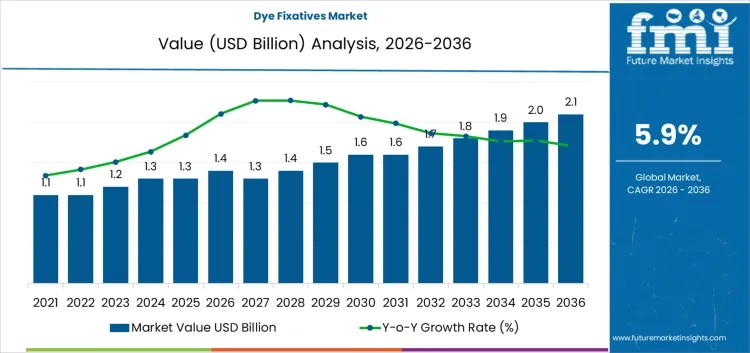
The dye fixatives market is expected to grow from USD 1.3 billion in 2026 to USD 2.1 billion by 2036, reflecting a compound annual growth rate (CAGR) of 5.9%. Dye fixatives are crucial in the textile and dyeing industries, where they help to enhance the color fastness and durability of dyes, ensuring long-lasting and vibrant colors. As demand for high-quality, long-lasting textiles grows, particularly in the fashion and home textiles sectors, the market for dye fixatives is anticipated to expand steadily. Additionally, increasing awareness of environmental sustainability is driving demand for eco-friendly dye fixatives, further fueling market growth.
The market is projected to experience steady annual increases, with values rising from USD 1.3 billion in 2026 to USD 1.4 billion in 2027, followed by USD 1.5 billion in 2028. In 2029, the market will reach USD 1.6 billion, continuing to rise to USD 1.7 billion in 2030. By 2036, the market will reach USD 2.1 billion, reflecting the continued demand for durable and high-performance textiles, and an increasing preference for eco-friendly dye fixative solutions.
Quick Stats for the Dye Fixatives Market
- Dye Fixatives Market Value (2026): USD 1.3 billion
- Dye Fixatives Market Forecast Value (2036): USD 2.1 billion
- Dye Fixatives Market Global Forecast CAGR (2026-2036): 5.9%
- Dye Fixatives Market Leading Segment: Textile Wet Processing (66%)
- Key Growth Regions in Dye Fixatives Market: India
- Top Players in Dye Fixatives Market: Archroma, DyStar, Huntsman (Textile Effects), Pulcra Chemicals, Rudolf Group, Tanatex Chemicals, Zschimmer & Schwarz, NICCA Chemical, Bozzetto Group, Jaysynth Dyestuff
What is the Market Share Erosion or Gain Analysis for the Dye Fixatives Market through 2036?
The dye fixatives market is expected to experience a gradual market share gain over the forecast period. From USD 1.3 billion in 2026, the market will show consistent year-on-year growth, with values reaching USD 1.5 billion in 2028 and USD 1.7 billion in 2030. During this phase, the growth is driven by increased adoption of dye fixatives in the textile industry and the rising need for higher-quality, long-lasting fabric colors. The market is also expected to see some shift towards eco-friendly dye fixative solutions, as sustainability becomes a growing priority in manufacturing processes.
From 2030 to 2036, the market will continue its upward trajectory, reaching USD 2.1 billion by 2036. The market share gain will reflect the increasing demand for advanced, environmentally friendly dyeing solutions in the textile sector, along with technological advancements in fixative formulations that enhance the performance of dyed fabrics. Despite potential competition from other chemical additives, the market is expected to maintain consistent growth, with more companies integrating dye fixatives into their product lines to meet consumer demand for quality and sustainability in textile production.
Dye Fixatives Market Key Takeaways
| Metric | Value |
|---|---|
| Industry Sales Value (2026) | USD 1.3 billion |
| Industry Forecast Value (2036) | USD 2.1 billion |
| Industry Forecast CAGR (2026-2036) | 5.9% |
What Is Driving the Dye Fixatives Market?
Historically, the dye fixatives market developed as textile and leather processors sought methods to improve color fastness and reduce dye bleeding in finished goods. Traditional dyeing relied on basic fixation processes that often left colorants insufficiently bonded, resulting in fading, crocking, or wash off during laundering. Early fixatives were simple salt and acid treatments used in conjunction with reactive or vat dyes to anchor color molecules to fibers. These rudimentary chemistries provided limited performance, especially with modern synthetic fibers and high performance dyes, driving formulators to develop more effective fixation agents. As fashion cycles accelerated and quality standards increased, especially in apparel and industrial textiles, demand grew for fixatives that delivered enhanced wash, light, and perspiration fastness without damaging substrates. Leather finishing also contributed to early demand, as hide processors adopted fixatives to stabilize dyestuffs and improve aesthetic consistency. This phase clarified the role of fixatives in achieving uniform coloration across batches and reinforced quality expectations among manufacturers and brands.
Future demand for the dye fixatives market is expected to be shaped by growth in technical textiles, sustainability pressures, and evolving dye chemistries that require advanced fixation performance. Textile and apparel producers are projected to increase use of high efficiency fixatives that minimize color loss during wash cycles, support low temperature dyeing, and comply with stringent effluent regulations. Expansion in performance segments such as sportswear, medical textiles, and home furnishings will drive adoption of fixatives that can handle complex fiber blends and multifunctional dyes. Environmental considerations will influence formula development, with rising preference for low impact chemistries that reduce water consumption, chemical load in wastewater, and residual toxics. Growth factors include integration of fixatives compatible with digital and pigment printing processes, automation in finishing lines that optimize fixative dosing, and regulatory mandates on discharge quality. Challenges include balancing fixative cost with performance gains, managing compatibility across diverse dye classes, and meeting regional environmental compliance. Long term market expansion will depend on how effectively suppliers innovate sustainable fixatives that deliver consistent fixation, integrate with modern dyeing technologies, and address evolving performance and regulatory requirements in global textile and leather value chains.
What are the Key Segments in the Dye Fixatives Market?
The Dye Fixatives market is segmented by end use and sales channels. End-use segments include textile wet processing, garment washing units, home textiles, and others, with textile wet processing dominating the market at 66%. Sales channels include direct to mills or dyehouses, distributors, formulators or blenders, and others, with direct to mills or dyehouses accounting for the largest share at 48%. The market growth is primarily driven by the increasing demand for high-quality, durable textiles and garments, where dye fixatives play a critical role in improving the colorfastness of dyed fabrics and preventing fading or bleeding. As the textile industry continues to expand globally, particularly in regions such as Asia Pacific and Europe, the adoption of dye fixatives in textile production and garment processing is rising.
What is Driving Growth in the Textile Wet Processing End-Use Segment?
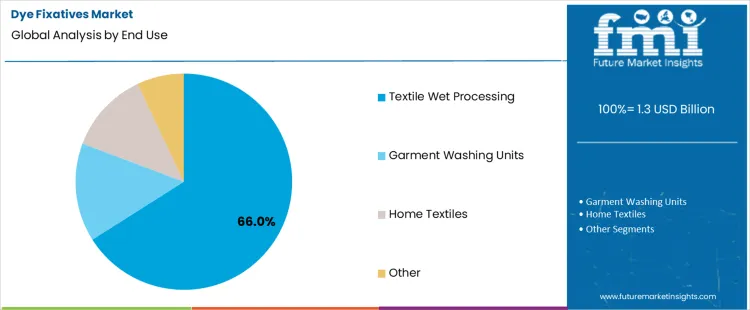
Textile wet processing holds the largest share of the end-use segment in the Dye Fixatives market, accounting for 66% of the market share. This growth is driven by the significant role that dye fixatives play in textile manufacturing, especially in the dyeing and finishing stages. During textile wet processing, dye fixatives are used to enhance the color retention and fastness of dyes applied to fabrics, ensuring that the colors remain vibrant and resistant to washing, light, and friction.
As the global demand for high-quality textiles continues to rise, particularly in the fashion and home textile sectors, the need for effective dye fixatives is growing. Additionally, the increasing emphasis on sustainability in textile production is prompting manufacturers to adopt eco-friendly dye fixatives that improve the environmental impact of textile processing. The demand for durable, color-fast textiles in industries such as apparel and upholstery is further driving the need for advanced dye fixatives in wet processing. As textile production continues to grow, especially in developing countries in Asia Pacific, the demand for dye fixatives is expected to remain strong.
What is Driving the Demand for Direct to Mills or Dyehouses Sales Channels?
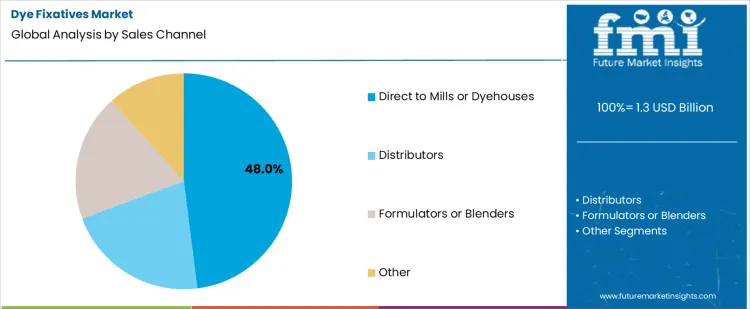
Direct to mills or dyehouses is the largest sales channel segment in the Dye Fixatives market, holding 48% of the market share. This segment's growth is driven by the direct relationship between manufacturers of dye fixatives and the textile mills or dyehouses, where large-scale production and processing occur. Mills and dyehouses are the primary users of dye fixatives in the textile industry, and establishing direct supply chains allows for better control over product quality, pricing, and supply logistics.
The convenience of direct transactions also ensures that dye fixatives are delivered on time, supporting the continuous production cycles of textile mills. Additionally, working directly with mills and dyehouses allows fixative manufacturers to tailor products to the specific needs of textile producers, ensuring compatibility with different dyeing processes and fabrics. The increasing demand for high-quality, color-fast textiles, particularly in industries like fashion, automotive upholstery, and home textiles, is further driving the demand for direct supply channels. As the textile industry continues to expand, particularly in key markets like China, India, and Bangladesh, the direct sales model is expected to remain the dominant channel for dye fixative distribution.
What are the Key Dynamics in the Dye Fixatives Market?
The dye fixatives market is evolving due to the growing demand for high-quality, long-lasting colors in the textile, paper, and leather industries. Dye fixatives are chemicals used to improve the adhesion and permanence of dyes on fabrics, papers, and other materials, preventing fading, bleeding, or wash-off. As the textile industry continues to grow, driven by fashion trends, increased consumer spending, and the rising demand for durable and vibrant clothing, dye fixatives are becoming increasingly important. Moreover, the push for sustainable and eco-friendly solutions in manufacturing processes is driving the development of innovative, non-toxic dye fixatives, further fueling market growth. As manufacturers prioritize performance, environmental impact, and cost-effectiveness, the market for dye fixatives is expected to expand in response to these evolving demands.
What are the Key Drivers of Growth in the Dye Fixatives Market?
Several factors are driving the growth of the dye fixatives market. One major driver is the increasing demand for high-performance textiles in the fashion and apparel industry, where the need for long-lasting, vibrant colors is crucial. Dye fixatives ensure that dyes adhere better to fibers, improving the durability of colors and enhancing the overall quality of the finished products. Another key driver is the growing emphasis on sustainability and environmental concerns. Manufacturers are increasingly adopting eco-friendly dye fixatives to meet consumer demand for non-toxic, biodegradable, and low-impact products. Additionally, the rise of digital printing technology in textiles and the increased use of dyeing techniques in home furnishings are expanding the applications of dye fixatives. The increasing focus on reducing water consumption and chemical waste in textile production is also pushing the demand for more efficient and sustainable dyeing solutions, including the use of fixatives that improve dye performance while minimizing environmental harm.
What are the Key Restraints in the Dye Fixatives Market?
Despite its growth potential, the dye fixatives market faces several challenges. One of the primary restraints is the high cost of certain eco-friendly or specialized dye fixatives. While these products offer better performance and are more environmentally friendly, their higher price can be a barrier for cost-sensitive manufacturers, particularly in developing markets. Additionally, there are concerns regarding the complex chemical formulations of some dye fixatives, which may require careful handling and additional processing steps, increasing production time and costs. The regulatory landscape surrounding chemical additives is another challenge, as manufacturers must comply with stringent environmental and safety regulations, especially in markets with high sustainability standards. Lastly, the availability of alternative methods, such as waterless dyeing and new fabric treatments that reduce the need for fixatives, could potentially limit the market for traditional dye fixatives in the long term.
What are the Key Trends in the Dye Fixatives Market?
Several key trends are shaping the dye fixatives market. One significant trend is the increasing development of sustainable, non-toxic, and biodegradable dye fixatives that are in line with the growing demand for environmentally friendly solutions. As consumers become more conscious of the environmental impact of textile production, there is a greater focus on creating fixatives that minimize chemical waste and water usage. Another trend is the rise of digital textile printing, which requires high-quality dye fixatives to ensure color integrity and longevity. The trend toward custom and on-demand clothing, as well as advancements in fabric technology, is also driving the demand for innovative and high-performance dye fixatives. Moreover, the growing adoption of circular economy principles in textile manufacturing is encouraging the use of more sustainable and reusable dyeing processes, which is likely to spur innovation in the dye fixatives market. Additionally, research into multifunctional fixatives that combine dye fixation with additional properties such as anti-wrinkle, anti-bacterial, or UV resistance is expanding the range of applications for dye fixatives in various industries.
What is the Country-Wise Analysis of the Dye Fixatives Market?
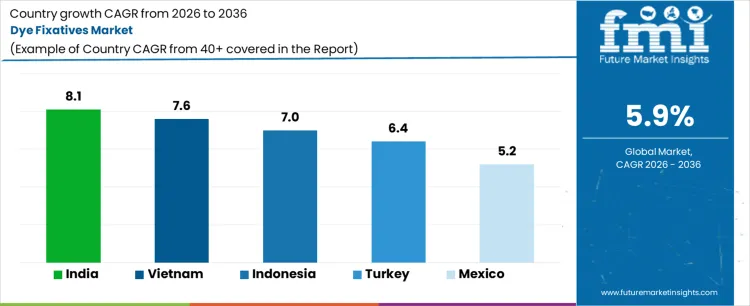
The dye fixatives market is growing as the demand for high-quality, long-lasting colors in textiles, coatings, and other industries increases. Dye fixatives, which help improve the color retention and stability of dyes, are used extensively in industries such as textiles, paper, and paints. The market is driven by the rising demand for high-performance dyes, environmentally friendly products, and innovations in dyeing technologies. Countries like India, Vietnam, Indonesia, Turkiye, and Mexico are experiencing growth in this market, influenced by factors such as industrialization, textile manufacturing, and increasing focus on sustainable production practices. These regions are adopting dye fixatives to improve the quality and durability of their products.
| Country | CAGR (%) |
|---|---|
| India | 8.1 |
| Vietnam | 7.6 |
| Indonesia | 7 |
| Turkiye | 6.4 |
| Mexico | 5.2 |
What is Driving the Growth of the Dye Fixatives Market in India?
India’s dye fixatives market is growing at a CAGR of 8.1%. The growth is largely driven by the country’s vast textile industry, which is one of the largest in the world. The textile industry’s increasing demand for high-quality, durable, and vibrant colors is fueling the adoption of dye fixatives. These fixatives help improve color retention and prevent fading, which is particularly important for India’s competitive textile export market. Additionally, India’s focus on sustainable practices and eco-friendly dyes is encouraging the use of dye fixatives that enhance the durability of colors while reducing environmental impact. As India continues to modernize its manufacturing processes and expand its textile industry, the demand for dye fixatives is expected to increase. The government’s focus on boosting textile exports and supporting the domestic manufacturing sector will further contribute to the growth of the dye fixatives market.
How is the Dye Fixatives Market Performing in Vietnam?
Vietnam’s dye fixatives market is growing at a CAGR of 7.6%. The growth in Vietnam is primarily driven by the country’s expanding textile and garment industry, which is one of the largest sectors in the economy. As Vietnam becomes an increasingly important hub for textile manufacturing, the demand for high-quality dyes and fixatives is rising. Dye fixatives play a critical role in ensuring that textiles retain their color over time, which is essential for maintaining the competitiveness of Vietnam’s textile products in global markets. Additionally, the growing focus on sustainable and eco-friendly products in the textile sector is further driving the adoption of dye fixatives. As Vietnam continues to expand its textile exports, the demand for high-quality dyeing solutions, including fixatives, is expected to grow steadily, supporting the overall market expansion.
What Factors are Shaping the Dye Fixatives Market in Indonesia?
Indonesia’s dye fixatives market is growing at a CAGR of 7%. The market growth is closely tied to the expanding textile and apparel manufacturing industries in the country. As Indonesia continues to increase its production of textiles, the demand for dye fixatives to improve color retention and enhance fabric quality is rising. The country’s textile sector is also becoming more focused on adopting sustainable and eco-friendly dyeing processes, contributing to the growth of the dye fixatives market. Indonesia’s role in the global textile supply chain, combined with the government’s support for industrial development, is further fueling the adoption of these essential products. With continued advancements in dyeing technology and an increasing push for sustainable production, the demand for dye fixatives in Indonesia is expected to increase, contributing to the market’s steady growth.
How is the Dye Fixatives Market Evolving in Turkiye?
Turkiye's dye fixatives market is growing at a CAGR of 6.4%. Turkiye's textile industry, which is a key player in both domestic and international markets, is driving the demand for dye fixatives. The use of these products ensures that textiles retain their colors for longer periods, which is critical for both consumer satisfaction and export competitiveness. Turkiye's textile sector is increasingly focusing on producing high-quality, durable products, and the adoption of dye fixatives is a key part of this trend. Additionally, the country’s efforts to promote sustainable manufacturing practices are contributing to the market’s growth. As Turkiye continues to strengthen its position as a leading textile manufacturer, the demand for dye fixatives is expected to continue growing, particularly in export-driven markets.
What is Contributing to the Growth of the Dye Fixatives Market in Mexico?
Mexico’s dye fixatives market is growing at a CAGR of 5.2%. The demand for dye fixatives in Mexico is primarily driven by the country’s expanding textile and automotive industries. As Mexico’s textile sector continues to grow, particularly in the production of garments and home textiles, the need for durable, high-quality colorants is increasing. Dye fixatives are essential for ensuring that the colors used in textiles are long-lasting and resistant to fading. Additionally, Mexico’s growing emphasis on sustainability and eco-friendly manufacturing practices is contributing to the adoption of dye fixatives that support these goals. The country’s position as an important manufacturing hub in North America, combined with its growing industrial capacity, is expected to drive further demand for dye fixatives in various industries.
What is the Competitive Landscape for the Dye Fixatives Market?
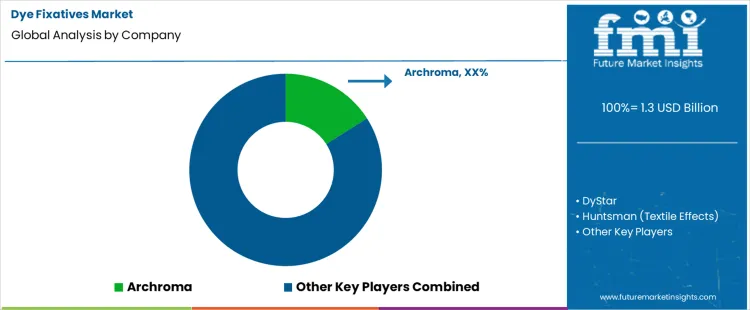
The dye fixatives market is experiencing strong growth due to the increasing demand for color fastness in textiles, enhancing the quality and longevity of dyed fabrics. Archroma leads the market, offering a comprehensive range of dye fixatives that provide superior color retention, brightness, and durability. The company’s focus on sustainable and innovative solutions positions it as a dominant player in the textile and dyeing industries. DyStar is another significant competitor, providing advanced fixatives that improve the color stability of dyed fabrics, meeting the stringent quality requirements of textile manufacturers worldwide. Huntsman (Textile Effects) competes by offering dye fixatives that help improve fabric performance and protect colors during the dyeing process, emphasizing sustainability and environmental benefits. Pulcra Chemicals is also heavily involved, offering fixative products that optimize color fixation while reducing water consumption and waste in textile production. Rudolf Group’s dye fixatives are tailored to improve the colorfastness of fabrics, with a focus on eco-friendly solutions for the textile industry. Tanatex Chemicals provides specialized fixatives that enhance the durability of dyed fabrics, focusing on innovation and high performance. Zschimmer & Schwarz contributes to the market with its range of dye fixatives designed for various textile applications, ensuring high color stability and quality. NICCA Chemical and Bozzetto Group also play key roles, offering effective fixatives that cater to the needs of the global textile market, focusing on improved performance and sustainability. Jaysynth Dyestuff, with its innovative fixative solutions, also strengthens the competitive landscape by offering products that meet the evolving demands of the textile and dyeing industries.
In the competitive landscape, companies are focusing on innovation, sustainability, and expanding product offerings to maintain their position in the dye fixatives market. Archroma continues to lead with its eco-friendly solutions that improve the environmental footprint of textile production while ensuring high-performance results. DyStar is advancing its research and development efforts, focusing on new fixative formulations that enhance color performance and reduce environmental impact. Huntsman (Textile Effects) is investing in sustainable fixative technologies to meet the growing demand for greener production processes in the textile industry. Pulcra Chemicals emphasizes the optimization of water usage and reduction of chemical waste in its fixative solutions, aligning with the industry's sustainability goals. Rudolf Group is strengthening its position by developing fixatives that cater to high-quality textile applications, while Tanatex Chemicals focuses on offering innovative solutions that ensure long-lasting color retention. Zschimmer & Schwarz is continuously improving the performance of its fixatives to meet the evolving demands of fabric manufacturers. NICCA Chemical and Bozzetto Group focus on providing high-quality fixatives that address both the performance and environmental needs of textile industries. These strategies, combined with increasing demand for durable, eco-friendly dyeing solutions, position these companies to remain leaders in the dye fixatives market.
Key Players of the Dye Fixatives Market
- Archroma
- DyStar
- Huntsman (Textile Effects)
- Pulcra Chemicals
- Rudolf Group
- Tanatex Chemicals
- Zschimmer & Schwarz
- NICCA Chemical
- Bozzetto Group
- Jaysynth Dyestuff
Scope of the Report
| Items | Values |
|---|---|
| Quantitative Units (2026) | USD Billion |
| Chemistry | Cationic Fixatives, Resin-Based Fixatives, Formaldehyde-Free Fixatives, Other |
| Dye Class | Reactive Dyes, Direct Dyes, Acid Dyes, Other |
| End Use | Textile Wet Processing, Garment Washing Units, Home Textiles, Other |
| Sales Channel | Direct to Mills or Dyehouses, Distributors, Formulators or Blenders, Other |
| Companies | Archroma, DyStar, Huntsman (Textile Effects), Pulcra Chemicals, Rudolf Group, Tanatex Chemicals, Zschimmer & Schwarz, NICCA Chemical, Bozzetto Group, Jaysynth Dyestuff |
| Regions Covered | North America, Latin America, Western Europe, Eastern Europe, South Asia and Pacific, East Asia, Middle East & Africa |
| Countries Covered | United States, Canada, Mexico, Brazil, Argentina, Germany, France, United Kingdom, Italy, Spain, Netherlands, China, India, Japan, South Korea, ANZ, GCC Countries, South Africa |
| Additional Attributes | Dollar by sales by chemistry, dye class, end use, and sales channel. Includes market trends towards sustainability, cost-effectiveness, regulatory compliance, and the role of dye fixatives in improving color retention and durability. |
Dye Fixatives Market Segmentation
Chemistry:
- Cationic Fixatives
- Resin-Based Fixatives
- Formaldehyde-Free Fixatives
- Other
Dye Class:
- Reactive Dyes
- Direct Dyes
- Acid Dyes
- Other
End Use:
- Textile Wet Processing
- Garment Washing Units
- Home Textiles
- Other
Sales Channel:
- Direct to Mills or Dyehouses
- Distributors
- Formulators or Blenders
- Other
Region:
- Asia Pacific
- China
- Japan
- India
- Australia & New Zealand
- ASEAN
- Rest of Asia Pacific
- Europe
- Germany
- United Kingdom
- France
- Italy
- Spain
- Nordic
- BENELUX
- Rest of Europe
- North America
- United States
- Canada
- Mexico
- Latin America
- Brazil
- Argentina
- Rest of Latin America
- Middle East & Africa
- Kingdom of Saudi Arabia
- Other GCC Countries
- South Africa
- Rest of Middle East & Africa
Bibliography
- European Commission. (2023). Commission Regulation (EU) 2023/1464 of 14 July 2023 amending Annex XVII to Regulation (EC) No 1907/2006 as regards formaldehyde and formaldehyde releasers. Official Journal of the European Union.
- Zero Discharge of Hazardous Chemicals Foundation. (2023). ZDHC manufacturing restricted substances list (MRSL) (Version 3.1). ZDHC Foundation.
- Zero Discharge of Hazardous Chemicals Foundation. (2024). ZDHC MRSL conformance guidance (Version 2.1). ZDHC Foundation.
- OEKO-TEX Association. (2024). New regulations 2024: STANDARD 100 by OEKO-TEX. OEKO-TEX Association.
- Organisation for Economic Co-operation and Development. (2024). Emission scenario document on chemicals used in fabric finishing or fabric coating. OECD Publishing.
Frequently Asked Questions
How big is the dye fixatives market in 2026?
The global dye fixatives market is estimated to be valued at USD 1.3 billion in 2026.
What will be the size of dye fixatives market in 2036?
The market size for the dye fixatives market is projected to reach USD 2.1 billion by 2036.
How much will be the dye fixatives market growth between 2026 and 2036?
The dye fixatives market is expected to grow at a 5.9% CAGR between 2026 and 2036.
What are the key product types in the dye fixatives market?
The key product types in dye fixatives market are cationic fixatives, resin-based fixatives, formaldehyde-free fixatives and other.
Which dye class segment to contribute significant share in the dye fixatives market in 2026?
In terms of dye class, reactive dyes segment to command 42.0% share in the dye fixatives market in 2026.
Preview the report firsthand - request a free sample
Get SampleGet the brochure for pricing and purchase details.
Get PDFTable of Content
- Executive Summary
- Global Market Outlook
- Demand-side Trends
- Supply-side Trends
- Technology Roadmap Analysis
- Analysis and Recommendations
- Market Overview
- Market Coverage / Taxonomy
- Market Definition / Scope / Limitations
- Market Background
- Market Dynamics
- Drivers
- Restraints
- Opportunity
- Trends
- Scenario Forecast
- Demand in Optimistic Scenario
- Demand in Likely Scenario
- Demand in Conservative Scenario
- Opportunity Map Analysis
- Product Life Cycle Analysis
- Supply Chain Analysis
- Investment Feasibility Matrix
- Value Chain Analysis
- PESTLE and Porter’s Analysis
- Regulatory Landscape
- Regional Parent Market Outlook
- Production and Consumption Statistics
- Import and Export Statistics
- Market Dynamics
- Global Market Analysis 2021 to 2025 and Forecast, 2026 to 2036
- Historical Market Size Value (USD Million) Analysis, 2021 to 2025
- Current and Future Market Size Value (USD Million) Projections, 2026 to 2036
- Y-o-Y Growth Trend Analysis
- Absolute $ Opportunity Analysis
- Global Market Pricing Analysis 2021 to 2025 and Forecast 2026 to 2036
- Global Market Analysis 2021 to 2025 and Forecast 2026 to 2036, By Chemistry
- Introduction / Key Findings
- Historical Market Size Value (USD Million) Analysis By Chemistry , 2021 to 2025
- Current and Future Market Size Value (USD Million) Analysis and Forecast By Chemistry , 2026 to 2036
- Cationic Fixatives
- Resin-Based Fixatives
- Formaldehyde-Free Fixatives
- Other
- Cationic Fixatives
- Y-o-Y Growth Trend Analysis By Chemistry , 2021 to 2025
- Absolute $ Opportunity Analysis By Chemistry , 2026 to 2036
- Global Market Analysis 2021 to 2025 and Forecast 2026 to 2036, By Dye Class
- Introduction / Key Findings
- Historical Market Size Value (USD Million) Analysis By Dye Class, 2021 to 2025
- Current and Future Market Size Value (USD Million) Analysis and Forecast By Dye Class, 2026 to 2036
- Reactive Dyes
- Direct Dyes
- Acid Dyes
- Other
- Reactive Dyes
- Y-o-Y Growth Trend Analysis By Dye Class, 2021 to 2025
- Absolute $ Opportunity Analysis By Dye Class, 2026 to 2036
- Global Market Analysis 2021 to 2025 and Forecast 2026 to 2036, By End Use
- Introduction / Key Findings
- Historical Market Size Value (USD Million) Analysis By End Use, 2021 to 2025
- Current and Future Market Size Value (USD Million) Analysis and Forecast By End Use, 2026 to 2036
- Textile Wet Processing
- Garment Washing Value (USD Million)s
- Home Textiles
- Other
- Textile Wet Processing
- Y-o-Y Growth Trend Analysis By End Use, 2021 to 2025
- Absolute $ Opportunity Analysis By End Use, 2026 to 2036
- Global Market Analysis 2021 to 2025 and Forecast 2026 to 2036, By Sales Channel
- Introduction / Key Findings
- Historical Market Size Value (USD Million) Analysis By Sales Channel, 2021 to 2025
- Current and Future Market Size Value (USD Million) Analysis and Forecast By Sales Channel, 2026 to 2036
- Direct to Mills or Dyehouses
- Distributors
- Formulators or Blenders
- Other
- Direct to Mills or Dyehouses
- Y-o-Y Growth Trend Analysis By Sales Channel, 2021 to 2025
- Absolute $ Opportunity Analysis By Sales Channel, 2026 to 2036
- Global Market Analysis 2021 to 2025 and Forecast 2026 to 2036, By Region
- Introduction
- Historical Market Size Value (USD Million) Analysis By Region, 2021 to 2025
- Current Market Size Value (USD Million) Analysis and Forecast By Region, 2026 to 2036
- North America
- Latin America
- Western Europe
- Eastern Europe
- East Asia
- South Asia and Pacific
- Middle East & Africa
- Market Attractiveness Analysis By Region
- North America Market Analysis 2021 to 2025 and Forecast 2026 to 2036, By Country
- Historical Market Size Value (USD Million) Trend Analysis By Market Taxonomy, 2021 to 2025
- Market Size Value (USD Million) Forecast By Market Taxonomy, 2026 to 2036
- By Country
- USA
- Canada
- Mexico
- By Chemistry
- By Dye Class
- By End Use
- By Sales Channel
- By Country
- Market Attractiveness Analysis
- By Country
- By Chemistry
- By Dye Class
- By End Use
- By Sales Channel
- Key Takeaways
- Latin America Market Analysis 2021 to 2025 and Forecast 2026 to 2036, By Country
- Historical Market Size Value (USD Million) Trend Analysis By Market Taxonomy, 2021 to 2025
- Market Size Value (USD Million) Forecast By Market Taxonomy, 2026 to 2036
- By Country
- Brazil
- Chile
- Rest of Latin America
- By Chemistry
- By Dye Class
- By End Use
- By Sales Channel
- By Country
- Market Attractiveness Analysis
- By Country
- By Chemistry
- By Dye Class
- By End Use
- By Sales Channel
- Key Takeaways
- Western Europe Market Analysis 2021 to 2025 and Forecast 2026 to 2036, By Country
- Historical Market Size Value (USD Million) Trend Analysis By Market Taxonomy, 2021 to 2025
- Market Size Value (USD Million) Forecast By Market Taxonomy, 2026 to 2036
- By Country
- Germany
- UK
- Italy
- Spain
- France
- Nordic
- BENELUX
- Rest of Western Europe
- By Chemistry
- By Dye Class
- By End Use
- By Sales Channel
- By Country
- Market Attractiveness Analysis
- By Country
- By Chemistry
- By Dye Class
- By End Use
- By Sales Channel
- Key Takeaways
- Eastern Europe Market Analysis 2021 to 2025 and Forecast 2026 to 2036, By Country
- Historical Market Size Value (USD Million) Trend Analysis By Market Taxonomy, 2021 to 2025
- Market Size Value (USD Million) Forecast By Market Taxonomy, 2026 to 2036
- By Country
- Russia
- Poland
- Hungary
- Balkan & Baltic
- Rest of Eastern Europe
- By Chemistry
- By Dye Class
- By End Use
- By Sales Channel
- By Country
- Market Attractiveness Analysis
- By Country
- By Chemistry
- By Dye Class
- By End Use
- By Sales Channel
- Key Takeaways
- East Asia Market Analysis 2021 to 2025 and Forecast 2026 to 2036, By Country
- Historical Market Size Value (USD Million) Trend Analysis By Market Taxonomy, 2021 to 2025
- Market Size Value (USD Million) Forecast By Market Taxonomy, 2026 to 2036
- By Country
- China
- Japan
- South Korea
- By Chemistry
- By Dye Class
- By End Use
- By Sales Channel
- By Country
- Market Attractiveness Analysis
- By Country
- By Chemistry
- By Dye Class
- By End Use
- By Sales Channel
- Key Takeaways
- South Asia and Pacific Market Analysis 2021 to 2025 and Forecast 2026 to 2036, By Country
- Historical Market Size Value (USD Million) Trend Analysis By Market Taxonomy, 2021 to 2025
- Market Size Value (USD Million) Forecast By Market Taxonomy, 2026 to 2036
- By Country
- India
- ASEAN
- Australia & New Zealand
- Rest of South Asia and Pacific
- By Chemistry
- By Dye Class
- By End Use
- By Sales Channel
- By Country
- Market Attractiveness Analysis
- By Country
- By Chemistry
- By Dye Class
- By End Use
- By Sales Channel
- Key Takeaways
- Middle East & Africa Market Analysis 2021 to 2025 and Forecast 2026 to 2036, By Country
- Historical Market Size Value (USD Million) Trend Analysis By Market Taxonomy, 2021 to 2025
- Market Size Value (USD Million) Forecast By Market Taxonomy, 2026 to 2036
- By Country
- Kingdom of Saudi Arabia
- Other GCC Countries
- Turkiye
- South Africa
- Other African Union
- Rest of Middle East & Africa
- By Chemistry
- By Dye Class
- By End Use
- By Sales Channel
- By Country
- Market Attractiveness Analysis
- By Country
- By Chemistry
- By Dye Class
- By End Use
- By Sales Channel
- Key Takeaways
- Key Countries Market Analysis
- USA
- Pricing Analysis
- Market Share Analysis, 2025
- By Chemistry
- By Dye Class
- By End Use
- By Sales Channel
- Canada
- Pricing Analysis
- Market Share Analysis, 2025
- By Chemistry
- By Dye Class
- By End Use
- By Sales Channel
- Mexico
- Pricing Analysis
- Market Share Analysis, 2025
- By Chemistry
- By Dye Class
- By End Use
- By Sales Channel
- Brazil
- Pricing Analysis
- Market Share Analysis, 2025
- By Chemistry
- By Dye Class
- By End Use
- By Sales Channel
- Chile
- Pricing Analysis
- Market Share Analysis, 2025
- By Chemistry
- By Dye Class
- By End Use
- By Sales Channel
- Germany
- Pricing Analysis
- Market Share Analysis, 2025
- By Chemistry
- By Dye Class
- By End Use
- By Sales Channel
- UK
- Pricing Analysis
- Market Share Analysis, 2025
- By Chemistry
- By Dye Class
- By End Use
- By Sales Channel
- Italy
- Pricing Analysis
- Market Share Analysis, 2025
- By Chemistry
- By Dye Class
- By End Use
- By Sales Channel
- Spain
- Pricing Analysis
- Market Share Analysis, 2025
- By Chemistry
- By Dye Class
- By End Use
- By Sales Channel
- France
- Pricing Analysis
- Market Share Analysis, 2025
- By Chemistry
- By Dye Class
- By End Use
- By Sales Channel
- India
- Pricing Analysis
- Market Share Analysis, 2025
- By Chemistry
- By Dye Class
- By End Use
- By Sales Channel
- ASEAN
- Pricing Analysis
- Market Share Analysis, 2025
- By Chemistry
- By Dye Class
- By End Use
- By Sales Channel
- Australia & New Zealand
- Pricing Analysis
- Market Share Analysis, 2025
- By Chemistry
- By Dye Class
- By End Use
- By Sales Channel
- China
- Pricing Analysis
- Market Share Analysis, 2025
- By Chemistry
- By Dye Class
- By End Use
- By Sales Channel
- Japan
- Pricing Analysis
- Market Share Analysis, 2025
- By Chemistry
- By Dye Class
- By End Use
- By Sales Channel
- South Korea
- Pricing Analysis
- Market Share Analysis, 2025
- By Chemistry
- By Dye Class
- By End Use
- By Sales Channel
- Russia
- Pricing Analysis
- Market Share Analysis, 2025
- By Chemistry
- By Dye Class
- By End Use
- By Sales Channel
- Poland
- Pricing Analysis
- Market Share Analysis, 2025
- By Chemistry
- By Dye Class
- By End Use
- By Sales Channel
- Hungary
- Pricing Analysis
- Market Share Analysis, 2025
- By Chemistry
- By Dye Class
- By End Use
- By Sales Channel
- Kingdom of Saudi Arabia
- Pricing Analysis
- Market Share Analysis, 2025
- By Chemistry
- By Dye Class
- By End Use
- By Sales Channel
- Turkiye
- Pricing Analysis
- Market Share Analysis, 2025
- By Chemistry
- By Dye Class
- By End Use
- By Sales Channel
- South Africa
- Pricing Analysis
- Market Share Analysis, 2025
- By Chemistry
- By Dye Class
- By End Use
- By Sales Channel
- USA
- Market Structure Analysis
- Competition Dashboard
- Competition Benchmarking
- Market Share Analysis of Top Players
- By Regional
- By Chemistry
- By Dye Class
- By End Use
- By Sales Channel
- Competition Analysis
- Competition Deep Dive
- Archroma
- Overview
- Product Portfolio
- Profitability by Market Segments (Product/Age /Sales Channel/Region)
- Sales Footprint
- Strategy Overview
- Marketing Strategy
- Product Strategy
- Channel Strategy
- DyStar
- Huntsman (Textile Effects)
- Pulcra Chemicals
- Rudolf Group
- Tanatex Chemicals
- Zschimmer & Schwarz
- NICCA Chemical
- Bozzetto Group
- Jaysynth Dyestuff
- Archroma
- Competition Deep Dive
- Assumptions & Acronyms Used
- Research Methodology


