

- Industry Size (2026)
- USD 459.2 Mn
- Forecast (2036)
- USD 1426.2 Mn
- CAGR (2026 to 2036)
- 12%
EV Charging Cable Locks and Security Devices Market Forecast and Outlook 2026 to 2036
The EV charging cable locks and security devices market is projected to reach USD 1,426.2 million by 2036, growing at a CAGR of 12% from its 2026 size of USD 459.2 million. While the market offers substantial growth potential, it faces execution risks related to technology development and integration with existing EV infrastructure. Adoption friction may arise as consumers weigh the perceived need for additional security features against convenience and cost, potentially slowing widespread uptake. Economic sensitivity also plays a role, as shifts in consumer spending or fluctuations in electric vehicle adoption could impact demand for security solutions. Companies must manage these risks by carefully balancing innovation with practical, cost-effective solutions. Additionally, as more players enter the market, competition will intensify, requiring clear differentiation in product offerings. Firms will need to navigate these challenges effectively to secure their position in a market that is both promising and subject to shifting economic and technological dynamics.
Quick Stats for the EV Charging Cable Locks and Security Devices Market
- EV Charging Cable Locks and Security Devices Market Value (2026): USD 459.2 million
- EV Charging Cable Locks and Security Devices Market Forecast Value (2036): USD 1,426.2 million
- EV Charging Cable Locks and Security Devices Market Global Forecast CAGR (2026-2036): 12%
- EV Charging Cable Locks and Security Devices Market Leading Segment: Mechanical Locking (56%)
- Key Growth Regions in EV Charging Cable Locks and Security Devices Market: India
- Top Players in EV Charging Cable Locks and Security Devices Market: ABUS, Master Lock, Thule, ChargePoint, Wallbox, Schneider Electric, ABB, Siemens, EVBox, Delta Electronics
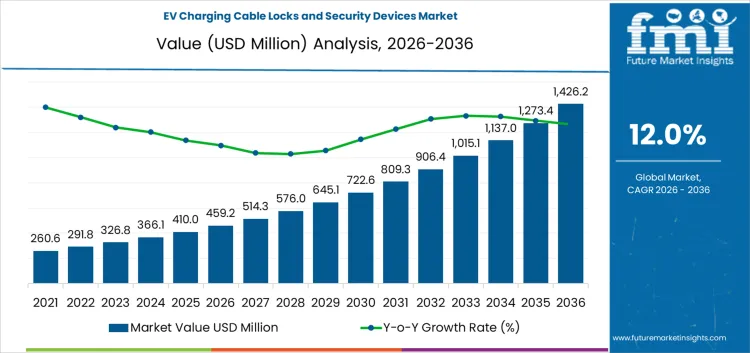
What is the Growth Momentum Analysis for the EV Charging Cable Locks and Security Devices Market through 2036?
The growth momentum analysis for the EV charging cable locks and security devices market indicates a steady acceleration followed by sustained growth. Initially, the market will experience moderate growth, with values rising from USD 459.2 million in 2026 to USD 580.2 million in 2028. This period reflects the early adoption phase of security devices as more EV charging stations are built and as awareness of cable security increases.
Between 2028 and 2030, the market will gain momentum, with the values growing from USD 654.7 million in 2029 to USD 740.4 million in 2030. This phase will be marked by a greater emphasis on security features as more public and private charging stations implement safety measures to protect their infrastructure.
After 2030, the market will experience continued acceleration as demand for secure charging systems intensifies with the growing number of EVs and charging points. The market is projected to reach USD 1,426.2 million by 2036, reflecting the maturing of the EV infrastructure market. The growth momentum will be driven by increasing concerns about theft and misuse of charging cables, as well as the need for more robust security measures across charging networks, ensuring a steady increase in market size.
EV Charging Cable Locks and Security Devices Market Key Takeaways
| Metric | Value |
|---|---|
| Industry Sales Value (2026) | USD 459.2 million |
| Industry Forecast Value (2036) | USD 1,426.2 million |
| Industry Forecast CAGR 2026 to 2036 | 12% |
What Is Driving the EV Charging Cable Locks and Security Devices Market?
Historically, the EV charging cable locks and security devices market emerged as electric vehicle owners and charging station operators confronted theft, vandalism, and unauthorized disconnection of charging equipment. Early EV charging infrastructure typically lacked integrated security measures, leaving heavy cables, connectors, and portable charging units exposed at public stations, workplace lots, and residential driveways. Standard locking functions on some EVs and chargers provided basic prevention against casual interference, yet rising EV adoption and higher utilization of public chargers highlighted weaknesses in passive protection.
Operators responded with aftermarket cable lock sleeves, padlocks, and simple tethering mechanisms to deter opportunistic theft and reduce equipment replacement costs. Fleet managers and multi unit housing facilities were among the first to invest in dedicated accessories as usage frequency increased and incidents of tampering or cable theft began affecting availability. This initial period clarified the value of supplemental hardware that could secure both cable and connector interfaces in varied use contexts while maintaining usability for legitimate users.
Future demand for EV charging cable locks and security devices is expected to be shaped by continued expansion of public and private charging networks, integration of shared mobility fleets, and heightened emphasis on infrastructure reliability and asset protection. As EV counts rise, operators will seek robust solutions that prevent cable theft, unauthorized unplugging, and vandalism at high traffic stations, thereby reducing downtime and maintenance costs. Growth drivers will include development of intelligent locking systems that integrate with station authentication, user accounts, and real time monitoring to enforce access control and deter misuse.
Smart devices with tamper alerts, remote locking, and integration into station management software will appeal to commercial operators and fleet owners who require assurance that charging resources remain available and functional. Variability in installation environments, from urban public stations to workplace garages, will encourage modular and adaptable security designs. Barriers include cost sensitivity for smaller operators and the need for standardization of lock interfaces across diverse charging hardware. Long term market growth will depend on how effectively cable security solutions balance protection, ease of use, and interoperability within a broadly expanding EV charging ecosystem.
What are the Key Segments in the EV Charging Cable Locks and Security Devices Market?
The EV Charging Cable Locks and Security Devices market is segmented by security method and sales channels. Security methods include mechanical locking, RFID or smart locking, sensor alarm-based, and others, with mechanical locking leading the market at 56%. Sales channels consist of online direct-to-consumer (D2C), retail & distributors, charger brands bundled, and others, with online D2C holding the largest share at 48%. The market is driven by the increasing demand for secure, convenient, and reliable solutions to protect EV charging cables from theft or tampering, especially as the adoption of electric vehicles (EVs) and public charging stations continues to rise. As the EV market grows globally, particularly in regions like North America, Europe, and Asia Pacific, the need for enhanced security devices to safeguard charging infrastructure is expanding.
What is Driving Growth in the Mechanical Locking Security Method?
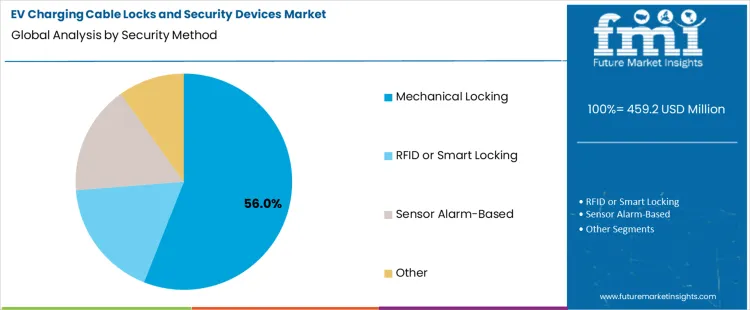
Mechanical locking is the dominant security method in the EV Charging Cable Locks and Security Devices market, accounting for 56% of the market share. This growth is driven by the simplicity, reliability, and cost-effectiveness of mechanical locks in providing physical security for charging cables. Mechanical locks are widely used in both home and public EV charging stations, offering a straightforward solution to prevent theft or unauthorized use of charging cables. These locks are often key-operated or require a combination, making them easy to use while providing robust protection. As the number of EVs and public charging stations increases, particularly in urban areas with higher instances of vehicle theft or vandalism, the demand for mechanical locking devices continues to rise. Additionally, mechanical locks offer a proven, low-maintenance solution that is ideal for consumers seeking an affordable way to secure their charging cables. As EV adoption accelerates globally, mechanical locking solutions are expected to remain a key security method in the market.
What is Driving the Demand for Online D2C Sales Channels?
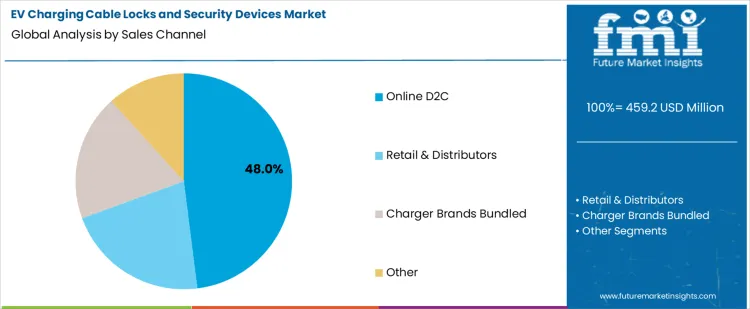
Online direct-to-consumer (D2C) is the leading sales channel in the EV Charging Cable Locks and Security Devices market, holding 48% of the market share. This growth is primarily driven by the convenience, accessibility, and wide selection of products offered by online platforms. Consumers prefer to purchase EV charging cable locks and security devices online because it allows them to easily compare different models, check product reviews, and receive their purchases directly at home, without the need to visit physical stores. As the number of EV owners increases, particularly in regions like North America and Europe, online D2C sales provide an efficient and convenient purchasing option for those looking to secure their charging equipment. The ability to purchase securely and efficiently from home is driving the continued growth of this sales channel. Additionally, e-commerce platforms often provide competitive pricing, bundled offers, and access to the latest models, making it a preferred choice for consumers. As the EV market expands and online shopping continues to thrive, the demand for online D2C sales in the EV charging security devices market is expected to grow.
What are the Key Dynamics in the EV Charging Cable Locks and Security Devices Market?
The EV charging cable locks and security devices market is expanding due to the growing adoption of electric vehicles (EVs) and the need for secure and reliable charging infrastructure. As more EVs hit the roads, the demand for charging stations-both public and private-has increased, and so has the need for protection against theft, vandalism, or unauthorized use of charging cables. Cable locks and security devices ensure that charging equipment is safe from tampering or theft, which is a key concern for EV owners and charging station operators. The market’s growth is driven by the rise in the number of EVs, the expansion of charging infrastructure, and the increasing awareness of the need for robust security solutions in public and private charging environments.
What are the Key Drivers of Growth in the EV Charging Cable Locks and Security Devices Market?
The main drivers of growth in the EV charging cable locks and security devices market include the rapid rise in EV adoption, which has led to an increased number of charging stations requiring enhanced security solutions. With more public and private charging stations being installed, the risk of theft or vandalism of valuable charging cables and equipment is higher, fueling demand for security devices. Furthermore, the growth of the EV market is accompanied by government policies and incentives aimed at expanding charging infrastructure, which often includes investments in security solutions. As EVs become more mainstream, charging station owners are increasingly recognizing the importance of protecting their investment, which drives the need for reliable cable locks and security devices. Additionally, consumer awareness of the importance of safeguarding charging equipment is contributing to the increased adoption of these solutions in residential and commercial settings.
What are the Key Restraints in the EV Charging Cable Locks and Security Devices Market?
The EV charging cable locks and security devices market faces several challenges. One major restraint is the cost associated with security devices, which may deter some consumers from investing in them, especially in regions where the adoption of EVs is still growing. The price of high-quality locks, cables, and security devices can be a barrier for some consumers, particularly for private users with limited budgets. Another challenge is the potential for compatibility issues with different types of EV charging stations and cables. As charging standards continue to evolve, security devices must be adaptable to various types of connectors and technologies, which could increase development complexity. Additionally, while security devices help protect cables, they are not foolproof, and sophisticated theft methods could still circumvent these solutions. Furthermore, the lack of uniform standards for security features across charging networks may make it difficult for users to find universal solutions that work across multiple charging stations or locations.
What are the Key Trends in the EV Charging Cable Locks and Security Devices Market?
Several key trends are shaping the EV charging cable locks and security devices market. One significant trend is the growing integration of smart technology in security devices, allowing users to remotely monitor and control the security of their charging cables via mobile apps. These smart security systems can send notifications to the user if any tampering is detected, enhancing convenience and providing peace of mind. Another trend is the increasing adoption of keyless or digital locking mechanisms that offer higher levels of security and ease of use, reducing the need for physical keys or manual locking systems. The development of more durable, weather-resistant materials for outdoor use is also gaining traction, as EV charging stations are often located in public, outdoor environments. Additionally, with the rise of shared charging infrastructure, especially in urban areas, there is an increasing demand for security devices that can be easily installed and adapted to different types of charging stations, creating opportunities for universal and scalable security solutions. As the EV market continues to grow, these trends indicate that security will become an increasingly important aspect of charging infrastructure.
What is the Country-Wise Analysis of the EV Charging Cable Locks and Security Devices Market?
The EV charging cable locks and security devices market is experiencing growth as electric vehicle (EV) adoption increases and the need for secure charging solutions becomes more critical. With the rise in the number of EVs, there is an increasing demand for security devices that protect charging cables from theft, tampering, and damage. These devices are essential for ensuring the safety of EV owners, particularly in public and high-traffic areas. As charging infrastructure expands globally, the demand for security solutions to safeguard cables and chargers is rising. Countries like India, China, the USA, Germany, and the UK are witnessing significant growth in this market due to increasing EV adoption, expanding charging infrastructure, and growing consumer awareness of security concerns.
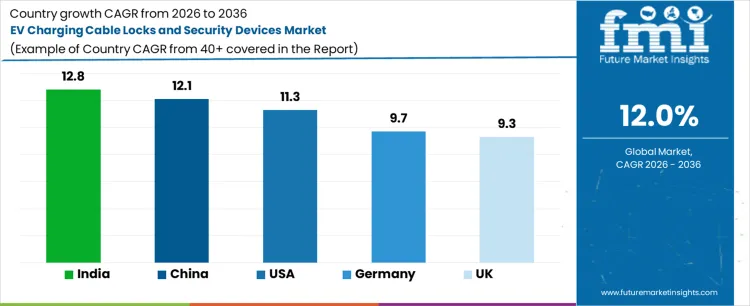
| Country | CAGR (%) |
|---|---|
| India | 12.8 |
| China | 12.1 |
| USA | 11.3 |
| Germany | 9.7 |
| UK | 9.3 |
What is Driving the Growth of the EV Charging Cable Locks and Security Devices Market in India?
India’s EV charging cable locks and security devices market is growing at a CAGR of 12.8%, the highest among the countries analyzed. The growth is primarily driven by the rapid adoption of electric vehicles in India, supported by government incentives and the country’s push towards clean energy. As the number of EVs on Indian roads increases, so does the demand for secure charging solutions to protect charging cables and connectors from theft and damage, particularly in public charging stations. India’s expanding EV charging infrastructure and the growing awareness of the need for security in public spaces are contributing to the market’s growth. Additionally, the rise of home EV charging stations and increasing concerns about the safety of charging equipment are driving the adoption of cable locks and security devices.
How is the EV Charging Cable Locks and Security Devices Market Performing in China?
China’s EV charging cable locks and security devices market is growing at a CAGR of 12.1%. As the largest electric vehicle market in the world, China is seeing a significant increase in the number of EVs on the road, which is driving the need for secure charging solutions. With a growing number of public and private charging stations, cable locks and security devices are becoming essential to prevent theft and ensure the safety of charging equipment. China’s government has been heavily investing in EV infrastructure, which is further fueling the demand for these security devices. Additionally, as China continues to expand its EV fleet and charging stations, the adoption of security devices to safeguard cables and connectors is expected to grow steadily, contributing to the market’s expansion.
What Factors are Shaping the EV Charging Cable Locks and Security Devices Market in the USA?
The EV charging cable locks and security devices market in the USA is growing at a CAGR of 11.3%. The rapid growth of the electric vehicle market in the USA, fueled by government incentives and an increasing shift towards sustainable transportation, is driving the demand for secure EV charging solutions. With the rise of home and public charging stations, there is a growing need for cable locks and security devices to protect charging cables from theft, tampering, and weather damage. The expanding charging infrastructure in urban areas and the growing awareness of EV owners regarding the safety of their charging equipment are contributing to the market’s growth. As EV adoption continues to rise in the USA, the demand for charging cable locks and security devices is expected to grow.
How is the EV Charging Cable Locks and Security Devices Market Evolving in Germany?
Germany’s EV charging cable locks and security devices market is growing at a CAGR of 9.7%. Germany, a key player in Europe’s automotive and EV sectors, is witnessing increased demand for security solutions for EV charging infrastructure. As the adoption of electric vehicles rises, there is a growing need to secure charging cables and ensure that charging stations remain functional and free from tampering or theft. The German government’s emphasis on expanding EV infrastructure and its commitment to clean energy solutions are driving the demand for secure charging solutions. Additionally, as Germany continues to develop its charging network for both residential and public use, the need for reliable cable locks and security devices is expected to grow steadily.
What is Contributing to the Growth of the EV Charging Cable Locks and Security Devices Market in the UK?
The EV charging cable locks and security devices market in the UK is growing at a CAGR of 9.3%. The UK’s growing electric vehicle market, coupled with government initiatives aimed at increasing the adoption of electric mobility, is driving the demand for EV charging infrastructure. With the increasing number of public and private charging stations, there is a rising need for security solutions to protect EV charging cables from theft or damage. The UK’s commitment to reducing carbon emissions and its investment in clean energy solutions are further supporting the expansion of the EV market. As the number of EVs and charging stations increases, the market for charging cable locks and security devices in the UK is expected to continue growing, driven by increasing awareness of the need for security in public charging stations and private homes.
What is the Competitive Landscape for the EV Charging Cable Locks and Security Devices Market?
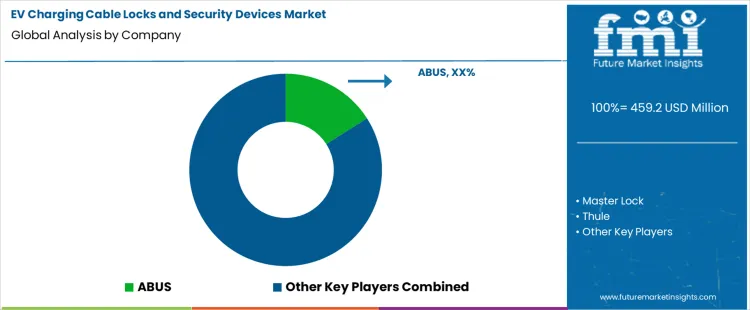
The EV charging cable locks and security devices market is growing rapidly, driven by the increasing number of electric vehicle (EV) owners and the need to safeguard charging infrastructure against theft and damage. ABUS leads the market with its advanced security solutions, providing high-quality, durable cable locks designed to prevent unauthorized access and theft of EV charging cables. ABUS’s strong brand reputation in security products and its focus on innovative solutions has solidified its position as a market leader. Master Lock is another key player, offering robust locking mechanisms that ensure the protection of EV charging cables and connectors.
Known for its security expertise, Master Lock's products cater to both residential and public charging station needs. Thule, a significant competitor, provides a range of security devices and accessories for EV chargers, including cable locks designed for ease of use and superior protection. ChargePoint, a leader in the EV charging station market, also contributes with its own line of cable locks, designed for seamless integration with its network of charging stations, ensuring a secure charging experience. Wallbox offers security devices that enhance user control over their charging stations, including cable locks and access control systems that prevent unauthorized use.
Schneider Electric and ABB are key players, offering smart charging solutions with integrated security features to ensure that EV cables and charging stations are safe from theft and tampering. Siemens and EVBox both focus on providing integrated security solutions as part of their broader EV infrastructure, offering cable locks and other security devices that work seamlessly with their charging stations. Delta Electronics is also involved in the market, offering robust and reliable cable security products that complement its EV charging stations, ensuring a comprehensive security solution.
To remain competitive in the EV charging cable locks and security devices market, companies are focusing on product innovation, ease of use, and seamless integration with EV charging infrastructure. ABUS continues to lead by enhancing its security features, offering cable locks that are highly resistant to tampering and weather conditions, ensuring long-term protection. Master Lock is advancing its product line by integrating more convenient locking mechanisms, making it easier for users to secure their charging cables with minimal effort.
Thule’s strategy includes developing cable locks and accessories that provide both convenience and high security for users, catering to the growing demand for secure charging solutions. ChargePoint focuses on offering integrated security features that align with its comprehensive charging network, enabling users to securely lock cables at public charging stations. Wallbox continues to enhance the security of its smart charging solutions, offering products that can be remotely monitored and managed through apps.
Schneider Electric and ABB are investing in smart charging stations that integrate security features such as access controls, tamper detection, and remote monitoring, making it easier for users to protect their charging infrastructure. Siemens and EVBox emphasize providing scalable security solutions for both residential and commercial applications, ensuring the safety of EV cables and connectors in various environments. Delta Electronics focuses on delivering reliable security features in its charging stations, ensuring users have peace of mind when charging their EVs. These strategies, combined with the growing demand for secure and reliable EV charging infrastructure, position these companies as leaders in the expanding EV charging cable locks and security devices market.
Key Players of the EV Charging Cable Locks and Security Devices Market
- ABUS
- Master Lock
- Thule
- ChargePoint
- Wallbox
- Schneider Electric
- ABB
- Siemens
- EVBox
- Delta Electronics
Scope of the Report
| Items | Values |
|---|---|
| Quantitative Units (2026) | USD Million |
| Product Type | Cable Lock Devices, Port Locking Caps, Anti-Theft Alarms or Tags, Other |
| Charging Setup | Home Charging, Public AC, Public DC Fast, Workplace or Depot |
| Security Method | Mechanical Locking, RFID or Smart Locking, Sensor Alarm-Based, Other |
| Sales Channel | Online D2C, Retail & Distributors, Charger Brands Bundled, Other |
| Companies | ABUS, Master Lock, Thule, ChargePoint, Wallbox, Schneider Electric, ABB, Siemens, EVBox, Delta Electronics |
| Regions Covered | North America, Latin America, Western Europe, Eastern Europe, South Asia and Pacific, East Asia, Middle East & Africa |
| Countries Covered | United States, Canada, Mexico, Brazil, Argentina, Germany, France, United Kingdom, Italy, Spain, Netherlands, China, India, Japan, South Korea, ANZ, GCC Countries, South Africa |
| Additional Attributes | Dollar by sales by product type, charging setup, security method, and sales channel. Includes market trends towards enhanced security features for EV charging, cost-effectiveness, regulatory compliance, and the role of security devices in preventing theft and ensuring safe charging experiences. |
EV Charging Cable Locks and Security Devices Market Segmentation
Product Type
- Cable Lock Devices
- Port Locking Caps
- Anti-Theft Alarms or Tags
- Other
Charging Setup
- Home Charging
- Public AC
- Public DC Fast
- Workplace or Depot
- Other
Security Method
- Mechanical Locking
- RFID or Smart Locking
- Sensor Alarm-Based
- Other
Sales Channel
- Online D2C
- Retail & Distributors
- Charger Brands Bundled
- Other
Region
- Asia Pacific
- China
- Japan
- India
- Australia & New Zealand
- ASEAN
- Rest of Asia Pacific
- Europe
- Germany
- United Kingdom
- France
- Italy
- Spain
- Nordic
- BENELUX
- Rest of Europe
- North America
- United States
- Canada
- Mexico
- Latin America
- Brazil
- Argentina
- Rest of Latin America
- Middle East & Africa
- Kingdom of Saudi Arabia
- Other GCC Countries
- South Africa
- Rest of Middle East & Africa
Bibliography
- International Electrotechnical Commission. (2024). IEC 61851-1: Electric vehicle conductive charging system-General requirements for safety and protection against electric shock. International Electrotechnical Commission.
- International Organization for Standardization. (2024). ISO 17409: Electrically propelled road vehicles-Conductive power transfer-Safety requirements. International Organization for Standardization.
- United Nations Economic Commission for Europe. (2024). UN Regulation No. 100: Electric powertrain vehicles-Requirements for electrical safety, mechanical integrity, and cable protection. UNECE.
- European Committee for Standardization. (2023). EN 50696: Electric vehicle charging systems-Vehicle to grid communication and physical security requirements. CEN.
- U.S. Department of Energy. (2023). Electric vehicle charging infrastructure: Safety, interoperability, and theft prevention standards. U.S. Department of Energy.
Frequently Asked Questions
How big is the ev charging cable locks and security devices market in 2026?
The global ev charging cable locks and security devices market is estimated to be valued at USD 459.2 million in 2026.
What will be the size of ev charging cable locks and security devices market in 2036?
The market size for the ev charging cable locks and security devices market is projected to reach USD 1,426.2 million by 2036.
How much will be the ev charging cable locks and security devices market growth between 2026 and 2036?
The ev charging cable locks and security devices market is expected to grow at a 12.0% CAGR between 2026 and 2036.
What are the key product types in the ev charging cable locks and security devices market?
The key product types in ev charging cable locks and security devices market are cable lock devices, port locking caps, anti-theft alarms or tags and other.
Which charging setup segment to contribute significant share in the ev charging cable locks and security devices market in 2026?
In terms of charging setup, home charging segment to command 46.0% share in the ev charging cable locks and security devices market in 2026.
Preview the report firsthand - request a free sample
Get SampleGet the brochure for pricing and purchase details.
Get PDFTable of Content
- Executive Summary
- Global Market Outlook
- Demand-side Trends
- Supply-side Trends
- Technology Roadmap Analysis
- Analysis and Recommendations
- Market Overview
- Market Coverage / Taxonomy
- Market Definition / Scope / Limitations
- Market Background
- Market Dynamics
- Drivers
- Restraints
- Opportunity
- Trends
- Scenario Forecast
- Demand in Optimistic Scenario
- Demand in Likely Scenario
- Demand in Conservative Scenario
- Opportunity Map Analysis
- Product Life Cycle Analysis
- Supply Chain Analysis
- Investment Feasibility Matrix
- Value Chain Analysis
- PESTLE and Porter’s Analysis
- Regulatory Landscape
- Regional Parent Market Outlook
- Production and Consumption Statistics
- Import and Export Statistics
- Market Dynamics
- Global Market Analysis 2021 to 2025 and Forecast, 2026 to 2036
- Historical Market Size Value (USD Million) Analysis, 2021 to 2025
- Current and Future Market Size Value (USD Million) Projections, 2026 to 2036
- Y-o-Y Growth Trend Analysis
- Absolute $ Opportunity Analysis
- Global Market Pricing Analysis 2021 to 2025 and Forecast 2026 to 2036
- Global Market Analysis 2021 to 2025 and Forecast 2026 to 2036, By Product Type
- Introduction / Key Findings
- Historical Market Size Value (USD Million) Analysis By Product Type , 2021 to 2025
- Current and Future Market Size Value (USD Million) Analysis and Forecast By Product Type , 2026 to 2036
- Cable Lock Devices
- Port Locking Caps
- Anti-Theft Alarms or Tags
- Other
- Cable Lock Devices
- Y-o-Y Growth Trend Analysis By Product Type , 2021 to 2025
- Absolute $ Opportunity Analysis By Product Type , 2026 to 2036
- Global Market Analysis 2021 to 2025 and Forecast 2026 to 2036, By Charging Setup
- Introduction / Key Findings
- Historical Market Size Value (USD Million) Analysis By Charging Setup, 2021 to 2025
- Current and Future Market Size Value (USD Million) Analysis and Forecast By Charging Setup, 2026 to 2036
- Home Charging
- Public AC
- Public DC Fast
- Workplace or Depot
- Home Charging
- Y-o-Y Growth Trend Analysis By Charging Setup, 2021 to 2025
- Absolute $ Opportunity Analysis By Charging Setup, 2026 to 2036
- Global Market Analysis 2021 to 2025 and Forecast 2026 to 2036, By Security Method
- Introduction / Key Findings
- Historical Market Size Value (USD Million) Analysis By Security Method, 2021 to 2025
- Current and Future Market Size Value (USD Million) Analysis and Forecast By Security Method, 2026 to 2036
- Mechanical Locking
- RFID or Smart Locking
- Sensor Alarm-Based
- Other
- Mechanical Locking
- Y-o-Y Growth Trend Analysis By Security Method, 2021 to 2025
- Absolute $ Opportunity Analysis By Security Method, 2026 to 2036
- Global Market Analysis 2021 to 2025 and Forecast 2026 to 2036, By Sales Channel
- Introduction / Key Findings
- Historical Market Size Value (USD Million) Analysis By Sales Channel, 2021 to 2025
- Current and Future Market Size Value (USD Million) Analysis and Forecast By Sales Channel, 2026 to 2036
- Online D2C
- Retail & Distributors
- Charger Brands Bundled
- Other
- Online D2C
- Y-o-Y Growth Trend Analysis By Sales Channel, 2021 to 2025
- Absolute $ Opportunity Analysis By Sales Channel, 2026 to 2036
- Global Market Analysis 2021 to 2025 and Forecast 2026 to 2036, By Region
- Introduction
- Historical Market Size Value (USD Million) Analysis By Region, 2021 to 2025
- Current Market Size Value (USD Million) Analysis and Forecast By Region, 2026 to 2036
- North America
- Latin America
- Western Europe
- Eastern Europe
- East Asia
- South Asia and Pacific
- Middle East & Africa
- Market Attractiveness Analysis By Region
- North America Market Analysis 2021 to 2025 and Forecast 2026 to 2036, By Country
- Historical Market Size Value (USD Million) Trend Analysis By Market Taxonomy, 2021 to 2025
- Market Size Value (USD Million) Forecast By Market Taxonomy, 2026 to 2036
- By Country
- USA
- Canada
- Mexico
- By Product Type
- By Charging Setup
- By Security Method
- By Sales Channel
- By Country
- Market Attractiveness Analysis
- By Country
- By Product Type
- By Charging Setup
- By Security Method
- By Sales Channel
- Key Takeaways
- Latin America Market Analysis 2021 to 2025 and Forecast 2026 to 2036, By Country
- Historical Market Size Value (USD Million) Trend Analysis By Market Taxonomy, 2021 to 2025
- Market Size Value (USD Million) Forecast By Market Taxonomy, 2026 to 2036
- By Country
- Brazil
- Chile
- Rest of Latin America
- By Product Type
- By Charging Setup
- By Security Method
- By Sales Channel
- By Country
- Market Attractiveness Analysis
- By Country
- By Product Type
- By Charging Setup
- By Security Method
- By Sales Channel
- Key Takeaways
- Western Europe Market Analysis 2021 to 2025 and Forecast 2026 to 2036, By Country
- Historical Market Size Value (USD Million) Trend Analysis By Market Taxonomy, 2021 to 2025
- Market Size Value (USD Million) Forecast By Market Taxonomy, 2026 to 2036
- By Country
- Germany
- UK
- Italy
- Spain
- France
- Nordic
- BENELUX
- Rest of Western Europe
- By Product Type
- By Charging Setup
- By Security Method
- By Sales Channel
- By Country
- Market Attractiveness Analysis
- By Country
- By Product Type
- By Charging Setup
- By Security Method
- By Sales Channel
- Key Takeaways
- Eastern Europe Market Analysis 2021 to 2025 and Forecast 2026 to 2036, By Country
- Historical Market Size Value (USD Million) Trend Analysis By Market Taxonomy, 2021 to 2025
- Market Size Value (USD Million) Forecast By Market Taxonomy, 2026 to 2036
- By Country
- Russia
- Poland
- Hungary
- Balkan & Baltic
- Rest of Eastern Europe
- By Product Type
- By Charging Setup
- By Security Method
- By Sales Channel
- By Country
- Market Attractiveness Analysis
- By Country
- By Product Type
- By Charging Setup
- By Security Method
- By Sales Channel
- Key Takeaways
- East Asia Market Analysis 2021 to 2025 and Forecast 2026 to 2036, By Country
- Historical Market Size Value (USD Million) Trend Analysis By Market Taxonomy, 2021 to 2025
- Market Size Value (USD Million) Forecast By Market Taxonomy, 2026 to 2036
- By Country
- China
- Japan
- South Korea
- By Product Type
- By Charging Setup
- By Security Method
- By Sales Channel
- By Country
- Market Attractiveness Analysis
- By Country
- By Product Type
- By Charging Setup
- By Security Method
- By Sales Channel
- Key Takeaways
- South Asia and Pacific Market Analysis 2021 to 2025 and Forecast 2026 to 2036, By Country
- Historical Market Size Value (USD Million) Trend Analysis By Market Taxonomy, 2021 to 2025
- Market Size Value (USD Million) Forecast By Market Taxonomy, 2026 to 2036
- By Country
- India
- ASEAN
- Australia & New Zealand
- Rest of South Asia and Pacific
- By Product Type
- By Charging Setup
- By Security Method
- By Sales Channel
- By Country
- Market Attractiveness Analysis
- By Country
- By Product Type
- By Charging Setup
- By Security Method
- By Sales Channel
- Key Takeaways
- Middle East & Africa Market Analysis 2021 to 2025 and Forecast 2026 to 2036, By Country
- Historical Market Size Value (USD Million) Trend Analysis By Market Taxonomy, 2021 to 2025
- Market Size Value (USD Million) Forecast By Market Taxonomy, 2026 to 2036
- By Country
- Kingdom of Saudi Arabia
- Other GCC Countries
- Turkiye
- South Africa
- Other African Union
- Rest of Middle East & Africa
- By Product Type
- By Charging Setup
- By Security Method
- By Sales Channel
- By Country
- Market Attractiveness Analysis
- By Country
- By Product Type
- By Charging Setup
- By Security Method
- By Sales Channel
- Key Takeaways
- Key Countries Market Analysis
- USA
- Pricing Analysis
- Market Share Analysis, 2025
- By Product Type
- By Charging Setup
- By Security Method
- By Sales Channel
- Canada
- Pricing Analysis
- Market Share Analysis, 2025
- By Product Type
- By Charging Setup
- By Security Method
- By Sales Channel
- Mexico
- Pricing Analysis
- Market Share Analysis, 2025
- By Product Type
- By Charging Setup
- By Security Method
- By Sales Channel
- Brazil
- Pricing Analysis
- Market Share Analysis, 2025
- By Product Type
- By Charging Setup
- By Security Method
- By Sales Channel
- Chile
- Pricing Analysis
- Market Share Analysis, 2025
- By Product Type
- By Charging Setup
- By Security Method
- By Sales Channel
- Germany
- Pricing Analysis
- Market Share Analysis, 2025
- By Product Type
- By Charging Setup
- By Security Method
- By Sales Channel
- UK
- Pricing Analysis
- Market Share Analysis, 2025
- By Product Type
- By Charging Setup
- By Security Method
- By Sales Channel
- Italy
- Pricing Analysis
- Market Share Analysis, 2025
- By Product Type
- By Charging Setup
- By Security Method
- By Sales Channel
- Spain
- Pricing Analysis
- Market Share Analysis, 2025
- By Product Type
- By Charging Setup
- By Security Method
- By Sales Channel
- France
- Pricing Analysis
- Market Share Analysis, 2025
- By Product Type
- By Charging Setup
- By Security Method
- By Sales Channel
- India
- Pricing Analysis
- Market Share Analysis, 2025
- By Product Type
- By Charging Setup
- By Security Method
- By Sales Channel
- ASEAN
- Pricing Analysis
- Market Share Analysis, 2025
- By Product Type
- By Charging Setup
- By Security Method
- By Sales Channel
- Australia & New Zealand
- Pricing Analysis
- Market Share Analysis, 2025
- By Product Type
- By Charging Setup
- By Security Method
- By Sales Channel
- China
- Pricing Analysis
- Market Share Analysis, 2025
- By Product Type
- By Charging Setup
- By Security Method
- By Sales Channel
- Japan
- Pricing Analysis
- Market Share Analysis, 2025
- By Product Type
- By Charging Setup
- By Security Method
- By Sales Channel
- South Korea
- Pricing Analysis
- Market Share Analysis, 2025
- By Product Type
- By Charging Setup
- By Security Method
- By Sales Channel
- Russia
- Pricing Analysis
- Market Share Analysis, 2025
- By Product Type
- By Charging Setup
- By Security Method
- By Sales Channel
- Poland
- Pricing Analysis
- Market Share Analysis, 2025
- By Product Type
- By Charging Setup
- By Security Method
- By Sales Channel
- Hungary
- Pricing Analysis
- Market Share Analysis, 2025
- By Product Type
- By Charging Setup
- By Security Method
- By Sales Channel
- Kingdom of Saudi Arabia
- Pricing Analysis
- Market Share Analysis, 2025
- By Product Type
- By Charging Setup
- By Security Method
- By Sales Channel
- Turkiye
- Pricing Analysis
- Market Share Analysis, 2025
- By Product Type
- By Charging Setup
- By Security Method
- By Sales Channel
- South Africa
- Pricing Analysis
- Market Share Analysis, 2025
- By Product Type
- By Charging Setup
- By Security Method
- By Sales Channel
- USA
- Market Structure Analysis
- Competition Dashboard
- Competition Benchmarking
- Market Share Analysis of Top Players
- By Regional
- By Product Type
- By Charging Setup
- By Security Method
- By Sales Channel
- Competition Analysis
- Competition Deep Dive
- ABUS
- Overview
- Product Portfolio
- Profitability by Market Segments (Product/Age /Sales Channel/Region)
- Sales Footprint
- Strategy Overview
- Marketing Strategy
- Product Strategy
- Channel Strategy
- Master Lock
- Thule
- ChargePoint
- Wallbox
- Schneider Electric
- ABB
- Siemens
- EVBox
- Delta Electronics
- ABUS
- Competition Deep Dive
- Assumptions & Acronyms Used
- Research Methodology


