

- Industry Size (2026)
- USD 3.1 Bn
- Forecast (2036)
- USD 7.4 Bn
- CAGR (2026 to 2036)
- 9.1%
Hair Repigmentation Treatment Market Forecast and Outlook 2026 to 2036
The hair repigmentation treatment market is valued at USD 3.1 billion in 2026 and is set to reach USD 7.4 billion by 2036, expanding at a 9.1% CAGR. Growth reflects rising clinical and consumer interest in approaches that address biological drivers of hair greying rather than surface-level color masking. Repigmentation solutions are positioned at the intersection of dermatology, aesthetic medicine, and cosmetic science, with demand shaped by early-onset greying trends, oxidative stress exposure, and aging-related melanocyte dysfunction.
Treatment value accumulates over extended usage periods, as outcomes depend on gradual follicular response instead of immediate visual change. Clinics and manufacturers prioritize mechanisms targeting melanin preservation, cellular signaling, and follicular microenvironment stability, which differentiates this segment from conventional hair coloring products driven by short replacement cycles.
Quick Stats for Hair Repigmentation Treatment Market
- Hair Repigmentation Treatment Market Value (2026): USD 3.1 billion
- Hair Repigmentation Treatment Market Forecast Value (2036): USD 7.4 billion
- Hair Repigmentation Treatment Market Forecast CAGR 2026 to 2036: 9.1%
- Leading Product Type by Demand Share: Topical therapies
- Fastest-Growing Countries: India, China, Brazil, USA, UK
- Top Players in Global Demand: Galderma, Bausch Health, Unilever, L’Oréal, Pfizer
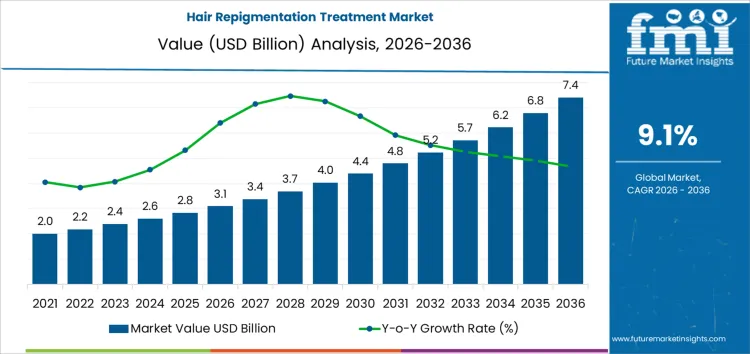
Unlike dye-based solutions, adoption patterns for repigmentation therapies depend heavily on patient motivation, practitioner guidance, and expectation management. Value creation is closely tied to regimen continuity, combination use of topicals and supplements, and alignment with broader scalp health programs. Distribution remains split between dermatology-led channels and consumer-facing retail platforms, each influencing compliance and perceived credibility differently. Product positioning favors safety, long-term tolerability, and incremental improvement rather than dramatic transformation.
Regional expansion correlates with appearance-conscious demographics and access to aesthetic consultation rather than regulatory-driven medical demand. Overall progression of this market is defined by sustained engagement, education-led adoption, and repeat purchasing behavior, not rapid substitution of existing cosmetic practices or short-term trend cycles.
Hair Repigmentation Treatment Market Key Takeaways
| Metric | Value |
|---|---|
| Market Value (2026) | USD 3.1 billion |
| Market Forecast Value (2036) | USD 7.4 billion |
| Forecast CAGR 2026 to 2036 | 9.1% |
Why is the Demand for Hair Repigmentation Treatment Growing?
Demand for hair repigmentation treatments is rising as individuals and aesthetic clinics seek targeted solutions for reversing or reducing the appearance of gray hair associated with aging, oxidative stress, and pigment cell depletion. Traditional hair coloring addresses surface pigmentation but does not interact with underlying melanin production, and emerging repigmentation therapies aim to stimulate melanocyte activity or modulate follicular pigment pathways to restore natural hair color. Dermatologists and trichologists evaluate treatment mechanisms, safety profiles, and suitability across diverse hair types because biological responses vary with age, genetic background, and scalp condition. Procurement teams in aesthetic practices and skincare clinics prioritize products with documented efficacy, tolerability in long-term use, and compatibility with adjunct scalp therapies to support individualized treatment plans that balance cosmetic expectations with clinical safety.
Growth in lifestyle emphasis on youthful appearance and demand for non-invasive aesthetic modalities reinforces adoption of repigmentation treatments among consumers who prefer alternatives to conventional dyes or camouflaging products. Increased investment in formulation science has produced topical agents, peptide complexes, and nutrient-based regimens that target hair follicle pigment retention and reduce oxidative damage, expanding options available in dermatology and medical spa settings. Educational initiatives for practitioners enhance understanding of pigmentation mechanisms and appropriate patient selection, supporting predictable outcomes. Consumer interest in personalized aesthetic care drives clinic integration of repigmentation services alongside comprehensive hair health evaluations. These market-specific clinical and consumer preferences are contributing to sustained demand growth in the hair repigmentation treatment market.
How Is the Hair Repigmentation Treatment Industry Segmented?
Demand for hair repigmentation treatments is shaped by aesthetic concerns, early onset of greying, and preference for non-invasive cosmetic solutions. Management approaches focus on melanin restoration, oxidative stress reduction, and follicular support rather than hair fiber replacement. Adoption aligns with rising dermatology consultations, increased consumer awareness, and availability of over-the-counter formulations. Treatment selection considers ease of use, duration of therapy, and perceived safety. Segmentation explains how therapy format, depigmentation cause, and access channel influence utilization patterns, purchasing behavior, and continuity of use.
Which Product Type Holds the Largest Share in Hair Repigmentation Treatment?
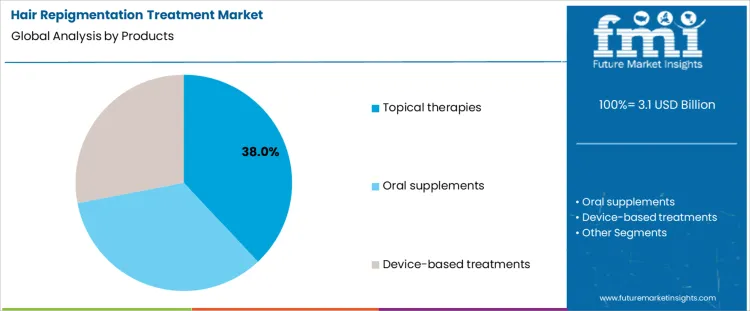
Topical therapies account for 38.0%, representing the largest share among product types used in hair repigmentation. These formulations allow direct scalp or hair shaft application targeting localized depigmentation. Mechanisms focus on stimulating melanocyte activity and reducing oxidative damage within follicles. Prescription and cosmeceutical positioning supports dermatology-led adoption. Oral supplements follow closely, reflecting demand for systemic nutritional and antioxidant support. Device-based treatments address follicular stimulation through energy-based modalities with higher cost and clinic dependence. Product segmentation reflects preference for surface-applied solutions balancing targeted action, accessibility, and long-term use feasibility.
Key Points
- Topicals enable localized intervention at the follicular level.
- Dermatology guidance supports formulation-driven adoption.
- Other products provide systemic or device-assisted support.
Why Does Premature Greying Represent the Largest Application Segment?
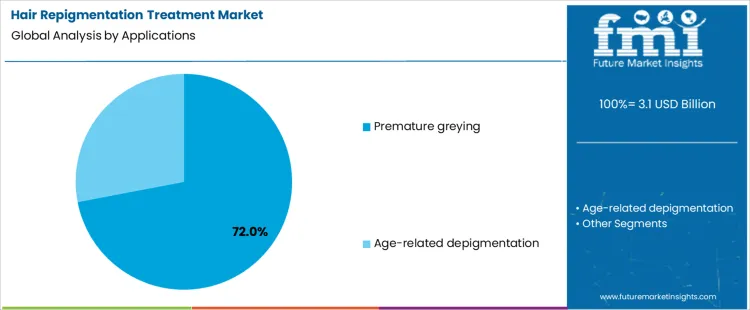
Premature greying accounts for 72.0%, representing the largest share among application areas. Early onset depigmentation carries higher cosmetic and psychological impact among younger populations. Increased screening and self-reporting drive treatment-seeking behavior. Longer remaining lifespan increases willingness to pursue prolonged therapy. Age-related depigmentation follows with more acceptance and lower intervention urgency. Application segmentation reflects concentration where aesthetic sensitivity, early manifestation, and prolonged management horizons intensify treatment utilization for premature greying.
Key Points
-
Early greying prompts stronger aesthetic concern.
- Younger users pursue longer treatment durations.
- Age-related greying involves lower urgency.
Which End User Accounts for the Highest Share of Treatment Access?
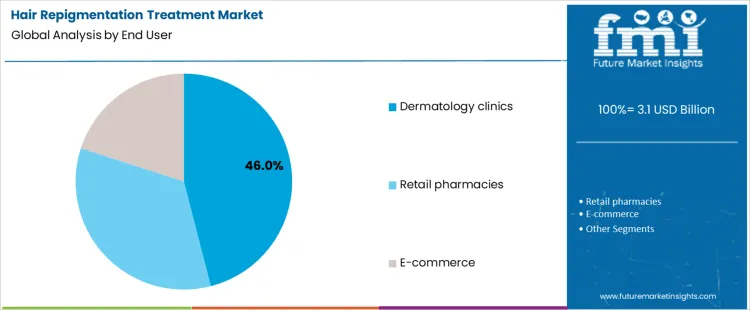
Dermatology clinics account for 46.0%, representing the largest share among end-user settings. Clinical evaluation supports differentiation between reversible greying and irreversible depigmentation. Prescription-based therapies and procedural options require specialist oversight. Monitoring supports adjustment of long-term regimens. Retail pharmacies follow with access to non-prescription formulations supporting self-directed care. E-commerce platforms expand availability with convenience-driven purchasing. End-user segmentation reflects dominance where clinical expertise, diagnosis accuracy, and regimen supervision support structured hair repigmentation management.
Key Points
- Clinics provide diagnostic clarity and prescription access.
- Specialist oversight supports long-term regimen adjustment.
- Other channels emphasize convenience and self-care access.
What are the Key Dynamics in the Hair Repigmentation Treatment Market?
Demand for hair repigmentation treatments reflects unmet need to address loss of natural hair color driven by melanocyte dysfunction rather than cosmetic coverage alone. Adoption concentrates in dermatology clinics, trichology centers, and medically oriented aesthetic practices. Global scope aligns with aging demographics and growing interest in biology-based appearance management. Usage centers on topical agents, oral supplements, device-assisted therapies, and emerging molecular approaches targeting melanin restoration pathways.
How do biological mechanism target and patient motivation shape adoption?
Hair repigmentation approaches focus on reactivating melanocyte activity or protecting existing pigment cells from oxidative stress. Demand increases where consumers seek solutions addressing root biological processes instead of dyes. Dermatologists evaluate candidates based on extent of depigmentation, age of onset, and underlying nutritional or autoimmune contributors. Treatments emphasizing gradual color return align with patient preference for natural appearance transitions. Oral formulations targeting micronutrient balance and oxidative pathways support adjunctive use. Device-assisted stimulation gains attention where topical penetration limits efficacy. Adoption reflects convergence of scientific plausibility, visible outcome potential, and patient willingness to engage in prolonged treatment regimens.
How do clinical evidence gaps, treatment duration, and cost exposure influence market scalability?
Hair repigmentation outcomes vary widely due to individual genetic and physiological differences. Demand sensitivity rises where inconsistent response undermines expectation management. Extended treatment duration delays visible results, affecting adherence and perceived value. Clinical evidence remains fragmented, limiting standardized protocols and reimbursement support. Combination therapy increases cost burden without guaranteed efficacy. Regulatory classification varies between cosmetic and therapeutic categories, complicating claims and approvals. Practitioner training affects treatment selection and outcome consistency. Scalability remains constrained by evidence limitations, long timelines to effect, and reliance on motivated patients capable of sustaining extended treatment commitments.
How Is Demand for Hair Repigmentation Treatments Evolving Globally?
Demand for hair repigmentation treatments is expanding globally as cosmetic dermatology intersects with preventive aging and scalp health management. Increased focus on non-invasive, gradual color restoration supports uptake across topical, oral, and device-assisted solutions. Consumer preference shifts away from conventional dyes toward biologically oriented or maintenance-based approaches. Dermatology clinics and cosmetic medicine practices influence adoption through supervised protocols. Growth rates in India at 10.8%, China at 10.6%, Brazil at 10.3%, USA at 9.7%, and the UK at 8.6% indicate strong expansion driven by appearance-conscious demographics, service availability, and sustained treatment adherence rather than one-time cosmetic usage.
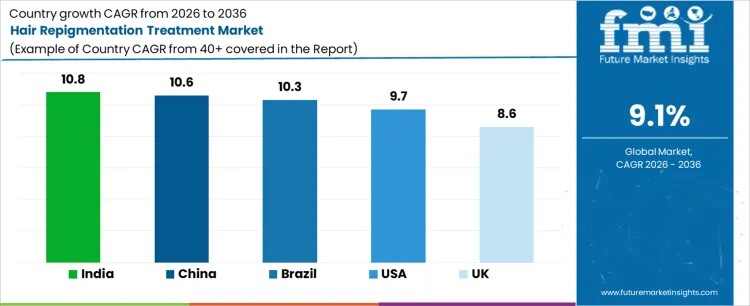
| Country | CAGR (%) |
|---|---|
| India | 10.8% |
| China | 10.6% |
| Brazil | 10.3% |
| USA | 9.7% |
| UK | 8.6% |
What Is Driving Accelerated Demand for Hair Repigmentation Treatments in India?
Hair repigmentation treatment demand in India is growing at a CAGR of 10.8%, shaped by early onset greying and expanding cosmetic dermatology access. Urban clinics report increased interest in gradual, non-dye-based solutions among younger adults. Nutraceutical and topical regimens gain traction due to perceived safety and repeat usability. Social acceptance of preventive cosmetic care supports sustained usage. Organized dermatology chains and e-commerce platforms improve product availability. Growth reflects demographic pressure, service-led awareness, and long-term maintenance behavior rather than episodic cosmetic correction.
- Early onset greying prevalence
- Expansion of urban dermatology chains
- Adoption of nutraceutical and topical regimens
- High engagement through digital commerce
Why Is China Experiencing Rapid Uptake of Hair Repigmentation Solutions?
Hair repigmentation demand in China is expanding at a CAGR of 10.6%, supported by wellness-oriented cosmetic consumption and clinic-led protocols. Consumers favor treatments aligned with scalp health and aging prevention. Dermatology and aesthetic clinics integrate repigmentation within broader hair management programs. Domestic manufacturers scale herbal and biologically positioned formulations. Strong social emphasis on youthful appearance sustains repeat usage. Growth reflects integration with wellness aesthetics and clinical guidance rather than reliance on traditional cosmetic dyes.
- Wellness-driven cosmetic consumption patterns
- Clinic-integrated hair management programs
- Scaled domestic formulation production
- High repeat-use consumer behavior
How Is Brazil Sustaining Growth in Hair Repigmentation Treatment Demand?
Demand for hair repigmentation treatments in Brazil is growing at a CAGR of 10.3%, influenced by strong aesthetic culture and dermatology engagement. Cosmetic dermatologists promote gradual repigmentation as an alternative to frequent dye use. High salon and clinic visitation rates support awareness and trial. Climate-related hair stress increases focus on scalp treatments. Retail availability of professional-grade products improves adherence. Growth reflects aesthetic-led care pathways and service endorsement rather than rapid pharmacological innovation.
- Strong cosmetic dermatology culture
- High salon and clinic engagement
- Climate-driven scalp and hair stress
- Professional product retail availability
What Factors Are Supporting Hair Repigmentation Growth in United States?
Hair repigmentation treatment demand in the United States is expanding at a CAGR of 9.7%, driven by aging yet appearance-conscious consumers. Dermatology and aesthetic practices increasingly recommend maintenance-oriented pigmentation support. Preference for non-toxic and non-dye solutions shapes product selection. Subscription-based wellness platforms encourage consistent use. High discretionary spending supports long treatment cycles. Growth reflects preventive cosmetic positioning and sustained adherence rather than replacement of conventional hair coloring practices.
- Aging population with cosmetic maintenance focus
- Preference for non-dye formulations
- Subscription-driven product continuity
- High discretionary consumer spending
Why Is the UK Showing Steady Expansion in Hair Repigmentation Treatments?
Demand for hair repigmentation treatments in United Kingdom is growing at a CAGR of 8.6%, supported by structured cosmetic medicine adoption. Dermatology clinics position repigmentation within age-management strategies. Consumer caution favors evidence-backed formulations over experimental products. Pharmacy-led distribution improves credibility and access. Gradual acceptance of maintenance-based cosmetic care sustains demand. Growth remains steady, reflecting measured adoption, regulatory awareness, and professional endorsement rather than rapid consumer-driven experimentation.
- Clinic-led age management positioning
- Preference for evidence-backed formulations
- Pharmacy-supported product distribution
- Measured adoption of cosmetic maintenance
What is the competitive landscape of hair repigmentation treatment market globally?
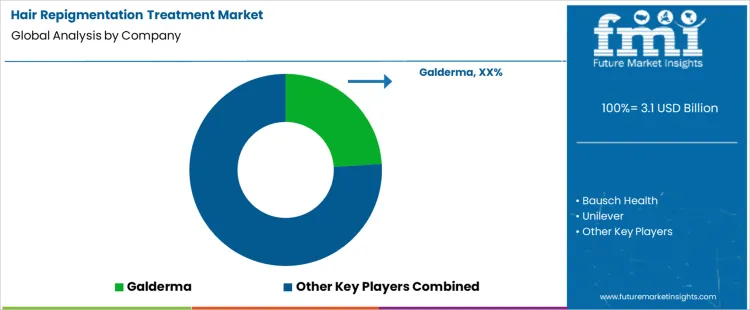
Demand for hair repigmentation treatments is shaped by aesthetic preferences, rising appearance consciousness, and interest in non-dye restorative solutions. Dermatologists and consumers evaluate mechanism of action, onset timeline, durability of pigment restoration, safety with long-term use, and compatibility with scalp health. Buyer evaluation includes topical versus systemic suitability, cosmetic acceptability, and evidence supporting biological repigmentation rather than temporary coloration. Procurement behavior reflects dermatology channel adoption, consumer retail penetration, and regulatory positioning for cosmetic or therapeutic classification. Trend in the hair repigmentation treatment market indicates growing attention toward science-backed approaches addressing melanocyte function and oxidative stress pathways.
Galderma leads competitive positioning through dermatology-focused research and credibility in pigment-related skin and hair conditions. Bausch Health supports demand via prescription dermatology assets and experience navigating regulated topical therapies. Unilever maintains relevance by leveraging consumer health reach and scalable distribution across mass personal care channels. L’Oréal participates through advanced hair science research and integration of cosmetic innovation with biological claims. Pfizer engages selectively through adjacent research capabilities aligned with pigmentation and cellular biology expertise. Competitive differentiation centers on scientific validation, regulatory clarity, consumer trust, and ability to translate clinical insight into scalable hair repigmentation solutions.
Key Players in the Hair Repigmentation Treatment Market
- Galderma
- Bausch Health
- Unilever
- L’Oreal
- Pfizer
- Others
Scope of the Report
| Items | Values |
|---|---|
| Quantitative Units | USD billion |
| Products | Topical therapies; Oral supplements; Device-based treatments |
| Applications | Premature greying; Age-related depigmentation |
| End User | Dermatology clinics; Retail pharmacies; E-commerce |
| Regions Covered | Asia Pacific, Europe, North America, Latin America, Middle East & Africa |
| Countries Covered | India, China, Brazil, USA, UK, and 40+ countries |
| Key Companies Profiled | Galderma; Bausch Health; Unilever; L’Oreal; Pfizer; Others |
| Additional Attributes | Dollar sales by product type, application, end user, and sales channel; mechanism focus on melanin stimulation, oxidative stress modulation, and follicular repigmentation pathways; adherence patterns influenced by topical versus oral regimens; device-based treatment uptake in clinical settings; regulatory scrutiny on efficacy claims and cosmetic-therapeutic classification; distribution dynamics spanning clinics, retail pharmacy networks, and e-commerce platforms. |
Hair Repigmentation Treatment Market by Segment
Products:
- Topical therapies
- Oral supplements
- Device-based treatments
Applications:
- Premature greying
- Age-related depigmentation
End User:
- Dermatology clinics
- Retail pharmacies
- E-commerce
Region:
- Asia Pacific
- China
- Japan
- South Korea
- India
- Australia & New Zealand
- ASEAN
- Rest of Asia Pacific
- Europe
- Germany
- United Kingdom
- France
- Italy
- Spain
- Nordic
- BENELUX
- Rest of Europe
- North America
- United States
- Canada
- Mexico
- Latin America
- Brazil
- Chile
- Rest of Latin America
- Middle East & Africa
- Kingdom of Saudi Arabia
- Other GCC Countries
- Turkey
- South Africa
- Other African Union
- Rest of Middle East & Africa
Bibliography
- American Academy of Dermatology Association. (2024). Hair graying and pigmentary changes of hair: Clinical overview and management considerations. American Academy of Dermatology.
- European Academy of Dermatology and Venereology. (2024). Hair pigmentation disorders and cosmetic dermatology: Clinical perspectives. European Academy of Dermatology and Venereology.
- National Institute on Aging. (2024). Biological mechanisms of aging-related changes in skin and hair pigmentation. U.S. Department of Health and Human Services.
- Olsen, E. A., & Messenger, A. G. (2024). Disorders of hair pigmentation and emerging biologic targets. Dermatologic Clinics, 42(1), 27–39.
- Trüeb, R. M. (2024). Oxidative stress, follicular aging, and hair graying: Clinical implications. Skin Appendage Disorders, 10(1), 1–10.
- World Health Organization. (2024). Healthy ageing and skin health: Biological and psychosocial aspects. World Health Organization.
Frequently Asked Questions
How big is the hair repigmentation treatment market in 2026?
The global hair repigmentation treatment market is estimated to be valued at USD 3.1 billion in 2026.
What will be the size of hair repigmentation treatment market in 2036?
The market size for the hair repigmentation treatment market is projected to reach USD 7.4 billion by 2036.
How much will be the hair repigmentation treatment market growth between 2026 and 2036?
The hair repigmentation treatment market is expected to grow at a 9.1% CAGR between 2026 and 2036.
What are the key product types in the hair repigmentation treatment market?
The key product types in hair repigmentation treatment market are topical therapies, oral supplements and device-based treatments.
Which applications segment to contribute significant share in the hair repigmentation treatment market in 2026?
In terms of applications, premature greying segment to command 72.0% share in the hair repigmentation treatment market in 2026.
Preview the report firsthand - request a free sample
Get SampleGet the brochure for pricing and purchase details.
Get PDFTable of Content
- Executive Summary
- Global Market Outlook
- Demand-side Trends
- Supply-side Trends
- Technology Roadmap Analysis
- Analysis and Recommendations
- Market Overview
- Market Coverage / Taxonomy
- Market Definition / Scope / Limitations
- Market Background
- Market Dynamics
- Drivers
- Restraints
- Opportunity
- Trends
- Scenario Forecast
- Demand in Optimistic Scenario
- Demand in Likely Scenario
- Demand in Conservative Scenario
- Opportunity Map Analysis
- Product Life Cycle Analysis
- Supply Chain Analysis
- Investment Feasibility Matrix
- Value Chain Analysis
- PESTLE and Porter’s Analysis
- Regulatory Landscape
- Regional Parent Market Outlook
- Production and Consumption Statistics
- Import and Export Statistics
- Market Dynamics
- Global Market Analysis 2021 to 2025 and Forecast, 2026 to 2036
- Historical Market Size Value (USD Million) Analysis, 2021 to 2025
- Current and Future Market Size Value (USD Million) Projections, 2026 to 2036
- Y-o-Y Growth Trend Analysis
- Absolute $ Opportunity Analysis
- Global Market Pricing Analysis 2021 to 2025 and Forecast 2026 to 2036
- Global Market Analysis 2021 to 2025 and Forecast 2026 to 2036, By Products
- Introduction / Key Findings
- Historical Market Size Value (USD Million) Analysis By Products , 2021 to 2025
- Current and Future Market Size Value (USD Million) Analysis and Forecast By Products , 2026 to 2036
- Topical therapies
- Oral supplements
- Device-based treatments
- Topical therapies
- Y-o-Y Growth Trend Analysis By Products , 2021 to 2025
- Absolute $ Opportunity Analysis By Products , 2026 to 2036
- Global Market Analysis 2021 to 2025 and Forecast 2026 to 2036, By Applications
- Introduction / Key Findings
- Historical Market Size Value (USD Million) Analysis By Applications, 2021 to 2025
- Current and Future Market Size Value (USD Million) Analysis and Forecast By Applications, 2026 to 2036
- Premature greying
- Age-related depigmentation
- Premature greying
- Y-o-Y Growth Trend Analysis By Applications, 2021 to 2025
- Absolute $ Opportunity Analysis By Applications, 2026 to 2036
- Global Market Analysis 2021 to 2025 and Forecast 2026 to 2036, By End User
- Introduction / Key Findings
- Historical Market Size Value (USD Million) Analysis By End User, 2021 to 2025
- Current and Future Market Size Value (USD Million) Analysis and Forecast By End User, 2026 to 2036
- Dermatology clinics
- Retail pharmacies
- E-commerce
- Dermatology clinics
- Y-o-Y Growth Trend Analysis By End User, 2021 to 2025
- Absolute $ Opportunity Analysis By End User, 2026 to 2036
- Global Market Analysis 2021 to 2025 and Forecast 2026 to 2036, By Region
- Introduction
- Historical Market Size Value (USD Million) Analysis By Region, 2021 to 2025
- Current Market Size Value (USD Million) Analysis and Forecast By Region, 2026 to 2036
- North America
- Latin America
- Western Europe
- Eastern Europe
- East Asia
- South Asia and Pacific
- Middle East & Africa
- Market Attractiveness Analysis By Region
- North America Market Analysis 2021 to 2025 and Forecast 2026 to 2036, By Country
- Historical Market Size Value (USD Million) Trend Analysis By Market Taxonomy, 2021 to 2025
- Market Size Value (USD Million) Forecast By Market Taxonomy, 2026 to 2036
- By Country
- USA
- Canada
- Mexico
- By Products
- By Applications
- By End User
- By Country
- Market Attractiveness Analysis
- By Country
- By Products
- By Applications
- By End User
- Key Takeaways
- Latin America Market Analysis 2021 to 2025 and Forecast 2026 to 2036, By Country
- Historical Market Size Value (USD Million) Trend Analysis By Market Taxonomy, 2021 to 2025
- Market Size Value (USD Million) Forecast By Market Taxonomy, 2026 to 2036
- By Country
- Brazil
- Chile
- Rest of Latin America
- By Products
- By Applications
- By End User
- By Country
- Market Attractiveness Analysis
- By Country
- By Products
- By Applications
- By End User
- Key Takeaways
- Western Europe Market Analysis 2021 to 2025 and Forecast 2026 to 2036, By Country
- Historical Market Size Value (USD Million) Trend Analysis By Market Taxonomy, 2021 to 2025
- Market Size Value (USD Million) Forecast By Market Taxonomy, 2026 to 2036
- By Country
- Germany
- UK
- Italy
- Spain
- France
- Nordic
- BENELUX
- Rest of Western Europe
- By Products
- By Applications
- By End User
- By Country
- Market Attractiveness Analysis
- By Country
- By Products
- By Applications
- By End User
- Key Takeaways
- Eastern Europe Market Analysis 2021 to 2025 and Forecast 2026 to 2036, By Country
- Historical Market Size Value (USD Million) Trend Analysis By Market Taxonomy, 2021 to 2025
- Market Size Value (USD Million) Forecast By Market Taxonomy, 2026 to 2036
- By Country
- Russia
- Poland
- Hungary
- Balkan & Baltic
- Rest of Eastern Europe
- By Products
- By Applications
- By End User
- By Country
- Market Attractiveness Analysis
- By Country
- By Products
- By Applications
- By End User
- Key Takeaways
- East Asia Market Analysis 2021 to 2025 and Forecast 2026 to 2036, By Country
- Historical Market Size Value (USD Million) Trend Analysis By Market Taxonomy, 2021 to 2025
- Market Size Value (USD Million) Forecast By Market Taxonomy, 2026 to 2036
- By Country
- China
- Japan
- South Korea
- By Products
- By Applications
- By End User
- By Country
- Market Attractiveness Analysis
- By Country
- By Products
- By Applications
- By End User
- Key Takeaways
- South Asia and Pacific Market Analysis 2021 to 2025 and Forecast 2026 to 2036, By Country
- Historical Market Size Value (USD Million) Trend Analysis By Market Taxonomy, 2021 to 2025
- Market Size Value (USD Million) Forecast By Market Taxonomy, 2026 to 2036
- By Country
- India
- ASEAN
- Australia & New Zealand
- Rest of South Asia and Pacific
- By Products
- By Applications
- By End User
- By Country
- Market Attractiveness Analysis
- By Country
- By Products
- By Applications
- By End User
- Key Takeaways
- Middle East & Africa Market Analysis 2021 to 2025 and Forecast 2026 to 2036, By Country
- Historical Market Size Value (USD Million) Trend Analysis By Market Taxonomy, 2021 to 2025
- Market Size Value (USD Million) Forecast By Market Taxonomy, 2026 to 2036
- By Country
- Kingdom of Saudi Arabia
- Other GCC Countries
- Turkiye
- South Africa
- Other African Union
- Rest of Middle East & Africa
- By Products
- By Applications
- By End User
- By Country
- Market Attractiveness Analysis
- By Country
- By Products
- By Applications
- By End User
- Key Takeaways
- Key Countries Market Analysis
- USA
- Pricing Analysis
- Market Share Analysis, 2025
- By Products
- By Applications
- By End User
- Canada
- Pricing Analysis
- Market Share Analysis, 2025
- By Products
- By Applications
- By End User
- Mexico
- Pricing Analysis
- Market Share Analysis, 2025
- By Products
- By Applications
- By End User
- Brazil
- Pricing Analysis
- Market Share Analysis, 2025
- By Products
- By Applications
- By End User
- Chile
- Pricing Analysis
- Market Share Analysis, 2025
- By Products
- By Applications
- By End User
- Germany
- Pricing Analysis
- Market Share Analysis, 2025
- By Products
- By Applications
- By End User
- UK
- Pricing Analysis
- Market Share Analysis, 2025
- By Products
- By Applications
- By End User
- Italy
- Pricing Analysis
- Market Share Analysis, 2025
- By Products
- By Applications
- By End User
- Spain
- Pricing Analysis
- Market Share Analysis, 2025
- By Products
- By Applications
- By End User
- France
- Pricing Analysis
- Market Share Analysis, 2025
- By Products
- By Applications
- By End User
- India
- Pricing Analysis
- Market Share Analysis, 2025
- By Products
- By Applications
- By End User
- ASEAN
- Pricing Analysis
- Market Share Analysis, 2025
- By Products
- By Applications
- By End User
- Australia & New Zealand
- Pricing Analysis
- Market Share Analysis, 2025
- By Products
- By Applications
- By End User
- China
- Pricing Analysis
- Market Share Analysis, 2025
- By Products
- By Applications
- By End User
- Japan
- Pricing Analysis
- Market Share Analysis, 2025
- By Products
- By Applications
- By End User
- South Korea
- Pricing Analysis
- Market Share Analysis, 2025
- By Products
- By Applications
- By End User
- Russia
- Pricing Analysis
- Market Share Analysis, 2025
- By Products
- By Applications
- By End User
- Poland
- Pricing Analysis
- Market Share Analysis, 2025
- By Products
- By Applications
- By End User
- Hungary
- Pricing Analysis
- Market Share Analysis, 2025
- By Products
- By Applications
- By End User
- Kingdom of Saudi Arabia
- Pricing Analysis
- Market Share Analysis, 2025
- By Products
- By Applications
- By End User
- Turkiye
- Pricing Analysis
- Market Share Analysis, 2025
- By Products
- By Applications
- By End User
- South Africa
- Pricing Analysis
- Market Share Analysis, 2025
- By Products
- By Applications
- By End User
- USA
- Market Structure Analysis
- Competition Dashboard
- Competition Benchmarking
- Market Share Analysis of Top Players
- By Regional
- By Products
- By Applications
- By End User
- Competition Analysis
- Competition Deep Dive
- Galderma
- Overview
- Product Portfolio
- Profitability by Market Segments (Product/Age /Sales Channel/Region)
- Sales Footprint
- Strategy Overview
- Marketing Strategy
- Product Strategy
- Channel Strategy
- Bausch Health
- Unilever
- L’Oreal
- Pfizer
- Others
- Galderma
- Competition Deep Dive
- Assumptions & Acronyms Used
- Research Methodology


