

- Industry Size (2026):
- USD 750.0 Mn
- Forecast (2036):
- USD 2329.4 Mn
- CAGR (2026 to 2036)
- 12.0%
Hydrogen Pressure Control Valve Market Forecast and Outlook 2026 to 2036
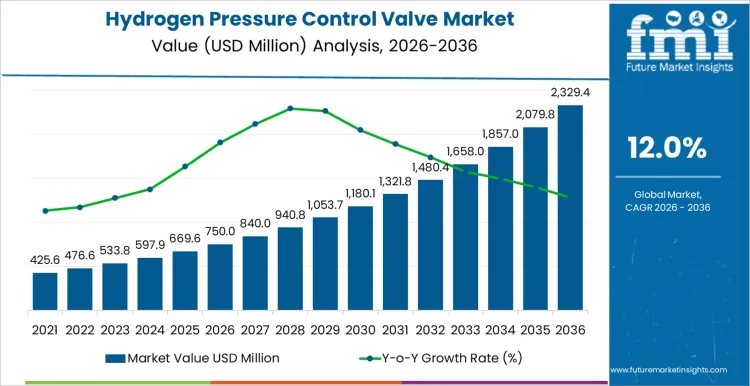
The hydrogen pressure control valve market is positioned to advance from USD 750.0 million in 2026 to USD 2,329.4 million by 2036, demonstrating a robust 12.0% CAGR throughout the forecast period. Growth reflects how hydrogen infrastructure development and fuel cell vehicle deployment are demanding sophisticated pressure management solutions across the entire hydrogen value chain. Hydrogen pressure control valves are engineered for extreme pressure differentials, leak-tight performance, and material compatibility with hydrogen embrittlement challenges that characterize high-pressure hydrogen applications. This transforms pressure regulation from standard industrial valve technology into specialized engineering solutions, where hydrogen permeation resistance, fatigue cycling capability, and safety certification compliance influence system reliability, operational efficiency, and regulatory approval processes.
Industrial-scale hydrogen production and distribution networks are implementing automated valve actuation and integrated monitoring systems because they enable remote pressure control and real-time safety monitoring across distributed infrastructure. Valves that can handle rapid pressure transients, maintain sealing integrity under thermal cycling, and provide fail-safe operation during emergency shutdown conditions are being specified earlier in facility design phases. As hydrogen storage pressures increase toward 1000 bar and beyond, engineers evaluate valves not only on pressure rating capabilities but also on hydrogen material compatibility, cycle life performance, and integration with digital control systems that support predictive maintenance and safety interlock functions.
Quick Stats for Hydrogen Pressure Control Valve Market
- Hydrogen Pressure Control Valve Market Value (2026): USD 750.0 million
- Hydrogen Pressure Control Valve Market Forecast Value (2036): USD 2,329.4 million
- Hydrogen Pressure Control Valve Market Forecast CAGR: 12.0%
- Leading Application in Hydrogen Pressure Control Valve Market: Fuel Cell Vehicles (42%)
- Key Growth Countries in Hydrogen Pressure Control Valve Market: China, Germany, USA, South Korea, Japan, UK
- Key Players in Hydrogen Pressure Control Valve Market: Swagelok, Parker Hannifin, Emerson, BuTech, Rotarex
Pressure-reducing valves lead where precise downstream pressure control is essential for fuel cell operation and industrial process requirements. Back-pressure relief configurations dominate safety-critical applications requiring overpressure protection and emergency venting capabilities. Regulating control valves serve applications demanding continuous pressure modulation and flow control precision. Multi-stage pressure reduction systems are gaining adoption because they enable safe pressure letdown from storage conditions to utilization pressures while maintaining temperature control and minimizing valve wear through staged pressure reduction processes. Fuel cell vehicles remain the largest application segment, followed by hydrogen refueling stations, while industrial and power applications provide expanding demand from green hydrogen production facilities.
Hydrogen Pressure Control Valve Market Key Takeaways
| Metric | Value |
|---|---|
| Market Value (2026) | USD 750.0 million |
| Market Forecast Value (2036) | USD 2,329.4 million |
| Forecast CAGR 2026 to 2036 | 12.0% |
How Are Hydrogen Safety Regulations Shaping Valve Technology Requirements?
International hydrogen safety standards are driving fundamental changes in pressure control valve design and certification requirements as regulatory bodies establish comprehensive frameworks for hydrogen infrastructure deployment. Modern safety codes mandate extensive testing protocols for hydrogen service including accelerated fatigue testing under pressure cycling conditions, hydrogen permeation measurements, and material compatibility validation that extends beyond traditional industrial gas applications. This regulatory environment pushes industrial valve manufacturers toward specialized materials and design approaches that can demonstrate measurable safety margins under worst-case operating scenarios while maintaining operational reliability throughout extended service periods.
The implementation of functional safety standards for hydrogen applications creates additional requirements for valve systems that can integrate with emergency shutdown systems and automated safety monitoring networks. Safety instrumented systems increasingly rely on smart valve technologies that can provide real-time diagnostic information including valve position feedback, internal leakage detection, and predictive failure analysis that supports comprehensive safety management protocols. This technological evolution requires valve designs that incorporate advanced sensing capabilities while maintaining the mechanical reliability essential for hydrogen pressure containment under emergency conditions.
How Is the Market Structured Across Operating Pressure Categories?
The hydrogen pressure control valve market demonstrates distinct segmentation patterns based on operating pressure requirements that directly influence valve construction, material selection, and safety certification approaches. Mid-range pressure applications capture 44.0% market share in the 351-700 bar category, establishing this pressure band as the primary operating range for current hydrogen infrastructure including refueling stations and industrial distribution systems. These applications require valve technologies that balance pressure handling capabilities with cost effectiveness while maintaining compatibility with existing hydrogen storage and distribution equipment.
Low-pressure applications up to 350 bar represent 30.0% of the market through their prevalence in fuel cell vehicle systems and industrial process applications where hydrogen is utilized at moderate pressures. These systems benefit from valve designs that emphasize response time, pressure accuracy, and integration with electronic control systems that manage fuel cell operation and hydrogen consumption optimization. High-pressure applications exceeding 700 bar account for 26.0% of market demand through emerging ultra-high-pressure storage systems and specialized industrial applications requiring maximum volumetric hydrogen storage density. Where projects include liquid hydrogen logistics, cryogenic valves are specified to manage low-temperature flow control without compromising shutoff integrity.
Which Valve Type Configuration Generates the Highest Market Adoption?
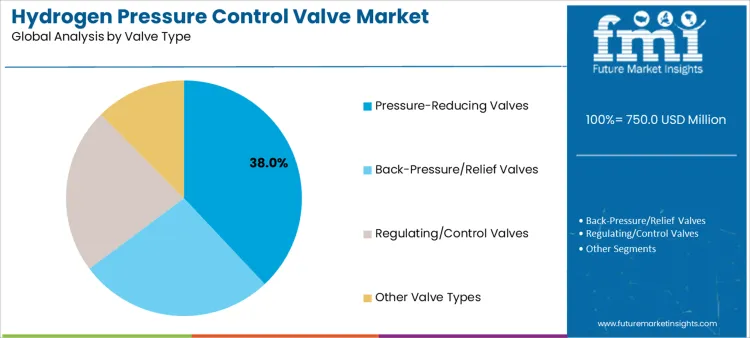
Pressure-reducing valves maintain 38.0% market share, establishing their position as the essential component for safe hydrogen pressure letdown from storage conditions to utilization pressures. These valves incorporate specialized trim designs and multi-stage pressure reduction capabilities that prevent excessive temperature drops during expansion while maintaining precise downstream pressure control required for fuel cell operation and industrial process stability. The engineering complexity of hydrogen pressure reduction requires specialized valve internals that can handle the unique thermodynamic characteristics of hydrogen expansion while preventing cavitation and maintaining seal integrity.
Which Application Segment Drives Market Leadership?
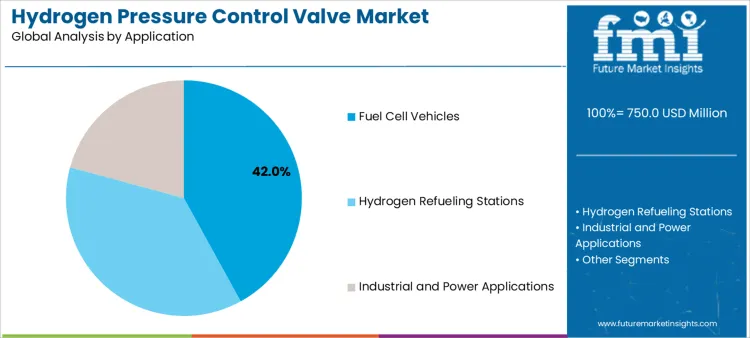
Fuel cell vehicles represent 42.0% of market applications, establishing automotive hydrogen systems as the primary driver of advanced valve technology development. These applications impose unique requirements including compact packaging, lightweight construction, rapid response times, and integration with vehicle safety systems that monitor hydrogen pressure and flow conditions throughout the fuel system. Automotive qualification processes demand extensive testing protocols that validate valve performance under crash conditions, temperature extremes, and vibration environments that characterize vehicle operation while maintaining hydrogen containment integrity. Many OEM safety cases also specify automotive hydrogen leak detection sensors to trigger isolation logic when abnormal concentration thresholds are detected.
Which End User Category Leads Market Development?
OEMs and system integrators command 54.0% of market demand, reflecting the integrated nature of hydrogen pressure control within complete system designs for vehicles, refueling equipment, and industrial facilities. Original equipment manufacturers typically establish long-term supplier relationships that emphasize technical collaboration, custom valve development, and comprehensive quality assurance programs that support system-level performance optimization. This channel preference drives innovation in valve designs that can be optimized for specific applications while maintaining manufacturing scalability required for volume production.
Market Dynamics
How Is Green Hydrogen Production Driving Industrial Valve Innovation?
The rapid expansion of electrolytic hydrogen production is creating unprecedented demands for pressure control valves that can operate reliably in the unique environment of renewable-powered hydrogen generation facilities. Electrolysis systems operate under variable power input conditions that create dynamic pressure fluctuations requiring valve technologies with rapid response capabilities and precise pressure regulation to maintain optimal electrolysis efficiency. The integration of renewable energy sources introduces pressure cycling patterns that differ significantly from traditional industrial gas production, demanding valve designs with enhanced fatigue resistance and adaptive control capabilities.
Large-scale hydrogen production facilities implement sophisticated process control systems that rely on smart valve technologies capable of providing real-time performance data and predictive maintenance information. Green hydrogen production emphasizes operational efficiency and system availability that requires valve technologies with minimal maintenance requirements and extended service intervals to reduce operational costs and maximize production uptime. These requirements drive innovation toward valve designs that incorporate advanced materials, self-diagnostic capabilities, and integration with industrial automation systems that support optimized hydrogen production processes.
What Technical Challenges Constrain Market Expansion?
The primary technical barrier affecting hydrogen pressure control valve adoption centers on the fundamental challenge of hydrogen embrittlement in metallic valve components operating under high-pressure cycling conditions. While advanced materials can resist hydrogen attack, the cost and availability of hydrogen-compatible alloys creates economic constraints that limit adoption in cost-sensitive applications. Hydrogen permeation through valve seals and gaskets represents another ongoing challenge that requires specialized polymer materials and sealing designs capable of maintaining leak-tight performance throughout extended service periods.
Manufacturing complexity associated with hydrogen-rated valve production also constrains market expansion as specialized welding procedures, heat treatment processes, and quality control protocols increase production costs while limiting the number of qualified suppliers capable of producing certified hydrogen service valves. The requirement for extensive testing and certification according to emerging hydrogen standards adds significant development time and costs that can delay new product introduction while limiting market accessibility for smaller valve manufacturers.
How Do Infrastructure Investment Programs Create Growth Opportunities?
Government funding programs supporting hydrogen infrastructure development are creating substantial market opportunities for valve manufacturers who can provide certified products that meet emerging safety and performance standards. National hydrogen strategies in major economies establish specific targets for refueling station deployment and industrial hydrogen capacity that directly translate into valve demand while creating predictable market growth patterns that support long-term investment planning. These infrastructure programs often include domestic content requirements that favor local valve manufacturers while encouraging foreign suppliers to establish domestic production capabilities.
International cooperation agreements for hydrogen technology development create additional opportunities for valve manufacturers who can achieve multiple national certifications while maintaining consistent product quality across different regulatory frameworks. Standardization efforts for hydrogen equipment specifications enable valve manufacturers to develop platform products that can serve multiple markets while reducing certification costs and development time. This regulatory harmonization trend benefits suppliers who can invest in comprehensive testing capabilities while developing products that meet the highest international standards.
How Is the Hydrogen Pressure Control Valve Market Expected to Evolve Across Major Nations?
The global hydrogen pressure control valve market reflects regional variations in hydrogen strategy implementation, infrastructure investment levels, and industrial capacity that influence market development patterns across different economic zones. Leading hydrogen economies are investing heavily in domestic valve manufacturing capabilities while emerging hydrogen markets focus on establishing basic infrastructure that creates demand for proven valve technologies.
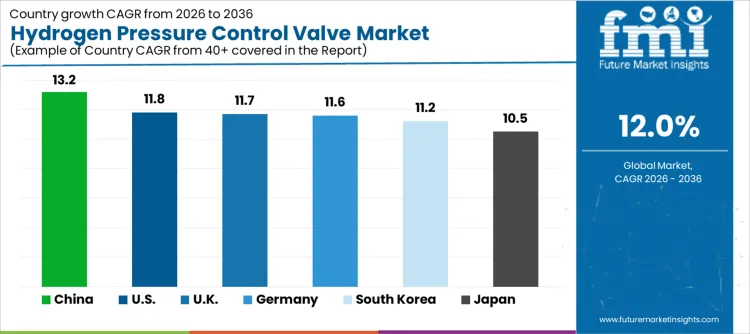
| Country | CAGR (%) |
|---|---|
| China | 13.2% |
| Germany | 11.6% |
| USA | 11.8% |
| Japan | 10.5% |
| South Korea | 11.2% |
| UK | 11.7% |
What Drives China's Market Leadership?
China's hydrogen pressure control valve market is projected to achieve the highest growth rate at 13.2% CAGR, driven primarily by massive government investment in hydrogen infrastructure and aggressive deployment targets for fuel cell vehicles and industrial hydrogen applications. The country's integrated approach to hydrogen development includes substantial funding for domestic valve manufacturing capabilities while establishing comprehensive supply chains that support both domestic consumption and export markets. Chinese manufacturers are developing cost-effective valve solutions that meet international safety standards while leveraging domestic materials and manufacturing capabilities to achieve competitive pricing advantages.
The government's emphasis on hydrogen as a strategic technology drives rapid adoption of advanced valve technologies while encouraging domestic suppliers to invest in research and development capabilities. China's position as the world's largest hydrogen producer creates enormous demand for specialized valve technologies while fostering innovation in automated manufacturing processes and quality control systems that support high-volume production requirements for both domestic and international markets.
How Is Germany Advancing Hydrogen Technology Leadership?
Sales of hydrogen pressure control valve in Germany are set to achieve a CAGR of 11.6% reflects the country's leadership in hydrogen technology development and commitment to establishing Europe's most comprehensive hydrogen infrastructure network. German engineering excellence in precision manufacturing creates demand for the highest quality valve solutions while fostering innovation in advanced materials and smart valve technologies that set global performance standards. The country's emphasis on renewable hydrogen production creates opportunities for valve manufacturers who can provide specialized solutions for electrolytic hydrogen generation and high-pressure storage applications.
The integration of hydrogen infrastructure with renewable energy systems creates unique technical requirements for valve technologies that can accommodate variable operating conditions while maintaining system reliability and safety performance. German industry standards typically exceed international requirements, creating demand for specialized valve solutions that demonstrate superior performance under accelerated testing conditions while supporting automated manufacturing processes required for efficient hydrogen infrastructure deployment.
Why Is the USA Market Emphasizing Domestic Manufacturing?
The United States market experiences 11.8% CAGR growth supported by federal infrastructure investment programs and supply chain security initiatives that prioritize domestic hydrogen technology manufacturing. Government incentives promoting hydrogen infrastructure development create opportunities for valve manufacturers to establish local production capabilities while serving the growing demands of transportation, power generation, and industrial applications. The emphasis on energy security drives preference for suppliers capable of providing complete domestic supply chains and technical support capabilities that reduce dependence on foreign technology sources.
The development of regional hydrogen hubs supported by federal funding creates concentrated demand for valve technologies while fostering collaboration between valve manufacturers, system integrators, and end users. These hub programs emphasize technology demonstration and validation that benefit valve suppliers who can provide proven performance data while supporting the scaling of hydrogen technologies from demonstration projects to commercial deployment scale.
How Is Japanese Innovation Setting Industry Standards?
The industry for hydrogen pressure control valve in Japan is likely to rise at a CAGR of 10.5% is supported by the country's pioneering role in hydrogen technology development and established leadership in fuel cell vehicle commercialization. Japanese manufacturers maintain some of the industry's most stringent quality and reliability standards, creating demand for valve technologies that demonstrate exceptional consistency and long-term durability under demanding operating conditions. This quality focus drives innovation in precision manufacturing processes and advanced materials that enable superior valve performance while maintaining cost effectiveness for volume applications.
The country's expertise in hydrogen applications spanning from residential fuel cells to automotive powertrains creates demand for diverse valve technologies optimized for specific operating conditions and safety requirements. Japanese automotive manufacturers require valve solutions that can integrate seamlessly with vehicle systems while maintaining the reliability standards essential for consumer acceptance of hydrogen vehicle technology.
What Opportunities Exist in South Korea's Hydrogen Ecosystem?
Demand for hydrogen pressure control valve in South Korea is estimated to expand at a CAGR of 11.2% growth is driven by the country's comprehensive hydrogen strategy that encompasses fuel cell vehicles, power generation, and industrial applications supported by aggressive government investment programs. Korean manufacturers require valve technologies that support high-volume production capabilities while maintaining exceptional quality consistency required for automotive and power generation applications where reliability directly impacts system performance and market acceptance.
The country's leadership in shipbuilding and heavy industry creates opportunities for valve manufacturers who can provide specialized solutions for marine hydrogen applications and large-scale industrial hydrogen utilization. Korean technology development emphasizes integration of hydrogen systems with advanced electronics and automation technologies that drive demand for smart valve solutions capable of providing real-time performance data and predictive maintenance capabilities.
What Strategies Help Suppliers Maintain Competitive Position in Hydrogen Pressure Control Valves?
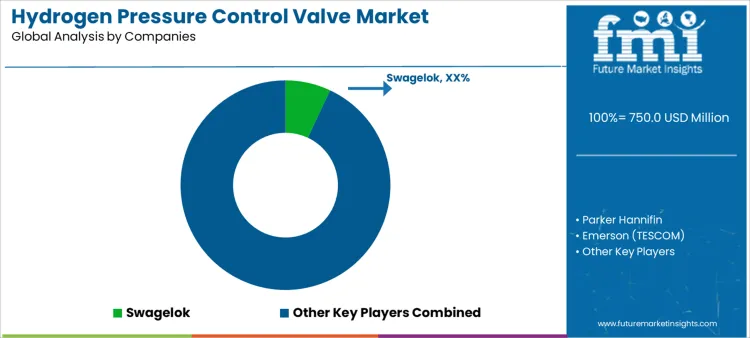
Suppliers maintain market leadership in hydrogen pressure control valves through demonstrated expertise in hydrogen-specific engineering challenges and proven performance in demanding operating environments rather than competing solely on conventional valve technology capabilities. Market leaders establish competitive advantages through comprehensive hydrogen testing facilities that can validate valve performance under actual hydrogen service conditions while providing data-driven evidence of long-term reliability and safety compliance that supports customer confidence and regulatory approval processes.
Successful valve manufacturers invest in early collaboration with hydrogen system developers during project design phases, enabling valve specifications to be optimized for specific operating requirements and safety criteria before system integration and testing programs are initiated. This collaborative approach creates switching barriers while ensuring optimal integration between valve performance characteristics and system-level requirements that benefit both suppliers and customers through improved safety, reliability, and operational efficiency.
Advanced manufacturing capabilities specialized for hydrogen service enable suppliers to provide valve solutions that meet the unique material and construction requirements of hydrogen applications while maintaining cost structures that support competitive pricing in growing volume markets. Investment in hydrogen-specific materials science and specialized manufacturing processes allows suppliers to differentiate their products through superior hydrogen compatibility and extended service life characteristics that justify premium pricing while reducing total cost of ownership for customers.
Key Players in the Hydrogen Pressure Control Valve Market
- Swagelok
- Parker Hannifin
- Emerson (TESCOM)
- BuTech (High Pressure Equipment Co.)
- Rotarex
- HYDAC
- WIKA Group
- SMC Corporation
- Fujikin
- Ham-Let Group
Scope of Report
| Items | Values |
|---|---|
| Quantitative Units | USD Million |
| Pressure Class Segments | Up to 350 bar; 351-700 bar; >700 bar |
| Application Types | Fuel Cell Vehicles; Hydrogen Refueling Stations; Industrial and Power Applications |
| Valve Type Categories | Pressure-Reducing Valves; Back-Pressure/Relief Valves; Regulating/Control Valves; Other Valve Types |
| End User Types | OEMs and System Integrators; Hydrogen Infrastructure Developers; Industrial Gas and Energy Companies |
| Regions Covered | North America, Europe, Asia Pacific, Latin America, Middle East & Africa |
| Key Countries | USA, Germany, China, Japan, South Korea, UK |
| Key Companies Profiled | Swagelok, Parker Hannifin, Emerson, BuTech, Rotarex, and others |
| Additional Attributes | Dollar sales measured for hydrogen pressure control valves used in fuel cell, refueling, and industrial applications, specified by pressure rating, hydrogen compatibility, safety certification, response characteristics, and integration capabilities |
Hydrogen Pressure Control Valve Market by Segment
By Pressure Class:
- Up to 350 bar
- 351-700 bar
- 700 bar
By Application:
- Fuel Cell Vehicles
- Hydrogen Refueling Stations
- Industrial and Power Applications
By Valve Type:
- Pressure-Reducing Valves
- Back-Pressure/Relief Valves
- Regulating/Control Valves
- Other Valve Types
By End User:
- OEMs and System Integrators
- Hydrogen Infrastructure Developers
- Industrial Gas and Energy Companies
Bibliography
- International Electrotechnical Commission. (2024). IEC 62282 2: Fuel cell technologies-Part 2: Fuel cell modules. International Electrotechnical Commission.
- SAE International. (2024). SAE J2579: Technical information report for fuel systems in fuel cell and other hydrogen vehicles. SAE International.
- USA Department of Energy. (2023). Hydrogen safety, codes, and standards for infrastructure and fuel cell systems. USA Department of Energy, Office of Energy Efficiency and Renewable Energy.
- National Renewable Energy Laboratory. (2024). Hydrogen components reliability and materials compatibility for high pressure systems. National Renewable Energy Laboratory.
Frequently Asked Questions
How big is the hydrogen pressure control valve market in 2026?
The global hydrogen pressure control valve market is estimated to be valued at USD 750.0 million in 2026.
What will be the size of hydrogen pressure control valve market in 2036?
The market size for the hydrogen pressure control valve market is projected to reach USD 2,329.4 million by 2036.
How much will be the hydrogen pressure control valve market growth between 2026 and 2036?
The hydrogen pressure control valve market is expected to grow at a 12.0% CAGR between 2026 and 2036.
What are the key product types in the hydrogen pressure control valve market?
The key product types in hydrogen pressure control valve market are 351-700 bar, up to 350 bar and >700 bar.
Which application segment to contribute significant share in the hydrogen pressure control valve market in 2026?
In terms of application, fuel cell vehicles segment to command 42.0% share in the hydrogen pressure control valve market in 2026.
Preview the report firsthand - request a free sample
Get SampleGet the brochure for pricing and purchase details.
Get PDFTable of Content
- Executive Summary
- Global Market Outlook
- Demand-side Trends
- Supply-side Trends
- Technology Roadmap Analysis
- Analysis and Recommendations
- Market Overview
- Market Coverage / Taxonomy
- Market Definition / Scope / Limitations
- Market Background
- Market Dynamics
- Drivers
- Restraints
- Opportunity
- Trends
- Scenario Forecast
- Demand in Optimistic Scenario
- Demand in Likely Scenario
- Demand in Conservative Scenario
- Opportunity Map Analysis
- Product Life Cycle Analysis
- Supply Chain Analysis
- Investment Feasibility Matrix
- Value Chain Analysis
- PESTLE and Porter’s Analysis
- Regulatory Landscape
- Regional Parent Market Outlook
- Production and Consumption Statistics
- Import and Export Statistics
- Market Dynamics
- Global Market Analysis 2021 to 2025 and Forecast, 2026 to 2036
- Historical Market Size Value (USD Million) Analysis, 2021 to 2025
- Current and Future Market Size Value (USD Million) Projections, 2026 to 2036
- Y-o-Y Growth Trend Analysis
- Absolute $ Opportunity Analysis
- Global Market Pricing Analysis 2021 to 2025 and Forecast 2026 to 2036
- Global Market Analysis 2021 to 2025 and Forecast 2026 to 2036, By Pressure Class
- Introduction / Key Findings
- Historical Market Size Value (USD Million) Analysis By Pressure Class , 2021 to 2025
- Current and Future Market Size Value (USD Million) Analysis and Forecast By Pressure Class , 2026 to 2036
- 351-700 bar
- Up to 350 bar
- >700 bar
- 351-700 bar
- Y-o-Y Growth Trend Analysis By Pressure Class , 2021 to 2025
- Absolute $ Opportunity Analysis By Pressure Class , 2026 to 2036
- Global Market Analysis 2021 to 2025 and Forecast 2026 to 2036, By Application
- Introduction / Key Findings
- Historical Market Size Value (USD Million) Analysis By Application, 2021 to 2025
- Current and Future Market Size Value (USD Million) Analysis and Forecast By Application, 2026 to 2036
- Fuel Cell Vehicles
- Hydrogen Refueling Stations
- Industrial and Power Applications
- Fuel Cell Vehicles
- Y-o-Y Growth Trend Analysis By Application, 2021 to 2025
- Absolute $ Opportunity Analysis By Application, 2026 to 2036
- Global Market Analysis 2021 to 2025 and Forecast 2026 to 2036, By Valve Type
- Introduction / Key Findings
- Historical Market Size Value (USD Million) Analysis By Valve Type, 2021 to 2025
- Current and Future Market Size Value (USD Million) Analysis and Forecast By Valve Type, 2026 to 2036
- Pressure-Reducing Valves
- Back-Pressure/Relief Valves
- Regulating/Control Valves
- Other Valve Types
- Pressure-Reducing Valves
- Y-o-Y Growth Trend Analysis By Valve Type, 2021 to 2025
- Absolute $ Opportunity Analysis By Valve Type, 2026 to 2036
- Global Market Analysis 2021 to 2025 and Forecast 2026 to 2036, By End User
- Introduction / Key Findings
- Historical Market Size Value (USD Million) Analysis By End User, 2021 to 2025
- Current and Future Market Size Value (USD Million) Analysis and Forecast By End User, 2026 to 2036
- OEMs and System Integrators
- Hydrogen Infrastructure Developers
- Industrial Gas and Energy Companies
- OEMs and System Integrators
- Y-o-Y Growth Trend Analysis By End User, 2021 to 2025
- Absolute $ Opportunity Analysis By End User, 2026 to 2036
- Global Market Analysis 2021 to 2025 and Forecast 2026 to 2036, By Region
- Introduction
- Historical Market Size Value (USD Million) Analysis By Region, 2021 to 2025
- Current Market Size Value (USD Million) Analysis and Forecast By Region, 2026 to 2036
- North America
- Latin America
- Western Europe
- Eastern Europe
- East Asia
- South Asia and Pacific
- Middle East & Africa
- Market Attractiveness Analysis By Region
- North America Market Analysis 2021 to 2025 and Forecast 2026 to 2036, By Country
- Historical Market Size Value (USD Million) Trend Analysis By Market Taxonomy, 2021 to 2025
- Market Size Value (USD Million) Forecast By Market Taxonomy, 2026 to 2036
- By Country
- USA
- Canada
- Mexico
- By Pressure Class
- By Application
- By Valve Type
- By End User
- By Country
- Market Attractiveness Analysis
- By Country
- By Pressure Class
- By Application
- By Valve Type
- By End User
- Key Takeaways
- Latin America Market Analysis 2021 to 2025 and Forecast 2026 to 2036, By Country
- Historical Market Size Value (USD Million) Trend Analysis By Market Taxonomy, 2021 to 2025
- Market Size Value (USD Million) Forecast By Market Taxonomy, 2026 to 2036
- By Country
- Brazil
- Chile
- Rest of Latin America
- By Pressure Class
- By Application
- By Valve Type
- By End User
- By Country
- Market Attractiveness Analysis
- By Country
- By Pressure Class
- By Application
- By Valve Type
- By End User
- Key Takeaways
- Western Europe Market Analysis 2021 to 2025 and Forecast 2026 to 2036, By Country
- Historical Market Size Value (USD Million) Trend Analysis By Market Taxonomy, 2021 to 2025
- Market Size Value (USD Million) Forecast By Market Taxonomy, 2026 to 2036
- By Country
- Germany
- UK
- Italy
- Spain
- France
- Nordic
- BENELUX
- Rest of Western Europe
- By Pressure Class
- By Application
- By Valve Type
- By End User
- By Country
- Market Attractiveness Analysis
- By Country
- By Pressure Class
- By Application
- By Valve Type
- By End User
- Key Takeaways
- Eastern Europe Market Analysis 2021 to 2025 and Forecast 2026 to 2036, By Country
- Historical Market Size Value (USD Million) Trend Analysis By Market Taxonomy, 2021 to 2025
- Market Size Value (USD Million) Forecast By Market Taxonomy, 2026 to 2036
- By Country
- Russia
- Poland
- Hungary
- Balkan & Baltic
- Rest of Eastern Europe
- By Pressure Class
- By Application
- By Valve Type
- By End User
- By Country
- Market Attractiveness Analysis
- By Country
- By Pressure Class
- By Application
- By Valve Type
- By End User
- Key Takeaways
- East Asia Market Analysis 2021 to 2025 and Forecast 2026 to 2036, By Country
- Historical Market Size Value (USD Million) Trend Analysis By Market Taxonomy, 2021 to 2025
- Market Size Value (USD Million) Forecast By Market Taxonomy, 2026 to 2036
- By Country
- China
- Japan
- South Korea
- By Pressure Class
- By Application
- By Valve Type
- By End User
- By Country
- Market Attractiveness Analysis
- By Country
- By Pressure Class
- By Application
- By Valve Type
- By End User
- Key Takeaways
- South Asia and Pacific Market Analysis 2021 to 2025 and Forecast 2026 to 2036, By Country
- Historical Market Size Value (USD Million) Trend Analysis By Market Taxonomy, 2021 to 2025
- Market Size Value (USD Million) Forecast By Market Taxonomy, 2026 to 2036
- By Country
- India
- ASEAN
- Australia & New Zealand
- Rest of South Asia and Pacific
- By Pressure Class
- By Application
- By Valve Type
- By End User
- By Country
- Market Attractiveness Analysis
- By Country
- By Pressure Class
- By Application
- By Valve Type
- By End User
- Key Takeaways
- Middle East & Africa Market Analysis 2021 to 2025 and Forecast 2026 to 2036, By Country
- Historical Market Size Value (USD Million) Trend Analysis By Market Taxonomy, 2021 to 2025
- Market Size Value (USD Million) Forecast By Market Taxonomy, 2026 to 2036
- By Country
- Kingdom of Saudi Arabia
- Other GCC Countries
- Turkiye
- South Africa
- Other African Union
- Rest of Middle East & Africa
- By Pressure Class
- By Application
- By Valve Type
- By End User
- By Country
- Market Attractiveness Analysis
- By Country
- By Pressure Class
- By Application
- By Valve Type
- By End User
- Key Takeaways
- Key Countries Market Analysis
- USA
- Pricing Analysis
- Market Share Analysis, 2025
- By Pressure Class
- By Application
- By Valve Type
- By End User
- Canada
- Pricing Analysis
- Market Share Analysis, 2025
- By Pressure Class
- By Application
- By Valve Type
- By End User
- Mexico
- Pricing Analysis
- Market Share Analysis, 2025
- By Pressure Class
- By Application
- By Valve Type
- By End User
- Brazil
- Pricing Analysis
- Market Share Analysis, 2025
- By Pressure Class
- By Application
- By Valve Type
- By End User
- Chile
- Pricing Analysis
- Market Share Analysis, 2025
- By Pressure Class
- By Application
- By Valve Type
- By End User
- Germany
- Pricing Analysis
- Market Share Analysis, 2025
- By Pressure Class
- By Application
- By Valve Type
- By End User
- UK
- Pricing Analysis
- Market Share Analysis, 2025
- By Pressure Class
- By Application
- By Valve Type
- By End User
- Italy
- Pricing Analysis
- Market Share Analysis, 2025
- By Pressure Class
- By Application
- By Valve Type
- By End User
- Spain
- Pricing Analysis
- Market Share Analysis, 2025
- By Pressure Class
- By Application
- By Valve Type
- By End User
- France
- Pricing Analysis
- Market Share Analysis, 2025
- By Pressure Class
- By Application
- By Valve Type
- By End User
- India
- Pricing Analysis
- Market Share Analysis, 2025
- By Pressure Class
- By Application
- By Valve Type
- By End User
- ASEAN
- Pricing Analysis
- Market Share Analysis, 2025
- By Pressure Class
- By Application
- By Valve Type
- By End User
- Australia & New Zealand
- Pricing Analysis
- Market Share Analysis, 2025
- By Pressure Class
- By Application
- By Valve Type
- By End User
- China
- Pricing Analysis
- Market Share Analysis, 2025
- By Pressure Class
- By Application
- By Valve Type
- By End User
- Japan
- Pricing Analysis
- Market Share Analysis, 2025
- By Pressure Class
- By Application
- By Valve Type
- By End User
- South Korea
- Pricing Analysis
- Market Share Analysis, 2025
- By Pressure Class
- By Application
- By Valve Type
- By End User
- Russia
- Pricing Analysis
- Market Share Analysis, 2025
- By Pressure Class
- By Application
- By Valve Type
- By End User
- Poland
- Pricing Analysis
- Market Share Analysis, 2025
- By Pressure Class
- By Application
- By Valve Type
- By End User
- Hungary
- Pricing Analysis
- Market Share Analysis, 2025
- By Pressure Class
- By Application
- By Valve Type
- By End User
- Kingdom of Saudi Arabia
- Pricing Analysis
- Market Share Analysis, 2025
- By Pressure Class
- By Application
- By Valve Type
- By End User
- Turkiye
- Pricing Analysis
- Market Share Analysis, 2025
- By Pressure Class
- By Application
- By Valve Type
- By End User
- South Africa
- Pricing Analysis
- Market Share Analysis, 2025
- By Pressure Class
- By Application
- By Valve Type
- By End User
- USA
- Market Structure Analysis
- Competition Dashboard
- Competition Benchmarking
- Market Share Analysis of Top Players
- By Regional
- By Pressure Class
- By Application
- By Valve Type
- By End User
- Competition Analysis
- Competition Deep Dive
- Swagelok
- Overview
- Product Portfolio
- Profitability by Market Segments (Product/Age /Sales Channel/Region)
- Sales Footprint
- Strategy Overview
- Marketing Strategy
- Product Strategy
- Channel Strategy
- Parker Hannifin
- Emerson (TESCOM)
- BuTech (High Pressure Equipment Co.)
- Rotarex
- HYDAC
- WIKA Group
- SMC Corporation
- Swagelok
- Competition Deep Dive
- Assumptions & Acronyms Used
- Research Methodology


