

- Industry Size (2025)
- USD 107.1 Mn
- Forecast (2035)
- USD 149.3 Mn
- CAGR (2025 to 2035)
- 3.4%
Demand for Automotive Racing Seats in Japan 2025 to 2035
The Japan automotive racing seats demand is valued at USD 107.1 million in 2025 and is forecasted to reach USD 149.3 million by 2035, reflecting a CAGR of 3.4%. Demand is influenced by motorsport participation, performance-vehicle customization, and replacement installations in sports cars, tuner models, and enthusiast-owned vehicles. Increased adoption of lighter seating structures that enhance driver support and crash safety continues to expand applications across street-legal performance cars and dedicated track vehicles.
Carbon fiber remains the leading fiber material due to its superior strength-to-weight ratio, contribution to vehicle weight reduction, and high torsional rigidity. These seats are selected to improve cornering stability, reduce driver fatigue, and enhance cockpit safety during high-G maneuvers. Design advancements focus on ergonomic bolstering, fire-resistant upholstery, compatibility with multi-point harnesses, and compliance with international motorsport specifications.
Kyushu & Okinawa, Kanto, and Kansai record the highest adoption due to the presence of automotive tuning hubs, motorsport circuits, and specialist aftermarket workshops. Performance-vehicle ownership is concentrated in these regions, supporting consistent product replacement and customization cycles. Key suppliers include Bride Co., Ltd., RECARO Japan, BRIDE/Stradia, Sparco Japan, and OMP Japan. Their portfolios enable tailored seat configurations for both professional motorsport and high-performance consumer vehicles.
Quick Stats for Japan Automotive Racing Seats Demand
- Japan Automotive Racing Seats Sales Value (2025): USD 107.1 million
- Japan Automotive Racing Seats Forecast Value (2035): USD 149.3 million
- Japan Automotive Racing Seats Forecast CAGR (2025–2035): 3.4%
- Leading Fiber Material in Japan Automotive Racing Seats Demand: Carbon Fiber
- Key Growth Regions in Japan Automotive Racing Seats Demand: Kyushu & Okinawa, Kanto, Kansai
- Top Players in Japan Automotive Racing Seats Demand: Bride Co., Ltd., RECARO Japan, BRIDE/Stradia, Sparco Japan, OMP Japan
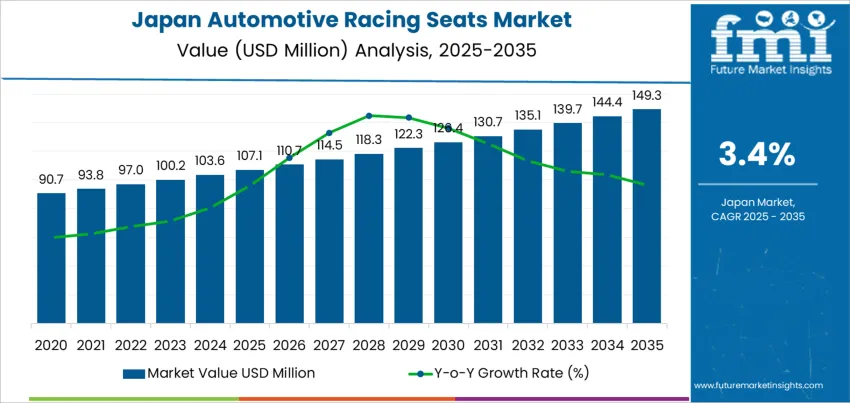
What is the Growth Forecast for Automotive Racing Seats Industry in Japan through 2035?
Demand for automotive racing seats in Japan demonstrates intermittent acceleration aligned with motorsport participation, performance-vehicle customization, and enthusiast-driven aftermarket upgrades. Early acceleration is influenced by interest in tuning culture, circuit driving, and automotive-sport events concentrated in key regions. These activities create periodic spikes in demand as consumers invest in weight-reduction components and improved driver support.
Deceleration appears during economic slowdowns or when discretionary spending softens. Since racing seats serve a non-essential function, purchase timing is sensitive to personal income and hobby budgets. Regulatory certification requirements for road-legal installations can also moderate adoption, creating stable but slower uptake phases. The professional motorsport segment offers consistent baseline volume, although its contribution does not offset variability in the enthusiast industry.
The pattern indicates controlled acceleration when performance customization gains visibility and deceleration when spending caution increases or regulatory constraints limit upgrade choices. The growth remains niche and cyclical, driven by passion-based consumption rather than structural demand expansion in Japan’s transportation sector.
Japan Automotive Racing Seats Key Takeaways
| Metric | Value |
|---|---|
| Japan Automotive Racing Seats Sales Value (2025) | USD 107.1 million |
| Japan Automotive Racing Seats Forecast Value (2035) | USD 149.3 million |
| Japan Automotive Racing Seats Forecast CAGR (2025-2035) | 3.4% |
Why is the Demand for Automotive Racing Seats in Japan Growing?
Demand for automotive racing seats in Japan is increasing because motorsport participation, performance car ownership and aftermarket tuning culture remain active across major regions. Racing seats provide improved support, reduced body movement and enhanced safety during high speed driving, which appeals to enthusiasts who modify vehicles for track use or performance styling. Growth in motorsport events, including local circuit days and amateur racing series, reinforces purchases among hobby drivers seeking compliance with safety guidelines.
Automakers offering sport oriented trims also contribute to adoption by integrating lightweight seats that improve driving posture and reduce vehicle weight. Demand extends to simulation setups in households where high rigidity and side bolstering enhance the virtual driving experience. Retailers and workshops support installation services and offer a wide range of materials including fiber reinforced shells and cushioned fabric choices suited to long distance driving. Constraints include regulations on seat compatibility with airbags and approval requirements for on road use. Small vehicle interiors common in Japan can limit seat size options. Pricing for premium reinforced models may delay upgrades for drivers who participate in events only occasionally.
Which Fiber Materials and Applications Lead Demand for Automotive Racing Seats in Japan?
Demand for automotive racing seats in Japan is shaped by strong motorsport culture, performance tuning activities, and increasing track-day participation among enthusiasts. Manufacturers emphasize safety compliance, lightweight construction, and ergonomic shaping that improves driver stability during high-G maneuvers. Styling preferences also influence adoption in street-legal performance cars. Industry behavior remains linked to racing leagues, professional motorsport engineering, and steady customization trends within Japan’s aftermarket ecosystem.
By Fiber Material, Carbon Fiber Holds the Largest Share
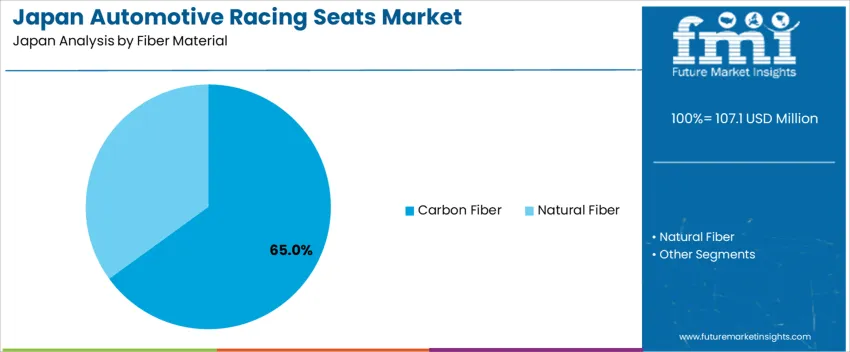
Carbon fiber accounts for 65.0%, reflecting its superior strength-to-weight profile and rigidity required for professional and enthusiast racing applications. Weight reduction supports handling precision, acceleration stability, and improved driver seating confidence during competitive maneuvers. The material also withstands vibration and high-temperature stress common in track environments. Natural fiber constructions represent 35.0%, incorporating reinforced bio-composites that offer cost efficiency and increasing sustainability alignment. These seats serve mid-range tuning needs where structural performance remains important but extreme lightweighting is not mandatory. Material selection depends on regulatory compliance, vehicle modification objectives, and driver comfort priorities in Japanese motorsport culture.
Key Points:
- Carbon fiber preferred for optimal lightweight performance and rigidity
- Natural fiber seats support cost-focused tuning with sustainability benefits
- Material choice influenced by racing intensity and installation specifications
By Application, High-Performance Vehicles Dominate Demand
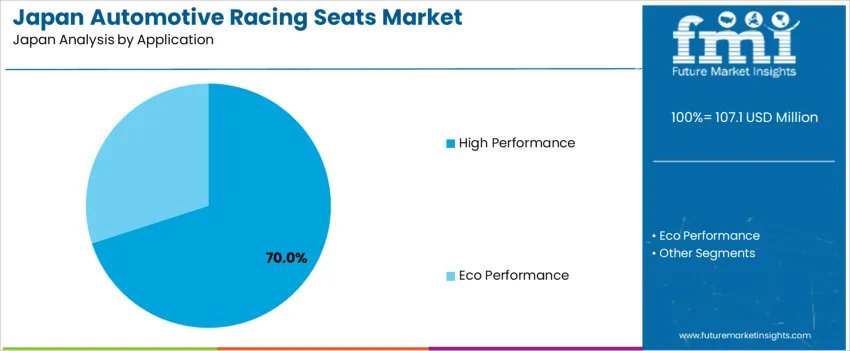
High-performance use accounts for 70.0%, driven by applications in GT cars, rally builds, and dedicated track vehicles where seating geometry supports improved control and safety harness integration. These installations enhance driver feedback and posture in aggressive driving dynamics. Eco-performance applications represent 30.0%, focusing on energy-efficient vehicles upgraded for performance styling without significant chassis modification. This segment reflects interest in personalization and sporty aesthetics among everyday drivers. Application decisions depend on intended racing class, cabin comfort balance, and adherence to Japan’s vehicle inspection regulations regarding aftermarket seating.
Key Points:
- High-performance racing drives most specialized seat installations
- Eco-performance use reflects styling upgrades with moderated engineering requirements
- Safety regulation compliance influences purchasing and installation choices
What are the Drivers, Restraints, and Key Trends of the Demand for Automotive Racing Seats in Japan?
Growth of motorsport participation, expansion of performance vehicle customization and rising interest in track-day activities are driving demand.
In Japan, racing seats gain traction among motorsport enthusiasts who compete in grassroots road racing, gymkhana and drifting events held at circuits such as Fuji Speedway and Suzuka. Performance customization culture remains strong, particularly in the Kanto and Kansai regions where aftermarket tuning shops upgrade seating to improve lateral support and driver posture. Track-day programs promoted by vehicle manufacturers and local clubs attract increasing participation, creating demand for fixed-back and FIA-compliant seats suitable for amateur competition. Rally and autocross groups also procure specialized seats designed to withstand off-road vibration and frequent load shifts, supporting diverse usage across motorsport categories.
High product cost, limited use in daily commuting and regulatory constraints on installation restrain demand.
Racing seats made from carbon fiber or reinforced materials carry premium pricing that restricts adoption to dedicated hobbyists. Many vehicles used for daily commuting prioritize comfort and adjustable seating, making fixed-back racing seats less practical for regular driving in urban Japan. Road-use regulations require proper airbag and seatbelt integration, adding installation complexity and certification steps that discourage casual upgrades. These economic and compliance considerations limit widespread installation outside enthusiast circles.
Shift toward lightweight modular designs, increased compatibility with modern safety electronics and rising demand in simulator and esports applications define key trends.
Manufacturers introduce lighter racing seats engineered for compatibility with factory seat rails and occupant detection systems used in modern vehicles. Collaboration with roll-cage and harness suppliers supports seamless installation for dual road-track setups. Growth in motorsport-themed entertainment and esports drives demand for racing seats used in home simulators and driving arcades across major cities. Limited-edition designs tied to Japanese performance brands and motorsport events maintain strong collector interest. These trends indicate stable, enthusiast-driven demand for racing seats across Japan’s automotive aftermarket and competition community.
Analysis of the Demand for Automotive Racing Seats in Japan by Region
Demand for automotive racing seats in Japan is influenced by vehicle-performance upgrades, motorsport participation, interior styling enhancements, and reinforced safety designs for competitive or enthusiast driving. Interest varies by region, with Kyushu & Okinawa leading at 4.2%, followed by Kanto (3.9%), Kansai (3.4%), Chubu (3.0%), Tohoku (2.6%), and the Rest of Japan (2.5%).
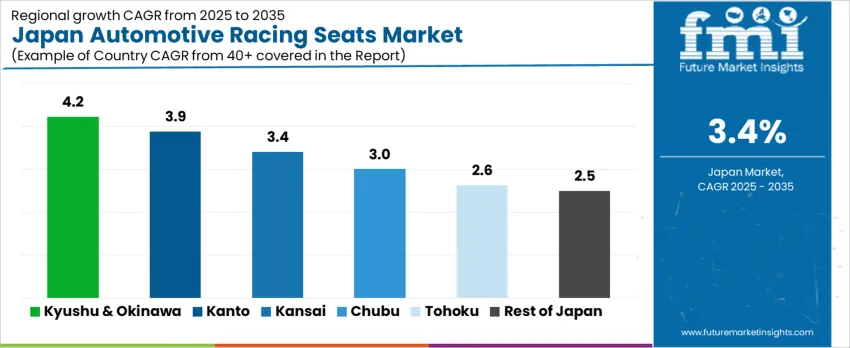
| Region | CAGR (2025-2035) |
|---|---|
| Kyushu & Okinawa | 4.2% |
| Kanto | 3.9% |
| Kansai | 3.4% |
| Chubu | 3.0% |
| Tohoku | 2.6% |
| Rest of Japan | 2.5% |
How is Kyushu & Okinawa driving demand for automotive racing seats?
Kyushu & Okinawa posts 4.2% CAGR, supported by vehicle-modification culture centered in Fukuoka and strong motorsport engagement linked to local racetrack venues. Performance workshops pursue racing seats compatible with lightweight sport-compact models commonly driven in the region. Procurement emphasizes seat frames with lateral-support reinforcement for improved driver stability during cornering. Consumer purchasing behavior frequently focuses on interior upgrades that enhance visual appeal without extensive mechanical modification. Okinawa’s road conditions and tourism-driven rental fleets introduce demand where premium seating options support brand positioning. Reliability of seat-mount systems influences compatibility decision-making across models from Japanese manufacturers. Distribution partners maintain stock for scheduled installations linked to customer appointments. Component handling safety and fabric durability guide selection decisions for long-term daily driving.
- Track participation reinforcing performance upgrades
- Aesthetic interior modification influencing adoption
- Reliable mounting systems supporting compatibility
- Durable materials sustaining extended daily use
How is Kanto shaping demand for automotive racing seats?
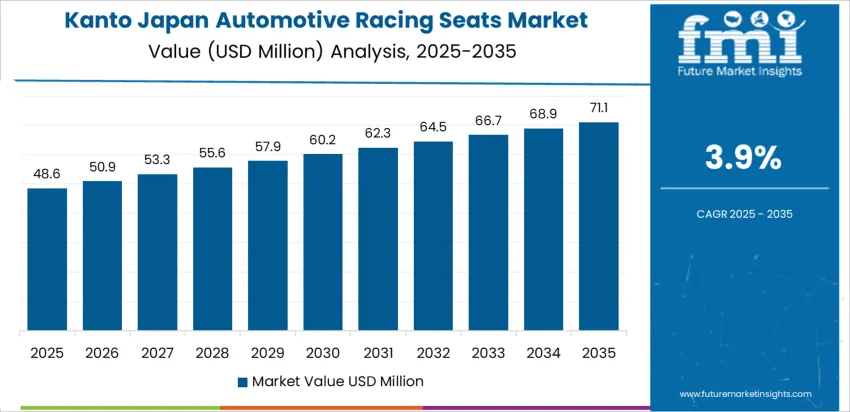
Kanto records 3.9% CAGR, driven by high-density enthusiast communities in Tokyo and Kanagawa with access to aftermarket suppliers and motorsport facilities. Consumer priorities include ergonomic seating designed for controlled posture during extended commuting and recreational driving. Retail demand extends to reinforced bucket seats used in tuning events and display vehicles at specialty shops. Procurement teams consider side-airbag compatibility and structural safety alignment with transport regulations. Upholstery trends include fabric and synthetic leather combinations providing affordable entry points for modification. E-commerce plays an important role in part selection, providing visibility into fitment details and regional service scheduling. Manufacturers adapt models for compact interior layouts found in popular urban hatchbacks.
- Specialty shops offering installation expertise
- Ergonomic designs supporting long daily driving
- Side-airbag compatibilities guiding approval
- Online retail enabling access to model-matched options
How is Kansai contributing to racing-seat installations?
Kansai posts 3.4% CAGR, centered around Osaka and Kobe performance garages serving drivers seeking balanced styling and support improvements. Retail assortments include sport-focused seats with adjustable reclining mechanisms for mixed road usage. Track-day participation at regional venues encourages procurement of lightweight frames to improve handling responses. Interior-care preferences influence fabric selection designed to withstand frequent entry and exit cycles. Automotive parts suppliers streamline ordering processes linked to scheduled installation windows. Local shops maintain knowledge of steel and aluminum mounting brackets tailored to model-specific configurations found across Kansai roadways.
- Track-day usage supporting lightweight product selection
- Mixed-purpose seating guiding adjustment features
- Material durability required for repeated vehicle access
- Component compatibility managed through local installation
How is Chubu supporting demand for automotive racing seats?
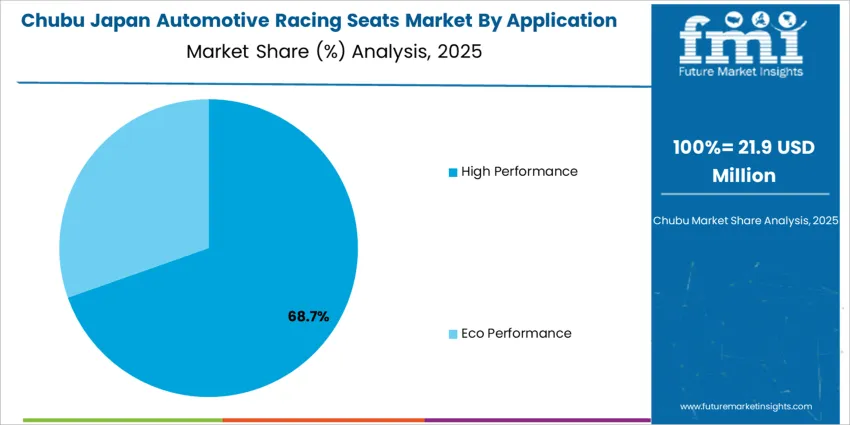
Chubu posts 3.0% CAGR, influenced by production proximity and tuning communities connected to legacy automotive clusters in Aichi Prefecture. Regional activity favors reliable seating upgrades for endurance-focused use on local tracks. Performance-seat suppliers cater to owners requesting bolstering that improves precision under high lateral load while supporting comfortable seating for daily travel. Logistics networks deliver competitive availability for both domestic and imported products, enabling purchasing flexibility based on design preferences and compatibility. Workshops offer structured installation guided by standardized seat-rail alignment to maintain inspection adherence. Chubu buyers review product longevity and reinforcement characteristics where metal frames and composite shells are assessed for fatigue resistance. Mid-cycle replacements occur when padding compression affects posture clarity during dynamic maneuvering.
- Automotive industry presence aiding supply stability
- Installation support ensuring regulatory compliance
- Focus on fatigue resistance and padding durability
- Procurement balancing performance with daily usability
How is Tohoku influencing demand for automotive racing seats?
Tohoku records 2.6% CAGR with a steady yet smaller consumer base focused on practical performance upgrades for vehicles driven across variable terrain and seasonal conditions. Enthusiasts value seating configurations that retain comfort during long inter-city travel while adding structural lateral support for spirited driving. Motion stability improvement encourages adoption of reinforced bucket seats where side-padding geometry maintains position control during changes in acceleration. Procurement decisions evaluate durability of fabrics against extended use under temperature shifts. Local availability of tuning shops varies, so many customers rely on standardized installation kits that support proper alignment in self-install applications. Product selection focuses on tested compatibility rather than bespoke customization, incorporating familiar brands with domestic warehousing. Seasonal motorsport activities stimulate short-term demand around event schedules.
- Standardized installation kits supporting accessibility
- Demand shaped by mixed-use vehicle requirements
- Fabric durability rated for seasonal performance
- Events driving peak replacement cycles
How is the Rest of Japan contributing to demand for automotive racing seats?
The Rest of Japan posts 2.5% CAGR with demand emerging from dispersed tuning communities and owners prioritizing selective interior enhancements. Procurement often accompanies broader maintenance or vehicle refresh projects where seating replacements improve functional feel. Racing-seat adoption emphasizes adaptability to different body profiles and cost alignment with moderate modification budgets. Lightweight materials are chosen to reduce fatigue accumulation in dual-use cars supporting occasional motorsport participation. Buyers evaluate product certifications that enable use in regulated track environments. Distribution relies on e-commerce fulfillment and delivery scheduling rather than centralized retail browsing. Export-focused suppliers maintain outreach through catalog visibility featuring specifications for mounting and buckle compatibility. Consumer decisions are measured, ensuring upgrades deliver seat stability and resilience without compromising daily comfort.
- Incremental upgrades integrated into broader modifications
- E-commerce supporting reach to low-density areas
- Value-conscious purchasing behavior
- Compliance-focused specification review
What is the competitive landscape of demand for automotive racing seats in Japan?
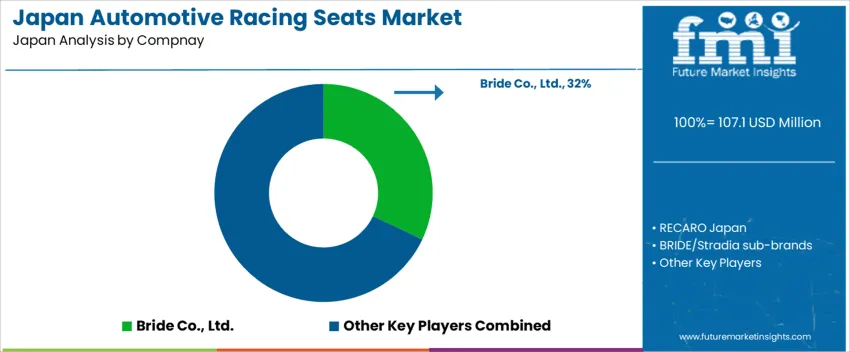
Demand for automotive racing seats in Japan is driven by suppliers supporting motorsport categories, street-legal tuning, and performance-focused aftermarket installation. Bride Co., Ltd. holds an estimated 32.0% share, supported by controlled shell-strength construction, stable weight-to-rigidity ratios, and certified side-mount compatibility used by Japanese circuit and rally drivers. Its seats provide secure lateral support and impact-load reliability consistent with national motorsport regulations.
RECARO Japan maintains significant participation through FIA-rated seats and reinforced shells used in professional and semi-professional competition. Its seating systems deliver consistent ergonomics and verified belt-pass-through tolerances for harness integrity. Sparco Japan contributes selective demand from track-day and drift users requiring predictable structural durability and seat-mount adaptability within common tuner platforms.
OMP Japan adds availability in specialized motorsport programs where shell geometry must support flexible cockpit configurations. Technician support and fitting accuracy remain critical in adoption. Competition in Japan centers on impact-load tolerance, FIA compliance, shell rigidity, weight optimization, and installation precision with domestic vehicle platforms. Demand persists in motorsport and enthusiast channels where controlled body support and regulated safety standards are mandatory across Japanese performance-vehicle segments.
Key Players in Japan Automotive Racing Seats Demand
- Bride Co., Ltd.
- RECARO Japan
- BRIDE/Stradia sub-brands
- Sparco Japan
- OMP Japan
Scope of the Report
| Items | Values |
|---|---|
| Quantitative Units | USD million |
| Fiber Material | Carbon Fiber, Natural Fiber |
| Application | High Performance, Eco Performance |
| Regions Covered | Kyushu & Okinawa, Kanto, Kansai, Chubu, Tohoku, Rest of Japan |
| Key Companies Profiled | Bride Co., Ltd., RECARO Japan, BRIDE/Stradia sub-brands, Sparco Japan, OMP Japan |
| Additional Attributes | Analysis includes carbon composite lightweight seat integration for motorsports and tuning vehicles; ergonomic safety compliance with FIA and JAF standards; rising installation in street-legal sports models and aftermarket customization; product demand aligned with EV sports development and competitive racing culture mainly concentrated in Kanto and Kansai circuits; evaluation of OEM-affiliated vs aftermarket distribution channels. |
Japan Automotive Racing Seats Demand by Segments
Fiber Material:
- Carbon Fiber
- Natural Fiber
Application:
- High Performance
- Eco Performance
Region:
- Kyushu & Okinawa
- Kanto
- Kansai
- Chubu
- Tohoku
- Rest of Japan
Frequently Asked Questions
How big is the demand for automotive racing seats in Japan in 2025?
The demand for automotive racing seats in Japan is estimated to be valued at USD 107.1 million in 2025.
What will be the size of automotive racing seats in Japan in 2035?
The market size for the automotive racing seats in Japan is projected to reach USD 149.3 million by 2035.
How much will be the demand for automotive racing seats in Japan growth between 2025 and 2035?
The demand for automotive racing seats in Japan is expected to grow at a 3.4% CAGR between 2025 and 2035.
What are the key product types in the automotive racing seats in Japan?
The key product types in automotive racing seats in Japan are carbon fiber and natural fiber.
Which application segment is expected to contribute significant share in the automotive racing seats in Japan in 2025?
In terms of application, high performance segment is expected to command 70.0% share in the automotive racing seats in Japan in 2025.
Preview the report firsthand - request a free sample
Get SampleGet the brochure for pricing and purchase details.
Get PDFTable of Content
- Executive Summary
- Japan Market Outlook
- Demand-side Trends
- Supply-side Trends
- Technology Roadmap Analysis
- Analysis and Recommendations
- Market Overview
- Market Coverage / Taxonomy
- Market Definition / Scope / Limitations
- Market Background
- Market Dynamics
- Drivers
- Restraints
- Opportunity
- Trends
- Scenario Forecast
- Demand in Optimistic Scenario
- Demand in Likely Scenario
- Demand in Conservative Scenario
- Opportunity Map Analysis
- Product Life Cycle Analysis
- Supply Chain Analysis
- Investment Feasibility Matrix
- Value Chain Analysis
- PESTLE and Porter’s Analysis
- Regulatory Landscape
- Regional Parent Market Outlook
- Production and Consumption Statistics
- Import and Export Statistics
- Market Dynamics
- Japan Market Analysis 2020 to 2024 and Forecast, 2025 to 2035
- Historical Market Size Value (USD Million) Analysis, 2020 to 2024
- Current and Future Market Size Value (USD Million) Projections, 2025 to 2035
- Y-o-Y Growth Trend Analysis
- Absolute $ Opportunity Analysis
- Japan Market Pricing Analysis 2020 to 2024 and Forecast 2025 to 2035
- Japan Market Analysis 2020 to 2024 and Forecast 2025 to 2035, By Fiber Material
- Introduction / Key Findings
- Historical Market Size Value (USD Million) Analysis By Fiber Material , 2020 to 2024
- Current and Future Market Size Value (USD Million) Analysis and Forecast By Fiber Material , 2025 to 2035
- Carbon Fiber
- Natural Fiber
- Y-o-Y Growth Trend Analysis By Fiber Material , 2020 to 2024
- Absolute $ Opportunity Analysis By Fiber Material , 2025 to 2035
- Japan Market Analysis 2020 to 2024 and Forecast 2025 to 2035, By Application
- Introduction / Key Findings
- Historical Market Size Value (USD Million) Analysis By Application, 2020 to 2024
- Current and Future Market Size Value (USD Million) Analysis and Forecast By Application, 2025 to 2035
- High Performance
- Eco Performance
- Y-o-Y Growth Trend Analysis By Application, 2020 to 2024
- Absolute $ Opportunity Analysis By Application, 2025 to 2035
- Market Structure Analysis
- Competition Dashboard
- Competition Benchmarking
- Market Share Analysis of Top Players
- By Regional
- By Fiber Material
- By Application
- Competition Analysis
- Competition Deep Dive
- Bride Co., Ltd.
- Overview
- Product Portfolio
- Profitability by Market Segments (Product/Age /Sales Channel/Region)
- Sales Footprint
- Strategy Overview
- Marketing Strategy
- Product Strategy
- Channel Strategy
- RECARO Japan
- BRIDE/Stradia sub-brands
- Sparco Japan
- OMP Japan
- Bride Co., Ltd.
- Competition Deep Dive
- Assumptions & Acronyms Used
- Research Methodology


