

- Industry Size (2025)
- USD 0.9 Bn
- Forecast (2035)
- USD 1.3 Bn
- CAGR (2025 to 2035)
- 4.3%
Demand for Automotive Racing Seats in USA Forecast and Outlook 2025 to 2035
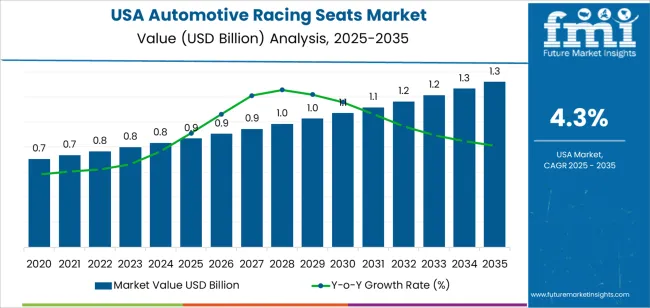
In 2025, demand for automotive racing seats in the USA is valued at USD 0.9 billion and is projected to reach USD 1.3 billion by 2035 at a CAGR of 4.3%. Growth in the first half of the forecast reflects stable demand from motorsports participation, performance car ownership, and track focused vehicle modifications. High performance applications account for 70% of installations, supported by racing clubs, time attack events, and amateur motorsports leagues. Carbon fiber seats dominate with a 65% material share due to strength to weight advantages and safety compliance in sanctioned racing. Demand also benefits from strong aftermarket sales tied to performance tuning culture concentrated in California, Texas, and Florida.
From 2030 onward, market expansion is shaped more by product specialization than by volume growth. Eco performance applications account for 30%, using natural fiber and hybrid composites in lightweight road legal performance cars. Growth is supported by premium customization demand and rising adoption of modular racing seats suited for both street and track use. Key suppliers active in the USA include Recaro Holding GmbH, Sparco S.p.A, Faurecia SE, Cobra Seats, and OMP Racing S.p.A. Competitive strategies center on FIA certification coverage, shell rigidity tuning, and ergonomic fit across different driver profiles. Distribution remains concentrated in performance retailers, motorsport distributors, and direct to consumer sales tied to vehicle build communities.
Quick Stats for Demand for Automotive Racing Seats in USA
- Demand for Automotive Racing Seats in USA Value (2025): USD 0.9 billion
- Demand for Automotive Racing Seats in USA Forecast Value (2035): USD 1.3 billion
- Demand for Automotive Racing Seats in USA Forecast CAGR (2025 to 2035): 4.3%
- Leading Fiber Material in Automotive Racing Seats in USA: Carbon Fiber (65%)
- Key Growth Regions for Automotive Racing Seats in USA: West, South, Northeast, Midwest
- Top Players in Automotive Racing Seats Industry in USA: Recaro Holding, Sparco, Faurecia, Cobra Seats, OMP Racing
What is the Demand Forecast for Automotive Racing Seats in USA through 2035?
The overall demand for automotive racing seats in USA increases from USD 0.9 billion in 2025 to USD 1.0 billion by 2030, adding USD 0.1 billion in absolute value. This phase reflects controlled growth anchored in motorsports participation, performance aftermarket upgrades, and stable adoption across track-day vehicles and modified passenger cars. Demand is supported by consistent interest in lightweight seating, improved lateral support, and safety-focused seat designs among enthusiasts. Growth during this period remains volume anchored, with limited pricing escalation as competition among seat manufacturers and distributors keeps unit prices stable. The segment continues to be driven by discretionary performance spending rather than mass OEM integration.
From 2030 to 2035, the market expands from USD 1.0 billion to USD 1.3 billion, adding a larger USD 0.3 billion in the second half of the decade. This back weighted acceleration reflects rising integration of racing-style seats into factory performance trims, electric performance vehicles, and premium sport utility segments. Increasing focus on weight reduction, ergonomic optimization, and advanced composite materials raises value per unit. At the same time, simulation racing, motorsport brand crossovers, and premium interior customization trends extend demand beyond traditional racing applications, shifting the market from niche aftermarket dependence toward broader performance-driven value expansion.
Automotive Racing Seats Industry in USA Key Takeaways
| Metric | Value |
|---|---|
| Industry Value (2025) | USD 0.9 billion |
| Forecast Value (2035) | USD 1.3 billion |
| Forecast CAGR (2025 to 2035) | 4.3% |
What Is Driving the Demand for Automotive Racing Seats in the USA
Demand for automotive racing seats in the USA originates from enthusiasts, motorsport participants, and niche aftermarket modifiers who prioritize performance, safety, and driver engagement over standard comfort. Over time, proliferation of tuning culture and track-day activities increased demand for seats that offer superior lateral support, harness compatibility, and reduced weight compared with regular OEM seating.
Aftermarket shops and specialty builders replaced factory seats with racing seats to improve handling feedback and driver posture under High-G cornering. Demand also came from restoration and customization markets where classic and performance vehicles were outfitted for racing or spirited driving. Limited-run sports cars and dedicated track cars maintained steady OEM demand for racing-style seats designed to meet occupant safety while delivering performance feel.
Future demand in the USA will be shaped by evolving automotive segments and shifting consumer interest rather than volume growth alone. As electric vehicles and performance-oriented compact cars emerge, some drivers may seek racing seats to compensate for silent power delivery and reduced engine feedback. Motorsports participation, amateur track days, and simulation-inspired driving experiences may sustain niche demand.
Seat manufacturers may respond with lightweight composite shells, modular harness-ready seat structures and adjustable seat ergonomics compatible with road and track use. Barriers include regulatory requirements for passenger safety, comfort, and airbag integration; reluctance among average consumers to trade convenience for performance; and higher cost compared with standard seats. Racing seats will likely remain a segmented market catering to enthusiasts and specialty builders rather than mainstream car buyers.
How Are Fiber Material and Application Structuring the Demand for Automotive Racing Seats in USA?
The demand for automotive racing seats in the USA is structured by fiber material and application. Carbon fiber accounts for 65% of total demand, followed by natural fiber used in limited performance focused eco applications. By application, high performance vehicles represent 70.0% of total consumption, while eco performance categories account for the remaining share. Demand behavior is shaped by weight reduction targets, structural strength requirements, driver safety regulations, and thermal stability under racing conditions. These segments reflect how material engineering priorities and vehicle performance positioning define racing seat selection across motorsports, track focused vehicles, and specialty performance builds in the USA.
Why Does Carbon Fiber Lead the Automotive Racing Seat Material Demand in USA?
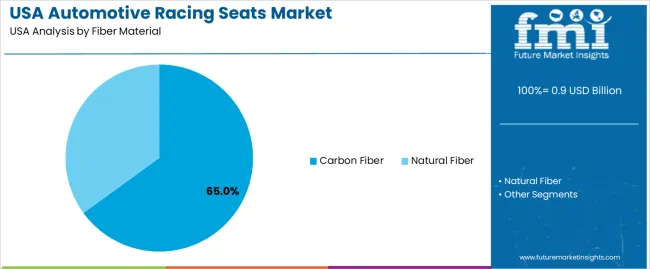
Carbon fiber accounts for 65% of total automotive racing seat demand in the USA. This leadership reflects its exceptional strength to weight ratio, high impact resistance, and superior structural rigidity under extreme load conditions. Racing applications require seats that protect drivers during high speed maneuvers and collisions while maintaining minimal overall vehicle mass. Carbon fiber structures meet these performance constraints with consistent dimensional stability under vibration and thermal stress.
Carbon fiber seats also support the integration of multi point harness systems and head restraint elements without compromising shell strength. Their fatigue resistance under long race durations supports use in circuit racing, time attack, and endurance motorsports. Manufacturing precision and repeatable mold accuracy allow consistent fitment across performance vehicle platforms. These safety, durability, and weight reduction advantages sustain carbon fiber as the dominant material in the USA racing seat segment.
Why Do High Performance Applications Dominate Automotive Racing Seat Demand in USA?
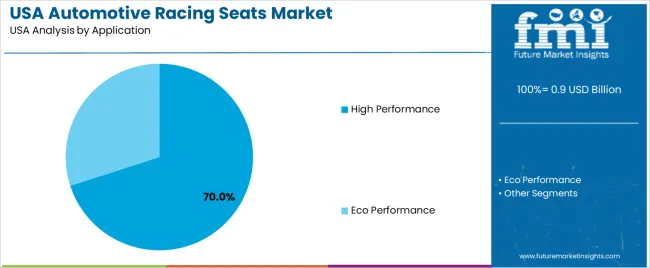
High performance applications account for 70.0% of total demand for automotive racing seats in the USA. This dominance reflects the concentration of racing seat installations in track focused vehicles, competition builds, and performance tuned road cars. These vehicles operate under high lateral loads, rapid deceleration forces, and aggressive cornering conditions that require secure driver restraint and body positioning.
Motorsports participation across amateur track days, professional racing series, and performance driving schools sustains consistent demand for FIA compliant racing seats. High performance aftermarket builds further expand this segment through modified sports cars and muscle vehicles. Safety regulations and competition standards mandate rigid seat structures in many racing formats, which drives regular upgrade and replacement cycles. These performance intensity and regulatory factors position high performance applications as the primary demand driver for automotive racing seats across the USA.
What Forces Are Driving the Demand for Automotive Racing Seats in the USA?
Demand for automotive racing seats in the USA is driven by strong motorsports culture, performance vehicle ownership, and a large enthusiast aftermarket. Track-day participation, amateur racing leagues, drift events, and drag racing communities sustain continuous upgrade demand. Sports cars, muscle cars, and performance-oriented pickups form the core customer base for fixed-back and reclinable racing seats. Growth in simulator training, vehicle personalization, and performance branding also supports seat replacement beyond competition use. These cultural and recreational factors keep racing seats relevant across both professional and consumer segments.
How Do Motorsports Participation and Vehicle Modification Trends Shape Seat Demand in the USA?
The USA hosts a wide spectrum of racing formats including NASCAR feeder series, SCCA club racing, off-road racing, time attack, and drift competitions. Each format demands different seat specifications for lateral support, safety harness integration, and vibration control. Outside formal racing, vehicle modification culture strongly influences demand, as many owners install racing seats for aesthetic and handling feel rather than competition. Social media, car shows, and tuner events drive visual standards that favor aggressive seat designs. These participation patterns expand demand beyond professional circuits into lifestyle-driven customization markets.
What Cost, Comfort, and Regulatory Factors Limit Racing Seat Market Expansion in the USA?
Racing seat adoption in the USA is limited by comfort trade-offs, regulatory compliance, and price sensitivity. Fixed-back fiberglass and carbon composite seats reduce daily driving comfort, which restricts use in commuter vehicles. Safety certification requirements for sanctioned racing series raise development and approval cost. Improper installation can affect airbag systems and seat sensors, discouraging some buyers. Premium racing seats involve high material and tooling expense, limiting access for entry-level enthusiasts. These comfort, safety, and economic constraints keep the market concentrated in performance-focused ownership groups.
How Are Material Innovation, Light weighting, and Safety Trends Reshaping Racing Seat Demand in the USA?
Automotive racing seats in the USA are shifting toward lightweight composite shells, improved fire-retardant fabrics, and energy-absorbing foam structures. Carbon-fiber and hybrid composite seats reduce mass while improving rigidity. Integration with six-point harness systems and head-and-neck restraint compatibility is becoming standard. Adjustable side bolsters and modular padding support adapt fit for different driving styles. Electric vehicle racing platforms introduce new mounting and thermal considerations. These trends show racing seats evolving from rigid competition hardware into engineered safety and performance interfaces.
What is the Demand for Automotive Racing Seats in USA by Region?
| Region | CAGR (%) |
|---|---|
| West | 4.9% |
| South | 4.4% |
| Northeast | 3.9% |
| Midwest | 3.4% |
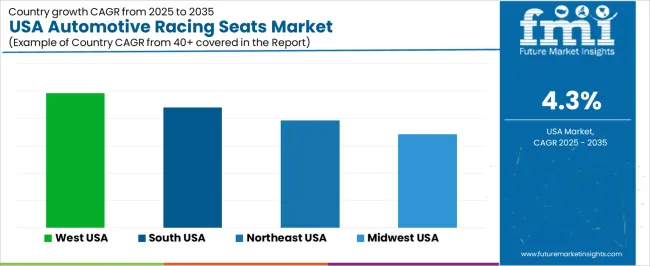
The demand for automotive racing seats in the USA is rising across regions, with the West leading at 4.9% CAGR. Growth in that region reflects strong interest in performance vehicles, motorsports participation, and aftermarket customizations. The South at 4.4% benefits from a large base of car enthusiasts, regional racing culture, and aftermarket tuning markets. The Northeast at 3.9% shows moderate growth, supported by urban motorsport interest and renovation of older vehicles. The Midwest at 3.4% exhibits the slowest growth, likely due to lower concentration of performance-car buyers and fewer aftermarket customizations relative to other regions.
What is Driving Automotive Racing Seat Demand in the West Region of USA?
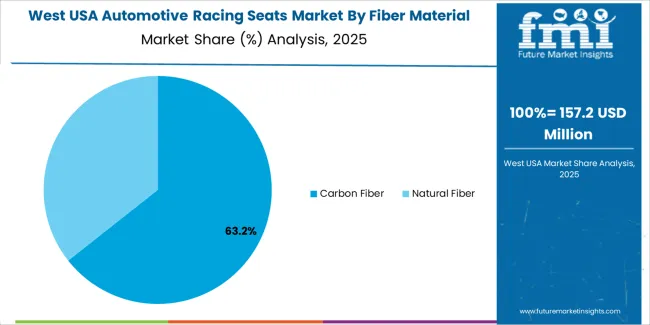
Growth in the West reflects a CAGR of 4.9% through 2035 for automotive racing seat demand, supported by strong motorsports culture, aftermarket customization activity, and premium performance vehicle ownership. Track day participation, amateur racing leagues, and off road performance events sustain steady demand for lightweight and reinforced seating systems. Electric performance vehicles also contribute to interior sport customization trends. Coastal urban centers support a higher density of specialty tuning workshops. Demand remains enthusiast driven rather than mass production driven, with purchasing linked closely to discretionary spending and performance oriented vehicle modification activity.
- Motorsports participation sustains core aftermarket demand
- Performance vehicle ownership supports premium seat adoption
- Specialty tuning workshops anchor installation activity
- Track day culture drives repeat replacement purchases
How is the South Supporting Automotive Racing Seat Demand in USA?
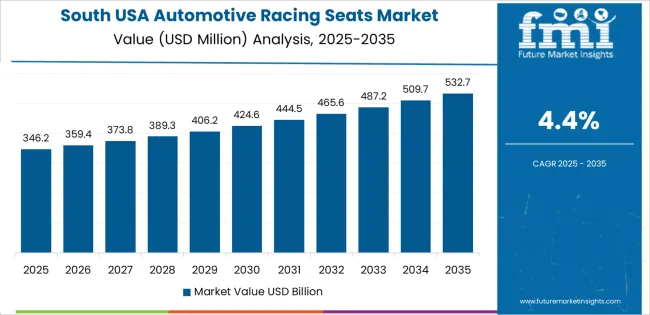
The South advances at a CAGR of 4.4% through 2035 for automotive racing seat demand, driven by strong pickup based motorsports, drag racing culture, and expanding enthusiast vehicle communities. Regional racing circuits and off road parks support steady demand for safety oriented seating upgrades. Warm climate conditions allow year round event participation, increasing seat wear cycles. Custom fabrication shops and installation garages play a key role in demand conversion. Growth remains hobby driven rather than daily use driven, with discretionary upgrades guiding most of the regional purchasing behavior.
- Drag racing and off road events anchor demand
- Warm climate enables year round motorsport activity
- Custom garages drive installation and replacement volume
- Safety compliance supports premium seat upgrades
Why is Automotive Racing Seat Demand Rising Gradually in the Northeast Region of USA?
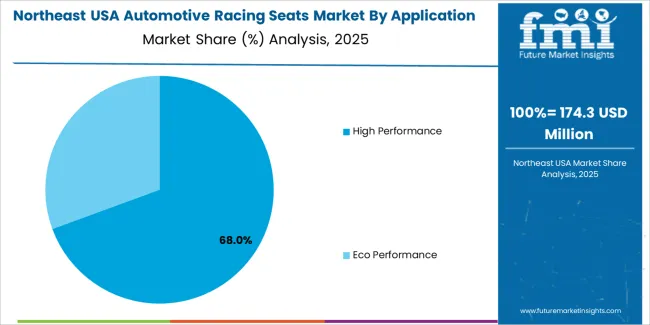
The Northeast records a CAGR of 3.9% through 2035 for automotive racing seat demand, shaped by seasonal motorsports activity, compact performance vehicle ownership, and strong urban car enthusiast communities. Winter conditions limit year round racing participation, compressing purchasing into spring and summer seasons. Track focused upgrades and sim racing inspired builds sustain niche demand. Urban storage limitations restrict multi vehicle ownership, moderating growth volume. Demand remains centered on private enthusiasts and club level racing rather than professional motorsports programs across metropolitan and suburban tuning markets.
- Seasonal motorsport participation limits annual demand cycles
- Compact performance vehicles drive targeted seat upgrades
- Urban enthusiast clubs support niche aftermarket demand
- Storage constraints limit multi vehicle build activity
What is Influencing Automotive Racing Seat Demand in the Midwest Region of USA?
The Midwest expands at a CAGR of 3.4% through 2035 for automotive racing seat demand, supported by grassroots racing circuits, dirt track motorsports, and strong classic car restoration activity. Rural racing events and hobbyist vehicle builds maintain steady but moderate seat adoption. Cost sensitivity remains higher than in coastal regions, influencing preference for entry level racing seats. Installation activity is concentrated among small performance workshops. Growth remains participation driven rather than brand driven, with purchasing tied closely to local racing calendars and enthusiast community activity.
- Grassroots racing circuits anchor regional demand
- Classic car restorations support periodic seat upgrades
- Entry level products dominate cost sensitive purchases
- Local racing calendars influence seasonal buying patterns
What Is Driving the Demand for Automotive Racing Seats in USA and Who Are the Key Players Shaping the Industry?
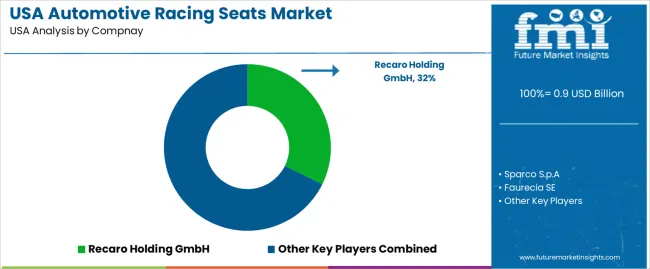
Demand for automotive racing seats in the USA is rising as motorsports, car tuning culture, and performance vehicle ownership remain strong. Enthusiasts and professional racers both value seats that offer enhanced driver stability, safety, and comfort under high lateral forces. The broader adoption of performance cars and retrofitted vehicles fuels aftermarket demand. Growing focus on vehicle handling, suspension tuning, and driver control in sports cars and modified vehicles further supports uptake of racing grade seats. Rising interest in track days, club racing, and performance upgrades drives consistent demand for seats designed for harness compatibility, side bolstering, and lightweight construction.
Key firms shaping the USA racing seat market include Recaro Holding GmbH, Sparco S.p.A., Faurecia SE, Cobra Seats, and OMP Racing S.p.A. Recaro remains a leading name in performance and racing seating, supplying premium aftermarket and OEM grade seats. Sparco and OMP Racing are prominent among motorsport enthusiasts and track day communities, offering seats with strong safety and harness compatibility. Cobra Seats focuses on cost effective racing and sport oriented seats for both street and track use. Faurecia, as a large automotive seating supplier, contributes through its performance seat offerings and OEM ties. Together these firms support both aftermarket and OEM demand, sustaining a diversified but competitive market for racing seats in the USA.
Key Players in the Automotive Racing Seats Industry in USA
- Recaro Holding GmbH
- Sparco S.p.A
- Faurecia SE
- Cobra Seats
- OMP Racing S.p.A
Scope of the Report
| Items | Values |
|---|---|
| Quantitative Units (2025) | USD billion |
| Fiber Material | Carbon Fiber, Natural Fiber |
| Application | High Performance, Eco Performance |
| Region | West USA, South USA, Northeast USA, Midwest USA |
| Countries Covered | USA |
| Key Companies Profiled | Recaro Holding GmbH, Sparco S.p.A, Faurecia SE, Cobra Seats, OMP Racing S.p.A |
| Additional Attributes | Dollar value distribution by fiber material and application; regional CAGR projections; carbon fiber leads with 65% share due to strength-to-weight advantages and safety compliance; high performance vehicles dominate at 70% of total demand due to motorsport, track, and performance car adoption; growth in 2030 to 2035 driven by integration into factory performance trims, modular seat design, electric performance vehicles, and premium sport utility vehicles; OEM and aftermarket adoption concentrated in California, Texas, Florida; value growth tied to advanced composites, ergonomic fit, FIA certification, and lightweighting; distribution channels include performance retailers, motorsport distributors, and direct to consumer. |
Automotive Racing Seats Industry in USA Segmentation
Fiber Material:
- Carbon Fiber
- Natural Fiber
Application:
- High Performance
- Eco Performance
Region:
- Northeast USA
- West USA
- Midwest USA
- South USA
Frequently Asked Questions
How big is the demand for automotive racing seats in USA in 2025?
The demand for automotive racing seats in USA is estimated to be valued at USD 0.9 billion in 2025.
What will be the size of automotive racing seats in USA in 2035?
The market size for the automotive racing seats in USA is projected to reach USD 1.3 billion by 2035.
How much will be the demand for automotive racing seats in USA growth between 2025 and 2035?
The demand for automotive racing seats in USA is expected to grow at a 4.3% CAGR between 2025 and 2035.
What are the key product types in the automotive racing seats in USA?
The key product types in automotive racing seats in USA are carbon fiber and natural fiber.
Which application segment is expected to contribute significant share in the automotive racing seats in USA in 2025?
In terms of application, high performance segment is expected to command 70.0% share in the automotive racing seats in USA in 2025.
Preview the report firsthand - request a free sample
Get SampleGet the brochure for pricing and purchase details.
Get PDFTable of Content
- Executive Summary
- USA Market Outlook
- Demand-side Trends
- Supply-side Trends
- Technology Roadmap Analysis
- Analysis and Recommendations
- Market Overview
- Market Coverage / Taxonomy
- Market Definition / Scope / Limitations
- Market Background
- Market Dynamics
- Drivers
- Restraints
- Opportunity
- Trends
- Scenario Forecast
- Demand in Optimistic Scenario
- Demand in Likely Scenario
- Demand in Conservative Scenario
- Opportunity Map Analysis
- Product Life Cycle Analysis
- Supply Chain Analysis
- Investment Feasibility Matrix
- Value Chain Analysis
- PESTLE and Porter’s Analysis
- Regulatory Landscape
- Regional Parent Market Outlook
- Production and Consumption Statistics
- Import and Export Statistics
- Market Dynamics
- USA Market Analysis 2020 to 2024 and Forecast, 2025 to 2035
- Historical Market Size Value (USD Million) Analysis, 2020 to 2024
- Current and Future Market Size Value (USD Million) Projections, 2025 to 2035
- Y-o-Y Growth Trend Analysis
- Absolute $ Opportunity Analysis
- USA Market Pricing Analysis 2020 to 2024 and Forecast 2025 to 2035
- USA Market Analysis 2020 to 2024 and Forecast 2025 to 2035, By Fiber Material
- Introduction / Key Findings
- Historical Market Size Value (USD Million) Analysis By Fiber Material , 2020 to 2024
- Current and Future Market Size Value (USD Million) Analysis and Forecast By Fiber Material , 2025 to 2035
- Carbon Fiber
- Natural Fiber
- Y-o-Y Growth Trend Analysis By Fiber Material , 2020 to 2024
- Absolute $ Opportunity Analysis By Fiber Material , 2025 to 2035
- USA Market Analysis 2020 to 2024 and Forecast 2025 to 2035, By Application
- Introduction / Key Findings
- Historical Market Size Value (USD Million) Analysis By Application, 2020 to 2024
- Current and Future Market Size Value (USD Million) Analysis and Forecast By Application, 2025 to 2035
- High Performance
- Eco Performance
- Y-o-Y Growth Trend Analysis By Application, 2020 to 2024
- Absolute $ Opportunity Analysis By Application, 2025 to 2035
- Market Structure Analysis
- Competition Dashboard
- Competition Benchmarking
- Market Share Analysis of Top Players
- By Regional
- By Fiber Material
- By Application
- Competition Analysis
- Competition Deep Dive
- Recaro Holding GmbH
- Overview
- Product Portfolio
- Profitability by Market Segments (Product/Age /Sales Channel/Region)
- Sales Footprint
- Strategy Overview
- Marketing Strategy
- Product Strategy
- Channel Strategy
- Sparco S.p.A
- Faurecia SE
- Cobra Seats
- OMP Racing S.p.A
- Recaro Holding GmbH
- Competition Deep Dive
- Assumptions & Acronyms Used
- Research Methodology


