

- Industry Size (2025)
- USD 277.9 Mn
- Forecast (2035)
- USD 371.5 Mn
- CAGR (2025 to 2035)
- 2.9%
Demand for Automotive Wheel Coating in USA Forecast and Outlook (2025 to 2035)
The demand for automotive wheel coatings in the USA is expected to grow from USD 277.9 million in 2025 to USD 371.5 million by 2035, with a compound annual growth rate (CAGR) of 2.9%. This growth is driven by increasing consumer demand for durable, visually appealing, and corrosion-resistant coatings for automotive wheels. Automotive wheel coatings enhance the functionality and aesthetics of wheels, offering protection from environmental factors such as moisture, road salt, and UV exposure. The demand for high-quality finishes, combined with the rise in automotive production and aftermarket services, supports the positive market outlook.
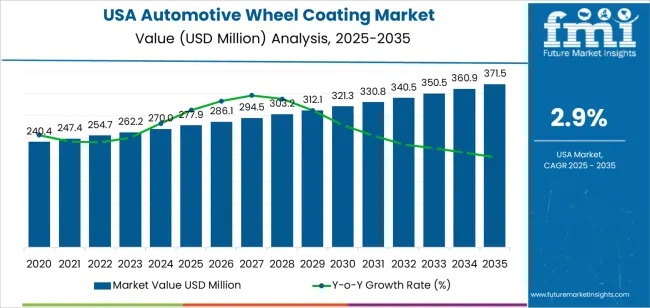
The year-over-year (Y-o-Y) growth shows consistent incremental increases in demand. Starting at USD 277.9 million in 2025, the market gradually rises each year, reaching USD 286.1 million in 2026 and continuing to expand. By 2035, the market is expected to reach USD 371.5 million, reflecting steady growth. This stable demand is driven by advancements in coating technology, evolving consumer preferences, and the increasing adoption of aesthetic improvements in automotive design. The market growth will remain positive across both original equipment manufacturing (OEM) and aftermarket segments.
Quick Stats of the Demand for Automotive Wheel Coating in the USA
- Demand for Automotive Wheel Coating in the USA Value (2025): USD 277.9 million
- Demand for Automotive Wheel Coating in the USA Forecast Value (2035): USD 371.5 million
- Demand for Automotive Wheel Coating in the USA Forecast CAGR (2025-2035): 2.9%
- Demand for Automotive Wheel Coating in the USA Key Growth Regions: West, South, Northeast, Midwest
- Demand for Automotive Wheel Coating in the USA Material Type: 41% Acrylic Enamel
- Demand for Automotive Wheel Coating in the USA Key Players: Afton Chemical Corporation, Innospec Inc., The Lubrizol Corporation, Chevron Oronite Company LLC
What is the Growth Forecast for the Automotive Wheel Coating Industry in USA through 2035?
The automotive wheel coating industry in the USA is forecasted to experience steady growth through 2035. From USD 277.9 million in 2025, the market is expected to gradually rise, reaching USD 286.1 million in 2026 and USD 294.5 million in 2027. The market will continue to grow at a consistent rate, reaching USD 303.2 million by 2028 and further expanding through the years. By 2035, the industry is expected to reach USD 371.5 million, reflecting a steady increase in demand driven by both the automotive sector and evolving consumer preferences for durable, high-performance coatings.
The absolute dollar opportunity for the automotive wheel coating industry will see a cumulative increase of USD 93.6 million between 2025 and 2035. This growth will be supported by rising demand for corrosion-resistant, high-quality finishes in both OEM and aftermarket sectors. The incremental yearly growth demonstrates the ongoing opportunities for manufacturers and suppliers, driven by advancements in coating technology and the automotive industry's increasing focus on aesthetics and performance.
USA Automotive Wheel Coating Industry Key Takeaways
| Metric | Value |
|---|---|
| Industry Sales Value (2025) | USD 277.9 million |
| Industry Forecast Value (2035) | USD 371.5 million |
| Industry Forecast CAGR (2025-2035) | 2.9% |
Why is the Demand for Automotive Wheel Coating in USA Growing?
The demand for automotive wheel coatings in the USA is rising due to growing vehicle production and increasing consumer preference for durable, high quality wheel finishes. As automobile manufacturers produce more passenger cars and light vehicles, the need for protective and aesthetic wheel coatings grows in parallel. Coatings protect wheels from corrosion, road salt, moisture, and general wear and tear; they help maintain structural integrity and appearance under varying road and weather conditions. Manufacturers increasingly favor powder coatings for their corrosion resistance and compliance with environmental regulations. Liquid and ceramic coatings are also seeing growth, especially for wheels using alloy or composite materials and when vehicle makers aim for premium finishes. These trends reflect deeper shifts in manufacturing practices and consumer expectations. The push toward lightweight alloy wheels in many new vehicles amplifies the demand for coatings that adhere well to non steel substrates while providing rust and scratch resistance.
Further demand growth is supported by innovations in coating technologies and by regulatory and market forces. Advances in coating formulation - including water borne, low VOC, and nano enhanced coatings - provide improved durability and environmental compliance. These technical improvements reduce curing times, enhance adhesion, and ensure long lasting performance under heat, UV exposure, and road conditions. On the consumer side, personalization and aftermarket customization contribute to demand growth, as more vehicle owners seek aesthetic upgrades or replacement coatings when refurbishing wheels. Aftermarket activity adds to original equipment manufacturer (OEM) orders, expanding the overall market base. Taken together, rising vehicle output, substrate diversification, evolving coating technologies, and aftermarket customization are driving steady growth in the wheel coating market in the USA, a trend likely to continue through the coming decade.
What Is the Current State of the Demand for Automotive Wheel Coating in the USA in Terms of Product Type and Material Type?
The demand for automotive wheel coating in the USA is primarily driven by product type and material type. The leading product type is primers, which account for 36% of the market share, while acrylic enamel is the dominant material type, capturing 41% of the demand. Automotive wheel coatings are essential for providing durable finishes that protect wheels from environmental wear, corrosion, and discoloration. As automotive manufacturers focus on enhancing the aesthetics and longevity of vehicle wheels, the demand for high-performance coatings continues to grow.
How Are Primers Leading the Demand for Automotive Wheel Coating in the USA?
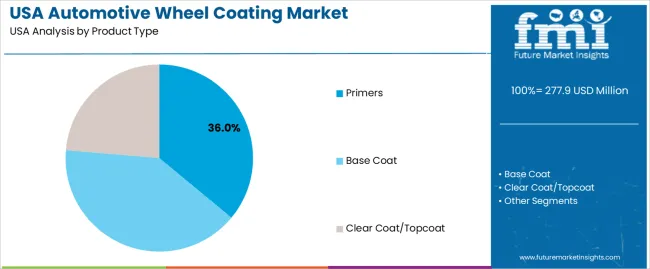
Primers lead the demand for automotive wheel coating in the USA, holding 36% of the market share. Primers are essential in the coating process, providing a smooth base layer that improves the adhesion of subsequent layers, such as base coats and topcoats. They are especially important in automotive wheel applications, where they help to ensure a strong bond between the metal wheel surface and the outer layers of coating, enhancing the durability and resistance to peeling and corrosion.
The demand for primers is driven by their ability to enhance the performance of the entire coating system. Primers also provide an additional layer of protection against rust and oxidation, making them particularly valuable in environments where vehicles are exposed to moisture, road salts, and other harsh conditions. As the automotive industry continues to focus on improving the longevity and appearance of wheels, primers are expected to remain a key product in the automotive wheel coating market in the USA.
How Is Acrylic Enamel Leading the Material Type Demand for Automotive Wheel Coating in the USA?
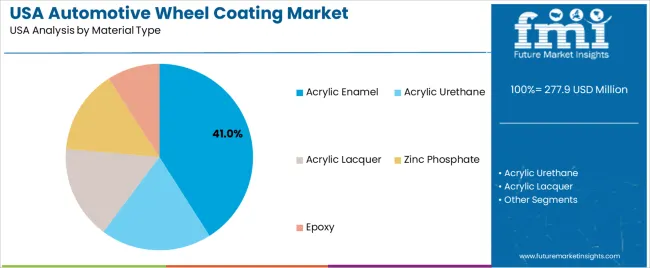
Acrylic enamel is the leading material type for automotive wheel coating in the USA, accounting for 41% of the demand. Acrylic enamel is favored for its excellent finish, gloss retention, and ability to withstand the harsh conditions wheels are exposed to, such as UV radiation, water, and chemicals. This material provides a durable, high-quality finish that is both aesthetically appealing and resistant to wear and tear, making it ideal for automotive wheel coatings.
The demand for acrylic enamel is driven by its superior properties, including its ability to offer smooth, glossy, and highly durable coatings. It also provides excellent resistance to environmental factors, ensuring that wheels maintain their appearance over time. As automotive manufacturers increasingly prioritize both the functionality and appearance of vehicle wheels, acrylic enamel is expected to maintain its dominance in the market. Its versatility in offering a wide range of finishes, combined with its durability, ensures that acrylic enamel will continue to lead the demand for automotive wheel coatings in the USA.
What Are the Key Dynamics Influencing Demand for Automotive Wheel Coating in the USA?
Demand for automotive wheel coating in the United States is driven by the need for durability, corrosion resistance, and aesthetic appeal across both original equipment manufacturers (OEMs) and the aftermarket. As vehicles increasingly use alloy and lightweight wheels, the need for wheel coatings that resist road salt, brake dust, and weather exposure grows. At the same time, regulatory pressure on volatile organic compound (VOC) emissions and demand for environmentally compliant coatings influence formulation choices and adoption pace. These factors shape the overall demand trajectory for wheel coatings in the USA market.
What Are the Primary Growth Drivers for Automotive Wheel Coating Demand in the USA?
Several factors support market growth. First, the continued production of passenger vehicles and rising vehicle ownership sustain OEM demand for coated wheels. Alloy wheels are common in modern cars, and coatings ensure longevity and resistance to corrosion or wear. Second, the robust aftermarket for customization and refurbishment, driven by consumer desire for aesthetic upgrades, boosts demand for high-performance coatings such as powder and ceramic finishes. Third, advancements in coating technologies, including powder coatings, water-borne coatings, and low-VOC systems, align with environmental regulations, encouraging manufacturers to adopt these solutions. Fourth, increased sales of light-commercial vehicles and SUVs, which feature larger wheels, result in higher coating volume per vehicle, supporting scale for coating suppliers.
What Are the Key Restraints Affecting Automotive Wheel Coating Demand in the USA?
Despite strong growth drivers, several constraints exist. The cost of advanced coating systems, particularly powder or ceramic coatings, remains higher than basic paint, deterring price-sensitive buyers or lower-segment vehicle production. Raw material price volatility, including resins, pigments, and specialty additives, affects profitability for coating formulators and may limit margins. Some vehicle owners and manufacturers may accept basic finishes for lower-cost wheels, limiting demand for premium coatings. Additionally, supply chain challenges for coating components and stricter environmental compliance can slow adoption or increase the cost of coatings.
What Are the Key Trends Shaping Automotive Wheel Coating Demand in the USA?
Key trends include increasing adoption of powder coatings and low-VOC or water-borne coatings to meet environmental regulations and sustainability goals. Coating technology is evolving towards solutions that offer high corrosion resistance, scratch resistance, and glossy finishes to meet both durability and aesthetic expectations. The aftermarket customization segment is growing, with vehicle owners seeking custom finishes, color changes, and protective coatings. Additionally, there is rising use of coatings suitable for new materials, such as lightweight alloy and composite wheels, which require formulations compatible with non-steel substrates.
What is the Regional Demand Outlook for Automotive Wheel Coating in the USA?
The demand for automotive wheel coating in the USA shows steady growth across regions, with the West leading at a CAGR of 3.4%. The South follows with a CAGR of 3.0%, driven by a robust automotive manufacturing sector and a growing focus on vehicle customization. The Northeast shows moderate growth at 2.7%, supported by its established automotive industry. The Midwest has the lowest growth rate at 2.4%, reflecting more traditional automotive manufacturing practices. These regional differences reflect varying levels of automotive production, consumer preferences for customization, and advancements in coating technologies.
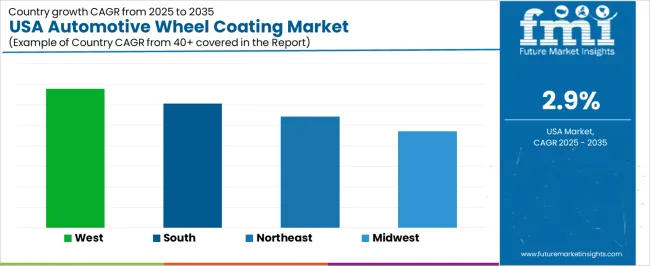
| Region | CAGR (%) |
|---|---|
| West | 3.4 |
| South | 3.0 |
| Northeast | 2.7 |
| Midwest | 2.4 |
What factors are driving the demand for automotive wheel coating in the West?
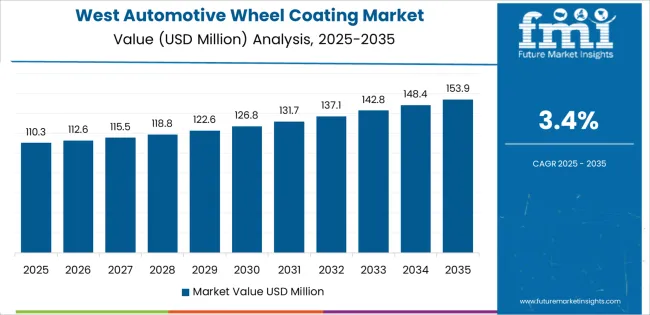
The demand for automotive wheel coating in the West is projected to grow at a CAGR of 3.4%, driven by several key factors, including the region’s strong automotive manufacturing base and high consumer demand for vehicle customization. The West, particularly California, is a hub for both vehicle production and aftermarket services, where consumers increasingly seek unique and durable wheel coatings for aesthetic and functional purposes. The growing popularity of premium and custom vehicles, including those in the electric vehicle (EV) segment, is driving demand for coatings that offer improved aesthetics and enhanced protection against corrosion and wear. Additionally, as environmental concerns continue to influence consumer purchasing behavior, there is increasing demand for eco-friendly, high-performance coatings. These trends, combined with the West’s focus on innovation in automotive technology, ensure strong growth for automotive wheel coatings in this region.
Why is the demand for automotive wheel coating increasing in the South?
In the South, the demand for automotive wheel coating is expected to grow at a CAGR of 3.0%, supported by the region’s expanding automotive manufacturing industry and the rising popularity of custom vehicles. The South is home to several major automotive manufacturers, including those producing trucks and high-performance vehicles, where durable and aesthetically appealing wheel coatings are in high demand. As consumers increasingly look for ways to personalize their vehicles, aftermarket wheel coatings that offer customization options and long-lasting performance are becoming more sought after. Additionally, the South’s relatively mild climate reduces the impact of extreme weather conditions on vehicles, but corrosion and wear from road salt in colder regions are still concerns, driving the need for protective coatings. The region’s growing interest in both vehicle customization and high-performance coatings ensures that demand for automotive wheel coatings will remain strong.
What influences the demand for automotive wheel coating in the Northeast?
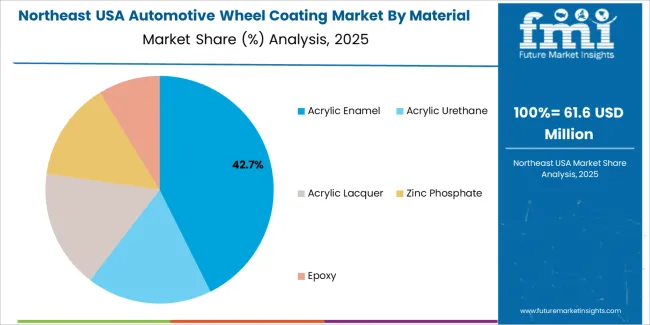
In the Northeast, the demand for automotive wheel coating is projected to grow at a CAGR of 2.7%, driven by the region’s established automotive industry and a growing focus on vehicle longevity. The Northeast has a significant number of vehicle owners who prioritize durability and protection against road salt, snow, and ice, which are prevalent in the winter months. Wheel coatings that provide corrosion resistance are particularly popular in this region. Additionally, as consumer preferences shift toward aesthetically pleasing and custom vehicles, there is a growing demand for coatings that enhance the appearance of wheels while providing long-term protection. While the Northeast’s growth rate is moderate compared to the West and South, the demand for automotive wheel coatings remains steady, supported by the region’s high vehicle population and emphasis on vehicle preservation.
How is the demand for automotive wheel coating growing in the Midwest?
The demand for automotive wheel coating in the Midwest is expected to grow at a CAGR of 2.4%, reflecting slower but steady growth. The Midwest is a traditional automotive manufacturing hub, with a significant number of vehicles produced for both domestic and international markets. However, the region tends to focus on more conventional manufacturing practices, and while there is growing interest in vehicle customization and protection, adoption of advanced coatings may be slower compared to other regions. Nonetheless, as more consumers in the Midwest seek vehicles that can withstand harsh weather conditions, particularly in the winter, there is an increasing need for wheel coatings that offer corrosion resistance and durability. As awareness of the benefits of wheel coatings continues to spread and as aftermarket customization gains popularity, the demand for these coatings is expected to grow steadily, albeit at a slower rate than in more dynamic regions.
How Are Companies Competing in the Automotive Wheel Coating Industry in the USA?
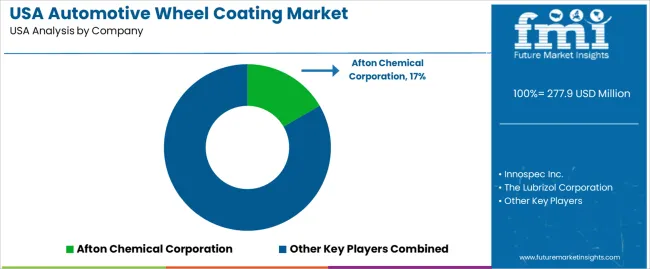
Demand for automotive wheel coatings in the United States is rising as vehicle manufacturers and aftermarket providers seek coatings that offer durability, aesthetic appeal, and protection against corrosion and environmental factors. Key companies in this market include Afton Chemical Corporation (holding approximately 16.6% of the specialty additives and coating chemicals supply), Innospec Inc., The Lubrizol Corporation, and Chevron Oronite Company LLC. These firms supply the chemical formulations and additives used in wheel coatings, which are applied by OEMs, wheel manufacturers, and refinishing shops. The trend is towards growing use of powder coatings and advanced enamel or ceramic-infused coatings, which meet demands for scratch resistance, adhesion, and weather protection.
Competition in this industry revolves around formulation quality, regulatory compliance, and adaptability to various wheel materials. Suppliers focus on providing coatings that offer strong adhesion, corrosion resistance, and durability under temperature fluctuations and exposure to road conditions. Another competitive aspect is the capacity to support different wheel substrates, such as steel, alloy, and composite, while ensuring consistent finish quality. Firms that supply formulations that satisfy both OEM production lines and aftermarket refinishing processes are better positioned to compete. Marketing materials often highlight coating strength, wear and corrosion resistance, finish quality, and compatibility with automated application systems. By aligning their products with the demands of automakers and refinishing shops, these companies aim to strengthen their presence in the USA automotive wheel coating market.
Key Players of the Automotive Wheel Coating Industry in USA
- Afton Chemical Corporation
- Innospec Inc.
- The Lubrizol Corporation
- Chevron Oronite Company LLC
Scope of the Report
| Items | Details |
|---|---|
| Quantitative Units | USD Million |
| Regions Covered | USA |
| Product Type | Primers, Base Coat, Clear Coat/Topcoat |
| Material Type | Acrylic Enamel, Acrylic Urethane, Acrylic Lacquer, Zinc Phosphate, Epoxy |
| Key Companies Profiled | Afton Chemical Corporation, Innospec Inc., The Lubrizol Corporation, Chevron Oronite Company LLC |
| Additional Attributes | The market analysis includes dollar sales by product type, material type, and company categories. It also covers regional demand trends in the USA, driven by the increasing adoption of automotive wheel coatings for aesthetic, protective, and performance purposes. The competitive landscape highlights key manufacturers focusing on innovations in coatings for wheels, including primers, base coats, and topcoats. Trends in the growing demand for durable, corrosion-resistant, and eco-friendly coatings in the automotive industry are explored, along with advancements in material formulations and coating technologies for wheel applications. |
Key Segments of the Demand for Automotive Wheel Coating in USA
Product Type:
- Primers
- Base Coat
- Clear Coat/Topcoat
Material Type:
- Acrylic Enamel
- Acrylic Urethane
- Acrylic Lacquer
- Zinc Phosphate
- Epoxy
Region:
- Northeast USA
- West USA
- Midwest USA
- South USA
Frequently Asked Questions
How big is the demand for automotive wheel coating in USA in 2025?
The demand for automotive wheel coating in USA is estimated to be valued at USD 277.9 million in 2025.
What will be the size of automotive wheel coating in USA in 2035?
The market size for the automotive wheel coating in USA is projected to reach USD 371.5 million by 2035.
How much will be the demand for automotive wheel coating in USA growth between 2025 and 2035?
The demand for automotive wheel coating in USA is expected to grow at a 2.9% CAGR between 2025 and 2035.
What are the key product types in the automotive wheel coating in USA?
The key product types in automotive wheel coating in USA are primers, base coat and clear coat/topcoat.
Which material type segment is expected to contribute significant share in the automotive wheel coating in USA in 2025?
In terms of material type, acrylic enamel segment is expected to command 41.0% share in the automotive wheel coating in USA in 2025.
Preview the report firsthand - request a free sample
Get SampleGet the brochure for pricing and purchase details.
Get PDFTable of Content
- Executive Summary
- USA Market Outlook
- Demand-side Trends
- Supply-side Trends
- Technology Roadmap Analysis
- Analysis and Recommendations
- Market Overview
- Market Coverage / Taxonomy
- Market Definition / Scope / Limitations
- Market Background
- Market Dynamics
- Drivers
- Restraints
- Opportunity
- Trends
- Scenario Forecast
- Demand in Optimistic Scenario
- Demand in Likely Scenario
- Demand in Conservative Scenario
- Opportunity Map Analysis
- Product Life Cycle Analysis
- Supply Chain Analysis
- Investment Feasibility Matrix
- Value Chain Analysis
- PESTLE and Porter’s Analysis
- Regulatory Landscape
- Regional Parent Market Outlook
- Production and Consumption Statistics
- Import and Export Statistics
- Market Dynamics
- USA Market Analysis 2020 to 2024 and Forecast, 2025 to 2035
- Historical Market Size Value (USD Million) Analysis, 2020 to 2024
- Current and Future Market Size Value (USD Million) Projections, 2025 to 2035
- Y-o-Y Growth Trend Analysis
- Absolute $ Opportunity Analysis
- USA Market Pricing Analysis 2020 to 2024 and Forecast 2025 to 2035
- USA Market Analysis 2020 to 2024 and Forecast 2025 to 2035, By Product Type
- Introduction / Key Findings
- Historical Market Size Value (USD Million) Analysis By Product Type , 2020 to 2024
- Current and Future Market Size Value (USD Million) Analysis and Forecast By Product Type , 2025 to 2035
- Primers
- Base Coat
- Clear Coat/Topcoat
- Y-o-Y Growth Trend Analysis By Product Type , 2020 to 2024
- Absolute $ Opportunity Analysis By Product Type , 2025 to 2035
- USA Market Analysis 2020 to 2024 and Forecast 2025 to 2035, By Material Type
- Introduction / Key Findings
- Historical Market Size Value (USD Million) Analysis By Material Type, 2020 to 2024
- Current and Future Market Size Value (USD Million) Analysis and Forecast By Material Type, 2025 to 2035
- Acrylic Enamel
- Acrylic Urethane
- Acrylic Lacquer
- Zinc Phosphate
- Epoxy
- Y-o-Y Growth Trend Analysis By Material Type, 2020 to 2024
- Absolute $ Opportunity Analysis By Material Type, 2025 to 2035
- Market Structure Analysis
- Competition Dashboard
- Competition Benchmarking
- Market Share Analysis of Top Players
- By Regional
- By Product Type
- By Material Type
- Competition Analysis
- Competition Deep Dive
- Afton Chemical Corporation
- Overview
- Product Portfolio
- Profitability by Market Segments (Product/Age /Sales Channel/Region)
- Sales Footprint
- Strategy Overview
- Marketing Strategy
- Product Strategy
- Channel Strategy
- Innospec Inc.
- The Lubrizol Corporation
- Chevron Oronite Company LLC
- Afton Chemical Corporation
- Competition Deep Dive
- Assumptions & Acronyms Used
- Research Methodology


