

- Industry Size (2025)
- USD 7.4 Bn
- Forecast (2035)
- USD 11.3 Bn
- CAGR (2025 to 2035)
- 4.4%
Demand for Automotive Headliner in USA Forecast and Outlook 2025 to 2035
The demand for automotive headliners in the USA is expected to grow from USD 7.4 billion in 2025 to USD 11.3 billion by 2035, reflecting a compound annual growth rate (CAGR) of 4.4%. Automotive headliners, which are interior roof linings in vehicles, play a crucial role in noise reduction, insulation, and enhancing the overall aesthetic appeal of vehicle interiors. The increasing demand for comfort, luxury, and advanced features in automobiles is expected to drive steady market growth. Moreover, the growing adoption of electric vehicles (EVs), which require enhanced cabin comfort, further supports the increasing demand for headliners.
The market will experience steady growth, starting at USD 7.4 billion in 2025 and rising to USD 7.7 billion in 2026, USD 8.0 billion in 2027, and USD 8.4 billion in 2028. By 2029, demand for automotive headliners will increase to USD 8.8 billion, with continued growth expected throughout the 2030s. By 2035, the demand for automotive headliners is forecasted to reach USD 11.3 billion, driven by increasing vehicle production and the growing focus on vehicle interiors.
Quick Stats of the Demand for Automotive Headliner in USA
- Demand for Automotive Headliner in USA Value (2025): USD 7.4 billion
- Demand for Automotive Headliner in USA Forecast Value (2035): USD 11.3 billion
- Demand for Automotive Headliner in USA Forecast CAGR (2025-2035): 4.4%
- Demand for Automotive Headliner in USA Headliner Type: 62% Soft Top
- Demand for Automotive Headliner in USA Key Growth Regions: West USA, South USA, Northeast USA, Midwest USA
- Demand for Automotive Headliner in USA Key Players: Grupo Antolin, International Automotive Components (IAC), Motus Integrated Technologies, Toyota Boshoku Corporation, Kasai Kogyo Co., Ltd.
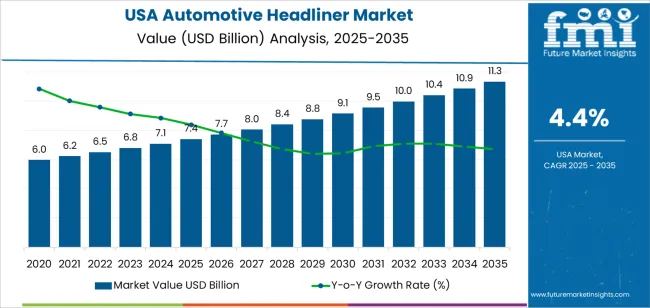
What is the Growth Forecast for the Automotive Headliner Industry in USA through 2035?
The market growth curve for automotive headliners in the USA is expected to show a consistent upward trend with a relatively smooth and linear progression. The early years (2025 to 2029) will see steady, incremental growth, with demand increasing at a moderate pace. The growth rate will be fairly stable, reflecting steady vehicle production, increasing demand for comfort features, and the continued integration of advanced materials in headliners.
From 2029 onwards, the growth curve will maintain its upward trajectory but may see a slight acceleration as the automotive industry continues to focus on enhancing interior quality, particularly in electric vehicles and premium models. As consumer preferences for high-quality vehicle interiors rise, the demand for automotive headliners will grow more robustly in the latter part of the forecast period. This indicates that while the overall growth is gradual, it will continue to expand steadily, reflecting the ongoing importance of interior comfort and noise reduction features in modern vehicles.
USA Automotive Headliner Industry Key Takeaways
| Metric | Value |
|---|---|
| Industry Sales Value (2025) | USD 7.4 billion |
| Industry Forecast Value (2035) | USD 11.3 billion |
| Industry Forecast CAGR (2025-2035) | 4.4% |
Why is the Demand for Automotive Headliners in USA Growing?
Demand for automotive headliners in the USA is rising as vehicle buyers increasingly value interior comfort, aesthetics, and cabin quality. Headliners the fabric or material lining on the interior roof of cars contribute to sound insulation, thermal comfort, and overall feel of the interior. As automakers compete on cabin quality and consumers expect more comfortable, quieter rides, demand for well finished headliners grows. Growth in production of passenger vehicles and light vehicles further supports demand for headliners as standard interior components. Manufacturers are also under pressure to meet safety, insulation, and noise reduction standards, boosting adoption of high quality headliner materials.
At the same time trends in vehicle technology and design reinforce demand. The shift toward electric vehicles, SUVs, crossovers, and premium trim levels encourages use of lightweight, high performance interior materials including advanced headliners. Automakers are increasingly using improved composites, foams, fabrics and sound insulating materials to deliver better cabin comfort and meet regulatory or consumer expectations. Demand is also driven by aftermarket replacements and upgrades, particularly for older vehicles needing refurbished interiors or improved cabin comfort. As long as consumer demand for comfort, noise reduction, and refined interiors remains high and as vehicle production remains robust demand for automotive headliners in the USA is likely to grow steadily in coming years.
What Is the Current State of the Demand for Automotive Headliners in the USA in Terms of Headliner Type and Material?
The demand for automotive headliners in the USA is driven by headliner type and material. The leading headliner type is soft top, accounting for 62% of the market share, while the dominant material is foam-backed cloth, capturing 36% of the demand. Automotive headliners, which are an essential component of vehicle interiors, provide comfort, insulation, and aesthetic appeal. As the automotive industry continues to prioritize vehicle interior design and passenger comfort, the demand for high-quality headliners continues to grow, particularly in soft-top configurations and foam-backed cloth materials.
How Is Soft Top Leading the Demand for Automotive Headliners in the USA?
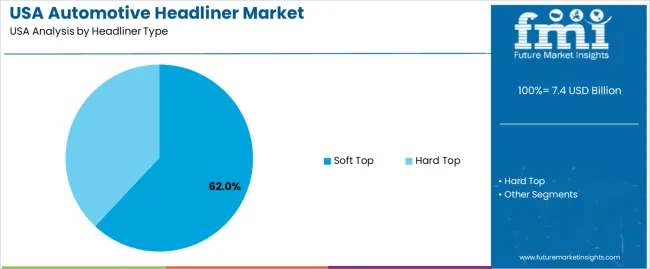
Soft top headliners lead the demand in the USA, holding 62% of the market share. Soft top headliners are commonly used in vehicles such as convertibles, sedans, and SUVs, where the design prioritizes comfort, aesthetics, and noise reduction. Soft top headliners are lightweight and provide better sound absorption, making them popular in passenger vehicles where interior acoustics and comfort are important. Additionally, the soft material used in soft top headliners allows for more flexibility in design, contributing to the overall style and comfort of the vehicle interior.
The demand for soft top headliners is driven by the popularity of vehicles that emphasize passenger experience, particularly in higher-end and luxury models. As consumers continue to prioritize interior comfort and noise reduction in their vehicles, the demand for soft top headliners is expected to remain strong. Moreover, as automakers seek to enhance the overall driving experience with more comfortable and aesthetically appealing interiors, soft top headliners are likely to continue being the preferred choice in the automotive industry in the USA.
How Is Foam-Backed Cloth Leading the Material Demand for Automotive Headliners in the USA?
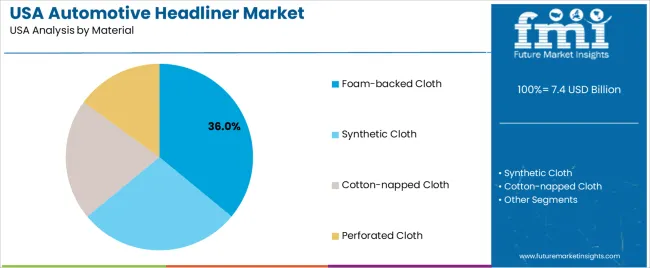
Foam-backed cloth leads the material demand for automotive headliners in the USA, accounting for 36% of the market share. Foam-backed cloth is favored for its excellent sound insulation, lightweight properties, and durability, making it ideal for use in vehicle interiors. The foam layer provides additional comfort and insulation, reducing noise and improving the overall acoustic experience within the cabin. This material is commonly used in a wide range of vehicles, including sedans, SUVs, and trucks, where interior comfort and durability are essential.
The demand for foam-backed cloth in automotive headliners is driven by the growing focus on passenger comfort and the need for enhanced soundproofing in modern vehicles. As consumers increasingly value quiet, comfortable cabin environments, foam-backed cloth headliners provide an effective solution to meet these expectations. Additionally, foam-backed cloth is versatile, allowing for customization in terms of texture, color, and design, further contributing to its popularity. As the automotive industry continues to prioritize comfort, noise reduction, and interior aesthetics, foam-backed cloth will remain a leading material choice for automotive headliners in the USA.
What is the Summary of Demand for Automotive Headliner in the USA?
Demand for automotive headliners in the USA is growing steadily. As more passenger vehicles, including cars, SUVs, and light trucks, are produced or used, the need for interior components like headliners increases. Headliners play a key role in vehicle comfort, noise insulation, thermal insulation, and aesthetics. Both OEMs for new vehicles and the aftermarket for replacements or upgrades contribute to this demand. Increased consumer preference for better cabin comfort and premium interior features in vehicles also supports the growth of this market.
What are the Drivers of Demand for Automotive Headliner in the USA?
Key drivers of demand for automotive headliners include the continued growth in vehicle production and sales. As more vehicles are produced, each requires a headliner. The growing demand for comfort, style, and noise reduction from consumers also drives the adoption of high-quality headliners. Modern headliners provide better acoustic insulation and thermal comfort, improving the cabin environment. Additionally, the rise in electric and hybrid vehicles, where lightweight and efficient interior materials are required, supports demand for headliners. The aftermarket demand for replacements and upgrades also contributes to the market's growth.
What are the Restraints on Demand for Automotive Headliner in the USA?
One restraint is the cost of high-quality headliner materials, which may be prohibitive for lower-cost vehicle segments. Durability and maintenance concerns also play a role, as headliner fabrics and foams can degrade over time, especially in harsh environments. Consumers may be reluctant to replace them due to the cost and inconvenience. Additionally, changing vehicle design trends, such as minimalist interiors or the use of alternative materials, may reduce the demand for traditional headliner systems. For commercial or budget vehicles, comfort and aesthetics are less of a priority, limiting the share of advanced headliners in those segments.
What are the Key Trends Influencing Demand for Automotive Headliner in the USA?
A key trend is the increasing adoption of lightweight materials for headliners to support fuel economy and meet electrification goals. Manufacturers are using advanced fabrics, foams, and composites that reduce weight while offering insulation benefits. Another trend is rising consumer demand for better interior comfort, which boosts the demand for premium headliners in higher trim levels, SUVs, and luxury cars. There is also growth in the aftermarket for headliner replacement and customization as vehicles age. Finally, as vehicles become more technologically advanced, headliners are being designed to integrate features like lighting, wiring, and enhanced acoustic systems, driving demand for more sophisticated headliners in new models.
What is the Regional Demand Outlook for Automotive Headliner in the USA?
The demand for automotive headliner components in the USA is projected to grow steadily across all regions. The highest growth is expected in the West USA with a forecast CAGR of 5.0%. The South USA follows at 4.5%, supported by increasing vehicle production and aftermarket demand. The Northeast USA shows a moderate CAGR of 4.0%, while the Midwest USA exhibits a somewhat slower growth of 3.5%. These regional differences reflect variations in automotive manufacturing presence, vehicle replacement cycles, consumer preferences for vehicle comfort and interior trim, and regional economic conditions influencing purchases and upgrades.
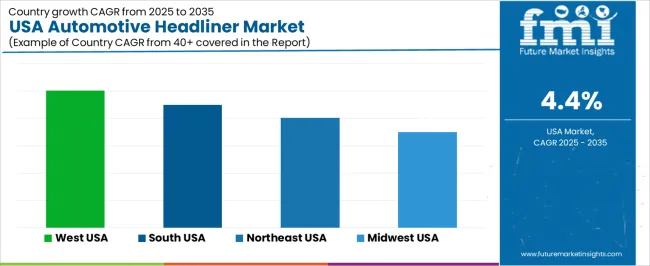
| Region | CAGR (%) |
|---|---|
| West USA | 5.0 |
| South USA | 4.5 |
| Northeast USA | 4.0 |
| Midwest USA | 3.5 |
What Drives Demand for Automotive Headliner in West USA?
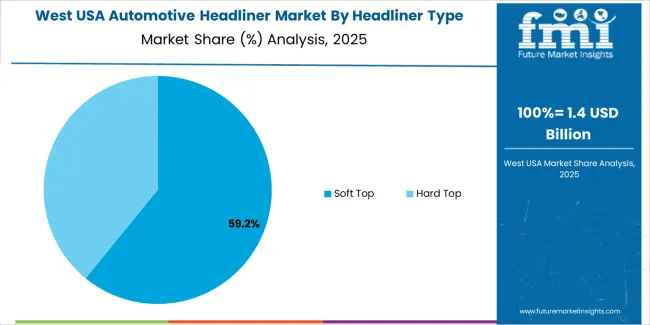
In the West USA, the demand for automotive headliner components is projected to grow at a CAGR of 5.0%. This region includes states with significant automotive manufacturing and assembly plants, especially along the Pacific coast and inland industrial zones. New vehicle assembly creates demand for original equipment headliners. Also, the West has substantial aftermarket activity as vehicle owners frequently customize or upgrade interiors especially urban drivers who value comfort, sound insulation, and aesthetic upgrades.
Climatic diversity in the region, from coastal humidity to desert heat, drives consumer interest in headliners that offer better thermal insulation and noise control. In addition, high turnover of rental vehicles and fleet vehicles in Western states creates recurring demand for replacement headliner parts. The combination of OEM production, aftermarket upgrades, and maintenance needs supports robust growth for automotive headliner demand in the West USA.
Why is Automotive Headliner Demand Growing in South USA?
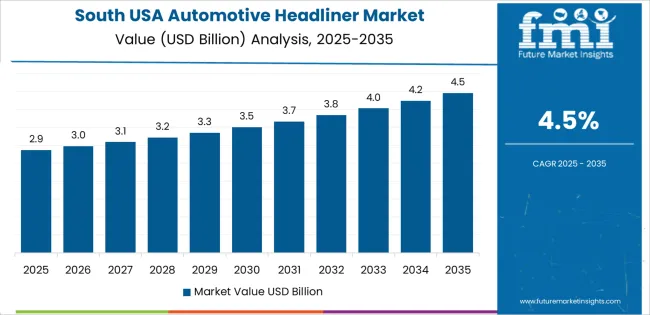
In the South USA, the demand for automotive headliner components is forecast at a CAGR of 4.5%. The South hosts a mixture of domestic and foreign automotive manufacturing facilities, supplying a broad base of light trucks, SUVs, and passenger vehicles. These vehicle types often include interior upgrades and comfort features where quality headliners matter. Additionally, warmer climates in many southern states create demand for headliner materials that offer heat resistance and improved cabin comfort.
The region’s growing population and increasing vehicle ownership drive replacement and upgrade cycles. Growth in commercial vehicles, rideshare, and fleet vehicles also contributes to aftermarket demand for headliners. As consumer awareness of vehicle comfort and noise reduction rises, manufacturers and parts suppliers respond by providing improved headliner options. These factors combine to sustain steady demand growth for automotive headliners in the South USA.
What Supports Demand for Automotive Headliner in Northeast USA?
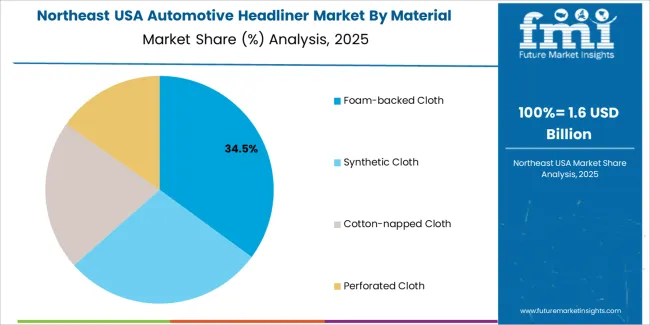
In the Northeast USA, the projected CAGR for automotive headliner demand is 4.0%. This region includes dense urban areas and older vehicle fleets, which creates demand for replacement and refurbishment of interior components. Harsh seasonal weather cold winters and humid summers puts strain on vehicle interiors, prompting owners to replace worn or damaged headliners as part of maintenance or restoration projects. The Northeast also has a significant presence of used car markets, rental fleets, and fleet maintenance operations that require frequent component replacement.
Consumers in this region value features such as sound insulation, fabric quality, and interior aesthetics, which drives demand for high quality headliners. Additionally, small automotive repair and upholstery shops across the region contribute to steady aftermarket demand. As long as vehicle turnover and upkeep continue, demand for automotive headliner components in the Northeast USA is likely to remain stable.
How is Automotive Headliner Demand Evolving in Midwest USA?
In the Midwest USA, the demand for automotive headliner components is expected to grow at a CAGR of 3.5%. The region has a significant presence of automotive assembly and parts manufacturing, but much of market growth comes from replacement demand in aging vehicles used for personal, commercial, and agricultural purposes. Road conditions, seasonal temperature variations, and wear and tear from long distance driving contribute to the degradation of interior materials such as headliners.
As a result, vehicle owners replace or upgrade headliners during maintenance or refurbishment. Additionally, light trucks and utility vehicles common in the Midwest require durable interior components, which supports demand for robust headliner materials. While growth is slower compared to coastal or highly urbanized regions, the steady demand across OEM supply, fleet maintenance, and consumer replacement ensures a stable market for automotive headliners in the Midwest USA.
What is the Competitive Landscape for the Automotive Headliner Market in the USA?
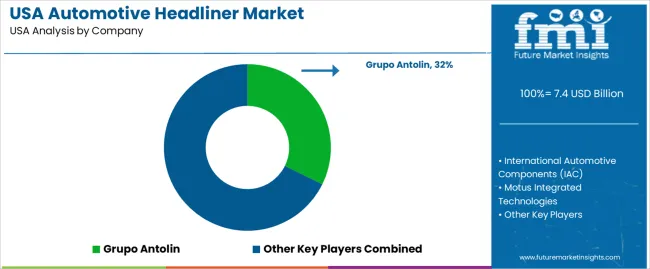
The automotive headliner market in the USA benefits from increasing vehicle production and demand for improved interior comfort, styling, and lightweight materials. The leading supplier is Grupo Antolin with about 32.3% share. Other important suppliers include International Automotive Components (IAC), Motus Integrated Technologies, Toyota Boshoku Corporation and Kasai Kogyo Co., Ltd.. These firms deliver headliner systems for passenger vehicles and light commercial vehicles.
Headliners combine a rigid or semi rigid substrate covered with foam backed fabric to offer interior styling, sound insulation, thermal comfort, and structural finishing for vehicle roofs. The US market reflects global trends toward lighter, more fuel efficient autos, increasing the appeal of modern headliner materials. Demand is particularly strong in passenger vehicles, where aesthetic appeal and cabin comfort drive adoption.
Competition among these suppliers centres on innovation, material quality, manufacturing flexibility, and sustainability. Grupo Antolin distinguishes itself with lightweight headliners and acoustic performance, along with efforts to integrate smart features, recyclable substrates, and sustainable materials. IAC and Motus often emphasise material variety and ability to supply both fabric backed and composite plastic headliners suited to different vehicle types.
Toyota Boshoku and Kasai focus on comfort, insulation, and reliability, aiming to meet automaker requirements for NVH (noise, vibration, harshness) and durability. OEM relationships, scale, and ability to deliver consistent quality underpin competitive advantage. Suppliers routinely use brochures and spec sheets to highlight attributes such as weight reduction, acoustic insulation, environmental compliance, and material resilience. The market remains dynamic as automakers increase demand for lightweight, comfortable, and sustainable interior components.
Key Players of the Automotive Headliner Industry in USA
- Grupo Antolin
- International Automotive Components (IAC)
- Motus Integrated Technologies
- Toyota Boshoku Corporation
- Kasai Kogyo Co., Ltd.
Scope of the Report
| Items | Details |
|---|---|
| Quantitative Units | USD Billion |
| Regions Covered | USA |
| Headliner Type | Soft Top, Hard Top |
| Material | Foam-backed Cloth, Synthetic Cloth, Cotton-napped Cloth, Perforated Cloth |
| Vehicle Type | Passenger Car, Light Commercial Vehicle, Heavy Commercial Vehicle |
| Key Companies Profiled | Grupo Antolin, International Automotive Components (IAC), Motus Integrated Technologies, Toyota Boshoku Corporation, Kasai Kogyo Co., Ltd. |
| Additional Attributes | Dollar sales by headliner type, material, and vehicle segment reveal strong demand for foam-backed and synthetic cloth headliners, with passenger cars leading. Soft top headliners are commonly used in light commercial and heavy commercial vehicles. Major suppliers like Grupo Antolin and IAC dominate, providing advanced solutions for interior comfort and aesthetics. The market is expected to grow with increasing vehicle production and demand for high-quality, durable interior materials. |
Key Segments of the Demand for Automotive Headliner in USA
Headliner Type
- Soft Top
- Hard Top
Material
- Foam-backed Cloth
- Synthetic Cloth
- Cotton-napped Cloth
- Perforated Cloth
Vehicle Type
- Passenger Car
- Light Commercial Vehicle
- Heavy Commercial Vehicle
Region
- Northeast USA
- West USA
- Midwest USA
- South USA
Frequently Asked Questions
How big is the demand for automotive headliner in USA in 2025?
The demand for automotive headliner in USA is estimated to be valued at USD 7.4 billion in 2025.
What will be the size of automotive headliner in USA in 2035?
The market size for the automotive headliner in USA is projected to reach USD 11.3 billion by 2035.
How much will be the demand for automotive headliner in USA growth between 2025 and 2035?
The demand for automotive headliner in USA is expected to grow at a 4.4% CAGR between 2025 and 2035.
What are the key product types in the automotive headliner in USA?
The key product types in automotive headliner in USA are soft top and hard top.
Which material segment is expected to contribute significant share in the automotive headliner in USA in 2025?
In terms of material, foam-backed cloth segment is expected to command 36.0% share in the automotive headliner in USA in 2025.
Preview the report firsthand - request a free sample
Get SampleGet the brochure for pricing and purchase details.
Get PDFTable of Content
- Executive Summary
- USA Market Outlook
- Demand-side Trends
- Supply-side Trends
- Technology Roadmap Analysis
- Analysis and Recommendations
- Market Overview
- Market Coverage / Taxonomy
- Market Definition / Scope / Limitations
- Market Background
- Market Dynamics
- Drivers
- Restraints
- Opportunity
- Trends
- Scenario Forecast
- Demand in Optimistic Scenario
- Demand in Likely Scenario
- Demand in Conservative Scenario
- Opportunity Map Analysis
- Product Life Cycle Analysis
- Supply Chain Analysis
- Investment Feasibility Matrix
- Value Chain Analysis
- PESTLE and Porter’s Analysis
- Regulatory Landscape
- Regional Parent Market Outlook
- Production and Consumption Statistics
- Import and Export Statistics
- Market Dynamics
- USA Market Analysis 2020 to 2024 and Forecast, 2025 to 2035
- Historical Market Size Value (USD Million) Analysis, 2020 to 2024
- Current and Future Market Size Value (USD Million) Projections, 2025 to 2035
- Y-o-Y Growth Trend Analysis
- Absolute $ Opportunity Analysis
- USA Market Pricing Analysis 2020 to 2024 and Forecast 2025 to 2035
- USA Market Analysis 2020 to 2024 and Forecast 2025 to 2035, By Headliner Type
- Introduction / Key Findings
- Historical Market Size Value (USD Million) Analysis By Headliner Type , 2020 to 2024
- Current and Future Market Size Value (USD Million) Analysis and Forecast By Headliner Type , 2025 to 2035
- Soft Top
- Hard Top
- Y-o-Y Growth Trend Analysis By Headliner Type , 2020 to 2024
- Absolute $ Opportunity Analysis By Headliner Type , 2025 to 2035
- USA Market Analysis 2020 to 2024 and Forecast 2025 to 2035, By Material
- Introduction / Key Findings
- Historical Market Size Value (USD Million) Analysis By Material, 2020 to 2024
- Current and Future Market Size Value (USD Million) Analysis and Forecast By Material, 2025 to 2035
- Foam-backed Cloth
- Synthetic Cloth
- Cotton-napped Cloth
- Perforated Cloth
- Y-o-Y Growth Trend Analysis By Material, 2020 to 2024
- Absolute $ Opportunity Analysis By Material, 2025 to 2035
- USA Market Analysis 2020 to 2024 and Forecast 2025 to 2035, By Vehicle Type
- Introduction / Key Findings
- Historical Market Size Value (USD Million) Analysis By Vehicle Type, 2020 to 2024
- Current and Future Market Size Value (USD Million) Analysis and Forecast By Vehicle Type, 2025 to 2035
- Passenger Car
- Light Commercial Vehicle
- Heavy Commercial Vehicle
- Y-o-Y Growth Trend Analysis By Vehicle Type, 2020 to 2024
- Absolute $ Opportunity Analysis By Vehicle Type, 2025 to 2035
- Market Structure Analysis
- Competition Dashboard
- Competition Benchmarking
- Market Share Analysis of Top Players
- By Regional
- By Headliner Type
- By Material
- By Vehicle Type
- Competition Analysis
- Competition Deep Dive
- Grupo Antolin
- Overview
- Product Portfolio
- Profitability by Market Segments (Product/Age /Sales Channel/Region)
- Sales Footprint
- Strategy Overview
- Marketing Strategy
- Product Strategy
- Channel Strategy
- International Automotive Components (IAC)
- Motus Integrated Technologies
- Toyota Boshoku Corporation
- Kasai Kogyo Co., Ltd.
- Grupo Antolin
- Competition Deep Dive
- Assumptions & Acronyms Used
- Research Methodology


