

- Industry Size (2026)
- USD 15.5 Bn
- Forecast (2036)
- USD 21.7 Bn
- CAGR (2026 to 2036)
- 3.4%
Demand for Automotive Fabrics in USA 2026 to 2036
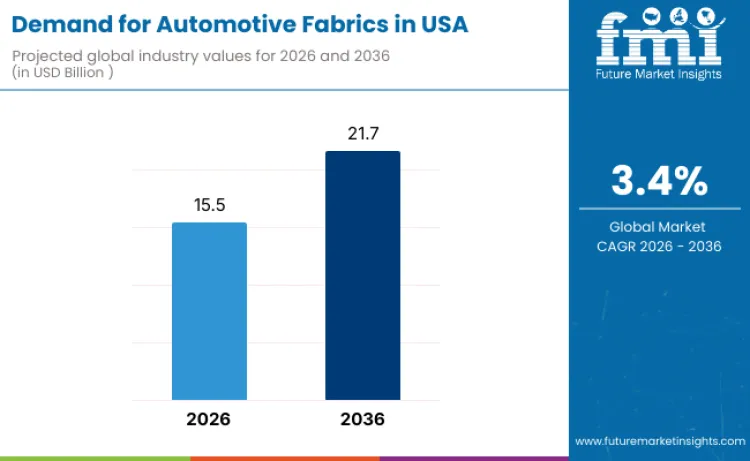
Demand for Automotive Fabrics in USA is valued at USD 15.5 billion in 2026 and is forecasted to reach USD 21.7 billion by 2036, reflecting a CAGR of 3.4%. Demand remains supported by steady vehicle production, interior refurbishment cycles, and rising focus on comfort, durability, and aesthetic differentiation in passenger and commercial vehicles. OEMs and Tier-1 suppliers prioritize interior materials that balance cost efficiency with performance across seating, door panels, headliners, and trim applications.
Woven fabric leads product-type usage because this structure delivers high tensile strength, abrasion resistance, and dimensional stability required for long-term automotive interior performance. Manufacturers favor woven fabrics for seating and upholstery due to breathability, consistent texture, and compatibility with coating and lamination processes. Advancements in yarn engineering, recycled fiber integration, and stain-resistant finishes further strengthen adoption.
Quick Stats for Demand for Automotive Fabrics in USA
- USA Automotive Fabrics Sales Value (2026): USD 15.5 billion
- USA Automotive Fabrics Forecast Value (2036): USD 21.7 billion
- USA Automotive Fabrics Forecast CAGR (2026 to 2036): 3.4%
- Leading Product Type in USA Demand: Woven fabric
- Key Growth Regions in USA Demand: West USA, South USA, Northeast USA, Midwest USA
- Top Players in USA Demand: Lear Corporation, Adient, Sage Automotive Interiors, Milliken and Company, Grupo Antolin
West USA, South USA, Northeast USA, and Midwest USA represent key growth regions due to concentrated automotive manufacturing, assembly operations, and aftermarket activity. Lear Corporation, Adient, Sage Automotive Interiors, Milliken and Company, and Grupo Antolin anchor competitive activity through vertically integrated fabric production, material innovation focused on sustainability, and close collaboration with vehicle manufacturers to meet evolving interior design and regulatory requirements across USA automotive platforms.
USA Automotive Fabrics Key Takeaways
| Metric | Value |
|---|---|
| USA Automotive Fabrics Sales Value (2026) | USD 15.5 billion |
| USA Automotive Fabrics Forecast Value (2036) | USD 21.7 billion |
| USA Automotive Fabrics Forecast CAGR (2026 to 2036) | 3.4% |
How Are the Segments Classified in the Demand for Automotive Fabrics in the USA?
Demand for automotive fabrics in the USA is shaped by vehicle safety requirements, interior durability standards, and material performance expectations across passenger and commercial vehicles. Buyers evaluate tensile strength, abrasion resistance, thermal stability, and compliance with automotive safety regulations. Adoption patterns reflect integration of engineered fabrics into airbags, interior components, and structural applications aligned with USA vehicle production volumes and safety-focused design priorities.
Which Product Type Accounts for the Largest Share of Demand in the USA?
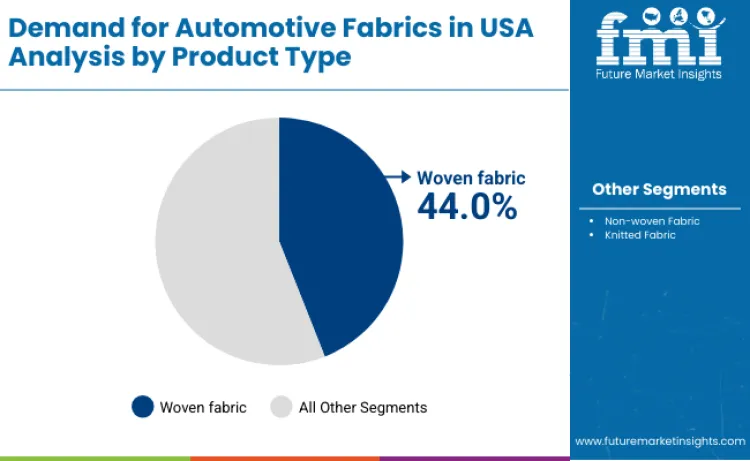
Woven fabric holds 44.0%, making it the leading product-type segment in the USA. Woven fabrics provide high tensile strength, dimensional stability, and consistent performance required for critical automotive applications. These properties support use in airbags, seat components, and reinforcement structures where reliability is essential. Non-woven fabrics support insulation, filtration, and interior trim applications requiring lightweight structures. Knitted fabrics offer flexibility and comfort for selected interior and seating applications. Product-type distribution reflects preference for woven materials due to mechanical strength and suitability for safety-critical automotive uses.
Key Points:
- Woven fabrics dominate due to strength and dimensional stability.
- Non-woven materials support lightweight interior applications.
- Knitted fabrics provide flexibility and comfort features.
Which Application Accounts for the Largest Share of Demand in the USA?
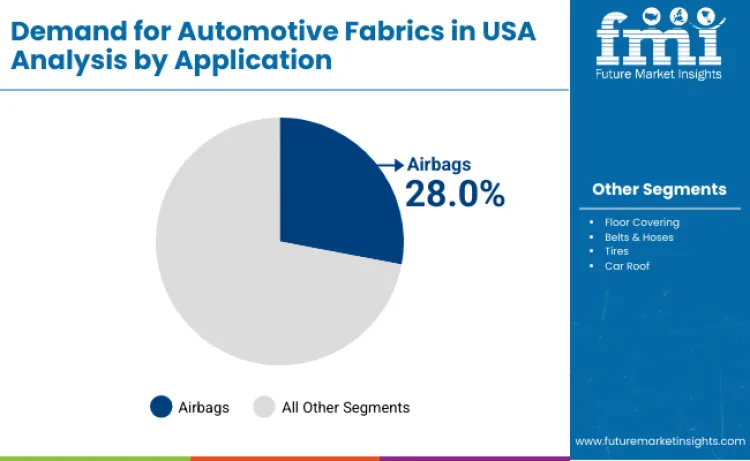
Airbags hold 28.0%, making them the leading application segment in the USA. Automotive fabrics used in airbags must meet strict deployment, tear resistance, and durability standards mandated by USA safety regulations. Floor coverings use fabrics designed for abrasion resistance and noise reduction. Belts and hoses rely on reinforced fabrics for pressure tolerance and longevity. Tire applications incorporate fabrics for structural reinforcement. Car roof applications use fabrics for headliners and acoustic insulation. Application distribution reflects prioritization of safety-related fabric usage within USA vehicle manufacturing.
Key Points:
- Airbags drive demand due to mandatory safety requirements.
- Floor coverings require durable, wear-resistant fabrics.
- Structural applications rely on reinforced textile materials.
Which Vehicle Type Accounts for the Largest Share of Demand in the USA?
Compact passenger cars hold 36.0%, making them the leading vehicle-type segment in the USA. High production volumes of compact cars increase demand for interior and safety-related fabrics. Mid-sized passenger cars contribute steady demand for similar fabric applications with higher interior specification levels. Light commercial vehicles use fabrics in seating, interiors, and safety components. Heavy commercial vehicles apply fabrics selectively in cabins and restraint systems. Vehicle-type distribution reflects production concentration and fabric intensity within compact passenger vehicle manufacturing.
Key Points:
- Compact cars lead due to higher production volumes.
- Passenger vehicles consume most interior and safety fabrics.
- Commercial vehicles represent secondary fabric demand.
What are the Key Dynamics in the Automotive Fabrics Industry in USA?
Demand increases as vehicle manufacturers in USA focus on interior comfort, durability, and material efficiency across passenger and commercial vehicles. Automotive fabrics are used in seating, headliners, door panels, airbags, and floor systems. Consumption aligns with domestic vehicle production volumes, interior design refresh cycles, and regulatory safety requirements. Growth remains linked to shifts toward lightweight materials, electrified vehicles, and differentiated interior aesthetics across mass-market and premium segments.
How do vehicle interior design priorities and safety requirements drive demand in USA?
US automakers use woven, knitted, and nonwoven fabrics to balance comfort, abrasion resistance, and cost efficiency in vehicle interiors. Seating fabrics support breathability and wear resistance for high-usage vehicles. Headliner and door panel textiles contribute to noise reduction and thermal insulation. Airbag fabrics require high-strength synthetic fibers meeting strict safety standards. Growth in SUV and pickup production increases fabric usage per vehicle due to larger cabin areas. Electric vehicles adopt specialized fabrics that support weight reduction and acoustic management. Tier-1 suppliers align fabric development with OEM design specifications and federal motor vehicle safety standards.
How do raw material costs, sustainability pressure, and technology shifts influence demand stability?
Synthetic fiber price volatility affects fabric sourcing and contract pricing across US supply chains. Automakers face pressure to increase recycled content and reduce environmental impact of interior materials. Transition toward synthetic leather and alternative surfaces introduces substitution risk for traditional fabrics in premium segments. Compliance with flammability, durability, and emissions standards increases development cost. Supply chain disruptions influence lead times for specialty textiles. Automation and modular interior assembly affect fabric specification choices. Demand remains stable where fabrics deliver cost, performance, and safety advantages, while long-term growth depends on innovation aligned with electrification and sustainability goals in USA automotive manufacturing.
How Is Demand for Automotive Fabrics in USA Evolving by Region?
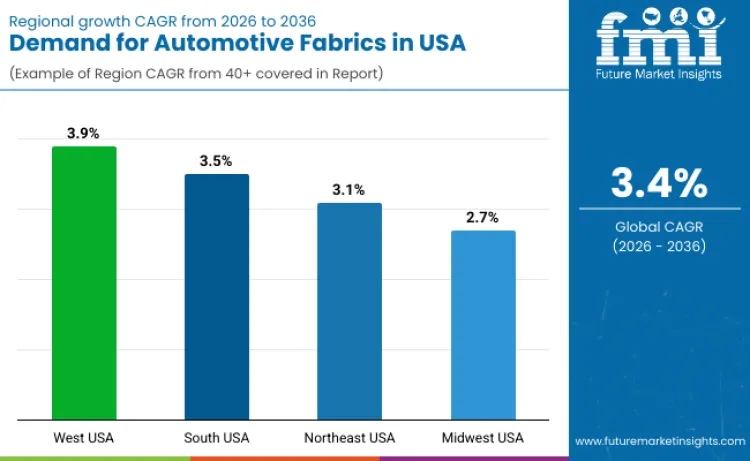
Demand for automotive fabrics in the USA is expanding steadily due to ongoing vehicle interior upgrades, increased focus on lightweight materials, and rising content per vehicle across seating, headliners, door panels, and trim components. West USA leads with a 3.9% CAGR, supported by electric-vehicle production, premium interior specifications, and material innovation. South USA follows at 3.5%, driven by high vehicle assembly concentration and strong supplier integration. Northeast USA records a 3.1% CAGR, shaped by specialty vehicles, aftermarket customization, and ecofriendly-focused materials. Midwest USA posts a 2.7% CAGR, reflecting mature automotive manufacturing, replacement demand, and gradual interior redesign cycles. Regional variation reflects OEM presence, vehicle mix, and material specification trends across the USA.
| Region | CAGR (2026 to 2036) |
|---|---|
| West USA | 3.9% |
| South USA | 3.5% |
| Northeast USA | 3.1% |
| Midwest USA | 2.7% |
How is West USA driving demand for Automotive Fabrics?
West USA demand is influenced by electric-vehicle manufacturing, premium vehicle content, and rapid adoption of advanced interior materials. The region’s CAGR of 3.9% reflects increased use of automotive fabrics in seating systems, acoustic insulation, headliners, and door trims for EVs and high-end passenger vehicles. Automakers emphasize lightweight woven and nonwoven fabrics to support range efficiency and cabin noise reduction. Sustainability initiatives drive interest in recycled polyester, bio-based fibers, and low-VOC interior textiles. Tier-1 suppliers in the region prioritize innovation, surface aesthetics, and tactile performance. Demand growth is content-driven rather than volume-driven, supported by higher fabric usage per vehicle.
- EV interior applications and premium trim packages
- Lightweight and acoustic fabric integration
- Adoption of recycled and low-VOC materials
- Higher fabric content per vehicle platform
How is South USA driving demand for Automotive Fabrics?
South USA demand is volume-oriented and closely tied to large-scale vehicle assembly operations. The region’s CAGR of 3.5% reflects strong use of automotive fabrics in mass-market passenger cars, SUVs, and light trucks produced across major assembly hubs. Seat upholstery, carpet systems, trunk liners, and headliners account for consistent fabric consumption. OEMs emphasize durability, stain resistance, and cost efficiency to meet high-throughput production requirements. Localized supplier networks support just-in-time delivery and standardized fabric specifications. Demand remains stable due to sustained vehicle production volumes and incremental interior refresh programs.
- High-volume vehicle assembly operations
- Standardized seat and interior fabric usage
- Emphasis on durability and cost control
- Strong Tier-1 and Tier-2 supplier integration
How is Northeast USA driving demand for Automotive Fabrics?
Northeast USA demand reflects specialty vehicle production, aftermarket activity, and sustainability-oriented material adoption. The region’s CAGR of 3.1% is supported by use of automotive fabrics in commercial vehicles, fleet customization, and premium aftermarket interiors. Manufacturers and converters focus on high-performance textiles offering abrasion resistance, thermal comfort, and enhanced aesthetics. Regulatory and consumer focus on sustainability supports gradual adoption of recycled and low-emission fabrics. Demand volumes remain moderate, while specification complexity remains high due to customization requirements and shorter production runs.
- Specialty and fleet vehicle interior applications
- Aftermarket upholstery and customization demand
- Adoption of sustainable and recycled fabrics
- Higher specification complexity with moderate volumes
How is Midwest USA driving demand for Automotive Fabrics?
Midwest USA demand is anchored in established automotive manufacturing and long-standing supplier relationships. The region’s CAGR of 2.7% reflects stable use of automotive fabrics across seating, carpeting, and interior trim for passenger and commercial vehicles. OEMs and suppliers focus on material reliability, long-term supply contracts, and compatibility with existing interior architectures. Innovation adoption is gradual, with emphasis on incremental improvements in durability and comfort rather than rapid material substitution. Replacement demand and periodic vehicle refresh cycles sustain baseline consumption.
- Established automotive OEM and supplier base
- Stable demand across seating and interior trim
- Incremental material improvement focus
- Replacement and refresh-driven consumption patterns
What is the competitive landscape of demand for automotive fabrics in the USA?
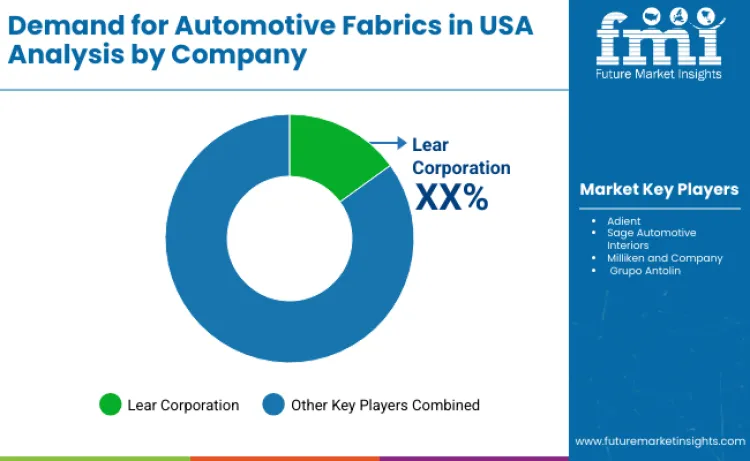
Demand for automotive fabrics in the USA is driven by vehicle interior differentiation, durability requirements, and compliance with safety and emissions standards. Applications span seating upholstery, door panels, headliners, trunk linings, and acoustic insulation used across passenger vehicles, light trucks, and commercial fleets. Buyers evaluate abrasion resistance, colorfastness, flame retardancy, recyclability, and compatibility with airbag and seat-integration systems. Procurement teams prioritize suppliers with USA-based manufacturing, validated automotive-grade quality systems, and close collaboration with OEM design and engineering teams. Trend in the USA market reflects rising use of lightweight textiles, recycled fibers, and performance fabrics supporting comfort, noise reduction, and sustainability targets.
Lear Corporation maintains a strong position through vertically integrated seating systems and interior materials supplied to major USA OEMs. Adient participates with broad seating and trim portfolios incorporating woven, knit, and nonwoven fabric solutions engineered for durability and comfort. Sage Automotive Interiors operates USA manufacturing focused on fabric development, lamination, and finishing for seating and interior trim applications. Milliken and Company supplies high-performance textile fabrics and coatings used in automotive interiors requiring advanced durability and aesthetic control. Grupo Antolin supports demand through interior systems integrating fabrics for headliners, door panels, and overhead components across USA vehicle programs. Competitive positioning in the USA reflects material innovation, domestic production scale, OEM integration capability, and consistency in meeting automotive performance specifications.
Key Players in USA Automotive Fabrics Demand
- Lear Corporation
- Adient
- Sage Automotive Interiors
- Milliken and Company
- Grupo Antolin
Scope of the Report
| Items | Values |
|---|---|
| Quantitative Units | USD billion |
| Product Type | Woven Fabric; Non-woven Fabric; Knitted Fabric |
| Application | Airbags; Floor Covering; Belts & Hoses; Tires; Car Roof |
| Vehicle Type | Compact Passenger Cars; Mid-Sized Passenger Cars; Light Commercial Vehicles; Heavy Commercial Vehicles |
| Regions Covered | West USA; South USA; Northeast USA; Midwest USA |
| Key Companies Profiled | Lear Corporation; Adient; Sage Automotive Interiors; Milliken and Company; Grupo Antolin |
| Additional Attributes | Dollar sales by fabric type, application, and vehicle category; production demand linked to vehicle output cycles; material substitution trends toward lightweight and recyclable fabrics; compliance with automotive safety and durability standards; sourcing shifts driven by cost efficiency, OEM specifications, and interior comfort requirements. |
USA Automotive Fabrics Demand by Segments
Product Type:
- Woven Fabric
- Non-woven Fabric
- Knitted Fabric
Application:
- Airbags
- Floor Covering
- Belts & Hoses
- Tires
- Car Roof
Vehicle Type:
- Compact Passenger Cars
- Mid-Sized Passenger Cars
- Light Commercial Vehicles
- Heavy Commercial Vehicles
Region:
- West USA
- South USA
- Northeast USA
- Midwest USA
Frequently Asked Questions
How big is the demand for automotive fabrics in USA in 2026?
The demand for automotive fabrics in USA is estimated to be valued at USD 15.5 billion in 2026.
What will be the size of automotive fabrics demand in USA in 2036?
The demand size for automotive fabrics in USA is projected to reach USD 21.7 billion by 2036.
How much will the demand for automotive fabrics in USA grow between 2026 and 2036?
The demand for automotive fabrics in USA is expected to grow at a 3.4% CAGR between 2026 and 2036.
What are the key product types in the automotive fabrics demand in USA?
The key product types in automotive fabrics demand in USA include woven fabrics, nonwoven fabrics, and knitted fabrics.
Which application segment is expected to contribute a significant share in the automotive fabrics demand in USA in 2026?
In terms of application, airbags segment is expected to command 28.0% share in the automotive fabrics demand in USA in 2026.
Preview the report firsthand - request a free sample
Get SampleGet the brochure for pricing and purchase details.
Get PDFTable of Content
- Executive Summary
- USA Market Outlook
- Demand Side Trends
- Supply Side Trends
- Technology Roadmap Analysis
- Analysis and Recommendations
- Market Overview
- Market Coverage and Taxonomy
- Market Definition, Scope, and Limitations
- Market Background
- Market Dynamics
- Drivers
- Restraints
- Opportunities
- Trends
- Scenario Forecast
- Demand in Optimistic Scenario
- Demand in Likely Scenario
- Demand in Conservative Scenario
- Opportunity Map Analysis
- Product Life Cycle Analysis
- Supply Chain Analysis
- Investment Feasibility Matrix
- Value Chain Analysis
- PESTLE and Porter Analysis
- Regulatory Landscape
- Regional Parent Market Outlook
- Production and Consumption Statistics
- Import and Export Statistics
- USA Automotive Fabrics Demand Analysis 2020 to 2024 and Forecast 2025 to 2035
- Historical Market Size Value (USD Billion) Analysis 2020 to 2024
- Current and Future Market Size Value (USD Billion) Projections 2025 to 2035
- Year to Year Growth Trend Analysis
- Absolute Dollar Opportunity Analysis
- USA Automotive Fabrics Pricing Analysis 2020 to 2024 and Forecast 2025 to 2035
- USA Automotive Fabrics Demand Analysis 2020 to 2024 and Forecast 2025 to 2035, By Product Type
- Introduction and Key Findings
- Historical Market Size Value (USD Billion) Analysis By Product Type 2020 to 2024
- Current and Future Market Size Value (USD Billion) Analysis and Forecast By Product Type 2025 to 2035
- Woven Fabric
- Non-woven Fabric
- Knitted Fabric
- Year to Year Growth Trend Analysis By Product Type 2020 to 2024
- Absolute Dollar Opportunity Analysis By Product Type 2025 to 2035
- USA Automotive Fabrics Demand Analysis 2020 to 2024 and Forecast 2025 to 2035, By Application
- Introduction and Key Findings
- Historical Market Size Value (USD Billion) Analysis By Application 2020 to 2024
- Current and Future Market Size Value (USD Billion) Analysis and Forecast By Application 2025 to 2035
- Airbags
- Floor Covering
- Belts and Hoses
- Tires
- Car Roof
- Year to Year Growth Trend Analysis By Application 2020 to 2024
- Absolute Dollar Opportunity Analysis By Application 2025 to 2035
- USA Automotive Fabrics Demand Analysis 2020 to 2024 and Forecast 2025 to 2035, By Vehicle Type
- Introduction and Key Findings
- Historical Market Size Value (USD Billion) Analysis By Vehicle Type 2020 to 2024
- Current and Future Market Size Value (USD Billion) Analysis and Forecast By Vehicle Type 2025 to 2035
- Compact Passenger Cars
- Mid-Sized Passenger Cars
- Light Commercial Vehicles
- Heavy Commercial Vehicles
- Year to Year Growth Trend Analysis By Vehicle Type 2020 to 2024
- Absolute Dollar Opportunity Analysis By Vehicle Type 2025 to 2035
- Market Structure Analysis
- Competition Dashboard
- Competition Benchmarking
- Market Share Analysis of Key Players
- By Product Type
- By Application
- By Vehicle Type
- By Region
- Competition Analysis
- Competition Deep Dive
- Lear Corporation
- Adient
- Sage Automotive Interiors
- Milliken and Company
- Grupo Antolin
- Assumptions and Acronyms Used
- Research Methodology


