

- Industry Size (2025)
- USD 20.4 Bn
- Forecast (2035)
- USD 39.5 Bn
- CAGR (2025 to 2035)
- 6.8%
Demand for Biologics in Japan Forecast and Outlook 2025 to 2035
Demand for biologics in Japan is expected to grow from USD 20.4 billion in 2025 to USD 39.5 billion by 2035, reflecting a compound annual growth rate (CAGR) of 6.8%. Growth is driven by the increasing prevalence of chronic and autoimmune diseases, as well as advancements in biotechnology that continue to improve the efficacy and safety profiles of biologic treatments.
Biologics, including monoclonal antibodies, gene therapies, and recombinant proteins, are increasingly used in the treatment of various diseases such as cancer, rheumatoid arthritis, and cardiovascular conditions. The ongoing shift toward personalized medicine, where biologics play a key role, is also contributing to the rising demand for these therapies.
Quick Stats of the Demand for Biologics in Japan
- Demand for Biologics in Japan Value (2025): USD 20.4 billion
- Demand for Biologics in Japan Forecast Value (2035): USD 39.5 billion
- Demand for Biologics in Japan Forecast CAGR (2025-2035): 6.8%
- Demand for Biologics in Japan Leading Drug Class: Monoclonal Antibodies (31%)
- Demand for Biologics in Japan Key Growth Regions: Kyushu & Okinawa, Kanto, Kansai, Chubu, Tohoku, Rest of Japan
- Demand for Biologics in Japan Key Players: Amgen, Inc., Eli Lilly and Company, GlaxoSmithKline PLC, Abbvie Inc., F. Hoffmann-La Roche AG
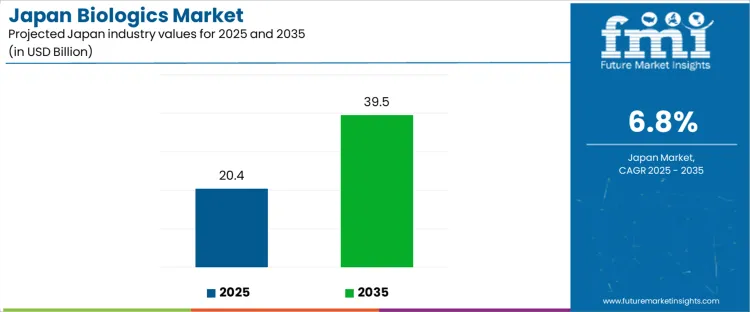
What is the Growth Forecast for the Biologics Industry through 2035?
The market is further supported by Japan's aging population, which requires more advanced treatments to manage chronic conditions. Additionally, the expansion of biosimilars-lower-cost alternatives to biologic drugs-is expected to fuel growth further, providing access to biologics for a broader patient population while addressing healthcare cost concerns. With Japan being a leader in healthcare innovation, the adoption of biologics is expected to continue rising steadily over the next decade.
Growth contribution index for the biologics industry in Japan indicates that both volume and price growth are contributing factors, with volume growth playing a dominant role in the early years of the forecast period. Starting at USD 20.4 billion in 2025, the market grows steadily, reaching USD 21.8 billion in 2026 and USD 23.3 billion in 2027.
From 2027 to 2030, the volume growth continues to lead, with the market reaching USD 24.9 billion in 2028, USD 26.6 billion in 2029, and USD 28.4 billion in 2030. During this period, the market benefits from increased patient access to biologics, as well as the approval and adoption of newer treatments. By 2035, the market reaches USD 39.5 billion, with both volume and price contributing to the growth. Price growth becomes more pronounced in later years, reflecting the introduction of advanced biologics and novel therapies, including gene therapies and next-generation monoclonal antibodies. The growth contribution index shows a steady rise in demand, with a balanced influence from both volume and price growth, particularly as the biologics market matures.
Key Takeaways of Biologics Industry in Japan
| Metric | Value |
|---|---|
| Industry Sales Value (2025) | USD 20.4 million |
| Industry Forecast Value (2035) | USD 39.5 million |
| Industry Forecast CAGR (2025-2035) | 6.8% |
What Is Driving the Demand for Biologics in Japan?
The demand for biologics in Japan is driven by the rising prevalence of chronic and complex diseases, including cancer, autoimmune disorders, and chronic inflammatory conditions. The country’s aging population contributes to an increased incidence of diseases that often respond well to biologic therapies. Biologics are increasingly preferred due to their higher specificity, potential for improved patient outcomes, and the reduced need for repeated hospitalizations compared to traditional treatments. The approval of more biologic therapies in oncology, immunology, and rare or difficult-to-treat conditions has expanded the patient base eligible for such treatments. Additionally, advancements in biopharmaceutical manufacturing methods and favorable regulatory frameworks have supported the development and distribution of biologic products.
Future demand for biologics in Japan is expected to grow as the incidence of age-related and complex diseases continues to rise. The expansion of precision medicine and targeted therapies will further increase the use of biologics in areas such as oncology, autoimmune diseases, and chronic conditions. Growing acceptance of biologics among healthcare providers and patients will also contribute to demand. The development of biosimilars may improve affordability and access, potentially broadening the patient population. The growth of the biologics market will depend on continued innovation in drug development, manufacturing capabilities, and regulatory support.
What Are the Key Segments in Biologics Industry in Japan?
The biologics industry in Japan is segmented by drug class and application. Monoclonal antibodies lead the drug class segment, holding 31% of the market share. By application, infectious diseases account for 30% of the market. The demand for biologics in Japan is driven by the rising prevalence of diseases such as cancer, autoimmune disorders, and infectious diseases, as well as advancements in biologic therapies for various conditions.
Which Drug Class Drives Biologics Demand in Japan?
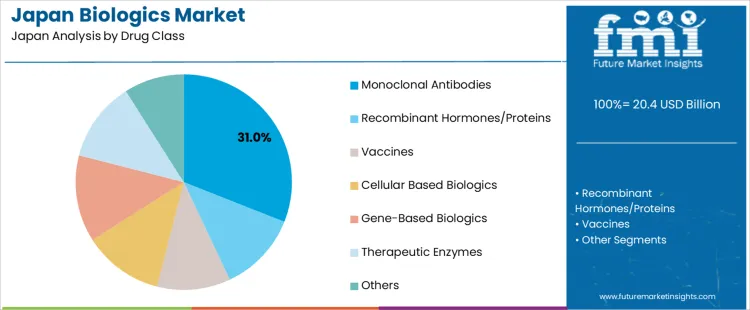
Monoclonal antibodies dominate the biologics market in Japan, representing 31% of the total market share. These biologics are used to treat a wide range of diseases, including cancer, autoimmune disorders, and infectious diseases, by targeting specific proteins or cells involved in the disease process. The efficacy of monoclonal antibodies in treating complex conditions, such as cancers and chronic autoimmune diseases, has contributed to their widespread adoption in Japan.
Their ability to offer highly targeted therapies with fewer side effects compared to traditional treatments is a key factor in their popularity. While other biologic classes, such as recombinant hormones/proteins, vaccines, and gene-based biologics, also play important roles in the market, monoclonal antibodies remain the dominant class due to their versatile therapeutic applications and continuous innovations in cancer immunotherapy and autoimmune disease treatments.
Which Application Drives Biologics Demand in Japan?
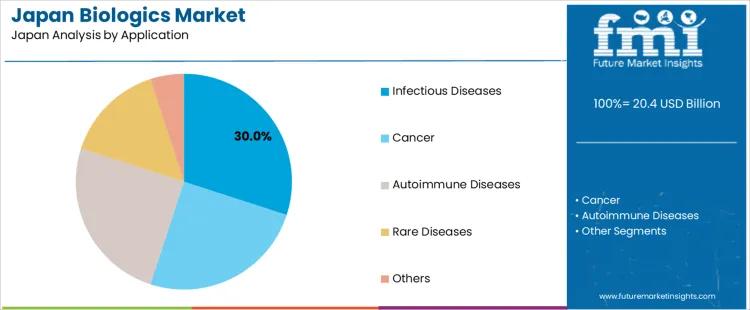
Infectious diseases are the largest application for biologics in Japan, accounting for 30% of the market share. Biologics, such as vaccines and monoclonal antibodies, are crucial in preventing and treating a variety of infectious diseases, including viral infections like influenza, COVID-19, and hepatitis, as well as bacterial infections. The ongoing global health concerns, particularly the COVID-19 pandemic, have significantly driven the demand for biologics in this application.
The ability of biologics to offer targeted treatment and prevention of infectious diseases, combined with their potential for widespread use in vaccination programs, has contributed to their increasing adoption. Other applications, such as cancer, autoimmune diseases, and rare diseases, also contribute significantly to the biologics market, with the development of new biologics offering hope for conditions that were previously difficult to treat. However, infectious diseases remain the largest application due to the significant need for advanced therapeutic options in the prevention and management of epidemics and infectious outbreaks.
What is the Demand for Biologics in Japan?
The demand for biologics in Japan is increasing due to the growing need for advanced treatments for a wide range of chronic diseases and conditions, such as cancer, autoimmune disorders, and genetic diseases. Biologics, which are medicines derived from living organisms, offer targeted therapies that can be more effective and specific than traditional small molecule drugs. As Japan continues to face an aging population and an increase in lifestyle-related diseases, the market for biologics is expected to grow. This demand is also driven by advancements in biotechnology and the increasing availability of biosimilars, which provide more affordable alternatives to original biologic drugs.
What are the Drivers of Demand for Biologics in Japan?
Several factors are driving the growing demand for biologics in Japan. First, the increasing prevalence of chronic diseases such as cancer, rheumatoid arthritis, and diabetes is creating a greater need for targeted treatments that biologics can provide. Second, Japan’s aging population is fueling the demand for biologics, as older individuals are more likely to develop complex diseases that require advanced therapies. Third, the growing emphasis on personalized medicine, which tailors treatments to individual patients based on their genetic makeup, is driving the adoption of biologic therapies that offer more precise treatment options.
Additionally, Japan’s strong healthcare infrastructure, along with a supportive regulatory environment for the approval of biologics, has led to increased access to these treatments. The availability of biosimilars is also contributing to the growth of the biologics market by providing more affordable treatment options.
What are the Restraints on Demand for Biologics in Japan?
Despite the increasing demand, there are several factors that may limit the widespread adoption of biologics in Japan. One of the primary challenges is the high cost of biologic treatments, which can be a financial burden for both healthcare providers and patients. Although biosimilars offer a more affordable alternative, the cost of biologics remains a significant barrier, particularly in settings where healthcare budgets are constrained.
Another challenge is the complexity of biologic therapies, which often require specialized administration, such as intravenous infusion or subcutaneous injection, making them less convenient compared to oral medications. Additionally, concerns about side effects, long-term safety, and immunogenicity can deter some patients and healthcare providers from choosing biologics as a treatment option. Finally, while biosimilars are becoming more widely available, concerns regarding their interchangeability with original biologics and the potential for reduced efficacy or safety can slow their adoption.
What are the Key Trends Influencing Demand for Biologics in Japan?
Several key trends are influencing the demand for biologics in Japan. One major trend is the increasing adoption of personalized medicine, which relies on biologics to provide more tailored and effective treatments for patients. Another trend is the rise of immuno-oncology therapies, which use biologics to harness the body’s immune system to fight cancer, driving demand for new biologic treatments. Additionally, the growing use of biosimilars is expanding access to biologic therapies by offering more affordable treatment options.
The advancement of gene therapies and cell-based treatments is also contributing to the demand for biologics as these innovative therapies aim to address genetic disorders and other conditions that were previously difficult to treat. Finally, the emphasis on improving patient outcomes and reducing healthcare costs is encouraging the adoption of biologics, particularly those that offer more targeted and effective treatment with fewer side effects.
What is the Regional Demand Outlook for the Biologics Industry in Japan?
The biologics industry in Japan is projected to grow steadily, with Kyushu & Okinawa leading the way at a projected CAGR of 8.5%. Kanto follows closely with a growth rate of 7.8%, while Kansai is expected to grow at 6.9%. Chubu is projected to grow at a rate of 6.1%, while Tohoku and Rest of Japan show more moderate growth, with CAGRs of 5.3% and 5.1%, respectively. Biologics, including monoclonal antibodies, gene therapies, and cell-based therapies, are increasingly important for treating complex conditions such as cancer, autoimmune diseases, and rare genetic disorders, driving market growth nationwide.
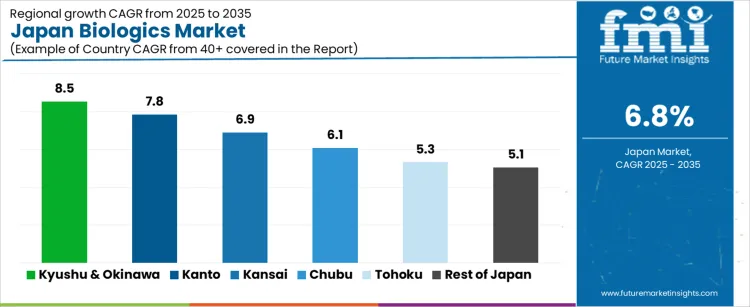
| Region | CAGR (2025-2035) |
|---|---|
| Kyushu & Okinawa | 8.5% |
| Kanto | 7.8% |
| Kansai | 6.9% |
| Chubu | 6.1% |
| Tohoku | 5.3% |
| Rest of Japan | 5.1% |
What is Driving the Growth of Biologics in Kyushu & Okinawa?
Kyushu & Okinawa is projected to experience the highest growth in the Biologics market, with a projected CAGR of 8.5%. The region's growing demand for advanced treatments for complex diseases, particularly among the aging population, is a key driver of this growth. Kyushu & Okinawa's healthcare systems are increasingly adopting biologics, including monoclonal antibodies and gene therapies, to treat conditions like cancer, rheumatoid arthritis, and rare genetic disorders.
The region's large elderly population, which is more prone to chronic and complex diseases, is further contributing to the rise in biologic treatments. Additionally, the growing focus on healthcare innovation and improving access to advanced treatments in Kyushu & Okinawa is helping to drive demand for biologics. As more healthcare providers in the region offer biologics as part of their treatment plans, the market is expected to continue expanding.
Why is the Biologics Market Expanding in Kanto?
In Kanto, the demand for biologics is projected to grow at a CAGR of 7.8%. As Japan’s most populous and urbanized region, Kanto is a hub for healthcare innovation, with a high concentration of medical centers and research institutions. The region's demand for biologic therapies is driven by a growing number of patients with complex diseases such as cancer, autoimmune disorders, and metabolic diseases. The increasing adoption of personalized medicine and the growing availability of targeted biologic therapies are also contributing to market growth.
Healthcare providers in Kanto are increasingly turning to biologics for effective treatment options, as these therapies offer the potential for better outcomes and fewer side effects compared to traditional treatments. Kanto’s focus on research and development, combined with its advanced healthcare infrastructure, positions the region to continue leading the biologics market in Japan.
How is the Biologics Market Growing in Kansai?
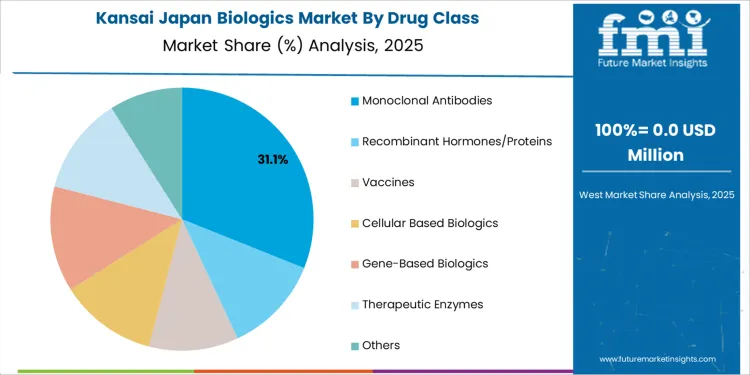
In Kansai, the Biologics market is projected to grow at a CAGR of 6.9%. The region, which includes major cities like Osaka, Kyoto, and Kobe, has a strong healthcare infrastructure that is increasingly adopting biologic therapies. Kansai’s healthcare systems are focusing on providing advanced treatments for patients suffering from chronic conditions and complex diseases, leading to a growing demand for biologics. The rise in the number of patients diagnosed with cancer, autoimmune diseases, and other chronic conditions is driving the adoption of biologics in Kansai.
Additionally, Kansai's emphasis on providing high-quality medical care and access to cutting-edge therapies is helping to fuel the market for biologics. As research institutions in the region continue to focus on the development of new biologic therapies, the market for these treatments is expected to expand steadily.
What is Contributing to the Growth of Biologics in Chubu?
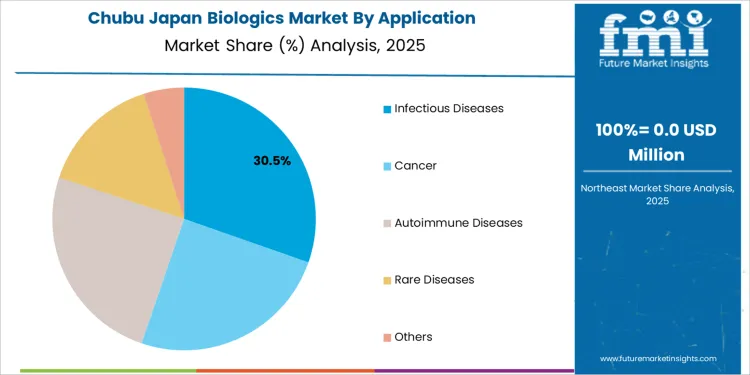
In Chubu, the Biologics market is expected to grow at a CAGR of 6.1%. The region's healthcare providers are increasingly turning to biologic therapies to treat patients with complex conditions such as cancer, rheumatoid arthritis, and diabetes. Chubu, with its strong medical infrastructure and growing healthcare sector, is experiencing an increasing adoption of biologics as part of comprehensive treatment plans. The demand for advanced therapies in the region is driven by the rising number of patients with chronic diseases that require specialized treatments. Healthcare institutions in Chubu are focusing on improving patient outcomes through the use of biologics, further driving market growth. As Chubu’s healthcare sector continues to expand and innovate, the market for biologics is expected to continue its steady growth.
What is Influencing the Growth of Biologics in Tohoku?
In Tohoku, the Biologics market is projected to grow at a CAGR of 5.3%. The region’s aging population and increasing prevalence of chronic diseases are contributing to the rising demand for biologic therapies. Tohoku’s healthcare systems are increasingly adopting biologics to treat conditions like cancer, autoimmune diseases, and other complex health issues. Although the growth rate in Tohoku is more moderate compared to other regions, the demand for biologics is rising due to the growing awareness of their benefits. The region's focus on improving healthcare accessibility and providing advanced treatments for patients is also helping to drive the market for biologics. As healthcare providers in Tohoku continue to expand access to biologic therapies, the market is expected to grow gradually.
What is Contributing to the Growth of Biologics in Rest of Japan?
In Rest of Japan, the Biologics market is expected to grow at a more moderate rate of 5.1%. While the region may have fewer healthcare resources compared to major metropolitan areas, the increasing prevalence of chronic conditions and the growing adoption of advanced treatments are driving demand for biologics. Healthcare providers in Rest of Japan are focusing on offering cost-effective biologic therapies to treat conditions like cancer, autoimmune diseases, and metabolic disorders. As access to biologic treatments improves in rural and remote areas, the market for these therapies is expected to grow steadily. The region's growing awareness of the benefits of biologics, combined with the expansion of healthcare services, is contributing to the gradual rise in demand for biologic therapies.
What is the Competitive Landscape for Biologics in Japan?
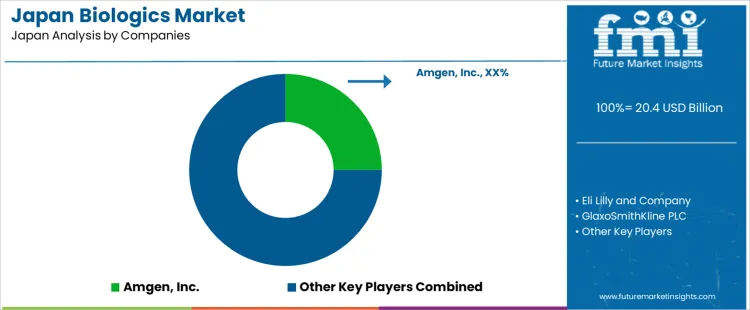
Demand for biologics in Japan has been rising steadily as the population ages and chronic diseases such as cancer, autoimmune disorders, and metabolic conditions increase in prevalence. The shift toward targeted therapies, personalized medicine, and advanced treatment modalities, including monoclonal antibodies, growth factors, and regenerative medicine, drives usage of biologic drugs. Growth in biosimilar adoption and expanding public and private investment in biotech innovation further support market expansion in Japan.
On the supply side, a mix of global pharmaceutical companies competes for share in the Japanese biologics market. According to your list, Amgen, Inc. holds a leading share (roughly 25%) among specified firms. Other major players include Eli Lilly and Company, GlaxoSmithKline PLC, AbbVie Inc., and F. Hoffmann-La Roche AG. These firms supply a broad range of biologic therapies across indications such as oncology, immunology, metabolic diseases, and more.
Competition among them is driven by factors such as clinical efficacy, safety profile, regulatory approval success, breadth of therapeutic portfolio (antibodies, proteins, gene therapies), pricing strategy (including biosimilar or specialty biologic options), and ability to navigate Japan’s regulatory and reimbursement environment. Companies that combine strong R&D capabilities, regulatory compliance, reliable supply chains, and broad therapeutic coverage are best positioned to capture ongoing growth as the demand for biologics continues to rise in Japan.
Key Players of the Biologics Industry in Japan
- Amgen, Inc.
- Eli Lilly and Company
- GlaxoSmithKline PLC
- Abbvie Inc.
- F. Hoffmann- La Roche AG
Scope of the Report
| Items | Details |
|---|---|
| Quantitative Units | USD Billion |
| Regions Covered | Japan |
| Drug Class | Monoclonal Antibodies; Recombinant Hormones/Proteins; Vaccines; Cellular-based Biologics; Gene-based Biologics; Therapeutic Enzymes; Others |
| Application | Infectious Diseases; Cancer; Autoimmune Diseases; Rare Diseases; Others (chronic conditions, inflammatory diseases, etc.) |
| Manufacturing Type | Contract Manufacturing; In-house Manufacturing |
| Drug Classification | Branded Drugs; Generic / Biosimilar Drugs |
| Mode of Purchase | Prescription Drugs; Over-The-Counter (OTC) - though most biologics are prescription only |
| Source (Biologics Origin) | Bacterial Cells; Yeast Cells; Plant Cells; Mammalian/Cell-Based ("Drug Classification Cells"); Others |
| Distribution Channel | Hospital Pharmacies; Retail Pharmacies; Online Pharmacies |
| Key Companies Profiled | Amgen, Inc.; Eli Lilly and Company; GlaxoSmithKline PLC; AbbVie Inc.; F. Hoffmann-La Roche AG (among leading biologics players commercially active or with pipelines relevant in Japan) |
| Additional Attributes | Dollar sales by drug class and application reflect a dominant role for monoclonal antibodies and recombinant proteins, especially in oncology and autoimmune diseases; rising uptake of biosimilars is increasing access, while contract manufacturing (outsourcing) is growing due to capacity needs and cost pressures. The elderly population, high chronic-disease burden (e.g. cancer, autoimmune, rare diseases), and government/health-system support for biopharma drive demand. |
Key Segments in the Demand for Biologics in Japan
Drug Class
- Monoclonal Antibodies
- Recombinant Hormones/Proteins
- Vaccines
- Cellular Based Biologics
- Gene-Based Biologics
- Therapeutic Enzymes
- Others
Application
- Infectious Diseases
- Cancer
- Autoimmune Diseases
- Rare Diseases
- Others
Manufacturing Type
- Contract Manufacturing
- In-house Manufacturing
Drug Classification
- Branded Drugs
- Generic Drugs
Mode of Purchase
- Prescription Drugs
- Over-The-Counter (OTC) Drugs
Source
- Bacterial Cells
- Yeast Cells
- Plant Cells
- Drug Classification Cells
- Other Sources
Distribution Channel
- Hospital Pharmacies
- Retail Pharmacies
- Online Pharmacies
Region
- Kyushu & Okinawa
- Kanto
- Kansai
- Chubu
- Tohoku
- Rest of Japan
Frequently Asked Questions
How big is the demand for biologics in Japan in 2025?
The demand for biologics in Japan is estimated to be valued at USD 20.4 billion in 2025.
What will be the size of biologics in Japan in 2035?
The market size for the biologics in Japan is projected to reach USD 39.5 billion by 2035.
How much will be the demand for biologics in Japan growth between 2025 and 2035?
The demand for biologics in Japan is expected to grow at a 6.8% CAGR between 2025 and 2035.
What are the key product types in the biologics in Japan?
The key product types in biologics in Japan are monoclonal antibodies, recombinant hormones/proteins, vaccines, cellular based biologics, gene-based biologics, therapeutic enzymes and others.
Which application segment is expected to contribute significant share in the biologics in Japan in 2025?
In terms of application, infectious diseases segment is expected to command 30.0% share in the biologics in Japan in 2025.
Preview the report firsthand - request a free sample
Get SampleGet the brochure for pricing and purchase details.
Get PDFTable of Content
- Executive Summary
- Japan Market Outlook
- Demand-side Trends
- Supply-side Trends
- Technology Roadmap Analysis
- Analysis and Recommendations
- Market Overview
- Market Coverage / Taxonomy
- Market Definition / Scope / Limitations
- Market Background
- Market Dynamics
- Drivers
- Restraints
- Opportunity
- Trends
- Scenario Forecast
- Demand in Optimistic Scenario
- Demand in Likely Scenario
- Demand in Conservative Scenario
- Opportunity Map Analysis
- Product Life Cycle Analysis
- Supply Chain Analysis
- Investment Feasibility Matrix
- Value Chain Analysis
- PESTLE and Porter’s Analysis
- Regulatory Landscape
- Regional Parent Market Outlook
- Production and Consumption Statistics
- Import and Export Statistics
- Market Dynamics
- Japan Market Analysis 2020 to 2024 and Forecast, 2025 to 2035
- Historical Market Size Value (USD Million) Analysis, 2020 to 2024
- Current and Future Market Size Value (USD Million) Projections, 2025 to 2035
- Y-o-Y Growth Trend Analysis
- Absolute $ Opportunity Analysis
- Japan Market Pricing Analysis 2020 to 2024 and Forecast 2025 to 2035
- Japan Market Analysis 2020 to 2024 and Forecast 2025 to 2035, By Drug Class
- Introduction / Key Findings
- Historical Market Size Value (USD Million) Analysis By Drug Class , 2020 to 2024
- Current and Future Market Size Value (USD Million) Analysis and Forecast By Drug Class , 2025 to 2035
- Monoclonal Antibodies
- Recombinant Hormones/Proteins
- Vaccines
- Cellular Based Biologics
- Gene-Based Biologics
- Therapeutic Enzymes
- Others
- Y-o-Y Growth Trend Analysis By Drug Class , 2020 to 2024
- Absolute $ Opportunity Analysis By Drug Class , 2025 to 2035
- Japan Market Analysis 2020 to 2024 and Forecast 2025 to 2035, By Application
- Introduction / Key Findings
- Historical Market Size Value (USD Million) Analysis By Application, 2020 to 2024
- Current and Future Market Size Value (USD Million) Analysis and Forecast By Application, 2025 to 2035
- Infectious Diseases
- Cancer
- Autoimmune Diseases
- Rare Diseases
- Others
- Y-o-Y Growth Trend Analysis By Application, 2020 to 2024
- Absolute $ Opportunity Analysis By Application, 2025 to 2035
- Japan Market Analysis 2020 to 2024 and Forecast 2025 to 2035, By Manufacturing Type
- Introduction / Key Findings
- Historical Market Size Value (USD Million) Analysis By Manufacturing Type, 2020 to 2024
- Current and Future Market Size Value (USD Million) Analysis and Forecast By Manufacturing Type, 2025 to 2035
- Contract Manufacturing
- In-house Manufacturing
- Y-o-Y Growth Trend Analysis By Manufacturing Type, 2020 to 2024
- Absolute $ Opportunity Analysis By Manufacturing Type, 2025 to 2035
- Japan Market Analysis 2020 to 2024 and Forecast 2025 to 2035, By Drug Classification
- Introduction / Key Findings
- Historical Market Size Value (USD Million) Analysis By Drug Classification, 2020 to 2024
- Current and Future Market Size Value (USD Million) Analysis and Forecast By Drug Classification, 2025 to 2035
- Branded Drugs
- Generic Drugs
- Y-o-Y Growth Trend Analysis By Drug Classification, 2020 to 2024
- Absolute $ Opportunity Analysis By Drug Classification, 2025 to 2035
- Japan Market Analysis 2020 to 2024 and Forecast 2025 to 2035, By Mode of Purchase
- Introduction / Key Findings
- Historical Market Size Value (USD Million) Analysis By Mode of Purchase, 2020 to 2024
- Current and Future Market Size Value (USD Million) Analysis and Forecast By Mode of Purchase, 2025 to 2035
- Prescription Drugs
- Over-The-Counter (OTC) Drugs
- Y-o-Y Growth Trend Analysis By Mode of Purchase, 2020 to 2024
- Absolute $ Opportunity Analysis By Mode of Purchase, 2025 to 2035
- Japan Market Analysis 2020 to 2024 and Forecast 2025 to 2035, By Source
- Introduction / Key Findings
- Historical Market Size Value (USD Million) Analysis By Source, 2020 to 2024
- Current and Future Market Size Value (USD Million) Analysis and Forecast By Source, 2025 to 2035
- Bacterial Cells
- Yeast Cells
- Plant Cells
- Drug Classification Cells
- Others Source
- Y-o-Y Growth Trend Analysis By Source, 2020 to 2024
- Absolute $ Opportunity Analysis By Source, 2025 to 2035
- Japan Market Analysis 2020 to 2024 and Forecast 2025 to 2035, By Distribution Channel
- Introduction / Key Findings
- Historical Market Size Value (USD Million) Analysis By Distribution Channel, 2020 to 2024
- Current and Future Market Size Value (USD Million) Analysis and Forecast By Distribution Channel, 2025 to 2035
- Hospital Pharmacies
- Retail Pharmacies
- Online Pharmacies
- Y-o-Y Growth Trend Analysis By Distribution Channel, 2020 to 2024
- Absolute $ Opportunity Analysis By Distribution Channel, 2025 to 2035
- Market Structure Analysis
- Competition Dashboard
- Competition Benchmarking
- Market Share Analysis of Top Players
- By Regional
- By Drug Class
- By Application
- By Manufacturing Type
- By Drug Classification
- By Mode of Purchase
- By Source
- By Distribution Channel
- Competition Analysis
- Competition Deep Dive
- Amgen, Inc.
- Overview
- Product Portfolio
- Profitability by Market Segments (Product/Age /Sales Channel/Region)
- Sales Footprint
- Strategy Overview
- Marketing Strategy
- Product Strategy
- Channel Strategy
- Eli Lilly and Company
- GlaxoSmithKline PLC
- Abbvie Inc.
- F. Hoffmann- La Roche AG
- Amgen, Inc.
- Competition Deep Dive
- Assumptions & Acronyms Used
- Research Methodology


