

- Industry Size (2025)
- USD 2.3 Bn
- Forecast (2035)
- USD 3.4 Bn
- CAGR (2025 to 2035)
- 3.8%
Demand for Digital Oilfield Solutions in Japan Forecast and Outlook 2025 to 2035
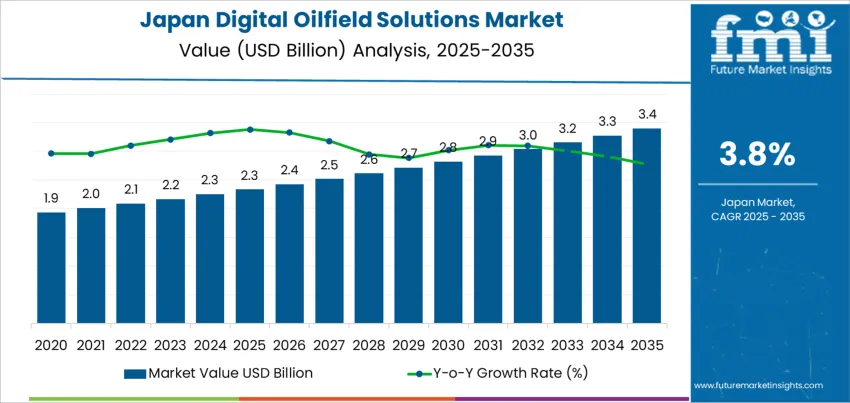
The demand for digital oilfield solutions in Japan is expected to grow from USD 2.3 billion in 2025 to USD 3.4 billion by 2035, with a compound annual growth rate (CAGR) of 3.8%. Digital oilfield solutions integrate advanced technologies such as IoT, big data, artificial intelligence (AI), and cloud computing to optimize oil and gas operations. These solutions provide real-time monitoring, automated processes, and predictive analytics, helping companies improve efficiency, safety, and sustainability in oilfield management. As the oil and gas industry moves toward digital transformation, these solutions will become integral to improving production optimization, reducing operational costs, and increasing resource recovery.
Japan's increasing focus on energy efficiency and reducing environmental impact is a major factor driving the demand for digital oilfield solutions. The growing adoption of advanced sensor technologies, data analytics, and cloud-based monitoring systems will enable operators to improve asset performance, reduce equipment failure, and minimize downtime. As Japan's oil and gas sector faces challenges in maintaining aging infrastructure and optimizing existing reserves, digital oilfield solutions will play a critical role in modernizing operations.
Quick Stats of the Demand for Digital Oilfield Solutions in Japan
- Demand for Digital Oilfield Solutions in Japan Value (2025): USD 2.3 billion
- Demand for Digital Oilfield Solutions in Japan Forecast Value (2035): USD 3.4 billion
- Demand for Digital Oilfield Solutions in Japan Forecast CAGR (2025-2035): 3.8%
- Demand for Digital Oilfield Solutions in Japan Leading Component: Hardware
- Demand for Digital Oilfield Solutions in Japan Key Growth Regions: Kyushu & Okinawa, Kanto, Kinki, Chubu, Tohoku, Rest of Japan
- Demand for Digital Oilfield Solutions in Japan Top Players: Halliburton, Baker Hughes, Weatherford, Siemens Energy, Schlumberger
What is the Growth Forecast for the Demand for Digital Oilfield Solutions in Japan through 2035?
Between 2025 and 2030, the demand for digital oilfield solutions in Japan is expected to grow from USD 2.3 billion to USD 2.8 billion. This period will experience steady, incremental growth driven by the increasing focus on operational efficiency and technology adoption across oil and gas operations. The adoption of real-time data monitoring systems and automated control solutions will contribute to this gradual increase. The oil and gas sector will continue to integrate digital technologies to optimize existing processes, enhance safety measures, and ensure compliance with environmental regulations.
From 2030 to 2035, the demand for digital oilfield solutions will see a more pronounced increase, growing from USD 2.8 billion to USD 3.4 billion. This acceleration in growth will be driven by the wider deployment of 5G technologies, advanced predictive analytics, and cloud-based platforms that enable real-time decision-making. Oil and gas operators will increasingly adopt autonomous systems, remote-controlled equipment, and AI-driven optimization tools to further enhance operational efficiency. This phase will also witness a greater emphasis on sustainability and the integration of clean energy technologies, such as carbon capture, with digital oilfield solutions.
Demand for Digital Oilfield Solutions in Japan Key Takeaways
| Metric | Value |
|---|---|
| Demand for Digital Oilfield Solutions in Japan Value (2025) | USD 2.3 billion |
| Demand for Digital Oilfield Solutions in Japan Forecast Value (2035) | USD 3.4 billion |
| Demand for Digital Oilfield Solutions in Japan Forecast CAGR (2025-2035) | 3.8% |
Why is the Demand for Digital Oilfield Solutions in Japan Growing?
The demand for digital oilfield solutions in Japan is increasing as the country continues to prioritize technological advancements in the oil and gas industry to improve operational efficiency, reduce costs, and enhance safety. Digital oilfield solutions use technologies like IoT, big data analytics, automation, and AI to optimize exploration, production, and reservoir management. As Japan faces growing energy demands and seeks to enhance its energy security, the adoption of digital solutions is becoming essential for maximizing output and ensuring sustainability in oil and gas operations.
A key driver of this growth is Japan's focus on improving the efficiency of its oil and gas operations, particularly in offshore drilling and reservoir management. Digital oilfield solutions enable operators to monitor real-time data, improve predictive maintenance, and enhance reservoir modeling, allowing for more precise decision-making and better resource management. This technological shift helps reduce the environmental impact of oilfield operations and ensures compliance with regulatory standards, which is crucial as Japan strives for more sustainable energy practices.
Japan's commitment to enhancing energy security and optimizing energy production in the face of global energy challenges is pushing the adoption of digital oilfield solutions. The integration of automation and data-driven decision-making into daily operations allows for greater efficiency and reduced downtime, which are critical for meeting both domestic and international energy demands. As the demand for digital transformation in oil and gas operations continues to rise, the industry for digital oilfield solutions in Japan is expected to grow steadily through 2035.
What is the Segment-Wise Analysis of Demand for Digital Oilfield Solutions in Japan?
Demand for digital oilfield solutions in Japan is segmented by component type and end use. By component type, demand is divided into hardware, software, and services, with hardware leading the demand at 50%. The demand is also segmented by end use, including upstream, midstream, and downstream, with upstream accounting for 70% of the demand. Digital oilfield solutions play a key role in improving operational efficiency, safety, and productivity in the oil and gas industry.
Why Does Hardware Lead the Component Demand for Digital Oilfield Solutions?

Hardware accounts for 50% of the demand for digital oilfield solutions in Japan. Hardware solutions are essential for collecting, transmitting, and analyzing data in real-time from oilfields, which improves the efficiency and reliability of oil and gas operations. This includes sensors, monitoring devices, control systems, and communication equipment, which are critical for optimizing drilling, production, and reservoir management. As the oil and gas sector increasingly adopts automation and digital technologies, the need for advanced hardware that can handle large volumes of data and withstand harsh field conditions continues to grow. Hardware plays a crucial role in ensuring operational safety, reducing downtime, and enhancing the decision-making process, making it a key component in the success of digital oilfield solutions.
How Does Upstream Lead the End-Use Demand for Digital Oilfield Solutions?

Upstream accounts for 70% of the demand for digital oilfield solutions in Japan. The upstream sector, which involves exploration, drilling, and production, is heavily reliant on digital technologies to optimize operations and reduce costs. Digital oilfield solutions, such as automation systems, remote monitoring, and predictive analytics, allow companies to monitor and control oilfield operations in real-time. This enhances productivity, ensures safer operations, and improves the efficiency of resource extraction. As Japan continues to invest in its upstream oil and gas infrastructure, especially for offshore drilling and enhanced oil recovery techniques, digital solutions will play an integral role in meeting the industry's increasing demands. The focus on automation, predictive maintenance, and data-driven decision-making ensures that the upstream sector will continue to lead the demand for digital oilfield solutions.
What are the Key Trends, Drivers, and Restraints in Demand for Digital Oilfield Solutions in Japan?
Demand for digital oilfield solutions in Japan is expanding as oil and gas operators look to increase efficiency, safety, and output while managing cost pressures. The aging assets in existing fields, along with offshore operations requiring robust monitoring and remote control, encourage adoption of real‑time data analytics, IoT sensors, cloud‑based monitoring, and automation. Predictive maintenance and remote asset management help reduce downtime and operating risk. At the same time, high upfront costs for digital infrastructure, limited domestic reserves, and the complexity of retrofitting legacy systems act as restraints especially for smaller operators or older offshore platforms.
Why is Demand for Digital Oilfield Solutions Growing in Japan?
In Japan, demand is growing because energy companies need better control over production, reservoir management, and maintenance amidst tightening regulatory, environmental, and cost pressures. Digital oilfield solutions help optimize reservoir performance, automate drilling and production operations, provide continuous monitoring, and enable data‑driven decision‑making. As global competition and demand for efficient resource use increase, Japanese firms both domestic and those operating overseas see digital oilfield technologies as essential to improving yield, reducing manual risk, and ensuring safety in challenging environments like offshore rigs. This makes investment in digital oilfield platforms an attractive strategy to remain competitive.
How are Technological and Infrastructure Innovations Driving Growth of Digital Oilfield Solutions in Japan?
Technological progress is a major enabler for digital oilfield adoption. Modern solutions combine IoT sensors, cloud‑based data analytics, artificial intelligence, real‑time monitoring, and digital‑twin simulations to give operators visibility over wells, pipelines, and production systems. These technologies support predictive maintenance, early fault detection, remote operations, and automation of drilling or production tasks reducing reliance on manual labour and improving safety. Modular system architectures, scalable software‑defined platforms, and improved connectivity make it easier to deploy digital oilfield solutions even in complex offshore environments. Such innovations are making digital upgrades more feasible and cost‑effective for Japanese oil & gas operators.
What are the Key Challenges Limiting Wider Adoption of Digital Oilfield Solutions in Japan?
Despite positive trends, there are several challenges limiting broader uptake. The initial capital required for sensors, infrastructure, software platforms, and integration with legacy systems is substantial a major barrier especially for smaller operators. Retrofitting older or offshore facilities can be technically complex and risky. Further, for fields with low output or where oil and gas reserves are small, the return on investment may be insufficient to justify digital‑oilfield spending. Data security, regulatory compliance, and ensuring a skilled workforce to operate and maintain digital systems add additional layers of complexity. These factors slow the pace of universal adoption across the sector.
What is the Demand Outlook for Digital Oilfield Solutions in Japan?
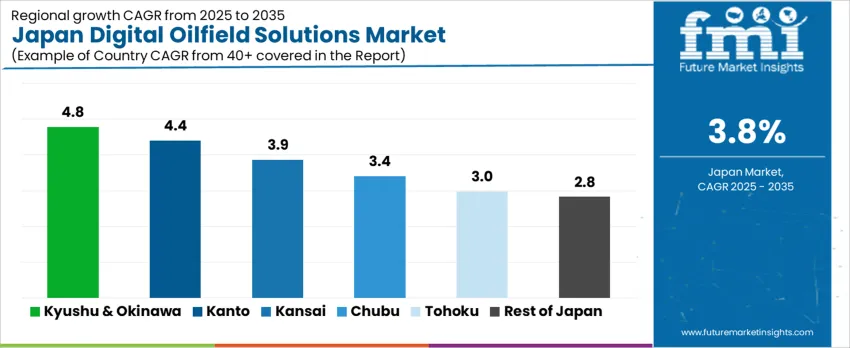
| Region | CAGR (%) |
|---|---|
| Kyushu & Okinawa | 4.8% |
| Kanto | 4.4% |
| Kinki | 3.9% |
| Chubu | 3.4% |
| Tohoku | 3.0% |
| Rest of Japan | 2.8% |
Demand for digital oilfield solutions in Japan is growing steadily, with Kyushu & Okinawa leading at a 4.8% CAGR, driven by increasing adoption of digital technologies in oil and gas operations. The Kanto region follows with a 4.4% CAGR, supported by strong industrial infrastructure and a focus on innovation in energy management. Kinki shows a 3.9% CAGR, fueled by the region’s technological advancements in the energy sector. Chubu experiences a 3.4% CAGR, with rising investments in digital solutions to optimize oilfield operations. Tohoku and the Rest of Japan see more moderate growth at 3.0% and 2.8%, respectively, as regional energy operations focus on integrating digital technologies for efficiency.
How is Demand for Digital Oilfield Solutions Growing in Kyushu & Okinawa?
Kyushu & Okinawa is experiencing the highest demand for digital oilfield solutions in Japan, with a 4.8% CAGR. This growth is driven by the region’s increasing adoption of digital technologies in the energy sector, particularly in oil and gas operations. Kyushu is focusing on improving operational efficiency through automation, data analytics, and real-time monitoring, making digital oilfield solutions essential for enhancing productivity and reducing costs. The region's focus on developing advanced energy infrastructure and integrating smart technologies in the oil and gas industry further boosts demand. Okinawa is attracting investments in renewable energy projects, and digital solutions are playing a key role in optimizing energy production and management. As the demand for advanced technological solutions in oilfield management continues to rise, Kyushu & Okinawa is expected to maintain strong growth in digital oilfield solutions.
Why is Demand for Digital Oilfield Solutions Growing in Kanto?
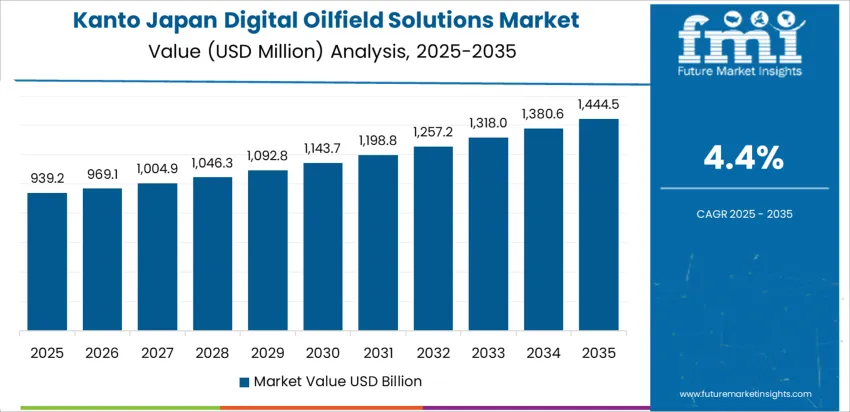
Kanto is experiencing steady growth in demand for digital oilfield solutions, with a 4.4% CAGR. The region's robust industrial base, especially in energy and technology sectors, is driving this growth. Kanto’s proximity to major oil and gas companies, combined with its focus on innovation, makes it a key industry for digital solutions in the energy industry. The region’s energy companies are increasingly adopting IoT-based monitoring systems, data analytics, and predictive maintenance tools to optimize oilfield operations and improve production efficiency. Kanto's technological expertise in automation and AI is accelerating the implementation of digital oilfield solutions. As Kanto continues to push for digital transformation in the energy sector, the demand for innovative solutions in oilfield management will continue to rise, contributing to the region’s 4.4% CAGR in this sector.
What is Driving Demand for Digital Oilfield Solutions in Kinki?
In Kinki, the demand for digital oilfield solutions is growing at a 3.9% CAGR. The region’s energy sector, especially in areas like Osaka and Kyoto, is undergoing digital transformation as companies seek to improve efficiency and reduce operational costs in oil and gas operations. Kinki is home to several energy and technology firms that are increasingly adopting digital solutions for monitoring, data analysis, and predictive maintenance. The region’s focus on integrating digital technologies in energy infrastructure is boosting the demand for digital oilfield solutions. Kinki’s industrial base, which includes strong manufacturing and chemical industries, requires efficient oilfield management systems to ensure optimal production. As the region continues to focus on energy efficiency and operational excellence, the demand for digital oilfield solutions is expected to grow steadily.
How is Demand for Digital Oilfield Solutions Growing in Chubu?
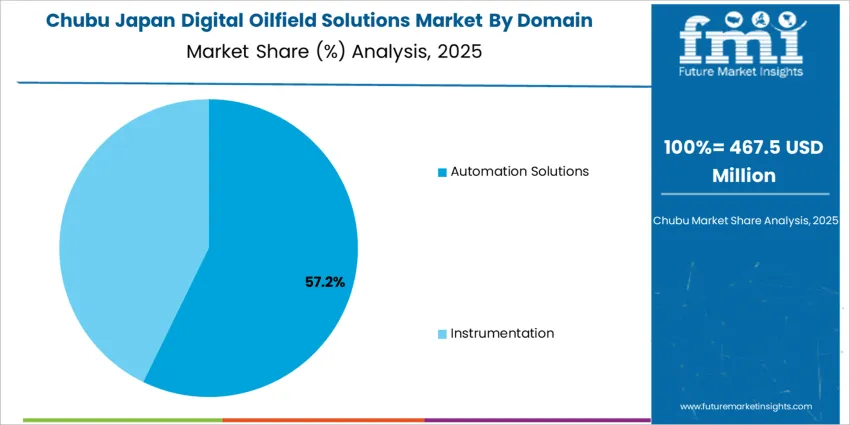
Chubu is seeing moderate growth in demand for digital oilfield solutions, with a 3.4% CAGR. The region’s energy companies are increasingly adopting digital technologies to optimize their oilfield operations and improve productivity. Chubu's strong industrial base, including manufacturing and technology sectors, is driving the need for more efficient energy management solutions. The adoption of advanced data analytics, real-time monitoring, and automation technologies is helping companies in Chubu improve operational efficiency and reduce costs. Chubu’s focus on integrating digital solutions in both traditional and renewable energy sectors is contributing to the demand for digital oilfield technologies. As the region continues to embrace digital transformation in energy, the demand for these solutions is expected to grow steadily, although at a moderate pace compared to more industrialized regions.
What is Driving Demand for Digital Oilfield Solutions in Tohoku?
Tohoku is experiencing moderate growth in demand for digital oilfield solutions, with a 3.0% CAGR. The region's focus on modernizing its energy infrastructure and adopting new technologies in oilfield management is contributing to the growth of digital solutions. Tohoku's oil and gas operations are increasingly turning to data-driven insights and automation to optimize production and improve operational efficiency. Tohoku’s investment in renewable energy is driving demand for digital technologies that help manage and optimize energy production. As the region continues to invest in digital infrastructure and integrate advanced solutions in the energy sector, the demand for digital oilfield technologies is expected to rise steadily, although at a more moderate pace compared to other regions.
Why is Demand for Digital Oilfield Solutions Growing in Rest of Japan?
The Rest of Japan is seeing steady demand for digital oilfield solutions at a 2.8% CAGR. This growth is primarily driven by the expansion of digital technologies in regional oil and gas operations, with a focus on improving efficiency and reducing costs. As oil and gas companies in these regions adopt automation and digital solutions for monitoring and controlling oilfield processes, demand for digital solutions is rising. Regional players are increasingly using predictive maintenance tools and IoT-based systems to optimize production. Although the growth rate is slower in the Rest of Japan compared to major industrial hubs, there is a growing push for adopting energy-efficient technologies, which is expected to continue driving demand for digital oilfield solutions in these areas.
What is the Competitive Landscape of Digital Oilfield Solutions Demand in Japan?
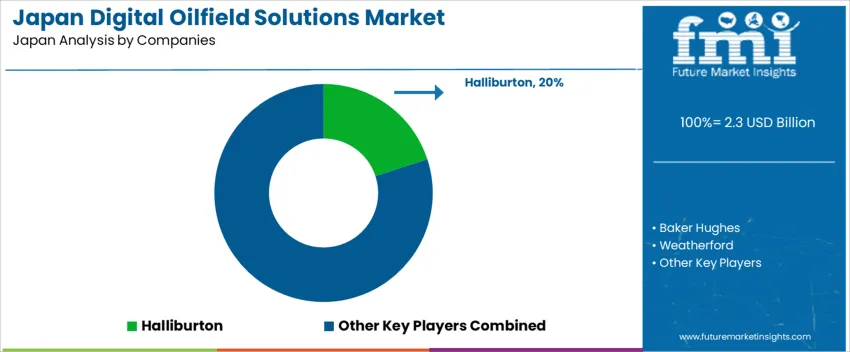
The demand for digital oilfield solutions in Japan is rising as the oil and gas industry seeks to improve operational efficiency, enhance safety, and reduce costs through the use of advanced technologies. Digital oilfield solutions utilize sensors, data analytics, automation, and cloud computing to optimize exploration, drilling, and production processes. With a focus on maximizing production and minimizing downtime, Japan’s oil and gas sector is increasingly adopting these solutions to meet the growing energy demand while also ensuring sustainability and compliance with environmental standards.
Leading companies in the digital oilfield solutions industry in Japan include Halliburton, Baker Hughes, Weatherford, Siemens Energy, and Schlumberger. Halliburton holds a significant industry share of 20.0%, providing a wide range of services designed to optimize well performance, enhance reservoir management, and improve operational efficiency through advanced digital technologies. Baker Hughes offers integrated digital oilfield solutions focused on automation, data integration, and real-time monitoring to improve productivity. Weatherford specializes in digital solutions for real-time decision-making and integrated data management. Siemens Energy focuses on providing energy-efficient digital solutions for oilfield operations, while Schlumberger is a leading provider of comprehensive digital oilfield technologies, leveraging data analytics, automation, and cloud-based solutions to enhance operational performance.
Competition in the digital oilfield solutions industry is driven by the increasing need for cost-effective and efficient solutions that optimize production and reduce downtime. Companies compete by offering integrated solutions that provide real-time monitoring, predictive maintenance, and enhanced decision-making capabilities. The ongoing shift towards digitalization, the growing importance of sustainability in energy production, and the desire for more efficient and safer operations are key factors fueling demand. Providers that can offer innovative, scalable, and reliable solutions will continue to lead the industry as the oil and gas sector in Japan modernizes its operations.
Key Players in Japan Digital Oilfield Solutions Demand
- Halliburton
- Baker Hughes
- Weatherford
- Siemens Energy
- Schlumberger
Scope of Report
| Items | Values |
|---|---|
| Quantitative Units (2025) | USD billion |
| Component | Hardware, Software, Services |
| Domain | Automation Solutions, Instrumentation |
| End Use | Upstream, Midstream, Downstream |
| Region | Kyushu & Okinawa, Kanto, Kinki, Chubu, Tohoku, Rest of Japan |
| Countries Covered | Japan |
| Key Companies Profiled | Halliburton, Baker Hughes, Weatherford, Siemens Energy, Schlumberger |
| Additional Attributes | Dollar sales by component, domain, and end use; regional CAGR and adoption trends; demand trends in digital oilfield solutions; growth in upstream, midstream, and downstream sectors; technology adoption for automation and instrumentation in the oil and gas industry; vendor offerings including software, hardware, and services; regulatory influences and industry standards |
Japan Digital Oilfield Solutions Demand by Key Segments
Component:
- Hardware
- Software
- Services
Domain:
- Automation Solutions
- Instrumentation
End Use:
- Upstream
- Midstream
- Downstream
Region:
- Kyushu & Okinawa
- Kanto
- Kinki
- Chubu
- Tohoku
- Rest of Japan
Frequently Asked Questions
How big is the demand for digital oilfield solutions in Japan in 2025?
The demand for digital oilfield solutions in Japan is estimated to be valued at USD 2.3 billion in 2025.
What will be the size of digital oilfield solutions in Japan in 2035?
The market size for the digital oilfield solutions in Japan is projected to reach USD 3.4 billion by 2035.
How much will be the demand for digital oilfield solutions in Japan growth between 2025 and 2035?
The demand for digital oilfield solutions in Japan is expected to grow at a 3.8% CAGR between 2025 and 2035.
What are the key product types in the digital oilfield solutions in Japan?
The key product types in digital oilfield solutions in Japan are hardware, software and services.
Which domain segment is expected to contribute significant share in the digital oilfield solutions in Japan in 2025?
In terms of domain, automation solutions segment is expected to command 60.0% share in the digital oilfield solutions in Japan in 2025.
Preview the report firsthand - request a free sample
Get SampleGet the brochure for pricing and purchase details.
Get PDFTable of Content
- Executive Summary
- Japan Market Outlook
- Demand-side Trends
- Supply-side Trends
- Technology Roadmap Analysis
- Analysis and Recommendations
- Market Overview
- Market Coverage / Taxonomy
- Market Definition / Scope / Limitations
- Market Background
- Market Dynamics
- Drivers
- Restraints
- Opportunity
- Trends
- Scenario Forecast
- Demand in Optimistic Scenario
- Demand in Likely Scenario
- Demand in Conservative Scenario
- Opportunity Map Analysis
- Product Life Cycle Analysis
- Supply Chain Analysis
- Investment Feasibility Matrix
- Value Chain Analysis
- PESTLE and Porter’s Analysis
- Regulatory Landscape
- Regional Parent Market Outlook
- Production and Consumption Statistics
- Import and Export Statistics
- Market Dynamics
- Japan Market Analysis 2020 to 2024 and Forecast, 2025 to 2035
- Historical Market Size Value (USD Million) Analysis, 2020 to 2024
- Current and Future Market Size Value (USD Million) Projections, 2025 to 2035
- Y-o-Y Growth Trend Analysis
- Absolute $ Opportunity Analysis
- Japan Market Pricing Analysis 2020 to 2024 and Forecast 2025 to 2035
- Japan Market Analysis 2020 to 2024 and Forecast 2025 to 2035, By Component
- Introduction / Key Findings
- Historical Market Size Value (USD Million) Analysis By Component , 2020 to 2024
- Current and Future Market Size Value (USD Million) Analysis and Forecast By Component , 2025 to 2035
- Hardware
- Software
- Services
- Y-o-Y Growth Trend Analysis By Component , 2020 to 2024
- Absolute $ Opportunity Analysis By Component , 2025 to 2035
- Japan Market Analysis 2020 to 2024 and Forecast 2025 to 2035, By Domain
- Introduction / Key Findings
- Historical Market Size Value (USD Million) Analysis By Domain, 2020 to 2024
- Current and Future Market Size Value (USD Million) Analysis and Forecast By Domain, 2025 to 2035
- Automation Solutions
- Instrumentation
- Y-o-Y Growth Trend Analysis By Domain, 2020 to 2024
- Absolute $ Opportunity Analysis By Domain, 2025 to 2035
- Japan Market Analysis 2020 to 2024 and Forecast 2025 to 2035, By End Use
- Introduction / Key Findings
- Historical Market Size Value (USD Million) Analysis By End Use, 2020 to 2024
- Current and Future Market Size Value (USD Million) Analysis and Forecast By End Use, 2025 to 2035
- Upstream
- Midstream
- Downstream
- Y-o-Y Growth Trend Analysis By End Use, 2020 to 2024
- Absolute $ Opportunity Analysis By End Use, 2025 to 2035
- Market Structure Analysis
- Competition Dashboard
- Competition Benchmarking
- Market Share Analysis of Top Players
- By Regional
- By Component
- By Domain
- By End Use
- Competition Analysis
- Competition Deep Dive
- Halliburton
- Overview
- Product Portfolio
- Profitability by Market Segments (Product/Age /Sales Channel/Region)
- Sales Footprint
- Strategy Overview
- Marketing Strategy
- Product Strategy
- Channel Strategy
- Baker Hughes
- Weatherford
- Siemens Energy
- Schlumberger
- Halliburton
- Competition Deep Dive
- Assumptions & Acronyms Used
- Research Methodology


