

- Industry Size (2025)
- USD 1.3 Bn
- Forecast (2035)
- USD 2.3 Bn
- CAGR (2025 to 2035)
- 6.2%
Digital Group Dining Service Market Forecast and Outlook (2025-2035)
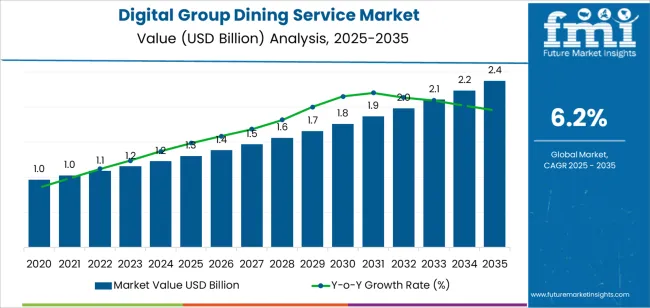
The global digital group dining service market expands from USD 1.3 billion in 2025 to USD 2.3 billion by 2035, growing at 6.2% CAGR, driven by enterprise-focused dining technology adoption and structured workplace food service programs. Current revenue streams are concentrated in transaction-based catering orders, digital menu hosting, and front-end ordering platforms deployed across corporate offices, universities, and institutional dining facilities. Today, approximately 68–72% of revenue is generated from digital ordering and group meal coordination platforms, where providers act either as aggregators (ezCater, ChowNow) or managed service operators (Sodexo, Compass Group). A further 18–22% arises from payment integration and service fees, while subscription-based dining workflow platforms account for less than 10%, reflecting early-stage adoption of deeper operational digitization.
Over the forecast horizon to 2035, revenue composition shifts toward system integration, automated meal planning intelligence, and workplace wellness-aligned dining programs. As corporate HR, facility management, and procurement teams increasingly require centralized, analytics-driven dining spend visibility, platform revenue is expected to transition to enterprise SaaS licensing, API-based cafeteria integration, and dynamic menu optimization systems, raising recurring revenue share to 35–45% by 2035. Additionally, AI-driven forecasting and demand planning modules, tied to employee attendance patterns and hybrid work cycles, become monetizable performance layers. The strategic revenue pivot moves from order facilitation to workflow ownership. Providers that integrate across point-of-sale, pantry management, catering scheduling, dietary analytics, and supplier logistics capture higher-margin, longer-contract enterprise accounts. Meanwhile, markets in East Asia and South Asia Pacific accelerate shift toward subscription-led cafeteria digitization due to dense corporate campus environments and scalable multi-site deployments.
Quick Stats for Digital Group Dining Service Market
- Digital Group Dining Service Market Value (2025): USD 1.3 billion
- Digital Group Dining Service Market Forecast Value (2035): USD 2.3 billion
- Digital Group Dining Service Market Forecast CAGR: 6.2%
- Leading Service Type in Digital Group Dining Service Market: Digitalization of Front-End Services
- Key Growth Regions in Digital Group Dining Service Market: East Asia, South Asia Pacific, and North America
- Top Key Players in Digital Group Dining Service Market: ezCater, Sodexo, Compass Group, ChowNow, Hungry
Where revenue comes from - now vs next (industry-level view)
| Period | Primary Revenue Buckets | Share | Notes |
|---|---|---|---|
| Today | Platform subscription fees | 35% | SaaS-based pricing, monthly recurring revenue |
| Transaction commissions | 30% | Order value percentage, payment processing | |
| Integration services | 20% | API connectivity, ERP integration | |
| Premium features & analytics | 15% | Advanced reporting, menu optimization | |
| Future (3-5 yrs) | Enterprise subscriptions | 30-35% | Multi-location contracts, volume commitments |
| Data & insights services | 18-22% | Predictive ordering, dietary analytics | |
| Transaction revenue | 20-25% | Dynamic pricing, cross-platform orders | |
| White-label solutions | 12-15% | Branded platforms for corporations | |
| AI-powered optimization | 8-12% | Menu planning, waste reduction | |
| Integration partnerships | 5-8% | HR systems, workplace management platforms |
The subsequent phase covering 2030-2035 anticipates continued expansion from USD 1714.4 million to USD 2.3 billion, adding USD 601.6 million or 58% of the decade's total growth. This period defines broader penetration of comprehensive digital dining ecosystems, integration with enterprise resource planning systems, and seamless compatibility with existing facility management infrastructure. The market development indicates fundamental transformation in corporate food service operations and employee dining experiences, with stakeholders positioned to capitalize on growing demand across multiple service types and enterprise segments. Geographic expansion patterns show concentrated growth in technology-forward markets with established corporate infrastructure, while emerging economies demonstrate accelerating adoption rates driven by workplace modernization initiatives and digital transformation programs across enterprise facilities and institutional dining operations.
Digital Group Dining Service Market Key Takeaways
| Metric | Value |
|---|---|
| Market Value (2025) | USD 1.3 billion |
| Market Forecast (2035) | USD 2.3 billion |
| Growth Rate | 6.2% CAGR |
| Leading Service Type | Digitalization of Front-End Services |
| Primary Application | Large Enterprises |
The market exhibits strong fundamentals with digitalization of front-end services capturing dominant share through advanced ordering interfaces and streamlined group dining coordination capabilities. Large enterprise applications drive primary demand, supported by increasing workplace digitalization and corporate food service modernization requirements. Geographic expansion remains concentrated in developed markets with established corporate infrastructure, while emerging economies show accelerating adoption rates driven by enterprise digital transformation initiatives and rising workplace service standards. The market benefits from growing recognition of digital dining platforms as essential tools for workplace productivity, employee satisfaction, and operational efficiency optimization across diverse corporate and institutional environments.
Imperatives for Stakeholders in Digital Group Dining Service Market
Design for integration, not isolation
- Offer connectivity packages: platform + API documentation + HR system integration + training + technical support.
- Preconfigured workflows: employee authentication, budget management, dietary preferences, order tracking, and automated invoicing on group orders.
User experience optimization
- Intuitive ordering interfaces, mobile-first design, personalized menu recommendations, and seamless group coordination features (split payments, dietary filters).
Data-driven decision support
- Real-time spending analytics, dietary pattern insights, vendor performance tracking, waste reduction metrics, and predictive order planning.
Flexible pricing structures
- Clear base platform cost + transparent service tiers (integration support, analytics packages, customization options); volume-based pricing for enterprise clients.
Segmental Analysis
Primary Classification: The market segments by service type into digitalization of front-end services, digitization of back-end operations, and others, representing the evolution from basic ordering platforms to comprehensive dining management solutions for enterprise food service optimization.
Secondary Classification: Application segmentation divides the market into large enterprises, medium enterprises, and small enterprises, reflecting distinct requirements for scale, functionality complexity, and operational integration standards.
Regional Classification: Geographic distribution covers North America, Latin America, Western Europe, Eastern Europe, East Asia, South Asia Pacific, and Middle East & Africa, with developed markets leading adoption while emerging economies show accelerating growth patterns driven by enterprise digitalization programs.
The segmentation structure reveals technology progression from standard ordering interfaces toward sophisticated dining management ecosystems with enhanced analytics and integration capabilities, while application diversity spans from large corporate facilities to small enterprise food service operations requiring efficient group dining coordination solutions.
By Service Type, the Digitalization of Front-End Services Segment Accounts for Dominant Market Share
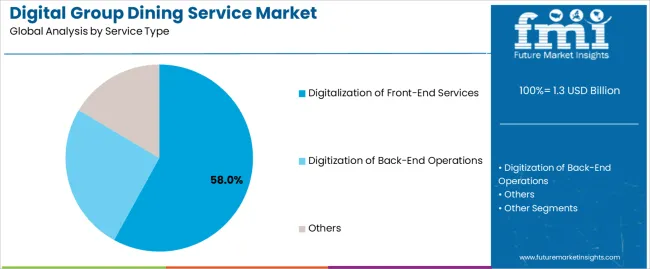
Market Position: Digitalization of Front-End Services commands the leading position in the digital group dining service market with 58% market share through advanced user interface features, including intuitive ordering systems, mobile accessibility, and group coordination capabilities that enable enterprises to achieve optimal dining experiences across diverse corporate and institutional environments.
Value Drivers: The segment benefits from enterprise preference for user-friendly platforms that provide seamless ordering experiences, reduced coordination time, and operational efficiency optimization without requiring extensive employee training. Advanced design features enable personalized menu displays, dietary filtering, and integration with existing corporate systems, where user experience and operational simplicity represent critical adoption requirements.
Competitive Advantages: Digitalization of Front-End Services differentiates through proven user engagement, consistent ordering performance, and integration with enterprise authentication systems that enhance operational effectiveness while maintaining optimal service standards suitable for diverse corporate and institutional applications.
Key market characteristics:
- Advanced interface designs with optimized ordering configuration and user experience capabilities
- Enhanced ordering effectiveness, enabling 95-98% completion rates with consistent user satisfaction
- Enterprise compatibility, including single sign-on integration, budget controls, and group coordination for dining operations
Digitization of Back-End Operations Shows Balanced Market Growth
Digitization of Back-End Operations maintains a 28% market position in the digital group dining service market due to operational efficiency properties and integration advantages. These systems appeal to facilities requiring comprehensive kitchen management with competitive pricing for food service optimization applications. Market growth is driven by facility expansion, emphasizing reliable operations management and efficiency through optimized system designs.
Others Demonstrate Specialized Growth
Others capture 14% market share through specialized dining requirements in hybrid service models, vendor management platforms, and analytics-focused applications. These facilities demand flexible dining systems capable of handling diverse operational needs while providing effective coordination capabilities and reporting functionality.
By Application, the Large Enterprises Segment Shows Fastest Growth
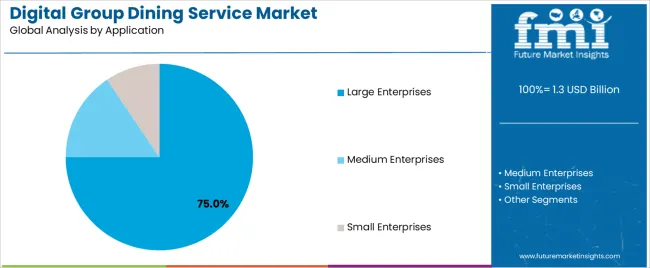
Market Context: Large Enterprises accounts 75% market share and demonstrate the highest growth rate in the digital group dining service market with 6.8% CAGR due to widespread adoption of comprehensive dining platforms and increasing focus on employee experience optimization, operational cost efficiency, and workplace service applications that maximize productivity while maintaining service quality standards.
Appeal Factors: Large enterprise operators prioritize system scalability, multi-location coordination, and integration with existing HR infrastructure that enables coordinated dining operations across multiple facilities. The segment benefits from substantial workplace investment and modernization programs that emphasize the acquisition of digital dining systems for employee satisfaction and operational efficiency applications.
Growth Drivers: Corporate transformation programs incorporate digital dining platforms as standard workplace amenities, while remote work evolution increases demand for flexible dining capabilities that comply with employee preferences and minimize administrative complexity.
Market Challenges: Varying facility requirements and system integration complexity may limit standardization across different locations or operational scenarios.
Application dynamics include:
- Strong growth in corporate headquarters and campus operations requiring multi-location capabilities
- Increasing adoption in employee experience initiatives and workplace optimization applications for corporate operators
- Rising integration with HR systems for budget management and reporting assurance
Medium Enterprises Applications Maintain Balanced Demand
Medium Enterprises applications capture market share through balanced dining requirements in regional operations, departmental food service, and mid-scale applications. These facilities demand flexible dining systems capable of operating with moderate user volumes while providing effective ordering access and operational reliability capabilities.
Small Enterprises Applications Show Specialized Leadership
Small Enterprises applications account for market share, including startup operations, small office dining, and boutique corporate facilities requiring cost-effective capabilities for operational optimization and service efficiency.
What are the Drivers, Restraints, and Key Trends of the Digital Group Dining Service Market?
| Category | Factor | Impact | Why It Matters |
|---|---|---|---|
| Driver | Remote work evolution & hybrid workplace models (flexibility demands) | ★★★★★ | Distributed teams require flexible ordering solutions with delivery coordination and individual preference management across multiple locations. |
| Driver | Employee experience focus & workplace amenity competition (talent retention) | ★★★★★ | Turns digital dining from optional to essential workplace benefit; platforms offering personalized experiences and convenience gain competitive advantage. |
| Driver | Corporate cost optimization & dining budget management (expense control) | ★★★★☆ | Companies need transparent spending visibility; demand for budget controls and reporting analytics expanding addressable market. |
| Restraint | Integration complexity & legacy system compatibility (especially older ERP) | ★★★★☆ | Small enterprises face technical barriers; increases implementation costs and slows platform adoption in traditional industries. |
| Restraint | Vendor fragmentation & menu standardization challenges | ★★★☆☆ | Multi-vendor coordination requires extensive onboarding and quality consistency, limiting platform effectiveness and increasing operational complexity. |
| Trend | AI-powered personalization & predictive ordering (dietary preferences) | ★★★★★ | Machine learning recommendations, waste reduction analytics, and preference prediction transform experiences; intelligent automation becomes core value proposition. |
| Trend | Sustainability tracking & food waste reduction initiatives | ★★★★☆ | Environmental accountability drives demand for carbon footprint tracking; platforms offering sustainability metrics and waste analytics drive competition toward responsible dining solutions. |
How Are Leading Countries Driving Growth in the Digital Group Dining Service Market?
The digital group dining service market demonstrates varied regional dynamics with Growth Leaders including China (8.4% growth rate) and India (7.8% growth rate) driving expansion through enterprise digitalization initiatives and corporate infrastructure development. Steady Performers encompass Germany (7.1% growth rate), United States (5.9% growth rate), and developed regions, benefiting from established corporate environments and advanced technology adoption. Emerging Markets feature Brazil (6.5% growth rate) and developing regions, where workplace modernization and digital transformation support consistent growth patterns.
Regional synthesis reveals East Asian markets leading adoption through corporate expansion and workplace technology development, while South Asian countries maintain strong growth supported by enterprise digital transformation and service sector advancement. North American markets show steady expansion driven by workplace innovation and employee experience priorities, while European markets demonstrate moderate growth influenced by corporate digitalization and workplace amenity trends.
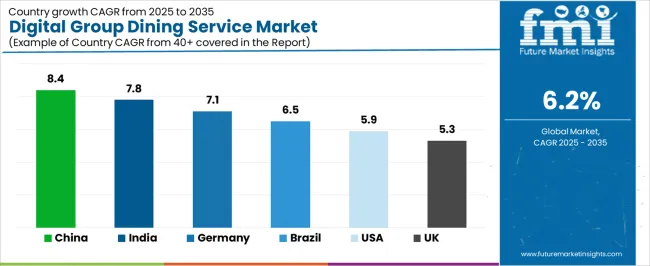
| Region/Country | 2025-2035 Growth | How to win | What to watch out |
|---|---|---|---|
| China | 8.4% | Lead with WeChat/Alipay integration | Data localization; platform competition |
| India | 7.8% | Focus on value pricing | Payment infrastructure; vendor density |
| Germany | 7.1% | Offer GDPR-compliant analytics | Privacy regulations; works council requirements |
| Brazil | 6.5% | Provide local payment options | Currency fluctuations; economic volatility |
| United States | 5.9% | Push enterprise integrations | Market saturation; vendor consolidation |
| United Kingdom | 5.3% | Emphasize flexibility features | Post-Brexit adjustments; hybrid work patterns |
How Is Enterprise Digitalization Accelerating Market Growth in China?
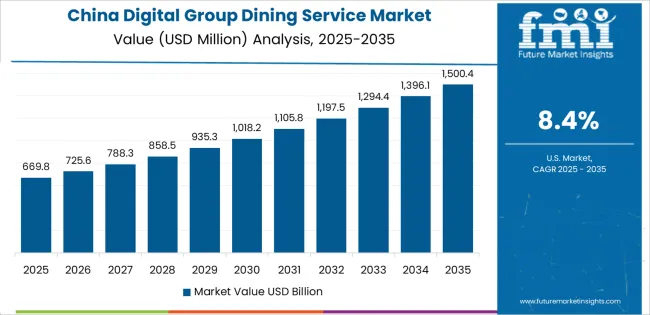
China establishes fastest market growth through aggressive enterprise digitalization programs and comprehensive workplace technology development, integrating digital group dining platforms as standard components in corporate facilities and technology campus installations. The country's 8.4% growth rate reflects government initiatives promoting digital economy advancement and workplace modernization that mandate the use of advanced dining platforms in corporate and institutional facilities. Growth concentrates in major business centers, including Beijing, Shanghai, and Shenzhen, where technology sector operations showcase integrated dining systems that appeal to enterprises seeking advanced employee experience capabilities and operational optimization applications.
Chinese platform providers are developing locally-optimized dining solutions that combine domestic payment integration advantages with advanced ordering features, including social media connectivity and real-time coordination capabilities. Distribution channels through enterprise software distributors and workplace service providers expand market access, while corporate support for employee amenities drives adoption across diverse enterprise and institutional segments.
Strategic Market Indicators:
- Technology companies leading adoption with 85% deployment rate in corporate campus and office facility sectors
- Corporate workplace programs providing substantial investment for employee experience technology development
- Local platform providers capturing 42% market share through payment integration and localized feature support
- Enterprise dining requirements driving platform development targeting corporate workplace markets
Why Are Corporate Infrastructure Programs Enhancing Market Adoption in India?
In Mumbai, Bengaluru, and Hyderabad, corporate facilities and technology campuses are implementing digital group dining platforms as standard amenities for employee experience and operational efficiency applications, driven by increasing enterprise investment and workplace modernization programs that emphasize the importance of service quality capabilities. The market holds a 7.8% growth rate, supported by government digital transformation initiatives and corporate infrastructure development programs that promote advanced dining platforms for enterprise and institutional facilities. Indian operators are adopting dining systems that provide cost-effective operational performance and user-friendly features, particularly appealing in urban regions where employee satisfaction and operational efficiency represent critical workplace requirements.
Market expansion benefits from growing technology sector capabilities and international platform adoption patterns that enable domestic development of digital dining solutions for corporate and institutional applications. Technology adoption follows patterns established in workplace software, where functionality and affordability drive procurement decisions and operational deployment.
Market Intelligence Brief:
- Technology and service sectors are driving initial adoption with 52% annual growth in platform implementation
- Corporate workplace programs emphasizing dining platforms for employee experience and cost management
- Local platform providers partnering with international companies for system development
- Enterprise facilities implementing dining systems for operational optimization and employee satisfaction
How Does Technology Leadership Strengthen Market Position in Germany?
Germany establishes technology leadership through comprehensive corporate programs and advanced workplace infrastructure development, integrating digital group dining platforms across enterprise and institutional applications. The country's 7.1% growth rate reflects established corporate relationships and mature workplace technology adoption that supports widespread use of dining platforms in corporate and facility management operations. Growth concentrates in major business centers, including Frankfurt, Munich, and Hamburg, where corporate operations showcase mature platform deployment that appeals to enterprises seeking proven employee experience capabilities and operational efficiency applications.
German platform providers leverage established distribution networks and comprehensive compliance capabilities, including data privacy programs and workplace integration support that create customer relationships and operational advantages. The market benefits from mature regulatory standards and corporate requirements that support platform use while encouraging technology advancement and operational optimization.
Market Intelligence Brief:
- Corporate and institutional facilities maintaining 82% adoption rate with mature platform deployment
- Established data privacy standards providing consistent demand for compliant technology solutions
- Enterprise workplace networks capturing 68% market share through employee experience focus and operational efficiency
- Technology integration programs expanding platform capabilities in corporate scenarios
How Is HR System Integration Driving Market Advancement in United States?
United States demonstrates market leadership through comprehensive corporate programs and advanced workplace infrastructure development, integrating digital group dining platforms across enterprise and institutional applications. The country's 5.9% growth rate reflects established technology industry relationships and mature platform adoption that supports widespread use of dining systems in corporate and facility management operations. Growth concentrates in major business centers, including San Francisco, New York, and Austin, where technology sector operations showcase mature platform deployment that appeals to enterprises seeking proven employee experience capabilities and operational efficiency applications.
American platform providers prioritize enterprise integration and comprehensive analytics in system development, creating demand for feature-rich platforms with advanced capabilities, including HR system connectivity and predictive ordering features. The market benefits from established workplace technology infrastructure and willingness to invest in employee experience solutions that provide operational benefits and compliance with corporate standards.
Market Intelligence Brief:
- Technology companies focusing on enterprise integration and analytics capabilities, driving premium segment growth
- Corporate workplace partnerships providing 38% faster implementation cycles
- Platform collaboration between American providers and international enterprise clients
- Employee training programs expanding platform integration in corporate scenarios
Why Is Workplace Modernization Supporting Market Expansion in Brazil?
Brazil's market expansion benefits from diverse enterprise demand, including workplace modernization in São Paulo and Rio de Janeiro, corporate facility upgrades, and government digital transformation programs that increasingly incorporate dining platforms for employee experience applications. The country maintains a 6.5% growth rate, driven by rising corporate activity and increasing recognition of digital dining benefits, including operational cost control and enhanced employee satisfaction.
Market dynamics focus on cost-effective dining platforms that balance advanced operational performance with affordability considerations important to Brazilian corporate operators. Growing enterprise digitalization creates continued demand for modern dining systems in new facility infrastructure and workplace modernization projects.
Strategic Market Considerations:
- Corporate and service sectors leading growth with focus on employee experience and operational efficiency applications
- Regional workplace requirements driving diverse product portfolio from basic ordering platforms to advanced systems
- Local payment integration challenges offset by potential partnerships with domestic payment providers
- Government digital transformation initiatives beginning to influence procurement standards and operational requirements
How Is Sustainability and Waste Reduction Driving Adoption Across Europe?
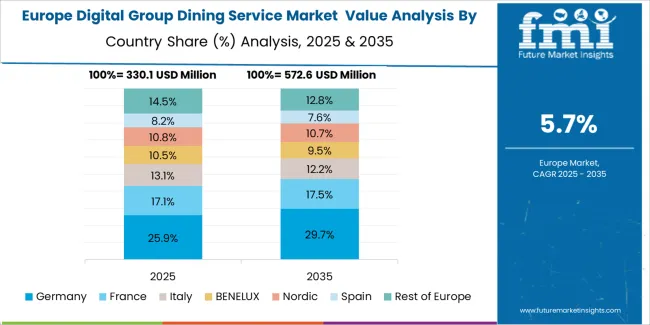
The European digital group dining service market is projected to grow from USD 465.6 million in 2025 to USD 838.7 million by 2035, registering a CAGR of 6.1% over the forecast period. Germany is expected to maintain its leadership position with a 33.2% market share in 2025, supported by its advanced corporate infrastructure and major business centers.
United Kingdom follows with a 23.8% share in 2025, driven by comprehensive workplace modernization programs and technology sector adoption initiatives. France holds a 19.4% share through specialized corporate applications and employee experience requirements. Italy commands a 12.7% share, while Spain accounts for 10.9% in 2025. The rest of Europe region is anticipated to gain momentum, expanding its collective share from 7.1% to 8.3% by 2035, attributed to increasing platform adoption in Nordic countries and emerging Central European enterprises implementing workplace digitalization programs.
Japan Demonstrates Established Market Maturity
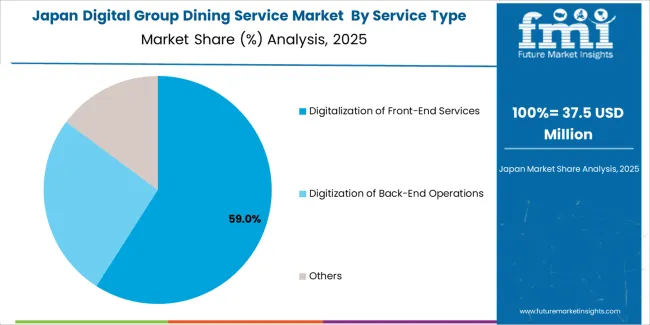
Japan maintains established market position with 4.7% growth rate through comprehensive corporate dining programs and advanced workplace technology infrastructure, integrating digital group dining platforms across enterprise facilities in Tokyo, Osaka, and Nagoya business districts. The market demonstrates mature adoption patterns with 76% penetration rate in large corporate facilities, supported by established workplace service culture and technology integration standards.
Japanese platform providers emphasize system reliability and precision ordering capabilities, creating demand for high-quality solutions with advanced features including dietary preference management and group coordination systems. Corporate operators prioritize platforms that provide seamless integration with existing facility management systems and maintain strict service quality standards suitable for Japanese workplace expectations.
South Korea Shows Technology Innovation Leadership
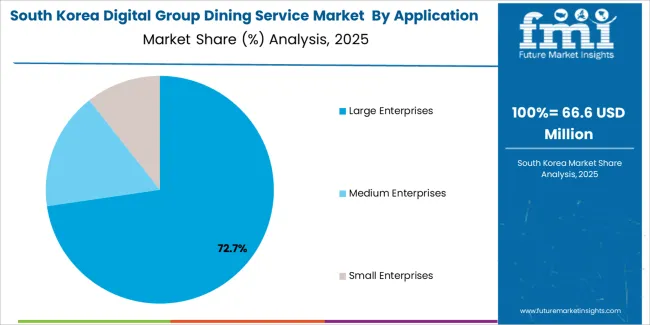
South Korea demonstrates technology innovation leadership with 5.1% growth rate through advanced corporate digitalization and comprehensive workplace technology development, particularly in Seoul and Busan business centers where technology companies implement cutting-edge dining platforms. The market benefits from high mobile technology adoption rates and established digital payment infrastructure, enabling rapid deployment of advanced dining solutions with 82% smartphone-based ordering prevalence. Korean platform providers integrate social networking features and real-time coordination capabilities, creating distinctive employee experiences that appeal to technology-forward corporate environments. Government support for digital transformation initiatives and workplace innovation programs drives continued platform adoption across diverse enterprise sectors.
How Competitive Is the Global Digital Group Dining Service Market and Its Strategic Landscape?
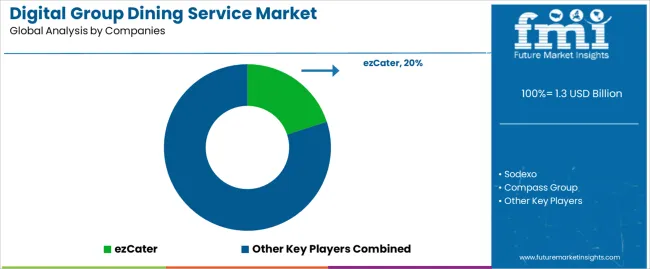
The digital group dining service market structure consists of 12-18 credible platform providers with the top 4-6 companies controlling approximately 60-65% of market revenue. Leadership positions are maintained through enterprise relationship development, comprehensive integration capabilities, and continuous platform innovation encompassing user experience optimization, analytics sophistication, and seamless connectivity with corporate systems. Basic ordering functionality and standard reporting dashboards are becoming commoditized features as market maturity increases.
Margin opportunities concentrate in premium integration services, custom analytics packages, and deep embedding into corporate workflow systems including HR platforms, expense management tools, and facility management applications. Enterprise subscription models with multi-location commitments provide stable recurring revenue streams, while value-added services including menu optimization consulting, dietary analytics, and sustainability tracking create differentiation opportunities beyond core platform functionality.
Platform providers pursuing growth strategies emphasize vertical integration into specific industry segments including technology sector campus dining, healthcare facility food service, and educational institution catering. Strategic partnerships with food service operators, payment processors, and enterprise software vendors enable comprehensive solution offerings that address complete dining management requirements. Technology investments focus on artificial intelligence capabilities for predictive ordering, machine learning personalization for menu recommendations, and automated coordination features for group dining scenarios.
| Stakeholder | What they actually control | Typical strengths | Typical blind spots |
|---|---|---|---|
| Global platforms | Enterprise relationships, multi-region presence, vendor networks | Broad functionality, proven scalability, comprehensive support | Feature bloat; customization limitations |
| Technology innovators | AI capabilities; advanced analytics; mobile-first design | Latest features first; attractive UX | Service density outside tech hubs; enterprise sales cycles |
| Regional specialists | Local vendor networks, payment integration, cultural customization | Market knowledge; practical pricing; local compliance | Technology gaps; limited geographic reach |
| Service-focused ecosystems | Integration expertise, implementation support, customer success | Lowest friction adoption; comprehensive onboarding | Service costs if overpromised; platform dependency |
| Niche specialists | Vertical solutions, specialized workflows, industry expertise | Win specific segments; deep domain knowledge | Scalability constraints; narrow addressable market |
Key Players in the Digital Group Dining Service Market
- ezCater
- Sodexo
- Compass Group
- ChowNow
- Hungry
- ZeroCater
- Meituan
- Beijing DBN Technology Group
- Aramark
- Foodsby
- Cater2.me
- FoodPanda Corporate
Scope of the Report
| Item | Value |
|---|---|
| Quantitative Units | USD million |
| Service Type | Digitalization of Front-End Services, Digitization of Back-End Operations, Others |
| Application | Large Enterprises, Medium Enterprises, Small Enterprises |
| Regions Covered | North America, Latin America, Western Europe, Eastern Europe, East Asia, South Asia Pacific, Middle East & Africa |
| Countries Covered | United States, China, Germany, India, United Kingdom, Japan, Canada, Brazil, France, Australia, South Korea, and 20+ additional countries |
| Key Companies Profiled | ezCater, Sodexo, Compass Group, ChowNow, Hungry, ZeroCater, Meituan, Beijing DBN Technology Group, Aramark, Foodsby |
| Additional Attributes | Revenue analysis by service type and application categories, regional adoption trends across East Asia, South Asia Pacific, and North America, competitive landscape with platform providers and food service companies, enterprise preferences for user experience and integration capabilities, connectivity with HR platforms and facility management systems, innovations in ordering technology and analytics enhancement, and development of AI-powered personalization solutions with predictive capabilities and workplace optimization features. |
Digital Group Dining Service Market by Segments
Service Type:
- Digitalization of Front-End Services
- Digitization of Back-End Operations
- Others
Application:
- Large Enterprises
- Medium Enterprises
- Small Enterprises
Region:
- North America
- United States
- Canada
- Mexico
- Latin America
- Brazil
- Chile
- Rest of Latin America
- Western Europe
- Germany
- United Kingdom
- France
- Italy
- Spain
- Nordic
- BENELUX
- Rest of Western Europe
- Eastern Europe
- Russia
- Poland
- Rest of Eastern Europe
- East Asia
- China
- Japan
- South Korea
- South Asia Pacific
- India
- ASEAN
- Australia & New Zealand
- Rest of South Asia Pacific
- Middle East & Africa
- Kingdom of Saudi Arabia
- Other GCC Countries
- Turkey
- South Africa
- Other African Union
- Rest of Middle East & Africa
Frequently Asked Questions
How big is the digital group dining service market in 2025?
The global digital group dining service market is estimated to be valued at USD 1.3 billion in 2025.
What will be the size of digital group dining service market in 2035?
The market size for the digital group dining service market is projected to reach USD 2.4 billion by 2035.
How much will be the digital group dining service market growth between 2025 and 2035?
The digital group dining service market is expected to grow at a 6.2% CAGR between 2025 and 2035.
What are the key product types in the digital group dining service market?
The key product types in digital group dining service market are digitalization of front-end services, digitization of back-end operations and others.
Which application segment to contribute significant share in the digital group dining service market in 2025?
In terms of application, large enterprises segment to command 75.0% share in the digital group dining service market in 2025.
Preview the report firsthand - request a free sample
Get SampleGet the brochure for pricing and purchase details.
Get PDFTable of Content
- Executive Summary
- Global Market Outlook
- Demand-side Trends
- Supply-side Trends
- Technology Roadmap Analysis
- Analysis and Recommendations
- Market Overview
- Market Coverage / Taxonomy
- Market Definition / Scope / Limitations
- Market Background
- Market Dynamics
- Drivers
- Restraints
- Opportunity
- Trends
- Scenario Forecast
- Demand in Optimistic Scenario
- Demand in Likely Scenario
- Demand in Conservative Scenario
- Opportunity Map Analysis
- Product Life Cycle Analysis
- Supply Chain Analysis
- Investment Feasibility Matrix
- Value Chain Analysis
- PESTLE and Porter’s Analysis
- Regulatory Landscape
- Regional Parent Market Outlook
- Production and Consumption Statistics
- Import and Export Statistics
- Market Dynamics
- Global Market Analysis 2020 to 2024 and Forecast, 2025 to 2035
- Historical Market Size Value (USD Million) Analysis, 2020 to 2024
- Current and Future Market Size Value (USD Million) Projections, 2025 to 2035
- Y-o-Y Growth Trend Analysis
- Absolute $ Opportunity Analysis
- Global Market Pricing Analysis 2020 to 2024 and Forecast 2025 to 2035
- Global Market Analysis 2020 to 2024 and Forecast 2025 to 2035, By Service Type
- Introduction / Key Findings
- Historical Market Size Value (USD Million) Analysis By Service Type , 2020 to 2024
- Current and Future Market Size Value (USD Million) Analysis and Forecast By Service Type , 2025 to 2035
- Digitalization of Front-End Services
- Digitization of Back-End Operations
- Others
- Y-o-Y Growth Trend Analysis By Service Type , 2020 to 2024
- Absolute $ Opportunity Analysis By Service Type , 2025 to 2035
- Global Market Analysis 2020 to 2024 and Forecast 2025 to 2035, By Application
- Introduction / Key Findings
- Historical Market Size Value (USD Million) Analysis By Application, 2020 to 2024
- Current and Future Market Size Value (USD Million) Analysis and Forecast By Application, 2025 to 2035
- Large Enterprises
- Medium Enterprises
- Small Enterprises
- Y-o-Y Growth Trend Analysis By Application, 2020 to 2024
- Absolute $ Opportunity Analysis By Application, 2025 to 2035
- Global Market Analysis 2020 to 2024 and Forecast 2025 to 2035, By Region
- Introduction
- Historical Market Size Value (USD Million) Analysis By Region, 2020 to 2024
- Current Market Size Value (USD Million) Analysis and Forecast By Region, 2025 to 2035
- North America
- Latin America
- Western Europe
- Eastern Europe
- East Asia
- South Asia and Pacific
- Middle East & Africa
- Market Attractiveness Analysis By Region
- North America Market Analysis 2020 to 2024 and Forecast 2025 to 2035, By Country
- Historical Market Size Value (USD Million) Trend Analysis By Market Taxonomy, 2020 to 2024
- Market Size Value (USD Million) Forecast By Market Taxonomy, 2025 to 2035
- By Country
- USA
- Canada
- Mexico
- By Service Type
- By Application
- By Country
- Market Attractiveness Analysis
- By Country
- By Service Type
- By Application
- Key Takeaways
- Latin America Market Analysis 2020 to 2024 and Forecast 2025 to 2035, By Country
- Historical Market Size Value (USD Million) Trend Analysis By Market Taxonomy, 2020 to 2024
- Market Size Value (USD Million) Forecast By Market Taxonomy, 2025 to 2035
- By Country
- Brazil
- Chile
- Rest of Latin America
- By Service Type
- By Application
- By Country
- Market Attractiveness Analysis
- By Country
- By Service Type
- By Application
- Key Takeaways
- Western Europe Market Analysis 2020 to 2024 and Forecast 2025 to 2035, By Country
- Historical Market Size Value (USD Million) Trend Analysis By Market Taxonomy, 2020 to 2024
- Market Size Value (USD Million) Forecast By Market Taxonomy, 2025 to 2035
- By Country
- Germany
- UK
- Italy
- Spain
- France
- Nordic
- BENELUX
- Rest of Western Europe
- By Service Type
- By Application
- By Country
- Market Attractiveness Analysis
- By Country
- By Service Type
- By Application
- Key Takeaways
- Eastern Europe Market Analysis 2020 to 2024 and Forecast 2025 to 2035, By Country
- Historical Market Size Value (USD Million) Trend Analysis By Market Taxonomy, 2020 to 2024
- Market Size Value (USD Million) Forecast By Market Taxonomy, 2025 to 2035
- By Country
- Russia
- Poland
- Hungary
- Balkan & Baltic
- Rest of Eastern Europe
- By Service Type
- By Application
- By Country
- Market Attractiveness Analysis
- By Country
- By Service Type
- By Application
- Key Takeaways
- East Asia Market Analysis 2020 to 2024 and Forecast 2025 to 2035, By Country
- Historical Market Size Value (USD Million) Trend Analysis By Market Taxonomy, 2020 to 2024
- Market Size Value (USD Million) Forecast By Market Taxonomy, 2025 to 2035
- By Country
- China
- Japan
- South Korea
- By Service Type
- By Application
- By Country
- Market Attractiveness Analysis
- By Country
- By Service Type
- By Application
- Key Takeaways
- South Asia and Pacific Market Analysis 2020 to 2024 and Forecast 2025 to 2035, By Country
- Historical Market Size Value (USD Million) Trend Analysis By Market Taxonomy, 2020 to 2024
- Market Size Value (USD Million) Forecast By Market Taxonomy, 2025 to 2035
- By Country
- India
- ASEAN
- Australia & New Zealand
- Rest of South Asia and Pacific
- By Service Type
- By Application
- By Country
- Market Attractiveness Analysis
- By Country
- By Service Type
- By Application
- Key Takeaways
- Middle East & Africa Market Analysis 2020 to 2024 and Forecast 2025 to 2035, By Country
- Historical Market Size Value (USD Million) Trend Analysis By Market Taxonomy, 2020 to 2024
- Market Size Value (USD Million) Forecast By Market Taxonomy, 2025 to 2035
- By Country
- Kingdom of Saudi Arabia
- Other GCC Countries
- Turkiye
- South Africa
- Other African Union
- Rest of Middle East & Africa
- By Service Type
- By Application
- By Country
- Market Attractiveness Analysis
- By Country
- By Service Type
- By Application
- Key Takeaways
- Key Countries Market Analysis
- USA
- Pricing Analysis
- Market Share Analysis, 2024
- By Service Type
- By Application
- Canada
- Pricing Analysis
- Market Share Analysis, 2024
- By Service Type
- By Application
- Mexico
- Pricing Analysis
- Market Share Analysis, 2024
- By Service Type
- By Application
- Brazil
- Pricing Analysis
- Market Share Analysis, 2024
- By Service Type
- By Application
- Chile
- Pricing Analysis
- Market Share Analysis, 2024
- By Service Type
- By Application
- Germany
- Pricing Analysis
- Market Share Analysis, 2024
- By Service Type
- By Application
- UK
- Pricing Analysis
- Market Share Analysis, 2024
- By Service Type
- By Application
- Italy
- Pricing Analysis
- Market Share Analysis, 2024
- By Service Type
- By Application
- Spain
- Pricing Analysis
- Market Share Analysis, 2024
- By Service Type
- By Application
- France
- Pricing Analysis
- Market Share Analysis, 2024
- By Service Type
- By Application
- India
- Pricing Analysis
- Market Share Analysis, 2024
- By Service Type
- By Application
- ASEAN
- Pricing Analysis
- Market Share Analysis, 2024
- By Service Type
- By Application
- Australia & New Zealand
- Pricing Analysis
- Market Share Analysis, 2024
- By Service Type
- By Application
- China
- Pricing Analysis
- Market Share Analysis, 2024
- By Service Type
- By Application
- Japan
- Pricing Analysis
- Market Share Analysis, 2024
- By Service Type
- By Application
- South Korea
- Pricing Analysis
- Market Share Analysis, 2024
- By Service Type
- By Application
- Russia
- Pricing Analysis
- Market Share Analysis, 2024
- By Service Type
- By Application
- Poland
- Pricing Analysis
- Market Share Analysis, 2024
- By Service Type
- By Application
- Hungary
- Pricing Analysis
- Market Share Analysis, 2024
- By Service Type
- By Application
- Kingdom of Saudi Arabia
- Pricing Analysis
- Market Share Analysis, 2024
- By Service Type
- By Application
- Turkiye
- Pricing Analysis
- Market Share Analysis, 2024
- By Service Type
- By Application
- South Africa
- Pricing Analysis
- Market Share Analysis, 2024
- By Service Type
- By Application
- USA
- Market Structure Analysis
- Competition Dashboard
- Competition Benchmarking
- Market Share Analysis of Top Players
- By Regional
- By Service Type
- By Application
- Competition Analysis
- Competition Deep Dive
- ezCater
- Overview
- Product Portfolio
- Profitability by Market Segments (Product/Age /Sales Channel/Region)
- Sales Footprint
- Strategy Overview
- Marketing Strategy
- Product Strategy
- Channel Strategy
- Sodexo
- Compass Group
- ChowNow
- Hungry
- ZeroCater
- Meituan
- Beijing DBN Technology Group
- Aramark
- Foodsby
- Cater2.me
- FoodPanda Corporate
- ezCater
- Competition Deep Dive
- Assumptions & Acronyms Used
- Research Methodology


