

- Industry Size (2025)
- USD 0.3 Bn
- Forecast (2035)
- USD 0.5 Bn
- CAGR (2025 to 2035)
- 3.5%
Demand for Packed Pickles in Japan Forecast and Outlook 2025 to 2035
The demand for packed pickles in Japan is valued at USD 0.3 billion in 2025, and is projected to grow at a 3.5% CAGR through 2035. This growth is driven by the increasing preference for convenient and health-conscious food options. Packed pickles including traditional varieties like umeboshi (pickled plums) and other vegetable-based pickles are popular for their long shelf life, versatility, and health benefits.
Among the various product types, fruit‑based pickles lead with 65% of demand, especially varieties like ume and mikan (mandarin), which are commonly consumed as side dishes or condiments in Japanese cuisine. These fruit pickles are valued for their sweet, tangy, and umami flavors, making them a staple in traditional Japanese meals.
Quick Stats of the Demand for Packed Pickles in Japan
- Demand for Packed Pickles in Japan Value (2025): USD 0.3 billion
- Demand for Packed Pickles in Japan Forecast Value (2035): USD 0.5 billion
- Demand for Packed Pickles in Japan Forecast CAGR (2025-2035): 3.5%
- Demand for Packed Pickles in Japan Leading Product Type: Fruits
- Demand for Packed Pickles in Japan Leading Packaging Type: Jars
- Demand for Packed Pickles in Japan Key Growth Regions: Kyushu & Okinawa, Kanto, Kansai, Chubu, Tohoku, Rest of Japan
- Demand for Packed Pickles in Japan Top Players: ADF Foods Ltd, Pinnacle Foods Co, The Kraft Heinz Company, Del Monte Foods, Reitzel India P Ltd
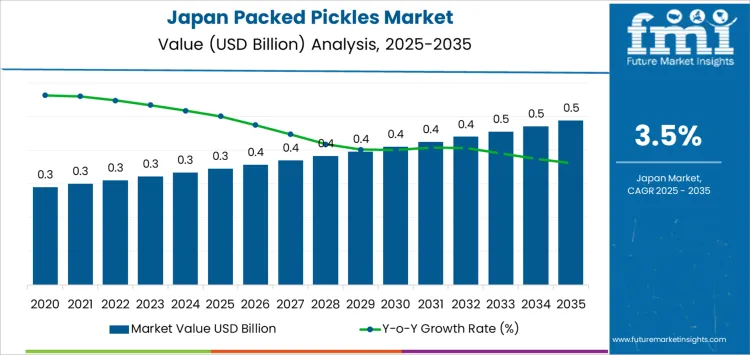
Packaging plays a key role in the popularity of packed pickles, with jars accounting for 63.8% of demand due to their practicality and longer shelf life. Jars provide an airtight seal, helping preserve the quality and taste of the pickles for extended periods without refrigeration, making them ideal for busy consumers. The demand for packed pickles is also supported by the growing availability in convenience stores, and online platforms, which makes them more accessible to a broader audience.
In terms of sales channels, modern trade and convenience stores dominate, as consumers increasingly seek ready-to-eat, convenient options. The demand for pickles is expanding in regions like Kyushu & Okinawa, which see a strong culinary culture and a growing preference for pickled foods, contributing to the steady rise in consumption across Japan. As interest in health-conscious foods and probiotics rises, packed pickles are expected to continue gaining popularity.
Demand for Packed Pickles in Japan Key Takeaways
| Metric | Value |
|---|---|
| Demand for Packed Pickles in Japan Value (2025) | USD 0.3 billion |
| Demand for Packed Pickles in Japan Forecast Value (2035) | USD 0.5 billion |
| Demand for Packed Pickles in Japan Forecast CAGR (2025-2035) | 3.5% |
Why is the Demand for Packed Pickles in Japan Growing?
The demand for packed pickles in Japan is growing as consumers increasingly seek convenient, flavorful, and health-conscious options for snacks and side dishes. Packed pickles, including traditional varieties such as umeboshi (pickled plums) and other vegetable-based pickles, are becoming more popular due to their long shelf life, versatility, and ability to complement a wide range of meals. As Japanese consumers embrace both traditional and modern flavors, the demand for pickles as part of a balanced and flavorful diet is on the rise.
A key driver behind the growth of packed pickles is the increasing focus on healthy eating habits. Pickles are rich in probiotics, which support gut health and digestion, making them an attractive option for health-conscious consumers. The growing awareness of the benefits of fermented foods is contributing to the demand for pickles as a natural source of beneficial bacteria. Packed pickles are low in calories, making them a popular choice for consumers looking to manage their weight while still enjoying tasty and satisfying foods.
The increasing availability of packed pickles in convenience stores is making them more accessible to a broader audience. As more people seek quick, easy, and healthy meal solutions, pickles are becoming a popular accompaniment in bento boxes, sandwiches, and salads. With the continued demand for convenient, health-oriented food options, the demand for packed pickles in Japan is expected to grow steadily through 2035.
What is the Segment-Wise Analysis of Demand for Packed Pickles in Japan?
Demand for packed pickles in Japan is segmented by product type, packaging type, sales channel, and region. By product type, demand is divided into fruits, vegetables, and meat & seafood, with fruits leading at 65%. The demand is also segmented by packaging type, including jars, pouches, and others, with jars accounting for 63.8%. Sales channels include modern trade, convenience stores, grocery stores, specialty stores, and other retail stores. Regionally, demand spans across Kyushu & Okinawa, Kanto, Kansai, Chubu, Tohoku, and the rest of Japan.
How Do Fruits Lead the Demand for Packed Pickles in Japan?
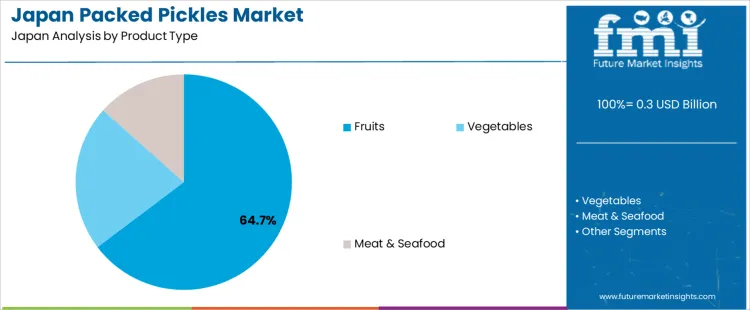
Fruits account for 65% of the demand for packed pickles in Japan, driven by the popularity of fruit-based pickles in traditional Japanese cuisine. Fruits like ume (plum), mikan (mandarin), and other seasonal fruits are commonly pickled and enjoyed as a side dish or condiment. The sweet, tangy, and umami flavors of fruit pickles are widely appreciated for their versatility, enhancing the taste of various meals.
Fruit pickles are also commonly consumed as part of traditional Japanese breakfast or as an accompaniment to rice and other dishes. The increasing interest in fermented foods for their health benefits, such as improving digestion and gut health, has contributed to the growing demand for fruit-based pickles. As fruit-based pickles continue to dominate Japanese kitchens and dining tables, they remain the leading product type in the packed pickles industry.
Why Do Jars Lead the Demand for Packed Pickles in Japan?
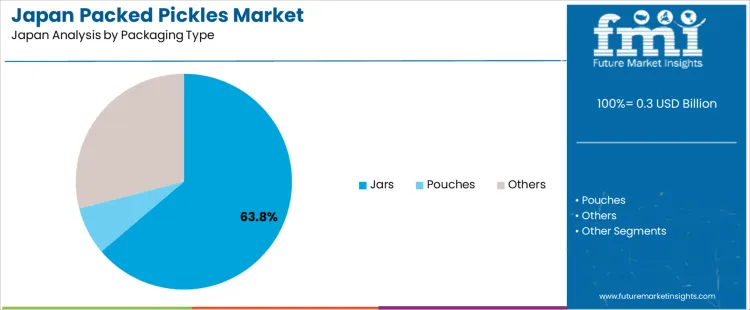
Jars account for 63.8% of the demand for packed pickles in Japan, driven by their practicality, ease of storage, and longer shelf life. Jars are the most common packaging type for pickles, as they provide a secure, airtight seal that helps preserve the product for extended periods without refrigeration. This makes jars a preferred choice for consumers looking for convenience, especially in busy urban areas. Jars allow consumers to view the contents, making them an appealing packaging choice for pickles, where presentation is key.
The stability of pickles in jar packaging also supports their use in both households and food service settings, where large quantities of pickles may be needed. As the demand for preserved and fermented foods continues to grow, jars will remain the dominant packaging type in the packed pickle industry, offering both practicality and long-term storage solutions.
What are the Key Trends, Drivers, and Restraints in Demand for Packed Pickles in Japan?
Due to increasing popularity of ready-to-eat, pre-packaged foods, packed pickles have become a go-to option for side dishes, condiments, or snacks. Their appeal lies in their convenience, long shelf life, and minimal preparation, making them ideal for smaller households and busy professionals. The expansion of modern retail formats, including supermarkets, convenience stores, and chilled-food sections, has further fueled the availability of packed pickles. Challenges remain. Many consumers still prefer fresh, home-made tsukemono (traditional pickles), and there is strong competition from fresh vegetables, fermented foods, and other side dishes.
Why is Demand for Packed Pickles Growing in Japan?
The growing demand for packed pickles in Japan can be attributed to the increasing need for convenience in everyday meals. Busy urban lifestyles, along with smaller household sizes, have led to a rise in demand for ready-to-eat, pre-packaged foods that require little or no preparation. Packed pickles provide an easy-to-access, long-lasting option for consumers who want quick side dishes or condiments. The increasing availability of these products in supermarkets, convenience stores, and other retail outlets across urban and rural areas further supports demand. As consumers become more health-conscious, the popularity of foods that are easy to store, have extended shelf lives, and offer minimal prep time is on the rise.
How are Technological & Industry Innovations Driving Packed Pickles Demand in Japan?
Technological innovations in processing, packaging, and logistics have significantly boosted the demand for packed pickles in Japan. Improved preservation techniques, such as vacuum sealing and controlled atmosphere packaging, have enhanced the shelf life of pickles while maintaining their texture and flavor. Advances in sterilization and packaging technology have enabled manufacturers to offer safer, fresher products that meet consumer expectations. New flavor profiles and health-conscious options, such as low-sodium or organic variants, have expanded the market appeal. Smaller, resealable packaging options cater to on-the-go consumers, while cold-chain logistics ensure that pickles are available across the country, even in remote areas.
What are the Key Challenges and Risks That Could Limit Packed Pickles Demand in Japan?
First, cultural preferences for fresh or home-made tsukemono remain strong in certain consumer segments, especially those who value traditional food preparation methods. Fresh produce, particularly locally grown vegetables, may be perceived as healthier or more flavorful, limiting the shift toward processed pickles. Rising health consciousness may deter some consumers from buying packed pickles due to concerns over preservatives, sodium, or additives.
Fluctuations in the supply of raw materials, such as vegetables, can lead to price volatility, affecting affordability and availability. Lastly, packed pickles face competition from other side dishes, including fresh salads and ready-to-eat meals, which could reduce their share of the industry. These factors may restrict the growth potential of packed pickles in certain segments of the Japanese food industry.
What is the Regional Demand Outlook for Packed Pickles in Japan?
| Region | CAGR (%) |
|---|---|
| Kyushu & Okinawa | 4.4% |
| Kanto | 4.1% |
| Kansai | 3.6% |
| Chubu | 3.1% |
| Tohoku | 2.7% |
| Rest of Japan | 2.6% |
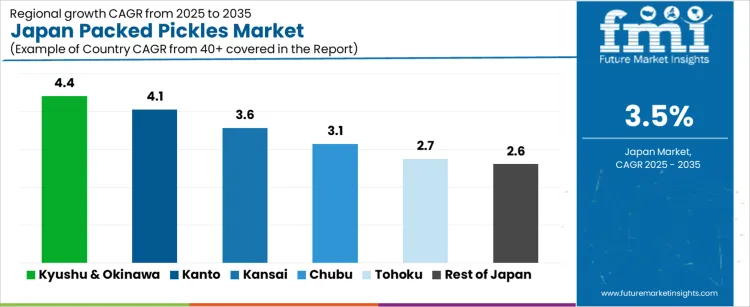
Demand for packed pickles in Japan is growing steadily across all regions, with Kyushu & Okinawa leading at a 4.4% CAGR, driven by the region’s strong culinary culture and consumer preference for pickled foods. Kanto follows with a 4.1% CAGR, supported by the region’s large urban population and the rising demand for convenient, ready-to-eat food options. Kansai shows a 3.6% CAGR, fueled by the region’s diverse food culture and increasing interest in traditional Japanese flavors. Chubu experiences a 3.1% CAGR, as demand for pickled products continues to rise with urbanization and changing eating habits. Tohoku and the Rest of Japan see moderate growth at 2.7% and 2.6%, respectively, as packed pickles continue to gain popularity in both urban and rural areas.
How is Demand for Packed Pickles Growing in Kyushu & Okinawa?
Kyushu & Okinawa leads the demand for packed pickles, growing at a 4.4% CAGR. The region’s strong food culture and appreciation for traditional flavors are key drivers of this growth. In Okinawa, particularly, pickled products are integral to local cuisine, and as consumer interest in local foods increases, demand for packed pickles is on the rise. The increasing focus on health-conscious eating has made pickles, known for their probiotic content and digestive benefits, more appealing to consumers.
The expansion of supermarkets, convenience stores, and online platforms in both urban and rural areas has made it easier for consumers to access packed pickles. With tourism continuing to drive interest in local food and pickles as a healthy, flavorful option, Kyushu & Okinawa is expected to see continued growth in packed pickle consumption.
Why is Demand for Packed Pickles Rising in Kanto?
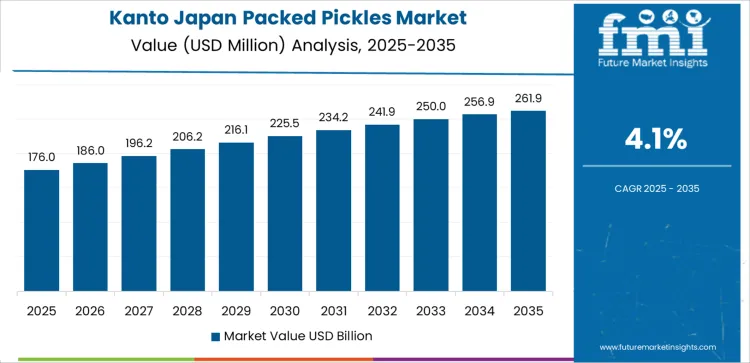
In Kanto, demand for packed pickles is rising at a 4.1% CAGR. The region’s large urban population and busy lifestyle drive the demand for convenient, ready-to-eat food products, including pickles. With increasing awareness of the health benefits of fermented foods, such as improved digestion and gut health, more consumers in Kanto are opting for packed pickles as a nutritious addition to their meals.
The rising popularity of pickles in restaurants, bento boxes, and quick-service outlets further boosts demand. The growing interest in traditional Japanese foods, combined with the availability of pickles in various flavors and forms, has increased their appeal in Kanto. As supermarkets, convenience stores, and online retailers expand their offerings, packed pickles are becoming more accessible, and demand is expected to remain strong in the region.
How is Demand for Packed Pickles Expanding in Kansai?
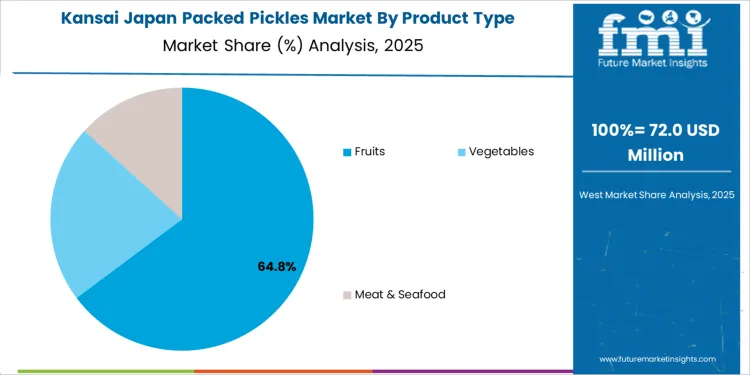
Kansai shows steady demand for packed pickles, growing at a 3.6% CAGR. The region’s rich culinary heritage, particularly in cities like Osaka, drives a strong preference for pickled foods. As Kansai’s consumers increasingly seek healthy and traditional food options, packed pickles are becoming a more popular addition to meals. The region’s diverse food culture has led to the adoption of pickles as a side dish in various meals, especially in bento boxes, sandwiches, and rice dishes.
Kansai’s growing interest in healthy eating and functional foods further supports the demand for pickles, given their digestive benefits. The rise of supermarkets and convenience stores offering a variety of pickled products is helping to meet consumer demand. As interest in traditional Japanese food products continues to grow, Kansai’s demand for packed pickles is expected to remain strong.
Why is Demand for Packed Pickles Growing in Chubu?
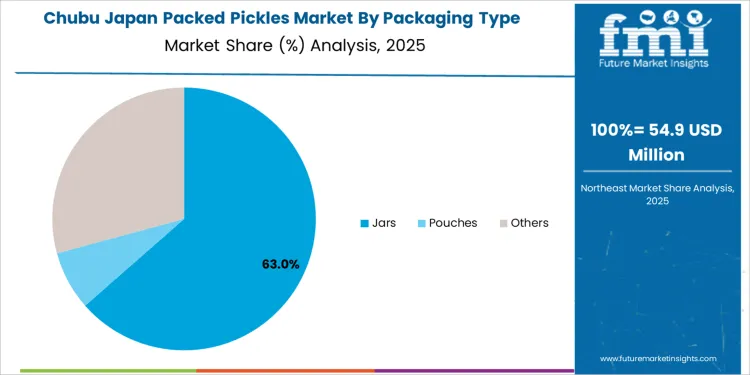
Chubu is experiencing steady demand for packed pickles, growing at a 3.1% CAGR. As urbanization increases in Chubu’s cities, particularly Nagoya, there is a rising interest in convenient, ready-to-eat food products, and pickles are gaining popularity as a flavorful, healthy option. The region’s food culture is evolving, with more consumers incorporating pickles into their meals as part of a balanced diet. Pickles’ health benefits, such as aiding digestion and providing probiotics, are further driving demand.
As supermarkets and convenience stores expand their offerings to cater to consumer demand for diverse food options, packed pickles are becoming more accessible. The increasing awareness of fermented foods and their benefits, combined with changing eating habits, is contributing to steady growth in the demand for packed pickles in Chubu, with both traditional and innovative flavors appealing to the region’s consumers.
How is Demand for Packed Pickles Expanding in Tohoku?
Tohoku is seeing moderate growth in packed pickle demand, with a 2.7% CAGR. While the region’s consumption of pickles is smaller compared to urban centers, there is growing interest as more consumers discover the convenience and health benefits of pickled products. As younger generations in Tohoku embrace global culinary trends, demand for international flavors in pickles is on the rise. Tohoku’s focus on promoting traditional and local food products is contributing to the demand for pickles, which are commonly used in various regional dishes.
Supermarkets, convenience stores, and online retailers are expanding their selection of packed pickles, making them more accessible to consumers. The rising awareness of the health benefits of fermented foods, along with increasing exposure to pickles through restaurants and foodservice outlets, will likely support moderate demand growth in Tohoku in the coming years.
Why is Demand for Packed Pickles Steady in the Rest of Japan?
The Rest of Japan is experiencing steady demand for packed pickles, with a 2.6% CAGR. While the adoption of pickles is slower compared to larger urban regions, there is growing interest as consumer habits evolve. In smaller cities and rural areas, packed pickles are becoming more accessible through supermarkets and convenience stores. The increasing popularity of healthy, fermented foods, along with the exposure to international culinary trends, is contributing to this gradual rise.
Pickles’ digestive benefits and versatility as a meal accompaniment or snack are also driving demand in rural areas. As global food trends continue to influence local preferences, the demand for packed pickles in the Rest of Japan is expected to grow slowly but steadily, with more consumers incorporating them into their daily diets. As distribution networks expand, packed pickles will become a more familiar product across the region.
What is Driving the Demand for Packed Pickles in Japan and Who Are the Key Players Shaping the Industry?
The demand for packed pickles in Japan is growing as consumers seek convenient, flavorful, and versatile condiments to enhance their meals. Pickles, which offer a tangy, refreshing taste, are increasingly being used as accompaniments to various Japanese dishes, sandwiches, and snacks. The rising trend towards convenience foods, along with a growing interest in international flavors and food diversity, has contributed to the growing popularity of packed pickles. Pickles are gaining attention for their potential health benefits, including digestive support due to their probiotic properties, further driving consumer interest in these products.
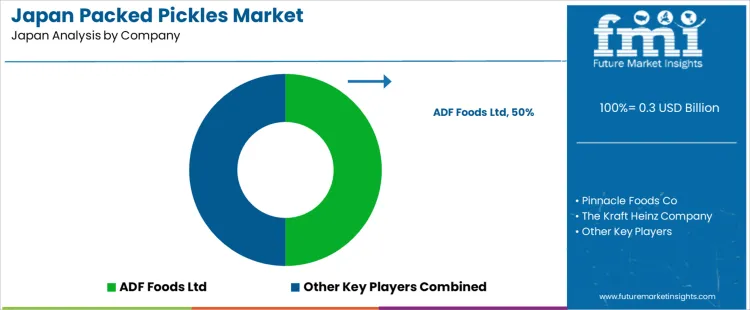
Key players shaping the packed pickles industry in Japan include ADF Foods Ltd, Pinnacle Foods Co, The Kraft Heinz Company, Del Monte Foods, and Reitzel India P Ltd. ADF Foods Ltd. leads the industry with a dominant share of 50.0%, offering a variety of packed pickles that cater to both traditional and contemporary consumer tastes. These companies are driving industry growth by providing high-quality, flavorful pickles with a range of flavor profiles to meet the evolving preferences of Japanese consumers. Their focus on packaging innovation, convenience, and flavor variety ensures that packed pickles remain a popular choice in Japan’s competitive food industry.
The growth of the packed pickles industry in Japan is further supported by the increasing interest in global food trends and the rise of health-conscious eating. As consumers continue to seek out convenient, flavorful, and nutritious food options, packed pickles are expected to remain a staple in both retail and foodservice offerings. With a focus on quality and product innovation, the industry for packed pickles is expected to continue expanding in Japan, catering to the diverse tastes of a dynamic, health-conscious consumer base.
Key Players in Japan Packed Pickles Demand
- ADF Foods Ltd
- Pinnacle Foods Co
- The Kraft Heinz Company
- Del Monte Foods
- Reitzel India P Ltd
Scope of Report
| Items | Values |
|---|---|
| Quantitative Units (2025) | USD billion |
| Product Type | Fruits, Vegetables, Meat & Seafood |
| Packaging Type | Jars, Pouches, Others |
| Sales Channel | Modern Trade, Convenience Stores, Grocery Stores, Specialty Stores, Other Retail Stores |
| Region | Kyushu & Okinawa, Kanto, Kansai, Chubu, Tohoku, Rest of Japan |
| Countries Covered | Japan |
| Key Companies Profiled | ADF Foods Ltd, Pinnacle Foods Co, The Kraft Heinz Company, Del Monte Foods, Reitzel India P Ltd |
| Additional Attributes | Dollar sales by product type and packaging; regional CAGR and growth trends; increasing demand for health-conscious and organic pickles; growth in online retail and convenience store sales; preference for sustainable packaging solutions; innovations in product flavors and preservative-free options; adoption of premium and gourmet varieties in meat and seafood pickles. |
Japan Packed Pickles Demand by Key Segments
Product Type
- Fruits
- Vegetables
- Meat & Seafood
Packaging Type
- Jars
- Pouches
- Others
Sales Channel
- Modern Trade
- Convenience Stores
- Grocery Stores
- Specialty Stores
- Other Retail Stores
Region
- Kyushu & Okinawa
- Kanto
- Kansai
- Chubu
- Tohoku
- Rest of Japan
Frequently Asked Questions
How big is the demand for packed pickles in Japan in 2025?
The demand for packed pickles in Japan is estimated to be valued at USD 0.3 billion in 2025.
What will be the size of packed pickles in Japan in 2035?
The market size for the packed pickles in Japan is projected to reach USD 0.5 billion by 2035.
How much will be the demand for packed pickles in Japan growth between 2025 and 2035?
The demand for packed pickles in Japan is expected to grow at a 3.5% CAGR between 2025 and 2035.
What are the key product types in the packed pickles in Japan?
The key product types in packed pickles in Japan are fruits, vegetables and meat & seafood.
Which packaging type segment is expected to contribute significant share in the packed pickles in Japan in 2025?
In terms of packaging type, jars segment is expected to command 63.8% share in the packed pickles in Japan in 2025.
Preview the report firsthand - request a free sample
Get SampleGet the brochure for pricing and purchase details.
Get PDFTable of Content
- Executive Summary
- Japan Market Outlook
- Demand-side Trends
- Supply-side Trends
- Technology Roadmap Analysis
- Analysis and Recommendations
- Market Overview
- Market Coverage / Taxonomy
- Market Definition / Scope / Limitations
- Market Background
- Market Dynamics
- Drivers
- Restraints
- Opportunity
- Trends
- Scenario Forecast
- Demand in Optimistic Scenario
- Demand in Likely Scenario
- Demand in Conservative Scenario
- Opportunity Map Analysis
- Product Life Cycle Analysis
- Supply Chain Analysis
- Investment Feasibility Matrix
- Value Chain Analysis
- PESTLE and Porter’s Analysis
- Regulatory Landscape
- Regional Parent Market Outlook
- Production and Consumption Statistics
- Import and Export Statistics
- Market Dynamics
- Japan Market Analysis 2020 to 2024 and Forecast, 2025 to 2035
- Historical Market Size Value (USD Million) Analysis, 2020 to 2024
- Current and Future Market Size Value (USD Million) Projections, 2025 to 2035
- Y-o-Y Growth Trend Analysis
- Absolute $ Opportunity Analysis
- Japan Market Pricing Analysis 2020 to 2024 and Forecast 2025 to 2035
- Japan Market Analysis 2020 to 2024 and Forecast 2025 to 2035, By Product Type
- Introduction / Key Findings
- Historical Market Size Value (USD Million) Analysis By Product Type , 2020 to 2024
- Current and Future Market Size Value (USD Million) Analysis and Forecast By Product Type , 2025 to 2035
- Fruits
- Vegetables
- Meat & Seafood
- Y-o-Y Growth Trend Analysis By Product Type , 2020 to 2024
- Absolute $ Opportunity Analysis By Product Type , 2025 to 2035
- Japan Market Analysis 2020 to 2024 and Forecast 2025 to 2035, By Packaging Type
- Introduction / Key Findings
- Historical Market Size Value (USD Million) Analysis By Packaging Type, 2020 to 2024
- Current and Future Market Size Value (USD Million) Analysis and Forecast By Packaging Type, 2025 to 2035
- Jars
- Pouches
- Others
- Y-o-Y Growth Trend Analysis By Packaging Type, 2020 to 2024
- Absolute $ Opportunity Analysis By Packaging Type, 2025 to 2035
- Japan Market Analysis 2020 to 2024 and Forecast 2025 to 2035, By Sales Channel
- Introduction / Key Findings
- Historical Market Size Value (USD Million) Analysis By Sales Channel, 2020 to 2024
- Current and Future Market Size Value (USD Million) Analysis and Forecast By Sales Channel, 2025 to 2035
- Modern Trade
- Convenience Stores
- Grocery Stores
- Specialty Stores
- Other Retail Stores
- Y-o-Y Growth Trend Analysis By Sales Channel, 2020 to 2024
- Absolute $ Opportunity Analysis By Sales Channel, 2025 to 2035
- Market Structure Analysis
- Competition Dashboard
- Competition Benchmarking
- Market Share Analysis of Top Players
- By Regional
- By Product Type
- By Packaging Type
- By Sales Channel
- Competition Analysis
- Competition Deep Dive
- ADF Foods Ltd
- Overview
- Product Portfolio
- Profitability by Market Segments (Product/Age /Sales Channel/Region)
- Sales Footprint
- Strategy Overview
- Marketing Strategy
- Product Strategy
- Channel Strategy
- Pinnacle Foods Co
- The Kraft Heinz Company
- Del Monte Foods
- Reitzel India P Ltd
- ADF Foods Ltd
- Competition Deep Dive
- Assumptions & Acronyms Used
- Research Methodology


