

- Industry Size (2025)
- USD 2.3 Mn
- Forecast (2035)
- USD 3.5 Mn
- CAGR (2025 to 2035)
- 4.5%
Demand for Packed Pickles in USA 2025 to 2035
The USA packed pickles demand is valued at USD 2.3 million in 2025 and is forecasted to reach USD 3.5 million by 2035, reflecting a CAGR of 4.5%. Demand is influenced by rising consumption of ready-to-eat preserved foods and the expansion of flavored pickled products in retail and foodservice channels. Broader interest in fermented and vinegar-based foods for taste diversification contributes to continued product uptake. Fruit-based pickles lead the category usage due to their availability in sweet and spicy flavor variants that align with evolving consumer preferences. Product formats aim for convenience through sealed, portioned packaging with longer shelf life and suitability for home and on-the-go consumption.
The West, South, and Northeast record the highest adoption rates supported by active distribution through supermarkets and growth in ethnic-influenced culinary offerings. Demand benefits from continuous development of snack-focused and clean-label pickles with fewer preservatives and recognizable ingredients. Key suppliers include ADF Foods Ltd, Conagra Brands, The Kraft Heinz Company, Del Monte Foods, and Mt. Olive Pickle Company. Their focus centers on efficient production, packaging improvements, and consistent supply across conventional and specialty retail channels.
Quick Stats for USA Packed Pickles Demand
- USA Packed Pickles Sales Value (2025): USD 2.3 million
- USA Packed Pickles Forecast Value (2035): USD 3.5 million
- USA Packed Pickles Forecast CAGR (2025–2035): 4.5%
- Leading Product Type in USA Packed Pickles Demand: Fruit-Based Pickles
- Key Growth Regions in USA Packed Pickles Demand: West USA, South USA, Northeast USA
- Top Players in USA Packed Pickles Demand: ADF Foods Ltd, Conagra Brands, The Kraft Heinz Company, Del Monte Foods, Mt. Olive Pickle Company
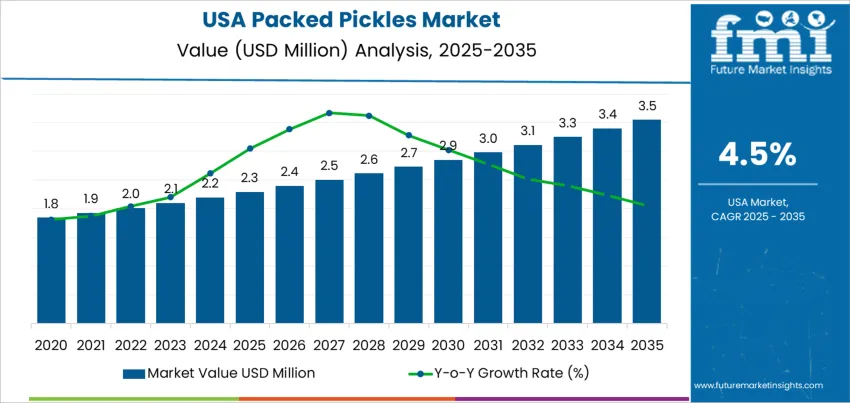
What is the Growth Forecast for Packed Pickles Industry in USA through 2035?
Demand for packed pickles in the United States shows steady long-term expansion, supported by diversified consumption occasions and broader category availability. Over the next decade, annual growth is expected to remain positive, but at a moderate pace compared to faster-rising convenience and health-focused packaged food segments. The category historically relied on traditional pickle formats tied to meals and quick-service foodservice channels. This base contributes predictable year-on-year growth but limits sharp acceleration, placing early-period expansion in a stable yet incremental range.
The coming years will build on incremental momentum in premium, fermented, and artisanal pickle products, aligned with gut-health preferences and clean-label purchasing behavior. Growth in flavored variants, single-serve packaging, and on-the-go offerings is creating new consumers beyond the traditional usage. Retail visibility through club stores, discount formats, and online grocery expands reach. Although this later-period uplift supports stronger revenue scaling, price sensitivity and competition from fresh or refrigerated alternatives temper a more aggressive trajectory. The comparative analysis over a ten-year window indicates that packed pickles transition from modest foundational growth to slightly improved expansion driven by innovation, while maintaining a stable and resilient position in the United States packaged foods landscape.
USA Packed Pickles Key Takeaways
| Metric | Value |
|---|---|
| USA Packed Pickles Sales Value (2025) | USD 2.3 million |
| USA Packed Pickles Forecast Value (2035) | USD 3.5 million |
| USA Packed Pickles Forecast CAGR (2025-2035) | 4.5% |
Why is the Demand for Packed Pickles in the USA Growing?
Demand for packed pickles in the USA is increasing because consumers value convenient, shelf-stable condiments that enhance meal flavor without extra preparation. Bottled and jarred pickles remain popular for sandwiches, burgers, salads and side dishes. Growth in meal delivery services, fast-casual dining and ready-to-eat food kits supports regular use of pickles as an easy, ready-to-serve garnish. The rising interest in global cuisines and bold flavors boosts consumption of pickled vegetables beyond cucumbers, including carrots, peppers, beets and mixed vegetable blends. Health-oriented consumers often favour pickled products as low-calorie, low-carb condiment options that add taste and variety without excess fat or sugar.
Retailers expand assortment through organic, gluten-free and artisanal pickle lines that appeal to niche segments. Specialty grocers and online food retailers support demand by offering small-batch and regional recipes that combine traditional flavors with modern twists. Private-label pickles provide affordable options for budget-conscious shoppers. Constraints include sensitivity to sodium content among certain consumer groups, which may limit repeat purchases for those monitoring salt intake. Competition from fresh produce, refrigerated spreads and other condiments can reduce frequency of pickle consumption. Packaging waste and environmental impact of glass jars influence some buying decisions.
Which Product Types, Packaging Formats, and Sales Channels Lead Demand for Packed Pickles in the USA?
Demand for packed pickles in the United States is influenced by strong consumer interest in fermented foods, convenience-ready condiments, and expanded preference for bold taste profiles. Household consumption dominates due to frequent use in sandwiches, burgers, and snacking, while foodservice buyers support steady demand. Product adoption aligns with extended shelf life, sodium-controlled variants, and choice of packaging formats that ensure freshness. Growth reflects interest in probiotic-friendly options and regional flavor experimentation across dill, sweet, spicy, and gourmet blends.
By Product Type, Fruit-Based Pickles Hold the Largest Share
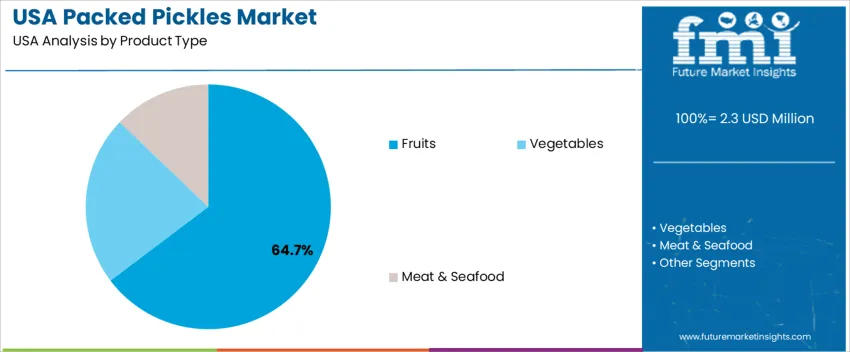
Fruit-based pickles account for 64.7%, driven by substantial domestic consumption of pickled cucumbers, olives, jalapeños, and pepper blends. Versatile pairing with fast-food formats and home-prepared meals supports continued purchase frequency. Vegetable-based pickles represent the second-largest segment, with rising preference for carrots, cauliflower, onions, and mixed pickling assortments driven by clean-label positioning and health appeal. Meat and seafood pickles account for a small share, limited to regional and ethnic cuisines demanding specialized processing and controlled cold-chain distribution. Product preferences reflect convenience, flavor familiarity, and alignment with dietary diversification trends in USA households.
Key Points:
- Fruit-based options dominate due to high cucumber pickle consumption
- Vegetables expand through health-oriented flavors and mixed assortments
- Meat and seafood remain niche categories requiring specialized storage
By Packaging Type, Jars Lead Distribution
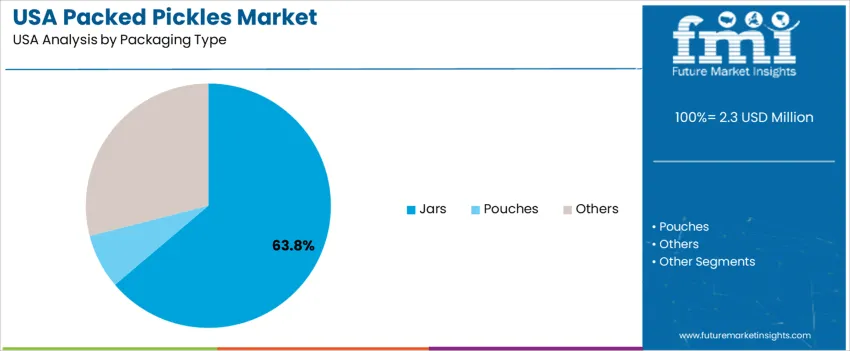
Jars hold 63.8%, driven by consumer trust in glass packaging for visibility, odor control, leak prevention, and prolonged product integrity. They are preferred in both home consumption and specialty retail. Other packaging formats represent 29.0%, including PET containers and small-serving retail units targeted toward portability and lower price points. Pouches account for 7.2%, supported by lightweight logistics but limited by perceived product fragility and shelf-display challenges. Packaging selection emphasizes resealability, ease of storage, and sustainability trends shaping material switching from plastics to recyclable glass.
Key Points:
- Glass jars dominate due to preservation and strong shelf appeal
- PET and hybrid formats serve cost-sensitive and on-the-go uses
- Pouches remain emerging due to durability and merchandising constraints
By Sales Channel, Grocery Stores Hold the Largest Share
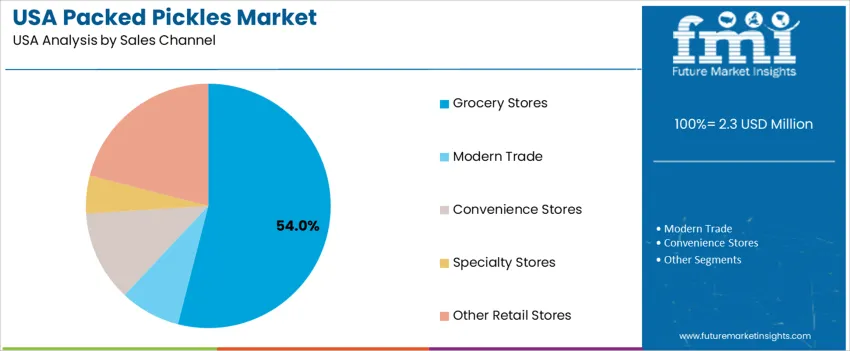
Grocery stores account for 54.0%, serving as the primary access point for everyday household condiment purchases. Other retail channels represent 21.0%, including warehouse clubs and local stores supporting regional distribution patterns. Convenience stores account for 12.0%, driven by impulse purchases and single-meal consumption. Modern trade holds 8.0%, while specialty stores represent 5.0%, focusing on artisanal and artisanal-imported pickles. Channel patterns reflect routine shopping behavior, home cooking frequency, and high turnover across mainstream retail formats nationwide.
Key Points:
- Grocery stores remain dominant due to wide product assortment
- Convenience stores support small-quantity and impulse purchases
- Specialty formats grow through gourmet and ethnic offerings
What are the Drivers, Restraints, and Key Trends of the Demand for Packed Pickles in the USA?
Growth of convenience snacking, strong culinary interest in fermented foods and rising use of pickles in sandwiches and prepared meals drive demand.
In the United States, packed pickles remain a staple in home kitchens and foodservice due to their versatility as condiments, sides and snack items. Single-serve pickle cups and resealable jars appeal to consumers who want convenient, flavor-forward snacks with long shelf life. Pickles are widely incorporated into burgers, deli sandwiches and restaurant appetizers, supporting ongoing demand from both retail and foodservice channels. Growing interest in tangy and bold flavor profiles encourages frequent purchases for casual dining at home. These consumption patterns maintain steady purchasing across large households, single consumers and institutional buyers.
Health concerns over sodium content, competition from fresh vegetables and uneven consumer perception of processed preserved foods restrain demand.
High sodium levels limit regular consumption among individuals managing blood pressure or heart health. Some consumers prefer fresh produce or refrigerated fermented options like kimchi and sauerkraut when prioritizing probiotic benefits. Perceptions that packaged pickles are highly processed discourage adoption in wellness-focused households. These concerns reduce long-term volume growth in strongly health-conscious segments.
Shift toward spicy and diverse regional flavors, increased demand for refrigerated and clean-label pickles and rising focus on portable, portion-controlled packaging define key trends.
Manufacturers introduce hot and specialty varieties such as jalapeño, dill-garlic, sweet-spicy and regional American styles to attract younger consumers seeking taste exploration. Refrigerated pickle lines positioned as fresh and minimally processed appeal to shoppers seeking higher-quality ingredients and crunchy texture. Portable formats, including pickle chips in pouches and snack-size spears, support on-the-go consumption at home, in offices and at sporting events. Product innovation incorporates reduced-sodium recipes and all-natural brining to meet wellness expectations. These developments indicate stable, flavor-driven demand for packed pickles across the United States retail and foodservice industries.
Analysis of the Demand for Packed Pickles in the USA by Region
Demand for packed pickles in the United States is increasing due to consumer focus on fermented foods, gut health benefits, convenience packaging, and versatility in home cooking and snacking. Brands are expanding flavor offerings, including spicy, sweet-and-hot, dill variants, and regional pickle traditions such as bread-and-butter profiles. Clean-label expectations encourage reduced-preservative brining and natural fermentation processes. Retailers grow shelf space for ready-to-eat refrigerated pickles, while club stores expand family-size formats. Food-service channels maintain steady use in burgers and sandwiches. West USA leads with a 5.1% CAGR, followed by South USA at 4.6%, Northeast USA at 4.1%, and Midwest USA at 3.6%, reflecting shifts in taste preferences and processing infrastructure.
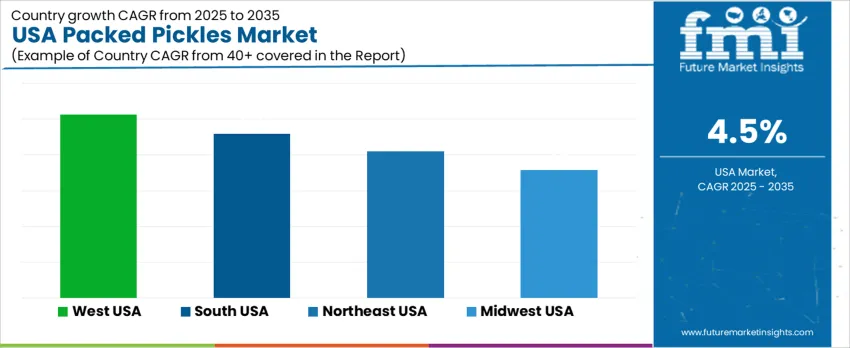
| Region | CAGR (2025-2035) |
|---|---|
| West USA | 5.1% |
| South USA | 4.6% |
| Northeast USA | 4.1% |
| Midwest USA | 3.6% |
How is the West USA driving demand for packed pickles?
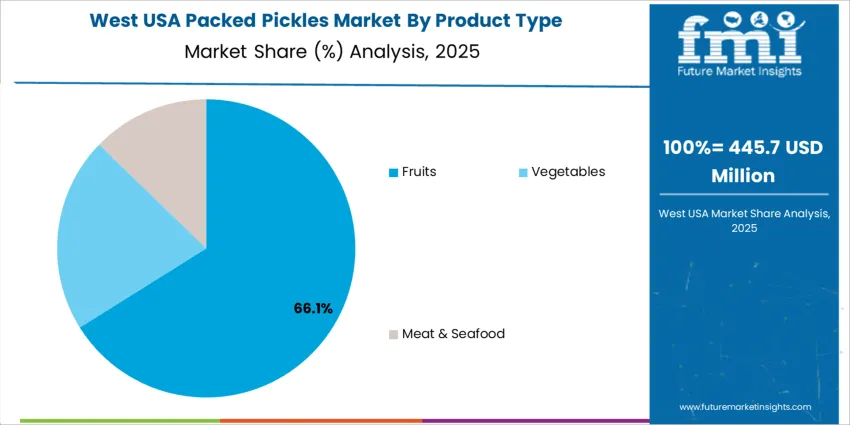
West USA reports a 5.1% CAGR, supported by strong interest in fermented foods, premium snacking, and multicultural culinary influence across California, Oregon, and Washington. Consumers incorporate pickles into charcuterie boards, plant-forward bowls, and ethnic fusion dishes. Health-oriented buyers seek pickles with probiotic potential, minimal additives, and craft-style fermentation. Specialty retailers and farmers’ industries promote small-batch pickle brands experimenting with unique flavors like kimchi-inspired brines, jalapeño-infused dill, and organic cucumber varieties. Refrigerated distribution networks enable rapid product turnover and cold-chain quality retention. Co-packers invest in sustainable packaging formats, including resealable pouches and glass jars with recycled content.
- Clean-label fermented pickles supporting wellness consumption
- Craft and global flavors promoting premium product tiers
- Refrigerated retail expansion improving product visibility
- Sustainable packaging adoption influencing purchase decisions
How is the South USA shaping demand for packed pickles?
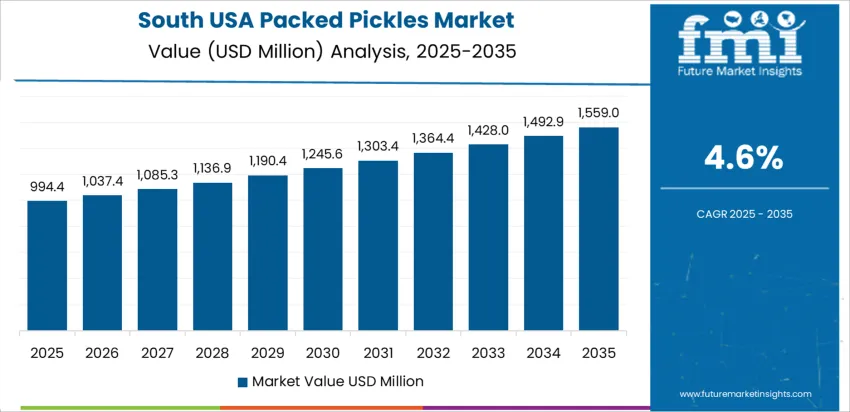
South USA grows at 4.6% CAGR, driven by strong culinary integration of pickles into sandwiches, barbecue foods, and fried-chicken meals across Texas, Florida, Georgia, and surrounding states. Large processing facilities support high-volume production of dill chips, spears, and bread-and-butter profiles used in both retail and food-service channels. Year-round warm climates sustain demand for cold, tangy condiments consumed with outdoor dining traditions. Local flavor preferences encourage spicy varieties, including habanero and Cajun-seasoned pickles. Logistics access through Gulf Coast ports supports inbound glass jars, vinegar, and cucumbers from regional farms.
- High food-service utilization in fried and BBQ meal formats
- Spicy flavor development reflecting regional taste profiles
- Strong agricultural ties for cucumber production
- Large processors enabling affordability and distribution scale
How is the Northeast USA influencing procurement patterns?
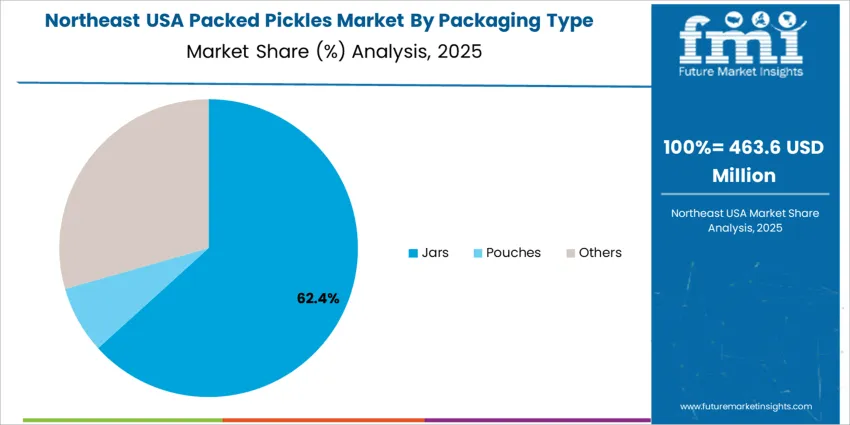
Northeast USA posts 4.1% CAGR, supported by urban deli culture and a strong presence of Jewish-style pickling traditions in New York and surrounding cities. Consumers purchase refrigerated pickles emphasizing crisp texture, natural fermentation, and minimal pasteurization. Specialty grocers and convenience stores sell small jars suitable for compact households. Craft and gourmet pickle brands cater to foodie segments seeking bold garlic, mustard, or sour brines. Food-service operators maintain consistent procurement for burgers, sandwiches, and Mediterranean plates. Retailers emphasize transparent labeling for sodium content and clean-ingredient credentials.
- Deli and sandwich traditions reinforcing category stability
- Premium and gourmet positioning encouraging flavor expansion
- Smaller packaging adapted to dense urban living
- Nutritional transparency shaping brand preference
How is the Midwest USA contributing to demand growth?
Midwest USA advances at 3.6% CAGR, reflecting traditional usage patterns anchored in family dining, burgers, and home canning culture. Cucumber production across Michigan, Ohio, and surrounding areas supports reliable raw-material supply for regional processors. Mainstream retail brands dominate shelves with affordable pickle products in multi-serve jars. Value-focused consumers prioritize long shelf life, familiar flavors, and cost-efficient purchases. Distribution centers in major logistics corridors enable consistent product movement nationwide. Retail promotions and club-store formats encourage bulk buying for household storage and seasonal gatherings.
- Local farming and processing sustaining stable supply chains
- Value-driven purchasing boosting multi-serve packaging
- Traditional taste preferences maintaining core product mix
- Strong logistics networks supporting steady national distribution
How is competitive power distributed among packed pickle suppliers in the United States?
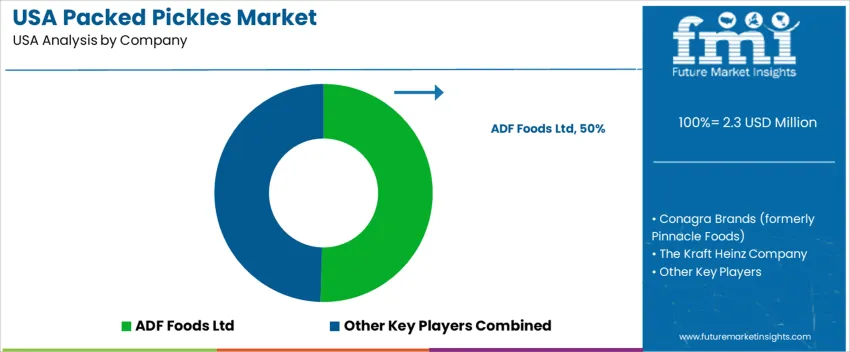
Competition in the United States packed pickles segment is shaped by household brand familiarity, national retail coverage, and consistent sourcing of cucumbers and brine ingredients. ADF Foods Ltd holds an estimated 50.4%, supported by private-label supply roles and sustained presence in multicultural retail channels involving Indian-style and global pickle varieties. Its position benefits from cost-efficient production and broad assortment formats across glass jars and pouches.
Conagra Brands participates through established convenience food lines linked to recognized grocery brands. The company strengthens its role where value pricing and high-volume distribution meet retailer shelf priorities. The Kraft Heinz Company maintains placement in mainstream condiments and sandwich accompaniments. Its position builds on brand equity and reliable category rotation in larger retail chains.
Del Monte Foods competes through fruit-adjacent pickle offerings and pack sizes aligned with shelf-stable storage preferences. Mt. Olive Pickle Company reinforces regional loyalty and flavor-focused assortments by offering dill, sweet, and specialty variants with strong coverage across the Southeast and Mid-Atlantic. Competitive advantage increasingly reflects resilience in raw material contracting, predictable fill-rate performance, and flavor development that aligns with snacking behavior and demand for low-sugar brines in the United States.
Key Players in USA Packed Pickles Demand
- ADF Foods Ltd
- Conagra Brands (formerly Pinnacle Foods)
- The Kraft Heinz Company
- Del Monte Foods
- Mt. Olive Pickle Company
Scope of the Report
| Items | Values |
|---|---|
| Quantitative Units | USD million |
| Product Type | Fruits, Vegetables, Meat & Seafood |
| Packaging Type | Jars, Pouches, Others |
| Sales Channel | Grocery Stores, Modern Trade, Convenience Stores, Specialty Stores, Other Retail Stores |
| Regions Covered | West USA, South USA, Northeast USA, Midwest USA |
| Key Companies Profiled | ADF Foods Ltd, Conagra Brands (formerly Pinnacle Foods), The Kraft Heinz Company, Del Monte Foods, Mt. Olive Pickle Company |
| Additional Attributes | Dollar sales by product and packaging formats; expansion in gourmet, artisanal, and low-sodium pickle variants; regional consumption patterns driven by convenience and ethnic cuisine popularity; increased retail penetration through modern trade and online delivery; innovation in clean-label fermentation, shelf-stable packaging, and sustainable sourcing practices across the USA. |
USA Packed Pickles Demand by Segments
Product Type:
- Fruits
- Vegetables
- Meat & Seafood
Packaging Type:
- Jars
- Pouches
- Others
Sales Channel:
- Grocery Stores
- Modern Trade
- Convenience Stores
- Specialty Stores
- Other Retail Stores
Region:
- West USA
- South USA
- Northeast USA
- Midwest USA
Frequently Asked Questions
How big is the demand for packed pickles in USA in 2025?
The demand for packed pickles in USA is estimated to be valued at USD 2.3 million in 2025.
What will be the size of packed pickles in USA in 2035?
The market size for the packed pickles in USA is projected to reach USD 3.5 million by 2035.
How much will be the demand for packed pickles in USA growth between 2025 and 2035?
The demand for packed pickles in USA is expected to grow at a 4.5% CAGR between 2025 and 2035.
What are the key product types in the packed pickles in USA?
The key product types in packed pickles in USA are fruits, vegetables and meat & seafood.
Which packaging type segment is expected to contribute significant share in the packed pickles in USA in 2025?
In terms of packaging type, jars segment is expected to command 63.8% share in the packed pickles in USA in 2025.
Preview the report firsthand - request a free sample
Get SampleGet the brochure for pricing and purchase details.
Get PDFTable of Content
- Executive Summary
- USA Market Outlook
- Demand-side Trends
- Supply-side Trends
- Technology Roadmap Analysis
- Analysis and Recommendations
- Market Overview
- Market Coverage / Taxonomy
- Market Definition / Scope / Limitations
- Market Background
- Market Dynamics
- Drivers
- Restraints
- Opportunity
- Trends
- Scenario Forecast
- Demand in Optimistic Scenario
- Demand in Likely Scenario
- Demand in Conservative Scenario
- Opportunity Map Analysis
- Product Life Cycle Analysis
- Supply Chain Analysis
- Investment Feasibility Matrix
- Value Chain Analysis
- PESTLE and Porter’s Analysis
- Regulatory Landscape
- Regional Parent Market Outlook
- Production and Consumption Statistics
- Import and Export Statistics
- Market Dynamics
- USA Market Analysis 2020 to 2024 and Forecast, 2025 to 2035
- Historical Market Size Value (USD Million) Analysis, 2020 to 2024
- Current and Future Market Size Value (USD Million) Projections, 2025 to 2035
- Y-o-Y Growth Trend Analysis
- Absolute $ Opportunity Analysis
- USA Market Pricing Analysis 2020 to 2024 and Forecast 2025 to 2035
- USA Market Analysis 2020 to 2024 and Forecast 2025 to 2035, By Product Type
- Introduction / Key Findings
- Historical Market Size Value (USD Million) Analysis By Product Type , 2020 to 2024
- Current and Future Market Size Value (USD Million) Analysis and Forecast By Product Type , 2025 to 2035
- Fruits
- Vegetables
- Meat & Seafood
- Y-o-Y Growth Trend Analysis By Product Type , 2020 to 2024
- Absolute $ Opportunity Analysis By Product Type , 2025 to 2035
- USA Market Analysis 2020 to 2024 and Forecast 2025 to 2035, By Packaging Type
- Introduction / Key Findings
- Historical Market Size Value (USD Million) Analysis By Packaging Type, 2020 to 2024
- Current and Future Market Size Value (USD Million) Analysis and Forecast By Packaging Type, 2025 to 2035
- Jars
- Pouches
- Others
- Y-o-Y Growth Trend Analysis By Packaging Type, 2020 to 2024
- Absolute $ Opportunity Analysis By Packaging Type, 2025 to 2035
- USA Market Analysis 2020 to 2024 and Forecast 2025 to 2035, By Sales Channel
- Introduction / Key Findings
- Historical Market Size Value (USD Million) Analysis By Sales Channel, 2020 to 2024
- Current and Future Market Size Value (USD Million) Analysis and Forecast By Sales Channel, 2025 to 2035
- Grocery Stores
- Modern Trade
- Convenience Stores
- Specialty Stores
- Other Retail Stores
- Y-o-Y Growth Trend Analysis By Sales Channel, 2020 to 2024
- Absolute $ Opportunity Analysis By Sales Channel, 2025 to 2035
- Market Structure Analysis
- Competition Dashboard
- Competition Benchmarking
- Market Share Analysis of Top Players
- By Regional
- By Product Type
- By Packaging Type
- By Sales Channel
- Competition Analysis
- Competition Deep Dive
- ADF Foods Ltd
- Overview
- Product Portfolio
- Profitability by Market Segments (Product/Age /Sales Channel/Region)
- Sales Footprint
- Strategy Overview
- Marketing Strategy
- Product Strategy
- Channel Strategy
- Conagra Brands (formerly Pinnacle Foods)
- The Kraft Heinz Company
- Del Monte Foods
- Mt. Olive Pickle Company
- ADF Foods Ltd
- Competition Deep Dive
- Assumptions & Acronyms Used
- Research Methodology


