

- Industry Size (2026)
- USD 39.8 Mn
- Forecast (2036)
- USD 61.2 Mn
- CAGR (2026 to 2036)
- 4.4%
Demand for Partially Hydrogenated Oil in Japan (2026-2036)
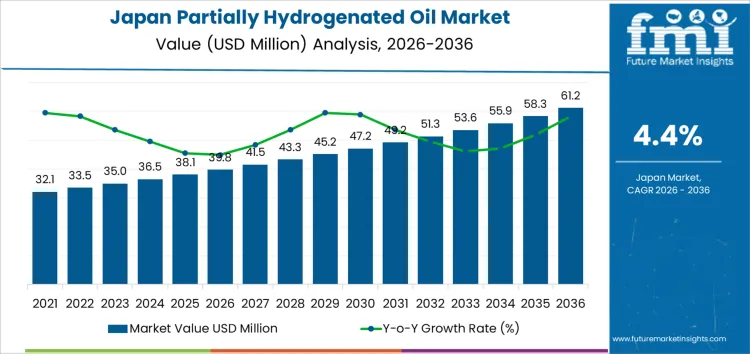
Demand for partially hydrogenated oil in Japan is valued at USD 39.8 million in 2026 and is projected to reach USD 61.2 million by 2036, reflecting a CAGR of 4.4%. Demand persists due to continued use in industrial and specialty applications where oxidative stability, viscosity control, and thermal resistance remain critical. Food-related usage remains regulated and limited, while non-food applications support steady volume expansion.
Lubricants lead application-segment usage because partially hydrogenated oils provide consistent viscosity behavior, improved oxidation resistance, and reliable performance under mechanical stress. Industrial lubricant formulations apply these oils in metalworking fluids, greases, and processing aids requiring stable lubrication properties. Controlled hydrogenation profiles enable customization for specific operating conditions.
Quick Stats for Demand for Partially Hydrogenated Oil in Japan
- Japan Partially Hydrogenated Oil Sales Value (2026): USD 39.8 million
- Japan Partially Hydrogenated Oil Forecast Value (2036): USD 61.2 million
- Japan Partially Hydrogenated Oil Forecast CAGR (2026 to 2036): 4.4%
- Leading Application Segment in Japan: Lubricants
- Key Growth Regions in Japan: Kyushu & Okinawa, Kanto, Kansai, Chubu, Tohoku
- Top Players in Japan: Kyodo Shiryo Company, Ltd., Nisshin OilliO Group, Fuji Oil Holdings, Bunge Japan, Mitsubishi-Kagaku Foods Corporation
Kyushu & Okinawa, Kanto, Kansai, Chubu, and Tohoku represent key growth regions supported by manufacturing activity and industrial processing clusters. Kyodo Shiryo Company, Ltd., Nisshin OilliO Group, Fuji Oil Holdings, Bunge Japan, and Mitsubishi-Kagaku Foods Corporation anchor competitive activity through formulation expertise, compliant sourcing, and diversified product portfolios aligned with Japan’s regulatory framework and industrial performance requirements.
Japan Partially Hydrogenated Oil Key Takeaways
| Metric | Value |
|---|---|
| Japan Partially Hydrogenated Oil Sales Value (2026) | USD 39.8 million |
| Japan Partially Hydrogenated Oil Forecast Value (2036) | USD 61.2 million |
| Japan Partially Hydrogenated Oil Forecast CAGR (2026-2036) | 4.4% |
Why is the Demand for Partially Hydrogenated Oil in Japan Growing?
Demand for partially hydrogenated oil in Japan grows due to continued use within specific food processing and industrial fat applications that require functional stability. Manufacturers of baked goods, confectionery fillings, and shortenings rely on partially hydrogenated formulations to achieve controlled melting behavior, texture consistency, and extended shelf stability. Certain traditional and mass produced products require plasticity characteristics that alternative fats do not consistently deliver under Japanese climate and storage conditions. Food processors value oxidative stability during high temperature processing, which supports limited and regulated usage. Industrial foodservice operations maintain demand where formulation reliability and cost control remain priorities.
Imports of processed foods and ingredients contribute to continued circulation within controlled supply chains. Regulatory frameworks in Japan emphasize labeling and compositional limits rather than complete elimination, which allows restricted applications to continue. Reformulation timelines across legacy product lines create transitional demand as manufacturers phase in alternative fats. Research in blending techniques supports reduced trans-fat content while retaining functional performance, sustaining interim usage. Inventory management practices favor fats with predictable behavior during transport and storage across extended distribution networks within Japan.
How Are the Segments Classified in the Demand for Partially Hydrogenated Oil in Japan?
Demand for partially hydrogenated oil in Japan is shaped by functional performance requirements, stability under controlled processing conditions, and regulated application scope. Buyers assess oxidative resistance, viscosity behavior, melting profile, and compatibility with industrial and food-related formulations. Adoption patterns reflect stronger concentration in non-food industrial usage, alongside selective incorporation within specific food categories operating under Japan’s formulation standards and compliance frameworks.
Which Application Accounts for the Largest Share in Japan?
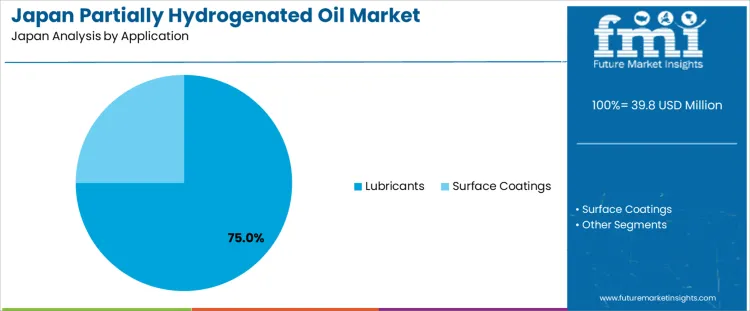
Lubricants hold 75.0%, making them the leading application segment in Japan. Partially hydrogenated oils provide viscosity stability, controlled thermal behavior, and oxidative resistance required in industrial lubrication systems. These properties support equipment protection and consistent performance in manufacturing and maintenance environments. Surface coatings hold 25.0%, where partially hydrogenated oils contribute to film formation, flexibility, and surface protection characteristics. Application distribution reflects dominant demand from industrial lubricant usage, aligned with Japan’s emphasis on equipment reliability and controlled operating conditions.
Key Points:
- Lubricants dominate due to viscosity and thermal stability needs.
- Oxidative resistance supports long-term equipment performance.
- Surface coatings represent secondary functional usage.
Which End User Represents the Largest Share in Japan?
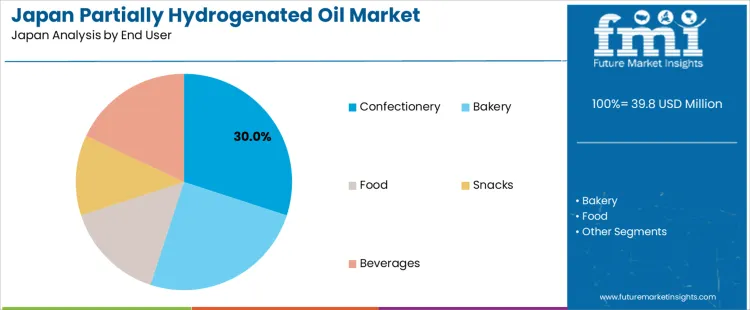
Confectionery holds 30.0%, making it the leading end-user segment in Japan. Partially hydrogenated oils are used to achieve texture consistency, shape stability, and shelf-life control in confectionery products. Bakery applications hold 25.0%, relying on functional fats for structure and processing tolerance. Beverages account for 18.0%, supporting niche formulation requirements. Food applications hold 15.0%, reflecting limited and controlled use. Snacks hold 12.0%, applying oils for texture and stability. End-user distribution reflects selective use within confectionery and bakery segments under Japan’s regulatory and formulation constraints.
Key Points:
- Confectionery leads due to texture and shelf-life requirements.
- Bakery relies on functional performance during processing.
- Other food segments represent controlled, limited usage.
What are the Key Dynamics in the Partially Hydrogenated Oil Industry in Japan?
Demand remains structurally limited in Japan as food manufacturers reduce use of partially hydrogenated oils in response to health guidance, consumer awareness, and voluntary industry standards. PHOs historically supported texture and shelf stability in bakery and confectionery products. Current usage is marginal and concentrated in legacy formulations. Market activity reflects gradual phase-down and substitution rather than growth-oriented demand within Japan’s food processing sector.
How do public health guidance and food industry reformulation practices shape demand in Japan?
Japan has not imposed a blanket legal ban on partially hydrogenated oils, yet food manufacturers follow Ministry of Health guidance encouraging reduction of trans fatty acids. Major bakery, snack, and margarine producers have reformulated products toward fully hydrogenated oils, interesterified fats, and alternative lipid systems. Large retailers and private-label brands apply internal trans-fat thresholds, limiting PHO inclusion. Consumer preference favors products labeled as trans-fat-reduced or trans-fat-free. Imported food products face scrutiny under Japanese labeling standards. Industry associations promote voluntary compliance, resulting in minimal new PHO adoption across mainstream food manufacturing.
How do substitution availability, labeling requirements, and reputational risk influence demand stability?
Availability of functional substitutes reduces technical dependence on PHOs for texture and stability. Mandatory nutrition labeling and increasing transparency heighten reputational risk for brands retaining PHOs. Export-oriented manufacturers align formulations with global standards, further discouraging PHO use. Supply chains for PHOs shrink as demand contracts, affecting availability and pricing. Foodservice operators also avoid PHOs due to corporate nutrition policies. Residual demand remains limited to niche or transitional applications. Long-term demand outlook remains weak, shaped by voluntary reduction frameworks, effective substitutes, and sustained consumer and brand sensitivity to trans-fat content within Japan.
How Is Demand for Partially Hydrogenated Oil in Japan Evolving by Region?
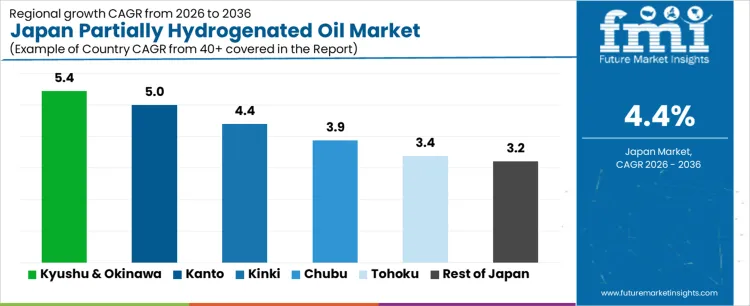
Demand for partially hydrogenated oil in Japan is increasing within controlled and permitted applications across food processing and industrial uses. Kyushu and Okinawa lead with a 5.4% CAGR, supported by specialty food manufacturing and export-oriented processing. Kanto follows at 5.0%, driven by regulated ingredient usage, confectionery, and industrial fats. Kansai records a 4.4% CAGR, shaped by bakery applications and foodservice supply chains. Chubu posts 3.9%, reflecting manufacturing-linked food production. Tohoku shows 3.4%, supported by regional processors. Rest of Japan records 3.2%, reflecting stable replacement-driven consumption. Regional variation reflects regulatory compliance, application mix, and processing scale across Japan.
| Region | CAGR (2026-2036) |
|---|---|
| Kyushu & Okinawa | 5.4% |
| Kanto | 5.0% |
| Kansai | 4.4% |
| Chubu | 3.9% |
| Tohoku | 3.4% |
| Rest of Japan | 3.2% |
How is Kyushu and Okinawa driving demand for Partially Hydrogenated Oil in Japan?
Kyushu and Okinawa drive demand through specialty food processing and export-focused manufacturing activity. Region’s CAGR of 5.4% reflects controlled use of partially hydrogenated oil in permitted bakery fats, confectionery components, and functional food formulations requiring stable texture and oxidative resistance. Manufacturers rely on PHO to achieve consistent melting behavior and extended shelf stability in niche products. Port proximity supports efficient import of raw oils and export of finished goods. Regulatory compliance is strictly managed through segregation, documentation, and controlled production lines. Demand favors consistent quality grades supplied under long-term contracts. Growth remains application-specific, driven by functional necessity rather than volume expansion.
- Specialty bakery and confectionery formulations
- Functional stability and controlled melting profiles
- Port-linked export-oriented processing
- Strict segregation and regulatory documentation
How is Kanto driving demand for Partially Hydrogenated Oil in Japan?
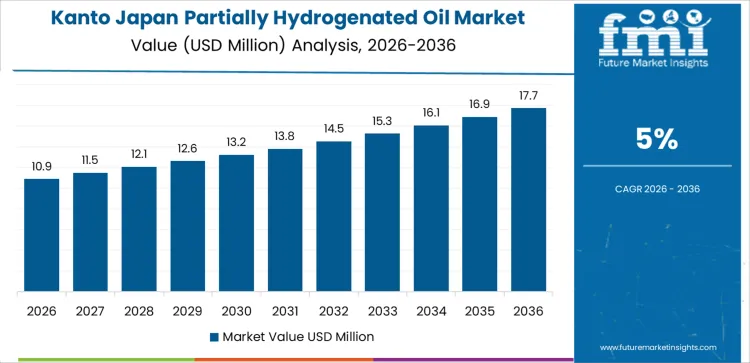
Kanto demand is shaped by regulated food manufacturing, confectionery production, and industrial ingredient formulation. Region’s CAGR of 5.0% reflects continued use of partially hydrogenated oil in tightly controlled applications where functional performance remains essential. Manufacturers emphasize precise texture control, shelf stability, and compatibility with existing formulations. Regulatory oversight encourages sourcing from certified suppliers with full traceability and quality documentation. Demand remains batch-oriented, aligned with specialty and premium product lines rather than mass-market foods. Growth is supported by incremental reformulation cycles and maintenance of compliant production processes.
- Regulated confectionery and specialty food usage
- Emphasis on texture and shelf-life performance
- Certified and traceable supplier sourcing
- Batch-focused and compliance-led procurement
How is Kansai driving demand for Partially Hydrogenated Oil in Japan?
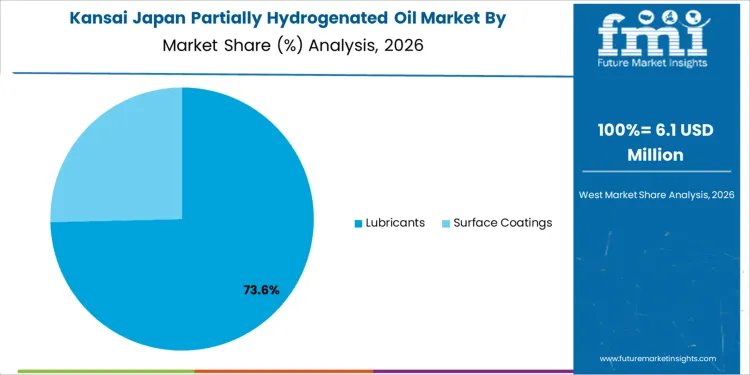
Kansai demand reflects balanced usage across bakery production, foodservice supply, and industrial food preparation. Region’s CAGR of 4.4% is supported by PHO application in specific shortenings and processing aids permitted under regulatory frameworks. Food manufacturers value handling stability, processing consistency, and cost control. Demand remains linked to established bakery brands and regional distribution networks. Procurement decisions prioritize reliable supply, compliance alignment, and compatibility with existing equipment. Growth remains incremental and replacement-driven, reflecting mature food processing infrastructure and limited scope for new application development.
- Bakery shortening and foodservice applications
- Processing consistency and handling stability
- Compliance-aligned sourcing practices
- Replacement-driven demand patterns
How is Chubu driving demand for Partially Hydrogenated Oil in Japan?
Chubu demand is anchored in manufacturing-linked food production and ingredient processing operations. Region’s CAGR of 3.9% reflects controlled PHO usage in industrial food applications supporting packaged foods and processing intermediates. Manufacturers focus on formulation compatibility, predictable performance, and integration with existing production equipment. Demand aligns closely with production cycles and efficiency improvements rather than expansion of product portfolios. Procurement favors standardized grades, reliable logistics, and stable supply schedules. Growth remains moderate due to mature processing capacity and limited introduction of new PHO-dependent formulations.
- Industrial food processing and intermediates
- Equipment and formulation compatibility focus
- Standardized grade procurement
- Production-cycle-linked consumption
How is Tohoku driving demand for Partially Hydrogenated Oil in Japan?
Tohoku demand is influenced by regional food processors and specialty ingredient manufacturers operating at smaller scales. Region’s CAGR of 3.4% reflects limited but consistent PHO usage in permitted applications requiring functional stability and controlled texture. Facilities emphasize compliance adherence, cost management, and steady supply continuity. Smaller production volumes favor low-volume procurement and standardized formulations. Demand growth remains cautious and necessity-driven, supported by continuity of existing operations rather than introduction of new PHO-based products.
- Regional specialty food processing activity
- Controlled and permitted PHO usage
- Low-volume and stable procurement
- Compliance-focused consumption behavior
How is Rest of Japan driving demand for Partially Hydrogenated Oil in Japan?
Rest of Japan shows stable demand driven by localized food processing, institutional supply, and replacement needs. Region’s CAGR of 3.2% reflects PHO usage in niche applications maintained under regulatory allowances. Buyers prioritize cost efficiency, supplier reliability, and documentation support. Demand remains maintenance-oriented, with minimal exposure to product innovation or capacity expansion. Consumption aligns with sustaining existing formulations rather than growth-driven investment.
- Localized and niche food processing applications
- Replacement-driven consumption patterns
- Cost-sensitive and documentation-focused procurement
- Stable demand without expansion drivers
What is the competitive landscape of demand for partially hydrogenated oil in Japan?
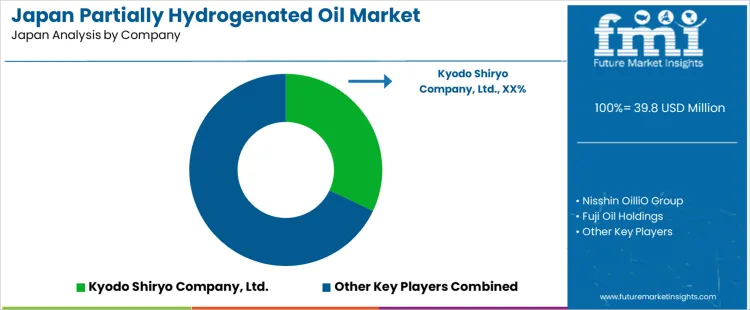
Demand for partially hydrogenated oil in Japan is influenced by limited industrial use, regulatory scrutiny of trans-fat content, and reformulation toward fully hydrogenated, interesterified, or alternative fat systems. Applications persist in select bakery fats, specialty shortening blends, and non-food uses requiring solid fat functionality. Buyers evaluate hydrogenation control, trans-fat reduction performance, oxidative stability, and compliance with Japan’s food safety standards. Procurement teams prioritize suppliers with food and industrial grade certifications, technical expertise in fat modification, and formulation support for compliant alternatives. Trend in the Japan market reflects gradual contraction of partially hydrogenated oils due to health-driven reformulation and growth of interesterified or enzymatically modified triglycerides meeting functional and regulatory expectations.
Kyodo Shiryo Company, Ltd. holds a leading presence in Japan through production of specialty fats and oils, including controlled hydrogenated fat systems tailored to local bakery and confectionery requirements. Nisshin OilliO Group participates with hydrogenated and modified fat offerings adapted to Japanese food manufacturing needs, supported by domestic technical service. Fuji Oil Holdings supplies fat systems, including fully and partially hydrogenated components, within broader bakery and industrial applications. Bunge Japan supports demand through refined and modified fats marketed to food processors and industrial users. Mitsubishi-Kagaku Foods Corporation contributes specialty fat products used in niche applications requiring specific textural and thermal performance. Competitive positioning in Japan reflects food safety compliance, formulation flexibility, regional supply reliability, and ability to support reformulation toward compliant fat alternatives.
Key Players in Japan Partially Hydrogenated Oil Demand
- Kyodo Shiryo Company, Ltd.
- Nisshin OilliO Group
- Fuji Oil Holdings
- Bunge Japan
- Mitsubishi-Kagaku Foods Corporation
Scope of the Report
| Items | Values |
|---|---|
| Quantitative Units | USD million |
| Application | Lubricants; Surface Coatings |
| End User | Confectionery; Bakery; Food; Snacks; Beverages |
| Regions Covered | Kyushu & Okinawa; Kanto; Kansai; Chubu; Tohoku; Rest of Japan |
| Key Companies Profiled | Kyodo Shiryo Company, Ltd.; Nisshin OilliO Group; Fuji Oil Holdings; Bunge Japan; Mitsubishi-Kagaku Foods Corporation |
| Additional Attributes | Dollar sales by application and end-user segments; regional CAGR patterns across Kanto and Kansai food processing hubs; demand trends linked to bakery fats and industrial coatings; gradual regulatory pressure on trans fats; formulation adjustments and partial substitution influencing consumption patterns in Japan. |
Japan Partially Hydrogenated Oil Demand by Segments
Application:
- Lubricants
- Surface Coatings
End User:
- Confectionery
- Bakery
- Food
- Snacks
- Beverages
Region:
- Kyushu & Okinawa
- Kanto
- Kansai
- Chubu
- Tohoku
- Rest of Japan
Frequently Asked Questions
How big is the demand for partially hydrogenated oil in Japan in 2026?
The demand for partially hydrogenated oil in Japan is estimated to be valued at USD 39.8 million in 2026.
What will be the size of partially hydrogenated oil in Japan in 2036?
The market size for the partially hydrogenated oil in Japan is projected to reach USD 61.2 million by 2036.
How much will demand for partially hydrogenated oil in Japan grow between 2026 and 2036?
The demand for partially hydrogenated oil in Japan is expected to grow at a 4.4% CAGR between 2026 and 2036.
What are the key application types in the partially hydrogenated oil in Japan?
The key application types in partially hydrogenated oil in Japan are lubricants and surface coatings.
Which end user segment is expected to contribute significant share in the partially hydrogenated oil in Japan in 2026?
In terms of end user, confectionery segment is expected to command 30.0% share in the partially hydrogenated oil in Japan in 2026.
Preview the report firsthand - request a free sample
Get SampleGet the brochure for pricing and purchase details.
Get PDFTable of Content
- Executive Summary
- Japan Market Outlook
- Demand-side Trends
- Supply-side Trends
- Technology Roadmap Analysis
- Analysis and Recommendations
- Market Overview
- Market Coverage / Taxonomy
- Market Definition / Scope / Limitations
- Market Background
- Market Dynamics
- Drivers
- Restraints
- Opportunity
- Trends
- Scenario Forecast
- Demand in Optimistic Scenario
- Demand in Likely Scenario
- Demand in Conservative Scenario
- Opportunity Map Analysis
- Product Life Cycle Analysis
- Supply Chain Analysis
- Investment Feasibility Matrix
- Value Chain Analysis
- PESTLE and Porter’s Analysis
- Regulatory Landscape
- Regional Parent Market Outlook
- Production and Consumption Statistics
- Import and Export Statistics
- Market Dynamics
- Japan Market Analysis 2021 to 2025 and Forecast, 2026 to 2036
- Historical Market Size Value (USD Million) Analysis, 2021 to 2025
- Current and Future Market Size Value (USD Million) Projections, 2026 to 2036
- Y-o-Y Growth Trend Analysis
- Absolute $ Opportunity Analysis
- Japan Market Pricing Analysis 2021 to 2025 and Forecast 2026 to 2036
- Japan Market Analysis 2021 to 2025 and Forecast 2026 to 2036, By Application
- Introduction / Key Findings
- Historical Market Size Value (USD Million) Analysis By Application , 2021 to 2025
- Current and Future Market Size Value (USD Million) Analysis and Forecast By Application , 2026 to 2036
- Lubricants
- Surface Coatings
- Lubricants
- Y-o-Y Growth Trend Analysis By Application , 2021 to 2025
- Absolute $ Opportunity Analysis By Application , 2026 to 2036
- Japan Market Analysis 2021 to 2025 and Forecast 2026 to 2036, By End User
- Introduction / Key Findings
- Historical Market Size Value (USD Million) Analysis By End User, 2021 to 2025
- Current and Future Market Size Value (USD Million) Analysis and Forecast By End User, 2026 to 2036
- Confectionery
- Bakery
- Food
- Snacks
- Beverages
- Confectionery
- Y-o-Y Growth Trend Analysis By End User, 2021 to 2025
- Absolute $ Opportunity Analysis By End User, 2026 to 2036
- Market Structure Analysis
- Competition Dashboard
- Competition Benchmarking
- Market Share Analysis of Top Players
- By Regional
- By Application
- By End User
- Competition Analysis
- Competition Deep Dive
- Kyodo Shiryo Company, Ltd.
- Overview
- Product Portfolio
- Profitability by Market Segments (Product/Age /Sales Channel/Region)
- Sales Footprint
- Strategy Overview
- Marketing Strategy
- Product Strategy
- Channel Strategy
- Nisshin OilliO Group
- Fuji Oil Holdings
- Bunge Japan
- Mitsubishi-Kagaku Foods Corporation
- Kyodo Shiryo Company, Ltd.
- Competition Deep Dive
- Assumptions & Acronyms Used
- Research Methodology


