

- Market Size (2026)
- USD 9.6 Bn
- Forecast (2036)
- USD 16.0 Bn
- CAGR (2026 to 2036)
- 5.2%
Low Carbs Vegan Food Market Size, Market Forecast and Outlook By FMI
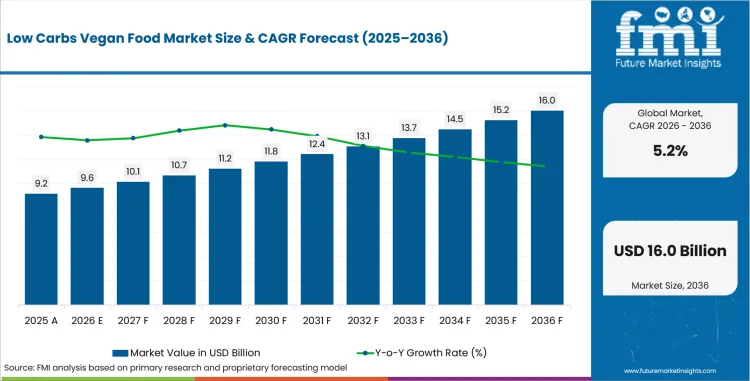
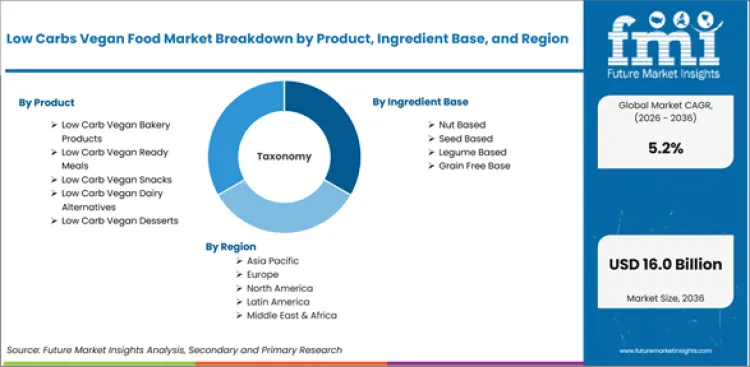
The low carbs vegan food market was valued at USD 9.2 billion in 2025. The market is set to reach USD 9.6 billion by 2026-end and grow at a CAGR of 5.2% between 2026-2036 to reach USD 16.0 billion by 2036. Low Carb Vegan Bakery Products will dominate with a 30.0% share, while Nut Based will lead with a 35.0% share.
Key Takeaways, Market Size, and Forecast
- 2026 Market Size: USD 9.6 billion
- 2036 Market Size: USD 16.0 billion
- Compound Annual Growth Rate (CAGR): 5.2% from 2026 to 2036
- Absolute $ Opportunity: USD 6.4 billion between 2026 and 2036
- Leading Product Segment: Low Carb Vegan Bakery Products
- Low Carb Vegan Bakery Products Share in 2026: 30.0%
- Fastest-growing Country: South Korea
- South Korea CAGR: 5.4% through 2036
| Quick Stats: Low Carbs Vegan Food Market Size, Share, Growth and Forecast | |
| Market Size in 2026 (Value) | USD 9.6 billion |
| Market Forecast in 2036 (Value) | USD 16.0 billion |
| CAGR (2026 to 2036) | 5.2% from 2026 to 2036 |
| Years Considered | 2021 to 2036 |
| Base Year | 2025 |
| Forecast Period | 2026 to 2036 |
| Units Considered | Value (USD Billion) |
| Leading Sub-Region | South Korea |
| Top Companies by Market Share | Nestle S.A., Beyond Meat Inc., Danone S.A., The Hain Celestial Group, Archer Daniels Midland Co. |
| Quick Stats: Low Carbs Vegan Food Market Size, Share, Growth and Forecast | |
| Market Size in 2026 (Value) | USD 9.6 billion |
| Market Forecast in 2036 (Value) | USD 16.0 billion |
| CAGR (2026 to 2036) | 5.2% from 2026 to 2036 |
| Years Considered | 2021 to 2036 |
| Base Year | 2025 |
| Forecast Period | 2026 to 2036 |
| Units Considered | Value (USD Billion) |
| Leading Sub-Region | South Korea |
| Top Companies by Market Share | Nestle S.A., Beyond Meat Inc., Danone S.A., The Hain Celestial Group, Archer Daniels Midland Co. |
Summary of the Low Carbs Vegan Food Market
- Demand and Growth Drivers
- Convergence of plant-based dietary preferences with carbohydrate reduction trends is expected to sustain demand for low carb vegan food products across bakery, snack, and meal replacement categories.
- Reformulation with nut-based, seed-based, and plant protein ingredients is likely to improve nutritional profiles and taste acceptance of low carb vegan products.
- Expanding retail distribution through mainstream grocery channels is expected to broaden consumer access beyond specialty health food stores.
- Product and Segment View
- Low carb vegan bakery products are estimated to account for 30.0% of product demand in 2026, driven by consumer demand for bread, wrap, and baked good alternatives compatible with both vegan and low carb dietary requirements.
- Nut based ingredients are likely to lead at 35.0%, with almond flour, coconut flour, and other nut-derived ingredients providing the primary carbohydrate replacement base.
- Retail consumption is expected to account for 70.0% of application demand, with household purchase for daily meal preparation as the primary consumption occasion.
- Geography and Competitive Outlook
- South Korea is likely to lead country level growth at 5.4% through 2036, driven by health-conscious consumer behavior and strong specialty food retail infrastructure.
- Western Europe and North America are expected to sustain demand through established vegan and health food retail channels.
- Companies with nut-based formulation capability, clean label ingredient positioning, and multi-channel retail distribution are likely to capture growing cross-dietary consumer demand.
- Analyst Opinion
- Nandini Roy Choudhury, Principal Consultant at FMI says, 'Manufacturers that can deliver taste-acceptable low carb vegan products using nut and seed-based formulations across bakery and snack categories are positioned to serve the growing intersection of plant-based and carbohydrate-conscious consumer segments through 2036.'
- The low carbs vegan food market is expanding at the intersection of two major dietary trends as consumers combine plant-based and carbohydrate reduction preferences.
- Adoption is increasing due to formulation improvements using almond flour, coconut flour, and plant protein isolates that deliver acceptable texture in low carb bakery and snack products.
- The market is also benefiting from ketogenic and paleo diet communities that seek vegan-compatible low carb food options.
- Demand is further supported by mainstream retail expansion that positions low carb vegan products in regular grocery sections alongside conventional alternatives.
Low Carbs Vegan Food Market Definition
The low carbs vegan food market includes plant-based food products formulated to deliver reduced carbohydrate content compared to standard vegan equivalents. Products span low carb vegan bakery, snacks, pasta, meal replacements, and prepared foods using nut-based, seed-based, and plant protein ingredient bases.
Low Carbs Vegan Food Market Inclusions
Market scope encompasses all commercially traded low carb vegan food products categorized by product (low carb vegan bakery products, low carb vegan snacks, low carb vegan pasta and vegan noodles, low carb vegan meal replacements), ingredient base (nut based, seed based, legume based, plant protein isolate based), application (retail consumption, food service, institutional), end use (individual consumers, fitness and wellness consumers, clinical nutrition), and nature (natural, organic). Revenue scope covers 2026 to 2036.
Low Carbs Vegan Food Market Exclusions
The scope does not include standard vegan food products without specific low carbohydrate positioning, conventional low carb foods containing animal-derived ingredients, or raw plant ingredients sold as bulk commodities.
Low Carbs Vegan Food Market Research Methodology
- Primary Research: FMI analysts conducted interviews with plant-based food manufacturers, specialty ingredient suppliers, and health food retail category managers across key consumption markets.
- Desk Research: Combined data from specialty food retail sales tracking, plant-based ingredient trade statistics, and manufacturer production disclosures.
- Market Sizing and Forecasting: Bottom-up aggregation across bakery, snack, meal replacement, and prepared food categories with adoption curves based on dual dietary trend penetration.
- Data Validation: Cross-checked quarterly against retail scanner data, specialty food distribution reports, and manufacturer shipment data.
Why is the Low Carbs Vegan Food Market Growing?
- The convergence of vegan and low carbohydrate dietary trends is creating a cross-category demand segment that requires products meeting both plant-based and reduced carb specifications.
- Almond flour, coconut flour, and plant protein-based formulations are enabling acceptable texture and taste in low carb vegan bakery products that compete with conventional alternatives.
- South Korea leads country level growth at 5.4% CAGR, driven by health-conscious consumer culture and expanding specialty food retail distribution for dietary-specific products.
The low carbs vegan food market is expanding at the intersection of two substantial dietary trends. Consumers combining plant-based eating with carbohydrate consciousness represent a growing segment that standard vegan or standard low carb products do not fully serve. Products specifically formulated for this dual dietary requirement command premium pricing supported by specialized formulation and targeted consumer appeal.
Bakery products represent the largest and most challenging product category. Bread, wraps, and baked goods require flour-based formulations where traditional wheat flour provides both structure and carbohydrate content. Nut flours, seed meals, and plant protein isolates serve as carbohydrate replacement bases, though achieving comparable texture and shelf stability requires specialized food science capability.
Online and specialty retail distribution dominates current sales channels, with mainstream grocery expansion accelerating as product variety and consumer awareness grow. Product placement in health food and free-from sections of supermarkets provides cross-dietary visibility that reaches both vegan and low carb shoppers.
Market Segmentation Analysis
- Low carb vegan bakery products lead at 30.0%, with bread alternatives, wraps, and baked goods serving the primary demand for low carb plant-based staple food replacements.
- Nut based ingredients dominate at 35.0%, with almond and coconut flour providing the primary carbohydrate replacement base for bakery and snack formulations.
- Natural products account for 50.0% of nature demand, reflecting consumer preference for minimally processed, recognizable ingredient formulations in health-positioned food products.
The low carbs vegan food market is segmented by product, ingredient base, application, end use, and nature. Low carb vegan bakery products lead demand while nut-based ingredients dominate formulation.
Insights into the Low Carb Vegan Bakery Products Segment
In 2026, low carb vegan bakery products are estimated to account for 30.0% of total product demand. Almond flour bread, coconut flour wraps, and seed-based crackers serve as staple food replacements for consumers following dual vegan and low carb dietary patterns. Frozen and shelf-stable formats provide distribution solutions for products with shorter ambient shelf life.
Formulation complexity in low carb vegan bakery is a competitive differentiator. Achieving bread-like texture and structure without gluten and without high carbohydrate flour bases requires specialized food science expertise. Products that deliver acceptable eating quality command strong consumer loyalty and repeat purchase rates.
Insights into the Nut Based Ingredient Segment
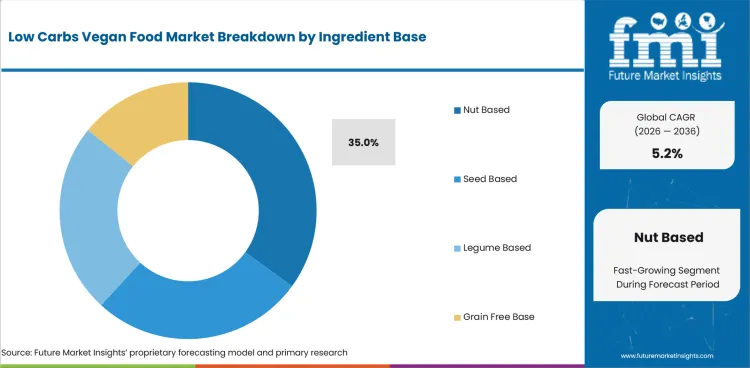
Nut based ingredients are expected to account for 35.0% of ingredient base demand in 2026, with almond flour and coconut flour as the most widely used carbohydrate replacement bases. Nut flours provide protein, healthy fat, and fiber content that contribute to the nutritional profile positioning of low carb vegan products.
Supply chain considerations for nut-based ingredients include commodity pricing volatility for almonds and coconuts, which directly impacts manufacturing costs. Seed-based alternatives including flax, chia, and hemp meal are gaining adoption as complementary or alternative low carb ingredient bases with more stable pricing.
Low Carbs Vegan Food Market Drivers, Restraints, and Opportunities
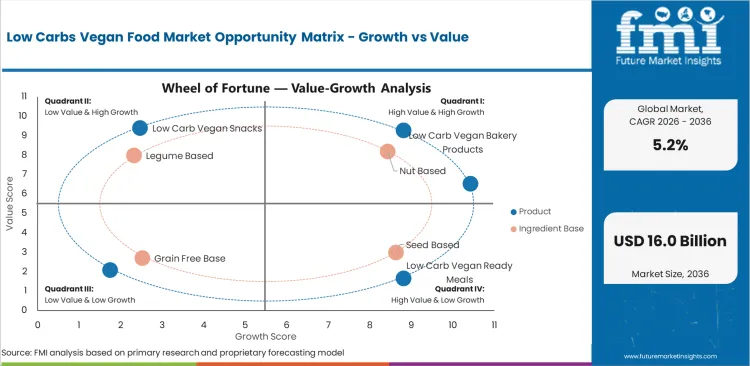
- Dual dietary trend convergence creates a growing consumer segment seeking food products that satisfy both vegan and low carbohydrate requirements simultaneously.
- Nut flour commodity pricing volatility and higher ingredient costs compared to conventional flour bases constrain the ability to achieve mass market retail pricing.
- Formulation complexity in achieving acceptable texture without gluten or high-carb flour bases creates competitive advantages for manufacturers with specialized food science capability.
- Mainstream retail distribution expansion positions low carb vegan products in regular grocery sections, improving consumer visibility beyond specialty diet channels.
The low carbs vegan food market continues to grow based on dual dietary trend convergence, formulation improvement, and retail distribution expansion. Ingredient costs and formulation complexity shape competitive dynamics.
Dual Dietary Trend Convergence
Demand is shaped by the growing consumer population that combines plant-based and low carbohydrate dietary preferences. Ketogenic, paleo, and carb-conscious consumers seeking vegan-compatible options represent a specific demographic that standard single-diet products do not adequately serve.
Ingredient Cost and Pricing Pressure
Growth is constrained by the higher cost of nut flours, seed meals, and plant protein isolates compared to conventional wheat and grain flour bases. This ingredient cost premium limits the ability to compete on price with standard bakery and snack products in mass market retail.
Formulation and Texture Innovation
Adoption depends on product quality improvements in low carb vegan bakery where texture, moisture, and shelf stability are primary consumer acceptance criteria. Manufacturers investing in food science R&D to improve formulation performance create competitive advantages that sustain premium positioning.
Mainstream Retail Channel Expansion
Product placement in mainstream grocery free-from and health food sections is expanding consumer access beyond specialty retailers. Cross-merchandising in both vegan and low carb sections provides dual visibility that reaches consumers from either dietary starting point.
Analysis of Low Carbs Vegan Food Market By Key Countries
.webp "Top Country Growth Comparison Low Carbs Vegan Food Market Cagr (2026 2036)")
| Country | CAGR |
|---|---|
| South Korea | 5.4% |
| EU | 5.3% |
| UK | 5.1% |
| USA | 5.0% |
- South Korea at 5.4% leads growth, driven by health-conscious consumer behavior and expanding specialty food retail infrastructure for dietary-specific products.
- The EU at 5.3% sustains demand through established vegan food retail channels and growing low carb consumer awareness across member states.
- The UK at 5.1% reflects strong plant-based food adoption and expanding low carb product availability in mainstream grocery retail.
- The USA at 5.0% maintains growth through established health food retail, online distribution, and expanding product variety across bakery and snack categories.
The global low carbs vegan food market is projected to expand at 5.2% CAGR from 2026 to 2036. The study covers more than 30 countries, and the main markets are listed below.
Demand Outlook for Low Carbs Vegan Food Market in South Korea
South Korea is projected to record a 5.4% CAGR through 2036. Health-conscious consumer behavior and expanding specialty food retail infrastructure sustain demand for dietary-specific food products. Quality-driven consumer expectations support premium pricing for well-formulated low carb vegan products.
- Health-conscious consumer culture creates demand for dietary-specific food products that combine plant-based and reduced carbohydrate attributes.
- Specialty food retail and online distribution channels provide consumer access to imported and domestic low carb vegan product brands.
- Quality expectations among Korean consumers support premium pricing for products with verified nutritional profiles and clean ingredient lists.
Future Outlook for Low Carbs Vegan Food Market in the EU
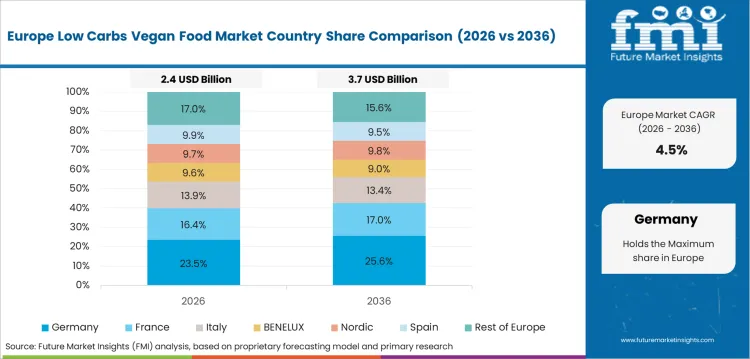
The EU is expected to grow at 5.3% through 2036. Established vegan food retail infrastructure and growing low carb consumer awareness sustain demand. EU organic certification and nutrition labeling requirements influence product positioning across member states.
- Established vegan and free-from retail sections in European supermarkets provide distribution infrastructure for low carb vegan product placement.
- EU nutrition labeling including carbohydrate content disclosure supports informed consumer selection of reduced carb food products.
- Organic certification demand creates premium positioning for certified organic low carb vegan bakery and snack products.
Sales Analysis of Low Carbs Vegan Food Market in UK
The UK is projected to grow at 5.1% through 2036. Strong plant-based food adoption and expanding low carb product availability in mainstream grocery sustain demand. Post-Brexit food labeling establishes UK-specific nutritional disclosure requirements.
- Strong plant-based food consumption culture creates established consumer awareness and retail distribution for vegan food categories.
- Mainstream grocery free-from sections provide cross-dietary visibility for low carb vegan products reaching both vegan and carb-conscious shoppers.
- Post-Brexit food labeling requirements establish UK-specific carbohydrate and nutritional content disclosure standards.
Opportunity Analysis of Low Carbs Vegan Food Market in USA
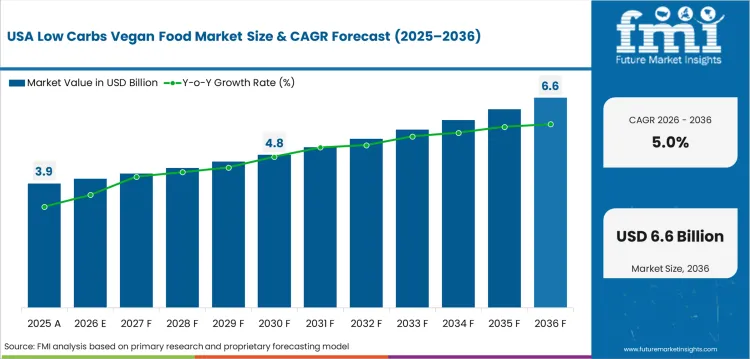
The USA is projected to record a 5.0% CAGR through 2036. Established health food retail and online distribution channels sustain demand for specialty dietary products. Ketogenic and paleo diet consumer communities provide a focused demand base for low carb vegan products.
- Ketogenic and paleo diet consumer communities create focused demand for vegan-compatible low carb food products across bakery and snack categories.
- Online specialty food retail and subscription services provide distribution for emerging low carb vegan brands targeting health-conscious consumers.
- FDA nutrition labeling including carbohydrate and fiber content disclosure supports consumer identification of low carb food products.
Competitive Landscape and Strategic Positioning
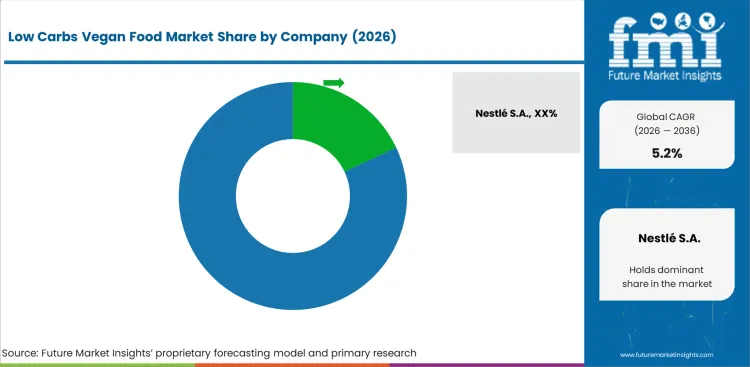
- Nestle S.A. and Beyond Meat lead with established plant-based food portfolios and manufacturing capability supporting low carb product development.
- Danone and Hain Celestial compete on plant-based and health food brand portfolios with expanding low carb vegan product offerings.
- Archer Daniels Midland provides plant protein and nut-based ingredient supply supporting low carb vegan food manufacturers across the value chain.
Nestle S.A. holds a leading position through its broad plant-based food portfolio and global manufacturing capability that supports low carb product line development. Beyond Meat Inc. competes on plant-based protein expertise with products targeting carb-conscious consumer segments.
Danone S.A. serves the plant-based food category through its dairy alternative and plant-based brands. The Hain Celestial Group provides organic and natural food products with growing low carb vegan offerings. Archer Daniels Midland supplies plant protein and nut-based ingredients to low carb vegan food manufacturers.
Barriers to entry include nut flour and plant protein formulation expertise, clean label manufacturing capability, and specialty retail channel access. Strategic priorities include formulation improvement for texture and taste, mainstream retail distribution expansion, and organic certification development.
Key Companies in the Low Carbs Vegan Food Market
Key global companies leading the low carbs vegan food market include:
- Nestle S.A. (Switzerland), Beyond Meat Inc. (USA), Danone S.A. (France), and Archer Daniels Midland Co. (USA) maintain established plant-based food portfolios and ingredient supply chains supporting low carb vegan product development and distribution.
- The Hain Celestial Group (USA) serves natural and organic food markets with growing low carb vegan product offerings across bakery and snack categories.
- Specialty low carb vegan food brands compete in niche segments with focused formulation expertise and direct-to-consumer distribution targeting ketogenic and carb-conscious vegan consumers.
Competitive Benchmarking: Low Carbs Vegan Food Market
| Company | Plant-Based Range | Low Carb Focus | Distribution | Geo. Reach |
|---|---|---|---|---|
| Nestle S.A. | Very High | Growing | Strong | Global |
| Beyond Meat | High | Growing | Strong | N. America, Global |
| Danone S.A. | High | Medium | Strong | Global |
| Hain Celestial | Medium | Growing | Medium | N. America |
| ADM | High (Ingredients) | Medium | Strong | Global |
Source: Future Market Insights competitive analysis, 2026.
Key Developments in Low Carbs Vegan Food Market
- In 2025, Beyond Meat launched a low carb plant-based protein product line targeting ketogenic and carb-conscious consumers in North American retail and food service channels.
- In 2025, Nestle expanded its plant-based food range with new low carb bakery products using almond and coconut flour bases for European retail distribution.
Key Players in the Low Carbs Vegan Food Market
Major Global Players
- Nestle S.A.
- Beyond Meat Inc.
- Danone S.A.
- The Hain Celestial Group
- Archer Daniels Midland Co.
Emerging Players/Startups
- Lo! Foods
- Plantmade
- Mister Veg
Report Scope and Coverage
| Parameter | Details |
|---|---|
| Market size by 2036 | USD 16.0 billion |
| Growth rate | 5.2% CAGR (2026 to 2036) |
| Forecast period | 2026 to 2036 |
| Base year value (2025) | USD 9.2 billion |
| Key Segment Covered | Product, Ingredient Base, Application, End Use, Nature |
| Regions covered | North America, Latin America, Western Europe, Eastern Europe, East Asia, South Asia and Pacific, Middle East and Africa |
| Countries covered | USA, South Korea, UK, Japan, China, India, Germany, 30 plus countries |
| Key companies profiled | Nestle S.A., Beyond Meat Inc., Danone S.A., The Hain Celestial Group, Archer Daniels Midland Co. |
| Approach | Hybrid bottom-up and top-down methodology starting with verified transaction data, projecting adoption velocity across segments and regions. |
Market Segmentation Analysis
Low Carbs Vegan Food Market Segmented by Product:
- Low Carb Vegan Bakery Products
- Bread Alternatives
- Almond Flour Bread
- Coconut Flour Bread
- Baked Snacks
- Low Carb Cookies
- Low Carb Muffins
- Bread Alternatives
- Low Carb Vegan Ready Meals
- Frozen Meals
- Plant Based Bowls
- Prepared Entrees
- Chilled Meals
- Salads
- Meal Kits
- Frozen Meals
- Low Carb Vegan Snacks
- Protein Snacks
- Protein Bars
- Protein Chips
- Savory Snacks
- Keto Friendly Snacks
- Seed Based Snacks
- Protein Snacks
- Low Carb Vegan Dairy Alternatives
- Plant Based Cheese
- Nut Based Cheese
- Soy Based Cheese
- Plant Based Yogurt
- Coconut Yogurt
- Almond Yogurt
- Plant Based Cheese
- Low Carb Vegan Desserts
- Ice Cream Alternatives
- Coconut Ice Cream
- Almond Ice Cream
- Sweet Treats
- Low Carb Chocolates
- Sugar Free Sweets
- Ice Cream Alternatives
Low Carbs Vegan Food Market Segmented by Ingredient Base:
- Nut Based
- Almond
- Cashew
- Walnut
- Seed Based
- Chia
- Flax
- Sunflower
- Legume Based
- Soy
- Pea
- Chickpea
- Grain Free Base
- Coconut Flour
- Cauliflower
Low Carbs Vegan Food Market Segmented by Application:
- Retail Consumption
- Packaged Food
- Take Home Packs
- Ready to Eat
- Packaged Food
- Food Service
- Restaurants
- Vegan Menus
- Diet Specific Menus
- Cafes
- Healthy Offerings
- Specialty Menus
- Restaurants
Low Carbs Vegan Food Market Segmented by End Use:
- Individual Consumers
- Health Conscious Consumers
- Weight Management
- Low Carb Diet
- Vegan Consumers
- Ethical Consumption
- Plant Based Lifestyle
- Health Conscious Consumers
- Fitness and Wellness Consumers
- Athletes
- Keto Vegan Diet
- High Protein Intake
- Athletes
Low Carbs Vegan Food Market Segmented by Nature:
- Natural
- Minimally Processed
- Clean Label Products
- No Artificial Additives
- Minimally Processed
- Organic
- Certified Organic Foods
- Eco Friendly Ingredients
- Sustainable Production
- Certified Organic Foods
- Conventional
- Standard Vegan Products
- Processed Foods
- Cost Optimized Products
- Standard Vegan Products
Low Carbs Vegan Food Market by Region:
- North America
- USA
- Canada
- Mexico
- Latin America
- Brazil
- Chile
- Rest of Latin America
- Western Europe
- Germany
- UK
- Italy
- Spain
- France
- Nordic
- BENELUX
- Rest of Western Europe
- Eastern Europe
- Russia
- Poland
- Hungary
- Balkan & Baltic
- Rest of Eastern Europe
- East Asia
- China
- Japan
- South Korea
- South Asia and Pacific
- India
- ASEAN
- Australia & New Zealand
- Rest of South Asia and Pacific
- Middle East & Africa
- Kingdom of Saudi Arabia
- Other GCC Countries
- Türkiye
- South Africa
- Other African Union
- Rest of Middle East & Africa
Research Sources and Bibliography
- 1. European Commission. (2025). EU Regulation on Nutritional and Health Claims for Food Products. EC.
- 2. USA Food and Drug Administration. (2025). FDA Nutrition Labeling Requirements for Packaged Foods. FDA.
- 3. Plant Based Foods Association. (2025). PBFA Plant-Based Food Retail Sales and Trends Report. PBFA.
- 4. Codex Alimentarius Commission. (2025). Codex Guidelines on Nutrition Labeling. FAO/WHO.
- 5. World Health Organization. (2025). WHO Dietary Guidelines for Non-Communicable Disease Prevention. WHO.
This bibliography is provided for reader reference.
This Report Answers
- Estimating the size of the low carbs vegan food market and projected revenue from 2026 to 2036.
- Segmentation by product, ingredient base, application, end use, and nature.
- Insights about more than 30 markets in the region.
- Analysis of ingredient bases including nut based, seed based, legume based, and plant protein isolate formulations.
- Assessment of the competitive landscape.
- Identifying investment opportunities in bakery, snack, meal replacement, and food service segments.
- Tracking the supply chain from plant ingredient sourcing to specialty retail distribution.
- Delivery of data in PDF and Excel formats.
Frequently Asked Questions
How big is the low carbs vegan food market in 2026?
The global low carbs vegan food market is estimated to be valued at USD 9.6 billion in 2026.
What will be the size of the low carbs vegan food market in 2036?
The market size for the low carbs vegan food market is projected to reach USD 16.0 billion by 2036.
How much will the low carbs vegan food market growth be between 2026 and 2036?
The low carbs vegan food market is expected to grow at a 5.2% CAGR between 2026 and 2036.
What are the key products in the low carbs vegan food market?
The key products in the low carbs vegan food market are Low Carb Vegan Bakery Products, Low Carb Vegan Ready Meals, Low Carb Vegan Snacks, Low Carb Vegan Dairy Alternatives and Low Carb Vegan Desserts.
Which ingredient base segment is expected to contribute a significant share in the low carbs vegan food market in 2026?
In terms of ingredient base, the nut based segment is expected to command 35.0% share in the low carbs vegan food market in 2026.
Preview the report firsthand - request a free sample
Get SampleGet the brochure for pricing and purchase details.
Get PDFTable of Content
- Key Takeaways
- Market Size and CAGR
- Top Growth Driver
- Fastest Growing Segment
- Leading Region
- Key Companies
- Emerging Opportunities
- Executive Summary
- Global Market Outlook
- Demand-side Trends
- Supply-side Trends
- Technology Roadmap Analysis
- Analysis and Recommendations
- Analyst Perspective (What is happening? Why now? What should investors know?)
- Key Questions Answered
- How large is the market?
- What is the CAGR?
- What are key trends?
- Which region dominates?
- Who are the leaders?
- Market Overview
- Market Coverage / Taxonomy
- Market Definition / Scope / Limitations
- Research Methodology
- Chapter Orientation
- Analytical Lens and Working Hypotheses
- Market Structure, Signals, and Trend Drivers
- Benchmarking and Cross-market Comparability
- Market Sizing, Forecasting, and Opportunity Mapping
- Research Design and Evidence Framework
- Desk Research Programme (Secondary Evidence)
- Expert Input and Fieldwork (Primary Evidence)
- Tooling, Models, and Reference Databases
- Data Engineering and Model Build
- Quality Assurance and Audit Trail
- Market Background
- Market Dynamics (Drivers, Restraints, Opportunity, Trends)
- Scenario Forecast (Optimistic, Likely, Conservative)
- Impact Analysis
- AI Impact
- Sustainability Impact
- Regulatory Impact
- Technology Impact
- Consumer / Buyer Analysis
- Purchase Drivers
- Adoption Barriers
- Buyer Journey
- Opportunity Map Analysis
- Product Life Cycle Analysis
- Supply Chain Analysis
- Investment Feasibility Matrix
- Value Chain Analysis
- PESTLE and Porter's Analysis
- Regulatory Landscape
- Regional Parent Market Outlook
- Production and Consumption Statistics
- Import and Export Statistics
- Global Market Analysis and Forecast, 2021 to 2036
- Historical Market Size Value (USD Million) Analysis, 2021 to 2025
- Current and Future Market Size Value (USD Million) Projections, 2026 to 2036
- Y-o-Y Growth Trend Analysis
- Absolute $ Opportunity Analysis
- Global Market Pricing Analysis, 2021 to 2036
- Global Market Analysis and Forecast, By Product, 2021 to 2036
- Introduction / Key Findings
- Historical Market Size Value (USD Million) Analysis By Product, 2021 to 2025
- Current and Future Market Size Value (USD Million) Analysis and Forecast By Product, 2026 to 2036
- Low Carb Vegan Bakery Products
- Bread Alternatives
- Baked Snacks
- Low Carb Vegan Ready Meals
- Frozen Meals
- Chilled Meals
- Low Carb Vegan Snacks
- Protein Snacks
- Savory Snacks
- Low Carb Vegan Dairy Alternatives
- Plant Based Cheese
- Plant Based Yogurt
- Low Carb Vegan Desserts
- Ice Cream Alternatives
- Sweet Treats
- Low Carb Vegan Bakery Products
- Y-o-Y Growth Trend Analysis By Product, 2021 to 2025
- Absolute $ Opportunity Analysis By Product, 2026 to 2036
- Global Market Analysis and Forecast, By Ingredient Base, 2021 to 2036
- Introduction / Key Findings
- Historical Market Size Value (USD Million) Analysis By Ingredient Base, 2021 to 2025
- Current and Future Market Size Value (USD Million) Analysis and Forecast By Ingredient Base, 2026 to 2036
- Nut Based
- Almond
- Cashew
- Walnut
- Seed Based
- Chia
- Flax
- Sunflower
- Legume Based
- Soy
- Pea
- Chickpea
- Grain Free Base
- Coconut Flour
- Cauliflower
- Nut Based
- Y-o-Y Growth Trend Analysis By Ingredient Base, 2021 to 2025
- Absolute $ Opportunity Analysis By Ingredient Base, 2026 to 2036
- Global Market Analysis and Forecast, By Application, 2021 to 2036
- Introduction / Key Findings
- Historical Market Size Value (USD Million) Analysis By Application, 2021 to 2025
- Current and Future Market Size Value (USD Million) Analysis and Forecast By Application, 2026 to 2036
- Retail Consumption
- Packaged Food
- Food Service
- Restaurants
- Cafes
- Retail Consumption
- Y-o-Y Growth Trend Analysis By Application, 2021 to 2025
- Absolute $ Opportunity Analysis By Application, 2026 to 2036
- Global Market Analysis and Forecast, By End Use, 2021 to 2036
- Introduction / Key Findings
- Historical Market Size Value (USD Million) Analysis By End Use, 2021 to 2025
- Current and Future Market Size Value (USD Million) Analysis and Forecast By End Use, 2026 to 2036
- Individual Consumers
- Health Conscious Consumers
- Vegan Consumers
- Fitness and Wellness Consumers
- Athletes
- Individual Consumers
- Y-o-Y Growth Trend Analysis By End Use, 2021 to 2025
- Absolute $ Opportunity Analysis By End Use, 2026 to 2036
- Global Market Analysis and Forecast, By Nature, 2021 to 2036
- Introduction / Key Findings
- Historical Market Size Value (USD Million) Analysis By Nature, 2021 to 2025
- Current and Future Market Size Value (USD Million) Analysis and Forecast By Nature, 2026 to 2036
- Natural
- Minimally Processed
- Organic
- Certified Organic Foods
- Conventional
- Standard Vegan Products
- Natural
- Y-o-Y Growth Trend Analysis By Nature, 2021 to 2025
- Absolute $ Opportunity Analysis By Nature, 2026 to 2036
- Global Market Analysis and Forecast, By Region, 2021 to 2036
- Introduction
- Historical Market Size Value (USD Million) Analysis By Region, 2021 to 2025
- Current Market Size Value (USD Million) Analysis and Forecast By Region, 2026 to 2036
- North America
- Latin America
- Western Europe
- Eastern Europe
- East Asia
- South Asia and Pacific
- Middle East & Africa
- Market Attractiveness Analysis By Region
- North America Market Analysis and Forecast, By Country, 2021 to 2036
- Historical Market Size Value (USD Million) Trend Analysis By Market Taxonomy, 2021 to 2025
- Market Size Value (USD Million) Forecast By Market Taxonomy, 2026 to 2036
- By Country
- USA
- Canada
- Mexico
- By Product
- By Ingredient Base
- By Application
- By End Use
- By Nature
- By Country
- Market Attractiveness Analysis
- By Country
- By Product
- By Ingredient Base
- By Application
- By End Use
- By Nature
- Key Takeaways
- Latin America Market Analysis and Forecast, By Country
- Historical Market Size Value (USD Million) Trend Analysis By Market Taxonomy, 2021 to 2025
- Market Size Value (USD Million) Forecast By Market Taxonomy, 2026 to 2036
- By Country
- Brazil
- Chile
- Rest of Latin America
- By Product
- By Ingredient Base
- By Application
- By End Use
- By Nature
- By Country
- Market Attractiveness Analysis
- By Country
- By Product
- By Ingredient Base
- By Application
- By End Use
- By Nature
- Key Takeaways
- Western Europe Market Analysis and Forecast, By Country
- Historical Market Size Value (USD Million) Trend Analysis By Market Taxonomy, 2021 to 2025
- Market Size Value (USD Million) Forecast By Market Taxonomy, 2026 to 2036
- By Country
- Germany
- UK
- Italy
- Spain
- France
- Nordic
- BENELUX
- Rest of Western Europe
- By Product
- By Ingredient Base
- By Application
- By End Use
- By Nature
- By Country
- Market Attractiveness Analysis
- By Country
- By Product
- By Ingredient Base
- By Application
- By End Use
- By Nature
- Key Takeaways
- Eastern Europe Market Analysis and Forecast, By Country
- Historical Market Size Value (USD Million) Trend Analysis By Market Taxonomy, 2021 to 2025
- Market Size Value (USD Million) Forecast By Market Taxonomy, 2026 to 2036
- By Country
- Russia
- Poland
- Hungary
- Balkan & Baltic
- Rest of Eastern Europe
- By Product
- By Ingredient Base
- By Application
- By End Use
- By Nature
- By Country
- Market Attractiveness Analysis
- By Country
- By Product
- By Ingredient Base
- By Application
- By End Use
- By Nature
- Key Takeaways
- East Asia Market Analysis and Forecast, By Country
- Historical Market Size Value (USD Million) Trend Analysis By Market Taxonomy, 2021 to 2025
- Market Size Value (USD Million) Forecast By Market Taxonomy, 2026 to 2036
- By Country
- China
- Japan
- South Korea
- By Product
- By Ingredient Base
- By Application
- By End Use
- By Nature
- By Country
- Market Attractiveness Analysis
- By Country
- By Product
- By Ingredient Base
- By Application
- By End Use
- By Nature
- Key Takeaways
- South Asia and Pacific Market Analysis and Forecast, By Country
- Historical Market Size Value (USD Million) Trend Analysis By Market Taxonomy, 2021 to 2025
- Market Size Value (USD Million) Forecast By Market Taxonomy, 2026 to 2036
- By Country
- India
- ASEAN
- Australia & New Zealand
- Rest of South Asia and Pacific
- By Product
- By Ingredient Base
- By Application
- By End Use
- By Nature
- By Country
- Market Attractiveness Analysis
- By Country
- By Product
- By Ingredient Base
- By Application
- By End Use
- By Nature
- Key Takeaways
- Middle East & Africa Market Analysis and Forecast, By Country
- Historical Market Size Value (USD Million) Trend Analysis By Market Taxonomy, 2021 to 2025
- Market Size Value (USD Million) Forecast By Market Taxonomy, 2026 to 2036
- By Country
- Kingdom of Saudi Arabia
- Other GCC Countries
- Türkiye
- South Africa
- Other African Union
- Rest of Middle East & Africa
- By Product
- By Ingredient Base
- By Application
- By End Use
- By Nature
- By Country
- Market Attractiveness Analysis
- By Country
- By Product
- By Ingredient Base
- By Application
- By End Use
- By Nature
- Key Takeaways
- Key Countries Market Analysis
- USA
- Pricing Analysis
- Market Share Analysis, 2025
- By Product
- By Ingredient Base
- By Application
- By End Use
- By Nature
- Canada
- Pricing Analysis
- Market Share Analysis, 2025
- By Product
- By Ingredient Base
- By Application
- By End Use
- By Nature
- Mexico
- Pricing Analysis
- Market Share Analysis, 2025
- By Product
- By Ingredient Base
- By Application
- By End Use
- By Nature
- Brazil
- Pricing Analysis
- Market Share Analysis, 2025
- By Product
- By Ingredient Base
- By Application
- By End Use
- By Nature
- Chile
- Pricing Analysis
- Market Share Analysis, 2025
- By Product
- By Ingredient Base
- By Application
- By End Use
- By Nature
- Germany
- Pricing Analysis
- Market Share Analysis, 2025
- By Product
- By Ingredient Base
- By Application
- By End Use
- By Nature
- UK
- Pricing Analysis
- Market Share Analysis, 2025
- By Product
- By Ingredient Base
- By Application
- By End Use
- By Nature
- Italy
- Pricing Analysis
- Market Share Analysis, 2025
- By Product
- By Ingredient Base
- By Application
- By End Use
- By Nature
- Spain
- Pricing Analysis
- Market Share Analysis, 2025
- By Product
- By Ingredient Base
- By Application
- By End Use
- By Nature
- France
- Pricing Analysis
- Market Share Analysis, 2025
- By Product
- By Ingredient Base
- By Application
- By End Use
- By Nature
- India
- Pricing Analysis
- Market Share Analysis, 2025
- By Product
- By Ingredient Base
- By Application
- By End Use
- By Nature
- ASEAN
- Pricing Analysis
- Market Share Analysis, 2025
- By Product
- By Ingredient Base
- By Application
- By End Use
- By Nature
- Australia & New Zealand
- Pricing Analysis
- Market Share Analysis, 2025
- By Product
- By Ingredient Base
- By Application
- By End Use
- By Nature
- China
- Pricing Analysis
- Market Share Analysis, 2025
- By Product
- By Ingredient Base
- By Application
- By End Use
- By Nature
- Japan
- Pricing Analysis
- Market Share Analysis, 2025
- By Product
- By Ingredient Base
- By Application
- By End Use
- By Nature
- South Korea
- Pricing Analysis
- Market Share Analysis, 2025
- By Product
- By Ingredient Base
- By Application
- By End Use
- By Nature
- Russia
- Pricing Analysis
- Market Share Analysis, 2025
- By Product
- By Ingredient Base
- By Application
- By End Use
- By Nature
- Poland
- Pricing Analysis
- Market Share Analysis, 2025
- By Product
- By Ingredient Base
- By Application
- By End Use
- By Nature
- Hungary
- Pricing Analysis
- Market Share Analysis, 2025
- By Product
- By Ingredient Base
- By Application
- By End Use
- By Nature
- Kingdom of Saudi Arabia
- Pricing Analysis
- Market Share Analysis, 2025
- By Product
- By Ingredient Base
- By Application
- By End Use
- By Nature
- Türkiye
- Pricing Analysis
- Market Share Analysis, 2025
- By Product
- By Ingredient Base
- By Application
- By End Use
- By Nature
- South Africa
- Pricing Analysis
- Market Share Analysis, 2025
- By Product
- By Ingredient Base
- By Application
- By End Use
- By Nature
- USA
- Market Structure Analysis
- Competition Dashboard
- Competition Benchmarking
- Market Share Analysis of Top Players
- By Regional
- By Product
- By Ingredient Base
- By Application
- By End Use
- By Nature
- Emerging Startups
- Innovation Benchmarking
- Competition Analysis
- Competition Deep Dive
- Nestlé S.A.
- Overview
- Product Portfolio
- Profitability by Market Segments (Product/Region/Sales Channel)
- Sales Footprint
- Strategy Overview
- Marketing Strategy
- Product Strategy
- Channel Strategy
- Beyond Meat Inc.
- Danone S.A.
- The Hain Celestial Group
- Archer Daniels Midland Co.
- Other Manufacturers
- Nestlé S.A.
- Case Studies
- Success Stories
- Recent Developments
- Competition Deep Dive
- Assumptions & Acronyms Used


