

- Industry Size (2025)
- USD 423.4 Mn
- Forecast (2035)
- USD 858.7 Mn
- CAGR (2025 to 2035)
- 7.3%
Neem Extract Market Forecast and Outlook 2025 to 2035
The global neem extract market is valued at USD 423.4 million in 2025 and is expected to reach USD 858.7 million by 2035, reflecting a CAGR of 7.3%. Demand is supported by wider adoption of botanical actives, rising interest in anti-inflammatory skincare ingredients, and increased utilization of herbal formulations across personal-care portfolios. Neem extract is selected for its well-established cleansing and skin-soothing properties, which align with clean-beauty product development.
Skin-care applications form the leading segment, with consistent use in face cleansers, acne-care solutions, and skin-balancing moisturisers. Product adoption is shaped by demand for antimicrobial performance, natural origin claims, and consumer focus on preventive dermatological care. Formulators prioritize high-purity extracts that maintain key bioactive constituents for stable performance.
Quick Stats for Global Neem Extract Demand
- Global Neem Extract Sales Value (2025): USD 423.4 million
- Global Neem Extract Forecast Value (2035): USD 858.7 million
- Global Neem Extract Forecast CAGR (2025 to 2035): 7.3%
- Leading Application in Global Neem Extract Demand: Skin Care
- Key Growth Regions in Global Neem Extract Demand: Asia Pacific, Europe, North America
- Top Players in Global Neem Extract Demand: BASF SE, Croda International, Evonik Industries, Symrise, Dow
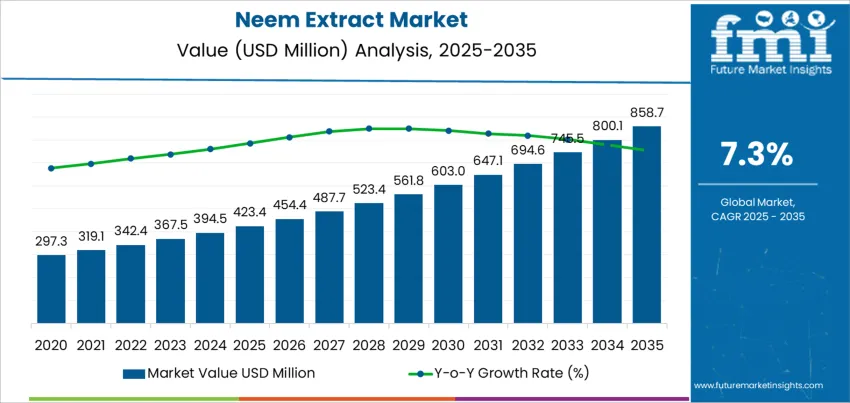
What is the Growth Forecast for the Neem Extract Market through 2035?
Asia Pacific, Europe, and North America record the highest growth due to strong personal-care manufacturing activity, expanding distribution networks, and increasing awareness of plant-based alternatives. Growth in online and specialist beauty channels supports sustained accessibility across premium and mass-market offerings. Key suppliers include BASF SE, Croda International, Evonik Industries, Symrise, and Dow. Their priorities include consistent quality control, ingredient standardization, and application support for topical products where neem extract is used as a functional botanical input.
An Early Vs Late Growth Curve Comparison for the global neem extract industry shows two distinct phases of expansion driven by different adoption dynamics. Early growth is shaped by long-standing use of neem in traditional agriculture and personal care, supported by awareness of its antifungal and antibacterial properties. This base demand creates consistent volume but keeps the initial growth curve moderate. Product penetration mainly progresses in emerging regions with established herbal practices.
The late growth curve indicates stronger adoption triggered by sustainability objectives. Natural pesticides and bioactives increasingly replace synthetic chemicals in crop protection, which strengthens demand in commercial agriculture. Personal care and nutraceutical producers incorporate neem extracts in clean label and plant-based portfolios, widening the application range. Regulatory support for reduced chemical inputs accelerates this shift in later years, delivering higher incremental contributions.
Late-phase growth relies less on traditional use and more on standardized formulations, quality compliance, and multinational participation. This broadens value generation relative to volume expansion. The trajectory suggests a progression from steady baseline adoption to stronger long-term momentum as neem extract transitions from a regional herbal input to a globally recognized bio-ingredient.
Neem Extract Market Key Takeaways
| Metric | Value |
|---|---|
| Market Value (2025) | USD 423.4 million |
| Market Forecast Value (2035) | USD 858.7 million |
| Forecast CAGR (2025-2035) | 7.3% |
Why is the Demand for Neem Extract Growing Globally?
Demand for neem extract is increasing worldwide because consumers and industries value natural ingredients with antibacterial, antifungal and insect-repellent properties. Neem extract is widely used in personal care formulations such as soaps, toothpaste and skincare products that target acne, dandruff and irritation. Growing interest in botanical and chemical free hygiene products supports its inclusion in daily grooming routines across both developed and emerging markets. Agriculture is a major driver, as neem-based bio pesticides help manage pests while reducing reliance on synthetic chemicals. Farmers choose neem extract for integrated pest management to protect crops and meet stricter residue standards in export markets. Pet care products and veterinary applications also use neem to support flea and tick control.
Pharmaceutical and nutraceutical manufacturers adopt neem extract for formulations associated with oral health, liver support and immune wellness. Increased global focus on traditional plant-based remedies reinforces commercialization in capsules, tinctures and herbal blends. Constraints include fluctuations in raw material supply due to seasonal harvesting and the need for consistent active compound concentration in high grade extracts. Regulatory approvals and product registration requirements can extend commercialization timelines for therapeutic applications.
Which End-Use Applications and Product Forms Lead Global Demand for Neem Extract?
Global demand for neem extract is supported by its role as an herbal active with antifungal, antibacterial, sebum-regulating, and anti-inflammatory properties. Growth is driven by clean beauty adoption, sulfate-free haircare reformulation, and expanding acne-care and scalp-care categories. Neem extract also aligns with rising regulatory preference for natural antimicrobial and anti-dandruff alternatives, increasing its relevance in dermocosmetic pipelines.
By End-Use Application, Skin Care Holds the Leading Share
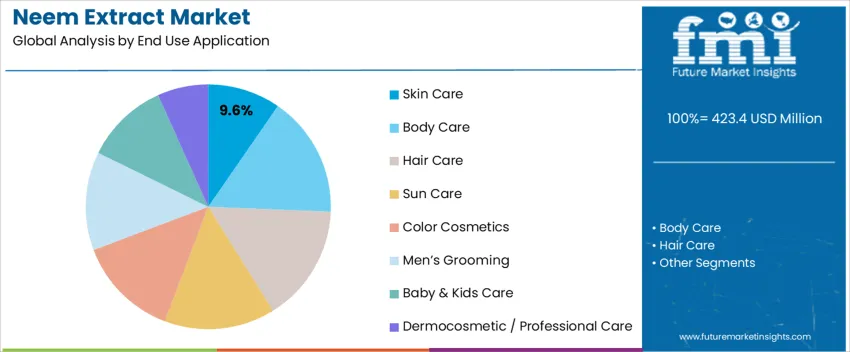
Skin care accounts for 9.6% of global consumption, driven by neem’s strong positioning in acne defense, oil-control solutions, and sensitive-skin relief. It is used in facial cleansers, anti-blemish toners, spot treatments, and herbal masks formulated for sebum reduction and bacterial control without harsh actives. Dermocosmetic and professional-care brands incorporate neem in post-procedure calming formulas and adjunct therapies targeting barrier restoration. Hair care and body care usage continues to scale with expanding anti-dandruff and antimicrobial hygiene trends. Adoption in men’s grooming and baby-care products increases selectively where regulatory safety and mildness requirements are met.
Key Points:
- Leading demand from acne-care and oil-control facial treatments
- Expanding use in scalp and hygiene-driven product lines
- Strong fit within herbal and dermocosmetic brand positioning
By Product Form, Powder Represents the Largest Share
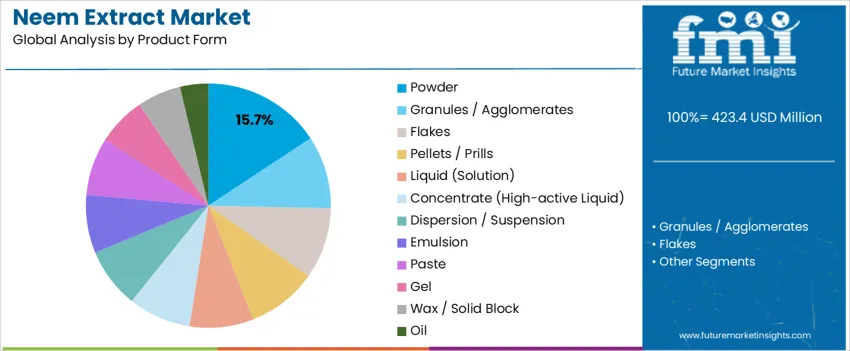
Powder form holds 15.7% of demand, supported by stability advantages, consistent active concentration, and ease of integration into high-purity formulations. Powder neem extract is widely used in masks, scrubs, bar soaps, and rinse-off hair treatments due to compatibility with solid and dry-blend manufacturing. Liquid solutions and dispersions support premium serums and leave-on treatments requiring uniform skin coverage and rapid delivery. Emulsion, oil, gel, and paste formats remain specialized for hydrating body-care and scalp-care uses where viscosity control is essential. Form selection depends on purity standardization, processing needs, and consumer texture preferences across both mass and specialty beauty brands.
Key Points:
- Powder format enables controlled dosing and broad formulation flexibility
- Liquids and dispersions support high-performance skincare and serums
- Specialty formats used for sensory enhancement and targeted scalp care
What are the Drivers, Restraints, and Key Trends of the Global Neem Extract Market?
Growth of botanical pesticides, rising demand for natural personal care ingredients and expanding use in traditional wellness products are driving demand.
Globally, neem extract is widely used in biopesticides to support sustainable agriculture and protect crops against pests while reducing dependence on synthetic chemicals. Growing restrictions on chemical pesticides encourage farmers to adopt neem-based formulations in regions including Asia, Europe and North America. Personal care brands include neem extract in shampoos, soaps and skincare products positioned for antibacterial and anti-inflammatory properties. Traditional wellness applications in supplements and herbal remedies support regular consumption among individuals seeking natural immune and skin support. These diverse uses in agriculture, cosmetics and wellness sustain consistent global procurement of neem-based active ingredients.
Raw material variability, regulatory compliance for agricultural applications and limited consumer familiarity in certain regions restrain growth.
Neem extract content and quality differ based on tree age, climate and extraction technique, which can challenge standardization for cosmetics and crop protection products. Agricultural registration processes require evidence of efficacy and safety, which may lengthen approval timelines for new formulations. In markets with lower awareness of herbal ingredients, consumers may prefer established synthetic alternatives in both personal care and plant protection. Price sensitivity among small farmers also influences adoption of higher-cost botanical solutions. These biological and regulatory factors slow universal conversion from chemicals to neem derivatives.
Shift toward standardized azadirachtin extracts, increased demand in organic farming and rising application in pet-care and home-care products define key trends.
Producers are refining extraction processes to supply consistent azadirachtin concentrations that improve reliability in agricultural and horticultural pest control. Growth in organic farming and greenhouse cultivation accelerates demand for neem-based insecticides and fungicides aligned with certification requirements. Pet-care brands incorporate neem into tick and flea control products positioned as natural options for household animals. Home-care cleaning products adopt neem for its antimicrobial properties to meet rising consumer interest in botanical disinfectants. These developments indicate steady, sustainability-driven demand for neem extract across global agriculture, personal care and home-care sectors.
Analysis of the Neem Extract Market by Key Country
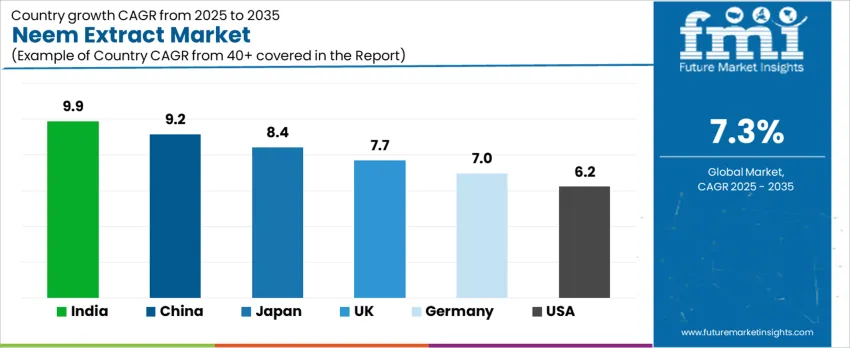
The global neem extract market expands through 2035, supported by rising interest in botanical active ingredients used in personal care, household care, crop protection, veterinary applications, and dietary supplements. Neem-derived limonoids, including azadirachtin, support insect-repellent and antimicrobial properties valued in regulated product formulations. India registers 9.9% CAGR, reflecting strong cultivation and export processing.
China follows with a 9.2% CAGR through nutraceutical and cosmetics manufacturing. Japan reaches 8.4% CAGR due to high-quality standards in skin-care and OTC health categories. The United Kingdom grows at 7.7%, Germany at 7.0%, and the United States at 6.2%, influenced by clean-label adoption and expanding herbal wellness channels.
| Country | CAGR (%) |
|---|---|
| India | 9.9% |
| China | 9.2% |
| Japan | 8.4% |
| UK | 7.7% |
| Germany | 7.0% |
| USA | 6.2% |
How is India Growing in the Neem Extract Market?
India posts a 9.9% CAGR, supported by established neem tree cultivation in Rajasthan, Uttar Pradesh, and southern regions, enabling stable raw material availability for extract processors. Liquid and powder extracts are produced for bio-pesticide use where azadirachtin concentration is verified for organic-farming applications. Personal-care manufacturing integrates neem into anti-acne and dandruff control products distributed domestically and exported to regulated markets. Veterinary uses expand for tick- and mite-control products in livestock operations. Regulatory frameworks guide residue safety for agricultural applications in export crops. Processing clusters develop spray-drying and solvent-extraction technology to align with international demand for standardized actives.
- Strong agricultural raw-material sourcing
- Bio-pesticide approval supporting organic farming
- Personal-care integration driving consumption
- Testing and export compliance strengthening market access
How is China shaping neem extract commercialization?
China maintains 9.2% CAGR, influenced by health-supplement production and natural personal-care categories. Manufacturers integrate neem actives into skin-cleansing products, oral-care pastes, and insect-repellent treatments targeting household-care demand. R&D departments evaluate neem with botanical combinations to enhance antimicrobial efficacy in cosmetic formulations. Importers verify supply traceability from Indian producers to satisfy national quality requirements. Agricultural-input companies test neem-based products as partial alternatives to synthetic pesticides. E-commerce channels extend consumer access to herbal skincare and wellness products containing standardized neem actives.
- Personal-care and hygiene usage expanding
- Botanical-blend development improving product performance
- Traceable sourcing for regulated applications
- Eco-inputs evaluated in integrated pest-management systems
How is Japan supporting high-purity usage?
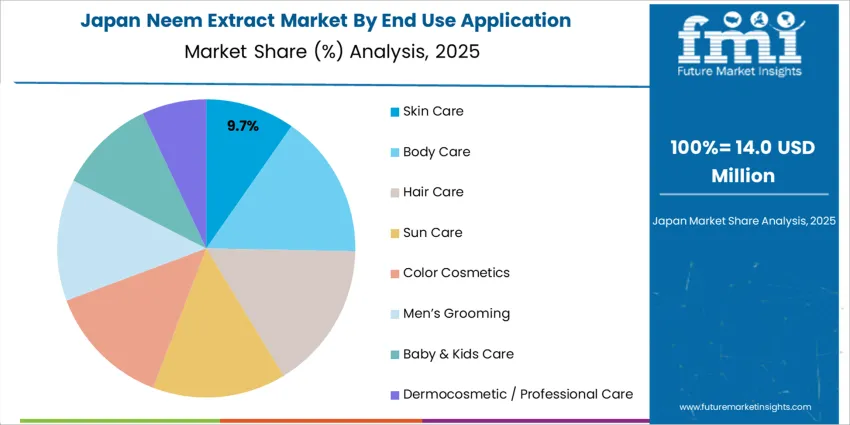
Japan grows at 8.4% CAGR, driven by pharmacy-linked skincare formulations where neem extracts support antibacterial and sebum-control functions. Regulatory frameworks require consistent quality and safety data, leading to demand for purified extracts with defined marker compounds. Manufacturers design mild-scent formulations adapted to Japanese consumer acceptance standards. Limited farming conditions result in full reliance on certified imports, requiring strict contaminant screening. OTC health-care goods and oral-care lines reinforce supply stability to retail chains.
- Pharmacist-approved usage guiding quality needs
- Anti-acne and skin-calming claims influencing formulation
- Import-based sourcing requiring rigorous safety checks
- Retail-pharmacy logistics supporting steady distribution
How is the United Kingdom contributing to neem extract adoption?
The United Kingdom reports 7.7% CAGR, supported by demand for natural personal-care and household-hygiene products using antimicrobial botanical actives. Retailers expand herbal toothpaste, scalp-care, and soap lines featuring neem as a functional ingredient. Importers review documentation for active-compound verification and allergen control. Domestic farm-supply distributors explore neem-based crop-protection inputs in greenhouse produce. Consumer interest in cleaner-ingredient profiles boosts inclusion in pet-care products.
- Clean-label personal-care expansion driving use
- Traceable import standards shaping product sourcing
- Greenhouse agriculture testing bio-derived inputs
- Pet-care adoption reinforcing new application areas
How is Germany reinforcing regulated-standard demand?
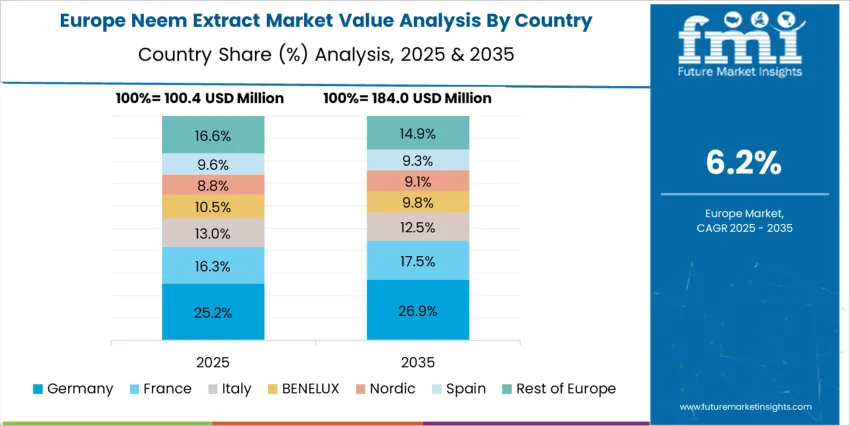
Germany posts 7.0% CAGR, driven by demand for scientifically validated plant-based functional ingredients in pharmacy-distributed products. Neem extracts support scalp-care and skin-protection claims, requiring validated safety thresholds. Organic farming uses neem-based pest-control solutions compliant with EU residue standards. Import reliance ensures quality assessments covering pesticides, solvents, and microbiological parameters. Distribution focuses on certified natural-cosmetic formats aligned with sustainability labelling systems.
- EU-level compliance directing impurity-control processes
- Natural-cosmetic certifications shaping procurement
- Bio-pesticide demand supporting organic production
- Ingredient validation influencing portfolio approvals
How is the United States shaping diverse neem extract applications?
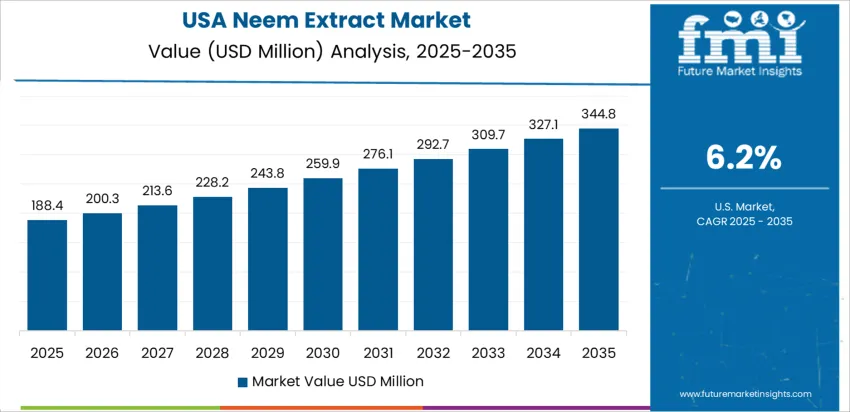
The United States grows at 6.2% CAGR, driven by natural-wellness consumption and plant-based household-care products. Neem derivatives appear in anti-acne skincare, herbal toothpaste, pet-care, and garden insect-control formulations. Retail and online platforms provide broad availability for DTC wellness brands. Regulatory oversight from the FDA and EPA requires accurate labelling and safe-use documentation, guiding import validation. Consumer awareness of natural antimicrobial solutions strengthens demand during seasonal illness and outdoor activity periods.
- Herbal skincare and oral-care supporting volume growth
- EPA compliance guiding crop-care formulations
- E-commerce accelerating distribution reach
- Pet-care and household-care expanding application scope
What does the global competitive structure for neem extract demand show?
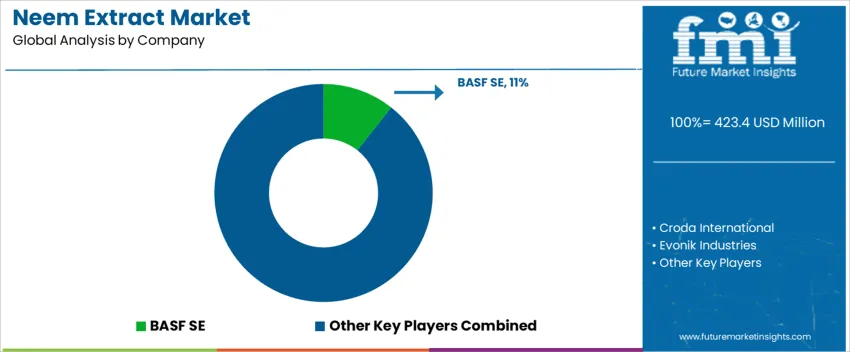
Neem extract demand globally spans cosmetic actives, oral-care formulations, nutraceutical supplements, and agricultural biopesticide applications. Growth relies on verified botanical sourcing, standardized azadirachtin or polyphenol content, and residue-control protocols. International buyers prioritize suppliers with transparent documentation across farming regions in India and Southeast Asia, strengthening consistency in antimicrobial and skin-soothing performance.
BASF SE holds about 10.6% share worldwide. It supplies functional grades positioned for personal-care and regulated hygiene products that require validated purity and compatibility data. Croda International expands with controlled-origin cosmetic extracts supporting claims related to skin-comfort and sebum-balancing outcomes. Evonik Industries and Symrise maintain positions where formulators focus on stabilization systems and integration with plant-derived preservative blends for topical formats.
Dow supports large-volume consumer brands using neem in cleansing, hair-care, and anti-dandruff ranges with established manufacturing relationships and performance documentation. Ashland and Clariant supply specialized extracts aligned with sustainability programs and clean-label compliance. Broader participation comes from Seppic, Lubrizol, Lonza, Inolex and peers offering niche formats for oral-care, supplements, and agritech solutions. Competitive strength depends on reliable traceability, solvent-management practices, and validated antimicrobial activity suitable for regulated personal-care and household-hygiene formulations.
Key Players in the Neem Extract Market
- BASF SE
- Croda International
- Evonik Industries
- Symrise (incl. IFF/Givaudan actives)
- Dow / Dow Inc.
- Ashland
- Clariant
- Others (Seppic, Lubrizol, Lonza, Inolex etc.)
Scope of the Report
| Items | Values |
|---|---|
| Quantitative Units | USD million |
| End Use Application | Skin Care, Body Care, Hair Care, Sun Care, Color Cosmetics, Men’s Grooming, Baby & Kids Care, Dermocosmetic / Professional Care |
| Product Form | Powder, Granules / Agglomerates, Flakes, Pellets / Prills, Liquid (Solution), Concentrate (High-active Liquid), Dispersion / Suspension, Emulsion, Paste, Gel, Wax / Solid Block, Oil |
| Regions Covered | Asia Pacific, Europe, North America, Latin America, Middle East & Africa |
| Countries Covered | India, China, USA, Germany, South Korea, Japan, Italy, and 40+ countries |
| Key Companies Profiled | BASF SE, Croda International, Evonik Industries, Symrise (incl. IFF/Givaudan actives), Dow / Dow Inc., Ashland, Clariant, Others (Seppic, Lubrizol, Lonza, Inolex etc.) |
| Additional Attributes | Dollar sales by end-use application and product forms; increasing demand for botanical extracts in anti-acne and antimicrobial formulations; sustainability and supply chain sourcing trends focused on India-based neem cultivation; innovation in neem-based bioactives for scalp care and therapeutic personal care; regulatory compliance standards across EU, US, and APAC cosmetic ingredient markets; competitive landscape of global and regional ingredient suppliers. |
Neem Extract Market by Segment
End Use Application:
- Skin Care
- Body Care
- Hair Care
- Sun Care
- Color Cosmetics
- Men’s Grooming
- Baby & Kids Care
- Dermocosmetic / Professional Care
Product Form:
- Powder
- Granules / Agglomerates
- Flakes
- Pellets / Prills
- Liquid (Solution)
- Concentrate (High-active Liquid)
- Dispersion / Suspension
- Emulsion
- Paste
- Gel
- Wax / Solid Block
- Oil
Region:
- Asia Pacific
- China
- Japan
- South Korea
- India
- Australia & New Zealand
- ASEAN
- Rest of Asia Pacific
- Europe
- Germany
- United Kingdom
- France
- Italy
- Spain
- Nordic
- BENELUX
- Rest of Europe
- North America
- United States
- Canada
- Mexico
- Latin America
- Brazil
- Chile
- Rest of Latin America
- Middle East & Africa
- Kingdom of Saudi Arabia
- Other GCC Countries
- Turkey
- South Africa
- Other African Union
- Rest of Middle East & Africa
Frequently Asked Questions
How big is the neem extract market in 2025?
The global neem extract market is estimated to be valued at USD 423.4 million in 2025.
What will be the size of neem extract market in 2035?
The market size for the neem extract market is projected to reach USD 858.7 million by 2035.
How much will be the neem extract market growth between 2025 and 2035?
The neem extract market is expected to grow at a 7.3% CAGR between 2025 and 2035.
What are the key product types in the neem extract market?
The key product types in neem extract market are skin care, body care, hair care, sun care, color cosmetics, men’s grooming, baby & kids care and dermocosmetic / professional care.
Which product form segment to contribute significant share in the neem extract market in 2025?
In terms of product form, powder segment to command 15.7% share in the neem extract market in 2025.
Preview the report firsthand - request a free sample
Get SampleGet the brochure for pricing and purchase details.
Get PDFTable of Content
- Executive Summary
- Global Market Outlook
- Demand-side Trends
- Supply-side Trends
- Technology Roadmap Analysis
- Analysis and Recommendations
- Market Overview
- Market Coverage / Taxonomy
- Market Definition / Scope / Limitations
- Market Background
- Market Dynamics
- Drivers
- Restraints
- Opportunity
- Trends
- Scenario Forecast
- Demand in Optimistic Scenario
- Demand in Likely Scenario
- Demand in Conservative Scenario
- Opportunity Map Analysis
- Product Life Cycle Analysis
- Supply Chain Analysis
- Investment Feasibility Matrix
- Value Chain Analysis
- PESTLE and Porter’s Analysis
- Regulatory Landscape
- Regional Parent Market Outlook
- Production and Consumption Statistics
- Import and Export Statistics
- Market Dynamics
- Global Market Analysis 2020 to 2024 and Forecast, 2025 to 2035
- Historical Market Size Value (USD Million) Analysis, 2020 to 2024
- Current and Future Market Size Value (USD Million) Projections, 2025 to 2035
- Y-o-Y Growth Trend Analysis
- Absolute $ Opportunity Analysis
- Global Market Pricing Analysis 2020 to 2024 and Forecast 2025 to 2035
- Global Market Analysis 2020 to 2024 and Forecast 2025 to 2035, By End Use Application
- Introduction / Key Findings
- Historical Market Size Value (USD Million) Analysis By End Use Application , 2020 to 2024
- Current and Future Market Size Value (USD Million) Analysis and Forecast By End Use Application , 2025 to 2035
- Skin Care
- Body Care
- Hair Care
- Sun Care
- Color Cosmetics
- Men’s Grooming
- Baby & Kids Care
- Dermocosmetic / Professional Care
- Y-o-Y Growth Trend Analysis By End Use Application , 2020 to 2024
- Absolute $ Opportunity Analysis By End Use Application , 2025 to 2035
- Global Market Analysis 2020 to 2024 and Forecast 2025 to 2035, By Product Form
- Introduction / Key Findings
- Historical Market Size Value (USD Million) Analysis By Product Form, 2020 to 2024
- Current and Future Market Size Value (USD Million) Analysis and Forecast By Product Form, 2025 to 2035
- Powder
- Granules / Agglomerates
- Flakes
- Pellets / Prills
- Liquid (Solution)
- Concentrate (High-active Liquid)
- Dispersion / Suspension
- Emulsion
- Paste
- Gel
- Wax / Solid Block
- Y-o-Y Growth Trend Analysis By Product Form, 2020 to 2024
- Absolute $ Opportunity Analysis By Product Form, 2025 to 2035
- Global Market Analysis 2020 to 2024 and Forecast 2025 to 2035, By Region
- Introduction
- Historical Market Size Value (USD Million) Analysis By Region, 2020 to 2024
- Current Market Size Value (USD Million) Analysis and Forecast By Region, 2025 to 2035
- North America
- Latin America
- Western Europe
- Eastern Europe
- East Asia
- South Asia and Pacific
- Middle East & Africa
- Market Attractiveness Analysis By Region
- North America Market Analysis 2020 to 2024 and Forecast 2025 to 2035, By Country
- Historical Market Size Value (USD Million) Trend Analysis By Market Taxonomy, 2020 to 2024
- Market Size Value (USD Million) Forecast By Market Taxonomy, 2025 to 2035
- By Country
- USA
- Canada
- Mexico
- By End Use Application
- By Product Form
- By Country
- Market Attractiveness Analysis
- By Country
- By End Use Application
- By Product Form
- Key Takeaways
- Latin America Market Analysis 2020 to 2024 and Forecast 2025 to 2035, By Country
- Historical Market Size Value (USD Million) Trend Analysis By Market Taxonomy, 2020 to 2024
- Market Size Value (USD Million) Forecast By Market Taxonomy, 2025 to 2035
- By Country
- Brazil
- Chile
- Rest of Latin America
- By End Use Application
- By Product Form
- By Country
- Market Attractiveness Analysis
- By Country
- By End Use Application
- By Product Form
- Key Takeaways
- Western Europe Market Analysis 2020 to 2024 and Forecast 2025 to 2035, By Country
- Historical Market Size Value (USD Million) Trend Analysis By Market Taxonomy, 2020 to 2024
- Market Size Value (USD Million) Forecast By Market Taxonomy, 2025 to 2035
- By Country
- Germany
- UK
- Italy
- Spain
- France
- Nordic
- BENELUX
- Rest of Western Europe
- By End Use Application
- By Product Form
- By Country
- Market Attractiveness Analysis
- By Country
- By End Use Application
- By Product Form
- Key Takeaways
- Eastern Europe Market Analysis 2020 to 2024 and Forecast 2025 to 2035, By Country
- Historical Market Size Value (USD Million) Trend Analysis By Market Taxonomy, 2020 to 2024
- Market Size Value (USD Million) Forecast By Market Taxonomy, 2025 to 2035
- By Country
- Russia
- Poland
- Hungary
- Balkan & Baltic
- Rest of Eastern Europe
- By End Use Application
- By Product Form
- By Country
- Market Attractiveness Analysis
- By Country
- By End Use Application
- By Product Form
- Key Takeaways
- East Asia Market Analysis 2020 to 2024 and Forecast 2025 to 2035, By Country
- Historical Market Size Value (USD Million) Trend Analysis By Market Taxonomy, 2020 to 2024
- Market Size Value (USD Million) Forecast By Market Taxonomy, 2025 to 2035
- By Country
- China
- Japan
- South Korea
- By End Use Application
- By Product Form
- By Country
- Market Attractiveness Analysis
- By Country
- By End Use Application
- By Product Form
- Key Takeaways
- South Asia and Pacific Market Analysis 2020 to 2024 and Forecast 2025 to 2035, By Country
- Historical Market Size Value (USD Million) Trend Analysis By Market Taxonomy, 2020 to 2024
- Market Size Value (USD Million) Forecast By Market Taxonomy, 2025 to 2035
- By Country
- India
- ASEAN
- Australia & New Zealand
- Rest of South Asia and Pacific
- By End Use Application
- By Product Form
- By Country
- Market Attractiveness Analysis
- By Country
- By End Use Application
- By Product Form
- Key Takeaways
- Middle East & Africa Market Analysis 2020 to 2024 and Forecast 2025 to 2035, By Country
- Historical Market Size Value (USD Million) Trend Analysis By Market Taxonomy, 2020 to 2024
- Market Size Value (USD Million) Forecast By Market Taxonomy, 2025 to 2035
- By Country
- Kingdom of Saudi Arabia
- Other GCC Countries
- Turkiye
- South Africa
- Other African Union
- Rest of Middle East & Africa
- By End Use Application
- By Product Form
- By Country
- Market Attractiveness Analysis
- By Country
- By End Use Application
- By Product Form
- Key Takeaways
- Key Countries Market Analysis
- USA
- Pricing Analysis
- Market Share Analysis, 2024
- By End Use Application
- By Product Form
- Canada
- Pricing Analysis
- Market Share Analysis, 2024
- By End Use Application
- By Product Form
- Mexico
- Pricing Analysis
- Market Share Analysis, 2024
- By End Use Application
- By Product Form
- Brazil
- Pricing Analysis
- Market Share Analysis, 2024
- By End Use Application
- By Product Form
- Chile
- Pricing Analysis
- Market Share Analysis, 2024
- By End Use Application
- By Product Form
- Germany
- Pricing Analysis
- Market Share Analysis, 2024
- By End Use Application
- By Product Form
- UK
- Pricing Analysis
- Market Share Analysis, 2024
- By End Use Application
- By Product Form
- Italy
- Pricing Analysis
- Market Share Analysis, 2024
- By End Use Application
- By Product Form
- Spain
- Pricing Analysis
- Market Share Analysis, 2024
- By End Use Application
- By Product Form
- France
- Pricing Analysis
- Market Share Analysis, 2024
- By End Use Application
- By Product Form
- India
- Pricing Analysis
- Market Share Analysis, 2024
- By End Use Application
- By Product Form
- ASEAN
- Pricing Analysis
- Market Share Analysis, 2024
- By End Use Application
- By Product Form
- Australia & New Zealand
- Pricing Analysis
- Market Share Analysis, 2024
- By End Use Application
- By Product Form
- China
- Pricing Analysis
- Market Share Analysis, 2024
- By End Use Application
- By Product Form
- Japan
- Pricing Analysis
- Market Share Analysis, 2024
- By End Use Application
- By Product Form
- South Korea
- Pricing Analysis
- Market Share Analysis, 2024
- By End Use Application
- By Product Form
- Russia
- Pricing Analysis
- Market Share Analysis, 2024
- By End Use Application
- By Product Form
- Poland
- Pricing Analysis
- Market Share Analysis, 2024
- By End Use Application
- By Product Form
- Hungary
- Pricing Analysis
- Market Share Analysis, 2024
- By End Use Application
- By Product Form
- Kingdom of Saudi Arabia
- Pricing Analysis
- Market Share Analysis, 2024
- By End Use Application
- By Product Form
- Turkiye
- Pricing Analysis
- Market Share Analysis, 2024
- By End Use Application
- By Product Form
- South Africa
- Pricing Analysis
- Market Share Analysis, 2024
- By End Use Application
- By Product Form
- USA
- Market Structure Analysis
- Competition Dashboard
- Competition Benchmarking
- Market Share Analysis of Top Players
- By Regional
- By End Use Application
- By Product Form
- Competition Analysis
- Competition Deep Dive
- BASF SE
- Overview
- Product Portfolio
- Profitability by Market Segments (Product/Age /Sales Channel/Region)
- Sales Footprint
- Strategy Overview
- Marketing Strategy
- Product Strategy
- Channel Strategy
- Croda International
- Evonik Industries
- Symrise (incl. IFF/Givaudan actives)
- Dow / Dow Inc.
- Ashland
- Clariant
- Others (Seppic, Lubrizol, Lonza, Inolex etc.)
- BASF SE
- Competition Deep Dive
- Assumptions & Acronyms Used
- Research Methodology


