

- Industry Size (2026)
- USD 163.7 Mn
- Forecast (2036)
- USD 392.0 Mn
- CAGR (2026 to 2036)
- 9.1%
Oxygen-Barrier Paper Wraps Market Forecast and Outlook 2026 to 2036
In 2026, the oxygen-barrier paper wraps market is valued at USD 163.7 million and is projected to reach USD 392.0 million by 2036, expanding at a CAGR of 9.1%. The first five-year growth block from 2026 to 2031 sees the market increase to approximately USD 253.1 million. This phase reflects growing adoption in food, confectionery, and specialty packaging where oxygen control extends shelf life and preserves product integrity. Demand in this block is driven by material substitution within existing wrap applications, with gradual scale-up in coated and layered paper technologies rather than abrupt volume shifts.
The second growth block from 2031 to 2036 carries the market from about USD 253.1 million to nearly USD 392.0 million, representing a period of higher absolute value addition. During this phase, penetration deepens across flexible packaging lines as oxygen-barrier paper wraps become standardized for select product categories. Annual increments widen as production efficiencies improve and repeat procurement strengthens. Growth in this block reflects volume scaling and broader commercial adoption, indicating a transition from early replacement driven demand to sustained usage across established packaging formats.
Quick Stats of the Oxygen-Barrier Paper Wraps Market:
- Oxygen-Barrier Paper Wraps Market Value (2026): USD 163.7 million
- Oxygen-Barrier Paper Wraps Market Forecast Value (2036): USD 392.0 million
- Oxygen-Barrier Paper Wraps Market Forecast CAGR (2026 to 2036): 9.1%
- Leading End Use: Meat & Deli (40%)
- Key Growth Regions: India, China, Germany, USA, Brazil, Japan
- Top Players: Mondi, WestRock, Amcor, UFlex, Klabin, Oji Paper
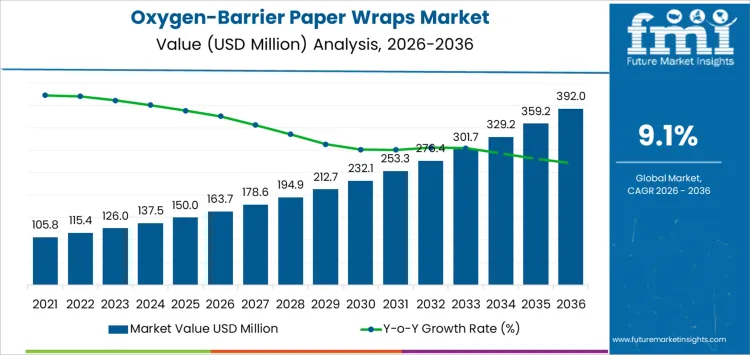
What is the Growth Forecast for the Oxygen-Barrier Paper Wraps Market through 2036?
From 2026 to 2031, the oxygen-barrier paper wraps market grows from USD 163.7 million to about USD 232.0 million, reflecting rising demand for extended shelf-life solutions in food, confectionery, and specialty consumer goods packaging. Growth in this phase is driven by brand owners testing barrier-coated paper wraps as alternatives to conventional laminates, particularly in dry foods, bakery items, and premium snacks. Adoption remains application-specific, with emphasis on barrier reliability, seal integrity, and machinability. YeAR-on-year gains increase gradually as converters refine coating consistency and manufacturers validate performance across distribution cycles.
Between 2031 and 2036, the market expands from approximately USD 232.0 million to USD 392.0 million, indicating a sharper acceleration as oxygen-barrier paper wraps move into broader commercial use. This phase reflects wider integration across high-volume packaging lines, increased use in private-label food products, and expansion into pharmaceutical and nutraceutical wrapping applications. Growth strengthens as barrier paper becomes standardized within packaging specifications, supported by higher wrap usage per unit, improved production economics, and repeat procurement. Earlier growth relied on selective trials, while later expansion reflects scaled adoption and deeper embedding within mainstream packaging programs.
Oxygen Barrier Paper Wraps Market Key Takeaways
| Metric | Value |
|---|---|
| Market Value (2026) | USD 163.7 million |
| Forecast Value (2036) | USD 392.0 million |
| Forecast CAGR (2026 to 2036) | 9.1% |
How Are Shelf-Life Protection Needs Driving the Oxygen-Barrier Paper Wraps Market from 2026 to 2036?
Oxygen-barrier paper wraps gained adoption as food and consumer goods producers sought alternatives to plastic laminates for oxidation-sensitive products. Bakeries, confectionery brands, and snack manufacturers used coated or layered paper wraps to slow oxygen ingress while maintaining paper-based structures. Historical demand reflected need to protect freshness, flavor stability, and appearance during storage and transport. Packaging teams selected wraps based on barrier consistency, fold performance, and machinability on existing wrapping lines. Adoption aligned with growth in portion-packed foods and branded wraps used for direct consumer contact.
From 2026 to 2036 demand is expected to expand with advances in paper coating technologies and broader use in dry and semi-moist food categories. Producers adopt wraps that combine oxygen resistance with grease control and print clarity. Growth aligns with redesign of flexible packaging toward fiber-based formats. Manufacturers focus on improving barrier performance without compromising recyclability. Buyers assess shelf-life extension, sealing behavior, and compatibility with automated equipment. Demand reflects pressure to balance product protection with material reduction and paper-based packaging adoption across food and consumer goods markets.
What Is the Demand for the Oxygen-Barrier Paper Wraps Market by End Use and Packaging Format for 2026 to 2036?
From 2026 to 2036, the oxygen-barrier paper wraps market advances as food processors and retailers adopt paper-based formats that extend freshness while supporting fiber-led packaging strategies. Meat and deli applications account for 40% of end-use demand because protein products require controlled oxygen exposure to limit discoloration and oxidative spoilage. Barrier paper wraps lead packaging format adoption with a 48% share due to their balanced performance across protection, machinability, and consumer handling. Demand reflects steady consumption of wrapped fresh foods and wider acceptance of paper solutions with functional barrier enhancements.
Why do meat and deli applications account for 40% of demand in the oxygen-barrier paper wraps market by end use from 2026 to 2036?
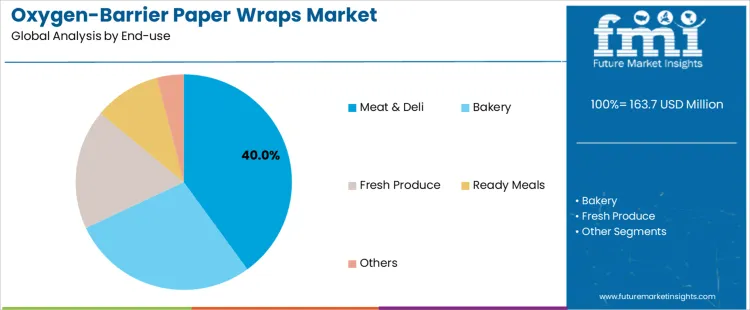
Meat and deli applications account for 40% of demand because sliced and portioned proteins are highly sensitive to oxygen exposure during retail display and storage. Consumption intensity remains high in butcher counters, deli sections, and pre-packed meat formats where visual appearance influences purchase decisions. Usage stays steady as oxygen-barrier paper wraps slow oxidation while allowing controlled moisture management. Procurement decisions emphasize wraps that maintain color stability, reduce purge, and perform reliably under chilled conditions. Buyers favor materials compatible with manual wrapping and automated overwrapping systems. Price sensitivity remains moderate since spoilage reduction and shelf-life consistency outweigh material cost differences. Specification control focuses on barrier coating uniformity, seal behavior, and resistance to tearing during handling. Demand continues from 2026 to 2036 as retailers standardize paper-based wraps that support product freshness and operational efficiency. Repeat utilization remains predictable due to continuous daily wrapping volumes across meat and deli operations.
Why do barrier paper wraps represent 48% of demand in the oxygen-barrier paper wraps market by packaging format from 2026 to 2036?
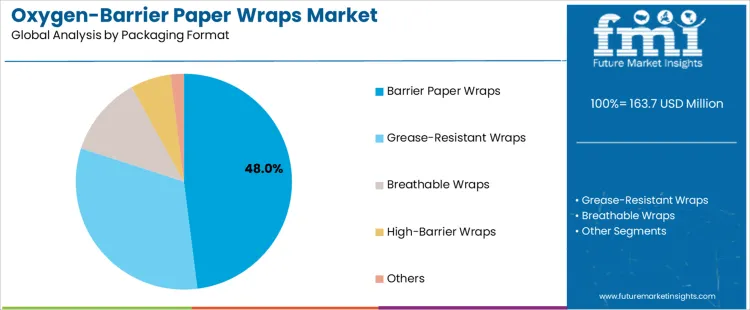
Barrier paper wraps represent 48% of demand because they deliver oxygen resistance while retaining the tactile and visual qualities of paper. Consumption is strong across meat, bakery, and ready-meal segments where wraps must balance protection with ease of folding and presentation. Usage remains steady as barrier papers integrate coatings or treatments that limit oxygen ingress without compromising recyclability pathways where applicable. Procurement favors formats that run smoothly on existing wrapping equipment and support consistent wrapping speed. Buyers prioritize wraps with stable barrier performance across temperature variation and humidity exposure. Price sensitivity stays moderate since barrier functionality reduces product loss and extends selling windows. Specification control emphasizes coating adhesion, paper strength, and predictable barrier performance over shelf life. Demand persists from 2026 to 2036 as food packaging operations continue shifting toward paper wraps that combine functional protection with familiar handling characteristics.
How Are Oxygen Barrier Paper Wraps Being Positioned Within Food and Consumer Goods Packaging Formats?
Adoption appears in packaging systems where shelf life protection is needed without moving fully to plastic laminates. Snack producers use oxygen barrier paper wraps to limit oxidation in dry products packed for regional distribution. Coffee roasters apply them to secondary wraps that protect aroma during short storage cycles. Confectionery brands select these wraps for boxed assortments where individual flow wrapping is avoided. Personal care items with oxidation sensitive ingredients use them for inner protection layers. These applications reflect material balancing decisions shaped by barrier performance, packaging weight, and compatibility with paper based formats.
What Packaging Performance Needs Are Encouraging Use of Oxygen Barrier Paper Wraps?
Selection aligns with requirements for moderate oxygen control combined with printability and fold strength. Food manufacturers favor wraps that maintain product freshness during retail display without altering filling lines. Packaging designers use barrier paper to replace foil in formats where full impermeability is unnecessary. Brands value smooth surfaces that support high quality graphics and brand messaging. Converters integrate these wraps into existing paper handling equipment to avoid capital changes. These needs arise from functional performance targets tied to freshness, presentation, and production efficiency.
Which Practical Considerations Shape Limits on Wider Adoption of Oxygen Barrier Paper Wraps?
Barrier effectiveness depends on coating integrity and sealing quality. High fat or highly sensitive products often require stronger protection than paper based barriers provide. Recycling outcomes vary depending on coating composition and local infrastructure. Cost sensitivity affects use in high volume, low margin products. Moisture exposure can reduce performance during storage or transport. Heat sealing parameters require tighter control than standard paper. These considerations lead to selective use where barrier level, processing capability, and end of life handling align with product requirements.
What is the Demand for Oxygen Barrier Paper Wraps by Country?
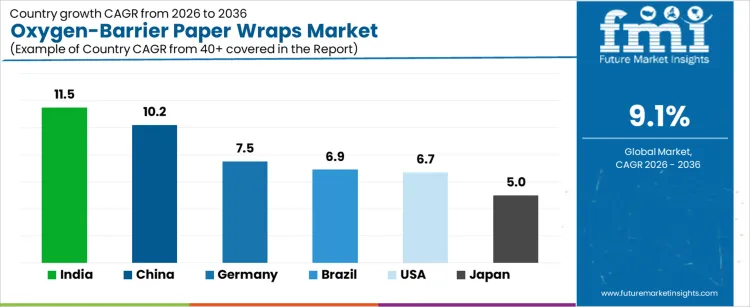
| Country | CAGR (%) |
|---|---|
| Germany | 7.50% |
| USA | 6.70% |
| China | 10.20% |
| India | 11.50% |
| Brazil | 6.90% |
| Japan | 5.00% |
The demand for oxygen barrier paper wraps shows varied growth across countries, shaped by food preservation needs, packaging regulations, and processed food consumption. India leads with an 11.50% CAGR, supported by rising use of packaged foods, bakery products, and ready to eat items requiring extended shelf life. China follows at 10.20%, driven by large scale food processing and growing adoption of barrier paper formats in retail packaging. Germany records 7.50%, reflecting strong paper packaging industries and consistent demand from meat and dairy sectors. Brazil grows at 6.90%, supported by processed food exports. The USA posts 6.70%, shaped by stable food packaging demand, while Japan grows at 5.00%, reflecting mature packaging systems and steady consumption patterns.
How Is High Performance Food Packaging Driving Demand in Germany?
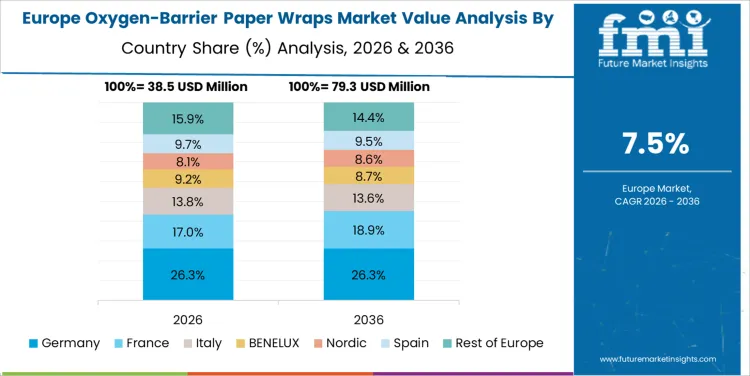
Germany continues to record expansion in the Oxygen Barrier Paper Wraps Market at a CAGR of 7.50% through 2035, supported by demand for high performance food packaging and extended shelf life solutions. Food processors and packaged goods manufacturers are adopting oxygen barrier paper wraps to protect aroma, freshness, and product integrity. Demand is concentrated in bakery products, confectionery, and processed meats where oxygen exposure affects quality. Domestic packaging producers supply multilayer paper wraps compatible with automated packing systems. Stable food production volumes and strict packaging performance expectations are sustaining predictable procurement across food manufacturing facilities nationwide.
- Shelf life protection supports wrap adoption.
- Bakery and confectionery segments anchor demand.
- Domestic suppliers ensure consistent material quality.
- Automated packaging compatibility sustains usage.
How Is Convenience Food Consumption Supporting Growth in the United States?
The United States is experiencing steady growth in the Oxygen Barrier Paper Wraps Market at a CAGR of 6.70% through 2035, driven by rising consumption of packaged and ready to eat foods. Food brands are using oxygen barrier paper wraps to maintain freshness and visual appeal across snacks, sandwiches, and frozen items. Demand benefits from large scale food processing operations and nationwide retail distribution. Domestic converters provide standardized wrap formats suitable for high speed production lines. Recurring product launches and replacement demand are sustaining consistent procurement across major food manufacturing regions nationwide.
- Packaged food consumption supports material demand.
- Freshness preservation drives wrap usage.
- Standardized formats enable high speed production.
- Product turnover sustains procurement volumes.
How Is Processed Food Manufacturing Accelerating Adoption in China?
In China, revenue from the Oxygen Barrier Paper Wraps Market is growing at a CAGR of 10.20% through 2035, driven by expansion of processed food manufacturing and urban packaged food consumption. Producers are adopting oxygen barrier paper wraps to protect quality during storage and distribution. Demand is strong across snacks, bakery goods, and ready meals distributed through modern retail channels. Domestic manufacturers are scaling production capacity to supply high volume requirements. Rising food output and structured procurement practices are sustaining rapid adoption across major food processing hubs nationwide.
- Processed food growth drives wrap adoption.
- Urban consumption supports volume demand.
- Domestic capacity expansion improves availability.
- Retail distribution sustains procurement consistency.
How Is Packaged Food Expansion Driving Growth in India?
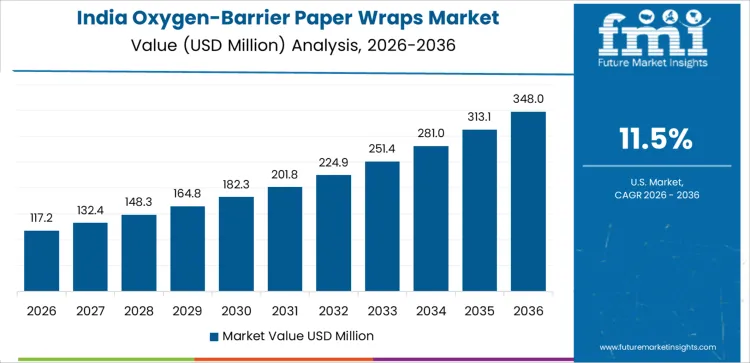
India is witnessing strong expansion in the Oxygen Barrier Paper Wraps Market at a CAGR of 11.50% through 2035, supported by rapid growth in packaged food consumption and organized retail penetration. Food manufacturers are increasing use of oxygen barrier paper wraps to extend freshness and reduce spoilage risks. Demand is rising across snacks, bakery products, and ready to eat meals. Domestic packaging suppliers provide cost aligned solutions suited to high volume production. Expanding cold chain and distribution infrastructure are sustaining robust procurement across food processing facilities nationwide.
- Packaged food growth supports wrap usage.
- Freshness protection drives material selection.
- Domestic suppliers improve cost access.
- Distribution expansion sustains demand growth.
How Are Branded Food Products Supporting Demand in Brazil?
Brazil is seeing steady growth in the Oxygen Barrier Paper Wraps Market at a CAGR of 6.90% through 2035, supported by expansion of branded food products and organized retail distribution. Manufacturers use oxygen barrier paper wraps to improve shelf life and product presentation. Demand is concentrated in confectionery, bakery, and processed food segments. Imports supply some advanced barrier materials, while local converters expand basic production capabilities. Growth in packaged food availability is sustaining recurring procurement across food processing operations nationwide.
- Branded food expansion supports wrap adoption.
- Shelf life improvement drives usage.
- Imports supply advanced barrier materials.
- Retail growth sustains procurement activity.
How Does Mature Food Packaging Demand Shape Stability in Japan?
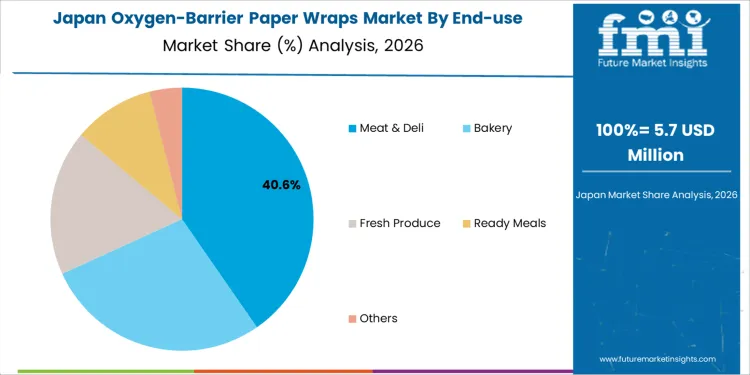
Japan is maintaining measured growth in the Oxygen Barrier Paper Wraps Market at a CAGR of 5.00% through 2035, supported by mature packaged food consumption and high packaging quality expectations. Food producers apply oxygen barrier paper wraps to preserve freshness and product consistency. Demand remains focused on confectionery, bakery items, and ready meals. Domestic suppliers emphasize precision coating and material uniformity. Stable consumption patterns and replacement driven purchasing are sustaining predictable procurement across established food manufacturing operations nationwide.
- Mature food markets support steady demand.
- Quality focused packaging drives adoption.
- Domestic suppliers ensure consistent specifications.
- Replacement cycles sustain procurement continuity.
What Is Driving the Demand for Oxygen Barrier Paper Wraps and Which Packaging Producers Shape Food Protection?
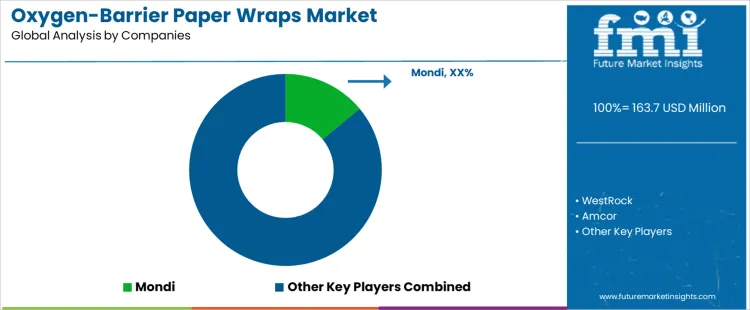
Oxygen barrier paper wraps are gaining traction as food brands seek paper based formats that extend shelf life without relying on plastic laminates. Bakery items, confectionery, cheese, dry snacks, and ready foods drive adoption where oxidation directly affects freshness, color, and flavor. Mondi supports this demand through coated and functional paper wraps engineered to limit oxygen ingress while maintaining foldability and print quality. WestRock contributes through fiber based barrier solutions used in foodservice and retail wraps. Oji Paper anchors supply in Asia through paper substrates optimized for barrier coatings and food contact compliance. Klabin supports kraft based wrap materials used in export oriented food packaging where strength and protection are required. These producers focus on balancing barrier performance with recyclability expectations.
Material selection is governed by oxygen transmission rate control, grease resistance, heat seal capability, and runnability on high speed wrapping lines. Amcor participates through hybrid paper barrier structures used in premium and branded food applications. UFlex supports cost sensitive markets through coated paper wraps that improve shelf life for packaged snacks. Food manufacturers favor wraps that maintain product integrity while supporting paper recycling streams. Usage spans inner wraps, overwraps, and portion packaging. Demand visibility tracks replacement of plastic films, growth in packaged fresh foods, and continued investment in paper based barrier innovation across global food packaging supply chains.
Key Players in the Oxygen Barrier Paper Wraps Market
- Mondi
- WestRock
- Amcor
- UFlex
- Klabin
- Oji Paper
Scope of the Report
| Items | Values |
|---|---|
| Quantitative Units (2026) | USD million |
| End Use | Meat and Deli; Bakery; Fresh Produce; Ready Meals; Other End Uses |
| Packaging Format | Barrier Paper Wraps; Grease Resistant Wraps; Breathable Wraps; High Barrier Wraps; Other Formats |
| Material | Paper with EVOH; Polymer Coated Paper; Bio Barrier Paper; Kraft Paper; Other Materials |
| Technology | Extrusion Coating; Heat Seal Barrier; Water Based Coating; Multi-Layer Lamination; Other Technologies |
| Regions Covered | Asia Pacific; Europe; North America; Latin America; Middle East and Africa |
| Countries Covered | China; Japan; South Korea; India; Australia and New Zealand; ASEAN; Germany; United Kingdom; France; Italy; Spain; Nordic; BENELUX; United States; Canada; Mexico; Brazil; Chile; Kingdom of Saudi Arabia; Turkey; South Africa; plus additional countries across Asia Pacific, Europe, Latin America, and Middle East and Africa |
| Key Companies Profiled | Mondi; WestRock; Amcor; UFlex; Klabin; Oji Paper |
| Additional Attributes | Dollar by sales across end use categories and packaging formats; role of oxygen transmission control in extending shelf life for meat, deli, bakery, and ready meal products; importance of coating consistency and seal integrity in maintaining barrier performance; integration of oxygen barrier paper wraps into existing wrapping and overwrapping equipment; balance between barrier functionality, fold performance, and print clarity in food packaging applications; influence of private label food production on repeat procurement of barrier paper wraps; impact of production efficiency and runnability on adoption across high volume food packaging lines; use of barrier paper wraps as substitutes for plastic laminates in selected oxidation sensitive food categories |
Oxygen Barrier Paper Wraps Market Segmentation
End-use
- Meat & Deli
- Bakery
- Fresh Produce
- Ready Meals
- Others
Packaging Format
- Barrier Paper Wraps
- Grease-Resistant Wraps
- Breathable Wraps
- High-Barrier Wraps
- Others
Material
- Paper + EVOH
- Polymer-Coated Paper
- Bio-Barrier Paper
- Kraft Paper
- Others
Technology
- Extrusion Coating
- Heat-Seal Barrier
- Water-based Coating
- Multi-Layer Lamination
- Others
Region
Device Type
- Microprocessor KAFO (e.g., C Brace)
- Microprocessor AFO
- Upper Extremity Powered Orthosis
- Medical Exosuit/Exoskeleton (Orthosis use)
Control / Actuation
- Sensor Based Stance/Swing Control (MP joints)
- Powered Actuators (knee/hip/ankle)
- FES Assisted Orthoses (MP controlled)
- Passive Assist with MP Monitoring/Locking
Application
- Neurologic Gait Impairment (SCI, Stroke)
- Musculoskeletal/Trauma & Post op
- Neurodegenerative (MS, ALS, PD)
- Pediatric (CP, other)
End User
- Rehab Hospitals & Neurorehab Centers
- Prosthetics & Orthotics (P&O) Clinics
- Acute Hospitals & Trauma Centers
- Homecare / Outpatient Programs
Region
- Asia Pacific
- China
- Japan
- South Korea
- India
- Australia & New Zealand
- ASEAN
- Rest of Asia Pacific
- Europe
- Germany
- United Kingdom
- France
- Italy
- Spain
- Nordic
- BENELUX
- Rest of Europe
- North America
- United States
- Canada
- Mexico
- Latin America
- Brazil
- Chile
- Rest of Latin America
- Middle East & Africa
- Kingdom of Saudi Arabia
- Other GCC Countries
- Turkey
- South Africa
- Other African Union
- Rest of Middle East & Africa
Frequently Asked Questions
How big is the oxygen-barrier paper wraps market in 2026?
The global oxygen-barrier paper wraps market is estimated to be valued at USD 163.7 million in 2026.
What will be the size of oxygen-barrier paper wraps market in 2036?
The market size for the oxygen-barrier paper wraps market is projected to reach USD 392.0 million by 2036.
How much will be the oxygen-barrier paper wraps market growth between 2026 and 2036?
The oxygen-barrier paper wraps market is expected to grow at a 9.1% CAGR between 2026 and 2036.
What are the key product types in the oxygen-barrier paper wraps market?
The key product types in oxygen-barrier paper wraps market are meat & deli, bakery, fresh produce, ready meals and others.
Which packaging format segment to contribute significant share in the oxygen-barrier paper wraps market in 2026?
In terms of packaging format, barrier paper wraps segment to command 48.0% share in the oxygen-barrier paper wraps market in 2026.
Preview the report firsthand - request a free sample
Get SampleGet the brochure for pricing and purchase details.
Get PDFTable of Content
- Executive Summary
- Global Market Outlook
- Demand-side Trends
- Supply-side Trends
- Technology Roadmap Analysis
- Analysis and Recommendations
- Market Overview
- Market Coverage / Taxonomy
- Market Definition / Scope / Limitations
- Market Background
- Market Dynamics
- Drivers
- Restraints
- Opportunity
- Trends
- Scenario Forecast
- Demand in Optimistic Scenario
- Demand in Likely Scenario
- Demand in Conservative Scenario
- Opportunity Map Analysis
- Product Life Cycle Analysis
- Supply Chain Analysis
- Investment Feasibility Matrix
- Value Chain Analysis
- PESTLE and Porter’s Analysis
- Regulatory Landscape
- Regional Parent Market Outlook
- Production and Consumption Statistics
- Import and Export Statistics
- Market Dynamics
- Global Market Analysis 2021 to 2025 and Forecast, 2026 to 2036
- Historical Market Size Value (USD Million) Analysis, 2021 to 2025
- Current and Future Market Size Value (USD Million) Projections, 2026 to 2036
- Y-o-Y Growth Trend Analysis
- Absolute $ Opportunity Analysis
- Global Market Pricing Analysis 2021 to 2025 and Forecast 2026 to 2036
- Global Market Analysis 2021 to 2025 and Forecast 2026 to 2036, By End-use
- Introduction / Key Findings
- Historical Market Size Value (USD Million) Analysis By End-use , 2021 to 2025
- Current and Future Market Size Value (USD Million) Analysis and Forecast By End-use , 2026 to 2036
- Meat & Deli
- Bakery
- Fresh Produce
- Ready Meals
- Others
- Y-o-Y Growth Trend Analysis By End-use , 2021 to 2025
- Absolute $ Opportunity Analysis By End-use , 2026 to 2036
- Global Market Analysis 2021 to 2025 and Forecast 2026 to 2036, By Packaging Format
- Introduction / Key Findings
- Historical Market Size Value (USD Million) Analysis By Packaging Format, 2021 to 2025
- Current and Future Market Size Value (USD Million) Analysis and Forecast By Packaging Format, 2026 to 2036
- Barrier Paper Wraps
- Grease-Resistant Wraps
- Breathable Wraps
- High-Barrier Wraps
- Others
- Y-o-Y Growth Trend Analysis By Packaging Format, 2021 to 2025
- Absolute $ Opportunity Analysis By Packaging Format, 2026 to 2036
- Global Market Analysis 2021 to 2025 and Forecast 2026 to 2036, By Material
- Introduction / Key Findings
- Historical Market Size Value (USD Million) Analysis By Material, 2021 to 2025
- Current and Future Market Size Value (USD Million) Analysis and Forecast By Material, 2026 to 2036
- Paper + EVOH
- Polymer-Coated Paper
- Bio-Barrier Paper
- Kraft Paper
- Others
- Y-o-Y Growth Trend Analysis By Material, 2021 to 2025
- Absolute $ Opportunity Analysis By Material, 2026 to 2036
- Global Market Analysis 2021 to 2025 and Forecast 2026 to 2036, By Technology
- Introduction / Key Findings
- Historical Market Size Value (USD Million) Analysis By Technology, 2021 to 2025
- Current and Future Market Size Value (USD Million) Analysis and Forecast By Technology, 2026 to 2036
- Extrusion Coating
- Heat-Seal Barrier
- Water-based Coating
- Multi-Layer Lamination
- Others
- Y-o-Y Growth Trend Analysis By Technology, 2021 to 2025
- Absolute $ Opportunity Analysis By Technology, 2026 to 2036
- Global Market Analysis 2021 to 2025 and Forecast 2026 to 2036, By Region
- Introduction
- Historical Market Size Value (USD Million) Analysis By Region, 2021 to 2025
- Current Market Size Value (USD Million) Analysis and Forecast By Region, 2026 to 2036
- North America
- Latin America
- Western Europe
- Eastern Europe
- East Asia
- South Asia and Pacific
- Middle East & Africa
- Market Attractiveness Analysis By Region
- North America Market Analysis 2021 to 2025 and Forecast 2026 to 2036, By Country
- Historical Market Size Value (USD Million) Trend Analysis By Market Taxonomy, 2021 to 2025
- Market Size Value (USD Million) Forecast By Market Taxonomy, 2026 to 2036
- By Country
- USA
- Canada
- Mexico
- By End-use
- By Packaging Format
- By Material
- By Technology
- By Country
- Market Attractiveness Analysis
- By Country
- By End-use
- By Packaging Format
- By Material
- By Technology
- Key Takeaways
- Latin America Market Analysis 2021 to 2025 and Forecast 2026 to 2036, By Country
- Historical Market Size Value (USD Million) Trend Analysis By Market Taxonomy, 2021 to 2025
- Market Size Value (USD Million) Forecast By Market Taxonomy, 2026 to 2036
- By Country
- Brazil
- Chile
- Rest of Latin America
- By End-use
- By Packaging Format
- By Material
- By Technology
- By Country
- Market Attractiveness Analysis
- By Country
- By End-use
- By Packaging Format
- By Material
- By Technology
- Key Takeaways
- Western Europe Market Analysis 2021 to 2025 and Forecast 2026 to 2036, By Country
- Historical Market Size Value (USD Million) Trend Analysis By Market Taxonomy, 2021 to 2025
- Market Size Value (USD Million) Forecast By Market Taxonomy, 2026 to 2036
- By Country
- Germany
- UK
- Italy
- Spain
- France
- Nordic
- BENELUX
- Rest of Western Europe
- By End-use
- By Packaging Format
- By Material
- By Technology
- By Country
- Market Attractiveness Analysis
- By Country
- By End-use
- By Packaging Format
- By Material
- By Technology
- Key Takeaways
- Eastern Europe Market Analysis 2021 to 2025 and Forecast 2026 to 2036, By Country
- Historical Market Size Value (USD Million) Trend Analysis By Market Taxonomy, 2021 to 2025
- Market Size Value (USD Million) Forecast By Market Taxonomy, 2026 to 2036
- By Country
- Russia
- Poland
- Hungary
- Balkan & Baltic
- Rest of Eastern Europe
- By End-use
- By Packaging Format
- By Material
- By Technology
- By Country
- Market Attractiveness Analysis
- By Country
- By End-use
- By Packaging Format
- By Material
- By Technology
- Key Takeaways
- East Asia Market Analysis 2021 to 2025 and Forecast 2026 to 2036, By Country
- Historical Market Size Value (USD Million) Trend Analysis By Market Taxonomy, 2021 to 2025
- Market Size Value (USD Million) Forecast By Market Taxonomy, 2026 to 2036
- By Country
- China
- Japan
- South Korea
- By End-use
- By Packaging Format
- By Material
- By Technology
- By Country
- Market Attractiveness Analysis
- By Country
- By End-use
- By Packaging Format
- By Material
- By Technology
- Key Takeaways
- South Asia and Pacific Market Analysis 2021 to 2025 and Forecast 2026 to 2036, By Country
- Historical Market Size Value (USD Million) Trend Analysis By Market Taxonomy, 2021 to 2025
- Market Size Value (USD Million) Forecast By Market Taxonomy, 2026 to 2036
- By Country
- India
- ASEAN
- Australia & New Zealand
- Rest of South Asia and Pacific
- By End-use
- By Packaging Format
- By Material
- By Technology
- By Country
- Market Attractiveness Analysis
- By Country
- By End-use
- By Packaging Format
- By Material
- By Technology
- Key Takeaways
- Middle East & Africa Market Analysis 2021 to 2025 and Forecast 2026 to 2036, By Country
- Historical Market Size Value (USD Million) Trend Analysis By Market Taxonomy, 2021 to 2025
- Market Size Value (USD Million) Forecast By Market Taxonomy, 2026 to 2036
- By Country
- Kingdom of Saudi Arabia
- Other GCC Countries
- Turkiye
- South Africa
- Other African Union
- Rest of Middle East & Africa
- By End-use
- By Packaging Format
- By Material
- By Technology
- By Country
- Market Attractiveness Analysis
- By Country
- By End-use
- By Packaging Format
- By Material
- By Technology
- Key Takeaways
- Key Countries Market Analysis
- USA
- Pricing Analysis
- Market Share Analysis, 2025
- By End-use
- By Packaging Format
- By Material
- By Technology
- Canada
- Pricing Analysis
- Market Share Analysis, 2025
- By End-use
- By Packaging Format
- By Material
- By Technology
- Mexico
- Pricing Analysis
- Market Share Analysis, 2025
- By End-use
- By Packaging Format
- By Material
- By Technology
- Brazil
- Pricing Analysis
- Market Share Analysis, 2025
- By End-use
- By Packaging Format
- By Material
- By Technology
- Chile
- Pricing Analysis
- Market Share Analysis, 2025
- By End-use
- By Packaging Format
- By Material
- By Technology
- Germany
- Pricing Analysis
- Market Share Analysis, 2025
- By End-use
- By Packaging Format
- By Material
- By Technology
- UK
- Pricing Analysis
- Market Share Analysis, 2025
- By End-use
- By Packaging Format
- By Material
- By Technology
- Italy
- Pricing Analysis
- Market Share Analysis, 2025
- By End-use
- By Packaging Format
- By Material
- By Technology
- Spain
- Pricing Analysis
- Market Share Analysis, 2025
- By End-use
- By Packaging Format
- By Material
- By Technology
- France
- Pricing Analysis
- Market Share Analysis, 2025
- By End-use
- By Packaging Format
- By Material
- By Technology
- India
- Pricing Analysis
- Market Share Analysis, 2025
- By End-use
- By Packaging Format
- By Material
- By Technology
- ASEAN
- Pricing Analysis
- Market Share Analysis, 2025
- By End-use
- By Packaging Format
- By Material
- By Technology
- Australia & New Zealand
- Pricing Analysis
- Market Share Analysis, 2025
- By End-use
- By Packaging Format
- By Material
- By Technology
- China
- Pricing Analysis
- Market Share Analysis, 2025
- By End-use
- By Packaging Format
- By Material
- By Technology
- Japan
- Pricing Analysis
- Market Share Analysis, 2025
- By End-use
- By Packaging Format
- By Material
- By Technology
- South Korea
- Pricing Analysis
- Market Share Analysis, 2025
- By End-use
- By Packaging Format
- By Material
- By Technology
- Russia
- Pricing Analysis
- Market Share Analysis, 2025
- By End-use
- By Packaging Format
- By Material
- By Technology
- Poland
- Pricing Analysis
- Market Share Analysis, 2025
- By End-use
- By Packaging Format
- By Material
- By Technology
- Hungary
- Pricing Analysis
- Market Share Analysis, 2025
- By End-use
- By Packaging Format
- By Material
- By Technology
- Kingdom of Saudi Arabia
- Pricing Analysis
- Market Share Analysis, 2025
- By End-use
- By Packaging Format
- By Material
- By Technology
- Turkiye
- Pricing Analysis
- Market Share Analysis, 2025
- By End-use
- By Packaging Format
- By Material
- By Technology
- South Africa
- Pricing Analysis
- Market Share Analysis, 2025
- By End-use
- By Packaging Format
- By Material
- By Technology
- USA
- Market Structure Analysis
- Competition Dashboard
- Competition Benchmarking
- Market Share Analysis of Top Players
- By Regional
- By End-use
- By Packaging Format
- By Material
- By Technology
- Competition Analysis
- Competition Deep Dive
- Mondi
- Overview
- Product Portfolio
- Profitability by Market Segments (Product/Age /Sales Channel/Region)
- Sales Footprint
- Strategy Overview
- Marketing Strategy
- Product Strategy
- Channel Strategy
- WestRock
- Amcor
- UFlex
- Klabin
- Oji Paper
- Mondi
- Competition Deep Dive
- Assumptions & Acronyms Used
- Research Methodology


