

- Industry Size (2025)
- USD 502.9 Mn
- Forecast (2035)
- USD 744.4 Mn
- CAGR (2025 to 2035)
- 4.0%
Package Pumping Station Market Forecast and Outlook 2025 to 2035
The package pumping station market is projected to grow from USD 502.9 million in 2025 to USD 744.4 million by 2035. The package pumping station market is positioned for steady expansion as wastewater infrastructure modernization and urban development projects continue to advance across residential, commercial, and industrial environments. Package pumping stations are compact, pre-engineered systems designed for efficient liquid transfer and wastewater handling where gravity drainage is not feasible. Their integration into new buildings, retrofitted drainage networks, and decentralized treatment systems is increasing due to the need for reliable, space-efficient, and cost-controlled pumping solutions. Key applications include residential communities, commercial buildings, industrial processing facilities, and public utilities that require consistent wastewater movement and discharge management.
Between 2025 and 2030, the market is expected to rise from USD 502.9 million to approximately USD 611.9 million, adding USD 109.0 million, which represents 45 percent of projected total growth. This phase will be defined by expanded use of single unit pumping station systems, particularly in residential and small commercial infrastructure projects where ease of installation, compact footprint, and standardized operational performance are essential. Growing emphasis on automation, remote monitoring, and fault detection capabilities is also influencing product development, allowing operators to optimize maintenance schedules and reduce operational downtime. As drainage requirements become more complex and urban density increases, demand for integrated, reliable, and scalable pumping station solutions is expected to strengthen.
Quick Stats for Package Pumping Station Market
- Package Pumping Station Market Value (2025): USD 502.9 million
- Package Pumping Station Market Forecast Value (2035): USD 744.4 million
- Package Pumping Station Market Forecast CAGR: 4.0%
- Leading Pump Arrangement in Package Pumping Station Market: Single pumping station
- Key Growth Regions in Package Pumping Station Market: Asia Pacific, Europe, and North America
- Top Key Players in Package Pumping Station Market: TT Pumps, Premier Tech, SPEL, Advantage Pumping Solutions
- Package Pumping Station Market Year-over-Year Forecast (2025-2035)
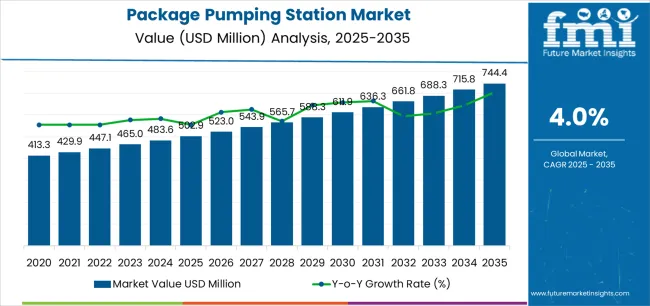
The latter half (2030-2035) will witness constant growth from USD 611.9 million to USD 744.4 million, representing an addition of USD 132.5 million or 55% of the decade's expansion. This period will be defined by mass market penetration of specialized pumping station designs, integration with comprehensive wastewater management platforms, and seamless compatibility with existing drainage infrastructure. The market trajectory signals fundamental shifts in how developers approach drainage optimization and system reliability management, with participants positioned to benefit from persistent demand across multiple pump arrangements and application segments.
The Package Pumping Station market demonstrates distinct growth phases with varying market characteristics and competitive dynamics. Between 2025 and 2030, the market progresses through its infrastructure adoption phase, expanding from USD 502.9 million to USD 611.9 million with steady annual increments averaging 4.0% growth. This period showcases the transition from basic drainage configurations to advanced single pumping station systems with enhanced automation capabilities and integrated monitoring systems becoming mainstream features.
The 2025-2030 phase adds USD 109.0 million to market value, representing 45% of total decade expansion. Market maturation factors include standardization of wastewater management and drainage infrastructure protocols, declining component costs for specialized pumping configurations, and increasing developer awareness of integrated pumping benefits reaching 95-98% operational effectiveness in residential and industrial applications. Competitive landscape evolution during this period features established pumping equipment manufacturers like TT Pumps and Premier Tech expanding their station portfolios while specialty manufacturers focus on advanced system development and enhanced reliability capabilities.
From 2030 to 2035, market dynamics shift toward advanced configuration integration and global infrastructure expansion, with growth continuing from USD 611.9 million to USD 744.4 million, adding USD 132.5 million or 55% of total expansion. This phase transition centers on specialized pumping arrangement systems, integration with automated wastewater networks, and deployment across diverse residential and commercial scenarios, becoming standard rather than specialized applications. The competitive environment matures with focus shifting from basic drainage capability to comprehensive infrastructure optimization systems and integration with environmental monitoring platforms.
Package Pumping Station Key Takeaways
At-a-Glance Metrics
| Metric | Value |
|---|---|
| Market Value (2025) | USD 502.9 million |
| Market Forecast (2035) | USD 744.4 million |
| Growth Rate | 4.0% CAGR |
| Leading Technology | Single Pumping Station Arrangement |
| Primary Application | Residential Area Application Segment |
The market demonstrates strong fundamentals with single pumping station systems capturing a dominant share through advanced drainage management and operational optimization capabilities. Residential area applications drive primary demand, supported by increasing property development and reliable wastewater technology requirements. Geographic expansion remains concentrated in developed markets with established drainage infrastructure, while emerging economies show accelerating adoption rates driven by urbanization expansion and rising sanitation standards.
Why is the Package Pumping Station Market Growing?
Market expansion rests on three fundamental shifts driving adoption across the residential, industrial, and commercial sectors. First, urbanization demand creates compelling infrastructure advantages through package pumping stations that provide immediate wastewater management and drainage without compromising development schedules, enabling builders to meet stringent sanitation standards while maintaining construction productivity and reducing infrastructure complexity. Second, drainage infrastructure modernization accelerates as property developers worldwide seek advanced pumping systems that complement traditional wastewater processes, enabling precise flow control and management that align with municipal standards and environmental regulations.
Third, flood prevention enhancement drives adoption from local authorities and commercial developers requiring effective drainage solutions that maximize property protection while maintaining operational reliability during storm events and high-flow conditions. Growth faces headwinds from installation cost challenges that vary across pumping suppliers regarding the complexity of excavation and system integration, which may limit adoption in cost-sensitive development environments. Technical limitations also persist regarding maintenance access requirements and alarm system dependencies that may reduce effectiveness in remote installation scenarios, which affect operational monitoring and service requirements.
Opportunity Pathways - Package Pumping Station Market
The package pumping station market represents a specialized yet critical infrastructure opportunity driven by expanding global urbanization, drainage infrastructure modernization, and the need for superior wastewater management in diverse development applications. As developers worldwide seek to achieve 95-98% drainage effectiveness, reduce flooding risk, and integrate advanced pumping systems with automated platforms, package pumping stations are evolving from basic drainage devices to sophisticated infrastructure solutions ensuring environmental compliance and operational leadership.
The market's growth trajectory from USD 502.9 million in 2025 to USD 744.4 million by 2035 at a 4.0% CAGR reflects fundamental shifts in wastewater management requirements and drainage infrastructure optimization. Geographic expansion opportunities are particularly pronounced in Asia Pacific markets, while the dominance of single pumping station systems and residential applications provides clear strategic focus areas.
Pathway A - Single Station Leadership & Advanced Configuration Optimization
Strengthening the dominant single pumping station segment through enhanced pump reliability, superior automation integration, and compact installation systems. This pathway focuses on optimizing station design, improving drainage efficiency, extending operational effectiveness to 95-98% uptime rates, and developing specialized configurations for diverse site applications. Market leadership consolidation through advanced hydraulic engineering and automated control integration enables premium positioning while defending competitive advantages against alternative arrangements. Expected revenue pool: USD 75-95 million
Pathway B - Asia Pacific Infrastructure Expansion & Development Localization
Rapid urbanization and residential construction across Asia Pacific creates substantial expansion opportunities through local manufacturing capabilities and installation partnerships. Growing property development and government sanitation initiatives drive continued demand for advanced pumping systems. Localization strategies reduce import costs, enable faster technical support, and position companies advantageously for municipal programs while accessing growing domestic markets. Expected revenue pool: USD 60-80 million
Pathway C - Residential Area Dominance & Development Integration
Expansion within the dominant residential area segment (55.0% market share) through specialized pumping station designs addressing property development standards and high-volume drainage requirements. This pathway encompasses automated control systems, remote monitoring integration, and compatibility with diverse development processes. Premium positioning reflects superior reliability performance and comprehensive regulatory compliance supporting modern residential construction. Expected revenue pool: USD 50-70 million
Pathway D - Industrial Application Diversification
Strategic expansion into industrial applications (25.0% market share) requires enhanced pumping capacity and specialized station configurations addressing manufacturing operational requirements. This pathway addresses process wastewater management, contamination prevention, and production facility integration with advanced engineering for demanding industrial standards. Premium pricing reflects specialized flow requirements and extended durability standards. Expected revenue pool: USD 45-60 million
Pathway E - Commercial & Flood Protection Innovation
Development of specialized pumping station configurations for commercial applications (15.0% share) and flood protection (5.0%), addressing specific drainage requirements and emergency response demands. This pathway encompasses high-capacity designs, rapid deployment alternatives, and storm-optimized solutions for retail and emergency environments. Technology differentiation through specialized installations enables diversified revenue streams while reducing dependency on single application platforms. Expected revenue pool: USD 35-50 million
Pathway F - Dual Station Development & Redundancy Positioning
Expansion of dual pumping station segment (45.0% market share) through enhanced redundancy capabilities, backup pump integration, and critical facility requirements. This pathway encompasses high-reliability installations, continuous operation systems, and mission-critical applications requiring exceptional uptime characteristics. Market development through redundant system engineering enables differentiated positioning while accessing facilities requiring fail-safe drainage solutions. Expected revenue pool: USD 30-45 million
Pathway G - Environmental Compliance & Smart Monitoring Development
Development of environmentally optimized pumping station configurations addressing regulatory compliance and monitoring requirements across residential and industrial applications. This pathway encompasses telemetry integration, environmental discharge tracking, and comprehensive performance documentation. Premium positioning reflects technological leadership and monitoring expertise while enabling access to municipal procurement programs and environmentally-focused development partnerships. Expected revenue pool: USD 25-35 million
Segmental Analysis
Primary Classification: The market segments by pump arrangement into Single pumping station and Dual pumping station categories, representing the evolution from basic drainage systems to specialized configurations for comprehensive wastewater management optimization.
Secondary Classification: Application segmentation divides the market into Residential Area, Industrial Area, Commercial Area, and Flood Protection sectors, reflecting distinct requirements for drainage capacity, system reliability, and operational continuity.
Regional Classification: Geographic distribution covers Asia Pacific, Europe, North America, and other regions, with developed markets leading adoption while emerging economies show accelerating growth patterns driven by urbanization expansion programs.
The segmentation structure reveals technology progression from standard pumping configurations toward specialized arrangement systems with enhanced reliability and monitoring capabilities, while application diversity spans from residential developments to specialized industrial and commercial applications requiring precise drainage solutions.
By Pump Arrangement, the Single Pumping Station Segment Accounts for Dominant Market Share
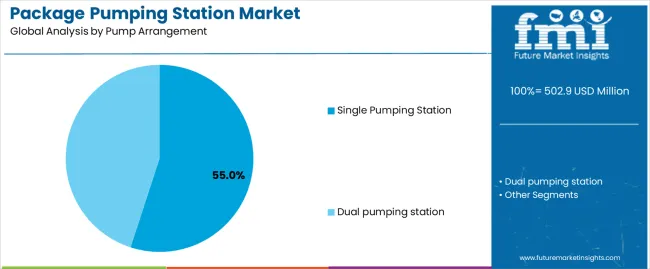
Market Position: Single pumping station systems command the leading position in the Package Pumping Station market with approximately 55.0% market share through advanced drainage properties, including cost-effective installation, compact footprint capability, and operational optimization that enable developers to achieve optimal wastewater management across diverse residential and commercial environments.
Value Drivers: The segment benefits from developer preference for economical drainage systems that provide consistent wastewater transfer, reduced installation complexity, and reliable performance without requiring significant site modification. Advanced system features enable automated operation, level monitoring, and integration with existing drainage infrastructure, where installation efficiency and operational reliability represent critical development requirements.
Competitive Advantages: Single pumping station systems differentiate through proven single-pump operation, straightforward maintenance access, and integration with standard drainage protocols that enhance installation effectiveness while maintaining optimal performance suitable for diverse development applications.
Key market characteristics:
- Advanced station designs with optimized pump selection and control capabilities
- Extended operational effectiveness, enabling 95-98% drainage reliability with consistent performance
- Development compatibility, including automated control systems, alarm monitoring, and integration for construction operations
Dual Station Shows Strong Market Presence
Dual pumping station systems maintain high-reliability positioning in the Package Pumping Station market due to their redundancy properties and backup capability advantages. These systems appeal to developers requiring continuous drainage operation with adequate performance for critical facility applications. Market adoption is driven by commercial construction expansion, emphasizing fail-safe drainage and operational continuity through redundant pumping technology while maintaining comprehensive system reliability.
By Application, the Residential Area Segment Accounts for the Largest Market Share
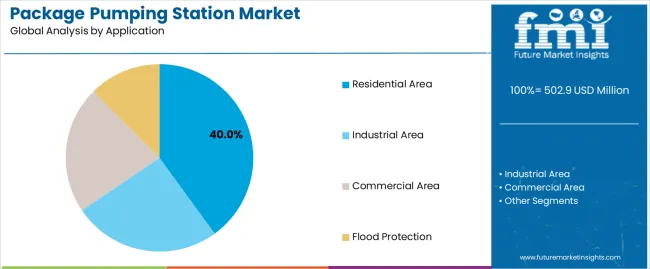
Market Context: Residential area applications dominate the Package Pumping Station market with approximately 40% market share due to widespread adoption of reliable drainage infrastructure and increasing focus on property protection, wastewater management, and development compliance applications that minimize flooding risk while maintaining construction standards.
Appeal Factors: Residential developers prioritize drainage reliability, installation efficiency, and integration with existing municipal infrastructure that enables coordinated wastewater management across multiple property developments. The segment benefits from substantial housing construction investment and infrastructure programs that emphasize the acquisition of pumping systems for sanitation compliance and flood prevention applications.
Growth Drivers: Residential development expansion programs incorporate package pumping stations as standard infrastructure for property operations, while urban construction growth increases demand for efficient drainage capabilities that comply with municipal standards and minimize environmental impact.
Market Challenges: Varying development standards and site topography differences may limit station standardization across different property types or regional scenarios.
Application dynamics include:
- Strong growth in housing estate construction and subdivision developments requiring reliable drainage capabilities
- Increasing adoption in basement developments and low-lying properties for flood prevention applications
- Rising integration with smart home systems for monitoring optimization and operational awareness
Industrial Applications Demonstrate Strong Growth
Industrial applications capture approximately 25.0% market share through specialized drainage requirements in manufacturing facilities, process operations, and production site applications. These facilities demand robust pumping systems capable of handling contaminated wastewater while providing exceptional operational continuity and high-flow capabilities.
Commercial and Flood Protection Segments Show Diversified Demand
Commercial applications account for approximately 20% market share, while flood protection captures 15%, including retail developments, municipal infrastructure, and emergency drainage requiring pumping capabilities for business continuity and disaster response.
What are the Drivers, Restraints, and Key Trends of the Package Pumping Station Market?
Growth Accelerators: Urbanization expansion drives primary adoption as package pumping stations provide superior drainage capabilities that enable developers to meet stringent sanitation standards without excessive site preparation costs, supporting property construction operations and infrastructure missions that require precise wastewater management applications. Municipal infrastructure reliability demand accelerates market expansion as local authorities seek effective drainage systems that minimize flooding risk while maintaining operational effectiveness during storm events and high-flow scenarios. Development investment spending increases worldwide, creating unremitting demand for wastewater management systems that complement traditional drainage processes and provide flood protection in urban environments.
Growth Inhibitors: Installation cost challenges vary across pumping suppliers regarding the complexity of excavation and electrical integration, which may limit operational flexibility and market penetration in regions with budget constraints or cost-sensitive development operations. Technical performance limitations persist regarding maintenance access requirements and alarm monitoring dependencies that may reduce effectiveness in remote site conditions, affecting service responsiveness and operational requirements. Market fragmentation across multiple municipal standards and drainage specifications creates compatibility concerns between different pumping suppliers and existing infrastructure networks.
Market Evolution Patterns: Adoption accelerates in residential development and commercial construction sectors where drainage reliability justifies pumping investment costs, with geographic concentration in developed markets transitioning toward mainstream adoption in emerging economies driven by urbanization expansion and infrastructure awareness. Technology development focuses on enhanced pump configurations, improved automation integration, and compatibility with telemetry systems that optimize drainage performance and monitoring effectiveness. The market could face disruption if alternative wastewater technologies or gravity drainage innovations significantly limit the deployment of pumping stations in development applications, though package pumping technology's unique combination of compact installation, automated operation, and reliable drainage continues to make it preferred in challenging terrain applications.
What are the Key Drivers of the Package Pumping Station Market in Key Countries?
The Package Pumping Station market demonstrates varied regional dynamics with Growth Leaders including China (5.4% CAGR) and India (5.0% CAGR) driving expansion through urbanization capacity additions and infrastructure development programs. Steady Performers encompass Germany (4.6% CAGR), Brazil (4.2% CAGR), and United States (3.8% CAGR), benefiting from established construction industries and advanced drainage infrastructure adoption. Mature Markets feature United Kingdom (3.4% CAGR) and Japan (3.0% CAGR), where specialized flood protection applications and municipal integration support consistent growth patterns.
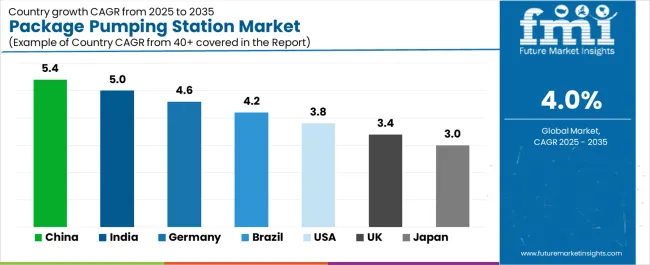
| Country | CAGR (2025-2035) |
|---|---|
| China | 5.4% |
| India | 5.0% |
| Germany | 4.6% |
| Brazil | 4.2% |
| United States | 3.8% |
| United Kingdom | 3.4% |
| Japan | 3.0% |
Regional synthesis reveals Asia Pacific markets leading adoption through urbanization expansion and drainage infrastructure technology development, while European countries maintain steady expansion supported by construction technology advancement and environmental standardization requirements. North American markets show moderate growth driven by residential development applications and flood management integration trends.
What Is Driving the Rapid Expansion of the Package Pumping Station Market in China?
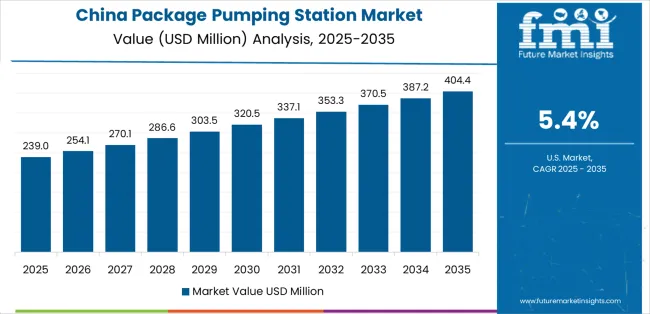
The Chinese market emphasizes advanced infrastructure features, including precision flow control and integration with comprehensive municipal management platforms that manage wastewater transfer, flood prevention, and environmental compliance applications through unified monitoring systems. The country demonstrates strong growth at 5.4% CAGR, driven by urbanization expansion, infrastructure modernization initiatives, and emerging residential development advancement that support pumping station integration. Chinese developers prioritize operational effectiveness with package pumping stations delivering consistent drainage management through advanced automation capabilities and site adaptation features.
Technology deployment channels include major construction developers, specialized drainage equipment suppliers, and municipal infrastructure programs that support professional applications for complex residential drainage and flood prevention applications. Development platform integration capabilities with established municipal systems expand market appeal across diverse construction requirements seeking reliable drainage and compliance benefits. The expanding residential construction base and accelerating infrastructure development create constant demand, while innovative applications in smart cities and environmental monitoring open new growth avenues.
Performance Metrics:
- Development projects in Shanghai, Beijing, and Guangzhou leading pumping station adoption for residential and commercial operations
- Construction partnerships maintaining significant market share for infrastructure integration applications
- Municipal procurement programs supporting substantial equipment acquisitions across urban facilities
- Infrastructure compatibility with major drainage systems driving procurement selection criteria
How is Germany Maintaining Its Leadership in Package Pumping Station Engineering?
Germany's advanced construction market demonstrates sophisticated pumping station deployment with documented operational effectiveness in residential development applications and commercial facilities through integration with existing municipal systems and drainage infrastructure. The country leverages engineering expertise in wastewater management and infrastructure systems integration to maintain strong growth at 4.6% CAGR. Industrial centers, including Berlin, Munich, and Hamburg, showcase premium installations where pumping stations integrate with comprehensive drainage platforms and municipal management systems to optimize infrastructure performance and flood prevention effectiveness.
German developers prioritize system reliability and EU compliance in pumping station selection, creating demand for advanced drainage systems with features, including remote monitoring and automated control systems. The market benefits from established construction infrastructure and a willingness to invest in wastewater technologies that provide long-term operational benefits and compliance with international drainage and environmental standards.
Market Intelligence Brief:
- Engineering focuses on EU drainage standards and infrastructure compliance, driving premium segment growth
- Municipal partnerships providing faster technology deployment cycles
- Technology collaboration between German pump manufacturers and international infrastructure companies
- Quality certification programs expanding pumping station integration in residential construction scenarios
What are the Key Factors Driving the USA Package Pumping Station Market?
The USA package pumping station market demonstrates sophisticated deployment across development applications with documented effectiveness in residential construction and flood prevention facilities through integration with comprehensive drainage management systems and municipal infrastructure. The country leverages advanced engineering capabilities in infrastructure automation and wastewater technologies to maintain moderate growth at 3.8% CAGR. Industrial centers, including Florida, Texas, and California, showcase premium installations where pumping stations integrate with comprehensive municipal platforms and stormwater networks to optimize flood protection and drainage effectiveness.
American developers prioritize drainage reliability and regulatory compliance in pumping station development, creating demand for advanced monitoring systems with features, including telemetry integration and automated alarm systems. The market benefits from established residential construction infrastructure and willingness to invest in wastewater technologies that provide long-term property protection benefits and compliance with EPA and municipal standards.
Market Intelligence Brief:
- Infrastructure technology focuses on reliability standards and flood compliance, driving residential development segment growth
- Municipal partnerships providing accelerated deployment cycles
- Technology collaboration between American pump manufacturers and global infrastructure companies
- Certification programs expanding pumping station integration in coastal development scenarios
How is the UK Market Emphasizing Environmental Responsibility in Package Pumping Station Deployments?
The UK package pumping station market demonstrates advanced eco-friendly deployment with documented operational effectiveness in residential development applications and flood management facilities through integration with existing environmental compliance systems and drainage infrastructure. The country leverages regulatory expertise in wastewater management and infrastructure systems integration to maintain steady growth at 3.4% CAGR. Industrial centers, including London, Manchester, and Birmingham, showcase installations where pumping stations integrate with comprehensive drainage platforms and municipal management systems to optimize regulatory compliance and flood effectiveness.
British developers prioritize eco-conscious system design and regulatory compliance in pumping station development, creating demand for certified drainage systems with features, including environmental monitoring and performance tracking. The market benefits from established construction infrastructure and commitment to invest in wastewater technologies that provide long-term environmental benefits and compliance with UK and EU drainage standards. Residential development applications, flood management systems, and green building programs drive diversified demand across multiple application segments.
Strategic Market Indicators:
- Environmental compliance focuses on UK drainage standards and eco-friendly requirements, driving eco-development segment growth
- Municipal partnerships providing faster infrastructure deployment cycles
- Technology collaboration between British pump manufacturers and international construction companies
- Eco-certification programs expanding pumping station integration in green building scenarios
Why is India Emerging as a High-Growth Market for Package Pumping Stations?
India's package pumping station market demonstrates rapid expansion deployment with documented operational effectiveness in residential development applications and infrastructure facilities through integration with emerging municipal systems and construction infrastructure. The country leverages growing engineering capabilities in infrastructure technology and drainage systems integration to achieve high growth at 5.0% CAGR. Industrial centers, including Mumbai, Bangalore, and Delhi, showcase expanding installations where pumping stations integrate with comprehensive development platforms and municipal networks to optimize market penetration and drainage effectiveness.
Indian developers prioritize infrastructure accessibility and reliability standards in pumping station development, creating demand for cost-effective drainage systems with features, including simplified installation methods and operational protocols. The market benefits from expanding urbanization infrastructure and willingness to invest in international-standard wastewater technologies that provide sanitation compliance and alignment with global construction standards.
Market Intelligence Brief:
- Infrastructure development focuses on international reliability standards and accessible pricing, driving urban development segment growth
- Municipal partnerships providing accelerated market entry cycles
- Technology collaboration between Indian manufacturers and international pump companies
- Quality certification programs expanding pumping station integration in residential construction scenarios
What is Japan's Approach to Precision Engineering in Package Pumping Stations?
Japan's package pumping station market demonstrates precision deployment with documented operational effectiveness in specialized residential applications and flood protection facilities through integration with advanced municipal systems and quality control infrastructure. The country leverages engineering excellence in drainage precision and infrastructure systems integration to maintain steady growth at 3.0% CAGR. Industrial centers, including Tokyo, Osaka, and Yokohama, showcase installations where pumping stations integrate with comprehensive quality platforms and municipal systems to optimize infrastructure excellence and flood effectiveness.
Japanese developers prioritize system precision and reliability excellence in pumping station development, creating demand for high-quality drainage systems with features, including precision level control and quality integration systems. The market benefits from established construction infrastructure and commitment to invest in highest-quality wastewater technologies that provide superior infrastructure positioning and compliance with stringent Japanese drainage standards.
Strategic Market Indicators:
- Engineering focuses on precision quality standards and operational excellence, driving premium development segment growth
- Municipal partnerships providing enhanced technology deployment cycles
- Technology collaboration between Japanese pump manufacturers and international infrastructure companies
- Quality manufacturing programs expanding pumping station integration in specialty residential construction scenarios
What are the Key Factors Driving the Growth of the Package Pumping Station Market in Europe?
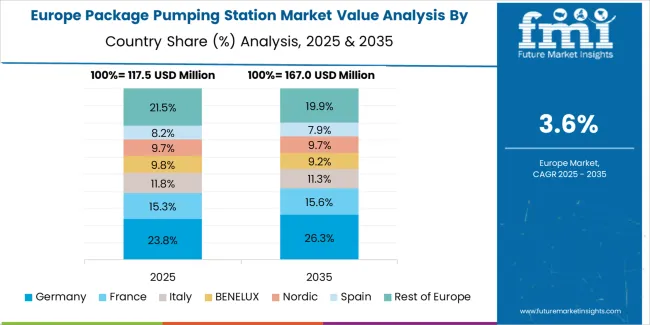
The Package Pumping Station market in Europe is projected to grow substantially over the forecast period, with Germany expected to maintain its leadership position with a significant market share supported by its advanced construction infrastructure and major urban development centers in Berlin and Frankfurt. United Kingdom follows with strong market presence, driven by comprehensive flood management programs and residential construction initiatives. France holds substantial market share through specialized development activities, infrastructure applications, and commercial construction. Italy commands notable market presence through strong residential development and construction projects. Spain accounts for growing market share aided by urbanization expansion and infrastructure adoption. The Netherlands maintains steady share driven by specialty flood protection applications and drainage management demand. The Rest of Europe region is anticipated to show steady adoption, reflecting consistent growth in Nordic countries, residential development expansion in Central European markets, and infrastructure upgrades across Eastern European construction facilities.
Single Station Dominates Residential Development Demand in Japan
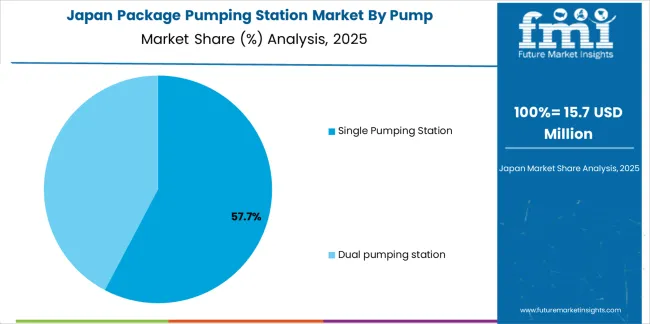
In Japan, the Package Pumping Station market prioritizes single pumping station systems, which capture the dominant share of residential development and property construction installations due to their advanced features, including cost-effective installation optimization and seamless integration with existing municipal drainage infrastructure. Japanese developers emphasize reliability, efficiency, and long-term operational excellence, creating demand for single station systems that provide consistent drainage capabilities and superior performance based on construction requirements and quality standards. Dual station maintains secondary positions primarily in commercial facility applications and critical infrastructure installations where redundant drainage operation meets reliability requirements without compromising system efficiency.
Market Characteristics:
- Premium focus on single station systems with advanced pump capabilities and efficient installation properties
- Integration requirements with existing municipal drainage platforms and specialty infrastructure systems
- Emphasis on operational reliability and long-term durability in residential development applications
Pumping Equipment Manufacturers Lead Installation Services in South Korea
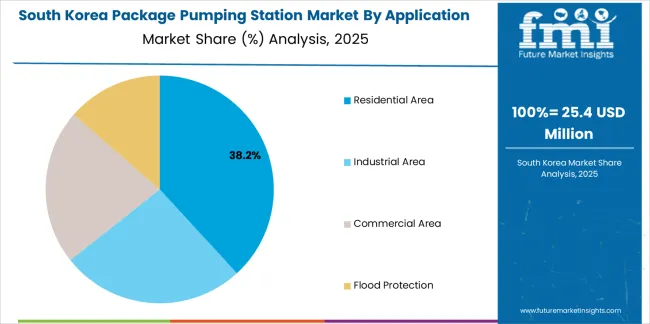
In South Korea, the market structure favors international pumping equipment manufacturers, including TT Pumps, Premier Tech, and Xylem, which maintain dominant positions through comprehensive product portfolios and established construction networks supporting both residential development and commercial facility installations. These providers offer integrated solutions combining advanced pumping stations with professional installation services and ongoing technical support that appeal to Korean developers seeking reliable drainage management systems. Local construction contractors and drainage specialists capture moderate market share by providing localized installation capabilities and competitive pricing for standard residential applications, while domestic manufacturers focus on specialized configurations and cost-effective solutions tailored to Korean construction market characteristics.
Channel Insights:
- International pump brands maintaining premium market positioning through advanced drainage offerings
- Local construction service networks expanding to support growing demand for professional installation and technical support
- System integration capabilities becoming a key differentiator for development-wide and multi-site construction applications
How is the Competitive Landscape Evolving in the Package Pumping Station Market?
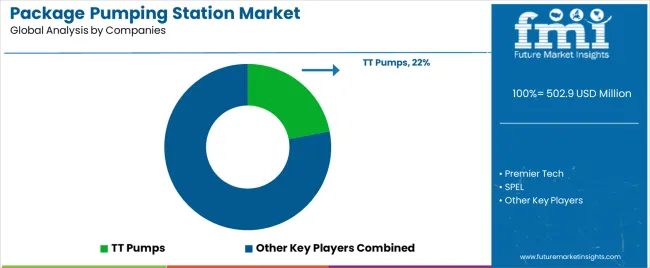
The Package Pumping Station market operates with moderate concentration, featuring approximately 12-15 meaningful participants, where leading companies control roughly 45-50% of the global market share through established construction relationships and comprehensive pumping equipment portfolios. Competition emphasizes advanced pump configurations, system reliability, and installation integration rather than price-based rivalry. The leading company, TT Pumps, commands approximately 22.0% market share through its extensive pumping station product line and global construction presence.
Market Leaders encompass TT Pumps, Premier Tech, and SPEL, which maintain competitive advantages through extensive drainage expertise, global construction networks, and comprehensive system integration capabilities that create developer loyalty and support premium pricing. These companies leverage decades of pumping technology experience and ongoing innovation investments to develop advanced pumping stations with precision flow control and reliability features. Technology Innovators include Xylem and regional specialists, which compete through specialized configuration focus and innovative automation capabilities that appeal to developers seeking advanced drainage solutions and operational monitoring.
These companies differentiate through rapid product development cycles and specialized residential construction application focus. Regional Specialists feature pump manufacturers focusing on specific geographic markets and specialized applications, including flood protection systems and integrated municipal solutions. Market dynamics favor participants that combine reliable pump technology with advanced control capabilities, including precision level monitoring and automatic system optimization features. Competitive pressure intensifies as traditional drainage equipment suppliers expand into package pumping systems, while specialized wastewater companies challenge established players through innovative configuration solutions and smart monitoring platforms targeting residential and commercial construction segments.
Key Players in the Package Pumping Station Market
- TT Pumps
- Premier Tech
- SPEL
- Advantage Pumping Solutions
- Xylem
- Flood Protection Solutions
- Drainstore
- All Pump Solutions
- Pumptec
- PPS
- Pegasus Pumps
- A&C Pumps
- Grundfos
- Sulzer
Scope of the Report
| Item | Value |
|---|---|
| Quantitative Units | USD 502.9 million |
| Pump Arrangement | Single pumping station, Dual pumping station |
| Application | Residential Area, Industrial Area, Commercial Area, Flood Protection |
| Regions Covered | Asia Pacific, Europe, North America, Latin America, Middle East & Africa |
| Countries Covered | China, India, Germany, Brazil, United States, United Kingdom, Japan, and 20+ additional countries |
| Key Companies Profiled | TT Pumps, Premier Tech, SPEL, Advantage Pumping Solutions, Xylem, Flood Protection Solutions, Drainstore, All Pump Solutions, Pumptec, PPS, Pegasus Pumps, A&C Pumps, Grundfos, Sulzer |
| Additional Attributes | Dollar sales by pump arrangement and application categories, regional adoption trends across Asia Pacific, Europe, and North America, competitive landscape with pumping equipment manufacturers and construction suppliers, developer preferences for reliability and automation capabilities, integration with municipal infrastructure platforms and drainage monitoring systems, innovations in pump configuration and control excellence, and development of smart monitoring solutions with enhanced performance and operational optimization capabilities. |
Package Pumping Station Market by Segments
Pump Arrangement:
- Single pumping station
- Dual pumping station
Application:
- Residential Area
- Industrial Area
- Commercial Area
- Flood Protection
Region:
- Asia Pacific
- China
- India
- Japan
- South Korea
- ASEAN
- Australia & New Zealand
- Rest of Asia Pacific
- Europe
- Germany
- United Kingdom
- France
- Italy
- Spain
- Netherlands
- Nordic
- Rest of Europe
- North America
- United States
- Canada
- Mexico
- Latin America
- Brazil
- Argentina
- Rest of Latin America
- Middle East & Africa
- GCC Countries
- Turkey
- South Africa
- Rest of Middle East & Africa
Frequently Asked Questions
How big is the package pumping station market in 2025?
The global package pumping station market is estimated to be valued at USD 502.9 million in 2025.
What will be the size of package pumping station market in 2035?
The market size for the package pumping station market is projected to reach USD 744.4 million by 2035.
How much will be the package pumping station market growth between 2025 and 2035?
The package pumping station market is expected to grow at a 4.0% CAGR between 2025 and 2035.
What are the key product types in the package pumping station market?
The key product types in package pumping station market are single pumping station and dual pumping station.
Which application segment to contribute significant share in the package pumping station market in 2025?
In terms of application, residential area segment to command 40.0% share in the package pumping station market in 2025.
Preview the report firsthand - request a free sample
Get SampleGet the brochure for pricing and purchase details.
Get PDFTable of Content
- Executive Summary
- Global Market Outlook
- Demand-side Trends
- Supply-side Trends
- Technology Roadmap Analysis
- Analysis and Recommendations
- Market Overview
- Market Coverage / Taxonomy
- Market Definition / Scope / Limitations
- Market Background
- Market Dynamics
- Drivers
- Restraints
- Opportunity
- Trends
- Scenario Forecast
- Demand in Optimistic Scenario
- Demand in Likely Scenario
- Demand in Conservative Scenario
- Opportunity Map Analysis
- Product Life Cycle Analysis
- Supply Chain Analysis
- Investment Feasibility Matrix
- Value Chain Analysis
- PESTLE and Porter’s Analysis
- Regulatory Landscape
- Regional Parent Market Outlook
- Production and Consumption Statistics
- Import and Export Statistics
- Market Dynamics
- Global Market Analysis 2020 to 2024 and Forecast, 2025 to 2035
- Historical Market Size Value (USD Million) Analysis, 2020 to 2024
- Current and Future Market Size Value (USD Million) Projections, 2025 to 2035
- Y-o-Y Growth Trend Analysis
- Absolute $ Opportunity Analysis
- Global Market Pricing Analysis 2020 to 2024 and Forecast 2025 to 2035
- Global Market Analysis 2020 to 2024 and Forecast 2025 to 2035, By Pump Arrangement
- Introduction / Key Findings
- Historical Market Size Value (USD Million) Analysis By Pump Arrangement , 2020 to 2024
- Current and Future Market Size Value (USD Million) Analysis and Forecast By Pump Arrangement , 2025 to 2035
- Single Pumping Station
- Dual pumping station
- Y-o-Y Growth Trend Analysis By Pump Arrangement , 2020 to 2024
- Absolute $ Opportunity Analysis By Pump Arrangement , 2025 to 2035
- Global Market Analysis 2020 to 2024 and Forecast 2025 to 2035, By Application
- Introduction / Key Findings
- Historical Market Size Value (USD Million) Analysis By Application, 2020 to 2024
- Current and Future Market Size Value (USD Million) Analysis and Forecast By Application, 2025 to 2035
- Residential Area
- Industrial Area
- Commercial Area
- Flood Protection
- Y-o-Y Growth Trend Analysis By Application, 2020 to 2024
- Absolute $ Opportunity Analysis By Application, 2025 to 2035
- Global Market Analysis 2020 to 2024 and Forecast 2025 to 2035, By Region
- Introduction
- Historical Market Size Value (USD Million) Analysis By Region, 2020 to 2024
- Current Market Size Value (USD Million) Analysis and Forecast By Region, 2025 to 2035
- North America
- Latin America
- Western Europe
- Eastern Europe
- East Asia
- South Asia and Pacific
- Middle East & Africa
- Market Attractiveness Analysis By Region
- North America Market Analysis 2020 to 2024 and Forecast 2025 to 2035, By Country
- Historical Market Size Value (USD Million) Trend Analysis By Market Taxonomy, 2020 to 2024
- Market Size Value (USD Million) Forecast By Market Taxonomy, 2025 to 2035
- By Country
- USA
- Canada
- Mexico
- By Pump Arrangement
- By Application
- By Country
- Market Attractiveness Analysis
- By Country
- By Pump Arrangement
- By Application
- Key Takeaways
- Latin America Market Analysis 2020 to 2024 and Forecast 2025 to 2035, By Country
- Historical Market Size Value (USD Million) Trend Analysis By Market Taxonomy, 2020 to 2024
- Market Size Value (USD Million) Forecast By Market Taxonomy, 2025 to 2035
- By Country
- Brazil
- Chile
- Rest of Latin America
- By Pump Arrangement
- By Application
- By Country
- Market Attractiveness Analysis
- By Country
- By Pump Arrangement
- By Application
- Key Takeaways
- Western Europe Market Analysis 2020 to 2024 and Forecast 2025 to 2035, By Country
- Historical Market Size Value (USD Million) Trend Analysis By Market Taxonomy, 2020 to 2024
- Market Size Value (USD Million) Forecast By Market Taxonomy, 2025 to 2035
- By Country
- Germany
- UK
- Italy
- Spain
- France
- Nordic
- BENELUX
- Rest of Western Europe
- By Pump Arrangement
- By Application
- By Country
- Market Attractiveness Analysis
- By Country
- By Pump Arrangement
- By Application
- Key Takeaways
- Eastern Europe Market Analysis 2020 to 2024 and Forecast 2025 to 2035, By Country
- Historical Market Size Value (USD Million) Trend Analysis By Market Taxonomy, 2020 to 2024
- Market Size Value (USD Million) Forecast By Market Taxonomy, 2025 to 2035
- By Country
- Russia
- Poland
- Hungary
- Balkan & Baltic
- Rest of Eastern Europe
- By Pump Arrangement
- By Application
- By Country
- Market Attractiveness Analysis
- By Country
- By Pump Arrangement
- By Application
- Key Takeaways
- East Asia Market Analysis 2020 to 2024 and Forecast 2025 to 2035, By Country
- Historical Market Size Value (USD Million) Trend Analysis By Market Taxonomy, 2020 to 2024
- Market Size Value (USD Million) Forecast By Market Taxonomy, 2025 to 2035
- By Country
- China
- Japan
- South Korea
- By Pump Arrangement
- By Application
- By Country
- Market Attractiveness Analysis
- By Country
- By Pump Arrangement
- By Application
- Key Takeaways
- South Asia and Pacific Market Analysis 2020 to 2024 and Forecast 2025 to 2035, By Country
- Historical Market Size Value (USD Million) Trend Analysis By Market Taxonomy, 2020 to 2024
- Market Size Value (USD Million) Forecast By Market Taxonomy, 2025 to 2035
- By Country
- India
- ASEAN
- Australia & New Zealand
- Rest of South Asia and Pacific
- By Pump Arrangement
- By Application
- By Country
- Market Attractiveness Analysis
- By Country
- By Pump Arrangement
- By Application
- Key Takeaways
- Middle East & Africa Market Analysis 2020 to 2024 and Forecast 2025 to 2035, By Country
- Historical Market Size Value (USD Million) Trend Analysis By Market Taxonomy, 2020 to 2024
- Market Size Value (USD Million) Forecast By Market Taxonomy, 2025 to 2035
- By Country
- Kingdom of Saudi Arabia
- Other GCC Countries
- Turkiye
- South Africa
- Other African Union
- Rest of Middle East & Africa
- By Pump Arrangement
- By Application
- By Country
- Market Attractiveness Analysis
- By Country
- By Pump Arrangement
- By Application
- Key Takeaways
- Key Countries Market Analysis
- USA
- Pricing Analysis
- Market Share Analysis, 2024
- By Pump Arrangement
- By Application
- Canada
- Pricing Analysis
- Market Share Analysis, 2024
- By Pump Arrangement
- By Application
- Mexico
- Pricing Analysis
- Market Share Analysis, 2024
- By Pump Arrangement
- By Application
- Brazil
- Pricing Analysis
- Market Share Analysis, 2024
- By Pump Arrangement
- By Application
- Chile
- Pricing Analysis
- Market Share Analysis, 2024
- By Pump Arrangement
- By Application
- Germany
- Pricing Analysis
- Market Share Analysis, 2024
- By Pump Arrangement
- By Application
- UK
- Pricing Analysis
- Market Share Analysis, 2024
- By Pump Arrangement
- By Application
- Italy
- Pricing Analysis
- Market Share Analysis, 2024
- By Pump Arrangement
- By Application
- Spain
- Pricing Analysis
- Market Share Analysis, 2024
- By Pump Arrangement
- By Application
- France
- Pricing Analysis
- Market Share Analysis, 2024
- By Pump Arrangement
- By Application
- India
- Pricing Analysis
- Market Share Analysis, 2024
- By Pump Arrangement
- By Application
- ASEAN
- Pricing Analysis
- Market Share Analysis, 2024
- By Pump Arrangement
- By Application
- Australia & New Zealand
- Pricing Analysis
- Market Share Analysis, 2024
- By Pump Arrangement
- By Application
- China
- Pricing Analysis
- Market Share Analysis, 2024
- By Pump Arrangement
- By Application
- Japan
- Pricing Analysis
- Market Share Analysis, 2024
- By Pump Arrangement
- By Application
- South Korea
- Pricing Analysis
- Market Share Analysis, 2024
- By Pump Arrangement
- By Application
- Russia
- Pricing Analysis
- Market Share Analysis, 2024
- By Pump Arrangement
- By Application
- Poland
- Pricing Analysis
- Market Share Analysis, 2024
- By Pump Arrangement
- By Application
- Hungary
- Pricing Analysis
- Market Share Analysis, 2024
- By Pump Arrangement
- By Application
- Kingdom of Saudi Arabia
- Pricing Analysis
- Market Share Analysis, 2024
- By Pump Arrangement
- By Application
- Turkiye
- Pricing Analysis
- Market Share Analysis, 2024
- By Pump Arrangement
- By Application
- South Africa
- Pricing Analysis
- Market Share Analysis, 2024
- By Pump Arrangement
- By Application
- USA
- Market Structure Analysis
- Competition Dashboard
- Competition Benchmarking
- Market Share Analysis of Top Players
- By Regional
- By Pump Arrangement
- By Application
- Competition Analysis
- Competition Deep Dive
- TT Pumps
- Overview
- Product Portfolio
- Profitability by Market Segments (Product/Age /Sales Channel/Region)
- Sales Footprint
- Strategy Overview
- Marketing Strategy
- Product Strategy
- Channel Strategy
- Premier Tech
- SPEL
- Advantage Pumping Solutions
- Xylem
- Flood Protection Solutions
- Drainstore
- All Pump Solutions
- Pumptec
- PPS
- Pegasus Pumps
- A&C Pumps
- Grundfos
- Sulzer
- TT Pumps
- Competition Deep Dive
- Assumptions & Acronyms Used
- Research Methodology


