

- Industry Size (2025)
- USD 63.5 Bn
- Forecast (2035)
- USD 355.6 Bn
- CAGR (2025 to 2035)
- 18.8%
Population Health Management Platforms Market Size and Share Forecast Outlook 2025 to 2035
The Population Health Management Platforms Market is estimated to be valued at USD 63.5 billion in 2025 and is projected to reach USD 355.6 billion by 2035, registering a compound annual growth rate (CAGR) of 18.8% over the forecast period.
Quick Stats for Population Health Management Platforms Market
- Population Health Management Platforms Market Value (2025): USD 63.5 billion
- Population Health Management Platforms Market Forecast Value (2035): USD 355.6 billion
- Population Health Management Platforms Market Forecast CAGR: 18.8%
- Leading Segment in Population Health Management Platforms Market in 2025: Software (42.3%)
- Key Growth Regions in Population Health Management Platforms Market: North America, Asia-Pacific, Europe
- Top Key Players in Population Health Management Platforms Market: Allscripts Healthcare Solutions Inc., Oracle Corporation (Oracle Health/Cerner), Optum Inc., Epic Systems Corporation, Koninklijke Philips N.V., Health Catalyst Inc., IBM (Merative), McKesson Corporation, Conifer Health Solutions, eClinicalWorks LLC, athenahealth Inc., Arcadia.io, Cotiviti Inc., Medecision Inc.
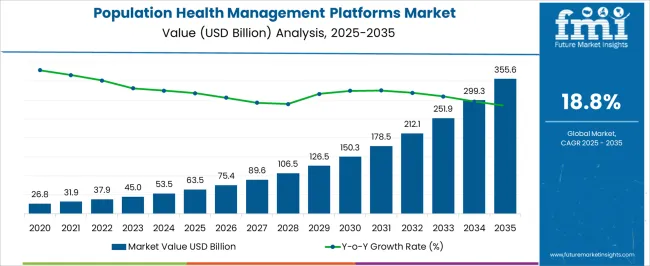
Population Health Management Platforms Market Key Takeaways
| Metric | Value |
|---|---|
| Population Health Management Platforms Market Estimated Value in (2025 E) | USD 63.5 billion |
| Population Health Management Platforms Market Forecast Value in (2035 F) | USD 355.6 billion |
| Forecast CAGR (2025 to 2035) | 18.8% |
Why is the Population Health Management Platforms Market Growing?
The Population Health Management Platforms market is witnessing steady growth, driven by the increasing emphasis on value-based care, preventive healthcare, and data-driven decision-making across healthcare systems. The adoption of these platforms is being supported by the need to integrate patient data from multiple sources, identify at-risk populations, and optimize clinical outcomes while reducing overall healthcare costs. Advanced software solutions incorporating AI and predictive analytics are enhancing population health analytics, enabling healthcare providers to stratify patients, monitor chronic conditions, and implement targeted interventions.
The growing focus on interoperability, compliance with regulatory frameworks, and the integration of electronic health records is further strengthening market adoption. Cloud-based and on-premise deployment models are providing flexibility to healthcare organizations with varying IT infrastructure capabilities.
Investments in digital health initiatives and government programs promoting patient-centric care are driving widespread adoption As healthcare systems increasingly focus on operational efficiency, patient engagement, and outcome-based care, the Population Health Management Platforms market is expected to sustain long-term growth, supported by continuous technological innovation and adoption of analytics-driven solutions.
Segmental Analysis
The population health management platforms market is segmented by component, solution type, delivery mode, end-user, and geographic regions. By component, population health management platforms market is divided into Software, Services, and Hardware. In terms of solution type, population health management platforms market is classified into Population Health Analytics, Patient Engagement Solutions, Care Coordination Tools, Risk-Stratification & Reporting Solutions, and Clinical Workflow Management. Based on delivery mode, population health management platforms market is segmented into On-Premise, Cloud-Based / Web-Based, and Hybrid. By end-user, population health management platforms market is segmented into Healthcare Providers and Payers. Regionally, the population health management platforms industry is classified into North America, Latin America, Western Europe, Eastern Europe, Balkan & Baltic Countries, Russia & Belarus, Central Asia, East Asia, South Asia & Pacific, and the Middle East & Africa.
Insights into the Software Component Segment
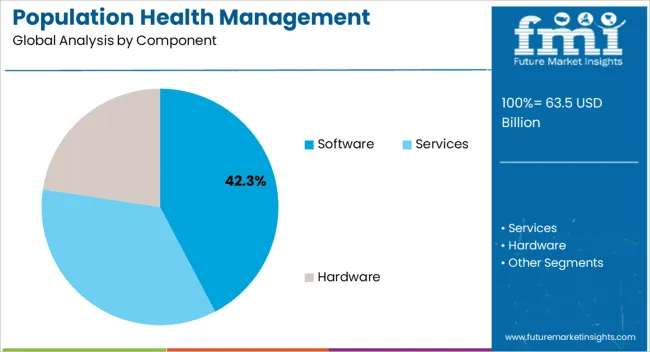
The software component segment is projected to hold 42.3% of the market revenue in 2025, making it the leading component. Its growth is being driven by the increasing demand for advanced tools that can integrate, analyze, and manage complex patient data across healthcare networks. Software platforms enable automated reporting, predictive analytics, risk stratification, and population monitoring, which enhance clinical decision-making and operational efficiency.
The ability to scale functionalities, update features through software enhancements, and integrate with electronic health records supports widespread adoption. Healthcare providers are leveraging software solutions to improve patient outcomes, reduce hospital readmissions, and manage chronic disease populations more effectively.
Enhanced security, compliance with data privacy regulations, and support for multi-channel data capture further reinforce market preference As hospitals, clinics, and healthcare networks increasingly prioritize data-driven and patient-centered care models, the software component segment is expected to maintain its leading position, supported by technological advancements and enhanced analytical capabilities that drive better healthcare management.
Insights into the Population Health Analytics Solution Type Segment
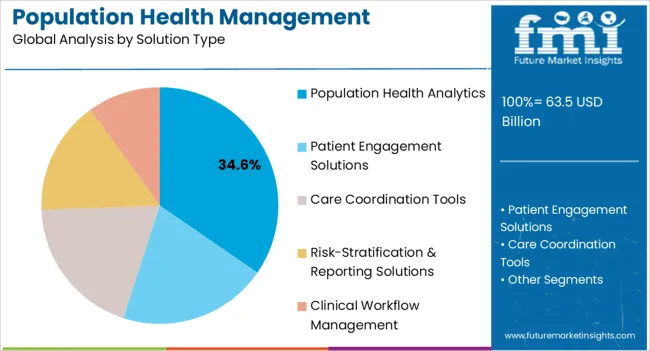
The population health analytics solution type segment is anticipated to account for 34.6% of the market revenue in 2025, making it the largest solution category. Growth is being driven by the need for actionable insights into patient populations to improve care quality, identify risk factors, and implement targeted intervention programs. Analytics platforms enable healthcare providers to aggregate data from electronic health records, claims, and wearable devices, applying predictive models to optimize clinical outcomes and resource allocation.
The integration of AI and machine learning improves risk stratification, early disease detection, and chronic disease management. These solutions support evidence-based decision-making, reduce healthcare costs, and enhance patient engagement by providing personalized care recommendations.
Regulatory compliance, interoperability, and seamless integration with healthcare workflows are strengthening adoption As healthcare systems increasingly focus on outcome-driven and population-centric strategies, the population health analytics segment is expected to remain the primary growth driver in the market, supported by technological innovation and a growing emphasis on preventive and value-based care.
Insights into the On-Premise Delivery Mode Segment
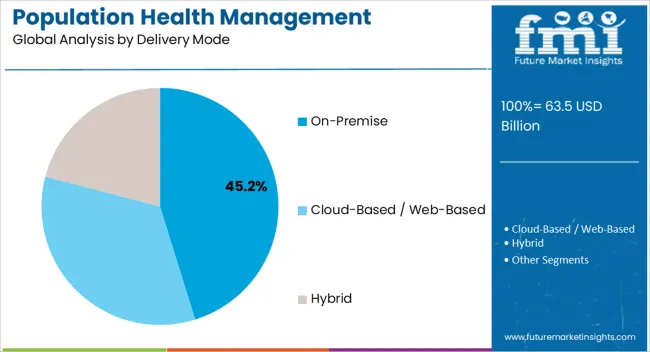
The on-premise delivery mode segment is projected to hold 45.2% of the market revenue in 2025, establishing it as the leading deployment type. Growth is being driven by healthcare organizations seeking enhanced data security, control over infrastructure, and compliance with stringent regulatory standards. On-premise solutions allow hospitals and clinics to maintain full ownership of sensitive patient information while integrating with existing IT systems and electronic health records.
These deployments support customizable workflows, high-performance analytics, and scalability tailored to specific organizational needs. The ability to implement strict access controls, audit trails, and real-time monitoring reinforces trust and reliability.
Healthcare providers with complex infrastructure requirements or specific data governance policies increasingly prefer on-premise models for critical population health management functions As patient data volumes grow and regulatory requirements evolve, the on-premise delivery mode is expected to maintain its market leadership, offering security, control, and flexibility that meet the operational and compliance needs of healthcare institutions.
Market Overview
Population Health Management Platforms Market Overview
It is an open secret that the healthcare industry, like many others, is undergoing dramatic changes. Information Technology has brought about sweeping changes in every aspect of our lives and healthcare is no exception. The flip side of the IT boom is a fast-paced lifestyle that has led to problems like hypertension, diabetes, and stress.
These affect not only the high-risk geriatric population but are also troubling middle-aged people and youth below the age of thirty now. People have begun to take their health a lot more seriously and there is a desire to lead a fitter life. The convergence of healthcare and IT is what resulted in the population health management platforms market.
It is the collection of patient data across various IT health resources, analysis of that into a single, actionable record and then actions taken which can improve both patient health and organisation financial health. PHM improves group health by monitoring & identifying individual patients within the group. Business Intelligence tools are used to aggregate data & provide a comprehensive clinical picture of each patient.
The scope of the population health management platforms market will only grow as more hospitals shift to population healthcare payment and delivery arrangements.
Analysis of Population Health Management Platforms Market By Key Countries
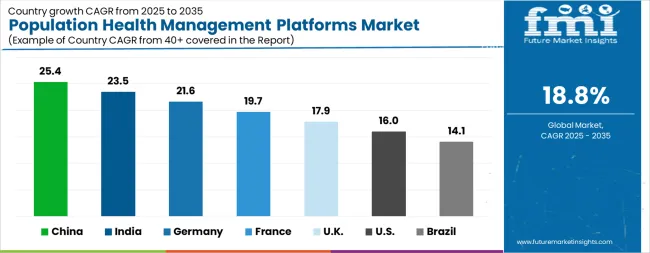
| Country | CAGR |
|---|---|
| China | 25.4% |
| India | 23.5% |
| Germany | 21.6% |
| France | 19.7% |
| UK | 17.9% |
| USA | 16.0% |
| Brazil | 14.1% |
Country-wise Analysis
The Population Health Management Platforms Market is expected to register a CAGR of 18.8% during the forecast period, exhibiting varied country level momentum. China leads with the highest CAGR of 25.4%, followed by India at 23.5%. Developed markets such as Germany, France, and the UK continue to expand steadily, while the USA is likely to grow at consistent rates. Brazil posts the lowest CAGR at 14.1%, yet still underscores a broadly positive trajectory for the global Population Health Management Platforms Market. In 2024, Germany held a dominant revenue in the Western Europe market and is expected to grow with a CAGR of 21.6%. The USA Population Health Management Platforms Market is estimated to be valued at USD 22.1 billion in 2025 and is anticipated to reach a valuation of USD 97.4 billion by 2035. Sales are projected to rise at a CAGR of 16.0% over the forecast period between 2025 and 2035. While Japan and South Korea markets are estimated to be valued at USD 3.4 billion and USD 2.2 billion respectively in 2025.
Key Players in the Population Health Management Platforms Market
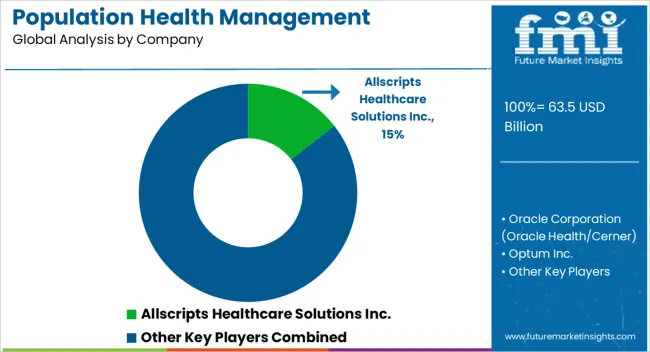
- Allscripts Healthcare Solutions Inc.
- Oracle Corporation (Oracle Health/Cerner)
- Optum Inc.
- Epic Systems Corporation
- Koninklijke Philips N.V.
- Health Catalyst Inc.
- IBM (Merative)
- McKesson Corporation
- Conifer Health Solutions
- eClinicalWorks LLC
- athenahealth Inc.
- Arcadia.io
- Cotiviti Inc.
- Medecision Inc.
Scope of the Report
| Item | Value |
|---|---|
| Quantitative Units | USD 63.5 Billion |
| Component | Software, Services, and Hardware |
| Solution Type | Population Health Analytics, Patient Engagement Solutions, Care Coordination Tools, Risk-Stratification & Reporting Solutions, and Clinical Workflow Management |
| Delivery Mode | On-Premise, Cloud-Based / Web-Based, and Hybrid |
| End-User | Healthcare Providers and Payers |
| Regions Covered | North America, Europe, Asia-Pacific, Latin America, Middle East & Africa |
| Country Covered | United States, Canada, Germany, France, United Kingdom, China, Japan, India, Brazil, South Africa |
| Key Companies Profiled | Allscripts Healthcare Solutions Inc., Oracle Corporation (Oracle Health/Cerner), Optum Inc., Epic Systems Corporation, Koninklijke Philips N.V., Health Catalyst Inc., IBM (Merative), McKesson Corporation, Conifer Health Solutions, eClinicalWorks LLC, athenahealth Inc., Arcadia.io, Cotiviti Inc., and Medecision Inc. |
Population Health Management Platforms Market by Segments
Component:
- Software
- Services
- Hardware
Solution Type:
- Population Health Analytics
- Patient Engagement Solutions
- Care Coordination Tools
- Risk-Stratification & Reporting Solutions
- Clinical Workflow Management
Delivery Mode:
- On-Premise
- Cloud-Based / Web-Based
- Hybrid
End-User:
- Healthcare Providers
- Payers
Region:
- North America
- USA
- Canada
- Mexico
- Latin America
- Brazil
- Chile
- Rest of Latin America
- Western Europe
- Germany
- UK
- Italy
- Spain
- France
- Nordic
- BENELUX
- Rest of Western Europe
- Eastern Europe
- Russia
- Poland
- Hungary
- Balkan & Baltic
- Rest of Eastern Europe
- East Asia
- China
- Japan
- South Korea
- South Asia and Pacific
- India
- ASEAN
- Australia & New Zealand
- Rest of South Asia and Pacific
- Middle East & Africa
- Kingdom of Saudi Arabia
- Other GCC Countries
- Turkiye
- South Africa
- Other African Union
- Rest of Middle East & Africa
Frequently Asked Questions
How big is the population health management platforms market in 2025?
The global population health management platforms market is estimated to be valued at USD 63.5 billion in 2025.
What will be the size of population health management platforms market in 2035?
The market size for the population health management platforms market is projected to reach USD 355.6 billion by 2035.
How much will be the population health management platforms market growth between 2025 and 2035?
The population health management platforms market is expected to grow at a 18.8% CAGR between 2025 and 2035.
What are the key product types in the population health management platforms market?
The key product types in population health management platforms market are software, _stand-alone software, _integrated software suites, services, _consulting & training, _implementation & integration, _support & maintenance, hardware, _servers & storage, _networking devices and _wearable & remote-monitoring devices.
Which solution type segment to contribute significant share in the population health management platforms market in 2025?
In terms of solution type, population health analytics segment to command 34.6% share in the population health management platforms market in 2025.
Preview the report firsthand - request a free sample
Get SampleGet the brochure for pricing and purchase details.
Get PDFTable of Content
- Executive Summary
- Global Market Outlook
- Demand-side Trends
- Supply-side Trends
- Technology Roadmap Analysis
- Analysis and Recommendations
- Market Overview
- Market Coverage / Taxonomy
- Market Definition / Scope / Limitations
- Market Background
- Market Dynamics
- Drivers
- Restraints
- Opportunity
- Trends
- Scenario Forecast
- Demand in Optimistic Scenario
- Demand in Likely Scenario
- Demand in Conservative Scenario
- Opportunity Map Analysis
- Product Life Cycle Analysis
- Supply Chain Analysis
- Investment Feasibility Matrix
- Value Chain Analysis
- PESTLE and Porter’s Analysis
- Regulatory Landscape
- Regional Parent Market Outlook
- Production and Consumption Statistics
- Import and Export Statistics
- Market Dynamics
- Global Market Analysis 2020 to 2024 and Forecast, 2025 to 2035
- Historical Market Size Value (USD Million) Analysis, 2020 to 2024
- Current and Future Market Size Value (USD Million) Projections, 2025 to 2035
- Y-o-Y Growth Trend Analysis
- Absolute $ Opportunity Analysis
- Global Market Pricing Analysis 2020 to 2024 and Forecast 2025 to 2035
- Global Market Analysis 2020 to 2024 and Forecast 2025 to 2035, By Component
- Introduction / Key Findings
- Historical Market Size Value (USD Million) Analysis By Component , 2020 to 2024
- Current and Future Market Size Value (USD Million) Analysis and Forecast By Component , 2025 to 2035
- Software
- Stand-Alone Software
- Integrated Software Suites
- Services
- Consulting & Training
- Implementation & Integration
- Support & Maintenance
- Hardware
- Servers & Storage
- Networking Devices
- Wearable & Remote-Monitoring Devices
- Software
- Y-o-Y Growth Trend Analysis By Component , 2020 to 2024
- Absolute $ Opportunity Analysis By Component , 2025 to 2035
- Global Market Analysis 2020 to 2024 and Forecast 2025 to 2035, By Solution Type
- Introduction / Key Findings
- Historical Market Size Value (USD Million) Analysis By Solution Type, 2020 to 2024
- Current and Future Market Size Value (USD Million) Analysis and Forecast By Solution Type, 2025 to 2035
- Population Health Analytics
- Patient Engagement Solutions
- Care Coordination Tools
- Risk-Stratification & Reporting Solutions
- Clinical Workflow Management
- Y-o-Y Growth Trend Analysis By Solution Type, 2020 to 2024
- Absolute $ Opportunity Analysis By Solution Type, 2025 to 2035
- Global Market Analysis 2020 to 2024 and Forecast 2025 to 2035, By Delivery Mode
- Introduction / Key Findings
- Historical Market Size Value (USD Million) Analysis By Delivery Mode, 2020 to 2024
- Current and Future Market Size Value (USD Million) Analysis and Forecast By Delivery Mode, 2025 to 2035
- On-Premise
- Cloud-Based / Web-Based
- Hybrid
- Y-o-Y Growth Trend Analysis By Delivery Mode, 2020 to 2024
- Absolute $ Opportunity Analysis By Delivery Mode, 2025 to 2035
- Global Market Analysis 2020 to 2024 and Forecast 2025 to 2035, By End-User
- Introduction / Key Findings
- Historical Market Size Value (USD Million) Analysis By End-User, 2020 to 2024
- Current and Future Market Size Value (USD Million) Analysis and Forecast By End-User, 2025 to 2035
- Healthcare Providers
- Payers
- Y-o-Y Growth Trend Analysis By End-User, 2020 to 2024
- Absolute $ Opportunity Analysis By End-User, 2025 to 2035
- Global Market Analysis 2020 to 2024 and Forecast 2025 to 2035, By Region
- Introduction
- Historical Market Size Value (USD Million) Analysis By Region, 2020 to 2024
- Current Market Size Value (USD Million) Analysis and Forecast By Region, 2025 to 2035
- North America
- Latin America
- Western Europe
- Eastern Europe
- East Asia
- South Asia and Pacific
- Middle East & Africa
- Market Attractiveness Analysis By Region
- North America Market Analysis 2020 to 2024 and Forecast 2025 to 2035, By Country
- Historical Market Size Value (USD Million) Trend Analysis By Market Taxonomy, 2020 to 2024
- Market Size Value (USD Million) Forecast By Market Taxonomy, 2025 to 2035
- By Country
- USA
- Canada
- Mexico
- By Component
- By Solution Type
- By Delivery Mode
- By End-User
- By Country
- Market Attractiveness Analysis
- By Country
- By Component
- By Solution Type
- By Delivery Mode
- By End-User
- Key Takeaways
- Latin America Market Analysis 2020 to 2024 and Forecast 2025 to 2035, By Country
- Historical Market Size Value (USD Million) Trend Analysis By Market Taxonomy, 2020 to 2024
- Market Size Value (USD Million) Forecast By Market Taxonomy, 2025 to 2035
- By Country
- Brazil
- Chile
- Rest of Latin America
- By Component
- By Solution Type
- By Delivery Mode
- By End-User
- By Country
- Market Attractiveness Analysis
- By Country
- By Component
- By Solution Type
- By Delivery Mode
- By End-User
- Key Takeaways
- Western Europe Market Analysis 2020 to 2024 and Forecast 2025 to 2035, By Country
- Historical Market Size Value (USD Million) Trend Analysis By Market Taxonomy, 2020 to 2024
- Market Size Value (USD Million) Forecast By Market Taxonomy, 2025 to 2035
- By Country
- Germany
- UK
- Italy
- Spain
- France
- Nordic
- BENELUX
- Rest of Western Europe
- By Component
- By Solution Type
- By Delivery Mode
- By End-User
- By Country
- Market Attractiveness Analysis
- By Country
- By Component
- By Solution Type
- By Delivery Mode
- By End-User
- Key Takeaways
- Eastern Europe Market Analysis 2020 to 2024 and Forecast 2025 to 2035, By Country
- Historical Market Size Value (USD Million) Trend Analysis By Market Taxonomy, 2020 to 2024
- Market Size Value (USD Million) Forecast By Market Taxonomy, 2025 to 2035
- By Country
- Russia
- Poland
- Hungary
- Balkan & Baltic
- Rest of Eastern Europe
- By Component
- By Solution Type
- By Delivery Mode
- By End-User
- By Country
- Market Attractiveness Analysis
- By Country
- By Component
- By Solution Type
- By Delivery Mode
- By End-User
- Key Takeaways
- East Asia Market Analysis 2020 to 2024 and Forecast 2025 to 2035, By Country
- Historical Market Size Value (USD Million) Trend Analysis By Market Taxonomy, 2020 to 2024
- Market Size Value (USD Million) Forecast By Market Taxonomy, 2025 to 2035
- By Country
- China
- Japan
- South Korea
- By Component
- By Solution Type
- By Delivery Mode
- By End-User
- By Country
- Market Attractiveness Analysis
- By Country
- By Component
- By Solution Type
- By Delivery Mode
- By End-User
- Key Takeaways
- South Asia and Pacific Market Analysis 2020 to 2024 and Forecast 2025 to 2035, By Country
- Historical Market Size Value (USD Million) Trend Analysis By Market Taxonomy, 2020 to 2024
- Market Size Value (USD Million) Forecast By Market Taxonomy, 2025 to 2035
- By Country
- India
- ASEAN
- Australia & New Zealand
- Rest of South Asia and Pacific
- By Component
- By Solution Type
- By Delivery Mode
- By End-User
- By Country
- Market Attractiveness Analysis
- By Country
- By Component
- By Solution Type
- By Delivery Mode
- By End-User
- Key Takeaways
- Middle East & Africa Market Analysis 2020 to 2024 and Forecast 2025 to 2035, By Country
- Historical Market Size Value (USD Million) Trend Analysis By Market Taxonomy, 2020 to 2024
- Market Size Value (USD Million) Forecast By Market Taxonomy, 2025 to 2035
- By Country
- Kingdom of Saudi Arabia
- Other GCC Countries
- Turkiye
- South Africa
- Other African Union
- Rest of Middle East & Africa
- By Component
- By Solution Type
- By Delivery Mode
- By End-User
- By Country
- Market Attractiveness Analysis
- By Country
- By Component
- By Solution Type
- By Delivery Mode
- By End-User
- Key Takeaways
- Key Countries Market Analysis
- USA
- Pricing Analysis
- Market Share Analysis, 2024
- By Component
- By Solution Type
- By Delivery Mode
- By End-User
- Canada
- Pricing Analysis
- Market Share Analysis, 2024
- By Component
- By Solution Type
- By Delivery Mode
- By End-User
- Mexico
- Pricing Analysis
- Market Share Analysis, 2024
- By Component
- By Solution Type
- By Delivery Mode
- By End-User
- Brazil
- Pricing Analysis
- Market Share Analysis, 2024
- By Component
- By Solution Type
- By Delivery Mode
- By End-User
- Chile
- Pricing Analysis
- Market Share Analysis, 2024
- By Component
- By Solution Type
- By Delivery Mode
- By End-User
- Germany
- Pricing Analysis
- Market Share Analysis, 2024
- By Component
- By Solution Type
- By Delivery Mode
- By End-User
- UK
- Pricing Analysis
- Market Share Analysis, 2024
- By Component
- By Solution Type
- By Delivery Mode
- By End-User
- Italy
- Pricing Analysis
- Market Share Analysis, 2024
- By Component
- By Solution Type
- By Delivery Mode
- By End-User
- Spain
- Pricing Analysis
- Market Share Analysis, 2024
- By Component
- By Solution Type
- By Delivery Mode
- By End-User
- France
- Pricing Analysis
- Market Share Analysis, 2024
- By Component
- By Solution Type
- By Delivery Mode
- By End-User
- India
- Pricing Analysis
- Market Share Analysis, 2024
- By Component
- By Solution Type
- By Delivery Mode
- By End-User
- ASEAN
- Pricing Analysis
- Market Share Analysis, 2024
- By Component
- By Solution Type
- By Delivery Mode
- By End-User
- Australia & New Zealand
- Pricing Analysis
- Market Share Analysis, 2024
- By Component
- By Solution Type
- By Delivery Mode
- By End-User
- China
- Pricing Analysis
- Market Share Analysis, 2024
- By Component
- By Solution Type
- By Delivery Mode
- By End-User
- Japan
- Pricing Analysis
- Market Share Analysis, 2024
- By Component
- By Solution Type
- By Delivery Mode
- By End-User
- South Korea
- Pricing Analysis
- Market Share Analysis, 2024
- By Component
- By Solution Type
- By Delivery Mode
- By End-User
- Russia
- Pricing Analysis
- Market Share Analysis, 2024
- By Component
- By Solution Type
- By Delivery Mode
- By End-User
- Poland
- Pricing Analysis
- Market Share Analysis, 2024
- By Component
- By Solution Type
- By Delivery Mode
- By End-User
- Hungary
- Pricing Analysis
- Market Share Analysis, 2024
- By Component
- By Solution Type
- By Delivery Mode
- By End-User
- Kingdom of Saudi Arabia
- Pricing Analysis
- Market Share Analysis, 2024
- By Component
- By Solution Type
- By Delivery Mode
- By End-User
- Turkiye
- Pricing Analysis
- Market Share Analysis, 2024
- By Component
- By Solution Type
- By Delivery Mode
- By End-User
- South Africa
- Pricing Analysis
- Market Share Analysis, 2024
- By Component
- By Solution Type
- By Delivery Mode
- By End-User
- USA
- Market Structure Analysis
- Competition Dashboard
- Competition Benchmarking
- Market Share Analysis of Top Players
- By Regional
- By Component
- By Solution Type
- By Delivery Mode
- By End-User
- Competition Analysis
- Competition Deep Dive
- Allscripts Healthcare Solutions Inc.
- Overview
- Product Portfolio
- Profitability by Market Segments (Product/Age /Sales Channel/Region)
- Sales Footprint
- Strategy Overview
- Marketing Strategy
- Product Strategy
- Channel Strategy
- Oracle Corporation (Oracle Health/Cerner)
- Optum Inc.
- Epic Systems Corporation
- Koninklijke Philips N.V.
- Health Catalyst Inc.
- IBM (Merative)
- McKesson Corporation
- Conifer Health Solutions
- eClinicalWorks LLC
- athenahealth Inc.
- Arcadia.io
- Cotiviti Inc.
- Medecision Inc.
- Allscripts Healthcare Solutions Inc.
- Competition Deep Dive
- Assumptions & Acronyms Used
- Research Methodology


