

- Industry Size (2026)
- USD 17.5 Bn
- Forecast (2036)
- USD 25.9 Bn
- CAGR (2026 to 2036)
- 4.0%
Protective Paperboard Market Size, Market Forecast and Outlook By FMI
The protective paperboard market was valued at USD 16.8 billion in 2025. The market is projected to reach USD 17.5 billion in 2026 and USD 25.9 billion by 2036, expanding at a CAGR of 4.0% during the forecast period. Recycled paperboard are expected to lead fiber source or material demand with a 34.8% share in 2026. Pads and sheets are projected to remain the leading product type with a 28.6% share in 2026. Consumer electronics are expected to lead end-use demand with a 24.9% share in 2026.
Summary of Protective Paperboard Market
- Key Drivers
- Transit damage control: Shippers are replacing mixed-material inserts with paperboard structures that protect corners, surfaces, and stacked loads while staying easy to recycle.
- E-commerce pack-out: High parcel volumes reward lightweight paperboard formats that absorb shock, separate components, and run well on automated packing lines.
- Circular design pressure: Retailers and brand owners want protective formats that fit paper recovery systems and reduce plastic content in secondary and tertiary packaging.
- Key Segments Analyzed in the Report
- Material type: solid bleached sulfate, coated unbleached kraft, folding boxboard, recycled paperboard, and others
- Product type: pads and sheets, edge guards, corner protectors, partitions, die-cut inserts, and others
- End use industry: consumer electronics, industrial goods, food and beverage transit, furniture and homecare, e-commerce, and others
- Region: North America, Latin America, Western Europe, Eastern Europe, East Asia, South Asia and Pacific, and Middle East and Africa
- Analyst Opinion
- Ismail Sutaria, Sr. Consultant at FMI says, "Protective paperboard is no longer a low-value substitute for plastic foam. Value is concentrating in engineered formats that reduce damage rates, simplify pack-out, and let brands keep the entire shipper system inside the fiber recovery loop."
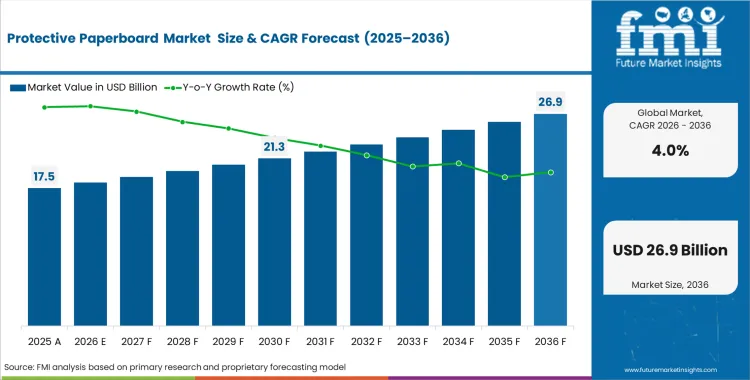
Protective Paperboard market Definition
The protective paperboard market covers engineered paperboard structures used to cushion, separate, brace, and stabilize products during storage and transit. It includes pads and sheets, edge guards, corner protectors, partitions, sleeves, tubes, and die-cut inserts produced from virgin and recycled boxboard grades. These formats serve e-commerce distribution, consumer electronics, appliances, industrial components, furniture, and selected food and beverage transit applications where surface protection and stack strength matter.
Protective Paperboard market Inclusions
- Sales of converted paperboard protective components used inside shipping cases, display-ready transit packs, and industrial load-protection systems.
- Revenue from standard and custom designs, including die-cut engineered inserts, laminated protection formats, and paperboard-based edge and corner systems.
- Demand across all major regions for transit, warehouse, export, and last-mile protection uses.
Protective Paperboard market Exclusions
- Corrugated shipping cases and folding cartons sold as standalone primary or secondary packs, except where integrated protective inserts are part of the value captured.
- Plastic foam, air pillows, molded plastic trays, and textile dunnage sold outside paperboard-based systems.
- General paper stationery boards and graphic boards not converted for product protection.
Protective Paperboard market Research Methodology
This study evaluates protective paperboard demand across material type, product type, and end use industry for the 2025 base year and the 2026 to 2036 forecast period in value terms. Evidence inputs include European packaging regulation, USA materials and recycling datasets, trade association recyclability guidance, company annual reports, and first-party product documentation from leading paper packaging suppliers. Market size and segment shares are developed through triangulation of paperboard conversion capacity, end-market shipment intensity, replacement rates in protective applications, and the migration of shippers toward fiber-based protective formats.
Key Drivers, Restraints, and Trends in Protective Paperboard market
Drivers
Protective paperboard demand is rising because shippers are under pressure to lower damage, lower cube inefficiency, and cut plastic use at the same time. Parcel distribution networks favor inserts and pads that are light, flat-pack friendly, and easy to automate, which lifts adoption in electronics, furniture accessories, appliances, and general merchandise. Brands are also redesigning transit packaging so the protective element can travel in the same recovery stream as the outer box. That shift matters because mixed-material packs create sorting friction and add disposal cost. As paper-based packaging suppliers expand structural design services, protective paperboard is moving from commodity filler toward engineered packaging value.
Restraints
Performance limits remain real in high-moisture and extreme-compression settings. Heavy-duty export shipments still require hybrid solutions where paperboard alone cannot match foam resilience or plastic barrier performance. Price swings in recovered fiber and boxboard grades can squeeze converters that operate on thin contracts. Multi-part pack designs also require line requalification at customer sites, which slows switching. Smaller buyers often stay with incumbent formats because redesign costs, drop testing, and tooling changes absorb management attention.
Trends
The market is moving toward lighter engineered structures that protect through geometry rather than material bulk. Buyers increasingly want inserts that are fold-flat before use, lock without adhesive, and integrate with automated erection. Recyclability guidance is shaping board choice, coatings, and print treatments so protective components do not disrupt paper recovery. Suppliers are also tying design claims to transport efficiency, showing how stackability and cube reduction improve total logistics economics. Premium applications are shifting toward custom-fit paperboard systems that look cleaner in the box opening experience while still meeting transit test requirements.
Segmental Analysis
Protective Paperboard market Analysis by Product Type
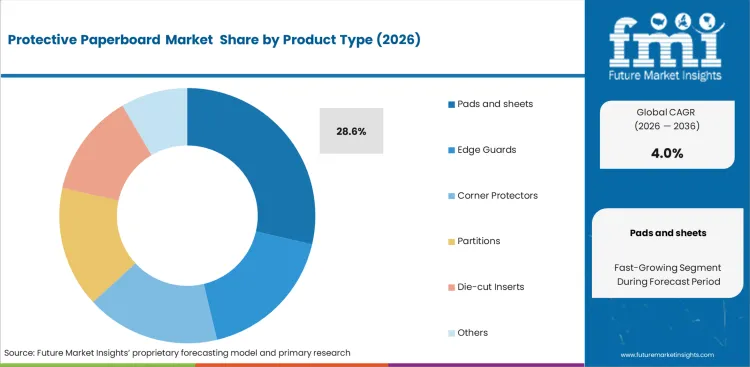
Pads and sheets are projected to account for 28.6% of market value in 2026, keeping the lead because they solve the broadest set of transit problems with the lowest tooling burden. They are used as layer separators, abrasion barriers, void reducers, and top-load stabilizers across electronics, foodservice distribution, furniture accessories, and industrial parts. Their economics also work well because converters can run them at scale from standard board inputs and customize dimensions without rebuilding a full packaging system. Smurfit Westrock highlighted in 2026 that its paper-based protective packaging is designed to safeguard products, optimize shipping efficiency, and reduce waste, which matches the commercial logic behind the segment’s lead.
Protective Paperboard market Analysis by End Use Industry
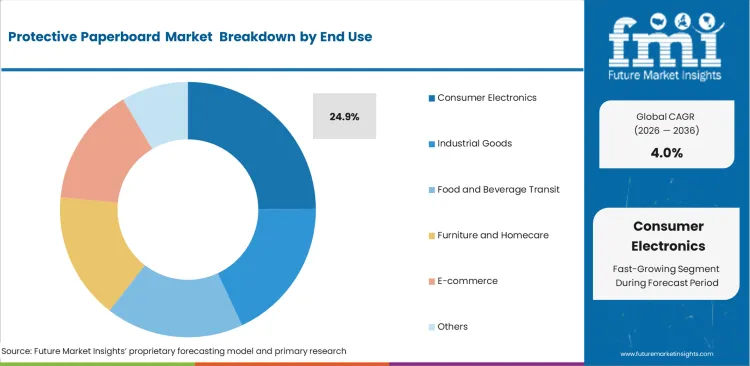
Consumer electronics are expected to hold 24.9% of demand in 2026 because fragile devices, accessories, and small appliances need precise separation and surface protection while brands also want cleaner curbside recycling narratives. This end use relies on pads, partitions, sleeves, and die-cut inserts to control scuffing and movement in densely packed cases. MFT-CKF states that its molded fiber protection serves electronics, consumer, and industrial applications using 100% recycled material, underscoring how protective fiber formats have become standard in electronics shipment design.
Competitive Aligners for Market Players
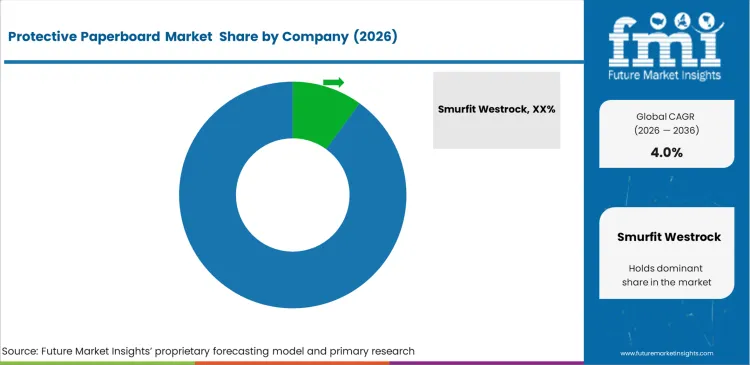
Competitive advantage is not built on board supply alone. Buyers want structural design support, ISTA-style validation, fast prototyping, dependable converted-board availability, and formats that run cleanly through packing operations. The strongest suppliers combine converting scale with design engineering and sustainability documentation, which gives procurement teams a credible path away from plastic void fill and foam. Smurfit Westrock is positioning paper-based protective packaging around product protection, shipping efficiency, and waste reduction, while DS Smith continues to frame plastic-free packaging, paper, and recycling as one integrated system. Leadership is shifting toward converters that can engineer pack performance, prove recyclability, and shorten customer redesign cycles.
Key Players in Protective Paperboard market
- Smurfit Westrock
- DS Smith
- Sonoco Products Company
- International Paper
- Georgia-Pacific
- Mayr-Melnhof Karton AG
- Mondi plc
- VPK Group
- Cascades Inc.
- Pratt Industries
Strategic Outlook by FMI on Protective Paperboard market
FMI sees protective paperboard shifting from a filler category into a design-led performance market. The next phase will be shaped by automation compatibility, drop-test reliability, and the ability to replace mixed-material protective sets with fiber-only systems. Companies that control board access, structural design capability, and customer qualification support will capture the highest-value share of growth.
Scope of the Report
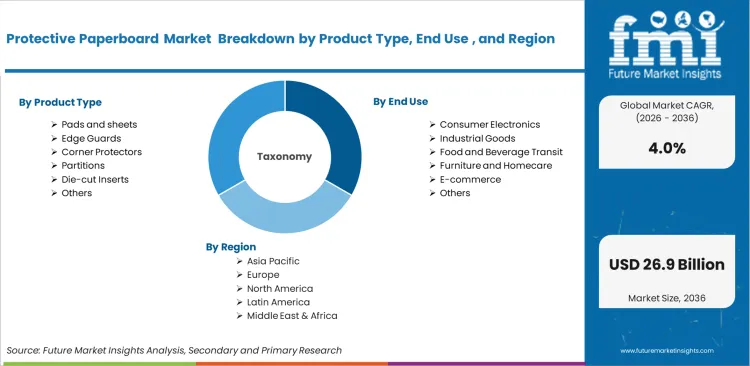
| Metric | Value |
|---|---|
| Market Value | USD 16.8 billion in 2025 to USD 25.9 billion by 2036 |
| CAGR | 4.0% from 2026 to 2036 |
| Base Year | 2025 |
| Forecast Period | 2026 to 2036 |
| Material Type Segmentation | Solid Bleached Sulfate, Coated Unbleached Kraft, Folding Boxboard, Recycled Paperboard, Others |
| Product Type Segmentation | Pads and Sheets, Edge Guards, Corner Protectors, Partitions, Die-cut Inserts, Others |
| End Use Industry Segmentation | Consumer Electronics, Industrial Goods, Food and Beverage Transit, Furniture and Homecare, E-commerce, Others |
| Regions Covered | North America, Latin America, Western Europe, Eastern Europe, East Asia, South Asia and Pacific, Middle East and Africa |
Bibliography
- European Commission. 2025. Packaging and Packaging Waste Regulation.
- USA Environmental Protection Agency. 2025. Containers and Packaging: Product-Specific Data.
- FEFCO. 2025. Factsheet on Recyclability for Corrugated Cardboard Packaging.
- CEPI. 2020. Paper-Based Packaging Recyclability Guidelines.
- Smurfit Westrock. 2026. Fourth Quarter and Full Year 2025 Results.
- Smurfit Westrock. 2026. Protective Packaging. Company webpage.
- DS Smith. 2025. Sustainability Report 2025.
Frequently Asked Questions
How big is this market and how fast is it growing?
USD 16.8 Billion in 2025, reaching USD 25.9 Billion by 2036 at a 4% CAGR.
Which material type dominates demand?
Recycled paperboard leads with a 34.8% share in 2026.
Which end-use industry drives the most demand?
Consumer electronics at 24.9%, driven by fragile devices needing precise protection and clean recyclability.
Why is paperboard replacing plastic foam and air pillows?
It protects through engineered geometry, fits paper recovery streams, and runs cleanly on automated packing lines.
Who are the key players shaping competitive advantage?
Smurfit Westrock and DS Smith lead by combining converting scale with structural design, sustainability proof, and fast customer qualification cycles.
Preview the report firsthand - request a free sample
Get SampleGet the brochure for pricing and purchase details.
Get PDFTable of Content
- Executive Summary
- Global Market Outlook
- Demand-side Trends
- Supply-side Trends
- Technology Roadmap Analysis
- Analysis and Recommendations
- Market Overview
- Market Coverage / Taxonomy
- Market Definition / Scope / Limitations
- Research Methodology
- Chapter Orientation
- Analytical Lens and Working Hypotheses
- Market Structure, Signals, and Trend Drivers
- Benchmarking and Cross-market Comparability
- Market Sizing, Forecasting, and Opportunity Mapping
- Research Design and Evidence Framework
- Desk Research Programme (Secondary Evidence)
- Company Annual and Sustainability Reports
- Peer-reviewed Journals and Academic Literature
- Corporate Websites, Product Literature, and Technical Notes
- Earnings Decks and Investor Briefings
- Statutory Filings and Regulatory Disclosures
- Technical White Papers and Standards Notes
- Trade Journals, Industry Magazines, and Analyst Briefs
- Conference Proceedings, Webinars, and Seminar Materials
- Government Statistics Portals and Public Data Releases
- Press Releases and Reputable Media Coverage
- Specialist Newsletters and Curated Briefings
- Sector Databases and Reference Repositories
- FMI Internal Proprietary Databases and Historical Market Datasets
- Subscription Datasets and Paid Sources
- Social Channels, Communities, and Digital Listening Inputs
- Additional Desk Sources
- Expert Input and Fieldwork (Primary Evidence)
- Primary Modes
- Qualitative Interviews and Expert Elicitation
- Quantitative Surveys and Structured Data Capture
- Blended Approach
- Why Primary Evidence is Used
- Field Techniques
- Interviews
- Surveys
- Focus Groups
- Observational and In-context Research
- Social and Community Interactions
- Stakeholder Universe Engaged
- C-suite Leaders
- Board Members
- Presidents and Vice Presidents
- R&D and Innovation Heads
- Technical Specialists
- Domain Subject-matter Experts
- Scientists
- Physicians and Other Healthcare Professionals
- Governance, Ethics, and Data Stewardship
- Research Ethics
- Data Integrity and Handling
- Primary Modes
- Tooling, Models, and Reference Databases
- Desk Research Programme (Secondary Evidence)
- Data Engineering and Model Build
- Data Acquisition and Ingestion
- Cleaning, Normalisation, and Verification
- Synthesis, Triangulation, and Analysis
- Quality Assurance and Audit Trail
- Market Background
- Market Dynamics
- Drivers
- Restraints
- Opportunity
- Trends
- Scenario Forecast
- Demand in Optimistic Scenario
- Demand in Likely Scenario
- Demand in Conservative Scenario
- Opportunity Map Analysis
- Product Life Cycle Analysis
- Supply Chain Analysis
- Investment Feasibility Matrix
- Value Chain Analysis
- PESTLE and Porter’s Analysis
- Regulatory Landscape
- Regional Parent Market Outlook
- Production and Consumption Statistics
- Import and Export Statistics
- Market Dynamics
- Global Market Analysis 2021 to 2025 and Forecast, 2026 to 2036
- Historical Market Size Value (USD Million) Analysis, 2021 to 2025
- Current and Future Market Size Value (USD Million) Projections, 2026 to 2036
- Y-o-Y Growth Trend Analysis
- Absolute $ Opportunity Analysis
- Global Market Pricing Analysis 2021 to 2025 and Forecast 2026 to 2036
- Global Market Analysis 2021 to 2025 and Forecast 2026 to 2036, By Product Type
- Introduction / Key Findings
- Historical Market Size Value (USD Million) Analysis By Product Type , 2021 to 2025
- Current and Future Market Size Value (USD Million) Analysis and Forecast By Product Type , 2026 to 2036
- Pads and sheets
- Edge Guards
- Corner Protectors
- Partitions
- Die-cut Inserts
- Others
- Pads and sheets
- Y-o-Y Growth Trend Analysis By Product Type , 2021 to 2025
- Absolute $ Opportunity Analysis By Product Type , 2026 to 2036
- Global Market Analysis 2021 to 2025 and Forecast 2026 to 2036, By End Use
- Introduction / Key Findings
- Historical Market Size Value (USD Million) Analysis By End Use, 2021 to 2025
- Current and Future Market Size Value (USD Million) Analysis and Forecast By End Use, 2026 to 2036
- Consumer Electronics
- Industrial Goods
- Food and Beverage Transit
- Furniture and Homecare
- E-commerce
- Others
- Consumer Electronics
- Y-o-Y Growth Trend Analysis By End Use, 2021 to 2025
- Absolute $ Opportunity Analysis By End Use, 2026 to 2036
- Global Market Analysis 2021 to 2025 and Forecast 2026 to 2036, By Region
- Introduction
- Historical Market Size Value (USD Million) Analysis By Region, 2021 to 2025
- Current Market Size Value (USD Million) Analysis and Forecast By Region, 2026 to 2036
- North America
- Latin America
- Western Europe
- Eastern Europe
- East Asia
- South Asia and Pacific
- Middle East & Africa
- Market Attractiveness Analysis By Region
- North America Market Analysis 2021 to 2025 and Forecast 2026 to 2036, By Country
- Historical Market Size Value (USD Million) Trend Analysis By Market Taxonomy, 2021 to 2025
- Market Size Value (USD Million) Forecast By Market Taxonomy, 2026 to 2036
- By Country
- USA
- Canada
- Mexico
- By Product Type
- By End Use
- By Country
- Market Attractiveness Analysis
- By Country
- By Product Type
- By End Use
- Key Takeaways
- Latin America Market Analysis 2021 to 2025 and Forecast 2026 to 2036, By Country
- Historical Market Size Value (USD Million) Trend Analysis By Market Taxonomy, 2021 to 2025
- Market Size Value (USD Million) Forecast By Market Taxonomy, 2026 to 2036
- By Country
- Brazil
- Chile
- Rest of Latin America
- By Product Type
- By End Use
- By Country
- Market Attractiveness Analysis
- By Country
- By Product Type
- By End Use
- Key Takeaways
- Western Europe Market Analysis 2021 to 2025 and Forecast 2026 to 2036, By Country
- Historical Market Size Value (USD Million) Trend Analysis By Market Taxonomy, 2021 to 2025
- Market Size Value (USD Million) Forecast By Market Taxonomy, 2026 to 2036
- By Country
- Germany
- UK
- Italy
- Spain
- France
- Nordic
- BENELUX
- Rest of Western Europe
- By Product Type
- By End Use
- By Country
- Market Attractiveness Analysis
- By Country
- By Product Type
- By End Use
- Key Takeaways
- Eastern Europe Market Analysis 2021 to 2025 and Forecast 2026 to 2036, By Country
- Historical Market Size Value (USD Million) Trend Analysis By Market Taxonomy, 2021 to 2025
- Market Size Value (USD Million) Forecast By Market Taxonomy, 2026 to 2036
- By Country
- Russia
- Poland
- Hungary
- Balkan & Baltic
- Rest of Eastern Europe
- By Product Type
- By End Use
- By Country
- Market Attractiveness Analysis
- By Country
- By Product Type
- By End Use
- Key Takeaways
- East Asia Market Analysis 2021 to 2025 and Forecast 2026 to 2036, By Country
- Historical Market Size Value (USD Million) Trend Analysis By Market Taxonomy, 2021 to 2025
- Market Size Value (USD Million) Forecast By Market Taxonomy, 2026 to 2036
- By Country
- China
- Japan
- South Korea
- By Product Type
- By End Use
- By Country
- Market Attractiveness Analysis
- By Country
- By Product Type
- By End Use
- Key Takeaways
- South Asia and Pacific Market Analysis 2021 to 2025 and Forecast 2026 to 2036, By Country
- Historical Market Size Value (USD Million) Trend Analysis By Market Taxonomy, 2021 to 2025
- Market Size Value (USD Million) Forecast By Market Taxonomy, 2026 to 2036
- By Country
- India
- ASEAN
- Australia & New Zealand
- Rest of South Asia and Pacific
- By Product Type
- By End Use
- By Country
- Market Attractiveness Analysis
- By Country
- By Product Type
- By End Use
- Key Takeaways
- Middle East & Africa Market Analysis 2021 to 2025 and Forecast 2026 to 2036, By Country
- Historical Market Size Value (USD Million) Trend Analysis By Market Taxonomy, 2021 to 2025
- Market Size Value (USD Million) Forecast By Market Taxonomy, 2026 to 2036
- By Country
- Kingdom of Saudi Arabia
- Other GCC Countries
- Turkiye
- South Africa
- Other African Union
- Rest of Middle East & Africa
- By Product Type
- By End Use
- By Country
- Market Attractiveness Analysis
- By Country
- By Product Type
- By End Use
- Key Takeaways
- Key Countries Market Analysis
- USA
- Pricing Analysis
- Market Share Analysis, 2025
- By Product Type
- By End Use
- Canada
- Pricing Analysis
- Market Share Analysis, 2025
- By Product Type
- By End Use
- Mexico
- Pricing Analysis
- Market Share Analysis, 2025
- By Product Type
- By End Use
- Brazil
- Pricing Analysis
- Market Share Analysis, 2025
- By Product Type
- By End Use
- Chile
- Pricing Analysis
- Market Share Analysis, 2025
- By Product Type
- By End Use
- Germany
- Pricing Analysis
- Market Share Analysis, 2025
- By Product Type
- By End Use
- UK
- Pricing Analysis
- Market Share Analysis, 2025
- By Product Type
- By End Use
- Italy
- Pricing Analysis
- Market Share Analysis, 2025
- By Product Type
- By End Use
- Spain
- Pricing Analysis
- Market Share Analysis, 2025
- By Product Type
- By End Use
- France
- Pricing Analysis
- Market Share Analysis, 2025
- By Product Type
- By End Use
- India
- Pricing Analysis
- Market Share Analysis, 2025
- By Product Type
- By End Use
- ASEAN
- Pricing Analysis
- Market Share Analysis, 2025
- By Product Type
- By End Use
- Australia & New Zealand
- Pricing Analysis
- Market Share Analysis, 2025
- By Product Type
- By End Use
- China
- Pricing Analysis
- Market Share Analysis, 2025
- By Product Type
- By End Use
- Japan
- Pricing Analysis
- Market Share Analysis, 2025
- By Product Type
- By End Use
- South Korea
- Pricing Analysis
- Market Share Analysis, 2025
- By Product Type
- By End Use
- Russia
- Pricing Analysis
- Market Share Analysis, 2025
- By Product Type
- By End Use
- Poland
- Pricing Analysis
- Market Share Analysis, 2025
- By Product Type
- By End Use
- Hungary
- Pricing Analysis
- Market Share Analysis, 2025
- By Product Type
- By End Use
- Kingdom of Saudi Arabia
- Pricing Analysis
- Market Share Analysis, 2025
- By Product Type
- By End Use
- Turkiye
- Pricing Analysis
- Market Share Analysis, 2025
- By Product Type
- By End Use
- South Africa
- Pricing Analysis
- Market Share Analysis, 2025
- By Product Type
- By End Use
- USA
- Market Structure Analysis
- Competition Dashboard
- Competition Benchmarking
- Market Share Analysis of Top Players
- By Regional
- By Product Type
- By End Use
- Competition Analysis
- Competition Deep Dive
- Smurfit Westrock
- Overview
- Product Portfolio
- Profitability by Market Segments (Product/Age /Sales Channel/Region)
- Sales Footprint
- Strategy Overview
- Marketing Strategy
- Product Strategy
- Channel Strategy
- DS Smith
- Sonoco Products Company
- International Paper
- Georgia-Pacific
- Mayr-Melnhof Karton AG
- Mondi plc
- VPK Group
- Cascades Inc.
- Pratt Industries
- Smurfit Westrock
- Competition Deep Dive
- Assumptions & Acronyms Used


