

- Industry Size (2026)
- USD 457.0 Mn
- Forecast (2036)
- USD 1066.0 Mn
- CAGR (2026 to 2036)
- 8.8%
Refillable Cleanser Pumps Market Forecast and Outlook 2026 to 2036
In 2026, the refillable cleanser pumps market is valued at USD 457 million and is projected to reach USD 1,066 million by 2036, expanding at a CAGR of 8.8%. The first five-year growth block from 2026 to 2031 lifts the market to approximately USD 697 million. This phase reflects rising adoption of refillable dispensing formats across personal care, household cleaning, and institutional hygiene products. Growth is driven by brand transitions toward reusable pump systems and higher refill compatibility. Demand during this block is supported by initial conversion cycles, packaging redesigns, and gradual scale-up in pump standardization.
The second growth block from 2031 to 2036 advances the market from about USD 697 million to USD 1,066 million, showing a sharper increase in absolute value addition. During this period, repeat purchases of refill units and installed pump bases become the primary growth driver. Manufacturing volumes scale as refillable pumps move from selective product lines into core assortments. This block reflects consolidation of demand, improved cost efficiencies, and wider distribution penetration, with growth shaped by sustained usage and replacement patterns rather than first-time adoption.
Quick Stats of the Refillable Cleanser Pumps Market
- Refillable Cleanser Pumps Market Value (2026): USD 457.0 million
- Refillable Cleanser Pumps Market Forecast Value (2036): USD 1,066.0 million
- Refillable Cleanser Pumps Market Forecast CAGR (2026-2036): 8.8%
- Leading End Use: Skincare (42%)
- Key Growth Regions: India, China, USA, Brazil, Germany, Japan
- Top Players: AptarGroup, Albea, Yonwoo, HCP Packaging, Natura, Takemoto
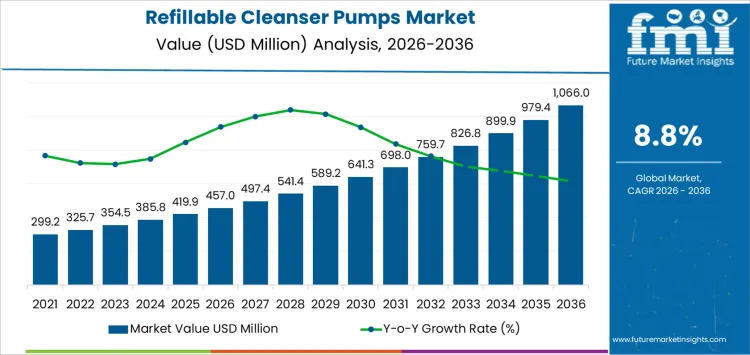
What is the Growth Forecast for the Refillable Cleanser Pumps Market through 2036?
From 2026 to 2031, the refillable cleanser pumps market expands from USD 457 million to about USD 641 million, reflecting a transition from niche packaging concepts to broader commercial adoption. Growth in this phase is shaped by brand-led trials in personal care, hospitality amenities, and premium household cleaners where controlled dispensing and product longevity matter. Early uptake is concentrated among companies redesigning packaging systems rather than launching new products. YeAR-on-year gains widen as pump durability improves, refill compatibility is standardized, and manufacturers align tooling with high-throughput filling lines, allowing smoother integration into existing production environments.
Between 2031 and 2036, the market grows from approximately USD 641 million to USD 1,066 million, indicating a pronounced acceleration driven by scale deployment. This phase reflects wider normalization of refillable formats across mass-market personal care, institutional cleaning, and private-label programs. Demand strengthens as refill ecosystems mature, pump reuse cycles lengthen, and procurement shifts toward multi-year supply agreements. Annual value additions increase sharply as refillable pumps move from differentiated packaging features to core dispensing components embedded across brand portfolios, supported by higher unit volumes, repeat replacement demand, and broader geographic rollout.
Refillable Cleanser Pumps Market Key Takeaways
| Metric | Value |
|---|---|
| Market Value (2026) | USD 457.0 million |
| Forecast Value (2036) | USD 1,066.0 million |
| Forecast CAGR (2026-2036) | 8.8% |
How Are Reuse Systems and Dispensing Precision Shaping the Refillable Cleanser Pumps Market from 2026 to 2036?
Refillable cleanser pumps gained adoption as brands redesigned liquid dispensing around repeat use containers. Personal care, household cleaning, and institutional hygiene products used pumps to deliver controlled volumes while supporting refill formats. Historical demand reflected preference for durable pump heads, consistent output per stroke, and compatibility with viscous formulations. Retailers adopted refill stations and pouch refills that relied on standardized pump fittings. Procurement focused on mechanical reliability, leak prevention, and long service life under frequent daily use.
From 2026 to 2036 demand is expected to expand with wider rollout of refill programs and bulk dispensing models. Brands seek pumps that withstand repeated bottle reuse without performance loss. Growth aligns with increased use of concentrates and variable viscosity formulations. Manufacturers refine spring mechanisms, nozzle geometry, and material selection to support longer duty cycles. Buyers assess dosing accuracy, ease of cleaning, and compatibility across refill containers. Demand reflects packaging redesign cycles, consumer adoption of refill habits, and integration of pumps into circular packaging systems.
What Is the Demand for the Refillable Cleanser Pumps Market by End Use and Packaging Format for 2026 to 2036?
From 2026 to 2036, the refillable cleanser pumps market expands as brands redesign primary packaging to support repeat use and controlled dispensing. Skincare accounts for 42% of end-use demand because daily cleansing routines rely on precise dosing, hygiene assurance, and consistent user experience. Refillable pump bottles lead packaging format adoption with a 50% share due to their durability, ease of refilling, and compatibility with standardized refill systems. Demand reflects alignment between consumer usage habits, retail refill programs, and packaging designs that balance functionality with long service life.
Why does skincare account for 42% of demand in the refillable cleanser pumps market by end use from 2026 to 2036?
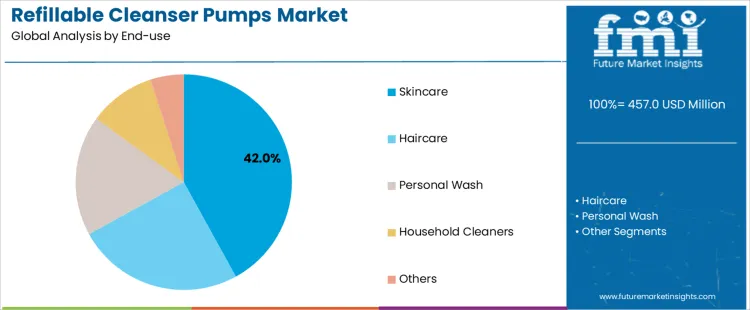
Skincare accounts for 42% of demand because facial and body cleansers are used daily and require controlled, hygienic dispensing. Consumption intensity remains high across households and professional settings where pumps support measured output and reduce product waste. Usage stays steady as refill formats allow consumers to replenish product without replacing the dispensing mechanism. Procurement decisions emphasize pump longevity, smooth actuation, and resistance to repeated cleaning cycles. Buyers favor designs that maintain consistent output volume across refill changes. Price sensitivity remains moderate since pump durability supports extended product lifecycle value. Specification control focuses on spring reliability, seal integrity, and compatibility with varied cleanser viscosities. Demand continues from 2026 to 2036 as skincare brands expand refill offerings and standardize pump systems across product lines. Repeat utilization remains predictable because cleanser replenishment cycles follow regular personal care routines and subscription-based refill programs.
Why do refillable pump bottles represent 50% of demand in the refillable cleanser pumps market by packaging format from 2026 to 2036?
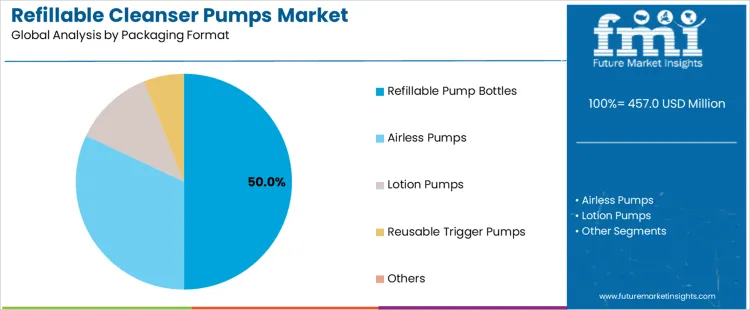
Refillable pump bottles represent 50% of demand because they combine structural stability with ease of repeated opening and refilling. Consumption is strong in skincare, haircare, and personal wash categories where containers remain in long-term use. Usage remains steady as rigid bottles protect pump assemblies from damage during handling and cleaning. Procurement favors bottles designed to withstand repeated refill cycles without warping or leakage. Buyers prioritize standardized neck finishes and refill compatibility across multiple product SKUs. Price sensitivity stays moderate since refillable bottles reduce the need for frequent replacement of dispensing components. Specification control emphasizes material durability, thread precision, and resistance to stress cracking. Demand persists from 2026 to 2036 as refill stations, pouch refills, and subscription refills gain wider acceptance. Repeat purchasing patterns remain consistent as consumers replace refills while retaining the original pump bottle for extended periods.
How Are Refillable Cleanser Pumps Being Integrated Into Personal Care and Facility Dispensing Systems?
Use expands in settings that manage repeated dispensing of liquid cleansers while limiting container replacement. Hospitality operators install refillable pumps in guest bathrooms to support standardized refilling during housekeeping rounds. Fitness centers adopt wall mounted pumps for showers to reduce bottle handling and clutter. Office washrooms use countertop pumps connected to bulk reservoirs to simplify maintenance schedules. Specialty retailers include refillable pumps with in store refill stations to support controlled dispensing. These applications reflect system based dispensing choices shaped by refill frequency, space constraints, and routine servicing needs.
What Operational Conditions Encourage Selection of Refillable Cleanser Pumps?
Adoption aligns with environments that value dispensing consistency and inventory control. Facilities managing high user turnover rely on pumps to deliver measured doses and reduce spillage. Procurement teams favor refillable formats to consolidate cleanser purchasing into bulk containers. Cleaning staff benefit from fewer unit replacements during daily rounds. Product formulators design viscosities to match pump performance for reliable output. These conditions support use where repeatability, maintenance efficiency, and controlled usage guide equipment selection across washroom, shower, and countertop applications.
Which Factors Influence Limits on Wider Use of Refillable Cleanser Pumps?
Performance depends on pump durability and compatibility with varied formulations. Some viscous or particulate containing cleansers clog standard mechanisms. Initial installation requires fixtures or mounting points not available in all spaces. Shared use environments raise hygiene concerns if pumps are not cleaned regularly. Replacement parts availability affects long term reliability. Smaller venues compare upfront hardware cost against disposable bottles. These considerations result in selective adoption where maintenance capacity, formulation fit, and installation readiness determine practical use.
What is the Demand for Refillable Cleanser Pumps by Country?
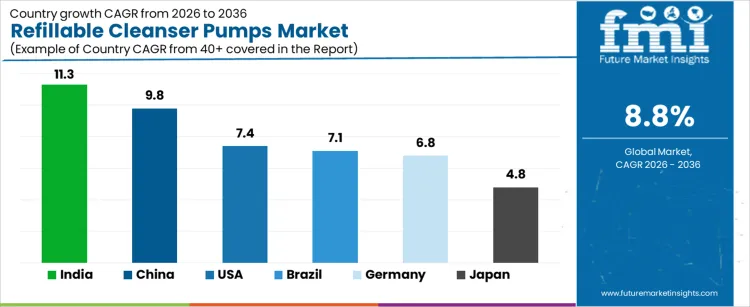
| Country | CAGR (%) |
|---|---|
| USA | 7.4% |
| Germany | 6.8% |
| China | 9.8% |
| India | 11.3% |
| Brazil | 7.1% |
| Japan | 4.8% |
The demand for refillable cleanser pumps shows uneven growth across countries, shaped by personal care consumption patterns and packaging format adoption. India leads with an 11.3% CAGR, supported by rising use of liquid cleansers, expanding urban retail networks, and higher uptake of refill based dispensing systems. China follows at 9.8%, driven by large scale personal care manufacturing and growing preference for reusable pump formats in household products. The USA grows at 7.4%, reflecting steady adoption among established personal care brands and consistent replacement demand. Brazil records 7.1%, supported by expanding hygiene product consumption. Germany posts 6.8%, shaped by mature packaging standards, while Japan grows at 4.8%, reflecting stable demand and slower format transitions.
How Is Refillable Personal Care Packaging Driving Demand in the United States?
In the United States, revenue from the Refillable Cleanser Pumps Market is expanding at a CAGR of 7.4% through 2035, driven by increased adoption of refillable packaging across personal care and skincare product lines. Brand owners are introducing refill systems to support repeat purchases and reduce single use packaging volumes. Demand is concentrated in facial cleansers, hand washes, and premium body care products distributed through retail and direct channels. Domestic packaging suppliers provide standardized pump designs compatible with refill pouches and cartridges. Stable consumer demand and recurring refill cycles are sustaining consistent procurement across major personal care brands nationwide.
- Refillable skincare formats support pump demand.
- Retail and direct sales channels drive adoption.
- Standardized pump designs ensure compatibility.
- Refill cycles sustain recurring procurement volumes.
How Do Packaging Quality Standards Support Growth in Germany?
Germany continues to record steady expansion in the Refillable Cleanser Pumps Market at a CAGR of 6.8% through 2035, supported by strong packaging quality standards and structured personal care manufacturing practices. Producers are integrating refillable pumps to maintain dispensing accuracy and product consistency across cleanser applications. Demand remains focused on facial care, dermatological products, and pharmacy distributed brands. Domestic component manufacturers supply pumps aligned with precision molding requirements. Stable brand portfolios and predictable production volumes are sustaining measured procurement activity across personal care manufacturing facilities nationwide.
- Packaging quality expectations support refillable adoption.
- Dermatological products anchor demand.
- Precision manufacturing ensures pump consistency.
- Stable brand volumes sustain procurement patterns.
How Is Premium Skincare Growth Influencing Demand in China?
In China, revenue from the Refillable Cleanser Pumps Market is growing at a CAGR of 9.8% through 2035, driven by expansion of premium skincare consumption and rising interest in refillable product formats. Brands are adopting refillable pumps to support repeat usage and controlled dispensing across cleanser categories. Demand is strong within urban consumer segments and online beauty retail platforms. Domestic packaging manufacturers are expanding production of refill compatible pump systems. High product turnover and expanding beauty distribution channels are sustaining rapid adoption across major consumer markets nationwide.
- Premium skincare consumption drives pump usage.
- Online beauty retail supports refillable formats.
- Domestic production capacity continues to expand.
- Urban demand sustains volume growth.
How Is Organized Beauty Retail Supporting Growth in India?
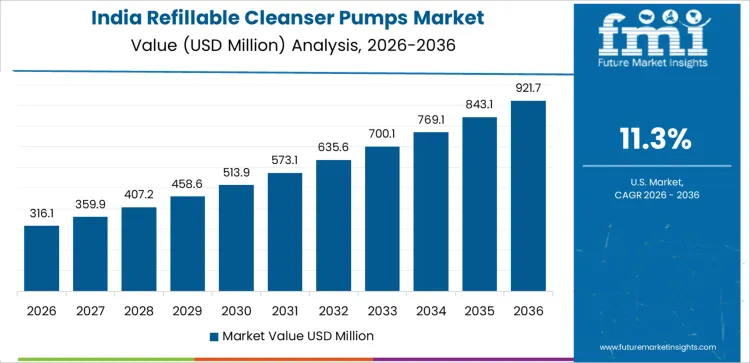
India is witnessing strong expansion in the Refillable Cleanser Pumps Market at a CAGR of 11.3% through 2035, supported by growth in organized beauty retail and rising skincare product penetration. Brands are introducing refillable cleanser formats to support affordability and repeat purchases. Demand is rising across facial cleansers, hand washes, and dermatological products sold through pharmacies and modern trade outlets. Domestic packaging suppliers provide cost aligned pump solutions suited to high volume production. Expanding urban consumption and retail availability are sustaining steady procurement across personal care manufacturers nationwide.
- Organized beauty retail supports pump adoption.
- Repeat purchase formats drive refill demand.
- Domestic suppliers improve cost accessibility.
- Urban consumption sustains growth momentum.
How Are Branded Personal Care Products Driving Adoption in Brazil?
Brazil is seeing steady growth in the Refillable Cleanser Pumps Market at a CAGR of 7.1% through 2035, supported by expansion of branded personal care products and refill based offerings. Manufacturers are using refillable pumps to improve dispensing control and extend product lifecycle. Demand is concentrated in body washes, facial cleansers, and mass premium skincare products. Imports supply some specialized pump components, while local manufacturers expand assembly capacity. Growth in personal care consumption is sustaining recurring procurement across packaging and product manufacturing operations nationwide.
- Branded personal care growth supports demand.
- Dispensing control drives pump usage.
- Imports supply specialized components.
- Consumption growth sustains procurement activity.
How Does Mature Skincare Consumption Shape Demand in Japan?
Japan is maintaining measured growth in the Refillable Cleanser Pumps Market at a CAGR of 4.8% through 2035, supported by mature skincare consumption and preference for controlled dispensing systems. Brands apply refillable pumps selectively across facial cleansers and specialty skincare products. Demand remains focused on quality consistency and product usability. Domestic component suppliers emphasize precision and durability aligned with local standards. Stable consumption patterns and replacement driven purchasing are sustaining predictable procurement across established personal care brands nationwide.
- Mature skincare markets support steady pump usage.
- Controlled dispensing drives selective adoption.
- Domestic suppliers ensure precision standards.
- Replacement demand sustains procurement consistency.
What Is Driving the Demand for Refillable Cleanser Pumps and Which Packaging Suppliers Shape Brand Adoption?
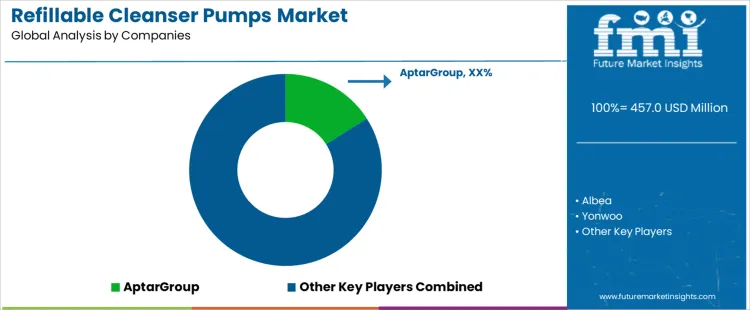
Demand for refillable cleanser pumps is being driven by refill retail formats, brand owned refill stations, and consumer preference for durable primary packaging in personal care. Skincare and body care brands use refillable pumps to extend pack life while shifting volume sales to pouches or cartridges. Takemoto holds a strong position in Asia through pump systems engineered for repeated disassembly and reattachment without leakage. Yonwoo and HCP Packaging support premium skincare brands with refillable pump designs that preserve aesthetics and dispensing precision across multiple refill cycles. AptarGroup participates through modular pump platforms compatible with refill bottles used in masstige and prestige cleansing products. Albea contributes through integrated packaging systems where pump durability aligns with long term container reuse strategies.
Design decisions are governed by pump longevity, consistent dosing after multiple refills, and resistance to clogging from viscous or botanical formulations. Brands emphasize ease of cleaning, tactile quality, and alignment with in store refill workflows. Natura influences demand through refill led product architectures that prioritize pump reuse across product lines. Procurement teams focus on component standardization to reduce tooling complexity and improve refill compatibility. Usage spans facial cleansers, hand washes, shower gels, and specialty dermatological products. Demand visibility tracks expansion of refill counters, growth of subscription refill models, and increasing use of durable dispensing components as brands redesign packaging systems to support repeated use without compromising user experience.
Key Players in the Refillable Cleanser Pumps Market
- AptarGroup
- Albea
- Yonwoo
- HCP Packaging
- Natura
- Takemoto
Scope of the Report
| Items | Values |
|---|---|
| Quantitative Units (2026) | USD million |
| End Use | Skincare; Haircare; Personal Wash; Household Cleaners; Other End Uses |
| Packaging Format | Refillable Pump Bottles; Airless Pumps; Lotion Pumps; Reusable Trigger Pumps; Other Formats |
| Material | PP with PCR Resin; PET with rPET; HDPE; Recycled PE; Other Materials |
| Technology | Reusable Pump Mechanism; Airless Dispensing; Precision Injection Molding; Trigger Mechanism; Other Technologies |
| Regions Covered | Asia Pacific; Europe; North America; Latin America; Middle East and Africa |
| Countries Covered | China; Japan; South Korea; India; Australia and New Zealand; ASEAN; Germany; United Kingdom; France; Italy; Spain; Nordic; BENELUX; United States; Canada; Mexico; Brazil; Chile; Kingdom of Saudi Arabia; Turkey; South Africa; plus additional countries across Asia Pacific, Europe, Latin America, and Middle East and Africa |
| Key Companies Profiled | AptarGroup; Albea; Yonwoo; HCP Packaging; Natura; Takemoto |
| Additional Attributes | Dollar by sales across end use categories and packaging formats; transition from single use bottles to reusable pump based dispensing systems in personal care and household cleaners; role of refill compatibility and pump durability in repeat purchasing cycles; importance of dosing accuracy and leak prevention in skincare and personal wash applications; influence of standardized neck finishes and refill systems on pump adoption; integration of refillable pumps into retail refill stations, bulk dispensing, and subscription refill models; emphasis on pump longevity, cleaning ease, and resistance to clogging across multiple refill cycles |
Refillable Cleanser Pumps Market Segmentation
End-use
- Skincare
- Haircare
- Personal Wash
- Household Cleaners
- Others
Packaging Format
- Refillable Pump Bottles
- Airless Pumps
- Lotion Pumps
- Reusable Trigger Pumps
- Others
Material
- PP + PCR Resin
- PET + rPET
- HDPE
- Recycled PE
- Others
Technology
- Reusable Pump Mechanism
- Airless Dispensing
- Precision Injection Molding
- Trigger Mechanism
- Others
Region
- Asia Pacific
- China
- Japan
- South Korea
- India
- Australia & New Zealand
- ASEAN
- Rest of Asia Pacific
- Europe
- Germany
- United Kingdom
- France
- Italy
- Spain
- Nordic
- BENELUX
- Rest of Europe
- North America
- United States
- Canada
- Mexico
- Latin America
- Brazil
- Chile
- Rest of Latin America
- Middle East & Africa
- Kingdom of Saudi Arabia
- Other GCC Countries
- Turkey
- South Africa
- Other African Union
- Rest of Middle East & Africa
Frequently Asked Questions
How big is the refillable cleanser pumps market in 2026?
The global refillable cleanser pumps market is estimated to be valued at USD 457.0 million in 2026.
What will be the size of refillable cleanser pumps market in 2036?
The market size for the refillable cleanser pumps market is projected to reach USD 1,066.0 million by 2036.
How much will be the refillable cleanser pumps market growth between 2026 and 2036?
The refillable cleanser pumps market is expected to grow at a 8.8% CAGR between 2026 and 2036.
What are the key product types in the refillable cleanser pumps market?
The key product types in refillable cleanser pumps market are skincare, haircare, personal wash, household cleaners and others.
Which packaging format segment to contribute significant share in the refillable cleanser pumps market in 2026?
In terms of packaging format, refillable pump bottles segment to command 50.0% share in the refillable cleanser pumps market in 2026.
Preview the report firsthand - request a free sample
Get SampleGet the brochure for pricing and purchase details.
Get PDFTable of Content
- Executive Summary
- Global Market Outlook
- Demand-side Trends
- Supply-side Trends
- Technology Roadmap Analysis
- Analysis and Recommendations
- Market Overview
- Market Coverage / Taxonomy
- Market Definition / Scope / Limitations
- Market Background
- Market Dynamics
- Drivers
- Restraints
- Opportunity
- Trends
- Scenario Forecast
- Demand in Optimistic Scenario
- Demand in Likely Scenario
- Demand in Conservative Scenario
- Opportunity Map Analysis
- Product Life Cycle Analysis
- Supply Chain Analysis
- Investment Feasibility Matrix
- Value Chain Analysis
- PESTLE and Porter’s Analysis
- Regulatory Landscape
- Regional Parent Market Outlook
- Production and Consumption Statistics
- Import and Export Statistics
- Market Dynamics
- Global Market Analysis 2021 to 2025 and Forecast, 2026 to 2036
- Historical Market Size Value (USD Million) Analysis, 2021 to 2025
- Current and Future Market Size Value (USD Million) Projections, 2026 to 2036
- Y-o-Y Growth Trend Analysis
- Absolute $ Opportunity Analysis
- Global Market Pricing Analysis 2021 to 2025 and Forecast 2026 to 2036
- Global Market Analysis 2021 to 2025 and Forecast 2026 to 2036, By End-use
- Introduction / Key Findings
- Historical Market Size Value (USD Million) Analysis By End-use , 2021 to 2025
- Current and Future Market Size Value (USD Million) Analysis and Forecast By End-use , 2026 to 2036
- Skincare
- Haircare
- Personal Wash
- Household Cleaners
- Others
- Y-o-Y Growth Trend Analysis By End-use , 2021 to 2025
- Absolute $ Opportunity Analysis By End-use , 2026 to 2036
- Global Market Analysis 2021 to 2025 and Forecast 2026 to 2036, By Packaging Format
- Introduction / Key Findings
- Historical Market Size Value (USD Million) Analysis By Packaging Format, 2021 to 2025
- Current and Future Market Size Value (USD Million) Analysis and Forecast By Packaging Format, 2026 to 2036
- Refillable Pump Bottles
- Airless Pumps
- Lotion Pumps
- Reusable Trigger Pumps
- Others
- Y-o-Y Growth Trend Analysis By Packaging Format, 2021 to 2025
- Absolute $ Opportunity Analysis By Packaging Format, 2026 to 2036
- Global Market Analysis 2021 to 2025 and Forecast 2026 to 2036, By Material
- Introduction / Key Findings
- Historical Market Size Value (USD Million) Analysis By Material, 2021 to 2025
- Current and Future Market Size Value (USD Million) Analysis and Forecast By Material, 2026 to 2036
- PP + PCR Resin
- PET + rPET
- HDPE
- Recycled PE
- Others
- Y-o-Y Growth Trend Analysis By Material, 2021 to 2025
- Absolute $ Opportunity Analysis By Material, 2026 to 2036
- Global Market Analysis 2021 to 2025 and Forecast 2026 to 2036, By Technology
- Introduction / Key Findings
- Historical Market Size Value (USD Million) Analysis By Technology, 2021 to 2025
- Current and Future Market Size Value (USD Million) Analysis and Forecast By Technology, 2026 to 2036
- Reusable Pump Mechanism
- Airless Dispensing
- Precision Injection Molding
- Trigger Mechanism
- Others
- Y-o-Y Growth Trend Analysis By Technology, 2021 to 2025
- Absolute $ Opportunity Analysis By Technology, 2026 to 2036
- Global Market Analysis 2021 to 2025 and Forecast 2026 to 2036, By Region
- Introduction
- Historical Market Size Value (USD Million) Analysis By Region, 2021 to 2025
- Current Market Size Value (USD Million) Analysis and Forecast By Region, 2026 to 2036
- North America
- Latin America
- Western Europe
- Eastern Europe
- East Asia
- South Asia and Pacific
- Middle East & Africa
- Market Attractiveness Analysis By Region
- North America Market Analysis 2021 to 2025 and Forecast 2026 to 2036, By Country
- Historical Market Size Value (USD Million) Trend Analysis By Market Taxonomy, 2021 to 2025
- Market Size Value (USD Million) Forecast By Market Taxonomy, 2026 to 2036
- By Country
- USA
- Canada
- Mexico
- By End-use
- By Packaging Format
- By Material
- By Technology
- By Country
- Market Attractiveness Analysis
- By Country
- By End-use
- By Packaging Format
- By Material
- By Technology
- Key Takeaways
- Latin America Market Analysis 2021 to 2025 and Forecast 2026 to 2036, By Country
- Historical Market Size Value (USD Million) Trend Analysis By Market Taxonomy, 2021 to 2025
- Market Size Value (USD Million) Forecast By Market Taxonomy, 2026 to 2036
- By Country
- Brazil
- Chile
- Rest of Latin America
- By End-use
- By Packaging Format
- By Material
- By Technology
- By Country
- Market Attractiveness Analysis
- By Country
- By End-use
- By Packaging Format
- By Material
- By Technology
- Key Takeaways
- Western Europe Market Analysis 2021 to 2025 and Forecast 2026 to 2036, By Country
- Historical Market Size Value (USD Million) Trend Analysis By Market Taxonomy, 2021 to 2025
- Market Size Value (USD Million) Forecast By Market Taxonomy, 2026 to 2036
- By Country
- Germany
- UK
- Italy
- Spain
- France
- Nordic
- BENELUX
- Rest of Western Europe
- By End-use
- By Packaging Format
- By Material
- By Technology
- By Country
- Market Attractiveness Analysis
- By Country
- By End-use
- By Packaging Format
- By Material
- By Technology
- Key Takeaways
- Eastern Europe Market Analysis 2021 to 2025 and Forecast 2026 to 2036, By Country
- Historical Market Size Value (USD Million) Trend Analysis By Market Taxonomy, 2021 to 2025
- Market Size Value (USD Million) Forecast By Market Taxonomy, 2026 to 2036
- By Country
- Russia
- Poland
- Hungary
- Balkan & Baltic
- Rest of Eastern Europe
- By End-use
- By Packaging Format
- By Material
- By Technology
- By Country
- Market Attractiveness Analysis
- By Country
- By End-use
- By Packaging Format
- By Material
- By Technology
- Key Takeaways
- East Asia Market Analysis 2021 to 2025 and Forecast 2026 to 2036, By Country
- Historical Market Size Value (USD Million) Trend Analysis By Market Taxonomy, 2021 to 2025
- Market Size Value (USD Million) Forecast By Market Taxonomy, 2026 to 2036
- By Country
- China
- Japan
- South Korea
- By End-use
- By Packaging Format
- By Material
- By Technology
- By Country
- Market Attractiveness Analysis
- By Country
- By End-use
- By Packaging Format
- By Material
- By Technology
- Key Takeaways
- South Asia and Pacific Market Analysis 2021 to 2025 and Forecast 2026 to 2036, By Country
- Historical Market Size Value (USD Million) Trend Analysis By Market Taxonomy, 2021 to 2025
- Market Size Value (USD Million) Forecast By Market Taxonomy, 2026 to 2036
- By Country
- India
- ASEAN
- Australia & New Zealand
- Rest of South Asia and Pacific
- By End-use
- By Packaging Format
- By Material
- By Technology
- By Country
- Market Attractiveness Analysis
- By Country
- By End-use
- By Packaging Format
- By Material
- By Technology
- Key Takeaways
- Middle East & Africa Market Analysis 2021 to 2025 and Forecast 2026 to 2036, By Country
- Historical Market Size Value (USD Million) Trend Analysis By Market Taxonomy, 2021 to 2025
- Market Size Value (USD Million) Forecast By Market Taxonomy, 2026 to 2036
- By Country
- Kingdom of Saudi Arabia
- Other GCC Countries
- Turkiye
- South Africa
- Other African Union
- Rest of Middle East & Africa
- By End-use
- By Packaging Format
- By Material
- By Technology
- By Country
- Market Attractiveness Analysis
- By Country
- By End-use
- By Packaging Format
- By Material
- By Technology
- Key Takeaways
- Key Countries Market Analysis
- USA
- Pricing Analysis
- Market Share Analysis, 2025
- By End-use
- By Packaging Format
- By Material
- By Technology
- Canada
- Pricing Analysis
- Market Share Analysis, 2025
- By End-use
- By Packaging Format
- By Material
- By Technology
- Mexico
- Pricing Analysis
- Market Share Analysis, 2025
- By End-use
- By Packaging Format
- By Material
- By Technology
- Brazil
- Pricing Analysis
- Market Share Analysis, 2025
- By End-use
- By Packaging Format
- By Material
- By Technology
- Chile
- Pricing Analysis
- Market Share Analysis, 2025
- By End-use
- By Packaging Format
- By Material
- By Technology
- Germany
- Pricing Analysis
- Market Share Analysis, 2025
- By End-use
- By Packaging Format
- By Material
- By Technology
- UK
- Pricing Analysis
- Market Share Analysis, 2025
- By End-use
- By Packaging Format
- By Material
- By Technology
- Italy
- Pricing Analysis
- Market Share Analysis, 2025
- By End-use
- By Packaging Format
- By Material
- By Technology
- Spain
- Pricing Analysis
- Market Share Analysis, 2025
- By End-use
- By Packaging Format
- By Material
- By Technology
- France
- Pricing Analysis
- Market Share Analysis, 2025
- By End-use
- By Packaging Format
- By Material
- By Technology
- India
- Pricing Analysis
- Market Share Analysis, 2025
- By End-use
- By Packaging Format
- By Material
- By Technology
- ASEAN
- Pricing Analysis
- Market Share Analysis, 2025
- By End-use
- By Packaging Format
- By Material
- By Technology
- Australia & New Zealand
- Pricing Analysis
- Market Share Analysis, 2025
- By End-use
- By Packaging Format
- By Material
- By Technology
- China
- Pricing Analysis
- Market Share Analysis, 2025
- By End-use
- By Packaging Format
- By Material
- By Technology
- Japan
- Pricing Analysis
- Market Share Analysis, 2025
- By End-use
- By Packaging Format
- By Material
- By Technology
- South Korea
- Pricing Analysis
- Market Share Analysis, 2025
- By End-use
- By Packaging Format
- By Material
- By Technology
- Russia
- Pricing Analysis
- Market Share Analysis, 2025
- By End-use
- By Packaging Format
- By Material
- By Technology
- Poland
- Pricing Analysis
- Market Share Analysis, 2025
- By End-use
- By Packaging Format
- By Material
- By Technology
- Hungary
- Pricing Analysis
- Market Share Analysis, 2025
- By End-use
- By Packaging Format
- By Material
- By Technology
- Kingdom of Saudi Arabia
- Pricing Analysis
- Market Share Analysis, 2025
- By End-use
- By Packaging Format
- By Material
- By Technology
- Turkiye
- Pricing Analysis
- Market Share Analysis, 2025
- By End-use
- By Packaging Format
- By Material
- By Technology
- South Africa
- Pricing Analysis
- Market Share Analysis, 2025
- By End-use
- By Packaging Format
- By Material
- By Technology
- USA
- Market Structure Analysis
- Competition Dashboard
- Competition Benchmarking
- Market Share Analysis of Top Players
- By Regional
- By End-use
- By Packaging Format
- By Material
- By Technology
- Competition Analysis
- Competition Deep Dive
- AptarGroup
- Overview
- Product Portfolio
- Profitability by Market Segments (Product/Age /Sales Channel/Region)
- Sales Footprint
- Strategy Overview
- Marketing Strategy
- Product Strategy
- Channel Strategy
- Albea
- Yonwoo
- HCP Packaging
- Natura
- Takemoto
- AptarGroup
- Competition Deep Dive
- Assumptions & Acronyms Used
- Research Methodology


