

- Industry Size (2026)
- USD 1.4 Bn
- Forecast (2036)
- USD 3.6 Bn
- CAGR (2026 to 2036)
- 10%
Renewable-Energy Powered PVC Resin Production Platforms Market Forecast and Outlook 2026 to 2036
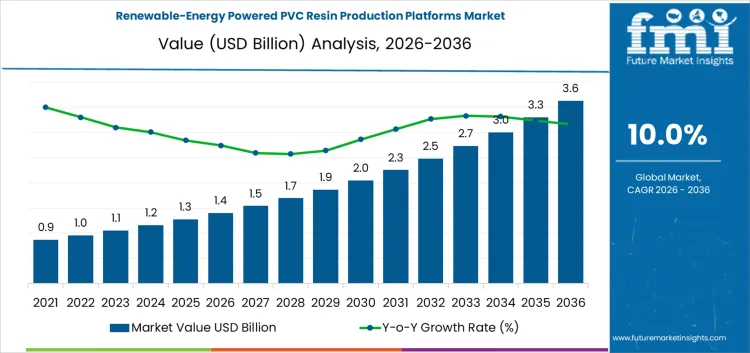
The renewable-energy powered PVC resin production platforms market is valued at USD 1.4 billion in 2026 and is projected to reach USD 3.6 billion by 2036, growing at a compound annual growth rate (CAGR) of 10%. For decision-makers, immediate attention should be given to the economic exposure related to the high initial capital investment required to transition to renewable-energy-powered production. While the long-term benefits are clear, particularly in terms of sustainability and regulatory alignment, these platforms carry significant upfront costs.
Prioritization must focus on balancing sustainability goals with financial feasibility, considering both the cost of technology integration and the potential for regulatory incentives. Timing is critical; early adoption may provide a competitive edge, but suppliers will need to ensure the scalability and efficiency of renewable energy integration to avoid cost overruns. Companies that act strategically to align with environmental trends while managing these financial pressures will be best positioned for sustainable growth in this evolving market.
Quick Stats of the Renewable-Energy Powered PVC Resin Production Platforms Market
- Renewable-Energy Powered PVC Resin Production Platforms Market Value (2026): USD 1.4 billion
- Renewable-Energy Powered PVC Resin Production Platforms Market Forecast Value (2036): USD 3.6 billion
- Renewable-Energy Powered PVC Resin Production Platforms Market Global Forecast CAGR (2026 to 2036): 10%
- Renewable-Energy Powered PVC Resin Production Platforms Market Leading Segment: Sustainability Credential (Mass Balance Certified, e.g., ISCC PLUS) 48%
- Key Growth Regions in Renewable-Energy Powered PVC Resin Production Platforms Market: USA
- Top Players in Renewable-Energy Powered PVC Resin Production Platforms Market: Vynova Group, INEOS Group Ltd., Solvay S.A., Shin-Etsu Chemical Co., Ltd., Formosa Plastics Corporation, LG Chem Ltd., Dow Chemical Company, BASF SE, Hanwha Solutions Chemical Division, Covestro AG
What is the Growth Forecast for the Renewable-Energy Powered PVC Resin Production Platforms Market through 2036?
The early vs late growth curve comparison for the renewable-energy powered PVC resin production platforms market reveals a distinct pattern of rapid growth in the early years, followed by more stable growth as the technology becomes widely adopted. From 2026 to 2031, the market will grow from USD 1.4 billion to USD 2.5 billion, representing a significant acceleration of USD 1.1 billion. This period will be characterized by strong demand driven by early adopters in the construction, automotive, and packaging sectors, who are increasingly focused on reducing the environmental impact of their production processes. During these early years, the market will see rapid innovation and the scaling up of renewable-energy powered production platforms, which will help drive faster growth as companies implement these sustainable practices to meet environmental regulations.
From 2031 to 2036, the market will continue to grow but at a slower pace, increasing from USD 2.5 billion to USD 3.6 billion, reflecting an absolute growth of USD 1.1 billion. This phase will see the market entering its mature phase, where the adoption of renewable-energy powered PVC production platforms becomes widespread across industries. Growth will still be positive, but at a more stable rate as the technology becomes standardized and integrated into mainstream production practices. The focus during this period will shift towards optimizing energy efficiency, reducing costs, and further improving the sustainability of PVC resin production processes. The slower growth rate in the latter years will be driven by the maturation of the technology, with demand remaining strong but less driven by early-stage adoption.
Renewable-Energy Powered PVC Resin Production Platforms Market Key Takeaways
| Metric | Value |
|---|---|
| Industry Sales Value (2026) | USD 1.4 billion |
| Industry Forecast Value (2036) | USD 3.6 billion |
| Industry Forecast CAGR (2026 to 2036) | 10% |
What Is Driving the Demand for Renewable-Energy Powered PVC Resin Production Platforms Market?
Historical demand for PVC resin has been shaped by its extensive use in construction, automotive, healthcare, and other industrial applications due to performance properties such as chemical resistance, durability, and versatility. PVC resins form a major segment of the global plastics market, with traditional production processes consuming large amounts of fossil fuel-derived energy and generating substantial carbon emissions. The broader polyvinyl chloride resin market was valued in the tens of billions of dollars and was projected to grow at roughly mid-single-digit compound annual growth rates through the late 2020s as demand persisted across key end-use sectors. Conventional PVC production has relied heavily on fossil fuel-based energy sources, with decarburization efforts emerging only recently as industry stakeholders and regulators began to prioritize emissions reduction and energy efficiency in resin manufacture. Early sustainability initiatives such as the VinylPlus program in Europe sought to improve resource and energy efficiency and explore the feasibility of biomass-derived feedstocks for PVC resin, reflecting initial interest in reducing the carbon intensity of polymer production.
Future demand for renewable-energy powered PVC resin production platforms is expected to grow as sustainability and climate objectives increasingly shape industrial investment and procurement decisions. Growth factors include rising regulatory pressure on embodied carbon in materials, corporate commitments to reduce supply chain emissions, and expansion of bio-based PVC markets that are projected to reach substantial values over the next decade as renewable feedstocks and processing capabilities improve. Renewable-energy powered production platforms that integrate low-carbon electricity and alternative energy sources can reduce the greenhouse gas footprint of PVC resin manufacture relative to conventional fossil-fuel energy use and align production with decarburization pathways. Market interest is also supported by developments in certification schemes and mass-balance tracking of bio-based and recycled inputs that improve transparency of renewable energy use and carbon content in PVC products. Challenges include scaling renewable energy integration in energy-intensive polymerization processes and aligning feedstock supply with industrial demand, but increasing adoption of renewable electricity and bio-feedstock sourcing is likely to reinforce investment in production platforms that lower carbon emissions in PVC resin supply chains.
What are the Leading Segments in the Global Renewable-Energy Powered PVC Resin Production Platforms Market?
The global renewable-energy powered PVC resin production platforms market is segmented by energy source and sustainability credential. Among energy sources, renewable electricity-driven resin plants lead the market, capturing 44% of the share, followed by hybrid renewable & grid decarbonized production, bio-feedstock integrated PVC resin production, and renewable biomass + electrolytic energy systems. Renewable electricity-driven resin plants are preferred for their ability to produce PVC resin sustainably using clean energy sources. On the sustainability credential side, mass-balance certified (e.g., ISCC-PLUS) dominates, holding 48% of the share, followed by renewable energy sourced production, recycled or circular feedstock PVC, and low-carbon conventional PVC. Mass-balance certification ensures that the PVC produced meets high sustainability standards, making it attractive to companies focused on reducing their carbon footprint.
What Drives the Growth of Renewable Electricity-Driven Resin Plants in the Renewable-Energy Powered PVC Resin Production Platforms Market?
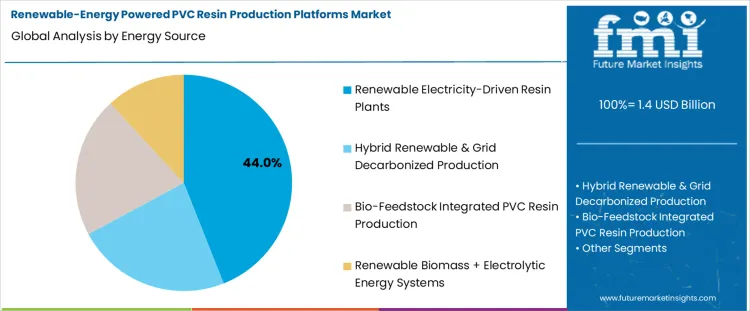
Renewable electricity-driven resin plants are the leading energy source in the renewable-energy powered PVC resin production platforms market, holding 44% of the share. This growth is driven by the increasing shift toward renewable energy in manufacturing processes, particularly in industries that are highly energy-intensive, such as PVC resin production. Using renewable electricity significantly reduces the carbon emissions associated with PVC production, aligning with global sustainability goals and helping companies meet regulatory requirements around carbon footprints. These plants are powered by energy sources such as wind, solar, or hydropower, which not only reduce the environmental impact of PVC production but also help lower operational costs over the long term. As the push for carbon-neutral and sustainable manufacturing practices intensifies, renewable electricity-driven resin plants are expected to continue to grow in popularity, especially in industries seeking to enhance their environmental credentials and meet consumer demand for more sustainable products.
What is Driving the Demand for Mass-Balance Certified PVC Resin Production in the Renewable-Energy Powered PVC Resin Production Platforms Market?
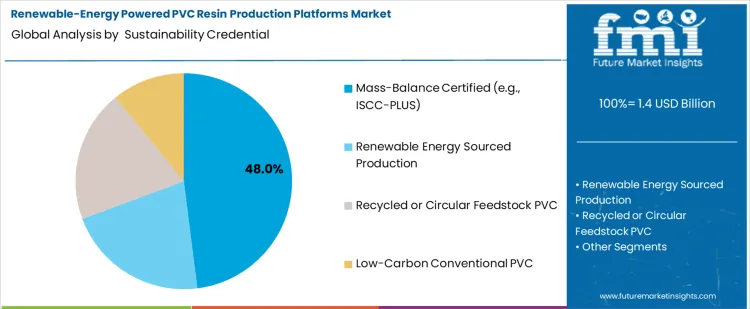
Mass-balance certified (e.g., ISCC-PLUS) PVC resin production is the leading sustainability credential in the renewable-energy powered PVC resin production platforms market, capturing 48% of the share. This demand is driven by the growing emphasis on sustainability and the need for certification to verify that PVC products are produced using sustainable and renewable resources. The mass-balance certification process ensures that a specific proportion of the raw materials used in production come from certified renewable sources, such as recycled or bio-based feedstocks, while maintaining production efficiency and product quality. As companies and industries increasingly commit to sustainability goals and regulatory bodies enforce stricter environmental guidelines, mass-balance certification provides a credible and transparent way for manufacturers to demonstrate their sustainability efforts. The demand for mass-balance certified PVC resin is expected to grow as industries seek to improve their environmental performance and meet consumer preferences for eco-friendly products.
What are the Key Dynamics in the Renewable-Energy Powered PVC Resin Production Platforms Market?
The renewable-energy powered PVC resin production platforms market is shaped by efforts to reduce carbon emissions in the manufacture of polyvinyl chloride. Producers are incorporating renewable electricity and other low-carbon energy sources into resin production to lower the carbon intensity of PVC feedstocks. End users evaluate these platforms based on energy mix, lifecycle emissions, and compliance with environmental standards. Regulations that encourage renewable energy use and lower greenhouse gas emissions influence investment and adoption. Supply chain readiness for renewable power, infrastructure for energy delivery, and cost of electricity affect how quickly producers can transition from conventional energy sources to renewable alternatives.
What are the Main Drivers Supporting Growth in This Market?
Growth in this market is supported by regulatory pressure to reduce industrial greenhouse gas emissions and to meet climate targets. Construction, automotive, and consumer goods sectors are increasingly demanding materials with documented lower carbon footprints. Renewable energy costs have declined, making clean power more competitive with fossil fuel sources. Corporate sustainability commitments and reporting frameworks that include scope 2 emissions create incentives for manufacturers to invest in renewable-energy powered production. Advances in energy storage, grid integration, and power purchase agreements help PVC resin producers secure stable renewable power, making low-carbon operations more viable.
What Restraints Are Limiting Market Expansion?
Market expansion is restrained by infrastructure and cost barriers associated with shifting to renewable energy. Upfront investment in renewable power infrastructure or long-term purchase agreements can be costly for producers. Renewable energy availability varies by region, which can limit consistent access to clean power for PVC resin facilities. Integration of intermittent energy sources with continuous industrial processes requires additional systems for energy balancing and storage. Differences in regional energy policy and incentives create uneven conditions for producers considering transition. Some buyers remain focused on short-term cost and performance criteria, which can slow adoption of low-carbon production platforms.
What Emerging Trends Are Shaping the Future of This Market?
Emerging trends include increased use of virtual power purchase agreements that allow manufacturers to support renewable projects without on-site installation. Investment in energy storage and demand management technologies is helping plants align production with renewable energy availability. There is rising interest in lifecycle assessment tools that quantify emissions savings from renewable-powered PVC resin production and support procurement decisions. Collaboration between renewable energy developers and chemical manufacturers is expanding to secure long-term renewable power supply. Policymakers and industry groups are also working on common reporting standards for renewable energy use in industrial production, which could enhance transparency and comparability of low-carbon PVC offerings.
What is the Country-Wise Analysis of the Renewable-Energy Powered PVC Resin Production Platforms Market?
The renewable-energy powered PVC resin production platforms market is growing as industries focus on reducing their environmental impact and transitioning to more sustainable manufacturing processes. By utilizing renewable energy sources such as solar, wind, and hydroelectric power, these platforms enable the production of PVC resins with a significantly lower carbon footprint compared to traditional methods. Developed markets like the USA, Germany, and Japan are leading the adoption of renewable-energy powered PVC resin production platforms due to their strong regulatory frameworks, government incentives for green technologies, and growing consumer demand for sustainable products. Emerging markets like China and South Korea are also experiencing growth, driven by a rising emphasis on sustainability, government support for green technologies, and increasing environmental awareness in the manufacturing sector. As the push for sustainability continues to grow globally, the market for renewable-energy powered PVC resin production platforms is expected to expand steadily.
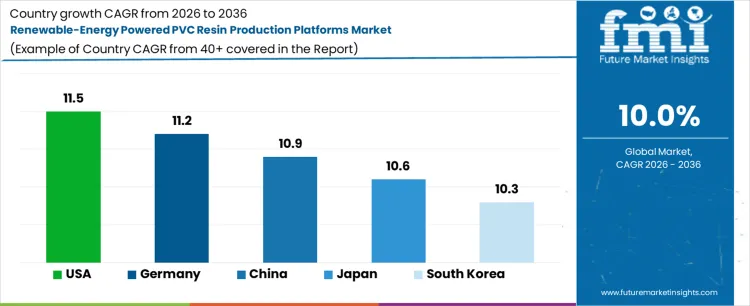
| Country | CAGR (2026-2036) |
|---|---|
| USA | 11.5% |
| Germany | 11.2% |
| China | 10.9% |
| Japan | 10.6% |
| South Korea | 10.3% |
What is the Growth Outlook for the Renewable-Energy Powered PVC Resin Production Platforms Market in the USA?
The renewable-energy powered PVC resin production platforms market in the USA is projected to grow steadily, with a projected CAGR of 11.5% from 2026 to 2036. The USA has been a global leader in promoting sustainability and green technologies, and the adoption of renewable-energy powered production methods is gaining momentum across industries. The shift to renewable energy in PVC resin production aligns with the USA government’s focus on reducing carbon emissions and encouraging sustainable manufacturing practices. As industries such as construction, automotive, and consumer goods demand more sustainable materials, the market for renewable-energy powered PVC resin production platforms is expected to grow steadily. Additionally, the increasing consumer preference for eco-friendly products and government incentives for green technologies will further drive the growth of this market.
What is the Market Outlook for the Renewable-Energy Powered PVC Resin Production Platforms Market in Germany?
Germany is expected to see steady growth in the renewable-energy powered PVC resin production platforms market, with a projected CAGR of 11.2% from 2026 to 2036. As a leader in sustainability and green technologies, Germany has been at the forefront of adopting renewable energy in manufacturing. The demand for renewable-energy powered PVC resin production platforms is increasing as the country works to reduce its carbon emissions and achieve its sustainability goals. The German government has introduced strong policies to promote renewable energy and green technologies, which is accelerating the transition to renewable-energy powered manufacturing processes in PVC production. With strong government support and growing consumer demand for eco-friendly products, the market for renewable-energy powered PVC resin production platforms in Germany is expected to continue growing steadily.
What is the Growth Forecast for the Renewable-Energy Powered PVC Resin Production Platforms Market in China?
China is projected to experience steady growth in the renewable-energy powered PVC resin production platforms market, with a projected CAGR of 10.9% from 2026 to 2036. As one of the world’s largest manufacturers of PVC, China is increasingly focused on adopting sustainable practices and reducing carbon emissions in its industrial sectors. The adoption of renewable-energy powered PVC resin production methods is gaining momentum as the Chinese government pushes for green development and sustainability in manufacturing. With a growing emphasis on renewable energy, China’s market for renewable-energy powered PVC resin production platforms is expected to expand as industries look for ways to comply with stricter environmental regulations. As China continues to invest in green technologies, the market for renewable-energy powered PVC resin production platforms is set to grow steadily.
What is the Market Outlook for the Renewable-Energy Powered PVC Resin Production Platforms Market in Japan?
Japan is expected to experience steady growth in the renewable-energy powered PVC resin production platforms market, with a projected CAGR of 10.6% from 2026 to 2036. Japan’s commitment to sustainability and green innovation is driving the adoption of renewable energy in manufacturing, particularly in PVC production. The Japanese government has introduced various initiatives to promote the use of renewable energy and reduce carbon emissions in industrial production. The demand for renewable-energy powered PVC resin production platforms is rising as industries, particularly in construction and consumer goods, seek to reduce their environmental impact. As Japan continues to focus on achieving its sustainability goals and improving energy efficiency, the market for renewable-energy powered PVC resin production platforms is expected to grow steadily.
What is the Growth Forecast for the Renewable-Energy Powered PVC Resin Production Platforms Market in South Korea?
South Korea is projected to experience steady growth in the renewable-energy powered PVC resin production platforms market, with a projected CAGR of 10.3% from 2026 to 2036. South Korea has been investing heavily in green technologies and renewable energy to reduce its carbon footprint and improve manufacturing sustainability. As part of its commitment to sustainable development, South Korea is increasingly adopting renewable-energy powered methods in various industrial sectors, including PVC resin production. The demand for eco-friendly solutions in the construction, automotive, and consumer goods sectors is driving the adoption of renewable-energy powered PVC resin production platforms. With growing government support for sustainable technologies and increasing consumer demand for greener products, the market for renewable-energy powered PVC resin production platforms in South Korea is expected to grow steadily in the coming years.
What is the Competitive Landscape for the Renewable-Energy Powered PVC Resin Production Platforms Market?
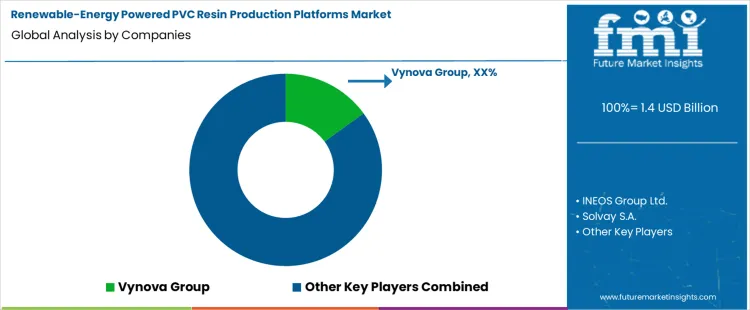
The renewable-energy powered PVC resin production platforms market is rapidly expanding as the industry seeks to reduce its carbon footprint and shift towards more sustainable production practices. Vynova Group leads the market with its innovative renewable-energy powered PVC resin production platforms, utilizing clean energy sources to produce high-quality, sustainable PVC resins. Their commitment to sustainability, innovation, and efficiency in reducing environmental impact has positioned them as a dominant player in this sector. INEOS Group Ltd., Solvay S.A., and Shin-Etsu Chemical Co., Ltd. are significant competitors, each working on integrating renewable energy into PVC resin production. INEOS Group Ltd. focuses on improving energy efficiency in PVC production, while Solvay S.A. and Shin-Etsu Chemical Co., Ltd. are advancing sustainable technologies to reduce energy consumption and carbon emissions in resin manufacturing.
Formosa Plastics Corporation, LG Chem Ltd., and Dow Chemical Company further contribute to the competitive landscape by offering their own sustainable solutions in PVC resin production. Formosa Plastics Corporation focuses on reducing environmental impact through innovative energy use, while LG Chem Ltd. and Dow Chemical Company are advancing renewable-energy-powered systems for PVC resin production that align with growing demand for low-carbon manufacturing processes. BASF SE, Hanwha Solutions Chemical Division, and Covestro AG also play key roles by integrating renewable energy in their PVC resin production platforms. BASF SE and Covestro AG are developing advanced sustainable PVC production processes that use renewable energy sources, while Hanwha Solutions Chemical Division focuses on providing sustainable materials through cleaner production methods. These companies compete by focusing on product innovation, sustainability, and the increasing demand for energy-efficient, low-carbon solutions in PVC resin manufacturing. As the push for renewable energy and eco-friendly materials grows, the market for renewable-energy powered PVC resin production platforms is expected to expand, fostering further innovation and competition in the sector.
Key Players of the Renewable-Energy Powered PVC Resin Production Platforms Market
- Vynova Group
- INEOS Group Ltd.
- Solvay S.A.
- Shin‑Etsu Chemical Co., Ltd.
- Formosa Plastics Corporation
- LG Chem Ltd.
- Dow Chemical Company
- BASF SE
- Hanwha Solutions Chemical Division
- Covestro AG
Scope of the Report
| Items | Values |
|---|---|
| Quantitative Units (2026) | USD Billion |
| Energy Source | Renewable Electricity-Driven Resin Plants, Hybrid Renewable & Grid Decarbonized Production, Bio-Feedstock Integrated PVC Resin Production, Renewable Biomass + Electrolytic Energy Systems |
| Sustainability Credential | Mass-Balance Certified (e.g., ISCC-PLUS), Renewable Energy Sourced Production, Recycled or Circular Feedstock PVC, Low-Carbon Conventional PVC |
| End Use Sector | Building & Construction, Automotive & Transportation, Consumer Goods & Packaging, Healthcare & Medical Supplies, Electrical & Electronics |
| Companies | Vynova Group, INEOS Group Ltd., Solvay S.A., Shin-Etsu Chemical Co., Ltd., Formosa Plastics Corporation, LG Chem Ltd., Dow Chemical Company, BASF SE, Hanwha Solutions Chemical Division, Covestro AG |
| Regions Covered | North America, Latin America, Western Europe, Eastern Europe, South Asia & Pacific, East Asia, Middle East & Africa |
| Countries Covered | United States, Canada, Mexico, Brazil, Argentina, Germany, France, United Kingdom, Italy, Spain, Netherlands, China, India, Japan, South Korea, ANZ, GCC Countries, South Africa |
| Additional Attributes | Dollar sales by energy source, sustainability credential, end use sector, and region. Includes analysis of market trends in renewable-energy powered PVC resin production platforms, performance of renewable and hybrid energy integration in PVC resin manufacturing, evaluation of certification schemes such as mass-balance (e.g., ISCC-PLUS), cost and feedstock sourcing considerations, regulatory and environmental frameworks driving low-carbon PVC supply, impact of circular feedstock and recycled PVC integration, competitive positioning and market share of key companies, innovations in renewable energy and biomass integration technologies, and assessment of influence on product performance, lifecycle emissions, and adoption across construction, automotive, consumer goods, healthcare, and electronics sectors. |
Renewable-Energy Powered PVC Resin Production Platforms Market Segmentation
Energy Source
- Renewable Electricity-Driven Resin Plants
- Hybrid Renewable & Grid Decarbonized Production
- Bio-Feedstock Integrated PVC Resin Production
- Renewable Biomass + Electrolytic Energy Systems
Sustainability Credential
- Mass-Balance Certified (e.g., ISCC-PLUS)
- Renewable Energy Sourced Production
- Recycled or Circular Feedstock PVC
- Low-Carbon Conventional PVC
End Use Sector
- Building & Construction
- Automotive & Transportation
- Consumer Goods & Packaging
- Healthcare & Medical Supplies
- Electrical & Electronics
Region
- Asia Pacific
- China
- Japan
- South Korea
- India
- Australia & New Zealand
- ASEAN
- Rest of Asia Pacific
- Europe
- Germany
- United Kingdom
- France
- Italy
- Spain
- Nordic
- BENELUX
- Rest of Europe
- North America
- United States
- Canada
- Mexico
- Latin America
- Brazil
- Chile
- Rest of Latin America
- Middle East & Africa
- Kingdom of Saudi Arabia
- Other GCC Countries
- Turkey
- South Africa
- Other African Union
- Rest of Middle East & Africa
Frequently Asked Questions
How big is the renewable-energy powered PVC resin production platforms market in 2026?
The global renewable-energy powered PVC resin production platforms market is estimated to be valued at USD 1.4 billion in 2026.
What will be the size of renewable-energy powered PVC resin production platforms market in 2036?
The market size for the renewable-energy powered PVC resin production platforms market is projected to reach USD 3.6 billion by 2036.
How much will be the renewable-energy powered PVC resin production platforms market growth between 2026 and 2036?
The renewable-energy powered PVC resin production platforms market is expected to grow at a 10.0% CAGR between 2026 and 2036.
What are the key energy source types in the renewable-energy powered PVC resin production platforms market?
The key energy source types in renewable-energy powered PVC resin production platforms market are renewable electricity‑driven resin plants, hybrid renewable & grid decarbonized production, bio‑feedstock integrated PVC resin production and renewable biomass + electrolytic energy systems.
Which sustainability credential segment will contribute significant share in the renewable-energy powered PVC resin production platforms market in 2026?
In terms of sustainability credential, mass‑balance certified (e.g., ISCC‑plus) segment to command 48.0% share in the renewable-energy powered PVC resin production platforms market in 2026.
Preview the report firsthand - request a free sample
Get SampleGet the brochure for pricing and purchase details.
Get PDFTable of Content
- Executive Summary
- Global Market Outlook
- Demand-side Trends
- Supply-side Trends
- Technology Roadmap Analysis
- Analysis and Recommendations
- Market Overview
- Market Coverage / Taxonomy
- Market Definition / Scope / Limitations
- Market Background
- Market Dynamics
- Drivers
- Restraints
- Opportunity
- Trends
- Scenario Forecast
- Demand in Optimistic Scenario
- Demand in Likely Scenario
- Demand in Conservative Scenario
- Opportunity Map Analysis
- Product Life Cycle Analysis
- Supply Chain Analysis
- Investment Feasibility Matrix
- Value Chain Analysis
- PESTLE and Porter’s Analysis
- Regulatory Landscape
- Regional Parent Market Outlook
- Production and Consumption Statistics
- Import and Export Statistics
- Market Dynamics
- Global Market Analysis 2021 to 2025 and Forecast, 2026 to 2036
- Historical Market Size Value (USD Million) Analysis, 2021 to 2025
- Current and Future Market Size Value (USD Million) Projections, 2026 to 2036
- Y-o-Y Growth Trend Analysis
- Absolute $ Opportunity Analysis
- Global Market Pricing Analysis 2021 to 2025 and Forecast 2026 to 2036
- Global Market Analysis 2021 to 2025 and Forecast 2026 to 2036, By Energy Source
- Introduction / Key Findings
- Historical Market Size Value (USD Million) Analysis By Energy Source , 2021 to 2025
- Current and Future Market Size Value (USD Million) Analysis and Forecast By Energy Source , 2026 to 2036
- Renewable Electricity‑Driven Resin Plants
- Hybrid Renewable & Grid Decarbonized Production
- Bio‑Feedstock Integrated PVC Resin Production
- Renewable Biomass + Electrolytic Energy Systems
- Renewable Electricity‑Driven Resin Plants
- Y-o-Y Growth Trend Analysis By Energy Source , 2021 to 2025
- Absolute $ Opportunity Analysis By Energy Source , 2026 to 2036
- Global Market Analysis 2021 to 2025 and Forecast 2026 to 2036, By Sustainability Credential
- Introduction / Key Findings
- Historical Market Size Value (USD Million) Analysis By Sustainability Credential, 2021 to 2025
- Current and Future Market Size Value (USD Million) Analysis and Forecast By Sustainability Credential, 2026 to 2036
- Mass‑Balance Certified (e.g., ISCC‑PLUS)
- Renewable Energy Sourced Production
- Recycled or Circular Feedstock PVC
- Low‑Carbon Conventional PVC
- Mass‑Balance Certified (e.g., ISCC‑PLUS)
- Y-o-Y Growth Trend Analysis By Sustainability Credential, 2021 to 2025
- Absolute $ Opportunity Analysis By Sustainability Credential, 2026 to 2036
- Global Market Analysis 2021 to 2025 and Forecast 2026 to 2036, By End Use Sector
- Introduction / Key Findings
- Historical Market Size Value (USD Million) Analysis By End Use Sector, 2021 to 2025
- Current and Future Market Size Value (USD Million) Analysis and Forecast By End Use Sector, 2026 to 2036
- Building & Construction
- Automotive & Transportation
- Consumer Goods & Packaging
- Healthcare & Medical Supplies
- Electrical & Electronics
- Building & Construction
- Y-o-Y Growth Trend Analysis By End Use Sector, 2021 to 2025
- Absolute $ Opportunity Analysis By End Use Sector, 2026 to 2036
- Global Market Analysis 2021 to 2025 and Forecast 2026 to 2036, By Region
- Introduction
- Historical Market Size Value (USD Million) Analysis By Region, 2021 to 2025
- Current Market Size Value (USD Million) Analysis and Forecast By Region, 2026 to 2036
- North America
- Latin America
- Western Europe
- Eastern Europe
- East Asia
- South Asia and Pacific
- Middle East & Africa
- Market Attractiveness Analysis By Region
- North America Market Analysis 2021 to 2025 and Forecast 2026 to 2036, By Country
- Historical Market Size Value (USD Million) Trend Analysis By Market Taxonomy, 2021 to 2025
- Market Size Value (USD Million) Forecast By Market Taxonomy, 2026 to 2036
- By Country
- USA
- Canada
- Mexico
- By Energy Source
- By Sustainability Credential
- By End Use Sector
- By Country
- Market Attractiveness Analysis
- By Country
- By Energy Source
- By Sustainability Credential
- By End Use Sector
- Key Takeaways
- Latin America Market Analysis 2021 to 2025 and Forecast 2026 to 2036, By Country
- Historical Market Size Value (USD Million) Trend Analysis By Market Taxonomy, 2021 to 2025
- Market Size Value (USD Million) Forecast By Market Taxonomy, 2026 to 2036
- By Country
- Brazil
- Chile
- Rest of Latin America
- By Energy Source
- By Sustainability Credential
- By End Use Sector
- By Country
- Market Attractiveness Analysis
- By Country
- By Energy Source
- By Sustainability Credential
- By End Use Sector
- Key Takeaways
- Western Europe Market Analysis 2021 to 2025 and Forecast 2026 to 2036, By Country
- Historical Market Size Value (USD Million) Trend Analysis By Market Taxonomy, 2021 to 2025
- Market Size Value (USD Million) Forecast By Market Taxonomy, 2026 to 2036
- By Country
- Germany
- UK
- Italy
- Spain
- France
- Nordic
- BENELUX
- Rest of Western Europe
- By Energy Source
- By Sustainability Credential
- By End Use Sector
- By Country
- Market Attractiveness Analysis
- By Country
- By Energy Source
- By Sustainability Credential
- By End Use Sector
- Key Takeaways
- Eastern Europe Market Analysis 2021 to 2025 and Forecast 2026 to 2036, By Country
- Historical Market Size Value (USD Million) Trend Analysis By Market Taxonomy, 2021 to 2025
- Market Size Value (USD Million) Forecast By Market Taxonomy, 2026 to 2036
- By Country
- Russia
- Poland
- Hungary
- Balkan & Baltic
- Rest of Eastern Europe
- By Energy Source
- By Sustainability Credential
- By End Use Sector
- By Country
- Market Attractiveness Analysis
- By Country
- By Energy Source
- By Sustainability Credential
- By End Use Sector
- Key Takeaways
- East Asia Market Analysis 2021 to 2025 and Forecast 2026 to 2036, By Country
- Historical Market Size Value (USD Million) Trend Analysis By Market Taxonomy, 2021 to 2025
- Market Size Value (USD Million) Forecast By Market Taxonomy, 2026 to 2036
- By Country
- China
- Japan
- South Korea
- By Energy Source
- By Sustainability Credential
- By End Use Sector
- By Country
- Market Attractiveness Analysis
- By Country
- By Energy Source
- By Sustainability Credential
- By End Use Sector
- Key Takeaways
- South Asia and Pacific Market Analysis 2021 to 2025 and Forecast 2026 to 2036, By Country
- Historical Market Size Value (USD Million) Trend Analysis By Market Taxonomy, 2021 to 2025
- Market Size Value (USD Million) Forecast By Market Taxonomy, 2026 to 2036
- By Country
- India
- ASEAN
- Australia & New Zealand
- Rest of South Asia and Pacific
- By Energy Source
- By Sustainability Credential
- By End Use Sector
- By Country
- Market Attractiveness Analysis
- By Country
- By Energy Source
- By Sustainability Credential
- By End Use Sector
- Key Takeaways
- Middle East & Africa Market Analysis 2021 to 2025 and Forecast 2026 to 2036, By Country
- Historical Market Size Value (USD Million) Trend Analysis By Market Taxonomy, 2021 to 2025
- Market Size Value (USD Million) Forecast By Market Taxonomy, 2026 to 2036
- By Country
- Kingdom of Saudi Arabia
- Other GCC Countries
- Turkiye
- South Africa
- Other African Union
- Rest of Middle East & Africa
- By Energy Source
- By Sustainability Credential
- By End Use Sector
- By Country
- Market Attractiveness Analysis
- By Country
- By Energy Source
- By Sustainability Credential
- By End Use Sector
- Key Takeaways
- Key Countries Market Analysis
- USA
- Pricing Analysis
- Market Share Analysis, 2025
- By Energy Source
- By Sustainability Credential
- By End Use Sector
- Canada
- Pricing Analysis
- Market Share Analysis, 2025
- By Energy Source
- By Sustainability Credential
- By End Use Sector
- Mexico
- Pricing Analysis
- Market Share Analysis, 2025
- By Energy Source
- By Sustainability Credential
- By End Use Sector
- Brazil
- Pricing Analysis
- Market Share Analysis, 2025
- By Energy Source
- By Sustainability Credential
- By End Use Sector
- Chile
- Pricing Analysis
- Market Share Analysis, 2025
- By Energy Source
- By Sustainability Credential
- By End Use Sector
- Germany
- Pricing Analysis
- Market Share Analysis, 2025
- By Energy Source
- By Sustainability Credential
- By End Use Sector
- UK
- Pricing Analysis
- Market Share Analysis, 2025
- By Energy Source
- By Sustainability Credential
- By End Use Sector
- Italy
- Pricing Analysis
- Market Share Analysis, 2025
- By Energy Source
- By Sustainability Credential
- By End Use Sector
- Spain
- Pricing Analysis
- Market Share Analysis, 2025
- By Energy Source
- By Sustainability Credential
- By End Use Sector
- France
- Pricing Analysis
- Market Share Analysis, 2025
- By Energy Source
- By Sustainability Credential
- By End Use Sector
- India
- Pricing Analysis
- Market Share Analysis, 2025
- By Energy Source
- By Sustainability Credential
- By End Use Sector
- ASEAN
- Pricing Analysis
- Market Share Analysis, 2025
- By Energy Source
- By Sustainability Credential
- By End Use Sector
- Australia & New Zealand
- Pricing Analysis
- Market Share Analysis, 2025
- By Energy Source
- By Sustainability Credential
- By End Use Sector
- China
- Pricing Analysis
- Market Share Analysis, 2025
- By Energy Source
- By Sustainability Credential
- By End Use Sector
- Japan
- Pricing Analysis
- Market Share Analysis, 2025
- By Energy Source
- By Sustainability Credential
- By End Use Sector
- South Korea
- Pricing Analysis
- Market Share Analysis, 2025
- By Energy Source
- By Sustainability Credential
- By End Use Sector
- Russia
- Pricing Analysis
- Market Share Analysis, 2025
- By Energy Source
- By Sustainability Credential
- By End Use Sector
- Poland
- Pricing Analysis
- Market Share Analysis, 2025
- By Energy Source
- By Sustainability Credential
- By End Use Sector
- Hungary
- Pricing Analysis
- Market Share Analysis, 2025
- By Energy Source
- By Sustainability Credential
- By End Use Sector
- Kingdom of Saudi Arabia
- Pricing Analysis
- Market Share Analysis, 2025
- By Energy Source
- By Sustainability Credential
- By End Use Sector
- Turkiye
- Pricing Analysis
- Market Share Analysis, 2025
- By Energy Source
- By Sustainability Credential
- By End Use Sector
- South Africa
- Pricing Analysis
- Market Share Analysis, 2025
- By Energy Source
- By Sustainability Credential
- By End Use Sector
- USA
- Market Structure Analysis
- Competition Dashboard
- Competition Benchmarking
- Market Share Analysis of Top Players
- By Regional
- By Energy Source
- By Sustainability Credential
- By End Use Sector
- Competition Analysis
- Competition Deep Dive
- Vynova Group
- Overview
- Product Portfolio
- Profitability by Market Segments (Product/Age /Sales Channel/Region)
- Sales Footprint
- Strategy Overview
- Marketing Strategy
- Product Strategy
- Channel Strategy
- INEOS Group Ltd.
- Solvay S.A.
- Shin‑Etsu Chemical Co., Ltd.
- Formosa Plastics Corporation
- LG Chem Ltd.
- Dow Chemical Company
- BASF SE
- Hanwha Solutions Chemical Division
- Covestro AG
- Vynova Group
- Competition Deep Dive
- Assumptions & Acronyms Used
- Research Methodology


