

- Industry Size (2025)
- USD 57.1 Bn
- Forecast (2035)
- USD 113.6 Bn
- CAGR (2025 to 2035)
- 7.1%
Demand for Women's Health Supplement in USA Forecast and Outlook 2025 to 2035
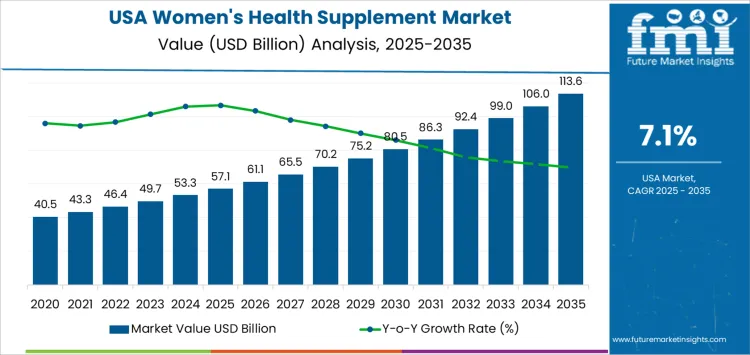
The demand for women’s health supplements in the USA is expected to grow from USD 57.1 billion in 2025 to USD 113.6 billion by 2035, reflecting a compound annual growth rate (CAGR) of 7.1%. Women's health supplements, which include vitamins, minerals, probiotics, and other products designed to support various aspects of women's health (such as hormonal balance, bone health, fertility, and menopause), are gaining popularity as awareness of women's specialized nutritional needs grows. Trends toward preventive health, personalized nutrition, and the aging female population fuel the growing demand.
The market will experience steady growth, starting at USD 57.1 billion in 2025 and increasing to USD 61.1 billion in 2026, USD 65.5 billion in 2027, and USD 70.2 billion in 2028. By 2029, demand for women’s health supplements will rise to USD 75.2 billion, continuing to increase throughout the 2030s. By 2035, the demand is expected to reach USD 113.6 billion, driven by an increasing focus on women's health, the popularity of preventive care, and a growing understanding of the role that supplements play in supporting overall well-being.
Quick Stats of the Demand for Women's Health Supplement in USA
- Demand for Women's Health Supplement in USA Value (2025): USD 57.1 billion
- Demand for Women's Health Supplement in USA Forecast Value (2035): USD 113.6 billion
- Demand for Women's Health Supplement in USA Forecast CAGR (2025 to 2035): 7.1%
- Demand for Women's Health Supplement in USA Key Dosage Form: 38% Tablets
- Demand for Women's Health Supplement in USA Key Growth Regions: West USA, South USA, Northeast USA, Midwest USA
- Demand for Women's Health Supplement in USA Key Players: Amway Corporation, Herbalife Nutrition Ltd., GNC Holdings, Inc., Nature’s Bounty (Nestlé)
What is the Growth Forecast for the Women's Health Supplement Industry in USA through 2035?
The women’s health supplement market in the USA is expected to experience steady growth over the next decade, with an acceleration around 2029 to 2030. Starting at USD 57.1 billion in 2025, the market will grow incrementally each year, reaching USD 75.2 billion by 2029. This period will be characterized by the expansion of product offerings targeted at specific health needs, such as fertility, menopause, and bone health. The continued focus on preventative care and personalized nutrition will drive the market forward, as women increasingly seek specialized supplements tailored to their individual health concerns.
After 2029, the growth rate is expected to accelerate as the market matures. By 2035, the demand for women’s health supplements is projected to reach USD 113.6 billion. The inflection point will be marked by the wider adoption of women’s health supplements across various age groups, driven by innovations in product formulations, increasing availability of customized options, and greater awareness of the importance of supplements in managing female-specific health needs. This trend, combined with the aging population and ongoing focus on holistic health, will ensure continued market growth through the 2030s.
USA Women's Health Supplement Industry Key Takeaways
| Metric | Value |
|---|---|
| Industry Sales Value (2025) | USD 57.1 billion |
| Industry Forecast Value (2035) | USD 113.6 billion |
| Industry Forecast CAGR (2025 to 2035) | 7.1% |
Why is the Demand for Women’s Health Supplements in USA Growing?
Demand for women’s health supplements in the USA is rising as many women increasingly view dietary supplements as part of preventive health and wellness routines. Changing lifestyles, busy work schedules, and shifting dietary habits sometimes lead to gaps in nutrition. Women across different age groups - from young adults to middle aged and older women - seek vitamins, minerals, herbal supplements, and specialty formulations to support bone health, hormonal balance, immune function, prenatal and postnatal needs, and general well being. Growing awareness of nutrient deficiencies, menopause related health concerns, and long term health maintenance boosts uptake of supplements tailored for women’s specific physiological needs.
Simultaneously broader market and social trends support this growth. The overall supplement market in the USA is expanding as more consumers embrace wellness, preventive health, and self care. Women represent a substantial share of supplement consumers, especially in segments focused on multivitamins and products addressing women’s health needs. Demand for “clean label,” natural or plant based supplements, easier to consume formats (like gummies or soft gels), and products targeting life stage needs encourage manufacturers to offer a wider variety of women oriented supplements. As consumer interest in long term health, wellness, and lifestyle driven nutrition continues, demand for women’s health supplements in the USA is likely to grow steadily in coming years.
What Is the Current State of the Demand for Women's Health Supplements in the USA in Terms of Type and Dosage Form?
The demand for women's health supplements in the USA is primarily driven by type and dosage form. The leading type is vitamins and minerals, which account for 35% of the market share, while tablets dominate the dosage form segment, capturing 38% of the demand. Women's health supplements are widely used to address specific health needs, such as bone health, hormonal balance, immunity, and skin care. As women increasingly focus on preventive health, the demand for supplements that support overall wellness continues to rise, particularly in the form of vitamins and minerals, which offer targeted nutritional support.
How Are Vitamins and Minerals Leading the Type Demand for Women's Health Supplements in the USA?
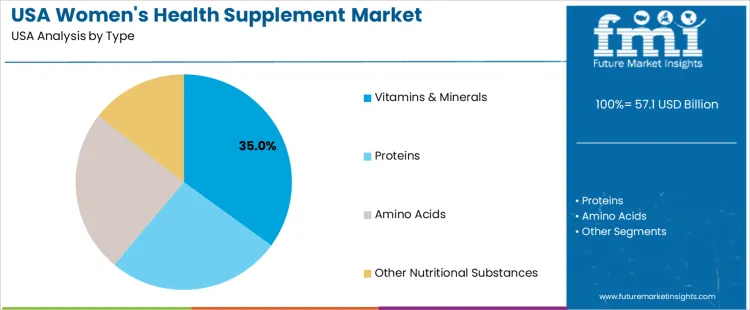
Vitamins and minerals lead the demand for women's health supplements in the USA, accounting for 35% of the market share. These supplements are commonly used by women to support a variety of health concerns, such as bone density, immune function, energy levels, and skin health. Key vitamins like Vitamin D, Vitamin C, and B-vitamins, along with essential minerals like calcium and magnesium, are crucial for overall well-being, particularly as women age or face lifestyle factors that may lead to deficiencies.
The demand for vitamins and minerals is driven by their well-established role in preventive health and the wide availability of supplements that cater to specific needs. For example, calcium and Vitamin D are widely recommended for bone health, while B-vitamins are known to support energy and metabolism. As awareness about the importance of maintaining balanced nutrient levels grows, women are increasingly turning to these supplements to fill nutritional gaps in their diets. This ongoing need for foundational health support ensures that vitamins and minerals will continue to dominate the women's health supplement market.
How Are Tablets Leading the Dosage Form Demand for Women's Health Supplements in the USA?
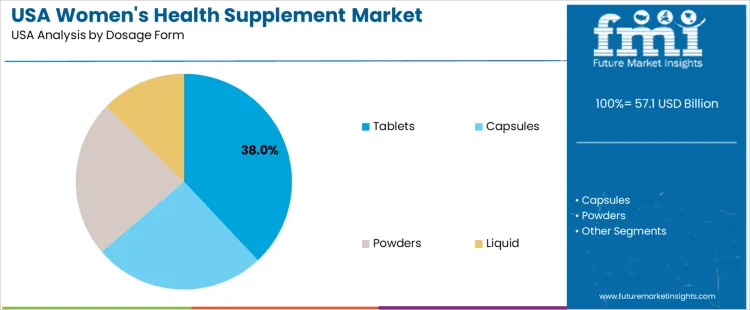
Tablets lead the dosage form demand for women's health supplements in the USA, holding 38% of the market share. Tablets are a preferred choice for many consumers due to their convenience, ease of use, and precise dosing. Women's health supplements in tablet form are available in a wide range of formulations, including multivitamins, calcium supplements, and combination formulas targeting specific health issues such as hormonal balance, skin health, and energy levels. The ability to combine multiple nutrients in a single tablet also makes them a convenient option for women seeking a comprehensive solution.
The demand for tablet-based supplements is driven by their cost-effectiveness, long shelf life, and widespread availability. Tablets are often seen as a reliable, no-fuss option for daily supplementation. Additionally, the growing trend of preventive healthcare and wellness, combined with the ease of incorporating tablet supplements into daily routines, ensures that tablets will remain a leading choice for women's health supplements in the USA. The variety and specificity of available tablet formulations will continue to cater to the diverse health needs of women, further reinforcing the dominance of tablets in the market.
What is the Demand Outlook for Women’s Health Supplements in the USA?
Demand for women’s health supplements in the USA is growing steadily. These supplements, including vitamins, minerals, prenatal/postnatal formulas, bone-health supplements, and hormone-support blends, are increasingly adopted across different age groups. As women become more proactive about their health and well-being, the market for targeted supplements continues to expand. This segment is a significant and growing portion of the broader USA dietary supplements market.
What are the Drivers of Demand for Women’s Health Supplements in the USA?
Several factors are driving the demand for women’s health supplements. Many women use supplements to address nutritional gaps due to their life stage, lifestyle, or diet. Supplements tailored for bone health, hormonal balance, and overall wellness are in high demand. Increased awareness about preventive healthcare and the importance of nutrition is encouraging women to take supplements regularly, even in the absence of specific symptoms. The availability of specialized formulations and easy access through retail and online channels make these supplements convenient for women to incorporate into their routines.
What are the Restraints on Demand for Women’s Health Supplements in the USA?
Despite growth, certain factors limit demand for women’s health supplements. Some consumers are skeptical about the efficacy of supplements, particularly those related to general wellness or beauty claims. For some women, if they feel their diet is adequate, they may see little need for supplements. Cost can also be a barrier, as consistent use of supplements can become expensive over time. Additionally, issues with product quality, labeling, and regulatory scrutiny can undermine consumer trust, limiting demand for certain products.
What are the Key Trends Influencing Demand for Women’s Health Supplements in the USA?
A key trend influencing demand is the rise of personalized supplementation. Supplements designed for specific life stages, such as prenatal care or menopause, and tailored to individual health needs are gaining popularity. Another trend is the growing demand for clean-label and ingredient-transparent supplements, where women seek products with natural and easily identifiable ingredients. The expansion of e-commerce and online health channels also makes it easier for consumers to access these products. Additionally, broader lifestyle trends, such as increasing female participation in the workforce and a focus on preventive health, are driving women to seek convenient health solutions, including supplements.
What is the Regional Demand Outlook for Women’s Health Supplements in the USA?
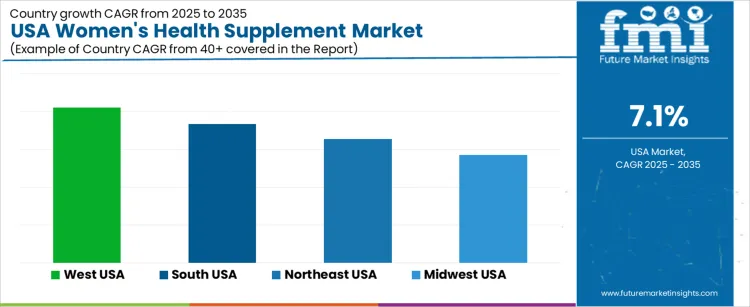
The demand for women’s health supplements in the USA is expected to grow across all regions in coming years. The West leads with a projected CAGR of 8.2%. The South follows at 7.3%. The Northeast is forecast at 6.6%, and the Midwest at 5.7%. These variations reflect differences in health awareness, demographic trends, access to healthcare and wellness channels, and consumer interest in gender specific nutritional products. Rising focus on preventive health, hormonal wellness, bone health, and overall female wellness contributes to expanding demand for women’s health supplements nationwide.
| Region | CAGR (%) |
|---|---|
| West USA | 8.2 |
| South USA | 7.3 |
| Northeast USA | 6.6 |
| Midwest USA | 5.7 |
What drives demand for women’s health supplements in the West USA?
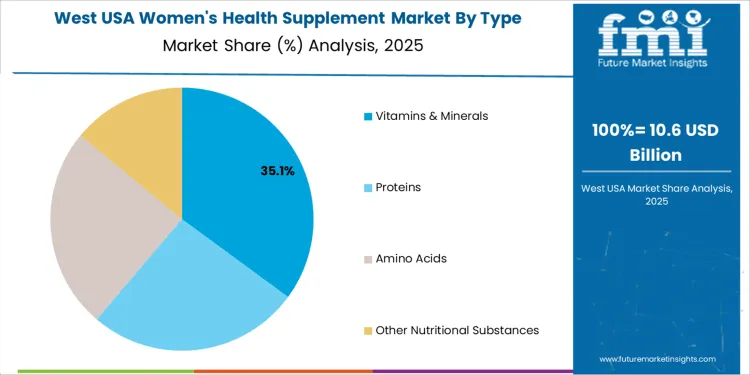
In the West USA, the projected 8.2% annual growth reflects a strong base of health conscious consumers, high wellness awareness, and widespread access to supplement retailers and natural health stores. Many individuals look for dietary support tailored to women’s needs such as bone density, hormonal balance, prenatal or postnatal care, and general female wellness. Lifestyle trends favouring preventive health, fitness, and holistic care encourage regular use of women’s health supplements. The prevalence of urban centres and higher disposable incomes support purchase of premium or specialty supplements. As awareness of nutritional gaps and gender specific health needs increases, more women in the region adopt supplement regimens, driving robust growth in the market.
Why is demand for women’s health supplements growing in the South USA?
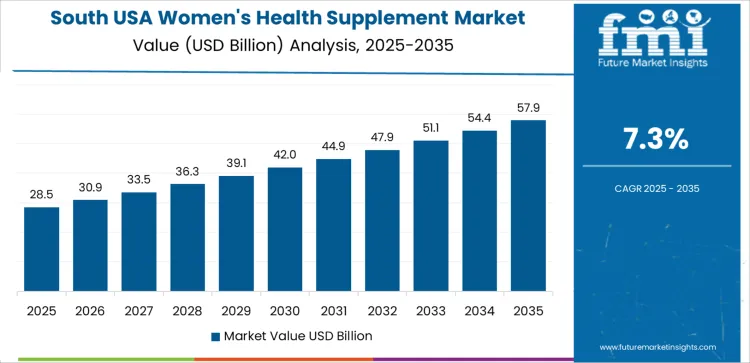
In the South USA, the 7.3% projected CAGR reflects growing interest in female health support amid rising public awareness of preventive care and lifestyle related health challenges. Women increasingly seek nutritional products to support reproductive health, bone strength, cardiovascular wellness, and general vitality. As healthcare access expands and wellness oriented retail (pharmacies, supermarkets, online stores) becomes more widespread, availability of women-targeted supplements improves. Demographic trends, including growing middle aged and older female populations, also contribute to demand as age-related nutritional needs become more pronounced. These factors combine to sustain steady growth in women’s health supplement adoption across the South.
What supports growth in the Northeast USA for women’s health supplements?
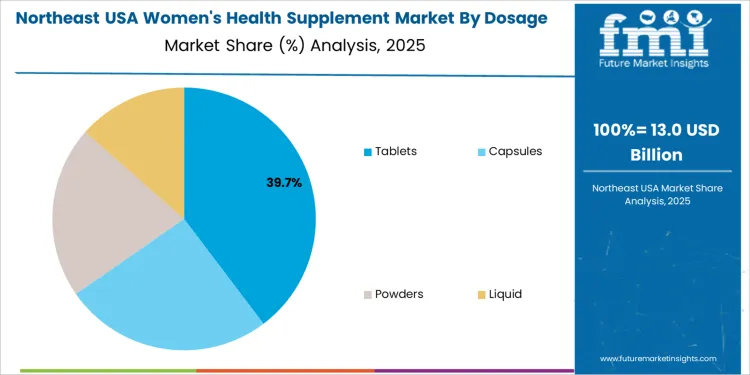
In the Northeast USA, the 6.6% projected CAGR reflects moderate but consistent growth driven by urban populations, higher health literacy, and access to healthcare and wellness services. Women in the region often face busy lifestyles and look for convenient ways to manage nutritional needs. Supplements targeting bone health, hormonal balance, prenatal care, immunity support, or general wellness appeal to health conscious consumers. The region’s dense population, established retail network, and availability of a variety of supplement brands encourage trial and adoption. As awareness about micronutrient importance and female-specific health needs spreads, demand for women’s health supplements continues to increase at a steady pace.
How is demand evolving in the Midwest USA for women’s health supplements?
In the Midwest USA, the projected 5.7% CAGR indicates steady but somewhat slower growth compared with coastal or more urbanized regions. Nevertheless, rising awareness of women’s health issues, preventive care, and nutrition support contributes to gradual adoption. Rural and suburban communities increasingly access supplements through pharmacies, supermarkets, and online platforms. Nutritional concerns related to aging, reproductive health, bone and joint strength, and general wellness prompt demand for women focused supplement products. As distribution channels expand and health education spreads, more women in the Midwest are likely to incorporate supplements into their routines, supporting consistent market growth.
What is the Competitive Landscape for the Women’s Health Supplement Market in the USA?
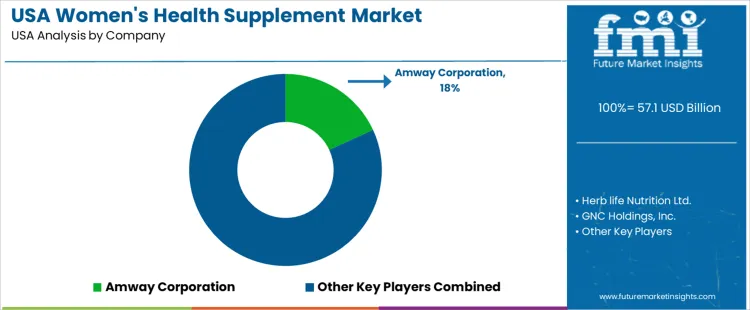
The demand for women’s health supplements in the USA is rising steadily. The broader USA dietary supplements market was valued near USD 63.9 billion in 2024 and is projected to expand further through 2033. A significant portion of this growth stems from supplements targeted at women’s health needs - including vitamins, minerals, bone health, hormonal balance, prenatal and postnatal care, and general wellness. Increasing awareness among women about preventive health, nutritional deficiencies, and life stage specific requirements - from reproductive age through menopause - underpins growth for women oriented supplement products.
Competition in this category involves several firms. According to your data, Amway Corporation holds about 18.2% of the market. Other major players include Herbalife Nutrition Ltd., GNC Holdings, Inc., Nature’s Bounty (owned by Nestlé) and a group of smaller or niche firms combined. These companies compete on formulation variety, claims (bone health, hormonal balance, prenatal care, skin/hair support), product format (tablets, capsules, gummies) and distribution reach (retail chains, online, direct sales). Some brands emphasise clean label or natural ingredients, others focus on comprehensive micronutrient blends tailored for women’s life stages. As consumer preferences evolve toward preventive care and personalised nutrition, these firms must balance quality, trust, affordability, and product efficacy to secure and grow their share.
Key Players of the Women's Health Supplement Industry in USA
- Amway Corporation
- Herb life Nutrition Ltd.
- GNC Holdings, Inc.
- Nature’s Bounty (Nestlé)
- Other Companies (combined)
Scope of the Report
| Items | Details |
|---|---|
| Quantitative Units | USD Billion |
| Regions Covered | USA |
| Type | Vitamins & Minerals, Proteins, Amino Acids, Other Nutritional Substances |
| Dosage Form | Tablets, Capsules, Powders, Liquid |
| Distribution Channel | Hypermarkets/Supermarkets, Specialty Stores, Pharmacy & Drug Stores, Online Retail |
| Key Companies Profiled | Amway Corporation, Herbalife Nutrition Ltd., GNC Holdings, Inc., Nature’s Bounty (Nestlé), Other Companies (combined) |
| Additional Attributes | Dollar sales by type, dosage form, and distribution channel indicate strong demand for vitamins & minerals, particularly in tablet and capsule forms. Hypermarkets and supermarkets dominate distribution; though online retail is growing rapidly. Companies like Amway, Herbalife, and GNC are leading the market with a wide range of women's health supplements. The market is expected to continue expanding, driven by increasing awareness of women's health needs and the growing adoption of nutritional supplements for various health conditions. |
Key Segments in the Demand for Women's Health Supplement in USA
Type:
- Vitamins & Minerals
- Proteins
- Amino Acids
- Other Nutritional Substances
Dosage Form:
- Tablets
- Capsules
- Powders
- Liquid
Distribution Channel:
- Hypermarkets/Supermarkets
- Specialty Stores
- Pharmacy & Drug Stores
- Online Retail
Region:
- Northeast USA
- West USA
- Midwest USA
- South USA
Frequently Asked Questions
How big is the demand for women's health supplement in USA in 2025?
The demand for women's health supplement in USA is estimated to be valued at USD 57.1 billion in 2025.
What will be the size of women's health supplement in USA in 2035?
The market size for the women's health supplement in USA is projected to reach USD 113.6 billion by 2035.
How much will be the demand for women's health supplement in USA growth between 2025 and 2035?
The demand for women's health supplement in USA is expected to grow at a 7.1% CAGR between 2025 and 2035.
What are the key product types in the women's health supplement in USA?
The key product types in women's health supplement in USA are vitamins & minerals, proteins, amino acids and other nutritional substances.
Which dosage form segment is expected to contribute significant share in the women's health supplement in USA in 2025?
In terms of dosage form, tablets segment is expected to command 38.0% share in the women's health supplement in USA in 2025.
Preview the report firsthand - request a free sample
Get SampleGet the brochure for pricing and purchase details.
Get PDFTable of Content
- Executive Summary
- USA Market Outlook
- Demand-side Trends
- Supply-side Trends
- Technology Roadmap Analysis
- Analysis and Recommendations
- Market Overview
- Market Coverage / Taxonomy
- Market Definition / Scope / Limitations
- Market Background
- Market Dynamics
- Drivers
- Restraints
- Opportunity
- Trends
- Scenario Forecast
- Demand in Optimistic Scenario
- Demand in Likely Scenario
- Demand in Conservative Scenario
- Opportunity Map Analysis
- Product Life Cycle Analysis
- Supply Chain Analysis
- Investment Feasibility Matrix
- Value Chain Analysis
- PESTLE and Porter’s Analysis
- Regulatory Landscape
- Regional Parent Market Outlook
- Production and Consumption Statistics
- Import and Export Statistics
- Market Dynamics
- USA Market Analysis 2020 to 2024 and Forecast, 2025 to 2035
- Historical Market Size Value (USD Million) Analysis, 2020 to 2024
- Current and Future Market Size Value (USD Million) Projections, 2025 to 2035
- Y-o-Y Growth Trend Analysis
- Absolute $ Opportunity Analysis
- USA Market Pricing Analysis 2020 to 2024 and Forecast 2025 to 2035
- USA Market Analysis 2020 to 2024 and Forecast 2025 to 2035, By Type
- Introduction / Key Findings
- Historical Market Size Value (USD Million) Analysis By Type , 2020 to 2024
- Current and Future Market Size Value (USD Million) Analysis and Forecast By Type , 2025 to 2035
- Vitamins & Minerals
- Proteins
- Amino Acids
- Other Nutritional Substances
- Y-o-Y Growth Trend Analysis By Type , 2020 to 2024
- Absolute $ Opportunity Analysis By Type , 2025 to 2035
- USA Market Analysis 2020 to 2024 and Forecast 2025 to 2035, By Dosage Form
- Introduction / Key Findings
- Historical Market Size Value (USD Million) Analysis By Dosage Form, 2020 to 2024
- Current and Future Market Size Value (USD Million) Analysis and Forecast By Dosage Form, 2025 to 2035
- Tablets
- Capsules
- Powders
- Liquid
- Y-o-Y Growth Trend Analysis By Dosage Form, 2020 to 2024
- Absolute $ Opportunity Analysis By Dosage Form, 2025 to 2035
- USA Market Analysis 2020 to 2024 and Forecast 2025 to 2035, By Distribution Channel
- Introduction / Key Findings
- Historical Market Size Value (USD Million) Analysis By Distribution Channel, 2020 to 2024
- Current and Future Market Size Value (USD Million) Analysis and Forecast By Distribution Channel, 2025 to 2035
- Hypermarkets/Supermarkets
- Specialty Stores
- Pharmacy & Drug Stores
- Online Retail
- Y-o-Y Growth Trend Analysis By Distribution Channel, 2020 to 2024
- Absolute $ Opportunity Analysis By Distribution Channel, 2025 to 2035
- Market Structure Analysis
- Competition Dashboard
- Competition Benchmarking
- Market Share Analysis of Top Players
- By Regional
- By Type
- By Dosage Form
- By Distribution Channel
- Competition Analysis
- Competition Deep Dive
- Amway Corporation
- Overview
- Product Portfolio
- Profitability by Market Segments (Product/Age /Sales Channel/Region)
- Sales Footprint
- Strategy Overview
- Marketing Strategy
- Product Strategy
- Channel Strategy
- Herb life Nutrition Ltd.
- GNC Holdings, Inc.
- Nature’s Bounty (Nestlé)
- Other Companies (combined)
- Amway Corporation
- Competition Deep Dive
- Assumptions & Acronyms Used
- Research Methodology


