

- Industry Size (2026)
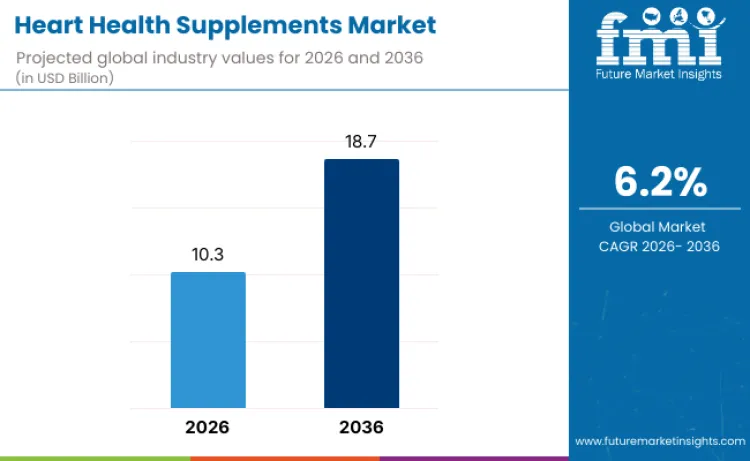
- USD 10.3 Bn
- Forecast (2036)
- USD 18.7 Bn
- CAGR (2026 to 2036)
- 6.2%
Heart Health Supplements Market Size, Market Forecast and Outlook By FMI
Heart health supplements industry valuation is set to reach USD 10.3 billion in 2026, driven by escalating cardiovascular disease prevalence and growing consumer awareness of preventive healthcare measures. Revenue from the sales of heart health supplements is projected to expand at a robust CAGR of 6.2% through 2036, pushing total sector worth beyond USD 18.7 billion by the conclusion of this assessment period. Rising healthcare costs and aging demographics act as primary catalysts for this financial trajectory.
Manufacturers are channeling substantial investment into clinical research, aiming to validate efficacy claims through peer-reviewed studies without compromising product accessibility. Product developers are shifting focus from basic multivitamins to targeted cardiovascular formulations, redefining consumer purchasing patterns in developed economies. Such behavioral changes encourage nutraceutical companies to introduce comprehensive heart-specific supplement portfolios utilizing advanced bioavailability technologies.
Growing awareness of cardiovascular risk factors and dietary inadequacies are significantly influencing industry expansion. Nutritional scientists emphasize evidence-based formulation, utilizing specific dosages of omega-3 fatty acids and coenzyme Q10 to create clinically validated therapeutic experiences. Research investigating the cardioprotective benefits of natural compounds is creating demand for standardized extracts, instilling confidence among healthcare professionals regarding future product recommendations.
Increasing focus on personalized nutrition continues to fuel demand for targeted supplement regimens, creating sustained opportunities for precision health companies. Government health initiatives targeting heart disease prevention are facilitating wider adoption of preventive supplementation in high-risk populations. Companies are witnessing robust growth potential in emerging markets, where urbanization and lifestyle changes align with increased cardiovascular disease burden among working populations.
Quick Stats for Heart Health Supplements Market
- Heart Health Supplements Industry Value (2026): USD 10.3 Billion
- Heart Health Supplements Industry Forecast Value (2036): USD 18.7 Billion
- Heart Health Supplements Industry Forecast CAGR: 6.2%
- Heart Health Supplements Industry Leading Ingredient: Omega 3 Fatty Acids (34.6%)
- Heart Health Supplements Industry Key Growth Regions: China, India, Brazil
- Heart Health Supplements Industry Key Players: Herbalife Nutrition Ltd., Amway Corp., GNC Holdings Inc., Nature's Bounty Co., NOW Foods
Researchers are combining omega-3 supplements insights with microencapsulation technologies to enhance absorption profiles. Development of coenzyme Q10 supplements solutions is gaining momentum, addressing bioavailability challenges in oral delivery. Focus is shifting toward comprehensive cardiovascular health ingredients strategies that combine multiple active compounds. Advancements in nutraceutical testing enable researchers to validate therapeutic claims precisely, enhancing consumer trust while reducing regulatory compliance risks. These innovations are pivotal in shaping a future where cardiovascular wellness is both evidence-based and accessible.
Heart Health Supplements Market Key Takeaways
| Metric | Value |
|---|---|
| Industry Size (2026) | USD 10.3 Billion |
| Industry Value (2036) | USD 18.7 Billion |
| CAGR (2026 to 2036) | 6.2% |
Source: Future Market Insights analysis, supported by a proprietary forecasting model and primary research
What Drivers Are Accelerating Omega-3 Adoption?
Shift toward preventive cardiology is serving as a significant catalyst for broader acceptance of marine-derived nutrients. Recent breakthroughs in fish oil supplements extraction have complemented formulation protocols by preserving EPA and DHA concentrations effectively. This clinical approach appeals to consumers seeking evidence-based cardiovascular protection. Research success of plant-based omega-3 integration in vegetarian formulations has expanded application possibilities among diverse dietary preferences. Education programs highlighting the role of essential fatty acids in arterial health are driving healthcare professional recommendations. Pharmaceutical companies are capitalizing on these trends by introducing prescription fish oil variants for severe dyslipidemia management. Integrating krill oil supplements solutions into comprehensive heart health protocols is becoming standard practice, ensuring optimal phospholipid delivery without compromising therapeutic efficacy.
How Is the Heart Health Supplements Market Segmented Across Key Categories?
Global landscape is intricately segmented to address diverse requirements of the cardiovascular wellness industry, categorizing sector by ingredient, form, application, and distribution channel. Structural division allows stakeholders to identify specific therapeutic targets, such as rising demand for softgel formats in lipophilic compounds or preference for powder forms in functional food applications. By analyzing these segments, manufacturers can tailor production lines to meet distinct needs of clinical practitioners versus direct-to-consumer brands. Segmentation also highlights shift from generic multivitamin approaches to targeted cardiovascular interventions. As industry matures, granular segmentation becomes essential for understanding therapeutic pathways and regulatory compliance, ensuring product development aligns with evolving clinical guidelines.
Why Do Omega-3 Fatty Acids Maintain Dominance?
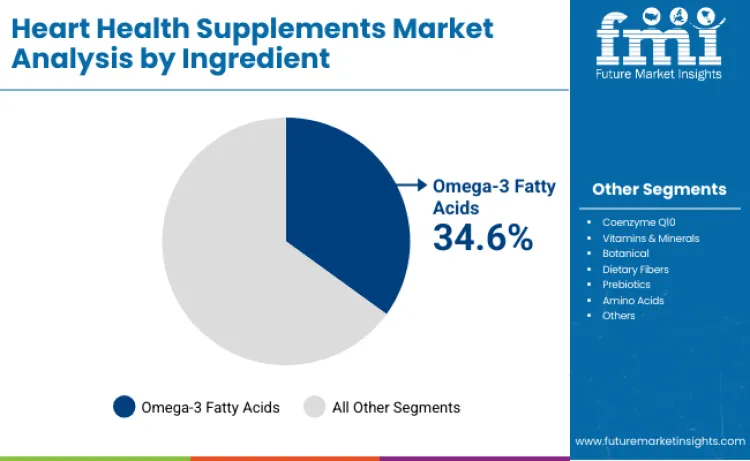
Omega-3 fatty acids account for 34.6% of ingredient share in 2026, driven by extensive clinical evidence supporting cardiovascular benefits. Leadership position is underpinned by regulatory approvals from health authorities recognizing EPA and DHA therapeutic claims. Segment benefits from continuous purification improvements, such as molecular distillation technology removing environmental contaminants. Research focused on marine omega-3 stability is renewing interest among pharmaceutical manufacturers. Critical role in managing triglyceride supplements formulations further solidifies standing, as these compounds reduce plasma lipid concentrations. As cardiology guidelines prioritize omega-3 supplementation, demand for pharmaceutical-grade concentrates is expected to remain robust.
Why Are Softgels the Preferred Form?
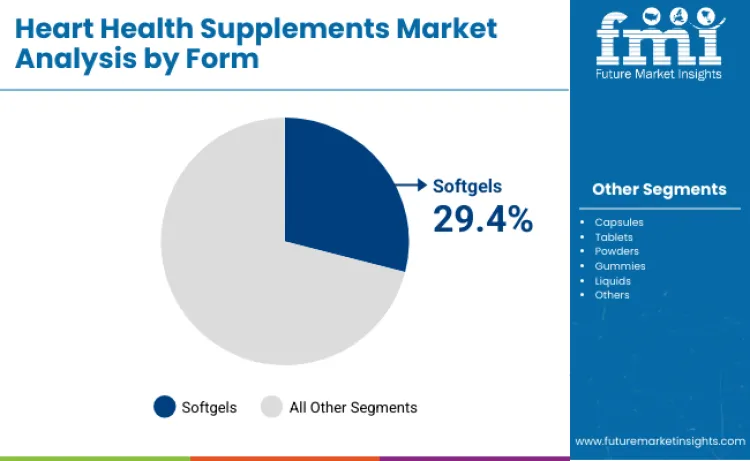
Softgel form commands 29.4% share of sector in 2026, reflecting consumer preference for easy-to-swallow lipophilic nutrient delivery. Dominance is linked to superior bioavailability of fat-soluble vitamins and essential fatty acids compared to tablets. Manufacturers rely on specialized softgel capsules technology to ensure precise dosing and moisture protection. These formats are essential for delivering concentrated fish oil and coenzyme Q10, driving priority status among cardiovascular supplement brands. Relentless pursuit of enteric coating ensures products designed for gastric-sensitive consumers remain primary choice. High consumer acceptance necessitates dynamic manufacturing capacity, bolstering sustained revenue streams for encapsulation suppliers.
Why Does Cholesterol Management Lead Applications?
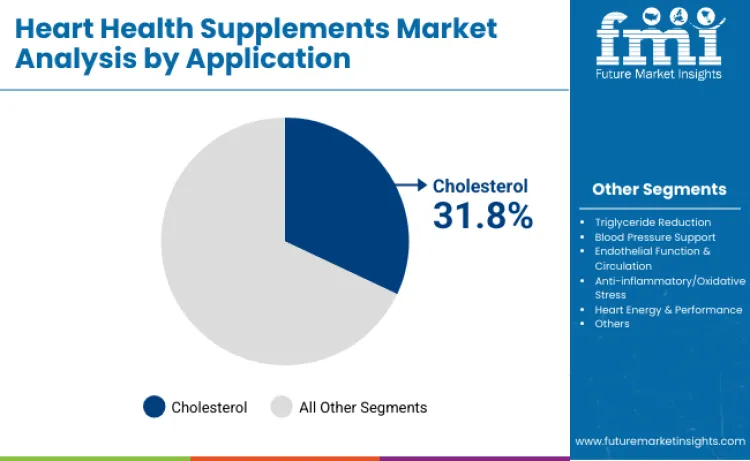
Cholesterol management applications capture 31.8% of market share in 2026, owing to widespread hypercholesterolemia prevalence requiring therapeutic intervention. Dominance stems from clinical guidelines recommending targeted supplementation alongside statin therapy for optimal lipid management. Consumers prefer these products for their preventive benefits and minimal side effects. Usage in treating familial hypercholesterolemia drives continuous volume growth among genetic risk populations. Compatibility with various cholesterol-lowering supplements matrices allows for combination therapies across different risk categories. Manufacturers focusing on plant sterol and red yeast rice formulations for these high-prevalence conditions secure significant loyalty among cardiology practices.
How Will Aging Demographics Impact Sales?
Demographic transition toward older populations is set to reshape sales landscapes by demanding age-specific cardiovascular formulations. As senior nutrition supplements trends evolve, consumers access products with enhanced absorption for declining digestive function. Shift toward combination therapies creates demand for multi-target formulations addressing multiple cardiovascular risk factors simultaneously. Manufacturers failing to position supplements as geriatric-friendly risk losing visibility among healthcare providers. Availability of age-related health supplements options for chronic disease management drives complementary consumption patterns. Rise of personalized nutrition usage stimulates innovation, with companies differentiating offerings through genetic testing integration.
How Will Digital Health Integration Transform Distribution?
Digital health platform adoption is revolutionizing supplement delivery by enabling direct-to-consumer subscription models. Integration with wearable devices allows real-time monitoring of cardiovascular markers, triggering automated supplement recommendations based on individual health data. Telemedicine consultations are driving personalized supplement protocols, with healthcare providers prescribing specific formulations through digital platforms. E-commerce channels are expanding rapidly, offering convenience and competitive pricing compared to traditional retail outlets. Mobile health applications featuring supplement tracking and adherence monitoring create sustained engagement with cardiovascular wellness programs.
How Will Regulatory Changes Affect Market Growth?
Evolving regulatory frameworks are creating both opportunities and challenges for heart health supplement manufacturers. Stricter quality standards demand higher manufacturing investments while improving consumer confidence in product efficacy. Health claim approvals from regulatory bodies enable companies to market specific cardiovascular benefits, differentiating products in competitive markets. International harmonization of supplement regulations facilitates global market expansion for established brands. Clinical evidence requirements are increasing, forcing manufacturers to invest in human studies validating therapeutic claims.
How Will the Heart Health Supplements Industry Evolve in Major Nations?
Global landscape for cardiovascular supplements is characterized by diverse regulatory frameworks, influenced by healthcare systems and clinical practice standards. Established markets prioritize evidence-based formulations and pharmaceutical-grade manufacturing, whereas emerging economies focus on accessible pricing and basic cardiovascular protection. Asia-Pacific is emerging as rapid growth hub due to increasing lifestyle diseases and expanding healthcare awareness. Conversely, North American sectors pivot towards precision medicine and personalized supplementation protocols. Government initiatives in developing nations supporting non-communicable disease prevention ensure sustained demand for preventive supplements across all demographics.
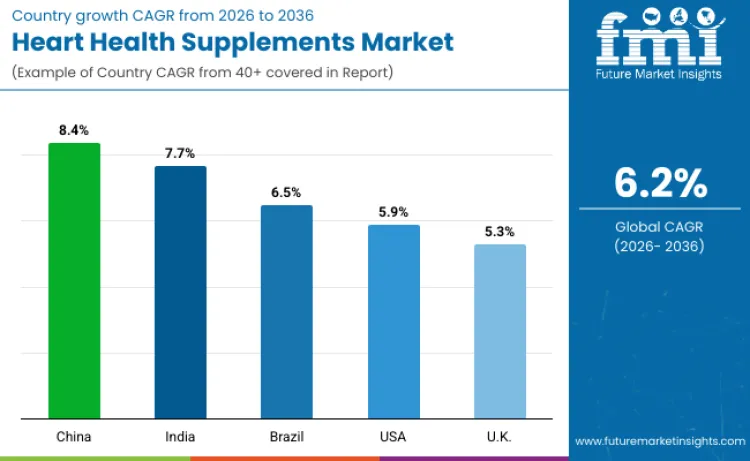
| Country | CAGR (2026 to 2036) |
|---|---|
| China | 8.4% |
| India | 7.7% |
| Brazil | 6.5% |
| USA | 5.9% |
| UK | 5.3% |
Source: Future Market Insights’ proprietary forecasting model and primary research
Why is the Heart Health Supplements Industry in China Growing?
Sales of cardiovascular supplements in China are set to grow at 8.4% CAGR through 2036. Expansion is underpinned by rapid urbanization and increasing cardiovascular disease burden among working populations. Growth is fueled by government healthcare reforms emphasizing preventive medicine and chronic disease management. Rising disposable incomes drive premium supplement adoption per capita among health-conscious consumers. Presence of major international brands establishing local manufacturing capabilities streamlines supply chains and reduces import costs. Emphasis on traditional Chinese medicine integration with modern nutraceuticals continues to be primary driver, maintaining China's position as critical growth engine for cardiovascular wellness products.
Why is the Heart Health Supplements Sector in India Expanding?
Demand for cardiovascular wellness solutions in India is projected to rise at 7.7% CAGR during assessment period. Initiatives emphasizing diabetes and hypertension management foster favorable environment for preventive supplementation. Increasing investment in healthcare infrastructure creates massive distribution channels for specialized cardiovascular products. Rising middle-class population requiring affordable heart health options prompts domestic brands to develop cost-effective formulations. Shift is supported by government policies encouraging local pharmaceutical manufacturing, accelerating uptake of indigenous supplement brands across urban centers and fueling sector expansion through improved accessibility.
Why is the Heart Health Supplements Industry in Brazil Showing Potential?
Heart health supplements industry in Brazil is poised to expand at 6.5% CAGR. Growth is largely attributed to increasing awareness of cardiovascular risk factors among urban populations. Government focus on public health initiatives addressing non-communicable diseases encourages consumers to adopt preventive measures. Increasing partnerships between local manufacturers and international ingredient suppliers ensure availability of high-quality raw materials. Economic stability combined with growing health insurance coverage attracts significant investment in preventive healthcare products. Strong regulatory framework ensuring product quality and safety further drives consumer confidence in supplementation protocols.
Why is the Heart Health Supplements Industry in USA Growing?
Sales of cardiovascular supplements in USA are set to grow at 5.9% CAGR. Expansion is underpinned by mature healthcare system recognizing preventive supplementation benefits. Growth is fueled by increasing healthcare costs driving consumers toward preventive measures. Widespread adoption of telemedicine and digital health monitoring creates steady demand for at-home cardiovascular management. High standards of clinical research and FDA oversight prompt brands to invest in evidence-based formulations. Emphasis on personalized medicine and genetic testing continues to be primary driver, maintaining USA position as innovation leader in therapeutic supplementation.
Why is the Heart Health Supplements Sector in the UK Expanding?
Revenue from cardiovascular supplements in UK is set to grow at 5.3% CAGR. Expansion is underpinned by National Health Service recognition of preventive nutrition benefits. Growth is fueled by increasing awareness of lifestyle-related cardiovascular risks. Moderate adoption of functional foods and nutraceuticals drives revenue generation in preventive healthcare segments. Presence of established pharmaceutical companies ensures high-quality product standards and clinical validation. Emphasis on evidence-based medicine and regulatory compliance continues to be primary driver, maintaining UK position as quality-focused market for therapeutic supplements.
What is the Competitive Outlook for the Heart Health Supplements Market?
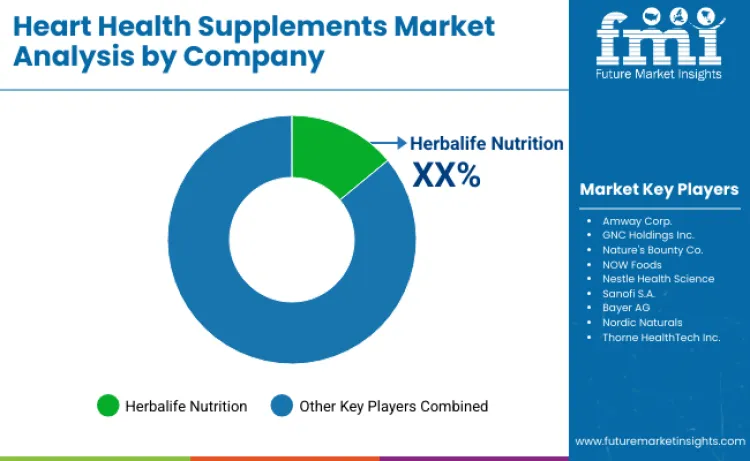
Market participants are increasingly focusing on clinical validation to differentiate their cardiovascular formulations. Leading players like Herbalife Nutrition and Amway are directing investment toward research partnerships with academic institutions for supplement efficacy studies. Significant trend involves developing personalized nutrition platforms to customize cardiovascular supplementation based on individual risk profiles. Companies actively engage in strategic partnerships with healthcare providers to integrate supplements into clinical practice protocols.
Innovation emerges as competitive frontier, with providers exploring novel delivery systems for enhanced bioavailability. Consolidation activities remain moderate as specialty supplement companies acquire ingredient suppliers to control quality and costs against established pharmaceutical giants. Herbalife Nutrition holds a significant share, leveraging its direct-selling network and clinical research investments.
Key Players in Heart Health Supplements Market
- Herbalife Nutrition Ltd.
- Amway Corp.
- GNC Holdings Inc.
- Nature's Bounty Co.
- NOW Foods
- Nestle Health Science
- Sanofi S.A.
- Bayer AG
- Nordic Naturals
- Thorne HealthTech Inc.
Scope of Report
| Items | Values |
| Quantitative Units | USD Billion |
| Ingredient Segments | Omega 3 Fatty Acids; Coenzyme Q10; Vitamins & Minerals; Botanical; Dietary Fibers; Prebiotics; Amino Acids; Others |
| Form Categories | Softgels; Capsules; Tablets; Powders; Gummies; Liquids; Others |
| Application Categories | Cholesterol Management; Triglyceride Reduction; Blood Pressure Support; Endothelial Function & Circulation; Anti-inflammatory/Oxidative Stress; Heart Energy & Performance; Others |
| Distribution Channel Types | Pharmacy & Drug Stores; Hypermarkets & Supermarkets; Specialty Store; Online; Others |
| Regions Covered | North America, Europe, East Asia, South Asia, Latin America, Middle East & Africa |
| Key Countries | China, India, Brazil, USA, UK |
| Key Companies Profiled | Herbalife Nutrition Ltd.; Amway Corp.; GNC Holdings Inc.; Nature’s Bounty Co.; NOW Foods; Nestle Health Science; Sanofi S.A.; Bayer AG; Nordic Naturals; Thorne HealthTech Inc. |
| Additional Attributes | Dollar sales measured for heart health supplements used in preventive cardiology and cardiovascular wellness applications, specified by active ingredient type (EPA/DHA omega-3, CoQ10, botanicals, vitamins/minerals), product form, dosage delivery preference, application focus (cholesterol, triglycerides, blood pressure and circulation), retail model (offline vs. online), and compliance alignment with evolving quality standards and health-claim regulations. |
Heart Health Supplements Market by Segments
Ingredient:
- Omega 3 Fatty Acids
- Coenzyme Q10
- Vitamins & Minerals
- Botanical
- Dietary Fibers
- Prebiotics
- Amino Acids
- Others
Form:
- Softgels
- Capsules
- Tablets
- Powders
- Gummies
- Liquids
- Others
Application:
- Cholesterol Management
- Triglyceride Reduction
- Blood Pressure Support
- Endothelial Function & Circulation
- Anti-inflammatory/Oxidative Stress
- Heart Energy & Performance
- Others
Distribution Channel:
- Pharmacy & Drug Stores
- Hypermarkets & Supermarkets
- Specialty Store
- Online
- Others
Bibliography
- American Heart Association. (2024). Dietary supplements and cardiovascular health: Evidence‑based guidance for prevention and risk management.
- Council for Responsible Nutrition. (2024). Role of dietary supplements in heart health maintenance and preventive nutrition.
- Global Organization for EPA and DHA Omega-3s. (2024). Scientific consensus on omega‑3 fatty acids and cardiovascular health outcomes.
- American Herbal Products Association. (2024). Botanical ingredients and their application in cardiovascular wellness products.
- International Alliance of Dietary/Food Supplement Associations. (2024). Global industry perspectives on dietary supplements for cardiovascular health support.
Frequently Asked Questions
How big is the heart health supplements market in 2026?
The heart health supplements industry is valued at USD 10.3 billion in 2026.
What will be the size of the heart health supplements market in 2036?
The heart health supplements market is projected to reach USD 18.7 billion by 2036.
How much will the heart health supplements market grow between 2026 and 2036?
The market is expected to expand at a CAGR of 6.2% during the 2026 to 2036 forecast period.
Which ingredient segment leads the heart health supplements market?
Omega 3 fatty acids lead the ingredient category, accounting for 34.6% share in 2026.
Which application segment holds the dominant share in the heart health supplements market?
Cholesterol management dominates the application landscape with a 31.8% share in 2026.
Preview the report firsthand - request a free sample
Get SampleGet the brochure for pricing and purchase details.
Get PDFTable of Content
- Executive Summary
- Global Market Outlook
- Quick Stats for Heart Health Supplements Market
- Key Market Takeaways
- Analysis and Recommendations
- Market Overview
- Market Coverage / Taxonomy
- Market Definition / Scope / Limitations
- Heart Health Supplements Market by Segments
- Market Background
- Market Dynamics
- Drivers
- Restraints
- Opportunity
- Trends
- Scenario Forecast
- Demand in Optimistic Scenario
- Demand in Likely Scenario
- Demand in Conservative Scenario
- How Will Aging Demographics Impact Sales?
- How Will Digital Health Integration Transform Distribution?
- How Will Regulatory Changes Affect Market Growth?
- Supply Chain Analysis
- Investment Feasibility Matrix
- Value Chain Analysis
- PESTLE and Porter’s Analysis
- Regulatory Landscape
- Regional Parent Market Outlook
- Production and Consumption Statistics
- Import and Export Statistics
- Market Dynamics
- Global Market Analysis 2020 to 2025 and Forecast, 2026 to 2036
- Historical Market Size Value (USD Million) Analysis, 2020 to 2025
- Current and Future Market Size Value (USD Million) Projections, 2026 to 2036
- Y-o-Y Growth Trend Analysis
- Absolute $ Opportunity Analysis
- Global Market Pricing Analysis 2020 to 2025 and Forecast 2026 to 2036
- Global Market Analysis 2020 to 2025 and Forecast 2026 to 2036, By Ingredient
- Introduction / Key Findings
- Historical Market Size Value (USD Million) Analysis By Ingredient, 2020 to 2025
- Current and Future Market Size Value (USD Million) Analysis and Forecast By Ingredient, 2026 to 2036
- Omega 3 Fatty Acids
- Coenzyme Q10
- Vitamins & Minerals
- Botanical
- Dietary Fibers
- Prebiotics
- Amino Acids
- Others
- Y-o-Y Growth Trend Analysis By Ingredient, 2020 to 2025
- Absolute $ Opportunity Analysis By Ingredient, 2026 to 2036
- Why Do Omega-3 Fatty Acids Maintain Dominance?
- What Drivers Are Accelerating Omega-3 Adoption?
- Global Market Analysis 2020 to 2025 and Forecast 2026 to 2036, By Form
- Introduction / Key Findings
- Historical Market Size Value (USD Million) Analysis By Form, 2020 to 2025
- Current and Future Market Size Value (USD Million) Analysis and Forecast By Form, 2026 to 2036
- Softgels
- Capsules
- Tablets
- Powders
- Gummies
- Liquids
- Others
- Y-o-Y Growth Trend Analysis By Form, 2020 to 2025
- Absolute $ Opportunity Analysis By Form, 2026 to 2036
- Why Are Softgels the Preferred Form?
- Global Market Analysis 2020 to 2025 and Forecast 2026 to 2036, By Application
- Introduction / Key Findings
- Historical Market Size Value (USD Million) Analysis By Application, 2020 to 2025
- Current and Future Market Size Value (USD Million) Analysis and Forecast By Application, 2026 to 2036
- Cholesterol Management
- Triglyceride Reduction
- Blood Pressure Support
- Endothelial Function & Circulation
- Anti-inflammatory/Oxidative Stress
- Heart Energy & Performance
- Others
- Y-o-Y Growth Trend Analysis By Application, 2020 to 2025
- Absolute $ Opportunity Analysis By Application, 2026 to 2036
- Why Does Cholesterol Management Lead Applications?
- Global Market Analysis 2020 to 2025 and Forecast 2026 to 2036, By Distribution Channel
- Introduction / Key Findings
- Historical Market Size Value (USD Million) Analysis By Distribution Channel, 2020 to 2025
- Current and Future Market Size Value (USD Million) Analysis and Forecast By Distribution Channel, 2026 to 2036
- Pharmacy & Drug Stores
- Hypermarkets & Supermarkets
- Specialty Store
- Online
- Others
- Y-o-Y Growth Trend Analysis By Distribution Channel, 2020 to 2025
- Absolute $ Opportunity Analysis By Distribution Channel, 2026 to 2036
- Regional Market Analysis
- North America Market Analysis
- USA
- Canada
- Europe Market Analysis
- UK
- Germany
- France
- Italy
- Spain
- Russia
- Rest of Europe
- East Asia Market Analysis
- China
- Japan
- South Korea
- South Asia Market Analysis
- India
- Thailand
- Indonesia
- Malaysia
- Australia
- New Zealand
- Rest of South Asia
- Latin America Market Analysis
- Brazil
- Mexico
- Rest of Latin America
- Middle East & Africa Market Analysis
- GCC Countries
- Turkey
- Northern Africa
- South Africa
- Rest of Middle East & Africa
- How Will the Heart Health Supplements Industry Evolve in Major Nations?
- North America Market Analysis
- Market Structure Analysis
- Competition Dashboard
- Competition Benchmarking
- Market Share Analysis of Top Players
- By Regional
- By Ingredient
- By Form
- By Application
- By Distribution Channel
- What is the Competitive Outlook for the Heart Health Supplements Market?
- Competition Analysis
- Competition Deep Dive
- Herbalife Nutrition Ltd.
- Overview
- Product Portfolio
- Profitability by Market Segments (Ingredient/Form/Application/Distribution Channel/Region)
- Sales Footprint
- Strategy Overview
- Marketing Strategy
- Product Strategy
- Channel Strategy
- Amway Corp.
- GNC Holdings Inc.
- Nature’s Bounty Co.
- NOW Foods
- Nestle Health Science
- Sanofi S.A.
- Bayer AG
- Nordic Naturals
- Thorne HealthTech Inc.
- Herbalife Nutrition Ltd.
- Competition Deep Dive
- Assumptions & Acronyms Used
- Research Methodology
- Bibliography
- Frequently Asked Questions


