

- Industry Size (2025)
- USD 1.4 Bn
- Forecast (2035)
- USD 2.5 Bn
- CAGR (2025 to 2035)
- 5.8%
Vacuum Heat Shrink Film Market Forecast and Outlook (2025-2035)
The vacuum heat shrink film market is expected to expand from USD 1.4 billion in 2025 to USD 2.5 billion by 2035, at a CAGR of 5.8%, driven primarily by performance differences across material and application segments. The PVC material segment, with a 46.2% share, anchors global usage due to its strong barrier properties, predictable shrinkage behavior, and processing stability across high-volume food, electronics, and logistics packaging lines. Its dominance is reinforced by consistent sealing performance, moisture resistance, and compatibility with automated vacuum equipment, making PVC the preferred option for manufacturers prioritizing protection, clarity, and cost-effective preservation.
The POF segment expands as a premium alternative, offering smoother shrink characteristics, improved aesthetics, and better puncture resistance for electronics and consumer goods. PE-based films contribute value through flexibility, toughness, and suitability for heavy-load logistics where impact protection and long storage cycles are required. Specialty resin blends and multilayer variants occupy a smaller but fast-evolving segment targeting high-barrier and performance-sensitive categories. Across applications, food processing, with 39.8% share, remains the largest demand center as processors adopt vacuum heat shrink films to maintain freshness, reduce spoilage, and enhance shelf-life stability across meat, seafood, cheese, and ready-meal products. Electronics is a growing segment driven by the need for delicate component protection, anti-moisture requirements, and precision shrink-fit packaging for high-value products. Logistics, daily chemical goods, and general industrial packaging form secondary demand layers supported by rising e-commerce, supply chain expansion, and the need for abrasion-resistant wrapping in long-haul distribution.
Quick Stats for Vacuum Heat Shrink Film Market
- Vacuum Heat Shrink Film Market Value (2025): USD 1.4 billion
- Vacuum Heat Shrink Film Market Forecast Value (2035): USD 2.5 billion
- Vacuum Heat Shrink Film Market Forecast CAGR: 5.8%
- Leading Material in Vacuum Heat Shrink Film Market: PVC Material (46.2%)
- Key Growth Regions in Vacuum Heat Shrink Film Market: North America, Europe, Asia Pacific
- Key Players in Vacuum Heat Shrink Film Market: Sealed Air, Coveris, Clysar, Petoskey Plastics, Amcor
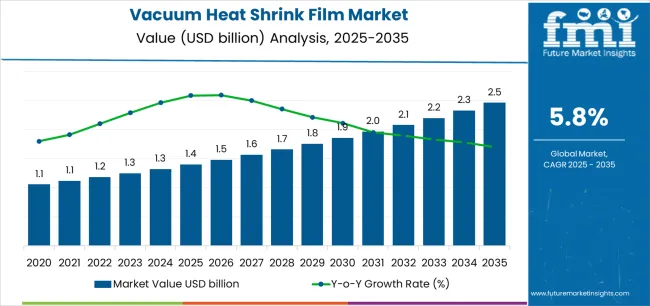
Consumer behavior in the vacuum heat shrink film market reflects broader packaging trends toward high-performance, moisture-resistant systems that provide both product protection benefits and extended shelf-life improvements. The market benefits from the growing popularity of PVC and POF material applications, which are recognized for their advanced barrier integration and user-friendly approach to product preservation management. Additionally, the versatility of vacuum heat shrink film as both standalone packaging films and integrated protection components supports demand across multiple product applications and price segments.
Regional adoption patterns vary significantly, with Asian markets showing strong preference for PVC material implementations, while European markets demonstrate increasing adoption of POF-based solutions alongside conventional food processing systems. The packaging landscape continues to evolve with sophisticated and feature-rich vacuum products gaining traction in mainstream electronics and logistics brands, reflecting manufacturer willingness to invest in proven barrier technology improvements and performance-oriented features.
The competitive environment features established flexible packaging companies alongside specialized vacuum film providers that focus on unique material capabilities and advanced processing methods. Manufacturing efficiency and product development optimization remain critical factors for market participants, particularly as raw material costs and regulatory compliance continue to fluctuate. Distribution strategies increasingly emphasize multi-channel approaches that combine traditional packaging supply chains with direct manufacturer partnerships through technology licensing agreements and system integration contracts.
Market consolidation trends indicate that larger packaging manufacturers are acquiring specialty film companies to diversify their product portfolios and access specialized polymer processing segments. Original equipment integration has gained momentum as food processing and electronics companies seek to differentiate their offerings while maintaining competitive cost structures. The emergence of specialized vacuum variants, including PE-based and advanced PVC options, reflects changing packaging priorities and creates new market opportunities for innovative film system developers. Manufacturing automation and quality control improvements enable consistent product scaling while maintaining traditional barrier characteristics that brand owners expect from established packaging materials.
Between 2025 and 2030, the vacuum heat shrink film market is projected to expand from USD 1.4 billion to USD 1.8 billion, resulting in a value increase of USD 361.9 million, which represents 33.4% of the total forecast growth for the decade. This phase of development will be shaped by increasing adoption of PVC material systems, rising demand for food processing solutions, and growing emphasis on product preservation features with enhanced barrier characteristics. Packaging manufacturers are expanding their processing capabilities to address the growing demand for specialized vacuum implementations, advanced barrier options, and brand-specific offerings across product segments.
Vacuum Heat Shrink Film Market Key Takeaways
| Metric | Value |
|---|---|
| Estimated Value (2025E) | USD 1.4 billion |
| Forecast Value (2035F) | USD 2.5 billion |
| Forecast CAGR (2025-2035) | 5.8% |
From 2030 to 2035, the market is forecast to grow from USD 1.8 billion to USD 2.5 billion, adding another USD 721.6 million, which constitutes 66.6% of the overall ten-year expansion. This period is expected to be characterized by the expansion of electronics packaging systems, the integration of innovative vacuum solutions, and the development of specialized film implementations with enhanced barrier profiles and extended performance capabilities. The growing adoption of advanced formulations will drive demand for vacuum heat shrink film with superior moisture resistance characteristics and compatibility with modern packaging technologies across food processing and logistics operations.
Between 2020 and 2025, the vacuum heat shrink film market experienced steady growth, driven by increasing demand for PVC material systems and growing recognition of vacuum technologies as essential components for modern product preservation programs across food processing and electronics applications. The market developed as packaging manufacturers recognized the potential for vacuum solutions to provide both barrier protection benefits and operational advantages while enabling streamlined packaging protocols. Technological advancement in polymer chemistry and application-based development began emphasizing the critical importance of maintaining film performance and consumer acceptance in diverse packaging environments.
Why is the Vacuum Heat Shrink Film Market Growing?
Market expansion is being supported by the increasing global demand for advanced packaging preservation systems and the corresponding need for vacuum film technologies that can provide superior barrier resistance benefits and protection advantages while enabling enhanced product preservation and extended compatibility across various food processing, electronics, and logistics applications. Modern packagers and packaging industry specialists are increasingly focused on implementing proven film technologies that can deliver effective moisture control, minimize traditional preservation dependency, and provide consistent performance throughout complex packaging configurations and diverse environmental conditions. Vacuum heat shrink film proven ability to deliver exceptional barrier efficacy against traditional alternatives, enable advanced packaging integration, and support modern product preservation protocols makes it an essential component for contemporary packaging and brand protection operations.
The growing emphasis on product preservation and packaging efficiency optimization is driving demand for vacuum heat shrink film that can support large-scale processing requirements, improve barrier outcomes, and enable advanced packaging systems. Consumer preference for products that combine effective moisture resistance with proven protection and preservation benefits is creating opportunities for innovative vacuum implementations. The rising influence of electronics packaging trends and preservation performance awareness is also contributing to increased demand for vacuum heat shrink film that can provide advanced features, seamless product integration, and reliable performance across extended storage periods.
Opportunity Pathways - Vacuum Heat Shrink Film Market
The vacuum heat shrink film market is poised for steady growth and technological advancement. As packaging manufacturers across North America, Europe, Asia-Pacific, and emerging markets seek systems that deliver exceptional barrier quality, advanced vacuum capabilities, and reliable performance options, vacuum heat shrink film solutions are gaining prominence not just as packaging films but as strategic enablers of product technologies and advanced preservation functionality.
Rising PVC material adoption in Asia-Pacific and expanding food processing initiatives globally amplify demand, while manufacturers are leveraging innovations in polymer engineering, advanced formulation integration, and barrier management technologies.
Pathways like electronics packaging implementations, food-grade platforms, and specialized logistics solutions promise strong margin uplift, especially in premium product segments. Geographic expansion and product diversification will capture volume, particularly where local packaging preferences and advanced technology adoption are critical. Regulatory support around packaging barrier standards, vacuum efficacy protocols, and food safety requirements give structural support.
- Pathway A - PVC Material Implementations. Premium food manufacturers and specialty packaging producers increasingly require vacuum heat shrink film solutions with PVC technology and advanced barrier profiles for enhanced product preservation and premium positioning capabilities. Technology developers who develop PVC platforms with superior vacuum standards can command premium pricing. Expected revenue pool: USD 189.7 million - USD 263.5 million.
- Pathway B - Electronics Packaging Platforms. Growing demand for electronics applications, high-performance packaging capabilities, and unique barrier features drives need for advanced electronics capabilities with specialized packaging integration. Opportunity: USD 171.6 million - USD 238.4 million.
- Pathway C - Specialized Food Processing Applications. Advanced food processing formulations capable of meeting specific safety requirements, product compatibility, and specialized barrier profiles enable market expansion and enhanced preservation appeal for food-focused manufacturers. Revenue lift: USD 156.8 million - USD 217.8 million.
- Pathway D - Logistics Integration Applications. Expanding reach into transportation packaging platforms with optimized barrier delivery, advanced protection capabilities, and extended functionality features. Manufacturers will seek partners who supply integrated packaging solutions with complete logistics functionality. Pool: USD 143.2 million - USD 198.9 million.
- Pathway E - Geographic Expansion & Local Manufacturing. Strong growth in APAC, particularly China, India, and Southeast Asia. Local manufacturing lowers costs, reduces supply complexity, and enables faster response to regional packaging preferences. Expected upside: USD 201.4 million - USD 279.6 million.
- Pathway F - Brand Partnership Development. Increasing demand for custom formulations, brand-specific functionality, and specialized barrier profiles with validated vacuum characteristics for food processing companies. USD 128.9 million - USD 179.1 million.
- Pathway G - Daily Chemical Product Expansion. Developing comprehensive daily chemical solutions, compatibility services, and enhancement programs creates differentiation and addresses specialized requirements for daily chemical packaging providers and brand owners. Growing demand from independent packaging services. Pool: USD 114.7 million - USD 159.3 million.
What Are the Key Segments Driving Growth in the Vacuum Heat Shrink Film Market?
The market is segmented by material, application, end user, film thickness, packaging type, distribution channel, price range, and region. By material, the market is divided into PVC material, POF material, PE material, and others categories. By application, it covers food processing, daily chemical products, electronics, logistics & transportation, and others segments. By end user, it encompasses food processors, chemical manufacturers, electronics companies, and logistics providers. By film thickness, the market includes 15-20 micron, 21-25 micron, 26-30 micron, and above 30 micron. By packaging type, the market is categorized into individual packaging, bulk packaging, and custom packaging categories. By distribution channel, the market is divided into direct sales, distributors, and online channels. By price range, the market includes premium, mid-range, and economy. Regionally, the market is divided into North America, Europe, East Asia, South Asia & Pacific, Latin America, and the Middle East & Africa.
By Material, the PVC Material Segment Accounts for 46.2% Market Share
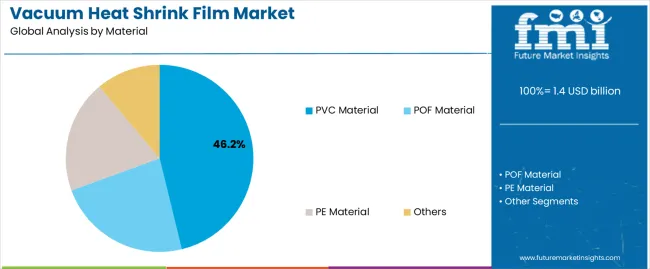
The PVC material segment is projected to account for 46.2% of the vacuum heat shrink film market in 2025, reaffirming its position as the leading material category. Packaging manufacturers and system integrators increasingly utilize PVC material implementations for their superior barrier protection when operating across diverse product platforms, excellent processing properties, and widespread acceptance in applications ranging from basic food processing to premium electronics operations. PVC material technology's established processing methods and proven barrier capabilities directly address the manufacturer requirements for dependable packaging solutions in complex processing environments.
This material segment forms the foundation of modern packaging adoption patterns, as it represents the implementation with the greatest market penetration and established consumer acceptance across multiple product categories and price segments. Manufacturer investments in PVC standardization and system consistency continue to strengthen adoption among packaging producers and processing companies. With brands prioritizing barrier protection and product preservation, PVC material implementations align with both functionality preferences and cost expectations, making them the central component of comprehensive product protection strategies.
By Application, the Food Processing Segment Accounts for 39.8% Market Share
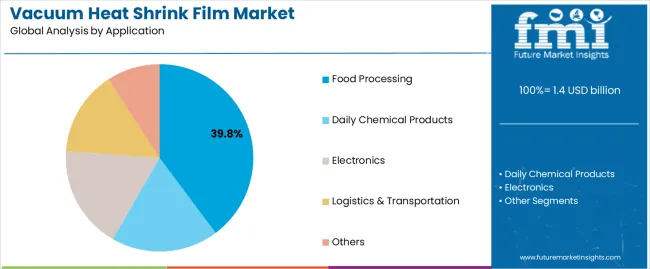
Food processing applications are projected to represent 39.8% of vacuum heat shrink film demand in 2025, underscoring their critical role as the primary application channel for product preservation across food processing, packaging operations, and consumer product applications. Food manufacturers prefer vacuum heat shrink film for food processing use for their exceptional barrier characteristics, scalable processing options, and ability to enhance product preservation while ensuring consistent packaging quality throughout diverse food platforms and processing operations. Positioned as essential preservation components for modern food production, vacuum heat shrink film solutions offer both technological advantages and processing efficiency benefits.
The segment is supported by continuous innovation in food processing technologies and the growing availability of specialized implementations that enable diverse food requirements with enhanced barrier uniformity and extended shelf-life capabilities. Additionally, food manufacturers are investing in advanced technologies to support large-scale processing integration and product development. As product preservation trends become more prevalent and packaging performance awareness increases, food processing applications will continue to represent a major implementation market while supporting advanced food utilization and technology integration strategies.
What are the Drivers, Restraints, and Key Trends of the Vacuum Heat Shrink Film Market?
The vacuum heat shrink film market is advancing steadily due to increasing demand for advanced packaging preservation systems and growing adoption of vacuum film technologies that provide superior barrier resistance characteristics and protection benefits while enabling enhanced product preservation across diverse food processing, electronics, and logistics applications. The market faces challenges, including complex polymer formulation requirements, evolving packaging regulations, and the need for specialized processing expertise and performance programs. Innovation in vacuum chemistry and advanced processing systems continues to influence product development and market expansion patterns.
Expansion of Product Preservation Technologies and Packaging Integration
The growing adoption of advanced product preservation, sophisticated barrier management capabilities, and packaging preservation awareness is enabling system developers to produce advanced vacuum heat shrink film solutions with superior protection positioning, enhanced barrier profiles, and seamless integration functionalities. Advanced product preservation systems provide improved protection outcomes while allowing more efficient packaging workflows and reliable performance across various product applications and environmental conditions. Developers are increasingly recognizing the competitive advantages of packaging integration capabilities for market differentiation and barrier positioning.
Integration of Advanced Processing Methods and Barrier Engineering
Modern vacuum heat shrink film providers are incorporating advanced polymer technology, barrier protocol integration, and sophisticated processing solutions to enhance product preservation, enable intelligent vacuum features, and deliver value-added solutions to packaging customers. These technologies improve film performance while enabling new market opportunities, including multi-layer systems, optimized surface treatments, and enhanced moisture resistance characteristics. Advanced barrier integration also allows developers to support comprehensive packaging film technologies and market expansion beyond traditional packaging approaches.
How Are Global Trends Shaping the Vacuum Heat Shrink Film Market in Key Countries?
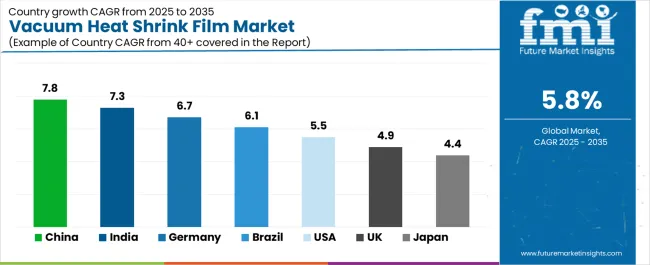
| Country | CAGR (2025-2035) |
|---|---|
| China | 7.8% |
| India | 7.3% |
| Germany | 6.7% |
| Brazil | 6.1% |
| United States (USA) | 5.5% |
| United Kingdom (UK) | 4.9% |
| Japan | 4.4% |
The vacuum heat shrink film market is experiencing steady growth globally, with China leading at a 7.8% CAGR through 2035, driven by expanding food processing capacity, growing packaging modernization programs, and significant investment in polymer film development. India follows at 7.3%, supported by increasing food processing production expansion, growing packaging technology integration patterns, and expanding consumer goods infrastructure. Germany shows growth at 6.7%, emphasizing packaging technology leadership and film development. Brazil records 6.1%, focusing on expanding food processing capabilities and packaging technology modernization. The USA exhibits 5.5% growth, emphasizing packaging innovation excellence and premium film development. The UK demonstrates 4.9% growth, prioritizing advanced packaging technology development and product preservation trends. Japan shows 4.4% growth, supported by packaging technology initiatives and quality-focused production patterns.
The report covers an in-depth analysis of 40+ countries, the top-performing countries are highlighted below.
What Makes China a Major Center for Vacuum Heat Shrink Film Production and Demand?
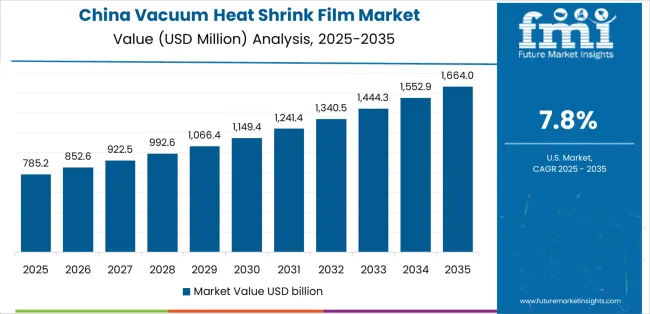
Revenue from vacuum heat shrink film in China is projected to exhibit robust growth with a CAGR of 7.8% through 2035, driven by expanding food processing capacity and rapidly growing packaging integration supported by government initiatives promoting packaging technology development. The country's strong position in food production and increasing investment in packaging infrastructure are creating substantial demand for advanced vacuum implementations. Major food processing manufacturers and technology companies are establishing comprehensive integration capabilities to serve both domestic packaging demand and expanding export markets.
- Government support for food safety modernization initiatives and packaging development is driving demand for advanced film systems throughout major processing regions and production centers across the country.
- Strong food processing growth and an expanding network of technology-focused producers are supporting the rapid adoption of vacuum heat shrink film among manufacturers seeking advanced barrier capabilities and integrated packaging technologies.
How Is India’s Expanding Manufacturing Sector Boosting the Vacuum Heat Shrink Film Market?
Revenue from vacuum heat shrink film in India is expanding at a CAGR of 7.3%, supported by the country's growing food processing sector, expanding packaging technology capacity, and increasing adoption of product preservation technologies. The country's initiatives promoting food safety modernization and growing retail development awareness are driving requirements for technology-integrated packaging systems. International packaging providers and domestic food processing companies are establishing extensive manufacturing and integration capabilities to address the growing demand for advanced preservation solutions.
- Rising food processing requirements and expanding retail programs are creating opportunities for vacuum heat shrink film adoption across urban processing centers, progressive producers, and modern packaging facilities in major consumer regions.
- Growing focus on product preservation integration and barrier features is driving adoption of vacuum platforms among food manufacturers seeking enhanced product capabilities and advanced preservation experiences.
Germany Demonstrates Packaging Leadership with Technology Growth
Revenue from vacuum heat shrink film in Germany is expanding at a CAGR of 6.7%, supported by the country's packaging technology heritage, strong emphasis on product preservation technology, and robust demand for advanced film systems in food and electronics applications. The nation's mature packaging sector and technology-focused operations are driving sophisticated vacuum implementations throughout the processing industry. Leading manufacturers and packaging specialists are investing extensively in film development and advanced integration technologies to serve both domestic and international markets.
- Rising demand for food processing technologies and advanced preservation systems is creating requirements for sophisticated vacuum heat shrink film solutions with exceptional barrier capabilities among quality-conscious manufacturers seeking enhanced product experiences and advanced integration methods.
- Strong packaging tradition and growing investment in preservation technologies are supporting adoption of quality vacuum platforms with advanced development methods and enhanced barrier profiles across packaging operations in major processing regions.
What Is Fueling Brazil’s Growing Demand for Vacuum Heat Shrink Film in Latin America?
Revenue from vacuum heat shrink film in Brazil is growing at a CAGR of 6.1%, driven by the country's expanding food processing sector, growing consumer goods programs, and increasing investment in packaging technology development. Brazil's large consumer market and commitment to food processing advancement are supporting demand for diverse vacuum solutions across multiple product segments. Manufacturers are establishing comprehensive integration capabilities to serve the growing domestic market and expanding processing opportunities.
- Strong processing expansion and expanding modern food operations are driving adoption of integrated packaging systems with superior barrier capabilities and advanced integration among large food manufacturers and progressive processing producers.
- Growing technology diversity and increasing product preservation adoption are supporting market expansion for advanced vacuum implementations with seamless integration profiles and modern barrier delivery throughout the country's processing regions.
How Are Advancements in the United States Influencing the Vacuum Heat Shrink Film Market?
Revenue from vacuum heat shrink film in the USA is expanding at a CAGR of 5.5%, supported by the country's advanced packaging technology sector, strategic focus on product preservation solutions, and established food processing capabilities. The USA's packaging innovation leadership and technology integration are driving demand for specialized vacuum implementations in premium products, electronics applications, and advanced packaging systems. Manufacturers are investing in comprehensive technology development to serve both domestic specialty markets and international quality applications.
- Product preservation optimization and technology advancement are creating opportunities for specialized vacuum adoption in packaging systems, barrier services, and technology-focused packaging operations among leading consumer goods enterprises.
- Growing emphasis on advanced barrier delivery and preservation features is driving adoption of quality vacuum implementations with enhanced technology profiles and integrated barrier management throughout the country's packaging technology sector.
Why Is the UK Emerging as a Key Contributor to the Vacuum Heat Shrink Film Market?
Revenue from vacuum heat shrink film in the UK is growing at a CAGR of 4.9%, driven by the country's focus on packaging technology advancement, emphasis on premium product innovation, and strong position in preservation development. The UK's established packaging innovation capabilities and commitment to technology diversification are supporting investment in specialized vacuum technologies throughout major processing regions. Industry leaders are establishing comprehensive technology integration systems to serve domestic premium product production and packaging applications.
- Innovations in preservation platforms and barrier integration capabilities are creating demand for advanced vacuum heat shrink film implementations with exceptional protection properties among progressive packaging manufacturers seeking enhanced technology differentiation and consumer appeal.
- Growing premium product adoption and increasing focus on packaging innovation are driving adoption of advanced vacuum platforms with integrated barrier delivery and processing optimization across packaging enterprises throughout the country.
How Is Japan’s Precision Engineering Strengthening the Vacuum Heat Shrink Film Market?
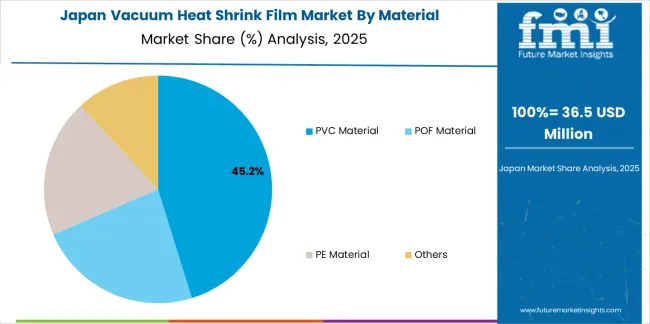
Revenue from vacuum heat shrink film in Japan is expanding at a CAGR of 4.4%, supported by the country's packaging excellence initiatives, growing quality technology sector, and strategic emphasis on advanced product development. Japan's advanced quality control capabilities and integrated packaging systems are driving demand for high-quality vacuum platforms in premium products, packaging technology, and advanced preservation applications. Leading manufacturers are investing in specialized capabilities to serve the stringent requirements of technology-focused packaging and premium product industries.
- Quality packaging advancement and technology-focused development are creating requirements for specialized vacuum heat shrink film solutions with superior quality integration, exceptional barrier capabilities, and advanced processing features among quality-conscious packaging operations and premium product manufacturers.
- Strong position in packaging technology innovation is supporting adoption of advanced vacuum systems with validated barrier characteristics and quality integration capabilities throughout the country's packaging technology sector.
What Regional Factors Are Shaping the Vacuum Heat Shrink Film Market Across Europe?
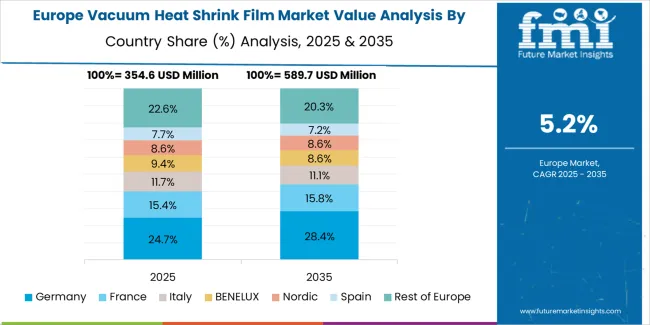
The vacuum heat shrink film market in Europe is projected to grow from USD 278.4 million in 2025 to USD 489.1 million by 2035, registering a CAGR of 5.8% over the forecast period. Germany is expected to maintain its leadership position with a 38.9% market share in 2025, growing to 40.2% by 2035, supported by its strong packaging engineering culture, sophisticated food processing capabilities, and comprehensive packaging industry serving diverse vacuum heat shrink film applications across Europe.
France follows with a 21.7% share in 2025, projected to reach 21.3% by 2035, driven by robust demand for food processing technologies in retail applications, advanced consumer goods programs, and electronics packaging markets, combined with established food processing infrastructure and technology integration expertise. The United Kingdom holds a 16.4% share in 2025, expected to reach 15.9% by 2035, supported by strong packaging technology sector and growing premium product activities. Italy commands a 12.8% share in 2025, projected to reach 12.4% by 2035, while Netherlands accounts for 6.1% in 2025, expected to reach 6.3% by 2035. Spain maintains a 3.7% share in 2025, growing to 3.9% by 2035. The Rest of Europe region, including Nordic countries, Eastern Europe, Belgium, Poland, and other nations, is anticipated to maintain momentum, with its collective share moving from 0.4% to 0.0% by 2035, attributed to increasing packaging modernization in Eastern Europe and growing technology penetration in Nordic countries implementing advanced product preservation programs.
What Does the Competitive Landscape Look Like in the Vacuum Heat Shrink Film Market?
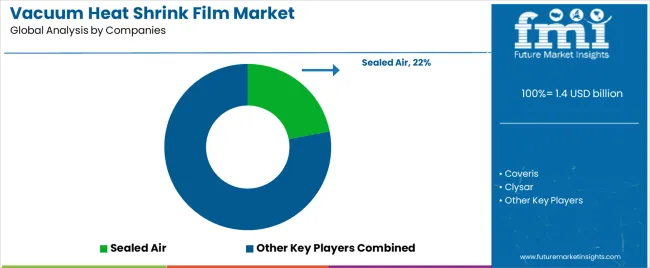
The vacuum heat shrink film market is characterized by competition among established packaging film companies, specialized vacuum technology developers, and integrated packaging solution providers. Companies are investing in polymer chemistry research, processing optimization, advanced film system development, and comprehensive packaging portfolios to deliver consistent, high-quality, and application-specific vacuum heat shrink film solutions. Innovation in advanced barrier integration, vacuum enhancement, and packaging compatibility improvement is central to strengthening market position and competitive advantage.
Sealed Air leads the market with a 22% market share, offering comprehensive packaging technology solutions including quality film platforms and advanced integration systems with a focus on premium and food processing applications. Coveris provides specialized polymer capabilities with an emphasis on advanced vacuum implementations and innovative packaging solutions. Clysar delivers comprehensive packaging services with a focus on integrated platforms and large-scale processing applications. Petoskey Plastics specializes in advanced film technologies and specialized vacuum implementations for premium applications. Amcor focuses on consumer-oriented packaging integration and innovative technology solutions.
Who Are the Key Players Steering the Vacuum Heat Shrink Film Market Forward?
- Sealed Air
- Coveris
- Clysar
- Petoskey Plastics
- Amcor
- Yorkshire Packaging Systems
- Benison
- Bagla Group
- TBS-Pack
- Borealis AG
- Cryovac
- KIVO Group
- Polifilm
Scope of the Report
| Item | Value |
|---|---|
| Quantitative Units | USD 1.4 billion |
| Material | PVC Material; POF Material; PE Material; Others |
| Application | Food Processing; Daily Chemical Products; Electronics; Logistics & Transportation; Others |
| End User | Food Processors; Chemical Manufacturers; Electronics Companies; Logistics Providers |
| Film Thickness | 15-20 Micron; 21-25 Micron; 26-30 Micron; Above 30 Micron |
| Packaging Type | Individual Packaging; Bulk Packaging; Custom Packaging |
| Distribution Channel | Direct Sales; Distributors; Online Channels |
| Price Segment | Premium; Mid-range; Economy |
| Regions Covered | North America; Europe; East Asia; South Asia & Pacific; Latin America; Middle East & Africa |
| Countries Covered | China; India; Germany; Brazil; United States; United Kingdom; Japan; France; and 40+ additional countries |
| Key Companies Profiled | Sealed Air; Coveris; Clysar; Petoskey Plastics; Amcor |
| Additional Attributes | Dollar sales by material and application category; regional demand trends; competitive landscape; technological advancements in polymer engineering; advanced formulation development; barrier innovation; packaging integration protocols |
Vacuum Heat Shrink Film Market by Segments
Material:
- PVC Material
- POF Material
- PE Material
- Others
Application:
- Food Processing
- Daily Chemical Products
- Electronics
- Logistics & Transportation
- Others
End User:
- Food Processors
- Chemical Manufacturers
- Electronics Companies
- Logistics Providers
Film Thickness:
- 15-20 Micron
- 21-25 Micron
- 26-30 Micron
- Above 30 Micron
Packaging Type:
- Individual Packaging
- Bulk Packaging
- Custom Packaging
Distribution Channel:
- Direct Sales
- Distributors
- Online Channels
Price Segment:
- Premium
- Mid-range
- Economy
Region:
- North America
- United States
- Canada
- Mexico
- Europe
- Germany
- United Kingdom
- France
- Italy
- Spain
- Nordic
- BENELUX
- Rest of Europe
- East Asia
- China
- Japan
- South Korea
- South Asia & Pacific
- India
- ASEAN
- Australia & New Zealand
- Rest of South Asia & Pacific
- Latin America
- Brazil
- Chile
- Argentina
- Rest of Latin America
- Middle East & Africa
- Kingdom of Saudi Arabia
- Other GCC Countries
- Turkiye
- South Africa
- Other African Union
- Rest of Middle East & Africa
Frequently Asked Questions
How big is the vacuum heat shrink film market in 2025?
The global vacuum heat shrink film market is estimated to be valued at USD 1.4 billion in 2025.
What will be the size of vacuum heat shrink film market in 2035?
The market size for the vacuum heat shrink film market is projected to reach USD 2.5 billion by 2035.
How much will be the vacuum heat shrink film market growth between 2025 and 2035?
The vacuum heat shrink film market is expected to grow at a 5.8% CAGR between 2025 and 2035.
What are the key product types in the vacuum heat shrink film market?
The key product types in vacuum heat shrink film market are pvc material, POF material, pe material and others.
Which application segment to contribute significant share in the vacuum heat shrink film market in 2025?
In terms of application, food processing segment to command 39.8% share in the vacuum heat shrink film market in 2025.
Preview the report firsthand - request a free sample
Get SampleGet the brochure for pricing and purchase details.
Get PDFTable of Content
- Executive Summary
- Global Market Outlook
- Demand-side Trends
- Supply-side Trends
- Technology Roadmap Analysis
- Analysis and Recommendations
- Market Overview
- Market Coverage / Taxonomy
- Market Definition / Scope / Limitations
- Market Background
- Market Dynamics
- Drivers
- Restraints
- Opportunity
- Trends
- Scenario Forecast
- Demand in Optimistic Scenario
- Demand in Likely Scenario
- Demand in Conservative Scenario
- Opportunity Map Analysis
- Product Life Cycle Analysis
- Supply Chain Analysis
- Investment Feasibility Matrix
- Value Chain Analysis
- PESTLE and Porter’s Analysis
- Regulatory Landscape
- Regional Parent Market Outlook
- Production and Consumption Statistics
- Import and Export Statistics
- Market Dynamics
- Global Market Analysis 2020 to 2024 and Forecast, 2025 to 2035
- Historical Market Size Value (USD Million) Analysis, 2020 to 2024
- Current and Future Market Size Value (USD Million) Projections, 2025 to 2035
- Y-o-Y Growth Trend Analysis
- Absolute $ Opportunity Analysis
- Global Market Pricing Analysis 2020 to 2024 and Forecast 2025 to 2035
- Global Market Analysis 2020 to 2024 and Forecast 2025 to 2035, By Material
- Introduction / Key Findings
- Historical Market Size Value (USD Million) Analysis By Material , 2020 to 2024
- Current and Future Market Size Value (USD Million) Analysis and Forecast By Material , 2025 to 2035
- PVC Material
- POF Material
- PE Material
- Others
- Y-o-Y Growth Trend Analysis By Material , 2020 to 2024
- Absolute $ Opportunity Analysis By Material , 2025 to 2035
- Global Market Analysis 2020 to 2024 and Forecast 2025 to 2035, By Application
- Introduction / Key Findings
- Historical Market Size Value (USD Million) Analysis By Application, 2020 to 2024
- Current and Future Market Size Value (USD Million) Analysis and Forecast By Application, 2025 to 2035
- Food Processing
- Daily Chemical Products
- Electronics
- Logistics & Transportation
- Others
- Y-o-Y Growth Trend Analysis By Application, 2020 to 2024
- Absolute $ Opportunity Analysis By Application, 2025 to 2035
- Global Market Analysis 2020 to 2024 and Forecast 2025 to 2035, By Region
- Introduction
- Historical Market Size Value (USD Million) Analysis By Region, 2020 to 2024
- Current Market Size Value (USD Million) Analysis and Forecast By Region, 2025 to 2035
- North America
- Latin America
- Western Europe
- Eastern Europe
- East Asia
- South Asia and Pacific
- Middle East & Africa
- Market Attractiveness Analysis By Region
- North America Market Analysis 2020 to 2024 and Forecast 2025 to 2035, By Country
- Historical Market Size Value (USD Million) Trend Analysis By Market Taxonomy, 2020 to 2024
- Market Size Value (USD Million) Forecast By Market Taxonomy, 2025 to 2035
- By Country
- USA
- Canada
- Mexico
- By Material
- By Application
- By Country
- Market Attractiveness Analysis
- By Country
- By Material
- By Application
- Key Takeaways
- Latin America Market Analysis 2020 to 2024 and Forecast 2025 to 2035, By Country
- Historical Market Size Value (USD Million) Trend Analysis By Market Taxonomy, 2020 to 2024
- Market Size Value (USD Million) Forecast By Market Taxonomy, 2025 to 2035
- By Country
- Brazil
- Chile
- Rest of Latin America
- By Material
- By Application
- By Country
- Market Attractiveness Analysis
- By Country
- By Material
- By Application
- Key Takeaways
- Western Europe Market Analysis 2020 to 2024 and Forecast 2025 to 2035, By Country
- Historical Market Size Value (USD Million) Trend Analysis By Market Taxonomy, 2020 to 2024
- Market Size Value (USD Million) Forecast By Market Taxonomy, 2025 to 2035
- By Country
- Germany
- UK
- Italy
- Spain
- France
- Nordic
- BENELUX
- Rest of Western Europe
- By Material
- By Application
- By Country
- Market Attractiveness Analysis
- By Country
- By Material
- By Application
- Key Takeaways
- Eastern Europe Market Analysis 2020 to 2024 and Forecast 2025 to 2035, By Country
- Historical Market Size Value (USD Million) Trend Analysis By Market Taxonomy, 2020 to 2024
- Market Size Value (USD Million) Forecast By Market Taxonomy, 2025 to 2035
- By Country
- Russia
- Poland
- Hungary
- Balkan & Baltic
- Rest of Eastern Europe
- By Material
- By Application
- By Country
- Market Attractiveness Analysis
- By Country
- By Material
- By Application
- Key Takeaways
- East Asia Market Analysis 2020 to 2024 and Forecast 2025 to 2035, By Country
- Historical Market Size Value (USD Million) Trend Analysis By Market Taxonomy, 2020 to 2024
- Market Size Value (USD Million) Forecast By Market Taxonomy, 2025 to 2035
- By Country
- China
- Japan
- South Korea
- By Material
- By Application
- By Country
- Market Attractiveness Analysis
- By Country
- By Material
- By Application
- Key Takeaways
- South Asia and Pacific Market Analysis 2020 to 2024 and Forecast 2025 to 2035, By Country
- Historical Market Size Value (USD Million) Trend Analysis By Market Taxonomy, 2020 to 2024
- Market Size Value (USD Million) Forecast By Market Taxonomy, 2025 to 2035
- By Country
- India
- ASEAN
- Australia & New Zealand
- Rest of South Asia and Pacific
- By Material
- By Application
- By Country
- Market Attractiveness Analysis
- By Country
- By Material
- By Application
- Key Takeaways
- Middle East & Africa Market Analysis 2020 to 2024 and Forecast 2025 to 2035, By Country
- Historical Market Size Value (USD Million) Trend Analysis By Market Taxonomy, 2020 to 2024
- Market Size Value (USD Million) Forecast By Market Taxonomy, 2025 to 2035
- By Country
- Kingdom of Saudi Arabia
- Other GCC Countries
- Turkiye
- South Africa
- Other African Union
- Rest of Middle East & Africa
- By Material
- By Application
- By Country
- Market Attractiveness Analysis
- By Country
- By Material
- By Application
- Key Takeaways
- Key Countries Market Analysis
- USA
- Pricing Analysis
- Market Share Analysis, 2024
- By Material
- By Application
- Canada
- Pricing Analysis
- Market Share Analysis, 2024
- By Material
- By Application
- Mexico
- Pricing Analysis
- Market Share Analysis, 2024
- By Material
- By Application
- Brazil
- Pricing Analysis
- Market Share Analysis, 2024
- By Material
- By Application
- Chile
- Pricing Analysis
- Market Share Analysis, 2024
- By Material
- By Application
- Germany
- Pricing Analysis
- Market Share Analysis, 2024
- By Material
- By Application
- UK
- Pricing Analysis
- Market Share Analysis, 2024
- By Material
- By Application
- Italy
- Pricing Analysis
- Market Share Analysis, 2024
- By Material
- By Application
- Spain
- Pricing Analysis
- Market Share Analysis, 2024
- By Material
- By Application
- France
- Pricing Analysis
- Market Share Analysis, 2024
- By Material
- By Application
- India
- Pricing Analysis
- Market Share Analysis, 2024
- By Material
- By Application
- ASEAN
- Pricing Analysis
- Market Share Analysis, 2024
- By Material
- By Application
- Australia & New Zealand
- Pricing Analysis
- Market Share Analysis, 2024
- By Material
- By Application
- China
- Pricing Analysis
- Market Share Analysis, 2024
- By Material
- By Application
- Japan
- Pricing Analysis
- Market Share Analysis, 2024
- By Material
- By Application
- South Korea
- Pricing Analysis
- Market Share Analysis, 2024
- By Material
- By Application
- Russia
- Pricing Analysis
- Market Share Analysis, 2024
- By Material
- By Application
- Poland
- Pricing Analysis
- Market Share Analysis, 2024
- By Material
- By Application
- Hungary
- Pricing Analysis
- Market Share Analysis, 2024
- By Material
- By Application
- Kingdom of Saudi Arabia
- Pricing Analysis
- Market Share Analysis, 2024
- By Material
- By Application
- Turkiye
- Pricing Analysis
- Market Share Analysis, 2024
- By Material
- By Application
- South Africa
- Pricing Analysis
- Market Share Analysis, 2024
- By Material
- By Application
- USA
- Market Structure Analysis
- Competition Dashboard
- Competition Benchmarking
- Market Share Analysis of Top Players
- By Regional
- By Material
- By Application
- Competition Analysis
- Competition Deep Dive
- Sealed Air
- Overview
- Product Portfolio
- Profitability by Market Segments (Product/Age /Sales Channel/Region)
- Sales Footprint
- Strategy Overview
- Marketing Strategy
- Product Strategy
- Channel Strategy
- Coveris
- Clysar
- Petoskey Plastics
- Amcor
- Yorkshire Packaging Systems
- Benison
- Bagla Group
- TBS-Pack
- Borealis AG
- Cryovac
- KIVO Group
- Polifilm
- Sealed Air
- Competition Deep Dive
- Assumptions & Acronyms Used
- Research Methodology


