

- Industry Size (2026)
- USD 1.5 Bn
- Forecast (2036)
- USD 3.5 Bn
- CAGR (2026 to 2036)
- 8.7%
Wearable Health Silicone Elastomers Market Forecast and Outlook 2026 to 2036
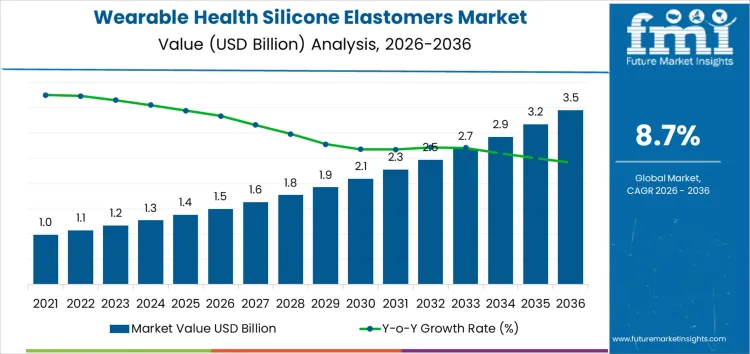
The wearable health silicone elastomers market is valued at USD 1.5 billion in 2026 and is projected to reach USD 3.5 billion by 2036, reflecting a CAGR of 8.7%. Production concentration is observed among suppliers capable of delivering medical-grade, biocompatible silicone formulations for wearable devices. Regional control over raw material availability, certified manufacturing facilities, and quality assurance affects supply reliability. Volume stability is influenced by adoption across fitness trackers, smartwatches, and medical monitoring devices. Suppliers providing validated, high-performance elastomers capture predictable revenue streams, while smaller operators face variability and limited bargaining power.
Revenue concentration depends on alignment with wearable device OEM programs and integration with device design and assembly. Adoption varies by region according to consumer health monitoring trends, regulatory standards, and wearable penetration. Margins favor operators supplying certified elastomers with multi-application compatibility and technical support. Fragmentation persists among regional suppliers, whereas leading companies secure concentrated value through production control, validated material performance, and integration with device manufacturing rather than output volume alone.
Quick Stats of the Wearable Health Silicone Elastomers Market
- Wearable Health Silicone Elastomers Market Value (2026): USD 1.5 billion
- Wearable Health Silicone Elastomers Forecast Value (2036): USD 3.5 billion
- Wearable Health Silicone Elastomers Forecast CAGR 2026 to 2036: 8.7%
- Leading Elastomer Type in Wearable Health Silicone Elastomers Market: Medical Grade Silicone Elastomers (39.6% share)
- Leading Device Type in Wearable Health Silicone Elastomers Market: Fitness & Activity Trackers (32.8% share)
- Key Growth Regions in Wearable Health Silicone Elastomers Market: China, USA, South Korea, Germany, Japan
- Top Players in Wearable Health Silicone Elastomers Market: Dow Silicones (Dow Inc.), Wacker Chemie AG, Momentive Performance Materials, Elkem ASA, Shin Etsu Chemical Co., Ltd.
What is the Growth Forecast for Wearable Health Silicone Elastomers Market through 2036?
Between 2026 and 2031, the wearable health silicone elastomers market is expected to expand steadily, supported by the rising adoption of medical-grade and high-performance silicone materials in fitness trackers, smartwatches, and health monitoring patches. Consumer preference for durable, flexible, and skin-safe materials is driving innovation in device design. Growth is also influenced by integration of silicone elastomers in healthcare wearables for continuous monitoring, and by the increasing emphasis on comfort, performance, and reliability in consumer electronics and medical devices. Suppliers are focusing on material quality and regulatory compliance to meet device standards.
From 2031 to 2036, the market is anticipated to experience continued robust growth, fueled by expanding adoption of wearable sensors and smart medical devices across healthcare, fitness, and sports segments. Innovation in liquid silicone rubber (LSR) and specialty polymer blends enables enhanced comfort, flexibility, and device miniaturization. Manufacturers are investing in scalable production processes, high-purity elastomers, and regulatory alignment. Market growth is shaped by the demand for multifunctional devices, skin-safe materials, and high-performance elastomers suitable for both consumer electronics and medical wearable applications. Leading suppliers include Dow Silicones, Wacker Chemie AG, Momentive Performance Materials, Elkem ASA, and Shin-Etsu Chemical Co., Ltd.
Wearable Health Silicone Elastomers Market Key Takeaways
| Metric | Value |
|---|---|
| Market Value (2026) | USD 1.5 billion |
| Forecast Value (2036) | USD 3.5 billion |
| Forecast CAGR 2026 to 2036 | 8.70% |
What Is Driving Growth in the Wearable Health Silicone Elastomers Market?
Wearable health silicone elastomers are increasingly adopted to produce comfortable, durable, and biocompatible components for medical devices, fitness trackers, and health monitoring wearables. Historically, elastomers in wearables offered limited skin comfort, chemical resistance, or long-term durability. Modern silicone elastomers provide stretchability, hypoallergenic properties, thermal stability, and chemical resistance while maintaining flexibility for sensors, straps, and wearable housings. Device manufacturers, medical equipment suppliers, and R&D teams prioritize material consistency, skin safety, and regulatory compliance. Early adoption focused on premium health monitoring devices and medical wearables, while current demand spans consumer fitness trackers, wearable patches, and telemedicine devices, driven by increasing health awareness, remote patient monitoring, and comfort-focused design requirements. Material performance, processability, and longevity influence supplier selection.
Rising demand for wearable health monitoring, telehealth expansion, and regulatory standards are shaping market growth. Compared with conventional elastomers, modern silicone grades emphasize biocompatibility, mechanical resilience, and integration with electronic sensors for reliable performance. Cost structures depend on polymer synthesis, formulation, and molding processes, concentrating margins among suppliers delivering high-quality, consistent elastomers. Device manufacturers adopt wearable health silicones to ensure user comfort, maintain sensor functionality, and comply with medical device regulations. By 2036, wearable health silicone elastomers are expected to become standard materials in medical and consumer wearable devices, supporting device reliability, patient safety, and long-term usability.
What Factors Are Shaping the Demand for Wearable Health Silicone Elastomers in Terms of Elastomer Type and Device Type?
The demand for wearable health silicone elastomers is segmented by elastomer type and device type. Elastomer types include medical-grade silicone, high-performance silicone, liquid silicone rubber (LSR), specialty polymer blends, and other variants. Device types include fitness and activity trackers, smartwatches and wearables, health monitoring patches, medical wearable sensors, and additional applications. Adoption is influenced by biocompatibility, flexibility, and durability. Uptake is driven by consumer adoption of wearable devices, regulatory standards, and operational reliability. Elastomer and device selection depends on mechanical performance, skin compatibility, and environmental resistance, ensuring long-term comfort, safety, and functionality in wearable health applications.
Why Are Medical-Grade Silicone Elastomers Leading the Elastomer Type Segment in Wearable Health Devices?

Medical-grade silicone elastomers account for 39.6% of total elastomer type demand, making them the leading category. These materials provide biocompatibility, flexibility, chemical stability, and skin-safe properties suitable for continuous contact with the human body. Adoption is reinforced by regulatory compliance for medical devices, durability under repeated stretching, and resistance to sweat, oils, and cleaning agents. Manufacturers integrate medical-grade silicones in wearable sensors, health monitoring patches, and smart bands to ensure long-term safety and comfort. Maintenance and testing include evaluating tensile strength, elasticity, and surface integrity to maintain device reliability. The segment leads because medical-grade silicone combines safety, comfort, and performance across wearable health applications.
Operational factors further support adoption. Elastomers must withstand thermal cycling, repeated deformation, and environmental exposure without degrading. Integration with electronic sensors requires precise molding and adhesion properties. The segment leads because medical-grade silicones provide predictable mechanical behavior, consistent skin compatibility, and durability, ensuring operational reliability in wearable devices.
Why Are Fitness and Activity Trackers Representing the Largest Device Segment in Wearable Health Silicone Elastomers?

Fitness and activity trackers account for 32.8% of total device type demand, making them the largest segment. Adoption is driven by the growing consumer focus on health, exercise monitoring, and lifestyle tracking. These devices require elastomers that offer comfort, flexibility, and durability for continuous skin contact during physical activity. Manufacturers select medical-grade and high-performance silicones to ensure sweat resistance, mechanical integrity, and secure sensor integration. Maintenance practices involve testing for elasticity, wear resistance, and surface compatibility to maintain user safety and device accuracy.
Operational and functional factors influence adoption. Elastomers must endure repeated stretching, temperature fluctuations, and exposure to environmental moisture without losing performance. Proper integration ensures secure fit, sensor accuracy, and long-term user comfort. Fitness and activity trackers lead because they represent the highest-volume consumer wearable segment, requiring elastomers that combine mechanical reliability, biocompatibility, and operational efficiency.
How Are Silicone Elastomers Enhancing Wearable Health Devices?
Wearable health silicone elastomers are increasingly adopted in fitness trackers, medical monitoring devices, and smartwatches for their flexibility, skin compatibility, and durability. Adoption is strongest in regions with high consumer electronics penetration, advanced healthcare infrastructure, and growing wearable device demand. Elastomers are selected for biocompatibility, stretchability, and resistance to sweat, UV, and mechanical stress. Growth is driven by rising health awareness, wearable adoption, and regulatory compliance. Investment focuses on material performance, comfort, and long-term reliability. Manufacturers prioritize elastomers that maintain device functionality, enhance wearer comfort, and meet regional safety and material standards.
Why Are Regional Healthcare Trends and Consumer Preferences Driving Adoption?
Demand is influenced by local health monitoring initiatives, wearable device penetration, and consumer focus on preventive healthcare. Companies adopt silicone elastomers to ensure skin-safe, durable, and flexible device components. Materials offering consistent elasticity, hypoallergenic properties, and long-term stability gain preference. Adoption is concentrated in regions with high disposable income, digital health awareness, and regulatory oversight. User comfort, device reliability, and regulatory compliance drive procurement rather than cost. Suppliers delivering certified, high-performance elastomers gain advantages among wearable device manufacturers and medical device OEMs.
What Factors Limit Broader Use of Wearable Health Silicone Elastomers?
High material and processing costs, specialized formulation requirements, and performance variability restrict adoption. Elastomer performance can be affected by prolonged exposure to sweat, UV, and mechanical wear. Compatibility with electronic components and device design constraints adds complexity. Certification and material compliance processes may delay deployment. Smaller device manufacturers or regions with limited material availability adopt elastomers more slowly. These factors concentrate early use among large wearable device producers and regions with advanced manufacturing infrastructure and regulatory compliance capabilities.
How Are Innovation and Industry Collaboration Shaping Market Growth?
Recent developments include biocompatible, high-durability elastomers, improved adhesion properties, and formulations optimized for flexibility and sensor integration. Collaboration between elastomer manufacturers, wearable OEMs, and healthcare technology firms ensures material validation, regulatory compliance, and design compatibility. Pilot testing evaluates comfort, durability, and chemical resistance before full-scale deployment. Quality monitoring, traceability, and standardized production processes maintain performance consistency. Focus is on device functionality, wearer safety, and regulatory alignment rather than cost or throughput. Collaborative initiatives enable broader adoption of wearable health silicone elastomers while supporting safe, durable, and high-performance wearable devices.
What is the Demand for Wearable Health Silicone Elastomers by Country?

| Country | CAGR (%) |
|---|---|
| USA | 9.2% |
| China | 10.1% |
| Germany | 8.5% |
| Japan | 7.8% |
| South Korea | 9.0% |
Demand for wearable health silicone elastomers is rising as manufacturers develop flexible, durable, and biocompatible materials for medical devices, fitness trackers, and health monitoring wearables. China leads with a 10.1% CAGR, driven by rapid adoption of wearable health technologies, domestic medical device production, and growing R&D in flexible elastomer materials. The USA follows at 9.2%, supported by high penetration of wearable devices, health monitoring adoption, and regulatory compliance requirements. South Korea records 9.0% growth, shaped by advanced consumer electronics and medical device industries. Germany grows at 8.5%, reflecting adoption in medical and industrial wearable applications. Japan shows 7.8% CAGR, influenced by moderate adoption of wearable health devices and focus on high-quality silicone elastomers.
How Is the United States Experiencing Growth in the Wearable Health Silicone Elastomers Market?
United States is experiencing growth at a CAGR of 9.2%, supported by adoption of silicone elastomers in wearable health devices for improved comfort, durability, and skin compatibility. Medical device manufacturers and material suppliers are deploying elastomers optimized for flexibility, biocompatibility, and long-term performance. Demand is concentrated in medical device hubs, wearable technology centers, and research and development facilities. Investments focus on material formulation, regulatory compliance, and manufacturing precision rather than large-scale production expansion. Growth reflects increasing adoption of wearable health devices, rising consumer interest in health monitoring, and industrial focus on advanced, safe, and flexible materials.
- Wearable health devices drive adoption.
- Elastomers ensure comfort, durability, and biocompatibility.
- Medical device hubs and R&D centers concentrate demand.
- Material formulation and regulatory compliance guide investment.
How Is China Witnessing Rapid Growth With Wearable Health Technology Expansion?
China is witnessing growth at a CAGR of 10.1%, fueled by adoption of silicone elastomers in wearable health devices to improve flexibility, skin compatibility, and device longevity. Manufacturers and suppliers are providing elastomers optimized for thermal stability, durability, and compliance with medical standards. Demand is concentrated in major medical device manufacturing hubs, wearable tech R&D centers, and urban healthcare innovation zones. Investments prioritize material performance, biocompatibility, and production precision rather than large-scale deployment. Growth reflects rising adoption of wearable health technology, increasing medical monitoring applications, and government initiatives supporting medical device innovation.
- Wearable technology expansion drives adoption.
- Elastomers provide flexibility, durability, and biocompatibility.
- Medical device hubs and innovation zones concentrate demand.
- Material performance and production precision guide investment.
How Is Germany Experiencing Steady Growth with Medical Device Manufacturing?
Germany is experiencing growth at a CAGR of 8.5%, supported by adoption of silicone elastomers in wearable health devices to enhance comfort, reliability, and long-term performance. Manufacturers and suppliers are deploying elastomers optimized for biocompatibility, thermal stability, and durability. Demand is concentrated in medical device production clusters, R&D centers, and healthcare innovation hubs. Investments focus on material formulation, regulatory compliance, and precision manufacturing rather than large-scale expansion. Growth reflects the country’s strong medical device industry, adoption of advanced wearable technologies, and emphasis on high-quality, safe materials for health applications.
- Medical device manufacturing drives adoption.
- Elastomers ensure comfort, durability, and biocompatibility.
- Production clusters and R&D centers concentrate demand.
- Material formulation and regulatory compliance guide investment.
How Is Japan Experiencing Moderate Growth with Wearable Health Applications?
Japan is experiencing growth at a CAGR of 7.8%, fueled by adoption of silicone elastomers in wearable health devices for skin compatibility, flexibility, and reliable performance under varied conditions. Manufacturers and suppliers are providing elastomers optimized for biocompatibility, thermal stability, and long-term usage. Demand is concentrated in medical device hubs, wearable tech centers, and R&D facilities. Investments prioritize material quality, regulatory adherence, and production precision rather than large-scale deployment. Growth reflects rising consumer adoption of health-monitoring devices, industrial focus on safe materials, and integration of advanced elastomers in wearable technologies.
- Wearable health applications drive adoption.
- Elastomers provide flexibility, durability, and biocompatibility.
- Medical device hubs and R&D centers concentrate demand.
- Material quality and regulatory adherence guide investment.
How Is South Korea Witnessing Growth with Advanced Wearable Materials?
South Korea is experiencing growth at a CAGR of 9%, supported by adoption of silicone elastomers in wearable health devices to improve flexibility, comfort, and skin safety. Manufacturers and suppliers are deploying elastomers optimized for durability, biocompatibility, and thermal stability. Demand is concentrated in medical device manufacturing hubs, wearable technology centers, and R&D facilities. Investments focus on material performance, precision manufacturing, and regulatory compliance rather than large-scale expansion. Growth reflects increasing adoption of wearable health devices, rising consumer health awareness, and industrial emphasis on advanced elastomeric materials for medical applications.
- Advanced wearable materials drive adoption.
- Elastomers ensure comfort, flexibility, and durability.
- Medical device hubs and R&D centers concentrate demand.
- Material performance and regulatory compliance guide investment.
Who Competes in the Wearable Health Silicone Elastomers Market and What Defines Their Capabilities?
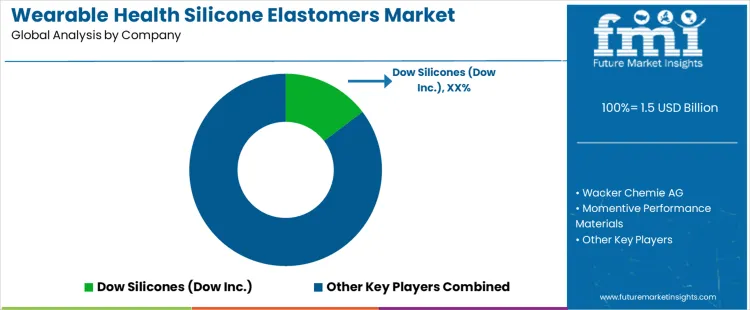
Competition in the wearable health silicone elastomers market is defined by material biocompatibility, flexibility, and durability under continuous skin contact. Dow Silicones (Dow Inc.) supplies silicone elastomers engineered for stretchability, adhesion control, and long-term comfort in wearable health devices. Wacker Chemie AG focuses on high-purity silicones that maintain performance under sweat, temperature fluctuations, and repeated deformation. Momentive Performance Materials provides elastomer grades optimized for sensor encapsulation and skin-safe wearable interfaces. Elkem ASA delivers silicone solutions with tailored mechanical properties and consistent batch quality.
Shin Etsu Chemical Co., Ltd. competes through biocompatible elastomers designed for flexible medical and fitness devices. Other market participants include regional producers and specialty suppliers offering niche formulations for adhesion, thermal stability, or optical clarity in wearable health applications. Adoption is influenced by material performance, regulatory compliance, and compatibility with integrated electronics and sensors.
Material differentiation drives competition in the wearable health silicone elastomers segment. Dow Silicones (Dow Inc.) emphasizes elastomer formulations that balance softness, elongation, and skin adhesion for long-term comfort. Wacker Chemie AG develops high-purity elastomers with controlled cure profiles to maintain dimensional stability and elasticity under repeated use. Momentive Performance Materials supplies grades optimized for wearable sensor protection while ensuring skin safety and low irritation. Elkem ASA focuses on mechanical performance, transparency, and consistent quality in mass production.
Shin Etsu Chemical Co., Ltd. delivers silicone elastomers tailored for thermal resistance and stretchable device housings. Other suppliers provide niche elastomers with antimicrobial, hypoallergenic, or conductive properties for specialized wearable applications. Competitive differences arise from biocompatibility certification, mechanical durability, formulation consistency, and ability to integrate with electronic components in wearable health devices.
Key Players in the Wearable Health Silicone Elastomers Market
- Dow Silicones (Dow Inc.)
- Wacker Chemie AG
- Momentive Performance Materials
- Elkem ASA
- Shin Etsu Chemical Co., Ltd.
- Others
Scope of the Report
| Items | Values |
|---|---|
| Quantitative Units (2026) | USD billion |
| Elastomer Type | Medical Grade Silicone Elastomers, High Performance Silicone Elastomers, Liquid Silicone Rubber (LSR), Specialty Polymer Blends, Others |
| Device Type | Fitness & Activity Trackers, Smartwatches & Wearables, Health Monitoring Patches, Medical Wearable Sensors, Others |
| End Use Industry | Consumer Electronics, Healthcare & Medical Devices, Sports & Fitness, Others |
| Region | Asia Pacific, Europe, North America, Latin America, Middle East & Africa |
| Key Countries Covered | China, Japan, South Korea, India, Australia & New Zealand, Germany, United Kingdom, France, Italy, Spain, Nordic, BENELUX, United States, Canada, Mexico, Brazil, Chile, Kingdom of Saudi Arabia, Other GCC Countries, Turkey, South Africa, Other African Union |
| Key Companies Profiled | Dow Silicones (Dow Inc.), Wacker Chemie AG, Momentive Performance Materials, Elkem ASA, Shin Etsu Chemical Co., Ltd., Others |
| Additional Attributes | Dollar sales by elastomer type, device type, and end-use industry; regional CAGR, volume and value growth projections; adoption in fitness trackers, smartwatches, medical patches, and sensors; high-performance, biocompatible, and skin-safe elastomers; regulatory compliance and integration with wearable electronics; operational reliability and comfort-focused design |
Wearable Health Silicone Elastomers Market Segmentation
Elastomer Type:
- Medical Grade Silicone Elastomers
- High Performance Silicone Elastomers
- Liquid Silicone Rubber (LSR)
- Specialty Polymer Blends
- Others
Device Type:
- Fitness & Activity Trackers
- Smartwatches & Wearables
- Health Monitoring Patches
- Medical Wearable Sensors
- Others
End Use Industry:
- Consumer Electronics
- Healthcare & Medical Devices
- Sports & Fitness
- Others
Region:
- Asia Pacific
- China
- Japan
- South Korea
- India
- Australia & New Zealand
- ASEAN
- Rest of Asia Pacific
- Europe
- Germany
- United Kingdom
- France
- Italy
- Spain
- Nordic
- BENELUX
- Rest of Europe
- North America
- United States
- Canada
- Mexico
- Latin America
- Brazil
- Chile
- Rest of Latin America
- Middle East & Africa
- Kingdom of Saudi Arabia
- Other GCC Countries
- Turkey
- South Africa
- Other African Union
- Rest of Middle East & Africa
Bibliography
- Food and Agriculture Organization of the United Nations (FAO). (2024). Integrated pest management and sustainable pesticide use in soybean cropping systems. Food and Agriculture Organization of the United Nations.
- United States Department of Agriculture (USDA), Agricultural Research Service. (2024). Soybean cyst nematode management and resistance mitigation strategies in soybean production. United States Department of Agriculture.
- International Plant Protection Convention (IPPC). (2024). Guidance on pest risk management and phytosanitary measures for crop pests affecting legumes.
Food and Agriculture Organization of the United Nations (IPPC Secretariat). - European Food Safety Authority (EFSA). (2024). Scientific guidance on environmental and human risk assessment for pesticide active substances used in crop protection. EFSA Journal.
- Organisation for Economic Co‑operation and Development (OECD). (2024). Pesticide regulation, environmental risk mitigation, and sustainable use frameworks for agriculture. OECD Environment, Health and Safety Programme.
Frequently Asked Questions
How big is the wearable health silicone elastomers market in 2026?
The global wearable health silicone elastomers market is estimated to be valued at USD 1.5 billion in 2026.
What will be the size of wearable health silicone elastomers market in 2036?
The market size for the wearable health silicone elastomers market is projected to reach USD 3.5 billion by 2036.
How much will be the wearable health silicone elastomers market growth between 2026 and 2036?
The wearable health silicone elastomers market is expected to grow at a 8.7% CAGR between 2026 and 2036.
What are the key product types in the wearable health silicone elastomers market?
The key product types in wearable health silicone elastomers market are medical‑grade silicone elastomers, high‑performance silicone elastomers, liquid silicone rubber (lsr), specialty polymer blends and others.
Which device type segment to contribute significant share in the wearable health silicone elastomers market in 2026?
In terms of device type, fitness & activity trackers segment to command 32.8% share in the wearable health silicone elastomers market in 2026.
Preview the report firsthand - request a free sample
Get SampleGet the brochure for pricing and purchase details.
Get PDFTable of Content
- Executive Summary
- Global Market Outlook
- Demand-side Trends
- Supply-side Trends
- Technology Roadmap Analysis
- Analysis and Recommendations
- Market Overview
- Market Coverage / Taxonomy
- Market Definition / Scope / Limitations
- Market Background
- Market Dynamics
- Drivers
- Restraints
- Opportunity
- Trends
- Scenario Forecast
- Demand in Optimistic Scenario
- Demand in Likely Scenario
- Demand in Conservative Scenario
- Opportunity Map Analysis
- Product Life Cycle Analysis
- Supply Chain Analysis
- Investment Feasibility Matrix
- Value Chain Analysis
- PESTLE and Porter’s Analysis
- Regulatory Landscape
- Regional Parent Market Outlook
- Production and Consumption Statistics
- Import and Export Statistics
- Market Dynamics
- Global Market Analysis 2021 to 2025 and Forecast, 2026 to 2036
- Historical Market Size Value (USD Million) Analysis, 2021 to 2025
- Current and Future Market Size Value (USD Million) Projections, 2026 to 2036
- Y-o-Y Growth Trend Analysis
- Absolute $ Opportunity Analysis
- Global Market Pricing Analysis 2021 to 2025 and Forecast 2026 to 2036
- Global Market Analysis 2021 to 2025 and Forecast 2026 to 2036, By Elastomer Type
- Introduction / Key Findings
- Historical Market Size Value (USD Million) Analysis By Elastomer Type , 2021 to 2025
- Current and Future Market Size Value (USD Million) Analysis and Forecast By Elastomer Type , 2026 to 2036
- Medical‑Grade Silicone Elastomers
- High‑Performance Silicone Elastomers
- Liquid Silicone Rubber (LSR)
- Specialty Polymer Blends
- Others
- Medical‑Grade Silicone Elastomers
- Y-o-Y Growth Trend Analysis By Elastomer Type , 2021 to 2025
- Absolute $ Opportunity Analysis By Elastomer Type , 2026 to 2036
- Global Market Analysis 2021 to 2025 and Forecast 2026 to 2036, By Device Type
- Introduction / Key Findings
- Historical Market Size Value (USD Million) Analysis By Device Type, 2021 to 2025
- Current and Future Market Size Value (USD Million) Analysis and Forecast By Device Type, 2026 to 2036
- Fitness & Activity Trackers
- Smartwatches & Wearables
- Health Monitoring Patches
- Medical Wearable Sensors
- Others
- Fitness & Activity Trackers
- Y-o-Y Growth Trend Analysis By Device Type, 2021 to 2025
- Absolute $ Opportunity Analysis By Device Type, 2026 to 2036
- Global Market Analysis 2021 to 2025 and Forecast 2026 to 2036, By End‑Use Industry
- Introduction / Key Findings
- Historical Market Size Value (USD Million) Analysis By End‑Use Industry, 2021 to 2025
- Current and Future Market Size Value (USD Million) Analysis and Forecast By End‑Use Industry, 2026 to 2036
- Consumer Electronics
- Healthcare & Medical Devices
- Sports & Fitness
- Others
- Consumer Electronics
- Y-o-Y Growth Trend Analysis By End‑Use Industry, 2021 to 2025
- Absolute $ Opportunity Analysis By End‑Use Industry, 2026 to 2036
- Global Market Analysis 2021 to 2025 and Forecast 2026 to 2036, By Region
- Introduction
- Historical Market Size Value (USD Million) Analysis By Region, 2021 to 2025
- Current Market Size Value (USD Million) Analysis and Forecast By Region, 2026 to 2036
- North America
- Latin America
- Western Europe
- Eastern Europe
- East Asia
- South Asia and Pacific
- Middle East & Africa
- Market Attractiveness Analysis By Region
- North America Market Analysis 2021 to 2025 and Forecast 2026 to 2036, By Country
- Historical Market Size Value (USD Million) Trend Analysis By Market Taxonomy, 2021 to 2025
- Market Size Value (USD Million) Forecast By Market Taxonomy, 2026 to 2036
- By Country
- USA
- Canada
- Mexico
- By Elastomer Type
- By Device Type
- By End‑Use Industry
- By Country
- Market Attractiveness Analysis
- By Country
- By Elastomer Type
- By Device Type
- By End‑Use Industry
- Key Takeaways
- Latin America Market Analysis 2021 to 2025 and Forecast 2026 to 2036, By Country
- Historical Market Size Value (USD Million) Trend Analysis By Market Taxonomy, 2021 to 2025
- Market Size Value (USD Million) Forecast By Market Taxonomy, 2026 to 2036
- By Country
- Brazil
- Chile
- Rest of Latin America
- By Elastomer Type
- By Device Type
- By End‑Use Industry
- By Country
- Market Attractiveness Analysis
- By Country
- By Elastomer Type
- By Device Type
- By End‑Use Industry
- Key Takeaways
- Western Europe Market Analysis 2021 to 2025 and Forecast 2026 to 2036, By Country
- Historical Market Size Value (USD Million) Trend Analysis By Market Taxonomy, 2021 to 2025
- Market Size Value (USD Million) Forecast By Market Taxonomy, 2026 to 2036
- By Country
- Germany
- UK
- Italy
- Spain
- France
- Nordic
- BENELUX
- Rest of Western Europe
- By Elastomer Type
- By Device Type
- By End‑Use Industry
- By Country
- Market Attractiveness Analysis
- By Country
- By Elastomer Type
- By Device Type
- By End‑Use Industry
- Key Takeaways
- Eastern Europe Market Analysis 2021 to 2025 and Forecast 2026 to 2036, By Country
- Historical Market Size Value (USD Million) Trend Analysis By Market Taxonomy, 2021 to 2025
- Market Size Value (USD Million) Forecast By Market Taxonomy, 2026 to 2036
- By Country
- Russia
- Poland
- Hungary
- Balkan & Baltic
- Rest of Eastern Europe
- By Elastomer Type
- By Device Type
- By End‑Use Industry
- By Country
- Market Attractiveness Analysis
- By Country
- By Elastomer Type
- By Device Type
- By End‑Use Industry
- Key Takeaways
- East Asia Market Analysis 2021 to 2025 and Forecast 2026 to 2036, By Country
- Historical Market Size Value (USD Million) Trend Analysis By Market Taxonomy, 2021 to 2025
- Market Size Value (USD Million) Forecast By Market Taxonomy, 2026 to 2036
- By Country
- China
- Japan
- South Korea
- By Elastomer Type
- By Device Type
- By End‑Use Industry
- By Country
- Market Attractiveness Analysis
- By Country
- By Elastomer Type
- By Device Type
- By End‑Use Industry
- Key Takeaways
- South Asia and Pacific Market Analysis 2021 to 2025 and Forecast 2026 to 2036, By Country
- Historical Market Size Value (USD Million) Trend Analysis By Market Taxonomy, 2021 to 2025
- Market Size Value (USD Million) Forecast By Market Taxonomy, 2026 to 2036
- By Country
- India
- ASEAN
- Australia & New Zealand
- Rest of South Asia and Pacific
- By Elastomer Type
- By Device Type
- By End‑Use Industry
- By Country
- Market Attractiveness Analysis
- By Country
- By Elastomer Type
- By Device Type
- By End‑Use Industry
- Key Takeaways
- Middle East & Africa Market Analysis 2021 to 2025 and Forecast 2026 to 2036, By Country
- Historical Market Size Value (USD Million) Trend Analysis By Market Taxonomy, 2021 to 2025
- Market Size Value (USD Million) Forecast By Market Taxonomy, 2026 to 2036
- By Country
- Kingdom of Saudi Arabia
- Other GCC Countries
- Turkiye
- South Africa
- Other African Union
- Rest of Middle East & Africa
- By Elastomer Type
- By Device Type
- By End‑Use Industry
- By Country
- Market Attractiveness Analysis
- By Country
- By Elastomer Type
- By Device Type
- By End‑Use Industry
- Key Takeaways
- Key Countries Market Analysis
- USA
- Pricing Analysis
- Market Share Analysis, 2025
- By Elastomer Type
- By Device Type
- By End‑Use Industry
- Canada
- Pricing Analysis
- Market Share Analysis, 2025
- By Elastomer Type
- By Device Type
- By End‑Use Industry
- Mexico
- Pricing Analysis
- Market Share Analysis, 2025
- By Elastomer Type
- By Device Type
- By End‑Use Industry
- Brazil
- Pricing Analysis
- Market Share Analysis, 2025
- By Elastomer Type
- By Device Type
- By End‑Use Industry
- Chile
- Pricing Analysis
- Market Share Analysis, 2025
- By Elastomer Type
- By Device Type
- By End‑Use Industry
- Germany
- Pricing Analysis
- Market Share Analysis, 2025
- By Elastomer Type
- By Device Type
- By End‑Use Industry
- UK
- Pricing Analysis
- Market Share Analysis, 2025
- By Elastomer Type
- By Device Type
- By End‑Use Industry
- Italy
- Pricing Analysis
- Market Share Analysis, 2025
- By Elastomer Type
- By Device Type
- By End‑Use Industry
- Spain
- Pricing Analysis
- Market Share Analysis, 2025
- By Elastomer Type
- By Device Type
- By End‑Use Industry
- France
- Pricing Analysis
- Market Share Analysis, 2025
- By Elastomer Type
- By Device Type
- By End‑Use Industry
- India
- Pricing Analysis
- Market Share Analysis, 2025
- By Elastomer Type
- By Device Type
- By End‑Use Industry
- ASEAN
- Pricing Analysis
- Market Share Analysis, 2025
- By Elastomer Type
- By Device Type
- By End‑Use Industry
- Australia & New Zealand
- Pricing Analysis
- Market Share Analysis, 2025
- By Elastomer Type
- By Device Type
- By End‑Use Industry
- China
- Pricing Analysis
- Market Share Analysis, 2025
- By Elastomer Type
- By Device Type
- By End‑Use Industry
- Japan
- Pricing Analysis
- Market Share Analysis, 2025
- By Elastomer Type
- By Device Type
- By End‑Use Industry
- South Korea
- Pricing Analysis
- Market Share Analysis, 2025
- By Elastomer Type
- By Device Type
- By End‑Use Industry
- Russia
- Pricing Analysis
- Market Share Analysis, 2025
- By Elastomer Type
- By Device Type
- By End‑Use Industry
- Poland
- Pricing Analysis
- Market Share Analysis, 2025
- By Elastomer Type
- By Device Type
- By End‑Use Industry
- Hungary
- Pricing Analysis
- Market Share Analysis, 2025
- By Elastomer Type
- By Device Type
- By End‑Use Industry
- Kingdom of Saudi Arabia
- Pricing Analysis
- Market Share Analysis, 2025
- By Elastomer Type
- By Device Type
- By End‑Use Industry
- Turkiye
- Pricing Analysis
- Market Share Analysis, 2025
- By Elastomer Type
- By Device Type
- By End‑Use Industry
- South Africa
- Pricing Analysis
- Market Share Analysis, 2025
- By Elastomer Type
- By Device Type
- By End‑Use Industry
- USA
- Market Structure Analysis
- Competition Dashboard
- Competition Benchmarking
- Market Share Analysis of Top Players
- By Regional
- By Elastomer Type
- By Device Type
- By End‑Use Industry
- Competition Analysis
- Competition Deep Dive
- Dow Silicones (Dow Inc.)
- Overview
- Product Portfolio
- Profitability by Market Segments (Product/Age /Sales Channel/Region)
- Sales Footprint
- Strategy Overview
- Marketing Strategy
- Product Strategy
- Channel Strategy
- Wacker Chemie AG
- Momentive Performance Materials
- Elkem ASA
- Shin‑Etsu Chemical Co., Ltd.
- Others
- Dow Silicones (Dow Inc.)
- Competition Deep Dive
- Assumptions & Acronyms Used
- Research Methodology


