

- Industry Size (2026)
- USD 2.8 Bn
- Forecast (2036)
- USD 9.1 Bn
- CAGR (2026 to 2036)
- 12.5%
Wearable Device Packaging Market Forecast and Outlook 2026 to 2036
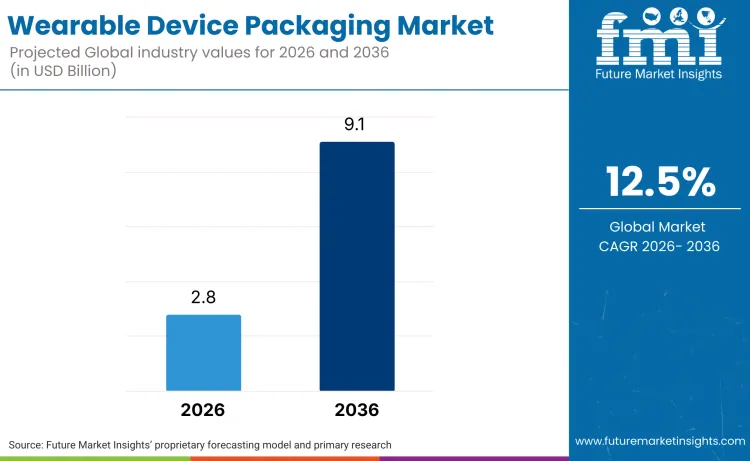
The global wearable device packaging industry is projected to reach a valuation of USD 2.8 billion in 2026 and accelerate toward USD 9.1 billion by 2036, expanding at a robust 12.5% CAGR. Growth trajectory is primarily driven by the simultaneous enforcement of plastic reduction mandates in Europe and the increasing demand for premium unboxing experiences within the broader consumer electronics packaging sector. A pivotal structural shift is currently underway as major technology corporations abandon plastic trays in favor of renewable alternatives; for instance, Apple Inc. reported in 2024 that its fall Apple Watch lineup packaging is 100 percent fiber-based, a milestone toward its commitment to have plastic-free packaging by 2025. This transition is forcing packaging converters to innovate rapidly in molded pulp and specialty paperboard to maintain the structural integrity required for delicate electronics while adhering to new regulations.
To meet this surging demand for sustainable scale, the industry is witnessing significant consolidation among key players who are combining resources to create global leaders in fiber-based solutions. Tony Smurfit, CEO of Smurfit Westrock, highlighted the strategic importance of such moves in July 2024: "Combining Smurfit Kappa and WestRock creates a world-leading sustainable packaging player, bringing together a tremendous depth of experience and expertise from both companies. We believe that this combination has created the 'go-to' leader and partner of choice in sustainable packaging." This consolidation enables the deployment of capital toward fiber innovation that smaller players cannot match, ensuring that the supply chain for mobile phone accessories packaging remains resilient and compliant with evolving global standards through 2036.
Summary of Wearable Device Packaging Market
What Is the Growth Outlook for the wearable device packaging Market as per Future Market Insights Projection?
The market is forecast to grow from USD 2.8 billion in 2026 to USD 9.1 billion by 2036, driven by a strong 12.5% CAGR.
FMI Research Approach: Based on proprietary forecasting models aggregating corporate sustainability reports and regulatory timelines.
How Do FMI Analysts Perceive the wearable device packaging Market to Evolve?
Analysts see a decisive shift from single-use plastics to premium fiber-based structures, with "smart" packaging elements gaining traction for authentication.
FMI research approach: Derived from primary interviews with packaging engineers and analysis of patent filings in material science.
Which Country Holds the Largest Share in the Global wearable device packaging Market?
China is a dominant force, projected to grow at a CAGR of 13.8%, fueled by its dual role as a manufacturing hub and a massive consumer market.
FMI Research Approach: Calculated using regional production data and export volume statistics from trade associations.
How Large Will the wearable device packaging Market Be by 2036?
The market is expected to reach a valuation of USD 9.1 billion by the end of the forecast period.
FMI research approach: Modeled using demand proxies from the consumer electronics and medical device sectors.
What Is the Definition of the wearable device packaging Market?
This market encompasses the design and manufacturing of primary and secondary packaging specifically for body-worn electronic devices, including smartwatches, fitness bands, and medical monitors.
FMI Research Approach: Defined through consultation with industry standardization bodies and key vendor product catalogs.
Which Segment Currently Commands the Highest Share?
Smartwatches are the leading device class, accounting for 44% of the total market value due to their high retail volume and premium packaging requirements.
FMI research approach: Based on point-of-sale data and segmental revenue breakdowns from major consumer electronics brands.
Wearable Device Packaging Market Key Takeaways
| Metric | Details |
|---|---|
| Industry Size (2026) | USD 2.8 Billion |
| Industry Value (2036) | USD 9.1 Billion |
| CAGR (2026-2036) | 12.5% |
Source: Future Market Insights (FMI) analysis, based on proprietary forecasting model and primary research.
What Structural Factors Drive Fiber Adoption?
The implementation of rigorous sustainability targets by global regulatory bodies is fundamentally reshaping the industrial electronics packaging sector, compelling brands to abandon mixed materials. The European Council's PPWR mandate, adopted in December 2024, has effectively outlawed the use of excessive plastic void fills and set binding targets for recyclability by 2030. This regulatory pressure is forcing packaging manufacturers to merge capacity and technical expertise to meet the demand for high-performance fiber solutions that can protect sensitive components without relying on fossil-fuel-based plastics. Companies are increasingly prioritizing suppliers who can offer certified, scalable fiber solutions that align with these new global standards to ensure market access.
Manufacturers are responding by refining their strategies to become specialized sustainability partners rather than just material suppliers, particularly in high-value sectors. Helen Mets, President & CEO of Ahlstrom, explained this strategic pivot in April 2024: "We are taking further steps to become the sustainable specialty materials company with our refined strategy and simplified organization that is best equipped to support our customers and the world to address global trends. Our products touch the lives of people on a daily basis, from more sustainable and safe solutions for food and beverage packaging, to filtration materials for cleaner air and water, to materials that support better healthcare and life science diagnostics." This material science innovation allows fiber to match the hygiene and durability standards previously held by plastics, enabling its adoption in the wearable medical devices sector.
How is the Wearable Device Packaging Market Segmented?
The industry is segmented by device class, material type, and protection level, reflecting a diverse landscape where smart watch presentation demands luxury while fitness trackers prioritize recyclable minimalism. By device class, the market includes packaging for smartwatches, fitness bands, and medical wearables, each requiring distinct barrier properties to protect sensitive sensors. By material type, the industry utilizes paperboard, molded fiber, and corrugated board, with a decisive shift away from rigid plastics as brands seek to align with circular economy goals. By protection level, solutions are categorized into premium rigid boxes, protective mailers, and folding cartons, ensuring that products arrive intact regardless of the distribution channel.
Why do Premium Rigid Boxes hold a dominant share?
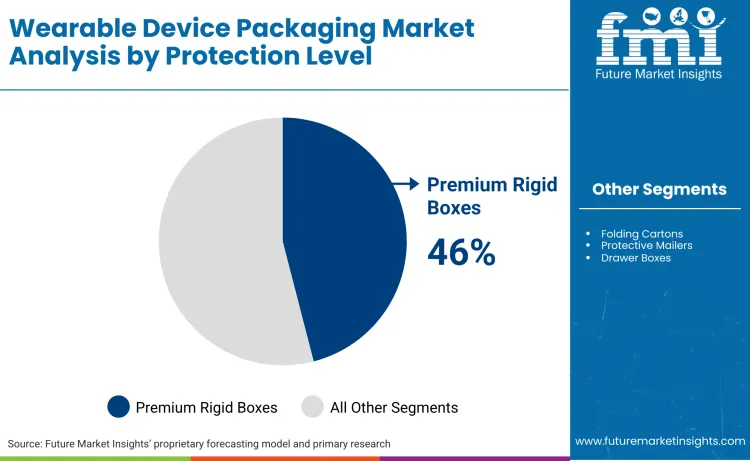
Premium rigid boxes command a 46% share of the protection level segment, driven by the consumer expectation for a high-value unboxing experience associated with expensive wearable band devices. The total municipal solid waste recycled in the US reached over 69 million tons in 2023, with paper and paperboard accounting for approximately 67 percent, indicating a strong infrastructure for fiber-based rigid boxes. Brands utilize this format to convey quality while ensuring the product is protected during the e-commerce packaging journey. The rigidity protects sensitive screens and sensors, justifying the higher unit cost compared to flexible alternatives and reinforcing brand loyalty through tactile quality.
Why is Fiber-based Material replacing plastic?
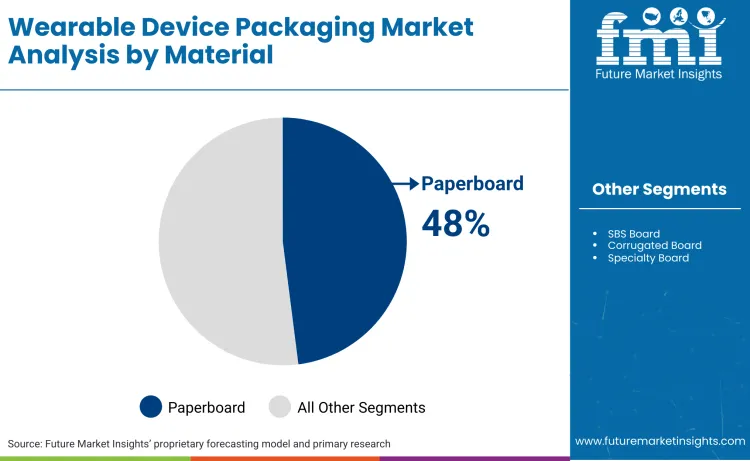
Paperboard and fiber materials hold a 48% share, expanding rapidly as companies redefine specialty materials for the wearable computing devices sector. This shift is supported by innovations in molded pulp that allow for complex geometries previously only achievable with plastic thermoforming. The ability of fiber to provide robust protection while being fully curbside recyclable addresses a critical consumer pain point regarding packaging waste. As material science advances, fiber-based solutions are becoming the standard for both luxury and mass-market wearables, effectively displacing legacy plastic trays and inserts.
Why Is the Mono-Material Revolution Accelerating?
The shift toward mono-material designs is accelerating to meet strict recyclability criteria in the wearable fitness trackers sector. DS Smith highlighted its "Lift Up" solution in January 2024 to replace plastic shrink wraps, responding to data showing 25% of shoppers avoid brands with non-recyclable packaging. Manufacturers are eliminating mixed-material adhesive layers in favor of mechanical interlocks or water-soluble electronic packaging adhesives. This trend ensures that the entire package can be disposed of in a single recycling stream without consumer separation, significantly increasing recovery rates and brand compliance with extended producer responsibility (EPR) schemes.
How Is Medical Sterility Driving Innovation?
Innovation in the medical device packaging segment is being driven by the need for bio-based sterile barriers that do not compromise on safety. In January 2026, PaperFoam launched a custom biobased medical packaging tray for Indivisual contact lens systems, replacing plastic with a molded starch-based solution that is compostable. This development proves that bio-based materials can meet the rigorous hygiene standards required for wearables that contact the skin or eyes. Companies are investing in these technologies to differentiate their health-tech products in a crowded medical devices secondary packaging market, appealing to eco-conscious consumers who refuse to compromise on safety or sustainability.
What Role Does Durability Play in E-Commerce?
The expansion of direct-to-consumer sales for wireless earphone products is forcing packaging to double as a shipping container. SCG Packaging (SCGP) announced a Baht 10,000 million budget in April 2024 for investments targeting high-growth sectors, including healthcare and labware packaging, to enhance supply chain resilience. The trend is moving toward "ships-in-own-container" (SIOC) designs that eliminate the need for an outer shipping box. This reduction in volume lowers freight costs and carbon emissions, making durability a primary design constraint for the primary packaging of fragile electronic devices destined for doorstep delivery.
How Will Wearable Device Packaging Market Expansion Unfold Across Key Global Regions?
The expansion of the wearable device packaging market is characterized by a regulatory-driven divergence, where Asian markets are enforcing strict over-packaging laws while Western markets focus on material circularity and fiber innovation. China is leading the growth trajectory with aggressive state intervention on packaging layers, whereas the European Union and the United States are reshaping the smartwatch chips supply chain through corporate sustainability goals and recycling infrastructure upgrades. FMI analysis suggests that multinational corporations will standardize their global packaging designs to meet the strictest regional standards, effectively exporting the most rigorous compliance requirements worldwide.
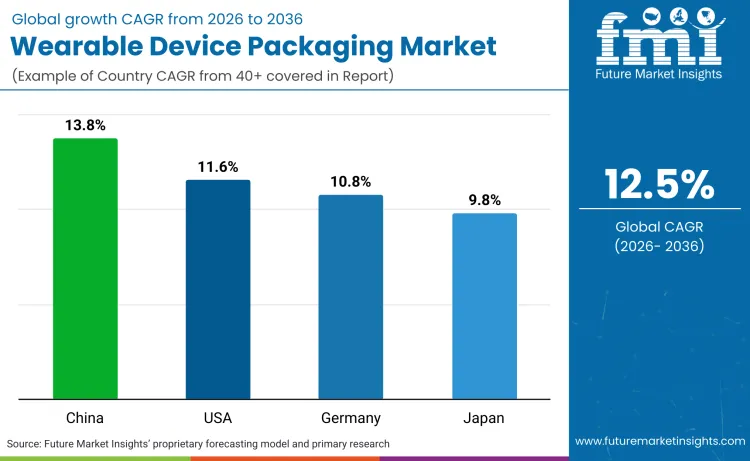
| Country | CAGR (2026 to 2036) |
|---|---|
| China | 13.8% |
| USA | 11.6% |
| Brazil | 11.2% |
| Germany | 10.8% |
| Japan | 9.8% |
Source: FMI historical analysis and forecast data.
Why is China enforcing strict packaging limits?
The wearable device packaging sector in China is projected to grow at a 13.8% CAGR, heavily influenced by government crackdowns on waste. The State Administration for Market Regulation (SAMR) released mandatory standard GB 43284-2023, which stipulates that packaging for specific products must not exceed three to four layers and clarifies that the ratio of packaging costs to sales price should not exceed 20 percent. This regulation forces manufacturers of budget earphones and fitness bands to simplify designs dramatically. Brands are responding by removing unnecessary void fill and luxury laminates, driving a massive volume shift toward compact, high-efficiency fiber cartons that comply with state mandates.
What drives the fiber transition in the USA?
The USA is forecast to expand at an 11.6% CAGR, driven by corporate restructuring and consumer demand for fiber. With plastics generation hovering around 12-13% of total waste, the region is actively pivoting toward renewable fibers to mitigate landfill pressure. Major players are strategically separating operations to better serve these specific regional needs. Andy Silvernail, Chairman & CEO of International Paper, stated in January 2025: "The next right step in our transformation journey to achieve full value creation potential is to create two independent, regionally focused companies. Taking this swift, decisive action now will enable both businesses to reach best-in-class performance and maximize long-term value creation through enhanced focus on their unique opportunities and targeted investment approaches." This split allows for a concentrated focus on North American fiber capabilities to serve the wearable fitness technology sector.
Why is Brazil focusing on raw material capacity?
Brazil is anticipated to grow at an 11.2% CAGR, leveraging its position as a global powerhouse in pulp production to support the fiber transition. The country is seeing massive investments in infrastructure to ensure a steady supply of sustainable raw materials for the packaging industry. Walter Schalka, Former CEO of Suzano, emphasized the scale of this ambition in July 2024: "The new plant will lay the foundations for future growth opportunities, such as the development of innovative new products from renewable raw material, and strengthen Suzano's irreplicable business model." This expansion not only secures the domestic supply chain for wrist watch packaging but also positions Brazil as a critical exporter of green packaging materials to global markets.
How is Germany pioneering premium sustainable materials?
Germany is anticipated to grow at a 10.8% CAGR, cementing its status as the hub for luxury sustainable packaging. Mondi Group reported in 2024 that 87% of its revenue comes from packaging and paper products that are reusable, recyclable, or compostable. At drupa 2024, Mondi showcased premium papers like IQ GRASS+ containing 30% grass fiber, targeting high-end wrist watch packaging share analysis. German consumers demand that sustainability does not compromise the tactile luxury of the unboxing experience, pushing suppliers to innovate in textured, uncoated papers that convey environmental responsibility through touch.
Why is Japan focusing on the 3R strategy?
Japan's market is expected to rise at a 9.8% CAGR, guided by the Plastic Resource Circulation Act which encourages "3R + Renewable" designs. This legislation requires retailers to reduce single-use plastics, influencing the packaging of earphones headphones sold in convenience stores and electronics retailers. Japanese manufacturers are renowned for intricate paper folding techniques that eliminate the need for glues or plastic inserts. This cultural and regulatory alignment drives the adoption of sophisticated, glue-free structural designs that facilitate easy separation and recycling by the end consumer.
How is the Competition in the Wearable Device Packaging Market?
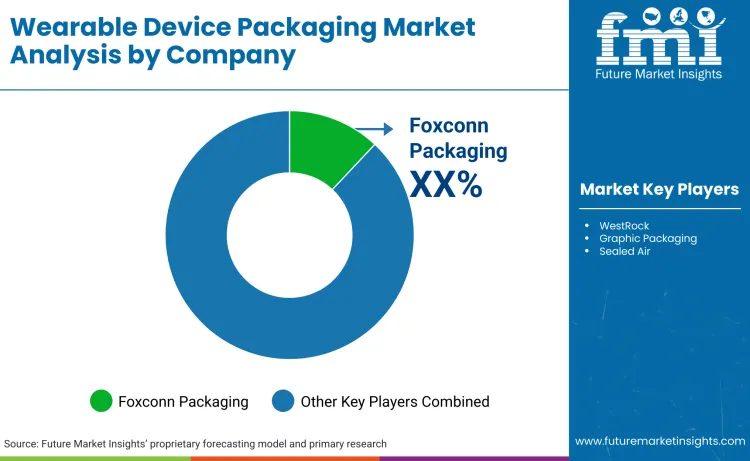
The competitive landscape of the wearable device packaging market is defined by intense consolidation and a race for material science superiority. Major industrial players are merging to achieve the scale necessary to serve global tech giants. The merger of Smurfit Kappa and WestRock in July 2024 created a massive entity capable of delivering standardized wearable computing devices packaging across 40 countries. This consolidation squeezes mid-sized converters, forcing them to specialize in niche segments like luxury finishing or bio-materials to survive.
Innovation is emerging from agile specialists challenging the incumbents. Guardian Medical promoted its CapSure sterile barrier technology in March 2025, a pre-validated system designed to meet EU MDR requirements and eliminate secondary packaging for sterile devices. This challenges traditional suppliers by offering a streamlined, lower-waste alternative. Raw material suppliers like Suzano are expanding capacity, opening the world's largest single-line pulp mill in July 2024 to ensure a steady supply of eucalyptus pulp for the growing fiber demand. The market is bifurcating into massive integrated integrators and highly specialized technical innovators.
Key Players in Wearable Device Packaging Market
- Foxconn Packaging
- Smurfit Westrock
- Graphic Packaging
- Sealed Air
- Mondi Group
- DS Smith
- International Paper
- Amcor
- Stora Enso
- Ahlstrom
Market Definition
The wearable device packaging market represents revenue generated from the sale of primary and secondary packaging solutions specifically designed for wearable technology products. As operationally defined in this article, the market measures the commercial value of boxes, cartons, sleeves, and inserts made from paperboard, corrugated board, molded fiber, and plastics. The market includes packaging for smartwatches, fitness trackers, medical wearables, hearables, and smart glasses.
Revenue generated from the sale of packaging to contract manufacturers and OEMs is included. The scope counts sustainable innovations such as bio-based trays and fiber-based sterile barriers. Market coverage spans North America, Europe, Asia Pacific, Latin America, and the Middle East & Africa. The market excludes shipping containers used solely for bulk logistics (tertiary packaging) and general-purpose retail bags not specific to the device. Packaging for non-electronic jewelry or traditional analog watches is not included unless they incorporate smart technology components.
Scope of Report
| Items | Values |
|---|---|
| Quantitative Units (2026) | USD 2.8 Billion |
| Device Class | Smartwatches, Fitness Bands, Medical Wearables, Hearables |
| Material Type | Paperboard, Molded Fiber, Corrugated Board, Plastics, Bio-materials |
| Protection Level | Premium Rigid Boxes, Protective Mailers, Folding Cartons |
| Regions Covered | North America, Europe, Asia Pacific, Latin America, Middle East & Africa |
| Countries Covered | USA, China, Germany, Japan, India, UK, Brazil + 40+ countries |
| Key Companies Profiled | Foxconn, Smurfit Westrock, Mondi, DS Smith, Ahlstrom, Sealed Air |
| Additional Attributes | Revenue analysis by material and device, regulatory impact (EU PPWR), sustainability trends (fiber transition), and competitive consolidation analysis |
Source: FMI historical analysis and forecast data.
Wearable Device Packaging Market by Segments
By Device Class:
- Smartwatches
- Fitness Bands
- Medical Wearables
- Hearables (Earphones/Headphones)
- Smart Glasses
By Material Type:
- Paperboard
- Molded Fiber
- Corrugated Board
- Plastics (PET, PVC, PP)
- Bio-materials
By Protection Level:
- Premium Rigid Boxes
- Protective Mailers
- Folding Cartons
- Sleeves & Inserts
By Region:
- North America
- Europe
- Asia Pacific
- Latin America
- Middle East & Africa
Bibliography
- European Chemicals Agency. (2024). Guidance on substances in packaging and food-contact materials. ECHA.
- World Customs Organization. (2024). HS nomenclature explanatory notes for paperboard containers and packaging. WCO.
- USA Geological Survey. (2024). Mineral commodity summaries: Industrial minerals used in paper and packaging. USGS.
- Bureau of Transportation Statistics. (2024). Freight flows for paper, packaging, and retail goods. USA DOT.
- International Resource Panel. (2024). Global material flows and circular economy indicators. UNEP IRP.
- Association for the Advancement of Medical Instrumentation. (2024). AAMI guidance on sterile barrier systems and packaging validation. AAMI.
- Ministry of the Environment, Japan. (2024). Containers and packaging recycling law performance report. Government of Japan.
Frequently Asked Questions
What is the current global market size for Wearable Device Packaging?
The global industry is valued at USD 2.8 billion in 2026, driven by the surge in premium smartwatch sales and strict plastic reduction mandates.
What is the projected CAGR for the Wearable Device Packaging market?
Market revenues are projected to grow at a robust 12.5% CAGR from 2026 to 2036, significantly outpacing general electronics packaging growth.
Which segment currently dominates the industry?
Smartwatches hold the dominant share at 44%, utilizing premium rigid boxes to deliver a high-value unboxing experience for consumers.
What are the primary risks or barriers to adoption?
The high cost of developing custom molded fiber tools and the complex logistics of sourcing certified sustainable materials remain significant hurdles for smaller manufacturers.
Who are the leading players in the Wearable Device Packaging space?
Foxconn Packaging, Smurfit Westrock, and Mondi Group lead the sector, leveraging global scale and advanced fiber engineering capabilities.
Preview the report firsthand - request a free sample
Get SampleGet the brochure for pricing and purchase details.
Get PDFTable of Content
- Executive Summary
- Global Market Outlook
- Demand Side Trends
- Supply Side Trends
- Technology Roadmap Analysis
- Analysis and Recommendations
- Market Overview
- Market Coverage / Taxonomy
- Market Definition / Scope / Limitations
- Research Methodology
- Chapter Orientation
- Analytical Lens and Working Hypotheses
- Market Structure, Signals, and Trend Drivers
- Benchmarking and Cross-market Comparability
- Market Sizing, Forecasting, and Opportunity Mapping
- Research Design and Evidence Framework
- Desk Research Programme (Secondary Evidence)
- Company Annual and Sustainability Reports
- Peer-reviewed Journals and Academic Literature
- Corporate Websites, Product Literature, and Technical Notes
- Earnings Decks and Investor Briefings
- Statutory Filings and Regulatory Disclosures
- Technical White Papers and Standards Notes
- Trade Journals, Industry Magazines, and Analyst Briefs
- Conference Proceedings, Webinars, and Seminar Materials
- Government Statistics Portals and Public Data Releases
- Press Releases and Reputable Media Coverage
- Specialist Newsletters and Curated Briefings
- Sector Databases and Reference Repositories
- FMI Internal Knowledge Base and Historical Datasets
- Subscription Datasets and Paid Sources
- Social Channels, Communities, and Digital Listening Inputs
- Additional Desk Sources
- Expert Input and Fieldwork (Primary Evidence)
- Primary Modes
- Qualitative Interviews and Expert Elicitation
- Quantitative Surveys and Structured Data Capture
- Blended Approach
- Why Primary Evidence is Used
- Field Techniques
- Interviews
- Surveys
- Focus Groups
- Observational and In-context Research
- Social and Community Interactions
- Stakeholder Universe Engaged
- C-suite Leaders
- Board Members
- Presidents and Vice Presidents
- R&D and Innovation Heads
- Technical Specialists
- Domain Subject-matter Experts
- Scientists
- Physicians and Other Healthcare Professionals
- Governance, Ethics, and Data Stewardship
- Research Ethics
- Data Integrity and Handling
- Primary Modes
- Tooling, Models, and Reference Databases
- Desk Research Programme (Secondary Evidence)
- Data Engineering and Model Build
- Data Acquisition and Ingestion
- Cleaning, Normalisation, and Verification
- Synthesis, Triangulation, and Analysis
- Quality Assurance and Audit Trail
- Market Background
- Market Dynamics
- Drivers
- Restraints
- Opportunity
- Trends
- Scenario Forecast
- Demand in Optimistic Scenario
- Demand in Likely Scenario
- Demand in Conservative Scenario
- Opportunity Map Analysis
- Product Life Cycle Analysis
- Supply Chain Analysis
- Investment Feasibility Matrix
- Value Chain Analysis
- PESTLE and Porter's Analysis
- Regulatory Landscape
- Regional Parent Market Outlook
- Production and Consumption Statistics
- Import and Export Statistics
- Market Dynamics
- Global Market Analysis 2021 to 2025 and Forecast, 2026 to 2036
- Historical Market Size Value (USD Billion) Analysis, 2021 to 2025
- Current and Future Market Size Value (USD Billion) Projections, 2026 to 2036
- Y-o-Y Growth Trend Analysis
- Absolute $ Opportunity Analysis
- Global Market Pricing Analysis 2021 to 2025 and Forecast 2026 to 2036
- Y-o-Y Growth Trend Analysis 2021 to 2025
- Absolute $ Opportunity Analysis 2026 to 2036
- Global Market Analysis 2021 to 2025 and Forecast 2026 to 2036, By Device Class
- Introduction / Key Findings
- Historical Market Size Value (USD Billion) Analysis By Device Class, 2021 to 2025
- Current and Future Market Size Value (USD Billion) Analysis and Forecast By Device Class, 2026 to 2036
- Smartwatches
- Fitness Bands
- Medical Wearables
- Hearables (Earphones/Headphones)
- Smart Glasses
- Y-o-Y Growth Trend Analysis By Device Class, 2021 to 2025
- Absolute $ Opportunity Analysis By Device Class, 2026 to 2036
- Global Market Analysis 2021 to 2025 and Forecast 2026 to 2036, By Material Type
- Introduction / Key Findings
- Historical Market Size Value (USD Billion) Analysis By Material Type, 2021 to 2025
- Current and Future Market Size Value (USD Billion) Analysis and Forecast By Material Type, 2026 to 2036
- Paperboard
- Molded Fiber
- Corrugated Board
- Plastics (PET, PVC, PP)
- Bio-materials
- Y-o-Y Growth Trend Analysis By Material Type, 2021 to 2025
- Absolute $ Opportunity Analysis By Material Type, 2026 to 2036
- Global Market Analysis 2021 to 2025 and Forecast 2026 to 2036, By Protection Level
- Introduction / Key Findings
- Historical Market Size Value (USD Billion) Analysis By Protection Level, 2021 to 2025
- Current and Future Market Size Value (USD Billion) Analysis and Forecast By Protection Level, 2026 to 2036
- Premium Rigid Boxes
- Protective Mailers
- Folding Cartons
- Sleeves & Inserts
- Y-o-Y Growth Trend Analysis By Protection Level, 2021 to 2025
- Absolute $ Opportunity Analysis By Protection Level, 2026 to 2036
- Global Market Analysis 2021 to 2025 and Forecast 2026 to 2036, By Region
- Introduction
- Historical Market Size Value (USD Billion) Analysis By Region, 2021 to 2025
- Current Market Size Value (USD Billion) Analysis and Forecast By Region, 2026 to 2036
- North America
- Latin America
- Western Europe
- Eastern Europe
- East Asia
- South Asia and Pacific
- Middle East & Africa
- Market Attractiveness Analysis By Region
- North America Market Analysis 2021 to 2025 and Forecast 2026 to 2036, By Country
- Historical Market Size Value (USD Billion) Trend Analysis By Market Taxonomy, 2021 to 2025
- Market Size Value (USD Billion) Forecast By Market Taxonomy, 2026 to 2036
- By Country
- USA
- Canada
- Mexico
- By Device Class
- By Material Type
- By Protection Level
- By Country
- Market Attractiveness Analysis
- By Country
- By Device Class
- By Material Type
- By Protection Level
- Key Takeaways
- Latin America Market Analysis 2021 to 2025 and Forecast 2026 to 2036, By Country
- Historical Market Size Value (USD Billion) Trend Analysis By Market Taxonomy, 2021 to 2025
- Market Size Value (USD Billion) Forecast By Market Taxonomy, 2026 to 2036
- By Country
- Brazil
- Chile
- Rest of Latin America
- By Device Class
- By Material Type
- By Protection Level
- By Country
- Market Attractiveness Analysis
- By Country
- By Device Class
- By Material Type
- By Protection Level
- Key Takeaways
- Western Europe Market Analysis 2021 to 2025 and Forecast 2026 to 2036, By Country
- Historical Market Size Value (USD Billion) Trend Analysis By Market Taxonomy, 2021 to 2025
- Market Size Value (USD Billion) Forecast By Market Taxonomy, 2026 to 2036
- By Country
- Germany
- UK
- Italy
- Spain
- France
- Nordic
- BENELUX
- Rest of Western Europe
- By Device Class
- By Material Type
- By Protection Level
- By Country
- Market Attractiveness Analysis
- By Country
- By Device Class
- By Material Type
- By Protection Level
- Key Takeaways
- Eastern Europe Market Analysis 2021 to 2025 and Forecast 2026 to 2036, By Country
- Historical Market Size Value (USD Billion) Trend Analysis By Market Taxonomy, 2021 to 2025
- Market Size Value (USD Billion) Forecast By Market Taxonomy, 2026 to 2036
- By Country
- Russia
- Poland
- Hungary
- Balkan & Baltic
- Rest of Eastern Europe
- By Device Class
- By Material Type
- By Protection Level
- By Country
- Market Attractiveness Analysis
- By Country
- By Device Class
- By Material Type
- By Protection Level
- Key Takeaways
- East Asia Market Analysis 2021 to 2025 and Forecast 2026 to 2036, By Country
- Historical Market Size Value (USD Billion) Trend Analysis By Market Taxonomy, 2021 to 2025
- Market Size Value (USD Billion) Forecast By Market Taxonomy, 2026 to 2036
- By Country
- China
- Japan
- South Korea
- By Device Class
- By Material Type
- By Protection Level
- By Country
- Market Attractiveness Analysis
- By Country
- By Device Class
- By Material Type
- By Protection Level
- Key Takeaways
- South Asia and Pacific Market Analysis 2021 to 2025 and Forecast 2026 to 2036, By Country
- Historical Market Size Value (USD Billion) Trend Analysis By Market Taxonomy, 2021 to 2025
- Market Size Value (USD Billion) Forecast By Market Taxonomy, 2026 to 2036
- By Country
- India
- ASEAN
- Australia & New Zealand
- Rest of South Asia and Pacific
- By Device Class
- By Material Type
- By Protection Level
- By Country
- Market Attractiveness Analysis
- By Country
- By Device Class
- By Material Type
- By Protection Level
- Key Takeaways
- Middle East & Africa Market Analysis 2021 to 2025 and Forecast 2026 to 2036, By Country
- Historical Market Size Value (USD Billion) Trend Analysis By Market Taxonomy, 2021 to 2025
- Market Size Value (USD Billion) Forecast By Market Taxonomy, 2026 to 2036
- By Country
- Kingdom of Saudi Arabia
- Other GCC Countries
- Turkiye
- South Africa
- Other African Union
- Rest of Middle East & Africa
- By Device Class
- By Material Type
- By Protection Level
- By Country
- Market Attractiveness Analysis
- By Country
- By Device Class
- By Material Type
- By Protection Level
- Key Takeaways
- Key Countries Market Analysis
- USA
- Pricing Analysis
- Market Share Analysis, 2025
- By Device Class
- By Material Type
- By Protection Level
- Canada
- Pricing Analysis
- Market Share Analysis, 2025
- By Device Class
- By Material Type
- By Protection Level
- Mexico
- Pricing Analysis
- Market Share Analysis, 2025
- By Device Class
- By Material Type
- By Protection Level
- Brazil
- Pricing Analysis
- Market Share Analysis, 2025
- By Device Class
- By Material Type
- By Protection Level
- Chile
- Pricing Analysis
- Market Share Analysis, 2025
- By Device Class
- By Material Type
- By Protection Level
- Germany
- Pricing Analysis
- Market Share Analysis, 2025
- By Device Class
- By Material Type
- By Protection Level
- UK
- Pricing Analysis
- Market Share Analysis, 2025
- By Device Class
- By Material Type
- By Protection Level
- Italy
- Pricing Analysis
- Market Share Analysis, 2025
- By Device Class
- By Material Type
- By Protection Level
- Spain
- Pricing Analysis
- Market Share Analysis, 2025
- By Device Class
- By Material Type
- By Protection Level
- France
- Pricing Analysis
- Market Share Analysis, 2025
- By Device Class
- By Material Type
- By Protection Level
- India
- Pricing Analysis
- Market Share Analysis, 2025
- By Device Class
- By Material Type
- By Protection Level
- ASEAN
- Pricing Analysis
- Market Share Analysis, 2025
- By Device Class
- By Material Type
- By Protection Level
- Australia & New Zealand
- Pricing Analysis
- Market Share Analysis, 2025
- By Device Class
- By Material Type
- By Protection Level
- China
- Pricing Analysis
- Market Share Analysis, 2025
- By Device Class
- By Material Type
- By Protection Level
- Japan
- Pricing Analysis
- Market Share Analysis, 2025
- By Device Class
- By Material Type
- By Protection Level
- South Korea
- Pricing Analysis
- Market Share Analysis, 2025
- By Device Class
- By Material Type
- By Protection Level
- Russia
- Pricing Analysis
- Market Share Analysis, 2025
- By Device Class
- By Material Type
- By Protection Level
- Poland
- Pricing Analysis
- Market Share Analysis, 2025
- By Device Class
- By Material Type
- By Protection Level
- Hungary
- Pricing Analysis
- Market Share Analysis, 2025
- By Device Class
- By Material Type
- By Protection Level
- Kingdom of Saudi Arabia
- Pricing Analysis
- Market Share Analysis, 2025
- By Device Class
- By Material Type
- By Protection Level
- Turkiye
- Pricing Analysis
- Market Share Analysis, 2025
- By Device Class
- By Material Type
- By Protection Level
- South Africa
- Pricing Analysis
- Market Share Analysis, 2025
- By Device Class
- By Material Type
- By Protection Level
- USA
- Market Structure Analysis
- Competition Dashboard
- Competition Benchmarking
- Market Share Analysis of Top Players
- By Regional
- By Device Class
- By Material Type
- By Protection Level
- Competition Analysis
- Competition Deep Dive
- Foxconn Packaging
- Smurfit Westrock
- Graphic Packaging
- Sealed Air
- Mondi Group
- DS Smith
- International Paper
- Amcor
- Stora Enso
- Ahlstrom
- Competition Deep Dive
- Assumptions & Acronyms Used


