

- Market Size (2026)
- USD 0.42 Bn
- Forecast (2036)
- USD 1.16 Bn
- CAGR (2026 to 2036)
- 10.7%
Wearable Industrial Lighting Market Size, Forecast, and Outlook By FMI
Summary of the Wearable Industrial Lighting Market
- Demand and Growth Drivers
- Mining remains a core buyer group for certified wearable lights in confined work areas.
- First responders use body-worn lights where both hands must stay available during urgent tasks.
- Warehousing demand is driven by night shifts and inspection work near conveyors or storage racks.
- Product and Segment View
- Headlamps are projected to account for 41.0% share in 2026 as workers need high-brightness LED headlamps with secure helmet fit.
- Chest lights and clip lights are expected to gain use where head movement can misdirect the beam.
- Rechargeable Li-ion products are projected to hold 69.0% share in 2026 as buyers reduce battery waste.
- Intrinsically safe products are tied to explosion-proof lighting needs in gas and dust hazard zones.
- Geography and Competitive Outlook
- Brazil is projected to record 12.9% CAGR through 2036 as workplace accident rates keep safety spend visible.
- Japan is expected to expand at 12.3% CAGR through 2036 as factories value compact and reliable work lights.
- The United Kingdom and Germany are expected to stay mature premium markets for safety-rated lights.
- Streamlight and Pelican Products shape North America demand while Wolf Safety leads in ATEX certified work lights.
- Analyst Opinion
- FMI Principal Consultant Nikhil Kaitwade says “The opportunity in wearable industrial lighting goes beyond higher brightness. Buyers are looking for lights that remain securely in place, last through an entire shift, and meet the specific hazard ratings of the work environment. Suppliers will gain an advantage by minimizing battery-related concerns and simplifying certification for safety teams.”
- Wearable Industrial Lighting Market Value Analysis
- The market is moving from basic flashlights toward task lights worn on helmets, vests and work belts. Portable battery-powered products are central to this shift as workers need compact power with long run time.
- Rechargeable Li-ion products are expected to hold 69.0% share in 2026. This power shift favors brands that bundle chargers, battery indicators and spare packs for shift work.
- Value capture depends on housing durability and battery control. Buyers compare lumen output with beam spread and mounting fit before selecting a product.
- The price premium holds when the light reduces hand use or prevents work stoppage in dark areas. Suppliers with certified options can price above general industrial lights.
Key Takeaways, Market Size, and Forecast
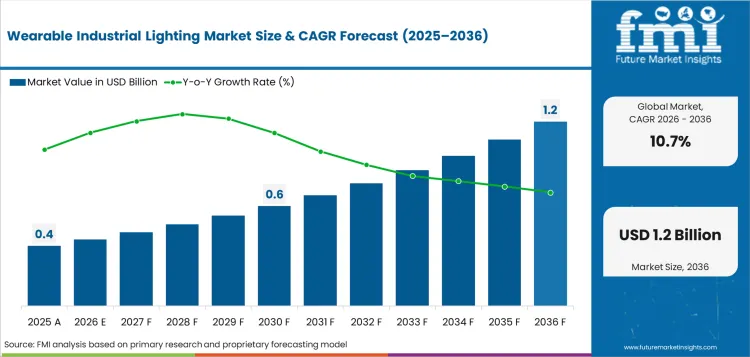
- The wearable industrial lighting market was valued at USD 0.38 billion in 2025.
- The market is projected to reach USD 0.42 billion in 2026.
- By 2036, the wearable industrial lighting market is expected to reach USD 1.16 billion.
- From 2026 to 2036, the market is projected to expand at 10.7% CAGR.
- The market is projected to create an incremental opportunity of USD 0.74 billion between 2026 and 2036.
- Headlamps are projected to account for 41.0% of product type demand in 2026.
- Rechargeable Li-ion products are expected to account for 69.0% of power demand in 2026.
- Brazil at 12.9% CAGR and Japan at 12.3% CAGR are steadily expanding country markets.
Hands-free visibility is becoming a safety and productivity requirement for industrial maintenance teams. Milwaukee states that its REDLITHIUM USB hard-hat headlamp delivers 475 lumens and up to 31 hours runtime in flood low mode. That supports long shifts where workers need both movement and task lighting. Nightstick states that the XPP-5450G is cETLus, ATEX, IECEx, INMETRO and KOSHA listed intrinsically safe. Hazardous-area certification gives oil and gas buyers a clear product screen. Milwaukee documentation also lists wearable output up to 600 lumens with 5 hours runtime in hybrid mode. Higher output improves inspection visibility in low-light mechanical rooms and jobsite areas. India’s Government e-Marketplace lists helmet lights with beam distance ≥200 m and runtime ≥6 hours. Formal tender language is likely to favor suppliers with measurable wearable-lighting specifications.
Wearable Industrial Lighting Market Definition
The wearable industrial lighting market covers portable lights worn by workers during industrial tasks. Scope includes headlamps and chest lights. It also includes helmet lights and handheld hybrids that can be clipped or carried. The market includes solid-state lighting products used in industrial work areas. Revenue covers complete lights, battery packs and fixture-ready wearable assemblies sold for professional use.
Wearable Industrial Lighting Market Inclusions
Market scope covers wearable lights sold for industrial maintenance and mining. It also covers first response and warehouse work. Product type includes headlamps and chest lights. It also includes helmet lights and handheld hybrids. Safety rating includes general industrial, intrinsically safe and rugged waterproof lights. Power includes rechargeable Li-ion, replaceable batteries and hybrid designs. The scope includes wearable LED modules and light engines when they are sold inside finished industrial lighting products.
Wearable Industrial Lighting Market Exclusions
Scope does not include consumer camping lamps, decorative wearable lights or vehicle-mounted lighting. It excludes fixed area lights and tower lights unless they are sold with a wearable task-light module. Smartphones and camera flashes are excluded even when workers use them as temporary lights. Generic batteries sold without an industrial light are outside the revenue scope.
Wearable Industrial Lighting Market Research Methodology
- Primary Research: FMI analysts reviewed supplier portfolios and distributor inputs. The work covered safety manager priorities and field use cases across major industrial countries.
- Desk Research: The study used public data from labor agencies and energy safety bodies. It reviewed standards groups and official company releases.
- Market sizing and forecasting: Market size used supplied anchors and bottom-up checks against industrial lighting shipments, safety equipment demand and rechargeable work-light portfolios.
- Data validation: Forecast checks compared workplace injury signals and hazardous-area standards. Mining activity and product launch evidence were reviewed from active suppliers.
Why is the Wearable Industrial Lighting Market Growing?
- Hands-free lighting reduces task breaks when workers need both hands for repair or inspection work.
- Rechargeable packs lower repeat battery handling during shift-based maintenance work.
- Hazard-rated lights gain attention where gas, dust or water exposure can raise safety risk.
- Helmet and clip mounts improve beam placement when workers move through dark industrial spaces.
Workplace lighting is becoming a direct safety input in confined and low-light tasks. The United States Mine Safety and Health Administration reported an all-injury rate of 1.74 per 200,000 hours worked in 2025. Mining crews and maintenance teams need lights that keep hands free while they climb, repair or inspect. This supports steady use of inspection lighting fixtures in wearable form factors.
General industrial use remains wider than hazardous-area use by unit volume. The safety-rated pool is more valuable per unit as certification and casing quality raise price. International Electrotechnical Commission standard IEC 60079-14:2024 gives buyers a clearer route for equipment selection in explosive atmospheres. That makes certification documents part of the buying process.
Market Segmentation Analysis
- Headlamps are projected to account for 41.0% share in 2026 as helmet fit and beam direction support repeat tasks.
- Maintenance and utilities are expected to represent 34.0% share in 2026 as repair crews need portable light during shutdown work.
- General industrial lights are forecast to account for 46.0% share in 2026 due to broad factory and warehouse use.
- Rechargeable Li-ion lights are projected to capture 69.0% share in 2026 as shift teams reduce disposable battery handling.
The market is divided into four primary segment groups based on product type and end use. Safety rating and power complete the segmentation view. Product type reflects how workers wear or hold the light. End use explains the work setting and risk profile. Safety rating divides everyday industrial use from certified hazardous-area use. Power design connects the category with industrial battery choices and charger use.
Insights into the Headlamps Product Type Segment
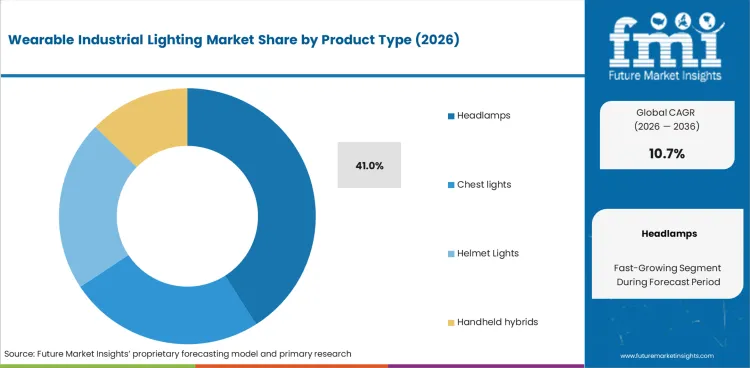
- Headlamps are projected to account for 41.0% share of product type demand in 2026. The segment leads as workers can direct the beam without holding the light.
- Helmet-mounted lights and chest lights serve specific work styles. Headlamps stay easier to issue across mixed crews since they fit many job types. This keeps distributors focused on lumen output, strap comfort and charging support.
Insights into the Maintenance and Utilities End Use Segment
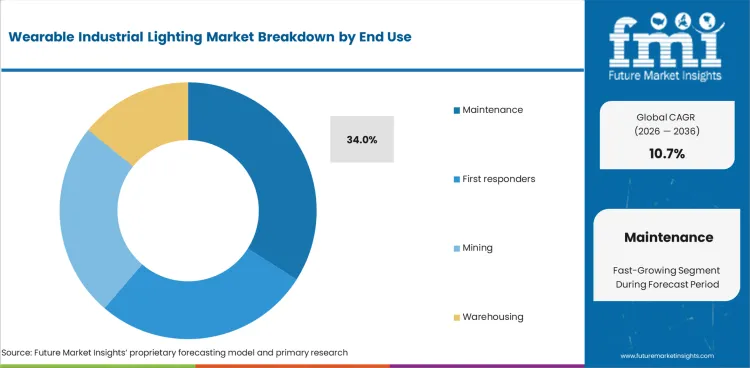
- Maintenance and utilities are expected to represent 34.0% share of end-use demand in 2026. Repair work often happens inside utility rooms and outdoor service areas.
- Power crews and plant technicians need lights that survive drops and wet handling. This favors sealed housings, repeat charging and stable beam control. The segment links closely with the wider lighting-as-a-service shift in managed facility lighting.
Insights into the General Industrial Safety Rating Segment
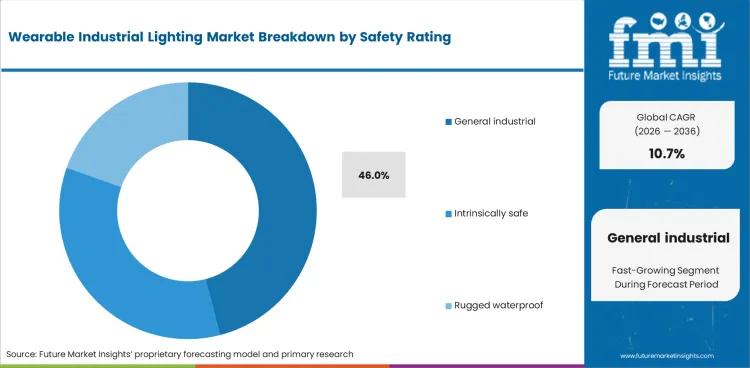
- General industrial products are forecast to account for 46.0% share in 2026. These lights cover factories, warehouses and routine service work.
- Intrinsically safe products carry higher value per unit but serve narrower work areas. Buyers in chemical, oil and grain settings follow hazardous area equipment rules before choosing lights. That selection path favors verified certificates over low price.
Insights into the Rechargeable Li-ion Power Segment
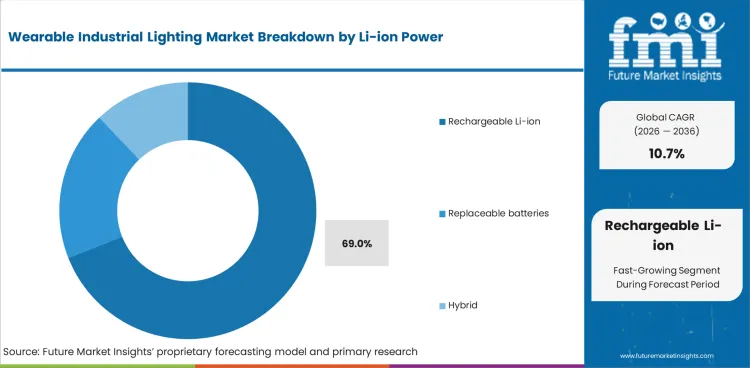
- Rechargeable Li-ion products are projected to account for 69.0% share in 2026. The segment benefits from lower battery change frequency during shift work.
- Replaceable battery models remain useful for emergency kits and remote crews. Hybrid units serve buyers who need charging options with backup cells. The segment depends on safer cell design and stable lithium-ion battery electrolytes supply.
Wearable Industrial Lighting Market Drivers Restraints and Opportunities
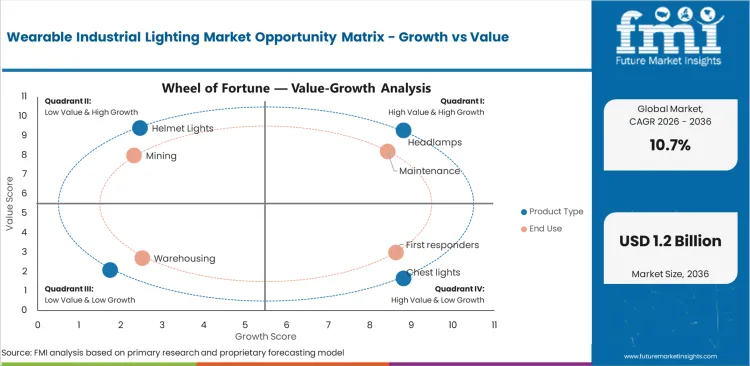
- Helmet-mounted work creates demand for lights that stay fixed during repair tasks.
- Certification cost slows intrinsically safe product choice in price-sensitive channels.
- Rechargeable platforms create opportunity for suppliers that sell lights with battery ecosystems.
A significant driver is the shift from carried lights to worn task lights. Health and Safety Executive guidance in the United Kingdom states that workplaces need suitable lighting for safe movement and work. This supports head and chest mounted products in maintenance areas. The same use pattern connects with fire and explosion proof lights in hazardous sites where fixed lighting cannot cover every task.
Certification Cost Slows Hazard Use
The restraint is the price and approval burden around hazardous-area lights. Products designed for gas or dust zones need proof that they will not ignite the atmosphere. The International Electrotechnical Commission says the IECEx system has over 60 approved certification bodies in more than 35 countries. That route supports trust but raises documentation work for explosion-proof equipment buyers.
Rechargeable Platforms Create Repeat Value
The main opportunity sits in rechargeable systems that simplify shift use. Charging cradles and battery indicators make lights easier to manage across crews. Suppliers can sell spare packs, chargers and service parts around one platform. This gives battery design a stronger role in rechargeable thin-film battery and compact power choices.
Analysis of Wearable Industrial Lighting Market by Key Countries
.webp "Top Country Growth Comparison Wearable Industrial Lighting Market Cagr (2026 2036)")
| Country | CAGR |
|---|---|
| Brazil | 12.9% |
| Japan | 12.3% |
| United Kingdom | 11.6% |
| Germany | 11.0% |
| India | 10.1% |
| China | 9.8% |
| United States | 9.3% |
Source: Future Market Insights, 2026.
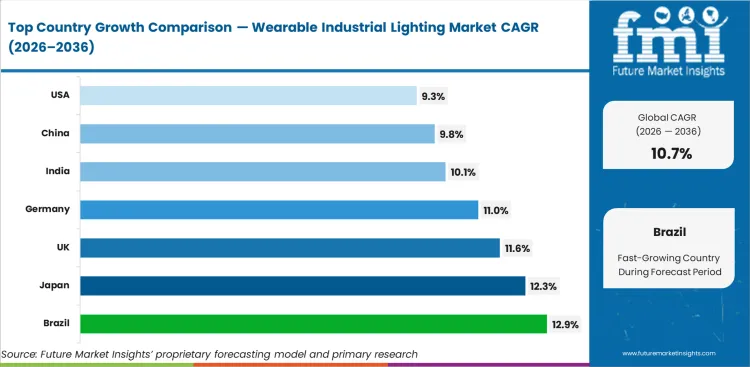
Wearable Industrial Lighting Market CAGR Analysis by Country
- Brazil is projected to record 12.9% CAGR through 2036 as safety spending reacts to high workplace accident counts.
- Japan is expected to expand at 12.3% CAGR through 2036 as precision work and factory automation raise lighting needs.
- The United Kingdom is forecast to grow at 11.6% CAGR through 2036 as workplace safety reporting keeps lighting quality visible.
- Germany is expected to advance at 11.0% CAGR through 2036 as manufacturing and utilities use premium safety products.
- India is projected to rise at 10.1% CAGR through 2036 as mining and utilities widen the buyer pool.
- China is forecast at 9.8% CAGR through 2036 as industrial output supports broad professional tool use.
- The United States is expected to post 9.3% CAGR through 2036 as a mature safety channel limits upside but supports value.
Country-level analysis covers large industrial economies and safety-driven work settings. Brazil and Japan track above the global pace as accident prevention and compact factory work increase buyer focus. The United States and China grow below the global pace as mature channels and broad product availability temper percentage gains.
Demand Outlook for Wearable Industrial Lighting Market in Brazil
Brazil is projected to record 12.9% CAGR through 2036 as accident prevention becomes a stronger workplace theme. Brazil's Ministry of Labor and Employment reported 806 thousand work accidents and 3.6 thousand deaths in 2025. Maintenance teams and utility contractors need wearable lights that improve visibility during repair work. Suppliers that combine rugged casings with distributor reach can gain access to safety budgets.
- Mining regions need intrinsically safe lights where dust and gas exposure shape buying rules.
- Utility crews need rechargeable headlamps for outdoor service and night repair work.
- Industrial plants can use chest lights where helmets and face shields limit headlamp fit.
Future Outlook for Wearable Industrial Lighting Market in Japan
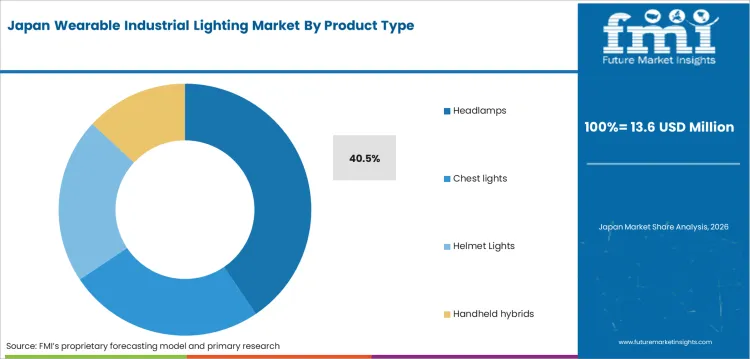
Japan is expected to expand at 12.3% CAGR through 2036 as factory teams value compact work lights. Tokyo Electric Power Company Holdings recorded 23 disasters during fiscal 2024 work linked to the Fukushima Daiichi project. That site evidence shows how low-light work and safety checks remain tied together. Japanese buyers are expected to favor compact lights with reliable runtime and low worker fatigue.
- Automotive plants can use helmet lights during equipment checks and trim inspection.
- Electronics factories need low-glare wearable lights near test benches and service bays.
- Disaster response teams can support rechargeable lights through government stock programs.
Demand Analysis for Wearable Industrial Lighting Market in the United Kingdom
The United Kingdom is forecast to grow at 11.6% CAGR through 2036 as safety managers track injury risk closely. The Health and Safety Executive estimated 680,000 non-fatal workplace injuries in 2024 to 2025. This creates a clear route for hands-free lights in repair and movement tasks. Suppliers with waterproof designs and reliable chargers can support construction and utility buyers.
- Utilities can use helmet lights during power repair and confined service tasks.
- First responders need clip lights that do not block radios or breathing equipment.
- Warehouses can use rechargeable lights during night picking and rack inspection work.
Opportunity Analysis for Wearable Industrial Lighting Market in Germany
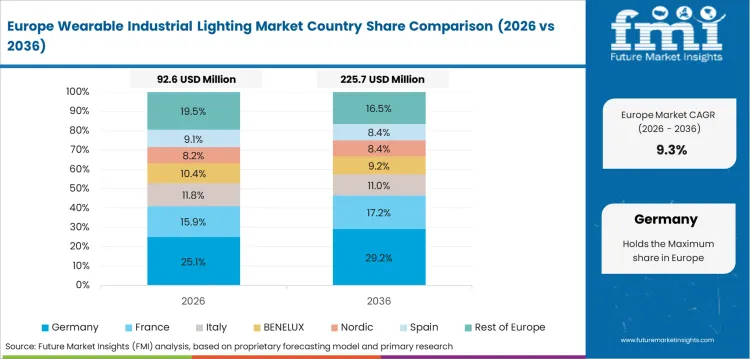
Germany is expected to advance at 11.0% CAGR through 2036 as manufacturing buyers keep safety quality high. German Social Accident Insurance recorded 754,660 reportable work accidents in 2024. Industrial buyers in Germany tend to check casing strength and certification details before purchase. This supports higher value products from established professional lighting brands.
- Automotive sites can use wearable lights during underbody checks and maintenance shutdowns.
- Chemical plants need ATEX-ready products that fit documented safety files.
- Warehouse automation sites support clip lights near service teams and equipment guards.
Sales Analysis of Wearable Industrial Lighting Market in India
India is projected to rise at 10.1% CAGR through 2036 as mining and power work expand the user pool. India's Ministry of Coal reported 1,047.523 million tonnes of coal production in 2024 to 2025. That work setting supports wearable lights for underground checks and maintenance. Domestic distribution will matter as buyers compare imported brands with lower cost local options.
- Coalfield maintenance teams need rugged headlamps with replaceable battery backup.
- Power utilities can use chest lights during feeder checks and night repair calls.
- Industrial contractors need lower cost rechargeable kits for large crews.
Sales Analysis of Wearable Industrial Lighting Market in China
China is forecast at 9.8% CAGR through 2036 as industrial scale supports broad professional lighting use. The National Bureau of Statistics of China reported primary energy output of 5.13 billion tons of standard coal equivalent in 2025. This industrial depth supports demand across mines, utilities and factories. Local suppliers can compete on volume while premium imported brands focus on certified niches.
- Mining provinces need certified lights for underground and surface maintenance work.
- Electronics factories can use headlamps during machine service and panel inspection.
- Utility teams can buy rechargeable products through standard tool channels.
Demand Outlook for Wearable Industrial Lighting Market in the United States
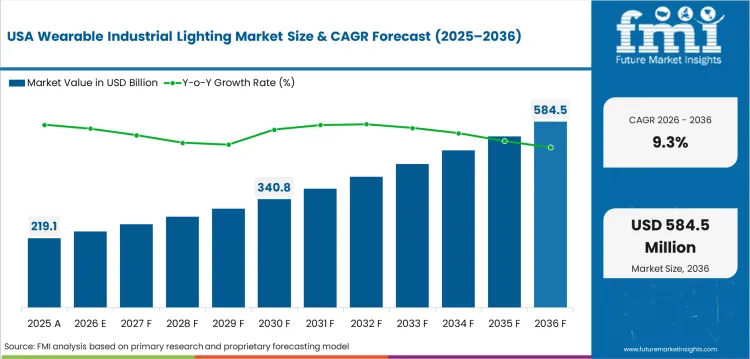
The United States is expected to post 9.3% CAGR through 2036 as mature safety channels favor replacement value. The United States Census Bureau reported USD 1.558 billion in electric lighting equipment shipments for March 2026. Professional buyers already have broad access to headlamps and rechargeable task lights. Growth will depend on upgrades toward certified and higher runtime models.
- Maintenance teams need reliable beam control for mechanical rooms and outdoor service.
- Mining buyers evaluate intrinsically safe ratings before adding wearable lights to crews.
- Warehouse operators can use clip lights to support after-hours inspection and repair.
Competitive Landscape and Strategic Positioning
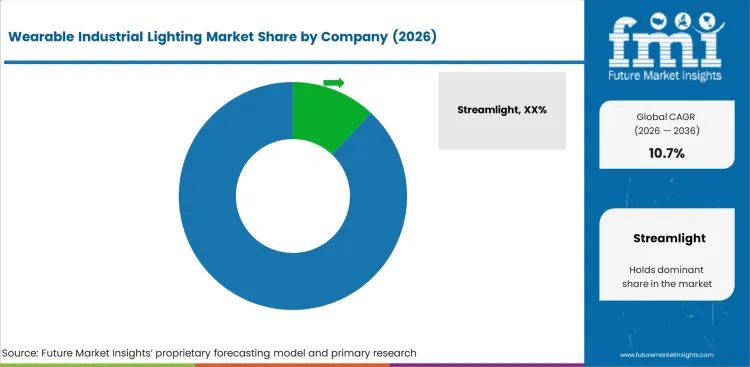
- Streamlight and Pelican Products hold strong positions in professional North American channels.
- Wolf Safety is highly relevant for ATEX and IECEx certified portable work lights.
- Ledlenser and Klarus compete on beam control, battery design and professional headlamp breadth.
- Milwaukee Tool and Bosch link wearable light demand with wider tool battery ecosystems.
Competition is shaped by durability proof and channel access. Streamlight launched the Sledge rechargeable headlamp in September 2025 for professional hands-free use. That type of product line supports premium headlamp demand among maintenance crews. Tool brands gain advantage when lights work with wider charger systems and automotive lighting accessories knowledge.
Certified safety products form a different competitive lane. Wolf Safety sells ATEX and IECEx portable lights for zones with gas or dust risk. Eaton and Pelican Products support this lane through hazardous-area lighting depth. This part of the field connects with flame-proof lighting where certificates and documentation affect buying more than styling.
Key Companies in the Wearable Industrial Lighting Market
Competition is best read by role because professional lighting brands, safety specialists and tool-system suppliers serve different buying routes.
- Professional Work-Light Leaders: Streamlight and Pelican Products hold strong positions through headlamps and task lights. Ledlenser adds professional portable lighting depth. Streamlight is estimated to hold 12.0% share of global wearable industrial lighting value in 2026.
- Hazard-Rated Specialists: Wolf Safety and Eaton serve buyers that need certified lights for explosive atmospheres. Their advantage is tied to ATEX, IECEx and industrial safety files.
- Tool and Battery Ecosystem Players: Milwaukee Tool, Bosch and Energizer compete through charging systems and broad retail reach. Klarus serves tactical and professional flashlight buyers that need rugged compact lights.
Competitive Benchmarking: Wearable Industrial Lighting Market
| Company | Hands-free Portfolio Depth | Hazard Rating Coverage | Battery System Fit | Geographic Footprint |
|---|---|---|---|---|
| Streamlight | High | Medium | Strong | North America centered with global professional channel reach |
| Pelican Products | Medium | Strong | Medium | Global safety and protective equipment channels |
| Wolf Safety | Medium | High | Medium | United Kingdom centered with global hazardous-area reach |
| Ledlenser | High | Medium | Strong | Europe centered with premium portable lighting depth |
| Milwaukee Tool | Medium | Low | High | North America and Europe through tool distributors |
| Klarus | Medium | Low | Medium | Asia centered with tactical and professional export reach |
| Energizer | Medium | Low | High | Global retail and industrial battery channel reach |
| Eaton | Low | High | Low | Global hazardous-area electrical equipment footprint |
| Bosch | Low | Low | High | Global power-tool channel with work-light adjacency |
Source: Future Market Insights competitive analysis, 2026. Ratings reflect relative positioning based on portfolio depth, certification coverage and battery system fit.
Key Developments in Wearable Industrial Lighting Market
- In September 2025, Streamlight launched the Sledge rechargeable headlamp for low-profile professional hands-free lighting.
- In June 2025, Streamlight introduced the SL-SideSaddle hands-free light for industrial and safety professionals.
- In May 2024, Streamlight launched the ProTac 2AA-X USB with a rechargeable USB-C battery pack.
- In March 2024, Wolf Safety updated its ATEX Airlamp range with smaller and easier to maintain models.
- In March 2024, Eaton presented new emergency lighting products for industrial and commercial safety buyers.
- In November 2025, Klarus showed the XT2CR Pro tactical flashlight at Milipol Paris 2025.
- In January 2024, Milwaukee Tool highlighted safety helmets with a BOLT headlamp mount for secure headlamp fit.
- In October 2024, Pelican launched the 1705 Air Case with MIL-SPEC protection for professional gear transport.
Key Players in the Wearable Industrial Lighting Market
- Streamlight
- Pelican Products
- Klarus
- Ledlenser
- Wolf Safety
- Energizer
- 3M
- Eaton
- Milwaukee Tool
- Bosch
Scope of the Report
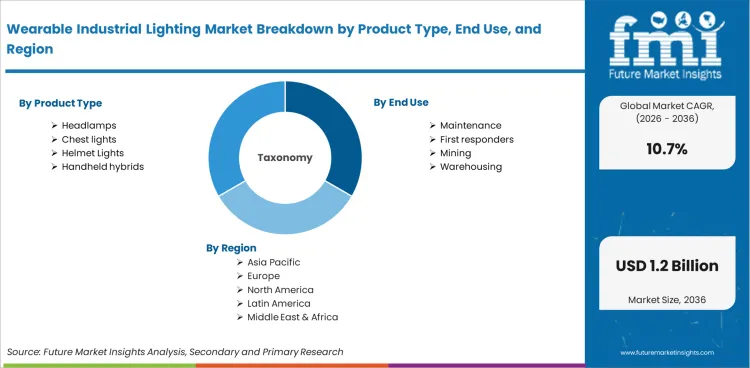
| Item | Value |
|---|---|
| Quantitative Units | USD billion and CAGR for 2026 to 2036 |
| Market Definition | Wearable lights sold for industrial work and safety tasks |
| Product Type | Headlamps, Chest lights, Helmet lights, Handheld hybrids |
| End Use | Maintenance, Mining, First responders, Warehousing |
| Safety Rating | General industrial, Intrinsically safe, Rugged waterproof |
| Power | Rechargeable Li-ion, Replaceable batteries, Hybrid |
| Regions Covered | North America, Latin America, Europe, East Asia, South Asia and Pacific |
| Countries Covered | Brazil, Japan, United Kingdom, Germany, India, China, United States |
| Key Companies Profiled | Streamlight, Pelican Products, Klarus, Ledlenser, Wolf Safety, Energizer, 3M, Eaton, Milwaukee Tool, Bosch |
| Forecast Period | 2026 to 2036 |
| Approach | Supplied anchors checked against official safety data, lighting shipments and supplier evidence |
This report addresses demand for wearable task lights across industrial work areas. The report reviews adjacent categories such as metallurgical lighting and pick-to-light systems where worker visibility supports task accuracy.
Market Analysis by Segments
-
By Product Type:
- Headlamps
- Chest lights
- Helmet lights
- Handheld hybrids
-
By End Use:
- Maintenance
- Mining
- First responders
- Warehousing
-
By Safety Rating:
- General industrial
- Intrinsically safe
- Rugged waterproof
-
By Power:
- Rechargeable Li-ion
- Replaceable batteries
- Hybrid
-
By Region:
- North America
- Latin America
- Europe
- East Asia
- South Asia and Pacific
Research Sources and Bibliography
- United States Bureau of Labor Statistics. (2026, February 19). National census of fatal occupational injuries in 2024. United States Department of Labor.
- United States Census Bureau. (2026, May 4). Manufacturers' shipments inventories and orders: March 2026. United States Department of Commerce.
- Mine Safety and Health Administration. (2026, April 28). Mining fatalities drop in 2025. United States Department of Labor.
- Health and Safety Executive. (2025, November 20). New figures show workplace fatal and non-fatal injuries in Great Britain. Health and Safety Executive.
- Health and Safety Executive. (2025, August 7). Lighting at work. Health and Safety Executive.
- German Social Accident Insurance. (2026). Accident occurrence. German Social Accident Insurance.
- Federal Statistical Office of Germany. (2026, February 5). New orders in manufacturing in December 2025. Destatis.
- Ministry of Coal. (2026, January 12). Year end review 2025. Government of India.
- National Bureau of Statistics of China. (2026, February 28). Statistical communique of the People's Republic of China on the 2025 national economic and social development.
- Ministry of Labor and Employment. (2026, April 28). Acidentes de trabalho crescem no Brasil e atingem recorde em 2025. Government of Brazil.
- International Electrotechnical Commission. (2024, August 30). IEC 60079-14:2024 explosive atmospheres. International Electrotechnical Commission.
- IECEx. (2026). Certified equipment scheme. IECEx.
- Streamlight. (2025, September 17). Streamlight launches Sledge rechargeable headlamp. Streamlight.
- Streamlight. (2025, June 17). Streamlight introduces SL-SideSaddle hands-free light. Streamlight.
- Milwaukee Tool. (2024, January 7). Milwaukee delivers the best oblique impact protection with Impact Armor liner. Milwaukee Tool.
- Eaton. (2024, March 4). Eaton at Light + Building 2024. Eaton.
- Klarus. (2025, November 22). KLARUS XT2CR Pro tactical flashlight at Milipol Paris 2025. Klarus.
The bibliography is provided for reader reference and uses government sources plus regulatory sources. It also uses standards and official company sources relevant to wearable industrial lighting demand signals.
This Report Answers
- What is the current and future value of the wearable industrial lighting market from 2026 to 2036?
- What CAGR is expected for the wearable industrial lighting market during the forecast period?
- Which product type is projected to lead wearable industrial lighting demand in 2026?
- Which end use is expected to hold the leading share in wearable industrial lighting demand?
- What factors are driving wearable industrial lighting use in maintenance and utility work?
- How do safety ratings affect supplier selection for wearable industrial lighting products?
- Which countries are expected to grow faster in wearable industrial lighting through 2036?
- Which companies are positioned across headlamps, intrinsically safe lights and rechargeable work lights?
- How does FMI define wearable industrial lighting revenue scope for this study?
- What forecasting approach was used to estimate wearable industrial lighting demand from 2026 to 2036?
Frequently Asked Questions
What is the global market demand for Wearable Industrial Lighting in 2026?
In 2026, the global wearable industrial lighting market is expected to be worth USD 0.42 billion as hands-free work lights gain wider use.
How big will the Wearable Industrial Lighting Market be in 2036?
By 2036, the wearable industrial lighting market is expected to reach USD 1.16 billion as rechargeable and safety-rated products expand.
How much is demand for Wearable Industrial Lighting expected to expand between 2026 and 2036?
Between 2026 and 2036, wearable industrial lighting demand is expected to expand at 10.7% CAGR as professional task-light use rises.
Which product type is expected to lead the Wearable Industrial Lighting Market by 2026?
Headlamps are projected to lead product type demand with 41.0% share in 2026 due to hands-free beam control.
Which end use is expected to lead Wearable Industrial Lighting demand in 2026?
Maintenance and utilities are expected to lead end-use demand with 34.0% share in 2026 as repair crews need portable light.
Which country is forecast to grow fastest in the Wearable Industrial Lighting Market?
Brazil is projected to record 12.9% CAGR through 2036 as workplace accident prevention keeps safety products in focus.
What does the Wearable Industrial Lighting Market include?
The market includes headlamps and chest lights. It also includes helmet lights and handheld hybrids sold for industrial work and safety tasks.
How does FMI estimate the Wearable Industrial Lighting Market forecast?
FMI uses supplied market anchors and official safety data. Lighting shipment checks and supplier evidence validate the forecast.
Why do industrial workers use wearable lighting?
Industrial workers use wearable lighting so both hands stay free during repair, inspection and emergency tasks. The light follows the worker and supports safer movement.
Are rechargeable wearable industrial lights better than replaceable battery lights?
Rechargeable lights are better for repeat shift work because charging is easier to manage. Replaceable battery lights remain useful for emergency kits and remote jobs.
What safety rating should buyers check before buying wearable industrial lights?
Buyers should check whether the work area needs general industrial, intrinsically safe or rugged waterproof lights. Hazardous areas need certified products with clear documentation.
Who sells wearable industrial lighting products?
Streamlight and Pelican Products are active suppliers. Ledlenser, Wolf Safety and Milwaukee Tool serve professional and industrial lighting buyers.
How long do wearable industrial lights usually last during a shift?
Runtime varies by lumen mode and battery size. Buyers usually check full-shift operation, recharge time and backup battery options before purchase.
Preview the report firsthand - request a free sample
Get SampleGet the brochure for pricing and purchase details.
Get PDFTable of Content
- Key Takeaways
- Market Size and CAGR
- Top Growth Driver
- Fastest Growing Segment
- Leading Region
- Key Companies
- Emerging Opportunities
- Executive Summary
- Global Market Outlook
- Demand-side Trends
- Supply-side Trends
- Technology Roadmap Analysis
- Analysis and Recommendations
- Analyst Perspective (What is happening? Why now? What should investors know?)
- Key Questions Answered
- How large is the market?
- What is the CAGR?
- What are key trends?
- Which region dominates?
- Who are the leaders?
- Market Overview
- Market Coverage / Taxonomy
- Market Definition / Scope / Limitations
- Research Methodology
- Chapter Orientation
- Analytical Lens and Working Hypotheses
- Market Structure, Signals, and Trend Drivers
- Benchmarking and Cross-market Comparability
- Market Sizing, Forecasting, and Opportunity Mapping
- Research Design and Evidence Framework
- Desk Research Programme (Secondary Evidence)
- Expert Input and Fieldwork (Primary Evidence)
- Tooling, Models, and Reference Databases
- Data Engineering and Model Build
- Quality Assurance and Audit Trail
- Market Background
- Market Dynamics (Drivers, Restraints, Opportunity, Trends)
- Scenario Forecast (Optimistic, Likely, Conservative)
- Impact Analysis
- AI Impact
- Sustainability Impact
- Regulatory Impact
- Technology Impact
- Consumer / Buyer Analysis
- Purchase Drivers
- Adoption Barriers
- Buyer Journey
- Opportunity Map Analysis
- Product Life Cycle Analysis
- Supply Chain Analysis
- Investment Feasibility Matrix
- Value Chain Analysis
- PESTLE and Porter's Analysis
- Regulatory Landscape
- Regional Parent Market Outlook
- Production and Consumption Statistics
- Import and Export Statistics
- Global Market Analysis and Forecast, 2021 to 2036
- Historical Market Size Value (USD Million) & Volume (Unit) Analysis, 2021 to 2025
- Current and Future Market Size Value (USD Million) & Volume (Unit) Projections, 2026 to 2036
- Y-o-Y Growth Trend Analysis
- Absolute $ Opportunity Analysis
- Global Market Pricing Analysis, 2021 to 2036
- Global Market Analysis and Forecast, By Product Type, 2021 to 2036
- Introduction / Key Findings
- Historical Market Size Value (USD Million) & Volume (Unit) Analysis By Product Type, 2021 to 2025
- Current and Future Market Size Value (USD Million) & Volume (Unit) Analysis and Forecast By Product Type, 2026 to 2036
- Headlamps
- Chest lights
- Helmet lights
- Handheld hybrids
- Headlamps
- Y-o-Y Growth Trend Analysis By Product Type, 2021 to 2025
- Absolute $ Opportunity Analysis By Product Type, 2026 to 2036
- Global Market Analysis and Forecast, By End Use, 2021 to 2036
- Introduction / Key Findings
- Historical Market Size Value (USD Million) & Volume (Unit) Analysis By End Use, 2021 to 2025
- Current and Future Market Size Value (USD Million) & Volume (Unit) Analysis and Forecast By End Use, 2026 to 2036
- Maintenance
- Mining
- First responders
- Warehousing
- Maintenance
- Y-o-Y Growth Trend Analysis By End Use, 2021 to 2025
- Absolute $ Opportunity Analysis By End Use, 2026 to 2036
- Global Market Analysis and Forecast, By Safety Rating, 2021 to 2036
- Introduction / Key Findings
- Historical Market Size Value (USD Million) & Volume (Unit) Analysis By Safety Rating, 2021 to 2025
- Current and Future Market Size Value (USD Million) & Volume (Unit) Analysis and Forecast By Safety Rating, 2026 to 2036
- General industrial
- Intrinsically safe
- Rugged waterproof
- General industrial
- Y-o-Y Growth Trend Analysis By Safety Rating, 2021 to 2025
- Absolute $ Opportunity Analysis By Safety Rating, 2026 to 2036
- Global Market Analysis and Forecast, By Power, 2021 to 2036
- Introduction / Key Findings
- Historical Market Size Value (USD Million) & Volume (Unit) Analysis By Power, 2021 to 2025
- Current and Future Market Size Value (USD Million) & Volume (Unit) Analysis and Forecast By Power, 2026 to 2036
- Rechargeable Li-ion
- Replaceable batteries
- Hybrid
- Rechargeable Li-ion
- Y-o-Y Growth Trend Analysis By Power, 2021 to 2025
- Absolute $ Opportunity Analysis By Power, 2026 to 2036
- Global Market Analysis and Forecast, By Region, 2021 to 2036
- Introduction
- Historical Market Size Value (USD Million) & Volume (Unit) Analysis By Region, 2021 to 2025
- Current Market Size Value (USD Million) & Volume (Unit) Analysis and Forecast By Region, 2026 to 2036
- North America
- Latin America
- Western Europe
- Eastern Europe
- East Asia
- South Asia and Pacific
- Middle East & Africa
- Market Attractiveness Analysis By Region
- North America Market Analysis and Forecast, By Country, 2021 to 2036
- Historical Market Size Value (USD Million) & Volume (Unit) Trend Analysis By Market Taxonomy, 2021 to 2025
- Market Size Value (USD Million) & Volume (Unit) Forecast By Market Taxonomy, 2026 to 2036
- By Country
- USA
- Canada
- Mexico
- By Product Type
- By End Use
- By Safety Rating
- By Power
- By Country
- Market Attractiveness Analysis
- By Country
- By Product Type
- By End Use
- By Safety Rating
- By Power
- Key Takeaways
- Latin America Market Analysis and Forecast, By Country
- Historical Market Size Value (USD Million) & Volume (Unit) Trend Analysis By Market Taxonomy, 2021 to 2025
- Market Size Value (USD Million) & Volume (Unit) Forecast By Market Taxonomy, 2026 to 2036
- By Country
- Brazil
- Chile
- Rest of Latin America
- By Product Type
- By End Use
- By Safety Rating
- By Power
- By Country
- Market Attractiveness Analysis
- By Country
- By Product Type
- By End Use
- By Safety Rating
- By Power
- Key Takeaways
- Western Europe Market Analysis and Forecast, By Country
- Historical Market Size Value (USD Million) & Volume (Unit) Trend Analysis By Market Taxonomy, 2021 to 2025
- Market Size Value (USD Million) & Volume (Unit) Forecast By Market Taxonomy, 2026 to 2036
- By Country
- Germany
- UK
- Italy
- Spain
- France
- Nordic
- BENELUX
- Rest of Western Europe
- By Product Type
- By End Use
- By Safety Rating
- By Power
- By Country
- Market Attractiveness Analysis
- By Country
- By Product Type
- By End Use
- By Safety Rating
- By Power
- Key Takeaways
- Eastern Europe Market Analysis and Forecast, By Country
- Historical Market Size Value (USD Million) & Volume (Unit) Trend Analysis By Market Taxonomy, 2021 to 2025
- Market Size Value (USD Million) & Volume (Unit) Forecast By Market Taxonomy, 2026 to 2036
- By Country
- Russia
- Poland
- Hungary
- Balkan & Baltic
- Rest of Eastern Europe
- By Product Type
- By End Use
- By Safety Rating
- By Power
- By Country
- Market Attractiveness Analysis
- By Country
- By Product Type
- By End Use
- By Safety Rating
- By Power
- Key Takeaways
- East Asia Market Analysis and Forecast, By Country
- Historical Market Size Value (USD Million) & Volume (Unit) Trend Analysis By Market Taxonomy, 2021 to 2025
- Market Size Value (USD Million) & Volume (Unit) Forecast By Market Taxonomy, 2026 to 2036
- By Country
- China
- Japan
- South Korea
- By Product Type
- By End Use
- By Safety Rating
- By Power
- By Country
- Market Attractiveness Analysis
- By Country
- By Product Type
- By End Use
- By Safety Rating
- By Power
- Key Takeaways
- South Asia and Pacific Market Analysis and Forecast, By Country
- Historical Market Size Value (USD Million) & Volume (Unit) Trend Analysis By Market Taxonomy, 2021 to 2025
- Market Size Value (USD Million) & Volume (Unit) Forecast By Market Taxonomy, 2026 to 2036
- By Country
- India
- ASEAN
- Australia & New Zealand
- Rest of South Asia and Pacific
- By Product Type
- By End Use
- By Safety Rating
- By Power
- By Country
- Market Attractiveness Analysis
- By Country
- By Product Type
- By End Use
- By Safety Rating
- By Power
- Key Takeaways
- Middle East & Africa Market Analysis and Forecast, By Country
- Historical Market Size Value (USD Million) & Volume (Unit) Trend Analysis By Market Taxonomy, 2021 to 2025
- Market Size Value (USD Million) & Volume (Unit) Forecast By Market Taxonomy, 2026 to 2036
- By Country
- Kingdom of Saudi Arabia
- Other GCC Countries
- Türkiye
- South Africa
- Other African Union
- Rest of Middle East & Africa
- By Product Type
- By End Use
- By Safety Rating
- By Power
- By Country
- Market Attractiveness Analysis
- By Country
- By Product Type
- By End Use
- By Safety Rating
- By Power
- Key Takeaways
- Key Countries Market Analysis
- USA
- Pricing Analysis
- Market Share Analysis, 2025
- By Product Type
- By End Use
- By Safety Rating
- By Power
- Canada
- Pricing Analysis
- Market Share Analysis, 2025
- By Product Type
- By End Use
- By Safety Rating
- By Power
- Mexico
- Pricing Analysis
- Market Share Analysis, 2025
- By Product Type
- By End Use
- By Safety Rating
- By Power
- Brazil
- Pricing Analysis
- Market Share Analysis, 2025
- By Product Type
- By End Use
- By Safety Rating
- By Power
- Chile
- Pricing Analysis
- Market Share Analysis, 2025
- By Product Type
- By End Use
- By Safety Rating
- By Power
- Germany
- Pricing Analysis
- Market Share Analysis, 2025
- By Product Type
- By End Use
- By Safety Rating
- By Power
- UK
- Pricing Analysis
- Market Share Analysis, 2025
- By Product Type
- By End Use
- By Safety Rating
- By Power
- Italy
- Pricing Analysis
- Market Share Analysis, 2025
- By Product Type
- By End Use
- By Safety Rating
- By Power
- Spain
- Pricing Analysis
- Market Share Analysis, 2025
- By Product Type
- By End Use
- By Safety Rating
- By Power
- France
- Pricing Analysis
- Market Share Analysis, 2025
- By Product Type
- By End Use
- By Safety Rating
- By Power
- India
- Pricing Analysis
- Market Share Analysis, 2025
- By Product Type
- By End Use
- By Safety Rating
- By Power
- ASEAN
- Pricing Analysis
- Market Share Analysis, 2025
- By Product Type
- By End Use
- By Safety Rating
- By Power
- Australia & New Zealand
- Pricing Analysis
- Market Share Analysis, 2025
- By Product Type
- By End Use
- By Safety Rating
- By Power
- China
- Pricing Analysis
- Market Share Analysis, 2025
- By Product Type
- By End Use
- By Safety Rating
- By Power
- Japan
- Pricing Analysis
- Market Share Analysis, 2025
- By Product Type
- By End Use
- By Safety Rating
- By Power
- South Korea
- Pricing Analysis
- Market Share Analysis, 2025
- By Product Type
- By End Use
- By Safety Rating
- By Power
- Russia
- Pricing Analysis
- Market Share Analysis, 2025
- By Product Type
- By End Use
- By Safety Rating
- By Power
- Poland
- Pricing Analysis
- Market Share Analysis, 2025
- By Product Type
- By End Use
- By Safety Rating
- By Power
- Hungary
- Pricing Analysis
- Market Share Analysis, 2025
- By Product Type
- By End Use
- By Safety Rating
- By Power
- Kingdom of Saudi Arabia
- Pricing Analysis
- Market Share Analysis, 2025
- By Product Type
- By End Use
- By Safety Rating
- By Power
- Türkiye
- Pricing Analysis
- Market Share Analysis, 2025
- By Product Type
- By End Use
- By Safety Rating
- By Power
- South Africa
- Pricing Analysis
- Market Share Analysis, 2025
- By Product Type
- By End Use
- By Safety Rating
- By Power
- USA
- Market Structure Analysis
- Competition Dashboard
- Competition Benchmarking
- Market Share Analysis of Top Players
- By Regional
- By Product Type
- By End Use
- By Safety Rating
- By Power
- Emerging Startups
- Innovation Benchmarking
- Competition Analysis
- Competition Deep Dive
- Streamlight
- Overview
- Product Portfolio
- Profitability by Market Segments (Product/Region/Sales Channel)
- Sales Footprint
- Strategy Overview
- Marketing Strategy
- Product Strategy
- Channel Strategy
- Pelican Products
- Wolf Safety
- Ledlenser
- Milwaukee Tool
- Klarus
- Energizer
- Eaton
- Bosch
- Streamlight
- Case Studies
- Success Stories
- Recent Developments
- Competition Deep Dive
- Assumptions & Acronyms Used


