

- Industry Size (2026)
- USD 21.8 Bn
- Forecast (2036)
- USD 29.6 Bn
- CAGR (2026 to 2036)
- 3.10%
Women Leather Luxury Footwear Market Forecast and Outlook 2026 to 2036
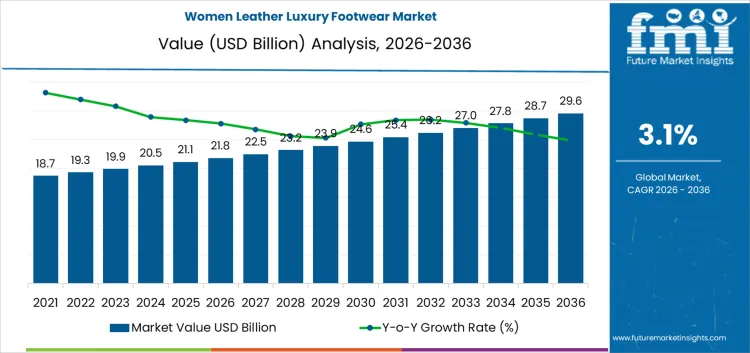
The women leather luxury footwear market is projected to grow from USD 21.8 billion in 2026 to USD 29.6 billion by 2036, with a forecasted CAGR of 3.10%. As the women leather luxury footwear market expands, investment decisions will be heavily influenced by capital intensity, with companies required to allocate significant resources toward product innovation, craftsmanship, and sustainable sourcing practices. The return timelines for these investments are typically medium to long term, with steady growth expected in the coming decade, driven by rising disposable income and changing consumer preferences for luxury goods.
Investment selectivity will play a crucial role, as brands must balance the development of exclusive collections with the need for scalable production and high-quality materials. Companies that strategically align their operations with emerging trends, such as customization and sustainable practices, will likely capture the most value. As the women leather luxury footwear market evolves, investors must focus on brands with a strong heritage, innovative design, and a clear strategy for capturing both traditional and new luxury markets.
Quick Stats for Women Leather Luxury Footwear Market
- Women Leather Luxury Footwear Market Value (2026): USD 21.8 Billion
- Women Leather Luxury Footwear Market Forecast Value (2036): USD 29.6 Billion
- Women Leather Luxury Footwear Market Forecast CAGR 2026 to 2036: 3.10%
- Leading Type in Women Leather Luxury Footwear Market: Boots (35% share)
- Leading Application in Women Leather Luxury Footwear Market: Casual Luxury Use (40% share)
- Key Growth Regions in Women Leather Luxury Footwear Market: Asia Pacific, North America, Europe
- Top Key Players in Women Leather Luxury Footwear Market: LVMH, Kering, Prada, Chanel, Salvatore Ferragamo
Women Leather Luxury Footwear Market Key Takeaways
| Metric | Value |
|---|---|
| Women Leather Luxury Footwear Market Value (2026) | USD 21.8 Billion |
| Women Leather Luxury Footwear Market Forecast Value (2036) | USD 29.6 Billion |
| Women Leather Luxury Footwear Market Forecast CAGR 2026 to 2036 | 3.10% |
Why is the Women Leather Luxury Footwear Market Growing Steadily?
The women leather luxury footwear market is growing steadily due to increasing consumer preference for premium, high-quality footwear that combines comfort, durability, and style. As disposable income rises, particularly in emerging markets, there is growing demand for luxury products that offer exclusivity and superior craftsmanship. Leather remains a top choice for high-end footwear due to its timeless appeal, durability, and versatility in design.
Technological advancements in footwear manufacturing and design are contributing to growth in the women leather luxury footwear market. Innovations such as improved leather treatments, sustainable production methods, and the integration of ergonomic design features are enhancing product quality and appeal. The rise of customization options, including bespoke and limited-edition designs, is driving further interest in luxury leather footwear.
Changing fashion trends and the influence of celebrity endorsements and social media are reinforcing growth in the women leather luxury footwear market. As fashion-conscious consumers seek iconic footwear pieces, designers and luxury brands continue to innovate, offering diverse styles and seasonal collections. With growing emphasis on quality and exclusivity, the market for women’s leather luxury footwear is expected to continue its steady growth through the forecast period.
What Does The Segment Overview Indicate About The Women Leather Luxury Footwear Market?
The women leather luxury footwear market is segmented by type and end-user application, reflecting varying preferences and usage scenarios across different shoe categories. Boots lead the type segment with 35% share, due to their popularity in both fashion and functional luxury segments. Other types, including heels, pumps, sandals, flats, and sneakers, cater to distinct fashion needs and occasions. On the end-user side, casual luxury use dominates with 40% share, reflecting a shift toward high-quality, stylish everyday footwear. Special occasion wear, trend-driven, and professional attire segments contribute significant but varied demand, depending on seasonal trends and lifestyle choices.
Why Do Boots Hold The Leading Type Share In The Women Leather Luxury Footwear Market?
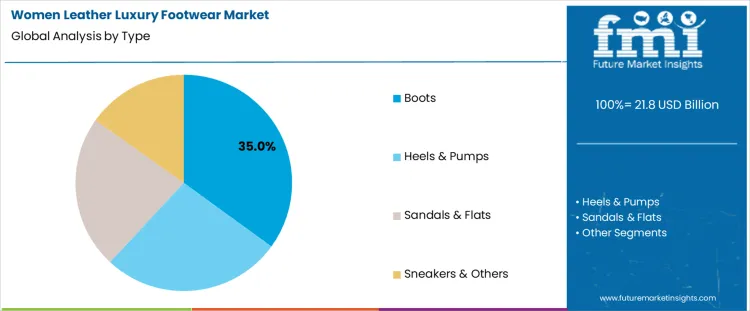
Boots hold the largest 35% share in the women leather luxury footwear market due to their versatility, durability, and high-fashion appeal. Leather boots are a staple in both seasonal fashion collections and functional luxury footwear lines, offering both style and practicality. Popular among women seeking a mix of elegance and comfort, they are often favored in colder months and for layering in professional and casual settings. Their popularity is reinforced by their association with both casual and semi-formal styles, often worn with a range of outfits from dresses to jeans. As boots continue to be a go-to option for high-end fashion houses, they maintain dominance in the luxury footwear sector.
How Does Casual Luxury Use Drive End-User Demand In The Women Leather Luxury Footwear Market?
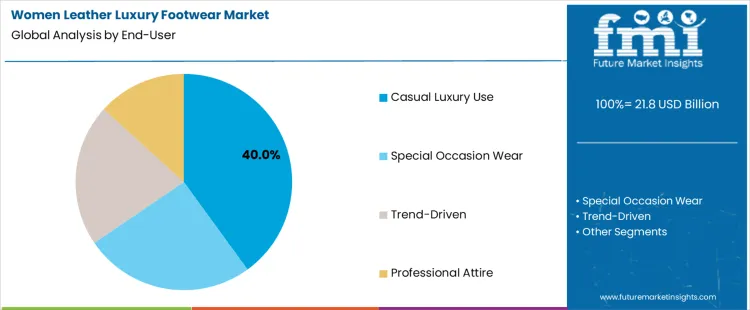
Casual luxury use leads end-user demand in the women leather luxury footwear market, accounting for 40% share, as consumers increasingly seek refined footwear that offers both style and comfort for everyday wear. The shift in consumer preferences toward investing in high-quality, versatile shoes that can transition between work and leisure is fueling growth in this segment. Casual luxury shoes often incorporate premium materials, stylish designs, and ergonomic features, making them suitable for daily wear while maintaining an elevated aesthetic. As more consumers prioritize comfort and quality, brands are focusing on offering a balance of luxury and everyday functionality, especially in response to the growing demand for athleisure and hybrid fashion.
What Are the Key Dynamics for the Women Leather Luxury Footwear Market?
The women leather luxury footwear market is shaped by growing demand for high-quality, sustainable products and increasing consumer interest in exclusive, crafted designs. High-end brands are responding by focusing on leather sourcing, artisan craftsmanship, and customization options that cater to affluent consumers looking for distinctive and premium products. At the same time, technological innovations in design and manufacturing are making it easier to create unique, stylish, and comfortable footwear. However, the market faces challenges from high production costs, competition from fast fashion, and counterfeiting, all of which impact brand reputation and accessibility.
What Challenges Are Affecting the Women Leather Luxury Footwear Market?
The women leather luxury footwear market faces challenges such as high production costs, competition from fast fashion, and fluctuating raw material prices. The cost of premium leather, skilled craftsmanship, and sustainable production processes contribute to higher retail prices, making luxury footwear inaccessible to a broader audience. The rise of fast fashion brands offering leather-like alternatives at lower price points is drawing price-sensitive consumers away from luxury options. The market also faces challenges from counterfeiting, which affects brand equity and consumer trust. Furthermore, maintaining supply chain sustainability and ethical labor practices adds complexity for luxury footwear brands, requiring continual investment in responsible sourcing.
How Are Technological Advancements Shaping the Women Leather Luxury Footwear Market?
Technological advancements are transforming the women leather luxury footwear market by improving production efficiency, design innovation, and customer experience. 3D printing and laser-cutting technologies allow for more intricate and precise designs, while also enabling faster prototyping and customization. The use of smart fabrics and leather treatments is enhancing durability and comfort, creating footwear that adapts to changing trends without compromising quality. Artificial intelligence and machine learning are also being used to predict fashion trends and personalize footwear designs based on customer preferences. Advancements in e-commerce platforms, such as virtual try-ons and augmented reality tools, are enhancing the online shopping experience for consumers.
What is the Country-Wise Growth Outlook for the Women Leather Luxury Footwear Market?
The women leather luxury footwear market is growing across key regions, supported by increasing consumer demand for high-quality, stylish, and durable footwear. India leads with a CAGR of 7%, driven by growing disposable income, fashion trends, and an expanding luxury goods sector. China follows with a CAGR of 6%, fueled by rising urbanization, e-commerce, and a strong preference for premium leather products. The USA records a CAGR of 4.5%, driven by a steady demand for luxury footwear in high-end retail and online markets. Brazil shows a CAGR of 4.2%, supported by rising luxury consumption, particularly among urban middle and upper-income classes. Germany, with a CAGR of 3.8%, remains a strong market driven by European fashion trends and the demand for high-quality leather products.

| Country | CAGR |
|---|---|
| India | 7% |
| China | 6% |
| USA | 4.5% |
| Brazil | 4.2% |
| Germany | 3.8% |
Why is India Leading in the Women Leather Luxury Footwear Market?
Demand for women leather luxury footwear in India is growing at a CAGR of 7%, driven by increasing disposable income, rising fashion consciousness, and a growing preference for premium products. India’s rapidly expanding middle and upper-class segments are fueling the demand for high-quality footwear, with a focus on leather luxury products. The growth of e-commerce platforms and the rise of global fashion brands in India have made luxury footwear more accessible to urban consumers. The country’s growing fashion industry, supported by a vibrant and expanding retail market, is also contributing to the rise of luxury footwear sales. Traditional leather craftsmanship, combined with modern designs, appeals to Indian consumers who value both style and quality. The expanding domestic production of leather goods, coupled with an increase in international brand presence, further drives the demand for premium women’s leather footwear. These factors position India as the fastest-growing market for women leather luxury footwear.
What is Driving China’s Growth in the Women Leather Luxury Footwear Market?
Sales for women leather luxury footwear in China are increasing at a CAGR of 6%, fueled by rising disposable income, changing consumer preferences, and the growing demand for premium fashion products. As China’s middle class continues to expand, there is a marked shift toward luxury goods, including high-end leather footwear. The demand for women’s luxury leather shoes is particularly strong in major urban areas such as Beijing, Shanghai, and Shenzhen, where the fashion-conscious population seeks high-quality, stylish products. The growth of e-commerce has also made luxury footwear more accessible, with consumers increasingly purchasing luxury items online. Local and international luxury footwear brands are capitalizing on China’s expanding retail sector, which is driven by an evolving fashion culture that favors premium quality and craftsmanship. With rising consumer awareness of global fashion trends and an increasing number of high-net-worth individuals, China’s women leather luxury footwear market is positioned for continued expansion.
Why is the USA Expanding in the Women Leather Luxury Footwear Market?
Demand for women leather luxury footwear in the USA is growing at a CAGR of 4.5%, supported by steady demand for luxury fashion products, particularly in urban and affluent areas. The USA’s established luxury footwear market continues to benefit from a large, fashion-conscious consumer base that values quality craftsmanship and timeless designs. Women’s leather luxury footwear is a staple in the wardrobes of many high-income consumers, with a growing number seeking premium products that offer both style and durability. The continued presence of leading international footwear brands and the rise of domestic luxury brands contribute to the growth of this market. E-commerce platforms play a crucial role in making luxury products more accessible to a broader range of consumers, increasing convenience and availability. Furthermore, the growing popularity of sustainable and ethically produced luxury goods is driving demand for high-quality leather footwear. The USA’s steady luxury consumption ensures continued growth in the women’s leather luxury footwear market.
What is Supporting Growth in Brazil’s Women Leather Luxury Footwear Market?
Sales for women leather luxury footwear in Brazil are rising at a CAGR of 4.2%, driven by the increasing demand for luxury goods, particularly among affluent urban consumers. Brazil’s expanding middle and upper classes are increasingly turning to premium products, and there is a growing appetite for high-quality leather footwear among fashion-forward women. With a rich history of leather craftsmanship, Brazilian consumers are particularly drawn to locally made luxury footwear that blends traditional designs with modern trends. The expansion of luxury retail chains and e-commerce platforms is further facilitating access to high-end footwear, particularly in major cities like São Paulo and Rio de Janeiro. The rising awareness of international fashion trends, combined with an increasing number of global luxury brands entering Brazil’s market, is helping fuel growth. As disposable income in Brazil continues to rise, demand for women’s leather luxury footwear is expected to continue expanding.
What Is Contributing to Germany’s Growth in the Women Leather Luxury Footwear Market?
Demand for women leather luxury footwear in Germany is growing at a CAGR of 3.8%, supported by a strong fashion industry, a preference for high-quality craftsmanship, and the increasing popularity of luxury footwear. Germany has a well-established market for premium footwear, with women increasingly seeking durable, stylish, and high-end leather shoes. German consumers value both quality and comfort, and the demand for luxury leather footwear is growing across various segments, including both formal and casual styles. Germany’s central role in European fashion trends and its reputation for quality manufacturing contribute to the continued growth of the luxury footwear market. The increasing presence of international luxury brands, combined with the popularity of local high-end designers, has created a diverse and competitive market. The growing popularity of sustainable luxury fashion, including eco-friendly leather options, has influenced the footwear industry in Germany, further supporting the demand for premium women’s leather shoes.
How Are Leading Companies Competing And Differentiating In The Women Leather Luxury Footwear Market?
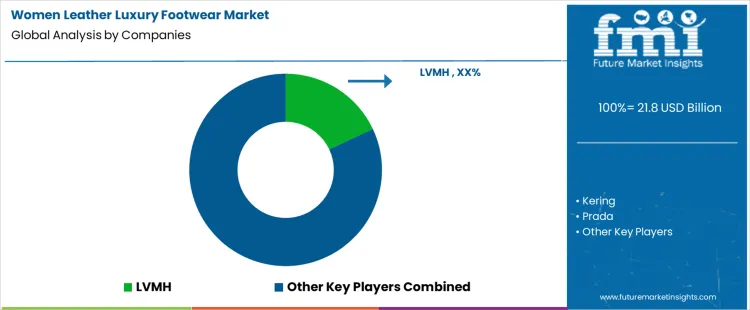
Competition in the women leather luxury footwear market is driven by craftsmanship, brand heritage, and design innovation. LVMH is positioned as a global leader, leveraging its portfolio of iconic brands like Louis Vuitton and Christian Dior, focusing on exclusive collections, high-quality materials, and custom-made options. Kering differentiates itself through brands like Balenciaga and Alexander McQueen, emphasizing contemporary designs and collaborations with high-fashion influencers. Both LVMH and Kering utilize their extensive retail networks and marketing strength to create an aspirational luxury image, with personalized shopping experiences as key differentiators.
Prada and Chanel are known for their timeless luxury and elegance. Prada promotes its innovative, fashion-forward designs that blend traditional leather craftsmanship with contemporary aesthetics, making it a favorite for both classic and avant-garde consumers. Chanel focuses on a blend of classic sophistication with distinctive details, often using the finest leathers and incorporating iconic elements like the interlocking C’s into their designs, appealing to high-end buyers seeking exclusivity and status. Both brands rely heavily on their strong brand identities and premium pricing to reinforce their luxury positioning.
Salvatore Ferragamo, Gucci, Tod's, Bally, and Fendi take different approaches but share a focus on quality and exclusivity. Salvatore Ferragamo is known for its luxurious craftsmanship and functional designs, with a focus on comfort and durability. Gucci, a pioneer in trendsetting styles, focuses on combining traditional leatherwork with bold patterns and modern logos to attract younger, fashion-conscious consumers. Tod's and Bally are leveraging their refined yet accessible designs, with Tod’s emphasizing casual elegance, and Bally offering a mix of traditional and modern styles. Fendi’s luxury footwear is often defined by its innovative use of materials and distinctive design, ensuring its appeal to both established and emerging luxury clientele. Across the market, differentiation is driven by unique brand identities, craftsmanship, and the ability to blend classic and contemporary elements, offering consumers not just a product but a statement of luxury and personal style.
Key Players in Women Leather Luxury Footwear Market
- LVMH
- Kering
- Prada
- Chanel
- Salvatore Ferragamo
- Gucci
- Tod's
- Bally
- Fendi
Scope of Report
| Attributes | Description |
|---|---|
| Quantitative Unit | USD Billion |
| Type | Boots, Heels & Pumps, Sandals & Flats, Sneakers & Others |
| End-User | Casual Luxury Use, Special Occasion Wear, Trend Driven, Professional Attire |
| Regions Covered | Asia Pacific, Europe, North America, Latin America, Middle East & Africa |
| Countries Covered | China, Japan, South Korea, India, Australia & New Zealand, ASEAN, Rest of Asia Pacific, Germany, United Kingdom, France, Italy, Spain, Nordic, BENELUX, Rest of Europe, United States, Canada, Mexico, Brazil, Chile, Rest of Latin America, Kingdom of Saudi Arabia, Other GCC Countries, Turkey, South Africa, Other African Union, Rest of Middle East & Africa |
| Key Companies Profiled | LVMH, Kering, Prada, Chanel, Salvatore Ferragamo, Gucci, Tod's, Bally, Fendi |
| Additional Attributes | Market revenue by product type and end-user segment; adoption trends in luxury fashion and high-end accessories; regional analysis focusing on key markets in Asia Pacific, North America, and Europe; projected market size and CAGR for 2026-2036; competitive landscape with market share analysis of leading players; emerging trends such as sustainability in luxury leather production, online retail growth, and technological innovation in luxury footwear manufacturing. |
Women Leather Luxury Footwear Market by Key Segments
Type
- Boots
- Heels & Pumps
- Sandals & Flats
- Sneakers & Others
End‑User
- Casual Luxury Use
- Special Occasion Wear
- Trend‑Driven
- Professional Attire
Region:
- Asia Pacific
- China
- Japan
- South Korea
- India
- Australia & New Zealand
- ASEAN
- Rest of Asia Pacific
- Europe
- Germany
- United Kingdom
- France
- Italy
- Spain
- Nordic
- BENELUX
- Rest of Europe
- North America
- United States
- Canada
- Mexico
- Latin America
- Brazil
- Chile
- Rest of Latin America
- Middle East & Africa
- Kingdom of Saudi Arabia
- Other GCC Countries
- Turkey
- South Africa
- Other African Union
- Rest of Middle East & Africa
Bibliography
- Food and Agriculture Organization of the United Nations. (2024). World statistical compendium for raw hides and skins, leather and leather footwear. FAO.
- International Trade Centre. (2024). Leather and footwear: Global value chains, sustainability, and market access. ITC.
- Organisation for Economic Co-operation and Development. (2024). Consumer demand trends for luxury goods and sustainable fashion. OECD Publishing.
Frequently Asked Questions
How big is the women leather luxury footwear market in 2026?
The global women leather luxury footwear market is estimated to be valued at USD 21.8 billion in 2026.
What will be the size of women leather luxury footwear market in 2036?
The market size for the women leather luxury footwear market is projected to reach USD 29.6 billion by 2036.
How much will be the women leather luxury footwear market growth between 2026 and 2036?
The women leather luxury footwear market is expected to grow at a 3.1% CAGR between 2026 and 2036.
What are the key product types in the women leather luxury footwear market?
The key product types in women leather luxury footwear market are boots, heels & pumps, sandals & flats and sneakers & others.
Which end‑user segment to contribute significant share in the women leather luxury footwear market in 2026?
In terms of end‑user, casual luxury use segment to command 40.0% share in the women leather luxury footwear market in 2026.
Preview the report firsthand - request a free sample
Get SampleGet the brochure for pricing and purchase details.
Get PDFTable of Content
- Executive Summary
- Global Market Outlook
- Demand-side Trends
- Supply-side Trends
- Technology Roadmap Analysis
- Analysis and Recommendations
- Market Overview
- Market Coverage / Taxonomy
- Market Definition / Scope / Limitations
- Market Background
- Market Dynamics
- Drivers
- Restraints
- Opportunity
- Trends
- Scenario Forecast
- Demand in Optimistic Scenario
- Demand in Likely Scenario
- Demand in Conservative Scenario
- Opportunity Map Analysis
- Product Life Cycle Analysis
- Supply Chain Analysis
- Investment Feasibility Matrix
- Value Chain Analysis
- PESTLE and Porter’s Analysis
- Regulatory Landscape
- Regional Parent Market Outlook
- Production and Consumption Statistics
- Import and Export Statistics
- Market Dynamics
- Global Market Analysis 2021 to 2025 and Forecast, 2026 to 2036
- Historical Market Size Value (USD Million) Analysis, 2021 to 2025
- Current and Future Market Size Value (USD Million) Projections, 2026 to 2036
- Y-o-Y Growth Trend Analysis
- Absolute $ Opportunity Analysis
- Global Market Pricing Analysis 2021 to 2025 and Forecast 2026 to 2036
- Global Market Analysis 2021 to 2025 and Forecast 2026 to 2036, By Type
- Introduction / Key Findings
- Historical Market Size Value (USD Million) Analysis By Type, 2021 to 2025
- Current and Future Market Size Value (USD Million) Analysis and Forecast By Type, 2026 to 2036
- Boots
- Heels & Pumps
- Sandals & Flats
- Sneakers & Others
- Boots
- Y-o-Y Growth Trend Analysis By Type, 2021 to 2025
- Absolute $ Opportunity Analysis By Type, 2026 to 2036
- Global Market Analysis 2021 to 2025 and Forecast 2026 to 2036, By End‑User
- Introduction / Key Findings
- Historical Market Size Value (USD Million) Analysis By End‑User, 2021 to 2025
- Current and Future Market Size Value (USD Million) Analysis and Forecast By End‑User, 2026 to 2036
- Casual Luxury Use
- Special Occasion Wear
- Trend‑Driven
- Professional Attire
- Casual Luxury Use
- Y-o-Y Growth Trend Analysis By End‑User, 2021 to 2025
- Absolute $ Opportunity Analysis By End‑User, 2026 to 2036
- Global Market Analysis 2021 to 2025 and Forecast 2026 to 2036, By Region
- Introduction
- Historical Market Size Value (USD Million) Analysis By Region, 2021 to 2025
- Current Market Size Value (USD Million) Analysis and Forecast By Region, 2026 to 2036
- North America
- Latin America
- Western Europe
- Eastern Europe
- East Asia
- South Asia and Pacific
- Middle East & Africa
- Market Attractiveness Analysis By Region
- North America Market Analysis 2021 to 2025 and Forecast 2026 to 2036, By Country
- Historical Market Size Value (USD Million) Trend Analysis By Market Taxonomy, 2021 to 2025
- Market Size Value (USD Million) Forecast By Market Taxonomy, 2026 to 2036
- By Country
- USA
- Canada
- Mexico
- By Type
- By End‑User
- By Country
- Market Attractiveness Analysis
- By Country
- By Type
- By End‑User
- Key Takeaways
- Latin America Market Analysis 2021 to 2025 and Forecast 2026 to 2036, By Country
- Historical Market Size Value (USD Million) Trend Analysis By Market Taxonomy, 2021 to 2025
- Market Size Value (USD Million) Forecast By Market Taxonomy, 2026 to 2036
- By Country
- Brazil
- Chile
- Rest of Latin America
- By Type
- By End‑User
- By Country
- Market Attractiveness Analysis
- By Country
- By Type
- By End‑User
- Key Takeaways
- Western Europe Market Analysis 2021 to 2025 and Forecast 2026 to 2036, By Country
- Historical Market Size Value (USD Million) Trend Analysis By Market Taxonomy, 2021 to 2025
- Market Size Value (USD Million) Forecast By Market Taxonomy, 2026 to 2036
- By Country
- Germany
- UK
- Italy
- Spain
- France
- Nordic
- BENELUX
- Rest of Western Europe
- By Type
- By End‑User
- By Country
- Market Attractiveness Analysis
- By Country
- By Type
- By End‑User
- Key Takeaways
- Eastern Europe Market Analysis 2021 to 2025 and Forecast 2026 to 2036, By Country
- Historical Market Size Value (USD Million) Trend Analysis By Market Taxonomy, 2021 to 2025
- Market Size Value (USD Million) Forecast By Market Taxonomy, 2026 to 2036
- By Country
- Russia
- Poland
- Hungary
- Balkan & Baltic
- Rest of Eastern Europe
- By Type
- By End‑User
- By Country
- Market Attractiveness Analysis
- By Country
- By Type
- By End‑User
- Key Takeaways
- East Asia Market Analysis 2021 to 2025 and Forecast 2026 to 2036, By Country
- Historical Market Size Value (USD Million) Trend Analysis By Market Taxonomy, 2021 to 2025
- Market Size Value (USD Million) Forecast By Market Taxonomy, 2026 to 2036
- By Country
- China
- Japan
- South Korea
- By Type
- By End‑User
- By Country
- Market Attractiveness Analysis
- By Country
- By Type
- By End‑User
- Key Takeaways
- South Asia and Pacific Market Analysis 2021 to 2025 and Forecast 2026 to 2036, By Country
- Historical Market Size Value (USD Million) Trend Analysis By Market Taxonomy, 2021 to 2025
- Market Size Value (USD Million) Forecast By Market Taxonomy, 2026 to 2036
- By Country
- India
- ASEAN
- Australia & New Zealand
- Rest of South Asia and Pacific
- By Type
- By End‑User
- By Country
- Market Attractiveness Analysis
- By Country
- By Type
- By End‑User
- Key Takeaways
- Middle East & Africa Market Analysis 2021 to 2025 and Forecast 2026 to 2036, By Country
- Historical Market Size Value (USD Million) Trend Analysis By Market Taxonomy, 2021 to 2025
- Market Size Value (USD Million) Forecast By Market Taxonomy, 2026 to 2036
- By Country
- Kingdom of Saudi Arabia
- Other GCC Countries
- Turkiye
- South Africa
- Other African Union
- Rest of Middle East & Africa
- By Type
- By End‑User
- By Country
- Market Attractiveness Analysis
- By Country
- By Type
- By End‑User
- Key Takeaways
- Key Countries Market Analysis
- USA
- Pricing Analysis
- Market Share Analysis, 2025
- By Type
- By End‑User
- Canada
- Pricing Analysis
- Market Share Analysis, 2025
- By Type
- By End‑User
- Mexico
- Pricing Analysis
- Market Share Analysis, 2025
- By Type
- By End‑User
- Brazil
- Pricing Analysis
- Market Share Analysis, 2025
- By Type
- By End‑User
- Chile
- Pricing Analysis
- Market Share Analysis, 2025
- By Type
- By End‑User
- Germany
- Pricing Analysis
- Market Share Analysis, 2025
- By Type
- By End‑User
- UK
- Pricing Analysis
- Market Share Analysis, 2025
- By Type
- By End‑User
- Italy
- Pricing Analysis
- Market Share Analysis, 2025
- By Type
- By End‑User
- Spain
- Pricing Analysis
- Market Share Analysis, 2025
- By Type
- By End‑User
- France
- Pricing Analysis
- Market Share Analysis, 2025
- By Type
- By End‑User
- India
- Pricing Analysis
- Market Share Analysis, 2025
- By Type
- By End‑User
- ASEAN
- Pricing Analysis
- Market Share Analysis, 2025
- By Type
- By End‑User
- Australia & New Zealand
- Pricing Analysis
- Market Share Analysis, 2025
- By Type
- By End‑User
- China
- Pricing Analysis
- Market Share Analysis, 2025
- By Type
- By End‑User
- Japan
- Pricing Analysis
- Market Share Analysis, 2025
- By Type
- By End‑User
- South Korea
- Pricing Analysis
- Market Share Analysis, 2025
- By Type
- By End‑User
- Russia
- Pricing Analysis
- Market Share Analysis, 2025
- By Type
- By End‑User
- Poland
- Pricing Analysis
- Market Share Analysis, 2025
- By Type
- By End‑User
- Hungary
- Pricing Analysis
- Market Share Analysis, 2025
- By Type
- By End‑User
- Kingdom of Saudi Arabia
- Pricing Analysis
- Market Share Analysis, 2025
- By Type
- By End‑User
- Turkiye
- Pricing Analysis
- Market Share Analysis, 2025
- By Type
- By End‑User
- South Africa
- Pricing Analysis
- Market Share Analysis, 2025
- By Type
- By End‑User
- USA
- Market Structure Analysis
- Competition Dashboard
- Competition Benchmarking
- Market Share Analysis of Top Players
- By Regional
- By Type
- By End‑User
- Competition Analysis
- Competition Deep Dive
- LVMH
- Overview
- Product Portfolio
- Profitability by Market Segments (Product/Age /Sales Channel/Region)
- Sales Footprint
- Strategy Overview
- Marketing Strategy
- Product Strategy
- Channel Strategy
- Kering
- Prada
- Chanel
- Salvatore Ferragamo
- Gucci
- Tod's
- Bally
- Fendi
- LVMH
- Competition Deep Dive
- Assumptions & Acronyms Used
- Research Methodology


