

- Industry Size (2026)
- USD 26.7 Bn
- Forecast (2036)
- USD 62.6 Bn
- CAGR (2026 to 2036)
- 8.9%
B-Cell Depletion Therapy Market Forecast and Outlook 2026 to 2036
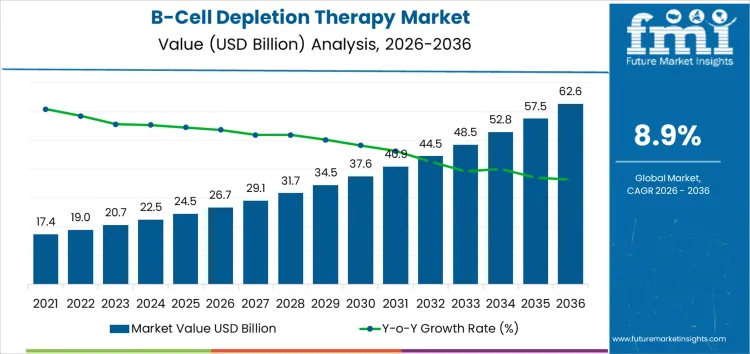
The B-cell depletion therapy market is projected at USD 26.7 billion in 2026, expanding to USD 62.6 billion by 2036 at a CAGR of 8.9%. Anti-CD20 monoclonal antibodies hold a 70% share of the product segment, primarily used for treating autoimmune diseases at 60%. Hospital infusion centers account for 55% of the end-use segment, with specialty pharmacies and other care facilities accounting for the remainder. Key players include Roche, Novartis, Biogen, GSK, and Johnson & Johnson.
Market growth is supported by the rising prevalence of autoimmune and hematologic conditions, alongside the broader adoption of next-generation B-cell therapies. Increasing hospital infusion capacities and specialty pharmacy networks enhance patient access. Research advancements and pipeline therapies are expected to contribute to sustained expansion. Demand for personalized dosing regimens, combination therapies, and safer immunomodulatory options also drives the market forward, making it a high-growth segment in immunotherapy.
Quick Stats for B-Cell Depletion Therapy Market
- B-Cell Depletion Therapy Market Value (2026): USD 26.7 billion
- B-Cell Depletion Therapy Market Forecast Value (2036): USD 62.6 billion
- B-Cell Depletion Therapy Market Forecast CAGR: 8.9%
- Leading Type in B-Cell Depletion Therapy Market: Anti-CD20 Monoclonal Antibodies
- Key Growth Regions in B-Cell Depletion Therapy Market: North America, Europe, and Asia Pacific
- Top Players in B-Cell Depletion Therapy Market: Roche, Novartis, Biogen, GSK, Johnson & Johnson
What is the Growth Forecast for the B-Cell Depletion Therapy Market through 2036?
From 2026 to 2031, the B-cell depletion therapy market grows from USD 26.7 billion to approximately USD 37.7 billion, representing the early adoption phase. Annual increments rise from USD 2.2 billion in 2026 to USD 3.1 billion in 2031. Growth is driven by adoption in autoimmune diseases, oncology, and hematology indications where B-cell targeted therapies improve patient outcomes. North America and Europe account for roughly 65% of early adoption, supported by clinical trial validation, regulatory approvals, and integration into hospital and specialty clinic protocols. Emerging adoption in Asia Pacific is concentrated in high-volume urban hospitals and specialty care centers.
Between 2031 and 2036, the market expands from roughly USD 37.7 billion to USD 62.6 billion, illustrating the late adoption phase characterized by broad commercialization and structural penetration. Annual increments increase from USD 3.1 billion to USD 4.6 billion, driven by repeat treatment cycles, multi-region adoption, and portfolio-wide integration of B-cell depletion therapies. Growth is reinforced by increasing prevalence of autoimmune and hematologic conditions, expanded indications, and normalized adoption in hospitals and specialty clinics. Early-stage growth relied on selective high-value institutions and trial-based deployments, while later expansion reflects scale deployment and global standard-of-care adoption.
B Cell Depletion Therapy Market Key Takeaways
| Metric | Value |
|---|---|
| Market Value (2026) | USD 26.7 billion |
| Forecast Value (2036) | USD 62.6 billion |
| Forecast CAGR (2026 to 2036) | 8.9% |
What Is Shaping Demand in the B-Cell Depletion Therapy Market?
Demand for B-cell depletion therapies initially emerged from clinical limitations of earlier treatment approaches for autoimmune diseases and certain B-cell driven malignancies. Standard immunosuppressive drugs modulated immune activity broadly but often lacked specificity, resulting in incomplete disease control or adverse systemic effects. Researchers identified B lymphocytes as central drivers in conditions such as rheumatoid arthritis, systemic lupus erythematosus, and certain non-Hodgkin lymphomas. Targeted depletion of B cells offered a way to reduce pathogenic antibody production and aberrant immune signalling while sparing non-pathogenic immune functions. Early use was concentrated in patient’s refractory to conventional therapies, where the risk-benefit profile justified adoption in specialised clinical settings rather than general practice.
Future demand for B-cell depletion therapies is being shaped by evolving clinical evidence, expanded indication approvals, and integration into treatment guidelines rather than by isolated use in refractory cases alone. Clinical trials demonstrating sustained remission, improved quality of life, and manageable safety profiles are supporting broader application in earlier disease stages and additional autoimmune and hematologic conditions. Regulatory agencies are recognising differentiated mechanisms within the B-cell depletion class, leading to indication expansions for newer agents with distinct binding targets or depletion kinetics. As guideline bodies incorporate these agents into standard of care recommendations, demand will expand beyond specialist centres to mainstream clinical practice.
What Factors Are Affecting the Demand for B Cell Depletion Therapy Market in Terms of Product Type and Application?
The B cell depletion therapy market is defined by mature biologics, chronic disease demand, and conservative prescribing frameworks. Established antibodies dominate due to evidence depth and reimbursement familiarity. Autoimmune indications drive volume through long term management requirements. Innovation continues, but adoption remains measured, favoring validated therapies over rapid shifts. Market structure reflects stability, retreatment frequency, and guideline embedded use rather than episodic oncology intensity within regulated healthcare systems prioritizing predictability, safety, and long term population outcomes globally across regions today.
What Is Driving Leadership by Product Type in the B Cell Depletion Therapy Market?
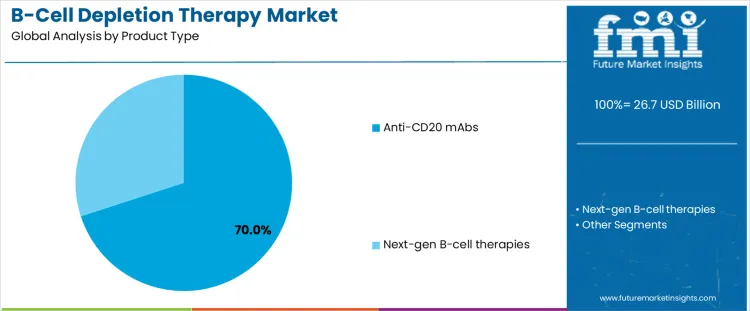
Anti CD20 monoclonal antibodies account for about 70% of demand because they established clinical efficacy across multiple B cell mediated conditions over more than two decades. These therapies provide predictable depletion kinetics, well understood safety profiles, and standardized dosing protocols, which supports broad physician confidence. Payers and treatment guidelines favor them due to extensive outcome data and comparability across indications. Manufacturing scale, biosimilar availability, and mature supply chains further reinforce dominance.
Next generation B cell therapies attract interest through improved specificity, alternative targets, or enhanced durability, but adoption remains selective due to limited long term evidence and higher development risk. Their use is often confined to refractory patients or clinical trials. Product type leadership therefore reflects risk tolerance, accumulated evidence, and reimbursement familiarity rather than innovation pace. As treatment algorithms emphasize reliability and population scale deployment, established anti CD20 antibodies continue to anchor prescribing behavior while newer modalities progress gradually through validation and access pathways. This balance persists as clinicians prioritize consistent response rates, manageable monitoring requirements, and predictable retreatment schedules, factors that favor incumbent antibodies in routine practice while limiting rapid displacement by emerging approaches lacking equivalent longitudinal performance assurance across healthcare systems with constrained budgets and conservative oversight.
What Is Driving Leadership by Application in the B Cell Depletion Therapy Market?
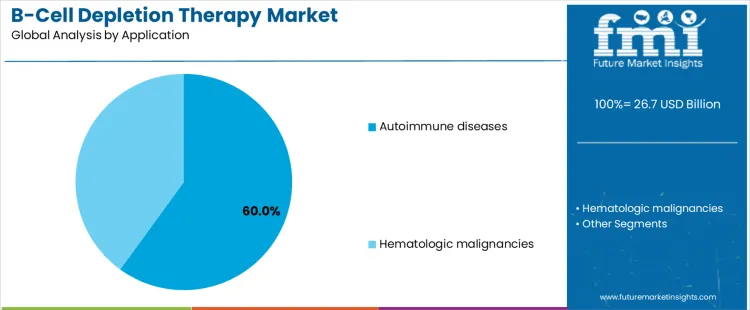
Autoimmune diseases represent about 60% of demand because B cell depletion has demonstrated durable benefit in conditions driven by aberrant antibody production and immune activation. Clinical protocols for diseases such as rheumatoid arthritis and multiple sclerosis incorporate B cell therapies as established treatment options, supporting repeat utilization. Chronic disease prevalence ensures sustained therapy cycles, reinforcing volume demand. Hematologic malignancies also rely on B cell targeting, but treatment courses are episodic and often combined with chemotherapy or cellular therapies, limiting relative share. Oncology adoption is influenced by rapidly evolving standards and competitive modalities.
Application leadership therefore reflects chronicity, retreatment frequency, and guideline stability rather than severity alone. Autoimmune indications favor long term maintenance strategies, predictable monitoring, and outpatient administration, aligning with broad system capacity. Malignancy use remains essential but more variable, shaped by disease stage, combination regimens, and emerging alternatives. This dynamic concentrates demand in autoimmune care pathways where consistency and longitudinal management outweigh episodic intensive interventions. Health system planning, reimbursement continuity, and patient adherence further reinforce autoimmune dominance, while oncology pathways face periodic disruption from innovation cycles, trial readouts, and shifting standards that redistribute utilization across competing therapeutic classes over time within regional formularies and specialty care networks globally today.
How Is the B-Cell Depletion Therapy Market Being Applied Across Autoimmune and Oncology Treatments?
Use appears in hospitals, specialty clinics, and infusion centers where modulation of B-cell activity is critical for treating diseases such as multiple sclerosis, rheumatoid arthritis, and certain hematologic malignancies. Monoclonal antibodies targeting CD20 or related B-cell markers are administered to reduce aberrant immune responses or tumor proliferation. Physicians adopt therapy protocols to balance efficacy with patient safety, often in combination with other immunomodulatory treatments. These applications reflect clinical and operational priorities rather than aesthetic objectives, with adoption driven by disease severity, therapeutic effectiveness, and patient-specific considerations.
What Operational and Material Conditions Support Adoption of B-Cell Depletion Therapies?
Selection aligns with treatment centers capable of providing intravenous administration, patient monitoring, and adherence to immunotherapy protocols. Pharmaceutical-grade monoclonal antibodies require cold chain storage, handling, and preparation to maintain potency. Clinical teams monitor immunosuppression, infection risk, and infusion reactions, adjusting dosing schedules as needed. Regulatory approvals, guideline compliance, and hospital formulary inclusion influence therapy deployment. These conditions emerge from operational safety, therapeutic precision, and regulatory adherence priorities in structured healthcare workflows.
Which Practical Considerations Limit Wider Use of B-Cell Depletion Therapies?
High drug cost and administration expenses can restrict access in low-resource settings. Risk of immunosuppression and infection necessitates careful patient screening and monitoring. Long-term efficacy and adverse effect profiles vary by indication, affecting therapy choice. Cold chain and specialized infusion infrastructure are required for safe handling. These factors lead to selective adoption where clinical efficacy, patient safety, and healthcare infrastructure justify incremental cost and operational management.
What is the Demand for B Cell Depletion Therapy by Country?
| Country | CAGR (%) |
|---|---|
| USA | 10.0% |
| Brazil | 10.5% |
| China | 11.0% |
| India | 11.2% |
| Germany | 8.2% |
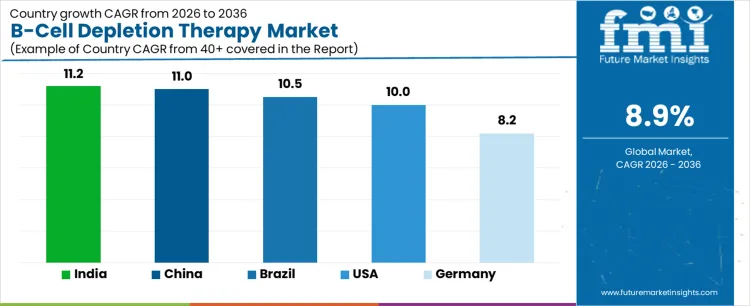
The demand for B cell depletion therapy varies across countries, driven by rising autoimmune disease prevalence, expanding healthcare infrastructure, and adoption of advanced immunotherapies. India leads with an 11.2% CAGR, supported by increasing cases of autoimmune disorders, growing awareness, and enhanced access to targeted therapies. China follows at 11.0%, driven by hospital modernization, rising healthcare expenditure, and adoption of monoclonal antibody therapies. Brazil records 10.5%, shaped by expanding healthcare services and patient access programs. The USA grows at 10.0%, reflecting established healthcare infrastructure and high adoption of biologic therapies. Germany posts 8.2%, supported by mature healthcare systems and steady use of B cell targeted treatments.
How Is B-Cell Depletion Therapy Expanding in the United States?
In the United States, revenue from the B-Cell Depletion Therapy Market is expanding at a CAGR of 10% through 2036, driven by increasing adoption of monoclonal antibodies and biologic therapies for autoimmune disorders such as rheumatoid arthritis, multiple sclerosis, and lupus. Hospitals, specialty clinics, and research centers are integrating B-cell depletion therapies to target pathogenic B cells, improve patient outcomes, and reduce disease progression. Demand is concentrated in academic hospitals, specialty treatment centers, and outpatient clinics. Domestic manufacturers are supplying high-performance, clinically validated therapeutics compatible with standard infusion and administration protocols. Rising autoimmune disease prevalence, regulatory approvals, and recurring treatment cycles are sustaining predictable adoption nationwide.
- Academic hospitals, specialty treatment centers, and outpatient clinics drive adoption
- Therapies target pathogenic B cells to improve patient outcomes
- Domestic manufacturers supply clinically validated, high-performance therapeutics
- Recurring treatment cycles sustain predictable adoption
How Are Autoimmune Care Programs Supporting Growth in Brazil?
In Brazil, the market is growing at a CAGR of 10.5% through 2036, supported by increasing awareness of autoimmune conditions and expansion of specialty care programs. Hospitals and clinics are adopting B-cell depletion therapies to manage chronic autoimmune diseases and enhance patient quality of life. Demand is concentrated in urban hospitals, specialty clinics, and research institutions. Local manufacturers and distributors provide validated biologics compatible with infusion protocols and clinical standards. Growth in autoimmune patient populations, government healthcare initiatives, and recurring treatment schedules are sustaining adoption nationwide.
- Urban hospitals, specialty clinics, and research institutions drive adoption
- Therapies manage autoimmune conditions and improve patient quality of life
- Local manufacturers supply validated biologics compatible with infusion protocols
- Recurring treatment schedules sustain adoption
How Is Autoimmune Treatment Infrastructure Accelerating Adoption in China?
China is witnessing growth at a CAGR of 11% through 2036, driven by rapid expansion of hospitals, specialty clinics, and autoimmune treatment programs. Manufacturers are integrating B-cell depletion therapies to provide targeted treatment for chronic autoimmune diseases, improving clinical outcomes and reducing disease progression. Demand is concentrated in tertiary hospitals, urban specialty centers, and research institutions. Domestic suppliers are scaling production of high-performance monoclonal antibodies compatible with infusion and administration systems. Expanding healthcare infrastructure, patient awareness, and recurring therapy cycles are sustaining rapid adoption nationwide.
- Tertiary hospitals, specialty centers, and research institutions drive adoption
- Therapies provide targeted treatment and reduce disease progression
- Domestic suppliers scale high-performance, infusion-compatible biologics
- Recurring therapy cycles sustain rapid adoption
How Is Autoimmune Care and Biologics Adoption Driving Growth in India?
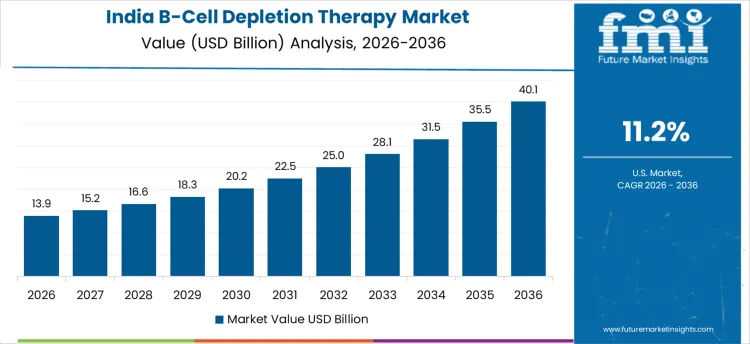
In India, revenue from the B-Cell Depletion Therapy Market is expanding at a CAGR of 11.2% through 2036, supported by increasing autoimmune disease prevalence and adoption of biologic therapies. Hospitals and specialty clinics are using B-cell depletion treatments to manage chronic conditions, improve patient outcomes, and support long-term care strategies. Demand is concentrated in urban hospitals, specialty centers, and outpatient care facilities. Domestic suppliers provide high-quality, clinically validated biologics compatible with standard infusion protocols. Rising patient awareness, healthcare infrastructure expansion, and recurring therapy cycles are sustaining robust adoption nationwide.
- Urban hospitals, specialty centers, and outpatient care facilities drive adoption
- Therapies manage chronic autoimmune conditions and improve outcomes
- Domestic suppliers provide clinically validated, infusion-compatible biologics
- Recurring therapy cycles sustain robust adoption
How Are Clinical Standards and Specialty Care Driving Adoption in Germany?
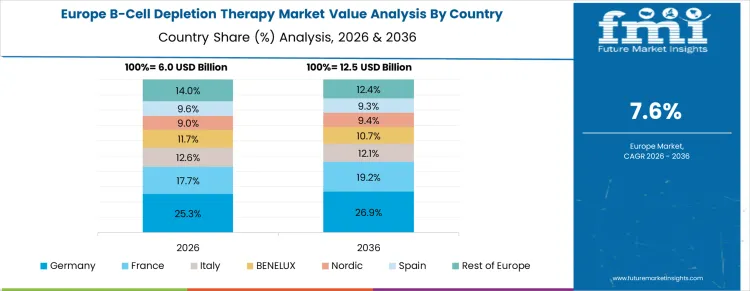
Germany is witnessing growth at a CAGR of 8.2% through 2036, driven by adoption of B-cell depletion therapies in hospitals and specialty clinics for autoimmune disorder management. Manufacturers are integrating monoclonal antibodies to target B cells, improve patient outcomes, and support long-term disease management. Demand is concentrated in academic hospitals, specialty centers, and research institutions. Domestic suppliers provide high-performance, clinically validated biologics compatible with infusion and administration systems. Regulatory standards, autoimmune treatment protocols, and recurring therapy cycles are sustaining consistent procurement nationwide.
- Academic hospitals, specialty centers, and research institutions anchor demand
- Therapies target B cells to improve autoimmune treatment outcomes
- Domestic suppliers provide clinically validated, high-performance biologics
- Recurring therapy cycles sustain consistent procurement
What Strategic Approaches Are Companies Using to Compete in The B Cell Depletion Therapy Market?
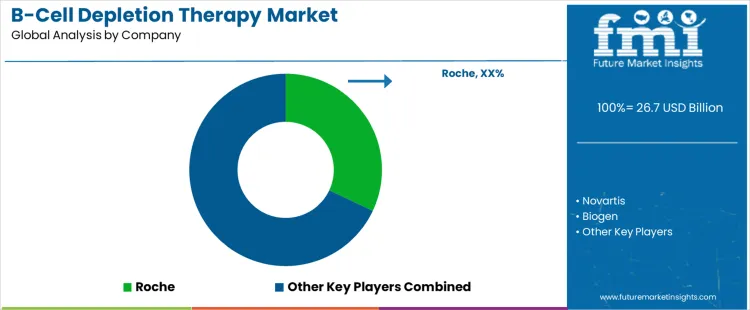
Key players in the B cell depletion therapy market compete by shaping how their therapies are embedded within long term treatment strategies rather than by pursuing rapid product turnover. Roche relies on lifecycle extension strategies, including formulation improvements, dosing flexibility, and broad label maintenance, to defend entrenched clinical positions. Novartis and Biogen focus on selective indication targeting, advancing therapies in disease areas where relapse management, durability of response, or neurological involvement create room for differentiation. Clinical trial design is used strategically to demonstrate advantages in specific patient subgroups rather than across broad populations. Companies prioritize alignment with treatment guidelines and specialist prescribing behavior, recognizing that early positioning within care pathways limits future displacement.
Another core strategy centers on healthcare system alignment and risk management. GSK and Johnson and Johnson emphasize administration models that reduce burden on infusion centers, support outpatient delivery, or lower long term monitoring requirements. Investment in real world evidence, safety registries, and post marketing studies is used to reinforce payer and clinician confidence, particularly as biosimilar competition increases. Across the market, companies pursue incremental innovation that preserves regulatory continuity while expanding use duration and patient eligibility. Partnerships, co-development, and licensing are favored over aggressive head to head competition. Strategic success depends on reimbursement resilience, physician trust, and sustained outcomes across chronic treatment horizons rather than short term clinical differentiation.
Key Players in the B Cell Depletion Therapy Market
- Roche
- Novartis
- Biogen
- GSK
- Johnson & Johnson
- Others
Scope of the Report
| Items | Values |
|---|---|
| Quantitative Units (2026) | USD billion |
| Product Type | Anti-CD20 monoclonal antibodies, Next-gen B-cell therapies |
| Application | Autoimmune diseases, Hematologic malignancies, Others |
| End-Use Industry | Hospital infusion centers, Specialty pharmacies |
| Region | Asia Pacific (China, Japan, South Korea, India, Australia & New Zealand, ASEAN, Rest of Asia Pacific), Europe (Germany, United Kingdom, France, Italy, Spain, Nordic, BENELUX, Rest of Europe), North America (United States, Canada, Mexico), Latin America (Brazil, Chile, Rest of Latin America), Middle East & Africa (KSA, Other GCC Countries, Turkey, South Africa, Other African Union, Rest of Middle East & Africa) |
| Key Companies Profiled | Roche, Novartis, Biogen, GSK, Johnson & Johnson, Others |
| Additional Attributes | Dollar by sales by product type, Dollar by sales by application, Dollar by sales by end-user, Dollar by sales by region, Annual treatment cycles, Average infusion duration, Dosing precision and regimen frequency, Biologic storage and cold chain requirements, Infusion center capacity, Safety and monitoring protocols, Real-world efficacy and patient adherence, Repeat treatment scheduling, Regulatory approvals and guideline inclusion, Treatment protocol integration, Combination therapy compatibility, Expansion into emerging regions, Hospital formulary and payer coverage, Operational efficiency of infusion workflows, Patient population access and awareness |
B Cell Depletion Therapy Market Segmentation
Product Type:
- Anti-CD20 mAbs
- Next-gen B-cell therapies
Application:
- Autoimmune diseases
- Hematologic malignancies
- Others
End User:
- Hospital infusion centers
- Specialty pharmacies
Region
- Asia Pacific
- China
- Japan
- South Korea
- India
- Australia & New Zealand
- ASEAN
- Rest of Asia Pacific
- Europe
- Germany
- United Kingdom
- France
- Italy
- Spain
- Nordic
- BENELUX
- Rest of Europe
- North America
- United States
- Canada
- Mexico
- Latin America
- Brazil
- Chile
- Rest of Latin America
- Middle East & Africa
- Kingdom of Saudi Arabia
- Other GCC Countries
- Turkey
- South Africa
- Other African Union
- Rest of Middle East & Africa
Bibliography
- Edwards, J. C. W., Szczepański, L., Szechiński, J., Filipowicz-Sosnowska, A., Emery, P., Close, D. R., Stevens, R. M., & Shaw, T. (2004). Efficacy of B-cell-targeted therapy with rituximab in patients with rheumatoid arthritis. The New England Journal of Medicine, 350(25), 2572-2581.
- Hauser, S. L., Bar-Or, A., Comi, G., Giovannoni, G., Hartung, H.-P., Hemmer, B., Lublin, F., Montalban, X., Rammohan, K. W., Selmaj, K., Traboulsee, A., Wolinsky, J. S., Arnold, D. L., Klingelschmitt, G., Masterman, D., Fontoura, P., Belachew, S., Chin, P., Mairon, N., … Kappos, L. (2017). Ocrelizumab versus interferon beta-1a in relapsing multiple sclerosis. The New England Journal of Medicine, 376(3), 221-234.
Frequently Asked Questions
How big is the b-cell depletion therapy market in 2026?
The global b-cell depletion therapy market is estimated to be valued at USD 26.7 billion in 2026.
What will be the size of b-cell depletion therapy market in 2036?
The market size for the b-cell depletion therapy market is projected to reach USD 62.6 billion by 2036.
How much will be the b-cell depletion therapy market growth between 2026 and 2036?
The b-cell depletion therapy market is expected to grow at a 8.9% CAGR between 2026 and 2036.
What are the key product types in the b-cell depletion therapy market?
The key product types in b-cell depletion therapy market are anti-cd20 mabs and next-gen b-cell therapies.
Which application segment to contribute significant share in the b-cell depletion therapy market in 2026?
In terms of application, autoimmune diseases segment to command 60.0% share in the b-cell depletion therapy market in 2026.
Preview the report firsthand - request a free sample
Get SampleGet the brochure for pricing and purchase details.
Get PDFTable of Content
- Executive Summary
- Global Market Outlook
- Demand-side Trends
- Supply-side Trends
- Technology Roadmap Analysis
- Analysis and Recommendations
- Market Overview
- Market Coverage / Taxonomy
- Market Definition / Scope / Limitations
- Market Background
- Market Dynamics
- Drivers
- Restraints
- Opportunity
- Trends
- Scenario Forecast
- Demand in Optimistic Scenario
- Demand in Likely Scenario
- Demand in Conservative Scenario
- Opportunity Map Analysis
- Product Life Cycle Analysis
- Supply Chain Analysis
- Investment Feasibility Matrix
- Value Chain Analysis
- PESTLE and Porter’s Analysis
- Regulatory Landscape
- Regional Parent Market Outlook
- Production and Consumption Statistics
- Import and Export Statistics
- Market Dynamics
- Global Market Analysis 2021 to 2025 and Forecast, 2026 to 2036
- Historical Market Size Value (USD Million) Analysis, 2021 to 2025
- Current and Future Market Size Value (USD Million) Projections, 2026 to 2036
- Y-o-Y Growth Trend Analysis
- Absolute $ Opportunity Analysis
- Global Market Pricing Analysis 2021 to 2025 and Forecast 2026 to 2036
- Global Market Analysis 2021 to 2025 and Forecast 2026 to 2036, By Product Type
- Introduction / Key Findings
- Historical Market Size Value (USD Million) Analysis By Product Type , 2021 to 2025
- Current and Future Market Size Value (USD Million) Analysis and Forecast By Product Type , 2026 to 2036
- Anti-CD20 mAbs
- Next-gen B-cell therapies
- Anti-CD20 mAbs
- Y-o-Y Growth Trend Analysis By Product Type , 2021 to 2025
- Absolute $ Opportunity Analysis By Product Type , 2026 to 2036
- Global Market Analysis 2021 to 2025 and Forecast 2026 to 2036, By Application
- Introduction / Key Findings
- Historical Market Size Value (USD Million) Analysis By Application, 2021 to 2025
- Current and Future Market Size Value (USD Million) Analysis and Forecast By Application, 2026 to 2036
- Autoimmune diseases
- Hematologic malignancies
- Autoimmune diseases
- Y-o-Y Growth Trend Analysis By Application, 2021 to 2025
- Absolute $ Opportunity Analysis By Application, 2026 to 2036
- Global Market Analysis 2021 to 2025 and Forecast 2026 to 2036, By End User
- Introduction / Key Findings
- Historical Market Size Value (USD Million) Analysis By End User, 2021 to 2025
- Current and Future Market Size Value (USD Million) Analysis and Forecast By End User, 2026 to 2036
- Hospital infusion centers
- Specialty pharmacies
- Others
- Hospital infusion centers
- Y-o-Y Growth Trend Analysis By End User, 2021 to 2025
- Absolute $ Opportunity Analysis By End User, 2026 to 2036
- Global Market Analysis 2021 to 2025 and Forecast 2026 to 2036, By Region
- Introduction
- Historical Market Size Value (USD Million) Analysis By Region, 2021 to 2025
- Current Market Size Value (USD Million) Analysis and Forecast By Region, 2026 to 2036
- North America
- Latin America
- Western Europe
- Eastern Europe
- East Asia
- South Asia and Pacific
- Middle East & Africa
- Market Attractiveness Analysis By Region
- North America Market Analysis 2021 to 2025 and Forecast 2026 to 2036, By Country
- Historical Market Size Value (USD Million) Trend Analysis By Market Taxonomy, 2021 to 2025
- Market Size Value (USD Million) Forecast By Market Taxonomy, 2026 to 2036
- By Country
- USA
- Canada
- Mexico
- By Product Type
- By Application
- By End User
- By Country
- Market Attractiveness Analysis
- By Country
- By Product Type
- By Application
- By End User
- Key Takeaways
- Latin America Market Analysis 2021 to 2025 and Forecast 2026 to 2036, By Country
- Historical Market Size Value (USD Million) Trend Analysis By Market Taxonomy, 2021 to 2025
- Market Size Value (USD Million) Forecast By Market Taxonomy, 2026 to 2036
- By Country
- Brazil
- Chile
- Rest of Latin America
- By Product Type
- By Application
- By End User
- By Country
- Market Attractiveness Analysis
- By Country
- By Product Type
- By Application
- By End User
- Key Takeaways
- Western Europe Market Analysis 2021 to 2025 and Forecast 2026 to 2036, By Country
- Historical Market Size Value (USD Million) Trend Analysis By Market Taxonomy, 2021 to 2025
- Market Size Value (USD Million) Forecast By Market Taxonomy, 2026 to 2036
- By Country
- Germany
- UK
- Italy
- Spain
- France
- Nordic
- BENELUX
- Rest of Western Europe
- By Product Type
- By Application
- By End User
- By Country
- Market Attractiveness Analysis
- By Country
- By Product Type
- By Application
- By End User
- Key Takeaways
- Eastern Europe Market Analysis 2021 to 2025 and Forecast 2026 to 2036, By Country
- Historical Market Size Value (USD Million) Trend Analysis By Market Taxonomy, 2021 to 2025
- Market Size Value (USD Million) Forecast By Market Taxonomy, 2026 to 2036
- By Country
- Russia
- Poland
- Hungary
- Balkan & Baltic
- Rest of Eastern Europe
- By Product Type
- By Application
- By End User
- By Country
- Market Attractiveness Analysis
- By Country
- By Product Type
- By Application
- By End User
- Key Takeaways
- East Asia Market Analysis 2021 to 2025 and Forecast 2026 to 2036, By Country
- Historical Market Size Value (USD Million) Trend Analysis By Market Taxonomy, 2021 to 2025
- Market Size Value (USD Million) Forecast By Market Taxonomy, 2026 to 2036
- By Country
- China
- Japan
- South Korea
- By Product Type
- By Application
- By End User
- By Country
- Market Attractiveness Analysis
- By Country
- By Product Type
- By Application
- By End User
- Key Takeaways
- South Asia and Pacific Market Analysis 2021 to 2025 and Forecast 2026 to 2036, By Country
- Historical Market Size Value (USD Million) Trend Analysis By Market Taxonomy, 2021 to 2025
- Market Size Value (USD Million) Forecast By Market Taxonomy, 2026 to 2036
- By Country
- India
- ASEAN
- Australia & New Zealand
- Rest of South Asia and Pacific
- By Product Type
- By Application
- By End User
- By Country
- Market Attractiveness Analysis
- By Country
- By Product Type
- By Application
- By End User
- Key Takeaways
- Middle East & Africa Market Analysis 2021 to 2025 and Forecast 2026 to 2036, By Country
- Historical Market Size Value (USD Million) Trend Analysis By Market Taxonomy, 2021 to 2025
- Market Size Value (USD Million) Forecast By Market Taxonomy, 2026 to 2036
- By Country
- Kingdom of Saudi Arabia
- Other GCC Countries
- Turkiye
- South Africa
- Other African Union
- Rest of Middle East & Africa
- By Product Type
- By Application
- By End User
- By Country
- Market Attractiveness Analysis
- By Country
- By Product Type
- By Application
- By End User
- Key Takeaways
- Key Countries Market Analysis
- USA
- Pricing Analysis
- Market Share Analysis, 2025
- By Product Type
- By Application
- By End User
- Canada
- Pricing Analysis
- Market Share Analysis, 2025
- By Product Type
- By Application
- By End User
- Mexico
- Pricing Analysis
- Market Share Analysis, 2025
- By Product Type
- By Application
- By End User
- Brazil
- Pricing Analysis
- Market Share Analysis, 2025
- By Product Type
- By Application
- By End User
- Chile
- Pricing Analysis
- Market Share Analysis, 2025
- By Product Type
- By Application
- By End User
- Germany
- Pricing Analysis
- Market Share Analysis, 2025
- By Product Type
- By Application
- By End User
- UK
- Pricing Analysis
- Market Share Analysis, 2025
- By Product Type
- By Application
- By End User
- Italy
- Pricing Analysis
- Market Share Analysis, 2025
- By Product Type
- By Application
- By End User
- Spain
- Pricing Analysis
- Market Share Analysis, 2025
- By Product Type
- By Application
- By End User
- France
- Pricing Analysis
- Market Share Analysis, 2025
- By Product Type
- By Application
- By End User
- India
- Pricing Analysis
- Market Share Analysis, 2025
- By Product Type
- By Application
- By End User
- ASEAN
- Pricing Analysis
- Market Share Analysis, 2025
- By Product Type
- By Application
- By End User
- Australia & New Zealand
- Pricing Analysis
- Market Share Analysis, 2025
- By Product Type
- By Application
- By End User
- China
- Pricing Analysis
- Market Share Analysis, 2025
- By Product Type
- By Application
- By End User
- Japan
- Pricing Analysis
- Market Share Analysis, 2025
- By Product Type
- By Application
- By End User
- South Korea
- Pricing Analysis
- Market Share Analysis, 2025
- By Product Type
- By Application
- By End User
- Russia
- Pricing Analysis
- Market Share Analysis, 2025
- By Product Type
- By Application
- By End User
- Poland
- Pricing Analysis
- Market Share Analysis, 2025
- By Product Type
- By Application
- By End User
- Hungary
- Pricing Analysis
- Market Share Analysis, 2025
- By Product Type
- By Application
- By End User
- Kingdom of Saudi Arabia
- Pricing Analysis
- Market Share Analysis, 2025
- By Product Type
- By Application
- By End User
- Turkiye
- Pricing Analysis
- Market Share Analysis, 2025
- By Product Type
- By Application
- By End User
- South Africa
- Pricing Analysis
- Market Share Analysis, 2025
- By Product Type
- By Application
- By End User
- USA
- Market Structure Analysis
- Competition Dashboard
- Competition Benchmarking
- Market Share Analysis of Top Players
- By Regional
- By Product Type
- By Application
- By End User
- Competition Analysis
- Competition Deep Dive
- Roche
- Overview
- Product Portfolio
- Profitability by Market Segments (Product/Age /Sales Channel/Region)
- Sales Footprint
- Strategy Overview
- Marketing Strategy
- Product Strategy
- Channel Strategy
- Novartis
- Biogen
- GSK
- Johnson & Johnson
- Others
- Roche
- Competition Deep Dive
- Assumptions & Acronyms Used
- Research Methodology


