

- Industry Size (2026)
- USD 1.42 Bn
- Forecast (2036)
- USD 3.42 Bn
- CAGR (2026 to 2036)
- 9.20%
Bar Inspection System Market Size, Market Forecast and Outlook By FMI
The bar inspection system market was valued at USD 1.30 billion in 2025, projected to reach USD 1.42 billion in 2026, and is forecast to expand to USD 3.42 billion by 2036 at a 9.20% CAGR. Automotive and aerospace supply chain quality mandates requiring 100% surface and volumetric inspection of metal bar stock are driving the transition from sampling-based manual inspection to automated inline systems that deliver continuous defect detection without production throughput reduction. Digital quality management systems requiring machine-readable inspection certificates are compelling steel mills and bar processing facilities to install automated inspection lines that generate electronic quality records compatible with customer traceability platforms.
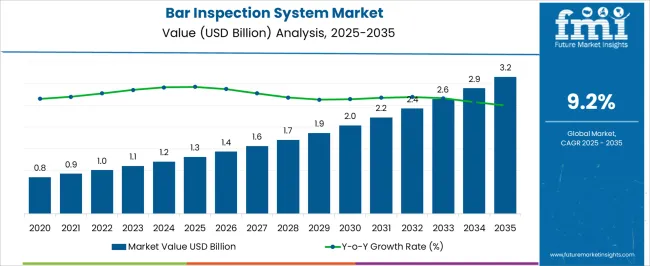
The absolute dollar opportunity of approximately USD 2.00 billion over the forecast period reflects the structural investment cycle as metal processing facilities worldwide upgrade from manual spot-check inspection to automated inline systems. AI-powered defect classification algorithms integrated with optical and ultrasonic sensors are creating premium system tiers that deliver automated defect categorization and disposition decisions, reducing skilled inspector labour requirements. Robotic inspection systems capable of handling multiple bar diameters and surface conditions without manual changeover are commanding the highest per-system prices by eliminating production interruptions during product changeover.
Summary of Bar Inspection System Market
- Bar Inspection System Market Definition
- Bar inspection systems are industrial quality platforms detecting surface, internal, dimensional, and material defects in metal bar stock using optical, ultrasonic, X-ray, magnetic, and laser technologies across automated, manual, and robotic configurations.
- Demand Drivers in the Market
- Automotive and aerospace zero-defect supply chain mandates requiring 100% bar stock inspection are driving the transition from sampling-based manual methods to automated inline systems with continuous defect detection capability.
- AI-powered defect classification algorithms integrated with sensor platforms create premium system tiers delivering automated defect categorization that reduces skilled inspector labour requirements at steel processing facilities.
- Digital quality management systems requiring machine-readable inspection certificates compel mills and processors to install automated lines generating electronic quality records compatible with customer traceability platforms.
- Key Segments Analyzed in the FMI Report
- Automated Bar Inspection Systems by Type: 45.0% share in 2026, as inline automated platforms deliver continuous inspection without production throughput reduction, meeting the 100% inspection mandates imposed by automotive and aerospace customers.
- Optical Inspection Technology by Technology: 35.0% share in 2026, reflecting the high-speed surface defect detection capability of vision-based systems that serve as the primary inspection modality for bar surface quality assessment.
- China: 12.4% compound growth driven by steel industry quality upgrade programmes and automotive supply chain inspection mandate compliance across major steel producing provinces.
- Analyst Opinion at FMI
- Nikhil Kaitwade, Principal Consultant for Testing Equipment, opines, The bar inspection system market is entering an automation investment cycle where manual inspection methods face obsolescence as automotive and aerospace supply chain quality mandates require 100% inspection with digital traceability. System manufacturers who integrate AI defect classification with multi-sensor platforms capture the premium pricing tier by delivering turnkey quality assurance solutions that replace both inspection hardware and skilled inspector labour. The critical adoption barrier centers on system changeover flexibility, as steel mills producing multiple bar sizes and grades require inspection platforms that handle product transitions without manual reconfiguration to maintain production throughput.
- Strategic Implications / Executive Takeaways
- Inspection system manufacturers must integrate AI defect classification with multi-sensor platforms to deliver turnkey solutions that replace both inspection hardware and inspector labour at steel processing facilities.
- Steel mill quality directors must align bar inspection system investments with automotive customer digital traceability requirements to maintain supplier qualification status.
- Automotive tier-1 suppliers must specify 100% inline bar inspection with electronic certification as a mandatory procurement condition for metal bar stock suppliers.
Bar Inspection System Market Key Takeaways
| Metric | Details |
|---|---|
| Industry Size (2026) | USD 1.42 Billion |
| Industry Value (2036) | USD 3.42 Billion |
| CAGR (2026-2036) | 9.20% |
Source: Future Market Insights, 2026
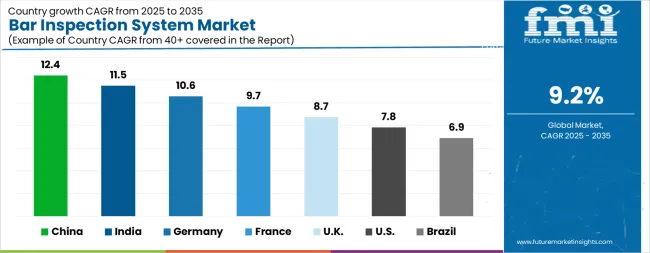
China sets the pace at a 12.4% CAGR, driven by steel industry quality upgrade programmes and automotive supply chain inspection mandate compliance. India follows at 11.5% as manufacturing quality infrastructure investment and automotive OEM supplier qualification requirements generate inspection system procurement. Germany registers 10.6% growth under automotive industry zero-defect supply chain mandates and steel industry Industry 4.0 digitalization programmes. France maintains 9.7% supported by aerospace supply chain quality certification requirements. UK expands at 8.7% anchored by automotive and energy sector quality compliance. USA tracks at 7.8% driven by aerospace and automotive supplier quality system upgrades. Brazil registers 6.9% with steel industry modernization and automotive supply chain quality requirements.
Bar Inspection System Market Definition
Bar inspection systems are industrial quality assurance platforms designed to detect surface defects, internal flaws, dimensional deviations, and material property variations in metal bar stock through automated, manual, or robotic inspection configurations. These systems employ optical, ultrasonic, X-ray, magnetic, and laser inspection technologies to evaluate round, square, hexagonal, and flat bar products across steel mills, processing centres, and end-user receiving inspection operations.
Bar Inspection System Market Inclusions
Market scope includes automated inline bar inspection systems, manual bench-top inspection stations, robotic bar handling and inspection cells, and integrated multi-technology inspection platforms. Coverage spans optical surface inspection, ultrasonic volumetric testing, X-ray internal defect detection, magnetic particle and flux leakage testing, and laser dimensional measurement systems.
Bar Inspection System Market Exclusions
Tube and pipe inspection systems, plate and sheet inspection equipment, wire rod inspection systems, and finished machined component inspection platforms are excluded. Standalone metallurgical laboratory testing equipment without inline bar inspection capability falls outside analytical parameters.
Bar Inspection System Market Research Methodology
- Primary Research: Analysts engaged with steel mill quality directors, automotive tier-1 supplier receiving inspection managers, and NDT equipment manufacturer sales engineers to map the procurement triggers for bar inspection system selection and technology upgrade decisions.
- Desk Research: Data collection phases aggregated automotive and aerospace supplier quality mandate compliance timelines, steel industry modernization investment plans, and NDT equipment manufacturer order book disclosures.
- Market-Sizing and Forecasting: Baseline values derive from a bottom-up aggregation of bar inspection system unit sales multiplied by average system prices across technology and automation level categories, applying region-specific quality infrastructure investment curves.
- Data Validation and Update Cycle: Projections are tested against publicly reported NDT and quality inspection equipment revenues from leading inspection system manufacturers and industrial technology companies.
Why is the Bar Inspection System Market Growing?
The Bar Inspection System market is experiencing consistent growth due to the increasing need for quality control and defect detection in industrial manufacturing processes. The current market is being shaped by the growing adoption of automation across production lines, where high-speed and precise inspection capabilities are essential for maintaining operational efficiency and minimizing material waste.
In 2026, increasing investments in the automotive and construction sectors, coupled with the need for defect-free bars and rods, are driving market expansion. Advanced inspection systems are enabling manufacturers to identify surface imperfections, cracks, and dimensional inconsistencies in real-time, which reduces manual labor and enhances productivity.
The future outlook for this market is shaped by ongoing technological innovations in optical inspection, laser scanning, and AI-powered analytics, which provide more accurate detection and predictive maintenance capabilities As manufacturers continue to emphasize quality and efficiency, the demand for automated, software-driven bar inspection solutions is expected to strengthen, creating opportunities for system integration and customization across industries with rigorous quality standards.
Segmental Analysis
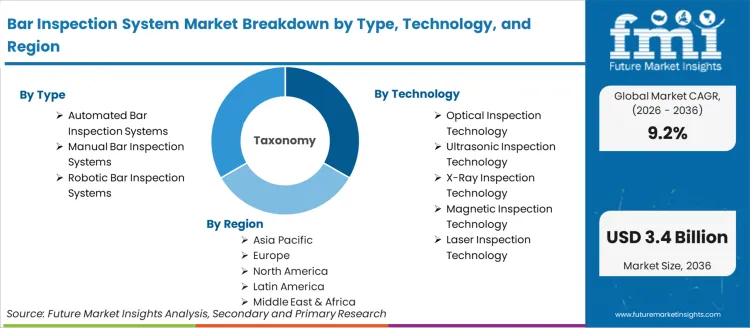
The bar inspection system market is segmented by type, technology, industry application, component, end-user, and geographic regions. By type, bar inspection system market is divided into Automated Bar Inspection Systems, Manual Bar Inspection Systems, and Robotic Bar Inspection Systems. In terms of technology, bar inspection system market is classified into Optical Inspection Technology, Ultrasonic Inspection Technology, X-Ray Inspection Technology, Magnetic Inspection Technology, and Laser Inspection Technology. Based on industry application, bar inspection system market is segmented into Automotive, Aerospace, Construction, Manufacturing, and Energy And Power. By component, bar inspection system market is segmented into Inspection Sensors, Software And Algorithms, Data Processing Units, Integration Systems, and Control Systems. By end-user, bar inspection system market is segmented into Original Equipment Manufacturers (OEMs), Maintenance, Repair, And Overhaul (MRO) Providers, Quality Assurance Labs, Research And Development Facilities, and Service Providers. Regionally, the bar inspection system industry is classified into North America, Latin America, Western Europe, Eastern Europe, Balkan & Baltic Countries, Russia & Belarus, Central Asia, East Asia, South Asia & Pacific, and the Middle East & Africa.
Insights into the Automated Bar Inspection Systems Segment
The automated bar inspection systems segment is projected to hold 45.0% of the overall Bar Inspection System market revenue in 2026, making it the leading technology type. This dominance is being attributed to its ability to reduce human error while ensuring consistent, high-speed inspection across production lines. Automation allows for real-time defect detection and immediate corrective actions, minimizing downtime and improving throughput.
The growing need for precise quality control in the automotive and heavy engineering industries has accelerated the adoption of automated systems. These systems are favored for their scalability and flexibility, allowing integration with existing manufacturing lines without major redesigns.
Furthermore, the enhanced accuracy of automated systems has been driving their preference over manual inspection, particularly in high-volume manufacturing environments where small defects can result in significant material and financial losses As the market continues to shift toward intelligent, software-driven inspection platforms, the automated segment is expected to maintain its leadership due to its efficiency, reliability, and adaptability to evolving industry standards.
Insights into the Optical Inspection Technology Segment
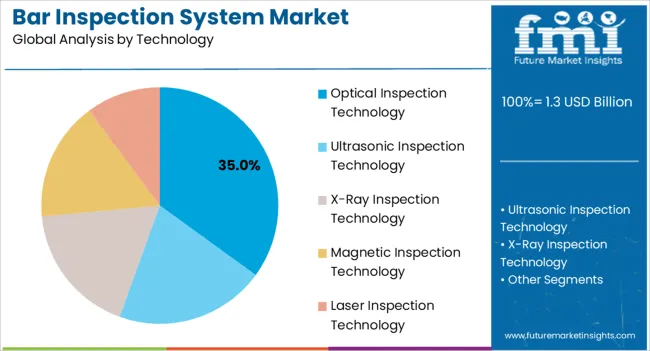
Optical inspection technology is projected to account for 35.0% of the Bar Inspection System market revenue in 2026, representing the leading inspection technology segment. This growth has been supported by its ability to provide high-resolution, non-contact inspection of bar surfaces, which ensures detection of surface defects, dimensional variations, and structural inconsistencies with high precision. Optical systems are increasingly integrated with software algorithms to deliver automated defect classification, reporting, and analytics, reducing dependence on manual inspection.
The preference for optical technology is driven by its speed, accuracy, and adaptability across multiple production environments, particularly where continuous quality monitoring is critical. Increased industrial focus on minimizing scrap rates and ensuring compliance with quality standards has reinforced adoption.
The segment’s growth is further supported by enhancements in camera and lighting technologies, which improve detection reliability and reduce false positives As industrial production standards become more stringent, optical inspection technology is expected to continue leading due to its ability to deliver consistent, real-time quality assurance in high-volume manufacturing.
Insights into the Automotive End-Use Segment
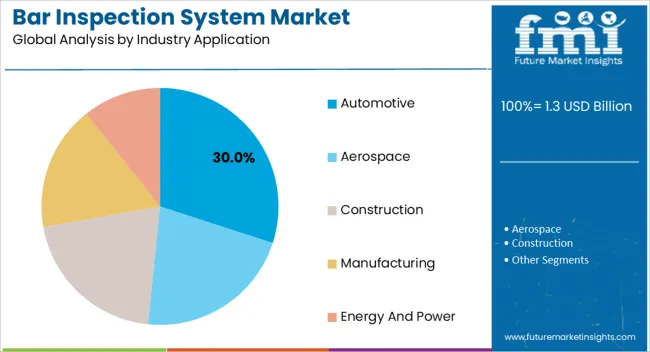
The automotive end-use segment is expected to account for 30.0% of the Bar Inspection System market revenue in 2026, making it the largest industry segment. This growth has been driven by the critical demand for defect-free bars and rods in automotive manufacturing, where structural integrity and precision are paramount. Automated inspection systems are increasingly deployed to ensure components meet stringent safety and performance standards, reducing recalls and enhancing product reliability.
The segment has benefited from growing automotive production, adoption of electric vehicles, and increasing emphasis on quality assurance across supply chains. Manufacturers are prioritizing advanced inspection systems that provide real-time analytics, automated defect detection, and integration with production line management systems.
Additionally, regulatory compliance and standardization in automotive component manufacturing have reinforced the adoption of high-precision inspection technologies As automotive manufacturers continue to focus on efficiency, safety, and quality, the demand for intelligent bar inspection systems in this sector is expected to sustain growth, driving innovation and expansion across the market.
Market Overview
Bar Inspection System market project to multiply in high single digit growth
Bra inspection system (BIS) market has been growing owing to multiple benefits associated with it. The global bar inspection system market has been witnessing a moderate growth with the rise in its applications.
North America and Europe have been the prominent markets for bar inspection systems, while the market is also growing in Asia-Pacific.
Analysis of Bar Inspection System Market By Key Countries
.webp "Top Country Growth Comparison Bar Inspection System Market Cagr (2026 2036)")
| Country | CAGR |
|---|---|
| China | 12.4% |
| India | 11.5% |
| Germany | 10.6% |
| France | 9.7% |
| UK | 8.7% |
| USA | 7.8% |
| Brazil | 6.9% |
Source: FMI analysis based on primary research and proprietary forecasting model
Country-wise Analysis
The Bar Inspection System Market is expected to register a CAGR of 9.2% during the forecast period, exhibiting varied country level momentum. China leads with the highest CAGR of 12.4%, followed by India at 11.5%. Developed markets such as Germany, France, and the UK continue to expand steadily, while the USA is likely to grow at consistent rates. Brazil posts the lowest CAGR at 6.9%, yet still underscores a broadly positive trajectory for the global Bar Inspection System Market. In 2024, Germany held a dominant revenue in the Western Europe market and is expected to grow with a CAGR of 10.6%. The USA Bar Inspection System Market is estimated to be valued at USD 497.7 million in 2026 and is anticipated to reach a valuation of USD 1.1 billion by 2036. Sales are projected to rise at a CAGR of 7.8% over the forecast period between 2026 and 2036. While Japan and South Korea markets are estimated to be valued at USD 60.7 million and USD 39.2 million respectively in 2026.
Key Players in the Bar Inspection System Market
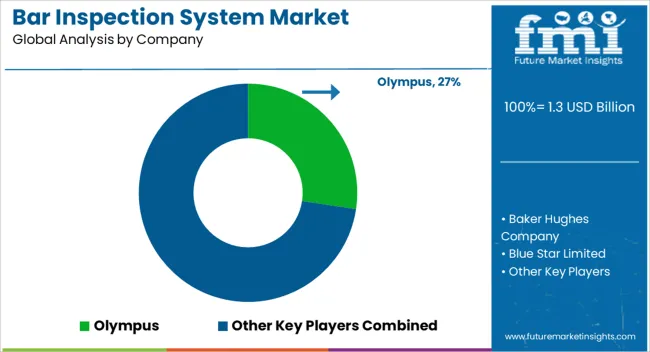
- Olympus
- Baker Hughes Company
- Blue Star Limited
- Namicon Testing
- Salem Design & Manufacturing LLC
- KJTD Co. Ltd.
- Structural Diagnostics Inc
- Innerspec Technologies
- Epsilon NDT
Scope of the Report
| Metric | Value |
|---|---|
| Quantitative Units | USD 1.42 Billion to USD 3.42 Billion, at a CAGR of 9.20% |
| Market Definition | Bar inspection systems are industrial quality platforms detecting surface, internal, dimensional, and material defects in metal bar stock using optical, ultrasonic, X-ray, magnetic, and laser technologies across automated, manual, and robotic configurations. |
| Segmentation | Type: Automated Bar Inspection Systems, Manual Bar Inspection Systems, and Robotic Bar Inspection Systems; Technology: Optical Inspection Technology, Ultrasonic Inspection Technology, X-Ray Inspection Technology, Magnetic Inspection Technology, and Laser Inspection Technology; Industry Application: Automotive, Aerospace, Construction, Manufacturing, and Energy And Power |
| Regions Covered | North America, Latin America, Europe, East Asia, South Asia, Oceania, Middle East & Africa |
| Countries Covered | China, India, Germany, France, UK, USA, Brazil, and 40 plus countries |
| Key Companies Profiled | Olympus, Baker Hughes Company, Blue Star Limited, Namicon Testing, Salem Design & Manufacturing LLC, KJTD Co. Ltd., Structural Diagnostics Inc, Innerspec Technologies, Epsilon NDT |
| Forecast Period | 2026 to 2036 |
| Approach | Forecasting models apply a bottom-up methodology starting with installed base metrics and projecting conversion rates to technology adoption. |
Bar Inspection System Market by Segments
Type:
- Automated Bar Inspection Systems
- Manual Bar Inspection Systems
- Robotic Bar Inspection Systems
Technology:
- Optical Inspection Technology
- Ultrasonic Inspection Technology
- X-Ray Inspection Technology
- Magnetic Inspection Technology
- Laser Inspection Technology
Industry Application:
- Automotive
- Aerospace
- Construction
- Manufacturing
- Energy And Power
Component:
- Inspection Sensors
- Software And Algorithms
- Data Processing Units
- Integration Systems
- Control Systems
End-User:
- Original Equipment Manufacturers (OEMs)
- Maintenance, Repair, And Overhaul (MRO) Providers
- Quality Assurance Labs
- Research And Development Facilities
- Service Providers
Region:
- North America
- USA
- Canada
- Mexico
- Latin America
- Brazil
- Chile
- Rest of Latin America
- Western Europe
- Germany
- UK
- Italy
- Spain
- France
- Nordic
- BENELUX
- Rest of Western Europe
- Eastern Europe
- Russia
- Poland
- Hungary
- Balkan & Baltic
- Rest of Eastern Europe
- East Asia
- China
- Japan
- South Korea
- South Asia and Pacific
- India
- ASEAN
- Australia & New Zealand
- Rest of South Asia and Pacific
- Middle East & Africa
- Kingdom of Saudi Arabia
- Other GCC Countries
- Turkiye
- South Africa
- Other African Union
- Rest of Middle East & Africa
Bibliography
- 1. International Organization for Standardization. (2024). ISO 9712: Non-destructive Testing Qualification and Certification of NDT Personnel. ISO.
- 2. American Society for Testing and Materials. (2024). ASTM A388: Standard Practice for Ultrasonic Examination of Steel Forgings and Bars. ASTM.
- 3. European Committee for Standardization. (2024). EN 10308: Non-destructive Testing of Steel Bars. CEN.
- 4. China Iron and Steel Association. (2024). Steel Industry Quality Infrastructure Modernization: Investment Plan and Standards. CISA.
- 5. Automotive Industry Action Group. (2024). CQI-15: Special Process Assessment for Welding and Bar Stock Inspection. AIAG.
- 6. Bureau of Indian Standards. (2024). IS 7739: Methods for Ultrasonic Testing of Steel Bars. BIS.
This bibliography is provided for reader reference. The full FMI report contains the complete reference list with primary research documentation.
Frequently Asked Questions
How large is the demand for Bar Inspection Systems in the global market in 2026?
Demand is estimated to be valued at USD 1.42 billion in 2026.
What will be the market size by 2036?
Market size is projected to reach USD 3.42 billion by 2036.
What is the expected CAGR between 2026 and 2036?
Demand is expected to grow at a CAGR of 9.20% between 2026 and 2036.
Which Type is poised to lead global sales by 2026?
Automated Bar Inspection Systems accounts for 45.0% share in 2026 delivering continuous inline inspection without throughput reduction.
How is Optical Inspection Technology positioned in 2026?
Optical Inspection Technology represents 35.0% share as high-speed vision systems serve as the primary modality for bar surface quality assessment.
What is driving demand in China?
Steel industry quality upgrade programmes and automotive supply chain inspection compliance fuel the fastest growth at 12.4% CAGR through 2036.
What is included in the scope of this report?
The market covers automated, manual, and robotic inspection systems using optical, ultrasonic, X-ray, magnetic, and laser technologies for metal bar stock.
What is excluded from the scope of this report?
Tube/pipe inspection, plate/sheet inspection, wire rod systems, finished component inspection, and standalone lab testing equipment are excluded.
Preview the report firsthand - request a free sample
Get SampleGet the brochure for pricing and purchase details.
Get PDFTable of Content
- Executive Summary
- Global Market Outlook
- Demand-side Trends
- Supply-side Trends
- Technology Roadmap Analysis
- Analysis and Recommendations
- Market Overview
- Market Coverage / Taxonomy
- Market Definition / Scope / Limitations
- Research Methodology
- Chapter Orientation
- Analytical Lens and Working Hypotheses
- Market Structure, Signals, and Trend Drivers
- Benchmarking and Cross-market Comparability
- Market Sizing, Forecasting, and Opportunity Mapping
- Research Design and Evidence Framework
- Desk Research Programme (Secondary Evidence)
- Company Annual and Sustainability Reports
- Peer-reviewed Journals and Academic Literature
- Corporate Websites, Product Literature, and Technical Notes
- Earnings Decks and Investor Briefings
- Statutory Filings and Regulatory Disclosures
- Technical White Papers and Standards Notes
- Trade Journals, Industry Magazines, and Analyst Briefs
- Conference Proceedings, Webinars, and Seminar Materials
- Government Statistics Portals and Public Data Releases
- Press Releases and Reputable Media Coverage
- Specialist Newsletters and Curated Briefings
- Sector Databases and Reference Repositories
- FMI Internal Proprietary Databases and Historical Market Datasets
- Subscription Datasets and Paid Sources
- Social Channels, Communities, and Digital Listening Inputs
- Additional Desk Sources
- Expert Input and Fieldwork (Primary Evidence)
- Primary Modes
- Qualitative Interviews and Expert Elicitation
- Quantitative Surveys and Structured Data Capture
- Blended Approach
- Why Primary Evidence is Used
- Field Techniques
- Interviews
- Surveys
- Focus Groups
- Observational and In-context Research
- Social and Community Interactions
- Stakeholder Universe Engaged
- C-suite Leaders
- Board Members
- Presidents and Vice Presidents
- R&D and Innovation Heads
- Technical Specialists
- Domain Subject-matter Experts
- Scientists
- Physicians and Other Healthcare Professionals
- Governance, Ethics, and Data Stewardship
- Research Ethics
- Data Integrity and Handling
- Primary Modes
- Tooling, Models, and Reference Databases
- Desk Research Programme (Secondary Evidence)
- Data Engineering and Model Build
- Data Acquisition and Ingestion
- Cleaning, Normalisation, and Verification
- Synthesis, Triangulation, and Analysis
- Quality Assurance and Audit Trail
- Market Background
- Market Dynamics
- Drivers
- Restraints
- Opportunity
- Trends
- Scenario Forecast
- Demand in Optimistic Scenario
- Demand in Likely Scenario
- Demand in Conservative Scenario
- Opportunity Map Analysis
- Product Life Cycle Analysis
- Supply Chain Analysis
- Investment Feasibility Matrix
- Value Chain Analysis
- PESTLE and Porter’s Analysis
- Regulatory Landscape
- Regional Parent Market Outlook
- Production and Consumption Statistics
- Import and Export Statistics
- Market Dynamics
- Global Market Analysis 2021 to 2025 and Forecast, 2026 to 2036
- Historical Market Size Value (USD Million) Analysis, 2021 to 2025
- Current and Future Market Size Value (USD Million) Projections, 2026 to 2036
- Y-o-Y Growth Trend Analysis
- Absolute $ Opportunity Analysis
- Global Market Pricing Analysis 2021 to 2025 and Forecast 2026 to 2036
- Global Market Analysis 2021 to 2025 and Forecast 2026 to 2036, By Type
- Introduction / Key Findings
- Historical Market Size Value (USD Million) Analysis By Type , 2021 to 2025
- Current and Future Market Size Value (USD Million) Analysis and Forecast By Type , 2026 to 2036
- Automated Bar Inspection Systems
- Manual Bar Inspection Systems
- Robotic Bar Inspection Systems
- Automated Bar Inspection Systems
- Y-o-Y Growth Trend Analysis By Type , 2021 to 2025
- Absolute $ Opportunity Analysis By Type , 2026 to 2036
- Global Market Analysis 2021 to 2025 and Forecast 2026 to 2036, By Technology
- Introduction / Key Findings
- Historical Market Size Value (USD Million) Analysis By Technology, 2021 to 2025
- Current and Future Market Size Value (USD Million) Analysis and Forecast By Technology, 2026 to 2036
- Optical Inspection Technology
- Ultrasonic Inspection Technology
- X-Ray Inspection Technology
- Magnetic Inspection Technology
- Laser Inspection Technology
- Optical Inspection Technology
- Y-o-Y Growth Trend Analysis By Technology, 2021 to 2025
- Absolute $ Opportunity Analysis By Technology, 2026 to 2036
- Global Market Analysis 2021 to 2025 and Forecast 2026 to 2036, By Industry Application
- Introduction / Key Findings
- Historical Market Size Value (USD Million) Analysis By Industry Application, 2021 to 2025
- Current and Future Market Size Value (USD Million) Analysis and Forecast By Industry Application, 2026 to 2036
- Automotive
- Aerospace
- Construction
- Manufacturing
- Energy And Power
- Automotive
- Y-o-Y Growth Trend Analysis By Industry Application, 2021 to 2025
- Absolute $ Opportunity Analysis By Industry Application, 2026 to 2036
- Global Market Analysis 2021 to 2025 and Forecast 2026 to 2036, By Component
- Introduction / Key Findings
- Historical Market Size Value (USD Million) Analysis By Component, 2021 to 2025
- Current and Future Market Size Value (USD Million) Analysis and Forecast By Component, 2026 to 2036
- Inspection Sensors
- Software And Algorithms
- Data Processing Value (USD Million)s
- Integration Systems
- Control Systems
- Inspection Sensors
- Y-o-Y Growth Trend Analysis By Component, 2021 to 2025
- Absolute $ Opportunity Analysis By Component, 2026 to 2036
- Global Market Analysis 2021 to 2025 and Forecast 2026 to 2036, By End-User
- Introduction / Key Findings
- Historical Market Size Value (USD Million) Analysis By End-User, 2021 to 2025
- Current and Future Market Size Value (USD Million) Analysis and Forecast By End-User, 2026 to 2036
- Original Equipment Manufacturers
- Maintenance, Repair, And Overhaul
- Quality Assurance Labs
- Research And Development Facilities
- Service Providers
- Original Equipment Manufacturers
- Y-o-Y Growth Trend Analysis By End-User, 2021 to 2025
- Absolute $ Opportunity Analysis By End-User, 2026 to 2036
- Global Market Analysis 2021 to 2025 and Forecast 2026 to 2036, By Region
- Introduction
- Historical Market Size Value (USD Million) Analysis By Region, 2021 to 2025
- Current Market Size Value (USD Million) Analysis and Forecast By Region, 2026 to 2036
- North America
- Latin America
- Western Europe
- Eastern Europe
- East Asia
- South Asia and Pacific
- Middle East & Africa
- Market Attractiveness Analysis By Region
- North America Market Analysis 2021 to 2025 and Forecast 2026 to 2036, By Country
- Historical Market Size Value (USD Million) Trend Analysis By Market Taxonomy, 2021 to 2025
- Market Size Value (USD Million) Forecast By Market Taxonomy, 2026 to 2036
- By Country
- USA
- Canada
- Mexico
- By Type
- By Technology
- By Industry Application
- By Component
- By End-User
- By Country
- Market Attractiveness Analysis
- By Country
- By Type
- By Technology
- By Industry Application
- By Component
- By End-User
- Key Takeaways
- Latin America Market Analysis 2021 to 2025 and Forecast 2026 to 2036, By Country
- Historical Market Size Value (USD Million) Trend Analysis By Market Taxonomy, 2021 to 2025
- Market Size Value (USD Million) Forecast By Market Taxonomy, 2026 to 2036
- By Country
- Brazil
- Chile
- Rest of Latin America
- By Type
- By Technology
- By Industry Application
- By Component
- By End-User
- By Country
- Market Attractiveness Analysis
- By Country
- By Type
- By Technology
- By Industry Application
- By Component
- By End-User
- Key Takeaways
- Western Europe Market Analysis 2021 to 2025 and Forecast 2026 to 2036, By Country
- Historical Market Size Value (USD Million) Trend Analysis By Market Taxonomy, 2021 to 2025
- Market Size Value (USD Million) Forecast By Market Taxonomy, 2026 to 2036
- By Country
- Germany
- UK
- Italy
- Spain
- France
- Nordic
- BENELUX
- Rest of Western Europe
- By Type
- By Technology
- By Industry Application
- By Component
- By End-User
- By Country
- Market Attractiveness Analysis
- By Country
- By Type
- By Technology
- By Industry Application
- By Component
- By End-User
- Key Takeaways
- Eastern Europe Market Analysis 2021 to 2025 and Forecast 2026 to 2036, By Country
- Historical Market Size Value (USD Million) Trend Analysis By Market Taxonomy, 2021 to 2025
- Market Size Value (USD Million) Forecast By Market Taxonomy, 2026 to 2036
- By Country
- Russia
- Poland
- Hungary
- Balkan & Baltic
- Rest of Eastern Europe
- By Type
- By Technology
- By Industry Application
- By Component
- By End-User
- By Country
- Market Attractiveness Analysis
- By Country
- By Type
- By Technology
- By Industry Application
- By Component
- By End-User
- Key Takeaways
- East Asia Market Analysis 2021 to 2025 and Forecast 2026 to 2036, By Country
- Historical Market Size Value (USD Million) Trend Analysis By Market Taxonomy, 2021 to 2025
- Market Size Value (USD Million) Forecast By Market Taxonomy, 2026 to 2036
- By Country
- China
- Japan
- South Korea
- By Type
- By Technology
- By Industry Application
- By Component
- By End-User
- By Country
- Market Attractiveness Analysis
- By Country
- By Type
- By Technology
- By Industry Application
- By Component
- By End-User
- Key Takeaways
- South Asia and Pacific Market Analysis 2021 to 2025 and Forecast 2026 to 2036, By Country
- Historical Market Size Value (USD Million) Trend Analysis By Market Taxonomy, 2021 to 2025
- Market Size Value (USD Million) Forecast By Market Taxonomy, 2026 to 2036
- By Country
- India
- ASEAN
- Australia & New Zealand
- Rest of South Asia and Pacific
- By Type
- By Technology
- By Industry Application
- By Component
- By End-User
- By Country
- Market Attractiveness Analysis
- By Country
- By Type
- By Technology
- By Industry Application
- By Component
- By End-User
- Key Takeaways
- Middle East & Africa Market Analysis 2021 to 2025 and Forecast 2026 to 2036, By Country
- Historical Market Size Value (USD Million) Trend Analysis By Market Taxonomy, 2021 to 2025
- Market Size Value (USD Million) Forecast By Market Taxonomy, 2026 to 2036
- By Country
- Kingdom of Saudi Arabia
- Other GCC Countries
- Turkiye
- South Africa
- Other African Union
- Rest of Middle East & Africa
- By Type
- By Technology
- By Industry Application
- By Component
- By End-User
- By Country
- Market Attractiveness Analysis
- By Country
- By Type
- By Technology
- By Industry Application
- By Component
- By End-User
- Key Takeaways
- Key Countries Market Analysis
- USA
- Pricing Analysis
- Market Share Analysis, 2025
- By Type
- By Technology
- By Industry Application
- By Component
- By End-User
- Canada
- Pricing Analysis
- Market Share Analysis, 2025
- By Type
- By Technology
- By Industry Application
- By Component
- By End-User
- Mexico
- Pricing Analysis
- Market Share Analysis, 2025
- By Type
- By Technology
- By Industry Application
- By Component
- By End-User
- Brazil
- Pricing Analysis
- Market Share Analysis, 2025
- By Type
- By Technology
- By Industry Application
- By Component
- By End-User
- Chile
- Pricing Analysis
- Market Share Analysis, 2025
- By Type
- By Technology
- By Industry Application
- By Component
- By End-User
- Germany
- Pricing Analysis
- Market Share Analysis, 2025
- By Type
- By Technology
- By Industry Application
- By Component
- By End-User
- UK
- Pricing Analysis
- Market Share Analysis, 2025
- By Type
- By Technology
- By Industry Application
- By Component
- By End-User
- Italy
- Pricing Analysis
- Market Share Analysis, 2025
- By Type
- By Technology
- By Industry Application
- By Component
- By End-User
- Spain
- Pricing Analysis
- Market Share Analysis, 2025
- By Type
- By Technology
- By Industry Application
- By Component
- By End-User
- France
- Pricing Analysis
- Market Share Analysis, 2025
- By Type
- By Technology
- By Industry Application
- By Component
- By End-User
- India
- Pricing Analysis
- Market Share Analysis, 2025
- By Type
- By Technology
- By Industry Application
- By Component
- By End-User
- ASEAN
- Pricing Analysis
- Market Share Analysis, 2025
- By Type
- By Technology
- By Industry Application
- By Component
- By End-User
- Australia & New Zealand
- Pricing Analysis
- Market Share Analysis, 2025
- By Type
- By Technology
- By Industry Application
- By Component
- By End-User
- China
- Pricing Analysis
- Market Share Analysis, 2025
- By Type
- By Technology
- By Industry Application
- By Component
- By End-User
- Japan
- Pricing Analysis
- Market Share Analysis, 2025
- By Type
- By Technology
- By Industry Application
- By Component
- By End-User
- South Korea
- Pricing Analysis
- Market Share Analysis, 2025
- By Type
- By Technology
- By Industry Application
- By Component
- By End-User
- Russia
- Pricing Analysis
- Market Share Analysis, 2025
- By Type
- By Technology
- By Industry Application
- By Component
- By End-User
- Poland
- Pricing Analysis
- Market Share Analysis, 2025
- By Type
- By Technology
- By Industry Application
- By Component
- By End-User
- Hungary
- Pricing Analysis
- Market Share Analysis, 2025
- By Type
- By Technology
- By Industry Application
- By Component
- By End-User
- Kingdom of Saudi Arabia
- Pricing Analysis
- Market Share Analysis, 2025
- By Type
- By Technology
- By Industry Application
- By Component
- By End-User
- Turkiye
- Pricing Analysis
- Market Share Analysis, 2025
- By Type
- By Technology
- By Industry Application
- By Component
- By End-User
- South Africa
- Pricing Analysis
- Market Share Analysis, 2025
- By Type
- By Technology
- By Industry Application
- By Component
- By End-User
- USA
- Market Structure Analysis
- Competition Dashboard
- Competition Benchmarking
- Market Share Analysis of Top Players
- By Regional
- By Type
- By Technology
- By Industry Application
- By Component
- By End-User
- Competition Analysis
- Competition Deep Dive
- Olympus
- Overview
- Product Portfolio
- Profitability by Market Segments (Product/Age /Sales Channel/Region)
- Sales Footprint
- Strategy Overview
- Marketing Strategy
- Product Strategy
- Channel Strategy
- Baker Hughes Company
- Blue Star Limited
- Namicon Testing
- Salem Design & Manufacturing LLC
- KJTD Co. Ltd.
- Structural Diagnostics Inc
- Innerspec Technologies
- Epsilon NDT
- Olympus
- Competition Deep Dive
- Assumptions & Acronyms Used


