

- Industry Size (2026)
- USD 1.1 Mn
- Forecast (2036)
- USD 2.5 Mn
- CAGR (2026 to 2036)
- 9.0%
Bio-Enzymatic Odor Control Chemicals Market Forecast and Outlook 2026 to 2036
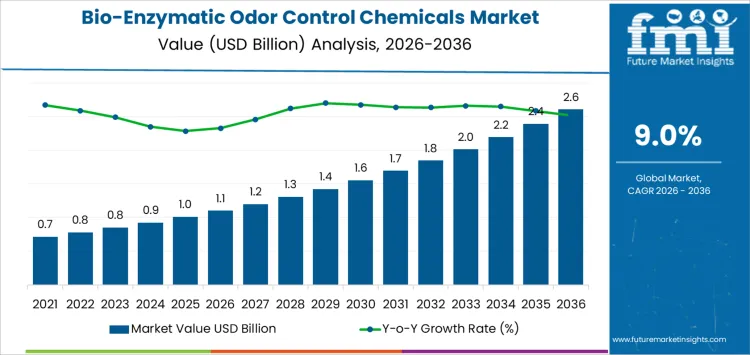
The bio enzymatic odor control chemicals market is valued at USD 1.1 million in 2026 and is projected to reach USD 2.5 million by 2036, reflecting a CAGR of 9.0%. Growth from USD 0.6 million in 2020 to USD 1.1 million in 2026 reflects wider use of enzyme based neutralizers and microbial digesters across restrooms, drains, and waste handling systems. Early demand is concentrated in municipal and commercial facilities where odor mitigation supports hygiene management and routine maintenance operations. Concentrated formats gain preference due to storage efficiency and controlled dosing.
From 2027 onward, market value increases from USD 1.2 million to USD 1.7 million by 2031, then advances to USD 2.5 million by 2036 through steady annual gains. Wastewater treatment and drain management remain the largest application areas as bio active solutions address recurring odor sources. Foodservice, hospitality, and industrial sites maintain predictable intake aligned with sanitation schedules. Ready to use sprays and gels retain defined roles in public spaces. Growth reflects broader penetration of biological odor control within existing maintenance programs rather than expansion into new end use categories.
Quick Stats of the Bio-Enzymatic Odor Control Chemicals Market:
- Bio-Enzymatic Odor Control Chemicals Market Value (2026): USD 1.1 million
- Bio-Enzymatic Odor Control Chemicals Market Forecast Value (2036): USD 2.5 million
- Bio-Enzymatic Odor Control Chemicals Market Forecast CAGR (2026–2036): 9.0%
- Leading Product Type in the Market: Enzyme-Based Odor Neutralizers (38%)
- Key Growth Regions: China, Brazil, USA, UK, Germany
- Top Players: Ecolab, Diversey, Zep, Spartan Chemical, Betco, OdoBan, Bio-Clean Products, Enzyme Solutions, Novozymes, Chr. Hansen
What is the Growth Forecast for the Bio-Enzymatic Odor Control Chemicals Market through 2036?
From 2026 to 2031, the bio-enzymatic odor control chemicals market expands from USD 1.1 billion to roughly USD 1.5 billion, reflecting an early-stage scaling phase driven by substitution rather than volume shock. Growth in this period is shaped by adoption across municipal waste management, food processing facilities, and commercial restrooms where odor mitigation is operationally critical. Initial uptake is concentrated among users seeking longer-lasting control compared with masking agents. The market profile during this phase reflects validation of performance, gradual integration into cleaning programs, and selective replacement of chemical neutralizers.
Between 2031 and 2036, the market grows from about USD 1.5 billion to USD 2.5 billion, showing a clearer acceleration in absolute value creation. This phase reflects broader institutional acceptance, expanded use in industrial wastewater treatment, animal housing, and large-scale facilities management. Demand becomes more repeat-driven as bio-enzymatic solutions are embedded into routine maintenance contracts. Earlier growth relied on trial adoption and niche deployment, while later expansion is supported by higher application frequency, wider sectoral coverage, and normalization of enzyme-based odor control as a standard solution across global commercial and industrial environments.
Bio Enzymatic Odor Control Chemicals Market Key Takeaways
| Metric | Value |
|---|---|
| Market Value (2026) | USD 1.1 million |
| Forecast Value (2036) | USD 2.5 million |
| Forecast CAGR (2026–2036) | 9.0% |
What Is Driving the Demand for the Bio-Enzymatic Odor Control Chemicals Market from 2026 to 2036?
Adoption of bio-enzymatic odor control chemicals increased as facilities sought biological solutions to manage persistent organic odors at the source. Waste handling sites, food processing plants, restrooms, and commercial kitchens used enzyme-based formulations to break down odor-causing compounds rather than mask them. Historical demand reflected preference for low toxicity treatments compatible with drains, grease traps, and porous surfaces. Buyers valued consistent performance, compatibility with routine cleaning schedules, and reduced need for frequent reapplication. Use expanded where odor control affected worker comfort, hygiene perception, and regulatory inspections.
From 2026 to 2036 demand is expected to broaden across municipal services, transportation facilities, and large commercial buildings. Growth is linked to tighter odor nuisance controls and wider acceptance of biological treatment methods. Product development focuses on enzyme blends tailored to specific organic waste streams and environmental conditions. Buyers assess effectiveness duration, application flexibility, and storage stability. Demand also reflects expansion of decentralized waste management, increased indoor waste segregation, and operational focus on odor mitigation without aggressive chemical exposure across public and private facilities.
What Is the Demand for the Bio-Enzymatic Odor Control Chemicals Market by Product Type and Application Area for 2026 to 2036?
Across 2026 to 2036, the bio-enzymatic odor control chemicals market develops as facility operators move away from masking agents toward biological degradation of odor-causing compounds. Enzyme-based odor neutralizers lead product demand because they act directly on organic residues responsible for persistent odors. Waste and drain management forms the largest application area at 30% as municipal, commercial, and industrial operators address buildup within pipes, traps, and waste handling systems. Purchasing decisions emphasize long-term odor suppression, compatibility with infrastructure, and reduced reliance on harsh chemicals across regulated environments.
Why do enzyme-based odor neutralizers account for 38% of demand in the bio-enzymatic odor control chemicals market by product type from 2026 to 2036?
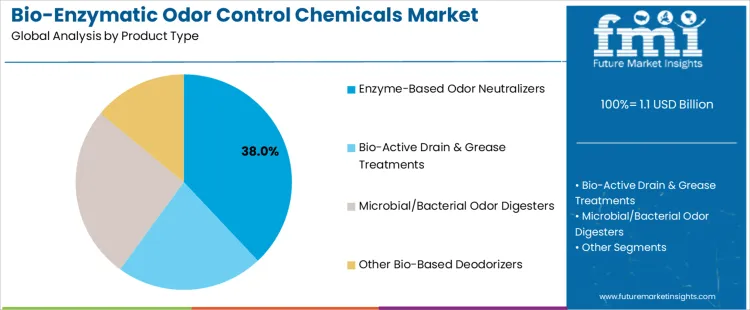
Enzyme-based odor neutralizers account for 38% of demand because they target odor sources at the molecular level rather than covering smells temporarily. Consumption intensity is highest in restrooms, public facilities, transport hubs, and healthcare buildings where recurring organic waste creates persistent odor challenges. Usage remains stable as enzymes catalyze the breakdown of proteins, fats, and carbohydrates that generate ammonia, sulfur compounds, and volatile fatty acids. Procurement decisions favor formulations that remain active across a wide pH range and variable temperature conditions. Buyers prioritize predictable reaction speed and minimal impact on surfaces, plumbing materials, and air-handling systems.
Price sensitivity stays moderate because enzymatic action reduces the need for repeated application compared with fragrance-based products. Specification control focuses on enzyme blend stability, shelf life, and performance consistency under continuous use. Demand remains strong from 2026 to 2036 as facilities adopt preventive odor management programs and integrate enzymatic products into routine maintenance schedules. Repeat purchasing patterns remain consistent due to ongoing organic waste generation in high-traffic environments. Substitution pressure from chemical oxidizers remains limited where operators prefer non-corrosive and low-irritation solutions.
Why does waste and drain management represent 30% of demand in the bio-enzymatic odor control chemicals market by application area from 2026 to 2036?
Waste and drain management represents 30% of demand because odor generation often originates within drainage systems, grease traps, sumps, and waste transfer points. Consumption is concentrated in commercial kitchens, food processing plants, municipal infrastructure, and hospitality facilities where organic buildup accumulates continuously. Usage remains steady as bio-enzymatic treatments digest grease layers, sludge, and biofilm that trap odor-causing compounds. Procurement is guided by operators seeking solutions that function without disrupting wastewater treatment processes or damaging pipe materials. Buyers favor products that can be applied through dosing systems or manual treatments without system shutdown.
Price sensitivity remains moderate since effective drain odor control reduces emergency maintenance and complaint handling. Specification control emphasizes bacterial viability, enzyme activity duration, and compatibility with flow conditions. Demand continues from 2026 to 2036 as regulatory attention on wastewater management and odor complaints increases. Repeat utilization remains predictable due to ongoing organic load within drainage networks. Substitution pressure from chemical cleaners stays restrained where biological treatments provide longer-lasting odor reduction without aggressive chemical action.
How Is Demand for Bio Enzymatic Odor Control Chemicals Forming Within Facility Maintenance Operations? Demand develops through routine odor management needs in facilities where organic waste, moisture, and airflow constraints create persistent smells. Waste handling rooms in apartment complexes use enzymatic treatments to manage refuse odors between collection cycles. Food preparation areas in commercial kitchens apply them in drains to limit buildup during daily operations. Transit authorities use odor control agents in restrooms and service corridors where ventilation is limited. Property managers select these products to reduce repeat complaints without masking scents. These patterns reflect practical maintenance requirements tied to site conditions rather than discretionary product upgrades.
What Site Specific Conditions Are Driving Demand for Bio Enzymatic Odor Control Chemicals? Drivers arise from environments where odors originate from biological sources that recur despite routine cleaning. Food courts adopt enzymatic solutions to manage grease related smells in shared drainage systems. Hotels use them in laundry rooms to control odor caused by damp textiles and limited drying windows. Municipal facilities apply them in public restrooms to manage high use cycles without increasing cleaning frequency. Animal care centers rely on enzymatic agents to break down waste residues in kennels. These drivers reflect localized operational challenges linked to organic material management and space use intensity.
What Practical Limitations Are Restricting Wider Use of Bio Enzymatic Odor Control Chemicals? Barriers relate to application time, cost expectations, and staff understanding. Some facilities expect immediate odor removal and underestimate the time enzymes need to act. Smaller operators compare prices against fragrance based products and opt for lower upfront cost options. Inconsistent application methods reduce effectiveness, leading to mixed results. Facilities with irregular cleaning schedules struggle to maintain conditions required for enzymatic action. Storage constraints and shelf life concerns also affect procurement decisions. These limitations slow adoption where expectations, training, or operational discipline do not align with product performance characteristics.
What is the Growth Outlook for Bio Enzymatic Odor Control Chemicals Across Key Countries?
| Country | CAGR (%) |
|---|---|
| China | 10.0% |
| Brazil | 9.8% |
| USA | 8.7% |
| UK | 8.7% |
| Germany | 8.6% |
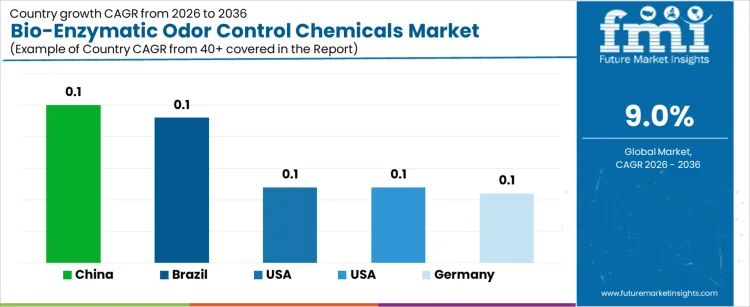
The bio enzymatic odor control chemicals segment is experiencing robust growth across global markets as facilities shift toward biologically based solutions for odor management. China leads at 10.0%, supported by expanding wastewater treatment capacity, industrial odor control requirements, and municipal sanitation initiatives. Brazil follows at 9.8%, driven by use in waste management sites, food processing plants, and commercial facilities. The USA and UK each record 8.7% growth, reflecting adoption in hospitality, healthcare, and commercial cleaning operations seeking long lasting odor neutralization. Germany at 8.6% shows steady expansion linked to industrial compliance requirements and increased use in environmental remediation. Growth is supported by recurring demand cycles, improved formulation performance, and wider acceptance of enzyme based odor control technologies.
How Are Facility Hygiene Programs Supporting Bio Enzymatic Odor Control Chemicals Demand in the United States?
Bio enzymatic odor control chemicals demand in the United States is expanding at a CAGR of 8.7% from 2026 to 2036 as commercial buildings, waste management operators, and hospitality facilities address persistent odor sources. Facility managers apply enzymatic formulations to break down organic odor causing compounds at the source. Waste handling operations rely on these chemicals to manage odor during collection and processing activities. Hospitality facilities integrate odor control solutions into routine cleaning to maintain indoor comfort. Growth reflects consistent adoption across sectors that require long lasting odor mitigation without masking agents.
- Facility managers apply enzymatic solutions to neutralize odor sources.
- Waste operators rely on bio enzymatic chemicals during handling processes.
- Hospitality facilities integrate odor control into routine cleaning programs.
What Is Driving Bio Enzymatic Odor Control Chemicals Adoption in Germany?
Bio enzymatic odor control chemicals demand in Germany is growing at a CAGR of 8.6% from 2026 to 2036 as industrial sites, municipal services, and commercial facilities prioritize source based odor management. Industrial facilities use enzymatic products to manage organic waste related odors. Municipal services apply these chemicals in sewage and public sanitation operations. Commercial facilities integrate odor control into structured maintenance routines. Growth reflects disciplined application driven by environmental management practices and operational consistency across sectors.
- Industrial sites use enzymatic products to manage waste odors.
- Municipal services apply bio enzymatic solutions in sanitation operations.
- Commercial facilities integrate odor control into maintenance routines.
Why Is China Seeing Stronger Growth in Bio Enzymatic Odor Control Chemicals Demand?
Bio enzymatic odor control chemicals demand in China is increasing at a CAGR of 10.0% from 2026 to 2036 as waste treatment facilities, food processing plants, and urban infrastructure address odor challenges at scale. Waste treatment operators adopt enzymatic formulations to manage organic decomposition. Food processing plants rely on odor control chemicals to maintain acceptable working environments. Urban facilities integrate bio enzymatic solutions into sanitation programs. Growth reflects large scale deployment across expanding industrial and municipal operations.
- Waste treatment facilities adopt enzymatic odor control solutions.
- Food processing plants rely on bio enzymatic products for workplace comfort.
- Urban facilities integrate odor control into sanitation programs.
How Are Service Sector Requirements Shaping Demand in the United Kingdom?
Bio enzymatic odor control chemicals demand in the United Kingdom is rising at a CAGR of 8.7% from 2026 to 2036 as hospitality venues, commercial buildings, and public facilities manage odor issues linked to daily operations. Hospitality operators use enzymatic products to maintain guest area comfort. Commercial buildings apply odor control solutions in restrooms and waste zones. Public facilities integrate enzymatic chemicals into routine cleaning schedules. Growth reflects steady adoption across service environments that require reliable odor management.
- Hospitality venues use enzymatic products to maintain indoor comfort.
- Commercial buildings apply odor control in high use areas.
- Public facilities integrate bio enzymatic chemicals into cleaning routines.
What Factors Are Supporting Rapid Growth in Brazil?
Bio enzymatic odor control chemicals demand in Brazil is expanding at a CAGR of 9.8% from 2026 to 2036 as municipal services, industrial facilities, and commercial operators manage odor challenges across warm climate conditions. Municipal services rely on enzymatic solutions for waste and sewage odor control. Industrial facilities apply these chemicals in processing and storage areas. Commercial operators integrate odor control into facility maintenance. Growth reflects increasing emphasis on effective odor mitigation across urban and industrial environments.
- Municipal services rely on enzymatic solutions for waste odor management.
- Industrial facilities apply odor control in processing areas.
- Commercial operators integrate bio enzymatic products into maintenance programs.
What is Driving the Demand for Bio Enzymatic Odor Control Chemicals and Which Companies Shape Facility Level Adoption?
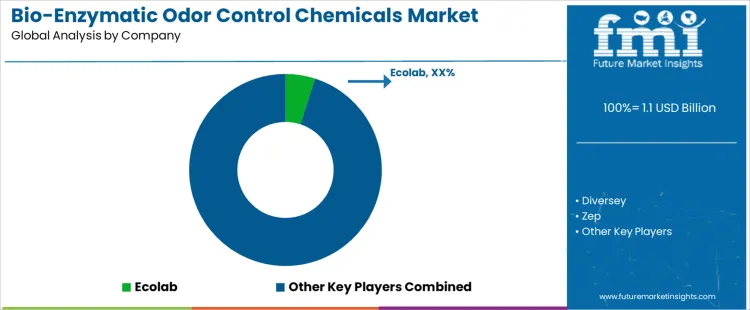
Use of bio enzymatic odor control chemicals is increasing as property managers and municipalities seek source level odor treatment in high use environments. Food service drainage, waste rooms, restrooms, and transport facilities rely on enzymatic action to break down organic residues that generate persistent odors. Ecolab and Diversey support large scale adoption through enzyme based products embedded into routine sanitation programs. Zep, Spartan Chemical, and Betco supply contract cleaning firms that manage recurring odor issues across retail centers, schools, and public buildings. OdoBan maintains a strong presence in light commercial and residential settings through accessible formulations used for surface and air odor treatment.
Product selection is guided by enzyme activity range, performance under variable temperatures, and stability during storage and dilution. Bio Clean Products and Enzyme Solutions serve grease trap maintenance, drain treatment, and wastewater pretreatment where continuous organic load exists. Novozymes and Chr Hansen contribute at the formulation level by supplying enzyme and microbial strains integrated into finished products. Buyers favor solutions that reduce repeat applications and avoid corrosive effects on plumbing and surfaces. Demand visibility tracks expansion of preventive maintenance contracts, tighter nuisance odor oversight, and broader acceptance of biologically based cleaning solutions in occupied indoor spaces.
Key Players in the Bio Enzymatic Odor Control Chemicals Market
- Ecolab
- Diversey
- Zep
- Spartan Chemical
- Betco
- OdoBan
- Bio-Clean Products
- Enzyme Solutions
- Novozymes
- Chr. Hansen (microbial solutions)
Scope of the Report
| Items | Values |
|---|---|
| Quantitative Units (2026) | USD million |
| Product Type | Enzyme Based Odor Neutralizers; Bio Active Drain and Grease Treatments; Microbial and Bacterial Odor Digesters; Other Bio Based Deodorizers |
| Application Area | Restrooms and Public Hygiene; Waste and Drain Management; Hospitality and Facility Operations; Industrial Odor Control |
| End Use Sector | Commercial Facilities; Municipal and Wastewater Services; Foodservice and Hospitality; Industrial Sites |
| Format | Ready to Use Sprays; Concentrates; Gels and Blocks; Other Formats |
| Regions Covered | Asia Pacific; Europe; North America; Latin America; Middle East and Africa |
| Countries Covered | China; Japan; South Korea; India; Australia and New Zealand; ASEAN; Germany; United Kingdom; France; Italy; Spain; Nordic; BENELUX; United States; Canada; Mexico; Brazil; Chile; Kingdom of Saudi Arabia; Turkey; South Africa; plus 40+ additional countries across Asia Pacific, Europe, Latin America, and Middle East and Africa |
| Key Companies Profiled | Ecolab; Diversey; Zep; Spartan Chemical; Betco; OdoBan; Bio Clean Products; Enzyme Solutions; Novozymes; Chr Hansen |
| Additional Attributes | Dollar by sales across product types, application areas, end use sectors, and formats; adoption of enzyme and microbial formulations in routine facility maintenance programs; drain and wastewater compatibility considerations; odor source degradation performance characteristics; dosing frequency and application interval patterns; storage stability and shelf life requirements; integration with municipal sanitation and commercial cleaning workflows; regulatory acceptance for biological odor control agents; procurement through contract cleaning and facility management services |
Bio Enzymatic Odor Control Chemicals Market Segmentation
Product Type:
- Enzyme-Based Odor Neutralizers
- Bio-Active Drain & Grease Treatments
- Microbial/Bacterial Odor Digesters
- Other Bio-Based Deodorizers
Application Area:
- Restrooms & Public Hygiene
- Waste & Drain Management
- Hospitality & Facilities
- Industrial Odor Control
End-Use Sector:
- Commercial Facilities
- Municipal & Wastewater
- Foodservice & Hospitality
- Industrial
Format:
- RTU Sprays
- Concentrates
- Gels/Blocks
- Other Formats
Region
Asia Pacific
- China
- Japan
- South Korea
- India
- Australia & New Zealand
- ASEAN
- Rest of Asia Pacific
Europe
- Germany
- United Kingdom
- France
- Italy
- Spain
- Nordic
- BENELUX
- Rest of Europe
North America
- United States
- Canada
- Mexico
Latin America
- Brazil
- Chile
- Rest of Latin America
Middle East & Africa
- Kingdom of Saudi Arabia
- Other GCC Countries
- Turkey
- South Africa
- Other African Union
- Rest of Middle East & Africa
Region
Asia Pacific
- China
- Japan
- South Korea
- India
- Australia & New Zealand
- ASEAN
- Rest of Asia Pacific
Europe
- Germany
- United Kingdom
- France
- Italy
- Spain
- Nordic
- BENELUX
- Rest of Europe
North America
- United States
- Canada
- Mexico
Latin America
- Brazil
- Chile
- Rest of Latin America
Middle East & Africa
- Kingdom of Saudi Arabia
- Other GCC Countries
- Turkey
- South Africa
- Other African Union
- Rest of Middle East & Africa
Frequently Asked Questions
How big is the bio-enzymatic odor control chemicals market in 2026?
The global bio-enzymatic odor control chemicals market is estimated to be valued at USD 1.1 billion in 2026.
What will be the size of bio-enzymatic odor control chemicals market in 2036?
The market size for the bio-enzymatic odor control chemicals market is projected to reach USD 2.6 billion by 2036.
How much will be the bio-enzymatic odor control chemicals market growth between 2026 and 2036?
The bio-enzymatic odor control chemicals market is expected to grow at a 9.0% CAGR between 2026 and 2036.
What are the key product types in the bio-enzymatic odor control chemicals market?
The key product types in bio-enzymatic odor control chemicals market are enzyme-based odor neutralizers, bio-active drain & grease treatments, microbial/bacterial odor digesters and other bio-based deodorizers.
Which application area segment to contribute significant share in the bio-enzymatic odor control chemicals market in 2026?
In terms of application area, restrooms & public hygiene segment to command 24.0% share in the bio-enzymatic odor control chemicals market in 2026.
Preview the report firsthand - request a free sample
Get SampleGet the brochure for pricing and purchase details.
Get PDFTable of Content
- Executive Summary
- Global Market Outlook
- Demand-side Trends
- Supply-side Trends
- Technology Roadmap Analysis
- Analysis and Recommendations
- Market Overview
- Market Coverage / Taxonomy
- Market Definition / Scope / Limitations
- Market Background
- Market Dynamics
- Drivers
- Restraints
- Opportunity
- Trends
- Scenario Forecast
- Demand in Optimistic Scenario
- Demand in Likely Scenario
- Demand in Conservative Scenario
- Opportunity Map Analysis
- Product Life Cycle Analysis
- Supply Chain Analysis
- Investment Feasibility Matrix
- Value Chain Analysis
- PESTLE and Porter’s Analysis
- Regulatory Landscape
- Regional Parent Market Outlook
- Production and Consumption Statistics
- Import and Export Statistics
- Market Dynamics
- Global Market Analysis 2021 to 2025 and Forecast, 2026 to 2036
- Historical Market Size Value (USD Million) Analysis, 2021 to 2025
- Current and Future Market Size Value (USD Million) Projections, 2026 to 2036
- Y-o-Y Growth Trend Analysis
- Absolute $ Opportunity Analysis
- Global Market Pricing Analysis 2021 to 2025 and Forecast 2026 to 2036
- Global Market Analysis 2021 to 2025 and Forecast 2026 to 2036, By Product Type
- Introduction / Key Findings
- Historical Market Size Value (USD Million) Analysis By Product Type , 2021 to 2025
- Current and Future Market Size Value (USD Million) Analysis and Forecast By Product Type , 2026 to 2036
- Enzyme-Based Odor Neutralizers
- Bio-Active Drain & Grease Treatments
- Microbial/Bacterial Odor Digesters
- Other Bio-Based Deodorizers
- Y-o-Y Growth Trend Analysis By Product Type , 2021 to 2025
- Absolute $ Opportunity Analysis By Product Type , 2026 to 2036
- Global Market Analysis 2021 to 2025 and Forecast 2026 to 2036, By Application Area
- Introduction / Key Findings
- Historical Market Size Value (USD Million) Analysis By Application Area, 2021 to 2025
- Current and Future Market Size Value (USD Million) Analysis and Forecast By Application Area, 2026 to 2036
- Restrooms & Public Hygiene
- Waste & Drain Management
- Hospitality & Facilities
- Industrial Odor Control
- Y-o-Y Growth Trend Analysis By Application Area, 2021 to 2025
- Absolute $ Opportunity Analysis By Application Area, 2026 to 2036
- Global Market Analysis 2021 to 2025 and Forecast 2026 to 2036, By End-Use Sector
- Introduction / Key Findings
- Historical Market Size Value (USD Million) Analysis By End-Use Sector, 2021 to 2025
- Current and Future Market Size Value (USD Million) Analysis and Forecast By End-Use Sector, 2026 to 2036
- Commercial Facilities
- Municipal & Wastewater
- Foodservice & Hospitality
- Industrial
- Y-o-Y Growth Trend Analysis By End-Use Sector, 2021 to 2025
- Absolute $ Opportunity Analysis By End-Use Sector, 2026 to 2036
- Global Market Analysis 2021 to 2025 and Forecast 2026 to 2036, By Format
- Introduction / Key Findings
- Historical Market Size Value (USD Million) Analysis By Format, 2021 to 2025
- Current and Future Market Size Value (USD Million) Analysis and Forecast By Format, 2026 to 2036
- RTU Sprays
- Concentrates
- Gels/Blocks
- Other Formats
- Y-o-Y Growth Trend Analysis By Format, 2021 to 2025
- Absolute $ Opportunity Analysis By Format, 2026 to 2036
- Global Market Analysis 2021 to 2025 and Forecast 2026 to 2036, By Region
- Introduction
- Historical Market Size Value (USD Million) Analysis By Region, 2021 to 2025
- Current Market Size Value (USD Million) Analysis and Forecast By Region, 2026 to 2036
- North America
- Latin America
- Western Europe
- Eastern Europe
- East Asia
- South Asia and Pacific
- Middle East & Africa
- Market Attractiveness Analysis By Region
- North America Market Analysis 2021 to 2025 and Forecast 2026 to 2036, By Country
- Historical Market Size Value (USD Million) Trend Analysis By Market Taxonomy, 2021 to 2025
- Market Size Value (USD Million) Forecast By Market Taxonomy, 2026 to 2036
- By Country
- USA
- Canada
- Mexico
- By Product Type
- By Application Area
- By End-Use Sector
- By Format
- By Country
- Market Attractiveness Analysis
- By Country
- By Product Type
- By Application Area
- By End-Use Sector
- By Format
- Key Takeaways
- Latin America Market Analysis 2021 to 2025 and Forecast 2026 to 2036, By Country
- Historical Market Size Value (USD Million) Trend Analysis By Market Taxonomy, 2021 to 2025
- Market Size Value (USD Million) Forecast By Market Taxonomy, 2026 to 2036
- By Country
- Brazil
- Chile
- Rest of Latin America
- By Product Type
- By Application Area
- By End-Use Sector
- By Format
- By Country
- Market Attractiveness Analysis
- By Country
- By Product Type
- By Application Area
- By End-Use Sector
- By Format
- Key Takeaways
- Western Europe Market Analysis 2021 to 2025 and Forecast 2026 to 2036, By Country
- Historical Market Size Value (USD Million) Trend Analysis By Market Taxonomy, 2021 to 2025
- Market Size Value (USD Million) Forecast By Market Taxonomy, 2026 to 2036
- By Country
- Germany
- UK
- Italy
- Spain
- France
- Nordic
- BENELUX
- Rest of Western Europe
- By Product Type
- By Application Area
- By End-Use Sector
- By Format
- By Country
- Market Attractiveness Analysis
- By Country
- By Product Type
- By Application Area
- By End-Use Sector
- By Format
- Key Takeaways
- Eastern Europe Market Analysis 2021 to 2025 and Forecast 2026 to 2036, By Country
- Historical Market Size Value (USD Million) Trend Analysis By Market Taxonomy, 2021 to 2025
- Market Size Value (USD Million) Forecast By Market Taxonomy, 2026 to 2036
- By Country
- Russia
- Poland
- Hungary
- Balkan & Baltic
- Rest of Eastern Europe
- By Product Type
- By Application Area
- By End-Use Sector
- By Format
- By Country
- Market Attractiveness Analysis
- By Country
- By Product Type
- By Application Area
- By End-Use Sector
- By Format
- Key Takeaways
- East Asia Market Analysis 2021 to 2025 and Forecast 2026 to 2036, By Country
- Historical Market Size Value (USD Million) Trend Analysis By Market Taxonomy, 2021 to 2025
- Market Size Value (USD Million) Forecast By Market Taxonomy, 2026 to 2036
- By Country
- China
- Japan
- South Korea
- By Product Type
- By Application Area
- By End-Use Sector
- By Format
- By Country
- Market Attractiveness Analysis
- By Country
- By Product Type
- By Application Area
- By End-Use Sector
- By Format
- Key Takeaways
- South Asia and Pacific Market Analysis 2021 to 2025 and Forecast 2026 to 2036, By Country
- Historical Market Size Value (USD Million) Trend Analysis By Market Taxonomy, 2021 to 2025
- Market Size Value (USD Million) Forecast By Market Taxonomy, 2026 to 2036
- By Country
- India
- ASEAN
- Australia & New Zealand
- Rest of South Asia and Pacific
- By Product Type
- By Application Area
- By End-Use Sector
- By Format
- By Country
- Market Attractiveness Analysis
- By Country
- By Product Type
- By Application Area
- By End-Use Sector
- By Format
- Key Takeaways
- Middle East & Africa Market Analysis 2021 to 2025 and Forecast 2026 to 2036, By Country
- Historical Market Size Value (USD Million) Trend Analysis By Market Taxonomy, 2021 to 2025
- Market Size Value (USD Million) Forecast By Market Taxonomy, 2026 to 2036
- By Country
- Kingdom of Saudi Arabia
- Other GCC Countries
- Turkiye
- South Africa
- Other African Union
- Rest of Middle East & Africa
- By Product Type
- By Application Area
- By End-Use Sector
- By Format
- By Country
- Market Attractiveness Analysis
- By Country
- By Product Type
- By Application Area
- By End-Use Sector
- By Format
- Key Takeaways
- Key Countries Market Analysis
- USA
- Pricing Analysis
- Market Share Analysis, 2025
- By Product Type
- By Application Area
- By End-Use Sector
- By Format
- Canada
- Pricing Analysis
- Market Share Analysis, 2025
- By Product Type
- By Application Area
- By End-Use Sector
- By Format
- Mexico
- Pricing Analysis
- Market Share Analysis, 2025
- By Product Type
- By Application Area
- By End-Use Sector
- By Format
- Brazil
- Pricing Analysis
- Market Share Analysis, 2025
- By Product Type
- By Application Area
- By End-Use Sector
- By Format
- Chile
- Pricing Analysis
- Market Share Analysis, 2025
- By Product Type
- By Application Area
- By End-Use Sector
- By Format
- Germany
- Pricing Analysis
- Market Share Analysis, 2025
- By Product Type
- By Application Area
- By End-Use Sector
- By Format
- UK
- Pricing Analysis
- Market Share Analysis, 2025
- By Product Type
- By Application Area
- By End-Use Sector
- By Format
- Italy
- Pricing Analysis
- Market Share Analysis, 2025
- By Product Type
- By Application Area
- By End-Use Sector
- By Format
- Spain
- Pricing Analysis
- Market Share Analysis, 2025
- By Product Type
- By Application Area
- By End-Use Sector
- By Format
- France
- Pricing Analysis
- Market Share Analysis, 2025
- By Product Type
- By Application Area
- By End-Use Sector
- By Format
- India
- Pricing Analysis
- Market Share Analysis, 2025
- By Product Type
- By Application Area
- By End-Use Sector
- By Format
- ASEAN
- Pricing Analysis
- Market Share Analysis, 2025
- By Product Type
- By Application Area
- By End-Use Sector
- By Format
- Australia & New Zealand
- Pricing Analysis
- Market Share Analysis, 2025
- By Product Type
- By Application Area
- By End-Use Sector
- By Format
- China
- Pricing Analysis
- Market Share Analysis, 2025
- By Product Type
- By Application Area
- By End-Use Sector
- By Format
- Japan
- Pricing Analysis
- Market Share Analysis, 2025
- By Product Type
- By Application Area
- By End-Use Sector
- By Format
- South Korea
- Pricing Analysis
- Market Share Analysis, 2025
- By Product Type
- By Application Area
- By End-Use Sector
- By Format
- Russia
- Pricing Analysis
- Market Share Analysis, 2025
- By Product Type
- By Application Area
- By End-Use Sector
- By Format
- Poland
- Pricing Analysis
- Market Share Analysis, 2025
- By Product Type
- By Application Area
- By End-Use Sector
- By Format
- Hungary
- Pricing Analysis
- Market Share Analysis, 2025
- By Product Type
- By Application Area
- By End-Use Sector
- By Format
- Kingdom of Saudi Arabia
- Pricing Analysis
- Market Share Analysis, 2025
- By Product Type
- By Application Area
- By End-Use Sector
- By Format
- Turkiye
- Pricing Analysis
- Market Share Analysis, 2025
- By Product Type
- By Application Area
- By End-Use Sector
- By Format
- South Africa
- Pricing Analysis
- Market Share Analysis, 2025
- By Product Type
- By Application Area
- By End-Use Sector
- By Format
- USA
- Market Structure Analysis
- Competition Dashboard
- Competition Benchmarking
- Market Share Analysis of Top Players
- By Regional
- By Product Type
- By Application Area
- By End-Use Sector
- By Format
- Competition Analysis
- Competition Deep Dive
- Ecolab
- Overview
- Product Portfolio
- Profitability by Market Segments (Product/Age /Sales Channel/Region)
- Sales Footprint
- Strategy Overview
- Marketing Strategy
- Product Strategy
- Channel Strategy
- Diversey
- Zep
- Spartan Chemical
- Betco
- OdoBan
- Bio-Clean Products
- Enzyme Solutions
- Novozymes
- Chr. Hansen (microbial solutions)
- Ecolab
- Competition Deep Dive
- Assumptions & Acronyms Used
- Research Methodology


