

- Industry Size (2026)
- USD 330.0 Mn
- Forecast (2036)
- USD 712.4 Mn
- CAGR (2026 to 2036)
- 8.0%
Condition Monitoring Hub Bearings Market Forecast and Outlook 2026 to 2036
The condition monitoring hub bearings market is likely to be valued at USD 330.0 million in 2026, and reach USD 712.4 million by 2036, at 8.0% CAGR. The growing demand for these bearings is attributed to the increasing need for real-time monitoring in both passenger and commercial vehicles, aiming to improve operational efficiency and reduce unexpected failures. These bearings are integrated with vibration, temperature, and rotational sensors that offer continuous health monitoring of the bearing, providing essential data for predictive maintenance systems. As industries like logistics and public transportation rely heavily on vehicles for operations, maintaining uptime and minimizing unscheduled repairs are critical. Telemetry and fleet management systems enhance the adoption of condition monitoring bearings by providing early failure detection and optimizing maintenance schedules.
Demand continues to grow as connected fleet management systems expand, offering predictive capabilities to reduce downtime and maximize operational stability. OEMs and aftermarket suppliers are focusing on sensor technology advancements to ensure data integrity under harsh conditions like road contamination, high speeds, and mechanical stress. Collaborations with telematics providers help enhance the data analytics capabilities, allowing operators to interpret and act upon bearing health metrics effectively. This proactive approach to maintenance and repair, coupled with the expanding electric vehicle (EV) fleet, drives the continued adoption of condition monitoring hub bearings.
Quick Stats for Condition Monitoring Hub Bearings Market
- Condition Monitoring Hub Bearings Market Value (2026): USD 330.0 million
- Condition Monitoring Hub Bearings Market Forecast Value (2036): USD 712.4 million
- Condition Monitoring Hub Bearings Market Forecast CAGR 2026 to 2036: 8.0%
- Leading Monitoring Approach by Demand Share: Embedded Vibration or Temperature Sensing
- Fastest-Growing Countries: India, China, Mexico, Brazil, USA
- Top Players in Global Demand: SKF, Schaeffler, NTN, NSK, Timken
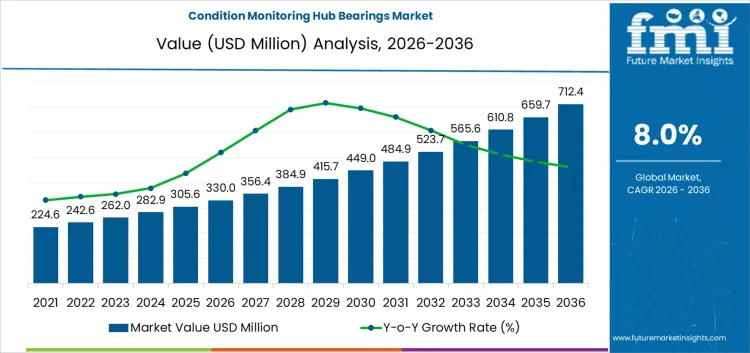
Condition Monitoring Hub Bearings Market Key Takeaways
| Metric | Value |
|---|---|
| Market Value (2026) | USD 330.0 million |
| Market Forecast Value (2036) | USD 712.4 million |
| Forecast CAGR (2026 to 2036) | 8.0% |
Why is the Demand for Condition Monitoring Hub Bearings Market Growing?
Demand for condition monitoring hub bearings is rising as vehicle manufacturers embed sensor technologies into wheel end assemblies to improve reliability and reduce unexpected failures. These bearings transmit vibration, temperature, and rotational data that supports onboard diagnostic systems and fleet health tracking. OEMs in commercial and passenger vehicle sectors adopt these solutions to enhance uptime in high utilization operations where bearing defects can disrupt schedules. Regulatory safety measures and telematics integration encourage selection of components that deliver continuous health indicators throughout service life to support maintenance planning and operational stability.
Expansion of condition monitoring hub bearings is supported by rising use of connected fleet management systems that analyze wheel end signals to predict wear and schedule servicing. Maintenance facilities and aftermarket distributors stock sensor-equipped bearings designed to interface with diagnostic tools that extract trend information and guide replacement decisions. Bearing makers invest in robust electronics and sealing solutions that maintain data quality under contamination and mechanical stress typical of road operation. Collaborations with telematics partners expand analytic capabilities so operators interpret health metrics and optimize lifecycle performance.
How Are the Segments Classified in the Condition Monitoring Hub Bearings Market?
The condition monitoring hub bearings market is experiencing growth as industries increasingly adopt predictive maintenance and real-time monitoring systems to improve operational efficiency and reduce unplanned downtime. These bearings integrate advanced monitoring technologies, such as vibration, temperature sensing, and diagnostic hubs, enabling operators to track the performance and health of bearings. The market is driven by the need for continuous asset management, particularly in fleet operations, OEM predictive maintenance, and service networks, where early detection of potential failures can significantly reduce maintenance costs and improve equipment longevity.
Which monitoring approach holds the largest share of demand?
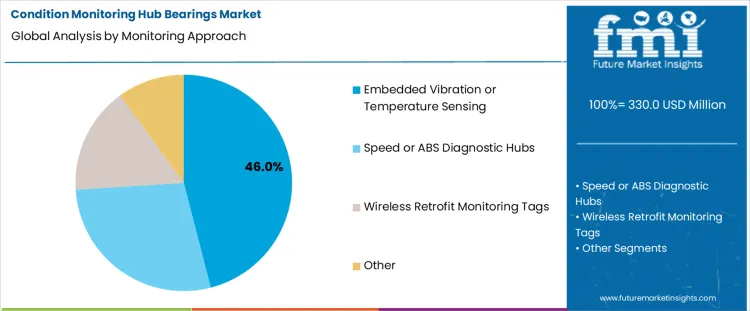
Embedded vibration or temperature sensing leads the market with a 46.0% share, as these sensors provide real-time data on the condition of the bearing, allowing for early detection of issues such as misalignment, wear, or overheating. This monitoring approach is highly valued in industrial and commercial applications where continuous operation is critical, and unplanned downtime can lead to significant costs. Vibration and temperature sensors offer reliable, non-invasive ways to monitor bearing performance and ensure optimal functioning, making them a top choice for predictive maintenance systems.
Key Points:
- Provides real-time data on bearing performance and health
- Enables early detection of wear, misalignment, or overheating
- Essential for continuous operation and minimizing downtime in critical applications
Which connectivity type holds the largest share of demand?
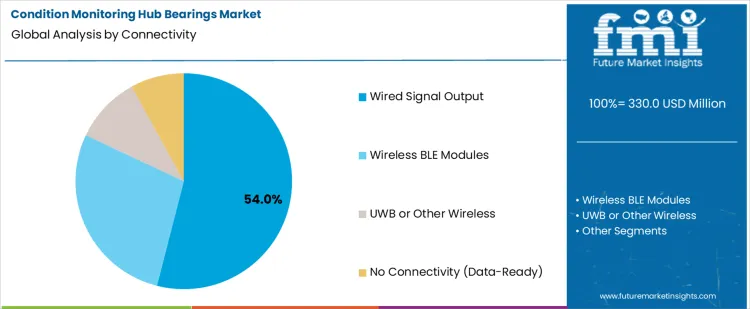
Wired signal output dominates the connectivity segment with 54.0%, driven by its reliability, data integrity, and ability to transmit large amounts of diagnostic information in real time. Wired systems are preferred in environments where stable, continuous data transmission is essential, such as in manufacturing facilities and fleet operations. Despite the growing interest in wireless options, wired connectivity remains the standard for condition monitoring systems, particularly in industries requiring high data accuracy and minimal signal disruption for predictive maintenance.
Key Points:
- Ensures stable, continuous data transmission for real-time monitoring
- Preferred in high-demand environments requiring high data integrity
- Supports robust predictive maintenance systems with minimal signal disruption
Which end user represents the largest share of demand?
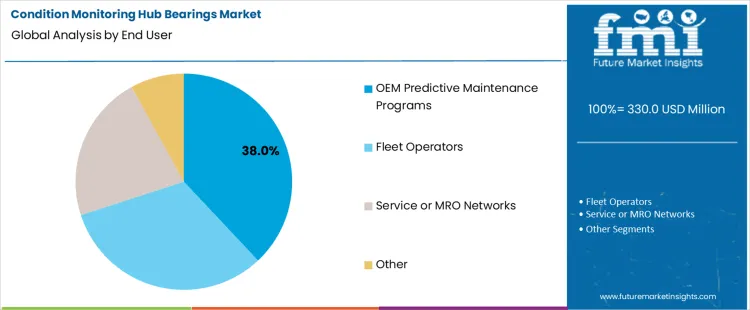
OEM predictive maintenance programs hold the largest share, accounting for 38.0% of the market. Original equipment manufacturers (OEMs) increasingly integrate condition monitoring hub bearings into their systems to offer value-added services to customers and extend the lifespan of equipment. These programs allow manufacturers to proactively monitor bearing health, reduce warranty claims, and optimize equipment performance over time. The rise in demand for predictive maintenance solutions across various industries ensures a strong adoption rate of these advanced bearing technologies.
Key Points:
- Proactively monitors bearing health to extend equipment lifespan
- Reduces warranty claims and optimizes performance for OEMs
- Strong demand driven by the growth of predictive maintenance services
What are the Key Dynamics in the condition monitoring hub bearings market?
Demand in the condition monitoring hub bearings market is driven by the need for advanced monitoring solutions in heavy-duty and passenger vehicles to enhance operational efficiency and reduce unplanned downtime. Fleet operators in industries such as logistics, public transportation, and mining are increasingly adopting these bearings to enable real-time monitoring of bearing health, including temperature, vibration, and load factors. This helps in detecting early signs of wear or failure, leading to improved maintenance scheduling and reduced repair costs. The integration of sensors into the bearings enables predictive maintenance, which is becoming a standard practice for fleets aiming to optimize maintenance cycles and improve asset longevity.
How do fleet efficiency needs and the drive for uptime influence adoption?
The adoption of condition monitoring hub bearings is particularly strong in industries where vehicle uptime is critical, such as freight transportation and municipal transit systems. In these sectors, any failure can lead to significant operational disruptions and financial losses. By enabling real-time health checks of bearings, these systems help identify potential failures before they occur, ensuring vehicles are taken out of service only when necessary for maintenance. The increasing demand for operational efficiency, coupled with the need to manage large fleets of vehicles, drives the growth of condition monitoring hub bearings. Operators can transition from time-based maintenance schedules to data-driven decisions, minimizing unnecessary repairs and downtime while extending the life of fleet assets.
How do sensor durability and integration challenges impact the market’s growth?
The growth of the condition monitoring hub bearings market is influenced by the technical challenges of integrating durable sensors into bearings that perform reliably under extreme operating conditions. Bearings must endure environmental stress such as exposure to dust, water, and high temperatures while maintaining sensor accuracy. The complexity of integrating these sensors into existing fleet management systems presents a challenge. For effective implementation, the collected data must be easily accessible and compatible with fleet telematics systems. This requires robust communication protocols and seamless integration with diagnostic tools used for vehicle maintenance. These factors can slow the widespread adoption of condition monitoring hub bearings, particularly in regions or vehicle types where advanced monitoring systems are not yet fully supported.
How Is Demand for the Condition Monitoring Hub Bearings Market Evolving Globally?
Global demand for condition monitoring hub bearings is rising as industries seek to improve equipment reliability, reduce maintenance costs, and enhance operational efficiency. Growth is driven by the need for real-time monitoring systems in sectors such as automotive, manufacturing, and energy, which require reliable bearing performance for optimal equipment operation. As more industries embrace predictive maintenance and automation, the demand for bearings integrated with condition monitoring systems continues to grow. India records 9.4% CAGR, China records 8.8% CAGR, Mexico records 7.6% CAGR, Brazil records 7.1% CAGR, and the USA records 6.0% CAGR. Adoption is largely fueled by advancements in sensor technologies and growing awareness of proactive maintenance.
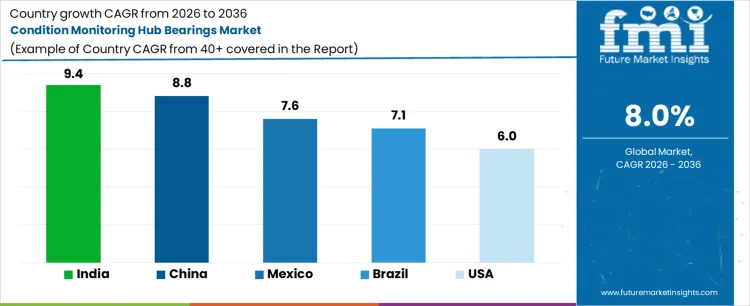
| Country | CAGR (%) |
|---|---|
| India | 9.4% |
| China | 8.8% |
| Mexico | 7.6% |
| Brazil | 7.1% |
| USA | 6.0% |
What is driving demand for condition monitoring hub bearings in India?
Demand for condition monitoring hub bearings in India is growing as industries in the automotive, manufacturing, and energy sectors increasingly focus on improving machinery uptime and reducing unexpected breakdowns. With a 9.4% CAGR, India’s market for condition monitoring is expanding due to the rapid industrialization and adoption of advanced technologies in automotive and industrial machinery. As India’s manufacturing capacity increases and the need for predictive maintenance grows, the demand for hub bearings with integrated monitoring systems is rising. The focus on reducing maintenance costs and improving production efficiency further fuels market growth.
- Rapid industrialization and technological adoption
- Rising demand for predictive maintenance systems
- Increased focus on reducing maintenance and downtime
- Growth in automotive and manufacturing sectors
What factors are shaping condition monitoring hub bearings demand in China?
Condition monitoring hub bearings demand in China is rising as industries embrace digitalization and automation to improve operational efficiency. With an 8.8% CAGR, China’s market is driven by the growing adoption of real-time monitoring systems across automotive, heavy machinery, and energy sectors. The country’s focus on improving industrial processes and reducing maintenance costs is pushing the need for bearings that can withstand higher loads while providing real-time monitoring for condition assessment. As China continues to scale its manufacturing base, the demand for smart, reliable bearings integrated with monitoring capabilities continues to increase.
- Digitalization and automation adoption across industries
- Strong focus on reducing operational downtime
- Expansion of manufacturing and heavy industries
- Increased demand for real-time condition monitoring systems
What is driving sales of condition monitoring hub bearings in Mexico?
Sales of condition monitoring hub bearings in Mexico are increasing as industries, particularly in automotive and manufacturing, focus on improving machine reliability and minimizing unplanned downtime. Growth of 7.6% CAGR reflects the country’s expanding industrial base and increasing demand for high-performance components that are integrated with condition monitoring systems. As manufacturing activities scale, predictive maintenance tools, including sensors and condition monitoring bearings, are becoming more essential for efficient operations. The demand is also driven by Mexico’s strategic position in North America’s supply chain, making it a critical location for automotive and industrial machinery production.
- Expanding industrial and automotive manufacturing sectors
- Growing adoption of predictive maintenance solutions
- Focus on improving operational efficiency and reliability
- Mexico’s key role in North America’s supply chain
What factors are shaping condition monitoring hub bearings demand in Brazil?
Demand for condition monitoring hub bearings in Brazil is growing as the country’s industrial and automotive sectors invest in technologies to improve efficiency and minimize maintenance costs. With a 7.1% CAGR, Brazil’s market growth is driven by increasing industrial automation and the growing need for advanced predictive maintenance solutions. As Brazil’s infrastructure and industrial base continue to expand, the demand for hub bearings integrated with monitoring systems to assess wear and optimize performance is rising. Brazil’s heavy machinery and mining sectors are pushing the need for more reliable, long-lasting bearings.
- Expansion of industrial automation and infrastructure
- Growing focus on predictive maintenance in automotive and industrial sectors
- Investment in advanced bearing technologies
- Demand from heavy machinery and mining industries
What is driving condition monitoring hub bearings demand in the USA?
Condition monitoring hub bearings demand in the USA is increasing as industries focus on improving operational efficiency and reducing maintenance costs. With a 6.0% CAGR, the demand for integrated monitoring bearings is being driven by the rise of digitalization in industries such as automotive, manufacturing, and energy. As predictive maintenance systems gain traction, the need for reliable, high-performance bearings that can monitor condition in real-time is growing. The regulations around equipment performance and maintenance in sectors like manufacturing and transportation further encourage the adoption of advanced condition monitoring systems.
- Digitalization and predictive maintenance adoption
- Focus on operational efficiency and reducing downtime
- Stringent industry regulations on equipment maintenance
- Growth in automotive and manufacturing sectors
What is the competitive landscape of demand for the condition monitoring hub bearings market globally?
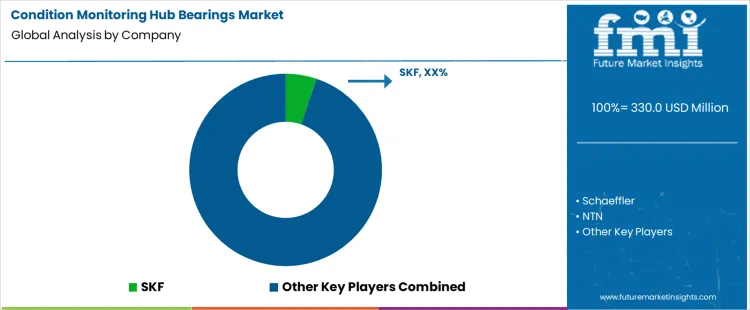
Demand for condition monitoring hub bearings is driven by the growing need for predictive maintenance, reduced downtime, and improved asset management in industrial and automotive applications. Buyers evaluate bearing performance, real-time monitoring capabilities, integration with condition monitoring systems, reliability under varying loads, and ease of data collection. Procurement behavior emphasizes suppliers with advanced diagnostic tools, real-time health monitoring, and seamless integration into fleet or industrial asset management systems. Purchasing decisions prioritize bearing solutions that provide early warning for maintenance needs, extend service life, and reduce operational costs. Trend in the market reflects the integration of IoT-enabled bearing solutions, enabling remote monitoring and data-driven decision-making to optimize performance and reliability.
SKF leads competitive positioning through its comprehensive portfolio of condition monitoring solutions integrated with advanced sensor technologies, offering real-time monitoring and diagnostics for improved asset management. Schaeffler competes by providing intelligent bearing systems with embedded sensors, enabling condition monitoring and predictive maintenance in various applications. NTN supports demand with bearings designed for condition monitoring, focusing on reducing maintenance costs and enhancing operational uptime. NSK participates with bearing solutions that integrate seamlessly with IoT platforms, providing insights into bearing health and optimizing maintenance strategies. Timken delivers condition monitoring hub bearings designed for high durability, offering real-time monitoring capabilities that enhance asset performance and lifecycle management.
Key Players in the Condition Monitoring Hub Bearings Market
- SKF
- Schaeffler
- NTN
- NSK
- Timken
- JTEKT (Koyo)
- ILJIN
- Fersa
- Nachi-Fujikoshi
- C&U Group
Scope of the Report
| Items | Values |
|---|---|
| Quantitative Units | USD million |
| Monitoring Approach | Embedded Vibration or Temperature Sensing; Speed or ABS Diagnostic Hubs; Wireless Retrofit Monitoring Tags; Other |
| Connectivity | Wired Signal Output; Wireless BLE Modules; UWB or Other Wireless; No Connectivity (Data-Ready) |
| End User | OEM Predictive Maintenance Programs; Fleet Operators; Service or MRO Networks; Other |
| Sales Channel | OEM or Line-Fit; Aftermarket Monitoring Kits; Distributors |
| Regions Covered | Asia Pacific, Europe, North America, Latin America, Middle East & Africa |
| Countries Covered | India, China, Mexico, Brazil, USA, and 40+ countries |
| Key Companies Profiled | SKF; Schaeffler; NTN; NSK; Timken; JTEKT (Koyo); ILJIN; Fersa; Nachi-Fujikoshi; C&U Group |
| Additional Attributes | Dollar sales by monitoring approach, connectivity, end user, and sales channel; sensor accuracy, data transmission reliability, and integration compatibility for embedded sensing, ABS diagnostic hubs, and wireless monitoring tags; connectivity performance across wired, BLE, and UWB wireless modules; adoption of predictive maintenance by OEMs, fleet operators, and MRO networks; procurement patterns driven by OEM specifications, aftermarket kit demand, and distributor networks. |
Condition Monitoring Hub Bearings Market by Segment
By Monitoring Approach:
- Embedded Vibration or Temperature Sensing
- Speed or ABS Diagnostic Hubs
- Wireless Retrofit Monitoring Tags
- Other
By Connectivity:
- Wired Signal Output
- Wireless BLE Modules
- UWB or Other Wireless
- No Connectivity (Data-Ready)
By End User:
- OEM Predictive Maintenance Programs
- Fleet Operators
- Service or MRO Networks
- Other
By Sales Channel:
- OEM or Line-Fit
- Aftermarket Monitoring Kits
- Distributors
By Region:
- Asia Pacific
- China
- Japan
- South Korea
- India
- Australia & New Zealand
- ASEAN
- Rest of Asia Pacific
- Europe
- Germany
- United Kingdom
- France
- Italy
- Spain
- Nordic
- BENELUX
- Rest of Europe
- North America
- United States
- Canada
- Mexico
- Latin America
- Brazil
- Chile
- Rest of Latin America
- Middle East & Africa
- Kingdom of Saudi Arabia
- Other GCC Countries
- Turkey
- South Africa
- Other African Union
- Rest of Middle East & Africa
Bibliography
- International Electrotechnical Commission. (2023). Industrial condition monitoring and diagnostics—Sensor systems and data transmission reliability (IEC 62862:2023). IEC.
- European Commission. (2023). Regulation (EU) 2019/2144—General safety requirements for motor vehicles: Phased enforcement impacting onboard diagnostics, wheel assemblies, and safety monitoring systems. Official Journal of the European Union.
- United Nations Economic Commission for Europe. (2023). WP.29—Vehicle safety, onboard diagnostics, and durability requirements supporting condition monitoring systems. United Nations.
Frequently Asked Questions
How big is the condition monitoring hub bearings market in 2026?
The global condition monitoring hub bearings market is estimated to be valued at USD 330.0 million in 2026.
What will be the size of condition monitoring hub bearings market in 2036?
The market size for the condition monitoring hub bearings market is projected to reach USD 712.4 million by 2036.
How much will be the condition monitoring hub bearings market growth between 2026 and 2036?
The condition monitoring hub bearings market is expected to grow at a 8.0% CAGR between 2026 and 2036.
What are the key product types in the condition monitoring hub bearings market?
The key product types in condition monitoring hub bearings market are embedded vibration or temperature sensing, speed or abs diagnostic hubs, wireless retrofit monitoring tags and other.
Which connectivity segment to contribute significant share in the condition monitoring hub bearings market in 2026?
In terms of connectivity, wired signal output segment to command 54.0% share in the condition monitoring hub bearings market in 2026.
Preview the report firsthand - request a free sample
Get SampleGet the brochure for pricing and purchase details.
Get PDFTable of Content
- Executive Summary
- Global Market Outlook
- Demand-side Trends
- Supply-side Trends
- Technology Roadmap Analysis
- Analysis and Recommendations
- Market Overview
- Market Coverage / Taxonomy
- Market Definition / Scope / Limitations
- Market Background
- Market Dynamics
- Drivers
- Restraints
- Opportunity
- Trends
- Scenario Forecast
- Demand in Optimistic Scenario
- Demand in Likely Scenario
- Demand in Conservative Scenario
- Opportunity Map Analysis
- Product Life Cycle Analysis
- Supply Chain Analysis
- Investment Feasibility Matrix
- Value Chain Analysis
- PESTLE and Porter’s Analysis
- Regulatory Landscape
- Regional Parent Market Outlook
- Production and Consumption Statistics
- Import and Export Statistics
- Market Dynamics
- Global Market Analysis 2021 to 2025 and Forecast, 2026 to 2036
- Historical Market Size Value (USD Million) Analysis, 2021 to 2025
- Current and Future Market Size Value (USD Million) Projections, 2026 to 2036
- Y-o-Y Growth Trend Analysis
- Absolute $ Opportunity Analysis
- Global Market Pricing Analysis 2021 to 2025 and Forecast 2026 to 2036
- Global Market Analysis 2021 to 2025 and Forecast 2026 to 2036, By Monitoring Approach
- Introduction / Key Findings
- Historical Market Size Value (USD Million) Analysis By Monitoring Approach , 2021 to 2025
- Current and Future Market Size Value (USD Million) Analysis and Forecast By Monitoring Approach , 2026 to 2036
- Embedded Vibration or Temperature Sensing
- Speed or ABS Diagnostic Hubs
- Wireless Retrofit Monitoring Tags
- Other
- Embedded Vibration or Temperature Sensing
- Y-o-Y Growth Trend Analysis By Monitoring Approach , 2021 to 2025
- Absolute $ Opportunity Analysis By Monitoring Approach , 2026 to 2036
- Global Market Analysis 2021 to 2025 and Forecast 2026 to 2036, By Connectivity
- Introduction / Key Findings
- Historical Market Size Value (USD Million) Analysis By Connectivity, 2021 to 2025
- Current and Future Market Size Value (USD Million) Analysis and Forecast By Connectivity, 2026 to 2036
- Wired Signal Output
- Wireless BLE Modules
- UWB or Other Wireless
- No Connectivity (Data-Ready)
- Wired Signal Output
- Y-o-Y Growth Trend Analysis By Connectivity, 2021 to 2025
- Absolute $ Opportunity Analysis By Connectivity, 2026 to 2036
- Global Market Analysis 2021 to 2025 and Forecast 2026 to 2036, By End User
- Introduction / Key Findings
- Historical Market Size Value (USD Million) Analysis By End User, 2021 to 2025
- Current and Future Market Size Value (USD Million) Analysis and Forecast By End User, 2026 to 2036
- OEM Predictive Maintenance Programs
- Fleet Operators
- Service or MRO Networks
- Other
- OEM Predictive Maintenance Programs
- Y-o-Y Growth Trend Analysis By End User, 2021 to 2025
- Absolute $ Opportunity Analysis By End User, 2026 to 2036
- Global Market Analysis 2021 to 2025 and Forecast 2026 to 2036, By Sales Channel
- Introduction / Key Findings
- Historical Market Size Value (USD Million) Analysis By Sales Channel, 2021 to 2025
- Current and Future Market Size Value (USD Million) Analysis and Forecast By Sales Channel, 2026 to 2036
- OEM or Line-Fit
- Aftermarket Monitoring Kits
- Distributors
- OEM or Line-Fit
- Y-o-Y Growth Trend Analysis By Sales Channel, 2021 to 2025
- Absolute $ Opportunity Analysis By Sales Channel, 2026 to 2036
- Global Market Analysis 2021 to 2025 and Forecast 2026 to 2036, By Region
- Introduction
- Historical Market Size Value (USD Million) Analysis By Region, 2021 to 2025
- Current Market Size Value (USD Million) Analysis and Forecast By Region, 2026 to 2036
- North America
- Latin America
- Western Europe
- Eastern Europe
- East Asia
- South Asia and Pacific
- Middle East & Africa
- Market Attractiveness Analysis By Region
- North America Market Analysis 2021 to 2025 and Forecast 2026 to 2036, By Country
- Historical Market Size Value (USD Million) Trend Analysis By Market Taxonomy, 2021 to 2025
- Market Size Value (USD Million) Forecast By Market Taxonomy, 2026 to 2036
- By Country
- USA
- Canada
- Mexico
- By Monitoring Approach
- By Connectivity
- By End User
- By Sales Channel
- By Country
- Market Attractiveness Analysis
- By Country
- By Monitoring Approach
- By Connectivity
- By End User
- By Sales Channel
- Key Takeaways
- Latin America Market Analysis 2021 to 2025 and Forecast 2026 to 2036, By Country
- Historical Market Size Value (USD Million) Trend Analysis By Market Taxonomy, 2021 to 2025
- Market Size Value (USD Million) Forecast By Market Taxonomy, 2026 to 2036
- By Country
- Brazil
- Chile
- Rest of Latin America
- By Monitoring Approach
- By Connectivity
- By End User
- By Sales Channel
- By Country
- Market Attractiveness Analysis
- By Country
- By Monitoring Approach
- By Connectivity
- By End User
- By Sales Channel
- Key Takeaways
- Western Europe Market Analysis 2021 to 2025 and Forecast 2026 to 2036, By Country
- Historical Market Size Value (USD Million) Trend Analysis By Market Taxonomy, 2021 to 2025
- Market Size Value (USD Million) Forecast By Market Taxonomy, 2026 to 2036
- By Country
- Germany
- UK
- Italy
- Spain
- France
- Nordic
- BENELUX
- Rest of Western Europe
- By Monitoring Approach
- By Connectivity
- By End User
- By Sales Channel
- By Country
- Market Attractiveness Analysis
- By Country
- By Monitoring Approach
- By Connectivity
- By End User
- By Sales Channel
- Key Takeaways
- Eastern Europe Market Analysis 2021 to 2025 and Forecast 2026 to 2036, By Country
- Historical Market Size Value (USD Million) Trend Analysis By Market Taxonomy, 2021 to 2025
- Market Size Value (USD Million) Forecast By Market Taxonomy, 2026 to 2036
- By Country
- Russia
- Poland
- Hungary
- Balkan & Baltic
- Rest of Eastern Europe
- By Monitoring Approach
- By Connectivity
- By End User
- By Sales Channel
- By Country
- Market Attractiveness Analysis
- By Country
- By Monitoring Approach
- By Connectivity
- By End User
- By Sales Channel
- Key Takeaways
- East Asia Market Analysis 2021 to 2025 and Forecast 2026 to 2036, By Country
- Historical Market Size Value (USD Million) Trend Analysis By Market Taxonomy, 2021 to 2025
- Market Size Value (USD Million) Forecast By Market Taxonomy, 2026 to 2036
- By Country
- China
- Japan
- South Korea
- By Monitoring Approach
- By Connectivity
- By End User
- By Sales Channel
- By Country
- Market Attractiveness Analysis
- By Country
- By Monitoring Approach
- By Connectivity
- By End User
- By Sales Channel
- Key Takeaways
- South Asia and Pacific Market Analysis 2021 to 2025 and Forecast 2026 to 2036, By Country
- Historical Market Size Value (USD Million) Trend Analysis By Market Taxonomy, 2021 to 2025
- Market Size Value (USD Million) Forecast By Market Taxonomy, 2026 to 2036
- By Country
- India
- ASEAN
- Australia & New Zealand
- Rest of South Asia and Pacific
- By Monitoring Approach
- By Connectivity
- By End User
- By Sales Channel
- By Country
- Market Attractiveness Analysis
- By Country
- By Monitoring Approach
- By Connectivity
- By End User
- By Sales Channel
- Key Takeaways
- Middle East & Africa Market Analysis 2021 to 2025 and Forecast 2026 to 2036, By Country
- Historical Market Size Value (USD Million) Trend Analysis By Market Taxonomy, 2021 to 2025
- Market Size Value (USD Million) Forecast By Market Taxonomy, 2026 to 2036
- By Country
- Kingdom of Saudi Arabia
- Other GCC Countries
- Turkiye
- South Africa
- Other African Union
- Rest of Middle East & Africa
- By Monitoring Approach
- By Connectivity
- By End User
- By Sales Channel
- By Country
- Market Attractiveness Analysis
- By Country
- By Monitoring Approach
- By Connectivity
- By End User
- By Sales Channel
- Key Takeaways
- Key Countries Market Analysis
- USA
- Pricing Analysis
- Market Share Analysis, 2025
- By Monitoring Approach
- By Connectivity
- By End User
- By Sales Channel
- Canada
- Pricing Analysis
- Market Share Analysis, 2025
- By Monitoring Approach
- By Connectivity
- By End User
- By Sales Channel
- Mexico
- Pricing Analysis
- Market Share Analysis, 2025
- By Monitoring Approach
- By Connectivity
- By End User
- By Sales Channel
- Brazil
- Pricing Analysis
- Market Share Analysis, 2025
- By Monitoring Approach
- By Connectivity
- By End User
- By Sales Channel
- Chile
- Pricing Analysis
- Market Share Analysis, 2025
- By Monitoring Approach
- By Connectivity
- By End User
- By Sales Channel
- Germany
- Pricing Analysis
- Market Share Analysis, 2025
- By Monitoring Approach
- By Connectivity
- By End User
- By Sales Channel
- UK
- Pricing Analysis
- Market Share Analysis, 2025
- By Monitoring Approach
- By Connectivity
- By End User
- By Sales Channel
- Italy
- Pricing Analysis
- Market Share Analysis, 2025
- By Monitoring Approach
- By Connectivity
- By End User
- By Sales Channel
- Spain
- Pricing Analysis
- Market Share Analysis, 2025
- By Monitoring Approach
- By Connectivity
- By End User
- By Sales Channel
- France
- Pricing Analysis
- Market Share Analysis, 2025
- By Monitoring Approach
- By Connectivity
- By End User
- By Sales Channel
- India
- Pricing Analysis
- Market Share Analysis, 2025
- By Monitoring Approach
- By Connectivity
- By End User
- By Sales Channel
- ASEAN
- Pricing Analysis
- Market Share Analysis, 2025
- By Monitoring Approach
- By Connectivity
- By End User
- By Sales Channel
- Australia & New Zealand
- Pricing Analysis
- Market Share Analysis, 2025
- By Monitoring Approach
- By Connectivity
- By End User
- By Sales Channel
- China
- Pricing Analysis
- Market Share Analysis, 2025
- By Monitoring Approach
- By Connectivity
- By End User
- By Sales Channel
- Japan
- Pricing Analysis
- Market Share Analysis, 2025
- By Monitoring Approach
- By Connectivity
- By End User
- By Sales Channel
- South Korea
- Pricing Analysis
- Market Share Analysis, 2025
- By Monitoring Approach
- By Connectivity
- By End User
- By Sales Channel
- Russia
- Pricing Analysis
- Market Share Analysis, 2025
- By Monitoring Approach
- By Connectivity
- By End User
- By Sales Channel
- Poland
- Pricing Analysis
- Market Share Analysis, 2025
- By Monitoring Approach
- By Connectivity
- By End User
- By Sales Channel
- Hungary
- Pricing Analysis
- Market Share Analysis, 2025
- By Monitoring Approach
- By Connectivity
- By End User
- By Sales Channel
- Kingdom of Saudi Arabia
- Pricing Analysis
- Market Share Analysis, 2025
- By Monitoring Approach
- By Connectivity
- By End User
- By Sales Channel
- Turkiye
- Pricing Analysis
- Market Share Analysis, 2025
- By Monitoring Approach
- By Connectivity
- By End User
- By Sales Channel
- South Africa
- Pricing Analysis
- Market Share Analysis, 2025
- By Monitoring Approach
- By Connectivity
- By End User
- By Sales Channel
- USA
- Market Structure Analysis
- Competition Dashboard
- Competition Benchmarking
- Market Share Analysis of Top Players
- By Regional
- By Monitoring Approach
- By Connectivity
- By End User
- By Sales Channel
- Competition Analysis
- Competition Deep Dive
- SKF
- Overview
- Product Portfolio
- Profitability by Market Segments (Product/Age /Sales Channel/Region)
- Sales Footprint
- Strategy Overview
- Marketing Strategy
- Product Strategy
- Channel Strategy
- Schaeffler
- NTN
- NSK
- Timken
- JTEKT (Koyo)
- ILJIN
- Fersa
- Nachi-Fujikoshi
- C&U Group
- SKF
- Competition Deep Dive
- Assumptions & Acronyms Used
- Research Methodology


