

- Industry Size (2026)
- USD 1180.0 Mn/li>
- Forecast (2036)
- USD 2153.0 Mn/li>
- CAGR (2026 to 2036)
- 6.2%
Speed Sensor Hub Bearings Market Forecast and Outlook (2026-2036)
The speed sensor hub bearings market is set to reach USD 1,180.0 million in 2026 and is projected to grow to USD 2,153.0 million by 2036, at a CAGR of 6.2%. The increasing demand for speed sensor hub bearings is driven by the integration of advanced vehicle control systems, such as anti-lock braking, traction management, and stability control, which require precise wheel speed data. These sensors, integrated within the hub bearings, provide real-time rotation monitoring, enabling efficient braking and traction adjustments. Automotive manufacturers specify these bearing solutions to ensure regulatory compliance and enhance vehicle safety and performance.
The demand is further fueled by the growing adoption of electric and hybrid vehicles, which rely on regenerative braking systems. These vehicles require specialized bearing solutions that can withstand the unique operational stresses of electrified powertrains. With the expansion of the vehicle fleet, service centers are increasingly tasked with replacing these components, driving the aftermarket demand. The ongoing shift toward predictive maintenance and vehicle diagnostics also encourages the integration of sensor-enabled bearings, which help optimize performance and minimize unscheduled maintenance, thereby boosting the market growth.
Quick Stats for Speed Sensor Hub Bearings Market
- Speed Sensor Hub Bearings Market Value (2026): USD 1,180.0 million
- Speed Sensor Hub Bearings Market Forecast Value (2036): USD 2,153.0 million
- Speed Sensor Hub Bearings Market Forecast CAGR 2026 to 2036: 6.2%
- Leading Sensor Type by Demand Share: Active (Hall or AMR) Sensor
- Fastest-Growing Countries: China, India, Mexico, Vietnam, Thailand
- Top Players in Global Demand: Schaeffler, SKF, NTN, NSK, JTEKT (Koyo)
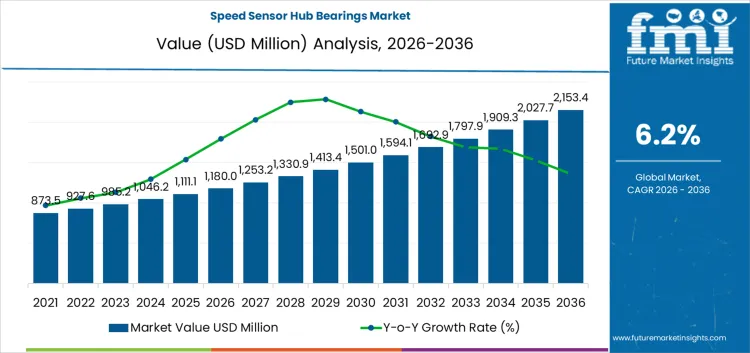
Speed Sensor Hub Bearings Market Key Takeaways
| Metric | Value |
|---|---|
| Market Value (2026) | USD 1,180.0 million |
| Market Forecast Value (2036) | USD 2,153.0 million |
| Forecast CAGR (2026-2036) | 6.2% |
Why is the Demand for the Speed Sensor Hub Bearings Market Growing?
Demand for speed sensor hub bearings is rising as automotive systems increasingly integrate advanced stability control, anti lock braking, and traction management functions that rely on accurate wheel speed data. These bearings incorporate integrated sensors that deliver real time rotation monitoring to the vehicle’s electronic control units, enabling responsive modulation of braking force and traction adjustments. Expansion of electronic safety mandates in multiple regions requires vehicles to be equipped with reliable sensing hardware that supports these features. OEMs specify speed sensor hub bearings that maintain precision under high vibration and temperature variation typical of wheel end environments. Electric and hybrid vehicles apply regenerative braking strategies that place unique operational profiles on wheel speed measurement, reinforcing the need for durable, high fidelity sensor bearing units.
Service and replacement activity also stimulates market growth as aging vehicle parc increases the volume of repairs involving wheel end components with sensing capabilities. Aftermarket channels stock speed sensor hub bearings tailored to the specifications of specific axle and drivetrain configurations, helping independent service centers fulfill repair orders quickly. Engineers optimize sealing and signal integrity features to minimize interference from road contaminants. Increasing integration of vehicle diagnostics and predictive maintenance tools encourages adoption of sensor enabled bearings that support fault detection and reduce unscheduled downtime.
Why is the Sensor Hub Market Growing?
The speed sensor hub bearings market is experiencing growth due to the increasing integration of sensor technologies in modern vehicles, particularly with advancements in active safety systems and vehicle performance monitoring. These bearings combine the functionality of traditional wheel bearings with integrated sensors to provide critical data, such as wheel speed, for various automotive applications like ABS and traction control systems. As the automotive industry increasingly adopts more advanced systems for safety, efficiency, and vehicle diagnostics, the demand for these integrated bearing solutions continues to rise.
Which sensor type holds the largest share of demand?
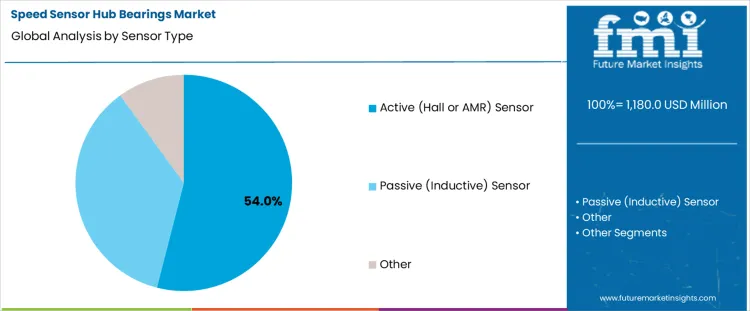
Active sensors, such as Hall or AMR (Anisotropic Magnetoresistance) sensors, capture the largest share of demand at 54.0%. These sensors are preferred due to their high sensitivity and ability to provide accurate data in various driving conditions. Active sensors are commonly used in applications like ABS (Anti-lock Braking System) and traction control systems, where real-time and precise wheel speed data is essential. Their reliability and ability to work efficiently across a wide range of temperatures and conditions contribute to their dominance in the market.
Key Points
- High sensitivity and accuracy in providing wheel speed data
- Widely used in advanced safety and control systems like ABS
- Reliable performance across varying environmental conditions
Which integration approach dominates the market?
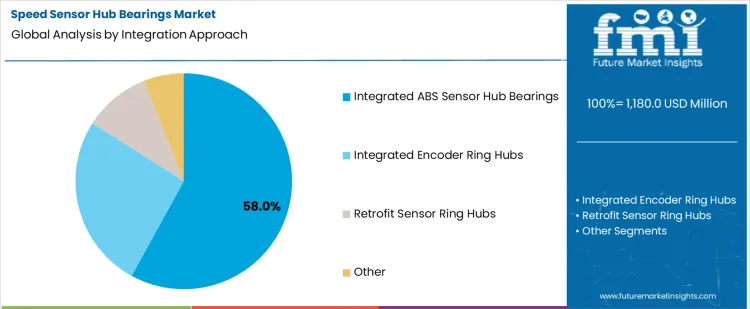
Integrated ABS sensor hub bearings lead with a 58.0% share, driven by their widespread use in modern vehicles equipped with anti-lock braking systems (ABS). These bearings combine the functionality of the wheel hub and the speed sensor, allowing for efficient integration into vehicle braking systems. The integration of ABS sensors directly into hub bearings simplifies the design, reduces the number of components, and improves the overall system's reliability and cost-effectiveness. As vehicle safety systems continue to evolve, the demand for integrated ABS sensor hub bearings remains strong.
Key Points
- Streamlines design by combining hub and ABS sensor functionality
- Improves system reliability and reduces component complexity
- Essential for modern vehicle safety systems like ABS
Which vehicle segment holds the largest share of demand?
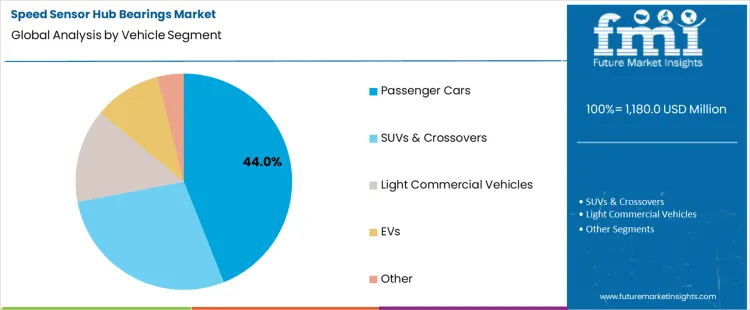
Passenger cars represent the largest share of demand, with 44.0% of the market. These vehicles are typically equipped with advanced safety systems, such as ABS and traction control, which rely heavily on the accuracy of speed sensors integrated into hub bearings. As passenger cars continue to evolve with more sophisticated safety and performance features, the need for reliable and precise speed sensors in hub bearings grows. The increasing focus on vehicle safety standards and performance monitoring systems further drives demand in this segment.
Key Points
- Dominated by the need for precise speed sensors in passenger vehicles
- Essential for supporting advanced safety and performance systems
- Increasing adoption of safety technologies in the passenger car segment
What are the Key Dynamics in the speed sensor hub bearings market?
Demand dynamics in the speed sensor hub bearings market are primarily shaped by the increasing reliance on advanced safety features and vehicle control systems, which require precise wheel speed data. With the growing adoption of electric vehicles (EVs), autonomous vehicles, and advanced driver assistance systems (ADAS), the need for high-performance hub bearings integrated with speed sensors continues to rise. These bearings provide crucial data for systems such as anti-lock braking (ABS), traction control, stability control (ESC), and regenerative braking systems. As the automotive industry moves toward electrification and autonomy, demand for these specialized bearings grows to meet the heightened performance and safety standards of modern vehicles.
How does the rise of electric vehicles and autonomous driving technologies shape demand?
The growing market for electric vehicles (EVs) and autonomous driving technologies is significantly influencing the speed sensor hub bearings market. Electric vehicles, which require precision for efficiency and optimized energy use, depend on speed sensor hub bearings for their regenerative braking systems and other critical functionalities.
These bearings offer the necessary data accuracy to support enhanced battery life and energy regeneration processes. Autonomous vehicles, which rely heavily on sensor-based decision-making, require highly reliable speed sensors integrated into the hub bearings for continuous data on vehicle movement. As both EVs and autonomous vehicles increase in production, manufacturers seek more compact, durable, and efficient hub bearings that can integrate speed sensors directly into the system, meeting the higher technological and performance demands of these vehicles.
How do advancements in vehicle safety and system integration drive the adoption of hub bearings with integrated sensors?
Advancements in vehicle safety, efficiency, and system integration significantly drive the demand for hub bearings with integrated speed sensors. With increased regulations and consumer demand for safer vehicles, speed sensors are now integral for advanced safety features such as adaptive cruise control, emergency braking, and collision avoidance systems. These systems require accurate and real-time speed data from each wheel to function properly, making hub bearings with integrated sensors essential.
The trend toward vehicle automation further boosts the need for these integrated solutions, as autonomous systems rely on precise data from multiple sensors to navigate and make decisions. As more vehicles adopt these safety and autonomous features, the demand for high-performance, sensor-integrated hub bearings rises, pushing manufacturers to develop more advanced and compact solutions that can be easily integrated into existing vehicle platforms. The shift toward electric powertrains also adds pressure on manufacturers to create lighter, more energy-efficient bearing systems, reducing overall vehicle weight and improving system efficiency.
How Is Demand for the Speed Sensor Hub Bearings Market Evolving Globally?
Global demand for speed sensor hub bearings is increasing as automotive manufacturers focus on enhancing vehicle safety, performance, and efficiency. Growth is driven by the need for advanced components that support modern vehicle systems, including electronic stability control (ESC), anti-lock braking systems (ABS), and active safety features. The rise of electric vehicles and increased demand for high-performance and precision-engineered bearings further boosts market growth. China records 7.4% CAGR, India records 7.0% CAGR, Mexico records 6.1% CAGR, Vietnam records 6.4% CAGR, and Thailand records 5.6% CAGR. Adoption is propelled by technological advancements in sensor systems, improved safety regulations, and the growth of the automotive industry.
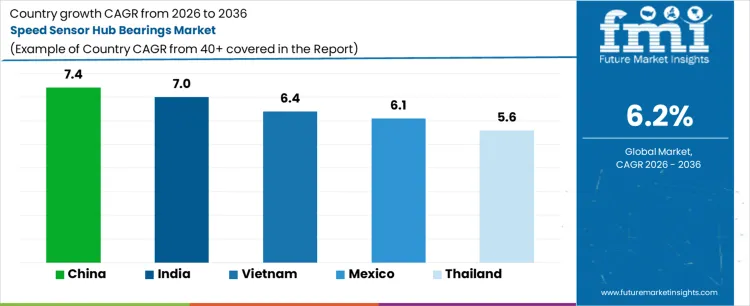
| Country | CAGR (%) |
|---|---|
| China | 7.4% |
| India | 7.0% |
| Mexico | 6.1% |
| Vietnam | 6.4% |
| Thailand | 5.6% |
What is driving speed sensor hub bearings demand in China?
Demand for speed sensor hub bearings in China is growing as the automotive industry modernizes with a focus on safety and vehicle performance. Growth at 7.4% CAGR reflects China’s large domestic automotive market, with increased production of vehicles equipped with advanced safety features like ESC and ABS. The country’s push towards electric vehicles (EVs) and the integration of smart systems further accelerates the demand for high-precision bearings. As China continues to expand its automotive manufacturing capabilities, the demand for sensor hub bearings that enhance vehicle performance and safety is expected to remain strong.
- Large domestic automotive market growth
- Demand for advanced safety features in vehicles
- Strong push towards electric vehicle manufacturing
- Integration of smart systems and technologies
What factors are shaping speed sensor hub bearings demand in India?
Speed sensor hub bearings demand in India is increasing as the automotive sector grows, driven by rising vehicle ownership and the shift towards more advanced automotive technologies. Growth at 7.0% CAGR reflects India’s growing middle class and increased demand for safer, high-performance vehicles. The adoption of modern safety systems such as ABS, ESC, and active safety features is pushing the need for high-quality, durable sensor hub bearings. The government’s focus on improving road safety and promoting electric vehicles further supports the growth of demand for speed sensor hub bearings.
- Rising vehicle ownership and demand for advanced safety systems
- Government focus on road safety and EV promotion
- Growing automotive manufacturing capabilities
- Increasing adoption of active vehicle safety features
What is driving sales of speed sensor hub bearings in Mexico?
Sales of speed sensor hub bearings in Mexico are increasing as the country strengthens its position as a key manufacturing hub for the automotive sector. Growth of 6.1% CAGR reflects the increasing demand for vehicles with advanced safety and performance features, including ABS and ESC. The automotive market in Mexico is expanding due to rising exports and demand from both domestic and international markets. As manufacturers focus on improving vehicle reliability and integrating modern sensor systems, the demand for precision bearings that support safety features and performance optimization is increasing.
- Mexico’s growing automotive manufacturing base
- Demand for vehicles with advanced safety features
- Focus on vehicle performance and reliability
- Expansion of export markets and local manufacturing
How is speed sensor hub bearings demand evolving in Vietnam?
Speed sensor hub bearings demand in Vietnam is growing as the automotive market expands, particularly in the context of improving safety standards and increasing demand for higher-performance vehicles. With a CAGR of 6.4%, Vietnam is seeing increased adoption of advanced automotive technologies, including speed sensors in braking and stability control systems. As the country’s automotive industry focuses on meeting international safety standards and integrating modern technologies into vehicles, the demand for high-quality, durable sensor hub bearings continues to rise, particularly in the growing market for domestic and export vehicles.
- Growing automotive market and demand for advanced safety features
- Increasing focus on meeting international safety standards
- Expansion of local manufacturing and export production
- Demand for durable, high-performance bearing systems
What factors are shaping speed sensor hub bearings demand in Thailand?
Speed sensor hub bearings demand in Thailand is advancing as the country’s automotive industry expands and adapts to modern vehicle requirements. Growth of 5.6% CAGR reflects the increasing focus on automotive safety and performance, with the adoption of systems like ABS and ESC in both domestic and export vehicles. Thailand’s role as a manufacturing hub for global automotive companies further boosts demand. The need for reliable, high-quality bearings that support electronic systems and safety features in modern vehicles is pushing market growth. Demand is also influenced by government efforts to improve vehicle safety standards.
- Growing automotive manufacturing in Thailand
- Increasing adoption of advanced safety technologies
- Government initiatives to improve vehicle safety standards
- Expansion of the export-oriented automotive sector
What is the competitive landscape of demand for the speed sensor hub bearings market globally?
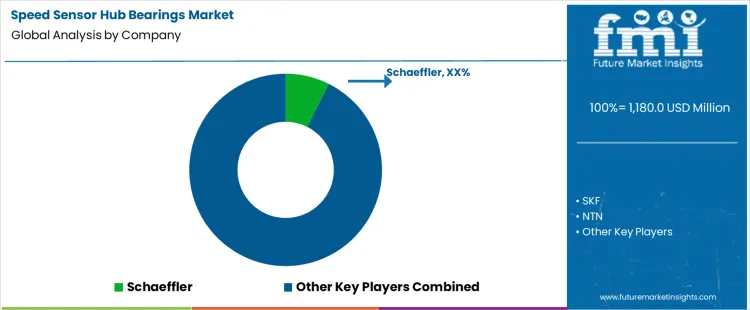
Demand for speed sensor hub bearings is driven by the increasing integration of sensor technologies in modern vehicles, particularly in automotive safety systems and advanced driver-assistance systems (ADAS). Buyers evaluate bearing precision, sensor compatibility, durability under varying speeds, and performance under different environmental conditions.
Procurement behavior emphasizes high-quality, reliable bearings that can maintain accurate sensor performance and withstand temperature fluctuations, vibrations, and external contaminants. Purchasing decisions prioritize suppliers offering integrated solutions that ensure the efficient transfer of data between the sensor and the vehicle's control system. Trend in the market reflects the growing demand for sensors in electric and autonomous vehicles, as well as the ongoing push for enhanced vehicle safety features.
Schaeffler leads competitive positioning through a strong focus on precision engineering, offering speed sensor hub bearings designed to support automotive safety and performance standards. SKF competes with a range of high-performance bearings integrated with speed sensors, known for their reliability in high-precision applications. NTN provides speed sensor hub bearings designed to maintain sensor accuracy, even in demanding conditions, making them popular in both traditional and electric vehicle markets. NSK participates by offering specialized bearings with sensor integration for applications that require enhanced durability and long service intervals. JTEKT (Koyo) contributes with solutions aimed at reducing system complexity and improving sensor reliability in automotive hubs.
Key Players in the Speed Sensor Hub Bearings Market
- Schaeffler
- SKF
- NTN
- NSK
- JTEKT (Koyo)
- ILJIN
- Timken
- C&U Group
- ZWZ
- Nachi-Fujikoshi
Scope of the Report
| Items | Values |
|---|---|
| Quantitative Units | USD million |
| Sensor Type | Active (Hall or AMR) Sensor; Passive (Inductive) Sensor; Other |
| Integration Approach | Integrated ABS Sensor Hub Bearings; Integrated Encoder Ring Hubs; Retrofit Sensor Ring Hubs; Other |
| Vehicle Segment | Passenger Cars; SUVs & Crossovers; Light Commercial Vehicles; EVs; Other |
| Sales Channel | OEM or Line-Fit; Aftermarket Replacement; Other |
| Regions Covered | Asia Pacific, Europe, North America, Latin America, Middle East & Africa |
| Countries Covered | China, India, Mexico, Vietnam, Thailand, and 40+ countries |
| Key Companies Profiled | Schaeffler; SKF; NTN; NSK; JTEKT (Koyo); ILJIN; Timken; C&U Group; ZWZ; Nachi-Fujikoshi |
| Additional Attributes | Dollar sales by sensor type, integration approach, vehicle segment, and sales channel; sensor accuracy, response time, and integration capabilities across active and passive sensor types; sealing and durability performance of integrated ABS and encoder ring hubs; retrofit compatibility for sensor ring hubs in legacy vehicle models; market dynamics driven by OEM contracts, aftermarket replacement demand, and EV adoption trends. |
Speed Sensor Hub Bearings Market by Segment
Sensor Type:
- Active (Hall or AMR) Sensor
- Passive (Inductive) Sensor
- Other
Integration Approach:
- Integrated ABS Sensor Hub Bearings
- Integrated Encoder Ring Hubs
- Retrofit Sensor Ring Hubs
- Other
Vehicle Segment:
- Passenger Cars
- SUVs & Crossovers
- Light Commercial Vehicles
- EVs
- Other
Sales Channel:
- OEM or Line-Fit
- Aftermarket Replacement
- Other
Region:
- Asia Pacific
- China
- Japan
- South Korea
- India
- Australia & New Zealand
- ASEAN
- Rest of Asia Pacific
- Europe
- Germany
- United Kingdom
- France
- Italy
- Spain
- Nordic
- BENELUX
- Rest of Europe
- North America
- United States
- Canada
- Mexico
- Latin America
- Brazil
- Chile
- Rest of Latin America
- Middle East & Africa
- Kingdom of Saudi Arabia
- Other GCC Countries
- Turkey
- South Africa
- Other African Union
- Rest of Middle East & Africa
Bibliography
- International Organization for Standardization. (2023). Rolling bearings—Integrated bearing and sensor units for automotive applications (ISO 15243:2023). ISO.
- SAE International. (2024). Wheel speed sensing technologies and integration with ABS, ESC, and traction control systems. SAE International.
- United Nations Economic Commission for Europe. (2023). Vehicle safety regulations: Electronic stability control and advanced braking systems (UNECE WP.29 framework). UNECE.
- European Commission. (2023). General Safety Regulation (EU) 2019/2144: Mandatory vehicle safety systems and sensor integration. European Union.
- National Highway Traffic Safety Administration. (2024). Federal motor vehicle safety standards: ABS, ESC, and electronic braking requirements. USA Department of Transportation.
- International Energy Agency. (2024). Global electric vehicle outlook 2024: Implications for braking systems, sensors, and drivetrain components. IEA.
Frequently Asked Questions
How big is the speed sensor hub bearings market in 2026?
The global speed sensor hub bearings market is estimated to be valued at USD 1,180.0 million in 2026.
What will be the size of speed sensor hub bearings market in 2036?
The market size for the speed sensor hub bearings market is projected to reach USD 2,153.4 million by 2036.
How much will be the speed sensor hub bearings market growth between 2026 and 2036?
The speed sensor hub bearings market is expected to grow at a 6.2% CAGR between 2026 and 2036.
What are the key product types in the speed sensor hub bearings market?
The key product types in speed sensor hub bearings market are active (hall or amr) sensor, passive (inductive) sensor and other.
Which integration approach segment to contribute significant share in the speed sensor hub bearings market in 2026?
In terms of integration approach, integrated abs sensor hub bearings segment to command 58.0% share in the speed sensor hub bearings market in 2026.
Preview the report firsthand - request a free sample
Get SampleGet the brochure for pricing and purchase details.
Get PDFTable of Content
- Executive Summary
- Global Market Outlook
- Demand-side Trends
- Supply-side Trends
- Technology Roadmap Analysis
- Analysis and Recommendations
- Market Overview
- Market Coverage / Taxonomy
- Market Definition / Scope / Limitations
- Market Background
- Market Dynamics
- Drivers
- Restraints
- Opportunity
- Trends
- Scenario Forecast
- Demand in Optimistic Scenario
- Demand in Likely Scenario
- Demand in Conservative Scenario
- Opportunity Map Analysis
- Product Life Cycle Analysis
- Supply Chain Analysis
- Investment Feasibility Matrix
- Value Chain Analysis
- PESTLE and Porter’s Analysis
- Regulatory Landscape
- Regional Parent Market Outlook
- Production and Consumption Statistics
- Import and Export Statistics
- Market Dynamics
- Global Market Analysis 2021 to 2025 and Forecast, 2026 to 2036
- Historical Market Size Value (USD Million) Analysis, 2021 to 2025
- Current and Future Market Size Value (USD Million) Projections, 2026 to 2036
- Y-o-Y Growth Trend Analysis
- Absolute $ Opportunity Analysis
- Global Market Pricing Analysis 2021 to 2025 and Forecast 2026 to 2036
- Global Market Analysis 2021 to 2025 and Forecast 2026 to 2036, By Sensor Type
- Introduction / Key Findings
- Historical Market Size Value (USD Million) Analysis By Sensor Type , 2021 to 2025
- Current and Future Market Size Value (USD Million) Analysis and Forecast By Sensor Type , 2026 to 2036
- Active (Hall or AMR) Sensor
- Passive (Inductive) Sensor
- Other
- Active (Hall or AMR) Sensor
- Y-o-Y Growth Trend Analysis By Sensor Type , 2021 to 2025
- Absolute $ Opportunity Analysis By Sensor Type , 2026 to 2036
- Global Market Analysis 2021 to 2025 and Forecast 2026 to 2036, By Integration Approach
- Introduction / Key Findings
- Historical Market Size Value (USD Million) Analysis By Integration Approach, 2021 to 2025
- Current and Future Market Size Value (USD Million) Analysis and Forecast By Integration Approach, 2026 to 2036
- Integrated ABS Sensor Hub Bearings
- Integrated Encoder Ring Hubs
- Retrofit Sensor Ring Hubs
- Other
- Integrated ABS Sensor Hub Bearings
- Y-o-Y Growth Trend Analysis By Integration Approach, 2021 to 2025
- Absolute $ Opportunity Analysis By Integration Approach, 2026 to 2036
- Global Market Analysis 2021 to 2025 and Forecast 2026 to 2036, By Vehicle Segment
- Introduction / Key Findings
- Historical Market Size Value (USD Million) Analysis By Vehicle Segment, 2021 to 2025
- Current and Future Market Size Value (USD Million) Analysis and Forecast By Vehicle Segment, 2026 to 2036
- Passenger Cars
- SUVs & Crossovers
- Light Commercial Vehicles
- EVs
- Other
- Passenger Cars
- Y-o-Y Growth Trend Analysis By Vehicle Segment, 2021 to 2025
- Absolute $ Opportunity Analysis By Vehicle Segment, 2026 to 2036
- Global Market Analysis 2021 to 2025 and Forecast 2026 to 2036, By Sales Channel
- Introduction / Key Findings
- Historical Market Size Value (USD Million) Analysis By Sales Channel, 2021 to 2025
- Current and Future Market Size Value (USD Million) Analysis and Forecast By Sales Channel, 2026 to 2036
- OEM or Line-Fit
- Aftermarket Replacement
- Other
- OEM or Line-Fit
- Y-o-Y Growth Trend Analysis By Sales Channel, 2021 to 2025
- Absolute $ Opportunity Analysis By Sales Channel, 2026 to 2036
- Global Market Analysis 2021 to 2025 and Forecast 2026 to 2036, By Region
- Introduction
- Historical Market Size Value (USD Million) Analysis By Region, 2021 to 2025
- Current Market Size Value (USD Million) Analysis and Forecast By Region, 2026 to 2036
- North America
- Latin America
- Western Europe
- Eastern Europe
- East Asia
- South Asia and Pacific
- Middle East & Africa
- Market Attractiveness Analysis By Region
- North America Market Analysis 2021 to 2025 and Forecast 2026 to 2036, By Country
- Historical Market Size Value (USD Million) Trend Analysis By Market Taxonomy, 2021 to 2025
- Market Size Value (USD Million) Forecast By Market Taxonomy, 2026 to 2036
- By Country
- USA
- Canada
- Mexico
- By Sensor Type
- By Integration Approach
- By Vehicle Segment
- By Sales Channel
- By Country
- Market Attractiveness Analysis
- By Country
- By Sensor Type
- By Integration Approach
- By Vehicle Segment
- By Sales Channel
- Key Takeaways
- Latin America Market Analysis 2021 to 2025 and Forecast 2026 to 2036, By Country
- Historical Market Size Value (USD Million) Trend Analysis By Market Taxonomy, 2021 to 2025
- Market Size Value (USD Million) Forecast By Market Taxonomy, 2026 to 2036
- By Country
- Brazil
- Chile
- Rest of Latin America
- By Sensor Type
- By Integration Approach
- By Vehicle Segment
- By Sales Channel
- By Country
- Market Attractiveness Analysis
- By Country
- By Sensor Type
- By Integration Approach
- By Vehicle Segment
- By Sales Channel
- Key Takeaways
- Western Europe Market Analysis 2021 to 2025 and Forecast 2026 to 2036, By Country
- Historical Market Size Value (USD Million) Trend Analysis By Market Taxonomy, 2021 to 2025
- Market Size Value (USD Million) Forecast By Market Taxonomy, 2026 to 2036
- By Country
- Germany
- UK
- Italy
- Spain
- France
- Nordic
- BENELUX
- Rest of Western Europe
- By Sensor Type
- By Integration Approach
- By Vehicle Segment
- By Sales Channel
- By Country
- Market Attractiveness Analysis
- By Country
- By Sensor Type
- By Integration Approach
- By Vehicle Segment
- By Sales Channel
- Key Takeaways
- Eastern Europe Market Analysis 2021 to 2025 and Forecast 2026 to 2036, By Country
- Historical Market Size Value (USD Million) Trend Analysis By Market Taxonomy, 2021 to 2025
- Market Size Value (USD Million) Forecast By Market Taxonomy, 2026 to 2036
- By Country
- Russia
- Poland
- Hungary
- Balkan & Baltic
- Rest of Eastern Europe
- By Sensor Type
- By Integration Approach
- By Vehicle Segment
- By Sales Channel
- By Country
- Market Attractiveness Analysis
- By Country
- By Sensor Type
- By Integration Approach
- By Vehicle Segment
- By Sales Channel
- Key Takeaways
- East Asia Market Analysis 2021 to 2025 and Forecast 2026 to 2036, By Country
- Historical Market Size Value (USD Million) Trend Analysis By Market Taxonomy, 2021 to 2025
- Market Size Value (USD Million) Forecast By Market Taxonomy, 2026 to 2036
- By Country
- China
- Japan
- South Korea
- By Sensor Type
- By Integration Approach
- By Vehicle Segment
- By Sales Channel
- By Country
- Market Attractiveness Analysis
- By Country
- By Sensor Type
- By Integration Approach
- By Vehicle Segment
- By Sales Channel
- Key Takeaways
- South Asia and Pacific Market Analysis 2021 to 2025 and Forecast 2026 to 2036, By Country
- Historical Market Size Value (USD Million) Trend Analysis By Market Taxonomy, 2021 to 2025
- Market Size Value (USD Million) Forecast By Market Taxonomy, 2026 to 2036
- By Country
- India
- ASEAN
- Australia & New Zealand
- Rest of South Asia and Pacific
- By Sensor Type
- By Integration Approach
- By Vehicle Segment
- By Sales Channel
- By Country
- Market Attractiveness Analysis
- By Country
- By Sensor Type
- By Integration Approach
- By Vehicle Segment
- By Sales Channel
- Key Takeaways
- Middle East & Africa Market Analysis 2021 to 2025 and Forecast 2026 to 2036, By Country
- Historical Market Size Value (USD Million) Trend Analysis By Market Taxonomy, 2021 to 2025
- Market Size Value (USD Million) Forecast By Market Taxonomy, 2026 to 2036
- By Country
- Kingdom of Saudi Arabia
- Other GCC Countries
- Turkiye
- South Africa
- Other African Union
- Rest of Middle East & Africa
- By Sensor Type
- By Integration Approach
- By Vehicle Segment
- By Sales Channel
- By Country
- Market Attractiveness Analysis
- By Country
- By Sensor Type
- By Integration Approach
- By Vehicle Segment
- By Sales Channel
- Key Takeaways
- Key Countries Market Analysis
- USA
- Pricing Analysis
- Market Share Analysis, 2025
- By Sensor Type
- By Integration Approach
- By Vehicle Segment
- By Sales Channel
- Canada
- Pricing Analysis
- Market Share Analysis, 2025
- By Sensor Type
- By Integration Approach
- By Vehicle Segment
- By Sales Channel
- Mexico
- Pricing Analysis
- Market Share Analysis, 2025
- By Sensor Type
- By Integration Approach
- By Vehicle Segment
- By Sales Channel
- Brazil
- Pricing Analysis
- Market Share Analysis, 2025
- By Sensor Type
- By Integration Approach
- By Vehicle Segment
- By Sales Channel
- Chile
- Pricing Analysis
- Market Share Analysis, 2025
- By Sensor Type
- By Integration Approach
- By Vehicle Segment
- By Sales Channel
- Germany
- Pricing Analysis
- Market Share Analysis, 2025
- By Sensor Type
- By Integration Approach
- By Vehicle Segment
- By Sales Channel
- UK
- Pricing Analysis
- Market Share Analysis, 2025
- By Sensor Type
- By Integration Approach
- By Vehicle Segment
- By Sales Channel
- Italy
- Pricing Analysis
- Market Share Analysis, 2025
- By Sensor Type
- By Integration Approach
- By Vehicle Segment
- By Sales Channel
- Spain
- Pricing Analysis
- Market Share Analysis, 2025
- By Sensor Type
- By Integration Approach
- By Vehicle Segment
- By Sales Channel
- France
- Pricing Analysis
- Market Share Analysis, 2025
- By Sensor Type
- By Integration Approach
- By Vehicle Segment
- By Sales Channel
- India
- Pricing Analysis
- Market Share Analysis, 2025
- By Sensor Type
- By Integration Approach
- By Vehicle Segment
- By Sales Channel
- ASEAN
- Pricing Analysis
- Market Share Analysis, 2025
- By Sensor Type
- By Integration Approach
- By Vehicle Segment
- By Sales Channel
- Australia & New Zealand
- Pricing Analysis
- Market Share Analysis, 2025
- By Sensor Type
- By Integration Approach
- By Vehicle Segment
- By Sales Channel
- China
- Pricing Analysis
- Market Share Analysis, 2025
- By Sensor Type
- By Integration Approach
- By Vehicle Segment
- By Sales Channel
- Japan
- Pricing Analysis
- Market Share Analysis, 2025
- By Sensor Type
- By Integration Approach
- By Vehicle Segment
- By Sales Channel
- South Korea
- Pricing Analysis
- Market Share Analysis, 2025
- By Sensor Type
- By Integration Approach
- By Vehicle Segment
- By Sales Channel
- Russia
- Pricing Analysis
- Market Share Analysis, 2025
- By Sensor Type
- By Integration Approach
- By Vehicle Segment
- By Sales Channel
- Poland
- Pricing Analysis
- Market Share Analysis, 2025
- By Sensor Type
- By Integration Approach
- By Vehicle Segment
- By Sales Channel
- Hungary
- Pricing Analysis
- Market Share Analysis, 2025
- By Sensor Type
- By Integration Approach
- By Vehicle Segment
- By Sales Channel
- Kingdom of Saudi Arabia
- Pricing Analysis
- Market Share Analysis, 2025
- By Sensor Type
- By Integration Approach
- By Vehicle Segment
- By Sales Channel
- Turkiye
- Pricing Analysis
- Market Share Analysis, 2025
- By Sensor Type
- By Integration Approach
- By Vehicle Segment
- By Sales Channel
- South Africa
- Pricing Analysis
- Market Share Analysis, 2025
- By Sensor Type
- By Integration Approach
- By Vehicle Segment
- By Sales Channel
- USA
- Market Structure Analysis
- Competition Dashboard
- Competition Benchmarking
- Market Share Analysis of Top Players
- By Regional
- By Sensor Type
- By Integration Approach
- By Vehicle Segment
- By Sales Channel
- Competition Analysis
- Competition Deep Dive
- Schaeffler
- Overview
- Product Portfolio
- Profitability by Market Segments (Product/Age /Sales Channel/Region)
- Sales Footprint
- Strategy Overview
- Marketing Strategy
- Product Strategy
- Channel Strategy
- SKF
- NTN
- NSK
- JTEKT (Koyo)
- ILJIN
- Timken
- C&U Group
- ZWZ
- Nachi-Fujikoshi
- Schaeffler
- Competition Deep Dive
- Assumptions & Acronyms Used
- Research Methodology


