

- Industry Size (2026)
- USD 540 Mn
- Forecast (2036)
- USD 1850 Mn
- CAGR (2026 to 2036)
- 13%
Fermented Olive Leaf Postbiotic Ingredients Market Forecast and Outlook 2026 to 2036
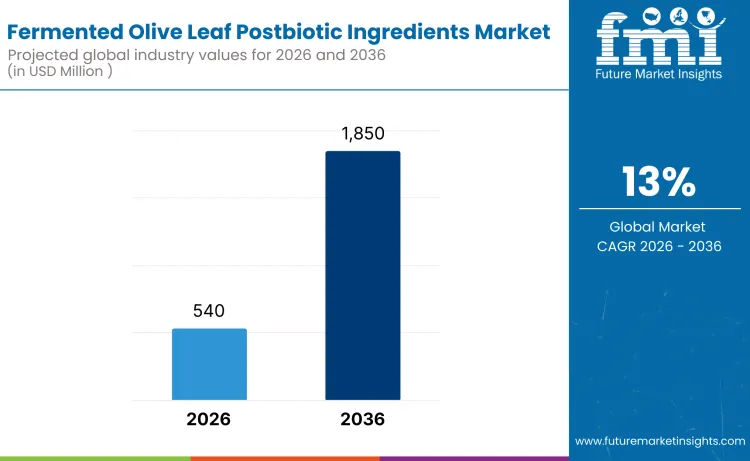
The global fermented olive leaf postbiotic ingredients market, valued at USD 540 million in 2026, is expected to grow to USD 1,850 million by 2036, reflecting a CAGR of 13%. This growth is fueled by the rising demand for functional ingredients that promote gut health, immune support, and overall well-being, as postbiotics gain recognition for their health benefits.
Dietary supplements, which account for 45% of the end-use application market share, are leading the demand due to the growing consumer preference for natural, health-boosting products. Powdered postbiotic extracts, representing 42% of the product form segment, are favored for their ease of incorporation into various supplement formulations and their stable, potent properties. The fermented olive leaf postbiotic ingredients market is also benefiting from the shift toward plant-based, sustainable ingredients in the wellness sector, as consumers increasingly turn to natural sources for health solutions.
Quick Stats for Fermented Olive Leaf Postbiotic Ingredients Market
- Fermented Olive Leaf Postbiotic Ingredients Market Value (2026): USD 540 million
- Fermented Olive Leaf Postbiotic Ingredients Market Forecast Value (2036): USD 1,850 million
- Fermented Olive Leaf Postbiotic Ingredients Market Global Forecast CAGR (2026 to 2036): 13%
- Top Segment by Share in Fermented Olive Leaf Postbiotic Ingredients Market: End Use Application - Dietary Supplements (45%)
- Key Growth Regions in Fermented Olive Leaf Postbiotic Ingredients Market: China, India, USA, UK, Japan
- Top Players in Fermented Olive Leaf Postbiotic Ingredients Market: Indena S.p.A, Frutarom (part of IFF), Arjuna Natural Pvt Ltd, Bioflora (postbiotic ingredient developer), Symrise AG
Fermented Olive Leaf Postbiotic Ingredients Market Key Takeaways
| Metric | Value |
|---|---|
| Industry Sales Value (2026) | USD 540 million |
| Industry Forecast Value (2036) | USD 1,850 million |
| Industry Forecast CAGR (2026 to 2036) | 13% |
What Are the Key Segments in Fermented Olive Leaf Postbiotic Ingredients Market?
The fermented olive leaf postbiotic ingredients market is segmented by product form and end-use application. Powdered postbiotic extracts account for 42% of the product form share, offering versatility for incorporation into various formulations. In terms of end-use application, dietary supplements dominate the market with 45% of the share, reflecting the growing demand for natural, functional ingredients. The increasing focus on gut health and the benefits of postbiotics is driving this market's growth.
Which Product Form Drives Fermented Olive Leaf Postbiotic Ingredients Market Demand Globally?
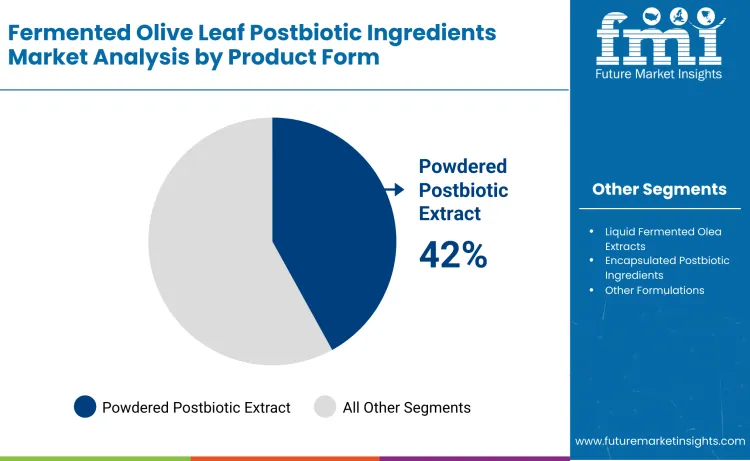
Powdered postbiotic extracts are the leading product form, holding 42% of the market share. These powdered extracts are highly valued for their ease of use, stability, and ability to be incorporated into a variety of product formats such as capsules, tablets, and functional foods. The fermentation process enhances the bioavailability and efficacy of the olive leaf postbiotics, making powdered extracts a popular choice in the nutraceutical and dietary supplement industries.
Their ability to provide a concentrated dose of beneficial compounds, such as polyphenols and antioxidants, makes them particularly sought after for products targeting digestive health, immune support, and anti-inflammatory benefits. Additionally, powdered extracts offer a longer shelf life compared to liquid forms and are easier to store and transport. The demand for powdered postbiotic extracts is expected to grow as consumers increasingly turn to natural, plant-based postbiotics for health and wellness purposes. The versatility and stability of this form will continue to make it a key driver in the market.
Which End-Use Application Drives Fermented Olive Leaf Postbiotic Ingredients Market Demand Globally?
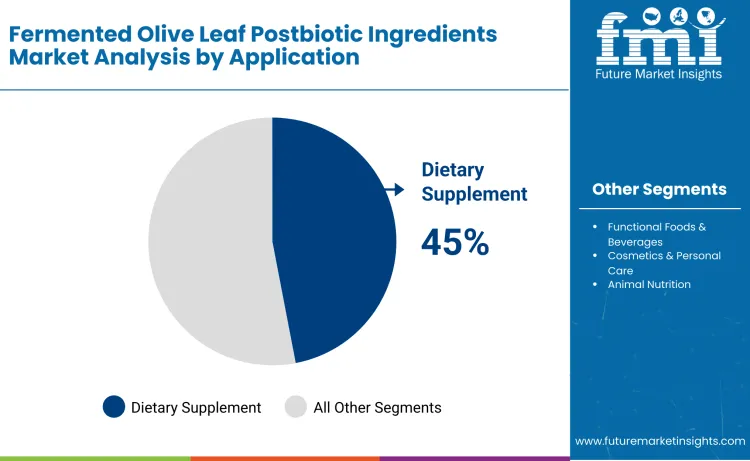
Dietary supplements account for 45% of the market share in fermented olive leaf postbiotic ingredients. The increasing consumer interest in gut health, immune system support, and natural wellness products has driven the demand for dietary supplements that feature postbiotic ingredients derived from fermented olive leaves. Postbiotics, including those derived from olive leaf fermentation, are gaining recognition for their potential to enhance gut microbiome health, reduce inflammation, and support immune function.
As more people seek natural alternatives to support overall health and wellness, the market for dietary supplements containing fermented olive leaf postbiotics is expanding. These supplements are particularly attractive to consumers who prefer plant-based, scientifically backed ingredients with proven health benefits. While other applications such as functional foods & beverages, cosmetics & personal care, and animal nutrition also contribute to market growth, dietary supplements remain the largest and most rapidly growing segment due to their widespread consumer adoption and the increasing focus on preventive health.
What is the Demand Dynamics for the Global Fermented Olive Leaf Postbiotic Ingredients Market?
The global fermented olive leaf postbiotic ingredients market is seeing growth as manufacturers of food, beverage, dietary supplements and personal care products seek bioactive, plant‑derived functional components. Fermented olive leaf postbiotic ingredients are produced through controlled microbial fermentation to enhance beneficial compounds naturally present. These ingredients appeal to product developers who want natural, high‑value additions that support wellness positioning and product differentiation. Adoption is spreading across regions where consumer demand for health‑focused formulations is rising and where manufacturers are expanding their portfolios to include plant‑based and fermentation‑enhanced ingredients.
What are the Key Drivers for the Global Fermented Olive Leaf Postbiotic Ingredients Market?
One key driver is rising consumer interest in natural, plant‑derived ingredients that support general wellbeing and digestive health. Fermented olive leaf postbiotic ingredients can offer unique functional properties that align with trends toward wellness and gut health. Ongoing research and clinical interest in fermentation and postbiotic effects supports formulators who want to innovate beyond basic extracts. Growth of the global nutraceutical and functional food segments creates more demand for differentiated ingredient solutions. Retail and e‑commerce expansion makes these ingredients accessible to a wide range of manufacturers who want to respond to consumer preferences for plant‑based and fermentation‑enhanced components.
What are the Restraints for the Global Fermented Olive Leaf Postbiotic Ingredients Market?
One restraint is variability in raw material and fermentation outcomes, which can create challenges for consistent supply of standardized postbiotic ingredients. Raw olive leaf quality can vary by cultivar, harvest conditions and season, influencing the profile of bioactive components before fermentation. Production processes also require quality systems and expertise to ensure safety and targeted functional profiles, which can raise costs for producers and formulators. Regulatory frameworks for postbiotic ingredients differ across regions, requiring careful compliance planning for market entry. Price sensitivity in some product categories may limit adoption where cost pressures are high or where generic alternatives are available.
What is the Demand for Fermented Olive Leaf Postbiotic Ingredients Across Key Countries?
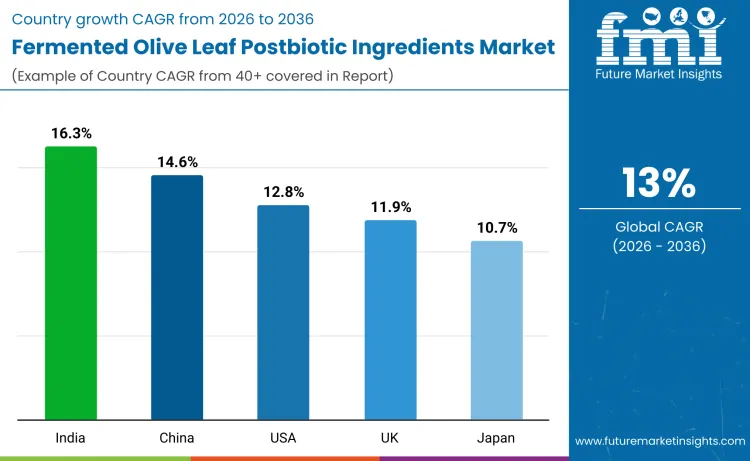
The Fermented Olive Leaf Postbiotic Ingredients market is showing strong growth across various countries, driven by an increasing demand for natural, health-boosting products. Countries such as India, China, and the USA are leading the market due to rising health awareness, growing interest in plant-based ingredients, and the numerous benefits of postbiotics. The health benefits of fermented olive leaf, such as improved gut health and immune support, are driving market expansion. Each country’s unique consumer preferences, coupled with favorable government policies and growing wellness trends, contribute to the diverse growth patterns seen in the market across regions.
| Country | CAGR (2026 to 2036) |
|---|---|
| China | 14.6% |
| India | 16.3% |
| USA | 12.8% |
| UK | 11.9% |
| Japan | 10.7% |
What is Driving the Growth of Fermented Olive Leaf Postbiotic Ingredients in China?
China is experiencing robust growth in the Fermented Olive Leaf Postbiotic Ingredients market, with a notable CAGR of 14.6%. The rise in health-consciousness, particularly in urban areas, is fueling the demand for natural wellness products. Consumers are increasingly turning to functional foods and supplements that support gut health and immunity, areas where fermented olive leaf postbiotics excel. Additionally, the growing awareness of the benefits of postbiotics and the shift toward plant-based ingredients are driving market growth. With continued investments in health and wellness sectors, China is poised for sustained growth in the fermented olive leaf postbiotic ingredients market.
How is the Fermented Olive Leaf Postbiotic Ingredients Market Growing in India?
India's Fermented Olive Leaf Postbiotic Ingredients market is expected to grow at a CAGR of 16.3%, reflecting the nation’s growing interest in natural health products. Increasing awareness about the importance of gut health, immunity, and overall wellness is fueling demand for postbiotics in India. As consumers shift towards natural and organic ingredients in food and supplements, fermented olive leaf postbiotics have gained popularity for their beneficial effects. The expanding middle class, along with increasing disposable income, is contributing to the adoption of premium, health-focused products. India’s evolving wellness trends and greater focus on preventive healthcare will continue to support the market’s growth.
What is Influencing the Fermented Olive Leaf Postbiotic Ingredients Market in the USA?
The USA's Fermented Olive Leaf Postbiotic Ingredients market is projected to grow at a CAGR of 12.8%. The growing demand for gut health products, including probiotics and postbiotics, is a key driver of market expansion. American consumers are increasingly seeking natural, functional ingredients that support overall well-being, particularly in terms of digestion and immune function. Additionally, the rising trend of clean-label products and plant-based wellness solutions is contributing to the popularity of fermented olive leaf postbiotics. With strong consumer demand for natural, science-backed health products, the USA market for fermented olive leaf postbiotic ingredients is expected to maintain steady growth.
What Factors Are Contributing to the Growth of Fermented Olive Leaf Postbiotic Ingredients in the UK?
The UK market for Fermented Olive Leaf Postbiotic Ingredients is expected to grow at a CAGR of 11.9%. The increasing focus on gut health and immune support among UK consumers is driving demand for natural postbiotic ingredients. Consumers are becoming more aware of the importance of digestive health, and fermented olive leaf, known for its postbiotic properties, is gaining recognition as a functional ingredient. The market is also benefiting from the rise of health-conscious consumers seeking plant-based and organic alternatives. The UK’s growing wellness sector, driven by trends in clean and sustainable products, supports the continued growth of the fermented olive leaf postbiotics market.
What is the Outlook for Fermented Olive Leaf Postbiotic Ingredients in Japan?
Japan’s Fermented Olive Leaf Postbiotic Ingredients market is anticipated to grow at a CAGR of 10.7%. Japan has a long history of focusing on gut health and longevity, making the demand for postbiotic ingredients a natural fit. The health benefits of fermented olive leaf, particularly its ability to support digestive health and immune function, align well with consumer preferences in Japan. With the country’s aging population and increasing focus on preventive healthcare, demand for products that promote overall well-being is on the rise. The fermented olive leaf postbiotics market is expected to continue growing as consumers increasingly prioritize health maintenance through natural ingredients.
What is the Competitive Landscape for the Global Fermented Olive Leaf Postbiotic Ingredients Market?
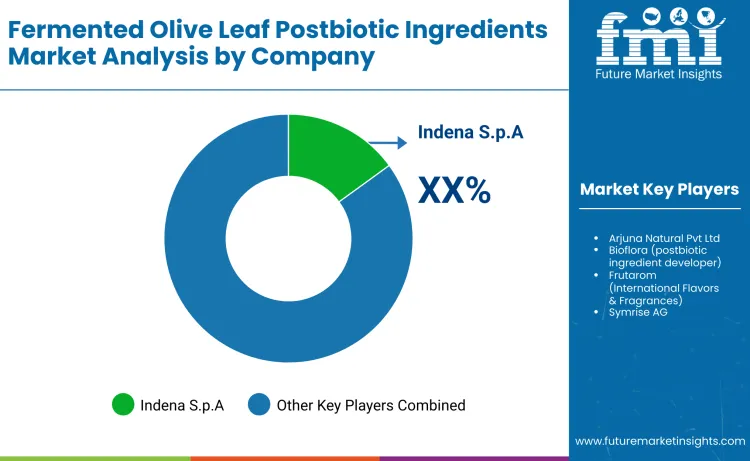
Global demand for fermented olive leaf postbiotic ingredients is growing as consumer interest in gut health, immune support and natural wellness solutions expands. Fermented olive leaf derivatives combine the recognised benefits of olive polyphenols with enhanced bioactivity from fermentation processes, making them attractive for nutraceuticals, functional foods, dietary supplements and cosmeceuticals. Postbiotic ingredients are gaining traction because they offer targeted bioactive metabolites without requiring live microbes, appealing to formulators seeking stability, safety and documented physiological effects. Growth in preventive health trends, ageing populations in key markets and rising consumer awareness of microbiome‑related wellness all support increased uptake of fermented olive leaf ingredients. Producers of capsules, powders, fortified beverages and topical wellness products are incorporating these postbiotic extracts to differentiate offerings and capture interest from health‑conscious buyers worldwide.
On the supply side, a focused group of ingredient developers competes to serve this emerging segment. Indena S.p.A is recognised as a leading supplier with expertise in botanical extracts and standardised bioactive formulations. Other notable competitors include Frutarom (part of IFF), Arjuna Natural Pvt Ltd, Bioflora (a postbiotic ingredient developer) and Symrise AG, each offering variants of fermented olive leaf extracts or postbiotic‑enriched botanical solutions. Competition among these firms centers on extract quality and consistency, concentration of key postbiotic metabolites, compliance with global dietary‑supplement and food‑ingredient standards, and the ability to support customers with technical formulation guidance. Suppliers that can demonstrate rigorous quality control, traceable sourcing, scalable production and strong scientific backing are best positioned to capture growth as demand for natural, science‑driven wellness ingredients continues to expand across nutraceutical, functional food and personal‑care markets globally.
Key Players
- Indena S.p.A
- Frutarom (part of IFF)
- Arjuna Natural Pvt Ltd
- Bioflora (postbiotic ingredient developer)
- Symrise AG
Scope of the Report
| Items | Values |
|---|---|
| Quantitative Units (2026) | USD Million |
| Product Form | Powdered Postbiotic Extracts, Liquid Fermented Olea Extracts, Encapsulated Postbiotic Ingredients, Other Formulations |
| End Use Application | Dietary Supplements, Functional Foods & Beverages, Cosmetics & Personal Care, Animal Nutrition |
| Companies | Indena S.p.A, Frutarom (part of IFF), Arjuna Natural Pvt Ltd, Bioflora (postbiotic ingredient developer), Symrise AG |
| Regions Covered | North America, Latin America, Western Europe, Eastern Europe, South Asia and Pacific, East Asia, Middle East & Africa |
| Countries Covered | United States, Canada, Mexico, Brazil, Argentina, Germany, France, United Kingdom, Italy, Spain, Netherlands, China, India, Japan, South Korea, ANZ, GCC Countries, South Africa |
| Additional Attributes | Dollar by sales by product form, end-use application, and region. Includes market trends in the demand for fermented olive leaf postbiotics, performance in various applications (dietary supplements, cosmetics, functional foods, animal nutrition), cost-effectiveness, sustainability practices, regulatory compliance, market share and competitive positioning of key companies, and the role of postbiotic ingredients in promoting digestive health, skin care, and overall wellness across different sectors. |
Key Segments in the Fermented Olive Leaf Postbiotic Ingredients Market
By Product Form:
- Powdered Postbiotic Extracts
- Liquid Fermented Olea Extracts
- Encapsulated Postbiotic Ingredients
- Other Formulations
By End Use Application:
- Dietary Supplements
- Functional Foods & Beverages
- Cosmetics & Personal Care
- Animal Nutrition
By Region:
- Asia Pacific
- China
- India
- Japan
- South Korea
- ASEAN
- Rest of Asia Pacific
- Europe
- Germany
- United Kingdom
- France
- Italy
- Spain
- Nordic
- BENELUX
- Rest of Europe
- North America
- United States
- Canada
- Mexico
- Latin America
- Brazil
- Chile
- Rest of Latin America
- Middle East & Africa
- Kingdom of Saudi Arabia
- Other GCC Countries
- Turkey
- South Africa
- Other African Union
- Rest of Middle East & Africa
Frequently Asked Questions
How big is the Fermented Olive Leaf Postbiotic Ingredients market?
The market is valued at USD 540 million in 2026 and is expected to grow at a CAGR of 13%, reaching USD 1.85 billion by 2036.
What is the growth outlook for the Fermented Olive Leaf Postbiotic Ingredients market?
The market is projected to grow at a CAGR of 13% from 2026 to 2036.
Which region is expected to experience the fastest growth in the Fermented Olive Leaf Postbiotic Ingredients market?
India is expected to lead with a growth rate of 16.3%, driven by the increasing demand for natural health products and postbiotic ingredients.
What are the key applications of Fermented Olive Leaf Postbiotic Ingredients?
Fermented Olive Leaf Postbiotic Ingredients are primarily used in dietary supplements, which account for approximately 45% of the market share, due to their health benefits.
Fermented Olive Leaf Postbiotic Ingredients are primarily used in dietary supplements, which account for approximately 45% of the market share, due to their health benefits.
Key players include Indena S.p.A, Frutarom (part of IFF), Arjuna Natural Pvt Ltd, Bioflora (postbiotic ingredient developer), and Symrise AG.
Preview the report firsthand - request a free sample
Get SampleGet the brochure for pricing and purchase details.
Get PDFTable of Content
- Executive Summary
- Market Overview
- Global Market Value, 2020 to 2026
- Global Market Forecast, 2026 to 2036
- Market Dynamics
- Drivers
- Restraints
- Opportunities
- Regulatory & Standards Landscape
- Technology & Ingredient Innovation Outlook
- Market Segmentation Analysis
- By Product Form
- Powdered Postbiotic Extracts
- Liquid Fermented Olea Extracts
- Encapsulated Postbiotic Ingredients
- Other Formulations
- By End Use Application
- Dietary Supplements
- Functional Foods & Beverages
- Cosmetics & Personal Care
- Animal Nutrition
- By End Use
- Nutraceutical & Supplement Manufacturers
- Food & Beverage Producers
- Personal Care & Cosmetic Brands
- By Sales Channel
- Direct Ingredient Supply
- Distributor Channels
- Specialty Ingredient Platforms
- By Product Form
- Regional Outlook
- North America
- Latin America
- Western Europe
- Eastern Europe
- South Asia & Pacific
- East Asia
- Middle East & Africa
- Country-Level Outlook
- United States
- Canada
- Mexico
- Brazil
- Argentina
- Germany
- France
- United Kingdom
- Italy
- Spain
- Netherlands
- China
- India
- Japan
- South Korea
- ANZ
- GCC Countries
- South Africa
- Competitive Landscape
- Market Structure Overview
- Company Positioning
- Strategic Initiatives
- Key Player Profiles
- Scope of the Report
- Research Methodology
- Assumptions & Acronyms


