

- Industry Size (2026)
- USD 32.4 Mn
- Forecast (2036)
- USD 59.7 Mn
- CAGR (2026 to 2036)
- 6.3%
Fermented Mediterranean Pepper and Tomato Complexes Market Size, Market Forecast and Outlook By FMI
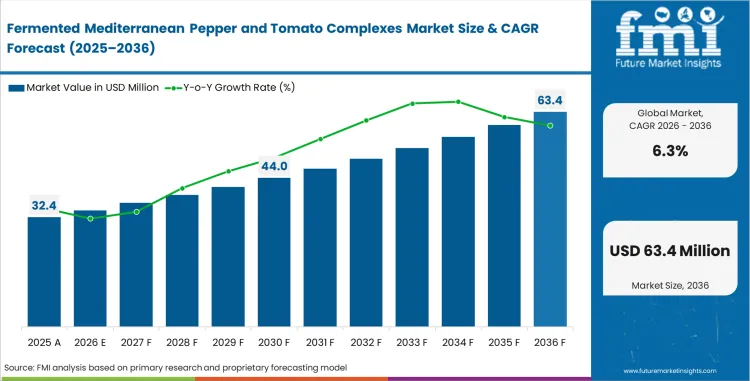
The Fermented Mediterranean Pepper and Tomato Complexes Market crossed a valuation of USD 30.5 million in 2025. Industry demand is expected to reach USD 32.4 million in 2026 at a CAGR of 6.3% during the forecast period. Revenue is expected to reach USD 59.7 million by 2036 as fermented culinary bases move from table condiments into broader premium cooking use, where flavor depth, clean labels, and repeatable shelf-stable formats matter in buying decisions.
Summary of Fermented Mediterranean Pepper and Tomato Complexes Market
- The market is forecast to reach USD 59.7 million by 2036.
- The market is expected to grow at a CAGR of 6.3% from 2026 to 2036.
- The market was estimated at USD 30.5 million in 2025.
- The forecast period represents an incremental opportunity of USD 27.3 million.
- Demand is driven by growing preference for fermented, clean-label culinary bases that enhance flavor depth while maintaining familiar tomato and pepper profiles.
- Pastes are projected to lead the product form segment with a 34.0% share due to their versatility in cooking and finishing applications.
- Lactic fermentation is expected to account for 46.0% of the market in 2026, supported by its consistent taste and scalable production.
- Medium heat variants are anticipated to contribute 39.0% share, balancing flavor intensity with wider consumer acceptance.
- Retail channels are expected to hold 37.0% share, while households contribute 35.0% of end-use demand in 2026.
- Turkey, Spain, Italy, and Greece remain key markets, supported by strong ingredient supply and regional flavor familiarity.
Key Takeaways, Market Size, and Forecast
- Fermented Mediterranean Pepper and Tomato Complexes Market is projected to grow from USD 32.4 million in 2026 to USD 59.7 million by 2036, at a CAGR of 6.3%.
- The fermented Mediterranean pepper and tomato complexes market was valued at USD 30.5 million in 2025.
- By 2036, the Fermented Mediterranean Pepper and Tomato Complexes Market is expected to be worth USD 59.7 million.
- From 2026 to 2036, the market is projected to expand at a CAGR of 6.3%.
- The market is projected to create an incremental opportunity of USD 27.3 million between 2026 and 2036.
- In 2026, Pastes is expected to account for 34.0% of the product form segment.
- Turkey (7.1%) and Spain (6.8%) are two of the fastest growing markets.
Buyers in this space are no longer looking only for heat or Mediterranean flavor cues. Attention is shifting toward blended products that can work as sauces, cooking starters, spreads, and finishing ingredients, which places this category closer to premium sauces and fermented foods than to a narrow artisan pickle niche. Commercial interest improves when one jar can serve more than one menu or home-use role, because that lowers trial risk and makes premium pricing easier to defend. Another point also matters here: sensory depth may drive the first purchase, but batch consistency supports repeat buying.
Scale becomes easier once producers can hold flavor balance, acidity, and pack stability in a repeatable way across runs. Reaching that stage pulls the category out of an experimental artisan position and closer to structured specialty sourcing, where fermented ingredients gain space in prepared foods, premium meal kits, and retail-led culinary blends. Without that step, demand remains visible but fragmented.
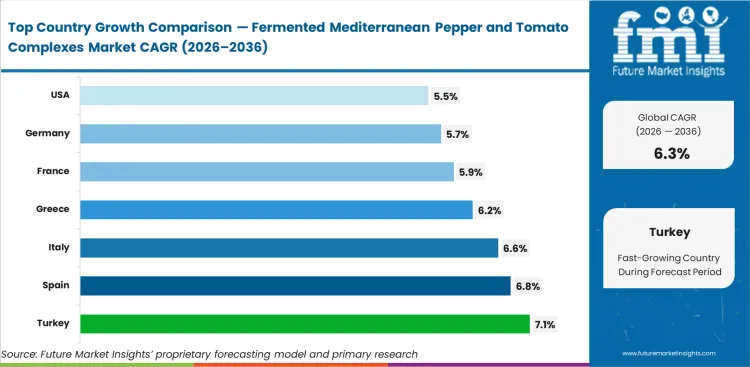
Turkey is estimated to expand at a CAGR of 7.1% from 2026 to 2036, while Spain is projected at 6.8% and Italy at 6.6%, helped by pepper supply depth, tomato processing strength, and stronger familiarity with fermented foods. Greece is estimated to grow at a CAGR of 6.2% from 2026 to 2036. France is likely to post 5.9%, and Germany 5.7%, as premium condiment demand widens through specialty grocery and foodservice channels linked to fermented and premium sauce formats. United States demand is forecast to rise at a CAGR of 5.5% from 2026 to 2036. Specialty shelf presence is still widening, but competition from mainstream chili sauce formats remains heavier in this market.
Segmental Analysis
Fermented Mediterranean Pepper and Tomato Complexes Market Analysis by Product Form
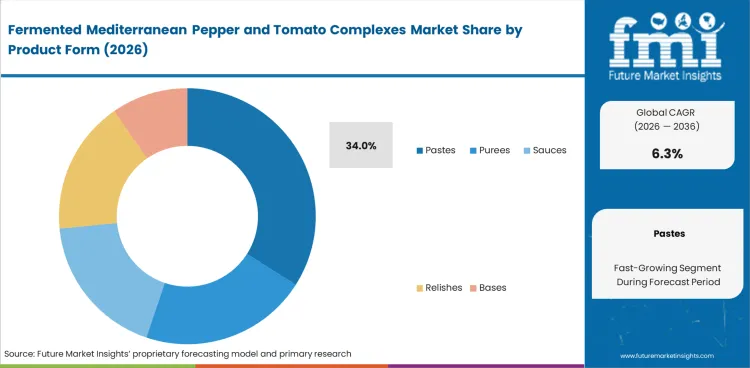
Pastes are expected to account for 34.0% of total demand in 2026 because buyers usually want one fermented pepper and tomato product that can move across several eating occasions without much adjustment. Kitchen use still favors concentrated formats for that reason. Thicker texture also makes portioning easier during cooking and at the table. Premium buyers often see paste as a format with lower waste once opened. A similar pattern appears in ready-made bases, where broader recipe fit helps one format stay ahead of narrower alternatives.
- Versatility: One spoonful can move from sandwich spread to pan base without major recipe adjustment.
- Shelf handling: Denser texture helps opened packs feel more controlled in home kitchens and smaller food outlets.
- Purchase logic: Buyers accept premium pricing more easily when one jar covers repeated uses instead of a single meal.
Fermented Mediterranean Pepper and Tomato Complexes Market Analysis by Fermentation Type
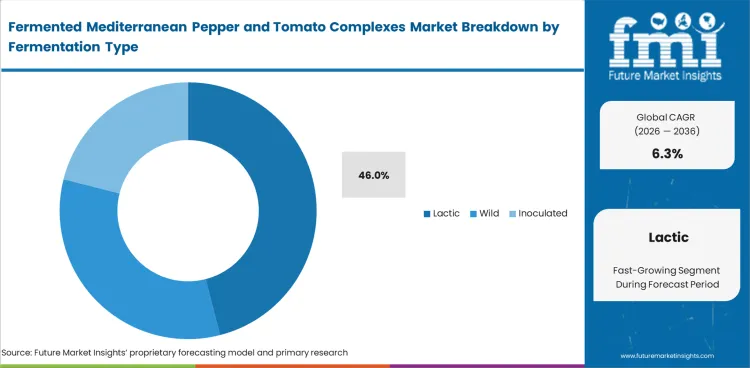
Flavor trust matters early in this category because repeat buying depends on whether the product tastes close to expectations after the first jar. In 2026, lactic systems are anticipated to represent 46.0% of the market because they give producers a more stable sour-salty profile and a cleaner path to batch consistency. Wild fermentation can create more depth, yet it also raises the chance of taste shifts that make scaling harder. Buyers in small premium categories usually stay with methods that reduce unwanted variation. A similar buying pattern appears in dips and spreads, where consistency helps first-time trial convert into repeat purchase.
- Starter confidence: Buyers lean toward methods that reduce sensory drift across batches.
- Process ease: Controlled fermentation gives producers a clearer route to stable acidity and pack behavior.
- Repeat demand: Familiar fermented notes support second purchases better than highly variable wild profiles.
Fermented Mediterranean Pepper and Tomato Complexes Market Analysis by Heat Profile
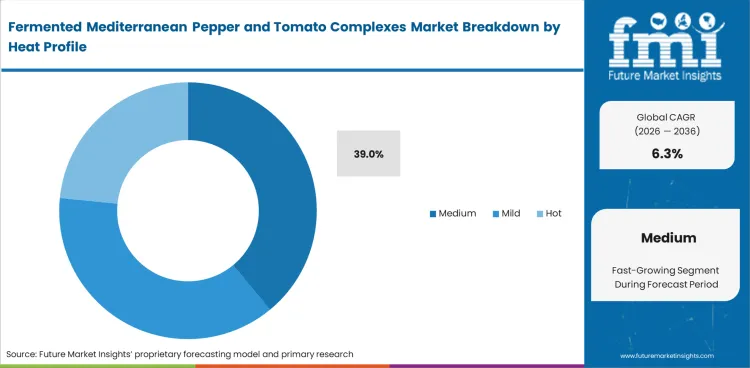
Mainstream demand depends on balance, as everyday use drops when heat starts to dominate overall flavor. Buyers want enough pepper character to feel distinctive, though they also need tomato sweetness and fermentation notes to stay clear. Medium profiles are likely to secure 39.0% share in 2026 because they fit more meal types and make the category easier to use across breakfast, lunch, dinner, and snacking. Hotter variants create interest, though everyday use narrows once the burn starts to dominate the jar’s overall identity. Retail movement also improves when one format works for more than one household member. Broader acceptance patterns in vegan dips show a similar preference for easier entry points over extreme taste positions.
- Household fit: Moderate heat works across more age groups and meal types.
- Flavor balance: Tomato, pepper, salt, and acidity stay easier to read when heat does not dominate the palate.
- Menu reach: Casual dining and deli counters can use medium profiles in more dishes without narrowing the audience.
Fermented Mediterranean Pepper and Tomato Complexes Market Analysis by Positioning
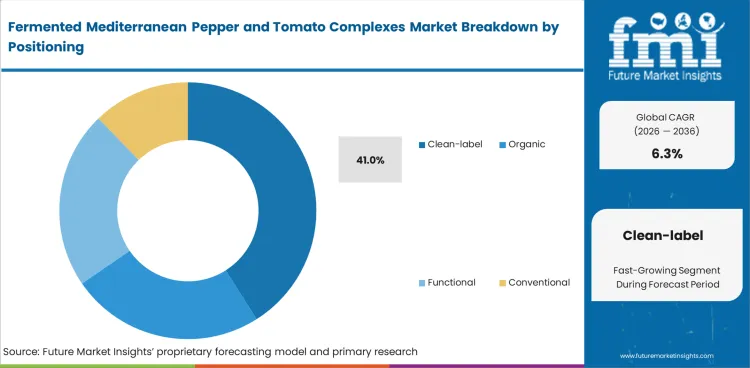
Pack wording shapes first trial quickly in fermented condiments because many shoppers decide in a few seconds whether the jar feels clear and credible. Ingredient simplicity matters more here than long product stories. Visible vegetables also support the sense that the product belongs in everyday cooking rather than a pantry corner. Clean-label products are forecast to account for 41.0% share in 2026 as buyers look for short ingredient lists and a presentation that feels closer to kitchen preparation than factory blending. Organic claims still add value, though they do not remove concerns around taste and texture after opening. Trial rises faster when the pack answers basic trust questions without too much explanation. Similar demand patterns also show a balance between natural appeal and application control.
- Label clarity: Shorter ingredient lists make first-time trial easier in unfamiliar fermented formats.
- Trust signal: Visible ingredients and simple wording support premium positioning without heavy technical claims.
- Conversion hurdle: Clean labels still need stable taste or shoppers may try once and not return.
Fermented Mediterranean Pepper and Tomato Complexes Market Analysis by Application
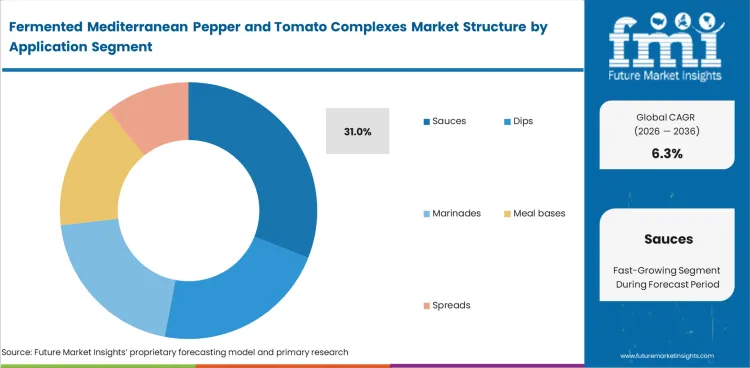
Commercial use usually starts with the easiest route to the plate because buyers first test unfamiliar fermented products in formats that need very little learning. Table use helps the category gain visibility. Sandwiches and bowls also provide a simple first role. Grill accompaniments widen the usage window further. Sauces are projected to contribute 31.0% of total demand in 2026 because spoonable and pourable formats fit all these occasions without asking buyers to change routine cooking habits. Marinades and spreads still matter, though they tend to follow the product that has already earned trust in a simpler format. Cross-category movement in seasoning demand shows the same pattern, where first use often decides whether broader application follows.
- Entry point: Sauce formats demand the least education at shelf and in foodservice.
- Recipe flow: Users can add the product late in cooking or at service without reworking the full dish.
- Expansion path: Once sauce use is established, buyers become more open to marinades, meal bases, and spreads.
Fermented Mediterranean Pepper and Tomato Complexes Market Analysis by Distribution Channel
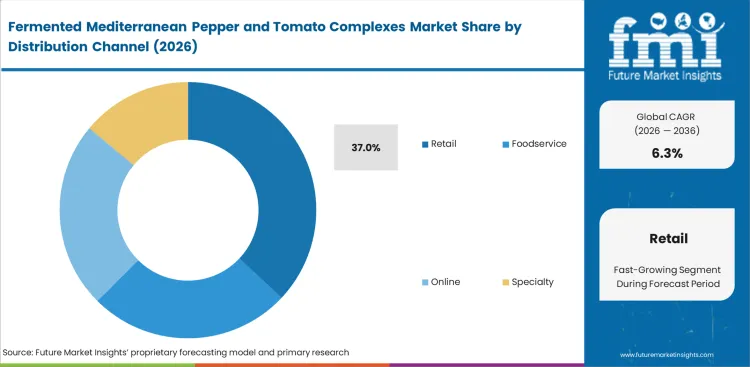
Retail remains the main route for this category because discovery often begins with what buyers can see on shelf. Pack design helps explain the product quickly. Glass jars and premium labels also reinforce trial. Specialty grocery gives unfamiliar formats a more suitable first home. Foodservice interest builds after brands become more visible to shoppers. Market estimates place retail at 37.0% share in 2026, supported by premium grocery, giftable condiment sets, and online-to-shelf crossover that gives the category a clearer path into repeat pantry use. Chefs and smaller outlets still matter, though many labels need shelf recognition before they are treated as dependable pantry items. Related movement across herbs and spices shows how shelf education can shape early demand.
- Shelf visibility: Glass jars, label design, and visible color separation help the product explain itself quickly.
- Trial support: Retail gives buyers a lower-volume way to test fermented formats before deeper pantry adoption.
- Channel spillover: Strong specialty retail presence can make later foodservice selling easier.
Fermented Mediterranean Pepper and Tomato Complexes Market Analysis by End User
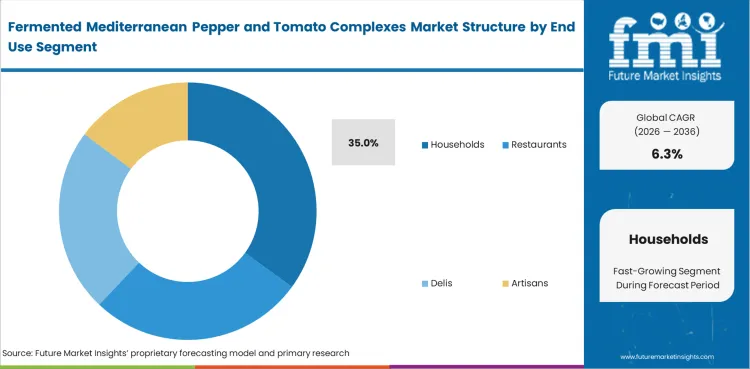
Home consumption still sets the pace for this segment because fermented pepper and tomato blends usually enter routine use in small but repeated servings. Breakfast plates create one entry point. Sandwiches and grain bowls add another. Pasta and snack use widen frequency during the week. Restaurant demand is meaningful, though kitchen adoption there depends on clean prep performance and predictable flavor. Premium jars also need to feel worth the spend across several eating occasions. Households are expected to make up 35.0% of demand in 2026, helped by buyers looking for one product that can lift multiple meals without feeling too specialized. Similar cross-use logic is visible in herb and spice extracts, where flexibility helps smaller categories build a wider base.
- Routine use: Home buyers return when the product fits breakfast, lunch, dinner, and snacking without effort.
- Portion control: Smaller daily uses help premium jars last longer and feel worth the spend.
- Foodservice filter: Chefs adopt faster once flavor and texture stay predictable across prep stations.
Fermented Mediterranean Pepper and Tomato Complexes Market Analysis by Packaging Format
Packaging has to support both storage comfort and premium shelf cues in this category. Visual trust matters because buyers often judge fermented products by color, density, and separation before they taste them. Reclose ease also shapes repeat use at home. Freight efficiency matters more for softer packs. Shelf presence still carries more weight in premium fermented condiments. Buyers often connect visible ingredients with better authenticity. Premium price points also push brands toward packs that feel more credible at first glance. Glass jars are set to represent 33.0% share in 2026 because they combine visibility, upright storage, and a stronger fermentation signal than softer packs usually offer. Buyers in premium fermented foods often read clear packaging as part of product trust, especially when texture and color need to stay visible.
- Visibility: Jars let shoppers see texture, oil separation, and color density before purchase.
- Premium cue: Glass still carries a stronger specialty-food signal in fermented categories.
- Storage comfort: Reclose ease and upright shelf presence make jars easier to live with in home kitchens.
Fermented Mediterranean Pepper and Tomato Complexes Market Drivers, Restraints, and Opportunities
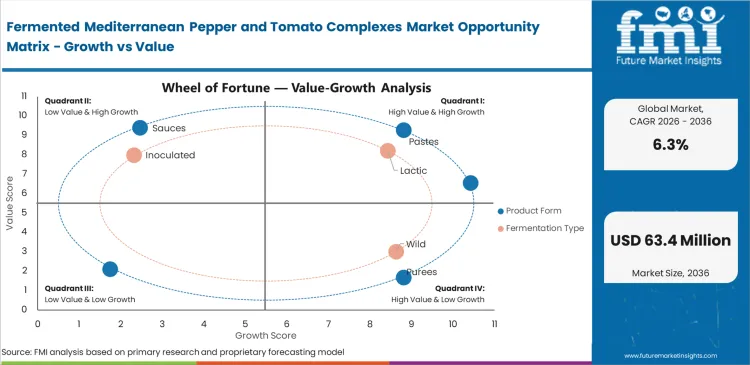
Flavor-led premiumization is one reason this category keeps moving. Buyers want products that bring fermented depth, Mediterranean familiarity, and cooking flexibility in one pack, which is why interest now extends beyond table condiments into prepared meals, deli counters, and premium snack pairings. Demand also benefits from the fact that tomato and pepper are familiar ingredients, so fermentation feels like an upgrade rather than a radical taste departure. That lowers the barrier to first purchase and gives smaller brands a clearer route into specialty retail.
Batch consistency stays in the main commercial restraint. Raw material sweetness, pepper heat, salt perception, and fermentation character can shift faster than many small producers expect, and that makes repeat buying harder when jars from different runs do not land in the same taste zone. Shelf stability adds another layer because premium buyers still want simple labels without giving up texture or color. Growth stays present, though wider expansion depends on making artisanal flavor feel dependable rather than unpredictable.
Opportunities in the Fermented Mediterranean Pepper and Tomato Complexes Market
- Meal base expansion: Quick-cook products can borrow from Europe condiments demand where one sauce or paste supports both convenience and flavor depth, giving fermented pepper and tomato blends a stronger role in premium weeknight cooking.
- Format refinement: Better fill, sealing, and viscosity control tied to tomato processing improve how these blends travel from artisanal batches to wider specialty distribution.
- Clean-label premium tier: Premium shelf space can widen further when brands pair fermentation claims with simple ingredients and positioning closer to organic condiments than to standard mass sauces.
Regional Analysis
Based on the regional analysis, the Fermented Mediterranean Pepper and Tomato Complexes Market is segmented into Mediterranean Europe and Turkey, Western Europe, and North America across 40 plus countries. Growth does not move evenly across this map because supply depth, culinary familiarity, premium retail readiness, and fermented product acceptance sit at different stages in each geography.
.webp "Top Country Growth Comparison Fermented Mediterranean Pepper And Tomato Complexes Market Cagr (2026 2036)")
| Country | CAGR (2026 to 2036) |
|---|---|
| Turkey | 7.1% |
| Spain | 6.8% |
| Italy | 6.6% |
| Greece | 6.2% |
| France | 5.9% |
| Germany | 5.7% |
| United States | 5.5% |
Source: Future Market Insights (FMI) analysis, based on proprietary forecasting model and primary research
Mediterranean Europe and Turkey Fermented Mediterranean Pepper and Tomato Complexes Market Analysis
Crop access gives this region a natural edge, yet raw material abundance alone does not explain the growth path. Commercial strength comes from a closer fit between local flavor memory and the kind of fermented pepper and tomato profile this category sells. Spain and Italy bring processing depth, Greece supports premium culinary positioning, and Turkey adds a strong pepper tradition that helps fermented blends feel culturally legible rather than experimental. Buyers in this belt often need less education on taste direction, so pack design and format choice matter more than first-principles explanation of why fermentation belongs in the jar.
- Turkey: Pepper culture remains a clear commercial support in Turkey, where fermented heat and paste-based flavor systems already sit close to everyday cooking habits. Demand for fermented Mediterranean pepper and tomato complexes in Turkey is anticipated to rise at a CAGR of 7.1% through 2036 because the market can build from familiar usage patterns instead of creating a new taste category from zero. Tomato and pepper pairing also feels natural in both home cooking and smaller restaurant formats. Growth here points to wider room for locally anchored premium products rather than imported-style novelty alone.
- Spain: Processing know-how shapes Spain’s position more than shelf experimentation. Strong tomato supply and a broad culture of sauce, sofrito, and pepper use give this category a practical route into premium condiments and cooking supports, and the Spanish market is projected to record 6.8% CAGR during the forecast period. Fermentation still needs careful flavor control because mainstream buyers expect warmth and depth without excessive acidity. Producers that balance that profile can gain steady specialty shelf space while staying close to everyday meal use.
- Italy: Italy already rewards products that work across pasta, sandwiches, antipasti, and cooking bases, so fermented pepper and tomato blends can enter through familiar dish structures. A CAGR of 6.6% is expected for the market in Italy through 2036, supported by premium pantry demand and a strong preference for products that feel useful beyond one narrow recipe. Tomato-led flavor familiarity helps, but buyers still expect texture and balance to stay clean. Products that feel overly sharp or overly hot lose ground quickly in this setting.
- Greece: Premium dining, meze-style eating, and preserved vegetable use give Greece a solid opening for this segment even though scale is smaller than in Spain or Italy. Fermented Mediterranean pepper and tomato complex sales in Greece are expected to increase at a CAGR of 6.2% during the forecast period as specialty grocery and hospitality channels keep looking for flavor-rich products that feel authentic rather than industrial. Smaller market size does create a limit on volume. Even so, Greece remains important as a premium reference point for products built around regional taste cues.
Portugal, Cyprus, Malta, and nearby Mediterranean pockets also matter to the wider regional picture, especially where preserved vegetables, pepper pastes, and tomato-led condiments already sit within normal pantry use. Demand in these smaller markets is unlikely to match the top four countries on scale, though premium retail and tourism-linked foodservice keep the category visible. Regional growth here is shaped less by education and more by whether producers deliver a fermented profile that stays rich, balanced, and easy to use. That makes commercial success in this region a question of execution, not basic category acceptance.
Western Europe Fermented Mediterranean Pepper and Tomato Complexes Market Analysis
Western Europe buys this category through premium retail logic more than through raw ingredient familiarity. France and Germany can support higher-value fermented condiments, but both markets ask for clearer positioning, steadier flavor control, and a pack story that feels worth the shelf price. Retail buyers in this region often compare the product against imported chili sauces, deli spreads, and premium cooking aids rather than against traditional preserved vegetables. That comparison raises the quality bar, yet it also gives well-made products room to win if they communicate use and taste clearly.
- France: Premium pantry buying gives France a better opening than raw volume alone might suggest. Specialty food stores, deli culture, and restaurant demand support products that feel crafted and culinary, and market growth for fermented Mediterranean pepper and tomato complexes in France is expected to run at a CAGR of 5.9% during the assessment period. Buyers still want the product to fit everyday meals rather than remain a gift-shelf curiosity. Brands that explain how the jar works across cheese boards, sandwiches, grilled foods, and quick cooking can widen repeat sales.
- Germany: Germany approaches this category from a practical angle. Buyers are open to fermented products, but they usually expect reliable taste and functional use before moving a condiment into repeat purchase habits, which is why the market for fermented Mediterranean pepper and tomato complexes in Germany is set to expand at a CAGR of 5.7% over the assessment period. Online discovery and specialty shelves help the first sale. Longer-term progress depends on proving the product fits ordinary meal routines and not only adventurous trial buying.
Benelux, Austria, Switzerland, and the Nordic countries add useful demand at the premium end even though each market remains smaller on its own. Imported taste discovery travels well in this part of Europe, yet shelf competition is crowded, and fermented products still need a clear reason to exist. Regional progress therefore depends on smart positioning, visible quality, and reliable use-case communication. Products that land as useful pantry tools tend to stay longer than products sold only as flavor novelty.
North America Fermented Mediterranean Pepper and Tomato Complexes Market Analysis
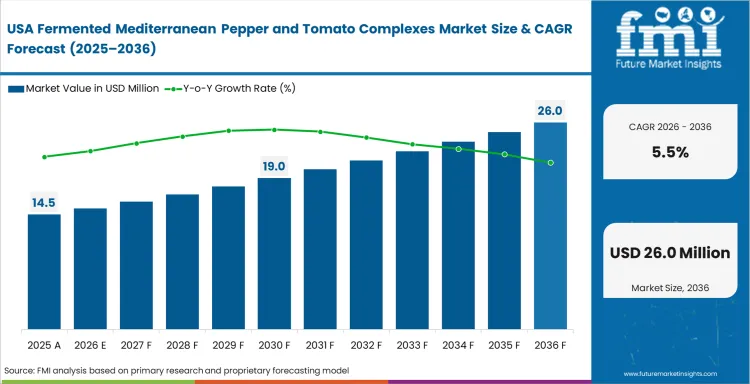
North America offers demand headroom, though category development follows a different route from the Mediterranean base. Growth here depends on premium condiment culture, imported flavor curiosity, and the rise of fermented foods as a specialty lifestyle choice rather than a long-standing pantry habit. Buyers compare these products with hot sauces, salsa variations, pasta sauces, and premium savory spreads, so positioning must be exact. Shelf trial can come quickly in the United States, but repeat growth depends on showing that fermentation adds taste value rather than acting as packaging language alone.
- United States: Specialty condiment culture keeps the United States relevant even with a lower forecast than the Mediterranean core. Fermented Mediterranean pepper and tomato complexes in the United States are likely to expand at 5.5% CAGR during the forecast period because premium grocery, deli prepared foods, and direct-to-consumer discovery continue to make room for flavor-led products. Competition stays strong from established hot sauces, chili oils, and chef-style pasta and pizza toppers. Success in this market comes from finding a clear usage space that those alternatives do not cover well.
Canada, Mexico, and selected urban import-oriented channels contribute to the wider North American opportunity even though they are not the lead growth drivers named in this report. Regional demand can build well where Mediterranean eating patterns, premium grocery traffic, and fermented-food awareness overlap. Bigger scale still depends on a clearer category identity that separates these blends from both salsa and standard hot sauce. North America remains attractive, but it rewards disciplined positioning more than broad flavor experimentation.
Competitive Aligners for Market Players
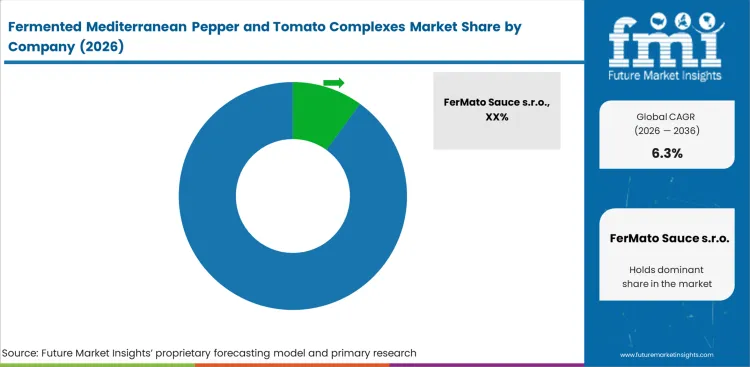
Buyer selection in this category is shaped by taste consistency and confidence in the product format. FerMato Sauce s.r.o. remains closely aligned with the fermented pepper-and-tomato concept, while Belazu Ingredient Company is better positioned where Mediterranean pantry familiarity matters. Eaten Alive connects more naturally with fermented condiment demand, and Sauce Shop holds relevance through its specialty sauce presence. Competitive activity remains dispersed because no brand has established clear leadership across retail, foodservice, and artisanal cooking applications.
Category fit still carries more weight than portfolio width in a niche of this kind. Buyers tend to favor products that offer a clear flavor identity, dependable pack appeal, and practical repeat use in everyday kitchen settings. Smaller players can still secure space when they deliver a product that feels distinctive, reliable, and easy to work into regular consumption or menu planning.
Commercial preference in this market also depends on whether the product feels usable across more than one occasion. Buyers are less willing to commit when flavor delivery varies by batch or when the offer appears too narrow for broader shelf or menu use. Brands that communicate application clearly are in a stronger position than those relying on a vague premium story. Fragmentation is likely to continue through 2036, as taste-led categories at this scale usually leave room for regional and specialist suppliers before any meaningful consolidation begins.
Key Players in Fermented Mediterranean Pepper and Tomato Complexes Market
- FerMato Sauce s.r.o.
- Belazu Ingredient Company
- Eaten Alive
- Sauce Shop
Scope of the Report
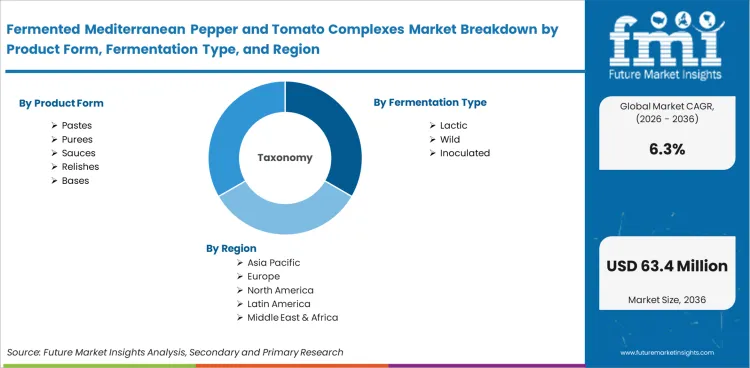
| Metric | Value |
|---|---|
| Quantitative Units | USD 32.4 million to USD 59.7 million, at a CAGR of 6.3% |
| Market Definition | Fermented pepper and tomato blends sold as premium condiments, culinary bases, relishes, spreads, and sauce-ready inputs with a defined fermentation step in the product system. |
| Product Form Segmentation | Pastes, Purees, Sauces, Relishes, Bases |
| Fermentation Type Segmentation | Lactic, Wild, Inoculated |
| Heat Profile Segmentation | Mild, Medium, Hot |
| Positioning Segmentation | Clean-label, Organic, Functional, Conventional |
| Application Segmentation | Sauces, Dips, Marinades, Meal bases, Spreads |
| Distribution Channel Segmentation | Retail, Foodservice, Online, Specialty |
| End User Segmentation | Households, Restaurants, Delis, Artisans |
| Packaging Format Segmentation | Glass jars, Bottles, Pouches, Tubs |
| Regions Covered | Mediterranean Europe and Turkey, Western Europe, North America |
| Countries Covered | Turkey, Spain, Italy, Greece, France, Germany, United States, and 40 plus countries |
| Key Companies Profiled | FerMato Sauce s.r.o., Belazu Ingredient Company, Eaten Alive, Sauce Shop |
| Forecast Period | 2026 to 2036 |
| Approach | FMI combined top-down category narrowing with cross-checks against Mediterranean crop supply, fermented food adoption logic, specialty condiment demand, and company-level relevance in the fermented pepper and tomato space. |
Source: Future Market Insights (FMI) analysis, based on proprietary forecasting model and primary research
Fermented Mediterranean Pepper and Tomato Complexes Market Analysis by Segments
Product Form:
- Pastes
- Purees
- Sauces
- Relishes
- Bases
Fermentation Type:
- Lactic
- Wild
- Inoculated
Heat Profile:
- Mild
- Medium
- Hot
Positioning:
- Clean-label
- Organic
- Functional
- Conventional
Application:
- Sauces
- Dips
- Marinades
- Meal bases
- Spreads
Distribution Channel:
- Retail
- Foodservice
- Online
- Specialty
End User:
- Households
- Restaurants
- Delis
- Artisans
Packaging Format:
- Glass jars
- Bottles
- Pouches
- Tubs
Region:
- North America
- United States
- Canada
- Europe
- Germany
- United Kingdom
- France
- Italy
- Spain
- Asia Pacific
- China
- Japan
- South Korea
- Taiwan
- Singapore
- Latin America
- Brazil
- Mexico
- Argentina
- Middle East & Africa
- GCC Countries
- South Africa
Bibliography
- Chabi, I. B., Zannou, O., Dedehou, E. S. C. A., Ayegnon, B. P., Oscar Odouaro, O. B., Maqsood, S., Galanakis, C. M., & Kayodé, A. P. P. (2024). Tomato pomace as a source of valuable functional ingredients for improving physicochemical and sensory properties and extending the shelf life of foods: A review. Heliyon, 10(3), e25261.
- Food and Agriculture Organization of the United Nations. (2025). World Food and Agriculture – Statistical Yearbook 2025.
- Wei, B., Zheng, W., Peng, Z., Xiao, M., Huang, T., Xie, M., & Xiong, T. (2024). Probiotic-fermented tomato with hepatic lipid metabolism modulation effects: analysis of physicochemical properties, bioactivities, and potential bioactive compounds.
- Wei, L., Van Beeck, W., Hanlon, M., DiCaprio, E., & Marco, M. L. (2025). Lacto-Fermented Fruits and Vegetables: Bioactive Components and Effects on Human Health. Annual Review of Food Science and Technology, 16, 289–314.
- Wrzodak, A., Szwejda-Grzybowska, J., Popińska, W., & Mieszczakowska-Frąc, M. (2025). Red Pepper Fermentation with Geothermal Mineral Water: Impact on Nutritional Profile and Quality Characteristics. Agronomy, 15(10), 2279.
This bibliography is provided for reader reference. The full FMI report contains the complete reference list with primary source documentation.
This Report Addresses
- Market intelligence to support strategic decision making across fermented pepper and tomato pastes, sauces, relishes, bases, and premium condiment blends.
- Market size estimation and 10-year forecasts from 2026 to 2036 supported by category narrowing, crop-supply logic, and specialty condiment demand mapping.
- Growth opportunity mapping across product form, fermentation type, heat profile, positioning, application, channel, end user, and packaging format.
- Segment and regional assessment covering the leading use cases, dominant shares, and the country growth pattern across Turkey, Spain, Italy, Greece, France, Germany, and the United States.
- Competition analysis that clarifies how direct-fit fermented specialists compare with broader Mediterranean ingredient and premium sauce brands.
- Commercial interpretation of the factors that lift repeat buying, limit scale-up, and shape the move from artisan production into wider specialty distribution.
- Scope clarity on what is included in fermented pepper and tomato complex products and what is excluded from plain non-fermented sauces, salsa, and standard tomato paste.
- Decision support for portfolio planning, premium product development, category entry timing, and geographic prioritization.
Frequently Asked Questions
What does the report cover?
It covers fermented pepper and tomato blends sold as condiments, culinary bases, relishes, spreads, and sauce-ready products with a defined fermentation step.
What is the estimated market size in 2025?
The market is estimated at USD 30.5 million in 2025.
What value is projected for 2026?
FMI projects the market to reach USD 32.4 million in 2026.
What value is expected by 2036?
FMI expects the market to reach USD 59.7 million by 2036.
What CAGR is forecast for 2026 to 2036?
The market is forecast to expand at a CAGR of 6.3% from 2026 to 2036.
Which product form leads the category?
Pastes lead Product Form and are projected to account for 34.0% of total demand in 2026.
Which fermentation type leads the category?
Lactic fermentation leads the category and is expected to represent 46.0% of the market in 2026.
Which heat profile leads demand?
Medium heat is forecast to contribute 39.0% of total demand in 2026.
Which positioning type leads demand?
Clean-label products are likely to secure 41.0% share in 2026.
Which application holds the lead position?
Sauces lead the application mix and are expected to make up 31.0% of the market in 2026.
Which distribution channel contributes the largest share?
Retail is projected to account for 37.0% of category demand in 2026.
Which end user group leads demand?
Households are expected to represent 35.0% of end-use demand in 2026.
Which packaging format leads the market?
Glass jars are forecast to hold 33.0% of packaging demand in 2026.
Which country grows the fastest?
Turkey is the fastest-growing country in this study with a forecast CAGR of 7.1% through 2036.
Why does Turkey lead growth?
Turkey benefits from a strong pepper culture, relevant processing familiarity, and an easier fit between fermented flavor profiles and everyday meal use.
Why do Spain and Italy matter so much?
Spain and Italy matter because tomato processing depth, culinary familiarity, and premium pantry demand all support category scale.
What keeps growth from moving faster?
Batch consistency, shelf stability, and the need to turn first-time trial into repeat buying keep expansion measured.
Where does foodservice fit in this category?
Foodservice matters as a growth channel, but many products still need retail proof before they move into wider menu use.
How fragmented is supplier competition?
Competition remains fragmented because no single company controls the exact category language across all channels.
What separates direct-fit suppliers from broader condiment brands?
Direct-fit suppliers align more closely with fermented pepper and tomato usage, while broader brands benefit from stronger shelf familiarity and wider pantry association.
What does the report exclude?
It excludes plain tomato paste, non-fermented salsa, and standard chili sauces that do not rely on fermentation as a defining product step.
Who are the key companies covered in the report?
Key companies covered include FerMato Sauce s.r.o., Belazu Ingredient Company, Eaten Alive, Sauce Shop.
What decisions can this analysis support?
This analysis supports category entry, product form selection, premium positioning, channel focus, and country prioritization decisions.
Preview the report firsthand - request a free sample
Get SampleGet the brochure for pricing and purchase details.
Get PDFTable of Content
- Executive Summary
- Global Market Outlook
- Demand-side Trends
- Supply-side Trends
- Technology Roadmap Analysis
- Analysis and Recommendations
- Market Overview
- Market Coverage / Taxonomy
- Market Definition / Scope / Limitations
- Research Methodology
- Chapter Orientation
- Analytical Lens and Working Hypotheses
- Market Structure, Signals, and Trend Drivers
- Benchmarking and Cross-market Comparability
- Market Sizing, Forecasting, and Opportunity Mapping
- Research Design and Evidence Framework
- Desk Research Programme (Secondary Evidence)
- Company Annual and Sustainability Reports
- Peer-reviewed Journals and Academic Literature
- Corporate Websites, Product Literature, and Technical Notes
- Earnings Decks and Investor Briefings
- Statutory Filings and Regulatory Disclosures
- Technical White Papers and Standards Notes
- Trade Journals, Industry Magazines, and Analyst Briefs
- Conference Proceedings, Webinars, and Seminar Materials
- Government Statistics Portals and Public Data Releases
- Press Releases and Reputable Media Coverage
- Specialist Newsletters and Curated Briefings
- Sector Databases and Reference Repositories
- FMI Internal Proprietary Databases and Historical Market Datasets
- Subscription Datasets and Paid Sources
- Social Channels, Communities, and Digital Listening Inputs
- Additional Desk Sources
- Expert Input and Fieldwork (Primary Evidence)
- Primary Modes
- Qualitative Interviews and Expert Elicitation
- Quantitative Surveys and Structured Data Capture
- Blended Approach
- Why Primary Evidence is Used
- Field Techniques
- Interviews
- Surveys
- Focus Groups
- Observational and In-context Research
- Social and Community Interactions
- Stakeholder Universe Engaged
- C-suite Leaders
- Board Members
- Presidents and Vice Presidents
- R&D and Innovation Heads
- Technical Specialists
- Domain Subject-matter Experts
- Scientists
- Physicians and Other Healthcare Professionals
- Governance, Ethics, and Data Stewardship
- Research Ethics
- Data Integrity and Handling
- Primary Modes
- Tooling, Models, and Reference Databases
- Desk Research Programme (Secondary Evidence)
- Data Engineering and Model Build
- Data Acquisition and Ingestion
- Cleaning, Normalisation, and Verification
- Synthesis, Triangulation, and Analysis
- Quality Assurance and Audit Trail
- Market Background
- Market Dynamics
- Drivers
- Restraints
- Opportunity
- Trends
- Scenario Forecast
- Demand in Optimistic Scenario
- Demand in Likely Scenario
- Demand in Conservative Scenario
- Opportunity Map Analysis
- Product Life Cycle Analysis
- Supply Chain Analysis
- Investment Feasibility Matrix
- Value Chain Analysis
- PESTLE and Porter’s Analysis
- Regulatory Landscape
- Regional Parent Market Outlook
- Production and Consumption Statistics
- Import and Export Statistics
- Market Dynamics
- Global Market Analysis 2021 to 2025 and Forecast, 2026 to 2036
- Historical Market Size Value (USD Million) Analysis, 2021 to 2025
- Current and Future Market Size Value (USD Million) Projections, 2026 to 2036
- Y-o-Y Growth Trend Analysis
- Absolute $ Opportunity Analysis
- Global Market Pricing Analysis 2021 to 2025 and Forecast 2026 to 2036
- Global Market Analysis 2021 to 2025 and Forecast 2026 to 2036, By Product Form
- Introduction / Key Findings
- Historical Market Size Value (USD Million) Analysis By Product Form , 2021 to 2025
- Current and Future Market Size Value (USD Million) Analysis and Forecast By Product Form , 2026 to 2036
- Pastes
- Purees
- Sauces
- Relishes
- Bases
- Pastes
- Y-o-Y Growth Trend Analysis By Product Form , 2021 to 2025
- Absolute $ Opportunity Analysis By Product Form , 2026 to 2036
- Global Market Analysis 2021 to 2025 and Forecast 2026 to 2036, By Fermentation Type
- Introduction / Key Findings
- Historical Market Size Value (USD Million) Analysis By Fermentation Type, 2021 to 2025
- Current and Future Market Size Value (USD Million) Analysis and Forecast By Fermentation Type, 2026 to 2036
- Lactic
- Wild
- Inoculated
- Lactic
- Y-o-Y Growth Trend Analysis By Fermentation Type, 2021 to 2025
- Absolute $ Opportunity Analysis By Fermentation Type, 2026 to 2036
- Global Market Analysis 2021 to 2025 and Forecast 2026 to 2036, By Heat Profile
- Introduction / Key Findings
- Historical Market Size Value (USD Million) Analysis By Heat Profile, 2021 to 2025
- Current and Future Market Size Value (USD Million) Analysis and Forecast By Heat Profile, 2026 to 2036
- Medium
- Mild
- Hot
- Medium
- Y-o-Y Growth Trend Analysis By Heat Profile, 2021 to 2025
- Absolute $ Opportunity Analysis By Heat Profile, 2026 to 2036
- Global Market Analysis 2021 to 2025 and Forecast 2026 to 2036, By Positioning
- Introduction / Key Findings
- Historical Market Size Value (USD Million) Analysis By Positioning, 2021 to 2025
- Current and Future Market Size Value (USD Million) Analysis and Forecast By Positioning, 2026 to 2036
- Clean-label
- Organic
- Functional
- Conventional
- Clean-label
- Y-o-Y Growth Trend Analysis By Positioning, 2021 to 2025
- Absolute $ Opportunity Analysis By Positioning, 2026 to 2036
- Global Market Analysis 2021 to 2025 and Forecast 2026 to 2036, By Application
- Introduction / Key Findings
- Historical Market Size Value (USD Million) Analysis By Application, 2021 to 2025
- Current and Future Market Size Value (USD Million) Analysis and Forecast By Application, 2026 to 2036
- Sauces
- Dips
- Marinades
- Meal bases
- Spreads
- Sauces
- Y-o-Y Growth Trend Analysis By Application, 2021 to 2025
- Absolute $ Opportunity Analysis By Application, 2026 to 2036
- Global Market Analysis 2021 to 2025 and Forecast 2026 to 2036, By Distribution Channel
- Introduction / Key Findings
- Historical Market Size Value (USD Million) Analysis By Distribution Channel, 2021 to 2025
- Current and Future Market Size Value (USD Million) Analysis and Forecast By Distribution Channel, 2026 to 2036
- Retail
- Foodservice
- Online
- Specialty
- Retail
- Y-o-Y Growth Trend Analysis By Distribution Channel, 2021 to 2025
- Absolute $ Opportunity Analysis By Distribution Channel, 2026 to 2036
- Global Market Analysis 2021 to 2025 and Forecast 2026 to 2036, By End Use
- Introduction / Key Findings
- Historical Market Size Value (USD Million) Analysis By End Use, 2021 to 2025
- Current and Future Market Size Value (USD Million) Analysis and Forecast By End Use, 2026 to 2036
- Households
- Restaurants
- Delis
- Artisans
- Households
- Y-o-Y Growth Trend Analysis By End Use, 2021 to 2025
- Absolute $ Opportunity Analysis By End Use, 2026 to 2036
- Global Market Analysis 2021 to 2025 and Forecast 2026 to 2036, By Region
- Introduction
- Historical Market Size Value (USD Million) Analysis By Region, 2021 to 2025
- Current Market Size Value (USD Million) Analysis and Forecast By Region, 2026 to 2036
- North America
- Latin America
- Western Europe
- Eastern Europe
- East Asia
- South Asia and Pacific
- Middle East & Africa
- Market Attractiveness Analysis By Region
- North America Market Analysis 2021 to 2025 and Forecast 2026 to 2036, By Country
- Historical Market Size Value (USD Million) Trend Analysis By Market Taxonomy, 2021 to 2025
- Market Size Value (USD Million) Forecast By Market Taxonomy, 2026 to 2036
- By Country
- USA
- Canada
- Mexico
- By Product Form
- By Fermentation Type
- By Heat Profile
- By Positioning
- By Application
- By Distribution Channel
- By End Use
- By Country
- Market Attractiveness Analysis
- By Country
- By Product Form
- By Fermentation Type
- By Heat Profile
- By Positioning
- By Application
- By Distribution Channel
- By End Use
- Key Takeaways
- Latin America Market Analysis 2021 to 2025 and Forecast 2026 to 2036, By Country
- Historical Market Size Value (USD Million) Trend Analysis By Market Taxonomy, 2021 to 2025
- Market Size Value (USD Million) Forecast By Market Taxonomy, 2026 to 2036
- By Country
- Brazil
- Chile
- Rest of Latin America
- By Product Form
- By Fermentation Type
- By Heat Profile
- By Positioning
- By Application
- By Distribution Channel
- By End Use
- By Country
- Market Attractiveness Analysis
- By Country
- By Product Form
- By Fermentation Type
- By Heat Profile
- By Positioning
- By Application
- By Distribution Channel
- By End Use
- Key Takeaways
- Western Europe Market Analysis 2021 to 2025 and Forecast 2026 to 2036, By Country
- Historical Market Size Value (USD Million) Trend Analysis By Market Taxonomy, 2021 to 2025
- Market Size Value (USD Million) Forecast By Market Taxonomy, 2026 to 2036
- By Country
- Germany
- UK
- Italy
- Spain
- France
- Nordic
- BENELUX
- Rest of Western Europe
- By Product Form
- By Fermentation Type
- By Heat Profile
- By Positioning
- By Application
- By Distribution Channel
- By End Use
- By Country
- Market Attractiveness Analysis
- By Country
- By Product Form
- By Fermentation Type
- By Heat Profile
- By Positioning
- By Application
- By Distribution Channel
- By End Use
- Key Takeaways
- Eastern Europe Market Analysis 2021 to 2025 and Forecast 2026 to 2036, By Country
- Historical Market Size Value (USD Million) Trend Analysis By Market Taxonomy, 2021 to 2025
- Market Size Value (USD Million) Forecast By Market Taxonomy, 2026 to 2036
- By Country
- Russia
- Poland
- Hungary
- Balkan & Baltic
- Rest of Eastern Europe
- By Product Form
- By Fermentation Type
- By Heat Profile
- By Positioning
- By Application
- By Distribution Channel
- By End Use
- By Country
- Market Attractiveness Analysis
- By Country
- By Product Form
- By Fermentation Type
- By Heat Profile
- By Positioning
- By Application
- By Distribution Channel
- By End Use
- Key Takeaways
- East Asia Market Analysis 2021 to 2025 and Forecast 2026 to 2036, By Country
- Historical Market Size Value (USD Million) Trend Analysis By Market Taxonomy, 2021 to 2025
- Market Size Value (USD Million) Forecast By Market Taxonomy, 2026 to 2036
- By Country
- China
- Japan
- South Korea
- By Product Form
- By Fermentation Type
- By Heat Profile
- By Positioning
- By Application
- By Distribution Channel
- By End Use
- By Country
- Market Attractiveness Analysis
- By Country
- By Product Form
- By Fermentation Type
- By Heat Profile
- By Positioning
- By Application
- By Distribution Channel
- By End Use
- Key Takeaways
- South Asia and Pacific Market Analysis 2021 to 2025 and Forecast 2026 to 2036, By Country
- Historical Market Size Value (USD Million) Trend Analysis By Market Taxonomy, 2021 to 2025
- Market Size Value (USD Million) Forecast By Market Taxonomy, 2026 to 2036
- By Country
- India
- ASEAN
- Australia & New Zealand
- Rest of South Asia and Pacific
- By Product Form
- By Fermentation Type
- By Heat Profile
- By Positioning
- By Application
- By Distribution Channel
- By End Use
- By Country
- Market Attractiveness Analysis
- By Country
- By Product Form
- By Fermentation Type
- By Heat Profile
- By Positioning
- By Application
- By Distribution Channel
- By End Use
- Key Takeaways
- Middle East & Africa Market Analysis 2021 to 2025 and Forecast 2026 to 2036, By Country
- Historical Market Size Value (USD Million) Trend Analysis By Market Taxonomy, 2021 to 2025
- Market Size Value (USD Million) Forecast By Market Taxonomy, 2026 to 2036
- By Country
- Kingdom of Saudi Arabia
- Other GCC Countries
- Turkiye
- South Africa
- Other African Union
- Rest of Middle East & Africa
- By Product Form
- By Fermentation Type
- By Heat Profile
- By Positioning
- By Application
- By Distribution Channel
- By End Use
- By Country
- Market Attractiveness Analysis
- By Country
- By Product Form
- By Fermentation Type
- By Heat Profile
- By Positioning
- By Application
- By Distribution Channel
- By End Use
- Key Takeaways
- Key Countries Market Analysis
- USA
- Pricing Analysis
- Market Share Analysis, 2025
- By Product Form
- By Fermentation Type
- By Heat Profile
- By Positioning
- By Application
- By Distribution Channel
- By End Use
- Canada
- Pricing Analysis
- Market Share Analysis, 2025
- By Product Form
- By Fermentation Type
- By Heat Profile
- By Positioning
- By Application
- By Distribution Channel
- By End Use
- Mexico
- Pricing Analysis
- Market Share Analysis, 2025
- By Product Form
- By Fermentation Type
- By Heat Profile
- By Positioning
- By Application
- By Distribution Channel
- By End Use
- Brazil
- Pricing Analysis
- Market Share Analysis, 2025
- By Product Form
- By Fermentation Type
- By Heat Profile
- By Positioning
- By Application
- By Distribution Channel
- By End Use
- Chile
- Pricing Analysis
- Market Share Analysis, 2025
- By Product Form
- By Fermentation Type
- By Heat Profile
- By Positioning
- By Application
- By Distribution Channel
- By End Use
- Germany
- Pricing Analysis
- Market Share Analysis, 2025
- By Product Form
- By Fermentation Type
- By Heat Profile
- By Positioning
- By Application
- By Distribution Channel
- By End Use
- UK
- Pricing Analysis
- Market Share Analysis, 2025
- By Product Form
- By Fermentation Type
- By Heat Profile
- By Positioning
- By Application
- By Distribution Channel
- By End Use
- Italy
- Pricing Analysis
- Market Share Analysis, 2025
- By Product Form
- By Fermentation Type
- By Heat Profile
- By Positioning
- By Application
- By Distribution Channel
- By End Use
- Spain
- Pricing Analysis
- Market Share Analysis, 2025
- By Product Form
- By Fermentation Type
- By Heat Profile
- By Positioning
- By Application
- By Distribution Channel
- By End Use
- France
- Pricing Analysis
- Market Share Analysis, 2025
- By Product Form
- By Fermentation Type
- By Heat Profile
- By Positioning
- By Application
- By Distribution Channel
- By End Use
- India
- Pricing Analysis
- Market Share Analysis, 2025
- By Product Form
- By Fermentation Type
- By Heat Profile
- By Positioning
- By Application
- By Distribution Channel
- By End Use
- ASEAN
- Pricing Analysis
- Market Share Analysis, 2025
- By Product Form
- By Fermentation Type
- By Heat Profile
- By Positioning
- By Application
- By Distribution Channel
- By End Use
- Australia & New Zealand
- Pricing Analysis
- Market Share Analysis, 2025
- By Product Form
- By Fermentation Type
- By Heat Profile
- By Positioning
- By Application
- By Distribution Channel
- By End Use
- China
- Pricing Analysis
- Market Share Analysis, 2025
- By Product Form
- By Fermentation Type
- By Heat Profile
- By Positioning
- By Application
- By Distribution Channel
- By End Use
- Japan
- Pricing Analysis
- Market Share Analysis, 2025
- By Product Form
- By Fermentation Type
- By Heat Profile
- By Positioning
- By Application
- By Distribution Channel
- By End Use
- South Korea
- Pricing Analysis
- Market Share Analysis, 2025
- By Product Form
- By Fermentation Type
- By Heat Profile
- By Positioning
- By Application
- By Distribution Channel
- By End Use
- Russia
- Pricing Analysis
- Market Share Analysis, 2025
- By Product Form
- By Fermentation Type
- By Heat Profile
- By Positioning
- By Application
- By Distribution Channel
- By End Use
- Poland
- Pricing Analysis
- Market Share Analysis, 2025
- By Product Form
- By Fermentation Type
- By Heat Profile
- By Positioning
- By Application
- By Distribution Channel
- By End Use
- Hungary
- Pricing Analysis
- Market Share Analysis, 2025
- By Product Form
- By Fermentation Type
- By Heat Profile
- By Positioning
- By Application
- By Distribution Channel
- By End Use
- Kingdom of Saudi Arabia
- Pricing Analysis
- Market Share Analysis, 2025
- By Product Form
- By Fermentation Type
- By Heat Profile
- By Positioning
- By Application
- By Distribution Channel
- By End Use
- Turkiye
- Pricing Analysis
- Market Share Analysis, 2025
- By Product Form
- By Fermentation Type
- By Heat Profile
- By Positioning
- By Application
- By Distribution Channel
- By End Use
- South Africa
- Pricing Analysis
- Market Share Analysis, 2025
- By Product Form
- By Fermentation Type
- By Heat Profile
- By Positioning
- By Application
- By Distribution Channel
- By End Use
- USA
- Market Structure Analysis
- Competition Dashboard
- Competition Benchmarking
- Market Share Analysis of Top Players
- By Regional
- By Product Form
- By Fermentation Type
- By Heat Profile
- By Positioning
- By Application
- By Distribution Channel
- By End Use
- Competition Analysis
- Competition Deep Dive
- FerMato Sauce s.r.o.
- Overview
- Product Portfolio
- Profitability by Market Segments (Product/Age /Sales Channel/Region)
- Sales Footprint
- Strategy Overview
- Marketing Strategy
- Product Strategy
- Channel Strategy
- Belazu Ingredient Company
- Eaten Alive
- Sauce Shop
- FerMato Sauce s.r.o.
- Competition Deep Dive
- Assumptions & Acronyms Used


