

- Industry Size (2026)
- USD 0.9 Bn
- Forecast (2036)
- USD 1.9 Bn
- CAGR (2026 to 2036)
- 7.8%
Mediterranean Pet Nutrition Ingredient Blends Market Size, Market Forecast, and Outlook By FMI
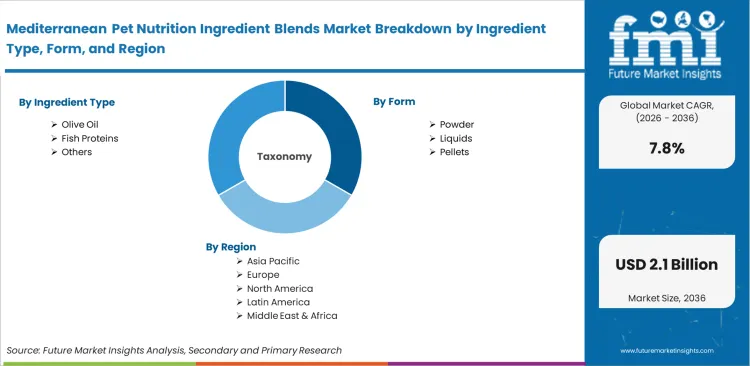
The mediterranean pet nutrition ingredient blends market was valued at USD 0.8 billion in 2025 and is projected to reach USD 0.9 billion in 2026, reflecting a CAGR of 7.8% over the forecast period. By 2036, the market is expected to reach a valuation of USD 1.9 billion. This expansion is largely supported by premium pet food manufacturers shifting away from generic fat sources toward polyphenol-rich lipid profiles, which are increasingly used to support joint health and longevity-focused formulations.
Formulation teams are under pressure to align pet food compositions with human-grade longevity trends while maintaining processing efficiency. Replacing conventional animal fats with cold-pressed botanical lipids introduces challenges in extrusion, particularly in terms of heat stability and texture consistency. Brands that delay adopting these inputs risk losing relevance in the growing senior pet nutrition segment. The inclusion of Mediterranean-derived ingredients is forcing manufacturers to reassess existing shelf-life standards and preservation methods.
Summary of Mediterranean Pet Nutrition Ingredient Blends Market
- Market Snapshot:
- The Mediterranean pet nutrition ingredient blends market was valued at USD 0.8 billion in 2025 and is projected to reach USD 1.9 billion by 2036, reflecting steady expansion over the forecast period.
- Between 2026 and 2036, the market is expected to grow at a compound annual rate of 8.9%, resulting in an incremental increase of approximately USD 1.13 billion in total market value.
- The segment consists of formulation‑based ingredient blends incorporating olive oils, fish‑derived proteins, herbal and fruit extracts, and grain‑based carriers, primarily used in dog and cat nutrition with limited application in other companion animals.
- Market development is linked to ongoing shifts toward higher‑value pet food formulations, reduced use of synthetic additives, and broader regulatory acceptance of botanical ingredients and omega‑rich components in companion‑animal diets.
- Demand and Growth Drivers:
- Demand continues to increase as pet ownership levels across Europe remain high and total pet‑food sales already exceed €29 billion, providing a large existing base from which functional and premium ingredient systems can expand.
- Blends rich in fish proteins and omega‑3 fatty acids are seeing wider use, as ongoing nutritional evidence supports the role of EPA and DHA in managing inflammation, joint mobility, skin health, and overall wellness in dogs and cats.
- Ingredient systems combining botanicals and fruit extracts are being adopted more frequently as plant‑based components are used to support antioxidant function and digestive health, particularly as manufacturers reduce reliance on purely synthetic additives.
- Country‑level performance shows clear differences, with Italy recording the fastest expansion at 10.2%, followed by Spain at 9.8%, Greece at 9.5%, Turkey at 9.3%, France at 8.8%, Portugal at 8.6%, and Germany at 8.1%, reflecting differences in sourcing capacity, formulation maturity, and regulatory alignment.
- Progress is constrained by factors such as variability in raw agricultural inputs, increasing scrutiny around pesticide residues, and the need to demonstrate safety, stability, and palatability when Mediterranean‑origin actives are incorporated into commercial pet‑food formats.
- Product and Segment View:
- The scope of the market includes ingredient blends based on olive oils, marine proteins and omega systems, herbal extracts, fruit‑derived antioxidant components, and grain‑based carriers. These blends are formulated for use across complete pet foods, treats, and supplements, primarily for dogs and cats.
- Commercial use of these blends is concentrated in dry food, wet food, treats, and supplement formats. Dry food remains the most common outlet, largely because extrusion processes allow for higher throughput and more consistent incorporation of standardized blends.
- Within ingredient types, olive oil–based systems account for the largest share at 34.2%, reflecting their functional role as lipid carriers, their contribution to palatability, and their alignment with Mediterranean sourcing narratives and antioxidant positioning.
- By physical form, powders represent 46.5% of usage, driven by practical considerations such as ease of handling, compatibility with extrusion lines, accurate dosing, and improved shelf stability in large‑scale manufacturing environments.
- Application patterns are dominated by dry food, which holds a 52.8% share, consistent with the continued prominence of kibble in global pet diets and the relative simplicity of embedding functional blends into high‑volume dry production.
- Dogs account for the majority of demand by pet type, with a 58.3% share, supported by higher uptake of supplements, stronger spending on premium formulations, and broader acceptance of functional claims within canine nutrition compared with other companion animals.
- From a functional perspective, digestive health represents the largest use case at 29.7%, as gut‑related benefits remain among the most accessible and widely accepted platforms for blends containing fibers, grains, botanicals, and supportive oils.
- The market definition covers ingredient blends supplied for companion‑animal nutrition applications, while excluding finished branded pet foods, veterinary pharmaceuticals, and general livestock feed premixes that are not positioned specifically for dogs or cats.
- Geography and Competitive Outlook:
- Italy, Spain, and Greece currently show the strongest momentum in this segment, supported by proximity to raw materials and established extraction capacity. France and Germany, by comparison, act as steady, high‑value markets, where demand is anchored in mature premium pet‑food categories rather than rapid expansion.
- Competitive pressure is centered on reformulation using natural antioxidants, higher omega content, and improved palatability, alongside closer working relationships between ingredient suppliers and pet‑food manufacturers. Suppliers are under pressure to align Mediterranean sourcing with defensible pet‑health claims that can withstand clinical and regulatory scrutiny.
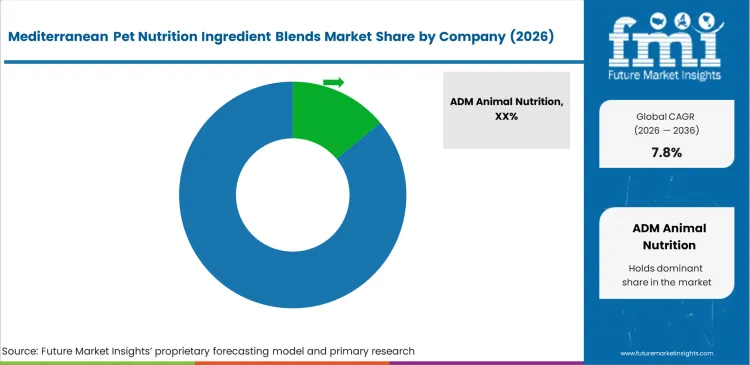
- The supplier base includes large ingredient groups such as ADM, dsm‑firmenich, Symrise AG, Kemin Industries, Bioiberica, Lucta, and Indena. ADM accounts for an estimated 18.5% share, largely due to its scale in pet nutrition and its ability to support formulation development, supply reliability, and application testing across multiple product types.
- While the market remains fragmented, no single company controls Mediterranean‑specific blends at a global level. Even so, scale continues to matter, and suppliers that combine sourcing access, regulatory experience, formulation know‑how, and on‑site technical support are better positioned than smaller, single‑capability competitors.
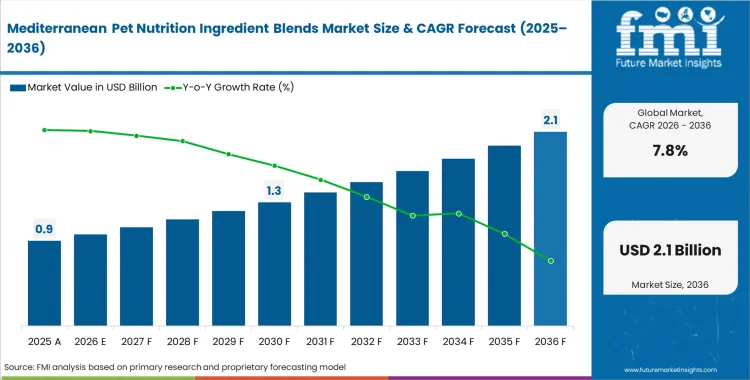
Regulatory recognition of polyphenol concentrations as functional ingredients is expected to reshape market structure. With clinical validation in place, demand for these inputs increases, tightening supply conditions. Procurement teams will need to secure long-term sourcing agreements for climate-sensitive raw materials to maintain supply continuity. Early shifts in sourcing behavior already indicate a broader realignment across the pet care ecosystem.
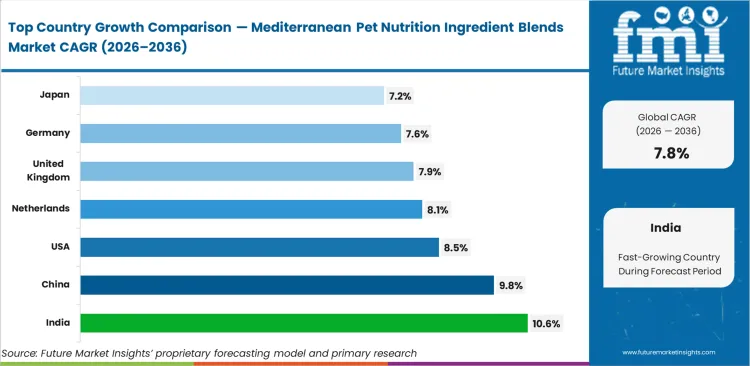
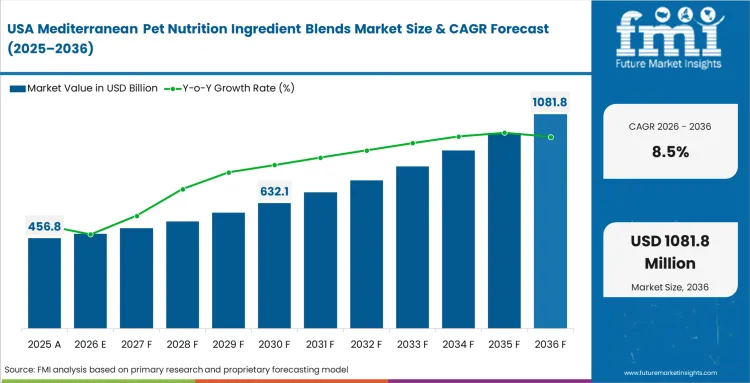
India is projected to record the fastest growth at a CAGR of 10.6%, supported by rising pet ownership across urban households, while China follows at 9.8% as demand continues to shift toward premium pet diets. In the United States, growth stands at 8.5%, reflecting a steady shift toward preventative care and higher-value nutrition. Across Europe, the Netherlands expands at 8.1%, marginally ahead of the United Kingdom at 7.9% and Germany at 7.6%, indicating stable demand within mature and regulated markets. Japan, at 7.2%, remains comparatively slower due to market maturity and tighter regulatory conditions. This distribution highlights stronger expansion in emerging markets where ownership is still scaling, while developed regions are primarily driven by product upgrades rather than new adoption.
Segmental Analysis
Mediterranean Pet Nutrition Ingredient Blends Market Analysis by Ingredient Type
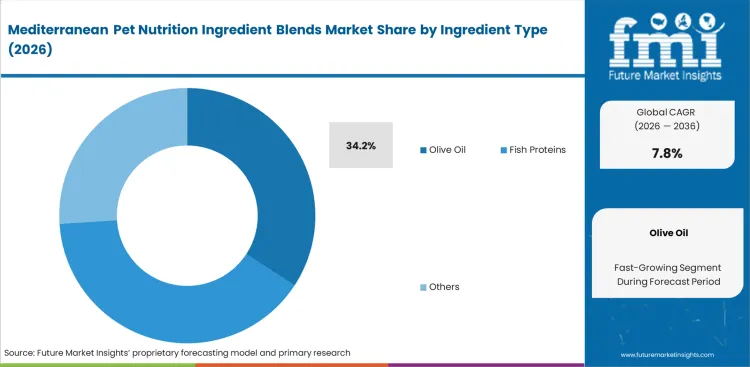
The shift away from commodity fats is accelerating as brands adopt more functional lipid sources. This transition is driven by formulation requirements that prioritize oxidative stability, processing resilience, and consistent performance in finished products. Olive oil is estimated to hold a 34.2% share in 2026, supported by its higher thermal stability compared to other plant‑based fats. Veterinary nutritionists prefer these monounsaturated fat structures to meet anti-inflammatory targets while maintaining digestive tolerance. Procurement teams increasingly value olive oil for its dual role as a concentrated energy source and a functional ingredient. Performance can vary depending on the origin of olive oil pet nutrients. Olive oils sourced from high-altitude groves tend to offer greater oxidative stability than those from lowland regions, especially under standard kibble coating conditions. Brands that delay transitioning to higher-quality sources risk faster product degradation during shelf life.
- Procurement validation: Purchasing teams assess suppliers based on defined polyphenol concentration thresholds. Falling below these levels can lead to formulation challenges during clinical validation.
- Extrusion compatibility: Production teams evaluate lipid stability under high-temperature processing conditions. Instability at this stage often results in costly reformulation and delays in product launch timelines.
- Retailer renewal: Retail buyers prioritize products that maintain consistent palatability over time. Degradation in oil quality can lead to increased returns and potential removal from shelf space.
Mediterranean Pet Nutrition Ingredient Blends Market Analysis by Form
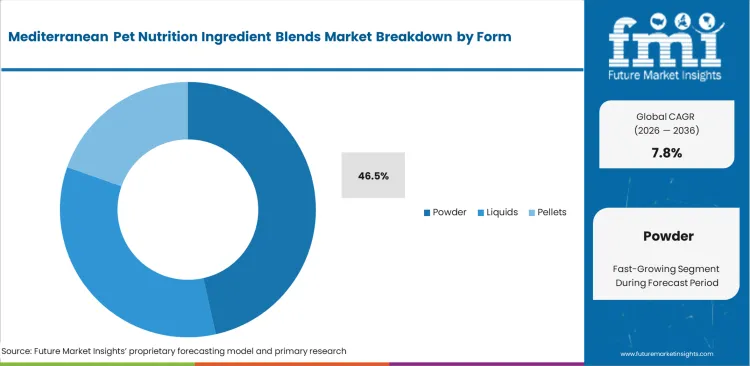
Dry integration capabilities play a key role in ingredient selection across large-scale production facilities. Powder formats address moisture control challenges common in existing manufacturing systems, making them a preferred choice for operations teams. This format avoids the need for costly liquid injection upgrades while maintaining precise dosing accuracy. Powder formats are anticipated to account for a 46.5% share, with facility managers favoring dry inputs to reduce the risk of cross-contamination during equipment changeovers. Hygroscopic botanical extracts can present issues, as they tend to clump in high-humidity production environments. To address this, formulators often use micro-encapsulated herbal extracts to maintain flowability and prevent blockages in processing equipment. Facilities that rely on non-encapsulated formats may experience production delays and inconsistent product quality. This reinforces the importance of pet food dry application blends in manufacturing.
- Handling economics: Logistics teams monitor spoilage rates across storage conditions. Dry formats help reduce the need for climate-controlled storage, lowering overall warehousing costs compared to liquid alternatives.
- Mixing dynamics: Production teams manage challenges related to uneven particle sizes. Proper milling and uniform particle distribution are essential to ensure consistent ingredient blending across batches.
- Lifecycle calculation: Finance teams evaluate the total cost of ownership for different formats. In many cases, the longer shelf life of dry ingredients offsets their higher initial purchase cost.
Mediterranean Pet Nutrition Ingredient Blends Market Analysis by Application
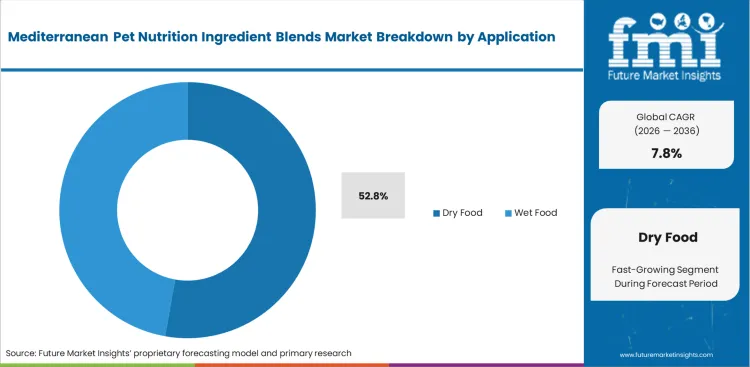
Consumer convenience remains a key factor shaping mass-market purchasing behavior. Dry food dominates due to its longer shelf life and ease of portion control for pet owners. Pet care brands continue to focus innovation efforts on this segment, using advanced kibble formats to deliver more complex therapeutic formulations. Veterinary professionals often recommend these formats for their added dental benefits. Dry food is expected to hold a 52.8% share, supported by these functional advantages and strong consumer adoption. A critical challenge in this category is that incorporating higher levels of botanical ingredients can affect kibble structure. Exceeding certain extract thresholds may lead to crumbling and increased dust formation, which can negatively impact product quality and consumer perception. R&D teams must carefully balance functional ingredient levels with appropriate binders to maintain product integrity. This highlights an important trade-off when developing premium pet food with added pet food health ingredients.
- Structural formulation: Extrusion teams adjust moisture levels and processing conditions to support sensitive botanical ingredients. Even small variations can result in material loss and production inefficiencies.
- Palatability masking: Sensory teams focus on reducing bitterness from herbal pet food ingredients to ensure acceptance by pets. This often involves specialized coating systems that improve taste without affecting functionality.
- Shelf stability: Quality teams monitor oxidation and stability over extended storage periods. Products that do not meet stability requirements may be limited to shorter distribution cycles or specific markets.
Mediterranean Pet Nutrition Ingredient Blends Market Analysis by Pet Type
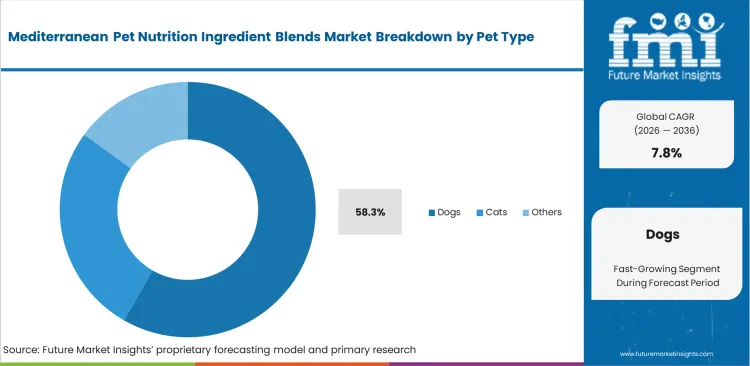
Canine demographics play a major role in shaping corporate resource allocation within the pet nutrition market. Dogs are set to account for a 58.3% share, driven by higher owner spending on preventive care related to mobility and cognitive health. Marketing teams focus heavily on canine consumers, emphasizing benefits such as joint support and coat health. Brands are increasingly investing in clinical trials centered on canine metabolic responses to support premium product positioning. A key formulation challenge often overlooked is the difference in taste receptor profiles between dogs and cats. Developing functional ingredients for canine nutrition requires distinct flavor masking approaches, as strategies used for dogs do not translate effectively to feline products. Companies that attempt to use unified formulations across species often face poor acceptance in feline segments when utilizing specialized animal nutrition chemicals.
- Joint preservation: Veterinary specialists recommend specific marine protein ratios, particularly for large breeds. Early nutritional support can help delay the onset of osteoarthritis and support longer active lifespans.
- Cognitive decline: Geriatric veterinarians often suggest targeted antioxidant intake for aging dogs. This approach has been associated with noticeable improvements in behavior over relatively short periods.
- Weight management: Clinical nutritionists use dietary fiber combinations to support satiety. Inaccurate caloric balance can contribute to rising obesity concerns, especially in urban pet populations.
Mediterranean Pet Nutrition Ingredient Blends Market Analysis by Function
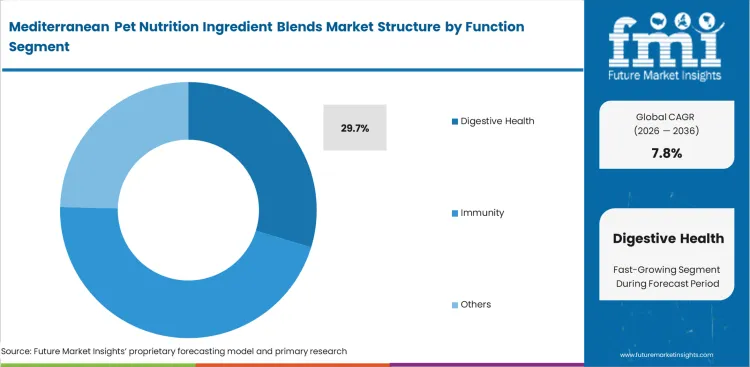
Gastrointestinal stability is a fundamental requirement for any advanced nutritional formulation. Pet owners tend to respond quickly to digestive issues, making this a primary focus area for product development. Formulation teams prioritize gut health before addressing additional benefits such as joint or skin support. Digestive health accounts for a 29.7% share and remains essential for premium product portfolios to maintain consumer trust. However, formulation challenges arise when evaluating digestive pet nutrition blends, as revealed when highly processed grain inputs interfere with the effectiveness of prebiotic components. Combining high-quality botanical extracts with lower-quality base ingredients can reduce the intended benefits of digestive formulations. R&D teams that overlook overall formula balance risk developing products that underperform compared to more standardized alternatives.
- Microbiome support: Formulation teams select specific probiotic strains to promote beneficial gut bacteria. Imbalanced fiber composition can disrupt this process and lead to digestive complications.
- Nutrient absorption: Researchers assess how effectively animals absorb key nutrients, particularly proteins. Improved gut health is often linked to better coat condition and higher energy levels.
- Waste reduction: Pet owners, especially in urban areas, prefer formulations that result in smaller and firmer stool output. Products that deliver on this expectation tend to build strong and lasting brand loyalty.
Mediterranean Pet Nutrition Ingredient Blends Market Drivers, Restraints, and Opportunities
Veterinary inflation forces urban owners to actively seek preventative dietary solutions, altering purchasing criteria fundamentally. Brand managers face immense pressure to deliver clinical-grade outcomes through daily feeding routines. Delaying this portfolio upgrade leaves companies competing solely on price in a race to the bottom. High-income households now scrutinize ingredient labels with intense rigor demanding recognizable geographic-specific inputs. Monitoring pet food innovation trends shows how quickly competitors lose shelf space when a major brand successfully proves a longevity claim. This dynamic compels rapid adoption of complex botanical formulations.
Severe agricultural supply chain volatility actively throttles production scaling capabilities. Procurement directors struggle to secure consistent yields of specific regional components due to unpredictable climate events in Southern Europe. Unlike synthetic vitamins, natural crops cannot be magically manifested in a laboratory when demand spikes. This structural limitation forces manufacturers into expensive spot purchases destroying margin projections. Emerging hydroponic cultivation models offer partial relief but current output volumes remain woefully inadequate for global kibble production requirements. Finding reliable pet nutrition blends suppliers remains exceptionally difficult for pet food ingredients buyers.
Opportunities in Mediterranean Pet Nutrition Ingredient Blends Market
- Agricultural waste upcycling: Extraction facilities capture discarded olive pomace to isolate valuable antioxidant compounds. Sustainability officers leverage this circular economy metric to win lucrative contracts with eco-conscious retail giants.
- Species-specific isolates: Bio-engineers develop highly purified profiles optimized specifically for feline metabolic pathways. Nutrition brands deploying these targeted molecules capture underserved premium cat segments demanding cat nutrition premium blends formulated with fish protein.
- Direct-to-consumer therapeutics: Digital health platforms connect custom dietary formulations directly with real-time veterinary blood work. Logistics managers orchestrate specialized cold-chain deliveries completely bypassing traditional retail margin dilution for pet supplements.
Regional Analysis
Based on regional analysis, Mediterranean Pet Nutrition Ingredient Blends is segmented into North America, Europe, and Asia Pacific across 40 plus countries.
.webp "Top Country Growth Comparison Mediterranean Pet Nutrition Ingredient Blends Market Cagr (2026 2036)")
| Country | CAGR (2026 to 2036) |
|---|---|
| India | 10.6% |
| China | 9.8% |
| United States | 8.5% |
| Netherlands | 8.1% |
| United Kingdom | 7.9% |
| Germany | 7.6% |
| Japan | 7.2% |
Source: Future Market Insights (FMI) analysis, based on proprietary forecasting model and primary research
Asia Pacific Mediterranean Pet Nutrition Ingredient Blends Market Analysis
First-generation pet owners in major urban centers are increasingly skipping mid-tier products and moving directly toward therapeutic nutrition solutions. High urban density also influences format preferences, with buyers favoring compact, high-nutrition products that require minimal storage space. Local manufacturers are actively reverse-engineering imported premium formulations to respond to this growing demand. This rapid shift is creating pressure on traditional supply chains that previously relied on lower-grade inputs. Sourcing teams are working to establish direct procurement channels with Southern European agricultural cooperatives to support premium product development. Procurement teams face challenges in verifying the authenticity of imported botanical ingredients, as counterfeit Mediterranean lipids can enter through secondary trade routes. Operations teams are increasingly using advanced testing methods, such as nuclear magnetic resonance, to confirm ingredient origin before approving materials for production. While this adds complexity and can slow down operations, it plays a critical role in protecting brand integrity in markets where consumers are highly quality-conscious. Companies that secure reliable and verified supply chains are better positioned to maintain pricing strength compared to competitors relying on less transparent sourcing networks.
- India: Rising companion animal ownership among younger urban households is reshaping demand in India’s pet nutrition sector. Brand and portfolio teams are increasingly positioning products around human‑grade, preventative wellness concepts to appeal to this demographic. India’s pet nutrition ingredients market is expanding at an estimated of 10.6% CAGR, reflecting both low base penetration and accelerating premiumization. This momentum is reinforced by the rapid expansion of specialized veterinary clinics in Tier‑1 cities, where early‑stage joint and mobility diets based on marine proteins are being actively recommended. While early veterinary alignment creates strong access to premium retail channels, gaps in domestic cold‑chain infrastructure for lipid‑sensitive formats continue to favor foreign suppliers with advanced dry‑powder encapsulation capabilities.
- China: Food safety perceptions play a decisive role in shaping purchasing behavior within the companion animal nutrition segment in China, where repeated quality incidents have heightened consumer sensitivity to ingredient origin. This has led many buyers to favor imported, certified formulations, with procurement teams increasingly viewing European sourcing as a marker of quality control and clinical reliability. The companion animal nutrition ingredients market is expanding at an annual rate of 9.8% CAGR, driven largely by adoption in major cities where consumers actively verify product origin through traceability tools such as QR codes linked to Mediterranean supply chains. Local producers that cannot demonstrate transparent sourcing continue to face trust barriers, while policy emphasis on livestock feed production limits investment in advanced companion animal nutrition. Companies that successfully manage complex import and registration requirements for specialized botanical ingredients are better positioned to build long‑term brand credibility and repeat demand.
- Japan: Urban living patterns and an aging companion animal population are driving demand for nutrition specifically formulated for senior pets. Veterinary practitioners focused on geriatric care increasingly rely on botanical extracts to support cognitive health and manage osteoarthritis in older dogs. This shift is reflected in Japan, where the pet nutrition ingredients market is growing at an annual rate of about 7.2% CAGR, supported by a high‑income consumer base that places strong value on validated longevity and therapeutic outcomes. Strict import controls on novel agricultural ingredients continue to slow expansion, requiring substantial upfront investment in regulatory and legal compliance. Suppliers that succeed in securing approval for specific therapeutic claims are often able to command higher prices, particularly among consumers who prioritize treatment effectiveness over cost for chronic, age‑related conditions.
FMI's report includes South Korea, Australia, Thailand, and Vietnam. Procurement directors in these secondary markets bypass local agricultural trials entirely, preferring to license European‑validated formulations to accelerate time‑to‑market. Singapore is also gaining relevance as a regional formulation hub, where strict import standards and advanced contract manufacturing capabilities are attracting premium functional nutrition launches.
Europe Mediterranean Pet Nutrition Ingredient Blends Market Analysis
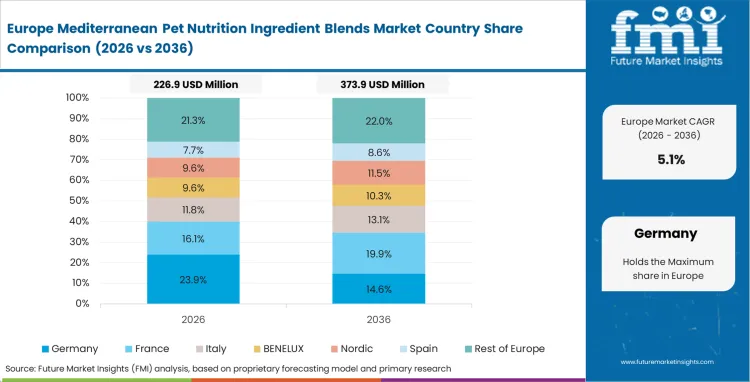
Proximity to raw material sources significantly influences supply chain economics for regional manufacturers. Formulation hubs benefit from shorter transit times, allowing the use of highly sensitive botanical extracts that would otherwise degrade during long-distance shipping. Local brands use this advantage to develop products with higher active compound concentrations than those achievable by international competitors. This geographic advantage often forces external players to rely on advanced technologies, such as micro-encapsulation, to maintain product stability and remain competitive. Analysis of Mediterranean pet food dynamics in Europe shows that this localized production model can lead to improved product performance. Manufacturers in these regions face different challenges, particularly seasonal variability in raw material quality. Fluctuations in olive or citrus harvests require adjustments in processing parameters to maintain consistency. This flexibility helps regional producers avoid disruptions and maintain steady market supply even during agricultural instability.
- Netherlands: In the Netherlands, a highly developed processing and logistics infrastructure has established the country as a central distribution point for complex nutritional and feed ingredient blends. Large‑scale blending facilities support customized formulations for export across European markets, allowing operators to adjust specifications quickly as customer requirements change. Ongoing investment in advanced processing equipment is supporting growth of 8.1% CAGR in this segment, particularly for facilities handling sensitive inputs such as marine proteins. Beyond volume growth, these sites help set regional pricing references for premium feed additives, while strict production controls are used to protect proprietary formulations within shared manufacturing environments.
- United Kingdom: Purchasing behavior is strongly shaped by expectations around clinical validation, with both consumers and retailers placing significant weight on documented efficacy. In the United Kingdom, retail buyers commonly require peer‑reviewed evidence before approving ingredient‑based products for shelf placement, raising entry thresholds for new formulations. This emphasis on scientific substantiation has supported steady expansion of the pet and animal nutrition ingredients segment, advancing at roughly 7.9% CAGR as preventive care gains importance amid rising veterinary treatment costs. Once these evidence requirements are met, brand loyalty tends to strengthen, encouraging domestic manufacturers to collaborate with academic institutions to develop localized clinical data that supports long‑term market presence.
- Germany: Manufacturing standards are closely tied to sustainability and environmental compliance, shaping how suppliers are evaluated and approved across the supply chain. Procurement teams require full traceability of agricultural inputs, often extending beyond standard supplier documentation. These conditions underpin annual growth of around 7.6% CAGR in the animal nutrition and feed ingredient segment, particularly in Germany, where strict regulatory oversight and high consumer expectations around transparency strongly influence purchasing decisions. Organic certification and verified environmental practices are treated as baseline requirements, and brands that cannot substantiate sourcing claims frequently struggle to maintain long‑term retail listings.
FMI's report includes Italy, Spain, France, and Greece. Cultivation cooperatives across these southern territories increasingly form exclusive supply pacts directly with top‑tier pet nutrition conglomerates, systematically cutting traditional ingredient brokers out of the supply chain. Portugal is also gaining attention, as coordinated investment in olive by‑product valorization and modern extraction facilities is expanding export‑ready volumes for pet nutrition applications.
North America Mediterranean Pet Nutrition Ingredient Blends Market Analysis
Ongoing brand consolidation continues to shape corporate strategy, as large companies acquire smaller wellness-focused startups. Innovation teams within these acquired firms are driving the integration of heat-sensitive therapeutic extracts sourced from Southern Europe into existing product lines. FMI’s projections that this transition often highlights structural limitations in older domestic manufacturing systems. Engineering teams are increasingly required to upgrade processing and coating technologies to handle these premium ingredients without degrading their functional properties. Procurement teams face logistical challenges associated with importing large volumes of specialized botanical oils across long distances. Managing oxidation during transoceanic transport requires temperature-controlled systems, which adds cost pressure and affects margins.
- United States: Rapid growth of e‑commerce subscription models is reshaping how pet nutrition products are formulated, with greater emphasis on maintaining stability across extended storage and delivery cycles. Ingredients must now perform consistently in non‑controlled environments, including distribution warehouses and home delivery systems, rather than traditional retail settings alone. In the United States, these shifts are supporting steady expansion of about 8.5% CAGR in the pet nutrition ingredients segment, driven by continued investment in personalized nutrition services built around localized production hubs. Direct‑to‑consumer feedback shortens development cycles, allowing brands to refine formulations more quickly, while effective management of natural preservation challenges helps sustain recurring subscription revenue. Supply chains are evolving toward more specialized Mediterranean ingredient sourcing to support differentiated product claims aligned with data‑driven pet health platforms.
FMI's report includes Canada and Mexico. Formulation hubs located near the northern border actively leverage cooler ambient storage conditions to process highly oxidative marine lipid formats that rapidly degrade in warmer southern logistics networks. Chile is also identified as an emerging influence, where expanding cold‑water aquaculture and improving lipid stabilization techniques are increasing the availability of marine inputs suitable for pet and functional nutrition.
Competitive Aligners for Market Players
Traditional extrusion-focused manufacturers are now competing more directly with specialized cold-press operators. Buyer preference is moving toward products backed by verified clinical efficacy instead of relying on brand familiarity alone. Veterinary professionals increasingly look for peer-reviewed evidence before recommending advanced botanical-based diets. Smaller companies often do not have the capacity to run similar trials and depend more on broad supplier claims. This has created a divided market, where leading brands offer clinically supported therapeutic products while many mid-tier players continue to sell less clearly defined wellness solutions. The gap between product performance and product credibility is becoming more visible across pet ingredient suppliers.
Long-standing supplier relationships also give established companies an advantage during periods of limited harvest. Firms with ties to Southern European agricultural cooperatives are often better placed to secure raw material access when supply tightens. Newer entrants usually need sourcing networks across multiple regions to reduce the risk of shortages. That approach depends on close alignment between harvest timing and production schedules. FMI indicates that companies such as ADM Animal Nutrition use broad logistics networks to manage seasonal variation in supply. Smaller companies without enough storage capacity or supply planning often face delays when specialized botanical ingredients arrive late or in inconsistent volumes.
Retail strategy is adding another layer of competition in this market. Major chains are trying to avoid depending too heavily on a narrow group of premium suppliers. Category buyers are giving shelf space to smaller players that bring differentiated offerings, including niche marine protein combinations. As a result, successful companies are focusing more on proprietary processing capabilities than on ingredient sourcing alone. Cargill Animal Nutrition reflects this shift through its work in post-extrusion coating technologies. Manufacturers that do not improve their processing systems risk damaging sensitive botanical ingredients during standard thermal treatment. In this segment, processing capability often matters more than raw material access in shaping product quality and commercial performance.
Key Players in Mediterranean Pet Nutrition Ingredient Blends Market
- ADM Animal Nutrition
- DSM-Firmenich
- Cargill Animal Nutrition
- Alltech Inc.
- Kemin Industries
Scope of the Report
| Metric | Value |
|---|---|
| Quantitative Units | USD 0.9 Billion to USD 1.9 Billion, at a CAGR of 7.8% |
| Market Definition | Mediterranean Pet Nutrition Ingredient Blends encompasses specific combinations of lipids, proteins, and botanical extracts native to Southern European agricultural zones formulated exclusively for companion animal consumption. These formulations emphasize high monounsaturated fat ratios paired with marine-sourced amino acids and terrestrial antioxidants. |
| Segmentation | Ingredient Type, Form, Application, Pet Type, and Function |
| Regions Covered | North America, Latin America, Europe, Asia Pacific, Middle East and Africa |
| Countries Covered | United States, China, India, Germany, United Kingdom, Japan, Netherlands |
| Key Companies Profiled | ADM Animal Nutrition, DSM-Firmenich, Cargill Animal Nutrition, Alltech Inc., Kemin Industries |
| Forecast Period | 2026 to 2036 |
| Approach | Contract manufacturing output volumes for premium therapeutic diets establish baseline figures |
Source: Future Market Insights (FMI) analysis, based on proprietary forecasting model and primary research
Mediterranean Pet Nutrition Ingredient Blends Market Analysis by Segments
Ingredient Type:
- Olive oils
- Fish proteins
- Herbal extracts
- Fruit extracts
- Grain blends
Form:
- Powders
- Liquids
- Pellets
Application:
- Dry food
- Wet food
- Treats
- Supplements
Pet Type:
- Dogs
- Cats
- Others
Function:
- Digestive health
- Skin health
- Joint health
- Immunity
Region
- North America
- Latin America
- Europe
- Asia Pacific
- Middle East and Africa
Bibliography
- EFSA Panel on Additives and Products or Substances used in Animal Feed. (2024). Safety and efficacy of a feed additive consisting of an essential oil derived from leaves and terminal branchlets of Melaleuca alternifolia (Maiden & Betche) Cheel (tea tree oil) for use in all animal species (FEFANA asbl). EFSA Journal, 22(10), e9026.
- European Pet Food Industry Federation. (2024). Nutritional guidelines for complete and complementary pet food for cats and dogs.
- Guo, X., Wang, Y., Zhu, Z., & Li, L. (2024). The role of plant extracts in enhancing nutrition and health for dogs and cats: Safety, benefits, and applications. Veterinary Sciences, 11(9), 426.
- Mota, C. S. C., Cabrita, A. R. J., Yergaliyev, T., Camarinha-Silva, A., Almeida, A., Abreu, H., Silva, J., Fonseca, A. J. M., & Maia, M. R. G. (2024). Macroalgae and microalga blend in dogs' food: Effects on palatability, digestibility, and fecal metabolites and microbiota. Algal Research, 84, 103775.
- Thomas, D. G., Dyer, P., & Andrews, C. J. (2024). The effect of dietary olive polyphenols on markers of inflammation and bodyweight in senior domestic cats. Journal of Applied Animal Nutrition, 12(1), 29-39.
This bibliography is provided for the reader reference. The full FMI report contains the complete reference list with primary source documentation.
This Report Addresses
- Agricultural yield volatility impacting specific botanical extract sourcing operations.
- Thermal extrusion limitations destroying delicate marine protein structures during processing.
- Vendor lock-in scenarios created by specialized micro-encapsulation technology requirements.
- Regulatory hurdles regarding novel longevity claims across diverse international jurisdictions.
- Cold-chain logistical challenges associated with transporting un-stabilized liquid lipid formats.
- Clinical validation costs preventing mid-tier manufacturers from launching therapeutic veterinary diets.
- Species-specific metabolic rejection rates observed during unified formulation attempts.
- E-commerce warehouse conditions accelerating oxidation timelines for premium organic kibble formats.
Frequently Asked Questions
What is the baseline valuation for Mediterranean Pet Nutrition Ingredient Blends?
Valuation reached USD 0.8 billion in 2025. This establishes the commercial baseline before widespread regulatory clearances trigger massive ingredient pivoting among top-tier brands monitoring pet food ingredient market size expansion.
Where does revenue stand evaluating the pet food market forecast 2036?
Total opportunity expands to USD 1.9 billion. This trajectory reflects an industry-wide transition toward preventative veterinary care and clinically validated longevity formulations supporting premium pet food growth.
What pace governs this transition exploring the pet nutrition CAGR forecast?
Adoption proceeds at an 7.8% CAGR. Structural pressures from raw material scarcity cap what would otherwise be double-digit expansion in urban centers.
Why do olive oils lead ingredient types?
Procurement directors prioritize lipids capable of surviving intense thermal extrusion. Olive extracts deliver necessary monounsaturated fat ratios while maintaining baseline stability during standard manufacturing operations.
What sustains powder format dominance?
Factory operators actively reject liquid formats that demand expensive machinery retrofits. Dry powders integrate seamlessly into legacy kibble production lines without disrupting established moisture parameters.
Why does dry application hold majority share?
Convenience dictates mass-market purchasing behavior. Formulators concentrate innovation budgets on dry kibble because extended shelf life allows brands to access broader geographic retail channels.
What forces canine dominance in this space?
Large breed susceptibility to severe osteoarthritis commands premium pricing power. Veterinary specialists heavily prescribe marine protein formulations early to delay expensive orthopedic interventions.
Why do digestive health formulations lead functionality?
Prebiotic optimization serves as the mandatory baseline for advanced therapeutic diets. Nutritionists recognize that expensive botanical inclusions completely fail if underlying gut permeability remains compromised.
How does India outpace global growth?
Expanding at 10.6%, urban professionals leapfrog mid-tier pet foods directly into therapeutic segments. Rapid modernization of local veterinary clinics accelerates preventative care awareness significantly.
What separates Chinese procurement strategies?
Recording 9.8% expansion, local teams prioritize certified European imports over domestic ingredients. Safety scandals historically condition Chinese pet owners to demand absolute traceability for functional additives.
How do Netherlands facilities influence pricing?
Advancing at 8.1%, Dutch infrastructure manages massive continental blending operations. Sourcing directors located here set benchmark pricing for highly specialized botanical extracts across European supply chains.
What limits Japanese adoption speed?
Expanding slowly at 7.2%, strict novel ingredient quotas throttle incoming supply lines. Only multinational brands possessing dedicated legal teams successfully navigate these complex veterinary import barriers.
Why do cold-pressed facilities threaten legacy conglomerates?
Standard high-temperature extrusion annihilates delicate polyphenol structures. Modern facilities utilizing low-temperature coating technologies deliver superior active compound retention without requiring expensive raw material overages.
How does agricultural volatility impact formulation?
Climate events in Southern Europe create immediate botanical shortages. Manufacturers lacking secure forward contracts must halt specialized production lines, losing critical retail shelf space during stockouts.
What role does micro-encapsulation play?
Formulators use encapsulation to shield bitter herbal extracts from canine sensory receptors. Without this protective barrier, highly therapeutic diets suffer massive rejection rates during initial feeding trials.
Why do cross-species formulations fail?
Feline metabolic pathways violently reject citrus flavonoids perfectly safe for canines. R&D teams attempting to unify species recipes suffer devastating product recalls and subsequent brand damage.
How does direct-to-consumer delivery alter manufacturing?
Subscription models bypass extensive warehouse holding periods. Formulators safely reduce synthetic antioxidant loads, relying on rapid cold-chain logistics to maintain ingredient integrity until consumption.
What forces brands to abandon generic animal fats?
Commodity lipids cannot legally support specific joint longevity claims. Regulatory bodies demand verifiable omega-3 structures, forcing brands to source marine and botanical alternatives highlighting Mediterranean pet diet benefits.
Why do retailers demand peer-reviewed efficacy?
Category buyers protect limited shelf space from unsupported wellness fads. Proven clinical data guarantees sustained consumer repurchase rates, maximizing profit per square foot in premium pet aisles.
How does pomace upcycling benefit pricing?
Capturing discarded agricultural waste significantly lowers baseline raw material costs. Extraction facilities leverage this circular model to offer premium antioxidant profiles at previously impossible price points.
What prevents smaller entities from competing effectively?
Proving functional claims requires massive capital investment in canine metabolic trials. Startups lacking R&D budgets remain trapped in unregulated, low-margin general wellness categories.
How do moisture levels destroy therapeutic kibble?
Adding high concentrations of botanical extracts actively breaks down structural binders. Extrusion engineers face constant calibration battles to prevent finished products from disintegrating into useless dust.
Preview the report firsthand - request a free sample
Get SampleGet the brochure for pricing and purchase details.
Get PDFTable of Content
- Executive Summary
- Global Market Outlook
- Demand-side Trends
- Supply-side Trends
- Technology Roadmap Analysis
- Analysis and Recommendations
- Market Overview
- Market Coverage / Taxonomy
- Market Definition / Scope / Limitations
- Research Methodology
- Chapter Orientation
- Analytical Lens and Working Hypotheses
- Market Structure, Signals, and Trend Drivers
- Benchmarking and Cross-market Comparability
- Market Sizing, Forecasting, and Opportunity Mapping
- Research Design and Evidence Framework
- Desk Research Programme (Secondary Evidence)
- Company Annual and Sustainability Reports
- Peer-reviewed Journals and Academic Literature
- Corporate Websites, Product Literature, and Technical Notes
- Earnings Decks and Investor Briefings
- Statutory Filings and Regulatory Disclosures
- Technical White Papers and Standards Notes
- Trade Journals, Industry Magazines, and Analyst Briefs
- Conference Proceedings, Webinars, and Seminar Materials
- Government Statistics Portals and Public Data Releases
- Press Releases and Reputable Media Coverage
- Specialist Newsletters and Curated Briefings
- Sector Databases and Reference Repositories
- FMI Internal Proprietary Databases and Historical Market Datasets
- Subscription Datasets and Paid Sources
- Social Channels, Communities, and Digital Listening Inputs
- Additional Desk Sources
- Expert Input and Fieldwork (Primary Evidence)
- Primary Modes
- Qualitative Interviews and Expert Elicitation
- Quantitative Surveys and Structured Data Capture
- Blended Approach
- Why Primary Evidence is Used
- Field Techniques
- Interviews
- Surveys
- Focus Groups
- Observational and In-context Research
- Social and Community Interactions
- Stakeholder Universe Engaged
- C-suite Leaders
- Board Members
- Presidents and Vice Presidents
- R&D and Innovation Heads
- Technical Specialists
- Domain Subject-matter Experts
- Scientists
- Physicians and Other Healthcare Professionals
- Governance, Ethics, and Data Stewardship
- Research Ethics
- Data Integrity and Handling
- Primary Modes
- Tooling, Models, and Reference Databases
- Desk Research Programme (Secondary Evidence)
- Data Engineering and Model Build
- Data Acquisition and Ingestion
- Cleaning, Normalisation, and Verification
- Synthesis, Triangulation, and Analysis
- Quality Assurance and Audit Trail
- Market Background
- Market Dynamics
- Drivers
- Restraints
- Opportunity
- Trends
- Scenario Forecast
- Demand in Optimistic Scenario
- Demand in Likely Scenario
- Demand in Conservative Scenario
- Opportunity Map Analysis
- Product Life Cycle Analysis
- Supply Chain Analysis
- Investment Feasibility Matrix
- Value Chain Analysis
- PESTLE and Porter’s Analysis
- Regulatory Landscape
- Regional Parent Market Outlook
- Production and Consumption Statistics
- Import and Export Statistics
- Market Dynamics
- Global Market Analysis 2021 to 2025 and Forecast, 2026 to 2036
- Historical Market Size Value (USD Million) Analysis, 2021 to 2025
- Current and Future Market Size Value (USD Million) Projections, 2026 to 2036
- Y-o-Y Growth Trend Analysis
- Absolute $ Opportunity Analysis
- Global Market Pricing Analysis 2021 to 2025 and Forecast 2026 to 2036
- Global Market Analysis 2021 to 2025 and Forecast 2026 to 2036, By Ingredient Type
- Introduction / Key Findings
- Historical Market Size Value (USD Million) Analysis By Ingredient Type , 2021 to 2025
- Current and Future Market Size Value (USD Million) Analysis and Forecast By Ingredient Type , 2026 to 2036
- Olive Oil
- Fish Proteins
- Others
- Olive Oil
- Y-o-Y Growth Trend Analysis By Ingredient Type , 2021 to 2025
- Absolute $ Opportunity Analysis By Ingredient Type , 2026 to 2036
- Global Market Analysis 2021 to 2025 and Forecast 2026 to 2036, By Form
- Introduction / Key Findings
- Historical Market Size Value (USD Million) Analysis By Form, 2021 to 2025
- Current and Future Market Size Value (USD Million) Analysis and Forecast By Form, 2026 to 2036
- Powder
- Liquids
- Pellets
- Powder
- Y-o-Y Growth Trend Analysis By Form, 2021 to 2025
- Absolute $ Opportunity Analysis By Form, 2026 to 2036
- Global Market Analysis 2021 to 2025 and Forecast 2026 to 2036, By Application
- Introduction / Key Findings
- Historical Market Size Value (USD Million) Analysis By Application, 2021 to 2025
- Current and Future Market Size Value (USD Million) Analysis and Forecast By Application, 2026 to 2036
- Dry Food
- Wet Food
- Dry Food
- Y-o-Y Growth Trend Analysis By Application, 2021 to 2025
- Absolute $ Opportunity Analysis By Application, 2026 to 2036
- Global Market Analysis 2021 to 2025 and Forecast 2026 to 2036, By Pet Type
- Introduction / Key Findings
- Historical Market Size Value (USD Million) Analysis By Pet Type, 2021 to 2025
- Current and Future Market Size Value (USD Million) Analysis and Forecast By Pet Type, 2026 to 2036
- Dogs
- Cats
- Others
- Dogs
- Y-o-Y Growth Trend Analysis By Pet Type, 2021 to 2025
- Absolute $ Opportunity Analysis By Pet Type, 2026 to 2036
- Global Market Analysis 2021 to 2025 and Forecast 2026 to 2036, By Function
- Introduction / Key Findings
- Historical Market Size Value (USD Million) Analysis By Function, 2021 to 2025
- Current and Future Market Size Value (USD Million) Analysis and Forecast By Function, 2026 to 2036
- Digestive Health
- Immunity
- Others
- Digestive Health
- Y-o-Y Growth Trend Analysis By Function, 2021 to 2025
- Absolute $ Opportunity Analysis By Function, 2026 to 2036
- Global Market Analysis 2021 to 2025 and Forecast 2026 to 2036, By Region
- Introduction
- Historical Market Size Value (USD Million) Analysis By Region, 2021 to 2025
- Current Market Size Value (USD Million) Analysis and Forecast By Region, 2026 to 2036
- North America
- Latin America
- Western Europe
- Eastern Europe
- East Asia
- South Asia and Pacific
- Middle East & Africa
- Market Attractiveness Analysis By Region
- North America Market Analysis 2021 to 2025 and Forecast 2026 to 2036, By Country
- Historical Market Size Value (USD Million) Trend Analysis By Market Taxonomy, 2021 to 2025
- Market Size Value (USD Million) Forecast By Market Taxonomy, 2026 to 2036
- By Country
- USA
- Canada
- Mexico
- By Ingredient Type
- By Form
- By Application
- By Pet Type
- By Function
- By Country
- Market Attractiveness Analysis
- By Country
- By Ingredient Type
- By Form
- By Application
- By Pet Type
- By Function
- Key Takeaways
- Latin America Market Analysis 2021 to 2025 and Forecast 2026 to 2036, By Country
- Historical Market Size Value (USD Million) Trend Analysis By Market Taxonomy, 2021 to 2025
- Market Size Value (USD Million) Forecast By Market Taxonomy, 2026 to 2036
- By Country
- Brazil
- Chile
- Rest of Latin America
- By Ingredient Type
- By Form
- By Application
- By Pet Type
- By Function
- By Country
- Market Attractiveness Analysis
- By Country
- By Ingredient Type
- By Form
- By Application
- By Pet Type
- By Function
- Key Takeaways
- Western Europe Market Analysis 2021 to 2025 and Forecast 2026 to 2036, By Country
- Historical Market Size Value (USD Million) Trend Analysis By Market Taxonomy, 2021 to 2025
- Market Size Value (USD Million) Forecast By Market Taxonomy, 2026 to 2036
- By Country
- Germany
- UK
- Italy
- Spain
- France
- Nordic
- BENELUX
- Rest of Western Europe
- By Ingredient Type
- By Form
- By Application
- By Pet Type
- By Function
- By Country
- Market Attractiveness Analysis
- By Country
- By Ingredient Type
- By Form
- By Application
- By Pet Type
- By Function
- Key Takeaways
- Eastern Europe Market Analysis 2021 to 2025 and Forecast 2026 to 2036, By Country
- Historical Market Size Value (USD Million) Trend Analysis By Market Taxonomy, 2021 to 2025
- Market Size Value (USD Million) Forecast By Market Taxonomy, 2026 to 2036
- By Country
- Russia
- Poland
- Hungary
- Balkan & Baltic
- Rest of Eastern Europe
- By Ingredient Type
- By Form
- By Application
- By Pet Type
- By Function
- By Country
- Market Attractiveness Analysis
- By Country
- By Ingredient Type
- By Form
- By Application
- By Pet Type
- By Function
- Key Takeaways
- East Asia Market Analysis 2021 to 2025 and Forecast 2026 to 2036, By Country
- Historical Market Size Value (USD Million) Trend Analysis By Market Taxonomy, 2021 to 2025
- Market Size Value (USD Million) Forecast By Market Taxonomy, 2026 to 2036
- By Country
- China
- Japan
- South Korea
- By Ingredient Type
- By Form
- By Application
- By Pet Type
- By Function
- By Country
- Market Attractiveness Analysis
- By Country
- By Ingredient Type
- By Form
- By Application
- By Pet Type
- By Function
- Key Takeaways
- South Asia and Pacific Market Analysis 2021 to 2025 and Forecast 2026 to 2036, By Country
- Historical Market Size Value (USD Million) Trend Analysis By Market Taxonomy, 2021 to 2025
- Market Size Value (USD Million) Forecast By Market Taxonomy, 2026 to 2036
- By Country
- India
- ASEAN
- Australia & New Zealand
- Rest of South Asia and Pacific
- By Ingredient Type
- By Form
- By Application
- By Pet Type
- By Function
- By Country
- Market Attractiveness Analysis
- By Country
- By Ingredient Type
- By Form
- By Application
- By Pet Type
- By Function
- Key Takeaways
- Middle East & Africa Market Analysis 2021 to 2025 and Forecast 2026 to 2036, By Country
- Historical Market Size Value (USD Million) Trend Analysis By Market Taxonomy, 2021 to 2025
- Market Size Value (USD Million) Forecast By Market Taxonomy, 2026 to 2036
- By Country
- Kingdom of Saudi Arabia
- Other GCC Countries
- Turkiye
- South Africa
- Other African Union
- Rest of Middle East & Africa
- By Ingredient Type
- By Form
- By Application
- By Pet Type
- By Function
- By Country
- Market Attractiveness Analysis
- By Country
- By Ingredient Type
- By Form
- By Application
- By Pet Type
- By Function
- Key Takeaways
- Key Countries Market Analysis
- USA
- Pricing Analysis
- Market Share Analysis, 2025
- By Ingredient Type
- By Form
- By Application
- By Pet Type
- By Function
- Canada
- Pricing Analysis
- Market Share Analysis, 2025
- By Ingredient Type
- By Form
- By Application
- By Pet Type
- By Function
- Mexico
- Pricing Analysis
- Market Share Analysis, 2025
- By Ingredient Type
- By Form
- By Application
- By Pet Type
- By Function
- Brazil
- Pricing Analysis
- Market Share Analysis, 2025
- By Ingredient Type
- By Form
- By Application
- By Pet Type
- By Function
- Chile
- Pricing Analysis
- Market Share Analysis, 2025
- By Ingredient Type
- By Form
- By Application
- By Pet Type
- By Function
- Germany
- Pricing Analysis
- Market Share Analysis, 2025
- By Ingredient Type
- By Form
- By Application
- By Pet Type
- By Function
- UK
- Pricing Analysis
- Market Share Analysis, 2025
- By Ingredient Type
- By Form
- By Application
- By Pet Type
- By Function
- Italy
- Pricing Analysis
- Market Share Analysis, 2025
- By Ingredient Type
- By Form
- By Application
- By Pet Type
- By Function
- Spain
- Pricing Analysis
- Market Share Analysis, 2025
- By Ingredient Type
- By Form
- By Application
- By Pet Type
- By Function
- France
- Pricing Analysis
- Market Share Analysis, 2025
- By Ingredient Type
- By Form
- By Application
- By Pet Type
- By Function
- India
- Pricing Analysis
- Market Share Analysis, 2025
- By Ingredient Type
- By Form
- By Application
- By Pet Type
- By Function
- ASEAN
- Pricing Analysis
- Market Share Analysis, 2025
- By Ingredient Type
- By Form
- By Application
- By Pet Type
- By Function
- Australia & New Zealand
- Pricing Analysis
- Market Share Analysis, 2025
- By Ingredient Type
- By Form
- By Application
- By Pet Type
- By Function
- China
- Pricing Analysis
- Market Share Analysis, 2025
- By Ingredient Type
- By Form
- By Application
- By Pet Type
- By Function
- Japan
- Pricing Analysis
- Market Share Analysis, 2025
- By Ingredient Type
- By Form
- By Application
- By Pet Type
- By Function
- South Korea
- Pricing Analysis
- Market Share Analysis, 2025
- By Ingredient Type
- By Form
- By Application
- By Pet Type
- By Function
- Russia
- Pricing Analysis
- Market Share Analysis, 2025
- By Ingredient Type
- By Form
- By Application
- By Pet Type
- By Function
- Poland
- Pricing Analysis
- Market Share Analysis, 2025
- By Ingredient Type
- By Form
- By Application
- By Pet Type
- By Function
- Hungary
- Pricing Analysis
- Market Share Analysis, 2025
- By Ingredient Type
- By Form
- By Application
- By Pet Type
- By Function
- Kingdom of Saudi Arabia
- Pricing Analysis
- Market Share Analysis, 2025
- By Ingredient Type
- By Form
- By Application
- By Pet Type
- By Function
- Turkiye
- Pricing Analysis
- Market Share Analysis, 2025
- By Ingredient Type
- By Form
- By Application
- By Pet Type
- By Function
- South Africa
- Pricing Analysis
- Market Share Analysis, 2025
- By Ingredient Type
- By Form
- By Application
- By Pet Type
- By Function
- USA
- Market Structure Analysis
- Competition Dashboard
- Competition Benchmarking
- Market Share Analysis of Top Players
- By Regional
- By Ingredient Type
- By Form
- By Application
- By Pet Type
- By Function
- Competition Analysis
- Competition Deep Dive
- ADM Animal Nutrition
- Overview
- Product Portfolio
- Profitability by Market Segments (Product/Age /Sales Channel/Region)
- Sales Footprint
- Strategy Overview
- Marketing Strategy
- Product Strategy
- Channel Strategy
- DSM-Firmenich
- Cargill Animal Nutrition
- Alltech Inc.
- Kemin Industries
- ADM Animal Nutrition
- Competition Deep Dive
- Assumptions & Acronyms Used


