

- Market Size (2026)
- USD 31.8 Mn
- Forecast (2036)
- USD 58.6 Mn
- CAGR (2026 to 2036)
- 6.3%
Mediterranean Sourdough Starter Cultures Market Size, Market Forecast and Outlook By FMI
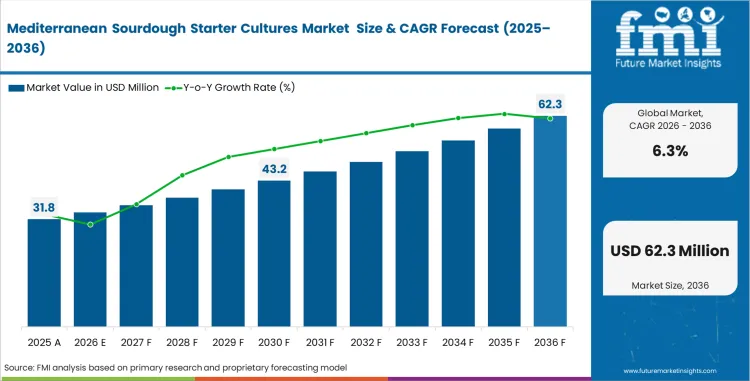
Mediterranean Sourdough Starter Cultures Market was valued at USD 29.9 million in 2025. The sector is estimated to reach USD 31.8 million in 2026 at a CAGR of 6.3% during the forecast period. Demand is set to reach valuation of USD 58.6 million by 2036.
Summary of Mediterranean Sourdough Starter Cultures Market
- The market is forecast to reach USD 58.6 million by 2036.
- The market is expected to grow at a rate of 6.3% from 2026 to 2036.
- The market value was USD 29.9 million in 2025.
- The forecast period represents an incremental opportunity of USD 26.8 million.
- Mediterranean sourdough starter cultures are used in artisan bread, industrial bread, pizza dough, flatbreads, and selected sweet bakery products.
- Core commercial demand is shaped by fermentation control, dough stability, flavor repeatability, shelf-life support, and easier process handling.
- Type II systems, mixed cultures, and dry formats are drawing more attention in bakeries that want more stable output across changing flour lots and mixed production schedules.
- Lesaffre & Cie, Puratos Group, Lallemand Inc., IREKS GmbH, Ernst Böcker GmbH & Co. KG, Pak Holding A.Ş. (Pakmaya), and AB Mauri are among the key suppliers in the market.
Key Takeaways, Market Size, and Forecast
- Mediterranean Sourdough Starter Cultures Market is expected to grow from USD 31.8 million in 2026 to USD 58.6 million by 2036, registering a CAGR of 6.3%.
- The Mediterranean sourdough starter cultures market stood at USD 29.9 million in 2025.
- By 2036, the Mediterranean Sourdough Starter Cultures Market is likely to reach USD 58.6 million.
- The market is anticipated to expand at a CAGR of 6.3% between 2026 and 2036.
- The forecast period indicates an incremental opportunity of USD 26.8 million.
- In 2026, Type II is expected to hold 42.0% of the culture type segment.
- Türkiye (7.2%) and Egypt (7.0%) are two of the fastest growing markets.
Mediterranean Sourdough Starter Cultures Market Key Takeaways
| Parameter | Details |
|---|---|
| Market value (2026) | USD 31.8 million |
| Forecast value (2036) | USD 58.6 million |
| CAGR (2026 to 2036) | 6.30% |
| Estimated market value (2025) | USD 29.9 million |
| Incremental opportunity | USD 26.8 million |
| Leading culture type segment | Type II |
| Leading microorganism | Mixed Cultures |
| Leading format | Dry |
| Leading flour base | Wheat |
| Leading application | Artisan Bread |
| Leading end user | Artisan Bakeries |
| Leading distribution channel | Direct Sales |
| Key suppliers referenced in market landscape | Lesaffre & Cie, Puratos Group, Lallemand Inc., IREKS GmbH, Ernst Böcker GmbH & Co. KG, Pak Holding A.Ş. (Pakmaya), AB Mauri |
Source: Future Market Insights (FMI) analysis, based on proprietary forecasting model and primary research
Daily bakery operations across the Mediterranean leave very little tolerance for fermentation consistency. Flour quality can vary from one lot to another, staff capability can differ from shift to shift, and dough programs now often cover artisan loaves, pizza dough, flatbreads, and fresh packed bread within the same facility or bakery network. Purchased starter cultures gain traction in this environment because they convert fermentation from a skill-heavy variable into a more controllable production input across mixed bakery schedules. Bread makers still value aroma and crumb quality, but control in day-to-day production now matters just as much once missed proofing windows begin to affect waste, labor efficiency, and shelf quality. A similar movement toward more stable and dependable input can also be seen in bakery ingredients and sourdough ingredients.
Another change is becoming visible at the purchasing stage as sourdough moves beyond its image as a craft marker and takes on a clearer role as a practical production tool. Medium and large bakeries are paying closer attention to starter formats that support regular storage, easy dosing, and smoother recipe transfer across multiple outlets. This does not reduce the value of heritage fermentation, but it does increase the appeal of cultures that cut daily uncertainty and reduce the time needed for trials before broader commercial rollout. Commercial adoption in this category depends less on whether bakers appreciate sourdough flavor and more on whether a purchased culture reduces day-to-day fermentation risk across changing flour lots, mixed product schedules, and uneven staff capability. That shifts the market from a craft-led narrative toward an operating-discipline decision.
Türkiye is expected to post 7.2% CAGR through 2036, followed by Egypt at 7.0%, Morocco at 6.8%, Greece at 6.6%, Italy at 6.3%, Spain at 6.1%, and France at 5.8%. Faster-growing Mediterranean markets are gaining traction where bakery operators need tighter fermentation discipline, better flour-use consistency, and starter formats that reduce variability across mixed production schedules. In the western Mediterranean, demand grows less through first-time conversion and more through format upgrades, stronger process repeatability, and broader use across multi-outlet bakery systems. This creates a clear difference in how demand develops across regions, with one side expanding through process upgrades and the other advancing through deeper use of existing baking practices. Faster-growing Mediterranean markets are not simply less mature versions of southern Europe. They are markets where process control, flour-use discipline, and operational standardization create a stronger case for commercial starter adoption, making consistency economics more important than sourdough familiarity alone
Industrial Milling Linkages and Operating Rate Strength in Egypt
The Mediterranean sourdough starter cultures market is most likely to show its strongest manufacturing utilization in countries where milling throughput, bread production, and export-oriented flour systems already run at scale. In Egypt, wheat production for MY 2025/26 is estimated at 9.3 million metric tons, with harvested area rising to 1.43 million hectares, while wheat imports are estimated at 13.0 million metric tons and wheat flour exports at 1.7 million metric tons.
Segmental Analysis
Mediterranean Sourdough Starter Cultures Market Analysis by Culture Type
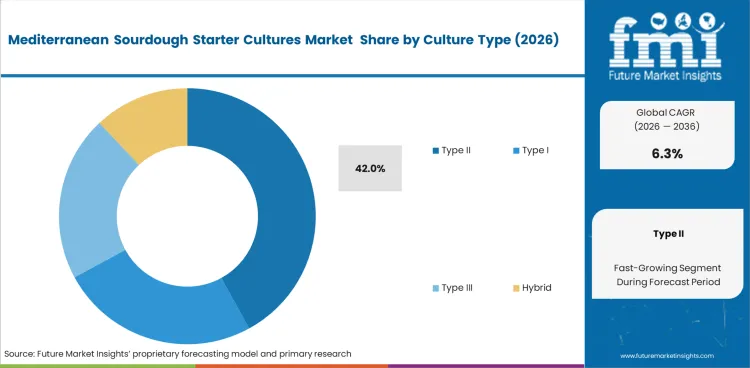
Fermentation control plays a crucial role in purchase decisions in this category. Bakers look for sour depth, consistent proof timing, and a smoother path from mixing to baking without relying on a delicate starter that needs constant care. Type II cultures are better suited to bakeries prioritizing fermentation control and day-to-day repeatability, since they are easier to handle under busy production conditions than systems requiring closer in-house starter management. The Type II segment is estimated to account for 42.0% share in 2026, due to steadier acidity control and easier daily use in mixed bakery lines. Type I also holds importance in craft-led bread programs, though it needs more care, closer monitoring, and stronger in-house fermentation skill throughout the process. Hybrid systems also remain useful for bakeries trying to balance flavor identity with regular output. A poor fit at this stage can extend proof time, weaken flavor consistency, and create extra rework during peak baking hours.
- Routine handling: Type II gives bakery staff a simpler and more reliable path from storage to dough mixing. That eases day-to-day pressure across long production cycles, different staff skill levels, and mixed recipe schedules. Easier handling also makes first-time adoption feel safer for bakeries moving away from delicate in-house starter routines.
- Flavor stability: Better acidity balance helps bread stay closer to the intended taste and character. That supports repeat product quality even when flour lots, room conditions, and proofing patterns change during busy production days. More consistent flavor also builds stronger confidence for repeat orders after initial commercial use.
- Production discipline: Clearer fermentation behavior helps bakers protect timing, reduce waste, and maintain batch flow when several dough programs run within the same schedule. Better process control also lowers the risk of uneven bread quality reaching retail shelves or foodservice counters.
Mediterranean Sourdough Starter Cultures Market Analysis by Microorganism
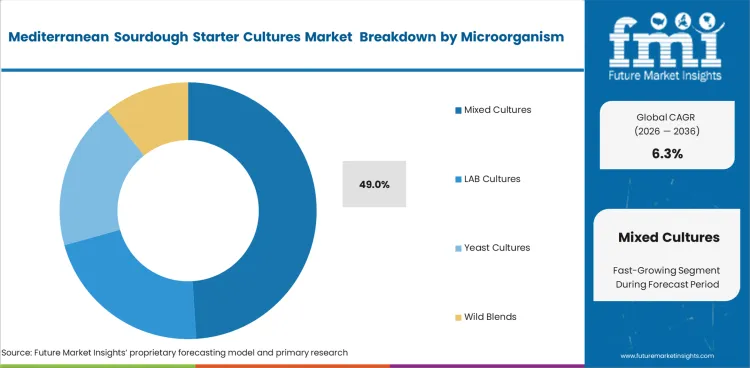
Microorganism selection becomes a real product decision once bakers watch dough behavior under actual plant conditions. A culture may appear promising during review, yet buying confidence usually strengthens only after acidity, lift, aroma, crumb feel, and the role of bread improvers remain steady across repeated runs. Mixed systems gain more trust in that setting because these bring a broader working balance into the bowl from the start. Mixed cultures segment is anticipated to capture 49.0% of the market in 2026, supported by stronger flavor layering and better leavening balance in daily bread output. LAB-only routes still hold value in selected formulas, while yeast-led systems remain relevant in simpler fermentation programs, though both can leave part of the performance need incomplete in wider bakery use. Wild blends still carry artisanal appeal, yet variation can become harder to manage at scale. Bread makers extending sourdough into new recipes often begin with a system that keeps more variables under control.
- Balanced action: Mixed cultures support acidity build, dough lift, and aroma development within one working system. This reduces the need for separate adjustments later in the process and helps bakers keep texture and flavor closer to target across repeated production runs.
- Recipe transfer: A broader microbial profile makes it easier to move from loaf bread into pizza or flatbread applications. This saves time during application expansion and gives bakers more confidence during early trials in adjacent dough programs.
- Repeat purchase: Reorder confidence improves once one culture system performs well across several dough styles. More dependable results across multiple recipes also make supplier approval easier during longer evaluation cycles.
Mediterranean Sourdough Starter Cultures Market Analysis by Format
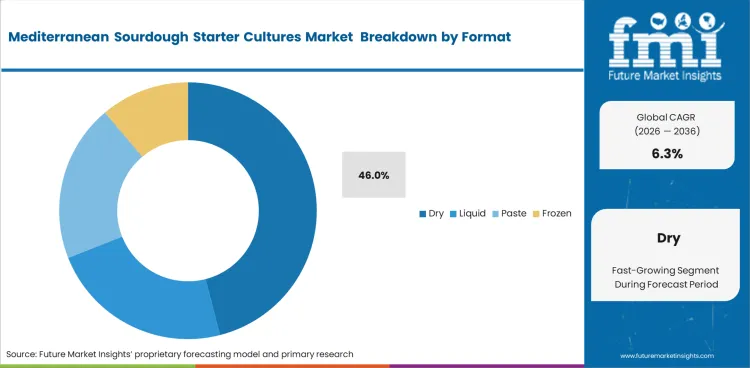
Format choice affects storage, transport, dosing, and daily bakery use long before finished bread reaches the shelf. Warm delivery routes, limited back-room space, and uneven labor availability all push buyers toward products that stay stable in inventory and move into mixing with less effort. In practice, format competition is not a simple matter of fresh versus dry performance. It is a risk-management choice shaped by storage tolerance, dosing simplicity, and delivery stability, which is why dry cultures often become the first scalable option in fragmented bakery systems.
Dry cultures meet that need better than many alternatives across a large part of the Mediterranean bakery base, much like instant dry yeast remains popular for its easy storage and simple handling. Dry is anticipated to emerge with 46.0% market share in 2026, owing to longer storage ease and simpler dosing across fragmented bakery networks. Liquid formats still attract users seeking a fresher fermentation feel, though handling demands can rise quickly once distribution stretches or storage conditions become less reliable. Paste and frozen forms still suit narrower needs, yet routine commercial use continues to favor the least complicated path. A poor format decision can increase spoilage risk, slow line setup, and make an otherwise effective fermentation system harder to use.
- Storage Ease: Dry formats sit more comfortably in bakery inventory and give staff more room to plan usage around production swings, delayed deliveries, and uneven demand across product lines. Longer storage comfort also lowers pressure on fast turnover inside smaller back rooms.
- Dosing Simplicity: Measured addition supports cleaner batch setup and helps keep dough behavior more even across multiple recipes in one baking day. Simpler dosing also reduces the chance of avoidable variation during fast-moving production windows.
- Logistics Fit: Lower handling sensitivity makes dry cultures easier to move through warm transport routes and helps protect product quality before bakery use begins. Better travel performance matters greatly in a region marked by mixed storage standards and long supply corridors.
Mediterranean Sourdough Starter Cultures Market Analysis by Flour Base
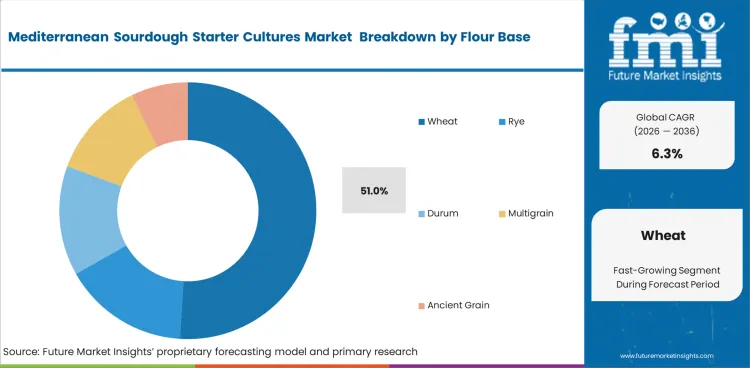
Carrier choice matters because a starter system needs to feel familiar before regular bakery use begins. Mediterranean bread, pizza, focaccia, and many flatbread programs still rely on wheat-based dough, so buyers naturally prefer cultures that move smoothly within that base. That same comfort also connects well with premix bread flour applications, since wheat remains the most common foundation in mainstream bakery production. The wheat category is expected to hold 51.0% share in 2026, driven by broad dough compatibility and easier scale-up across staple bakery products. Rye still keeps a respected place in sourdough work, though regional use stays narrower than in northern bread traditions. Durum supports selected local applications, while multigrain and ancient grain systems add value in premium lines with smaller volumes. A carrier that feels too distant from daily bakery practice can slow testing, complicate process transfer, and reduce confidence during early commercial use.
- Trial comfort: Wheat carriers feel closer to standard dough work and shorten the learning period during first use in commercial bakery routines. Familiarity also helps staff judge fermentation change with more confidence during early production runs.
- Application reach: One wheat-based system can move more easily across bread, pizza, and flatbread programs, and that expands value inside one customer account. Wider fit also gives suppliers a stronger opening for cross-application placement after a successful first trial.
- Scale movement: Familiar dough behavior helps a product move from sample stage into normal batch use without adding heavy process correction. A smoother shift into daily production improves reorder comfort and lowers hesitation during repeat purchasing.
Mediterranean Sourdough Starter Cultures Market Analysis by Application
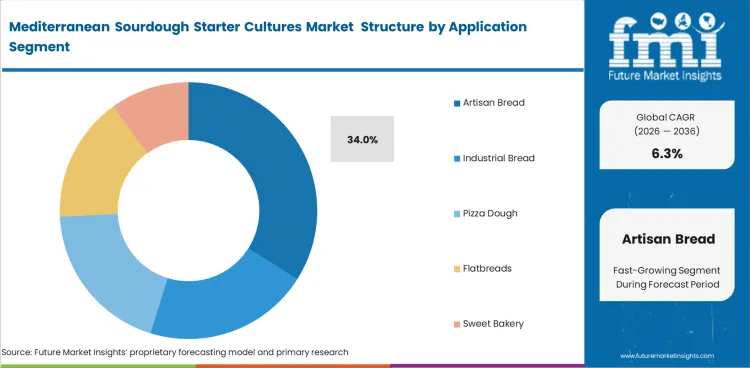
Application spread gives a clearer reading of this category than volume alone. Sourdough creates more commercial value in products that let buyers notice flavor, crumb feel, shelf quality, and the supporting role of dough conditioners after purchase. Artisan bread remains closest to that pattern because product identity is closely linked to fermentation character and eating quality. In 2026, artisan bread is expected to contribute 34.0% of total market share, due to stronger flavor visibility and higher buyer attention to crumb quality. Industrial bread still offers solid room for use, though cost control is tighter and fermentation choices face closer comparison against pricing targets. Pizza dough and flatbreads also widen the field because many operators want sourdough character without managing a live starter in every outlet. Sweet bakery stays smaller since sour notes serve a narrower purpose in that segment. Weak application fit can hide the value of a good culture and make repeat ordering harder even after a sound trial.
- Sensory payoff: Artisan bread makes flavor, crust, and crumb improvements easier to notice. That helps a starter culture show clear value to both bakers and shoppers. A visible difference in the final product makes the added ingredient easier to justify in premium bread lines.
- Price support: Better eating quality gives bakeries more room to maintain premium bread pricing. That reduces pushback against the extra culture cost during product review. Pricing support becomes stronger once repeat buyers start connecting flavor with the store’s identity.
- Use expansion: Pizza and flatbread applications create more room for sourdough systems beyond traditional loaf bread. That increases demand across a wider set of dough products. Broader use also helps suppliers generate more value from one approved culture system.
Mediterranean Sourdough Starter Cultures Market Analysis by End User
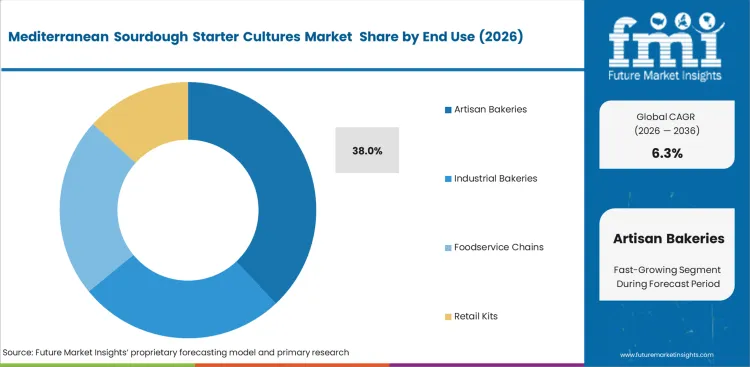
End-user spread in this category follows product identity almost as much as operating scale. Artisan bakeries keep sourdough close to brand image, daily menu value, customer trust, and even adjacent interest in home baking ingredients, so starter choice carries meaning far beyond a back-room ingredient decision. A culture system that performs cleanly helps protect bread quality and the shop’s reputation at the same time. The artisan bakeries segment is poised to garner 38.0% share in 2026, supported by craft-led positioning and stronger focus on repeat bread character. Industrial bakeries remain important and often buy with stricter process discipline, though each input still faces closer cost review and broader line-fit testing. Foodservice chains also add demand as sourdough character moves into pizza, sandwich carriers, and flatbread menus. Retail kits remain smaller because household use does not create the same steady purchase rhythm as commercial baking. A weak starter fit across this end-user mix can reduce consistency, slow recipe transfer, and lower confidence in wider rollout.
- Identity value: Artisan bakers connect sourdough closely with the image of the final product. That makes culture performance part of visible daily quality, not just an internal process step. A stronger bread identity can support buyer loyalty and help maintain premium positioning across repeat purchases.
- Line discipline: Industrial users need cultures that work smoothly within existing production schedules. That keeps repeatability and handling ease high on the buying checklist. A poor fit can disrupt timing, make standardization harder, and raise the chance of rejection during internal review.
- Menu breadth: Foodservice demand creates another path for growth beyond retail bakery lines. That helps suppliers place one system across several dough-based formats. Wider use across menus can build more volume once early bakery or kitchen trials perform reliably.
Mediterranean Sourdough Starter Cultures Market Analysis by Distribution Channel
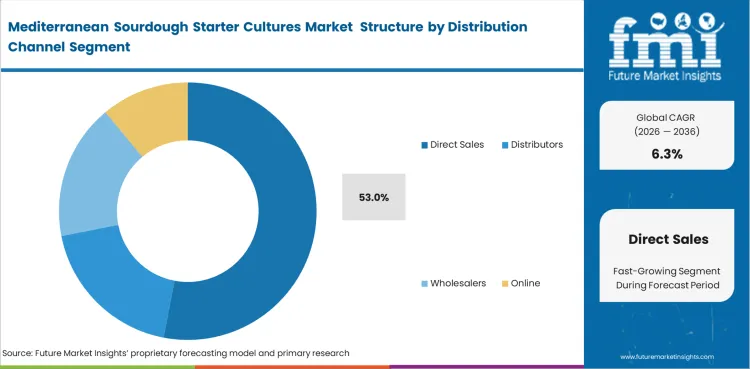
Route to buyer matters because this category often needs explanation before regular use begins. Many bakeries do not simply choose a culture and move straight into repeat orders, since staff usually need help with dosage, fermentation rhythm, flour fit, final bread character, and even how the system works alongside dough premixes in daily production. Direct sales retain a clear advantage because technical onboarding, dosage support, and early process correction often determine whether a starter culture progresses from trial stage to repeat commercial use. The direct sales category is likely to account for 53.0% share in 2026, due to stronger technical support and easier trial guidance during adoption. Distributors still serve a useful role in fragmented supply areas, though advisory depth can vary across accounts. Wholesalers fit regular replenishment more comfortably than first conversion, while online channels remain secondary for buyers seeking process guidance rather than simple pack supply. A weak route-to-market choice can make a good culture feel difficult to use, and that can slow confidence after an uneven early experience.
- Trial support: Direct contact helps bakers fix dosage and handling issues early. That improves the chances of moving smoothly from sample testing to repeat orders. Early guidance can also reduce the learning curve during the first weeks of bakery use.
- Problem response: Faster supplier feedback helps stop fermentation issues from turning into wider batch disruption. This matters even more in bakeries handling mixed-product schedules. Quick corrective support protects trust and makes wider recipe rollout easier later.
- Account depth: Direct sales give one supplier more room to enter several recipes over time. That improves long-term account value within the same bakery relationship. Broader placement also lowers the risk of early supplier replacement.
Mediterranean Sourdough Starter Cultures Market Drivers, Restraints, and Opportunities
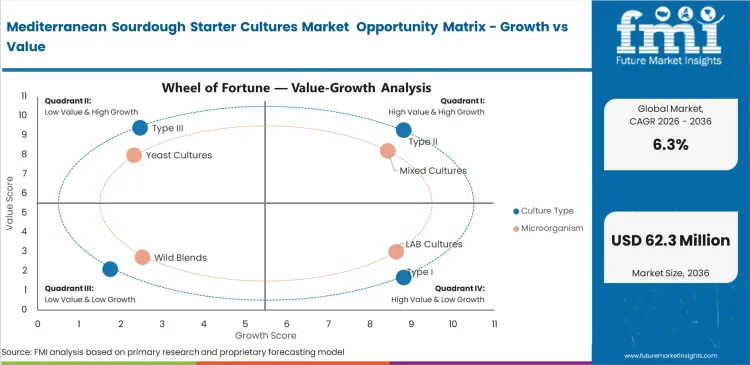
Bread makers across the Mediterranean are trying to make fermentation more controlled without losing the taste and texture that keep sourdough bread distinct. Daily production has become harder to manage because one bakery may now serve shop counters, foodservice outlets, and packed bread shelves at the same time. In that setting, a purchased starter culture becomes useful because it can reduce batch variation, steady proof timing, and make finished quality easier to repeat across changing flour lots. Clean-label preference adds more support here, since sourdough-led bread often feels more authentic to shoppers than bread built mainly through additive-led shortcuts. Pizza dough and flatbread growth adds further room for use, as many bakers want sour character in faster-moving formats with simpler handling.
Cost recovery still slows part of this market. Value bread leaves limited room for added ingredient spending, and many smaller bakeries still rely on in-house mother cultures even though output can shift from one batch to another. A commercial culture can improve consistency, yet results still depend on water balance, flour condition, proof timing, and dough handling during production. Early adoption can feel difficult for bakeries with limited technical guidance or weak process control. Storage conditions matter too, especially for formats that need tighter handling across longer supply routes. That slower learning curve does not remove demand, though it does keep conversion more gradual across the Mediterranean basin.
Opportunities in the Mediterranean Sourdough Starter Cultures Market
- Pizza menu growth: Restaurant groups and bakery cafés are adding more dough formats with a visible sour profile, and this creates room for cultures that stay steady during fast kitchen or bakery use. Regular demand from pizza bases, flatbread carriers, and sandwich formats can help suppliers expand placement beyond classic artisan loaf programs.
- Mid-scale bakery upgrade: Medium-sized bakeries are the most promising conversion pool when one starter system can move reliably across artisan bread, sandwich bread, and flatbread lines without adding handling complexity. This part of the market often values easier daily control, so a supplier that lowers trial risk can build stronger and longer customer relationships.
- Dry format pull: Warm distribution routes and limited back-room space favor products that move easily, and this gives dry cultures more room in fragmented supply systems. Easier storage and lower handling pressure also make early commercial use more comfortable for bakeries moving away from self-maintained starters.
Regional Analysis
Key Facts of Country
- Türkiye gives the market its strongest growth outlook in this study. Demand in Türkiye is expected to rise at a 7.2% CAGR through 2036.
- Industrial milling depth, bread-scale economics, and stronger operating-rate discipline support Egypt. The market in Egypt is anticipated to expand at a 7.0% CAGR over the forecast period.
- Bakery modernization, urban retail quality upgrades, and easier adoption of standardized dough systems keep Morocco on a firm growth path. Demand in Morocco is expected to grow at a 6.8% CAGR during 2026 to 2036.
- Tourism-linked bakery demand, active flatbread use, and gradual fermentation formalization continue to support Greece. Sales in Greece are expected to run at a 6.6% CAGR through 2036.
- Bread craft depth, pizza dough usage, and broader need for proofing consistency sustain Italy. Italy is projected to record a 6.3% CAGR over the forecast period.
- Premium packed bread demand, café bakery traffic, and stronger process-repeatability needs keep Spain commercially relevant. The market in Spain is expected to post a 6.1% CAGR through 2036.
- A mature sourdough base gives France a steadier expansion profile than faster-formalizing markets. Demand in France is expected to increase at a 5.8% CAGR during the forecast period.
Based on regional analysis, the Mediterranean sourdough starter cultures market is segmented into North America, Europe, Asia Pacific, Latin America, and Middle East & Africa, across 40 plus countries.
.webp "Top Country Growth Comparison Mediterranean Sourdough Starter Cultures Market Cagr (2026 2036)")
| Country | CAGR (2026 to 2036) |
|---|---|
| Türkiye | 7.2% |
| Egypt | 7.0% |
| Morocco | 6.8% |
| Greece | 6.6% |
| Italy | 6.3% |
| Spain | 6.1% |
| France | 5.8% |
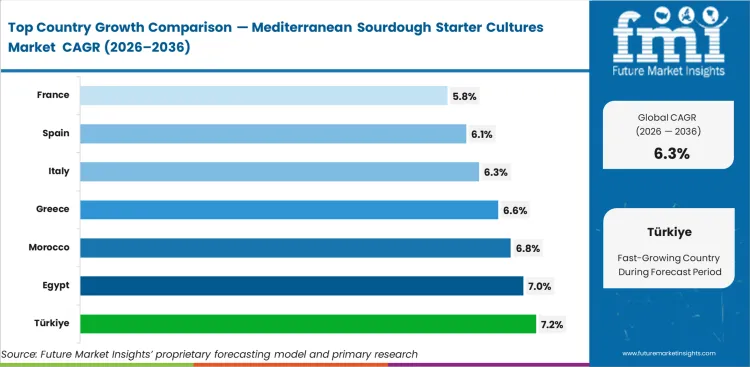
Source: Future Market Insights (FMI) analysis, based on proprietary forecasting model and primary research
Europe Mediterranean Sourdough Starter Cultures Market Analysis
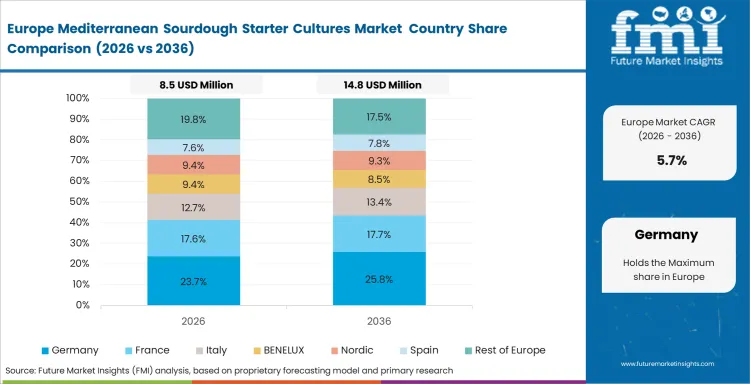
Europe carries deeper sourdough familiarity than much of the wider basin, so category progress comes less from first-time discovery and more from tighter control, broader application, and easier process repeat across commercial baking. Bread culture is already well established across Italy, Spain, France, and Greece, and that gives Europe bakery ingredients a more mature setting than many other regions. Commercial starter systems enter this environment after bakers begin looking for steadier dough behavior, smoother recipe transfer, and better consistency across more than one outlet or product line. Supplier success in mature European markets depends on improving process control without making bread profiles feel overly standardized, since bakers still protect local texture, flavor, and fermentation identity closely.
- Italy: Bread craft and pizza production give Italy a broad base for starter culture use, and daily bakery activity keeps fermentation moving toward better control across long operating hours. Demand for Mediterranean sourdough starter cultures in Italy is anticipated to rise at a CAGR of 6.3% from 2026 to 2036, supported by strong pizza dough usage and broader artisan bread quality needs. Bakers are not buying these cultures for novelty alone. Stable proof timing, closer flavor repeatability, and smoother recipe transfer matter more once one production site serves retail counters, cafés, and foodservice accounts within the same week. Regional bread habits still influence product choice, so suppliers need enough flexibility to match local dough behavior rather than pushing one standard solution.
- Spain: Fresh bakery retail, café traffic, and wider premium packed bread shelves keep Spain commercially important in this category. A starter system gains interest here once it shows a clear improvement in dough rhythm and a more consistent crumb result under normal bakery conditions. Sales of Mediterranean sourdough starter cultures in Spain are expected to increase at a CAGR of 6.1% during the forecast period, due to stronger premium bread demand and growing need for process consistency. Smaller bakeries still rely on legacy starters in many areas, so market movement stays gradual rather than sudden. Visible process benefit can change purchase behavior once repeatable output starts carrying more weight than tradition alone.
- France: France starts from a stronger sourdough base, so growth comes more from refinement than from basic education. Bakers already understand fermentation value, and that raises the bar for any purchased culture entering regular use. Product approval often depends on subtle differences in dough response, flavor expression, and line consistency across repeated batches. The Mediterranean sourdough starter cultures market in France is poised to expand at a CAGR of 5.8% by 2036, owing to mature bakery habits and steady multi-outlet consistency needs. That pace sits below faster-growth parts of the basin, though it still reflects steady commercial use in outlets needing reliable quality across several points of sale.
- Greece: Tourism-linked bakery demand, upgraded packaged bread, and active flatbread use keep Greece above the slower western edge of the region. Many bakery operators want better repeatability while still wanting bread to feel local and familiar on the shelf or at the table. Greece is set to record a CAGR of 6.6% in Mediterranean sourdough starter cultures during the assessment period, driven by tourism-facing bakery demand and wider flatbread usage. That pace reflects room for further formalization in fermentation practice along with steady demand from craft-led and foodservice-led dough programs.
FMI’s report also includes smaller European markets in the Mediterranean belt that carry visible artisan bread traditions yet buy commercial cultures more selectively. Wider use across that group depends on whether a purchased starter can show real process value under everyday bakery conditions and not only in premium showcase products.
Eastern Mediterranean Mediterranean Sourdough Starter Cultures Market Analysis
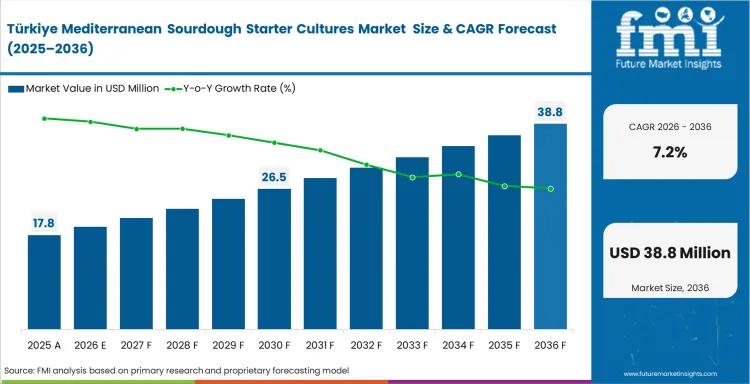
Eastern Mediterranean demand is moving toward more formal fermentation control under stronger operating pressure. Bread remains central to everyday food consumption, and production discipline gains value once flour variation, labor pressure, and output scale begin pulling against one another in the same bakery environment. Buyers across this part of the basin usually look at commercial cultures through a practical lens. Better consistency, easier repeat runs, and fewer production surprises all matter in daily bakery work. That gives this sub-region a firmer growth profile than mature western markets that already carry deeper sourdough habits.
- Türkiye: Bread volume, broad bakery reach, and frequent pressure on input efficiency keep Türkiye at the front of regional growth. More bakeries are seeking a fermentation system that helps steady dough behavior without making routine work feel complicated or slow. Mediterranean sourdough starter cultures adoption in Türkiye is likely to advance at a CAGR of 7.2% by 2036, supported by large-scale bread output and rising need for fermentation discipline. Flatbreads, loaf bread, and foodservice dough applications all add room for commercial culture use, and larger operators gain extra value once one starter works across several recipes. Local baking traditions remain strong, yet daily production realities are pulling more users toward dependable control.
FMI’s report also reviews nearby eastern Mediterranean demand pockets that are building from a smaller commercial base. Progress across that wider group rests on practical fit, especially storage ease, dosing comfort, and the ability to steady fermentation without stripping away familiar bread character.
North Africa Mediterranean Sourdough Starter Cultures Market Analysis
North Africa brings a different growth pattern built around staple bread demand, uneven bakery formalization, and visible pressure on flour use and process consistency. Commercial cultures gain value in that setting after showing a direct benefit in dough stability, waste control, and finished bread quality under warm and at times less predictable operating conditions. Egypt and Morocco stand out for that reason. Each market still needs products that feel workable in daily bakery practice, not only attractive in a technical note. Dry formats and mixed-culture systems therefore carry a clear practical edge across much of this sub-region. Similar route-to-use logic can also be seen in baking ingredients, since ease of handling and steady output often decide broader bakery acceptance.
- Egypt: Large bread demand and tighter attention to flour efficiency give Egypt one of the stronger growth paths in this market. Bakery users benefit from fermentation tools that steady output once raw material consistency is not always ideal and product quality still needs to remain dependable. Egypt is projected to witness 7.0% CAGR in the Mediterranean sourdough starter cultures market through 2036, due to staple bread scale and higher need for dough consistency. Packaged bakery upgrades add more room for commercial culture use because shelf life and repeat texture begin carrying more weight after bread moves beyond same-day local sale. Price discipline remains firm in Egypt, so commercial adoption depends on whether a culture can show visible gains in dough stability, flour-use consistency, and repeat bread quality rather than flavor value alone.
- Morocco: Bakery modernization is widening the opening for controlled fermentation in Morocco, especially in operations trying to improve regularity without making back-room work harder. Bread demand remains grounded in staple use, yet premium and retail-facing quality is gaining importance in more visible urban bakery outlets. The market for Mediterranean sourdough starter cultures in Morocco is expected to grow at a CAGR of 6.8% during the study period, driven by bakery formalization and rising retail bread quality needs. Wheat-led dough systems help standard culture formats find a workable place, and dry formats suit storage conditions more comfortably across many routes and outlets. Adoption still requires deliberate onboarding because traditional bakery practices remain influential, but suppliers that simplify storage, dosing, and first-trial performance can build stronger long-term placement.
FMI’s report covers additional North Africa countries that still sit earlier in the formal starter-culture cycle. Expansion across that wider group depends on practical gains in dough stability, waste reduction, and handling ease, since a premium flavor story alone rarely carries enough force in staple-led bakery trade.
Competitive Aligners for Market Players
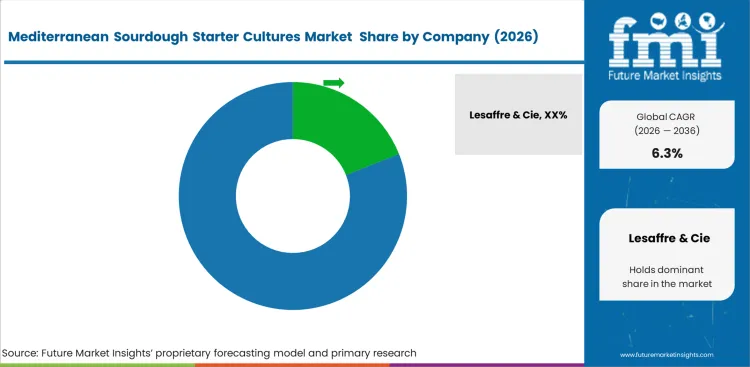
In the Mediterranean sourdough starter cultures market, competitive position depends less on product availability alone and more on how reliably a supplier can help bakeries manage fermentation under everyday operating pressure. Bakers across artisan, industrial, and foodservice channels look for starter systems that keep acidity, proof timing, dough behavior, and final bread character more consistent even when flour quality, labor depth, and production schedules change. Suppliers gain advantage when they reduce operational risk for bakers, since purchase decisions in this category depend more on proofing reliability, dough behavior, and repeat finished quality than on flavor positioning alone. Competition therefore centers less on who can supply a culture and more on who can lower production uncertainty for the bakery. Suppliers that solve dosage, flour-fit, and recipe-transfer issues early are likely to hold accounts more effectively than suppliers relying mainly on product claims or heritage positioning
Technical support remains one of the strongest competitive aligners in this market. Many bakery users need guidance on dosage, fermentation rhythm, flour compatibility, storage handling, and recipe transfer across bread, pizza dough, and flatbread applications. Lesaffre & Cie, Puratos Group, Lallemand Inc., IREKS GmbH, Ernst Böcker GmbH & Co. KG, Pak Holding A.Ş. (Pakmaya), and AB Mauri remain well placed because buyers often favor companies that can support trials, solve process issues early, and reduce the risk of inconsistent output after commercial rollout. In this market, a supplier that helps a bakery move from first evaluation to steady repeat orders builds stronger account depth than a supplier offering product alone. Suppliers lose ground once trial support is weak, dosage advice is unclear, or fermentation results drift across flour changes.
Key Players in Mediterranean Sourdough Starter Cultures Market
- Lesaffre & Cie
- Puratos Group
- Lallemand Inc.
- IREKS GmbH
- Ernst Böcker GmbH & Co. KG
- Pak Holding A.Ş. (Pakmaya)
- AB Mauri
Scope of the Report
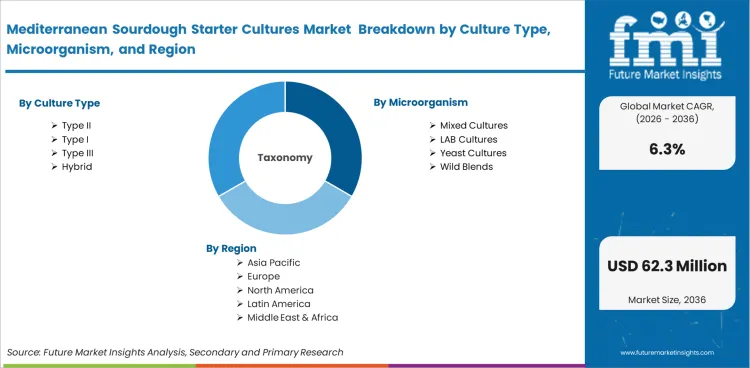
| Metric | Value |
|---|---|
| Quantitative Units | USD 29.9 million to USD 58.6 million, at a CAGR of 6.30% |
| Market Definition | Commercial sourdough starter culture systems used in bread, pizza dough, flatbreads, and selected bakery products across the Mediterranean region, including culture formats and fermentation inputs applied to improve acidity control, dough behavior, flavor development, and repeat finished quality. |
| Segmentation | Culture Type, Microorganism, Format, Flour Base, Application, End User, Distribution Channel, Region |
| Regions Covered | Southern Europe, Eastern Mediterranean, and North Africa |
| Countries Covered | Türkiye, Egypt, Morocco, Greece, Italy, Spain, France |
| Key Companies Profiled | Lesaffre & Cie, Puratos Group, Lallemand Inc., IREKS GmbH, Ernst Böcker GmbH & Co. KG, Pak Holding A.Ş. (Pakmaya), AB Mauri |
| Forecast Period | 2026 to 2036 |
| Approach | Demand was assessed through commercial bakery usage of sourdough starter cultures, then aligned with fermentation control needs, dough stability requirements, format preference, flour-base compatibility, and application fit across artisan bread, industrial bread, pizza dough, and flatbread production. |
Mediterranean Sourdough Starter Cultures Market Analysis by Segments
Culture Type
- Type I
- Type II
- Type III
- Hybrid
Microorganism
- LAB Cultures
- Yeast Cultures
- Mixed Cultures
- Wild Blends
Format
- Liquid
- Paste
- Dry
- Frozen
Flour Base
- Wheat
- Rye
- Durum
- Multigrain
- Ancient Grain
Application
- Artisan Bread
- Industrial Bread
- Pizza Dough
- Flatbreads
- Sweet Bakery
End User
- Artisan Bakeries
- Industrial Bakeries
- Foodservice Chains
- Retail Kits
Distribution Channel
- Direct Sales
- Distributors
- Wholesalers
- Online
Region
- Southern Europe
- France
- Italy
- Spain
- Greece
- Eastern Mediterranean
- Türkiye
- North Africa
- Egypt
- Morocco
Bibliography
- U.S. Department of Agriculture, Foreign Agricultural Service. (2025). Grain and Feed Annual: Egypt (EG2025-0009). FAS Cairo.
- Food and Agriculture Organization of the United Nations. (2025). Agricultural production statistics 2010–2024. FAO.
- Caitlin S. Clark, Ashley Ohstrom, M. Laura Rolon, Molly Smith, Benjamin E. Wolfe, Josephine Wee, Charlene B. Van Buiten (2024). Sourdough starter culture microbiomes influence physical and chemical properties of wheat bread.
- Celine Verdonck, Eline Lambrechts, Ines Pradal, Luc De Vuyst, Fabienne Verté, Tom Hellemans, Franky Delannoy, Dorine Duijsens, Sarah Verkempinck, Tara Grauwet, Yamina De Bondt, Christophe M. Courtin (2025). Sourdough starter culture and breadmaking process impact wholemeal bread characteristics associated with starch digestibility.
- AKhadija Atfaoui, Sara Lebrazi, Anas Raffak, Youssef Chafai, Karima El Kabous, Mouhcine Fadil, and Mohammed Ouhssine (2025). Impact of Selected Starter-Based Sourdough Types on Fermentation Performance and Bio-Preservation of Bread.
This bibliography is provided for reader reference. The full FMI report contains the complete reference list with primary source documentation.
This Report Addresses
- Market size outlook for 2025, 2026, and 2036.
- Forecast growth for the period from 2026 to 2036.
- Commercial structure of sourdough starter culture demand across the Mediterranean basin.
- Segment leadership by culture type, microorganism, format, flour base, application, end user, and distribution channel.
- Country-level growth outlook for Türkiye, Egypt, Morocco, Greece, Italy, Spain, and France.
- Competitive position of major fermentation and bakery ingredient suppliers active in this category.
- Scope boundaries separating starter cultures from finished baked goods and plain baker’s yeast.
- Operational themes shaping adoption, including fermentation control, shelf-life support, and bakery consistency.
Frequently Asked Questions
How does FMI define this category?
Mediterranean sourdough starter cultures refer to commercially supplied fermentation systems used in bread, pizza dough, flatbreads, and selected bakery products to improve acidity control, dough behavior, flavor development, and repeat finished quality.
How large is the market at the start of the forecast period?
FMI estimates the market at USD 29.9 million in 2025, with value projected to reach USD 31.8 million in 2026 as more formal bakery users move toward controlled fermentation inputs.
How large can the category become by 2036?
The market is projected to reach USD 58.6 million by 2036, reflecting broader use across artisan bread, industrial bread, pizza dough, and flatbread programs.
What growth rate is projected from 2026 to 2036?
FMI projects a CAGR of 6.3% for the Mediterranean sourdough starter cultures market during the forecast period.
Which culture type stays ahead in 2026?
Type II is estimated to account for 42.0% share in 2026 because it fits controlled bakery production more comfortably than systems requiring tighter in-house starter care.
Which microorganism group leads the category?
Mixed cultures are anticipated to capture 49.0% of the market in 2026, supported by stronger balance between acidity development, aroma formation, and leavening support.
Which format remains the largest across the region?
Dry formats are anticipated to emerge with 46.0% market share in 2026 because storage, transport, and dosing are more comfortable across warm and fragmented regional supply routes.
What drives rapid growth in this category?
Growth is supported by the need for steadier fermentation, easier repeat quality, and stronger process control across changing flour lots, varied staff depth, and multi-product baking schedules.
What is the main restraint on faster adoption?
Added input cost, attachment to legacy starters, learning time during first use, and uneven technical support all keep conversion more gradual in parts of the market.
Which country shows the fastest forecast growth?
Türkiye leads the country group with a projected CAGR of 7.2% through 2036, supported by large bread output and growing need for fermentation discipline across wider bakery operations.
How do Egypt and Morocco fit into the regional outlook?
Egypt is projected to witness 7.0% CAGR through 2036 due to staple bread scale and process consistency needs, while Morocco is expected to grow at 6.8% CAGR, driven by bakery formalization and stronger retail bread quality focus.
Why do Italy, Spain, France, and Greece grow at a steadier pace than faster markets?
Southern Europe starts from a stronger sourdough base, so market progress comes more from refinement, broader application, and improved process repeat than from first-time formal commercial conversion.
Which flour base remains dominant?
Wheat-based systems are expected to hold 51.0% share in 2026 as the largest share of regional bakery demand still centers on wheat breads, pizza bases, and flatbread dough systems.
Which application contributes the most demand?
Artisan bread is expected to contribute 34.0% of total market share in 2026 because fermentation character is easier to see, taste, and sell in that product space.
Artisan bread is expected to contribute 34.0% of total market share in 2026 because fermentation character is easier to see, taste, and sell in that product space.
Artisan bakeries are poised to garner 38.0% share in 2026 since sourdough remains closely linked to product image, customer trust, and premium bread positioning in that group.
Which distribution route remains in front?
Direct sales are likely to account for 53.0% share in 2026 because many bakery users still need trial guidance, dosage support, and faster help during early adoption.
What do bakery buyers usually compare before approving a supplier?
Fermentation stability, ease of handling, product fit across several dough styles, support quality during trials, and confidence in repeat finished quality remain central comparison points.
How concentrated is supplier competition across the Mediterranean basin?
The field remains moderately fragmented, leaving room for several active fermentation and bakery ingredient companies to compete across technical support depth, format reliability, and bakery application fit.
The field remains moderately fragmented, leaving room for several active fermentation and bakery ingredient companies to compete across technical support depth, format reliability, and bakery application fit.
The field remains moderately fragmented, leaving room for several active fermentation and bakery ingredient companies to compete across technical support depth, format reliability, and bakery application fit.
What makes this category commercially attractive through 2036?
Longer-term appeal comes from the move toward controlled fermentation as a working production input, especially in bakeries trying to improve consistency across bread, pizza, flatbread, and mixed retail-foodservice output.
Preview the report firsthand - request a free sample
Get SampleGet the brochure for pricing and purchase details.
Get PDFTable of Content
- Executive Summary
- Global Market Outlook
- Demand-side Trends
- Supply-side Trends
- Technology Roadmap Analysis
- Analysis and Recommendations
- Market Overview
- Market Coverage / Taxonomy
- Market Definition / Scope / Limitations
- Research Methodology
- Chapter Orientation
- Analytical Lens and Working Hypotheses
- Market Structure, Signals, and Trend Drivers
- Benchmarking and Cross-market Comparability
- Market Sizing, Forecasting, and Opportunity Mapping
- Research Design and Evidence Framework
- Desk Research Programme (Secondary Evidence)
- Company Annual and Sustainability Reports
- Peer-reviewed Journals and Academic Literature
- Corporate Websites, Product Literature, and Technical Notes
- Earnings Decks and Investor Briefings
- Statutory Filings and Regulatory Disclosures
- Technical White Papers and Standards Notes
- Trade Journals, Industry Magazines, and Analyst Briefs
- Conference Proceedings, Webinars, and Seminar Materials
- Government Statistics Portals and Public Data Releases
- Press Releases and Reputable Media Coverage
- Specialist Newsletters and Curated Briefings
- Sector Databases and Reference Repositories
- FMI Internal Proprietary Databases and Historical Market Datasets
- Subscription Datasets and Paid Sources
- Social Channels, Communities, and Digital Listening Inputs
- Additional Desk Sources
- Expert Input and Fieldwork (Primary Evidence)
- Primary Modes
- Qualitative Interviews and Expert Elicitation
- Quantitative Surveys and Structured Data Capture
- Blended Approach
- Why Primary Evidence is Used
- Field Techniques
- Interviews
- Surveys
- Focus Groups
- Observational and In-context Research
- Social and Community Interactions
- Stakeholder Universe Engaged
- C-suite Leaders
- Board Members
- Presidents and Vice Presidents
- R&D and Innovation Heads
- Technical Specialists
- Domain Subject-matter Experts
- Scientists
- Physicians and Other Healthcare Professionals
- Governance, Ethics, and Data Stewardship
- Research Ethics
- Data Integrity and Handling
- Primary Modes
- Tooling, Models, and Reference Databases
- Desk Research Programme (Secondary Evidence)
- Data Engineering and Model Build
- Data Acquisition and Ingestion
- Cleaning, Normalisation, and Verification
- Synthesis, Triangulation, and Analysis
- Quality Assurance and Audit Trail
- Market Background
- Market Dynamics
- Drivers
- Restraints
- Opportunity
- Trends
- Scenario Forecast
- Demand in Optimistic Scenario
- Demand in Likely Scenario
- Demand in Conservative Scenario
- Opportunity Map Analysis
- Product Life Cycle Analysis
- Supply Chain Analysis
- Investment Feasibility Matrix
- Value Chain Analysis
- PESTLE and Porter’s Analysis
- Regulatory Landscape
- Regional Parent Market Outlook
- Production and Consumption Statistics
- Import and Export Statistics
- Market Dynamics
- Global Market Analysis 2021 to 2025 and Forecast, 2026 to 2036
- Historical Market Size Value (USD Million) Analysis, 2021 to 2025
- Current and Future Market Size Value (USD Million) Projections, 2026 to 2036
- Y-o-Y Growth Trend Analysis
- Absolute $ Opportunity Analysis
- Global Market Pricing Analysis 2021 to 2025 and Forecast 2026 to 2036
- Global Market Analysis 2021 to 2025 and Forecast 2026 to 2036, By Culture Type
- Introduction / Key Findings
- Historical Market Size Value (USD Million) Analysis By Culture Type , 2021 to 2025
- Current and Future Market Size Value (USD Million) Analysis and Forecast By Culture Type , 2026 to 2036
- Type II
- Type I
- Type III
- Hybrid
- Type II
- Y-o-Y Growth Trend Analysis By Culture Type , 2021 to 2025
- Absolute $ Opportunity Analysis By Culture Type , 2026 to 2036
- Global Market Analysis 2021 to 2025 and Forecast 2026 to 2036, By Microorganism
- Introduction / Key Findings
- Historical Market Size Value (USD Million) Analysis By Microorganism, 2021 to 2025
- Current and Future Market Size Value (USD Million) Analysis and Forecast By Microorganism, 2026 to 2036
- Mixed Cultures
- LAB Cultures
- Yeast Cultures
- Wild Blends
- Mixed Cultures
- Y-o-Y Growth Trend Analysis By Microorganism, 2021 to 2025
- Absolute $ Opportunity Analysis By Microorganism, 2026 to 2036
- Global Market Analysis 2021 to 2025 and Forecast 2026 to 2036, By Format
- Introduction / Key Findings
- Historical Market Size Value (USD Million) Analysis By Format, 2021 to 2025
- Current and Future Market Size Value (USD Million) Analysis and Forecast By Format, 2026 to 2036
- Dry
- Liquid
- Paste
- Frozen
- Dry
- Y-o-Y Growth Trend Analysis By Format, 2021 to 2025
- Absolute $ Opportunity Analysis By Format, 2026 to 2036
- Global Market Analysis 2021 to 2025 and Forecast 2026 to 2036, By Flour Base
- Introduction / Key Findings
- Historical Market Size Value (USD Million) Analysis By Flour Base, 2021 to 2025
- Current and Future Market Size Value (USD Million) Analysis and Forecast By Flour Base, 2026 to 2036
- Wheat
- Rye
- Durum
- Multigrain
- Ancient Grain
- Wheat
- Y-o-Y Growth Trend Analysis By Flour Base, 2021 to 2025
- Absolute $ Opportunity Analysis By Flour Base, 2026 to 2036
- Global Market Analysis 2021 to 2025 and Forecast 2026 to 2036, By Application
- Introduction / Key Findings
- Historical Market Size Value (USD Million) Analysis By Application, 2021 to 2025
- Current and Future Market Size Value (USD Million) Analysis and Forecast By Application, 2026 to 2036
- Artisan Bread
- Industrial Bread
- Pizza Dough
- Flatbreads
- Sweet Bakery
- Artisan Bread
- Y-o-Y Growth Trend Analysis By Application, 2021 to 2025
- Absolute $ Opportunity Analysis By Application, 2026 to 2036
- Global Market Analysis 2021 to 2025 and Forecast 2026 to 2036, By End Use
- Introduction / Key Findings
- Historical Market Size Value (USD Million) Analysis By End Use, 2021 to 2025
- Current and Future Market Size Value (USD Million) Analysis and Forecast By End Use, 2026 to 2036
- Artisan Bakeries
- Industrial Bakeries
- Foodservice Chains
- Retail Kits
- Artisan Bakeries
- Y-o-Y Growth Trend Analysis By End Use, 2021 to 2025
- Absolute $ Opportunity Analysis By End Use, 2026 to 2036
- Global Market Analysis 2021 to 2025 and Forecast 2026 to 2036, By Distribution Channel
- Introduction / Key Findings
- Historical Market Size Value (USD Million) Analysis By Distribution Channel, 2021 to 2025
- Current and Future Market Size Value (USD Million) Analysis and Forecast By Distribution Channel, 2026 to 2036
- Direct Sales
- Distributors
- Wholesalers
- Online
- Direct Sales
- Y-o-Y Growth Trend Analysis By Distribution Channel, 2021 to 2025
- Absolute $ Opportunity Analysis By Distribution Channel, 2026 to 2036
- Global Market Analysis 2021 to 2025 and Forecast 2026 to 2036, By Region
- Introduction
- Historical Market Size Value (USD Million) Analysis By Region, 2021 to 2025
- Current Market Size Value (USD Million) Analysis and Forecast By Region, 2026 to 2036
- North America
- Latin America
- Western Europe
- Eastern Europe
- East Asia
- South Asia and Pacific
- Middle East & Africa
- Market Attractiveness Analysis By Region
- North America Market Analysis 2021 to 2025 and Forecast 2026 to 2036, By Country
- Historical Market Size Value (USD Million) Trend Analysis By Market Taxonomy, 2021 to 2025
- Market Size Value (USD Million) Forecast By Market Taxonomy, 2026 to 2036
- By Country
- USA
- Canada
- Mexico
- By Culture Type
- By Microorganism
- By Format
- By Flour Base
- By Application
- By End Use
- By Distribution Channel
- By Country
- Market Attractiveness Analysis
- By Country
- By Culture Type
- By Microorganism
- By Format
- By Flour Base
- By Application
- By End Use
- By Distribution Channel
- Key Takeaways
- Latin America Market Analysis 2021 to 2025 and Forecast 2026 to 2036, By Country
- Historical Market Size Value (USD Million) Trend Analysis By Market Taxonomy, 2021 to 2025
- Market Size Value (USD Million) Forecast By Market Taxonomy, 2026 to 2036
- By Country
- Brazil
- Chile
- Rest of Latin America
- By Culture Type
- By Microorganism
- By Format
- By Flour Base
- By Application
- By End Use
- By Distribution Channel
- By Country
- Market Attractiveness Analysis
- By Country
- By Culture Type
- By Microorganism
- By Format
- By Flour Base
- By Application
- By End Use
- By Distribution Channel
- Key Takeaways
- Western Europe Market Analysis 2021 to 2025 and Forecast 2026 to 2036, By Country
- Historical Market Size Value (USD Million) Trend Analysis By Market Taxonomy, 2021 to 2025
- Market Size Value (USD Million) Forecast By Market Taxonomy, 2026 to 2036
- By Country
- Germany
- UK
- Italy
- Spain
- France
- Nordic
- BENELUX
- Rest of Western Europe
- By Culture Type
- By Microorganism
- By Format
- By Flour Base
- By Application
- By End Use
- By Distribution Channel
- By Country
- Market Attractiveness Analysis
- By Country
- By Culture Type
- By Microorganism
- By Format
- By Flour Base
- By Application
- By End Use
- By Distribution Channel
- Key Takeaways
- Eastern Europe Market Analysis 2021 to 2025 and Forecast 2026 to 2036, By Country
- Historical Market Size Value (USD Million) Trend Analysis By Market Taxonomy, 2021 to 2025
- Market Size Value (USD Million) Forecast By Market Taxonomy, 2026 to 2036
- By Country
- Russia
- Poland
- Hungary
- Balkan & Baltic
- Rest of Eastern Europe
- By Culture Type
- By Microorganism
- By Format
- By Flour Base
- By Application
- By End Use
- By Distribution Channel
- By Country
- Market Attractiveness Analysis
- By Country
- By Culture Type
- By Microorganism
- By Format
- By Flour Base
- By Application
- By End Use
- By Distribution Channel
- Key Takeaways
- East Asia Market Analysis 2021 to 2025 and Forecast 2026 to 2036, By Country
- Historical Market Size Value (USD Million) Trend Analysis By Market Taxonomy, 2021 to 2025
- Market Size Value (USD Million) Forecast By Market Taxonomy, 2026 to 2036
- By Country
- China
- Japan
- South Korea
- By Culture Type
- By Microorganism
- By Format
- By Flour Base
- By Application
- By End Use
- By Distribution Channel
- By Country
- Market Attractiveness Analysis
- By Country
- By Culture Type
- By Microorganism
- By Format
- By Flour Base
- By Application
- By End Use
- By Distribution Channel
- Key Takeaways
- South Asia and Pacific Market Analysis 2021 to 2025 and Forecast 2026 to 2036, By Country
- Historical Market Size Value (USD Million) Trend Analysis By Market Taxonomy, 2021 to 2025
- Market Size Value (USD Million) Forecast By Market Taxonomy, 2026 to 2036
- By Country
- India
- ASEAN
- Australia & New Zealand
- Rest of South Asia and Pacific
- By Culture Type
- By Microorganism
- By Format
- By Flour Base
- By Application
- By End Use
- By Distribution Channel
- By Country
- Market Attractiveness Analysis
- By Country
- By Culture Type
- By Microorganism
- By Format
- By Flour Base
- By Application
- By End Use
- By Distribution Channel
- Key Takeaways
- Middle East & Africa Market Analysis 2021 to 2025 and Forecast 2026 to 2036, By Country
- Historical Market Size Value (USD Million) Trend Analysis By Market Taxonomy, 2021 to 2025
- Market Size Value (USD Million) Forecast By Market Taxonomy, 2026 to 2036
- By Country
- Kingdom of Saudi Arabia
- Other GCC Countries
- Turkiye
- South Africa
- Other African Union
- Rest of Middle East & Africa
- By Culture Type
- By Microorganism
- By Format
- By Flour Base
- By Application
- By End Use
- By Distribution Channel
- By Country
- Market Attractiveness Analysis
- By Country
- By Culture Type
- By Microorganism
- By Format
- By Flour Base
- By Application
- By End Use
- By Distribution Channel
- Key Takeaways
- Key Countries Market Analysis
- USA
- Pricing Analysis
- Market Share Analysis, 2025
- By Culture Type
- By Microorganism
- By Format
- By Flour Base
- By Application
- By End Use
- By Distribution Channel
- Canada
- Pricing Analysis
- Market Share Analysis, 2025
- By Culture Type
- By Microorganism
- By Format
- By Flour Base
- By Application
- By End Use
- By Distribution Channel
- Mexico
- Pricing Analysis
- Market Share Analysis, 2025
- By Culture Type
- By Microorganism
- By Format
- By Flour Base
- By Application
- By End Use
- By Distribution Channel
- Brazil
- Pricing Analysis
- Market Share Analysis, 2025
- By Culture Type
- By Microorganism
- By Format
- By Flour Base
- By Application
- By End Use
- By Distribution Channel
- Chile
- Pricing Analysis
- Market Share Analysis, 2025
- By Culture Type
- By Microorganism
- By Format
- By Flour Base
- By Application
- By End Use
- By Distribution Channel
- Germany
- Pricing Analysis
- Market Share Analysis, 2025
- By Culture Type
- By Microorganism
- By Format
- By Flour Base
- By Application
- By End Use
- By Distribution Channel
- UK
- Pricing Analysis
- Market Share Analysis, 2025
- By Culture Type
- By Microorganism
- By Format
- By Flour Base
- By Application
- By End Use
- By Distribution Channel
- Italy
- Pricing Analysis
- Market Share Analysis, 2025
- By Culture Type
- By Microorganism
- By Format
- By Flour Base
- By Application
- By End Use
- By Distribution Channel
- Spain
- Pricing Analysis
- Market Share Analysis, 2025
- By Culture Type
- By Microorganism
- By Format
- By Flour Base
- By Application
- By End Use
- By Distribution Channel
- France
- Pricing Analysis
- Market Share Analysis, 2025
- By Culture Type
- By Microorganism
- By Format
- By Flour Base
- By Application
- By End Use
- By Distribution Channel
- India
- Pricing Analysis
- Market Share Analysis, 2025
- By Culture Type
- By Microorganism
- By Format
- By Flour Base
- By Application
- By End Use
- By Distribution Channel
- ASEAN
- Pricing Analysis
- Market Share Analysis, 2025
- By Culture Type
- By Microorganism
- By Format
- By Flour Base
- By Application
- By End Use
- By Distribution Channel
- Australia & New Zealand
- Pricing Analysis
- Market Share Analysis, 2025
- By Culture Type
- By Microorganism
- By Format
- By Flour Base
- By Application
- By End Use
- By Distribution Channel
- China
- Pricing Analysis
- Market Share Analysis, 2025
- By Culture Type
- By Microorganism
- By Format
- By Flour Base
- By Application
- By End Use
- By Distribution Channel
- Japan
- Pricing Analysis
- Market Share Analysis, 2025
- By Culture Type
- By Microorganism
- By Format
- By Flour Base
- By Application
- By End Use
- By Distribution Channel
- South Korea
- Pricing Analysis
- Market Share Analysis, 2025
- By Culture Type
- By Microorganism
- By Format
- By Flour Base
- By Application
- By End Use
- By Distribution Channel
- Russia
- Pricing Analysis
- Market Share Analysis, 2025
- By Culture Type
- By Microorganism
- By Format
- By Flour Base
- By Application
- By End Use
- By Distribution Channel
- Poland
- Pricing Analysis
- Market Share Analysis, 2025
- By Culture Type
- By Microorganism
- By Format
- By Flour Base
- By Application
- By End Use
- By Distribution Channel
- Hungary
- Pricing Analysis
- Market Share Analysis, 2025
- By Culture Type
- By Microorganism
- By Format
- By Flour Base
- By Application
- By End Use
- By Distribution Channel
- Kingdom of Saudi Arabia
- Pricing Analysis
- Market Share Analysis, 2025
- By Culture Type
- By Microorganism
- By Format
- By Flour Base
- By Application
- By End Use
- By Distribution Channel
- Turkiye
- Pricing Analysis
- Market Share Analysis, 2025
- By Culture Type
- By Microorganism
- By Format
- By Flour Base
- By Application
- By End Use
- By Distribution Channel
- South Africa
- Pricing Analysis
- Market Share Analysis, 2025
- By Culture Type
- By Microorganism
- By Format
- By Flour Base
- By Application
- By End Use
- By Distribution Channel
- USA
- Market Structure Analysis
- Competition Dashboard
- Competition Benchmarking
- Market Share Analysis of Top Players
- By Regional
- By Culture Type
- By Microorganism
- By Format
- By Flour Base
- By Application
- By End Use
- By Distribution Channel
- Competition Analysis
- Competition Deep Dive
- Lesaffre & Cie
- Overview
- Product Portfolio
- Profitability by Market Segments (Product/Age /Sales Channel/Region)
- Sales Footprint
- Strategy Overview
- Marketing Strategy
- Product Strategy
- Channel Strategy
- Puratos Group
- Lallemand Inc.
- IREKS GmbH
- Ernst Böcker GmbH & Co. KG
- Pak Holding A.Ş. (Pakmaya)
- AB Mauri
- Lesaffre & Cie
- Competition Deep Dive
- Assumptions & Acronyms Used


