

- Market Size (2026)
- USD 620.0 Mn
- Forecast (2036)
- USD 1197.0 Mn
- CAGR (2026 to 2036)
- 6.8%
Functional Fiber Bakery Market Size, Market Forecast and Outlook By FMI
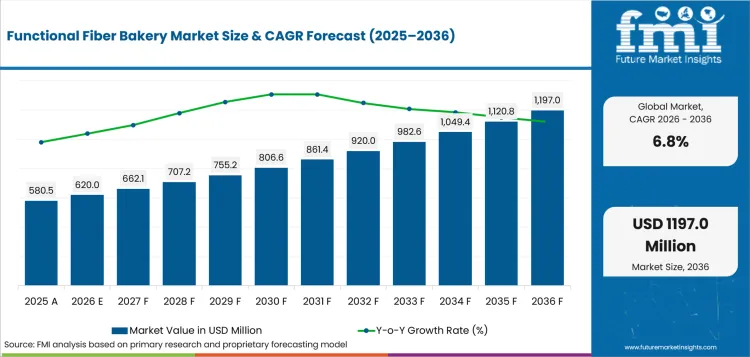
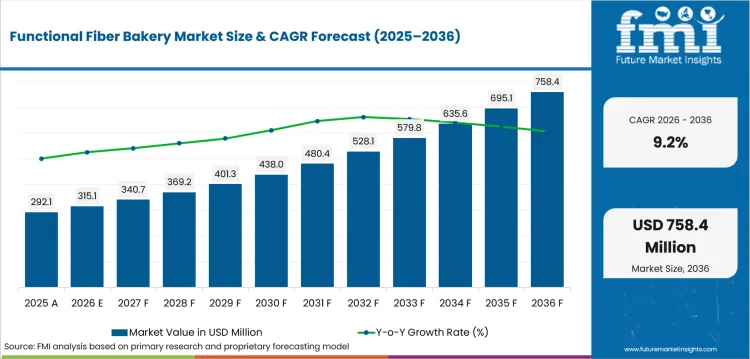
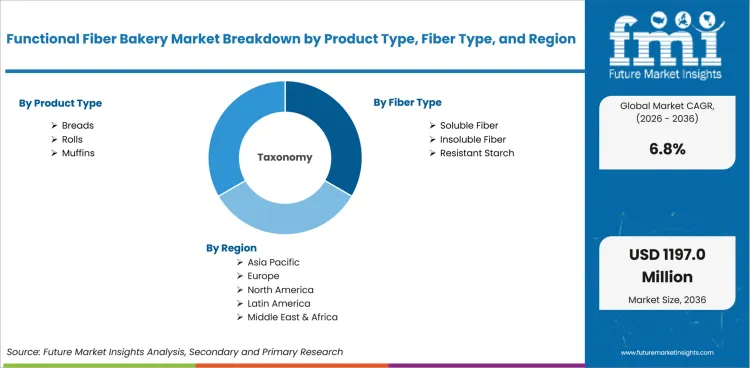
The global functional fiber bakery market value is predicted to scale from USD 580.5 million in 2025 to USD 1197.0 million by 2036 at 6.8% CAGR, driven by bakery reformulation for fiber claims and softer shelf-stable products. Breads are anticipated to secure 38.5% share in 2026 as sliced bread and rolls give retailers the highest repeat purchase base. Soluble fiber is projected to represent 44.0% share in 2026 as bakeries prioritize moisture control and softer eating quality in fiber-enriched products.
Key Takeaways, Market Size, and Forecast
- 2026 Market Size: USD 620.0 million.
- 2036 Market Size: USD 1197.0 million.
- Forecast CAGR: 6.8% from 2026 to 2036.
- Leading Product Type: Breads.
- Breads Share in 2026: 38.5%.
- Leading Fiber Type: Soluble Fiber.
- Soluble Fiber Share in 2026: 44.0%.
- Fastest-growing Country: South Korea.
- South Korea CAGR: 8.2% through 2036.
Summary of Functional Fiber Bakery Market
- Demand and Growth Drivers
- Retail buyers are using fiber claims to refresh bread and breakfast bakery shelves without moving products into specialist nutrition aisles.
- Industrial bakeries are adding soluble fiber and resistant starch where these ingredients can protect softness and support label claims.
- Foodservice buyers are testing fiber-enriched buns and breakfast formats where the product can stay familiar to consumers.
- Product and Segment View
- Breads account for 38.5% share in 2026 because sliced bread and rolls provide the highest repeat purchase base.
- Soluble fiber accounts for 44.0% share in 2026 because it fits softness and moisture management needs.
- Cereal fibers account for 47.2% share in 2026 because wheat, oat, and bran systems are familiar in bakery formulation.
- Geography and Competitive Outlook
- The United States is the largest country market with USD 195.0 million in 2026.
- South Korea is the fastest-growing country with 8.2% CAGR through 2036.
- Grupo Bimbo, Flowers Foods, Warburtons, Puratos, Beneo, Ingredion, and Tate & Lyle focus on bakery reach and ingredient formulation support.
- Analyst Opinion
- Nandini Roy Choudhury, Principal Consultant for Food and Beverage at FMI, observes, “I see this category moving only when fiber is earning its place in the dough. A bakery brand cannot rely on a front-pack claim if the bread dries out after two days. Suppliers that solve crumb softness and price control together should win more repeat listings.”
- Functional Fiber Bakery Market Value Analysis
- Market value is supported by finished bakery SKU revenue where fiber is used as a product claim or formulation purpose.
- Supplier pricing reflects fiber type and bakery processing support before retail or foodservice margins are applied.
- Revenue improves as bread and snack bakery lines add source-of-fiber or high-fiber positioning.
- Retail acceptance rises when fiber claims are backed by grams per serving and consistent sensory performance.
The functional fiber bakery is gaining value as bakeries reformulate breads/ snack bars and sweet baked goods around fiber enrichment without losing texture or taste. USDA ARS reported in 2025 that less than 10% of Americans consume the recommended daily amount of dietary fiber, which gives bakery manufacturers a clear nutrition gap to address through inulin, oligofructose, beta-glucan, resistant starch and soluble corn fiber systems.
USDA ERS estimated United States per capita wheat flour use at 126.6 pounds in 2025, which supports a broad bakery base for fiber-fortified reformulation. In July 2025, Tate & Lyle showcased prototypes at IFT FIRST 2025 focused on mouthfeel, sugar reduction and fiber fortification after expanding its portfolio through the CP Kelco combination. This makes functional fiber bakery more attractive for brands that need label-friendly nutrition claims, softer crumb structure, sugar reduction support and better digestive wellness positioning in everyday bakery formats.
Functional Fiber Bakery Market Definition
The functional fiber bakery market covers finished bakery products formulated or positioned around added, retained, or concentrated dietary fiber. Scope includes breads, rolls, muffins, cookies, cakes, bakery mixes, and foodservice bakery products carrying source-of-fiber or high-fiber positioning. Digestive wellness, prebiotic fiber, and satiety-related bakery products are also included when fiber is a visible claim or formulation purpose. Revenue includes branded, private label, and foodservice bakery products sold through retail and commercial channels.
Functional Fiber Bakery Market Inclusions
Market scope covers commercially sold fiber-fortified bakery products made with soluble fiber, insoluble fiber, resistant starch, prebiotic fiber, cereal bran, citrus fiber, potato fiber, oat fiber, wheat fiber, and mixed fiber systems. Product coverage includes fiber-positioned breads, rolls, muffins, cookies, cakes, bakery mixes, and foodservice bakery products. Channel coverage includes supermarkets, online grocery, foodservice bakery, specialty retail, and convenience stores. Claim coverage includes source-of-fiber, high-fiber, digestive wellness, prebiotic fiber, and satiety-related positioning. Revenue scope covers 2026 to 2036. Key commercial roles include bakery brands, private label developers, bakery ingredient suppliers, fiber ingredient manufacturers, foodservice distributors, grocery retailers, and bakery manufacturers.
Functional Fiber Bakery Market Exclusions
Scope excludes standard bakery products without a measurable fiber claim or functional fiber use case. Cereal bars, snack bars, breakfast cereals, pasta, frozen desserts, and fiber supplements are excluded unless they are sold as bakery products. Ingredient revenue is excluded when sold as standalone bulk fiber rather than as part of an eligible bakery product. Finished products carrying only general wellness language are excluded unless fiber content is stated or fiber performs a defined formulation role.
Functional Fiber Bakery Market Research Methodology
- Primary Research: FMI analysts reviewed packaged bakery shelves, fiber ingredient portfolios, and bakery formulation use cases across priority countries.
- Desk Research: Public data from the Food and Drug Administration, Health Canada, the Canadian Food Inspection Agency, the United Kingdom government, the Australian Bureau of Statistics, the European Food Safety Authority, the European Commission, the Korea Disease Control and Prevention Agency, and Saudi authorities were checked against fiber bakery evidence.
- Market Sizing and Forecasting: The market size has been estimated using a bottom-up product-boundary approach. Each category has been defined by eligible bakery SKUs, retail and foodservice revenue pools, channel availability, product positioning, and country-level adoption patterns. Standard bakery products were excluded unless they clearly matched the category definition, such as source-of-fiber positioning, high-fiber claims, prebiotic fiber content, reduced-sugar fiber systems, or retail bakery fiber enrichment.
- Data Validation: Forecast checks compared nutrition policy evidence, label claim rules, public diet data, active supplier portfolios, and regional bakery channel reach. Values were reconciled against comparable bakery ingredient and high-fiber food categories.
Why is the Functional Fiber Bakery Market Growing?
- Retailers are using fiber claims to refresh everyday bakery shelves without moving bread and muffins into specialist nutrition aisles.
- Industrial bakeries are working with fibers that can improve nutrition panels while maintaining softness and slicing performance.
- Ingredient suppliers are supporting bakeries with application testing because fiber can change water absorption and crumb structure.
Growth is becoming more structured as fiber claims move into standard bakery planning. FMI analysis of whole grain and high fiber foods shows that wider consumer interest in grain-based nutrition is already linked to bread and cereal choices. That creates a practical route for functional fiber bakery products when the claim remains easy to understand.
The supplier side is also more prepared because dietary fiber ingredients now include powders, soluble systems, and application-ready blends that fit bakery processes. This supports repeat commercial trials rather than one-off product launches.
Market Segmentation Analysis
- Breads are projected to secure 38.5% share in 2026 because sliced bread and rolls provide the largest repeat purchase base.
- Soluble fiber is anticipated to hold 44.0% share in 2026 since it supports moisture control and softer eating quality.
- Cereal fibers are expected to capture 47.2% share in 2026 because wheat, oat, and bran ingredients fit familiar bakery positioning.
- High fiber positioning is forecast to represent 40.6% share in 2026 because it gives retailers a direct label claim.
- Supermarkets are projected to account for 46.8% share in 2026 because bakery discovery remains shelf-led for most households.
- Retail bakeries are expected to hold 52.0% share in 2026 as packaged bread and in-store bakery ranges carry most repeat purchase volume.
Insights into Functional Fiber Bakery Market by Product Type
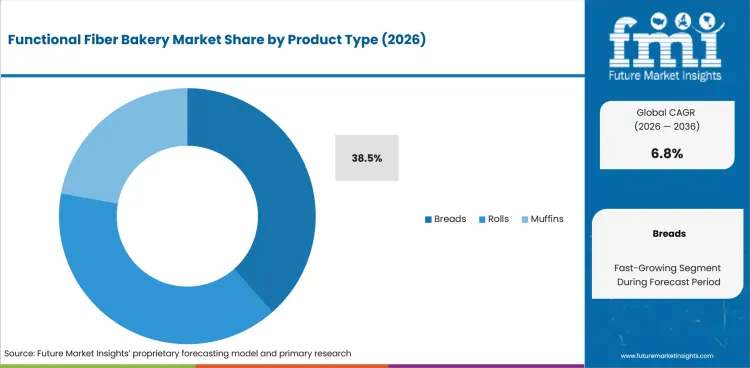
- Breads are projected to account for 38.5% share in 2026 because daily purchase frequency gives retailers a clear reason to test fiber claims.
- Muffins and cookies gain value when fiber supports breakfast or snack positioning without changing taste expectations.
Insights into Functional Fiber Bakery Market by Fiber Type
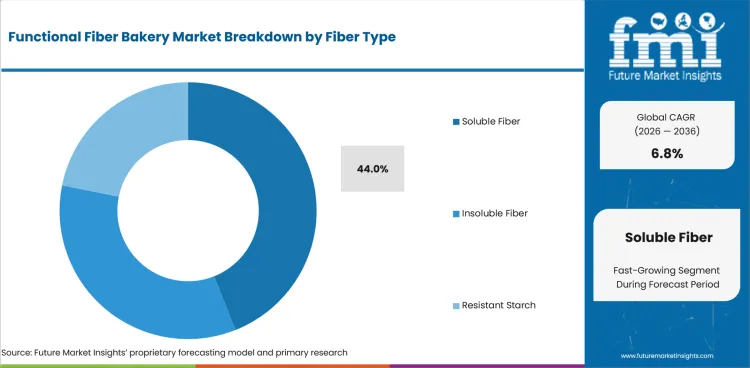
- Soluble fiber is anticipated to hold 44.0% share in 2026 while citrus fiber gains use where water binding and clean label claims matter.
- Resistant starch gains use where bakeries need fiber contribution with lower flavor impact.
Insights into Functional Fiber Bakery Market by Ingredient Source
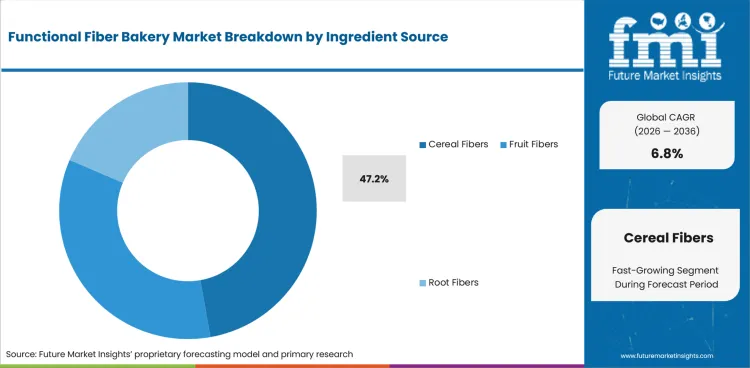
- Cereal fibers are forecast to secure 47.2% share in 2026 while fibers and specialty carbohydrates help suppliers combine fiber with texture and carbohydrate management.
- Fruit fibers gain use in sweet bakery where water binding and label appeal can work together.
Insights into Functional Fiber Bakery Market by Claim Positioning
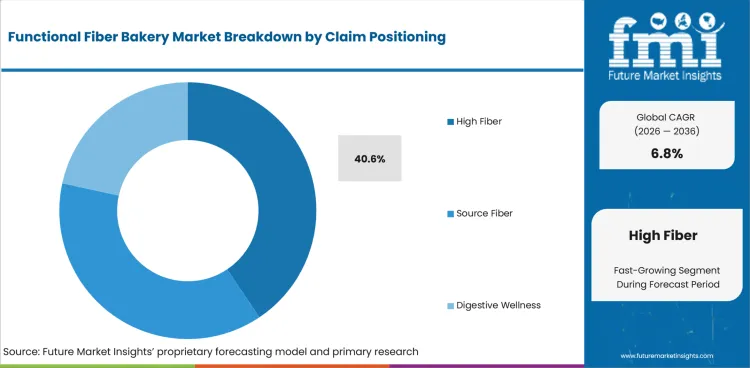
- High fiber products are expected to represent 40.6% share in 2026 because functional food ingredients give formulators more routes to claim-led bakery products.
- Digestive wellness positioning needs careful wording because regulators and retailers review claims more closely.
Insights into Functional Fiber Bakery Market by Sales Channel
- Supermarkets are projected to account for 46.8% share in 2026 because packaged bakery discovery remains shelf-led.
- Online grocery gains relevance where shoppers repeat branded high-fiber bread purchases after initial trial.
Insights into Functional Fiber Bakery Market by Buyer Type
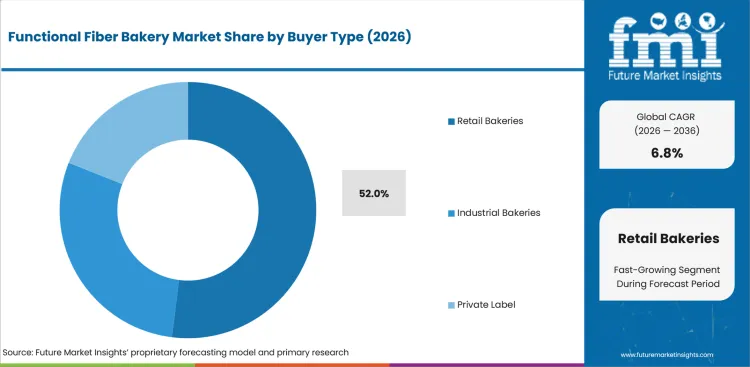
- Retail bakeries are expected to hold 52.0% share in 2026 because packaged bread and in-store bakery programs generate repeat volume.
- Foodservice chains gain value when buns and breakfast bakery can add fiber without changing menu handling.
Functional Fiber Bakery Market Drivers, Restraints, and Opportunities
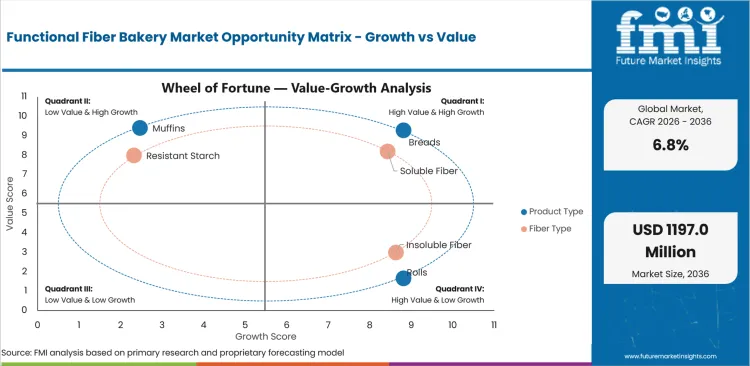
- Driver: Fiber intake gaps are giving retailers a clearer reason to add high-fiber bread, muffins, and rolls to mainstream shelves.
- Restraint: Fiber can change dough absorption, crumb softness, color, and flavor unless bakeries adjust water and process conditions.
- Opportunity: Retailers can use private label bakery programs to test fiber claims faster than national branded lines.
Ingredient choice is becoming more specific as potato fiber and resistant starch systems compete with cereal and citrus fibers in texture-sensitive applications. This gives bakery formulators a wider but more technical supplier screen.
Analysis of Functional Fiber Bakery Market by Key Countries
| Country | CAGR |
|---|---|
| South Korea | 8.2% |
| Saudi Arabia | 8.0% |
| Australia | 7.4% |
| Canada | 7.1% |
| United Kingdom | 6.8% |
| United States | 6.5% |
| Japan | 5.9% |
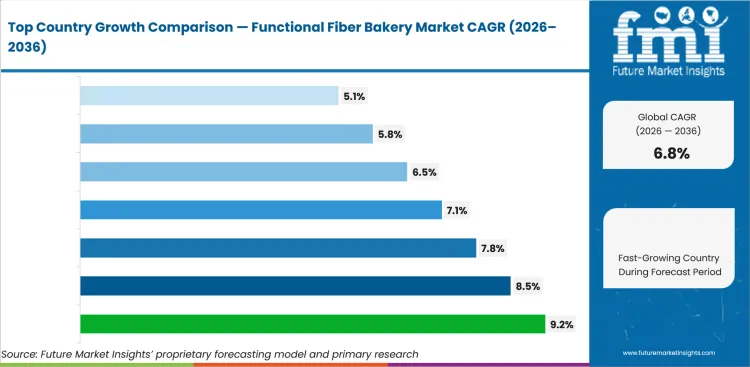
Source: FMI analysis based on primary research and proprietary forecasting model.
Functional Fiber Bakery Market CAGR Analysis by Country
- South Korea is projected to record 8.2% CAGR through 2036 as bakery cafés use fiber claims to refresh soft buns and snack breads.
- Saudi Arabia is expected to advance at 8.0% CAGR through 2036, supported by health-led retail planning and halal-ready documentation for imported fiber systems.
- Australia is forecast to grow at 7.4% CAGR through 2036 with supermarket bakery ranges using fiber claims to improve everyday bread positioning.
- Canada is expected to expand at 7.1% CAGR through 2036 because daily fiber guidance gives retailers a clear shelf reason for fortified bakery products.
- The United Kingdom is forecast to grow at 6.8% CAGR through 2036 where private label bread reformulation responds to national fiber shortfall evidence.
- The United States is projected to expand at 6.5% CAGR through 2036 as FDA label rules help bakeries screen qualifying fiber ingredients.
- Japan is forecast at 5.9% CAGR through 2036 with convenience stores testing portioned fiber bakery products that keep soft texture and simple claims.
Sales Outlook for Functional Fiber Bakery Market in the United States
Fiber claim discipline and national grocery scale center · 2026 to 2036
Country Market Snapshot Table
| Parameter | Value |
|---|---|
| Market Size in 2025 (Value) | USD 183.1 million |
| Market Size in 2026 (Value) | USD 195.0 million |
| Market Forecast in 2036 (Value) | USD 366.0 million |
| CAGR (2026 to 2036) | 6.5% |
| Years Considered | 2021 to 2036 |
| Base Year | 2025 |
| Forecast Period | 2026 to 2036 |
| Units Considered | Value (USD million) |
| Leading Sub-Region | Northeast and West Coast grocery corridors |
United States Functional Fiber Bakery Market Outlook
United States bakery buyers compare fiber claims against taste and repeat purchase because bread and muffins remain high-frequency grocery items. The country is projected to record a 6.5% CAGR through 2036, supported by FDA fiber definition rules and large supermarket shelf reach.
The Food and Drug Administration permits declared dietary fiber only when the fiber is intrinsic and intact or an added non-digestible carbohydrate with a beneficial physiological effect. This gives ingredient suppliers a clearer approval screen before industrial bakeries reformulate high-volume breads and snack cakes. Suppliers with recognized fibers and bakery testing data can gain faster specification approval.
Key Growth Drivers
- FDA dietary fiber rules give bakeries a clearer route for qualifying added fibers on Nutrition Facts labels.
- National supermarket chains can move high-fiber breads and muffins into repeat baskets when texture remains close to standard products.
- Private label bakery programs are adding better-for-you claims because retailers want higher-margin shelf stories in bread and breakfast items.
- Industrial bakeries can apply resistant starch or soluble fiber without changing consumer-facing product names too much.
Key Restraints
- Fiber addition can dry crumb structure and reduce softness if water management is not tested at plant scale.
- Retail buyers often require proof that high-fiber claims do not raise returns or reduce repeat purchase.
- Ingredient cost can limit wider use when standard white bread pricing remains the shelf benchmark.
What makes United States unique
The United States is unique because FDA label discipline and national retail scale can turn a tested fiber formulation into a coast-to-coast grocery item.
Key Companies
- Flowers Foods Inc.
- Bimbo Bakeries USA Inc.
- Nature’s Bakery LLC
- King’s Hawaiian Holding Company Inc.
- Dave’s Killer Bread
- Ingredion Incorporated
- Tate & Lyle PLC
Sales & Marketing Channels
- Supermarkets
- Club stores
- Online grocery
- Foodservice bakery
- In-store bakeries
- Convenience retail
Country Segment Breakdown Table
| Segment | Sub-Segments |
|---|---|
| By Product Type | Breads · Rolls · Muffins · Cookies · Cakes · Mixes |
| By Fiber Type | Soluble Fiber · Insoluble Fiber · Resistant Starch · Prebiotic Fiber · Mixed Fiber |
| By Ingredient Source | Cereal Fibers · Fruit Fibers · Root Fibers · Legume Fibers · Seed Fiber |
| By Claim Positioning | High Fiber · Source Fiber · Digestive Wellness · Sugar Reduction · Satiety Support |
| By Sales Channel | Supermarkets · Online Grocery · Foodservice Bakery · Specialty Retail · Convenience Stores |
| By Buyer Type | Retail Bakeries · Industrial Bakeries · Private Label · Foodservice Chains · In-store Bakeries |
| Key Sub-Regions Covered, National Retail Corridors | Northeast · West Coast · Midwest · Texas · Southeast · Mountain West |
Market Taxonomy and Sub-Regions Covered
Frequently Asked Questions
How fast is the United States functional fiber bakery market growing?
The United States is projected to expand at 6.5% CAGR from 2026 to 2036 as claim-ready fibers move through national grocery channels.
Who leads the United States functional fiber bakery market?
Bimbo Bakeries USA, Flowers Foods, Nature’s Bakery, Ingredion, and Tate & Lyle compete through finished bakery reach and fiber formulation support.
What drives functional fiber bakery sales in the United States?
Sales are driven by FDA label clarity, supermarket scale, and industrial bakery testing that protects softness. United States retailers also track adjacent bakery mixes because fiber enrichment can move from packaged bread into home baking and private label mix programs.
Demand Outlook for Functional Fiber Bakery Market in Canada
Fiber gap and nutrition label comparison center · 2026 to 2036
Country Market Snapshot Table
| Parameter | Value |
|---|---|
| Market Size in 2025 (Value) | USD 50.4 million |
| Market Size in 2026 (Value) | USD 54.0 million |
| Market Forecast in 2036 (Value) | USD 107.2 million |
| CAGR (2026 to 2036) | 7.1% |
| Years Considered | 2021 to 2036 |
| Base Year | 2025 |
| Forecast Period | 2026 to 2036 |
| Units Considered | Value (USD million) |
| Leading Sub-Region | Ontario and Quebec grocery corridors |
Canada Functional Fiber Bakery Market Outlook
Canadian shoppers use the Nutrition Facts table to compare fiber value at shelf because packaged bread and breakfast bakery remain routine household purchases. Canada is expected to expand at 7.1% CAGR through 2036, supported by the gap between recommended and actual fiber intake.
Health Canada states that women need 25 grams of fiber per day and men need 38 grams per day while most Canadians get about half that level. This creates a practical role for sliced bread, muffins, and bakery mixes carrying clear fiber declarations. Bakers that keep pack claims simple should gain stronger retailer acceptance.
Key Growth Drivers
- Health Canada fiber guidance keeps daily intake shortfall visible to retailers and packaged food developers.
- Nutrition Facts table comparison supports products that show grams of fiber per serving without unclear front-pack wording.
- Private label bread lines can add fiber while keeping value pricing familiar to mainstream grocery shoppers.
- Multicultural grocery formats can support whole grain and seed-based bakery items with fiber claims.
Key Restraints
- Small batch bakeries may not have the lab testing budget needed to confirm fiber claims before launch.
- Higher-fiber products can face slower repeat buying if taste differs from white bread or sweet bakery expectations.
- Cross-provincial distribution can add packaging review work when label bilingual accuracy is required.
What makes Canada unique
Canada is unique because fiber intake guidance and bilingual label discipline make claim accuracy a buyer requirement.
Key Companies
- Canada Bread Company Limited
- Weston Foods
- Bimbo Canada
- Dempster’s
- Wonderbrands
- Ingredion Canada Corporation
- Tate & Lyle Canada
Sales & Marketing Channels
- Supermarkets
- Warehouse clubs
- Online grocery
- Bakery cafes
- Natural food stores
- Foodservice distributors
Country Segment Breakdown Table
| Segment | Sub-Segments |
|---|---|
| By Product Type | Breads · Rolls · Muffins · Cookies · Cakes · Mixes |
| By Fiber Type | Soluble Fiber · Insoluble Fiber · Resistant Starch · Prebiotic Fiber · Mixed Fiber |
| By Ingredient Source | Cereal Fibers · Fruit Fibers · Root Fibers · Legume Fibers · Seed Fiber |
| By Claim Positioning | High Fiber · Source Fiber · Digestive Wellness · Sugar Reduction · Satiety Support |
| By Sales Channel | Supermarkets · Online Grocery · Foodservice Bakery · Specialty Retail · Convenience Stores |
| By Buyer Type | Retail Bakeries · Industrial Bakeries · Private Label · Foodservice Chains · In-store Bakeries |
| Key Sub-Regions Covered, Grocery Retail Areas | Ontario · Quebec · British Columbia · Alberta · Manitoba · Atlantic Canada |
Market Taxonomy and Sub-Regions Covered
Frequently Asked Questions
How fast is Canada functional fiber bakery market growing?
Canada is expected to expand at 7.1% CAGR through 2036 because fiber intake guidance keeps the claim visible.
Who leads Canada functional fiber bakery market?
Bimbo Canada, Canada Bread, Wonderbrands, Ingredion Canada, and Tate & Lyle Canada compete through retail bakery programs and ingredient systems.
What is driving adoption in Canada functional fiber bakery?
Nutrition Facts comparison and the daily fiber shortfall are moving fiber-fortified bread into mainstream grocery.
Opportunity Analysis for Functional Fiber Bakery Market in the United Kingdom
NDNS fiber shortfall and bread reformulation center · 2026 to 2036
Country Market Snapshot Table
| Parameter | Value |
|---|---|
| Market Size in 2025 (Value) | USD 54.3 million |
| Market Size in 2026 (Value) | USD 58.0 million |
| Market Forecast in 2036 (Value) | USD 112.0 million |
| CAGR (2026 to 2036) | 6.8% |
| Years Considered | 2021 to 2036 |
| Base Year | 2025 |
| Forecast Period | 2026 to 2036 |
| Units Considered | Value (USD million) |
| Leading Sub-Region | England grocery and bakery retail networks |
United Kingdom Functional Fiber Bakery Market Outlook
United Kingdom bakery reformulation starts from a clear public health gap because national diet data shows low fiber compliance across adults and older children. The United Kingdom is forecast to grow at 6.8% CAGR through 2036, supported by retailer focus on bread, rolls, and morning goods with clearer nutrition claims.
The National Diet and Nutrition Survey for 2019 to 2023 found that 96% of adults and children aged 11 to 18 did not meet the fiber recommendation. Large retailers can respond through high-fiber private label bread and bakery ranges. Suppliers with lower-impact recipe changes can fit existing bakery lines more easily.
Key Growth Drivers
- National Diet and Nutrition Survey findings give retailers a strong public health reason to add fiber claims in bread aisles.
- Private label bakery shelf control helps supermarkets test high-fiber rolls and breakfast goods quickly.
- Bakery brands can use oat, wheat, and seed inclusions where shoppers already expect grain texture.
- Front-of-pack nutrition review supports claims that are clear and easy to verify.
Key Restraints
- HFSS placement rules can limit indulgent bakery promotion when fiber is added to sweet formats.
- Texture expectations remain high because UK shoppers compare fiber bread with soft seeded loaves already on shelf.
- Smaller bakeries can face extra testing costs when making source-of-fiber or high-fiber claims.
What makes United Kingdom unique
The United Kingdom is unique because public diet evidence and private label bakery control sit inside the same retail decision system.
Key Companies
- Warburtons Limited
- Hovis Limited
- Allied Bakeries Limited
- Jacksons of Yorkshire
- Finsbury Food Group Plc
- Puratos UK Limited
- Tate & Lyle PLC
Sales & Marketing Channels
- Supermarkets
- Convenience chains
- Online grocery
- Bakery outlets
- Foodservice distributors
- Coffee shop supply
Country Segment Breakdown Table
| Segment | Sub-Segments |
|---|---|
| By Product Type | Breads · Rolls · Muffins · Cookies · Cakes · Mixes |
| By Fiber Type | Soluble Fiber · Insoluble Fiber · Resistant Starch · Prebiotic Fiber · Mixed Fiber |
| By Ingredient Source | Cereal Fibers · Fruit Fibers · Root Fibers · Legume Fibers · Seed Fiber |
| By Claim Positioning | High Fiber · Source Fiber · Digestive Wellness · Sugar Reduction · Satiety Support |
| By Sales Channel | Supermarkets · Online Grocery · Foodservice Bakery · Specialty Retail · Convenience Stores |
| By Buyer Type | Retail Bakeries · Industrial Bakeries · Private Label · Foodservice Chains · In-store Bakeries |
| Key Sub-Regions Covered, Retail Bakery Areas | London · Southeast England · Midlands · Northwest England · Scotland · Wales |
Market Taxonomy and Sub-Regions Covered
Frequently Asked Questions
How fast is the United Kingdom functional fiber bakery market growing?
The United Kingdom is forecast to grow at 6.8% CAGR through 2036 as retailers respond to the fiber gap.
Who leads the United Kingdom functional fiber bakery market?
Warburtons, Hovis, Allied Bakeries, Finsbury Food Group, Puratos UK, and Tate & Lyle compete through retail bakery reach.
What is driving adoption in the United Kingdom?
Retailer reformulation is driven by low fiber intake and private label control over bread and morning goods.
Sales Analysis for Functional Fiber Bakery Market in Saudi Arabia
Health reform and imported bakery ingredient screening center · 2026 to 2036
Country Market Snapshot Table
| Parameter | Value |
|---|---|
| Market Size in 2025 (Value) | USD 24.1 million |
| Market Size in 2026 (Value) | USD 26.0 million |
| Market Forecast in 2036 (Value) | USD 56.1 million |
| CAGR (2026 to 2036) | 8.0% |
| Years Considered | 2021 to 2036 |
| Base Year | 2025 |
| Forecast Period | 2026 to 2036 |
| Units Considered | Value (USD million) |
| Leading Sub-Region | Riyadh and Jeddah modern retail corridors |
Saudi Arabia Functional Fiber Bakery Market Outlook
Saudi Arabia bakery buyers are shifting toward packaged products that support nutrition positioning while still fitting modern retail and foodservice menus. Saudi Arabia is expected to advance at 8.0% CAGR through 2036, attributable to health policy attention and expanding supermarket bakery programs.
The General Authority for Statistics reported that 23.1% of people aged 15 years and above were classified as obese in the 2024 Health Determinants Statistics publication. This raises interest in bakery formats that can communicate fiber content without turning everyday bread into a specialty item. Suppliers with halal-ready documentation and clear label files should gain stronger repeat orders.
Key Growth Drivers
- Health statistics give retailers a stronger reason to list bakery products with fiber claims and cleaner nutrition panels.
- Modern supermarkets in Riyadh and Jeddah can test high-fiber bread in packaged and in-store bakery formats.
- Foodservice demand for sandwiches and breakfast bakery supports fiber-enriched buns where texture remains familiar.
- Importers prefer ingredient suppliers that provide halal documentation and label support.
Key Restraints
- Higher landed cost can restrict fiber ingredient use in price-sensitive packaged bread.
- Short shelf-life expectations can make added fiber difficult when moisture control is weak.
- Bakery brands need Arabic and English nutrition communication that keeps claim wording clear.
What makes Saudi Arabia unique
Saudi Arabia is unique because health reform, halal documentation, and modern grocery expansion meet in one buyer screen.
Key Companies
- Almarai Company
- Herfy Food Services Company
- Al-Jouf Agricultural Development Company
- Modern Bakery
- Al Rashed Food Company
- Puratos Saudi Arabia
- Tate & Lyle Middle East
Sales & Marketing Channels
- Supermarkets
- Hypermarkets
- Foodservice bakeries
- Hotel supply
- Online grocery
- Specialty bakeries
Country Segment Breakdown Table
| Segment | Sub-Segments |
|---|---|
| By Product Type | Breads · Rolls · Muffins · Cookies · Cakes · Mixes |
| By Fiber Type | Soluble Fiber · Insoluble Fiber · Resistant Starch · Prebiotic Fiber · Mixed Fiber |
| By Ingredient Source | Cereal Fibers · Fruit Fibers · Root Fibers · Legume Fibers · Seed Fiber |
| By Claim Positioning | High Fiber · Source Fiber · Digestive Wellness · Sugar Reduction · Satiety Support |
| By Sales Channel | Supermarkets · Online Grocery · Foodservice Bakery · Specialty Retail · Convenience Stores |
| By Buyer Type | Retail Bakeries · Industrial Bakeries · Private Label · Foodservice Chains · In-store Bakeries |
| Key Sub-Regions Covered, Modern Retail Areas | Riyadh · Jeddah · Dammam · Makkah · Madinah · Al Khobar |
Market Taxonomy and Sub-Regions Covered
Frequently Asked Questions
How fast is Saudi Arabia functional fiber bakery market growing?
Saudi Arabia is expected to advance at 8.0% CAGR through 2036 due to health policy attention and modern grocery scale.
Who leads Saudi Arabia functional fiber bakery market?
Almarai, Herfy, Modern Bakery, Puratos Saudi Arabia, and Tate & Lyle Middle East compete through bakery supply and ingredient support.
What is driving adoption in Saudi Arabia?
Fiber bakery adoption is driven by health reform, supermarket bakery growth, and halal-ready ingredient documentation.
Growth Outlook for Functional Fiber Bakery Market in South Korea
Convenience bakery and diet education center · 2026 to 2036
Country Market Snapshot Table
| Parameter | Value |
|---|---|
| Market Size in 2025 (Value) | USD 38.8 million |
| Market Size in 2026 (Value) | USD 42.0 million |
| Market Forecast in 2036 (Value) | USD 92.4 million |
| CAGR (2026 to 2036) | 8.2% |
| Years Considered | 2021 to 2036 |
| Base Year | 2025 |
| Forecast Period | 2026 to 2036 |
| Units Considered | Value (USD million) |
| Leading Sub-Region | Seoul metropolitan bakery retail network |
South Korea Functional Fiber Bakery Market Outlook
South Korean bakery buyers favor convenient formats that carry wellness cues without losing soft texture or café-style appeal. South Korea is projected to rise at 8.2% CAGR through 2036, supported by bakery cafe density and national diet education programs.
The Korea Disease Control and Prevention Agency describes the Korea National Health and Nutrition Examination Survey as a system for tracking nutrition intake and chronic disease indicators. That evidence base supports public and private focus on better everyday foods. Fiber-fortified buns and snack bakery can fit convenience-led buying if taste remains close to mainstream items.
Key Growth Drivers
- Convenience bakery chains can introduce fiber-enriched buns and toast products through familiar retail formats.
- National nutrition monitoring supports stronger attention to fiber intake and balanced meals.
- Bakery cafés can test prebiotic fiber positioning in breakfast and snack products.
- Ingredient suppliers can support texture adjustment in soft breads and filled bakery items.
Key Restraints
- High expectations for soft crumb can restrict the amount of insoluble fiber used in bakery products.
- Sweet bakery products need careful claim wording because indulgence cues can conflict with nutrition positioning.
- Imported specialty fibers can raise formula cost when exchange-rate pressure increases.
What makes South Korea unique
South Korea is unique because bakery cafés, convenience retail, and nutrition monitoring create a quick test bed for fiber bakery products.
Key Companies
- Paris Baguette
- Tous Les Jours
- Samlip General Foods
- Orion Corporation
- Lotte Wellfood
- CJ CheilJedang Corporation
- Puratos Korea
Sales & Marketing Channels
- Bakery cafés
- Convenience stores
- Supermarkets
- Online grocery
- Foodservice bakery
- Department store food halls
Country Segment Breakdown Table
| Segment | Sub-Segments |
|---|---|
| By Product Type | Breads · Rolls · Muffins · Cookies · Cakes · Mixes |
| By Fiber Type | Soluble Fiber · Insoluble Fiber · Resistant Starch · Prebiotic Fiber · Mixed Fiber |
| By Ingredient Source | Cereal Fibers · Fruit Fibers · Root Fibers · Legume Fibers · Seed Fiber |
| By Claim Positioning | High Fiber · Source Fiber · Digestive Wellness · Sugar Reduction · Satiety Support |
| By Sales Channel | Supermarkets · Online Grocery · Foodservice Bakery · Specialty Retail · Convenience Stores |
| By Buyer Type | Retail Bakeries · Industrial Bakeries · Private Label · Foodservice Chains · In-store Bakeries |
| Key Sub-Regions Covered, Bakery Café Areas | Seoul · Gyeonggi · Busan · Incheon · Daegu · Daejeon |
Market Taxonomy and Sub-Regions Covered
Frequently Asked Questions
How fast is South Korea functional fiber bakery market growing?
South Korea is projected to rise at 8.2% CAGR through 2036 as bakery cafés test nutrition-led formats.
Who leads South Korea functional fiber bakery market?
Paris Baguette, Tous Les Jours, Samlip, CJ CheilJedang, and Puratos Korea compete through bakery retail and formulation support.
What is driving adoption in South Korea?
Adoption is supported by convenience bakery formats, national nutrition monitoring, and interest in lighter breakfast products.
Demand Analysis for Functional Fiber Bakery Market in Japan
Convenience retail and aging consumer base center · 2026 to 2036
Country Market Snapshot Table
| Parameter | Value |
|---|---|
| Market Size in 2025 (Value) | USD 57.6 million |
| Market Size in 2026 (Value) | USD 61.0 million |
| Market Forecast in 2036 (Value) | USD 108.2 million |
| CAGR (2026 to 2036) | 5.9% |
| Years Considered | 2021 to 2036 |
| Base Year | 2025 |
| Forecast Period | 2026 to 2036 |
| Units Considered | Value (USD million) |
| Leading Sub-Region | Kanto and Kansai convenience retail corridors |
Japan Functional Fiber Bakery Market Outlook
Japan bakery demand is shaped by convenience retail discipline and a consumer base that values portion control. Japan is forecast at 5.9% CAGR through 2036, supported by health-oriented bakery launches and familiar packaged bread formats.
Japan’s National Health and Nutrition Survey is conducted to understand nutritional intake and lifestyle habits. That survey role gives bakery brands a public evidence base for developing fiber-fortified toast, rolls, and snack breads. Growth remains lower than South Korea because mainstream bread is already well developed and retail approval cycles are careful.
Key Growth Drivers
- Convenience stores provide high-frequency access for portioned bread and fiber snack bakery.
- Aging consumers support softer bakery formats that carry digestive wellness cues without hard textures.
- Packaged bread brands can add soluble fiber where it supports softness and clean slicing.
- Retail buyers favor products that keep clear claims and stable shelf life.
Key Restraints
- Retail shelf space is tightly managed, which can slow new fiber bakery listings outside test regions.
- Consumers expect soft texture, so heavy cereal fiber addition can reduce repeat purchase.
- Country-specific labeling and retail testing can lengthen reformulation cycles.
What makes Japan unique
Japan is unique because convenience-store discipline can scale small functional bakery formats only after repeat purchase is proven.
Key Companies
- Yamazaki Baking Co. Ltd.
- Pasco Shikishima Corporation
- Fuji Baking Group
- First Baking Co. Ltd.
- Nichiryoku Foods
- Ajinomoto Co. Inc.
- Nisshin Seifun Group Inc.
Sales & Marketing Channels
- Convenience stores
- Supermarkets
- Online grocery
- Railway retail
- Bakery cafés
- Drugstore food sections
Country Segment Breakdown Table
| Segment | Sub-Segments |
|---|---|
| By Product Type | Breads · Rolls · Muffins · Cookies · Cakes · Mixes |
| By Fiber Type | Soluble Fiber · Insoluble Fiber · Resistant Starch · Prebiotic Fiber · Mixed Fiber |
| By Ingredient Source | Cereal Fibers · Fruit Fibers · Root Fibers · Legume Fibers · Seed Fiber |
| By Claim Positioning | High Fiber · Source Fiber · Digestive Wellness · Sugar Reduction · Satiety Support |
| By Sales Channel | Supermarkets · Online Grocery · Foodservice Bakery · Specialty Retail · Convenience Stores |
| By Buyer Type | Retail Bakeries · Industrial Bakeries · Private Label · Foodservice Chains · In-store Bakeries |
| Key Sub-Regions Covered, Convenience Retail Areas | Tokyo · Osaka · Yokohama · Nagoya · Fukuoka · Sapporo |
Market Taxonomy and Sub-Regions Covered
Frequently Asked Questions
How fast is Japan functional fiber bakery market growing?
Japan is forecast at 5.9% CAGR through 2036 as convenience stores test smaller high-fiber bakery formats.
Who leads Japan functional fiber bakery market?
Yamazaki Baking, Pasco, Fuji Baking, Ajinomoto, and Nisshin Seifun compete through packaged bakery and ingredient reach.
What is driving adoption in Japan?
Convenience retail and aging consumer needs support fiber-fortified bread with soft texture and clear claims.
Opportunity Outlook for Functional Fiber Bakery Market in Australia
Discretionary food review and supermarket bakery center · 2026 to 2036
Country Market Snapshot Table
| Parameter | Value |
|---|---|
| Market Size in 2025 (Value) | USD 35.4 million |
| Market Size in 2026 (Value) | USD 38.0 million |
| Market Forecast in 2036 (Value) | USD 77.6 million |
| CAGR (2026 to 2036) | 7.4% |
| Years Considered | 2021 to 2036 |
| Base Year | 2025 |
| Forecast Period | 2026 to 2036 |
| Units Considered | Value (USD million) |
| Leading Sub-Region | New South Wales and Victoria supermarket corridors |
Australia Functional Fiber Bakery Market Outlook
Australian bakery buyers are reviewing nutrition positioning because biscuits, pastries, and packaged bakery sit close to discretionary food discussions. Australia is expected to post 7.4% CAGR through 2036, supported by new national food and nutrient evidence and supermarket bakery reformulation.
The Australian Bureau of Statistics reported that discretionary foods supplied 31.3% of energy intake in 2023. This gives retailers an incentive to build bakery options with more fiber and clearer nutrition panels. Suppliers that balance fiber with softness can fit both packaged bread and café-style bakery.
Key Growth Drivers
- Australian Bureau of Statistics food data keeps discretionary food contribution visible in retail nutrition planning.
- Supermarket bakery lines can test high-fiber bread and rolls under controlled private label programs.
- Health-oriented consumers can support oat and whole grain bakery ranges that carry fiber claims.
- Ingredient suppliers can provide water-binding systems that maintain softness in high-fiber doughs.
Key Restraints
- Price-sensitive shoppers may choose standard bread if fiber products carry a large shelf premium.
- High-fiber sweet bakery can struggle if the health claim does not match indulgent product cues.
- Distribution distance can raise the importance of shelf-life testing for fiber-enriched products.
What makes Australia unique
Australia is unique because supermarket bakery control and current nutrition evidence can redirect some bread and snack bakery launches toward fiber claims.
Key Companies
- Goodman Fielder Pty Limited
- Tip Top Bakeries
- Bakers Delight Holdings
- George Weston Foods Limited
- Venerdi Limited
- Puratos Australia New Zealand
- Manildra Group
Sales & Marketing Channels
- Supermarkets
- Bakery cafés
- Online grocery
- Convenience stores
- Foodservice distributors
- Health food stores
Country Segment Breakdown Table
| Segment | Sub-Segments |
|---|---|
| By Product Type | Breads · Rolls · Muffins · Cookies · Cakes · Mixes |
| By Fiber Type | Soluble Fiber · Insoluble Fiber · Resistant Starch · Prebiotic Fiber · Mixed Fiber |
| By Ingredient Source | Cereal Fibers · Fruit Fibers · Root Fibers · Legume Fibers · Seed Fiber |
| By Claim Positioning | High Fiber · Source Fiber · Digestive Wellness · Sugar Reduction · Satiety Support |
| By Sales Channel | Supermarkets · Online Grocery · Foodservice Bakery · Specialty Retail · Convenience Stores |
| By Buyer Type | Retail Bakeries · Industrial Bakeries · Private Label · Foodservice Chains · In-store Bakeries |
| Key Sub-Regions Covered, Supermarket Bakery Areas | Sydney · Melbourne · Brisbane · Perth · Adelaide · Canberra |
Market Taxonomy and Sub-Regions Covered
Frequently Asked Questions
How fast is Australia functional fiber bakery market growing?
Australia is expected to post 7.4% CAGR through 2036 as supermarket bakery programs respond to nutrition data.
Who leads Australia functional fiber bakery market?
Goodman Fielder, Tip Top, Bakers Delight, Puratos Australia New Zealand, and Manildra compete through bakery production and ingredient supply.
What is driving adoption in Australia?
Adoption is driven by supermarket reformulation, discretionary food review, and fiber claim development in packaged bread.
Competitive Landscape and Strategic Positioning
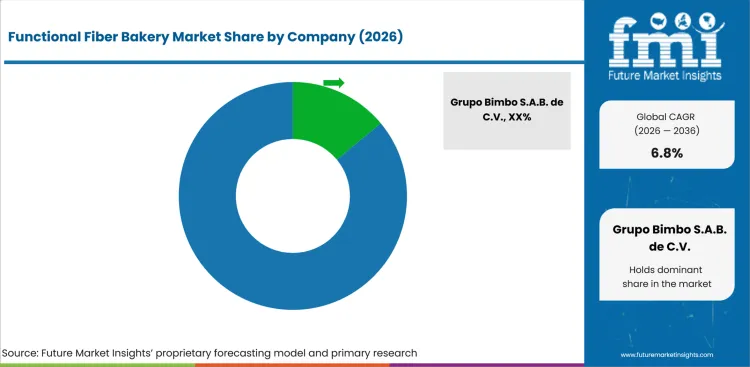
- Large bakery groups hold an advantage because they control high-volume bread lines and national retail relationships.
- Ingredient suppliers gain leverage when they provide fiber eligibility support and plant-scale bakery testing.
- Private label producers can test high-fiber bakery faster because retailers control pack design and shelf placement.
- Regional bakeries can compete when they use grain identity, seed inclusions, and shorter ingredient lists.
Competition in functional fiber bakery is shaped by recipe proof rather than claim language alone. Grupo Bimbo and Flowers Foods compete through national bakery distribution. Warburtons and Hovis compete through seeded bread credibility and retailer access in the United Kingdom. Puratos, Beneo, Ingredion, and Tate & Lyle compete by helping bakeries solve hydration, softness, and label eligibility before products reach shelf.
The best-positioned suppliers are those that can explain both the label and the dough. A fiber ingredient that qualifies for declaration but weakens texture is unlikely to scale. A bakery brand that controls softness, price, and shelf language can turn fiber from a wellness cue into a repeat purchase driver.
Key Companies
Large Bakery Groups
- Grupo Bimbo S.A.B. de C.V.
- Flowers Foods Inc.
- Warburtons Limited
Bakery Ingredient Specialists
- Puratos Group
- Beneo GmbH
Fiber Ingredient Suppliers
- Ingredion Incorporated
- Tate & Lyle PLC
Competitive Benchmarking
| Company | Fiber Claim Support | Bakery Texture Support | Retail Channel Reach | Strategic Position |
|---|---|---|---|---|
| Grupo Bimbo S.A.B. de C.V. | Medium | High | High | High-volume bakery platform with global bread reach. |
| Flowers Foods Inc. | Medium | High | High | United States packaged bakery reach and repeat retail access. |
| Warburtons Limited | Medium | High | High | United Kingdom bread credibility with seeded and health-oriented ranges. |
| Puratos Group | High | High | Medium | Bakery ingredient systems and application support. |
| Beneo GmbH | High | Medium | Medium | Functional carbohydrate and prebiotic fiber positioning. |
| Ingredion Incorporated | High | Medium | Medium | Fiber and texture ingredient portfolio with citrus fiber support. |
| Tate & Lyle PLC | High | Medium | Medium | Soluble fiber and mouthfeel formulation support. |
Source: FMI analysis based on company portfolios, official product disclosures, and bakery channel presence.
Key Developments in Functional Fiber Bakery Market
- In July 2024, Ingredion Incorporated expanded FIBERTEX CF 500 and FIBERTEX CF 100 citrus fiber ingredients across EMEA with planned wider regional availability. The company stated that the fibers support source-of-fiber and high-in-dietary-fiber claims and can be used in bakery applications.
- In November 2024, Tate & Lyle PLC presented Middle East ingredient solutions at Gulfood Manufacturing. The range included EUOLIGO FOS, a non-GMO dietary fiber, and formulation support for healthier products with taste and texture control.
- In May 2025, Puratos Group announced bakery solutions for iba 2025. The company highlighted sprouted grains that boost fiber content and taste while retaining sensory properties.
- In May 2025, Puratos Group also introduced Cubease at iba 2025 as a concentrated bakery improver. Each cube treats 10 kilograms of flour and reduces storage needs by up to 75%.
Report Scope and Coverage
| Parameter | Details |
|---|---|
| Market size by 2036 | USD 1,197.0 million |
| Growth rate | 6.8% CAGR from 2026 to 2036 |
| Forecast period | 2026 to 2036 |
| Base year value (2025) | USD 580.5 million |
| By product type | Breads, rolls, muffins, cookies, cakes, mixes |
| By fiber type | Soluble fiber, insoluble fiber, resistant starch, prebiotic fiber, mixed fiber |
| By ingredient source | Cereal fibers, fruit fibers, root fibers, legume fibers, seed fiber |
| By claim positioning | High fiber, source fiber, digestive wellness, sugar reduction, satiety support |
| By sales channel | Supermarkets, online grocery, foodservice bakery, specialty retail, convenience stores |
| By buyer type | Retail bakeries, industrial bakeries, private label, foodservice chains, in-store bakeries |
| Regions covered | North America, Europe, East Asia, GCC, Oceania, Rest of World |
| Countries covered | United States, Canada, United Kingdom, Saudi Arabia, South Korea, Japan, Australia, and 30+ countries |
| Key companies profiled | Grupo Bimbo S.A.B. de C.V., Flowers Foods Inc., Warburtons Limited, Puratos Group, Beneo GmbH, Ingredion Incorporated, Tate & Lyle PLC |
| Approach | Bottom-up product-boundary approach using eligible bakery SKU revenue, channel presence, retail pricing, fiber claim visibility, formulation purpose, bakery parent revenue, ingredient availability, retail shelf depth, and country-level adoption |
By Segments
By Product Type
- Breads
- Rolls
- Muffins
- Cookies
- Cakes
- Mixes
By Fiber Type
- Soluble Fiber
- Insoluble Fiber
- Resistant Starch
- Prebiotic Fiber
- Mixed Fiber
By Ingredient Source
- Cereal Fibers
- Fruit Fibers
- Root Fibers
- Legume Fibers
- Seed Fiber
By Claim Positioning
- High Fiber
- Source Fiber
- Digestive Wellness
- Sugar Reduction
- Satiety Support
By Sales Channel
- Supermarkets
- Online Grocery
- Foodservice Bakery
- Specialty Retail
- Convenience Stores
By Buyer Type
- Retail Bakeries
- Industrial Bakeries
- Private Label
- Foodservice Chains
- In-store Bakeries
By Region
- North America
- Europe
- East Asia
- GCC
- Oceania
- Rest of World
Sources and Bibliography
- Australian Bureau of Statistics. (2025, September 5). Food and nutrients, 2023.
- Canadian Food Inspection Agency. (2024, December). Nutrition labelling.
- European Commission. (2024, August). Dietary fibre.
- European Food Safety Authority. (2024, August 5). Dietary reference values.
- Food and Drug Administration. (2024, July 25). Questions and answers on dietary fiber.
- General Authority for Statistics. (2024, November 18). GASTAT publishes the results of Health Determinants Statistics Publication for 2024.
- Health Canada. (2025, July 11). Fibre.
- Ingredion Incorporated. (2024, July 23). Ingredion expands multi-benefit naturally sourced clean label citrus fiber.
- Korea Disease Control and Prevention Agency. (2026). National Health and Nutrition Survey.
- National Institutes of Biomedical Innovation, Health and Nutrition. (2026). National Health and Nutrition Survey.
- Office for Health Improvement and Disparities. (2025, June 11). National Diet and Nutrition Survey 2019 to 2023: report.
- Puratos Group. (2025, May 7). Puratos brings a trio of transformative innovations to iba 2025.
- Saudi Food and Drug Authority. (2024). Nutrition calculator.
- Tate & Lyle PLC. (2024, November 5). Tate & Lyle unveils ingredient solutions for the Middle East market at Gulfood Manufacturing.
- United States Department of Health and Human Services and United States Department of Agriculture. (2026). Dietary Guidelines for Americans, 2025 to 2030.
This Report Answers
- How large is the functional fiber bakery market in 2026?
- How fast is the market projected to expand through 2036?
- Which product type accounts for the highest 2026 share?
- Which fiber type is most suited to mainstream bakery formulation?
- Which countries provide the strongest growth outlook?
- How do ingredient suppliers influence bakery reformulation?
- What limits wider use of fiber in bread and sweet bakery?
- Which companies are best placed across finished bakery and ingredient supply?
Frequently Asked Questions
What is the functional fiber bakery market?
It is the market for bread, rolls, muffins, cookies, cakes, and bakery mixes that use fiber as a claim or formulation feature.
How large is the market in 2026?
The market is estimated at USD 620.0 million in 2026 based on the supplied anchor and bottom-up product-boundary sizing.
What is the market forecast for 2036?
The market is projected to reach USD 1197.0 million by 2036 at 6.8% CAGR.
Which product type leads the market?
Breads lead with 38.5% share in 2026 because daily purchase frequency supports repeat fiber claim exposure.
Which fiber type leads the market?
Soluble fiber leads with 44.0% share in 2026 because it supports softness and moisture control.
Which country grows fastest?
South Korea grows fastest at 8.2% CAGR through 2036 because bakery cafés and convenience retail can test new formats quickly.
What is the main restraint?
The main restraint is texture risk because added fiber can change dough absorption and crumb softness.
Who competes in this market?
Bakery groups and fiber ingredient suppliers compete together because finished product success depends on both retail reach and formulation support.
Preview the report firsthand - request a free sample
Get SampleGet the brochure for pricing and purchase details.
Get PDFTable of Content
- Executive Summary
- Global Market Outlook
- Demand to side Trends
- Supply to side Trends
- Technology Roadmap Analysis
- Analysis and Recommendations
- Market Overview
- Market Coverage / Taxonomy
- Market Definition / Scope / Limitations
- Research Methodology
- Chapter Orientation
- Analytical Lens and Working Hypotheses
- Market Structure, Signals, and Trend Drivers
- Benchmarking and Cross-market Comparability
- Market Sizing, Forecasting, and Opportunity Mapping
- Research Design and Evidence Framework
- Desk Research Programme (Secondary Evidence)
- Company Annual and Sustainability Reports
- Peer-reviewed Journals and Academic Literature
- Corporate Websites, Product Literature, and Technical Notes
- Earnings Decks and Investor Briefings
- Statutory Filings and Regulatory Disclosures
- Technical White Papers and Standards Notes
- Trade Journals, Industry Magazines, and Analyst Briefs
- Conference Proceedings, Webinars, and Seminar Materials
- Government Statistics Portals and Public Data Releases
- Press Releases and Reputable Media Coverage
- Specialist Newsletters and Curated Briefings
- Sector Databases and Reference Repositories
- FMI Internal Proprietary Databases and Historical Market Datasets
- Subscription Datasets and Paid Sources
- Social Channels, Communities, and Digital Listening Inputs
- Additional Desk Sources
- Expert Input and Fieldwork (Primary Evidence)
- Primary Modes
- Qualitative Interviews and Expert Elicitation
- Quantitative Surveys and Structured Data Capture
- Blended Approach
- Why Primary Evidence is Used
- Field Techniques
- Interviews
- Surveys
- Focus Groups
- Observational and In-context Research
- Social and Community Interactions
- Stakeholder Universe Engaged
- C-suite Leaders
- Board Members
- Presidents and Vice Presidents
- R&D and Innovation Heads
- Technical Specialists
- Domain Subject-matter Experts
- Scientists
- Physicians and Other Healthcare Professionals
- Governance, Ethics, and Data Stewardship
- Research Ethics
- Data Integrity and Handling
- Primary Modes
- Tooling, Models, and Reference Databases
- Desk Research Programme (Secondary Evidence)
- Data Engineering and Model Build
- Data Acquisition and Ingestion
- Cleaning, Normalisation, and Verification
- Synthesis, Triangulation, and Analysis
- Quality Assurance and Audit Trail
- Market Background
- Market Dynamics
- Drivers
- Restraints
- Opportunity
- Trends
- Scenario Forecast
- Demand in Optimistic Scenario
- Demand in Likely Scenario
- Demand in Conservative Scenario
- Opportunity Map Analysis
- Product Life Cycle Analysis
- Supply Chain Analysis
- Investment Feasibility Matrix
- Value Chain Analysis
- PESTLE and Porter’s Analysis
- Regulatory Landscape
- Regional Parent Market Outlook
- Production and Consumption Statistics
- Import and Export Statistics
- Market Dynamics
- Global Market Analysis 2021 to 2025 and Forecast, 2026 to 2036
- Historical Market Size Value (USD Million) Analysis, 2021 to 2025
- Current and Future Market Size Value (USD Million) Projections, 2026 to 2036
- Y to o to Y Growth Trend Analysis
- Absolute $ Opportunity Analysis
- Global Market Pricing Analysis 2021 to 2025 and Forecast 2026 to 2036
- Global Market Analysis 2021 to 2025 and Forecast 2026 to 2036, By Product Type
- Introduction / Key Findings
- Historical Market Size Value (USD Million) Analysis By Product Type , 2021 to 2025
- Current and Future Market Size Value (USD Million) Analysis and Forecast By Product Type , 2026 to 2036
- Breads
- Rolls
- Muffins
- Breads
- Y to o to Y Growth Trend Analysis By Product Type , 2021 to 2025
- Absolute $ Opportunity Analysis By Product Type , 2026 to 2036
- Global Market Analysis 2021 to 2025 and Forecast 2026 to 2036, By Fiber Type
- Introduction / Key Findings
- Historical Market Size Value (USD Million) Analysis By Fiber Type, 2021 to 2025
- Current and Future Market Size Value (USD Million) Analysis and Forecast By Fiber Type, 2026 to 2036
- Soluble Fiber
- Insoluble Fiber
- Resistant Starch
- Soluble Fiber
- Y to o to Y Growth Trend Analysis By Fiber Type, 2021 to 2025
- Absolute $ Opportunity Analysis By Fiber Type, 2026 to 2036
- Global Market Analysis 2021 to 2025 and Forecast 2026 to 2036, By Ingredient Source
- Introduction / Key Findings
- Historical Market Size Value (USD Million) Analysis By Ingredient Source, 2021 to 2025
- Current and Future Market Size Value (USD Million) Analysis and Forecast By Ingredient Source, 2026 to 2036
- Cereal Fibers
- Fruit Fibers
- Root Fibers
- Cereal Fibers
- Y to o to Y Growth Trend Analysis By Ingredient Source, 2021 to 2025
- Absolute $ Opportunity Analysis By Ingredient Source, 2026 to 2036
- Global Market Analysis 2021 to 2025 and Forecast 2026 to 2036, By Claim Positioning
- Introduction / Key Findings
- Historical Market Size Value (USD Million) Analysis By Claim Positioning, 2021 to 2025
- Current and Future Market Size Value (USD Million) Analysis and Forecast By Claim Positioning, 2026 to 2036
- High Fiber
- Source Fiber
- Digestive Wellness
- High Fiber
- Y to o to Y Growth Trend Analysis By Claim Positioning, 2021 to 2025
- Absolute $ Opportunity Analysis By Claim Positioning, 2026 to 2036
- Global Market Analysis 2021 to 2025 and Forecast 2026 to 2036, By Sales Channel
- Introduction / Key Findings
- Historical Market Size Value (USD Million) Analysis By Sales Channel, 2021 to 2025
- Current and Future Market Size Value (USD Million) Analysis and Forecast By Sales Channel, 2026 to 2036
- Supermarkets
- Online Grocery
- Foodservice Bakery
- Supermarkets
- Y to o to Y Growth Trend Analysis By Sales Channel, 2021 to 2025
- Absolute $ Opportunity Analysis By Sales Channel, 2026 to 2036
- Global Market Analysis 2021 to 2025 and Forecast 2026 to 2036, By Buyer Type
- Introduction / Key Findings
- Historical Market Size Value (USD Million) Analysis By Buyer Type, 2021 to 2025
- Current and Future Market Size Value (USD Million) Analysis and Forecast By Buyer Type, 2026 to 2036
- Retail Bakeries
- Industrial Bakeries
- Private Label
- Retail Bakeries
- Y to o to Y Growth Trend Analysis By Buyer Type, 2021 to 2025
- Absolute $ Opportunity Analysis By Buyer Type, 2026 to 2036
- Global Market Analysis 2021 to 2025 and Forecast 2026 to 2036, By Region
- Introduction
- Historical Market Size Value (USD Million) Analysis By Region, 2021 to 2025
- Current Market Size Value (USD Million) Analysis and Forecast By Region, 2026 to 2036
- North America
- Latin America
- Western Europe
- Eastern Europe
- East Asia
- South Asia and Pacific
- Middle East & Africa
- Market Attractiveness Analysis By Region
- North America Market Analysis 2021 to 2025 and Forecast 2026 to 2036, By Country
- Historical Market Size Value (USD Million) Trend Analysis By Market Taxonomy, 2021 to 2025
- Market Size Value (USD Million) Forecast By Market Taxonomy, 2026 to 2036
- By Country
- USA
- Canada
- Mexico
- By Product Type
- By Fiber Type
- By Ingredient Source
- By Claim Positioning
- By Sales Channel
- By Buyer Type
- By Country
- Market Attractiveness Analysis
- By Country
- By Product Type
- By Fiber Type
- By Ingredient Source
- By Claim Positioning
- By Sales Channel
- By Buyer Type
- Key Takeaways
- Latin America Market Analysis 2021 to 2025 and Forecast 2026 to 2036, By Country
- Historical Market Size Value (USD Million) Trend Analysis By Market Taxonomy, 2021 to 2025
- Market Size Value (USD Million) Forecast By Market Taxonomy, 2026 to 2036
- By Country
- Brazil
- Chile
- Rest of Latin America
- By Product Type
- By Fiber Type
- By Ingredient Source
- By Claim Positioning
- By Sales Channel
- By Buyer Type
- By Country
- Market Attractiveness Analysis
- By Country
- By Product Type
- By Fiber Type
- By Ingredient Source
- By Claim Positioning
- By Sales Channel
- By Buyer Type
- Key Takeaways
- Western Europe Market Analysis 2021 to 2025 and Forecast 2026 to 2036, By Country
- Historical Market Size Value (USD Million) Trend Analysis By Market Taxonomy, 2021 to 2025
- Market Size Value (USD Million) Forecast By Market Taxonomy, 2026 to 2036
- By Country
- Germany
- UK
- Italy
- Spain
- France
- Nordic
- BENELUX
- Rest of Western Europe
- By Product Type
- By Fiber Type
- By Ingredient Source
- By Claim Positioning
- By Sales Channel
- By Buyer Type
- By Country
- Market Attractiveness Analysis
- By Country
- By Product Type
- By Fiber Type
- By Ingredient Source
- By Claim Positioning
- By Sales Channel
- By Buyer Type
- Key Takeaways
- Eastern Europe Market Analysis 2021 to 2025 and Forecast 2026 to 2036, By Country
- Historical Market Size Value (USD Million) Trend Analysis By Market Taxonomy, 2021 to 2025
- Market Size Value (USD Million) Forecast By Market Taxonomy, 2026 to 2036
- By Country
- Russia
- Poland
- Hungary
- Balkan & Baltic
- Rest of Eastern Europe
- By Product Type
- By Fiber Type
- By Ingredient Source
- By Claim Positioning
- By Sales Channel
- By Buyer Type
- By Country
- Market Attractiveness Analysis
- By Country
- By Product Type
- By Fiber Type
- By Ingredient Source
- By Claim Positioning
- By Sales Channel
- By Buyer Type
- Key Takeaways
- East Asia Market Analysis 2021 to 2025 and Forecast 2026 to 2036, By Country
- Historical Market Size Value (USD Million) Trend Analysis By Market Taxonomy, 2021 to 2025
- Market Size Value (USD Million) Forecast By Market Taxonomy, 2026 to 2036
- By Country
- China
- Japan
- South Korea
- By Product Type
- By Fiber Type
- By Ingredient Source
- By Claim Positioning
- By Sales Channel
- By Buyer Type
- By Country
- Market Attractiveness Analysis
- By Country
- By Product Type
- By Fiber Type
- By Ingredient Source
- By Claim Positioning
- By Sales Channel
- By Buyer Type
- Key Takeaways
- South Asia and Pacific Market Analysis 2021 to 2025 and Forecast 2026 to 2036, By Country
- Historical Market Size Value (USD Million) Trend Analysis By Market Taxonomy, 2021 to 2025
- Market Size Value (USD Million) Forecast By Market Taxonomy, 2026 to 2036
- By Country
- India
- ASEAN
- Australia & New Zealand
- Rest of South Asia and Pacific
- By Product Type
- By Fiber Type
- By Ingredient Source
- By Claim Positioning
- By Sales Channel
- By Buyer Type
- By Country
- Market Attractiveness Analysis
- By Country
- By Product Type
- By Fiber Type
- By Ingredient Source
- By Claim Positioning
- By Sales Channel
- By Buyer Type
- Key Takeaways
- Middle East & Africa Market Analysis 2021 to 2025 and Forecast 2026 to 2036, By Country
- Historical Market Size Value (USD Million) Trend Analysis By Market Taxonomy, 2021 to 2025
- Market Size Value (USD Million) Forecast By Market Taxonomy, 2026 to 2036
- By Country
- Kingdom of Saudi Arabia
- Other GCC Countries
- Turkiye
- South Africa
- Other African Union
- Rest of Middle East & Africa
- By Product Type
- By Fiber Type
- By Ingredient Source
- By Claim Positioning
- By Sales Channel
- By Buyer Type
- By Country
- Market Attractiveness Analysis
- By Country
- By Product Type
- By Fiber Type
- By Ingredient Source
- By Claim Positioning
- By Sales Channel
- By Buyer Type
- Key Takeaways
- Key Countries Market Analysis
- USA
- Pricing Analysis
- Market Share Analysis, 2025
- By Product Type
- By Fiber Type
- By Ingredient Source
- By Claim Positioning
- By Sales Channel
- By Buyer Type
- Canada
- Pricing Analysis
- Market Share Analysis, 2025
- By Product Type
- By Fiber Type
- By Ingredient Source
- By Claim Positioning
- By Sales Channel
- By Buyer Type
- Mexico
- Pricing Analysis
- Market Share Analysis, 2025
- By Product Type
- By Fiber Type
- By Ingredient Source
- By Claim Positioning
- By Sales Channel
- By Buyer Type
- Brazil
- Pricing Analysis
- Market Share Analysis, 2025
- By Product Type
- By Fiber Type
- By Ingredient Source
- By Claim Positioning
- By Sales Channel
- By Buyer Type
- Chile
- Pricing Analysis
- Market Share Analysis, 2025
- By Product Type
- By Fiber Type
- By Ingredient Source
- By Claim Positioning
- By Sales Channel
- By Buyer Type
- Germany
- Pricing Analysis
- Market Share Analysis, 2025
- By Product Type
- By Fiber Type
- By Ingredient Source
- By Claim Positioning
- By Sales Channel
- By Buyer Type
- UK
- Pricing Analysis
- Market Share Analysis, 2025
- By Product Type
- By Fiber Type
- By Ingredient Source
- By Claim Positioning
- By Sales Channel
- By Buyer Type
- Italy
- Pricing Analysis
- Market Share Analysis, 2025
- By Product Type
- By Fiber Type
- By Ingredient Source
- By Claim Positioning
- By Sales Channel
- By Buyer Type
- Spain
- Pricing Analysis
- Market Share Analysis, 2025
- By Product Type
- By Fiber Type
- By Ingredient Source
- By Claim Positioning
- By Sales Channel
- By Buyer Type
- France
- Pricing Analysis
- Market Share Analysis, 2025
- By Product Type
- By Fiber Type
- By Ingredient Source
- By Claim Positioning
- By Sales Channel
- By Buyer Type
- India
- Pricing Analysis
- Market Share Analysis, 2025
- By Product Type
- By Fiber Type
- By Ingredient Source
- By Claim Positioning
- By Sales Channel
- By Buyer Type
- ASEAN
- Pricing Analysis
- Market Share Analysis, 2025
- By Product Type
- By Fiber Type
- By Ingredient Source
- By Claim Positioning
- By Sales Channel
- By Buyer Type
- Australia & New Zealand
- Pricing Analysis
- Market Share Analysis, 2025
- By Product Type
- By Fiber Type
- By Ingredient Source
- By Claim Positioning
- By Sales Channel
- By Buyer Type
- China
- Pricing Analysis
- Market Share Analysis, 2025
- By Product Type
- By Fiber Type
- By Ingredient Source
- By Claim Positioning
- By Sales Channel
- By Buyer Type
- Japan
- Pricing Analysis
- Market Share Analysis, 2025
- By Product Type
- By Fiber Type
- By Ingredient Source
- By Claim Positioning
- By Sales Channel
- By Buyer Type
- South Korea
- Pricing Analysis
- Market Share Analysis, 2025
- By Product Type
- By Fiber Type
- By Ingredient Source
- By Claim Positioning
- By Sales Channel
- By Buyer Type
- Russia
- Pricing Analysis
- Market Share Analysis, 2025
- By Product Type
- By Fiber Type
- By Ingredient Source
- By Claim Positioning
- By Sales Channel
- By Buyer Type
- Poland
- Pricing Analysis
- Market Share Analysis, 2025
- By Product Type
- By Fiber Type
- By Ingredient Source
- By Claim Positioning
- By Sales Channel
- By Buyer Type
- Hungary
- Pricing Analysis
- Market Share Analysis, 2025
- By Product Type
- By Fiber Type
- By Ingredient Source
- By Claim Positioning
- By Sales Channel
- By Buyer Type
- Kingdom of Saudi Arabia
- Pricing Analysis
- Market Share Analysis, 2025
- By Product Type
- By Fiber Type
- By Ingredient Source
- By Claim Positioning
- By Sales Channel
- By Buyer Type
- Turkiye
- Pricing Analysis
- Market Share Analysis, 2025
- By Product Type
- By Fiber Type
- By Ingredient Source
- By Claim Positioning
- By Sales Channel
- By Buyer Type
- South Africa
- Pricing Analysis
- Market Share Analysis, 2025
- By Product Type
- By Fiber Type
- By Ingredient Source
- By Claim Positioning
- By Sales Channel
- By Buyer Type
- USA
- Market Structure Analysis
- Competition Dashboard
- Competition Benchmarking
- Market Share Analysis of Top Players
- By Regional
- By Product Type
- By Fiber Type
- By Ingredient Source
- By Claim Positioning
- By Sales Channel
- By Buyer Type
- Competition Analysis
- Competition Deep Dive
- Grupo Bimbo S.A.B. de C.V.
- Overview
- Product Portfolio
- Profitability by Market Segments (Product/Age /Sales Channel/Region)
- Sales Footprint
- Strategy Overview
- Marketing Strategy
- Product Strategy
- Channel Strategy
- Flowers Foods Inc.
- Warburtons Limited
- Puratos Group
- Beneo GmbH
- Grupo Bimbo S.A.B. de C.V.
- Competition Deep Dive
- Assumptions & Acronyms Used


