Garment Sorting Robot Market : Global Industry Analysis and Opportunity Assessment, 2036

The Garment Sorting Robot Market is segmented by Robot Type, Sorting Target, End Use, Deployment, Sales Model, and Region. Forecast for 2026 to 2036.

  • Market Size (2026): USD 640.6 Mn
  • Forecast (2036): USD 2,546.9 Mn
  • CAGR (2026 to 2036): 14.8%
Methodology

How big is the garment sorting robot market in 2026?

USD 640.6 million in 2026 and USD 2,546.9 million by 2036 at a 14.8% CAGR.

The garment sorting robot market was valued at USD 558.0 million in 2025. It is expected to grow from USD 640.6 million in 2026 to USD 2,546.9 million in 2036 at a CAGR of 14.8%. Apparel warehouses and textile recyclers are moving from manual sorting to workflow-specific cells that can identify labels and manage soft items. AI vision sorting robots are projected to hold a 38.5% share in 2026, driven by garment recognition and label‑reading applications, while size/SKU sorting is expected to secure a 34.0% share as order accuracy becomes a key buyer selection criterion.
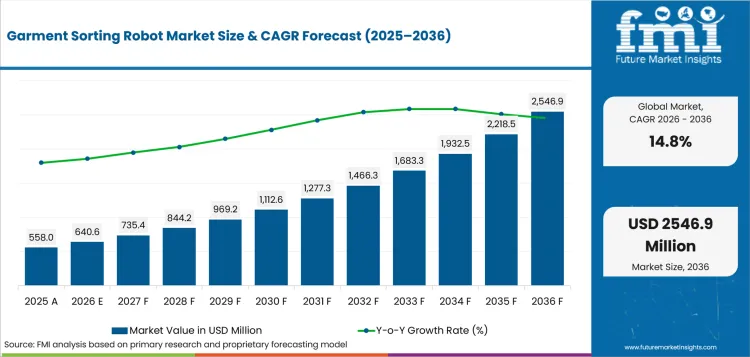
Garment Sorting Robot Market Value Analysis

Summary of the Garment Sorting Robot Market

Market Signal Commercial Impact
Demand and Growth Drivers Garment sorting robot demand is expanding as apparel warehouses and recycling facilities automate sorting to reduce labor costs and improve throughput.
  • Apparel warehouse demand growth is supported by faster item induction for polybagged garments and folded returns.
  • Textile recycling adoption is attributable to stricter sorting requirements before reuse or fiber recovery.
  • Retrofit cell sales are expected to be driven by e-commerce return flows in active fulfillment centers.
  • Market outlook benefits from AMR-connected sort points that reduce fixed-conveyor rebuild risk.
Product and Segment View AI Vision Sorting Robots, Size / SKU sorting, Apparel Warehouses, Retrofit Sorting Cells, and Capex Purchase dominate their respective market segments.
  • AI Vision Sorting Robots are projected to account for 38.5% of 2026 revenue, supported by garment recognition and label-reading applications.
  • Size / SKU sorting is expected to secure 34.0% of 2026 revenue, driven by order accuracy and inventory management requirements.
  • Apparel Warehouses are forecast to represent 41.0% of 2026 revenue, reflecting growing automation across returns processing.
  • Retrofit Sorting Cells are projected to hold 56.0% of 2026 revenue, supported by brownfield warehouse modernization strategies.
  • Capex Purchase is expected to account for 52.0% of 2026 revenue, driven by long-term automation investment planning.
Geography and Growth Outlook India, China, and South Korea are expected to remain high-growth markets as warehouse automation and textile recycling investments increase.
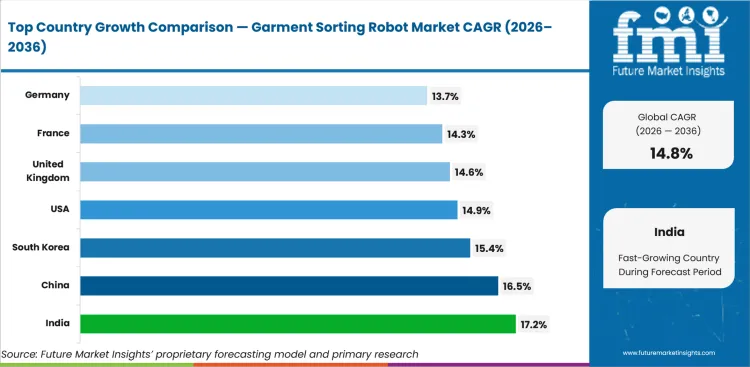
  • India is projected to grow at a 17.2% CAGR (2026–2036), supported by apparel export expansion and phased warehouse automation.
  • China is expected to expand at a 16.5% CAGR (2026-2036), driven by large-scale e-commerce operations and domestic robotics suppliers.
  • South Korea is forecast to grow at a 15.4% CAGR (2026-2036), supported by compact logistics facilities and third-party logistics automation.
Competitive Landscape Competition is increasingly focused on intelligent garment handling, AI vision performance, and seamless warehouse automation integration.
  • ABB and FANUC compete through robotic handling systems designed for apparel induction and automated sorting.
  • TOMRA and Pellenc ST strengthen their positions through advanced optical sorting technologies supporting textile recovery and recycling operations.
Analyst Perspective Garment sorting robots are evolving into workflow automation platforms that improve sorting accuracy, labor efficiency, and warehouse productivity.
  • Industrial buyers increasingly evaluate garment singulation accuracy, label recognition, and routing performance before automation investments.
  • System selection is becoming closely linked with warehouse software integration and automated error recovery capabilities.
  • Suppliers combining AI vision, robotic handling expertise, and warehouse software integration are expected to strengthen customer retention and long-term deployment opportunities.

- Nikhil Kaitwade, Principal Consultant for Industrial Automation at FMI

Automation demand is shaped by wider warehouse robotics spending. ABB lists its Robotic Fashion Inductor for apparel and accessories. The module reaches up to 1,300 picks per hour and more than 99.5% picking accuracy. TOMRA applies near-infrared and visual spectrometry to textile sorting. This gives garment robot demand a textile recycling capacity route. Supplier selection in textile recycling projects is shaped by material recognition that improves pre-processing before fiber recovery.

Which factors support expansion in the garment sorting robot market?

Finished robot cell revenue and retrofit integration work support market value across apparel logistics and textile recovery sites.

  • Market value is supported by robot cells that combine grippers and cameras and safety hardware for soft goods.
  • Supplier pricing reflects vision packages and WMS links before service contracts affect total installed cost.
  • Revenue improves from retailer conversion of manual returns work into automated dock-to-stock workflows.
  • Buyer trust rises after live-site demonstrations show stable handling across garments and polybags.

Why is the garment sorting robot market growing?

Apparel returns and textile recovery sites need faster sorting. They also need better item recognition and lower manual rework.

Growth outlook has become more structured after apparel logistics moved beyond parcel handling. The U.S. Census Bureau reported Q1 2026 retail e-commerce sales of USD 302.3 billion on a not-adjusted basis and a 16.8% share of total retail sales. Buyers often benchmark these systems against broader clothing recycling workflows during textile recovery assessments.

The recycling side is another separate demand route. The European Environment Agency reported in March 2025 that EU Member States generated about 6.94 million tonnes of textile waste in 2022. EU rules entering force in October 2025 require separately collected textiles to undergo sorting before possible shipment. These rules make industrial robotics relevant for repeatable handling and inspection at textile recovery sites.

How is the garment sorting robot market segmented?

The garment sorting robot industry is segmented by robot type and sorting target. End use and deployment define two remaining parent segments. Sales model defines the final parent segment.

  • AI Vision Sorting Robots are projected to secure 38.5% share in 2026 supported by image-based recognition of garment type and labels.
  • Size / SKU sorting is anticipated to hold 34.0% share in 2026 attributable to reshipment and markdown cost controls.
  • Apparel Warehouses are expected to capture 41.0% share in 2026 due to high SKU volume and return-to-stock pressure.
  • Retrofit Sorting Cells are forecast to represent 56.0% share in 2026 supported by brownfield upgrades at active warehouses.
  • Capex Purchase is projected to account for 52.0% share in 2026 attributable to asset control and fixed depreciation planning.

Which robot type category holds a notable share in the garment sorting robot market?
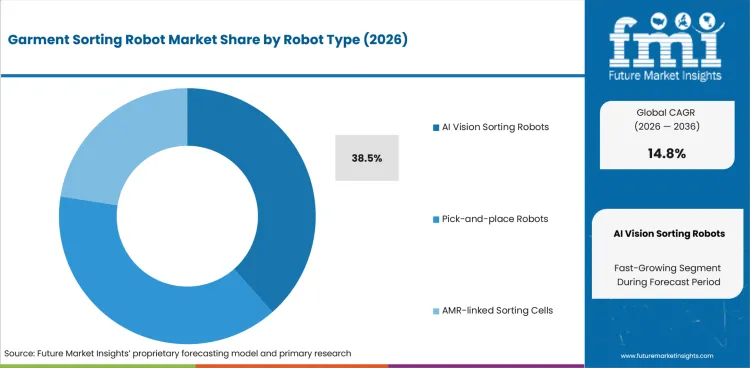
Garment Sorting Robot Market Analysis By Robot Type

  • AI Vision Sorting Robots are projected to account for 38.5% share in 2026 supported by label reading and garment recognition.
  • Pick-and-place robots remain relevant in controlled cells that need proven grippers and repeatable item transfer.

How does the sorting target segment perform in the garment sorting robot market?
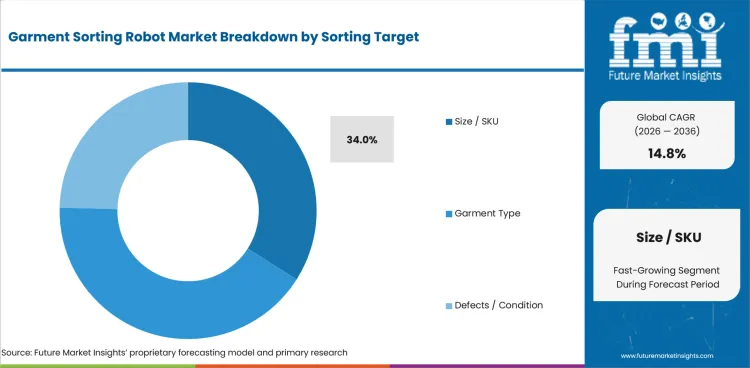
Garment Sorting Robot Market Analysis By Sorting Target

  • Size / SKU sorting is expected to hold 34.0% share in 2026 attributable to item accuracy in warehouse investment decisions.
  • Defects / Condition sorting gains support from recyclers that need cleaner fractions before reuse or fiber recovery.

What drives demand across the end use segment in the garment sorting robot market?
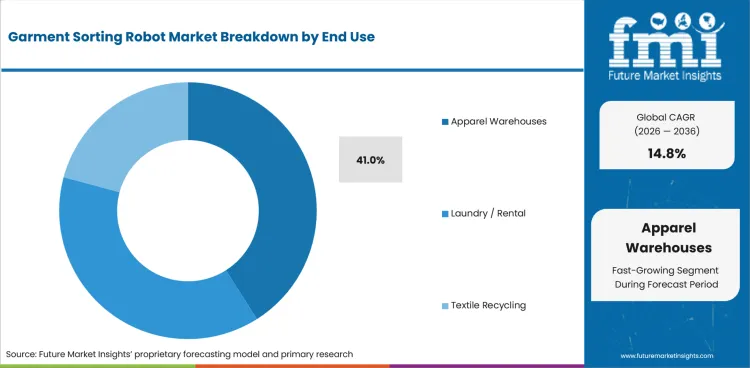
Garment Sorting Robot Market Analysis By End Use

  • Apparel Warehouses are anticipated to represent 41.0% share in 2026 due to returns and high-SKU order flows.
  • Textile Recycling gains relevance from sorting quality that determines material value before mechanical or chemical recovery.

Which deployment segment shows a prominent position in the garment sorting robot market?
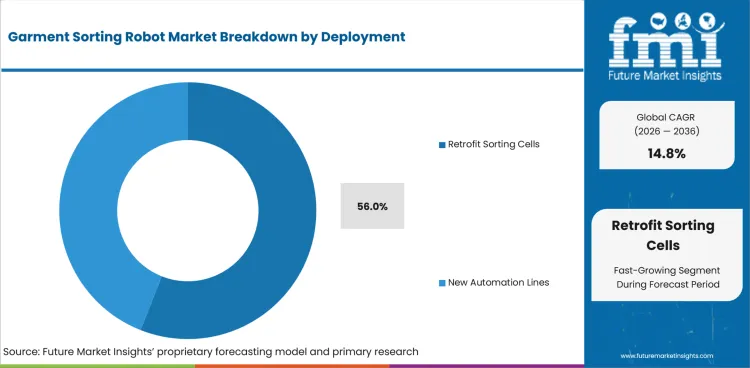
Garment Sorting Robot Market Analysis By Deployment

  • Retrofit Sorting Cells are projected to hold 56.0% share in 2026 supported by operator preference for upgrades inside live sites.
  • New Automation Lines remain useful for greenfield sites that can design conveyors and safety zones from the start.

How are buyers selecting across sales model options in the garment sorting robot market?
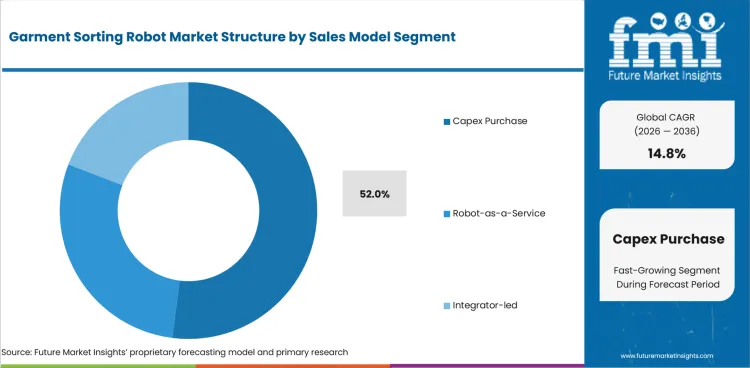
Garment Sorting Robot Market Analysis By Sales Model

  • Capex Purchase is estimated to hold 52.0% share in 2026 attributable to enterprise preference for owned assets.
  • Robot-as-a-Service can support mid-sized operators that need trial access before committing capital.

What are the driver, restraints, and opportunities in the garment sorting robot market?
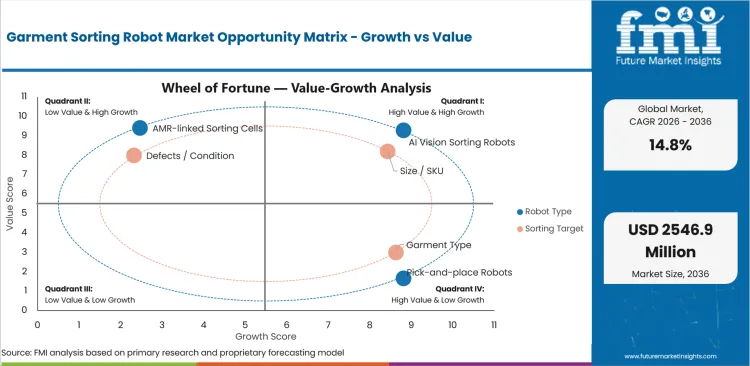
Garment Sorting Robot Market Opportunity Matrix Growth Vs Value

Returns recovery and textile sorting support growth. Soft-goods handling risk slows wider deployment.

  • Driver: Returns recovery favors robots that shorten dock-to-stock time for sellable garments.
  • Restraint: Soft-goods manipulation raises failure risk for loose garments and irregular polybags.
  • Opportunity: Integrator-led retrofits can reach mid-sized warehouses that cannot fund full automation lines.

Garment Sorting Robot Market Demand Outlook

Demand outlook is moving toward cells that prove uptime before scale purchasing. GreyOrange reported a February 2024 fashion case using more than 160 AMRs and mobile sorters to reduce fulfillment time by 50%. This supports stronger buyer interest in Robotics-as-a-Service for smaller apparel sites that want automation without a full capex cycle.

Textile Feedstock Sorting Analysis

Textile feedstock sorting is expected to become a clearer application route after the revised EU Waste Framework Directive entered force in October 2025. The European Commission stated that separately collected textiles must undergo sorting before possible shipment. This requirement improves the case for automated material handling equipment in recycling facilities that need stable pre-processing.

Soft-Goods Handling Constraint

The main restraint remains reliable handling of deformable items. FANUC America shows an apparel induction example that processes 1,800 packages per hour using 3D vision. Buyers still test loose garments and returns bins carefully before they approve material handling equipment projects.

Which countries are growing fastest in the garment sorting robot market?

India 17.2% CAGR, China 16.5% CAGR, South Korea 15.4% CAGR, United States 14.9% CAGR, United Kingdom 14.6% CAGR, France 14.3% CAGR, Germany 13.7% CAGR, and Japan 12.8% CAGR through 2036.

Top Country Growth Comparison Garment Sorting Robot Market Cagr (2026 2036)

Country CAGR
India 17.2%
China 16.5%
South Korea 15.4%
United States 14.9%
United Kingdom 14.6%
France 14.3%
Germany 13.7%
Japan 12.8%

Source: Future Market Insights, 2026.

Garment Sorting Robot Market Cagr Analysis By Country

How do country-level CAGRs compare in the garment sorting robot market?

  • India is forecast to record 11.4% CAGR by 2036, supported by cricket venue density and fast cashless payment adoption.
  • China is projected to record 10.8% CAGR by 2036, driven by smart-venue investment and digital payment-led self-service use.
  • South Korea is estimated to record 10.1% CAGR by 2036, attributable to kiosk familiarity and dense sports venue traffic.
  • The United States is expected to record 9.5% CAGR by 2036, led by enterprise POS integration and large event calendars.
  • The United Kingdom is likely to post 9.1% CAGR by 2036, supported by contactless payment maturity and stadium refurbishment demand.
  • Japan is forecast to record 9.0% CAGR by 2036, driven by service automation and local self-service hardware depth.
  • Germany is projected to record 8.8% CAGR by 2036, shaped by high stadium attendance and cautious system integration cycles.
  • France is expected to record 8.6% CAGR by 2036, supported by venue modernization and local kiosk integration capability.

How fast is the fan engagement kiosk market growing in India?

India is forecast to record an 11.4% CAGR through 2036. Growth is supported by cricket-led crowd peaks and cashless venue service needs.

Country Market Snapshot

Parameter Value
Market Size in 2025 USD 67.3 million
Market Size in 2026 USD 75.0 million
Market Forecast in 2036 USD 220.8 million
CAGR 2026 to 2036 11.4%
Years Considered 2021 to 2036
Base Year 2025
Forecast Period 2026 to 2036
Units Considered Value in USD million
Leading Sub-Region Mumbai, Ahmedabad, Delhi, Bengaluru, Hyderabad and Chennai venue clusters

India Fan Engagement Kiosk Market Outlook

India’s kiosk demand is supported by cricket stadium queues and fast payment digitization. Venue buyers need terminals that connect ticket recovery, loyalty use and wallet payments in premium stands.

Local service partners are expected to reduce event-day downtime risk. This makes system integration and field support important for fan entry and concession use.

Key Growth Drivers

  • Cashless ordering is supported by digital payment readiness, with PIB reporting UPI value above ₹314 lakh crore in FY 2025 to 2026.
  • Wider retail payment access is driven by banking participation, with PIB reporting more than 700 banks on UPI in April 2026.
  • Premium fan zones are expected to support interactive loyalty terminals across cricket venues.
  • Franchise event seasons are expected to create repeat installation demand across metro venues.

Key Restraints

  • System integration remains a budget risk, with PIB reporting 55.98 crore Jan Dhan beneficiaries in August 2025.
  • Price-sensitive venues can delay POS and CRM integration until service partners prove uptime.
  • Mixed ticketing and payment vendors can lengthen testing before event-day deployment.

What makes India unique?

India pairs large live-event crowds with fast payment digitization across metro venues.

Key Companies

  • Samsung India
  • Oracle India
  • NCR Voyix India
  • Advantech India
  • POSBANK India
  • Wavetec India
  • Diebold Nixdorf India

Sales & Marketing Channels

  • State sports body procurement
  • Franchise ownership groups
  • Event management companies
  • Local system integrators
  • Payment service partners
  • Stadium refurbishment contractors

Country Segment Breakdown

Segment Sub-Segments
By Kiosk Type Self-service Ticketing Kiosks · Interactive Content Kiosks · Merchandise / Loyalty Kiosks · Food & Beverage Order Kiosks
By Venue Type Stadiums · Arenas · Fan Zones · Esports / Entertainment Venues
By Function Ticketing / Check-in · Wayfinding · Loyalty & Promotions · Cashless Ordering
By Connectivity Standalone · POS / CRM Integrated · Cloud-managed
By Sales Channel Direct OEM · Venue Integrators · Software Partners
Key Sub-Regions Covered Mumbai · Ahmedabad · Delhi · Bengaluru · Hyderabad · Chennai

Frequently Asked Questions

How fast is India fan engagement kiosk market growing?

India is forecast to expand at an 11.4% CAGR from 2026 to 2036.

Who leads India fan engagement kiosk market?

Samsung India, Oracle India, NCR Voyix India and Advantech India compete through local hardware access and service coverage.

What is driving adoption in India fan engagement kiosk market?

Cashless payments and cricket venue queues support early self-service deployment.

What is shaping fan engagement kiosk demand in China?

China is projected to record a 10.8% CAGR through 2036. Growth is supported by smart-venue investment and payment-led self-service use cases.

Country Market Snapshot

Parameter Value
Market Size in 2025 USD 99.3 million
Market Size in 2026 USD 110.0 million
Market Forecast in 2036 USD 306.8 million
CAGR 2026 to 2036 10.8%
Years Considered 2021 to 2036
Base Year 2025
Forecast Period 2026 to 2036
Units Considered Value in USD million
Leading Sub-Region Shanghai, Beijing, Shenzhen, Guangzhou, Chengdu and Hangzhou venue clusters

China Fan Engagement Kiosk Market Outlook

China’s kiosk industry is driven by urban entertainment districts and digital retail behavior. Smart-stadium buyers treat kiosks as part of payment and content-management packages.

Domestic POS and display suppliers improve price access and service coverage for venue operators. This supports wider testing across stadiums, esports venues and entertainment districts.

Key Growth Drivers

  • Kiosk ordering is supported by digital retail behavior, with NBS reporting online retail sales of 15,972.2 billion yuan in 2025.
  • Venue upgrade demand is driven by entertainment mobility, with China reporting more than 6.5 billion domestic trips in 2025.
  • Smart-venue projects are expected to combine interactive screens and self-service payment flows.
  • Local POS and IoT hardware makers are expected to improve price access for venue operators.

Key Restraints

  • Optional venue upgrades can slow during retail caution, with NBS reporting retail sales growth of 3.7% in 2025.
  • Foreign suppliers can face longer localization cycles for payment and data workflows.
  • Public venue procurement can favor domestic integrators in several project types.

What makes China unique?

China offers a large venue pipeline and widespread digital payment behavior across urban entertainment clusters.

Key Companies

  • SUNMI
  • Telpo
  • Advantech China
  • Hisense Commercial Display
  • Samsung China
  • Oracle China
  • NCR Voyix China

Sales & Marketing Channels

  • Public venue procurement
  • Smart-venue integrators
  • Domestic display distributors
  • POS and payment partners
  • Esports venue operators
  • Entertainment district developers

Country Segment Breakdown

Segment Sub-Segments
By Kiosk Type Self-service Ticketing Kiosks · Interactive Content Kiosks · Merchandise / Loyalty Kiosks · Food & Beverage Order Kiosks
By Venue Type Stadiums · Arenas · Fan Zones · Esports / Entertainment Venues
By Function Ticketing / Check-in · Wayfinding · Loyalty & Promotions · Cashless Ordering
By Connectivity Standalone · POS / CRM Integrated · Cloud-managed
By Sales Channel Direct OEM · Venue Integrators · Software Partners
Key Sub-Regions Covered Shanghai · Beijing · Shenzhen · Guangzhou · Chengdu · Hangzhou

Frequently Asked Questions

How fast is China fan engagement kiosk market growing?

China is forecast to expand at a 10.8% CAGR from 2026 to 2036.

Who leads China fan engagement kiosk market?

SUNMI, Telpo, Advantech China and Hisense Commercial Display compete through local hardware access and service coverage.

What is driving adoption in China fan engagement kiosk market?

Smart-venue programs and digital payment habits support connected kiosk demand.

How is South Korea performing in the fan engagement kiosk market?

South Korea is estimated to record a 10.1% CAGR through 2036. Growth is supported by kiosk familiarity and dense entertainment venue traffic.

Country Market Snapshot

Parameter Value
Market Size in 2025 USD 38.1 million
Market Size in 2026 USD 42.0 million
Market Forecast in 2036 USD 109.9 million
CAGR 2026 to 2036 10.1%
Years Considered 2021 to 2036
Base Year 2025
Forecast Period 2026 to 2036
Units Considered Value in USD million
Leading Sub-Region Seoul, Incheon, Busan, Daegu, Daejeon and Gwangju venue clusters

South Korea Fan Engagement Kiosk Market Outlook

South Korea demand is supported by familiar self-service ordering and high-density baseball venues. Esports and baseball venues need compact terminals for merchandise and quick order pickup.

Local POS suppliers are expected to reduce field-service risk during short event schedules. This makes service coverage important for venue-grade kiosk adoption.

Key Growth Drivers

  • Ticketing and self-service interfaces are supported by online buying habits, with Statistics Korea reporting online shopping value of 24.1280 trillion won in April 2026.
  • Concentrated entry and concession demand is driven by baseball crowds, with KBO attendance reaching 6.1 million fans by June 2026.
  • Esports venues are expected to expand kiosk use across merchandise and fan-zone activation.
  • Local POS makers are expected to support faster field service for venue-grade terminals.

Key Restraints

  • Higher service expectations can raise support costs, with the Bank of Korea holding the base rate at 2.50% in May 2026.
  • Older arenas can require additional cabling before cloud-managed terminals are installed.
  • Small venues may prefer handheld POS devices before permanent kiosk networks.

What makes South Korea unique?

South Korea pairs kiosk familiarity with dense sports and esports venues in major cities.

Key Companies

  • Samsung Electronics
  • LG Electronics
  • POSBANK
  • Hyosung TNS
  • Oracle Korea
  • Elo Touch Solutions Korea
  • NCR Voyix Korea

Sales & Marketing Channels

  • Venue operators
  • Foodservice technology resellers
  • Korean POS distributors
  • Esports venue owners
  • System integration partners
  • Display solution channels

Country Segment Breakdown

Segment Sub-Segments
By Kiosk Type Self-service Ticketing Kiosks · Interactive Content Kiosks · Merchandise / Loyalty Kiosks · Food & Beverage Order Kiosks
By Venue Type Stadiums · Arenas · Fan Zones · Esports / Entertainment Venues
By Function Ticketing / Check-in · Wayfinding · Loyalty & Promotions · Cashless Ordering
By Connectivity Standalone · POS / CRM Integrated · Cloud-managed
By Sales Channel Direct OEM · Venue Integrators · Software Partners
Key Sub-Regions Covered Seoul · Incheon · Busan · Daegu · Daejeon · Gwangju

Frequently Asked Questions

How fast is South Korea fan engagement kiosk market growing?

South Korea is forecast to expand at a 10.1% CAGR from 2026 to 2036.

Who leads South Korea fan engagement kiosk market?

Samsung Electronics, LG Electronics, POSBANK and Hyosung TNS compete through local hardware access and service coverage.

What is driving adoption in South Korea fan engagement kiosk market?

Kiosk familiarity and sports attendance support demand in high-density venue corridors.

What is the fan engagement kiosk outlook in the United States?

The United States is expected to record a 9.5% CAGR through 2036. Growth is supported by high event frequency and enterprise POS integration demand.

Country Market Snapshot

Parameter Value
Market Size in 2025 USD 173.5 million
Market Size in 2026 USD 190.0 million
Market Forecast in 2036 USD 470.9 million
CAGR 2026 to 2036 9.5%
Years Considered 2021 to 2036
Base Year 2025
Forecast Period 2026 to 2036
Units Considered Value in USD million
Leading Sub-Region Southeast, Texas, California, New York, Midwest and Pacific venue corridors

United States Fan Engagement Kiosk Market Outlook

United States demand is driven by high event frequency and enterprise venue commerce systems. Large stadium operators can spread kiosk costs across sports and concert calendars.

POS-connected terminals are useful for concessions that need payment data and kitchen handoff. This keeps integration depth central to venue procurement.

Key Growth Drivers

  • Large sports venues need self-service capacity during short gate and concession peaks.
  • Event density supports kiosk placement, with MLB reporting 71.4 million fans for the 2025 season.
  • Venue-adjacent spending supports commercial upgrades, with BEA reporting USD 696.7 billion in 2024 outdoor recreation value added.
  • Enterprise POS integration advanced as NCR Voyix and GRUBBRR brought Aloha Kiosk to restaurant operators in May 2024.

Key Restraints

  • Project budgets remain sensitive to capital allocation, with BEA estimating real GDP growth at 1.6% in Q1 2026.
  • Legacy concession contracts can slow kiosk software integration.
  • Accessibility and payment compliance can raise project complexity for older venues.

What makes United States unique?

The United States has a deep base of venue operators and POS suppliers.

Key Companies

  • NCR Voyix
  • Oracle MICROS
  • Samsung Electronics America
  • Zebra Technologies
  • KIOSK Information Systems
  • REDYREF Interactive Kiosks
  • Diebold Nixdorf

Sales & Marketing Channels

  • Team ownership groups
  • Stadium concessionaires
  • Venue commerce integrators
  • Ticketing platform partners
  • Kiosk OEM direct sales
  • Sports technology consultants

Country Segment Breakdown

Segment Sub-Segments
By Kiosk Type Self-service Ticketing Kiosks · Interactive Content Kiosks · Merchandise / Loyalty Kiosks · Food & Beverage Order Kiosks
By Venue Type Stadiums · Arenas · Fan Zones · Esports / Entertainment Venues
By Function Ticketing / Check-in · Wayfinding · Loyalty & Promotions · Cashless Ordering
By Connectivity Standalone · POS / CRM Integrated · Cloud-managed
By Sales Channel Direct OEM · Venue Integrators · Software Partners
Key Sub-Regions Covered Southeast · Texas · California · New York · Midwest · Pacific Coast

Frequently Asked Questions

How fast is United States fan engagement kiosk market growing?

The United States is forecast to expand at a 9.5% CAGR from 2026 to 2036.

Who leads United States fan engagement kiosk market?

NCR Voyix, Oracle MICROS, Samsung Electronics America and Zebra Technologies compete through hardware access and service coverage.

What is driving adoption in United States fan engagement kiosk market?

Enterprise venue commerce and large event calendars support connected kiosk procurement.

How is the fan engagement kiosk forecast developing in the United Kingdom?

The United Kingdom is likely to post a 9.1% CAGR through 2036. Growth is supported by contactless payment maturity and stadium refurbishment demand.

Country Market Snapshot

Parameter Value
Market Size in 2025 USD 53.2 million
Market Size in 2026 USD 58.0 million
Market Forecast in 2036 USD 138.6 million
CAGR 2026 to 2036 9.1%
Years Considered 2021 to 2036
Base Year 2025
Forecast Period 2026 to 2036
Units Considered Value in USD million
Leading Sub-Region London, Manchester, Birmingham, Liverpool, Glasgow and Leeds venue clusters

United Kingdom Fan Engagement Kiosk Market Outlook

United Kingdom demand is supported by contactless payment maturity and football venue refurbishment. Club and arena buyers use kiosks for entry support and concession queues.

Local integrators remain important in projects that need payment compliance and match-day support. This makes implementation capability as important as terminal selection.

Key Growth Drivers

  • Cashless concessions are supported by contactless payment habits, with UK Finance reporting 18.9 billion contactless payments in 2024.
  • Self-service ordering is supported by wallet use, with UK Finance reporting that half of UK adults regularly used mobile contactless payments in 2024.
  • Stadium refurbishment is expected to support kiosk placement in concourses and premium areas.
  • Venue operators are expected to use kiosks for queue control during football and concert schedules.

Key Restraints

  • Consumer cost pressure can delay nonessential venue upgrades, with ONS reporting CPI inflation of 2.8% in May 2026.
  • Historic venues can limit floor space for freestanding terminals.
  • Concession contract integration can add procurement steps for kiosk rollouts.

What makes United Kingdom unique?

The United Kingdom pairs contactless payment maturity with high-use football and entertainment venues.

Key Companies

  • Oracle UK
  • Samsung Electronics UK
  • Acrelec UK
  • Evoke Creative
  • Elo Touch Solutions UK
  • Glory Global Solutions UK
  • NCR Voyix UK

Sales & Marketing Channels

  • Football club procurement
  • Arena operators
  • Venue concessionaires
  • UK kiosk integrators
  • Payment technology partners
  • Digital signage resellers

Country Segment Breakdown

Segment Sub-Segments
By Kiosk Type Self-service Ticketing Kiosks · Interactive Content Kiosks · Merchandise / Loyalty Kiosks · Food & Beverage Order Kiosks
By Venue Type Stadiums · Arenas · Fan Zones · Esports / Entertainment Venues
By Function Ticketing / Check-in · Wayfinding · Loyalty & Promotions · Cashless Ordering
By Connectivity Standalone · POS / CRM Integrated · Cloud-managed
By Sales Channel Direct OEM · Venue Integrators · Software Partners
Key Sub-Regions Covered London · Manchester · Birmingham · Liverpool · Glasgow · Leeds

Frequently Asked Questions

How fast is United Kingdom fan engagement kiosk market growing?

The United Kingdom is forecast to expand at a 9.1% CAGR from 2026 to 2036.

Who leads United Kingdom fan engagement kiosk market?

Oracle UK, Samsung Electronics UK, Acrelec UK and Evoke Creative compete through local hardware access and service coverage.

What is driving adoption in United Kingdom fan engagement kiosk market?

Contactless payment behavior and stadium refurbishments support kiosk use across venues.

What supports fan engagement kiosk growth in Japan?

Japan is forecast to record a 9.0% CAGR through 2036. Growth is supported by venue service automation and local self-service hardware depth.

Country Market Snapshot

Parameter Value
Market Size in 2025 USD 47.7 million
Market Size in 2026 USD 52.0 million
Market Forecast in 2036 USD 123.1 million
CAGR 2026 to 2036 9.0%
Years Considered 2021 to 2036
Base Year 2025
Forecast Period 2026 to 2036
Units Considered Value in USD million
Leading Sub-Region Tokyo, Osaka, Yokohama, Nagoya, Fukuoka and Sapporo venue clusters

Japan Fan Engagement Kiosk Market Outlook

Japan demand is supported by cashless policy goals and transport-connected venues. Venue buyers value multilingual wayfinding and orderly ticket recovery in dense city districts.

Local electronics suppliers make service coverage easier for long event schedules. This supports terminal adoption in premium event districts and high-traffic venues.

Key Growth Drivers

  • Kiosk payment readiness is supported by cashless policy goals, with METI reporting a 42.8% cashless payment ratio for 2024.
  • Multilingual wayfinding demand is supported by large urban venues, with JNTO reporting 36.87 million inbound visitors in 2024.
  • Local electronics suppliers are expected to support shorter service cycles for venue terminals.
  • Premium event districts are expected to support kiosks for ticket recovery and fan information.

Key Restraints

  • Labor and service cost pressure can slow smaller venue projects, with Japan reporting CPI inflation of 1.5% in May 2026.
  • Legacy ticketing systems can delay API integration for stadium kiosks.
  • Space limits in older venues can favor handheld POS over full-size terminals.

What makes Japan unique?

Japan has clear local hardware capability and venue automation needs in dense urban corridors.

Key Companies

  • Glory Ltd.
  • NEC Corporation
  • Panasonic Connect
  • Fujitsu
  • Toshiba Tec
  • Oracle Japan
  • Samsung Japan

Sales & Marketing Channels

  • Venue operators
  • Electronics integrators
  • Ticketing platform partners
  • Rail-connected venue districts
  • Foodservice technology resellers
  • Local POS distributors

Country Segment Breakdown

Segment Sub-Segments
By Kiosk Type Self-service Ticketing Kiosks · Interactive Content Kiosks · Merchandise / Loyalty Kiosks · Food & Beverage Order Kiosks
By Venue Type Stadiums · Arenas · Fan Zones · Esports / Entertainment Venues
By Function Ticketing / Check-in · Wayfinding · Loyalty & Promotions · Cashless Ordering
By Connectivity Standalone · POS / CRM Integrated · Cloud-managed
By Sales Channel Direct OEM · Venue Integrators · Software Partners
Key Sub-Regions Covered Tokyo · Osaka · Yokohama · Nagoya · Fukuoka · Sapporo

Frequently Asked Questions

How fast is Japan fan engagement kiosk market growing?

Japan is forecast to expand at a 9.0% CAGR from 2026 to 2036.

Who leads Japan fan engagement kiosk market?

Glory Ltd., NEC Corporation, Panasonic Connect and Fujitsu compete through local hardware access and service coverage.

What is driving adoption in Japan fan engagement kiosk market?

Cashless policy goals and service automation support venue kiosk investment.

How does Germany compare in the fan engagement kiosk market?

Germany is projected to record an 8.8% CAGR through 2036. Growth is supported by high stadium traffic and cautious integration cycles.

Country Market Snapshot

Parameter Value
Market Size in 2025 USD 46.0 million
Market Size in 2026 USD 50.0 million
Market Forecast in 2036 USD 116.2 million
CAGR 2026 to 2036 8.8%
Years Considered 2021 to 2036
Base Year 2025
Forecast Period 2026 to 2036
Units Considered Value in USD million
Leading Sub-Region North Rhine-Westphalia, Bavaria, Berlin, Hamburg, Hesse and Saxony venue corridors

Germany Fan Engagement Kiosk Market Outlook

Germany demand is supported by football attendance and local self-service hardware capability. Buyers remain careful about data protection and system reliability before wider rollout.

Domestic kiosk suppliers help venues plan service contracts for concessions and ticket recovery. This supports selective rollouts across football and entertainment sites.

Key Growth Drivers

  • Stadium kiosk demand is supported by football attendance, with Bundesliga reporting a ticket record for the 2024 to 2025 season.
  • Point-of-service upgrades are supported by retail activity, with Destatis reporting GDP increased by 0.2% in 2025.
  • Domestic kiosk and POS makers are expected to support localized service contracts.
  • Venue operators are expected to use kiosks for concessions and ticket recovery.

Key Restraints

  • Optional upgrades can slow when consumer spending weakens, with Destatis reporting GDP declined by 0.2% in 2024.
  • Data protection review can extend integration timelines for loyalty-connected terminals.
  • Older stadium concourses can require additional electrical and network work.

What makes Germany unique?

Germany pairs high stadium attendance with local self-service hardware capability.

Key Companies

  • Diebold Nixdorf
  • Pyramid Computer
  • Oracle Deutschland
  • Samsung Electronics Germany
  • Advantech Europe
  • Acrelec Germany
  • Elo Touch Solutions Germany

Sales & Marketing Channels

  • Football club procurement
  • German kiosk integrators
  • Payment technology partners
  • Stadium foodservice contractors
  • Display and AV resellers
  • Regional service providers

Country Segment Breakdown

Segment Sub-Segments
By Kiosk Type Self-service Ticketing Kiosks · Interactive Content Kiosks · Merchandise / Loyalty Kiosks · Food & Beverage Order Kiosks
By Venue Type Stadiums · Arenas · Fan Zones · Esports / Entertainment Venues
By Function Ticketing / Check-in · Wayfinding · Loyalty & Promotions · Cashless Ordering
By Connectivity Standalone · POS / CRM Integrated · Cloud-managed
By Sales Channel Direct OEM · Venue Integrators · Software Partners
Key Sub-Regions Covered North Rhine-Westphalia · Bavaria · Berlin · Hamburg · Hesse · Saxony

Frequently Asked Questions

How fast is Germany fan engagement kiosk market growing?

Germany is forecast to expand at an 8.8% CAGR from 2026 to 2036.

Who leads Germany fan engagement kiosk market?

Diebold Nixdorf, Pyramid Computer, Oracle Deutschland and Samsung Electronics Germany compete through local hardware access and service coverage.

What is driving adoption in Germany fan engagement kiosk market?

Football attendance and domestic kiosk capability support selective venue rollouts.

What is the fan engagement kiosk outlook in France?

France is expected to record an 8.6% CAGR through 2036. Growth is supported by venue modernization and established local kiosk integration supply.

Country Market Snapshot

Parameter Value
Market Size in 2025 USD 41.4 million
Market Size in 2026 USD 45.0 million
Market Forecast in 2036 USD 102.7 million
CAGR 2026 to 2036 8.6%
Years Considered 2021 to 2036
Base Year 2025
Forecast Period 2026 to 2036
Units Considered Value in USD million
Leading Sub-Region Paris, Lyon, Marseille, Lille, Bordeaux and Toulouse venue clusters

France Fan Engagement Kiosk Market Outlook

France demand is supported by local foodservice kiosk expertise and event-city modernization. Public venues often move under tender-led procurement.

Payment and content-management expertise makes integrators more relevant for stadium and arena upgrades. This keeps local service depth central to supplier selection.

Key Growth Drivers

  • Self-service ordering is supported by cashless payment maturity, with Banque de France reporting 32.7 billion cashless transactions in 2024.
  • Venue investment is supported by sports and entertainment tourism, with France reporting 100 million international visitors in 2024.
  • Local kiosk specialists are expected to support tailored terminal design for foodservice and fan-zone use.
  • Public venue upgrades are expected to favor integrators that can manage payments and content-management systems.

Key Restraints

  • Public venue investment can slow under fiscal pressure, with INSEE reporting Maastricht debt at 115.6% of GDP at end-2025.
  • Tender cycles can lengthen procurement for publicly funded venues.
  • Regional venues may delay deeper CRM integration until cashless use cases are proven.

What makes France unique?

France connects venue modernization to foodservice kiosk expertise and local payment providers.

Key Companies

  • Acrelec
  • Glory Global Solutions France
  • Worldline
  • Ingenico
  • Oracle France
  • Samsung Electronics France
  • Elo Touch Solutions France

Sales & Marketing Channels

  • Public venue tenders
  • Stadium concession partners
  • French kiosk integrators
  • Foodservice technology resellers
  • Event operator procurement
  • Display and AV channels

Country Segment Breakdown

Segment Sub-Segments
By Kiosk Type Self-service Ticketing Kiosks · Interactive Content Kiosks · Merchandise / Loyalty Kiosks · Food & Beverage Order Kiosks
By Venue Type Stadiums · Arenas · Fan Zones · Esports / Entertainment Venues
By Function Ticketing / Check-in · Wayfinding · Loyalty & Promotions · Cashless Ordering
By Connectivity Standalone · POS / CRM Integrated · Cloud-managed
By Sales Channel Direct OEM · Venue Integrators · Software Partners
Key Sub-Regions Covered Paris · Lyon · Marseille · Lille · Bordeaux · Toulouse

Frequently Asked Questions

How fast is France fan engagement kiosk market growing?

France is forecast to expand at an 8.6% CAGR from 2026 to 2036.

Who leads France fan engagement kiosk market?

Acrelec, Glory Global Solutions France, Worldline and Ingenico compete through local hardware access and service coverage.

What is driving adoption in France fan engagement kiosk market?

Local kiosk integration and venue modernization support demand across major event cities.

Who are the leading companies in the garment sorting robot market?
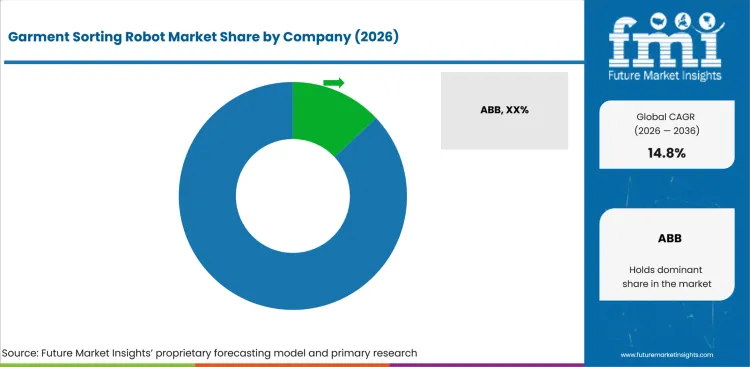
Garment Sorting Robot Market Analysis By Company

ABB, FANUC, RightHand Robotics, Berkshire Grey, GreyOrange, Geekplus, TOMRA, Pellenc ST

  • Competition is based on soft-goods picking proof and the ability to run inside live warehouse workflows.
  • Warehouse robotics suppliers compete on AMR fleets and sortation software. Service coverage remains a separate selection factor.
  • Textile recycling specialists compete on material recognition and output purity for reuse or fiber recovery.
  • System integrators remain important for brownfield sites that need safety fencing and WMS connections.

Robotics OEMs and AMR firms compete in separate but overlapping workflows. Their proposals are often compared against conveyor systems before buyers approve a retrofit. Recycling specialists compete on material recognition and feedstock preparation. Buyers compare these systems against inspection robots in applications that need sensing before handling. Companies that show live apparel evidence are better placed than suppliers offering general robot arms only. Buyers are expected to favor vendors that combine grippers and cameras.

How do top garment sorting robot companies compare?

Companies differ by soft-goods picking depth and material recognition. Integration reach and geographic service access shape the final comparison.

Company Soft-Goods Picking Depth Vision and Material Recognition Warehouse or Recycling Integration Geographic Footprint
ABB High Strong Strong Global
FANUC High Strong Strong Global
RightHand Robotics High Strong Medium United States, Japan, Europe
Berkshire Grey High Strong Strong United States, Europe
GreyOrange Medium Strong High United States, India, Europe, Asia
Geekplus Medium Medium High China, Asia, Europe, North America
Hai Robotics Medium Medium High China, Asia, Europe, North America
TOMRA Low High Strong Global
Pellenc ST Low High Strong Europe, Global
NewRetex Low Strong Medium Europe

Source: Future Market Insights competitive analysis, 2026.

Who are the key players in the garment sorting robot market?

The market includes robotics OEMs and AMR platforms. Warehouse automation firms and textile sorting specialists add adjacent competition.

Key global companies leading the garment sorting robot market include:

  • ABB
  • FANUC
  • RightHand Robotics
  • Berkshire Grey
  • GreyOrange
  • Geekplus
  • Hai Robotics
  • TOMRA
  • Pellenc ST
  • NewRetex

Key Developments in Garment Sorting Robot Market

  • In January 2024, RightHand Robotics introduced the RightPick 4 system. The system handled items up to 25% larger and 50% heavier than the earlier version.
  • In March 2025, ABB expanded its robotic item-picking family by adding the Fashion Inductor. The module targets polybagged apparel and accessories at up to 1,300 picks per hour.
  • In April 2024, TOMRA Textiles and Circle-8 agreed to explore an automated textile sorting facility in the United Kingdom. The plan targets non-reusable textile pre-processing.

Key Players in the Garment Sorting Robot Market

Robotic Induction and Piece-Picking Specialists

  • ABB
  • FANUC
  • RightHand Robotics
  • Berkshire Grey

AMR and Warehouse Sorting Platforms

  • GreyOrange
  • Geekplus
  • Hai Robotics
  • Quicktron
  • Addverb

Textile Recycling Sorting Specialists

  • TOMRA
  • Pellenc ST
  • NewRetex
  • Nouvelles Fibers Textiles
  • ANDRITZ Laroche

Garment Sorting Robot Market - Report Scope
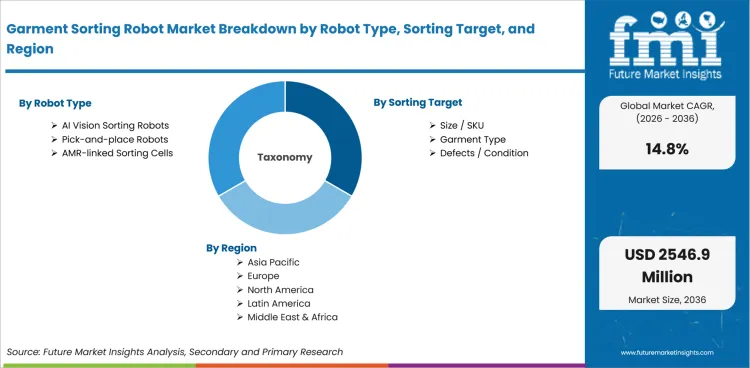
Garment Sorting Robot Market Breakdown By Robot Type, Sorting Target, And Region

Parameter Details
Forecast period 2026 to 2036
Historical period 2021 to 2025
Quantitative unit Revenue in USD million
By robot type AI Vision Sorting Robots, pick-and-place robots, AMR-linked sorting cells, robotic induction systems
By sorting target Garment type, color, size / SKU, defects / condition
By end use Apparel warehouses, laundry / rental, textile recycling, e-commerce returns
By deployment New automation lines, retrofit sorting cells
By sales model Capex purchase, Robot-as-a-Service, integrator-led
Regions covered North America, Western Europe, East Asia, South Asia and Pacific
Countries covered United States, United Kingdom, Germany, France, Japan, China, South Korea, India
Key companies profiled ABB, FANUC, RightHand Robotics, Berkshire Grey, GreyOrange, Geekplus, Hai Robotics, TOMRA, Pellenc ST, NewRetex
Approach Bottom-up robot-cell approach using installed systems, apparel facility demand, textile sorting policy, supplier portfolios, and country-level automation readiness

Source: Future Market Insights, 2026.

Garment Sorting Robot Market - Scope & Definition

Scope Item Definition
Market Definition Robotic systems that identify, pick, induct, transfer, and sort garments or apparel-linked soft goods across logistics, laundry, recycling, and return workflows.
Functions Covered Identification, singulation, picking, induction, transfer, routing, material recognition, and warehouse-system reporting.
Applications Covered Apparel fulfillment, e-commerce returns, laundry sorting, textile recycling pre-processing, and SKU-level warehouse sorting.
End-Use Industries Apparel warehouses, laundry and rental operators, textile recyclers, e-commerce returns centers, and 3PL fulfillment operators.
Grades Covered Industrial robot cells, AMR-linked sorting cells, robotic induction modules, and integrator-built retrofit systems.
Inclusions AI vision sorting robots, pick-and-place robots, AMR-linked sorting cells, robotic induction systems, and related software or integration packages.
Exclusions General parcel sorters without garment handling capability, sewing robots, fabric cutting machines, basic barcode scanners, and upstream textile production machinery.

Garment Sorting Robot Market - Research Methodology

Methodology Area Approach
Primary Research FMI analysts reviewed buyer input from apparel warehouse operators, textile recyclers, laundry service providers, 3PLs, system integrators, and robotics suppliers.
Desk Research Desk research covered robotics safety standards, company product documents, textile recovery policy, e-commerce statistics, and official trade or industry sources.
Market Sizing & Forecasting The model combined installed robot cells, average system pricing, apparel facility density, textile recycling capacity signals, and country-level automation readiness.
Data Validation Forecasts were validated against supplier portfolios, customer case studies, tender patterns, workflow fit, and adjacent robot demand indicators.

Garment Sorting Robot Market Breakdown by Robot Type, Sorting Target, End Use, Deployment, Sales Model, and Region

Garment Sorting Robot Market Segmented by Robot Type

  • AI Vision Sorting Robots
  • Pick-and-place Robots
  • AMR-linked Sorting Cells
  • Robotic Induction Systems

Garment Sorting Robot Market Segmented by Sorting Target

  • Garment Type
  • Color
  • Size / SKU
  • Defects / Condition

Garment Sorting Robot Market Segmented by End Use

  • Apparel Warehouses
  • Laundry / Rental
  • Textile Recycling
  • E-commerce Returns

Garment Sorting Robot Market Segmented by Deployment

  • New Automation Lines
  • Retrofit Sorting Cells

Garment Sorting Robot Market Segmented by Sales Model

  • Capex Purchase
  • Robot-as-a-Service
  • Integrator-led

Garment Sorting Robot Market by Region

  • North America
  • Western Europe
  • East Asia
  • South Asia and Pacific

Research Sources and Bibliography

  • ABB. (2025, March 11). ABB expands robotic item picking family with new functional modules for fashion and logistics industries.
  • Berkshire Grey. (2024, January 31). Robotic sortation just got better with Berkshire Grey fourth-generation robotic sortation solution.
  • Circle-8 Textile Ecosystems. (2024, April 11). TOMRA Textiles and Circle-8 to explore solutions for a UK circular textile ecosystem.
  • Destatis. (2026, June). Online trade is steadily gaining in importance.
  • European Commission. (2025, October 16). Revised Waste Framework Directive enters into force.
  • European Environment Agency. (2025, March 26). Consumption of clothing, footwear and other textiles in the EU reaches new record high.
  • FANUC America. (2026, June). Warehouse robots and cobots for fulfillment and distribution.
  • Geekplus. (2024, April 14). Geek+ collaborates with Toll Group to launch its first robotics sorting warehouse in Korea.
  • GreyOrange. (2024, February). Leading apparel giant achieves fulfillment excellence.
  • Hai Robotics. (2026, April 10). Turning apparel returns bottlenecks into smoother operations.
  • International Federation of Robotics. (2025, September 25). World Robotics 2025 report: Industrial robots.
  • Invest India. (2026, June). Investment opportunities in textiles and apparel.
  • Ministry of Economy, Trade and Industry. (2025, August 26). Results of FY2024 E-Commerce Market Survey compiled.
  • National Bureau of Statistics of China. (2026, January 20). Total retail sales of consumer goods in December 2025.
  • Pellenc ST. (2025, April 29). Groot MRF and Pellenc ST: A successful partnership.
  • ANDRITZ. (2025, September). Celebrate 100 years of excellence in textile recycling.
  • Press Information Bureau, Government of India. (2025, April 1). Threads of progress.
  • Refashion. (2025, June). Annual activity information on used textiles and shoes collected in 2024.
  • RightHand Robotics. (2024, January 24). RightHand Robotics introduces the RightPick 4 system.
  • Statistics Korea. (2026, February 2). Online shopping in December 2025.
  • TOMRA. (2024, February 7). TOMRA presents textile circular value chain solutions.
  • U.S. Bureau of Labor Statistics. (2026, January 22). Employer-reported workplace injuries and illnesses in 2024 and 2025.
  • U.S. Census Bureau. (2026, May 18). Quarterly retail e-commerce sales report.
  • VDMA. (2026, February 27). Robotics and automation industry remains under pressure.
  • WRAP. (2024, March 31). Textiles market situation report 2024.
  • ZOZO, Inc. (2025, November). Market environment.

This bibliography is provided for reader reference and supports the statistical and company-development evidence used in this report.

This Report Answers

  • Market size estimates for 2026 and forecasts to 2036 for the garment sorting robot market.
  • Analysis of demand drivers and buyer problems related to soft-goods handling barriers.
  • Segmentation insights across robot type and sorting target. End use and deployment are also covered. Sales model receives separate coverage.
  • Country-level growth analysis covers the United States and United Kingdom. Germany and France are also included. Japan and China receive separate coverage. South Korea and India receive separate coverage.
  • Evaluation of apparel warehouse and textile recycling demand routes. Laundry and e-commerce returns are also covered.
  • Assessment of competitive positioning across robotic induction and AMR sorting. Textile recycling specialists are reviewed separately.
  • Review of company developments from 2024 onward that affect product capability and commercial positioning.
  • Definition of included and excluded systems within the garment sorting robot market scope.
  • Research methodology details cover primary research and desk research. Market sizing and data validation are also included.
  • Delivery of market data and forecasts for strategic planning. Supporting analysis informs supplier evaluation.

Frequently Asked Questions

What is the growth prospect for garment sorting robots?

Demand for garment sorting robots is expected to rise with apparel warehouses and textile recyclers automating soft-goods handling.

Which companies are expected to shape the garment sorting robot market?

ABB and FANUC are expected to shape robotic induction competition. RightHand Robotics and Berkshire Grey support soft-goods picking. GreyOrange and Geekplus shape warehouse automation. TOMRA and Pellenc ST shape textile sorting.

Why are apparel warehouses investing in garment sorting robots?

Apparel warehouses are investing to reduce manual induction work and shorten return-to-stock cycles.

Why is textile recycling important in the garment sorting robot market?

Textile recycling creates demand for robots and sensor systems that improve feedstock sorting before reuse or fiber recovery.

Which robot formats are gaining attention in garment sorting?

AI vision sorting robots and AMR-connected sorting cells are gaining attention for SKU recognition and flexible routing.

How do regulations influence garment sorting robot demand?

Regulations influence demand by requiring better sorting of separately collected textiles before shipment or recovery.

Why is software integration important for garment sorting robots?

Software integration is important for reporting item identity and route. Exception data must also reach warehouse systems.

What limits wider adoption of garment sorting robots?

High upfront cost and handling error risk can slow wider adoption. Safety validation and WMS integration work add further approval barriers.

How do sales models differ in this market?

Capex purchase supports large networks. Robot-as-a-Service can help smaller operators test automation before full ownership.

Table of Content

  1. Key Takeaways
    • Market Size and CAGR
    • Top Growth Driver
    • Fastest Growing Segment
    • Leading Region
    • Key Companies
    • Emerging Opportunities
  2. Executive Summary
    • Global Market Outlook
    • Demand-side Trends
    • Supply-side Trends
    • Technology Roadmap Analysis
    • Analysis and Recommendations
    • Analyst Perspective (What is happening? Why now? What should investors know?)
    • Key Questions Answered
      • How large is the market?
      • What is the CAGR?
      • What are key trends?
      • Which region dominates?
      • Who are the leaders?
  3. Market Overview
    • Market Coverage / Taxonomy
    • Market Definition / Scope / Limitations
  4. Research Methodology
    • Chapter Orientation
    • Analytical Lens and Working Hypotheses
      • Market Structure, Signals, and Trend Drivers
      • Benchmarking and Cross-market Comparability
      • Market Sizing, Forecasting, and Opportunity Mapping
    • Research Design and Evidence Framework
      • Desk Research Programme (Secondary Evidence)
      • Expert Input and Fieldwork (Primary Evidence)
      • Tooling, Models, and Reference Databases
    • Data Engineering and Model Build
    • Quality Assurance and Audit Trail
  5. Market Background
    • Market Dynamics (Drivers, Restraints, Opportunity, Trends)
    • Scenario Forecast (Optimistic, Likely, Conservative)
    • Impact Analysis
      • AI Impact
      • Sustainability Impact
      • Regulatory Impact
      • Technology Impact
    • Consumer / Buyer Analysis
      • Purchase Drivers
      • Adoption Barriers
      • Buyer Journey
    • Opportunity Map Analysis
    • Product Life Cycle Analysis
    • Supply Chain Analysis
    • Investment Feasibility Matrix
    • Value Chain Analysis
    • PESTLE and Porter's Analysis
    • Regulatory Landscape
    • Regional Parent Market Outlook
    • Production and Consumption Statistics
    • Import and Export Statistics
  6. Global Market Analysis and Forecast, 2021 to 2036
    • Historical Market Size Value (USD Million) Analysis, 2021 to 2025
    • Current and Future Market Size Value (USD Million) Projections, 2026 to 2036
      • Y-o-Y Growth Trend Analysis
      • Absolute $ Opportunity Analysis
  7. Global Market Pricing Analysis, 2021 to 2036
  8. Global Market Analysis and Forecast, By Robot Type, 2021 to 2036
    • Introduction / Key Findings
    • Historical Market Size Value (USD Million) Analysis By Robot Type, 2021 to 2025
    • Current and Future Market Size Value (USD Million) Analysis and Forecast By Robot Type, 2026 to 2036
      • AI Vision Sorting Robots
      • Pick-and-place Robots
      • AMR-linked Sorting Cells
    • Y-o-Y Growth Trend Analysis By Robot Type, 2021 to 2025
    • Absolute $ Opportunity Analysis By Robot Type, 2026 to 2036
  9. Global Market Analysis and Forecast, By Sorting Target, 2021 to 2036
    • Introduction / Key Findings
    • Historical Market Size Value (USD Million) Analysis By Sorting Target, 2021 to 2025
    • Current and Future Market Size Value (USD Million) Analysis and Forecast By Sorting Target, 2026 to 2036
      • Size / SKU
      • Garment Type
      • Defects / Condition
    • Y-o-Y Growth Trend Analysis By Sorting Target, 2021 to 2025
    • Absolute $ Opportunity Analysis By Sorting Target, 2026 to 2036
  10. Global Market Analysis and Forecast, By End Use, 2021 to 2036
    • Introduction / Key Findings
    • Historical Market Size Value (USD Million) Analysis By End Use, 2021 to 2025
    • Current and Future Market Size Value (USD Million) Analysis and Forecast By End Use, 2026 to 2036
      • Apparel Warehouses
      • Laundry / Rental
      • Textile Recycling
    • Y-o-Y Growth Trend Analysis By End Use, 2021 to 2025
    • Absolute $ Opportunity Analysis By End Use, 2026 to 2036
  11. Global Market Analysis and Forecast, By Deployment, 2021 to 2036
    • Introduction / Key Findings
    • Historical Market Size Value (USD Million) Analysis By Deployment, 2021 to 2025
    • Current and Future Market Size Value (USD Million) Analysis and Forecast By Deployment, 2026 to 2036
      • Retrofit Sorting Cells
      • New Automation Lines
    • Y-o-Y Growth Trend Analysis By Deployment, 2021 to 2025
    • Absolute $ Opportunity Analysis By Deployment, 2026 to 2036
  12. Global Market Analysis and Forecast, By Sales Model, 2021 to 2036
    • Introduction / Key Findings
    • Historical Market Size Value (USD Million) Analysis By Sales Model, 2021 to 2025
    • Current and Future Market Size Value (USD Million) Analysis and Forecast By Sales Model, 2026 to 2036
      • Capex Purchase
      • Robot-as-a-Service
      • Integrator-led
    • Y-o-Y Growth Trend Analysis By Sales Model, 2021 to 2025
    • Absolute $ Opportunity Analysis By Sales Model, 2026 to 2036
  13. Global Market Analysis and Forecast, By Region, 2021 to 2036
    • Introduction
    • Historical Market Size Value (USD Million) Analysis By Region, 2021 to 2025
    • Current Market Size Value (USD Million) Analysis and Forecast By Region, 2026 to 2036
      • North America
      • Latin America
      • Western Europe
      • Eastern Europe
      • East Asia
      • South Asia and Pacific
      • Middle East & Africa
    • Market Attractiveness Analysis By Region
  14. North America Market Analysis and Forecast, By Country, 2021 to 2036
    • Historical Market Size Value (USD Million) Trend Analysis By Market Taxonomy, 2021 to 2025
    • Market Size Value (USD Million) Forecast By Market Taxonomy, 2026 to 2036
      • By Country
        • USA
        • Canada
        • Mexico
      • By Robot Type
      • By Sorting Target
      • By End Use
      • By Deployment
      • By Sales Model
    • Market Attractiveness Analysis
      • By Country
      • By Robot Type
      • By Sorting Target
      • By End Use
      • By Deployment
      • By Sales Model
    • Key Takeaways
  15. Latin America Market Analysis and Forecast, By Country
    • Historical Market Size Value (USD Million) Trend Analysis By Market Taxonomy, 2021 to 2025
    • Market Size Value (USD Million) Forecast By Market Taxonomy, 2026 to 2036
      • By Country
        • Brazil
        • Chile
        • Rest of Latin America
      • By Robot Type
      • By Sorting Target
      • By End Use
      • By Deployment
      • By Sales Model
    • Market Attractiveness Analysis
      • By Country
      • By Robot Type
      • By Sorting Target
      • By End Use
      • By Deployment
      • By Sales Model
    • Key Takeaways
  16. Western Europe Market Analysis and Forecast, By Country
    • Historical Market Size Value (USD Million) Trend Analysis By Market Taxonomy, 2021 to 2025
    • Market Size Value (USD Million) Forecast By Market Taxonomy, 2026 to 2036
      • By Country
        • Germany
        • UK
        • Italy
        • Spain
        • France
        • Nordic
        • BENELUX
        • Rest of Western Europe
      • By Robot Type
      • By Sorting Target
      • By End Use
      • By Deployment
      • By Sales Model
    • Market Attractiveness Analysis
      • By Country
      • By Robot Type
      • By Sorting Target
      • By End Use
      • By Deployment
      • By Sales Model
    • Key Takeaways
  17. Eastern Europe Market Analysis and Forecast, By Country
    • Historical Market Size Value (USD Million) Trend Analysis By Market Taxonomy, 2021 to 2025
    • Market Size Value (USD Million) Forecast By Market Taxonomy, 2026 to 2036
      • By Country
        • Russia
        • Poland
        • Hungary
        • Balkan & Baltic
        • Rest of Eastern Europe
      • By Robot Type
      • By Sorting Target
      • By End Use
      • By Deployment
      • By Sales Model
    • Market Attractiveness Analysis
      • By Country
      • By Robot Type
      • By Sorting Target
      • By End Use
      • By Deployment
      • By Sales Model
    • Key Takeaways
  18. East Asia Market Analysis and Forecast, By Country
    • Historical Market Size Value (USD Million) Trend Analysis By Market Taxonomy, 2021 to 2025
    • Market Size Value (USD Million) Forecast By Market Taxonomy, 2026 to 2036
      • By Country
        • China
        • Japan
        • South Korea
      • By Robot Type
      • By Sorting Target
      • By End Use
      • By Deployment
      • By Sales Model
    • Market Attractiveness Analysis
      • By Country
      • By Robot Type
      • By Sorting Target
      • By End Use
      • By Deployment
      • By Sales Model
    • Key Takeaways
  19. South Asia and Pacific Market Analysis and Forecast, By Country
    • Historical Market Size Value (USD Million) Trend Analysis By Market Taxonomy, 2021 to 2025
    • Market Size Value (USD Million) Forecast By Market Taxonomy, 2026 to 2036
      • By Country
        • India
        • ASEAN
        • Australia & New Zealand
        • Rest of South Asia and Pacific
      • By Robot Type
      • By Sorting Target
      • By End Use
      • By Deployment
      • By Sales Model
    • Market Attractiveness Analysis
      • By Country
      • By Robot Type
      • By Sorting Target
      • By End Use
      • By Deployment
      • By Sales Model
    • Key Takeaways
  20. Middle East & Africa Market Analysis and Forecast, By Country
    • Historical Market Size Value (USD Million) Trend Analysis By Market Taxonomy, 2021 to 2025
    • Market Size Value (USD Million) Forecast By Market Taxonomy, 2026 to 2036
      • By Country
        • Kingdom of Saudi Arabia
        • Other GCC Countries
        • Türkiye
        • South Africa
        • Other African Union
        • Rest of Middle East & Africa
      • By Robot Type
      • By Sorting Target
      • By End Use
      • By Deployment
      • By Sales Model
    • Market Attractiveness Analysis
      • By Country
      • By Robot Type
      • By Sorting Target
      • By End Use
      • By Deployment
      • By Sales Model
    • Key Takeaways
  21. Key Countries Market Analysis
    • USA
      • Pricing Analysis
      • Market Share Analysis, 2025
        • By Robot Type
        • By Sorting Target
        • By End Use
        • By Deployment
        • By Sales Model
    • Canada
      • Pricing Analysis
      • Market Share Analysis, 2025
        • By Robot Type
        • By Sorting Target
        • By End Use
        • By Deployment
        • By Sales Model
    • Mexico
      • Pricing Analysis
      • Market Share Analysis, 2025
        • By Robot Type
        • By Sorting Target
        • By End Use
        • By Deployment
        • By Sales Model
    • Brazil
      • Pricing Analysis
      • Market Share Analysis, 2025
        • By Robot Type
        • By Sorting Target
        • By End Use
        • By Deployment
        • By Sales Model
    • Chile
      • Pricing Analysis
      • Market Share Analysis, 2025
        • By Robot Type
        • By Sorting Target
        • By End Use
        • By Deployment
        • By Sales Model
    • Germany
      • Pricing Analysis
      • Market Share Analysis, 2025
        • By Robot Type
        • By Sorting Target
        • By End Use
        • By Deployment
        • By Sales Model
    • UK
      • Pricing Analysis
      • Market Share Analysis, 2025
        • By Robot Type
        • By Sorting Target
        • By End Use
        • By Deployment
        • By Sales Model
    • Italy
      • Pricing Analysis
      • Market Share Analysis, 2025
        • By Robot Type
        • By Sorting Target
        • By End Use
        • By Deployment
        • By Sales Model
    • Spain
      • Pricing Analysis
      • Market Share Analysis, 2025
        • By Robot Type
        • By Sorting Target
        • By End Use
        • By Deployment
        • By Sales Model
    • France
      • Pricing Analysis
      • Market Share Analysis, 2025
        • By Robot Type
        • By Sorting Target
        • By End Use
        • By Deployment
        • By Sales Model
    • India
      • Pricing Analysis
      • Market Share Analysis, 2025
        • By Robot Type
        • By Sorting Target
        • By End Use
        • By Deployment
        • By Sales Model
    • ASEAN
      • Pricing Analysis
      • Market Share Analysis, 2025
        • By Robot Type
        • By Sorting Target
        • By End Use
        • By Deployment
        • By Sales Model
    • Australia & New Zealand
      • Pricing Analysis
      • Market Share Analysis, 2025
        • By Robot Type
        • By Sorting Target
        • By End Use
        • By Deployment
        • By Sales Model
    • China
      • Pricing Analysis
      • Market Share Analysis, 2025
        • By Robot Type
        • By Sorting Target
        • By End Use
        • By Deployment
        • By Sales Model
    • Japan
      • Pricing Analysis
      • Market Share Analysis, 2025
        • By Robot Type
        • By Sorting Target
        • By End Use
        • By Deployment
        • By Sales Model
    • South Korea
      • Pricing Analysis
      • Market Share Analysis, 2025
        • By Robot Type
        • By Sorting Target
        • By End Use
        • By Deployment
        • By Sales Model
    • Russia
      • Pricing Analysis
      • Market Share Analysis, 2025
        • By Robot Type
        • By Sorting Target
        • By End Use
        • By Deployment
        • By Sales Model
    • Poland
      • Pricing Analysis
      • Market Share Analysis, 2025
        • By Robot Type
        • By Sorting Target
        • By End Use
        • By Deployment
        • By Sales Model
    • Hungary
      • Pricing Analysis
      • Market Share Analysis, 2025
        • By Robot Type
        • By Sorting Target
        • By End Use
        • By Deployment
        • By Sales Model
    • Kingdom of Saudi Arabia
      • Pricing Analysis
      • Market Share Analysis, 2025
        • By Robot Type
        • By Sorting Target
        • By End Use
        • By Deployment
        • By Sales Model
    • Türkiye
      • Pricing Analysis
      • Market Share Analysis, 2025
        • By Robot Type
        • By Sorting Target
        • By End Use
        • By Deployment
        • By Sales Model
    • South Africa
      • Pricing Analysis
      • Market Share Analysis, 2025
        • By Robot Type
        • By Sorting Target
        • By End Use
        • By Deployment
        • By Sales Model
  22. Market Structure Analysis
    • Competition Dashboard
    • Competition Benchmarking
    • Market Share Analysis of Top Players
      • By Regional
      • By Robot Type
      • By Sorting Target
      • By End Use
      • By Deployment
      • By Sales Model
      • Emerging Startups
      • Innovation Benchmarking
    • Competition Analysis
      • Competition Deep Dive
        • ABB
          • Overview
          • Product Portfolio
          • Profitability by Market Segments (Product/Region/Sales Channel)
          • Sales Footprint
          • Strategy Overview
            • Marketing Strategy
            • Product Strategy
            • Channel Strategy
          • FANUC
          • RightHand Robotics
          • Berkshire Grey
          • GreyOrange
          • Geekplus
          • Hai Robotics
      • Case Studies
      • Success Stories
      • Recent Developments
  23. Assumptions & Acronyms Used

List of Tables

  • Table 1: Global Market Value (USD Million) Forecast by Region, 2021 to 2036
  • Table 2: Global Market Value (USD Million) Forecast by Robot Type, 2021 to 2036
  • Table 3: Global Market Value (USD Million) Forecast by Sorting Target, 2021 to 2036
  • Table 4: Global Market Value (USD Million) Forecast by End Use, 2021 to 2036
  • Table 5: Global Market Value (USD Million) Forecast by Deployment, 2021 to 2036
  • Table 6: Global Market Value (USD Million) Forecast by Sales Model, 2021 to 2036
  • Table 7: Global Market rma_anu Forecast by rma_anu, 2021 to 2036
  • Table 8: North America Market Value (USD Million) Forecast by Country, 2021 to 2036
  • Table 9: North America Market Value (USD Million) Forecast by Robot Type, 2021 to 2036
  • Table 10: North America Market Value (USD Million) Forecast by Sorting Target, 2021 to 2036
  • Table 11: North America Market Value (USD Million) Forecast by End Use, 2021 to 2036
  • Table 12: North America Market Value (USD Million) Forecast by Deployment, 2021 to 2036
  • Table 13: North America Market Value (USD Million) Forecast by Sales Model, 2021 to 2036
  • Table 14: Latin America Market Value (USD Million) Forecast by Country, 2021 to 2036
  • Table 15: Latin America Market Value (USD Million) Forecast by Robot Type, 2021 to 2036
  • Table 16: Latin America Market Value (USD Million) Forecast by Sorting Target, 2021 to 2036
  • Table 17: Latin America Market Value (USD Million) Forecast by End Use, 2021 to 2036
  • Table 18: Latin America Market Value (USD Million) Forecast by Deployment, 2021 to 2036
  • Table 19: Latin America Market Value (USD Million) Forecast by Sales Model, 2021 to 2036
  • Table 20: Western Europe Market Value (USD Million) Forecast by Country, 2021 to 2036
  • Table 21: Western Europe Market Value (USD Million) Forecast by Robot Type, 2021 to 2036
  • Table 22: Western Europe Market Value (USD Million) Forecast by Sorting Target, 2021 to 2036
  • Table 23: Western Europe Market Value (USD Million) Forecast by End Use, 2021 to 2036
  • Table 24: Western Europe Market Value (USD Million) Forecast by Deployment, 2021 to 2036
  • Table 25: Western Europe Market Value (USD Million) Forecast by Sales Model, 2021 to 2036
  • Table 26: Eastern Europe Market Value (USD Million) Forecast by Country, 2021 to 2036
  • Table 27: Eastern Europe Market Value (USD Million) Forecast by Robot Type, 2021 to 2036
  • Table 28: Eastern Europe Market Value (USD Million) Forecast by Sorting Target, 2021 to 2036
  • Table 29: Eastern Europe Market Value (USD Million) Forecast by End Use, 2021 to 2036
  • Table 30: Eastern Europe Market Value (USD Million) Forecast by Deployment, 2021 to 2036
  • Table 31: Eastern Europe Market Value (USD Million) Forecast by Sales Model, 2021 to 2036
  • Table 32: East Asia Market Value (USD Million) Forecast by Country, 2021 to 2036
  • Table 33: East Asia Market Value (USD Million) Forecast by Robot Type, 2021 to 2036
  • Table 34: East Asia Market Value (USD Million) Forecast by Sorting Target, 2021 to 2036
  • Table 35: East Asia Market Value (USD Million) Forecast by End Use, 2021 to 2036
  • Table 36: East Asia Market Value (USD Million) Forecast by Deployment, 2021 to 2036
  • Table 37: East Asia Market Value (USD Million) Forecast by Sales Model, 2021 to 2036
  • Table 38: South Asia and Pacific Market Value (USD Million) Forecast by Country, 2021 to 2036
  • Table 39: South Asia and Pacific Market Value (USD Million) Forecast by Robot Type, 2021 to 2036
  • Table 40: South Asia and Pacific Market Value (USD Million) Forecast by Sorting Target, 2021 to 2036
  • Table 41: South Asia and Pacific Market Value (USD Million) Forecast by End Use, 2021 to 2036
  • Table 42: South Asia and Pacific Market Value (USD Million) Forecast by Deployment, 2021 to 2036
  • Table 43: South Asia and Pacific Market Value (USD Million) Forecast by Sales Model, 2021 to 2036
  • Table 44: Middle East & Africa Market Value (USD Million) Forecast by Country, 2021 to 2036
  • Table 45: Middle East & Africa Market Value (USD Million) Forecast by Robot Type, 2021 to 2036
  • Table 46: Middle East & Africa Market Value (USD Million) Forecast by Sorting Target, 2021 to 2036
  • Table 47: Middle East & Africa Market Value (USD Million) Forecast by End Use, 2021 to 2036
  • Table 48: Middle East & Africa Market Value (USD Million) Forecast by Deployment, 2021 to 2036
  • Table 49: Middle East & Africa Market Value (USD Million) Forecast by Sales Model, 2021 to 2036

List of Figures

  • Figure 1: Global Market Pricing Analysis
  • Figure 2: Global Market Value (USD Million) Forecast 2021-2036
  • Figure 3: Global Market Value Share and BPS Analysis by Robot Type, 2026 and 2036
  • Figure 4: Global Market Y-o-Y Growth Comparison by Robot Type, 2026-2036
  • Figure 5: Global Market Attractiveness Analysis by Robot Type
  • Figure 6: Global Market Value Share and BPS Analysis by Sorting Target, 2026 and 2036
  • Figure 7: Global Market Y-o-Y Growth Comparison by Sorting Target, 2026-2036
  • Figure 8: Global Market Attractiveness Analysis by Sorting Target
  • Figure 9: Global Market Value Share and BPS Analysis by End Use, 2026 and 2036
  • Figure 10: Global Market Y-o-Y Growth Comparison by End Use, 2026-2036
  • Figure 11: Global Market Attractiveness Analysis by End Use
  • Figure 12: Global Market Value Share and BPS Analysis by Deployment, 2026 and 2036
  • Figure 13: Global Market Y-o-Y Growth Comparison by Deployment, 2026-2036
  • Figure 14: Global Market Attractiveness Analysis by Deployment
  • Figure 15: Global Market Value Share and BPS Analysis by Sales Model, 2026 and 2036
  • Figure 16: Global Market Y-o-Y Growth Comparison by Sales Model, 2026-2036
  • Figure 17: Global Market Attractiveness Analysis by Sales Model
  • Figure 18: Global Market Value (USD Million) Share and BPS Analysis by Region, 2026 and 2036
  • Figure 19: Global Market Y-o-Y Growth Comparison by Region, 2026-2036
  • Figure 20: Global Market Attractiveness Analysis by Region
  • Figure 21: North America Market Incremental Dollar Opportunity, 2026-2036
  • Figure 22: Latin America Market Incremental Dollar Opportunity, 2026-2036
  • Figure 23: Western Europe Market Incremental Dollar Opportunity, 2026-2036
  • Figure 24: Eastern Europe Market Incremental Dollar Opportunity, 2026-2036
  • Figure 25: East Asia Market Incremental Dollar Opportunity, 2026-2036
  • Figure 26: South Asia and Pacific Market Incremental Dollar Opportunity, 2026-2036
  • Figure 27: Middle East & Africa Market Incremental Dollar Opportunity, 2026-2036
  • Figure 28: North America Market Value Share and BPS Analysis by Country, 2026 and 2036
  • Figure 29: North America Market Value Share and BPS Analysis by Robot Type, 2026 and 2036
  • Figure 30: North America Market Y-o-Y Growth Comparison by Robot Type, 2026-2036
  • Figure 31: North America Market Attractiveness Analysis by Robot Type
  • Figure 32: North America Market Value Share and BPS Analysis by Sorting Target, 2026 and 2036
  • Figure 33: North America Market Y-o-Y Growth Comparison by Sorting Target, 2026-2036
  • Figure 34: North America Market Attractiveness Analysis by Sorting Target
  • Figure 35: North America Market Value Share and BPS Analysis by End Use, 2026 and 2036
  • Figure 36: North America Market Y-o-Y Growth Comparison by End Use, 2026-2036
  • Figure 37: North America Market Attractiveness Analysis by End Use
  • Figure 38: North America Market Value Share and BPS Analysis by Deployment, 2026 and 2036
  • Figure 39: North America Market Y-o-Y Growth Comparison by Deployment, 2026-2036
  • Figure 40: North America Market Attractiveness Analysis by Deployment
  • Figure 41: North America Market Value Share and BPS Analysis by Sales Model, 2026 and 2036
  • Figure 42: North America Market Y-o-Y Growth Comparison by Sales Model, 2026-2036
  • Figure 43: North America Market Attractiveness Analysis by Sales Model
  • Figure 44: Latin America Market Value Share and BPS Analysis by Country, 2026 and 2036
  • Figure 45: Latin America Market Value Share and BPS Analysis by Robot Type, 2026 and 2036
  • Figure 46: Latin America Market Y-o-Y Growth Comparison by Robot Type, 2026-2036
  • Figure 47: Latin America Market Attractiveness Analysis by Robot Type
  • Figure 48: Latin America Market Value Share and BPS Analysis by Sorting Target, 2026 and 2036
  • Figure 49: Latin America Market Y-o-Y Growth Comparison by Sorting Target, 2026-2036
  • Figure 50: Latin America Market Attractiveness Analysis by Sorting Target
  • Figure 51: Latin America Market Value Share and BPS Analysis by End Use, 2026 and 2036
  • Figure 52: Latin America Market Y-o-Y Growth Comparison by End Use, 2026-2036
  • Figure 53: Latin America Market Attractiveness Analysis by End Use
  • Figure 54: Latin America Market Value Share and BPS Analysis by Deployment, 2026 and 2036
  • Figure 55: Latin America Market Y-o-Y Growth Comparison by Deployment, 2026-2036
  • Figure 56: Latin America Market Attractiveness Analysis by Deployment
  • Figure 57: Latin America Market Value Share and BPS Analysis by Sales Model, 2026 and 2036
  • Figure 58: Latin America Market Y-o-Y Growth Comparison by Sales Model, 2026-2036
  • Figure 59: Latin America Market Attractiveness Analysis by Sales Model
  • Figure 60: Western Europe Market Value Share and BPS Analysis by Country, 2026 and 2036
  • Figure 61: Western Europe Market Value Share and BPS Analysis by Robot Type, 2026 and 2036
  • Figure 62: Western Europe Market Y-o-Y Growth Comparison by Robot Type, 2026-2036
  • Figure 63: Western Europe Market Attractiveness Analysis by Robot Type
  • Figure 64: Western Europe Market Value Share and BPS Analysis by Sorting Target, 2026 and 2036
  • Figure 65: Western Europe Market Y-o-Y Growth Comparison by Sorting Target, 2026-2036
  • Figure 66: Western Europe Market Attractiveness Analysis by Sorting Target
  • Figure 67: Western Europe Market Value Share and BPS Analysis by End Use, 2026 and 2036
  • Figure 68: Western Europe Market Y-o-Y Growth Comparison by End Use, 2026-2036
  • Figure 69: Western Europe Market Attractiveness Analysis by End Use
  • Figure 70: Western Europe Market Value Share and BPS Analysis by Deployment, 2026 and 2036
  • Figure 71: Western Europe Market Y-o-Y Growth Comparison by Deployment, 2026-2036
  • Figure 72: Western Europe Market Attractiveness Analysis by Deployment
  • Figure 73: Western Europe Market Value Share and BPS Analysis by Sales Model, 2026 and 2036
  • Figure 74: Western Europe Market Y-o-Y Growth Comparison by Sales Model, 2026-2036
  • Figure 75: Western Europe Market Attractiveness Analysis by Sales Model
  • Figure 76: Eastern Europe Market Value Share and BPS Analysis by Country, 2026 and 2036
  • Figure 77: Eastern Europe Market Value Share and BPS Analysis by Robot Type, 2026 and 2036
  • Figure 78: Eastern Europe Market Y-o-Y Growth Comparison by Robot Type, 2026-2036
  • Figure 79: Eastern Europe Market Attractiveness Analysis by Robot Type
  • Figure 80: Eastern Europe Market Value Share and BPS Analysis by Sorting Target, 2026 and 2036
  • Figure 81: Eastern Europe Market Y-o-Y Growth Comparison by Sorting Target, 2026-2036
  • Figure 82: Eastern Europe Market Attractiveness Analysis by Sorting Target
  • Figure 83: Eastern Europe Market Value Share and BPS Analysis by End Use, 2026 and 2036
  • Figure 84: Eastern Europe Market Y-o-Y Growth Comparison by End Use, 2026-2036
  • Figure 85: Eastern Europe Market Attractiveness Analysis by End Use
  • Figure 86: Eastern Europe Market Value Share and BPS Analysis by Deployment, 2026 and 2036
  • Figure 87: Eastern Europe Market Y-o-Y Growth Comparison by Deployment, 2026-2036
  • Figure 88: Eastern Europe Market Attractiveness Analysis by Deployment
  • Figure 89: Eastern Europe Market Value Share and BPS Analysis by Sales Model, 2026 and 2036
  • Figure 90: Eastern Europe Market Y-o-Y Growth Comparison by Sales Model, 2026-2036
  • Figure 91: Eastern Europe Market Attractiveness Analysis by Sales Model
  • Figure 92: East Asia Market Value Share and BPS Analysis by Country, 2026 and 2036
  • Figure 93: East Asia Market Value Share and BPS Analysis by Robot Type, 2026 and 2036
  • Figure 94: East Asia Market Y-o-Y Growth Comparison by Robot Type, 2026-2036
  • Figure 95: East Asia Market Attractiveness Analysis by Robot Type
  • Figure 96: East Asia Market Value Share and BPS Analysis by Sorting Target, 2026 and 2036
  • Figure 97: East Asia Market Y-o-Y Growth Comparison by Sorting Target, 2026-2036
  • Figure 98: East Asia Market Attractiveness Analysis by Sorting Target
  • Figure 99: East Asia Market Value Share and BPS Analysis by End Use, 2026 and 2036
  • Figure 100: East Asia Market Y-o-Y Growth Comparison by End Use, 2026-2036
  • Figure 101: East Asia Market Attractiveness Analysis by End Use
  • Figure 102: East Asia Market Value Share and BPS Analysis by Deployment, 2026 and 2036
  • Figure 103: East Asia Market Y-o-Y Growth Comparison by Deployment, 2026-2036
  • Figure 104: East Asia Market Attractiveness Analysis by Deployment
  • Figure 105: East Asia Market Value Share and BPS Analysis by Sales Model, 2026 and 2036
  • Figure 106: East Asia Market Y-o-Y Growth Comparison by Sales Model, 2026-2036
  • Figure 107: East Asia Market Attractiveness Analysis by Sales Model
  • Figure 108: South Asia and Pacific Market Value Share and BPS Analysis by Country, 2026 and 2036
  • Figure 109: South Asia and Pacific Market Value Share and BPS Analysis by Robot Type, 2026 and 2036
  • Figure 110: South Asia and Pacific Market Y-o-Y Growth Comparison by Robot Type, 2026-2036
  • Figure 111: South Asia and Pacific Market Attractiveness Analysis by Robot Type
  • Figure 112: South Asia and Pacific Market Value Share and BPS Analysis by Sorting Target, 2026 and 2036
  • Figure 113: South Asia and Pacific Market Y-o-Y Growth Comparison by Sorting Target, 2026-2036
  • Figure 114: South Asia and Pacific Market Attractiveness Analysis by Sorting Target
  • Figure 115: South Asia and Pacific Market Value Share and BPS Analysis by End Use, 2026 and 2036
  • Figure 116: South Asia and Pacific Market Y-o-Y Growth Comparison by End Use, 2026-2036
  • Figure 117: South Asia and Pacific Market Attractiveness Analysis by End Use
  • Figure 118: South Asia and Pacific Market Value Share and BPS Analysis by Deployment, 2026 and 2036
  • Figure 119: South Asia and Pacific Market Y-o-Y Growth Comparison by Deployment, 2026-2036
  • Figure 120: South Asia and Pacific Market Attractiveness Analysis by Deployment
  • Figure 121: South Asia and Pacific Market Value Share and BPS Analysis by Sales Model, 2026 and 2036
  • Figure 122: South Asia and Pacific Market Y-o-Y Growth Comparison by Sales Model, 2026-2036
  • Figure 123: South Asia and Pacific Market Attractiveness Analysis by Sales Model
  • Figure 124: Middle East & Africa Market Value Share and BPS Analysis by Country, 2026 and 2036
  • Figure 125: Middle East & Africa Market Value Share and BPS Analysis by Robot Type, 2026 and 2036
  • Figure 126: Middle East & Africa Market Y-o-Y Growth Comparison by Robot Type, 2026-2036
  • Figure 127: Middle East & Africa Market Attractiveness Analysis by Robot Type
  • Figure 128: Middle East & Africa Market Value Share and BPS Analysis by Sorting Target, 2026 and 2036
  • Figure 129: Middle East & Africa Market Y-o-Y Growth Comparison by Sorting Target, 2026-2036
  • Figure 130: Middle East & Africa Market Attractiveness Analysis by Sorting Target
  • Figure 131: Middle East & Africa Market Value Share and BPS Analysis by End Use, 2026 and 2036
  • Figure 132: Middle East & Africa Market Y-o-Y Growth Comparison by End Use, 2026-2036
  • Figure 133: Middle East & Africa Market Attractiveness Analysis by End Use
  • Figure 134: Middle East & Africa Market Value Share and BPS Analysis by Deployment, 2026 and 2036
  • Figure 135: Middle East & Africa Market Y-o-Y Growth Comparison by Deployment, 2026-2036
  • Figure 136: Middle East & Africa Market Attractiveness Analysis by Deployment
  • Figure 137: Middle East & Africa Market Value Share and BPS Analysis by Sales Model, 2026 and 2036
  • Figure 138: Middle East & Africa Market Y-o-Y Growth Comparison by Sales Model, 2026-2036
  • Figure 139: Middle East & Africa Market Attractiveness Analysis by Sales Model
  • Figure 140: Global Market - Tier Structure Analysis
  • Figure 141: Global Market - Company Share Analysis