

- Industry Size (2026)
- USD 1 Bn
- Forecast (2036)
- USD 2.6 Bn
- CAGR (2026 to 2036)
- 10.2%
ISCC-PLUS Certified Low-Carbon Suspension PVC Market Forecast and Outlook 2026 to 2036
The ISCC-PLUS certified low-carbon suspension PVC market is projected to grow from USD 1 billion in 2026 to USD 2.6 billion by 2036, with a compound annual growth rate (CAGR) of 10.2%. This industry holds strategic importance as industries across construction, automotive, and packaging increasingly prioritize sustainability and low-carbon solutions. The ISCC-PLUS certification, which ensures compliance with global sustainability standards, will drive demand for this product, particularly as environmental regulations become more stringent.
Key control points in this space include maintaining production efficiency while meeting rigorous certification requirements, which can be resource-intensive. Dependency factors such as raw material sourcing, energy efficiency, and regulatory alignment will influence market performance. Strategic trade-offs will arise between cost management and the need for continuous investment in green technologies. Companies will need to balance short-term financial considerations with long-term sustainability goals to remain competitive. Success will depend on a supplier's ability to meet both regulatory standards and customer demand for eco-friendly products.
Quick Stats of the ISCC-PLUS Certified Low-Carbon Suspension PVC Market
- ISCC-PLUS Certified Low-Carbon Suspension PVC Market Value (2026): USD 1 billion
- ISCC-PLUS Certified Low-Carbon Suspension PVC Market Forecast Value (2036): USD 2.6 billion
- ISCC-PLUS Certified Low-Carbon Suspension PVC Market Global Forecast CAGR (2026-2036): 10.2%
- ISCC-PLUS Certified Low-Carbon Suspension PVC Market Leading Segment: Feedstock Source Type (ISCC-PLUS Certified Biomass PVC) 48%
- Key Growth Regions in ISCC-PLUS Certified Low-Carbon Suspension PVC Market: USA
- Top Players in ISCC-PLUS Certified Low-Carbon Suspension PVC Market: Vynova Group, INEOS Group Ltd., Solvay S.A., Formosa Plastics Group, Westlake Chemical Corporation, Shin-Etsu Chemical Co., Ltd., Kaneka Corporation, Arkema S.A., Kem One, LG Chem Ltd.
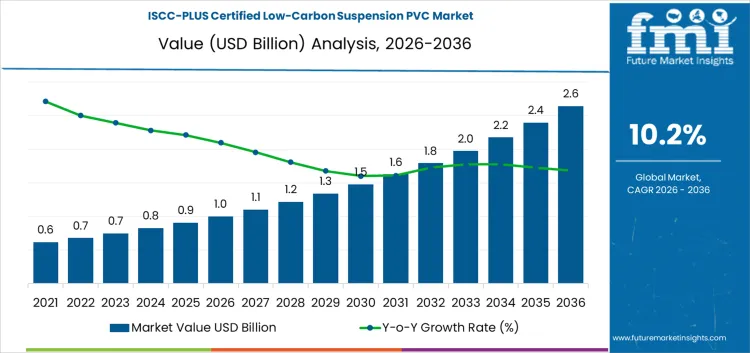
What is the Growth Forecast for the ISCC-PLUS Certified Low-Carbon Suspension PVC Market through 2036?
The peak-to-trough analysis for the ISCC-PLUS certified low-carbon suspension PVC market shows a pattern of growth with significant phases of acceleration and deceleration. From 2026 to 2031, the market will grow from USD 1 billion to USD 2.1 billion, experiencing a clear peak during this period. This growth is largely driven by the initial adoption of ISCC-PLUS certified low-carbon PVC as a viable, sustainable solution in multiple industries. The early years will be marked by rapid adoption, driven by increasing regulatory incentives for sustainable materials and the shift towards low-carbon products. The peak will likely occur around 2031 when demand for certified low-carbon PVC is at its highest due to a critical mass of industries transitioning to more sustainable practices.
From 2031 to 2036, the market will continue to grow, but at a more gradual pace, increasing from USD 2.1 billion in 2031 to USD 2.6 billion in 2036. This phase represents the trough in terms of growth acceleration, as the market stabilizes after rapid early-stage adoption. The slower rate of expansion is typical in mature markets, where the technology is integrated across industries and the focus shifts to optimizing production processes, expanding efficiency, and enhancing sustainability practices. Despite this deceleration, the market will still see steady growth, driven by ongoing innovation and continued regulatory pressure to adopt sustainable materials.
ISCC-PLUS Certified Low-Carbon Suspension PVC Market Key Takeaways
| Metric | Value |
|---|---|
| Industry Sales Value (2026) | USD 1 billion |
| Industry Forecast Value (2036) | USD 2.6 billion |
| Industry Forecast CAGR (2026-2036) | 10.2% |
What Is Driving the Demand for ISCC-PLUS Certified Low-Carbon Suspension PVC Market?
Historical demand for suspension polyvinyl chloride (PVC) stemmed from its broad use across construction, healthcare, packaging and industrial applications due to durability, chemical resistance and cost effectiveness. PVC production traditionally relied on fossil based feedstocks such as ethylene derived from petroleum, which contributed to significant greenhouse gas emissions and lifecycle carbon burdens. As environmental scrutiny of plastics intensified, brands, regulators and supply chains began seeking ways to reduce the carbon footprint of conventional polymers. Sustainability certification schemes designed to verify material origins and reduce environmental impact gained traction, with the International Sustainability and Carbon Certification (ISCC) PLUS system emerging to validate the use of recycled and renewable feedstocks across diverse industrial applications beyond fuels, food and feed. ISCC PLUS enables traceability of alternative feedstocks such as bio circular and recycled materials through mass balance or segregation approaches, allowing certified products to bear credible sustainability claims backed by third party audits. The PVC value chain began integrating this certification to demonstrate use of low carbon, bio based or recycled inputs in polymer production, supporting early market interest in more sustainable PVC variants.
Future demand for ISCC PLUS certified low carbon suspension PVC is expected to grow as regulatory and commercial drivers emphasise reduced lifecycle emissions and enhanced supply chain transparency. Materials certified under ISCC PLUS offer verified renewable or recycled carbon content, which helps downstream users and brand owners communicate sustainability credentials and align with circular economy goals. Adoption is influenced by corporate commitments to lower Scope 3 emissions and by policies that encourage substitution of high carbon materials with certified alternatives. Examples include bio attributed PVC products with up to 90 % lower CO₂ emissions compared with conventional PVC when renewable feedstocks are applied and certified through mass balance accounting, enabling supply chain actors to reduce carbon footprint without altering material properties. Broader uptake is supported by growing availability of certified feedstocks, advances in renewable energy and recycled raw material integration, and increasing pressure from customers for sustainable materials in applications ranging from building products to medical devices. Challenges include scaling certified feedstock supply and integrating certification across complex supply networks, yet transparent traceability and third party validation are expected to support market expansion for low carbon PVC solutions.
What are the Leading Segments in the Global ISCC-PLUS Certified Low-Carbon Suspension PVC Market?
The global ISCC-PLUS certified low-carbon suspension PVC market is segmented by feedstock source type and application segment. Among feedstock source types, ISCC-PLUS certified biomass PVC leads the market, capturing 48% of the share, followed by bio-attributed mass balance PVC, recycled feedstock integrated PVC, and carbon capture or low-emission PVC. Biomass PVC is preferred due to its certification under the ISCC-PLUS standard, which ensures the material is sustainably sourced and meets low-carbon requirements. On the application side, building & construction products dominate the market, holding 42% of the share, followed by automotive & transportation, medical & healthcare components, electrical & electronic components, and consumer & specialty products. Building and construction products lead due to the demand for sustainable, low-carbon materials in this high-volume, environmentally-conscious sector.
What Drives the Growth of ISCC-PLUS Certified Biomass PVC in the ISCC-PLUS Certified Low-Carbon Suspension PVC Market?
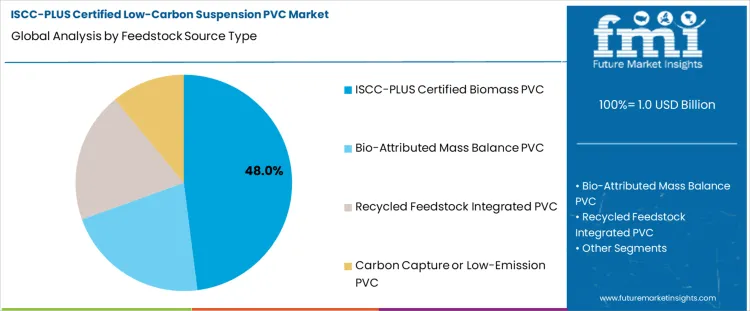
ISCC-PLUS certified biomass PVC is the leading feedstock source type in the ISCC-PLUS certified low-carbon suspension PVC market, holding 48% of the share. This growth is driven by the increasing demand for sustainable materials in various industries, including construction, automotive, and healthcare. ISCC-PLUS certification ensures that the biomass PVC is sourced responsibly from renewable feedstocks and contributes to a reduction in carbon emissions, making it a favorable option for companies committed to sustainability.
Biomass PVC is seen as an eco-friendly alternative to traditional PVC, as it supports circular economy principles and reduces reliance on fossil fuels. As the global market continues to shift towards sustainability, industries are prioritizing materials that meet carbon reduction goals and align with green building standards, further driving the demand for ISCC-PLUS certified biomass PVC. The increasing focus on reducing carbon footprints in high-impact sectors, such as construction and automotive, ensures that biomass PVC will remain a key player in the low-carbon materials market.
What is Driving the Demand for Building & Construction Products in the ISCC-PLUS Certified Low-Carbon Suspension PVC Market?
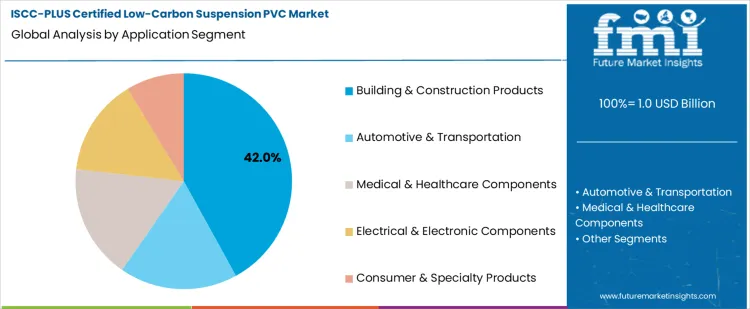
Building & construction products represent the leading application segment in the ISCC-PLUS certified low-carbon suspension PVC market, capturing 42% of the share. This demand is driven by the increasing emphasis on sustainable building materials and energy-efficient construction practices. The building sector is one of the largest contributors to global carbon emissions, and there is a growing need to adopt low-carbon alternatives, such as ISCC-PLUS certified PVC, to meet both regulatory requirements and consumer demand for environmentally friendly products.
PVC is widely used in construction for its durability, flexibility, and cost-effectiveness, and the shift towards low-carbon PVC offers an opportunity to reduce the sector's environmental impact. Furthermore, regulations promoting green building certifications and low-carbon materials are pushing the construction industry to adopt sustainable alternatives in products like windows, pipes, and roofing. As governments and private sectors continue to prioritize sustainability in construction, the demand for ISCC-PLUS certified low-carbon suspension PVC in building and construction applications will remain strong.
What are the Key Dynamics in the ISCC PLUS Certified Low Carbon Suspension PVC Market?
The ISCC‑PLUS certified low‑carbon suspension PVC market is defined by the integration of sustainability credentials into polyvinyl chloride (PVC) production and supply chains. ISCC‑PLUS is a voluntary, third‑party sustainability certification that verifies use of alternative feedstocks, traceability, and reduced greenhouse gas emissions through a chain‑of‑custody approach, such as mass balance accounting of renewable or circular inputs in PVC production. Certification enables manufacturers and brand owners to communicate verified sustainability claims and align products with circular economy objectives. Adoption trends reflect interaction among renewable feedstock access, regulatory drivers on carbon reporting, and demand for traceable, lower‑carbon materials in construction, automotive, and consumer applications.
What are the Main Drivers Supporting Growth in This Market?
Growth in the ISCC PLUS certified low carbon suspension PVC market is supported by regulatory emphasis on reducing material carbon footprints and aligning plastics production with environmental targets. Certification allows PVC producers to demonstrate compliance with sustainability criteria, including traceability of alternative feedstocks and reduced greenhouse gas emissions along the supply chain. Demand for products with lower scope 3 emissions from downstream manufacturers in construction, automotive, and consumer sectors encourages uptake of certified PVC grades. Advances in renewable energy use in PVC processing and increased corporate reporting on environmental, social, and governance performance reinforce market interest in certified low carbon materials.
What Restraints Are Limiting Market Expansion?
Market expansion is constrained by higher input complexity and costs relative to conventional PVC production. Achieving ISCC PLUS certification requires rigorous sustainability documentation, verification of traceability, and integration of alternative or recycled feedstocks into existing supply chains, which can raise production expenses. Variability in availability and sourcing of certified biomass, waste, or circular feedstocks limits scalability in some regions. Differences in regional certification acceptance and carbon reporting frameworks create compliance complexity for global suppliers. Some end users remain cautious about transitioning from established supply chains due to concerns about cost and material property consistency.
What Emerging Trends Are Shaping the Future of This Market?
Emerging trends in the ISCC PLUS certified low carbon suspension PVC market include stronger integration of renewable energy sources into PVC manufacturing, enabling further reductions in carbon intensity. Adoption of mass balance accounting to allocate certified low carbon feedstock through complex value chains is expanding beyond PVC into broader polymer and chemical markets. Partnerships between feedstock suppliers, certification bodies, and end users are increasing to ensure traceable, certified material flows. There is also rising interest from major material buyers in using certified low carbon PVC to meet corporate environmental commitments and consumer demand for products with credible sustainability claims and transparent lifecycle credentials.
What is the Country-Wise Analysis of the ISCC-PLUS Certified Low-Carbon Suspension PVC Market?
The ISCC-PLUS certified low-carbon suspension PVC market is growing as industries increasingly prioritize sustainability and carbon footprint reduction. ISCC-PLUS certification ensures that products are produced with a focus on low environmental impact, and this certification is gaining traction in industries such as construction, automotive, and packaging. Developed markets like the USA, Germany, and Japan are at the forefront of adopting ISCC-PLUS certified low-carbon PVC due to stringent environmental regulations, consumer demand for sustainable products, and the increasing need for eco-friendly materials in various industries. Emerging markets like China and South Korea are also experiencing growth, driven by the growing focus on reducing carbon emissions and improving sustainability in manufacturing. As global efforts to combat climate change intensify, the market for ISCC-PLUS certified low-carbon suspension PVC is expected to expand significantly.
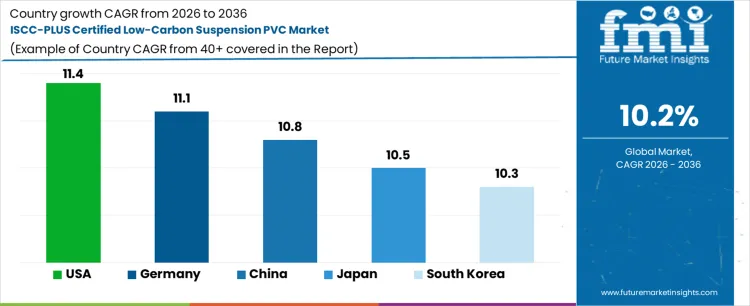
| Country | CAGR (2026-2036) |
|---|---|
| USA | 11.4% |
| Germany | 11.1% |
| China | 10.8% |
| Japan | 10.5% |
| South Korea | 10.3% |
What is the Growth Outlook for the ISCC-PLUS Certified Low-Carbon Suspension PVC Market in the USA?
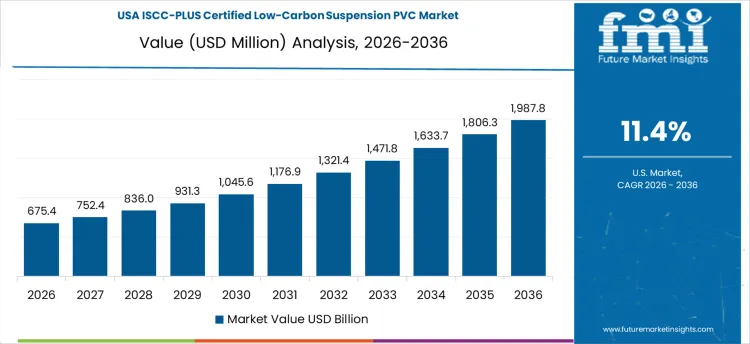
The ISCC-PLUS certified low-carbon suspension PVC market in the USA is projected to grow steadily, with a projected CAGR of 11.4% from 2026 to 2036. The USA is a global leader in sustainability, with strong government support for green technologies and increasing consumer demand for eco-friendly products. ISCC-PLUS certification is becoming an important standard in industries such as construction, automotive, and packaging, where low-carbon PVC is increasingly being used as a sustainable alternative to conventional PVC. The USA’s commitment to reducing its carbon footprint and addressing climate change through sustainability initiatives is expected to drive the continued adoption of ISCC-PLUS certified low-carbon PVC. As industries in the USA seek to comply with environmental regulations and meet consumer demand for greener solutions, the market for ISCC-PLUS certified low-carbon suspension PVC is set for steady growth.
What is the Market Outlook for the ISCC-PLUS Certified Low-Carbon Suspension PVC Market in Germany?
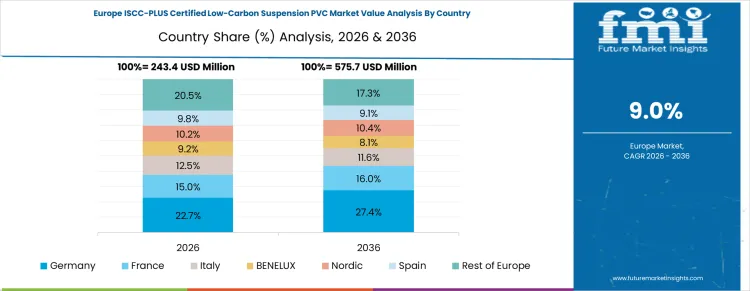
Germany is expected to see steady growth in the ISCC-PLUS certified low-carbon suspension PVC market, with a projected CAGR of 11.1% from 2026 to 2036. Germany is a leader in sustainability and environmental innovation, and the demand for low-carbon PVC is increasing as businesses and consumers prioritize eco-friendly alternatives. The German government has introduced policies aimed at reducing carbon emissions and promoting sustainable production practices, which is driving the adoption of ISCC-PLUS certified low-carbon suspension PVC. The market is growing across industries such as construction, automotive, and packaging, where sustainable materials are increasingly in demand. With Germany’s commitment to achieving its environmental goals, the market for ISCC-PLUS certified low-carbon PVC is expected to continue expanding steadily.
What is the Growth Forecast for the ISCC-PLUS Certified Low-Carbon Suspension PVC Market in China?
China is projected to experience steady growth in the ISCC-PLUS certified low-carbon suspension PVC market, with a projected CAGR of 10.8% from 2026 to 2036. As the largest producer and consumer of plastics, China is increasingly focused on reducing its carbon footprint and improving sustainability in manufacturing. The adoption of ISCC-PLUS certified low-carbon PVC is gaining momentum, particularly in industries such as construction and packaging, where there is a growing need for sustainable materials. The Chinese government has introduced policies to promote green technologies and reduce plastic waste, which is further driving the demand for low-carbon PVC. As China continues to modernize its manufacturing sector and address environmental challenges, the market for ISCC-PLUS certified low-carbon suspension PVC is expected to grow steadily.
What is the Market Outlook for the ISCC-PLUS Certified Low-Carbon Suspension PVC Market in Japan?
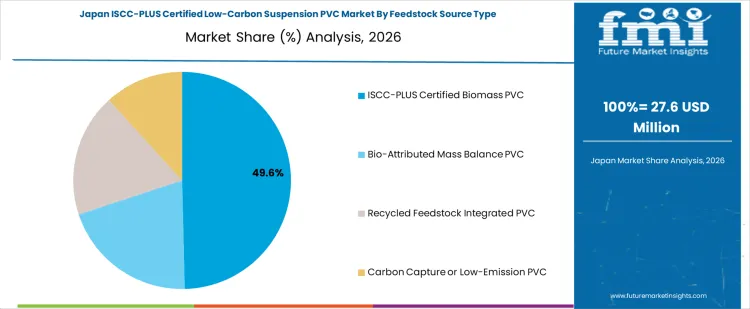
Japan is expected to experience steady growth in the ISCC-PLUS certified low-carbon suspension PVC market, with a projected CAGR of 10.5% from 2026 to 2036. Japan’s commitment to sustainability and innovation is driving the adoption of low-carbon PVC in various industries. The Japanese government has been proactive in introducing policies to reduce carbon emissions and promote sustainable manufacturing, which is encouraging the use of ISCC-PLUS certified low-carbon PVC. As consumer demand for environmentally friendly products rises and industries seek to comply with sustainability regulations, the market for low-carbon PVC is growing. The construction, automotive, and packaging sectors in Japan are increasingly adopting bioplastics and low-carbon materials, supporting the market’s growth in the country.
What is the Growth Forecast for the ISCC-PLUS Certified Low-Carbon Suspension PVC Market in South Korea?
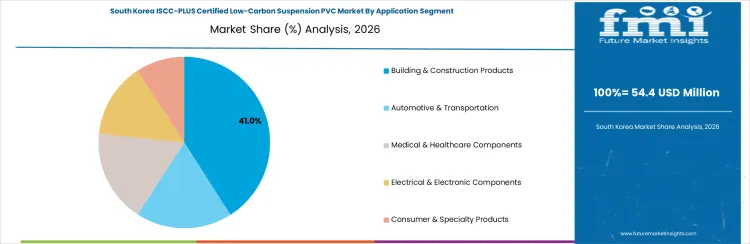
South Korea is projected to experience steady growth in the ISCC-PLUS certified low-carbon suspension PVC market, with a projected CAGR of 10.3% from 2026 to 2036. South Korea has been proactive in adopting green technologies and supporting sustainability initiatives, and the demand for low-carbon materials is rising. The government’s focus on reducing plastic waste and promoting renewable materials in manufacturing is driving the adoption of ISCC-PLUS certified low-carbon PVC. Industries such as packaging, construction, and automotive are increasingly turning to eco-friendly materials as consumer awareness of environmental issues grows. As South Korea continues to prioritize sustainability in its manufacturing practices, the market for ISCC-PLUS certified low-carbon suspension PVC is expected to grow steadily.
What is the Competitive Landscape for the ISCC-PLUS Certified Low-Carbon Suspension PVC Market?
The ISCC-PLUS certified low-carbon suspension PVC market is growing as industries increasingly focus on reducing their carbon footprint and adopting sustainable, low-carbon solutions for plastic production. Vynova Group leads the market with its ISCC-PLUS certified low-carbon suspension PVC, offering sustainable solutions that meet global sustainability standards while ensuring high-performance and quality for various applications. Their focus on sustainability, regulatory compliance, and innovative production techniques has positioned them as a dominant player in this sector. INEOS Group Ltd., Solvay S.A., and Formosa Plastics Group are significant competitors, each providing low-carbon PVC solutions with ISCC-PLUS certification. INEOS Group Ltd. focuses on advanced chemical technologies for producing low-carbon PVC, while Solvay S.A. and Formosa Plastics Group provide sustainable solutions in alignment with growing environmental regulations.
Westlake Chemical Corporation, Shin-Etsu Chemical Co., Ltd., and Kaneka Corporation further contribute to the competitive landscape by offering their own ISCC-PLUS certified low-carbon suspension PVC solutions. Westlake Chemical Corporation delivers high-quality low-carbon PVC, focusing on reducing environmental impact, while Shin-Etsu Chemical Co., Ltd. and Kaneka Corporation provide innovative sustainable products for the growing demand for environmentally responsible PVC. Arkema S.A., Kem One, and LG Chem Ltd. also play key roles by developing sustainable, low-carbon PVC options that comply with ISCC-PLUS certification standards. These companies compete by focusing on product innovation, sustainability, and their ability to meet the rising demand for low-carbon alternatives in plastic production. As global focus on reducing carbon emissions intensifies, the market for ISCC-PLUS certified low-carbon suspension PVC is expected to expand, fostering further innovation and competition in the sector.
Key Players of the ISCC-PLUS Certified Low-Carbon Suspension PVC Market
- Vynova Group
- INEOS Group Ltd.
- Solvay S.A.
- Formosa Plastics Group
- Westlake Chemical Corporation
- Shin‑Etsu Chemical Co., Ltd.
- Kaneka Corporation
- Arkema S.A.
- Kem One
- LG Chem Ltd.
Scope of the Report
| Items | Values |
|---|---|
| Quantitative Units (2026) | USD Billion |
| Feedstock Source Type | ISCC PLUS Certified Biomass PVC, Bio-Attributed Mass Balance PVC, Recycled Feedstock Integrated PVC, Carbon Capture or Low-Emission PVC |
| Application Segment | Building & Construction Products, Automotive & Transportation, Medical & Healthcare Components, Electrical & Electronic Components, Consumer & Specialty Products |
| End Use Industry | Industrial OEMs, Contract Manufacturing, Brand or Consumer Goods, Infrastructure & Public Sector, Specialty Packagers |
| Companies | Vynova Group, INEOS Group Ltd., Solvay S.A., Formosa Plastics Group, Westlake Chemical Corporation, Shin-Etsu Chemical Co., Ltd., Kaneka Corporation, Arkema S.A., Kem One, LG Chem Ltd. |
| Regions Covered | North America, Latin America, Western Europe, Eastern Europe, South Asia & Pacific, East Asia, Middle East & Africa |
| Countries Covered | United States, Canada, Mexico, Brazil, Argentina, Germany, France, United Kingdom, Italy, Spain, Netherlands, China, India, Japan, South Korea, ANZ, GCC Countries, South Africa |
| Additional Attributes | Dollar sales by feedstock source type, application segment, end use industry, and region. Includes analysis of market trends in ISCC PLUS certified low-carbon suspension PVC adoption, performance in key application sectors, cost and feedstock sourcing implications, regulatory and certification drivers for low-carbon and mass balance PVC, circular economy and recycling impacts on PVC production, competitive positioning and market share of key companies, innovations in low-carbon PVC technologies, and evaluation of influence on product performance, lifecycle emissions, and sectoral demand dynamics. |
ISCC-PLUS Certified Low-Carbon Suspension PVC Market Segmentation
Feedstock Source Type:
- ISCC-PLUS Certified Biomass PVC
- Bio-Attributed Mass Balance PVC
- Recycled Feedstock Integrated PVC
- Carbon Capture or Low-Emission PVC
Application Segment:
- Building & Construction Products
- Automotive & Transportation
- Medical & Healthcare Components
- Electrical & Electronic Components
- Consumer & Specialty Products
End Use Industry:
- Industrial OEMs
- Contract Manufacturing
- Brand or Consumer Goods
- Infrastructure & Public Sector
- Specialty Packagers
Region:
- Asia Pacific
- China
- Japan
- South Korea
- India
- Australia & New Zealand
- ASEAN
- Rest of Asia Pacific
- Europe
- Germany
- United Kingdom
- France
- Italy
- Spain
- Nordic
- BENELUX
- Rest of Europe
- North America
- United States
- Canada
- Mexico
- Latin America
- Brazil
- Chile
- Rest of Latin America
- Middle East & Africa
- Kingdom of Saudi Arabia
- Other GCC Countries
- Turkey
- South Africa
- Other African Union
- Rest of Middle East & Africa
Frequently Asked Questions
How big is the ISCC-PLUS certified low-carbon suspension PVC market in 2026?
The global ISCC-PLUS certified low-carbon suspension PVC market is estimated to be valued at USD 1.0 billion in 2026.
What will be the size of ISCC-PLUS certified low-carbon suspension PVC market in 2036?
The market size for the ISCC-PLUS certified low-carbon suspension PVC market is projected to reach USD 2.6 billion by 2036.
How much will be the ISCC-PLUS certified low-carbon suspension PVC market growth between 2026 and 2036?
The ISCC-PLUS certified low-carbon suspension PVC market is expected to grow at a 10.2% CAGR between 2026 and 2036.
What are the key feedstock source types in the ISCC-PLUS certified low-carbon suspension PVC market?
The key feedstock source types in ISCC-PLUS certified low-carbon suspension PVC market are ISCC-PLUS certified biomass PVC, bio-attributed mass balance PVC, recycled feedstock integrated PVC, and carbon capture or low‑emission PVC.
Which application segment segment to contribute significant share in the ISCC-PLUS certified low-carbon suspension PVC market in 2026?
In terms of application segment, building & construction products segment to command 42.0% share in the ISCC-PLUS certified low-carbon suspension PVC market in 2026.
Preview the report firsthand - request a free sample
Get SampleGet the brochure for pricing and purchase details.
Get PDFTable of Content
- Executive Summary
- Global Market Outlook
- Demand-side Trends
- Supply-side Trends
- Technology Roadmap Analysis
- Analysis and Recommendations
- Market Overview
- Market Coverage / Taxonomy
- Market Definition / Scope / Limitations
- Market Background
- Market Dynamics
- Drivers
- Restraints
- Opportunity
- Trends
- Scenario Forecast
- Demand in Optimistic Scenario
- Demand in Likely Scenario
- Demand in Conservative Scenario
- Opportunity Map Analysis
- Product Life Cycle Analysis
- Supply Chain Analysis
- Investment Feasibility Matrix
- Value Chain Analysis
- PESTLE and Porter’s Analysis
- Regulatory Landscape
- Regional Parent Market Outlook
- Production and Consumption Statistics
- Import and Export Statistics
- Market Dynamics
- Global Market Analysis 2021 to 2025 and Forecast, 2026 to 2036
- Historical Market Size Value (USD Million) Analysis, 2021 to 2025
- Current and Future Market Size Value (USD Million) Projections, 2026 to 2036
- Y-o-Y Growth Trend Analysis
- Absolute $ Opportunity Analysis
- Global Market Pricing Analysis 2021 to 2025 and Forecast 2026 to 2036
- Global Market Analysis 2021 to 2025 and Forecast 2026 to 2036, By Feedstock Source Type
- Introduction / Key Findings
- Historical Market Size Value (USD Million) Analysis By Feedstock Source Type , 2021 to 2025
- Current and Future Market Size Value (USD Million) Analysis and Forecast By Feedstock Source Type , 2026 to 2036
- ISCC‑PLUS Certified Biomass PVC
- Bio‑Attributed Mass Balance PVC
- Recycled Feedstock Integrated PVC
- Carbon Capture or Low‑Emission PVC
- ISCC‑PLUS Certified Biomass PVC
- Y-o-Y Growth Trend Analysis By Feedstock Source Type , 2021 to 2025
- Absolute $ Opportunity Analysis By Feedstock Source Type , 2026 to 2036
- Global Market Analysis 2021 to 2025 and Forecast 2026 to 2036, By Application Segment
- Introduction / Key Findings
- Historical Market Size Value (USD Million) Analysis By Application Segment, 2021 to 2025
- Current and Future Market Size Value (USD Million) Analysis and Forecast By Application Segment, 2026 to 2036
- Building & Construction Products
- Automotive & Transportation
- Medical & Healthcare Components
- Electrical & Electronic Components
- Consumer & Specialty Products
- Building & Construction Products
- Y-o-Y Growth Trend Analysis By Application Segment, 2021 to 2025
- Absolute $ Opportunity Analysis By Application Segment, 2026 to 2036
- Global Market Analysis 2021 to 2025 and Forecast 2026 to 2036, By End Use Industry
- Introduction / Key Findings
- Historical Market Size Value (USD Million) Analysis By End Use Industry, 2021 to 2025
- Current and Future Market Size Value (USD Million) Analysis and Forecast By End Use Industry, 2026 to 2036
- Industrial OEMs
- Contract Manufacturing
- Brand or Consumer Goods
- Infrastructure & Public Sector
- Specialty Packagers
- Industrial OEMs
- Y-o-Y Growth Trend Analysis By End Use Industry, 2021 to 2025
- Absolute $ Opportunity Analysis By End Use Industry, 2026 to 2036
- Global Market Analysis 2021 to 2025 and Forecast 2026 to 2036, By Region
- Introduction
- Historical Market Size Value (USD Million) Analysis By Region, 2021 to 2025
- Current Market Size Value (USD Million) Analysis and Forecast By Region, 2026 to 2036
- North America
- Latin America
- Western Europe
- Eastern Europe
- East Asia
- South Asia and Pacific
- Middle East & Africa
- Market Attractiveness Analysis By Region
- North America Market Analysis 2021 to 2025 and Forecast 2026 to 2036, By Country
- Historical Market Size Value (USD Million) Trend Analysis By Market Taxonomy, 2021 to 2025
- Market Size Value (USD Million) Forecast By Market Taxonomy, 2026 to 2036
- By Country
- USA
- Canada
- Mexico
- By Feedstock Source Type
- By Application Segment
- By End Use Industry
- By Country
- Market Attractiveness Analysis
- By Country
- By Feedstock Source Type
- By Application Segment
- By End Use Industry
- Key Takeaways
- Latin America Market Analysis 2021 to 2025 and Forecast 2026 to 2036, By Country
- Historical Market Size Value (USD Million) Trend Analysis By Market Taxonomy, 2021 to 2025
- Market Size Value (USD Million) Forecast By Market Taxonomy, 2026 to 2036
- By Country
- Brazil
- Chile
- Rest of Latin America
- By Feedstock Source Type
- By Application Segment
- By End Use Industry
- By Country
- Market Attractiveness Analysis
- By Country
- By Feedstock Source Type
- By Application Segment
- By End Use Industry
- Key Takeaways
- Western Europe Market Analysis 2021 to 2025 and Forecast 2026 to 2036, By Country
- Historical Market Size Value (USD Million) Trend Analysis By Market Taxonomy, 2021 to 2025
- Market Size Value (USD Million) Forecast By Market Taxonomy, 2026 to 2036
- By Country
- Germany
- UK
- Italy
- Spain
- France
- Nordic
- BENELUX
- Rest of Western Europe
- By Feedstock Source Type
- By Application Segment
- By End Use Industry
- By Country
- Market Attractiveness Analysis
- By Country
- By Feedstock Source Type
- By Application Segment
- By End Use Industry
- Key Takeaways
- Eastern Europe Market Analysis 2021 to 2025 and Forecast 2026 to 2036, By Country
- Historical Market Size Value (USD Million) Trend Analysis By Market Taxonomy, 2021 to 2025
- Market Size Value (USD Million) Forecast By Market Taxonomy, 2026 to 2036
- By Country
- Russia
- Poland
- Hungary
- Balkan & Baltic
- Rest of Eastern Europe
- By Feedstock Source Type
- By Application Segment
- By End Use Industry
- By Country
- Market Attractiveness Analysis
- By Country
- By Feedstock Source Type
- By Application Segment
- By End Use Industry
- Key Takeaways
- East Asia Market Analysis 2021 to 2025 and Forecast 2026 to 2036, By Country
- Historical Market Size Value (USD Million) Trend Analysis By Market Taxonomy, 2021 to 2025
- Market Size Value (USD Million) Forecast By Market Taxonomy, 2026 to 2036
- By Country
- China
- Japan
- South Korea
- By Feedstock Source Type
- By Application Segment
- By End Use Industry
- By Country
- Market Attractiveness Analysis
- By Country
- By Feedstock Source Type
- By Application Segment
- By End Use Industry
- Key Takeaways
- South Asia and Pacific Market Analysis 2021 to 2025 and Forecast 2026 to 2036, By Country
- Historical Market Size Value (USD Million) Trend Analysis By Market Taxonomy, 2021 to 2025
- Market Size Value (USD Million) Forecast By Market Taxonomy, 2026 to 2036
- By Country
- India
- ASEAN
- Australia & New Zealand
- Rest of South Asia and Pacific
- By Feedstock Source Type
- By Application Segment
- By End Use Industry
- By Country
- Market Attractiveness Analysis
- By Country
- By Feedstock Source Type
- By Application Segment
- By End Use Industry
- Key Takeaways
- Middle East & Africa Market Analysis 2021 to 2025 and Forecast 2026 to 2036, By Country
- Historical Market Size Value (USD Million) Trend Analysis By Market Taxonomy, 2021 to 2025
- Market Size Value (USD Million) Forecast By Market Taxonomy, 2026 to 2036
- By Country
- Kingdom of Saudi Arabia
- Other GCC Countries
- Turkiye
- South Africa
- Other African Union
- Rest of Middle East & Africa
- By Feedstock Source Type
- By Application Segment
- By End Use Industry
- By Country
- Market Attractiveness Analysis
- By Country
- By Feedstock Source Type
- By Application Segment
- By End Use Industry
- Key Takeaways
- Key Countries Market Analysis
- USA
- Pricing Analysis
- Market Share Analysis, 2025
- By Feedstock Source Type
- By Application Segment
- By End Use Industry
- Canada
- Pricing Analysis
- Market Share Analysis, 2025
- By Feedstock Source Type
- By Application Segment
- By End Use Industry
- Mexico
- Pricing Analysis
- Market Share Analysis, 2025
- By Feedstock Source Type
- By Application Segment
- By End Use Industry
- Brazil
- Pricing Analysis
- Market Share Analysis, 2025
- By Feedstock Source Type
- By Application Segment
- By End Use Industry
- Chile
- Pricing Analysis
- Market Share Analysis, 2025
- By Feedstock Source Type
- By Application Segment
- By End Use Industry
- Germany
- Pricing Analysis
- Market Share Analysis, 2025
- By Feedstock Source Type
- By Application Segment
- By End Use Industry
- UK
- Pricing Analysis
- Market Share Analysis, 2025
- By Feedstock Source Type
- By Application Segment
- By End Use Industry
- Italy
- Pricing Analysis
- Market Share Analysis, 2025
- By Feedstock Source Type
- By Application Segment
- By End Use Industry
- Spain
- Pricing Analysis
- Market Share Analysis, 2025
- By Feedstock Source Type
- By Application Segment
- By End Use Industry
- France
- Pricing Analysis
- Market Share Analysis, 2025
- By Feedstock Source Type
- By Application Segment
- By End Use Industry
- India
- Pricing Analysis
- Market Share Analysis, 2025
- By Feedstock Source Type
- By Application Segment
- By End Use Industry
- ASEAN
- Pricing Analysis
- Market Share Analysis, 2025
- By Feedstock Source Type
- By Application Segment
- By End Use Industry
- Australia & New Zealand
- Pricing Analysis
- Market Share Analysis, 2025
- By Feedstock Source Type
- By Application Segment
- By End Use Industry
- China
- Pricing Analysis
- Market Share Analysis, 2025
- By Feedstock Source Type
- By Application Segment
- By End Use Industry
- Japan
- Pricing Analysis
- Market Share Analysis, 2025
- By Feedstock Source Type
- By Application Segment
- By End Use Industry
- South Korea
- Pricing Analysis
- Market Share Analysis, 2025
- By Feedstock Source Type
- By Application Segment
- By End Use Industry
- Russia
- Pricing Analysis
- Market Share Analysis, 2025
- By Feedstock Source Type
- By Application Segment
- By End Use Industry
- Poland
- Pricing Analysis
- Market Share Analysis, 2025
- By Feedstock Source Type
- By Application Segment
- By End Use Industry
- Hungary
- Pricing Analysis
- Market Share Analysis, 2025
- By Feedstock Source Type
- By Application Segment
- By End Use Industry
- Kingdom of Saudi Arabia
- Pricing Analysis
- Market Share Analysis, 2025
- By Feedstock Source Type
- By Application Segment
- By End Use Industry
- Turkiye
- Pricing Analysis
- Market Share Analysis, 2025
- By Feedstock Source Type
- By Application Segment
- By End Use Industry
- South Africa
- Pricing Analysis
- Market Share Analysis, 2025
- By Feedstock Source Type
- By Application Segment
- By End Use Industry
- USA
- Market Structure Analysis
- Competition Dashboard
- Competition Benchmarking
- Market Share Analysis of Top Players
- By Regional
- By Feedstock Source Type
- By Application Segment
- By End Use Industry
- Competition Analysis
- Competition Deep Dive
- INEOS Group Ltd.
- Overview
- Product Portfolio
- Profitability by Market Segments (Product/Age /Sales Channel/Region)
- Sales Footprint
- Strategy Overview
- Marketing Strategy
- Product Strategy
- Channel Strategy
- Solvay S.A.
- Formosa Plastics Group
- Westlake Chemical Corporation
- Shin‑Etsu Chemical Co., Ltd.
- Kaneka Corporation
- Arkema S.A.
- Kem One
- LG Chem Ltd.
- INEOS Group Ltd.
- Competition Deep Dive
- Assumptions & Acronyms Used
- Research Methodology


