

- Industry Size (2026)
- USD 4.6 Bn
- Forecast (2036)
- USD 10.3 Bn
- CAGR (2026 to 2036)
- 8.4%
Certified-Circular Polyolefin Resins for Flexible and Rigid Packaging Market Size, Market Forecast and Outlook By FMI
The certified-circular polyolefin resins for flexible and rigid packaging market was valued at USD 4.2 billion in 2025. Revenue expansion is poised to hit USD 4.6 billion in 2026 at a CAGR of 8.4% during this forecast period. The global market valuation is expected to be USD 10.3 billion through 2036 as brand commitments outstripping virgin resin parity pricing force sustainable resin procurement to accept permanent green premiums.
Procurement departments across major fast-moving consumer goods conglomerates face immediate ISCC certified polymer capacity constraints. Securing audited certified circular polyolefin packaging resins requires executing five-year minimum offtake agreements with circular polymer suppliers forthwith. Spot availability for plastic circular economy polymers possessing uninterrupted chain-of-custody documentation remains virtually non-existent. Failure to secure these long-term contracts exposes converters to incoming tax liabilities and immediate retail delisting risks across packaging networks. Extending these supply partnerships protects multinational brands from unpredictable virgin feedstock fluctuations. Supply chain managers prioritizing sustainable packaging polymers establish impenetrable competitive moats against regional rivals lacking verified green supply access. Strategic sourcing officers must aggressively fund capacity build-outs via price premiums to secure future volumes.
Summary of Certified-Circular Polyolefin Resins for Flexible and Rigid Packaging Market
- Market Snapshot:
- The certified-circular polyolefin resins for flexible and rigid packaging market is valued at USD 4.2 billion in 2025 and projected to reach USD 10.3 billion by 2036.
- The industry is expected to grow at 8.4% CAGR from 2026 to 2036, creating an incremental opportunity of USD 5.7 billion.
- The market operates as a compliance-driven specialty materials segment, utilizing certification traceability and sustainability credentials to define competitiveness.
- Supply chains are structured around mass balance certification and feedstock traceability systems.
- Petrochemical majors continuously invest massive capital to scale advanced recycling infrastructure globally.
- Brand owners prioritize securing long-term offtake agreements to insulate themselves against future supply constraints.
- Demand and Growth Drivers:
- Demand is rising due to regulatory mandates, primarily recycled content targets in Europe and North America.
- Certified circular resins are increasingly adopted, allowing drop-in replacement without performance compromise.
- Growth is supported by expansion in Asia, particularly India (10.4%) and China (9.8%).
- Key countries include India (10.4%), China (9.8%), Germany (9.2%), Netherlands (9.0%), France (8.6%), United States (8.1%), and Japan (7.5%).
- Growth is constrained by limited feedstock availability and higher cost premiums.
- Aggressive corporate sustainability pledges compel multinational fast-moving consumer goods conglomerates to transition away from fossil-based alternatives swiftly.
- Plastic packaging taxes implemented across key Europe regions act as strong financial catalysts accelerating circular material procurement.
- Product and Segment View:
- The market covers bio-based and recycled polyolefins designed for packaging applications under ISCC and mass balance standards.
- Applications include food packaging, personal care packaging, healthcare packaging, and industrial packaging.
- Bio-based resins lead the material type segment with 38.0% share due to premium sustainability positioning.
- Flexible packaging leads the packaging type segment with 56.0% share due to high consumption volume.
- Food packaging leads the end use segment with 44.0% share driven by FMCG demand.
- ISCC Plus leads the certification type segment with 61.0% share due to global acceptance.
- Injection molding leads the processing technology segment with 34.0% share due to rigid packaging demand.
- Scope includes certified circular resins but excludes virgin polymers and non-certified recycled plastics.
- Packaging engineers favor mono-material film structures heavily to simplify post-consumer recovery processes.
- Film extrusion technologies adapt rapidly to handle chemically recycled grades flawlessly without compromising optical clarity.
- Geography and Competitive Outlook:
- India, China, and Germany are fastest-growing, alongside the United States remaining a stable high-value market.
- Competition is shaped by capacity expansion and circular feedstock partnerships among major petrochemical companies.
- Key companies include Borealis, SABIC, LyondellBasell, TotalEnergies, and Dow.
- The market is moderately consolidated with Borealis holding dominant share.
- Europe converting networks dominate early adoption phases due to stringent regional regulatory enforcement.
- Asia manufacturers leverage massive state-directed investments to establish immense localized chemical recycling hubs quickly.
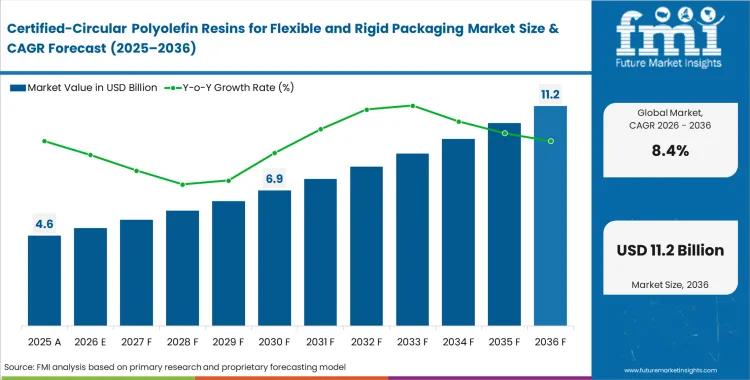
Certified-Circular Polyolefin Resins for Flexible and Rigid Packaging Market Key Takeaways
| Metric | Details |
|---|---|
| Industry Size (2026) | USD 4.6 billion |
| Industry Value (2036) | USD 10.3 billion |
| CAGR (2026-2036) | 8.4% |
Source: Future Market Insights (FMI) analysis, based on proprietary forecasting model and primary research
Upon customs authorities mandating distinct audit trails for chemical recycling polyolefins entering national borders, supply dynamics fundamentally shift. Converters integrating digital tracking systems early capture disproportionate margin by guaranteeing compliance. Fragmented regional compounders lacking verified allocation tracking face immediate exclusion from tier-one recycled polyolefin supplier lists. Strict regulatory enforcement compels rapid market consolidation around vertically integrated petrochemical giants possessing flawless certification ledgers. Financial controllers actively subsidize early transition phases to avert catastrophic future non-compliance penalties, viewing initial capital outlays as essential insurance safeguarding core enterprise revenue streams.
Global polyolefin recycling growth is driven by widely divergent regional regulatory and market dynamics. India advances at 10.4% as aggressive extended producer responsibility frameworks impact unprepared local converting networks, accelerating polyolefin demand Asia growth. China follows at 9.8% due to state-directed infrastructure scaling for recovery facilities. Germany grows at 9.2%, Netherlands at 9.0%, and France at 8.6%, with Europe converter networks adapting rapidly to EU plastic recycling mandates impact. United States tracks at 8.1% alongside Japan at 7.5%, shaped by localized brand initiatives rather than cohesive federal legislation. Geopolitical divergence in feedstock qualification standards permanently bifurcates global polymer circular supply chain strategies, compelling brands to localize compliance approaches meticulously, thus avoiding costly trade barriers.
Segmental Analysis
Certified-Circular Polyolefin Resins for Flexible and Rigid Packaging Market Analysis by Material Type
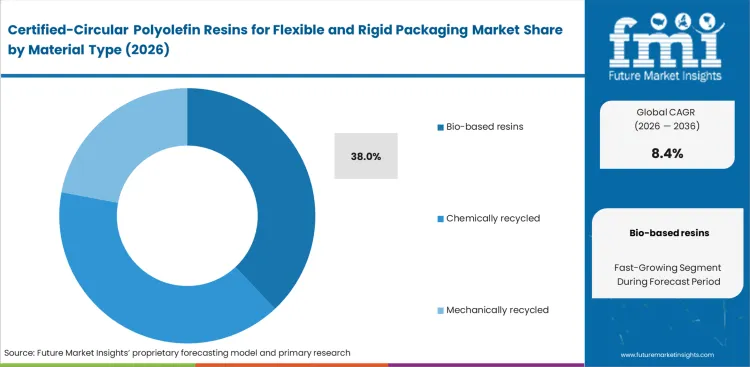
Substitution logic depends entirely on avoiding mechanical recycling contamination risks in direct food contact situations. Bio-based resins segment holds 38.0% market share, this dominance stems from packaging engineers demanding zero modifications to existing extrusion dies, coupled with continuous agricultural subsidies offsetting higher green costs. FMI's analysis indicates the transition from fossil-based to bio-based advanced recycled polyolefin resins occurs instantly on production floors. Operations personnel bypass expensive equipment requalification procedures completely. Plant management maintains current cycle times and throughput rates without compromise. Procurement models consistently fail to recognize that bio-based polyolefins packaging leadership relies heavily on regional agricultural subsidies instead of inherent chemical processing efficiency. Brands postponing integration face immediate competitive disadvantages when rivals launch products featuring verified carbon-negative packaging claims. Extensive performance evaluation confirms identical barrier properties, prompting quality assurance teams to approve drop-in substitutions confidently. Corporate sustainability officers vigorously promote these specific grades to accelerate scope-three emission reductions significantly. Long-term volume offtake agreements increasingly govern bio-based resin sourcing, effectively removing premium supply from open spot markets.
- Initial trial justification: Sourcing personnel validate bio-based grades instantly due to identical melt flow indices. Packaging engineers avoid six-month tooling recalibration delays completely, ensuring uninterrupted production schedules for high-volume consumer goods lines.
- Performance comparison limits: Evaluating bio-based polyolefin versus recycled polyolefins shows identical mechanical barriers, yet R&D departments approve drop-in replacements strictly based on agricultural origin documentation. Quality assurance teams reject any lot deviating from fossil-equivalent specifications, protecting brand integrity.
- Contract renewal triggers: Procurement personnel expand purchase volumes during agricultural feedstock pricing dips falling below chemical recycling premiums. Commodity managers secure multi-year agreements to hedge against future carbon taxes, stabilizing long-term packaging budgets.
Certified-Circular Polyolefin Resins for Flexible and Rigid Packaging Market Analysis by Packaging Type
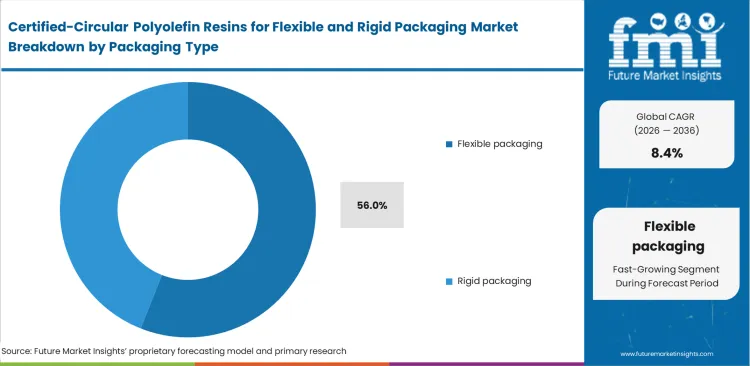
Strict statutory definitions of recyclability jeopardize the viability of multi-layer film structures globally. FMI's estimates suggest achieving high-barrier performance using circular specialty plastics requires specialized sealing layer adjustments. Converting plant operators must constantly monitor heat seal windows during high-speed pouch forming. Technicians navigate narrower processing tolerances compared to traditional virgin structures. Flexible packaging segment captures 56.0% share, as Fast-Moving Consumer Goods (FMCG) category buyers are driving this growth by urgently replacing complex laminates with flexible packaging circular plastics to prevent immediate retail delisting. The high volume of flexible formats obscures serious profitability concerns; scrap rates during initial roll-stock production often consume entire sustainability premiums. Converters unable to master these tighter processing windows experience catastrophic yield losses on million-unit production runs. Engineering teams invest heavily in advanced tension control automation to mitigate increased defect generation during maximum speed runs. Finance departments reallocate substantial capital budgets exclusively toward upgrading legacy extrusion lines lacking precision heating control capabilities. Unprepared converting facilities face severe margin compression, systematically losing highly profitable international FMCG accounts.
- Procurement baseline shifts: Category buyers absorb mandatory twenty percent cost increases per metric ton easily. Brand managers justify this expenditure solely through avoided retail non-compliance penalties, safeguarding valuable supermarket shelf placements.
- Hidden conversion losses: Production supervisors encounter elevated scrap generation during high-speed form-fill-seal operations. Equipment operators must recalibrate tension controls constantly, risking severe downtime penalties if line speeds fall below acceptable factory targets.
- Rigid transition economics: Utilizing rigid packaging recycled resins compels financial controllers to achieve break-even metrics only after considering avoided plastic packaging taxes. Accounting departments classify resin premiums as regulatory compliance fees, shielding overall operating margins from unexpected statutory fines.
Certified-Circular Polyolefin Resins for Flexible and Rigid Packaging Market Analysis by End Use
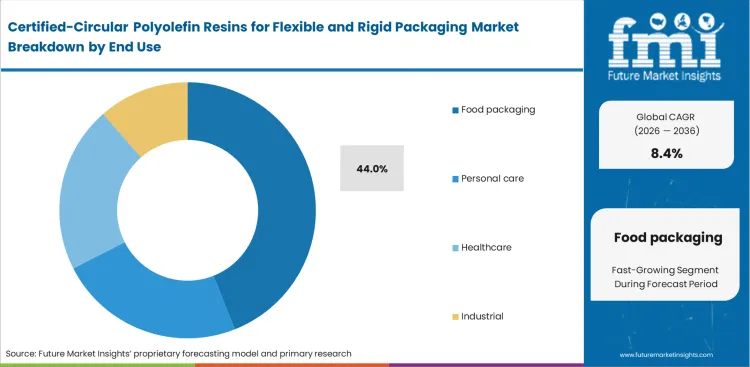
Strict migration limitations for endocrine disruptors permanently prohibit the use of standard mechanical recyclate in applications involving primary contact. The food packaging sector commands a 44.0% market share, a position driven by compliance personnel demanding immaculate molecular purity amid accelerated packaging polymer innovation trends and increasingly strict Europe Food Safety Authority mandates. According to FMI's projections, the integration of recycled polyolefin compounds requires absolute assurance against trace chemical contamination. Personnel overseeing quality assurance feel confident knowing chemically recycled or bio-based monomers precisely match virgin purity. Personnel managing brand risk successfully eliminate product recall threats associated with conventional post-consumer resins. Food-grade certification creates an artificial supply shortage; non-food industries are willing to pay a premium for these identical high-purity grades, simply easing internal factory compliance audits.
- Contamination threat elimination: Quality assurance personnel employ chemically recycled grades, completely blocking unverified oligomer migration. Product safety personnel effortlessly pass demanding safety audits, entirely eliminating catastrophic recall exposure.
- Persistent audit vulnerabilities: Compliance personnel remain exposed if mass balance accounting software suffers data corruption. Facility managers must maintain permanent, redundant digital records, facing significant penalties should regulatory inspectors discover undocumented resin batch commingling.
- Maximum benefit capture: Brand personnel maximize consumer trust through the direct printing of QR-coded chain-of-custody verification on primary wrappers. Marketing teams transform abstract compliance into tangible retail differentiation, securing premium pricing compared to fossil-based alternatives.
Certified-Circular Polyolefin Resins for Flexible and Rigid Packaging Market Analysis by Certification Type
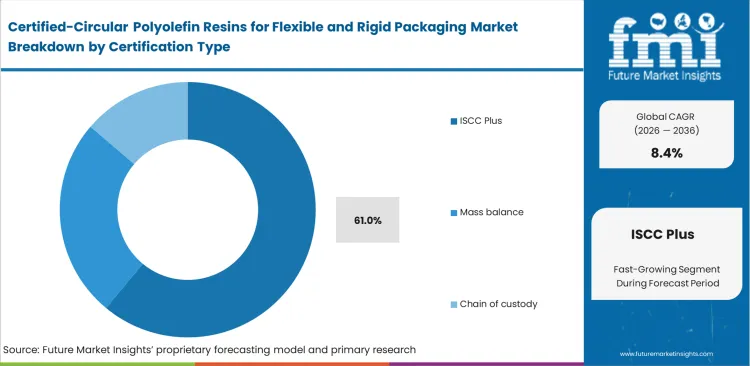
Fragmented national sustainability standards compel multinational corporations to adopt a single, globally accepted auditing framework. FMI analysts observe that incorporating polyolefin impact modifiers within unified mass balance systems significantly streamlines global sourcing. Regional purchasing managers condense supplier rosters, including only fully certified petrochemical partners. Sustainability reporting teams automate yearly environmental impact disclosure. ISCC plus segment maintains a dominant share of around 61.0%, reinforced by supply chain personnel refusing to manage separate compliance structures across varied geographic territories and seeking standardized verification protocols over the forecast period. Global reliance on one certification body generates a substantial constraint; audit scheduling delays currently dictate corporate product launch timelines more than actual resin production lead times. Brands selecting localized, non-recognized certifications find product exclusion from premium international retail venues. Procurement executives require complete supply chain visibility, immediately forcing tertiary compounders to embrace strict ISCC protocols to preserve vendor status. Certification scarcity empowers auditing organizations to levy excessive fees, dramatically inflating administrative overhead costs for medium-sized regional converting networks.
- Petrochemical consolidation: Strategic sourcing personnel contract exclusively with top-tier chemical majors possessing integrated ISCC facilities. Mid-market resin brokers face systematic exclusion from profitable supply tenders, losing all access to multinational Fast-Moving Consumer Goods conglomerates.
- Audit bottleneck realities: Supply chain managers plan product transitions a year in advance merely to accommodate independent auditor availability. Compliance teams hastily stockpile certified credits, risking serious launch delays if certification paperwork lags behind physical resin shipments.
- Long-term network structure: Procurement executives foresee a future featuring certification nodes integrating directly via blockchain protocols. Operations personnel will eventually execute autonomous compliance verification, eliminating expensive external consulting fees currently impacting regional converter networks.
Certified-Circular Polyolefin Resins for Flexible and Rigid Packaging Market Analysis by Processing Technology
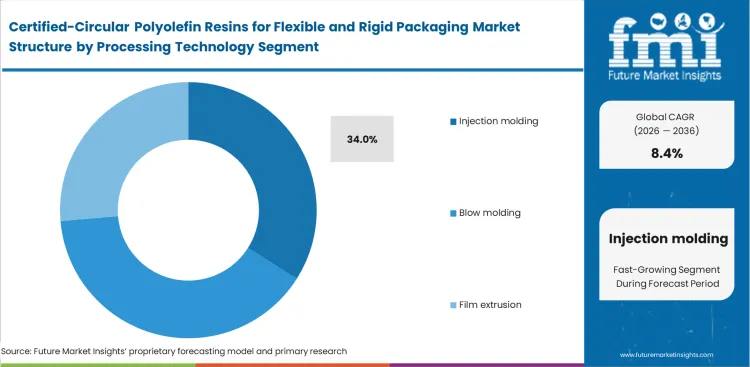
Vast installed bases of high-cavitation tooling determine the adoption strategy for rigid container manufacturing. Injection molding segment holds a 34.0% share, supported by tooling engineers requiring zero variation in shrinkage rates to accelerate polyolefin recycling market growth and prevent catastrophic mold redesign expenses. Injecting solvent-based polyolefin grades requires absolute batch-to-batch consistency. Mold setting technicians substitute virgin material with certified circular resin without altering cooling times or holding pressures. Maintenance supervisors avoid costly hot-runner system modifications. Technical transitions proceed smoothly, masking commercial tension; molders successfully using circular grades immediately leverage that capability to demand elevated margins from FMCG clients. Custom molders failing to approve circular resins lose their most lucrative multinational accounts to proactive competitors.
- Dimensional stability wins: Tooling engineers observe identical shrinkage characteristics compared to legacy fossil polymers. Quality control managers sanction complex closure geometries immediately, preventing catastrophic leakages during global supply chain distribution cycles.
- Edge condition vulnerability: Production supervisors observe occasional cycle time variations during extreme high-speed thin-wall molding. Technicians must adjust holding pressures slightly to prevent warpage, avoiding unacceptable defect rates on automated assembly lines.
- Acceptability thresholds: Packaging buyers mandate matching impact resistance drop-test results before authorizing commercial production. Logistics executives refuse to compromise pallet stability under any circumstances, safeguarding fragile contents across rigorous retail distribution networks.
Certified-Circular Polyolefin Resins for Flexible and Rigid Packaging Market Drivers, Restraints, and Opportunities
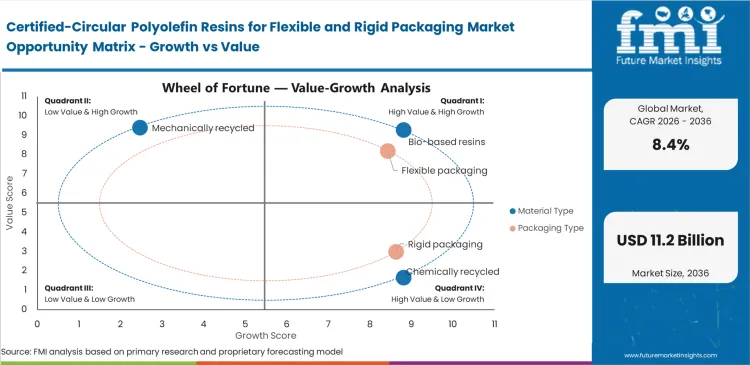
Statutory recycled-content minimums immediately compel procurement executives to abandon spot purchasing to securely acquire certified circular polyolefin resins volumes. Transitioning requires securing scarce mass balance volumes before European regulations impose massive non-compliance penalties. Sourcing executives at global cosmetic brands understand that failing to achieve 2030 packaging targets guarantees retail delisting across prime territories. Committing to multi-year offtake agreements with petrochemical majors represents the sole viable survival strategy. Delaying these contracts leaves brands completely exposed to incoming plastic taxes and a permanently reduced spot supply. Expanding sustainable packaging resins market portfolios functions as a critical defense mechanism against aggressive regulatory intervention targeting fossil-based dependencies. Multi-national conglomerates aggressively restructure vendor networks to prioritize fully integrated circular resin suppliers, completely sidelining legacy spot market distributors.
Rigid mass balance accounting protocols impede rapid integration across fragmented converting networks analyzing recycled plastics versus virgin plastics tracking requirements. Plant managers face substantial difficulty implementing precise chain-of-custody software tracking systems needed to legally manage certified volumes. Mixing certified and standard resins inside existing silos requires flawless digital ledgers exceeding legacy enterprise resource planning software capabilities. Mid-sized converters struggle with administrative burdens related to constant third-party audits, creating a constraint between available resin supply and actual packaged product output. Blockchain-based ledger solutions are emerging but require significant capital investment, forcing substantial industry consolidation as undercapitalized firms exit premium packaging categories.
Opportunities in the Certified-Circular Polyolefin Resins for Flexible and Rigid Packaging Market
- Premium mono-material structures: Packaging engineers develop fully recyclable high-barrier pouches utilizing flexible plastic packaging design principles to eliminate complex laminates. Category managers capture premium retail shelf space, charging elevated consumer prices justified by verified sustainability claims.
- Medical device packaging integration: Regulatory affairs personnel validate chemically recycled grades for sterile barrier systems demanding pristine molecular purity. Hospital procurement teams favor sustainable medical consumables, enabling specialized medical extruders to secure highly profitable, recession-proof government healthcare supply contracts.
- Closed-loop retail partnerships: Supply chain executives partner directly with supermarket chains to reclaim specific polymer streams from centralized distribution hubs. Sustainability officers demonstrate tangible circularity to skeptical consumers, building profound brand loyalty and securing long-term retail distribution commitments easily.
Regional Analysis
Based on regional analysis, certified-circular polyolefin resins for flexible and rigid packaging market is segmented into North America, Europe, Asia Pacific, Latin America, and Middle East & Africa.
.webp "Top Country Growth Comparison Certified Circular Polyolefin Resins For Flexible And Rigid Packaging Market Cagr (2026 2036)")
| Country | CAGR (2026 to 2036) |
|---|---|
| India | 10.4% |
| China | 9.8% |
| Germany | 9.2% |
| Netherlands | 9.0% |
| France | 8.6% |
| United States | 8.1% |
| Japan | 7.5% |
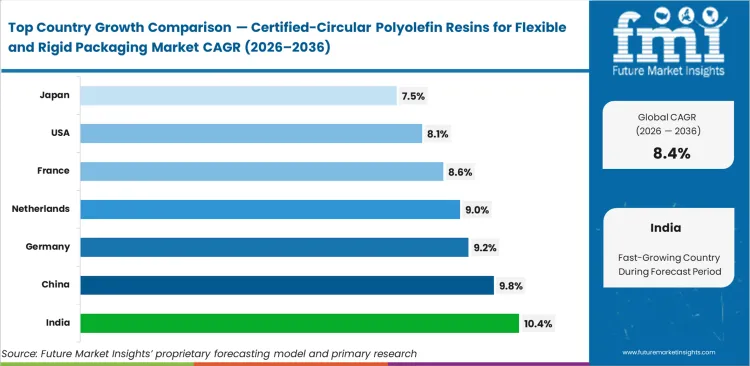
Source: Future Market Insights (FMI) analysis, based on proprietary forecasting model and primary research
Asia Pacific Certified-Circular Polyolefin Resins for Flexible and Rigid Packaging Market Analysis
The immediate implementation of extended producer responsibility frameworks severely impacts local converting networks unprepared for the change. Brand management teams urgently seek dependable certified resin supplies within a fractured petrochemical landscape. Governmental mandates prioritize the rapid expansion of domestic chemical recovery infrastructure over complex sorting enhancements. FMI's assessment indicates multinational Fast-Moving Consumer Goods brands operating in these regions willingly pay significant premiums to ensure local adherence. Capital investments target large-scale recycling centers situated close to coastal manufacturing hubs, minimizing logistical difficulties. Regional administrations provide financial support for advanced purification technologies, aiming to establish global prominence in sustainable material exports. Procurement personnel manage unstable localized pricing structures to secure reliable long-term supply chains.
- India: Aggressive state-level plastic waste regulations compel packaging engineers to quickly assess 'drop-in' circular alternatives. The regional market revenue registered a CAGR of 10.4%, supported by extensive urbanization and a dramatic increase in demand for packaged consumer items. Local converting companies capturing these initial supplies establish significant commercial advantages against later adopters that lack verifiable chain-of-custody records.
- China: China is securing 9.8% CAGR over the forecast period, propelled by central government requirements for integrating the circular economy across heavy manufacturing sectors. State-funded capital flows heavily into advanced chemical recycling facilities, completely altering regional supply dynamics. Supply chain control rapidly shifts toward conglomerates efficiently managing domestic waste feedstock streams.
- Japan: Established waste management infrastructure permits compliance officers to concentrate entirely on molecular traceability instead of collection logistics. Japan converting companies first integrating ISCC protocols redefined standard operational procedures for the entire domestic region, setting new baseline performance benchmarks. Japan industry revenue is growing at 7.5% rate, fueled by strong consumer preference for environmentally friendly packaging materials.
FMI's report includes South Korea, Taiwan, and Singapore. Differing national regulatory schedules necessitate that global brands maintain highly localized packaging compliance strategies across these evolving industrial territories.
Europe Certified-Circular Polyolefin Resins for Flexible and Rigid Packaging Market Analysis
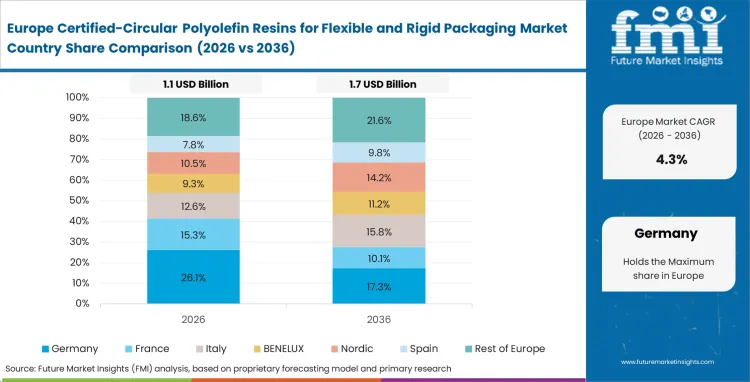
Strict statutory mandates for recycled content transform voluntary sustainability objectives into immediate legal obligations. Packaging compliance personnel meticulously navigate complex Packaging and Packaging Waste Regulation stipulations. FMI observes that failing to secure audited impact modified plastics guarantees immediate exclusion from the continent's most lucrative retail environments. Multinational retail organizations require rigorous supplier audits to enforce strict carbon reduction goals across all private label goods. Petrochemical industry leaders accelerate investments in proprietary chemical recycling intellectual property to defend existing market shares against adaptable sustainable startups.
- Germany: Significant domestic plastic tax exposure mandates the immediate adoption of circular resin by financial controllers. The industry registers a 9.2% compound annual growth rate, supported by substantial engineering capabilities optimizing sophisticated multi-layer extrusion systems for circular resin compatibility. Early adoption enables Germany converters to effortlessly establish pan-Europe qualification standards.
- Netherlands: Strategic port infrastructure positions local petrochemical centers as the main entry points for imported bio-based feedstocks. The country is securing a 9.0% CAGR, aided by government funding for expanding massive automated chemical sorting facilities near Rotterdam. Facility management teams here operate globally sophisticated mass-balance tracking systems, attracting considerable international investment.
- France: Anti-waste legislation compels retail category management teams to proactively remove fossil-derived plastics from shelves. The sector revenue is expanding at a 8.6% compound annual growth rate, driven by stringent national decrees requiring specific recycled content percentages across all retail packaging types. French brands not adapting face rapid consumer disapproval and sustained profit erosion.
FMI's report includes United Kingdom, Italy, and Spain. Highly integrated cross-border supply chains ensure that compliance failures in one Europe jurisdiction immediately affect the entire continent.
North America Certified-Circular Polyolefin Resins for Flexible and Rigid Packaging Market Analysis
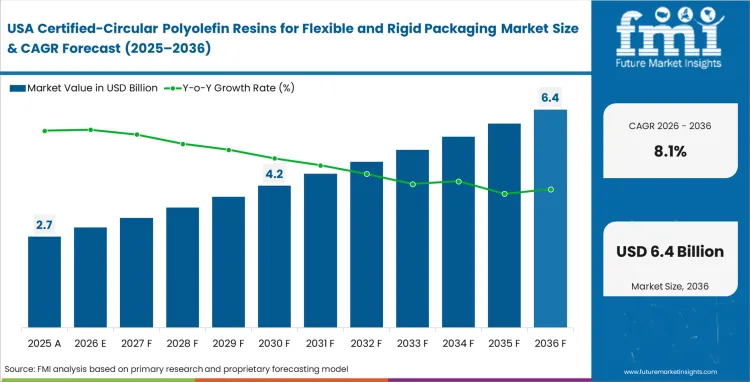
Localized brand initiatives, rather than cohesive federal legislation, stimulate adoption. Sustainability executives at multinational corporations aggressively impose conditions upon regional converter networks. Procurement personnel experience difficulty balancing these corporate mandates with the substantial availability of inexpensive domestic shale gas. Based on FMI's projections, successful uptake in this region is entirely dependent upon consumers' willingness to pay a premium price at the point of purchase. Private equity firms are heavily investing in regional mechanical recycling facilities, aiming to elevate localized outputs to chemical-grade purity. Supply chain leaders are consolidating vendor networks to guarantee dependable chain-of-custody tracking across extensive geographic areas.
- United States: Prominent fast-moving consumer goods (FMCG) conglomerates utilize their buying power to compel petrochemical suppliers to offer mass-balance options. The market in U.S. is experiencing 8.1% CAGR, supported by strong corporate Environmental, Social, and Governance (ESG) commitments necessitating immediate reduction in plastic consumption. Securing dedicated domestic circular capacity provides companies complete insulation from unstable international shipping restrictions.
FMI's report incorporates Canada. Cross-border converting entities face significant administrative complexity reconciling differing national carbon accounting standards accurately.
Competitive Aligners for Market Players
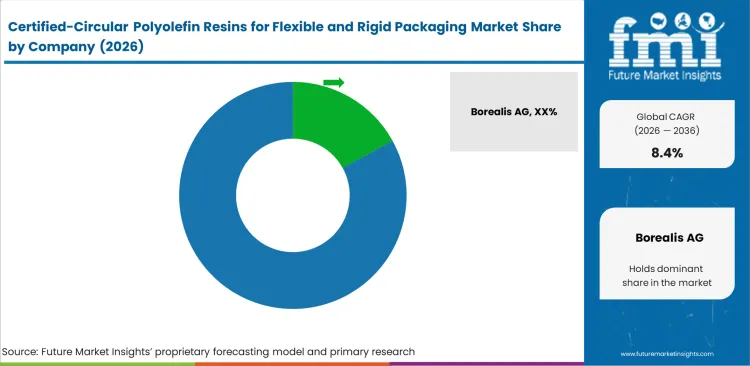
Moderately consolidated supply dynamics dictate procurement directors choosing partners based on feedstock security rather than fractional unit cost differences, directly impacting circular polyolefin packaging market size limits. Multinational brands demand uninterrupted access to ISCC Plus certified volumes across diverse global operating regions. Borealis AG, SABIC, and LyondellBasell Industries dominate early contract awards due to possessing massive capital required to integrate advanced molecular recycling directly into existing gigawatt-scale crackers. Independent converters attempting to secure spot volumes discover tier-one petrochemical suppliers prioritizing their long-term strategic accounts exclusively. Corporate sustainability officers mandate extreme supplier vetting protocols to prevent catastrophic public relations disasters stemming from unverified material sourcing claims. Substantial investments in digital traceability platforms become mandatory operational expenses for polymer manufacturers aiming to supply tier-one FMCG accounts.
Legacy incumbents hold profound advantages through established mass-balance accounting architectures. Sourcing managers cannot pivot to emerging solvent recycling systems without verifying complete chain-of-custody documentation seamlessly. TotalEnergies and ExxonMobil Chemical leverage decades of complex facility management to guarantee audit-proof sustainability certificates. Challengers must build advanced chemical processing capacity alongside an entirely flawless digital compliance ledger capable of surviving brutal third-party Europe audits. Extensive proprietary patent portfolios protecting distinct monomer purification techniques prevent new entrants from matching established yield efficiencies. Engineering directors at legacy firms continuously optimize catalyst performance to process highly contaminated municipal waste streams efficiently, widening the technical performance gap against newly formed chemical recycling startups.
Massive FMCG conglomerates actively resist monopolistic pricing power by funding competing regional chemical recycling startups directly. Packaging directors mandate multi-vendor qualification protocols to prevent total lock-in with a single petrochemical giant. Capacity scales exponentially, shifting competitive battlegrounds toward specialized functional grades rather than bulk commodity replacements. Smaller innovators secure lucrative footholds by engineering specific high-barrier circular polymers deemed too niche for mega-cracker production by legacy producers. Agile chemical processors commercialize targeted odor-reduction technologies to upgrade highly contaminated feedstock streams into premium food-grade resins successfully. Strategic joint ventures between waste management conglomerates and specialized resin compounders redefine traditional supply chain boundaries permanently.
Key Players in Certified-Circular Polyolefin Resins for Flexible and Rigid Packaging Market
- Borealis AG
- SABIC
- LyondellBasell Industries
- TotalEnergies
- ExxonMobil Chemical
- Dow Inc.
- INEOS Group
Scope of the Report

| Metric | Value |
|---|---|
| Quantitative Units | USD 4.6 billion to USD 10.3 billion, at a CAGR of 8.4% |
| Market Definition | Drop-in replacement polymers synthesized from biological feedstocks or chemically broken down plastic waste, engineered specifically for converting into wrappers, pouches, bottles, and tubs. |
| Segmentation | Material Type, Packaging Type, End Use, Certification Type, Processing Technology, Region |
| Regions Covered | North America, Europe, Asia Pacific, Latin America, Middle East & Africa |
| Countries Covered | United States, Canada, Germany, United Kingdom, France, Italy, Spain, China, Japan, South Korea, Taiwan, Singapore, Brazil, Mexico, Argentina, GCC Countries, South Africa, Israel, Rest of Middle East & Africa |
| Key Companies Profiled | Borealis AG, SABIC, LyondellBasell Industries, TotalEnergies, ExxonMobil Chemical, Dow Inc., INEOS Group |
| Forecast Period | 2026 to 2036 |
| Approach | Virgin polyolefin production baselines adjusted for publicly announced chemical recycling capacity investments. |
Source: Future Market Insights (FMI) analysis, based on proprietary forecasting model and primary research
Certified-Circular Polyolefin Resins for Flexible and Rigid Packaging Market Analysis by Segments
Material Type:
- Bio-based resins
- Chemically recycled
- Mechanically recycled
Packaging Type:
- Flexible packaging
- Rigid packaging
End Use:
- Food packaging
- Personal care
- Healthcare
- Industrial
Certification Type:
- ISCC Plus
- Mass balance
- Chain of custody
Processing Technology:
- Injection molding
- Blow molding
- Film extrusion
Region:
- North America
- United States
- Canada
- Europe
- Germany
- United Kingdom
- France
- Italy
- Spain
- Asia Pacific
- China
- Japan
- South Korea
- Taiwan
- Singapore
- Latin America
- Brazil
- Mexico
- Argentina
- Middle East & Africa
- GCC Countries
- South Africa
- Israel
- Rest of Middle East & Africa
Bibliography
- Together for Sustainability. (2026, January). The circularity guideline for the chemical industry.
- SABIC. (2025, April). Fact sheet: CHINAPLAS 2025 better life quality.
- SABIC. (2025, October). SABIC unveils advanced material solutions at K 2025 to shape everyday products.
- Plastic Energy. (2025, August). Plastic Energy produces first recycled oil at Dutch advanced recycling plant.
- Association of Plastic Recyclers, & RecyClass. (2025, April 16). APR-RecyClass cooperation report.
This bibliography is provided for reader reference. The full FMI report contains the complete reference list with primary source documentation.
This Report Addresses
- ISCC Plus certification bottlenecks impacting FMCG packaging timelines
- Mass balance accounting software integration for regional converting facilities
- Extrusion die compatibility thresholds for drop-in bio-based resins
- Green premium absorption capacities across major supermarket chains
- Chemical recycling infrastructure scaling across Asia manufacturing belts
- Shrinkage rate variations during high-speed thin-wall injection molding
- Extended producer responsibility tax liabilities reshaping Europe procurement
- Profitability constraints caused by scrap generation during mono-material pouch sealing
Frequently Asked Questions
What are circular polyolefin resins?
Drop-in replacement polymers synthesized from biological feedstocks or chemically broken down plastic waste. Molecular structures match conventional fossil-derived equivalents precisely. Traceability documentation verifies sustainable origin parameters for underlying molecular building blocks.
What drives circular polymer demand?
Statutory recycled-content minimums force procurement directors to abandon spot purchasing instantly to secure certified circular volumes. Corporate pledges compel brand managers to absorb green premiums. Retailer listing requirements push packaging engineers to redesign legacy structures around mono-material certified alternatives.
Which companies lead circular plastics?
Borealis AG, SABIC, and LyondellBasell Industries dominate early contract awards because they possess massive capital required to integrate advanced molecular recycling directly into existing gigawatt-scale crackers. TotalEnergies and ExxonMobil Chemical leverage decades of complex facility management to guarantee audit-proof sustainability certificates.
What is ISCC certification?
Fragmented national sustainability standards force multinational corporations to standardize around one globally recognized auditing framework. ISCC Plus holds dominant share because supply chain directors refuse to manage distinct compliance architectures for different geographic regions.
How do circular plastics compare to virgin plastics?
Evaluating bio-based polyolefin vs recycled polyolefin reveals identical mechanical barriers, yet R&D directors approve drop-in replacements strictly based on agricultural origin documentation. Commingling certified and standard resins inside existing silos demands flawless digital ledgers that legacy enterprise resource planning software cannot support.
What industries use circular polyolefins?
Food packaging accounts for dominant share, driven by compliance officers demanding pristine molecular purity. Personal care, healthcare, and industrial packaging sectors also represent major consumption centers where brand risk managers eliminate product recall threats associated with legacy post-consumer resins.
What is the future of recycled plastics?
Procurement executives anticipate futures where certification nodes integrate directly via blockchain protocols. Operations directors will eventually execute autonomous compliance verification, eliminating expensive third-party consulting fees currently burdening regional converter networks.
What limits rapid scaling of certified circular volumes?
Rigid mass balance accounting protocols paralyze rapid integration across fragmented converting networks. Plant managers face immense friction implementing precise chain-of-custody tracking systems required to handle certified volumes legally.
Why do bio-based resins lead material type segment?
Bio-based resins command leading share because packaging engineers require zero modifications to legacy extrusion dies when running these grades. Transitioning happens instantaneously on production floors, avoiding costly equipment requalification.
How does food packaging shape pure-grade demand?
Stringent migration limits for endocrine disruptors permanently disqualify standard mechanical recyclate from primary contact applications. Compliance officers demand pristine molecular purity, eliminating product recall threats associated with legacy post-consumer resins.
What difference explains India's rapid growth versus Japan?
Aggressive state-level plastic waste mandates in India force packaging engineers to evaluate drop-in circular replacements frantically to avoid penalties. Japan utilizes mature waste infrastructure, allowing compliance officers to focus entirely on molecular traceability rather than localized collection logistics.
What operational friction exists for custom molders?
Seamless technical transitions hide commercial friction points; molders successfully running circular grades immediately use that capability to demand higher margins from FMCG clients. Custom molders who fail to validate circular resins lose their most profitable multinational accounts.
How do category buyers handle green premiums?
Category buyers absorb mandatory cost increases seamlessly. Brand managers justify this expense entirely through averted retail non-compliance penalties, preserving valuable supermarket shelf placements against fossil-based competitors.
What causes supply bottlenecks beyond physical capacity?
Global reliance on one certification body creates an immense administrative bottleneck. Audit scheduling delays currently dictate corporate product launch timelines more than actual resin manufacturing lead times.
Why does flexible packaging dominate adoption?
Rigid statutory definitions of recyclability threaten viability across multi-layer film structures globally. FMCG category buyers scramble to replace complex laminates with certified mono-material equivalents to maintain compliance.
What advantage do legacy incumbents hold?
Legacy incumbents hold profound advantages through established mass-balance accounting architectures. Sourcing managers cannot simply pivot to emerging startups without verifying complete chain-of-custody documentation that survives brutal third-party audits.
How do food regulations impact non-food supply?
Food-grade certification creates an artificial supply vacuum because non-food sectors willingly overpay for these same high-purity grades just to simplify their own factory compliance audits.
Why do FMCG conglomerates fund regional recycling startups?
Massive FMCG conglomerates actively resist monopolistic pricing power by funding competing regional chemical recycling startups. Packaging directors mandate multi-vendor qualification protocols to prevent total lock-in with a single petrochemical giant.
What happens to brands delaying long-term offtake agreements?
Brands delaying integration face immediate competitive disadvantages when rival products launch with verified carbon-negative packaging claims. Delaying contracts leaves brands entirely exposed to incoming plastic taxes and a permanently depleted spot market.
How does injection molding technology adapt to certified resins?
Mold setting technicians swap virgin material for certified circular resin without altering cooling times or holding pressures. Tooling engineers observe identical shrinkage characteristics compared to legacy fossil polymers.
What hidden costs impact flexible film conversion?
Volume leadership of flexible formats masks critical profitability issues; scrap rates during initial roll-stock production often consume entire sustainability premiums. Equipment operators must recalibrate tension controls constantly.
Why does Europe enforce recycled content aggressively?
High domestic plastic tax exposure compels financial controllers to mandate immediate circular resin adoption. Aggressive anti-waste legislation forces retail category managers to strip fossil-derived plastics from shelves proactively.
How do North America strategies differ structurally?
Localized brand initiatives drive adoption rather than cohesive federal legislation. Sustainability directors dictate terms to regional converter networks, struggling to balance mandates against sheer abundance of cheap domestic shale gas.
What changes occur on converting factory floors?
Operations directors bypass expensive equipment requalification procedures completely. Plant managers maintain existing cycle times and throughput rates without compromise, shifting focus entirely toward digital audit tracking.
Preview the report firsthand - request a free sample
Get SampleGet the brochure for pricing and purchase details.
Get PDFTable of Content
- Executive Summary
- Global Market Outlook
- Demand-side Trends
- Supply-side Trends
- Technology Roadmap Analysis
- Analysis and Recommendations
- Market Overview
- Market Coverage / Taxonomy
- Market Definition / Scope / Limitations
- Research Methodology
- Chapter Orientation
- Analytical Lens and Working Hypotheses
- Market Structure, Signals, and Trend Drivers
- Benchmarking and Cross-market Comparability
- Market Sizing, Forecasting, and Opportunity Mapping
- Research Design and Evidence Framework
- Desk Research Programme (Secondary Evidence)
- Company Annual and Sustainability Reports
- Peer-reviewed Journals and Academic Literature
- Corporate Websites, Product Literature, and Technical Notes
- Earnings Decks and Investor Briefings
- Statutory Filings and Regulatory Disclosures
- Technical White Papers and Standards Notes
- Trade Journals, Industry Magazines, and Analyst Briefs
- Conference Proceedings, Webinars, and Seminar Materials
- Government Statistics Portals and Public Data Releases
- Press Releases and Reputable Media Coverage
- Specialist Newsletters and Curated Briefings
- Sector Databases and Reference Repositories
- FMI Internal Proprietary Databases and Historical Market Datasets
- Subscription Datasets and Paid Sources
- Social Channels, Communities, and Digital Listening Inputs
- Additional Desk Sources
- Expert Input and Fieldwork (Primary Evidence)
- Primary Modes
- Qualitative Interviews and Expert Elicitation
- Quantitative Surveys and Structured Data Capture
- Blended Approach
- Why Primary Evidence is Used
- Field Techniques
- Interviews
- Surveys
- Focus Groups
- Observational and In-context Research
- Social and Community Interactions
- Stakeholder Universe Engaged
- C-suite Leaders
- Board Members
- Presidents and Vice Presidents
- R&D and Innovation Heads
- Technical Specialists
- Domain Subject-matter Experts
- Scientists
- Physicians and Other Healthcare Professionals
- Governance, Ethics, and Data Stewardship
- Research Ethics
- Data Integrity and Handling
- Primary Modes
- Tooling, Models, and Reference Databases
- Desk Research Programme (Secondary Evidence)
- Data Engineering and Model Build
- Data Acquisition and Ingestion
- Cleaning, Normalisation, and Verification
- Synthesis, Triangulation, and Analysis
- Quality Assurance and Audit Trail
- Market Background
- Market Dynamics
- Drivers
- Restraints
- Opportunity
- Trends
- Scenario Forecast
- Demand in Optimistic Scenario
- Demand in Likely Scenario
- Demand in Conservative Scenario
- Opportunity Map Analysis
- Product Life Cycle Analysis
- Supply Chain Analysis
- Investment Feasibility Matrix
- Value Chain Analysis
- PESTLE and Porter’s Analysis
- Regulatory Landscape
- Regional Parent Market Outlook
- Production and Consumption Statistics
- Import and Export Statistics
- Market Dynamics
- Global Market Analysis 2021 to 2025 and Forecast, 2026 to 2036
- Historical Market Size Value (USD Million) Analysis, 2021 to 2025
- Current and Future Market Size Value (USD Million) Projections, 2026 to 2036
- Y-o-Y Growth Trend Analysis
- Absolute $ Opportunity Analysis
- Global Market Pricing Analysis 2021 to 2025 and Forecast 2026 to 2036
- Global Market Analysis 2021 to 2025 and Forecast 2026 to 2036, By Material Type
- Introduction / Key Findings
- Historical Market Size Value (USD Million) Analysis By Material Type , 2021 to 2025
- Current and Future Market Size Value (USD Million) Analysis and Forecast By Material Type , 2026 to 2036
- Bio-based resins
- Chemically recycled
- Mechanically recycled
- Bio-based resins
- Y-o-Y Growth Trend Analysis By Material Type , 2021 to 2025
- Absolute $ Opportunity Analysis By Material Type , 2026 to 2036
- Global Market Analysis 2021 to 2025 and Forecast 2026 to 2036, By Packaging Type
- Introduction / Key Findings
- Historical Market Size Value (USD Million) Analysis By Packaging Type, 2021 to 2025
- Current and Future Market Size Value (USD Million) Analysis and Forecast By Packaging Type, 2026 to 2036
- Flexible packaging
- Rigid packaging
- Flexible packaging
- Y-o-Y Growth Trend Analysis By Packaging Type, 2021 to 2025
- Absolute $ Opportunity Analysis By Packaging Type, 2026 to 2036
- Global Market Analysis 2021 to 2025 and Forecast 2026 to 2036, By End Use
- Introduction / Key Findings
- Historical Market Size Value (USD Million) Analysis By End Use, 2021 to 2025
- Current and Future Market Size Value (USD Million) Analysis and Forecast By End Use, 2026 to 2036
- Food packaging
- Personal care
- Healthcare
- Industrial
- Food packaging
- Y-o-Y Growth Trend Analysis By End Use, 2021 to 2025
- Absolute $ Opportunity Analysis By End Use, 2026 to 2036
- Global Market Analysis 2021 to 2025 and Forecast 2026 to 2036, By Certification Type
- Introduction / Key Findings
- Historical Market Size Value (USD Million) Analysis By Certification Type, 2021 to 2025
- Current and Future Market Size Value (USD Million) Analysis and Forecast By Certification Type, 2026 to 2036
- ISCC Plus
- Mass balance
- Chain of custody
- ISCC Plus
- Y-o-Y Growth Trend Analysis By Certification Type, 2021 to 2025
- Absolute $ Opportunity Analysis By Certification Type, 2026 to 2036
- Global Market Analysis 2021 to 2025 and Forecast 2026 to 2036, By Processing Technology
- Introduction / Key Findings
- Historical Market Size Value (USD Million) Analysis By Processing Technology, 2021 to 2025
- Current and Future Market Size Value (USD Million) Analysis and Forecast By Processing Technology, 2026 to 2036
- Injection molding
- Blow molding
- Film extrusion
- Injection molding
- Y-o-Y Growth Trend Analysis By Processing Technology, 2021 to 2025
- Absolute $ Opportunity Analysis By Processing Technology, 2026 to 2036
- Global Market Analysis 2021 to 2025 and Forecast 2026 to 2036, By Region
- Introduction
- Historical Market Size Value (USD Million) Analysis By Region, 2021 to 2025
- Current Market Size Value (USD Million) Analysis and Forecast By Region, 2026 to 2036
- North America
- Latin America
- Western Europe
- Eastern Europe
- East Asia
- South Asia and Pacific
- Middle East & Africa
- Market Attractiveness Analysis By Region
- North America Market Analysis 2021 to 2025 and Forecast 2026 to 2036, By Country
- Historical Market Size Value (USD Million) Trend Analysis By Market Taxonomy, 2021 to 2025
- Market Size Value (USD Million) Forecast By Market Taxonomy, 2026 to 2036
- By Country
- USA
- Canada
- Mexico
- By Material Type
- By Packaging Type
- By End Use
- By Certification Type
- By Processing Technology
- By Country
- Market Attractiveness Analysis
- By Country
- By Material Type
- By Packaging Type
- By End Use
- By Certification Type
- By Processing Technology
- Key Takeaways
- Latin America Market Analysis 2021 to 2025 and Forecast 2026 to 2036, By Country
- Historical Market Size Value (USD Million) Trend Analysis By Market Taxonomy, 2021 to 2025
- Market Size Value (USD Million) Forecast By Market Taxonomy, 2026 to 2036
- By Country
- Brazil
- Chile
- Rest of Latin America
- By Material Type
- By Packaging Type
- By End Use
- By Certification Type
- By Processing Technology
- By Country
- Market Attractiveness Analysis
- By Country
- By Material Type
- By Packaging Type
- By End Use
- By Certification Type
- By Processing Technology
- Key Takeaways
- Western Europe Market Analysis 2021 to 2025 and Forecast 2026 to 2036, By Country
- Historical Market Size Value (USD Million) Trend Analysis By Market Taxonomy, 2021 to 2025
- Market Size Value (USD Million) Forecast By Market Taxonomy, 2026 to 2036
- By Country
- Germany
- UK
- Italy
- Spain
- France
- Nordic
- BENELUX
- Rest of Western Europe
- By Material Type
- By Packaging Type
- By End Use
- By Certification Type
- By Processing Technology
- By Country
- Market Attractiveness Analysis
- By Country
- By Material Type
- By Packaging Type
- By End Use
- By Certification Type
- By Processing Technology
- Key Takeaways
- Eastern Europe Market Analysis 2021 to 2025 and Forecast 2026 to 2036, By Country
- Historical Market Size Value (USD Million) Trend Analysis By Market Taxonomy, 2021 to 2025
- Market Size Value (USD Million) Forecast By Market Taxonomy, 2026 to 2036
- By Country
- Russia
- Poland
- Hungary
- Balkan & Baltic
- Rest of Eastern Europe
- By Material Type
- By Packaging Type
- By End Use
- By Certification Type
- By Processing Technology
- By Country
- Market Attractiveness Analysis
- By Country
- By Material Type
- By Packaging Type
- By End Use
- By Certification Type
- By Processing Technology
- Key Takeaways
- East Asia Market Analysis 2021 to 2025 and Forecast 2026 to 2036, By Country
- Historical Market Size Value (USD Million) Trend Analysis By Market Taxonomy, 2021 to 2025
- Market Size Value (USD Million) Forecast By Market Taxonomy, 2026 to 2036
- By Country
- China
- Japan
- South Korea
- By Material Type
- By Packaging Type
- By End Use
- By Certification Type
- By Processing Technology
- By Country
- Market Attractiveness Analysis
- By Country
- By Material Type
- By Packaging Type
- By End Use
- By Certification Type
- By Processing Technology
- Key Takeaways
- South Asia and Pacific Market Analysis 2021 to 2025 and Forecast 2026 to 2036, By Country
- Historical Market Size Value (USD Million) Trend Analysis By Market Taxonomy, 2021 to 2025
- Market Size Value (USD Million) Forecast By Market Taxonomy, 2026 to 2036
- By Country
- India
- ASEAN
- Australia & New Zealand
- Rest of South Asia and Pacific
- By Material Type
- By Packaging Type
- By End Use
- By Certification Type
- By Processing Technology
- By Country
- Market Attractiveness Analysis
- By Country
- By Material Type
- By Packaging Type
- By End Use
- By Certification Type
- By Processing Technology
- Key Takeaways
- Middle East & Africa Market Analysis 2021 to 2025 and Forecast 2026 to 2036, By Country
- Historical Market Size Value (USD Million) Trend Analysis By Market Taxonomy, 2021 to 2025
- Market Size Value (USD Million) Forecast By Market Taxonomy, 2026 to 2036
- By Country
- Kingdom of Saudi Arabia
- Other GCC Countries
- Turkiye
- South Africa
- Other African Union
- Rest of Middle East & Africa
- By Material Type
- By Packaging Type
- By End Use
- By Certification Type
- By Processing Technology
- By Country
- Market Attractiveness Analysis
- By Country
- By Material Type
- By Packaging Type
- By End Use
- By Certification Type
- By Processing Technology
- Key Takeaways
- Key Countries Market Analysis
- USA
- Pricing Analysis
- Market Share Analysis, 2025
- By Material Type
- By Packaging Type
- By End Use
- By Certification Type
- By Processing Technology
- Canada
- Pricing Analysis
- Market Share Analysis, 2025
- By Material Type
- By Packaging Type
- By End Use
- By Certification Type
- By Processing Technology
- Mexico
- Pricing Analysis
- Market Share Analysis, 2025
- By Material Type
- By Packaging Type
- By End Use
- By Certification Type
- By Processing Technology
- Brazil
- Pricing Analysis
- Market Share Analysis, 2025
- By Material Type
- By Packaging Type
- By End Use
- By Certification Type
- By Processing Technology
- Chile
- Pricing Analysis
- Market Share Analysis, 2025
- By Material Type
- By Packaging Type
- By End Use
- By Certification Type
- By Processing Technology
- Germany
- Pricing Analysis
- Market Share Analysis, 2025
- By Material Type
- By Packaging Type
- By End Use
- By Certification Type
- By Processing Technology
- UK
- Pricing Analysis
- Market Share Analysis, 2025
- By Material Type
- By Packaging Type
- By End Use
- By Certification Type
- By Processing Technology
- Italy
- Pricing Analysis
- Market Share Analysis, 2025
- By Material Type
- By Packaging Type
- By End Use
- By Certification Type
- By Processing Technology
- Spain
- Pricing Analysis
- Market Share Analysis, 2025
- By Material Type
- By Packaging Type
- By End Use
- By Certification Type
- By Processing Technology
- France
- Pricing Analysis
- Market Share Analysis, 2025
- By Material Type
- By Packaging Type
- By End Use
- By Certification Type
- By Processing Technology
- India
- Pricing Analysis
- Market Share Analysis, 2025
- By Material Type
- By Packaging Type
- By End Use
- By Certification Type
- By Processing Technology
- ASEAN
- Pricing Analysis
- Market Share Analysis, 2025
- By Material Type
- By Packaging Type
- By End Use
- By Certification Type
- By Processing Technology
- Australia & New Zealand
- Pricing Analysis
- Market Share Analysis, 2025
- By Material Type
- By Packaging Type
- By End Use
- By Certification Type
- By Processing Technology
- China
- Pricing Analysis
- Market Share Analysis, 2025
- By Material Type
- By Packaging Type
- By End Use
- By Certification Type
- By Processing Technology
- Japan
- Pricing Analysis
- Market Share Analysis, 2025
- By Material Type
- By Packaging Type
- By End Use
- By Certification Type
- By Processing Technology
- South Korea
- Pricing Analysis
- Market Share Analysis, 2025
- By Material Type
- By Packaging Type
- By End Use
- By Certification Type
- By Processing Technology
- Russia
- Pricing Analysis
- Market Share Analysis, 2025
- By Material Type
- By Packaging Type
- By End Use
- By Certification Type
- By Processing Technology
- Poland
- Pricing Analysis
- Market Share Analysis, 2025
- By Material Type
- By Packaging Type
- By End Use
- By Certification Type
- By Processing Technology
- Hungary
- Pricing Analysis
- Market Share Analysis, 2025
- By Material Type
- By Packaging Type
- By End Use
- By Certification Type
- By Processing Technology
- Kingdom of Saudi Arabia
- Pricing Analysis
- Market Share Analysis, 2025
- By Material Type
- By Packaging Type
- By End Use
- By Certification Type
- By Processing Technology
- Turkiye
- Pricing Analysis
- Market Share Analysis, 2025
- By Material Type
- By Packaging Type
- By End Use
- By Certification Type
- By Processing Technology
- South Africa
- Pricing Analysis
- Market Share Analysis, 2025
- By Material Type
- By Packaging Type
- By End Use
- By Certification Type
- By Processing Technology
- USA
- Market Structure Analysis
- Competition Dashboard
- Competition Benchmarking
- Market Share Analysis of Top Players
- By Regional
- By Material Type
- By Packaging Type
- By End Use
- By Certification Type
- By Processing Technology
- Competition Analysis
- Competition Deep Dive
- Borealis AG
- Overview
- Product Portfolio
- Profitability by Market Segments (Product/Age /Sales Channel/Region)
- Sales Footprint
- Strategy Overview
- Marketing Strategy
- Product Strategy
- Channel Strategy
- SABIC
- LyondellBasell Industries
- TotalEnergies
- ExxonMobil Chemical
- Dow Inc.
- INEOS Group
- Borealis AG
- Competition Deep Dive
- Assumptions & Acronyms Used


