

- Industry Size (2026)
- USD 1100.0 Mn
- Forecast (2036)
- USD 2853.1 Mn
- CAGR (2026 to 2036)
- 10.0%
Solvent-Based Polyolefin and Polyamide Recycling Technology Market Forecast and Outlook 2026 to 2036
The solvent-based polyolefin and polyamide recycling technology market is positioned to advance from USD 1,100.0 million in 2026 to USD 2,853.1 million by 2036, demonstrating a robust 10.0% CAGR throughout the forecast period. Growth reflects how advanced chemical recycling technologies are addressing the fundamental limitations of mechanical recycling by enabling molecular-level polymer regeneration that can restore virgin-equivalent properties while processing contaminated waste streams that conventional methods cannot effectively handle. Solvent-based recycling systems are engineered for selective polymer dissolution, contaminant separation, and molecular reconstruction that transforms degraded polymer waste into high-quality feedstock suitable for demanding applications including food contact packaging and engineering components.
Industrial-scale solvent recycling operations are implementing automated polymer dissolution systems, advanced separation technologies, and solvent recovery circuits that enable continuous processing while minimizing environmental impact and operational costs. Technologies that can achieve near-complete solvent recovery, maintain polymer molecular weight characteristics, and demonstrate cost competitiveness with virgin polymer production are being commercialized earlier in technology development programs. As extended producer responsibility legislation establishes mandatory recycled content targets and waste diversion requirements, chemical companies evaluate solvent-based recycling not only on technical performance but also on economic viability, environmental impact reduction, and integration with existing polymer production infrastructure that supports scalable implementation.
Polyolefin solvent-dissolution systems lead where processing versatility and feedstock flexibility are essential for handling diverse plastic waste streams including multi-layer packaging and contaminated post-consumer materials. Polyamide solvent-recycling configurations dominate applications requiring precise molecular regeneration and property restoration for engineering applications and fiber production. Hybrid multi-polymer platforms serve facilities demanding processing flexibility and feedstock optimization through integrated recycling capabilities. Near-prime recycled pellet production is gaining market share because it enables direct substitution for virgin polymers while maintaining processing characteristics and performance standards required for demanding applications. Specialty recyclers remain the largest customer segment, followed by integrated polymer producers, while brand-led recycling ventures provide emerging demand from corporate circular economy initiatives.
Quick Stats for Solvent-Based Polyolefin and Polyamide Recycling Technology Market
- Solvent-Based Polyolefin and Polyamide Recycling Technology Market Value (2026): USD 1,100.0 million
- Solvent-Based Polyolefin and Polyamide Recycling Technology Market Forecast Value (2036): USD 2,853.1 million
- Solvent-Based Polyolefin and Polyamide Recycling Technology Market Forecast CAGR: 10.0%
- Leading Technology Scope in Solvent-Based Polyolefin and Polyamide Recycling Technology Market: PO Solvent-Dissolution Lines (40%)
- Key Growth Countries in Solvent-Based Polyolefin and Polyamide Recycling Technology Market: China, Germany, USA, UK, South Korea, Japan
- Key Players in Solvent-Based Polyolefin and Polyamide Recycling Technology Market: APK AG, PureCycle Technologies, Solvay, BASF, SABIC

Solvent-Based Polyolefin and Polyamide Recycling Technology Market Key Takeaways
| Metric | Value |
|---|---|
| Market Value (2026) | USD 1,100.0 million |
| Market Forecast Value (2036) | USD 2,853.1 million |
| Forecast CAGR 2026 to 2036 | 10.0% |
How Are Molecular Recycling Requirements Driving Solvent Technology Innovation?
Advanced molecular recycling requirements are transforming polymer waste management by demanding technologies that can restore polymer properties at the molecular level while processing complex waste streams that mechanical recycling cannot effectively handle. Solvent-based recycling technologies enable selective polymer dissolution and purification that removes contamination, separates mixed polymer streams, and restores molecular characteristics essential for high-performance applications. This technological approach addresses the fundamental limitations of mechanical recycling by enabling true molecular regeneration rather than simple reprocessing that typically results in property degradation and application downgrading.
The integration of advanced solvent systems with polymer separation and purification technologies creates unprecedented opportunities for processing challenging waste streams including multi-layer packaging, composite materials, and heavily contaminated post-consumer plastics. Sophisticated solvent selection and recovery systems enable economically viable processing while maintaining environmental sustainability through minimal solvent losses and energy optimization. These technological capabilities enable processing of waste streams that were previously considered non-recyclable while producing recycled polymers with properties approaching virgin material quality that expand application opportunities and market value. Solvent-based food-grade rHDPE recycling technologies are being deployed where packaging converters need near-prime HDPE performance from mixed post-consumer streams.
How Is the Market Structured Across Technology Implementation Approaches?
The solvent-based polyolefin and polyamide recycling technology market demonstrates distinct segmentation patterns based on polymer chemistry specialization and processing capabilities that directly influence technology selection and commercial viability considerations. Polyolefin solvent-dissolution systems capture 40.0% market share through their ability to process diverse waste streams including polyethylene and polypropylene materials that represent the largest volume segments in plastic waste streams. These systems benefit from established polymer chemistry knowledge and proven solvent systems while addressing the substantial market opportunity represented by polyolefin waste volumes.
Polyamide solvent-recycling configurations achieve 24.0% market adoption through their specialized capabilities for processing engineering polymers that require precise molecular regeneration to maintain performance characteristics essential for automotive, electronics, and industrial applications. These systems incorporate sophisticated separation technologies and molecular reconstruction processes that enable restoration of polyamide properties while handling the contamination and degradation typical of engineering polymer waste streams. The technical complexity of polyamide recycling creates barriers to entry while supporting premium pricing for successful technology implementations.
Which Output Product Configuration Generates the Highest Market Value?
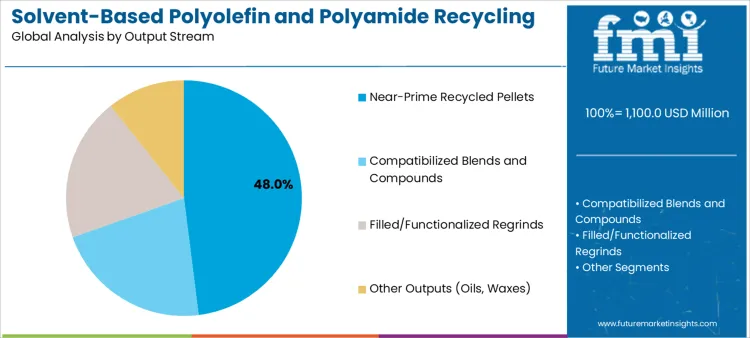
Near-prime recycled pellets maintain 48.0% market preference, establishing virgin-equivalent polymer production as the primary value proposition for solvent-based recycling technologies. These output products enable direct substitution for virgin polymers in demanding applications while providing cost advantages and environmental benefits that support customer adoption and market expansion. Near-prime pellet production requires sophisticated purification and quality control systems that can consistently achieve virgin-equivalent properties while maintaining cost competitiveness essential for market penetration.
Which Customer Segment Drives Technology Adoption?
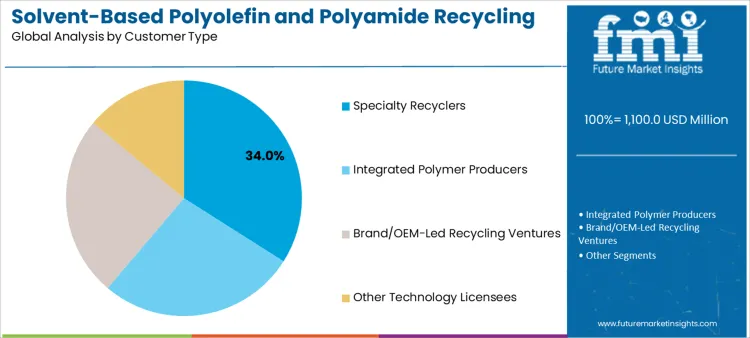
Specialty recyclers represent 34.0% of technology adoption, reflecting their role as technology pioneers and early adopters who can validate commercial viability while serving as reference customers for technology scale-up and market development. These customers require proven technology performance and economic viability while providing feedback supporting technology optimization and commercial refinement. Specialty recycler adoption creates market credibility while demonstrating commercial viability that supports broader market acceptance and investment attraction for technology expansion.
Which End-Market Application Leads Demand Development?
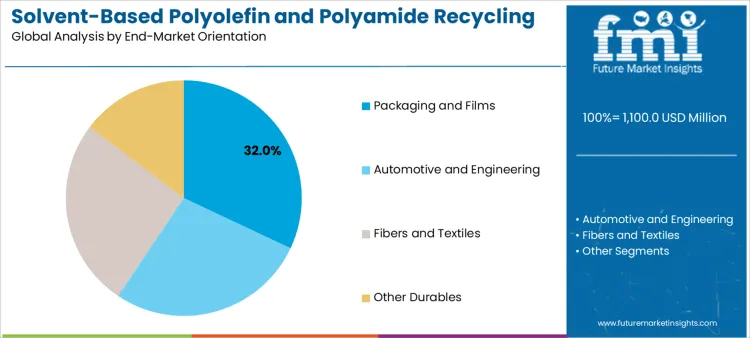
Packaging and films applications command 32.0% of market orientation, establishing flexible packaging as the primary driver of solvent-based recycling technology demand and commercial development. These applications benefit from large waste volumes, established collection infrastructure, and clear regulatory drivers while providing substantial market opportunities for recycled polymer utilization. Packaging applications create volume opportunities that support technology scale-up while providing proof-of-concept validation that supports market expansion into other application segments.
How Is Regulatory Pressure for Chemical Recycling Driving Technology Investment?
Government policies promoting chemical recycling technologies are creating substantial market opportunities for solvent-based systems that can demonstrate measurable environmental benefits while achieving commercial viability at industrial scale. Regulatory frameworks increasingly recognize chemical recycling as essential infrastructure for achieving circular economy objectives while providing policy support including tax incentives, research funding, and regulatory streamlining that benefit technology developers and operators. This policy environment creates favorable conditions for technology commercialization while establishing market demand through regulatory requirements and industry commitments.
Extended producer responsibility legislation creates direct economic incentives for adopting advanced recycling technologies while establishing collection and processing infrastructure that supports feedstock availability for solvent-based recycling operations. Recycling & traceability platforms are increasingly used to validate feedstock origin and document chain-of-custody for advanced recycling inputs. Regulatory frameworks increasingly establish recycled content targets that create premium pricing opportunities for high-quality recycled polymers while penalizing conventional linear consumption models. These regulatory trends benefit solvent-based recycling technologies that can produce virgin-equivalent recycled polymers while processing waste streams that conventional recycling cannot effectively handle.
What Technical Challenges Constrain Commercial Scale-Up?
The primary technical barrier affecting solvent-based recycling commercialization centers on achieving cost-competitive operations while maintaining environmental sustainability through efficient solvent recovery and energy optimization. Solvent systems require sophisticated recovery and purification technologies that represent substantial capital investment while affecting operating costs through energy consumption and solvent losses. Process optimization requires extensive research and development investment while creating potential barriers for technology adoption in cost-sensitive markets or smaller-scale operations.
Feedstock variability and contamination management create additional technical challenges that require adaptive processing systems and comprehensive quality control capabilities. Waste stream composition variations can affect solvent system performance while requiring flexible operating parameters and robust separation technologies that increase system complexity and capital requirements. These technical challenges drive technology development toward more sophisticated and potentially more expensive solutions while creating barriers for market entry and technology adoption in certain applications or geographic regions.
How Do Corporate Sustainability Commitments Create Growth Opportunities?
Corporate circular economy initiatives are creating substantial market opportunities for solvent-based recycling technologies that can provide verified environmental benefits while delivering high-quality recycled polymers that meet demanding application requirements. Major consumer brands establish comprehensive sustainability targets including specific recycled content percentages and packaging recyclability requirements that create predictable demand for advanced recycling technologies while supporting long-term supply relationships and investment planning. These commitments often include collaborative programs with technology providers that foster innovation and market development while sharing risk and investment requirements.
Industry consortium initiatives focused on advanced recycling create additional opportunities for technology commercialization through shared infrastructure development and market creation programs. Cross-industry partnerships between polymer producers, consumer brands, and technology developers increasingly invest in solvent-based recycling projects that demonstrate commercial viability while addressing systemic challenges in waste collection, processing economics, and market development that benefit the entire advanced recycling value chain while accelerating technology adoption and market growth.
How Is the Solvent-Based Polyolefin and Polyamide Recycling Technology Market Expected to Evolve Across Major Nations?
The global solvent-based polyolefin and polyamide recycling technology market reflects regional variations in regulatory frameworks, waste generation patterns, and technology investment capabilities that influence market development opportunities across different economic zones. Leading industrial economies drive technology innovation and commercialization while emerging markets focus on establishing basic recycling infrastructure that can support domestic waste management objectives and technology adoption.
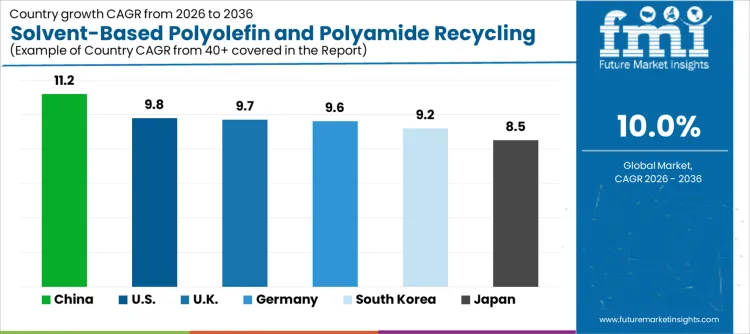
| Country | CAGR (%) |
|---|---|
| China | 11.2% |
| Germany | 9.6% |
| USA | 9.8% |
| Japan | 8.5% |
| South Korea | 9.2% |
| UK | 9.7% |
What Drives China's Market Leadership?
China's solvent-based polyolefin and polyamide recycling technology market is projected to achieve the highest growth rate at 11.2% CAGR, driven primarily by massive polymer consumption and comprehensive government policies promoting advanced recycling technologies as essential infrastructure for achieving national circular economy objectives. The country's position as the world's largest polymer consumer creates enormous waste volumes that require advanced recycling solutions while fostering domestic technology development and international technology adoption. Chinese manufacturers are investing heavily in solvent-based recycling technologies while developing integrated operations that combine waste collection, processing, and polymer production to achieve cost advantages and supply chain control.
Government initiatives promoting chemical recycling and waste reduction accelerate solvent-based technology adoption while creating favorable regulatory conditions for technology investment and commercial development. The integration of advanced recycling with polymer production creates unique opportunities for technology optimization and cost reduction while supporting domestic polymer industry development and export market opportunities. China's manufacturing scale advantages enable cost-effective technology deployment while supporting rapid technology advancement and commercial scale-up that benefits both domestic and international markets.
How Is Germany Advancing Chemical Recycling Excellence?
Sales of solvent-based polyolefin and polyamide recycling technology in Germany are set to achieve a CAGR of 9.6% reflects the country's leadership in chemical technology development and comprehensive circular economy policies that support advanced recycling technology commercialization. German regulatory frameworks establish favorable conditions for chemical recycling while providing clear guidelines for technology approval and environmental compliance that support investment planning and commercial development. The emphasis on technical excellence in chemical processing creates opportunities for sophisticated solvent-based recycling technologies that demonstrate superior performance and environmental benefits compared to conventional recycling approaches.
The country's strong chemical processing industry combined with advanced automation capabilities drives adoption of integrated solvent-based recycling systems that optimize process efficiency while supporting comprehensive quality control and environmental management. German technology development emphasizes process optimization and environmental performance that influences global standards for chemical recycling while fostering innovation in solvent systems and separation technologies that enhance commercial viability and environmental sustainability.
Why Is the USA Market Emphasizing Technology Innovation?
The United States market experiences 9.8% CAGR growth supported by substantial private investment in chemical recycling technologies and emerging regulatory frameworks that create favorable conditions for advanced recycling development. Corporate sustainability commitments from major consumer brands create substantial market opportunities while encouraging collaboration between technology developers, polymer producers, and end-use manufacturers. The emphasis on technology innovation creates opportunities for breakthrough solvent-based recycling approaches that can achieve cost competitiveness while processing diverse waste streams and producing high-quality recycled polymers.
Federal and state-level initiatives promoting recycling infrastructure development create favorable policy conditions for chemical recycling technology deployment while supporting research and development funding that accelerates technology advancement and commercial scale-up. The development of advanced recycling technologies in the U.S. benefits from collaboration between technology companies, research institutions, and industrial partners that accelerate innovation while sharing risk and investment requirements for technology commercialization and market development.
How Is Japanese Technology Focus Driving Premium Applications?
The industry for solvent-based polyolefin and polyamide recycling technology in Japan is likely to rise at a CAGR of 8.5% is supported by the country's leadership in precision chemical processing and advanced materials technology that enables development of sophisticated solvent-based recycling systems with exceptional quality and reliability characteristics. Japanese companies maintain strict quality standards that require recycling technologies to achieve virgin-equivalent polymer properties while demonstrating superior environmental performance and process reliability. This quality focus drives innovation in solvent system optimization and separation technology that enable premium recycled polymer production while maintaining cost competitiveness for commercial applications.
The country's expertise in polymer chemistry and chemical processing creates opportunities for specialized solvent-based recycling applications that require advanced technical capabilities and precision control systems. Japanese technology development emphasizes long-term reliability and comprehensive quality management that influences global standards for chemical recycling while fostering innovation in process optimization and environmental management systems that enhance commercial viability and market acceptance.
What Opportunities Exist in South Korea's Industrial Ecosystem?
Demand for solvent-based polyolefin and polyamide recycling technology in South Korea is estimated to expand at a CAGR of 9.2% growth is driven by the country's advanced chemical industry and comprehensive sustainability policies that create favorable conditions for solvent-based recycling technology development and commercialization. Korean companies require recycling technologies that support high-quality polymer production while meeting stringent environmental compliance requirements and cost competitiveness objectives. The integration of advanced automation and process control systems creates demand for solvent-based recycling technologies with exceptional reliability and performance consistency that enable optimized operations and quality assurance.
The country's leadership in petrochemical production and specialty chemicals manufacturing creates opportunities for integrated solvent-based recycling systems that can optimize feedstock utilization while supporting polymer production efficiency and quality control. Korean technology companies increasingly emphasize circular economy principles that create demand for recycling technologies designed for integration with existing polymer production infrastructure while maintaining the quality standards required for demanding industrial applications and export market competitiveness.
What Strategies Help Technology Providers Maintain Competitive Position in Solvent-Based Polyolefin and Polyamide Recycling?
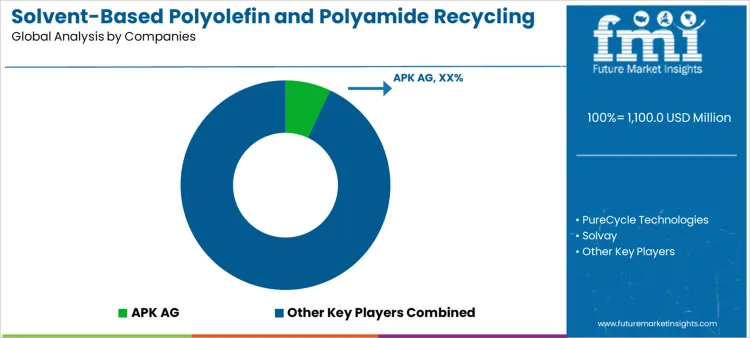
Technology providers maintain market leadership in solvent-based polyolefin and polyamide recycling through comprehensive technology integration that encompasses process design, equipment supply, and ongoing technical support while providing proven performance data and commercial viability validation that supports customer investment decisions. Market leaders establish competitive advantages through technology platforms that can demonstrate superior performance characteristics including polymer quality, processing efficiency, and environmental impact while maintaining cost structures that support commercial viability and market competitiveness.
Successful technology providers invest in comprehensive research and development programs that optimize solvent systems, separation technologies, and process integration while providing customers with proven technology performance and reliable commercial support. Investment in pilot plant operations and demonstration facilities allows technology validation under commercial conditions while providing customer confidence and technology optimization opportunities that support market expansion and technology refinement. These capabilities create differentiation opportunities while enabling premium technology positioning that supports long-term customer relationships and market leadership.
Innovation in process optimization and technology integration enables providers to offer complete solutions that address customer requirements for polymer quality, processing economics, and environmental performance while supporting successful technology commercialization and operation. Collaboration with polymer producers, waste management companies, and end-use manufacturers during technology development phases allows optimization of process parameters and technology configuration for specific feedstock conditions and market requirements while ensuring successful technology implementation and commercial success.
Key Players in the Solvent-Based Polyolefin and Polyamide Recycling Technology Market
- APK AG
- PureCycle Technologies
- Solvay
- BASF
- SABIC
- Eastman Chemical (advanced recycling)
- Gr3n (solvent/chemical recycling)
- Polystyvert
- Agilyx Corporation
- Clariter
Scope of Report
| Items | Values |
|---|---|
| Quantitative Units | USD Million |
| Technology Scope Segments | PO Solvent-Dissolution Lines; PA Solvent-Recycling Lines; Hybrid Multi-Polymer Systems; Pilot/Modular Systems |
| Output Stream Categories | Near-Prime Recycled Pellets; Compatibilized Blends and Compounds; Filled/Functionalized Regrinds; Other Outputs |
| Customer Type Segments | Specialty Recyclers; Integrated Polymer Producers; Brand/OEM-Led Recycling Ventures; Other Technology Licensees |
| End-Market Orientation Types | Packaging and Films; Automotive and Engineering; Fibers and Textiles; Other Durables |
| Regions Covered | North America, Europe, Asia Pacific, Latin America, Middle East & Africa |
| Key Countries | USA, Germany, China, Japan, South Korea, U.K. |
| Key Companies Profiled | APK AG, PureCycle Technologies, Solvay, BASF, SABIC, and others |
| Additional Attributes | Dollar sales measured for solvent-based recycling technologies including equipment, licensing, and services, specified by processing capacity, polymer quality output, solvent recovery efficiency, and commercial viability metrics |
Solvent-Based Polyolefin and Polyamide Recycling Technology Market by Segment
By Technology Scope:
- PO Solvent-Dissolution Lines
- PA Solvent-Recycling Lines
- Hybrid Multi-Polymer Systems
- Pilot/Modular Systems
By Output Stream:
- Near-Prime Recycled Pellets
- Compatibilized Blends and Compounds
- Filled/Functionalized Regrinds
- Other Outputs (Oils, Waxes)
By Customer Type:
- Specialty Recyclers
- Integrated Polymer Producers
- Brand/OEM-Led Recycling Ventures
- Other Technology Licensees
By End-Market Orientation:
- Packaging and Films
- Automotive and Engineering
- Fibers and Textiles
- Other Durables
Bibliography
- European Commission. (2023). Chemical recycling of plastics in a circular economy: Policy framework and sustainability criteria. Publications Office of the European Union.
- European Chemicals Agency. (2024). Solvent use, recovery, and environmental risk management in polymer recycling technologies. European Chemicals Agency.
- United Nations Environment Programme. (2023). Chemical and solvent-based recycling technologies for plastics: Environmental performance and safeguards. United Nations Environment Programme.
Frequently Asked Questions
How big is the solvent-based polyolefin and polyamide recycling technology market in 2026?
The global solvent-based polyolefin and polyamide recycling technology market is estimated to be valued at USD 1,100.0 million in 2026.
What will be the size of solvent-based polyolefin and polyamide recycling technology market in 2036?
The market size for the solvent-based polyolefin and polyamide recycling technology market is projected to reach USD 2,853.1 million by 2036.
How much will be the solvent-based polyolefin and polyamide recycling technology market growth between 2026 and 2036?
The solvent-based polyolefin and polyamide recycling technology market is expected to grow at a 10.0% CAGR between 2026 and 2036.
What are the key product types in the solvent-based polyolefin and polyamide recycling technology market?
The key product types in solvent-based polyolefin and polyamide recycling technology market are po solvent-dissolution lines, pa solvent-recycling lines, hybrid multi-polymer systems and pilot/modular systems.
Which output stream segment to contribute significant share in the solvent-based polyolefin and polyamide recycling technology market in 2026?
In terms of output stream, near-prime recycled pellets segment to command 48.0% share in the solvent-based polyolefin and polyamide recycling technology market in 2026.
Preview the report firsthand - request a free sample
Get SampleGet the brochure for pricing and purchase details.
Get PDFTable of Content
- Executive Summary
- Global Market Outlook
- Demand-side Trends
- Supply-side Trends
- Technology Roadmap Analysis
- Analysis and Recommendations
- Market Overview
- Market Coverage / Taxonomy
- Market Definition / Scope / Limitations
- Market Background
- Market Dynamics
- Drivers
- Restraints
- Opportunity
- Trends
- Scenario Forecast
- Demand in Optimistic Scenario
- Demand in Likely Scenario
- Demand in Conservative Scenario
- Opportunity Map Analysis
- Product Life Cycle Analysis
- Supply Chain Analysis
- Investment Feasibility Matrix
- Value Chain Analysis
- PESTLE and Porter’s Analysis
- Regulatory Landscape
- Regional Parent Market Outlook
- Production and Consumption Statistics
- Import and Export Statistics
- Market Dynamics
- Global Market Analysis 2021 to 2025 and Forecast, 2026 to 2036
- Historical Market Size Value (USD Million) Analysis, 2021 to 2025
- Current and Future Market Size Value (USD Million) Projections, 2026 to 2036
- Y-o-Y Growth Trend Analysis
- Absolute $ Opportunity Analysis
- Global Market Pricing Analysis 2021 to 2025 and Forecast 2026 to 2036
- Global Market Analysis 2021 to 2025 and Forecast 2026 to 2036, By Technology Scope
- Introduction / Key Findings
- Historical Market Size Value (USD Million) Analysis By Technology Scope , 2021 to 2025
- Current and Future Market Size Value (USD Million) Analysis and Forecast By Technology Scope , 2026 to 2036
- PO Solvent-Dissolution Lines
- PA Solvent-Recycling Lines
- Hybrid Multi-Polymer Systems
- Pilot/Modular Systems
- PO Solvent-Dissolution Lines
- Y-o-Y Growth Trend Analysis By Technology Scope , 2021 to 2025
- Absolute $ Opportunity Analysis By Technology Scope , 2026 to 2036
- Global Market Analysis 2021 to 2025 and Forecast 2026 to 2036, By Output Stream
- Introduction / Key Findings
- Historical Market Size Value (USD Million) Analysis By Output Stream, 2021 to 2025
- Current and Future Market Size Value (USD Million) Analysis and Forecast By Output Stream, 2026 to 2036
- Near-Prime Recycled Pellets
- Compatibilized Blends and Compounds
- Filled/Functionalized Regrinds
- Other Outputs (Oils, Waxes)
- Near-Prime Recycled Pellets
- Y-o-Y Growth Trend Analysis By Output Stream, 2021 to 2025
- Absolute $ Opportunity Analysis By Output Stream, 2026 to 2036
- Global Market Analysis 2021 to 2025 and Forecast 2026 to 2036, By Customer Type
- Introduction / Key Findings
- Historical Market Size Value (USD Million) Analysis By Customer Type, 2021 to 2025
- Current and Future Market Size Value (USD Million) Analysis and Forecast By Customer Type, 2026 to 2036
- Specialty Recyclers
- Integrated Polymer Producers
- Brand/OEM-Led Recycling Ventures
- Other Technology Licensees
- Specialty Recyclers
- Y-o-Y Growth Trend Analysis By Customer Type, 2021 to 2025
- Absolute $ Opportunity Analysis By Customer Type, 2026 to 2036
- Global Market Analysis 2021 to 2025 and Forecast 2026 to 2036, By End-Market Orientation
- Introduction / Key Findings
- Historical Market Size Value (USD Million) Analysis By End-Market Orientation, 2021 to 2025
- Current and Future Market Size Value (USD Million) Analysis and Forecast By End-Market Orientation, 2026 to 2036
- Packaging and Films
- Automotive and Engineering
- Fibers and Textiles
- Other Durables
- Packaging and Films
- Y-o-Y Growth Trend Analysis By End-Market Orientation, 2021 to 2025
- Absolute $ Opportunity Analysis By End-Market Orientation, 2026 to 2036
- Global Market Analysis 2021 to 2025 and Forecast 2026 to 2036, By Region
- Introduction
- Historical Market Size Value (USD Million) Analysis By Region, 2021 to 2025
- Current Market Size Value (USD Million) Analysis and Forecast By Region, 2026 to 2036
- North America
- Latin America
- Western Europe
- Eastern Europe
- East Asia
- South Asia and Pacific
- Middle East & Africa
- Market Attractiveness Analysis By Region
- North America Market Analysis 2021 to 2025 and Forecast 2026 to 2036, By Country
- Historical Market Size Value (USD Million) Trend Analysis By Market Taxonomy, 2021 to 2025
- Market Size Value (USD Million) Forecast By Market Taxonomy, 2026 to 2036
- By Country
- USA
- Canada
- Mexico
- By Technology Scope
- By Output Stream
- By Customer Type
- By End-Market Orientation
- By Country
- Market Attractiveness Analysis
- By Country
- By Technology Scope
- By Output Stream
- By Customer Type
- By End-Market Orientation
- Key Takeaways
- Latin America Market Analysis 2021 to 2025 and Forecast 2026 to 2036, By Country
- Historical Market Size Value (USD Million) Trend Analysis By Market Taxonomy, 2021 to 2025
- Market Size Value (USD Million) Forecast By Market Taxonomy, 2026 to 2036
- By Country
- Brazil
- Chile
- Rest of Latin America
- By Technology Scope
- By Output Stream
- By Customer Type
- By End-Market Orientation
- By Country
- Market Attractiveness Analysis
- By Country
- By Technology Scope
- By Output Stream
- By Customer Type
- By End-Market Orientation
- Key Takeaways
- Western Europe Market Analysis 2021 to 2025 and Forecast 2026 to 2036, By Country
- Historical Market Size Value (USD Million) Trend Analysis By Market Taxonomy, 2021 to 2025
- Market Size Value (USD Million) Forecast By Market Taxonomy, 2026 to 2036
- By Country
- Germany
- UK
- Italy
- Spain
- France
- Nordic
- BENELUX
- Rest of Western Europe
- By Technology Scope
- By Output Stream
- By Customer Type
- By End-Market Orientation
- By Country
- Market Attractiveness Analysis
- By Country
- By Technology Scope
- By Output Stream
- By Customer Type
- By End-Market Orientation
- Key Takeaways
- Eastern Europe Market Analysis 2021 to 2025 and Forecast 2026 to 2036, By Country
- Historical Market Size Value (USD Million) Trend Analysis By Market Taxonomy, 2021 to 2025
- Market Size Value (USD Million) Forecast By Market Taxonomy, 2026 to 2036
- By Country
- Russia
- Poland
- Hungary
- Balkan & Baltic
- Rest of Eastern Europe
- By Technology Scope
- By Output Stream
- By Customer Type
- By End-Market Orientation
- By Country
- Market Attractiveness Analysis
- By Country
- By Technology Scope
- By Output Stream
- By Customer Type
- By End-Market Orientation
- Key Takeaways
- East Asia Market Analysis 2021 to 2025 and Forecast 2026 to 2036, By Country
- Historical Market Size Value (USD Million) Trend Analysis By Market Taxonomy, 2021 to 2025
- Market Size Value (USD Million) Forecast By Market Taxonomy, 2026 to 2036
- By Country
- China
- Japan
- South Korea
- By Technology Scope
- By Output Stream
- By Customer Type
- By End-Market Orientation
- By Country
- Market Attractiveness Analysis
- By Country
- By Technology Scope
- By Output Stream
- By Customer Type
- By End-Market Orientation
- Key Takeaways
- South Asia and Pacific Market Analysis 2021 to 2025 and Forecast 2026 to 2036, By Country
- Historical Market Size Value (USD Million) Trend Analysis By Market Taxonomy, 2021 to 2025
- Market Size Value (USD Million) Forecast By Market Taxonomy, 2026 to 2036
- By Country
- India
- ASEAN
- Australia & New Zealand
- Rest of South Asia and Pacific
- By Technology Scope
- By Output Stream
- By Customer Type
- By End-Market Orientation
- By Country
- Market Attractiveness Analysis
- By Country
- By Technology Scope
- By Output Stream
- By Customer Type
- By End-Market Orientation
- Key Takeaways
- Middle East & Africa Market Analysis 2021 to 2025 and Forecast 2026 to 2036, By Country
- Historical Market Size Value (USD Million) Trend Analysis By Market Taxonomy, 2021 to 2025
- Market Size Value (USD Million) Forecast By Market Taxonomy, 2026 to 2036
- By Country
- Kingdom of Saudi Arabia
- Other GCC Countries
- Turkiye
- South Africa
- Other African Union
- Rest of Middle East & Africa
- By Technology Scope
- By Output Stream
- By Customer Type
- By End-Market Orientation
- By Country
- Market Attractiveness Analysis
- By Country
- By Technology Scope
- By Output Stream
- By Customer Type
- By End-Market Orientation
- Key Takeaways
- Key Countries Market Analysis
- USA
- Pricing Analysis
- Market Share Analysis, 2025
- By Technology Scope
- By Output Stream
- By Customer Type
- By End-Market Orientation
- Canada
- Pricing Analysis
- Market Share Analysis, 2025
- By Technology Scope
- By Output Stream
- By Customer Type
- By End-Market Orientation
- Mexico
- Pricing Analysis
- Market Share Analysis, 2025
- By Technology Scope
- By Output Stream
- By Customer Type
- By End-Market Orientation
- Brazil
- Pricing Analysis
- Market Share Analysis, 2025
- By Technology Scope
- By Output Stream
- By Customer Type
- By End-Market Orientation
- Chile
- Pricing Analysis
- Market Share Analysis, 2025
- By Technology Scope
- By Output Stream
- By Customer Type
- By End-Market Orientation
- Germany
- Pricing Analysis
- Market Share Analysis, 2025
- By Technology Scope
- By Output Stream
- By Customer Type
- By End-Market Orientation
- UK
- Pricing Analysis
- Market Share Analysis, 2025
- By Technology Scope
- By Output Stream
- By Customer Type
- By End-Market Orientation
- Italy
- Pricing Analysis
- Market Share Analysis, 2025
- By Technology Scope
- By Output Stream
- By Customer Type
- By End-Market Orientation
- Spain
- Pricing Analysis
- Market Share Analysis, 2025
- By Technology Scope
- By Output Stream
- By Customer Type
- By End-Market Orientation
- France
- Pricing Analysis
- Market Share Analysis, 2025
- By Technology Scope
- By Output Stream
- By Customer Type
- By End-Market Orientation
- India
- Pricing Analysis
- Market Share Analysis, 2025
- By Technology Scope
- By Output Stream
- By Customer Type
- By End-Market Orientation
- ASEAN
- Pricing Analysis
- Market Share Analysis, 2025
- By Technology Scope
- By Output Stream
- By Customer Type
- By End-Market Orientation
- Australia & New Zealand
- Pricing Analysis
- Market Share Analysis, 2025
- By Technology Scope
- By Output Stream
- By Customer Type
- By End-Market Orientation
- China
- Pricing Analysis
- Market Share Analysis, 2025
- By Technology Scope
- By Output Stream
- By Customer Type
- By End-Market Orientation
- Japan
- Pricing Analysis
- Market Share Analysis, 2025
- By Technology Scope
- By Output Stream
- By Customer Type
- By End-Market Orientation
- South Korea
- Pricing Analysis
- Market Share Analysis, 2025
- By Technology Scope
- By Output Stream
- By Customer Type
- By End-Market Orientation
- Russia
- Pricing Analysis
- Market Share Analysis, 2025
- By Technology Scope
- By Output Stream
- By Customer Type
- By End-Market Orientation
- Poland
- Pricing Analysis
- Market Share Analysis, 2025
- By Technology Scope
- By Output Stream
- By Customer Type
- By End-Market Orientation
- Hungary
- Pricing Analysis
- Market Share Analysis, 2025
- By Technology Scope
- By Output Stream
- By Customer Type
- By End-Market Orientation
- Kingdom of Saudi Arabia
- Pricing Analysis
- Market Share Analysis, 2025
- By Technology Scope
- By Output Stream
- By Customer Type
- By End-Market Orientation
- Turkiye
- Pricing Analysis
- Market Share Analysis, 2025
- By Technology Scope
- By Output Stream
- By Customer Type
- By End-Market Orientation
- South Africa
- Pricing Analysis
- Market Share Analysis, 2025
- By Technology Scope
- By Output Stream
- By Customer Type
- By End-Market Orientation
- USA
- Market Structure Analysis
- Competition Dashboard
- Competition Benchmarking
- Market Share Analysis of Top Players
- By Regional
- By Technology Scope
- By Output Stream
- By Customer Type
- By End-Market Orientation
- Competition Analysis
- Competition Deep Dive
- APK AG
- Overview
- Product Portfolio
- Profitability by Market Segments (Product/Age /Sales Channel/Region)
- Sales Footprint
- Strategy Overview
- Marketing Strategy
- Product Strategy
- Channel Strategy
- PureCycle Technologies
- Solvay
- BASF
- SABIC
- Eastman Chemical (advanced recycling)
- Gr3n (solvent/chemical recycling)
- Polystyvert
- APK AG
- Competition Deep Dive
- Assumptions & Acronyms Used
- Research Methodology


