

- Industry Size (2026)
- USD 1.3 Bn
- Forecast (2036)
- USD 2.4 Bn
- CAGR (2026 to 2036)
- 6.30%
Polyolefin Odor Removal Additives Market Size, Market Forecast and Outlook By FMI
The polyolefin odor removal additives market was valued at USD 1.2 billion in 2025. The industry is set to surpass USD 1.3 billion in 2026 at a CAGR of 6.30% during the forecast period. Sustained investment carries the valuation to USD 2.4 billion through 2036 as automotive OEMs and fast-moving consumer goods brands transition from mechanical fragrance masking to molecular entrapment to meet zero-emission material specifications.
Procurement directors across the compounding sector are being forced to decide between utilizing legacy masking agents or investing in structural absorbers. This shift is not driven by general quality improvements, but by immediate disqualification risks in high-stakes supply chains. Tier-1 automotive suppliers and food-contact packaging extruders that delay the integration of true scavenging technologies forfeit multi-year contracts, as downstream buyers no longer tolerate volatile organic compound accumulation in closed environments. FMI’s assessment of plastic additives indicates that the cost of failing a vehicle interior air quality test now exponentially outweighs the premium paid for advanced nanoporous scavengers.
Summary of Polyolefin Odor Removal Additives Market
- Polyolefin Odor Removal Additives Market Definition
- This sector covers specialty chemical scavengers and absorbers designed to permanently neutralize volatile emissions within polyethylene and polypropylene. The defining boundary is the mechanism of molecular entrapment or chemical bonding, differentiating these technologies from cosmetic fragrance masking.
- Demand Drivers in the Market
- Strict interior air quality standards from automotive original equipment manufacturers compel tier-1 molding operations to specify reactive scavengers in all dashboard and trim components.
- Extended producer responsibility frameworks require food and beverage brands to incorporate recycled content, forcing packaging converters to eliminate degradation odors to maintain organoleptic neutrality.
- Consumer sensitivity to plastic off-gassing in enclosed household goods drives appliance manufacturers to mandate zero-odor raw material sourcing.
- Key Segments Analyzed in the FMI Report
- Zeolite-based: Zeolite-based formulations are expected to hold 45.2% share in 2026, driven by their thermal stability during high-shear twin-screw compounding and ability to trap small-molecule emissions.
- Polyethylene (PE): Polyethylene is expected to hold 58.4% share in 2026, owing to the massive volume of recycled high-density and low-density packaging requiring severe odor remediation for secondary lifecycles.
- Automotive Interiors: Automotive Interiors is expected to hold 38.6% share in 2026, as closed-cabin concentration limits strictly dictate material formulation parameters.
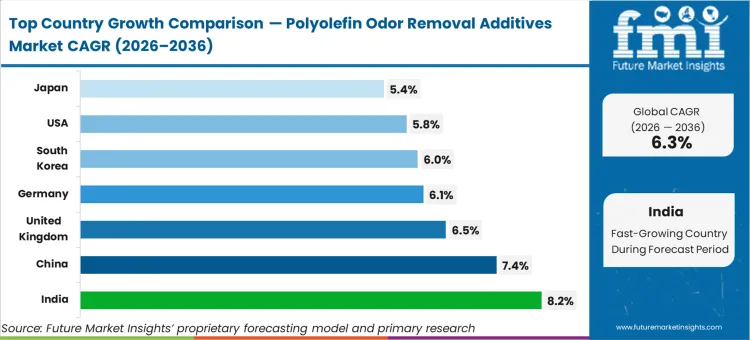
- India: 8.2% compound growth, as the domestic compounding infrastructure rapidly upgrades to meet international export specifications for automotive and appliance components.
- Analyst Opinion at FMI
- Nikhil Kaitwade, Principal Analyst, Chemicals, at FMI, opines, "The general market metric focuses on total tonnage of recycled plastics produced, assuming odor additives scale linearly with that volume. However, this misses the actual qualification bottleneck. The real volume driver is the specific percentage of that recycled material attempting to clear direct food-contact and automotive interior thresholds. Those high-stakes applications consume additives at three to four times the loading rate of structural or agricultural plastics, meaning value growth drastically outpaces baseline polymer recycling rates."
- Strategic Implications / Executive Takeaways
- Masterbatch formulators must secure long-term raw material supply for high-purity synthetic zeolites to prevent margin erosion during anticipated supply crunches.
- Extrusion machinery operators should upgrade their dosing systems to handle highly abrasive mineral scavengers to avoid premature equipment wear.
- Brand owners utilizing recycled packaging face a structural constraint in organoleptic testing consistency that requires standardizing their additive procurement across all regional converters.
- Methodology
- Primary Research: Technical directors at major compounding firms.
- Desk Research: Technical data sheets, vehicle interior air quality standards, food contact notifications.
- Market-Sizing and Forecasting: Anchored to recycled resin production volumes and automotive interior tonnage.
- Data Validation and Update Cycle: Triangulated with masterbatch sales data and resin capacity expansions.
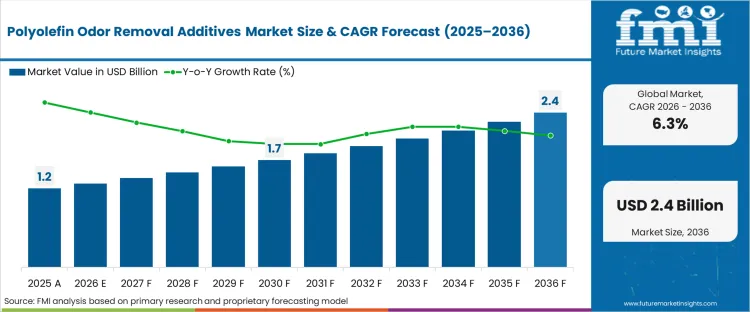
Before this expansion becomes entirely self-reinforcing, the supply chain must solve the thermal degradation threshold during high-shear compounding. Once masterbatch producers successfully encapsulate active odor neutralizers to withstand standard extrusion temperatures without prematurely releasing their active sites, the qualification cycle for post-consumer recycled resins collapses from months to weeks. Major chemical formulators are triggering this shift by engineering carrier resins that protect the active geometry until the final molding phase.
India is expected to track at an 8.2% CAGR, followed by China at 7.4%, the United Kingdom at 6.5%, Germany at 6.1%, South Korea at 6.0%, the United States at 5.8%, and Japan at 5.4%. The structural divergence across these manufacturing hubs stems directly from their exposure to export-driven sustainability mandates versus domestic consumption tolerances, dictating how rapidly local compounders must abandon legacy processing methods.
Polyolefin Odor Removal Additives Market Key Takeaways
| Metric | Details |
|---|---|
| Industry Size (2026) | USD 1.3 billion |
| Industry Value (2036) | USD 2.4 billion |
| CAGR (2026–2036) | 6.30% |
Source: Future Market Insights (FMI) analysis, based on proprietary forecasting model and primary research
Polyolefin Odor Removal Additives Market Definition
The polyolefin odor removal additives sector encompasses specialty chemical compounds engineered to permanently entrap, neutralize, or chemically alter volatile organic compounds and residual monomers within polyethylene and polypropylene matrices. It is functionally distinct from fragrance masking agents, focusing entirely on molecular adsorption and emission reduction to meet specific regulatory air quality and organoleptic thresholds.
Polyolefin Odor Removal Additives Market Inclusions
Scope includes microporous aluminosilicates, odor scavenging masterbatches, reactive metallic salts including zinc ricinoleate, and cyclodextrin-based host-guest inclusion complexes designed for integration during polymer compounding or extrusion. It encompasses formulations applied to both virgin resins and post-consumer recycled plastics intended to suppress off-gassing, degradation odors, and residual contamination profiles.
Polyolefin Odor Removal Additives Market Exclusions
The analysis explicitly excludes topical deodorizers, consumer-applied odor sprays, and standard fragrance masterbatches designed purely to mask existing smells. These categories are excluded because they do not permanently bind or neutralize the offending volatile compounds, failing to alter the structural emission profile required by technical material specifications.
Polyolefin Odor Removal Additives Market Research Methodology
- Primary Research: Sourcing directors at tier-1 automotive interior suppliers and quality assurance leads at rigid packaging converters were interviewed to map qualification timelines and failure rates.
- Desk Research: European Chemicals Agency restriction dossiers and regional volatile organic compound limit specifications for automotive interiors were aggregated to establish compliance boundaries.
- Market-Sizing and Forecasting: The baseline anchors to the documented volume of post-consumer recycled polyolefins approved for food-contact applications and total automotive interior polymer tonnage.
- Data Validation and Update Cycle: Forecasts were triangulated against capital expenditure reports from major masterbatch producers upgrading their reactive compounding lines.
Segmental Analysis
Polyolefin Odor Removal Additives Market Analysis by Type
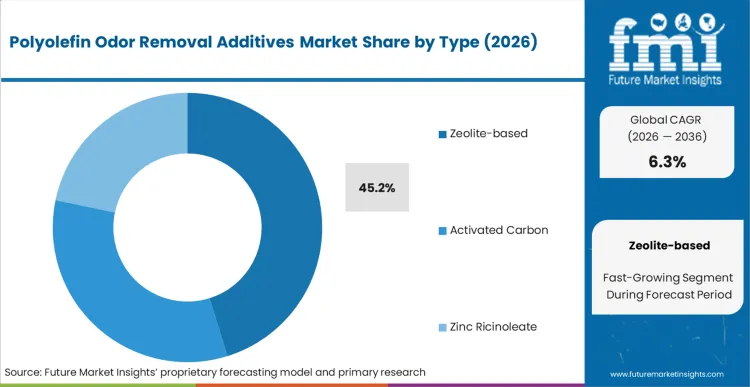
The reason zeolite-based formulations hold 45.2% of this landscape comes down to a single structural reality being the traditional carbon absorbers that severely darken the polymer matrix, rendering them unusable for transparent or color-critical applications. According to FMI's estimates, compounding engineers specifying materials for consumer-facing goods accept the higher unit cost of synthetic aluminosilicates because it preserves the optical clarity and color-matching capabilities of the base resin. These crystalline structures operate by physically trapping volatile organic compounds within their porous geometry, permanently locking away degradation byproducts without initiating secondary chemical reactions. Formulators who attempt to substitute cheaper porous minerals often encounter unpredictable moisture absorption during storage, leading to severe lacing and surface defects during final part extrusion, necessitating robust odor neutralizing additives.
- Thermal resilience: The engineered microporous structures prevent additive degradation at extreme processing temperatures. Compounders eliminate the volatile emissions that typically trigger batch rejections during twin-screw operations.
- Optical preservation: Pure synthetic grades maintain the native light transmission properties of the host polymer. Packaging converters bypass the graying effect that traditionally limits the use of recycled content in clear formats.
- Moisture management: Hydrophobic variants resist atmospheric water uptake prior to melting. Plant operators avoid the costly pre-drying phases necessary when handling standard hydrophilic scavengers.
Polyolefin Odor Removal Additives Market Analysis by Polymer Type
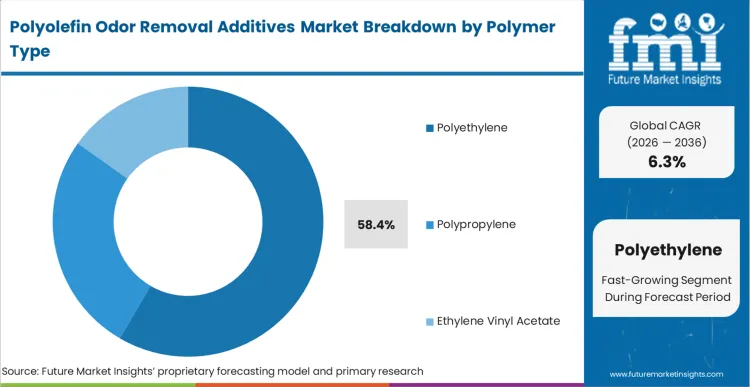
Converters handling post-consumer bales are being forced to decide how much they are willing to spend to upgrade lower-tier material into high-margin applications. Polyethylene dominates with a 58.4% share because the sheer volume of municipal waste streams consists of high-density and low-density PE heavily contaminated by organic residues. To access premium flexible packaging contracts, film extruders must dose these resins with highly efficient scavengers, such as advanced odour control technology, to completely strip the characteristic sour odor of recycled polyolefins. The cost of the additive package is immediately offset by the price delta between utility-grade polyolefin pipe resin and FDA-compliant food contact material. Extruders who fail to master this compounding step remain locked out of the lucrative fast-moving consumer goods supply chain.
- Base delta: Heavy dosing allows the procurement of cheaper, highly contaminated bales. Sourcing teams capture immediate margin by widening their acceptable incoming scrap specifications.
- Processing wear: Abrasive mineral scavengers degrade standard extruder screws rapidly. Maintenance directors face accelerated equipment replacement schedules if they fail to upgrade to hardened metallurgy.
- Lifecycle parity: The premium paid for advanced inclusion complexes is recovered through access to premium end-markets. Enterprise brands achieve their sustainability targets without compromising consumer unboxing experiences.
Polyolefin Odor Removal Additives Market Analysis by Application
FMI analysts opine that standard thermal devolatilization during compounding is no longer sufficient to pass the rigorous heat-soak tests mandated by European and Asian vehicle brands. The performance gradient here is absolute; a dashboard component either passes the sensory evaluation panel or the entire batch is scrapped. Molders attempting to utilize utility-grade additives discover that delayed off-gassing under solar load results in massive recall liabilities. The automotive interior segment operates under a severe contradiction that involves original equipment manufacturers simultaneously demanding higher percentages of recycled automotive pp compound while radically tightening the parts-per-million limits for cabin air volatile organics. This tension secures the segment's 38.6% share, as tier-1 molders cannot satisfy both requirements without heavy reliance on specialized odor control agents.
- Sensory compliance: High-capacity scavengers ensure components pass extreme heat-soak testing protocols. Tier-1 molders secure their position on approved vendor lists for global automotive platforms.
- Edge failure: Sub-par binders release trapped volatiles when exposed to sustained dashboard temperatures. Quality teams face sudden part rejections during summer climate evaluations.
- Standardized acceptability: Vehicle OEM specifications dictate the exact parts-per-million threshold for specific volatile chains. Formulators reverse-engineer their additive geometries to target those exact molecules.
Polyolefin Odor Removal Additives Market Drivers, Restraints, and Opportunities
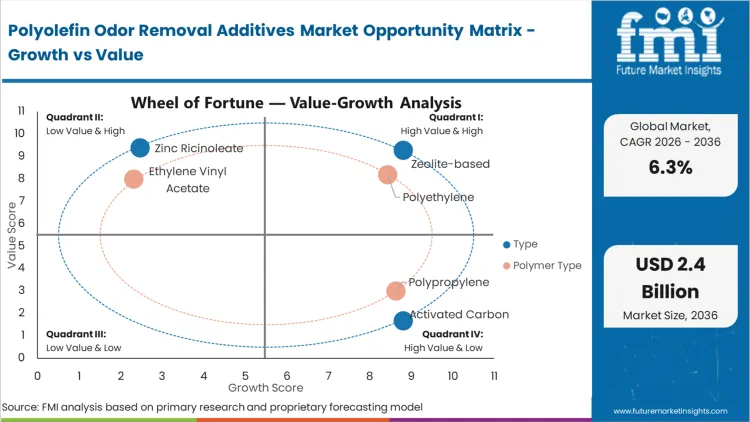
Strict limits on in-cabin volatile organic compounds force tier-1 automotive suppliers to embed reactive molecular scavengers directly into their polymer formulations. Original equipment manufacturers have transitioned from generic odor guidelines to absolute parts-per-million thresholds for specific aldehydes and ketones emitted by molded polyolefins. To maintain their contracts for dashboard, door trim, and seating assemblies, compounding engineers must abandon standard thermal devolatilization in favor of permanent chemical entrapment. Failure to clear these specific sensory and analytical testing protocols results in immediate platform disqualification, permanently locking unprepared molders out of next-generation vehicle architectures, accelerating the need for high-quality compatibilizer additives.
The single biggest operational friction slowing widespread adoption is the severe negative interaction between mineral-based odor scavengers and primary antioxidant packages. Facilities attempting to implement high-loading zeolite solutions frequently discover that the porous structures inadvertently trap the very stabilizers meant to protect the polymer from thermal degradation. This requires compounders to completely re-engineer their masterbatch formulations, often forcing them to over-dose costly primary and secondary antioxidants to achieve baseline performance. While some additive manufacturers have introduced pre-passivated scavengers, the intricate balancing act of custom formulation extends qualification timelines and severely complicates inventory management.
Opportunities in the Polyolefin Odor Removal Additives Market
- Food-contact recyclates: Strict organoleptic testing requirements create a bottleneck for recycled packaging. Masterbatch producers who formulate FDA-compliant inclusion complexes for recycled polyolefin compounds capture premium pricing from major beverage brands.
- Closed-loop appliances: Consumer sensitivity to off-gassing in home environments dictates new material standards. Custom compounders supplying the white-goods sector secure long-term contracts by guaranteeing zero-emission polypropylene compounds.
- Masterbatch integration: Small-to-medium extruders lack the technical capacity to balance complex additive interactions. Formulators offering single-pellet solutions combining color, stabilization, and odor control monopolize the middle-market converting tier.
Regional Analysis
Based on the regional analysis, the Polyolefin Odor Removal Additives market is segmented into North America, Europe, and Asia Pacific across 40 plus countries.
.webp "Top Country Growth Comparison Polyolefin Odor Removal Additives Market Cagr (2026 2036)")
| Country | CAGR (2026 to 2036) |
|---|---|
| India | 8.2% |
| China | 7.4% |
| United Kingdom | 6.5% |
| Germany | 6.1% |
| South Korea | 6.0% |
| United States | 5.8% |
| Japan | 5.4% |
Source: Future Market Insights (FMI) analysis, based on proprietary forecasting model and primary research
North America Polyolefin Odor Removal Additives Market Analysis
The focus across North American compounding facilities is entirely on eliminating residual contamination odors from curbside bales without introducing new chemical migration risks. As per FMI's projection, this regulatory environment surrounding food-contact materials and post-consumer recycled content defines the adoption curve, forcing a highly rigid qualification process where converters must prove absolute organoleptic neutrality. Rather than relying on generic safety claims, the sector is strictly driven by specific letters of no objection from federal agencies regarding the use of secondary plastics in direct food packaging, accelerating the integration of advanced recycled resins.
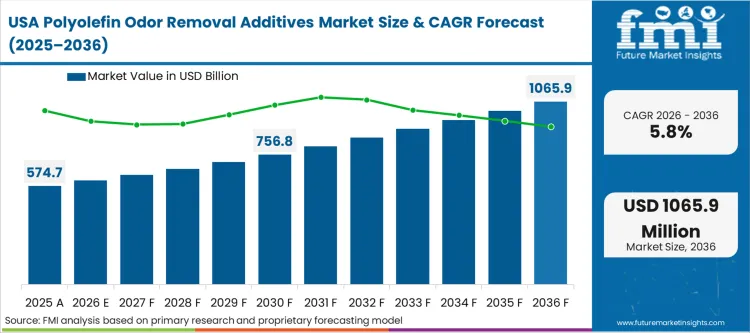
- United States: The trajectory established by early adopters creates a severe competitive gap, as converters clinging to virgin resins rapidly lose volume to those capable of processing high-odor recyclates cleanly. Sourcing managers in the United States must specify advanced molecular scavengers to elevate low-grade feedstock to brand-acceptable standards. This operational shift occurs because the push by major consumer packaged goods brands to meet self-imposed recycled content pledges requires domestic converters to utilize highly contaminated domestic bales. The market is advancing at 5.8% compound between 2026 and 2036. Sourcing teams that fail to lock in scavenger supply lines face raw material shortages.
FMI's report includes secondary markets across the North American free trade zone. Canadian and Mexican compounding hubs are increasingly aligning their internal quality protocols with these stringent US brand requirements to maintain cross-border supply chain integration.
Europe Polyolefin Odor Removal Additives Market Analysis
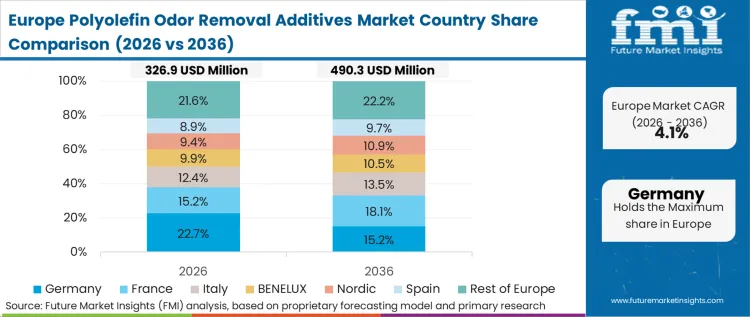
In FMI's view, the strict requirement to preserve a polymer's viability for a third or fourth processing cycle heavily favors highly stable, inert mineral absorbers that survive multiple extrusion histories intact over reactive chemistries that cross-link or permanently degrade the matrix. Converters operating here do not evaluate odor scavengers solely on their immediate effectiveness. This distinct buyer behavior landscape is shaped because procurement practices among European automotive and appliance manufacturers prioritize rigorous life-cycle assessments and end-of-life recyclability, spurring innovations in chemical depolymerization.
- Germany: Tier-1 molding entities in Germany operate under the industry's most aggressive heat-soak and sensory panel testing protocols. The German landscape is set to achieve a CAGR of 6.1%, driven directly by these testing mandates. This compliance pressure establishes a structural trajectory where zero-emission masterbatches transition from a premium option to an absolute baseline requirement for any supplier wishing to quote on future domestic vehicle platforms. Ultimately, Germany's dense concentration of premium automotive original equipment manufacturers dictates the technological baseline for interior air quality across the broader market.
- United Kingdom: Extrusion managers in the United Kingdom face the immediate challenge of stripping the inherent degradation smells from heavily cycled polymers to prevent consumer rejection on supermarket shelves. The operational outcome for facilities that master this additive dosing is a total decoupling from virgin resin price volatility. This operational shift is necessary because aggressive plastic packaging taxes require retail brands to incorporate high percentages of recycled material into consumer-facing formats. Over the forecast period a CAGR of 6.5% is set for the United Kingdom.
FMI's report includes adjacent Western and Eastern European manufacturing centers. Facilities supplying the core European automotive spine are universally adopting these zero-emission automotive interior materials standards to avoid fragmentation in their material handling operations, demanding new developments in chemical recycling films.
Asia Pacific Polyolefin Odor Removal Additives Market Analysis
Based on FMI's assessment, the capital expenditure required to integrate precision dosing systems for expensive specialty scavengers is justified entirely by the ability to export the finished recycled plastics to highly regulated Western markets. Domestic compounders are caught in an intense economic calculation between the availability of cheap, high-odor recycled feedstocks and these absolute quality requirements. The cost structures and export exposure as a result dictate the aggressive scaling of advanced compounding technologies across the Asia Pacific region, increasing demand for robust compliance services.
- India: The operational outcome of this expansion is a stabilized production line capable of producing export-grade masterbatches regardless of underlying bale contamination. To achieve this, plant operators in India must overcome severe variations in incoming scrap quality by relying on robust, broad-spectrum odor neutralizers. This tactical shift enables India's rapidly modernizing compounding sector to pivot from servicing low-tier domestic applications to targeting stringent European and North American export specifications. Demand in India is set to grow at an 8.2% CAGR.
- China: Procurement teams in China are leveraging their immense scale to negotiate favorable pricing on advanced synthetic zeolites and reactive salts. The market in China is forecast to register a CAGR of 7.4% amid this shift. This creates a massive commercial opportunity for domestic additive manufacturers who can successfully formulate alternatives to expensive imported specialty chemistries. Ultimately, the broader transition of China's plastics processing infrastructure toward high-value, sustainable materials forces this massive uptake of sophisticated inclusion technologies.
- Japan: Material scientists in Japan utilize highly specific porous architectures tailored to trap exact volatile molecules rather than relying on generalist absorbers. They do this because Japanese consumer electronics and automotive brands maintain the world's strictest tolerances for off-gassing and material purity. The practitioner reality is that formulations here resemble precision pharmaceutical dosing rather than standard industrial plastic compounding, resulting in Japan tracking a CAGR of 5.4%.
- South Korea: Extrusion engineers in South Korea integrate advanced odor management directly into the primary resin synthesis and pelletizing phases. A CAGR of 6.0% is expected in South Korea over the forecast period. This positions their domestic resin producers with a significant competitive advantage over regional players who relegate odor control to secondary compounding steps. Through these structural integrations, South Korea's highly integrated petrochemical and compounding sectors are aggressively pursuing dominance in premium recycled resin grades.
FMI's report includes emerging Southeast Asian manufacturing hubs. Vietnam and Thailand are rapidly establishing secondary compounding capacities to support the regional migration of appliance and automotive assembly operations, utilizing tools like recyclable impact modifiers to stabilize outputs.
Competitive Aligners for Market Players
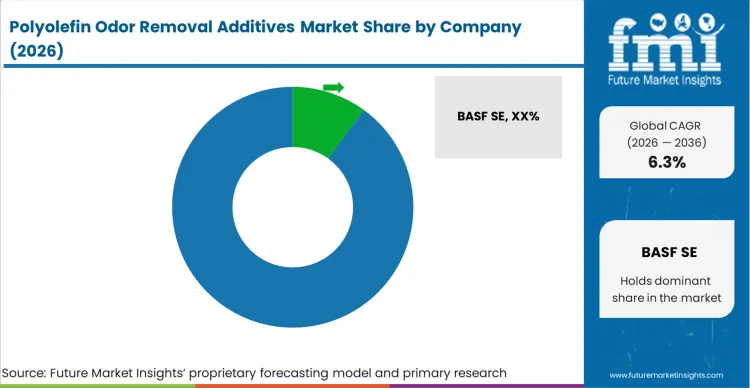
The competitive structure of this market remains heavily concentrated around global specialty chemical formulators and advanced masterbatch producers, driven entirely by the intense intellectual property required to engineer thermally stable porous architectures. Major automotive and packaging buyers do not select vendors based on broad portfolio size or legacy relationships; they distinguish qualified from unqualified partners based strictly on analytical proof of volatile reduction. Giants like BASF SE, Clariant AG, and Dow Inc. dominate this qualification phase because they provide tier-1 molders with comprehensive emission testing data alongside the physical additive. This capability effectively derisks the buyer's own qualification process with downstream original equipment manufacturers, making the selection an exercise in compliance assurance rather than pure cost procurement, especially when integrating circular polyolefin packaging.
Incumbents maintain their structural advantage through deep integration with the primary resin synthesis phase, often customizing their scavengers to match specific polymerization catalysts before the material ever reaches a secondary converter. Formulators such as Arkema SA, Tosaf Compounds Ltd., and Cabot Corporation leverage their fundamental understanding of polymer morphology to design additives that disperse perfectly without agglomeration during high-shear compounding. To replicate this position, a challenger must build advanced analytical capabilities, specifically in dynamic headspace gas chromatography and mass spectrometry, to prove their formulations work at the parts-per-billion level. Without this category of analytical verification, buyers of specialty polymers simply will not risk a trial, regardless of how aggressively a new entrant prices their active scavenger, even for robust industrial chemicals packaging.
Large procurement networks actively resist this technological lock-in by forcing additive suppliers to validate their chemistries across multiple carrier resins and compounding equipment brands. The structural tension in the market lies between the formulator's desire to sell proprietary, single-use masterbatches and the converter's need for universal, drop-in powders that work across their entire material inventory. Through 2036, the landscape will heavily consolidate around firms capable of delivering fully passivated systems that do not interfere with standard antioxidant packages. Specialized masterbatch producers like Ampacet Corporation and Avient navigate this exact friction, as converters increasingly refuse to re-engineer their entire stabilization strategy just to accommodate an odor scavenger, demanding holistic formulations that address color, stabilization, and emission control simultaneously, leveraging surface enhancement technologies.
Key Players in Polyolefin Odor Removal Additives Market
- BASF SE
- Clariant AG
- Arkema SA
- Ampacet Corporation
- Tosaf Compounds Ltd.
- Avient
- Cabot Corporation
- Dow Inc.
Scope of the Report
| Metric | Value |
|---|---|
| Quantitative Units | USD 1.3 billion to USD 2.4 billion, at a CAGR of 6.30% |
| Market Definition | The sector covers specialty chemical compounds engineered to permanently entrap, neutralize, or chemically alter volatile organic compounds within polyolefin matrices. It functionally excludes cosmetic fragrance masking agents that do not alter the underlying chemical emission profile. |
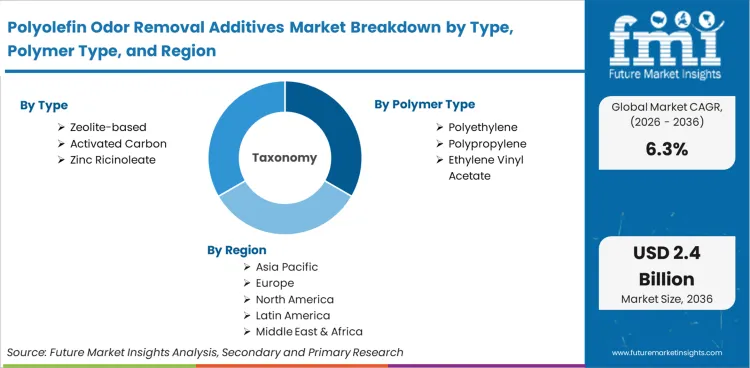
| Type Segmentation | Zeolite-based, Activated Carbon, Zinc Ricinoleate, Others |
| Polymer Type Segmentation | Polyethylene (PE), Polypropylene (PP), Ethylene Vinyl Acetate (EVA) |
| Application Segmentation | Automotive Interiors, Packaging, Consumer Goods, Building & Construction |
| Regions Covered | North America, Europe, Asia Pacific |
| Countries Covered | India, China, United Kingdom, Germany, South Korea, United States, Japan, and 40 plus countries |
| Key Companies Profiled | BASF SE, Clariant AG, Arkema SA, Ampacet Corporation, Tosaf Compounds Ltd., Avient, Cabot Corporation, Dow Inc. |
| Forecast Period | 2026 to 2036 |
| Approach | Technical directors and quality assurance leads at major compounding firms were interviewed to understand qualification cycles. The baseline anchors to total recycled resin tonnage and automotive interior polymer volumes. Forecasts were cross-validated against capital expenditure reports from major masterbatch producers. |
Source: Future Market Insights (FMI) analysis, based on proprietary forecasting model and primary research
Polyolefin Odor Removal Additives Market Analysis by Segments
-
Type:
- Zeolite-based
- Activated Carbon
- Zinc Ricinoleate
- Others
-
Polymer Type:
- Polyethylene (PE)
- Polypropylene (PP)
- Ethylene Vinyl Acetate (EVA)
-
Application:
- Automotive Interiors
- Packaging
- Consumer Goods
- Building & Construction
-
Region:
- North America
- Europe
- Asia-Pacific
- Rest of the World
- Latin America
- Middle East, and Africa
Bibliography
- European Food Safety Authority. (2024). Scientific guidance on the criteria for the evaluation and on the safety of recycling processes to obtain recycled plastics intended to be used in food contact materials from novel technologies. EFSA Journal, 22(7), e8879.
- Organisation for Economic Co-operation and Development. (2024). Plastics recycled content requirements. OECD Publishing.
- Umweltbundesamt. (2024). Strengthening the recycling of technical plastics against the backdrop of increasing material law requirements using the example of waste electrical appliances and end-of-life vehicles (Texte 25/2024). German Environment Agency.
- Wulandari, S., Higashikawa, S., Takahashi, S., Sato, S., Kuramochi, H., & Osako, M. (2024). VOC removal from automotive waste by supercritical CO₂ extraction: A promising approach for polypropylene recycling. Jurnal Bahan Alam Terbarukan, 13(2), 105-112.
- Bai, F., Chen, H., Wrona, M., van Ruth, S. M., Strid, A., & Nerín, C. (2024). Understanding the effect of plastic food packaging volatile compounds on packed food odor quality changes by migration tests combined with sensory analysis. Trends in Food Science & Technology, 150, 104674.
This bibliography is provided for reader reference. The full FMI report contains the complete reference list with primary source documentation.
This Report Addresses
- Market intelligence to support strategic decision making across specialty chemical formulation and masterbatch compounding, tracking shifts in pharmaceutical packaging polyolefins
- Market size estimation and 10-year revenue forecasts from 2026 to 2036, supported by specific automotive and food-contact capacity expansion tracking
- Growth opportunity mapping across zeolite and reactive salt dimensions with emphasis on the structural gate of post-consumer recycled polyolefin food-contact approvals
- Segment and regional revenue forecasts covering polyethylene and polypropylene streams across stringent European vehicle interior regulatory environments
- Competition strategy assessment including specific analytical verification capabilities and passivated carrier resin engineering
- Capability development tracking including high-shear thermal resilience standards and dynamic headspace gas chromatography testing frameworks
- Market access analysis covering European vehicle heat-soak protocols and FDA organoleptic neutrality qualification standards, demanding robust impact modified pcr plastics
- Market report delivery in PDF, Excel, PPT, and interactive dashboard formats for executive strategy, compounding plant operations planning, and operational benchmarking use, ensuring alignment with high-grade equivalent pcr resin production
Frequently Asked Questions
How large is the Polyolefin Odor Removal Additives Market in 2026?
The sector is valued at USD 1.3 billion in 2026. This figure reflects the immediate scale of capital being deployed by masterbatch producers upgrading their extrusion lines to handle highly engineered molecular scavengers.
What will it be valued at by 2036?
Sales will cross USD 2.4 billion by 2036. This expansion signals a permanent shift away from cheap fragrance masking toward structural chemical entrapment driven by stringent downstream buyer requirements.
What CAGR is projected?
A CAGR of 6.30% is expected. This rate is strictly gated by the speed at which tier-1 molders can re-qualify their entire resin portfolios against new automotive interior air quality test protocols.
Which Type segment leads?
Zeolite-based formulations lead with a 45.2% share. Compounding engineers specify these synthetic aluminosilicates because they withstand extreme twin-screw extrusion temperatures without degrading or releasing previously trapped volatiles.
Which Polymer Type segment leads?
Polyethylene dominates with a 58.4% share. The massive volume of highly contaminated municipal packaging waste forces film extruders to dose heavily with scavengers to access premium food-contact secondary markets.
Which Application segment leads?
Automotive Interiors commands a 38.6% share. Closed-cabin heat-soak testing protocols leave molders no choice but to utilize high-capacity absorbers to prevent the outgassing of residual polymer monomers under solar load.
What drives rapid growth?
Extended producer responsibility mandates force consumer brands to utilize post-consumer recycled plastics. Converting these odorous bales into organoleptically neutral packaging requires mandatory, heavy dosing of specialized inclusion complexes.
What is the primary restraint?
Porous mineral scavengers frequently trap and neutralize the primary antioxidant packages meant to stabilize the polymer. This negative interaction forces compounders into lengthy, expensive reformulation cycles to balance odor control against thermal degradation.
Which country grows fastest?
India advances at an 8.2% CAGR compared to China's 7.4%. While China operates massive domestic volumes, India's compounding sector is experiencing a highly compressed modernization cycle specifically to secure high-margin Western export contracts that require absolute volatile compliance.
How do European automotive standards impact adoption?
European original equipment manufacturers dictate strict parts-per-million limits for specific aldehydes in the cabin. Tier-1 molders cannot use broad-spectrum maskers; they must reverse-engineer additive geometries to permanently bond with these exact targeted molecules.
Why are traditional carbon absorbers losing ground in consumer goods?
Standard activated carbon severely darkens the polymer matrix. Packaging converters abandon carbon in favor of synthetic zeolites to preserve the optical clarity and color-matching capabilities of transparent consumer formats.
What capability defines competitive success in this space?
Buyers do not rely on supplier marketing claims regarding odor reduction. Successful formulators must provide extensive, in-house dynamic headspace gas chromatography data to prove volatile reduction at the parts-per-billion level before a trial begins.
Why is the United States market growing at 5.8%?
Domestic converters must utilize heavily contaminated local bales to meet brand recycling pledges. Sourcing managers apply advanced scavengers to elevate this low-grade feedstock to food-contact acceptable standards without altering the supply chain.
How does thermal stability influence additive selection?
Sub-par binders release trapped volatiles when exposed to sustained temperatures. Quality teams specify engineered microporous structures to ensure dashboard components pass summer climate evaluations without sudden recall liabilities.
Why is the United Kingdom market expanding at 6.5%?
Aggressive plastic packaging taxes penalize virgin resin use. Extrusion managers dose recycled polymers with heavy neutralizers to strip degradation smells, decoupling their operations from virgin material price volatility.
What prevents smaller extruders from utilizing these additives?
Small operators lack the technical capacity to balance complex additive interactions, such as antioxidant depletion. They rely entirely on major formulators offering pre-passivated, single-pellet masterbatch solutions.
How do food contact notifications shape product development?
Agencies like the FDA require proof that scavengers do not migrate into food matrices. Additive manufacturers engineer high molecular weight carriers to permanently anchor the active sites within the host plastic.
Why does Japan's market grow slower at 5.4%?
Japanese manufacturers already operate near maximum purity tolerances. Their growth reflects incremental refinement using highly specific porous architectures tailored to exact volatile molecules rather than bulk adoption of generalist absorbers.
What role does equipment wear play in compounding?
Abrasive mineral scavengers degrade standard extruder screws rapidly. Maintenance directors must factor in the cost of hardened metallurgy upgrades when calculating the true operational cost of utilizing zeolite masterbatches.
How is South Korea positioning its compounding sector?
South Korean engineers integrate advanced odor management directly into the primary resin synthesis phase. This structural integration provides a massive advantage over regional competitors who relegate odor control to secondary, less efficient compounding steps.
Why are fragrance maskers excluded from this analysis?
Cosmetic maskers do not permanently bind or neutralize offending volatile compounds. They fail to alter the structural emission profile required to pass analytical material specifications in automotive and food-grade applications.
What is the primary focus of desk research in this methodology?
Analysts evaluate European Chemicals Agency restriction dossiers and regional volatile organic compound limits. This defines the exact compliance boundaries that force molders to adopt reactive scavengers over legacy methods.
Preview the report firsthand - request a free sample
Get SampleGet the brochure for pricing and purchase details.
Get PDFTable of Content
- Executive Summary
- Global Market Outlook
- Demand-side Trends
- Supply-side Trends
- Technology Roadmap Analysis
- Analysis and Recommendations
- Market Overview
- Market Coverage / Taxonomy
- Market Definition / Scope / Limitations
- Research Methodology
- Chapter Orientation
- Analytical Lens and Working Hypotheses
- Market Structure, Signals, and Trend Drivers
- Desk Research Programme (Secondary Evidence)
- Company Annual and Sustainability Reports
- Peer-reviewed Journals and Academic Literature
- Corporate Websites, Product Literature, and Technical Notes
- Earnings Decks and Investor Briefings
- Statutory Filings and Regulatory Disclosures
- Technical White Papers and Standards Notes
- Trade Journals, Industry Magazines, and Analyst Briefs
- Conference Proceedings, Webinars, and Seminar Materials
- Government Statistics Portals and Public Data Releases
- Press Releases and Reputable Media Coverage
- Specialist Newsletters and Curated Briefings
- Sector Databases and Reference Repositories
- FMI Internal Proprietary Databases and Historical Market Datasets
- Subscription Datasets and Paid Sources
- Social Channels, Communities, and Digital Listening Inputs
- Additional Desk Sources
- Expert Input and Fieldwork (Primary Evidence)
- Primary Modes
- Qualitative Interviews and Expert Elicitation
- Quantitative Surveys and Structured Data Capture
- Blended Approach
- Why Primary Evidence is Used
- Field Techniques
- Interviews
- Surveys
- Focus Groups
- Observational and In-context Research
- Social and Community Interactions
- Stakeholder Universe Engaged
- C-suite Leaders
- Board Members
- Presidents and Vice Presidents
- R&D and Innovation Heads
- Technical Specialists
- Domain Subject-matter Experts
- Scientists
- Physicians and Other Healthcare Professionals
- Governance, Ethics, and Data Stewardship
- Research Ethics
- Data Integrity and Handling
- Primary Modes
- Tooling, Models, and Reference Databases
- Data Engineering and Model Build
- Data Acquisition and Ingestion
- Cleaning, Normalisation, and Verification
- Synthesis, Triangulation, and Analysis
- Quality Assurance and Audit Trail
- Market Background
- Market Dynamics
- Drivers
- Restraints
- Opportunity
- Trends
- Scenario Forecast
- Demand in Optimistic Scenario
- Demand in Likely Scenario
- Demand in Conservative Scenario
- Opportunity Map Analysis
- Product Life Cycle Analysis
- Supply Chain Analysis
- Investment Feasibility Matrix
- Value Chain Analysis
- PESTLE and Porter’s Analysis
- Regulatory Landscape
- Regional Parent Market Outlook
- Production and Consumption Statistics
- Import and Export Statistics
- Market Dynamics
- Global Market Analysis 2021 to 2025 and Forecast, 2026 to 2036
- Historical Market Size Value (USD Million) Analysis, 2021 to 2025
- Current and Future Market Size Value (USD Million) Projections, 2026 to 2036
- Y-o-Y Growth Trend Analysis
- Absolute $ Opportunity Analysis
- Global Market Pricing Analysis 2021 to 2025 and Forecast 2026 to 2036
- Global Market Analysis 2021 to 2025 and Forecast 2026 to 2036, By Type
- Introduction / Key Findings
- Historical Market Size Value (USD Million) Analysis By Type , 2021 to 2025
- Current and Future Market Size Value (USD Million) Analysis and Forecast By Type , 2026 to 2036
- Zeolite-based
- Activated Carbon
- Zinc Ricinoleate
- Zeolite-based
- Y-o-Y Growth Trend Analysis By Type , 2021 to 2025
- Absolute $ Opportunity Analysis By Type , 2026 to 2036
- Global Market Analysis 2021 to 2025 and Forecast 2026 to 2036, By Polymer Type
- Introduction / Key Findings
- Historical Market Size Value (USD Million) Analysis By Polymer Type, 2021 to 2025
- Current and Future Market Size Value (USD Million) Analysis and Forecast By Polymer Type, 2026 to 2036
- Polyethylene
- Polypropylene
- Ethylene Vinyl Acetate
- Polyethylene
- Y-o-Y Growth Trend Analysis By Polymer Type, 2021 to 2025
- Absolute $ Opportunity Analysis By Polymer Type, 2026 to 2036
- Global Market Analysis 2021 to 2025 and Forecast 2026 to 2036, By Region
- Introduction
- Historical Market Size Value (USD Million) Analysis By Region, 2021 to 2025
- Current Market Size Value (USD Million) Analysis and Forecast By Region, 2026 to 2036
- North America
- Latin America
- Western Europe
- Eastern Europe
- East Asia
- South Asia and Pacific
- Middle East & Africa
- Market Attractiveness Analysis By Region
- North America Market Analysis 2021 to 2025 and Forecast 2026 to 2036, By Country
- Historical Market Size Value (USD Million) Trend Analysis By Market Taxonomy, 2021 to 2025
- Market Size Value (USD Million) Forecast By Market Taxonomy, 2026 to 2036
- By Country
- USA
- Canada
- Mexico
- By Type
- By Polymer Type
- By Country
- Market Attractiveness Analysis
- By Country
- By Type
- By Polymer Type
- Key Takeaways
- Latin America Market Analysis 2021 to 2025 and Forecast 2026 to 2036, By Country
- Historical Market Size Value (USD Million) Trend Analysis By Market Taxonomy, 2021 to 2025
- Market Size Value (USD Million) Forecast By Market Taxonomy, 2026 to 2036
- By Country
- Brazil
- Chile
- Rest of Latin America
- By Type
- By Polymer Type
- By Country
- Market Attractiveness Analysis
- By Country
- By Type
- By Polymer Type
- Key Takeaways
- Western Europe Market Analysis 2021 to 2025 and Forecast 2026 to 2036, By Country
- Historical Market Size Value (USD Million) Trend Analysis By Market Taxonomy, 2021 to 2025
- Market Size Value (USD Million) Forecast By Market Taxonomy, 2026 to 2036
- By Country
- Germany
- UK
- Italy
- Spain
- France
- Nordic
- BENELUX
- Rest of Western Europe
- By Type
- By Polymer Type
- By Country
- Market Attractiveness Analysis
- By Country
- By Type
- By Polymer Type
- Key Takeaways
- Eastern Europe Market Analysis 2021 to 2025 and Forecast 2026 to 2036, By Country
- Historical Market Size Value (USD Million) Trend Analysis By Market Taxonomy, 2021 to 2025
- Market Size Value (USD Million) Forecast By Market Taxonomy, 2026 to 2036
- By Country
- Russia
- Poland
- Hungary
- Balkan & Baltic
- Rest of Eastern Europe
- By Type
- By Polymer Type
- By Country
- Market Attractiveness Analysis
- By Country
- By Type
- By Polymer Type
- Key Takeaways
- East Asia Market Analysis 2021 to 2025 and Forecast 2026 to 2036, By Country
- Historical Market Size Value (USD Million) Trend Analysis By Market Taxonomy, 2021 to 2025
- Market Size Value (USD Million) Forecast By Market Taxonomy, 2026 to 2036
- By Country
- China
- Japan
- South Korea
- By Type
- By Polymer Type
- By Country
- Market Attractiveness Analysis
- By Country
- By Type
- By Polymer Type
- Key Takeaways
- South Asia and Pacific Market Analysis 2021 to 2025 and Forecast 2026 to 2036, By Country
- Historical Market Size Value (USD Million) Trend Analysis By Market Taxonomy, 2021 to 2025
- Market Size Value (USD Million) Forecast By Market Taxonomy, 2026 to 2036
- By Country
- India
- ASEAN
- Australia & New Zealand
- Rest of South Asia and Pacific
- By Type
- By Polymer Type
- By Country
- Market Attractiveness Analysis
- By Country
- By Type
- By Polymer Type
- Key Takeaways
- Middle East & Africa Market Analysis 2021 to 2025 and Forecast 2026 to 2036, By Country
- Historical Market Size Value (USD Million) Trend Analysis By Market Taxonomy, 2021 to 2025
- Market Size Value (USD Million) Forecast By Market Taxonomy, 2026 to 2036
- By Country
- Kingdom of Saudi Arabia
- Other GCC Countries
- Turkiye
- South Africa
- Other African Union
- Rest of Middle East & Africa
- By Type
- By Polymer Type
- By Country
- Market Attractiveness Analysis
- By Country
- By Type
- By Polymer Type
- Key Takeaways
- Key Countries Market Analysis
- USA
- Pricing Analysis
- Market Share Analysis, 2025
- By Type
- By Polymer Type
- Canada
- Pricing Analysis
- Market Share Analysis, 2025
- By Type
- By Polymer Type
- Mexico
- Pricing Analysis
- Market Share Analysis, 2025
- By Type
- By Polymer Type
- Brazil
- Pricing Analysis
- Market Share Analysis, 2025
- By Type
- By Polymer Type
- Chile
- Pricing Analysis
- Market Share Analysis, 2025
- By Type
- By Polymer Type
- Germany
- Pricing Analysis
- Market Share Analysis, 2025
- By Type
- By Polymer Type
- UK
- Pricing Analysis
- Market Share Analysis, 2025
- By Type
- By Polymer Type
- Italy
- Pricing Analysis
- Market Share Analysis, 2025
- By Type
- By Polymer Type
- Spain
- Pricing Analysis
- Market Share Analysis, 2025
- By Type
- By Polymer Type
- France
- Pricing Analysis
- Market Share Analysis, 2025
- By Type
- By Polymer Type
- India
- Pricing Analysis
- Market Share Analysis, 2025
- By Type
- By Polymer Type
- ASEAN
- Pricing Analysis
- Market Share Analysis, 2025
- By Type
- By Polymer Type
- Australia & New Zealand
- Pricing Analysis
- Market Share Analysis, 2025
- By Type
- By Polymer Type
- China
- Pricing Analysis
- Market Share Analysis, 2025
- By Type
- By Polymer Type
- Japan
- Pricing Analysis
- Market Share Analysis, 2025
- By Type
- By Polymer Type
- South Korea
- Pricing Analysis
- Market Share Analysis, 2025
- By Type
- By Polymer Type
- Russia
- Pricing Analysis
- Market Share Analysis, 2025
- By Type
- By Polymer Type
- Poland
- Pricing Analysis
- Market Share Analysis, 2025
- By Type
- By Polymer Type
- Hungary
- Pricing Analysis
- Market Share Analysis, 2025
- By Type
- By Polymer Type
- Kingdom of Saudi Arabia
- Pricing Analysis
- Market Share Analysis, 2025
- By Type
- By Polymer Type
- Turkiye
- Pricing Analysis
- Market Share Analysis, 2025
- By Type
- By Polymer Type
- South Africa
- Pricing Analysis
- Market Share Analysis, 2025
- By Type
- By Polymer Type
- USA
- Market Structure Analysis
- Competition Dashboard
- Competition Benchmarking
- Market Share Analysis of Top Players
- By Regional
- By Type
- By Polymer Type
- Competition Analysis
- Competition Deep Dive
- BASF SE
- Overview
- Product Portfolio
- Profitability by Market Segments (Product/Age /Sales Channel/Region)
- Sales Footprint
- Strategy Overview
- Marketing Strategy
- Product Strategy
- Channel Strategy
- Clariant AG
- Arkema SA
- Ampacet Corporation
- Tosaf Compounds Ltd.
- Avient
- Cabot Corporation
- BASF SE
- Competition Deep Dive
- Assumptions & Acronyms Used


