

- Industry Size (2026)
- USD 4.6 Bn
- Forecast (2036)
- USD 10.8 Bn
- CAGR (2026 to 2036)
- 8.90%
Metal Recovery from E-waste Market Forecast and Outlook 2026 to 2036
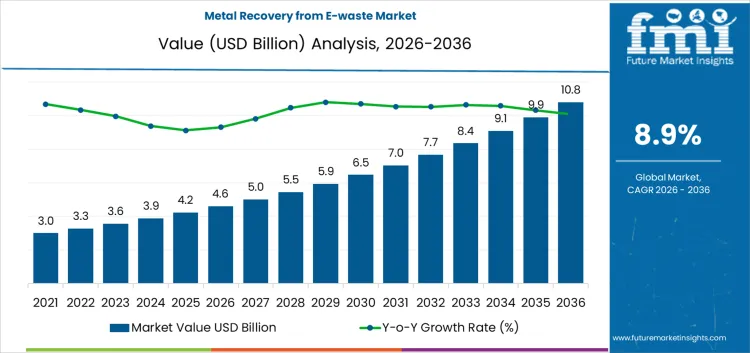
The global metal recovery from e-waste market is projected to grow from USD 4.6 billion in 2026 to USD 10.8 billion by 2036, reflecting a compound annual growth rate (CAGR) of 8.90%. This growth is driven by the increasing volume of electronic waste (e-waste) generated globally, as well as the rising demand for sustainable recycling solutions. The recovery of valuable metals such as gold, silver, copper, and palladium from discarded electronics provides an essential solution to reduce environmental impact and offers a vital source of secondary raw materials for industries.
With growing concerns about the environmental and health risks posed by improper e-waste disposal, governments and regulatory bodies are enacting stricter laws and regulations to ensure proper recycling and disposal, which is further boosting the demand for metal recovery services. Technological advancements in recovery techniques and the rising trend of circular economy practices are also contributing to the market’s expansion.
Quick Stats for Metal Recovery from E-waste Market
- Metal Recovery from E-waste Market Value (2026): USD 4.6 Billion
- Metal Recovery from E-waste Market Forecast Value (2036): USD 10.8 Billion
- Metal Recovery from E-waste Market Forecast CAGR 2026 to 2036: 8.90%
- Leading Processing Step in Metal Recovery from E-waste Market: Collection & Pre-processing
- Leading End User in Metal Recovery from E-waste Market: Recyclers
- Key Growth Regions in Metal Recovery from E-waste Market: Asia Pacific, North America, Europe
- Top Key Players in Metal Recovery from E-waste Market: Umicore, Boliden, Sims Limited, Aurubis, Glencore
Metal Recovery from E-waste Market Key Takeaways
| Metric | Value |
|---|---|
| Industry Value (2026) | USD 4.6 Billion |
| Forecast Value (2036) | USD 10.8 Billion |
| Forecast CAGR 2026 to 2036 | 8.90% |
How is the Global Metal Recovery from E-waste Market Advancing?
The global metal recovery from e-waste market is experiencing rapid growth, driven by the increasing volume of electronic waste (e-waste) generated worldwide and the rising demand for sustainable recycling solutions. As the world becomes more reliant on electronic devices such as smartphones, laptops, and household appliances, e-waste has become one of the fastest-growing waste streams globally. The recovery of valuable metals like gold, silver, copper, and palladium from discarded electronics not only helps reduce environmental impact but also provides an important source of secondary raw materials for various industries.
A major factor contributing to the growth of the market is the growing awareness of the environmental hazards associated with improper disposal of e-waste. The toxic chemicals and heavy metals found in electronic devices can pose significant risks to human health and the environment if not properly managed. As a result, governments and regulatory bodies are increasingly enacting stringent laws and regulations that mandate the proper disposal and recycling of e-waste, driving the demand for metal recovery services. Moreover, the high market value of metals recovered from e-waste is further incentivizing investment in advanced recycling technologies.
Technological advancements in metal recovery techniques, such as hydrometallurgical processes, pyrometallurgical methods, and mechanical separation, are improving the efficiency and profitability of e-waste recycling. These innovations are allowing for more effective recovery of precious and rare metals from e-waste while minimizing environmental impact. Additionally, the growing trend of circular economy practices, where resources are reused, remanufactured, and recycled, is further boosting the adoption of metal recovery from e-waste. As global e-waste generation continues to rise, the metal recovery market is expected to expand, offering a vital solution to the increasing demand for both environmental protection and valuable materials.
What Is the Segment-Wise Analysis for the Metal Recovery from E-waste Market?
The metal recovery from e-waste market is segmented by processing step and end user. Collection & pre-processing leads the processing step segment with a 28% share, followed by mechanical separation, hydrometallurgy, pyrometallurgy, and other steps. Collection & pre-processing is critical for the initial handling of e-waste, ensuring that valuable metals can be efficiently extracted. In terms of end users, recyclers hold the largest share at 46%, followed by smelters or refiners, OEM take-back programs, and other users. The increasing demand for recovering precious metals from e-waste, driven by both environmental concerns and economic factors, is propelling the growth of this market across various sectors.
Why Does Collection & Pre-processing Lead the Metal Recovery from E-waste Market?
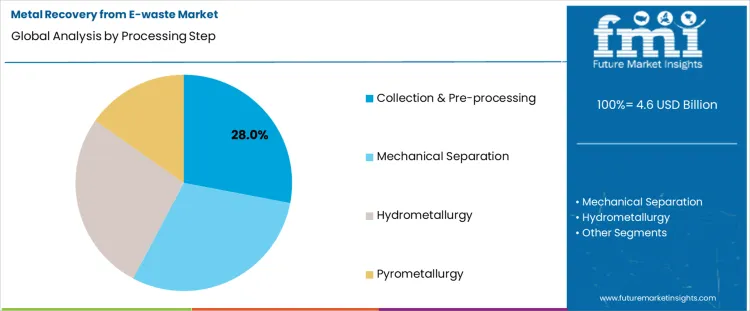
Collection & pre-processing leads the metal recovery from e-waste market with a 28% share due to its essential role in preparing e-waste for further processing. This step involves collecting and sorting e-waste to ensure that valuable metals, such as gold, silver, and copper, can be extracted efficiently in the subsequent stages. Proper pre-processing is crucial for separating the metal components from non-metal parts, minimizing contamination, and maximizing recovery rates. As the volume of electronic waste continues to increase globally, efficient collection and pre-processing become even more critical for the successful recovery of valuable metals, driving its dominant position in the market.
How Do Recyclers Contribute to the Metal Recovery from E-waste Market?
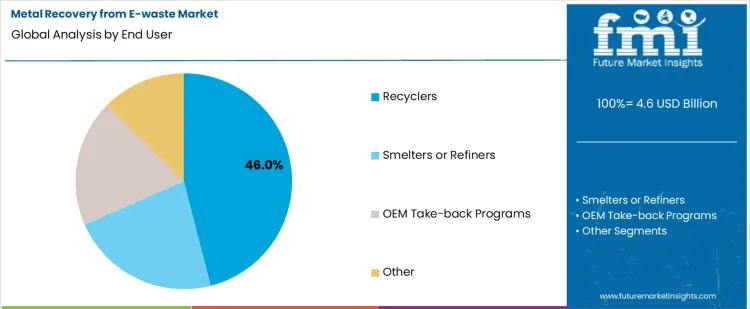
Recyclers account for 46% of the end-user segment in the metal recovery from e-waste market. These entities play a vital role in the recovery process, collecting, processing, and refining e-waste materials to extract valuable metals. Recyclers are integral in ensuring that e-waste is disposed of in an environmentally responsible manner while recovering metals that can be reused in new products. The increasing focus on sustainability and circular economy principles is driving the growth of the recycling sector, making recyclers a dominant force in the market. As e-waste management practices evolve, recyclers are increasingly adopting advanced technologies for efficient metal recovery, fueling the market's expansion.
What Are the Key Dynamics for the Metal Recovery from E-waste Market?
The metal recovery from E-waste market is driven by the growing volume of electronic waste (e-waste) being generated globally and the increasing need for sustainable recycling practices. E-waste contains valuable metals, such as gold, silver, copper, and palladium, which can be recovered through advanced recycling technologies. As environmental regulations around e-waste disposal become stricter and demand for raw materials rises, metal recovery from e-waste offers a viable solution. The need to reduce mining for precious metals, conserve resources, and minimize environmental damage is fueling the growth of this market.
How Are the Key Drivers Shaping the Metal Recovery from E-waste Market?
Key drivers of the metal recovery from e-waste market include rising e-waste generation, stricter environmental regulations, and the growing demand for valuable metals. With increasing consumer electronics consumption and shorter product lifecycles, e-waste is becoming a significant source of recoverable metals. Regulations such as the EU’s Waste Electrical and Electronic Equipment (WEEE) Directive are pushing for improved recycling and metal recovery practices. Additionally, the growing emphasis on sustainability, resource conservation, and reducing reliance on mining is driving both government and corporate initiatives to enhance e-waste recycling and metal recovery technologies.
What Are the Key Trends Shaping the Metal Recovery from E-waste Market?
Key trends in the metal recovery from E-waste market include the development of more efficient and environmentally friendly recycling technologies, such as bioleaching and solvent-based extraction processes. There is a growing focus on closed-loop recycling systems, where recovered metals are reused in the production of new electronic devices, reducing the need for virgin materials. The rising demand for rare-earth elements, used in electronics and green technologies, is driving innovation in e-waste recycling processes. The increasing role of digital platforms for tracking e-waste and enhancing transparency in the recycling process is also shaping market trends.
What is the Growth Outlook for the Metal Recovery from E-waste Market by Country?
| Country | CAGR (%) |
|---|---|
| China | 10.6% |
| Brazil | 10.0% |
| USA | 8.4% |
| South Korea | 8.1% |
| Japan | 7.2% |
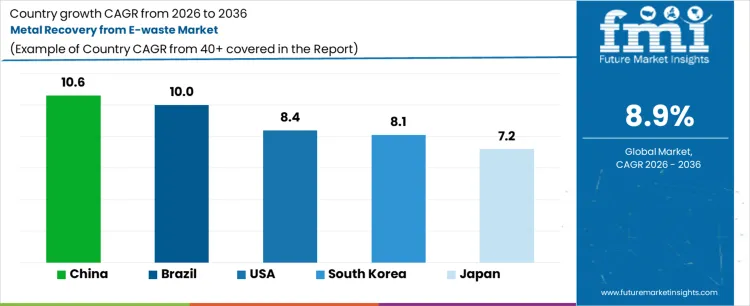
The metal recovery from e-waste market is growing rapidly across key regions. China leads at 10.6%, driven by massive e-waste generation, stringent environmental regulations, and a strong focus on sustainability. Brazil follows at 10.0%, fueled by increasing e-waste and a growing emphasis on recycling and resource recovery. The USA grows at 8.4%, supported by regulatory frameworks and rising awareness of e-waste recycling. South Korea’s market expands at 8.1%, driven by technological innovation and a focus on sustainable e-waste management. Japan grows at 7.2%, supported by its advanced electronics recycling infrastructure and commitment to environmental sustainability.
What is Driving the Growth of the Metal Recovery from E-waste Market in China?
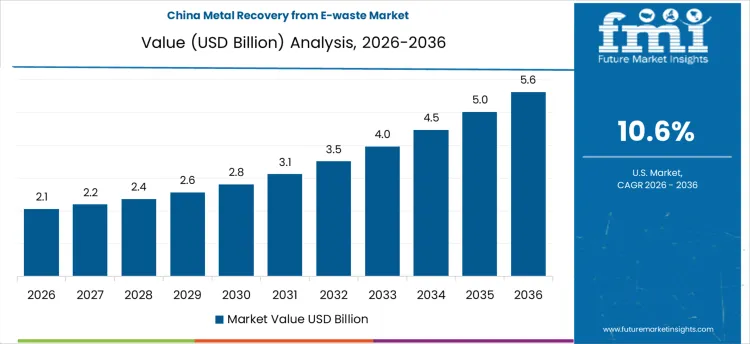
China’s metal recovery from e-waste market is growing at 10.6%, driven by the country’s massive e-waste generation and expanding demand for electronic goods. As one of the largest global producers and consumers of electronics, China faces significant challenges in managing the disposal of electronic waste. To address these challenges, the country is focusing on increasing the efficiency of e-waste recycling processes and recovering valuable metals, including gold, copper, and silver, from discarded electronics. Government regulations around e-waste recycling, pollution control, and environmental sustainability are also promoting the adoption of metal recovery technologies. China’s growing focus on clean energy and reducing environmental impact is driving demand for sustainable e-waste recycling solutions.
How is the Metal Recovery from E-waste Market Expanding in Brazil?
Brazil’s metal recovery from e-waste market is growing at 10.0%, driven by the increasing generation of e-waste and the country’s expanding industrial and consumer electronics sectors. With rapid urbanization and a rising middle class, the demand for electronics has surged, leading to higher e-waste volumes. Brazil’s regulatory frameworks on waste management and environmental protection are pushing industries to adopt efficient recycling technologies, including metal recovery systems for extracting valuable materials from e-waste. The rise in awareness of the environmental and health impacts of improper e-waste disposal is also contributing to the market’s growth. Brazil’s focus on sustainable development and resource conservation, especially in the agricultural and industrial sectors, further fuels the adoption of metal recovery solutions.
How is the Metal Recovery from E-waste Market Expanding in the USA?
The metal recovery from e-waste market in the USA is growing at 8.4%, driven by increasing demand for sustainable and environmentally responsible e-waste recycling. The USA generates vast quantities of electronic waste annually, with a significant portion of that waste containing valuable metals such as gold, silver, and copper. Stringent regulations enforced by agencies like the EPA require industries to comply with e-waste disposal and recycling standards. These regulations, combined with the rising awareness of the environmental and health risks associated with e-waste, are pushing companies to adopt advanced metal recovery technologies. The growing focus on reducing the carbon footprint and conserving resources is driving the demand for efficient recycling practices.
What is Driving the Growth of the Metal Recovery from E-waste Market in South Korea?
South Korea’s metal recovery from e-waste market is growing at 8.1%, driven by the country’s advanced technological infrastructure and commitment to sustainability. South Korea is one of the world’s leading producers and consumers of electronic goods, resulting in substantial e-waste generation. The need to recover valuable metals like gold, silver, and copper from discarded electronics is crucial for industries such as automotive, electronics, and manufacturing. The South Korean government’s stringent regulations on e-waste disposal, coupled with its focus on clean technologies and environmental preservation, are encouraging the adoption of metal recovery systems. The country’s technological innovations in recycling, coupled with public awareness of environmental issues, are pushing for better recycling methods.
How is the Metal Recovery from E-waste Market Expanding in Japan?
Japan’s metal recovery from e-waste market is growing at 7.2%, driven by the country’s strong regulatory frameworks, technological innovations, and focus on sustainability. Japan is one of the largest consumers and recyclers of electronic products, generating significant volumes of e-waste each year. The country’s commitment to reducing landfill waste and improving resource recovery is pushing the adoption of efficient e-waste recycling systems that focus on metal recovery. With growing consumer demand for environmentally friendly products and the increasing popularity of electronics, Japan has invested heavily in advanced technologies to recover precious metals like gold, silver, and copper from e-waste. Japan’s regulatory emphasis on recycling and product safety, combined with its focus on reducing environmental contamination, ensures the continued growth of the market.
How Are Companies Competing in the Metal Recovery from E-waste Market?
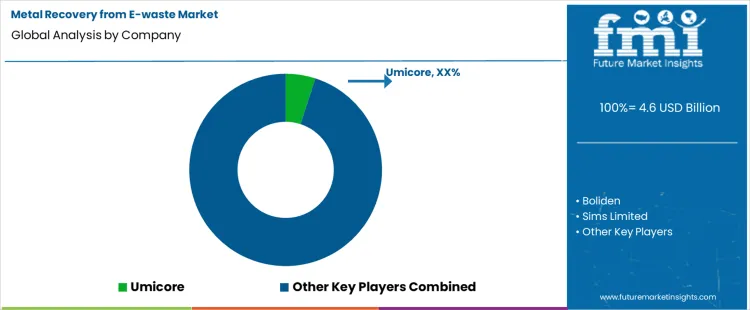
Competition in the metal recovery from e-waste market is driven by recovery efficiency, technology sophistication, regulatory compliance, environmental performance, and global processing capacity. Umicore positions itself with advanced hydrometallurgical and pyrometallurgical processes that deliver high recovery rates for precious and rare metals such as gold, silver, palladium, and PGMs. Its product materials emphasize integrated recycling streams and closed-loop systems that appeal to OEMs and material buyers focused on responsible sourcing. Boliden competes with a strong base in smelting and refining technologies, marketed for robust recovery performance and scalable operations that serve both electronic scrap and complex feedstocks.
Global recyclers such as Sims Limited and Aurubis differentiate through broad e-waste intake networks and multi-metal recovery platforms, with brochures highlighting end-to-end processing and traceability from collection to refined outputs. Glencore and DOWA Holdings add value with integrated mining and recycling portfolios that support stable material flows and cost efficiencies, their documentation focusing on material security and compliance with international environmental standards.
Specialist processors like TES and Stena Recycling compete with flexible, localized recycling solutions that emphasize rapid turnaround and extensive logistics networks for consumer and industrial electronics. Johnson Matthey and Li-Cycle bring innovative battery and electronic material recovery technologies, with Ohio-Cycle marketed for lithium-ion battery resource recovery and scalable hydrometallurgy, and Johnson Matthey highlighting refining excellence and material purity. Across all players, materials underscore recovery yield, process transparency, environmental performance, and regulatory readiness as key differentiators that help stakeholders maximize value from end-of-life electronics.
Key Players in Metal Recovery from E-waste Market
- Umicore
- Boliden
- Sims Limited
- Aurubis
- Glencore
- DOWA Holdings
- TES
- Stena Recycling
- Johnson Matthey
- Li-Cycle
Scope of Report
| Attributes | Description |
|---|---|
| Quantitative Unit (2026) | USD Billion |
| Processing Step | Collection & Pre-processing, Mechanical Separation, Hydrometallurgy, Pyrometallurgy |
| End User | Recyclers, Smelters or Refiners, OEM Take-back Programs, Other |
| Regions Covered | Asia Pacific, Europe, North America, Latin America, Middle East & Africa |
| Countries Covered | China, Japan, South Korea, India, Australia & New Zealand, ASEAN, Germany, United Kingdom, France, Italy, Spain, Nordic, BENELUX, United States, Canada, Mexico, Brazil, Chile, Turkey, South Africa, Other GCC Countries |
| Key Companies Profiled | Umicore, Boliden, Sims Limited, Aurubis, Glencore, DOWA Holdings, TES, Stena Recycling, Johnson Matthey, Li-Cycle |
| Additional Attributes | Dollar sales by processing step, end user, and region; regional CAGR and growth outlook for the metal recovery from e-waste market. |
Metal Recovery from E-waste Market by Key Segments
By Processing Step:
- Collection & Pre-processing
- Mechanical Separation
- Hydrometallurgy
- Pyrometallurgy
By End User:
- Recyclers
- Smelters or Refiners
- OEM Take-back Programs
- Other
By Region:
- Asia Pacific
- China
- Japan
- South Korea
- India
- Australia & New Zealand
- ASEAN
- Rest of Asia Pacific
- Europe
- Germany
- United Kingdom
- France
- Italy
- Spain
- Nordic
- BENELUX
- Rest of Europe
- North America
- United States
- Canada
- Mexico
- Latin America
- Brazil
- Chile
- Rest of Latin America
- Middle East & Africa
- Kingdom of Saudi Arabia
- Other GCC Countries
- Turkey
- South Africa
- Other African Union
- Rest of Middle East & Africa
Bibliography
- Umicore. (2023). Advanced hydrometallurgical and pyrometallurgical processes for high recovery rates in e-waste recycling. Umicore.
- Boliden. (2023). Smelting and refining technologies for robust recovery performance in electronic scrap and complex feedstocks. Boliden Group.
- Sims Limited. (2023). Broad e-waste intake networks and multi-metal recovery platforms with traceability from collection to refined outputs. Sims Limited.
Frequently Asked Questions
How big is the metal recovery from e-waste market in 2026?
The global metal recovery from e-waste market is estimated to be valued at USD 4.6 billion in 2026.
What will be the size of metal recovery from e-waste market in 2036?
The market size for the metal recovery from e-waste market is projected to reach USD 10.8 billion by 2036.
How much will be the metal recovery from e-waste market growth between 2026 and 2036?
The metal recovery from e-waste market is expected to grow at a 8.9% CAGR between 2026 and 2036.
What are the key product types in the metal recovery from e-waste market?
The key product types in metal recovery from e-waste market are collection & pre-processing, mechanical separation, hydrometallurgy and pyrometallurgy.
Which end user segment to contribute significant share in the metal recovery from e-waste market in 2026?
In terms of end user, recyclers segment to command 46.0% share in the metal recovery from e-waste market in 2026.
Preview the report firsthand - request a free sample
Get SampleGet the brochure for pricing and purchase details.
Get PDFTable of Content
- Executive Summary
- Global Market Outlook
- Demand-side Trends
- Supply-side Trends
- Technology Roadmap Analysis
- Analysis and Recommendations
- Market Overview
- Market Coverage / Taxonomy
- Market Definition / Scope / Limitations
- Market Background
- Market Dynamics
- Drivers
- Restraints
- Opportunity
- Trends
- Scenario Forecast
- Demand in Optimistic Scenario
- Demand in Likely Scenario
- Demand in Conservative Scenario
- Opportunity Map Analysis
- Product Life Cycle Analysis
- Supply Chain Analysis
- Investment Feasibility Matrix
- Value Chain Analysis
- PESTLE and Porter’s Analysis
- Regulatory Landscape
- Regional Parent Market Outlook
- Production and Consumption Statistics
- Import and Export Statistics
- Market Dynamics
- Global Market Analysis 2021 to 2025 and Forecast, 2026 to 2036
- Historical Market Size Value (USD Million) Analysis, 2021 to 2025
- Current and Future Market Size Value (USD Million) Projections, 2026 to 2036
- Y-o-Y Growth Trend Analysis
- Absolute $ Opportunity Analysis
- Global Market Pricing Analysis 2021 to 2025 and Forecast 2026 to 2036
- Global Market Analysis 2021 to 2025 and Forecast 2026 to 2036, By Processing Step
- Introduction / Key Findings
- Historical Market Size Value (USD Million) Analysis By Processing Step , 2021 to 2025
- Current and Future Market Size Value (USD Million) Analysis and Forecast By Processing Step , 2026 to 2036
- Collection & Pre-processing
- Mechanical Separation
- Hydrometallurgy
- Pyrometallurgy
- Collection & Pre-processing
- Y-o-Y Growth Trend Analysis By Processing Step , 2021 to 2025
- Absolute $ Opportunity Analysis By Processing Step , 2026 to 2036
- Global Market Analysis 2021 to 2025 and Forecast 2026 to 2036, By End User
- Introduction / Key Findings
- Historical Market Size Value (USD Million) Analysis By End User, 2021 to 2025
- Current and Future Market Size Value (USD Million) Analysis and Forecast By End User, 2026 to 2036
- Recyclers
- Smelters or Refiners
- OEM Take-back Programs
- Other
- Recyclers
- Y-o-Y Growth Trend Analysis By End User, 2021 to 2025
- Absolute $ Opportunity Analysis By End User, 2026 to 2036
- Global Market Analysis 2021 to 2025 and Forecast 2026 to 2036, By Region
- Introduction
- Historical Market Size Value (USD Million) Analysis By Region, 2021 to 2025
- Current Market Size Value (USD Million) Analysis and Forecast By Region, 2026 to 2036
- North America
- Latin America
- Western Europe
- Eastern Europe
- East Asia
- South Asia and Pacific
- Middle East & Africa
- Market Attractiveness Analysis By Region
- North America Market Analysis 2021 to 2025 and Forecast 2026 to 2036, By Country
- Historical Market Size Value (USD Million) Trend Analysis By Market Taxonomy, 2021 to 2025
- Market Size Value (USD Million) Forecast By Market Taxonomy, 2026 to 2036
- By Country
- USA
- Canada
- Mexico
- By Processing Step
- By End User
- By Country
- Market Attractiveness Analysis
- By Country
- By Processing Step
- By End User
- Key Takeaways
- Latin America Market Analysis 2021 to 2025 and Forecast 2026 to 2036, By Country
- Historical Market Size Value (USD Million) Trend Analysis By Market Taxonomy, 2021 to 2025
- Market Size Value (USD Million) Forecast By Market Taxonomy, 2026 to 2036
- By Country
- Brazil
- Chile
- Rest of Latin America
- By Processing Step
- By End User
- By Country
- Market Attractiveness Analysis
- By Country
- By Processing Step
- By End User
- Key Takeaways
- Western Europe Market Analysis 2021 to 2025 and Forecast 2026 to 2036, By Country
- Historical Market Size Value (USD Million) Trend Analysis By Market Taxonomy, 2021 to 2025
- Market Size Value (USD Million) Forecast By Market Taxonomy, 2026 to 2036
- By Country
- Germany
- UK
- Italy
- Spain
- France
- Nordic
- BENELUX
- Rest of Western Europe
- By Processing Step
- By End User
- By Country
- Market Attractiveness Analysis
- By Country
- By Processing Step
- By End User
- Key Takeaways
- Eastern Europe Market Analysis 2021 to 2025 and Forecast 2026 to 2036, By Country
- Historical Market Size Value (USD Million) Trend Analysis By Market Taxonomy, 2021 to 2025
- Market Size Value (USD Million) Forecast By Market Taxonomy, 2026 to 2036
- By Country
- Russia
- Poland
- Hungary
- Balkan & Baltic
- Rest of Eastern Europe
- By Processing Step
- By End User
- By Country
- Market Attractiveness Analysis
- By Country
- By Processing Step
- By End User
- Key Takeaways
- East Asia Market Analysis 2021 to 2025 and Forecast 2026 to 2036, By Country
- Historical Market Size Value (USD Million) Trend Analysis By Market Taxonomy, 2021 to 2025
- Market Size Value (USD Million) Forecast By Market Taxonomy, 2026 to 2036
- By Country
- China
- Japan
- South Korea
- By Processing Step
- By End User
- By Country
- Market Attractiveness Analysis
- By Country
- By Processing Step
- By End User
- Key Takeaways
- South Asia and Pacific Market Analysis 2021 to 2025 and Forecast 2026 to 2036, By Country
- Historical Market Size Value (USD Million) Trend Analysis By Market Taxonomy, 2021 to 2025
- Market Size Value (USD Million) Forecast By Market Taxonomy, 2026 to 2036
- By Country
- India
- ASEAN
- Australia & New Zealand
- Rest of South Asia and Pacific
- By Processing Step
- By End User
- By Country
- Market Attractiveness Analysis
- By Country
- By Processing Step
- By End User
- Key Takeaways
- Middle East & Africa Market Analysis 2021 to 2025 and Forecast 2026 to 2036, By Country
- Historical Market Size Value (USD Million) Trend Analysis By Market Taxonomy, 2021 to 2025
- Market Size Value (USD Million) Forecast By Market Taxonomy, 2026 to 2036
- By Country
- Kingdom of Saudi Arabia
- Other GCC Countries
- Turkiye
- South Africa
- Other African Union
- Rest of Middle East & Africa
- By Processing Step
- By End User
- By Country
- Market Attractiveness Analysis
- By Country
- By Processing Step
- By End User
- Key Takeaways
- Key Countries Market Analysis
- USA
- Pricing Analysis
- Market Share Analysis, 2025
- By Processing Step
- By End User
- Canada
- Pricing Analysis
- Market Share Analysis, 2025
- By Processing Step
- By End User
- Mexico
- Pricing Analysis
- Market Share Analysis, 2025
- By Processing Step
- By End User
- Brazil
- Pricing Analysis
- Market Share Analysis, 2025
- By Processing Step
- By End User
- Chile
- Pricing Analysis
- Market Share Analysis, 2025
- By Processing Step
- By End User
- Germany
- Pricing Analysis
- Market Share Analysis, 2025
- By Processing Step
- By End User
- UK
- Pricing Analysis
- Market Share Analysis, 2025
- By Processing Step
- By End User
- Italy
- Pricing Analysis
- Market Share Analysis, 2025
- By Processing Step
- By End User
- Spain
- Pricing Analysis
- Market Share Analysis, 2025
- By Processing Step
- By End User
- France
- Pricing Analysis
- Market Share Analysis, 2025
- By Processing Step
- By End User
- India
- Pricing Analysis
- Market Share Analysis, 2025
- By Processing Step
- By End User
- ASEAN
- Pricing Analysis
- Market Share Analysis, 2025
- By Processing Step
- By End User
- Australia & New Zealand
- Pricing Analysis
- Market Share Analysis, 2025
- By Processing Step
- By End User
- China
- Pricing Analysis
- Market Share Analysis, 2025
- By Processing Step
- By End User
- Japan
- Pricing Analysis
- Market Share Analysis, 2025
- By Processing Step
- By End User
- South Korea
- Pricing Analysis
- Market Share Analysis, 2025
- By Processing Step
- By End User
- Russia
- Pricing Analysis
- Market Share Analysis, 2025
- By Processing Step
- By End User
- Poland
- Pricing Analysis
- Market Share Analysis, 2025
- By Processing Step
- By End User
- Hungary
- Pricing Analysis
- Market Share Analysis, 2025
- By Processing Step
- By End User
- Kingdom of Saudi Arabia
- Pricing Analysis
- Market Share Analysis, 2025
- By Processing Step
- By End User
- Turkiye
- Pricing Analysis
- Market Share Analysis, 2025
- By Processing Step
- By End User
- South Africa
- Pricing Analysis
- Market Share Analysis, 2025
- By Processing Step
- By End User
- USA
- Market Structure Analysis
- Competition Dashboard
- Competition Benchmarking
- Market Share Analysis of Top Players
- By Regional
- By Processing Step
- By End User
- Competition Analysis
- Competition Deep Dive
- Umicore
- Overview
- Product Portfolio
- Profitability by Market Segments (Product/Age /Sales Channel/Region)
- Sales Footprint
- Strategy Overview
- Marketing Strategy
- Product Strategy
- Channel Strategy
- Boliden
- Sims Limited
- Aurubis
- Glencore
- DOWA Holdings
- TES
- Stena Recycling
- Johnson Matthey
- Li-Cycle
- Umicore
- Competition Deep Dive
- Assumptions & Acronyms Used
- Research Methodology


